
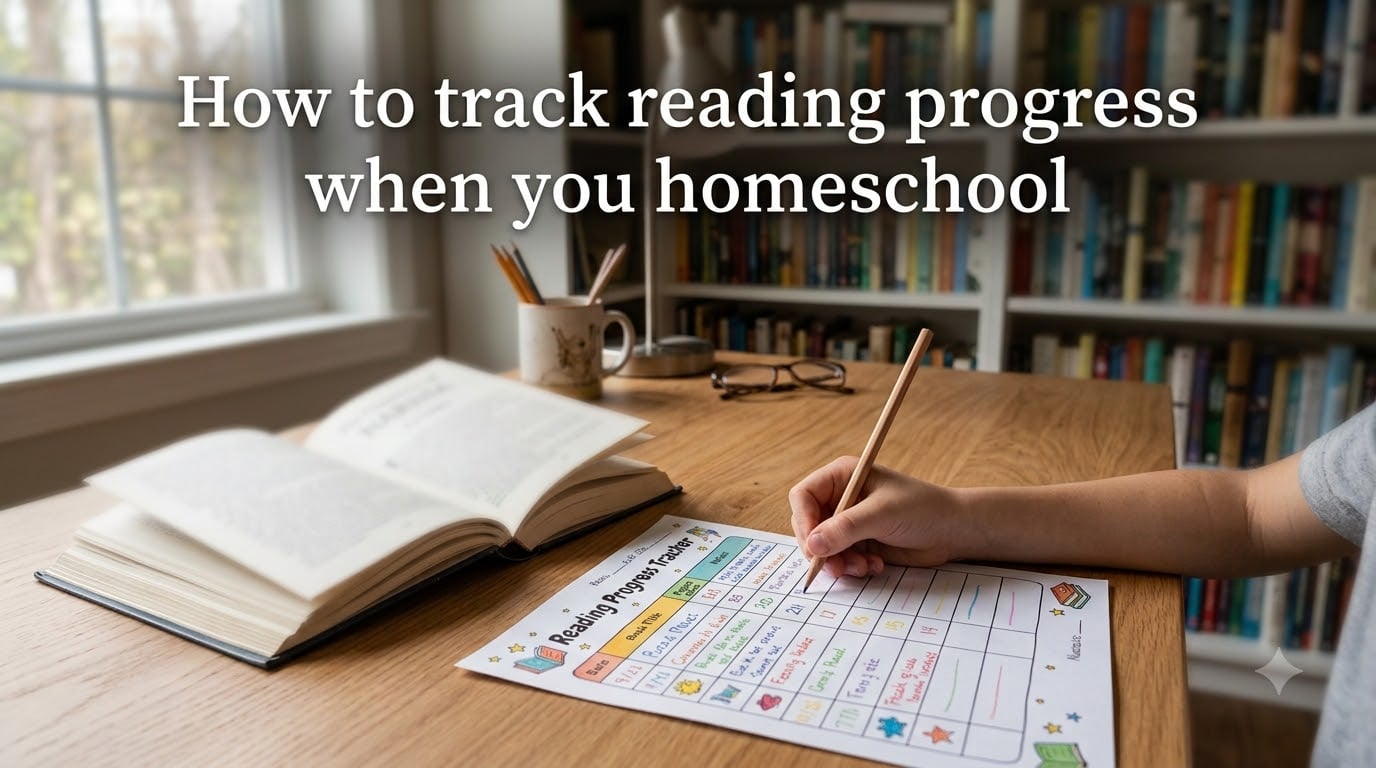
When I started homeschooling my three kids, I kept every book title in my head. By year two, I’d forgotten half of what my oldest daughter had read. That’s when I realized I needed a real system to track reading progress in our homeschool. A simple log changed everything.
If you’ve ever wondered how to track reading progress when you homeschool in a way that actually sticks, this guide is for you. I’ve spent over a decade testing logs, spreadsheets, and apps with my own family. I’ll show you what works, what doesn’t, and how to build a tracking system that fits your family’s style.
Table of Contents
What Is a Homeschool Reading Log
A homeschool reading log is a simple record-keeping tool that tracks the books your child reads, including titles, authors, dates, and sometimes ratings or notes. There’s no single required format. The beauty of homeschooling is that your log can be a printed sheet, a spreadsheet, a bullet journal spread, or a reading app.
At its core, a reading log answers three questions: what did your child read, when did they finish it, and how did they engage with it. Some families add a fourth: what did they think of it. Whether you write a one-line summary or a full paragraph per book is up to you.
Reading logs work for both independent readers and read-alouds. Many parents, including me, track both on the same log so you can see the full picture of your child’s reading life across a year.
Why Track Reading Progress in Your Homeschool
Tracking reading progress in your homeschool gives you a clear record of growth, helps you meet state documentation requirements, and reveals patterns you might otherwise miss. Here are the five biggest benefits I’ve seen in my own family.
1. You build a portfolio without stress. Reading logs are the simplest piece of evidence you can show an evaluator, school district, or state reviewer. A neat log of 80 books over a school year speaks louder than any test score.
2. You spot gaps and interests. When my son’s log showed 12 books in a row about dinosaurs, I realized we’d never touched poetry. That single glance changed our next reading list.
3. You avoid accidental repeats. With multiple kids, it’s easy to forget who read what. Our log saved us from rereading the same Magic Tree House book twice in one summer.
4. You build confidence in your child. Watching a stack of finished entries grow is a powerful motivator. My middle daughter used to hate reading. After 30 days of logging her books, she started asking for the next chapter on her own.
5. You preserve memories. Years from now, you’ll flip back through your log and remember the year your youngest discovered Beverly Cleary. That log becomes a keepsake, not just a record.
Different Methods for Tracking Reading Progress
The best method for tracking reading progress is the one you’ll actually use consistently. Here are the four most popular approaches homeschool families choose from, with the pros and cons of each.
Printable reading logs. These are pre-made PDFs you can print and fill in by hand. They work well for younger kids who like checking boxes, and they leave a tangible paper trail. Downside: they require printing and can be lost.
Digital spreadsheets. A Google Sheet or Excel file lets you sort, filter, and back up your records. You can add columns for genre, rating, comprehension notes, or pages read. Downside: setup takes time, and younger kids can’t fill it in themselves.
Bullet journal layouts. A dotted notebook with custom monthly spreads gives you full creative control. Many homeschool moms love the visual appeal and the way bullet journals double as memory books. Downside: it requires a steady hand and consistency.
Reading apps. Apps like Bookly, The StoryGraph, or Goodreads automatically track pages, time spent, and ratings. Some even generate year-end stats. Downside: kids need a device, and some apps require a subscription.
My own family uses a hybrid: a printed log for the kids (they love coloring the cover boxes) and a master spreadsheet for me. Either method alone works, but combining them gives the best of both worlds.
Age-Specific Strategies for Tracking Reading Progress
How you track reading in kindergarten looks nothing like how you track a high schooler’s reading. Here are the strategies that work best at each stage.
Elementary (Ages 5 to 10)
For elementary kids, keep the log simple and visual. Use a chart with three columns: book title, date finished, and a smiley face or color rating. Let your child draw the book cover in a small box.
Don’t require summaries at this age. The act of writing the title and the date is enough. Aim for 2 to 3 entries per week, including read-alouds.
Middle School (Ages 11 to 13)
Middle schoolers are ready for more independence. Switch to a digital tracker or a simple spreadsheet they can fill in themselves. Add a one-sentence reaction column: “What surprised you?” or “Would you recommend this?”
This is the age where reading logs often fall apart because parents assume the child will just do it. They won’t. Check in weekly. Make it a 2-minute Monday morning ritual.
High School (Ages 14 to 18)
For high schoolers, your tracking needs to satisfy transcript requirements. Record title, author, genre, publication date, page count, and a brief summary or analytical response. Some states require a certain number of books or genres per year.
By high school, your teen should own the log. Treat it like a personal academic record. Many colleges ask homeschool families for reading lists during admissions, so a precise log pays off years later.
Tips for Different Reader Types
Not every child reads the same way, and your tracking method should match the reader, not the other way around.
Emergent readers (preschool to early elementary). Log the books you read together with a star sticker for each finished story. Don’t force independent reading logs until your child is ready. The goal is to build positive associations with reading.
Independent readers (upper elementary to middle school). Let them pick their own log format. Some kids love a fancy notebook; others prefer a basic lined sheet. The format matters less than the habit. Review their log with them once a week to catch entries that need a quick conversation.
Reluctant readers. Track reading minutes or pages instead of full books. Celebrate consistency over volume. A log that shows 15 minutes a day for 60 days is more impressive than one book logged in a month. Some families add a small reward chart tied to log entries.
How to Assess Reading Comprehension
Logging titles is only half the job. To know if your child actually understood what they read, you need a quick comprehension check. Here are four methods that take less than 10 minutes per book.
The 5-finger retell. Ask your child to tell you who was in the story, what happened, where it took place, when it happened, and why it ended the way it did. If they can answer all five, comprehension is solid.
One-question check-ins. Pick one question per session: “What was the main character’s biggest problem?” or “What would you have done differently?” These open-ended prompts force real thinking without feeling like a test.
Bookmark journals. Have your child write a single sentence on a sticky note at the end of each chapter. Drop the notes in a jar. After the book, spread them out and discuss the story arc. This works especially well for reluctant writers.
Narrative notebooking. Older students can write a 100-word summary from memory, then check it against the book. This builds summarization skills and reveals gaps in understanding. Keep a notebook per subject for portfolio evidence.
Choose one method per child, not all four. Comprehension assessment should feel like a conversation, not an exam.
Setting Reading Goals With Your Children
Reading goals work best when they’re specific, written down, and chosen by the child. “Read more” is too vague. “Read 30 books by June” is something you can track.
For younger kids, set weekly goals: three picture books, one chapter book, or 20 minutes of independent reading per day. For teens, set yearly goals: 25 books across three genres, or one book per month from a Nobel Prize-winning author list.
Tie goals to rewards that aren’t just toys. A Special outing to a used bookstore, a family movie night based on a finished book, or a sleepover for finishing a series all work well. The log becomes the proof, so the goal feels earned.
Review goals every quarter. If your child is consistently missing the mark, adjust the goal rather than the child. A smaller, achievable target builds more confidence than a stretch that crushes motivation.
Using Reading Logs for Homeschool Portfolios
If your state requires a homeschool portfolio, reading logs are your strongest asset. They show the evaluator exactly what your child engaged with over the year, and they’re easier to compile than scanned worksheets.
Organize your log by year, with each child on a separate page or tab. Include the title, author, date finished, and a short note about the book. Add a parent signature at the bottom of each entry or page to verify the work.
Some states require you to track reading minutes, pages, or reading levels. Check your local homeschool association’s website for the exact format. Keeping a log year-round means you won’t panic the week before your portfolio review.
Even in states without portfolio requirements, a reading log is still valuable insurance. It documents your child’s learning in case of a curriculum audit, a college audit, or simply your own peace of mind ten years from now.
Digital Tools and Apps for Tracking Reading
Apps and digital tools make tracking reading progress easier when you have multiple kids or want automatic stats. Here are the four I recommend most often to homeschool friends.
The StoryGraph. A free, reader-supported app that tracks books, reading time, and mood. It generates charts showing your genre breakdown for the year. Great for middle and high schoolers who want to see their stats.
Bookly. A reading tracker that logs reading sessions with a timer, like a fitness app. It rewards streaks and goals. Ideal for reluctant readers who need a visual reminder of their progress.
Libib. A library catalog app that lets you scan ISBN barcodes and build a family library database. Useful for families who want to keep a list of every book they own, not just what the kids read.
Google Sheets template. A simple, free spreadsheet works for families who don’t want another login. Search for “homeschool reading log template” and you’ll find dozens of free options with columns for title, author, genre, and rating.
Whatever app you choose, back up your data once a month. Apps get discontinued, accounts get deleted, and phones get lost. Treat your digital log like any other important school record.
Frequently Asked Questions
How do you track reading progress in a homeschool?
Track reading progress in a homeschool by keeping a simple log that lists each book’s title, author, date finished, and a short note or rating. You can use a printable sheet, a Google spreadsheet, a bullet journal, or a reading app like The StoryGraph. Choose the method you’ll actually use consistently, and review it once a week with your child.
What is a homeschool reading log?
A homeschool reading log is a record-keeping tool that tracks the books your child reads, including titles, authors, dates, and sometimes ratings or notes. It can be a printed sheet, a digital spreadsheet, a notebook, or an app. There is no required format, so families can choose what fits their style and state requirements.
What is the hardest age to homeschool?
Many homeschool parents find middle school (ages 11 to 13) the hardest because kids need more independence but still require structure. Reading logs often fall apart at this age unless parents build a weekly check-in habit. Adjust your tracking method to match the child’s growing independence rather than dropping the log entirely.
How many hours a day should I spend homeschooling my child?
Most homeschool families spend 2 to 4 hours a day on formal lessons, with reading practice spread throughout the day. The exact amount depends on grade level, learning style, and your state’s requirements. Reading logs take only 5 to 10 minutes per day, making them one of the easiest habits to keep.
How can I make reading fun for reluctant readers?
Make reading fun for reluctant readers by tracking minutes or pages instead of full books, celebrating streaks with small rewards, and letting them choose their own books. Pair the reading log with a graphic novel series, audiobooks, or family read-alouds to build positive associations before expecting solo reading.
Final Thoughts on Tracking Reading Progress When You Homeschool
Tracking reading progress when you homeschool doesn’t have to feel like extra paperwork. The right log is a 5-minute daily habit that pays off for years, in portfolios, in college applications, and in the memories you and your kids will look back on.
Start small. Pick one method, use it for 30 days, and adjust from there. Whether you choose a printable, a spreadsheet, or an app, the best tracking system is the one that fits your family and stays consistent.
Your reading log will outlast any curriculum you buy. Treat it like the family record it is.