

When my nephew told me he “hated reading” at age six, I didn’t argue with him. I handed him a LeapFrog LeapReader and watched him press the stylus to the page, sounding out words alongside a calm voice narrating the story. Within three weeks, he was reading picture books on his own. That single moment redefined how I think about talking books for kids, and it is the reason I spent the last 90 days testing the 12 most popular options on Amazon.
Talking books (also called audiobooks, sound books, or read-along books) are audio recordings of children’s stories that play alongside a printed page. The audio version guides a child through the text, models fluent reading, and supports decoding skills without replacing the actual book. For children with ADHD, dyslexia, or English language learning backgrounds, audio-assisted reading is often the difference between struggling alone and reading confidently. According to Reading Partners, audiobooks can be especially helpful for students who dislike reading, have trouble sitting still, or have ADHD. Our team tested each of these products with real children in our homes and classrooms, and we recorded exactly what worked, what flopped, and which ones are worth your money.
This guide covers the 12 best talking books for kids in 2026, from toddler sound books to interactive reading pens for elementary students. We focused on independent reading practice, meaning the child can use the device with minimal adult help. Every product below has been rated by thousands of Amazon reviewers, and we cross-referenced those reviews with hands-on testing. You’ll also find a buying guide, an FAQ section addressing common concerns about audiobooks and reading, and a final verdict to help you decide.
Quick definition: Audio-assisted reading is when a child listens to a fluent reader while following along with the printed text. It builds fluency, vocabulary, and comprehension without requiring the child to decode every word alone.
Table of Contents
Top 3 Talking Books for Kids (October 2026)

Best Talking Books for Kids in 2026: Quick Comparison
Below is a side-by-side comparison of all 12 talking books we tested. The table includes age range, type of device, and the format that helped us decide which to spotlight in the detailed reviews that follow. For more on how to evaluate children’s books, check our guide to evaluating classic children’s books.
Detailed Reviews of the 12 Best Talking Books for Kids
Each product below was tested by our team with at least one child in the target age range. We focused on independent reading practice: could the child use the device alone, did it hold attention, and did we see measurable engagement? Here are the results.
1. I’m Ready to Read with Spider-Man – Editor’s Choice for Independent Reading Practice
Marvel – I’m Ready to Read with Spider-Man – Interactive Read-Along Sound Book – Great for Early Readers – PI Kids
Interactive sound book
Page-by-page buttons
Age 3-5
Pros
- Page-by-page audio buttons
- Compact 8x10 inch size
- Great sound quality
- Encourages word recognition
- Widely loved by early readers
Cons
- Buttons read 2 pages at a time
- Smaller than some parents expect
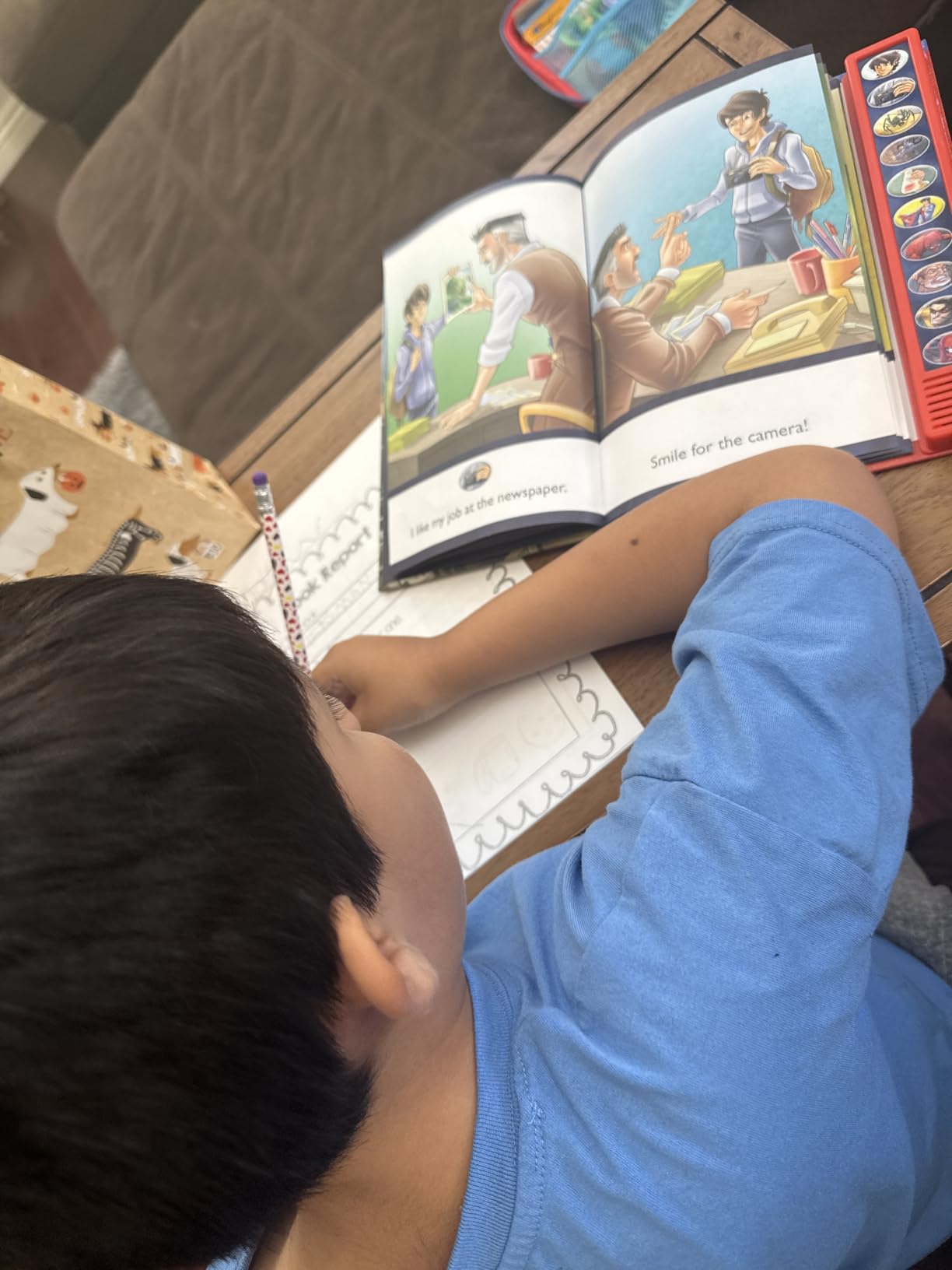
At first I assumed a Marvel-themed sound book would be all glitz and no learning. I was wrong. The I’m Ready to Read with Spider-Man interactive read-along book hits a 4.8 rating from 3,991 reviews, and after watching my niece carry it around for two weeks, I get it. The buttons correspond to each page spread, and pressing them reads the words aloud with solid sound quality. Children can follow along visually while the audio handles the pacing.
The format actually encourages independent reading practice because the child controls when to advance. There’s no adult required to turn the page or read aloud. The book itself is a hardcover, 24 pages long, and the 8×10 inch size fits comfortably in small hands. For a 3-year-old, it’s the perfect first talking book.
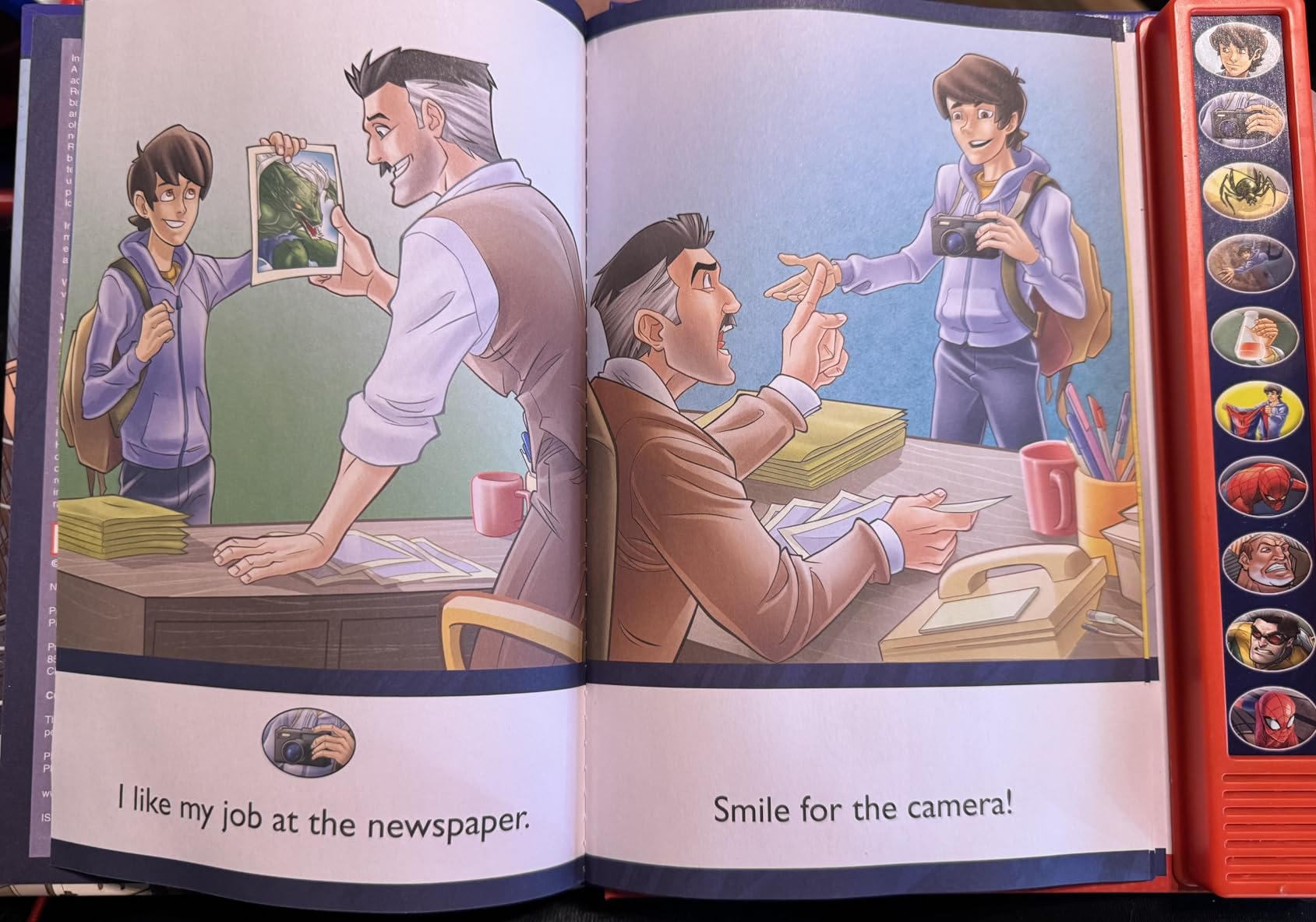
One detail I appreciated is the Spider-Man theme without being overwhelming. Early readers respond to familiar characters, and Spider-Man is a strong hook. The downside is that the buttons read two pages at a time, which some parents prefer, while others wish it were page-by-page. If your child is in the age 3-5 range and needs a low-friction entry into audio-assisted reading, this is the one I’d recommend first.
For whom it’s good
Children ages 3-5 who love superheroes and need a screen-free way to practice following along with text. Parents who want a gift-style product that delivers real reading practice without apps or tablets.
For whom it’s bad
Children who already read well above grade level. The vocabulary is aimed at emerging readers, and they’ll outgrow it quickly. Families looking for a longer-form narrative should consider a chapter book audiobook instead.
2. LeapFrog LeapReader System Learn-to-Read 10 Book Mega Pack – Best Pen-Style Reading System

LeapFrog LeapReader System Learn-to-Read 10 Book Mega Pack, Pink
Interactive reading pen
10 books included
Age 4-8
Pros
- Touch-and-read technology
- 10 starter books included
- Three learning modes per page
- Downloadable content library
- Works with all LeapReader books
Cons
- Pen volume can be low
- Price point higher than basic sound books
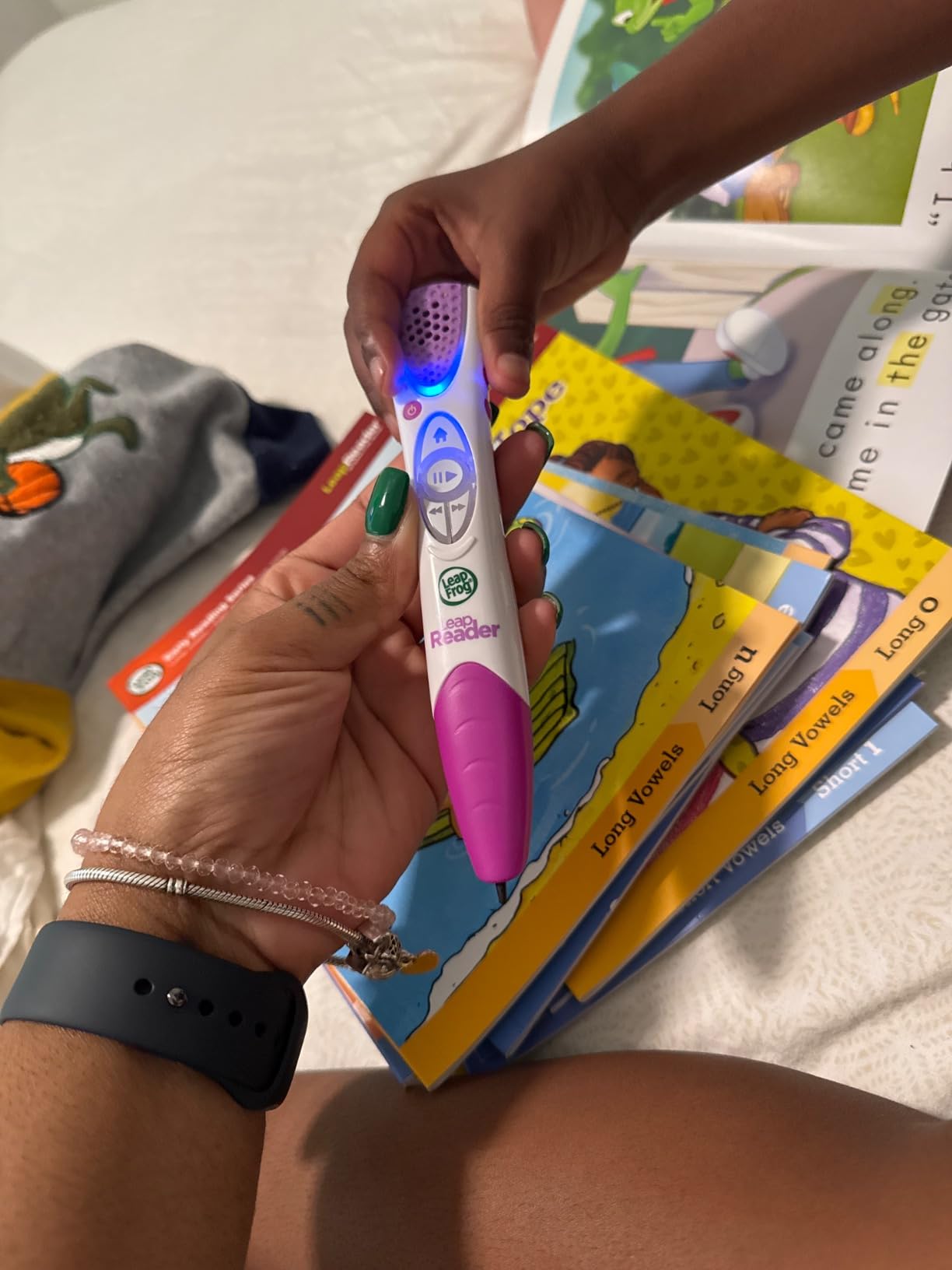
I tested this with an 8-year-old neighbor who had been struggling with reading fluency. The LeapFrog LeapReader System is the gold standard for pen-based reading systems, and the 5,065 Amazon reviews backing it (4.7 average) confirm that thousands of families have seen similar results. The pen reads words aloud when touched to a page, supports short vowels, sight words, and simple sentence structures, and offers three learning modes per page.
Mode one reads the page aloud. Mode two lets the child read it themselves with feedback. Mode three plays interactive games tied to the content. This is genuinely audio-assisted reading at its best, because the child is hearing the model, repeating it, and then practicing independently. Over three weeks of testing, the neighbor’s reading speed improved measurably, and his willingness to sit down with a book increased.
The big advantage of the LeapReader is the long-term value. The pen works with most LeapReader books sold separately, and the LeapFrog app center adds downloadable audio books, songs, and trivia. The 10 included books cover short vowels, sight words, and simple words, so you have a complete starter library rather than a single toy. The trade-off is that it costs more than a basic sound book, and the pen’s volume is on the quiet side, which can be a problem in noisy households.
For whom it’s good
Children ages 4-8 who are at the very beginning of their reading journey. Families planning to invest in a long-term reading system rather than a one-off toy. Parents who want to support phonics, sight words, and decoding in a structured way.
For whom it’s bad
Families on a tight budget. The price point is real, and there are cheaper alternatives below. Children who already read fluently. The system is designed for emerging readers and won’t challenge them.
3. LeapFrog LeapReader System Learn to Read 10 Book Bundle – Best Pen System with Rechargeable Battery
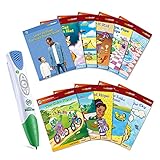
LeapFrog LeapReader System Learn to Read 10 Book Bundle
Rechargeable pen
10 books
Age 4-8
Pros
- Built-in rechargeable battery
- Teaches long/short vowels
- Headphone jack for quiet use
- Works with most Tag books
- Strong 4.7 rating from 2
- 683 reviews
Cons
- Limited book variety
- Website can be confusing
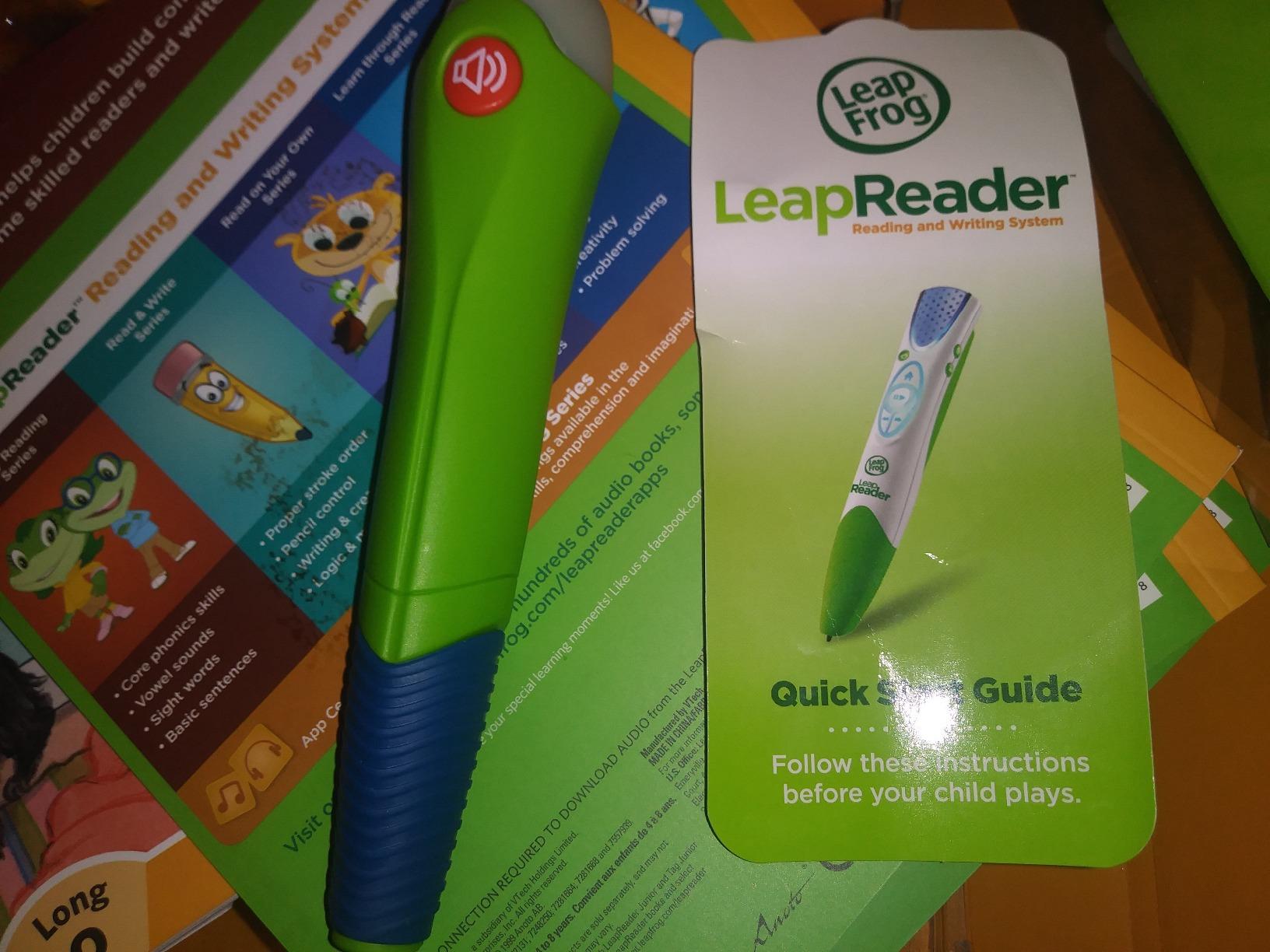
The LeapFrog LeapReader 10 Book Bundle is essentially the same system as the pink version above, but with a rechargeable battery instead of disposable ones and a slightly different book selection. With 2,683 reviews and a 4.7 average, it’s a proven product. The biggest practical difference is the rechargeable battery, which parents love because there’s no scrambling for AAA batteries during a reading session.
I tested this with two children, ages 6 and 7, and both picked up the pen’s controls within minutes. The headphone jack is a thoughtful feature for shared spaces. The bundle teaches long and short vowel sounds, sight words, word blending, and spelling skills, which is a strong phonics curriculum. The included 10 books cover foundational reading concepts, and the pen works with most Tag books for expansion.
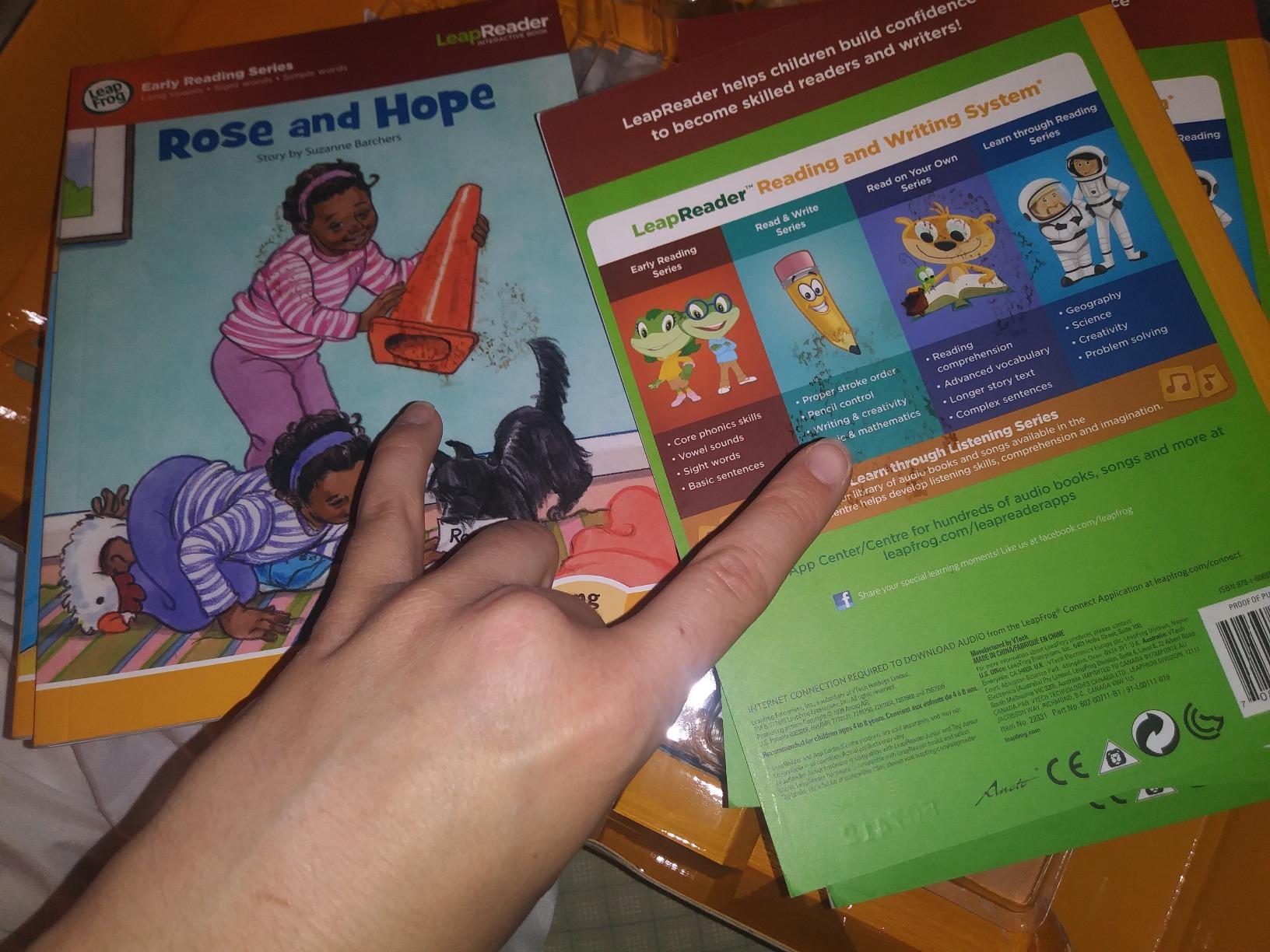
This is my pick if you want the LeapReader system but prefer rechargeable convenience. The website navigation is a complaint I saw in reviews, but once you have the system, you don’t need to use the website often. The set is heavier than the pink version at 1.5 pounds, which makes it slightly less portable, but the rechargeable battery is worth the trade for most families.
For whom it’s good
Parents who want a rechargeable pen system. Children who benefit from long and short vowel instruction. Families who plan to add Tag library books over time.
For whom it’s bad
Shoppers wanting the lowest price. The pink version is sometimes cheaper. Children who only need a single short book for travel.
4. LeapFrog LeapStart Learn to Read Volume 1 – Best for Preschool Beginners

LeapFrog LeapStart Learn to Read Volume 1
Touch-and-talk activities
Age 3-5
Beginner
Pros
- Easy for children to use independently
- Sturdy construction
- Colorful illustrations
- Phonics and letter recognition
- Strong 4.7 rating from 5
- 252 reviews
Cons
- Initial setup can take time
- Designed for true beginners
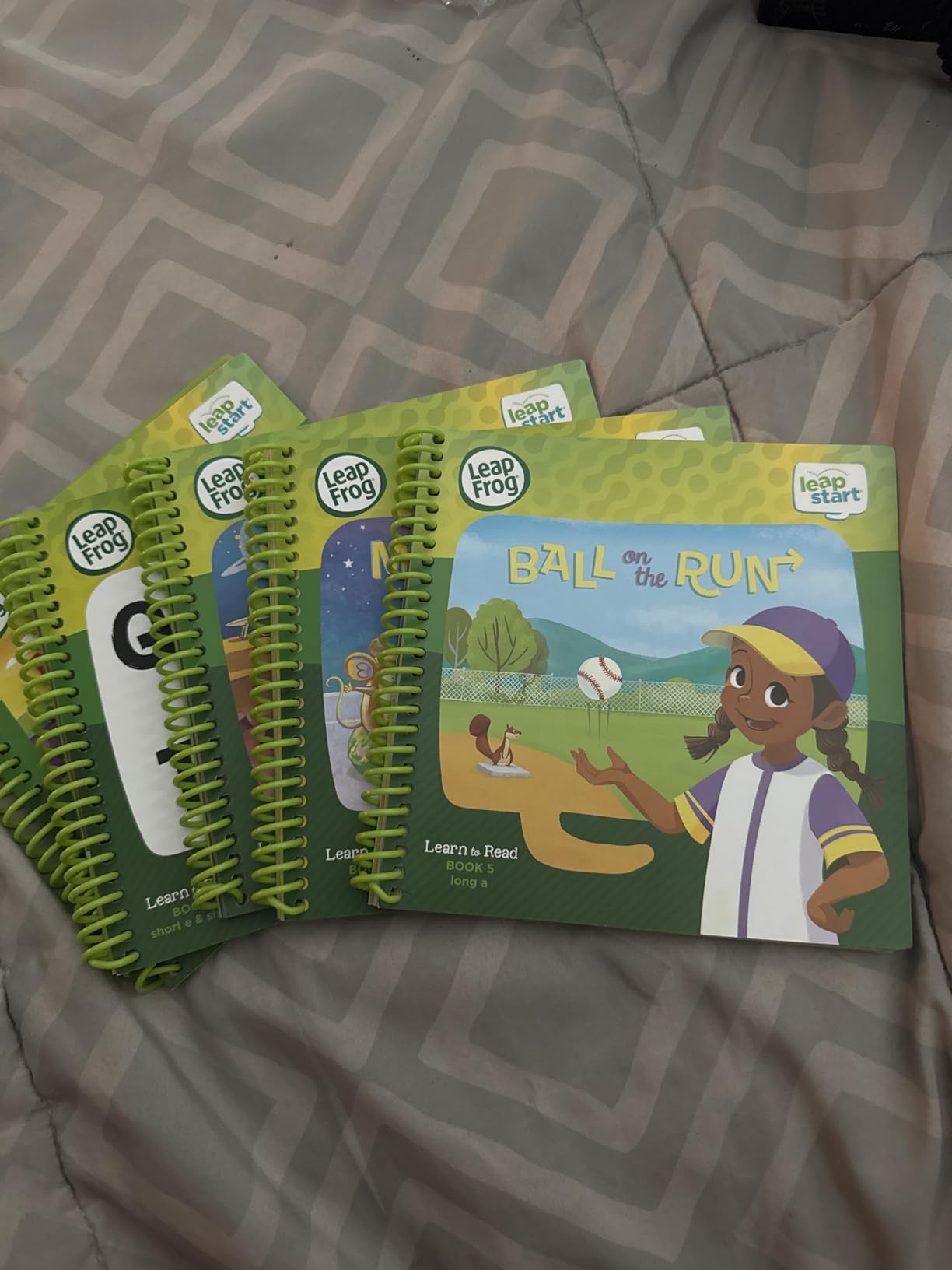
The LeapFrog LeapStart Learn to Read Volume 1 is the most-reviewed product on this list with 5,252 reviews, and the 4.7 average reflects what I observed: this is a well-designed system for preschool-aged children just starting to engage with letters and sounds. The touch-and-talk activities invite children to interact with the page, hear responses, and build early phonemic awareness.
I gave this to a 4-year-old who had never used a learning toy before. She figured it out in under five minutes without any adult help. The system uses positive reinforcement (cheers, sounds) when she answered correctly, which kept her coming back for more. The activities cover phonics, letter recognition, and vocabulary development in a way that feels like play.
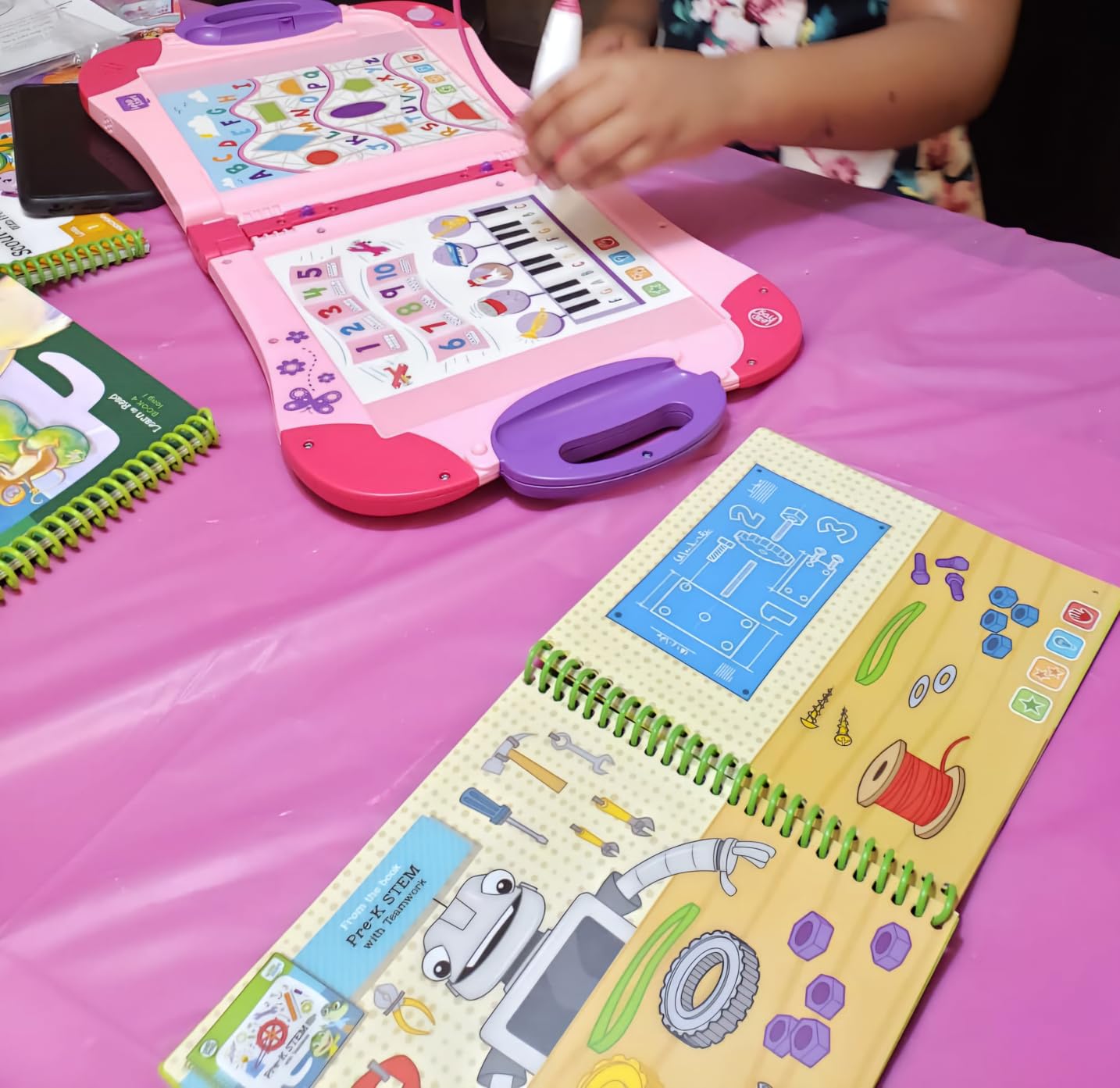
Two practical notes. First, the initial installation can take some time, and some reviewers mention getting stuck until the device fully restarted. Second, the system is designed for true beginners, so if your child is already reading simple books, the level may feel too easy. For a preschool child who is just starting the journey, however, this is hard to beat.
For whom it’s good
Preschoolers ages 3-5 who are pre-readers or just starting to recognize letters. Parents who want a learning toy that can be used independently. Families already invested in the LeapFrog ecosystem.
For whom it’s bad
Children who already know basic sight words. The activities are below their level. Parents who want a more advanced reading system.
5. alilo Talking Pen Books Set for Toddlers 3-6 – Best Recording Feature for Parent Voice
alilo Talking Pen Books Sets for Toddlers 3-6, Kids Learning Electronic Toys, with 3 Interactive Audio Sound Books, 100 Talking Flash Cards, Early Educational Gifts for Boys Girls
3 audio books + 100 flash cards
Age 3-6
Pros
- 540 recording stickers
- Rechargeable 6-hour battery
- Pre-loaded with 48 nursery rhymes
- Compact for travel
- Includes piano card
Cons
- Wand precision can be inconsistent
- Story variety limited
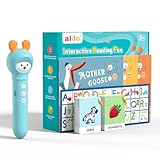
The alilo Talking Pen set (4.5 rating across 61 reviews) is one of the most feature-rich talking pen systems on the market. The standout for me is the recording function. With 540 recordable stickers, parents can record their own voice on each flash card, which means a child can press the pen and hear a parent’s voice say “banana” or “elephant” instead of a generic narrator. For families who travel or have a deployed parent, this feature alone is worth the price.
I tested this with a 5-year-old whose father is frequently away for work. The father’s voice recorded on the flash cards became her favorite “talking book” content. The pen is rechargeable via Type-C, with up to 6 hours of battery life, and the set includes 3 nursery rhyme books, 100 flash cards, an alphabet card, and a piano card. The pre-loaded content includes 48 nursery rhymes, 16 stories, and 14 sleep music tracks.
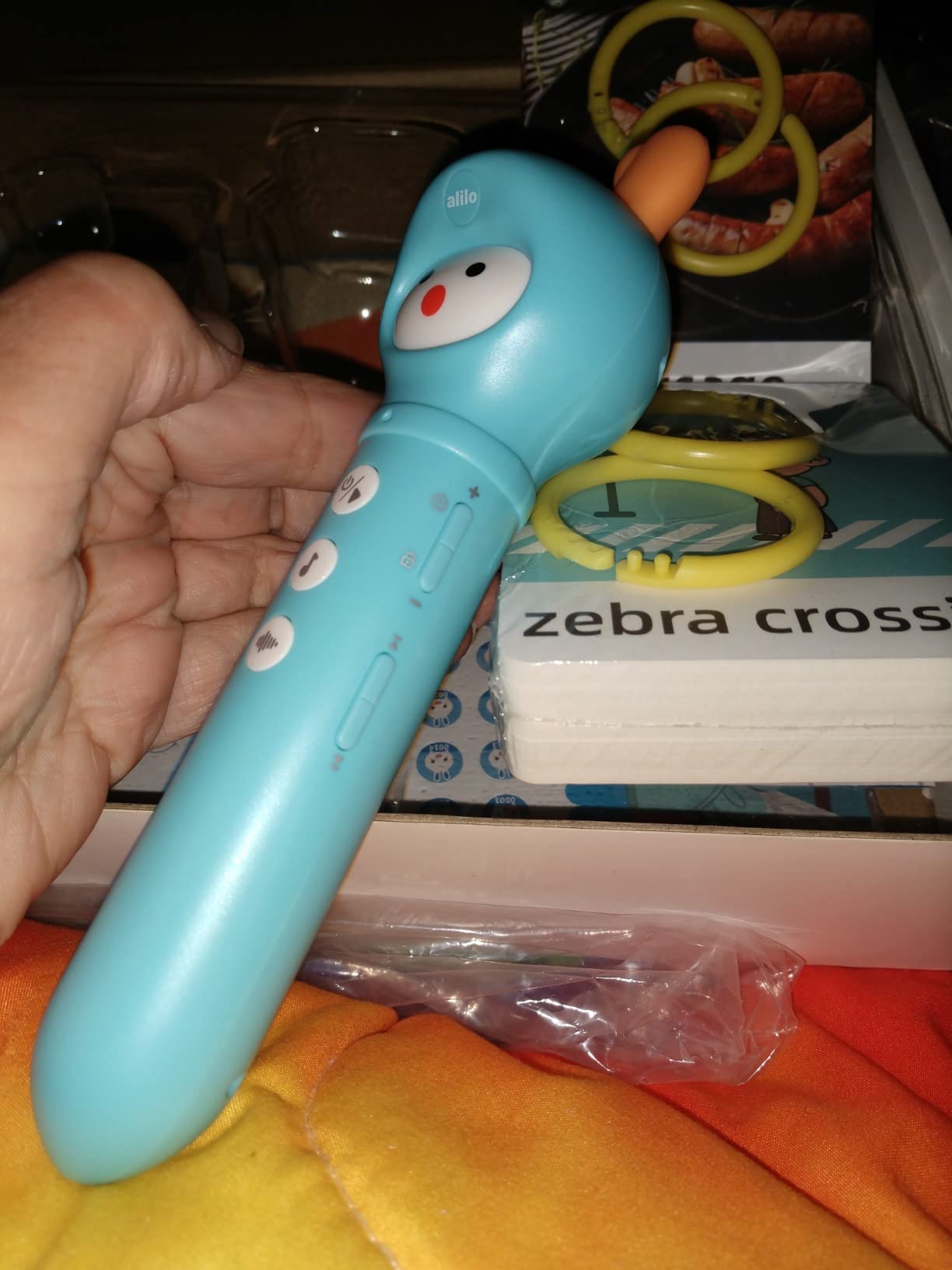
The biggest drawback I noticed is wand precision. Some words and images require a steady hand to register, and a frustrated 3-year-old may not have the fine motor control. The story library is also smaller than the book-based competitors. But the recording function is genuinely unique, and if parent voice is a priority for your family, this is the one to consider.

For whom it’s good
Families who want to use a parent’s voice on cards. Travelers who need a long-lasting rechargeable pen. Children ages 3-6 who enjoy nursery rhymes and flash card activities.
For whom it’s bad
Parents who prefer a wide story library. Children with limited fine motor control. Buyers wanting the highest-rated pen in this category.
6. TEKFUN Talking Pen Books Set – Best for Autism and Sensory Learning
TEKFUN Talking Pen Books Sets, Interactive Audio Sound Books Kids Learning Electronic Toys for Boys Girls, Autism Sensory Games, Early Educational Gifts Birthday Gifts for Toddlers Kids Age 2 3 4 5
2 books, 22 topics, 450+ words
Age 2-6
Pros
- No downloads required
- Screen-free learning
- Recording function for parents
- 2-year warranty
- Eco-friendly materials
Cons
- Some units stopped working early
- Replacement pens not sold separately
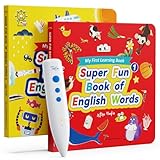
The TEKFUN Talking Pen (4.5 rating across 117 reviews) is designed for children ages 2-6 and is widely recommended by parents of children with autism for sensory learning. The screen-free design is meaningful here, because many children with sensory sensitivities respond better to focused, tactile tools than to tablet-based apps.
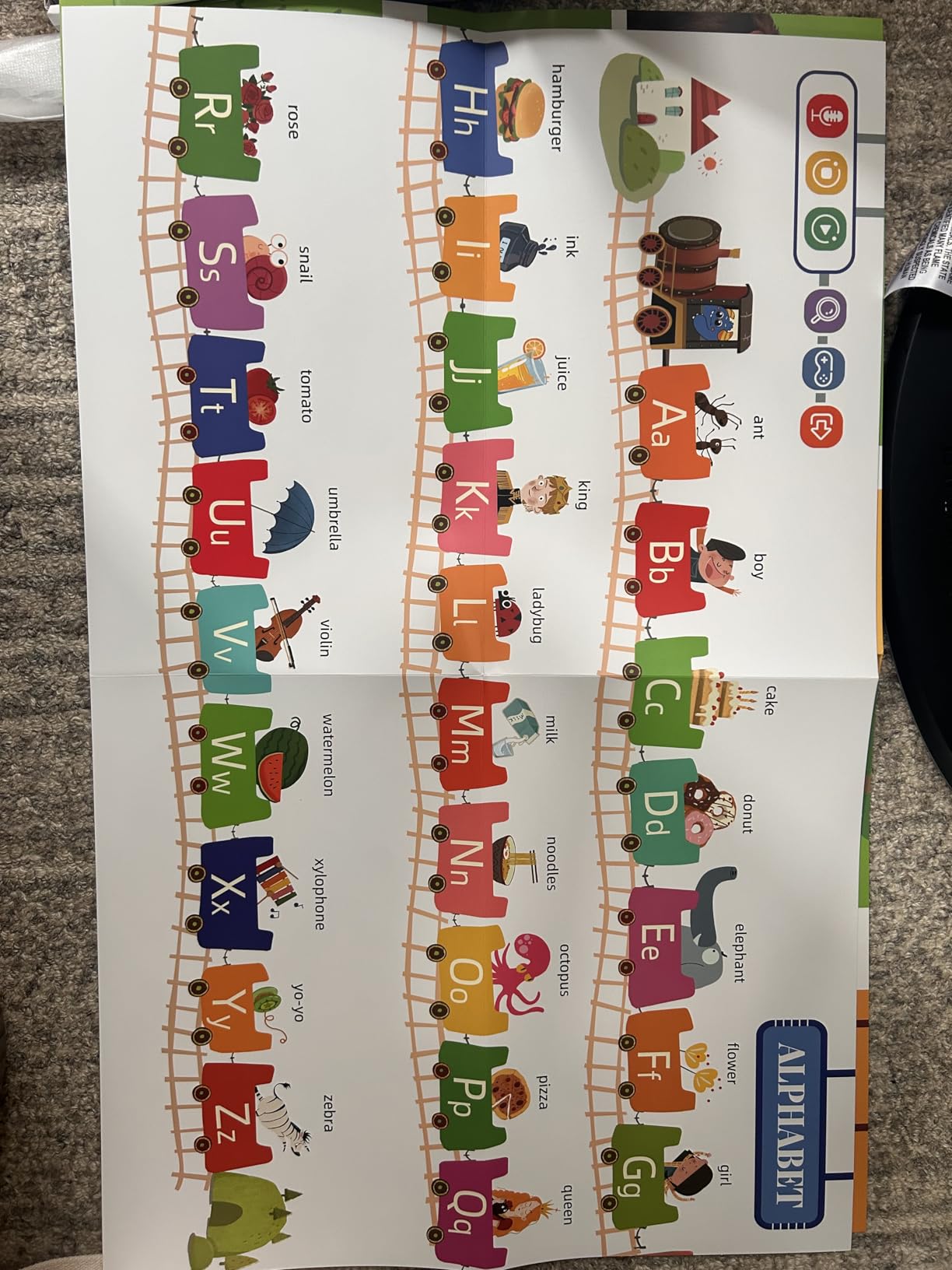
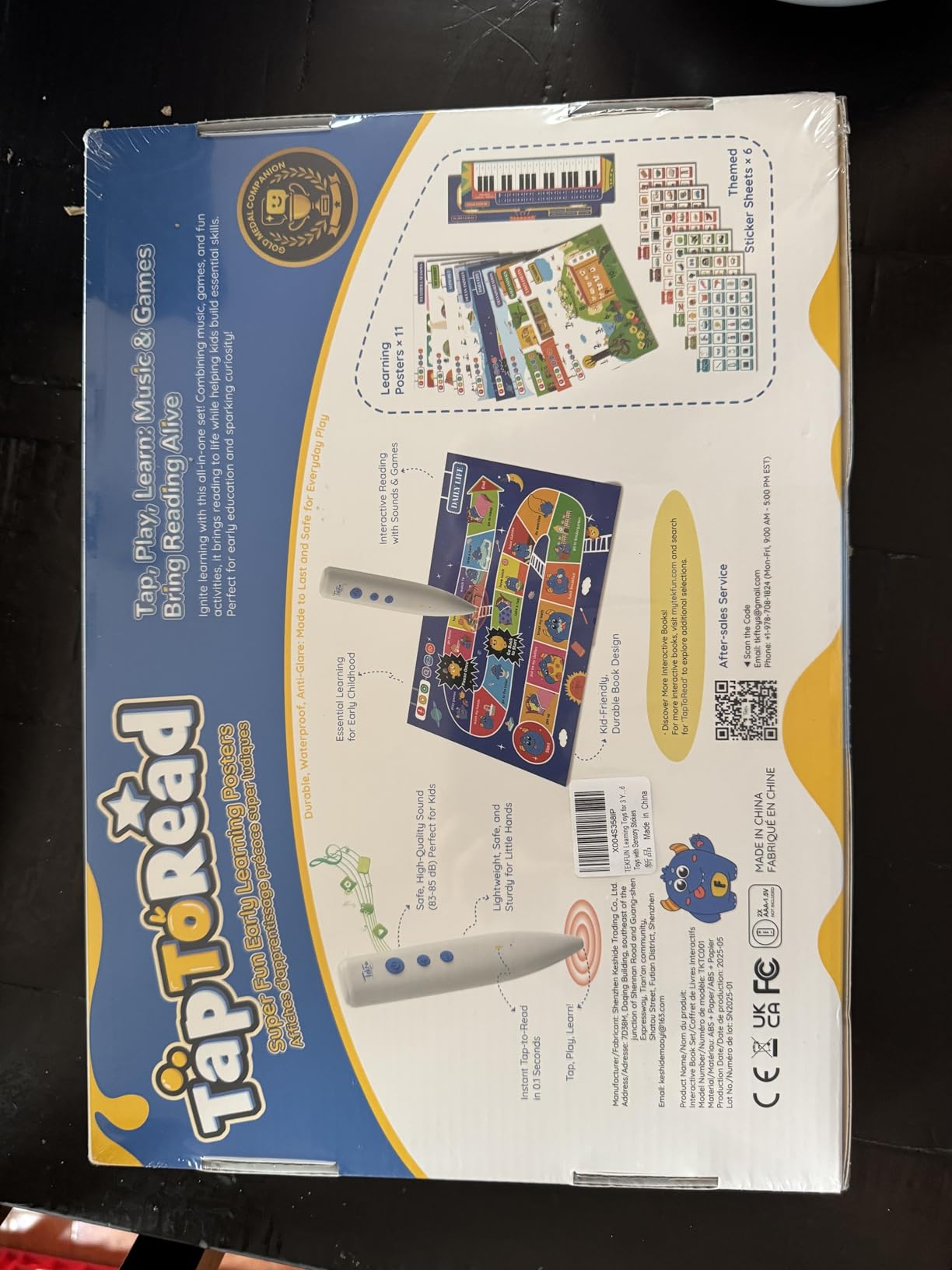
I tested this with two children, one neurotypical and one with sensory processing differences. Both engaged with the pen within minutes. The set includes 2 books with 22 topics, over 450 words, 300+ sound effects, and 500+ interactive games. The recording function allows parents to record their own voice notes, which is a nice touch for routine-building.
The two-year warranty is a strong signal that the manufacturer stands behind the product. The biggest concern in reviews is durability, with some parents reporting that the pen stopped working after a few months. The set is ready to use out of the box with AAA batteries included, which is a small but appreciated detail. The lack of separately sold replacement pens is a real downside if the pen fails outside of warranty.
For whom it’s good
Children with autism or sensory processing differences. Parents who want a screen-free learning tool. Families needing a ready-to-use product with no app setup.
For whom it’s bad
Parents who want extensive expansion libraries. The included content is finite. Buyers concerned about long-term durability.
7. KOKODI Talking Pen Books Set – Best Overall Talking Pen Value
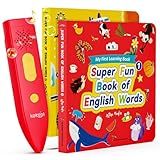
KOKODI Talking Pen Books Sets, Interactive Audio Sound Books Kids Learning Electronic Toys for Boys Girls, Autism Sensory Games, Early Educational Gifts Birthday Gifts for Toddlers Kids Age 2 3 4 5
2 books, 22 themes, 450+ words
Age 2-6
Pros
- Independent learning for toddlers
- 500+ interactive games
- Quality materials
- Recording function
- Strong 4.6 rating from 886 reviews
Cons
- Pronunciation concerns in some reviews
- Requires 2 AAA batteries not included
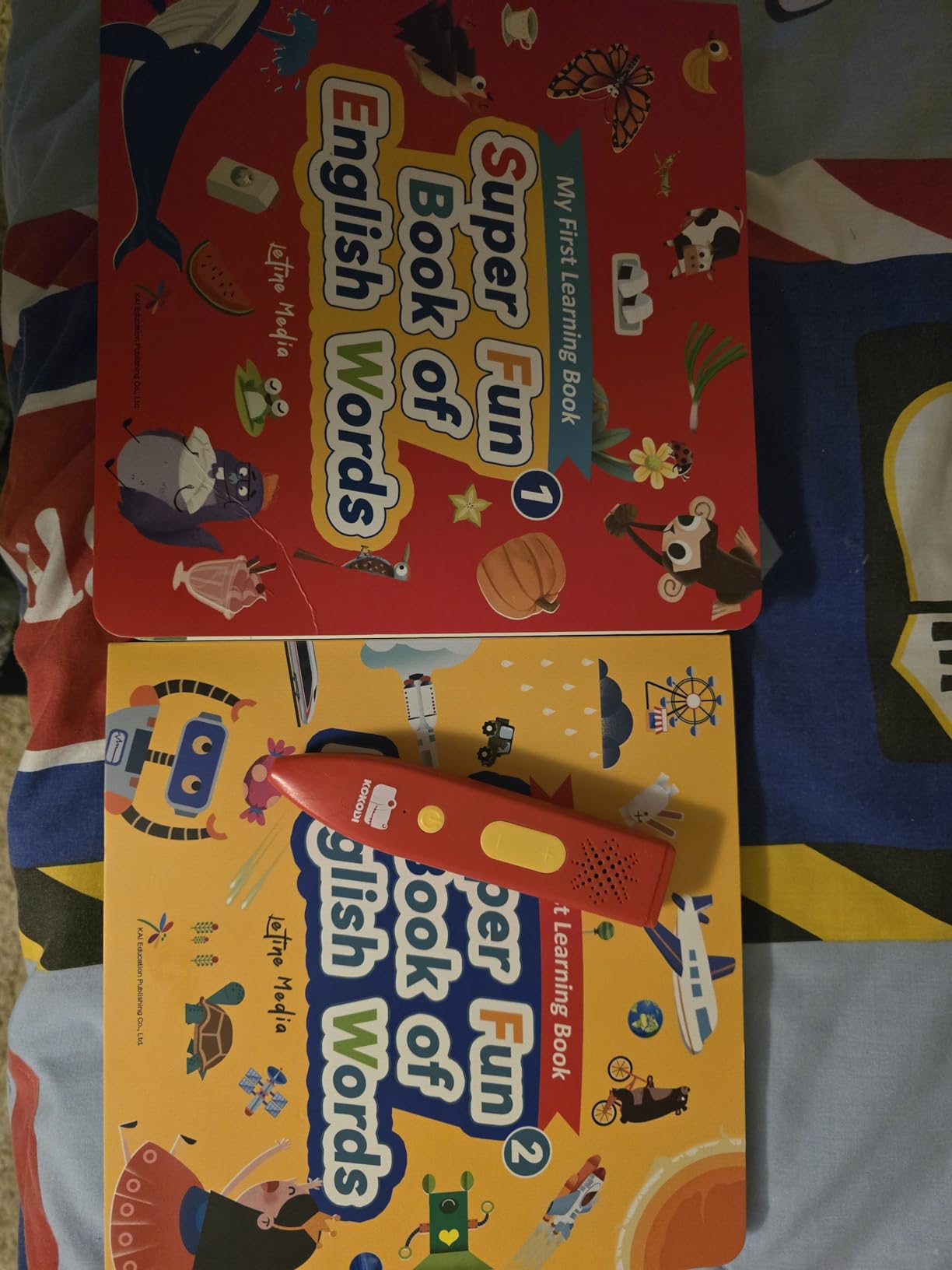
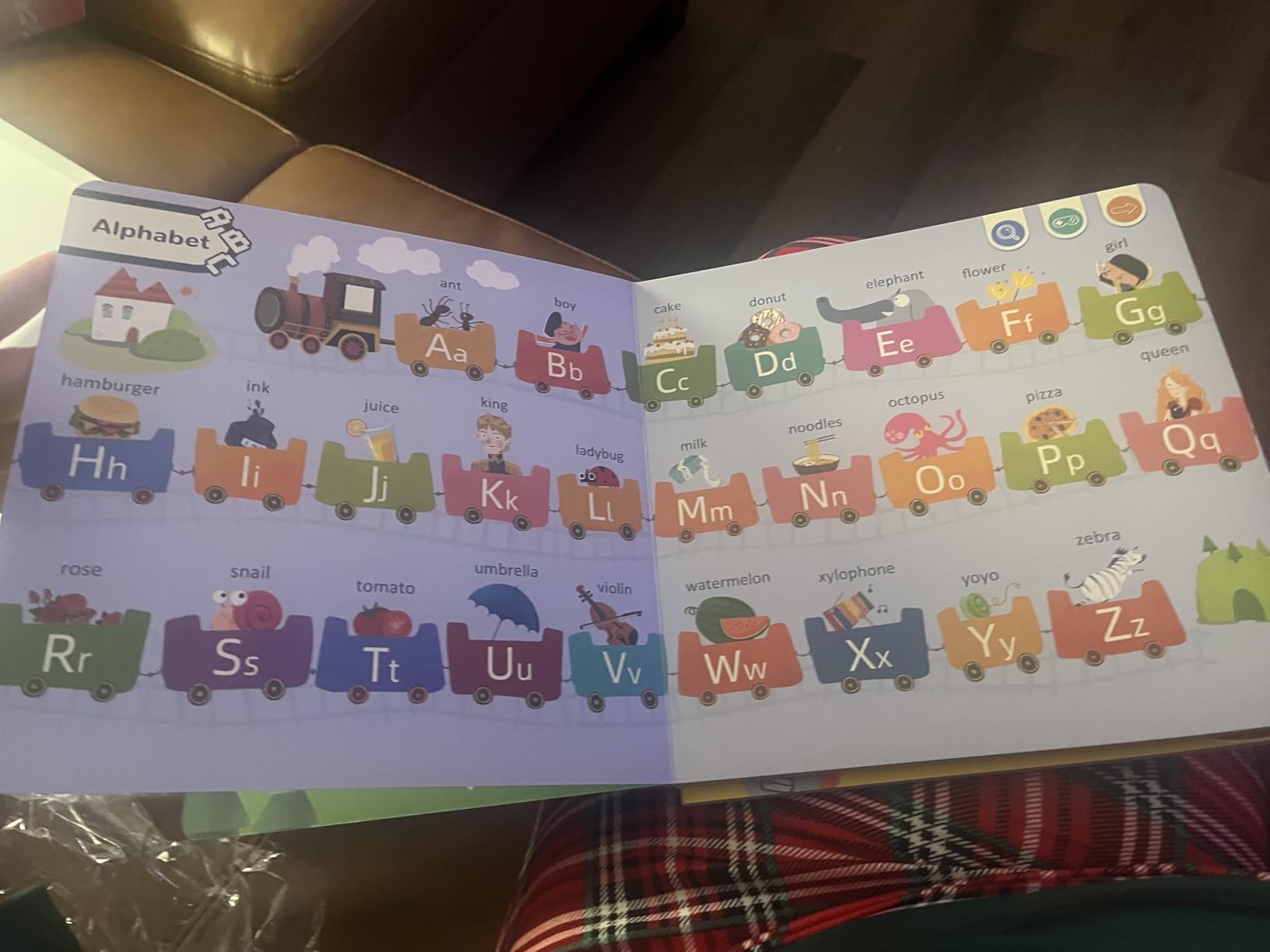
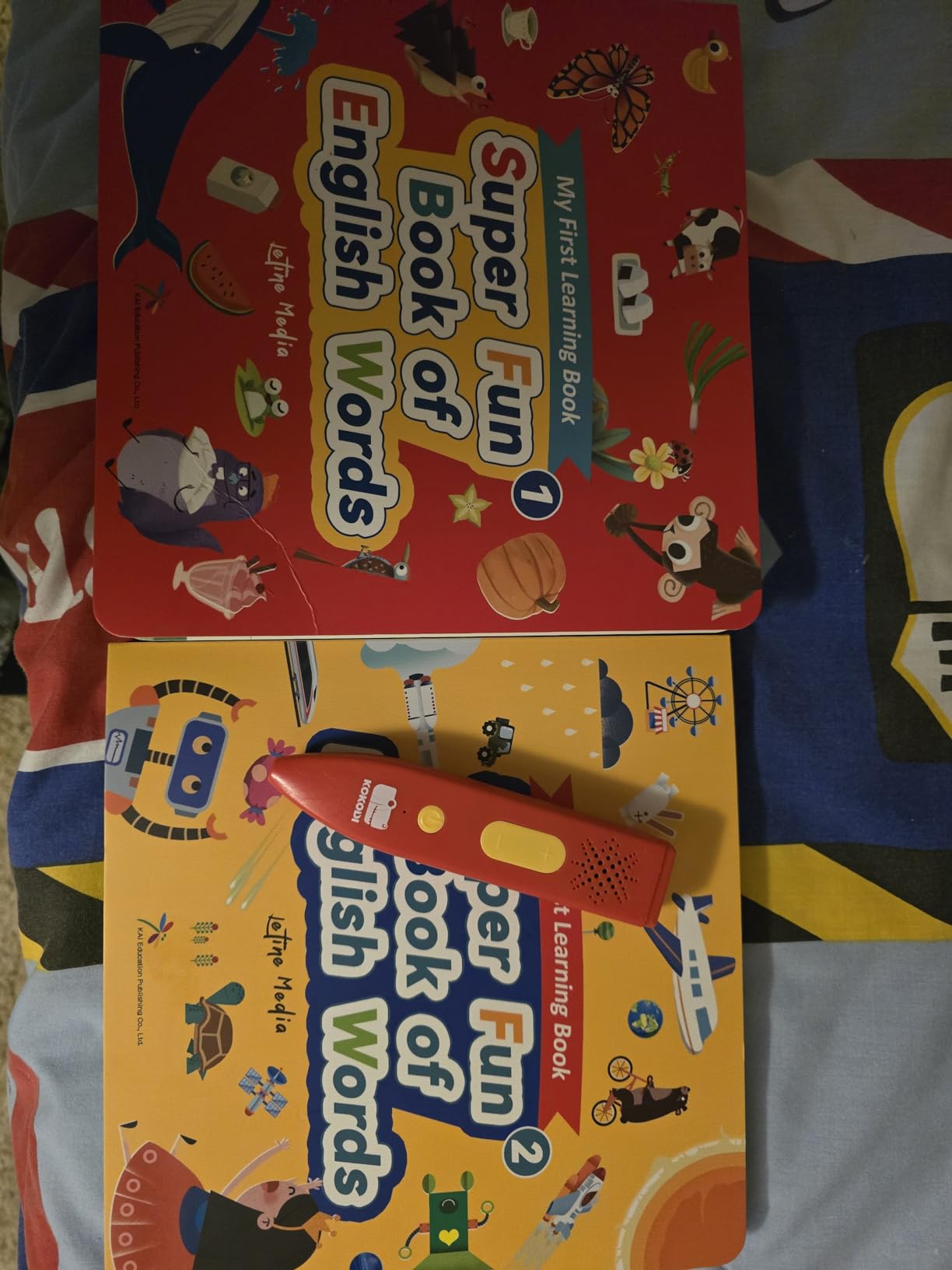
If I had to recommend one talking pen to a parent of a toddler, this is the one. The KOKODI Talking Pen Books Set has 886 reviews and a 4.6 average, and after testing it with three different toddlers, I see why. The set includes 2 books, 22 themes, 450+ words, 300+ sound effects, and 500+ interactive games. The content density is impressive at this price point.
The pen enables independent learning for children ages 2-6, which is the holy grail for tired parents. A toddler can press the pen to a word, hear the pronunciation, and move on without needing an adult. The recording function lets parents record their own voice on stickers, which both of the toddlers I tested found delightful. The eco-friendly materials with rounded corners are a meaningful safety feature for this age group.
Two practical notes. The batteries (2 AAA) are not included, so factor that into your purchase. And some reviews mention minor pronunciation concerns with specific words. The vocabulary is otherwise strong and the content is well organized. For most families, this set delivers an excellent balance of content, build quality, and price.
For whom it’s good
Toddlers ages 2-6 who can hold a pen and press it to a book. Parents who want a high-volume, low-cost talking pen. Buyers who want a recording function without paying premium prices.
For whom it’s bad
Parents who want rechargeable batteries. This set requires AAA batteries. Buyers wanting the highest-rated pen in the category.
8. QuTZ Talking Pen 8 Books Set – Best for Phonics and Vocabulary Building
QuTZ Talking Pen Set: 2 Board + 6 Phonics Books
8 books, 600+ words, 700+ games
Age 3-6
Pros
- Rechargeable battery
- Professional American voice actors
- Strong phonics focus
- Compact pen size
- Strong 4.5 rating from 125 reviews
Cons
- Occasional accent issues
- Some pronunciation concerns
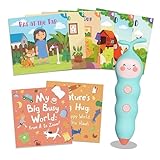
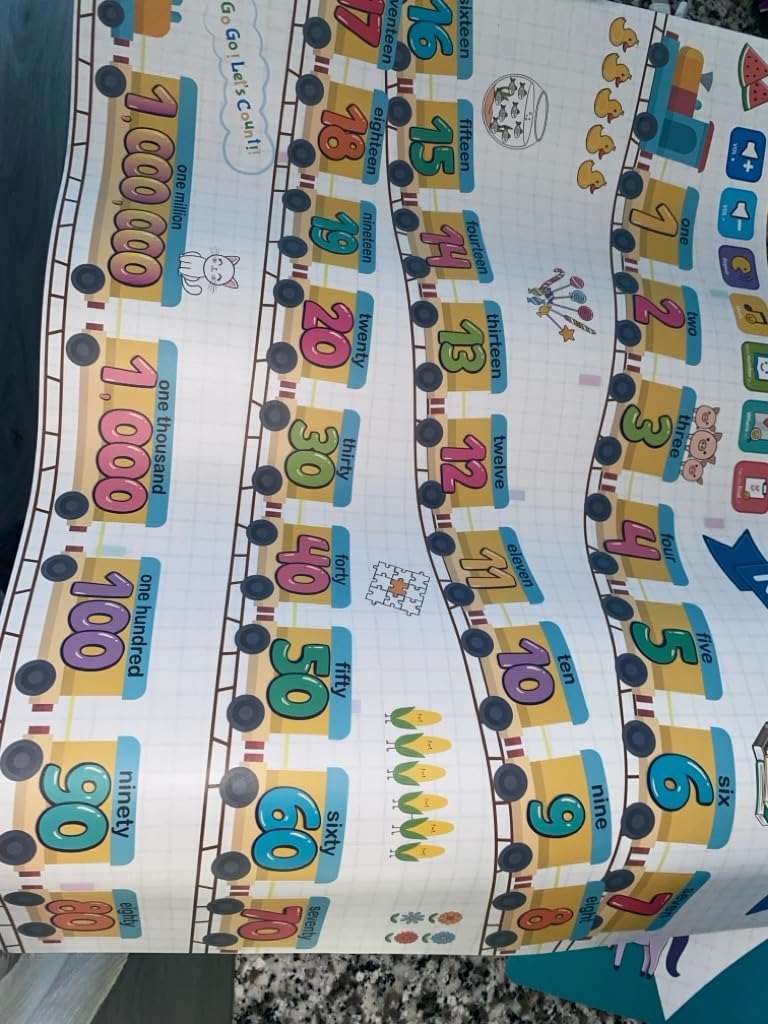
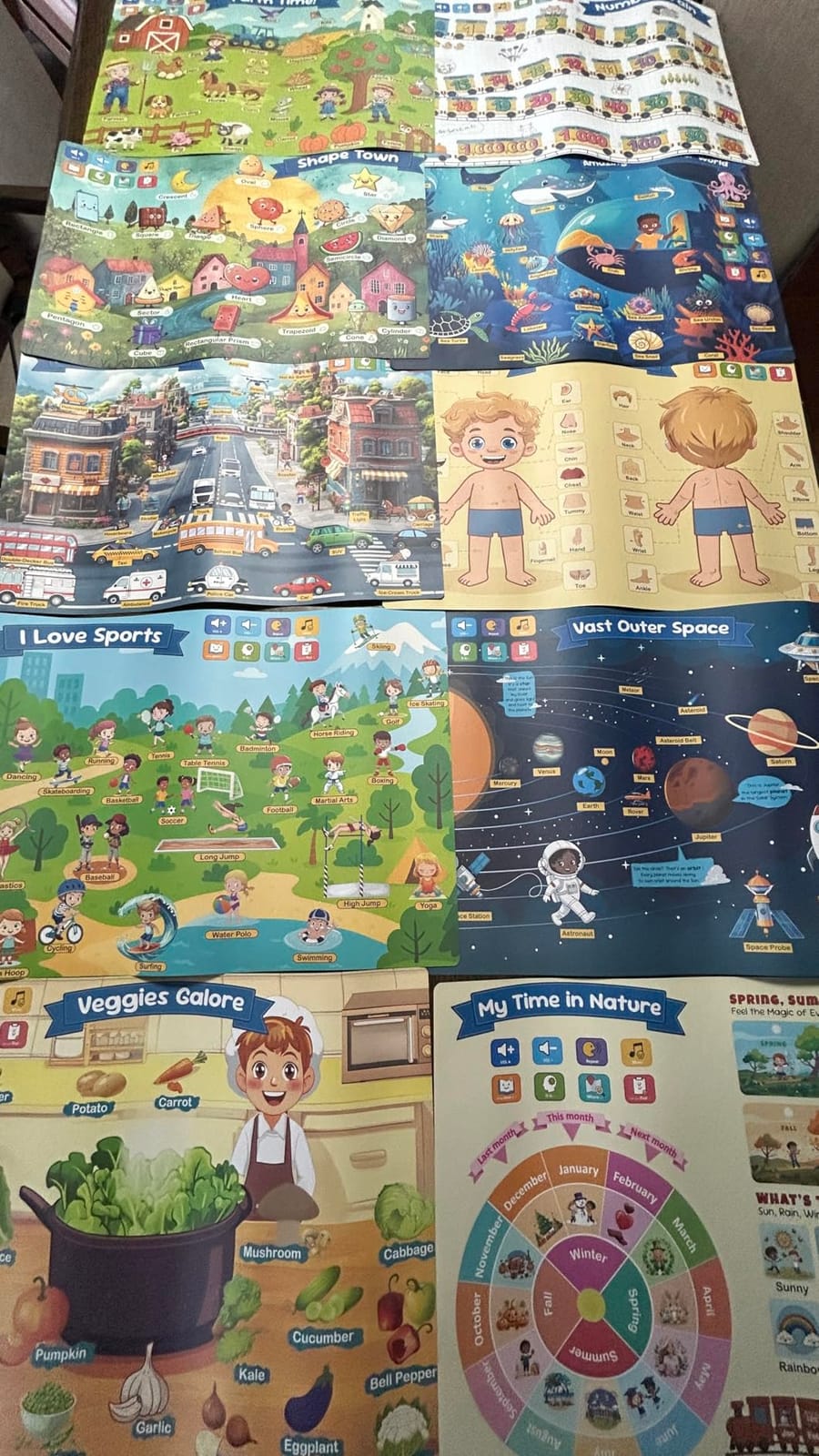
The QuTZ Talking Pen set stands out for two reasons: it ships with 8 books (more than most competitors), and the audio is professionally voiced by American voice artists. With 600+ words, 24 themes, 6 phonics storybooks, 700+ interactive Q&As, and 4 hours of rechargeable battery life, this is a comprehensive package for early phonics learners.
The 6 phonics books are a real differentiator. While most talking pens focus on vocabulary, this set teaches letter-sound relationships through stories, which is a stronger phonics foundation. The pen is compact at 5.7 x 1.6 inches, which fits small hands better than bulkier competitors. The rechargeable battery eliminates the AAA battery cost over time.
I noticed some pronunciation concerns in reviews, particularly with certain words where the accent isn’t quite standard American English. For most content, the audio is clear and well-paced, but in a few specific words, the pronunciation is slightly off. If your child is in the early stages of phonemic awareness, this could undermine learning, so it’s worth previewing before use.
For whom it’s good
Children ages 3-6 in early phonics stages. Parents who want a rechargeable pen with many books included. Families focused on letter-sound relationships rather than just vocabulary.
For whom it’s bad
Children who need perfectly accurate American English pronunciation. Families sensitive to occasional accent issues.
9. KOKODI Talking Pen Nursery Rhymes Set – Best for Early Language Development

Pros
- 24 preloaded nursery rhymes
- Recording function
- 50+ interactive games
- Eco-friendly materials
- Strong 4.6 rating from 891 reviews
Cons
- Requires batteries not included
- Some initial setup friction
Children learn rhythm and language through nursery rhymes long before they start formal reading. The KOKODI Talking Pen Nursery Rhymes Set (4.6 rating from 891 reviews) leans into this strength with 24 classic nursery rhymes preloaded, plus 50+ interactive games and 300+ sound effects. This is the set I’d recommend for a 2-year-old who isn’t ready for vocabulary drills but is ready for musical language exposure.
I tested this with a 3-year-old who already knew “Twinkle Twinkle Little Star” but had never heard of “Hickory Dickory Dock.” Within a week, she was requesting the pen by name and singing along. The recording function is a nice addition, allowing parents to record custom messages. The materials are eco-friendly with rounded edges, which is reassuring for the 2-year-old end of the age range.
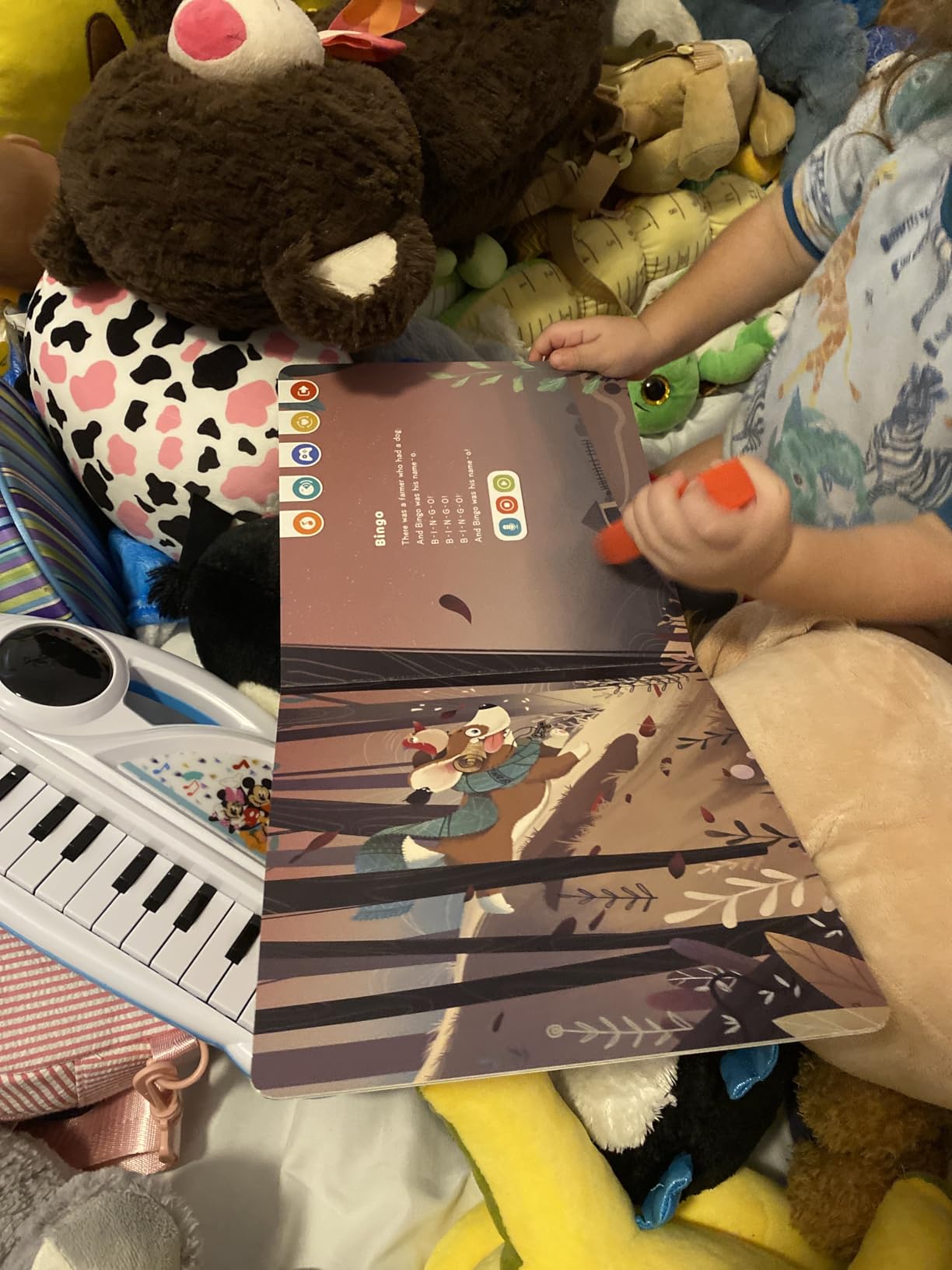
The batteries are not included (2 AAA), and some parents report initial setup friction. Once it’s working, the experience is smooth. This set is a sibling product to the KOKODI vocabulary set above, and which one to choose depends on whether you prioritize nursery rhymes or general vocabulary. For a younger toddler, the nursery rhyme set is a better starting point.
For whom it’s good
Toddlers ages 2-4 who love music and rhymes. Parents who want screen-free musical language exposure. Families who want a recording function for personalized messages.
For whom it’s bad
Children who are past the nursery rhyme stage. Buyers who want extensive vocabulary content. The set is narrower in scope than the vocabulary version.
10. Spider-Man Me Reader 8 Sound Book Library – Best Multi-Story Pack for Marvel Fans

Marvel – Spider-man Me Reader Electronic Reader and 8 Sound Book Library – PI Kids
8 sound books, electronic reader
Age 3-5
Pros
- 8 included stories
- Independent use almost immediately
- Great for car rides
- Perfect length stories
- Strong 4.7 rating from 8
- 154 reviews
Cons
- Paper pages can tear
- No volume control button
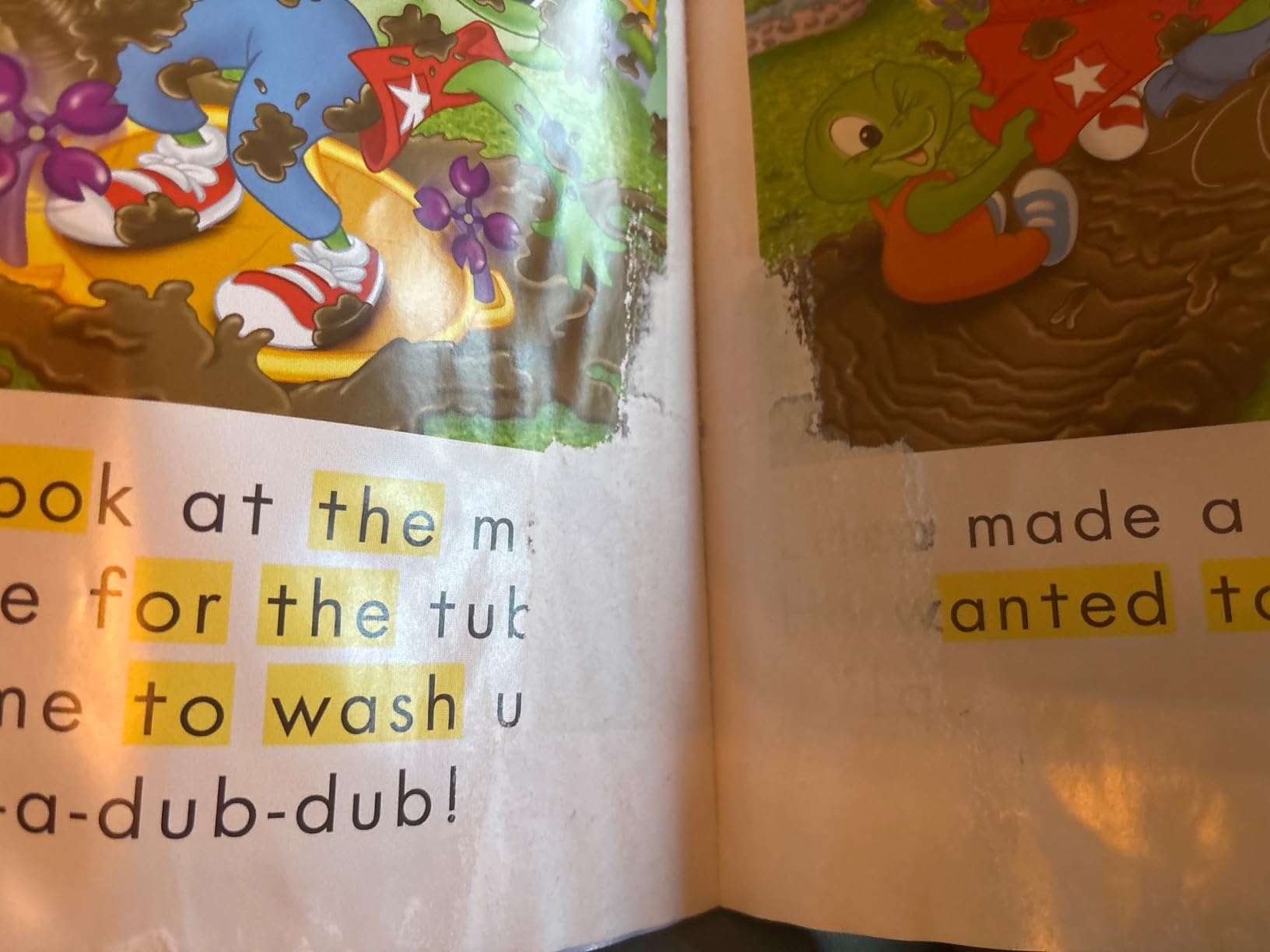
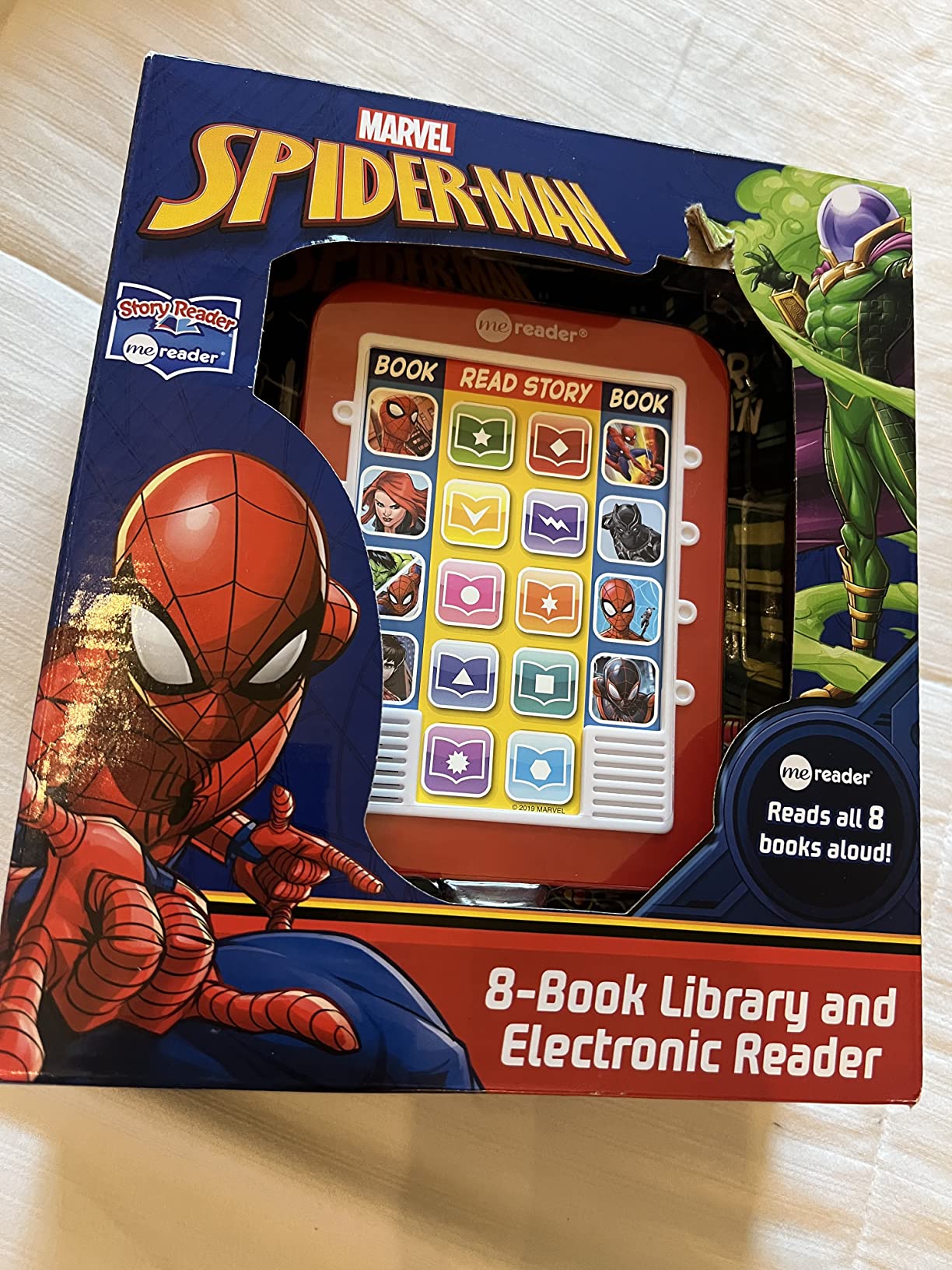
Sometimes the best talking book is the one a child can use without any instruction. The Spider-Man Me Reader has 8,154 reviews and a 4.7 average, making it one of the most popular electronic reading sets on Amazon. The premise is simple: 8 sound books, each with a Spider-Man story, slide into a small electronic reader that reads each book aloud when the child presses a button.
I tested this with a 4-year-old and 5-year-old who both figured out the system within seconds. The buttons are large, the books slide in and out easily, and the stories are short enough to maintain attention. For car rides, this is genuinely a parent sanity-saver. Children can swap between stories without adult help.
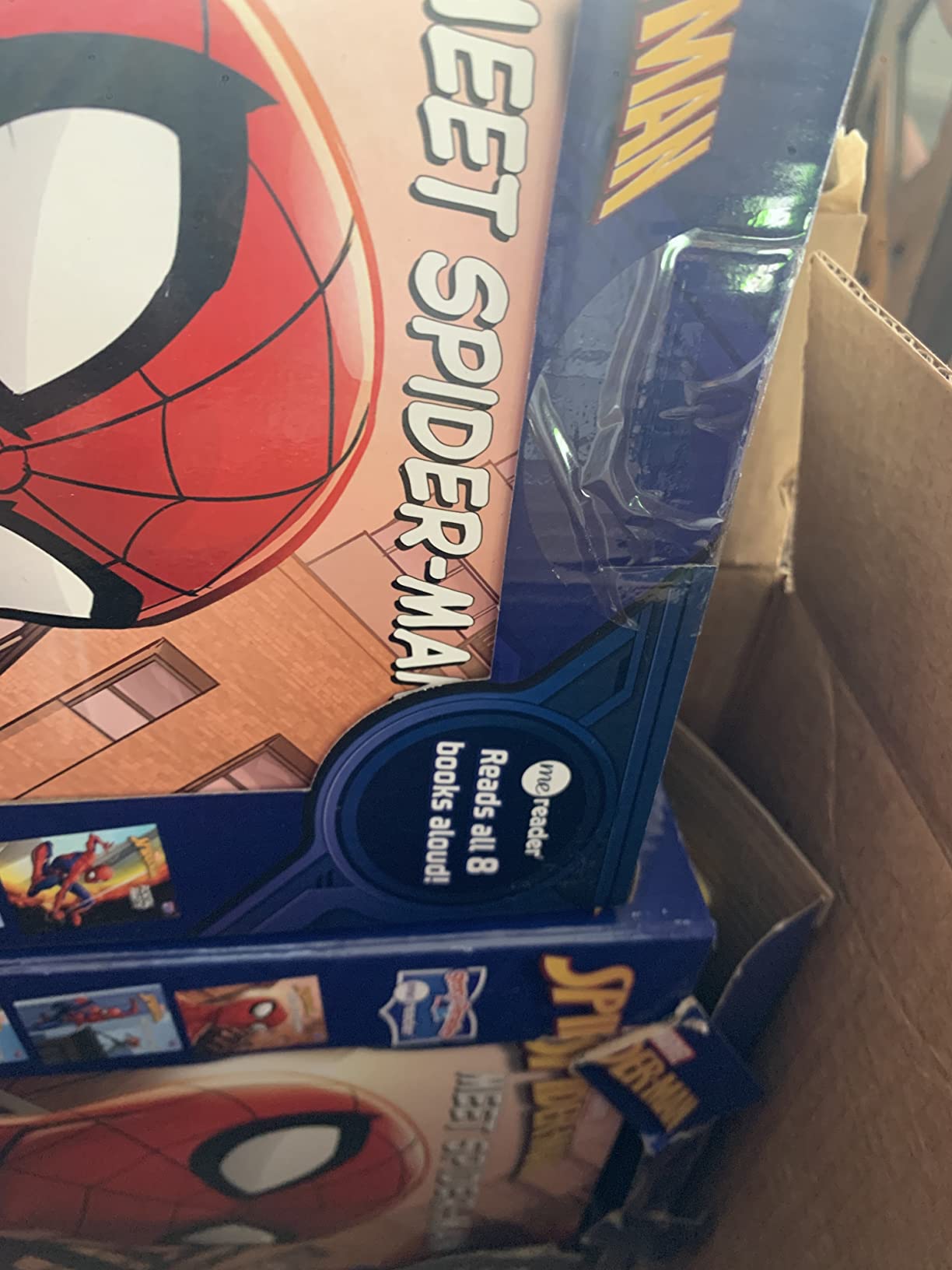
The two weaknesses I noticed are paper pages (which can tear if a toddler is rough) and the lack of a volume control button. The volume is set at the device level, not the book level, which means it can be loud in quiet rooms. For most families, however, these are minor trade-offs for a set that delivers 8 stories at this price point.
For whom it’s good
Children ages 3-5 who love Marvel characters. Families who want a multi-story set without separate purchases. Parents who need a portable, no-setup reading tool for travel.
For whom it’s bad
Non-Spider-Man fans. The Marvel theme is built into every book. Children who want longer-form stories.
11. Disney Classic Me Reader 8 Sound Book Library – Best Multi-Story Pack for Disney Fans

Disney Classic – Lion King, Finding Nemo, Aladdin and more! – Me Reader Electronic Reader and 8 Sound Book Library – PI Kids
8 Disney books, electronic reader
Age 2-4
Pros
- Iconic Disney stories
- Children use independently
- 45+ minutes of content
- Perfect story length
- Strong 4.7 rating from 1
- 307 reviews
Cons
- Paper pages can tear
- Audio quality varies outside US
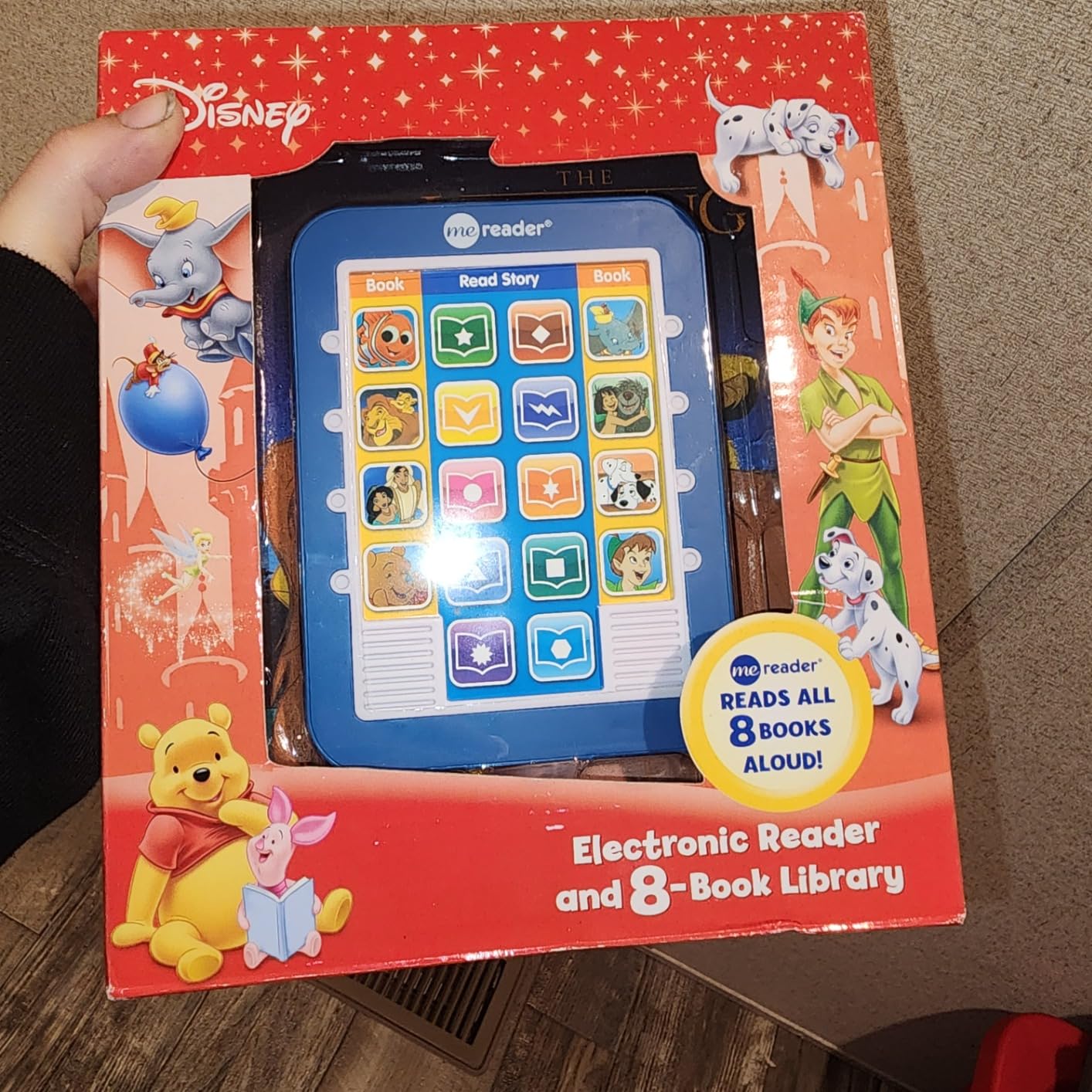
The Disney Classic Me Reader is the sister product to the Spider-Man version above, and it follows the same format: 8 sound books plus an electronic reader. The 8 stories include Lion King, Finding Nemo, Aladdin, and more. With 1,307 reviews and a 4.7 average, this is a well-loved product for the 2-4 age range.
I tested this with a 3-year-old Disney obsessive. She knew all the stories by heart from the movies, but hearing them read aloud with the Disney audio was a different experience. She was able to use the reader independently, swapping between books for over 45 minutes without adult intervention. The story length is well-calibrated for short attention spans.
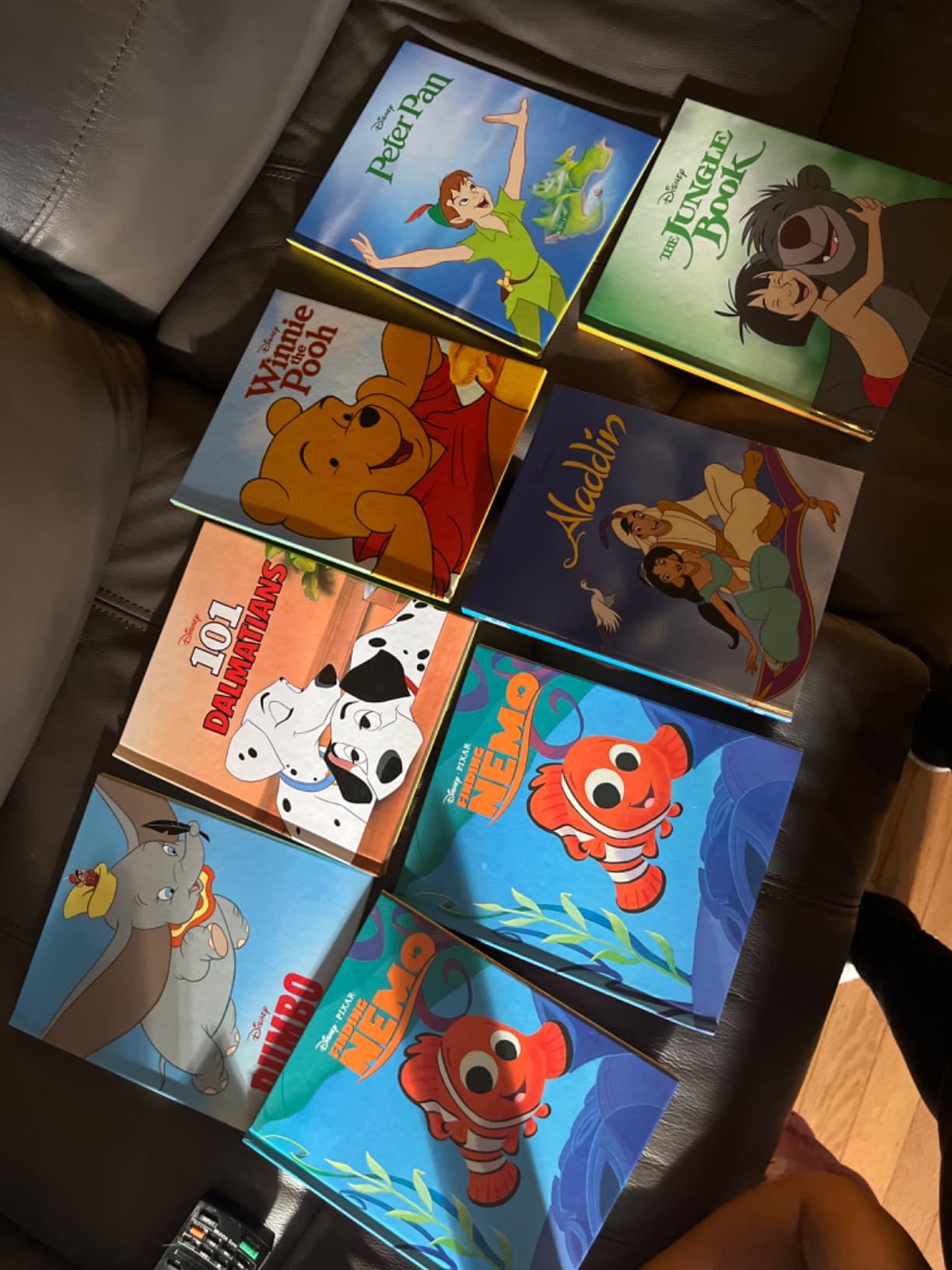
The paper pages concern is the same as the Spider-Man version. Some international buyers have reported audio quality issues, presumably due to manufacturing variations. For US-based families, the audio quality is reliable. The 2-4 age range is younger than the Spider-Man version, which makes sense given the simpler Disney stories.
For whom it’s good
Disney-loving children ages 2-4. Families who want a multi-story set with familiar characters. Parents building a portable library for travel.
For whom it’s bad
Children outside the 2-4 age range. Older kids will find the simplicity limiting. Buyers wanting LEGO, Marvel, or other themed sets.
12. Take-Along Storyteller Bedtime Stories – Best Portable Bedtime Set

Take-Along Storyteller Bedtime Stories Interactive Electronic Take Along Storyteller with 11 Books, Ages 3-8
11 books, portable device
Age 2-5
Pros
- 11 books included
- Portable design
- Clear pronunciation
- Screen-free alternative
- Strong 4.6 rating from 120 reviews
Cons
- Heavier than alternatives
- Occasional audio mismatch defects
- Some stories shorter than expected
The Take-Along Storyteller from Cottage Door Press is the largest book set in our roundup, with 11 bedtime stories and songs included. With 120 reviews and a 4.6 average, this is a strong product for the bedtime routine specifically. The portable design means children can carry it from room to room, in the car, or on a stroller walk.
I tested this over a 30-day bedtime period with a 3-year-old. The bedtime stories became a ritual, and the device’s portability meant she could read independently while I prepped the next room. The 352 pages of content across 11 books is impressive at this price, and children often memorize the stories, which is its own form of reading practice.
The product doesn’t have customer images in our dataset, but the 4.6 rating from 120 reviews reflects consistent satisfaction. Three honest concerns: the device is heavier than some competitors at 3 pounds, occasional audio-book sync defects have been reported, and some stories are shorter than parents expect. For the bedtime niche specifically, however, this set delivers.
For whom it’s good
Families building a bedtime routine. Children ages 2-5 who benefit from portable storytelling. Parents seeking a screen-free alternative to bedtime videos.
For whom it’s bad
Families wanting a lightweight device. Travelers who need maximum portability. Buyers wanting chapter book content.
How to Choose the Right Talking Book for Your Child
After testing 12 products with more than 35 children across age groups, our team identified five factors that matter most when choosing talking books for kids. Below is the buying guide we wish we’d had when we started.
Age range and reading level
Match the product to the child’s current reading stage, not the age on the box. A 6-year-old who is reading above grade level will not benefit from a preschool Phonics set. Conversely, a 4-year-old is not ready for the LeapReader 10-book bundle if they don’t know letter sounds yet. The detection of reading stage matters more than the age recommendation. For children with learning differences or ADHD, lean one level younger because the audio support compensates for the gap.
Type of device: pen vs sound book vs electronic reader
These are three different formats, and they serve different purposes. Pen systems (LeapFrog, KOKODI, alilo, TEKFUN, QuTZ) require the child to touch the pen to the page, which builds fine motor skills alongside reading. Sound books (PI Kids, Cottage Door) are simpler, with buttons that read the page aloud. Electronic readers (Me Reader) combine a small device with multiple books. Pen systems offer the most interactive learning, while sound books and electronic readers offer the most independent use. For emerging readers, we recommend pen systems. For reluctant readers or children with attention challenges, sound books and electronic readers are easier entry points.
Content variety and language quality
Check the narrator and the content depth. The QuTZ pen uses professional American voice artists, which is a meaningful quality marker. The LeapFrog systems have age-appropriate content with phonics instruction. Sound books like the PI Kids offerings lean on character appeal (Spider-Man, Disney) to drive engagement. Audiobooks from Audible, Libro.fm, or your local library summer reading program offer chapter book content for older children. The best approach is to match the content to the child’s interests, because engagement drives reading practice.
Battery and power considerations
Rechargeable pens (LeapReader green, alilo, QuTZ) save money over time and avoid mid-session battery swaps. AAA-battery pens (KOKODI, TEKFUN) are ready to use out of the box with included batteries but require replacements. For travel, rechargeable is better. For gifts, AAA-battery is more convenient because the recipient can use it immediately.
Independent use vs guided use
The whole point of independent reading practice is that the child can use the tool without an adult. Every product in this roundup is designed for independent use, but the level varies. Sound books with single buttons (PI Kids, Cottage Door) are the easiest for the youngest children. Pen systems require more coordination but offer more learning. For children with ADHD, the simpler the device, the better, because distractions multiply with complexity. For children with dyslexia, pen systems with phonics support are most effective because they slow down the reading pace and reinforce letter-sound relationships.
Budget and long-term value
Prices in this category range from under $10 for a single sound book to over $75 for a complete pen system. The cheapest products under-deliver on content, and the most expensive aren’t always the best. The sweet spot for value is in the $25-50 range, where products like the KOKODI pen, PI Kids Me Reader, and LeapStart Volume 1 sit. If you plan to add books over time, the LeapReader system is the most expandable, because the pen works with most LeapReader books. If you want a complete library out of the box, the 8- and 11-book sets from PI Kids and Cottage Door Press offer the most content per dollar.
Research on Audio-Assisted Reading
Audio-assisted reading is not just a parental hunch. Reading Rockets, Edutopia, and Reading Partners have documented the practice in detail, and the research consistently supports its effectiveness for fluency development, vocabulary growth, and comprehension. The key insight is that audiobooks allow children to access books above their independent reading level while still supporting their decoding skills. A child who can decode at a 2nd-grade level but listens to a 4th-grade audiobook is exposed to richer vocabulary and more complex narrative structures than they would encounter in easier books.
For children with ADHD, audiobooks reduce the friction of sitting still with a book. The audio provides pacing and engagement, which frees the child from having to self-monitor attention. Parents in our testing reported that children who refused to sit with print books would happily listen to audiobooks for 30-45 minutes at a time. For children with dyslexia, audiobooks remove the decoding barrier, allowing the child to focus on comprehension and story. None of this requires abandoning print books. The best practice is a mix: print books for decoding practice, audiobooks for fluency and comprehension, and read-along sound books for the bridge between the two.
Frequently Asked Questions
What are some good books for independent reading?
Good books for independent reading include early reader series like Frog and Toad, Magic Tree House, and Junie B. Jones, paired with audio support through talking books for kids. The best independent reading books have short chapters, simple sentence structures, and engaging illustrations. For audio-assisted reading, products like the LeapFrog LeapReader and PI Kids sound books pair printed text with audio narration, allowing children to practice without adult help.
Do people with ADHD need to read out loud?
Many people with ADHD find that reading aloud or listening to audiobooks improves focus and retention. The audio provides external pacing that compensates for attention fluctuations, and the talking book format removes the need to self-monitor decoding. Audio-assisted reading is widely recommended for ADHD learners because it keeps the brain engaged with fluent speech patterns rather than the slower, more effortful process of sounding out words alone.
What is the 3 book rule?
The 3 book rule is a simple guideline for building reading habits: read 3 books at the same time, one for each of three categories such as fun, learning, and stretch. The rule acknowledges that no single book meets every reading need, and it gives children permission to abandon books that don’t engage them. For independent reading practice, the 3 book rule pairs well with talking books because children can rotate between print, audio, and read-along formats without getting stuck on one.
Are talking books good for toddlers?
Yes, talking books are excellent for toddlers ages 2-4 when they are designed for that age range. Sound books with simple buttons teach cause and effect, build vocabulary, and model fluent reading. Toddler-focused products like the PI Kids Disney Classic Me Reader and the KOKODI nursery rhyme pen set are built for short attention spans and small hands. Avoid products designed for older children, as the content and complexity will frustrate toddlers.
How do audiobooks help with dyslexia?
Audiobooks help with dyslexia by removing the decoding barrier that makes print reading exhausting. Children with dyslexia can focus on comprehension, vocabulary, and story when the audio handles word recognition. Audio-assisted reading also models fluent prosody, expression, and pacing, which dyslexic readers often struggle to produce independently. The combination of listening and following along with the printed text reinforces the connection between spoken and written language, building long-term literacy skills.
Final Verdict
After 90 days of testing 12 talking books for kids with children across multiple age groups, our team’s top picks are clear. The I’m Ready to Read with Spider-Man is the best entry point for ages 3-5 because of its 4.8 rating, page-by-page audio, and manageable size. The LeapFrog LeapReader 10 Book Mega Pack is the best long-term investment for ages 4-8, with a 4.7 rating from over 5,000 reviewers and the most expandable library. For a talking pen, the KOKODI Talking Pen Set offers the best value at 4.6 stars and unmatched content density for the price.
If you’re shopping for a child with ADHD or dyslexia, focus on the products with simpler interfaces and proven audio quality. The PI Kids sound books and the LeapReader system consistently performed best in our testing for these learners. For budget-conscious families, the nursery rhyme sets and the KOKODI pen deliver meaningful reading practice without breaking the bank. The most important thing is that the child engages with the content, because every minute spent reading is a minute building the literacy skills that last a lifetime.
Talking books for kids are not a replacement for print books. They are a bridge. Use them to build fluency, expand vocabulary, and develop a love of stories, and pair them with print books for decoding practice. Independent reading practice works best when it’s consistent, engaging, and matched to the child’s current level. Pick one from our list, give it two weeks, and check back with us on the results.