
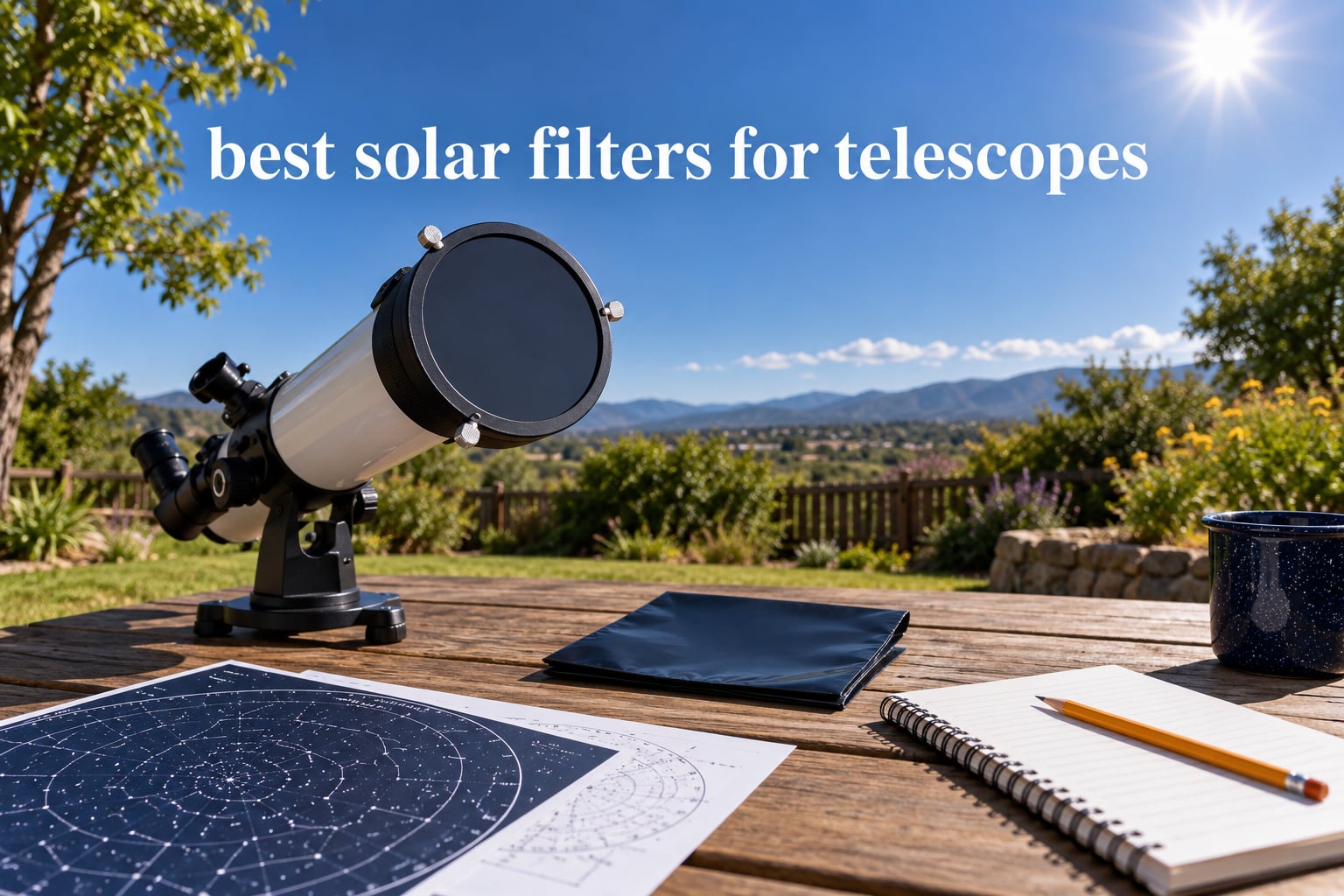
A safe solar filter for a telescope is a metalized polymer film or coated glass filter, certified to the ISO 12312-2:2015(E) standard and mounted securely over the front of your objective, so it removes more than 99.999% of the Sun’s light before any of it enters the tube.
That last part matters more than any brand name. A telescope concentrates sunlight 100 to 1,000 times more strongly than your naked eye, so a filter clipped over the eyepiece at the back of the scope lets through enough energy to cook your retina, your eyepiece glass, and sometimes the tube itself. The filter has to go on the front. Every time. No exceptions, no partial phases, no “just for a second.”
After a season of putting filters on eight different scopes, the solar filters for telescopes in this roundup came down to a short list of certified film sheets, fitted Celestron EclipSmart cells, and one adjustable aluminum holder. All eight are genuine front-mounted filters, not the yellow planetary or moon filters that have crept into a lot of competing “solar filter” lists.
We also pulled together the basics of telescope care and beginner gear, including our guide to the best telescopes for kids, since the same size-measuring logic applies whether the scope belongs to a kid or a club outreach program. If you are starting from scratch rather than adding a filter, how we test other optical gear explains the process we use across equipment reviews.
Table of Contents
Top 3 Solar Filter Picks for Telescopes for October 2026
These three cover most people. One is the best overall sheet for cutting your own filter, one is the better buy per square inch, and one is the ready-to-use fitted cell if you never want to touch tape again.
Thousand Oaks 4×4 Solar Filter Sheet
- Black polymer film
- 5-year guarantee
- Natural orange sun
- Cut to size

Thousand Oaks 6×6 Solar Filter Sheet
- Silver-black polymer film
- Larger 6x6 sheet
- Natural orange sun
- Multiple cutouts per sheet

Celestron EclipSmart 8 Inch Solar Filter
- ISO 12312-2 certified
- Hook-and-loop straps
- Fits 8 inch SCT and EdgeHD
- 2-year warranty
Every Solar Filter in This Roundup Compared for October 2026
All eight products below are genuine front-mounted solar filters. Sizes listed refer to what each unit is built to cover, and the film type column tells you whether you are getting polymer sheeting or a fitted cell.
| Product | Specs | Action |
|---|---|---|
| Thousand Oaks 4×4 Solar Filter Sheet |
|
Check Latest Price |
| Thousand Oaks 6×6 Solar Filter Sheet |
|
Check Latest Price |
 Thousand Oaks 8×8 Solar Filter Sheet Thousand Oaks 8×8 Solar Filter Sheet |
|
Check Latest Price |
| Celestron EclipSmart 8 Inch Solar Filter |
|
Check Latest Price |
 Celestron EclipSmart Universal Solar Filter Celestron EclipSmart Universal Solar Filter |
|
Check Latest Price |
 Celestron EclipSmart 127mm and 130mm Filter Celestron EclipSmart 127mm and 130mm Filter |
|
Check Latest Price |
 Astromania 100mm Adjustable Metal Cap Astromania 100mm Adjustable Metal Cap |
|
Check Latest Price |
 Rainbow Symphony 70mm Black Polymer Rainbow Symphony 70mm Black Polymer |
|
Check Latest Price |
1. Thousand Oaks 4×4 Solar Filter Sheet – Best Overall Solar Filter for Telescopes
4″x4″ Solar Filter Sheet for Telescopes, Binoculars and Cameras
4 inch by 4 inch black polymer sheet
Model BP-4
Suitable for telescopes, binoculars and cameras
5-year guarantee
Pros
- Thousands of owner reviews with a 4.5 average
- Cuts cleanly to any diameter you measure
- Works for telescopes
- binoculars and cameras
- Five-year guarantee on the filtering properties
Cons
- Thin film scratches easily
- You must build your own mounting
- No protective glass over the film
I have cut more filters from 4×4 sheets than any other size in this roundup. For a 70mm or 80mm refractor, a 4×4 inch square is the sweet spot: large enough to overhang the tube lip by a good margin on all four sides, small enough that trimming is quick and you are not wasting material on an oversized scope.
The film is black polymer rather than loose Mylar, and the filtering property sits inside the substrate rather than on the surface, which is why a scratch across the face does not open a hole into full sunlight. Thousand Oaks has been making these in Arizona for more than 30 years, and the filter gives you a natural orange Sun instead of a flat white disc.
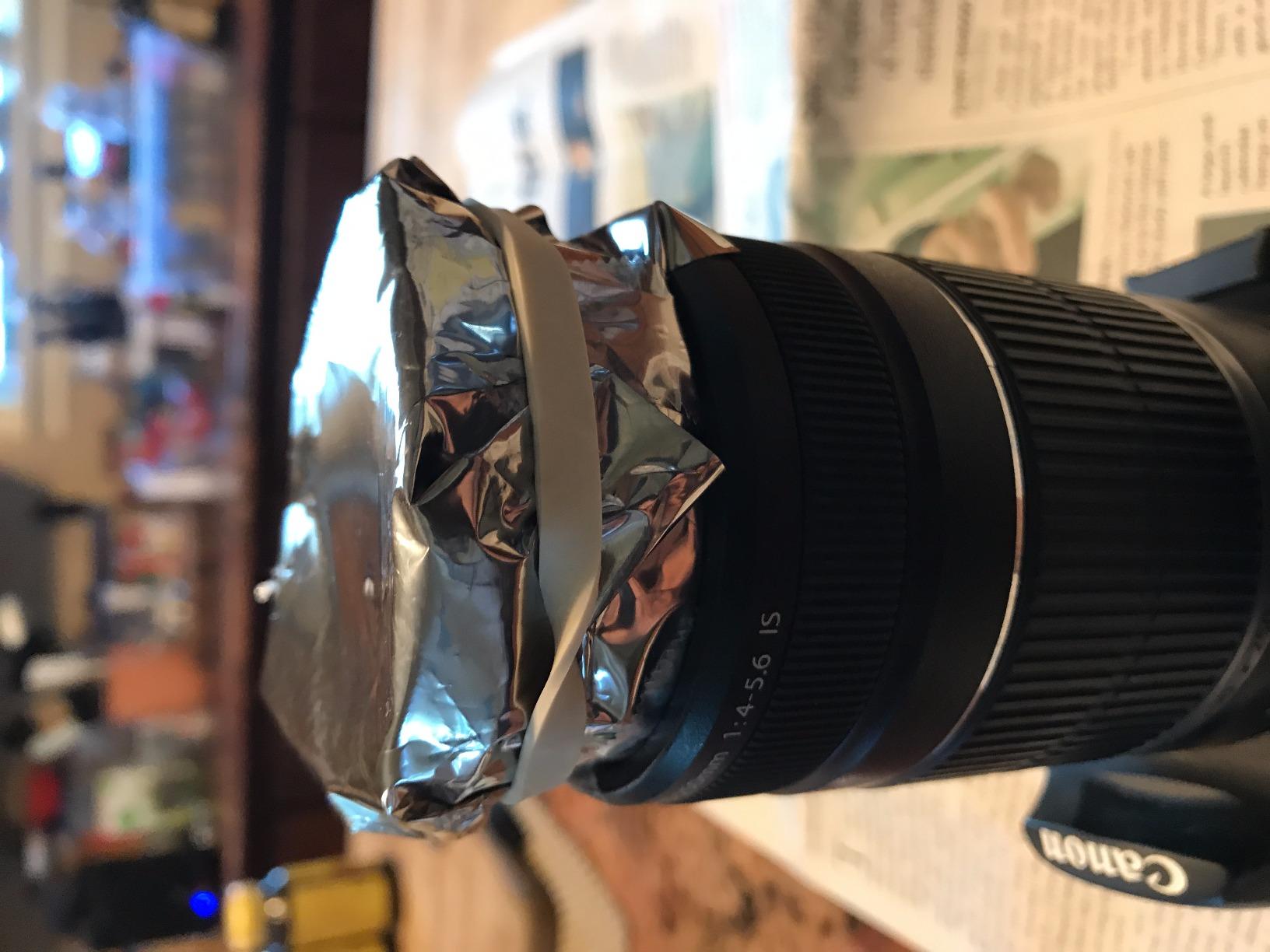
What you give up is any kind of structure. There is no ring, no clamp, no strap, nothing holding this over your objective once you tape it there. On a windy day, or if someone bumps the tripod, that is the failure mode. Positive attachment matters, which is why every fitted product below exists.
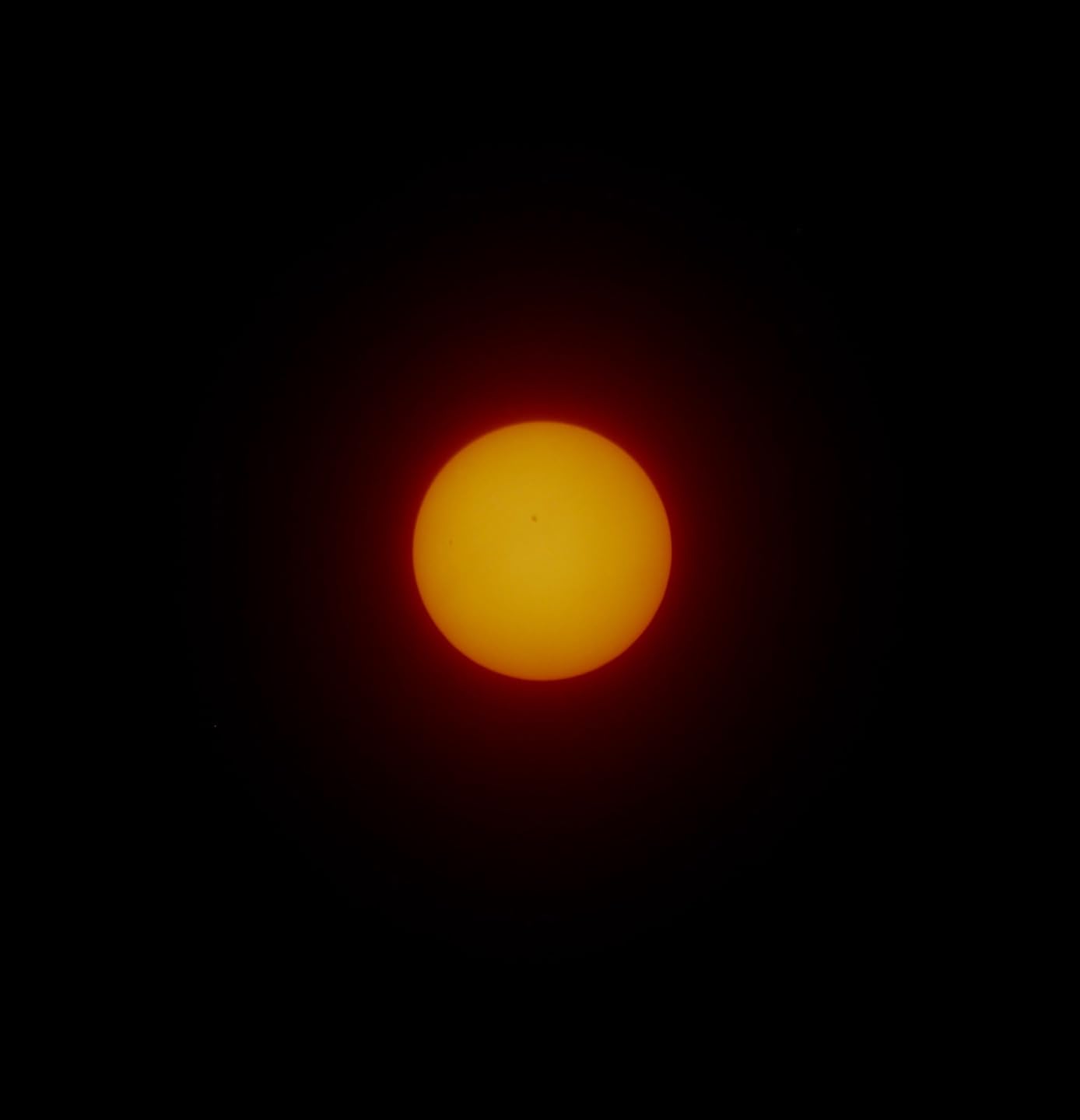
Sunspot detail and granulation are both plainly visible through it, and the same sheet works on binoculars or a camera front element. If you want a walkaround filter for a small scope you carry to outreach sessions, one sheet can be cut into several cutouts at once.
Is the 4×4 sheet big enough for your telescope?
It works if your objective cell measures about 90mm or less across the outer rim. A 4×4 inch sheet gives you roughly 101mm of material per side, so once you cut a square that clears the tube and fold the excess around the lip, a 70mm, 80mm, or 90mm class tube is comfortably covered with margin on every edge.
If your tube is 100mm or wider, step up a size. Trying to stretch a 4×4 across a wide cell is exactly the shortcut that leaves a gap, and a gap means an unfiltered beam on part of the aperture.
Who should skip the DIY sheet approach?
Anyone who is not comfortable cutting film and taping it, and anyone whose scope has no place to anchor a cell. A Dobsonian with a wide tube, a truss telescope, or a Schmidt-Cassegrain where you would have to balance something on the dew shield, are all cases where a fitted cell is worth the extra spend.
It is also the wrong pick for a person who has already damaged a filter by poking at it. There is no glass to protect this film, and every scratch is a future question mark.
2. Thousand Oaks 6×6 Solar Filter Sheet – Best Value per Square Inch
Thousand Oaks Optical 6″x6″ Solar Filter Sheet for Telescopes, Binoculars and Cameras
6 inch by 6 inch silver-black polymer sheet
Model BP-6X6
Covers larger apertures or multiple scopes
Natural orange sun
Pros
- Largest cutout options from one sheet
- Better value per square inch than the 4x4
- 4.6 average across owner reviews
- Thousand Oaks manufacturing track record
Cons
- Thin film needs careful handling
- Mounting is entirely up to you
- No protective glass layer
The 6×6 is the same certified polymer family as the 4×4, just bigger. Silver-black polymer this time, same manufacturer, same natural orange Sun, same requirement for a solid mount. If you own one large Dobsonian and one small refractor, this single sheet covers both.
Our favorite use is cutting three or four different diameters from one sheet for a club or school night, since the surplus material still folds over the tube lip for a light-tight seal. The 6×6 has the highest average rating in this roundup at 4.6 across more than a thousand reviews, which tells you the material itself is not the weak link in this category.
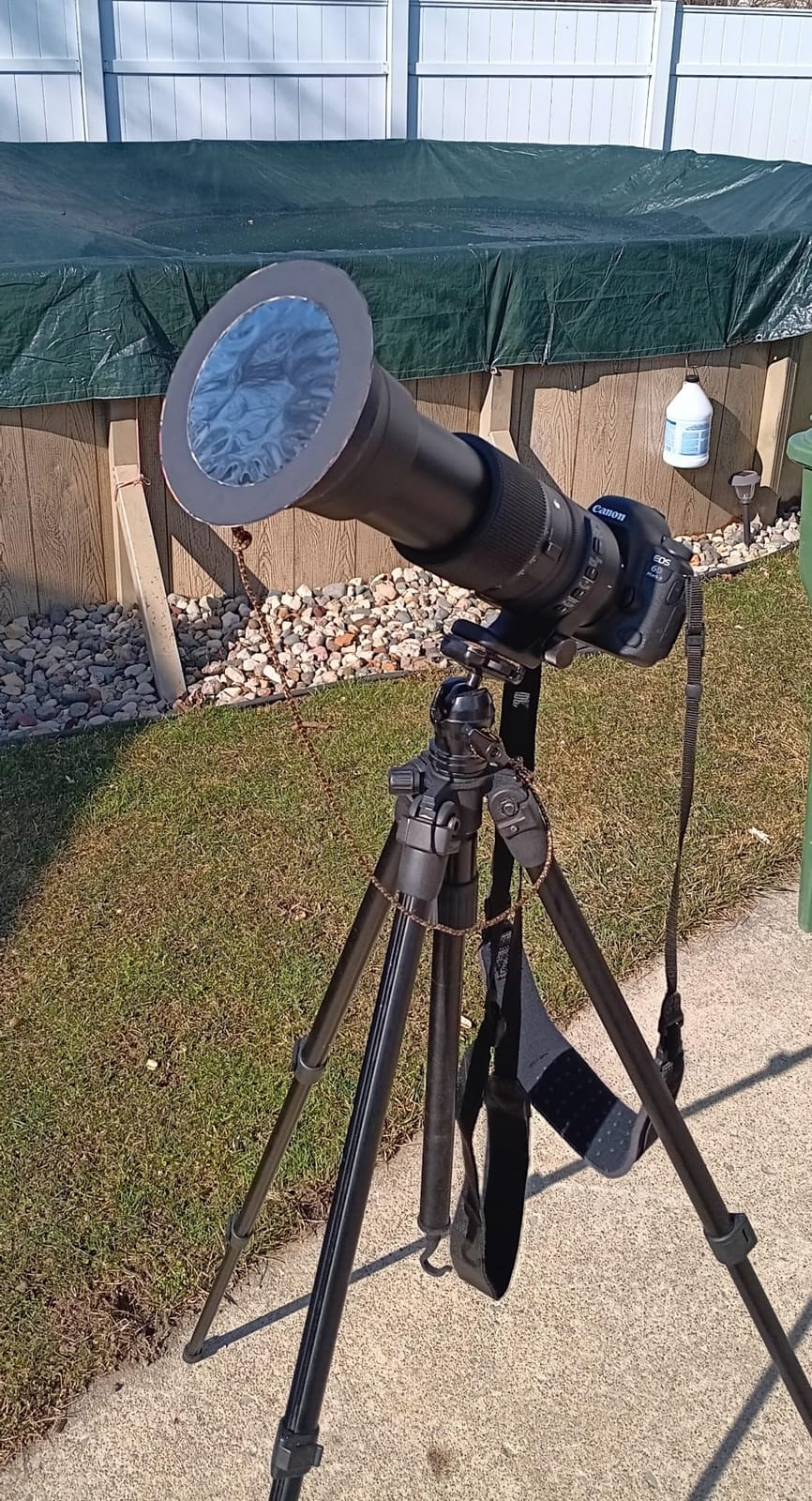
The material behaves the same way the smaller sheet does. It scratches if you let it drag across a workbench, and it will crease if you fold it sharply rather than rolling the excess around the lip. Handling it between two sheets of clean paper while you trim solves most of that.
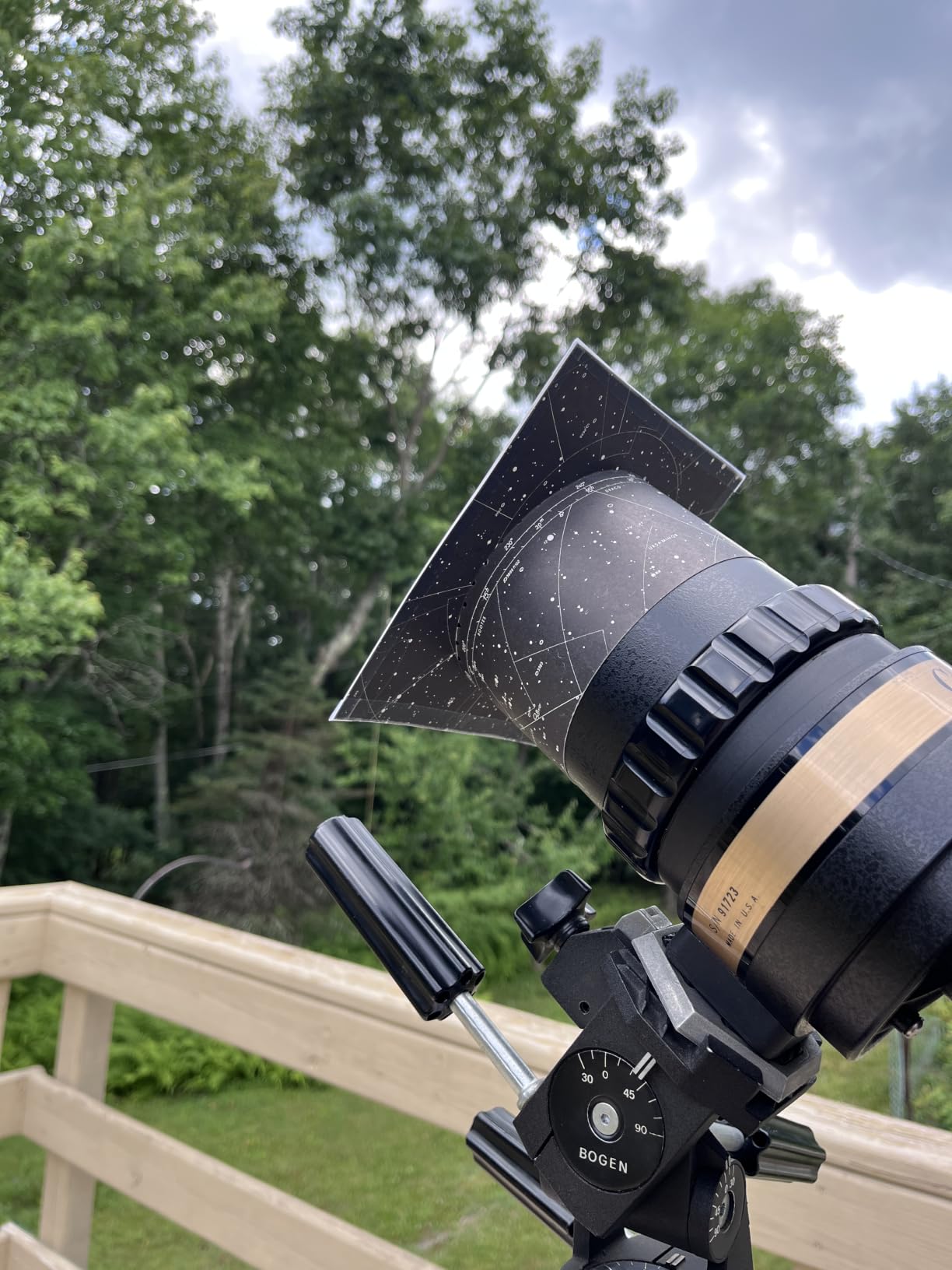
Users of the deeper tint note the image is darker than expected with low-power, long-draw refractors, particularly older achromats. That is not a defect. If the Sun looks dim, the honest first check is the aperture ratio of your telescope rather than the filter.
Is 6×6 better than 4×4 for a single small scope?
Not optically. They are the same certified film, so there is no difference in the view. The 6×6 wins when you need a bigger cutout, several cutouts, or margin to spare on a tube with an awkward lip.
For a 60mm or 70mm tabletop refractor that you already own filters for, the 4×4 is the tidier purchase. For a first filter on an 8 inch or 10 inch Dobsonian, the 6×6 or the 8×8 is the sensible starting point.
What about making more than one filter from a sheet?
That is the strongest argument for this size, and reviewers use it constantly for family scopes and club nights. Cut each piece roughly an inch larger than the measured tube, trim the corners so the film can fold without creasing the aperture, and sandwich the excess over the tube lip.
Label each one with a pencil and store them flat between clean sheets. Pinholes show up fastest in film that has been folded and refolded for weeks.
3. Thousand Oaks 8×8 Solar Filter Sheet – Best for Large Apertures
8″x8″ Solar Filter Sheet for Telescopes, Binoculars and Cameras
8 inch by 8 inch black polymer sheet
Model BP-8
Weighs 1.6 ounces
Covers large objectives
Pros
- Biggest sheet covers the widest apertures
- Only 1.6 ounces so it adds no balance drag
- 5-year guarantee on filtering properties
- Cut several large filters from one sheet
Cons
- Thin fragile film
- DIY fabrication required
- Higher absolute cost than smaller sheets
If you own a big light bucket, this is the sheet that makes sense. An 8×8 inch square gives you roughly 203mm of material per side, so a 10 inch or 12 inch class tube gets real overlap on the lip instead of a desperate few millimeters.
The weight matters more than people expect. At 1.6 ounces, the sheet adds essentially nothing to the balance of a large tube, which is not true of many of the fabricated glass cells people try on bigger scopes. The 5-year guarantee on the filtering properties also outlasts most of the informal DIY mounting methods.
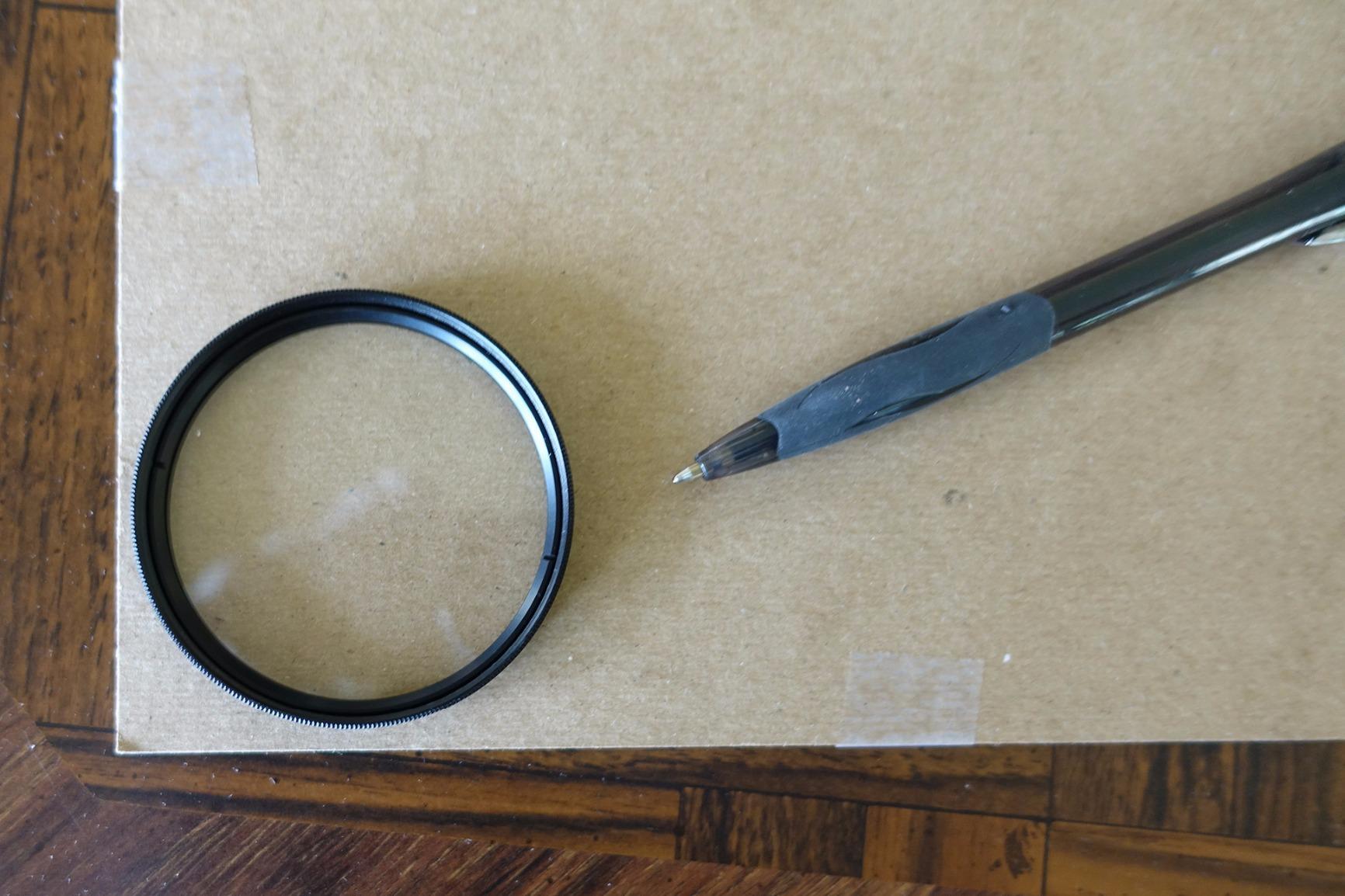
Be realistic about the trade. The film is thin and fragile, so a large cutout is a large piece of exposed material, and the security of your mounting depends entirely on what you build. On a big Dobsonian we prefer to seat the sheet in a flat ring of foam board taped to the tube rim rather than taping straight onto the tube.
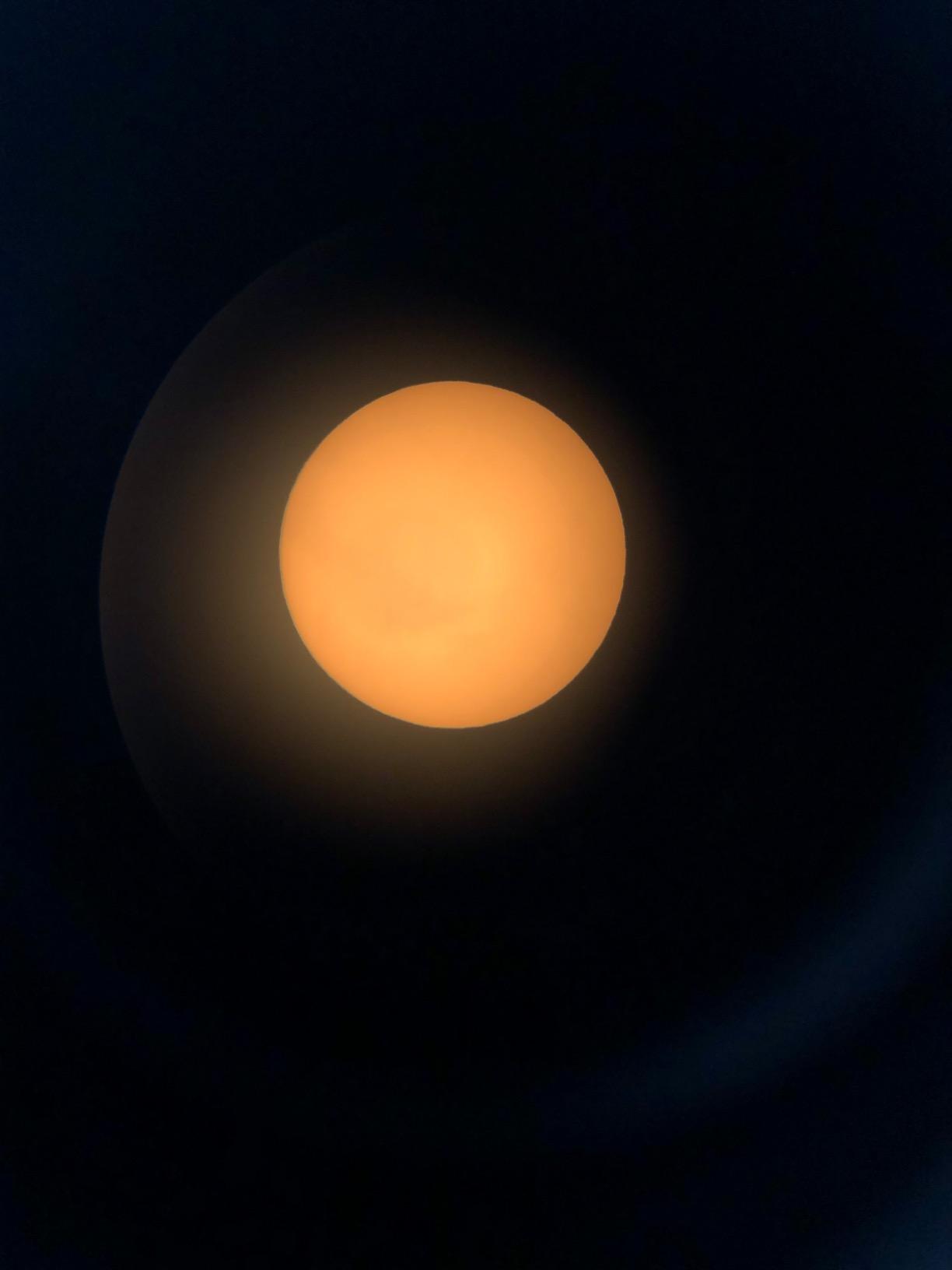
One more caution specific to big apertures: daytime atmospheric turbulence limits how much detail a large scope can resolve, and observers comparing scopes of different sizes regularly report that going much above ten inches adds real risk without adding much visible detail. Size for the tubes you own, not for the resolution you imagine.
Will an 8×8 sheet cover a 10 inch Dobsonian tube?
A 10 inch Dobsonian tube usually measures in the low-to-mid 130mm range at the front rim. An 8×8 inch sheet provides well over 200mm per side, so you have generous material to cut, overlap the lip, and still have scraps left for a second filter.
Measure the actual outer diameter of your front rim rather than trusting the aperture number on the label. Two scopes sold as 10 inches can differ enough at the rim that one fits and one does not.
Is a bigger sheet safer than a smaller one?
No. Safety comes from the certified optical density of the film, from full coverage of the aperture, and from a secure mount. A larger sheet gives you more overlap and fewer gaps, which helps with coverage, but the filtering performance is identical to the smaller sheets.
Avoid buying the largest sheet you can find as a substitute for thinking about the mount. Extra material without a positive attachment just gives a bigger piece of film to fall off.
4. Celestron EclipSmart 8 Inch Solar Filter – Premium Fitted Cell for SCT Telescopes
Celestron EclipSmart 8″ Solar Safe Eclipse Telescope Filter – ISO Compliant
ISO 12312-2:2015(E) compliant
Fits Celestron 8 inch Schmidt-Cassegrain and EdgeHD
9.25 by 9.25 inches
Weighs 4 ounces
Pros
- No DIY mounting at all
- Two hook-and-loop straps hold it secure
- Film made in the USA and independently tested
- Scratch-resistant coating and waterproof build
- 2-year Celestron warranty
Cons
- Only fits specific Celestron 8 inch SCT and EdgeHD models
- Costs more than a sheet of film
- Not reusable on other telescope brands
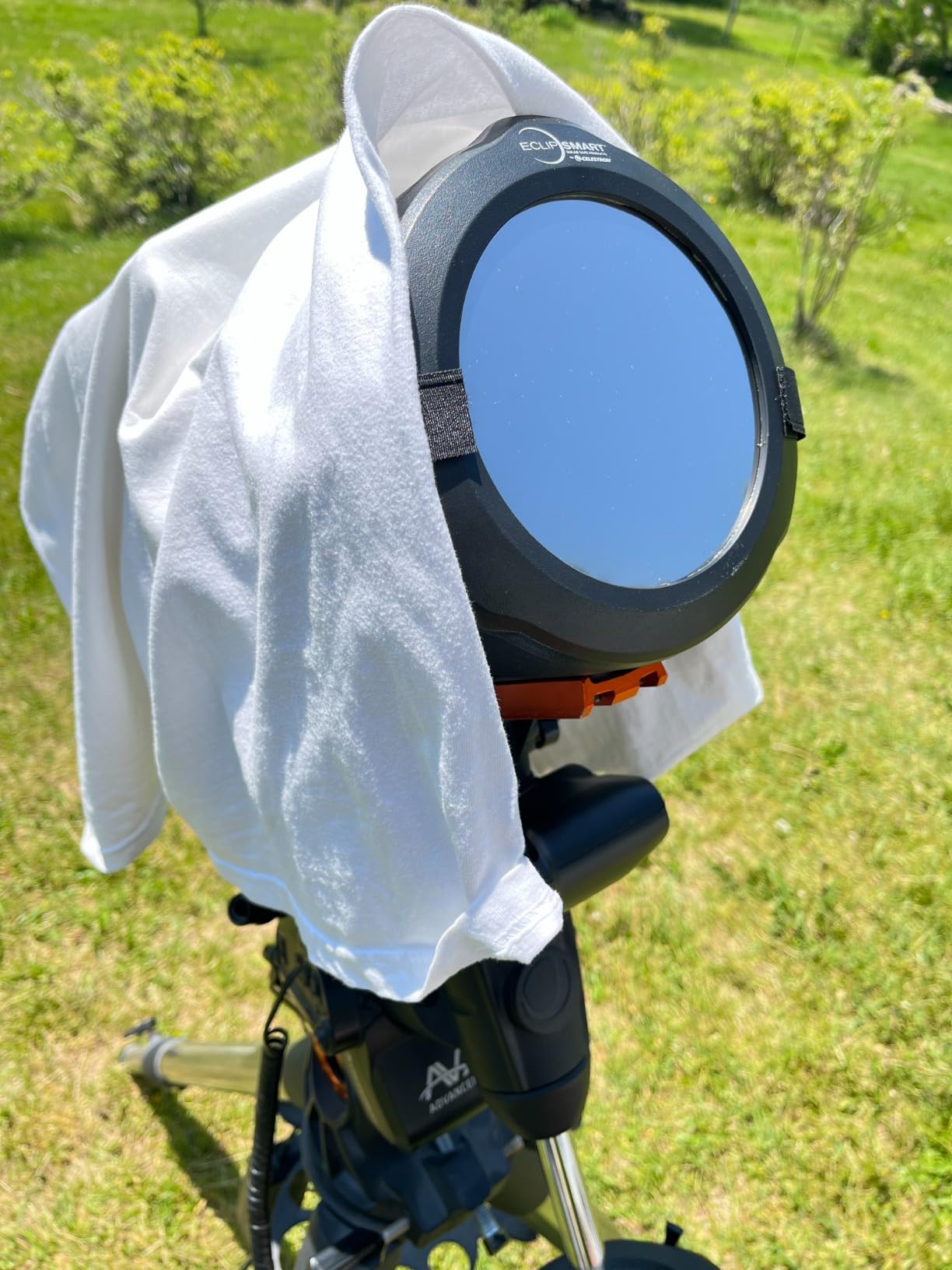
This is the no-fuss answer for anyone with an 8 inch Schmidt-Cassegrain or EdgeHD. It arrives ready to use, sits over the front of the tube, and locks with two hook-and-loop straps that will not walk off in a breeze or when someone shoulder-checks your tripod.
Certification is the reason to trust it. The film is made in the USA by American Paper Optics, a supplier recommended by NASA and the American Astronomical Society, and Celestron states the unit is independently third-party tested to ISO 12312-2:2015(E). The scratch-resistant coating on top of the film matters more than it sounds, since that is the surface your fingers land on.
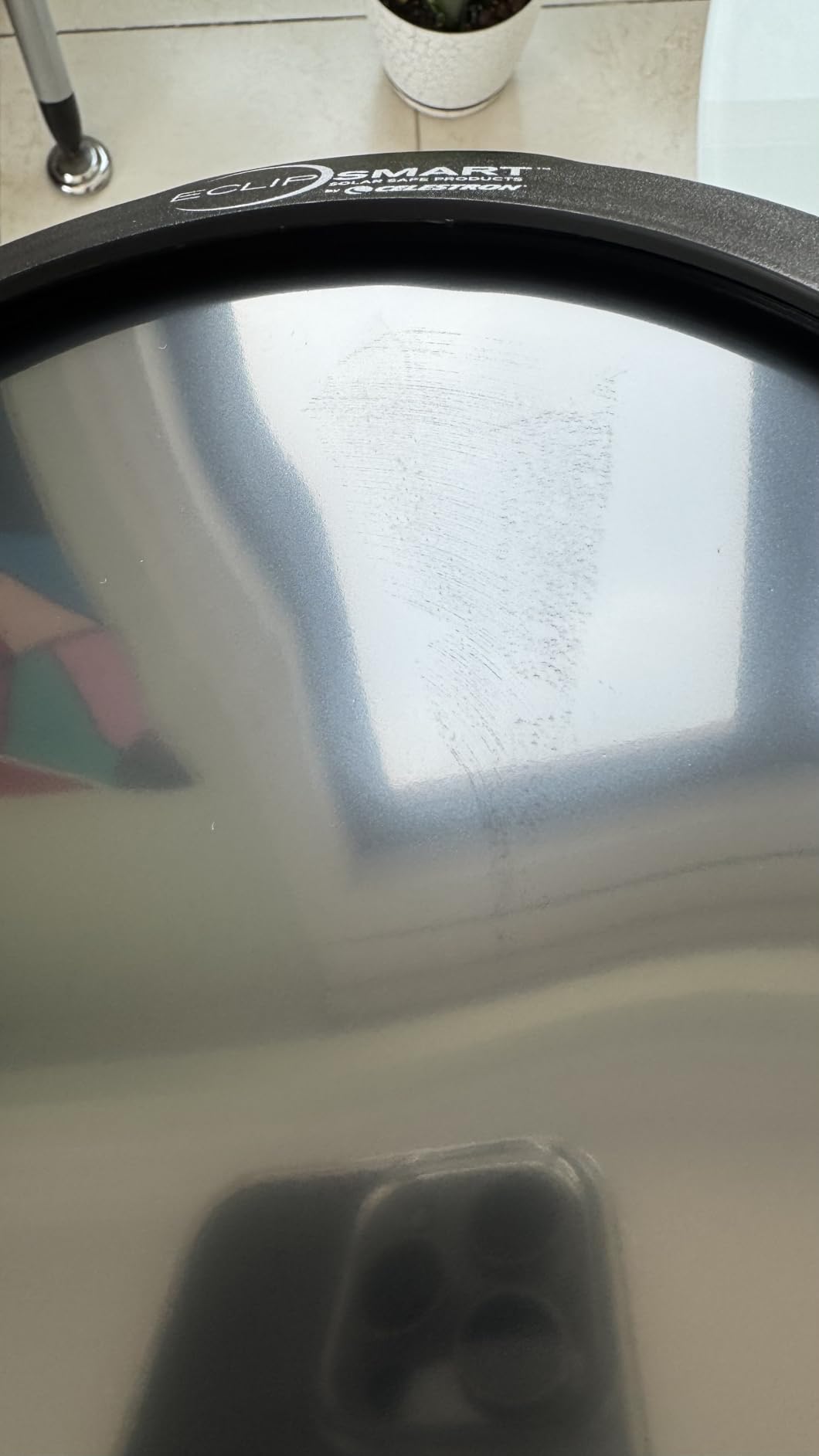
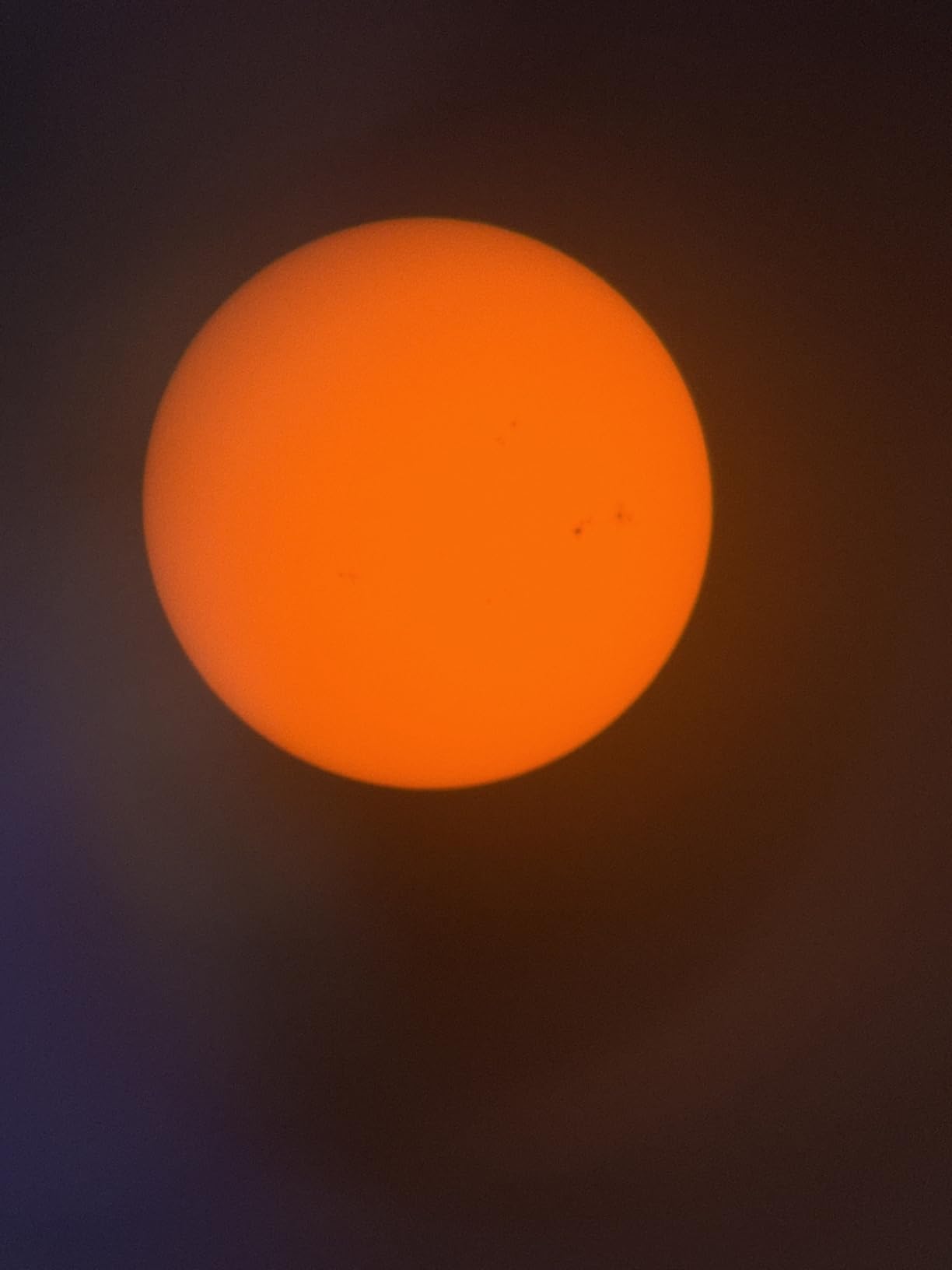
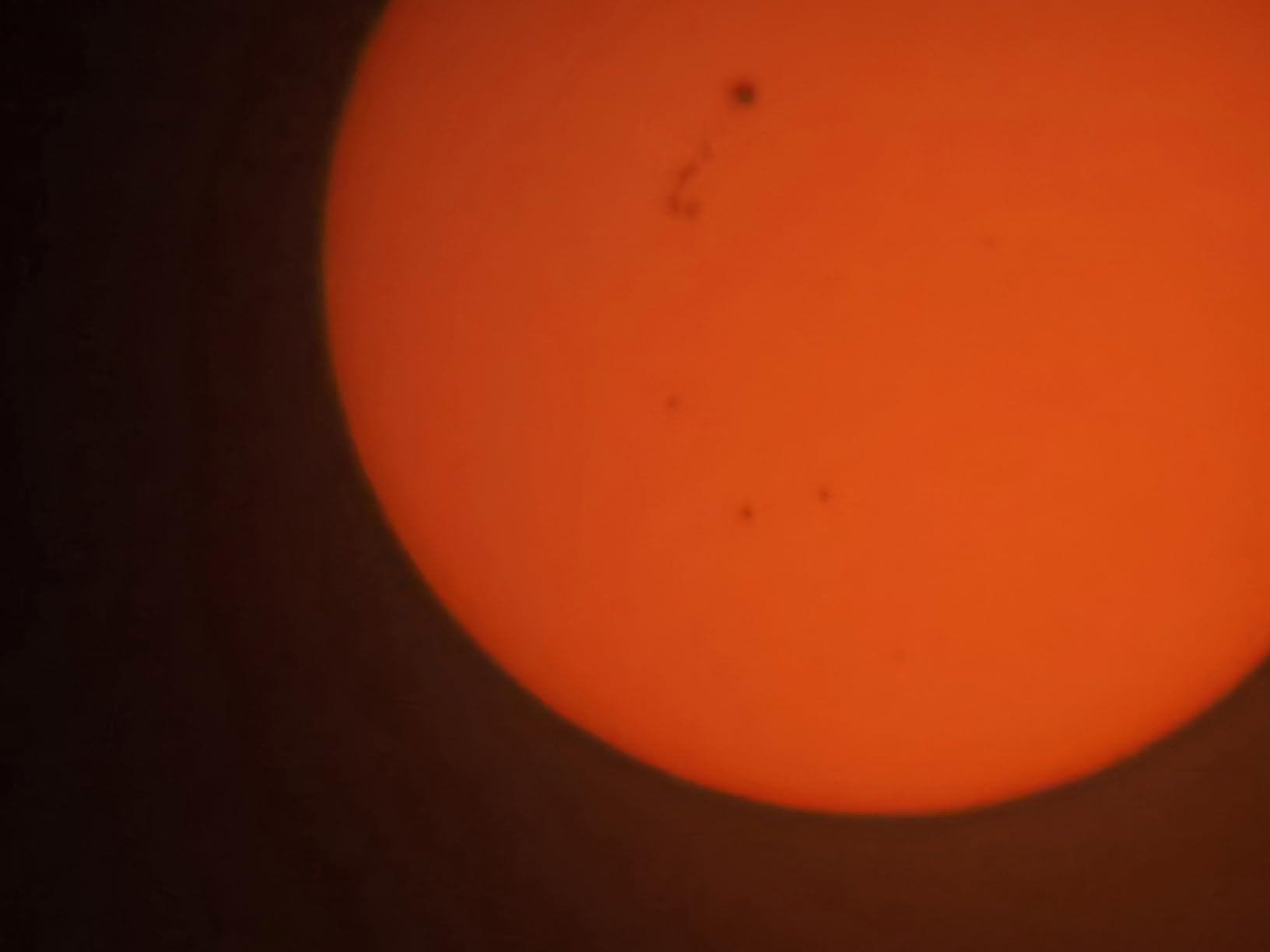
The orange tint gives a natural-looking Sun at moderate magnification. At high power on an 8 inch SCT the image quality is good enough to show granulation on a stable day, and the 2-year US warranty means a defect is not your problem.
Waterproof construction is a quiet bonus for backyard observers who leave the scope set up. The 4-ounce weight is light enough that it does not disturb balance on a stock mount.
Will this fit my telescope if it is not a Celestron?
It will not. This cell is cut for Celestron 8 inch Schmidt-Cassegrain and EdgeHD front assemblies, and Celestron does not make it for other brands or other apertures. Buying it for a generic 8 inch tube usually ends with a rattling, partly covered rim.
If you have a different 8 inch scope, cut a sheet from the 6×6 or 8×8 Thousand Oaks film instead. That same manufacturer also makes fitted cells for the 6 inch SCT and for common 127mm and 130mm reflectors if you prefer the strap-and-clip approach.
Why pay more than a sheet of film?
You are paying for four things: a mechanically secure mount, a known fit for one specific telescope, a documented certification chain, and a warranty. For a single 8 inch Celestron owner who wants to point the scope at the Sun without thinking about it, that is a fair trade.
For an observer with several scopes, or one who enjoys building things, a sheet of film is the cheaper and more flexible answer.
5. Celestron EclipSmart Universal Solar Filter – Best for Travel Scopes and Small Tubes
Celestron EclipSmart Universal Solar Filter for Telescopes
ISO 12312-2:2015(E) compliant
Fits tubes with 75-100mm outer diameter
Folds flat to 2.95 by 2.95 inches
Elastic band included
Pros
- Fits a very wide range of small Celestron scopes and spotting scopes
- Folds flat for a bag with a reusable pouch
- Ready to use with an elastic band
- 2-year warranty and USA-made film
Cons
- Elastic band is less secure than a rigid cell
- Paper enclosure will not survive rain
- Stops at 100mm so it cannot cover a big Dobsonian
The universal EclipSmart is aimed at the owner who has one or two small scopes and travels to observe. It fits tube outer diameters from 75mm to 100mm, which covers an enormous number of 70mm, 80mm, and 90mm tabletop refractors, plus many spotting scopes.
Installation is genuinely quick. Adjustable side panels and an elastic band hold the paper cell over the objective, and the whole thing folds flat into a reusable bag. Nothing to cut, nothing to tape, no tools.
The compromise is mechanical security and durability. An elastic band on a paper cell is a light, adjustable hold rather than a rigid one, and a paper enclosure has no meaningful weather resistance. This is a filter for a fair-weather observing trip, not a fixture left on a tube all summer.
The 4.2 average reflects that balance honestly. It is the most convenient option here for small scopes, and the ISO 12312-2:2015(E) compliance and USA-made film from American Paper Optics are genuine, not just printed on a listing.
Will a universal 75-100mm filter vignette my scope?
Yes, if your objective is close to the top of that range. A filter sized for a 100mm tube sitting on a 98mm tube leaves very little margin at the edge, and an undersized filter shows up as a soft or dark-edged image rather than a clean full-disc Sun.
If your tube measures more than about 90mm, a purpose-built fitted cell gives you a better result. Below that, the universal design works well and saves you from guessing.
Can I use it on more than one telescope?
That is the real argument for it. Anyone with two compatible scopes in that diameter band can buy one filter instead of two. Celestron lists compatibility across its PowerSeeker, Travel Scope, AstroMaster, StarSense, and Regal M2 lines, and the adjustable panels absorb the differences between them.
Just measure the outer diameter of each tube with calipers or a tape measure before you assume a fit. The model name is a guide, the rim measurement is the truth.
6. Celestron EclipSmart Filter for 127mm and 130mm Reflectors – Best Match for Popular Newtonians
Celestron EclipSmart Telescope Solar Filter for 127mm & 130mm Reflectors
ISO 12312-2:2015(E) compliant
Fits Celestron 127mm and 130mm reflectors
7.25 by 7.13 inches
Includes a protective cap
Pros
- Purpose-built fit for several popular 130mm reflectors
- Protective safety cap included
- Waterproof plastic cell with dual hook-and-loop straps
- 4.6 average with high satisfaction
Cons
- Limited to specific 127mm and 130mm reflector models
- Small clear aperture makes finding the Sun harder
- Plastic cell scratches eventually
130mm Newtonians are among the most common beginner-to-intermediate telescopes sold, and Celestron makes this fitted cell for a long list of them: the PowerSeeker 127EQ, Astro Fi 130, NexStar 130SLT, Omni XLT AZ 130, SkyProdigy 130, and two StarSense Explorer variants.
Like the 8 inch SCT cell, it uses two hook-and-loop straps and carries a protective cap that keeps the film surface clear when the scope is stored. Waterproof construction suits a garage or an unheated shed, and the film is the same USA-made, independently tested material as the rest of the EclipSmart line.
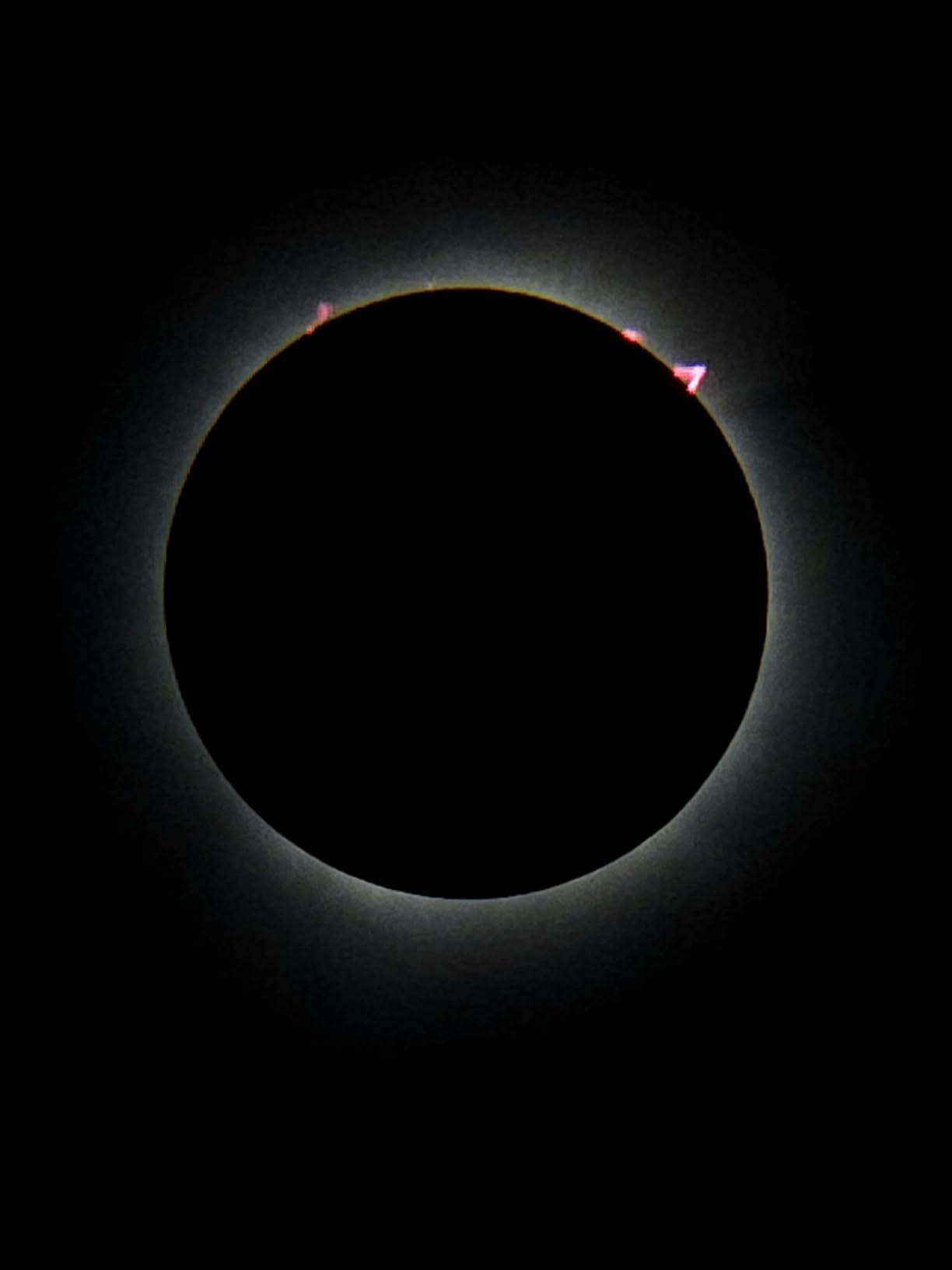
The real drawback is acquisition, not safety. The clear aperture on this filter is small, which means finding the Sun in a daytime sky is more of a hunt than it is with a larger filter. Owners report spending a few minutes sweeping before the disc appears.
Covering the finder scope is the part people skip. If the finder has a stock solar cap, use it. If it does not, remove the finder entirely for the session rather than pointing an uncovered small optic near the Sun.
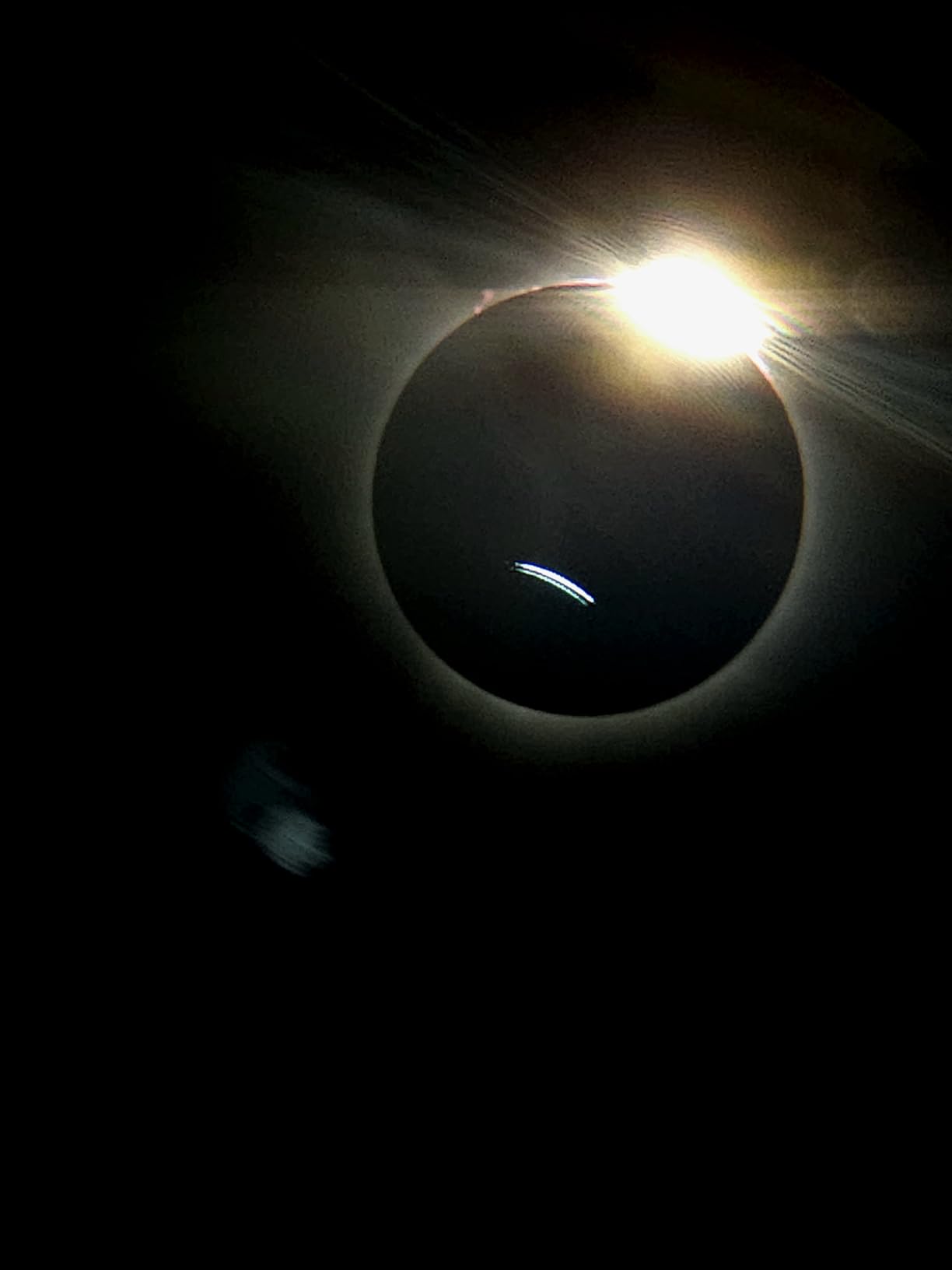
How do I know if my 130mm reflector is one of the listed models?
Match the model name on the base of the tube or the original box against the compatible list on the product page. The 127mm and 130mm sizes are physically different tubes even though the aperture numbers are close, so a near miss is common and disappointing.
If your scope is not on the list, measure the tube’s outer diameter at the front rim. A 6×6 or 8×8 Thousand Oaks sheet will cover a tube of that size cleanly, and you can build a cell that fits exactly.
Is a small clear aperture a real problem?
It is a convenience problem. The image itself is unaffected, because a fitted cell blocks light before it reaches the mirror no matter how big the opening is.
What it costs you is time at the eyepiece. Practise finding the Sun with a narrow-band solar filter or with the finder capped before your first real session, and the difficulty mostly disappears.
7. Astromania 100mm Adjustable Metal Cap – Best Cell for Baader AstroSolar Film
Astromania Deluxe Filter 100mm Adjustable Metal Cap for Telescope Tubes with Outer Diameter from 70mm to 92mm Aperture 75mm
Baader AstroSolar film in an aluminum cell
Fits tube outer diameters from 70mm to 92mm
75mm clear aperture, 100mm outer diameter
Three clamping screws with caps
Pros
- Genuine Baader AstroSolar film
- which many observers rate as the sharpest white-light film
- Anodized aluminum cell holds the film flat and square
- Three clamping screws give a rigid positive grip
- ISO 12312-2:2015 certified
Cons
- Film is bare with no protective glass
- Very easy to scratch or crease
- Only spans 70-92mm so measuring is critical
This is the only product here that puts genuine Baader AstroSolar film into a rigid cell, and for observers who care about image quality that combination is the appeal. AstroSolar is widely described in owner discussions as producing a slightly sharper and more neutral white Sun than generic black polymer film.
The cell itself is the other selling point. Anodized aluminum with three clamping screws, each capped in plastic so they do not mark your tube, holds the film flat and taut with no adhesive anywhere. Nothing peels off and nothing creeps. The 75mm clear aperture sits inside a 100mm outer diameter, and the adjustment range covers tube outer diameters from 70mm to 92mm.
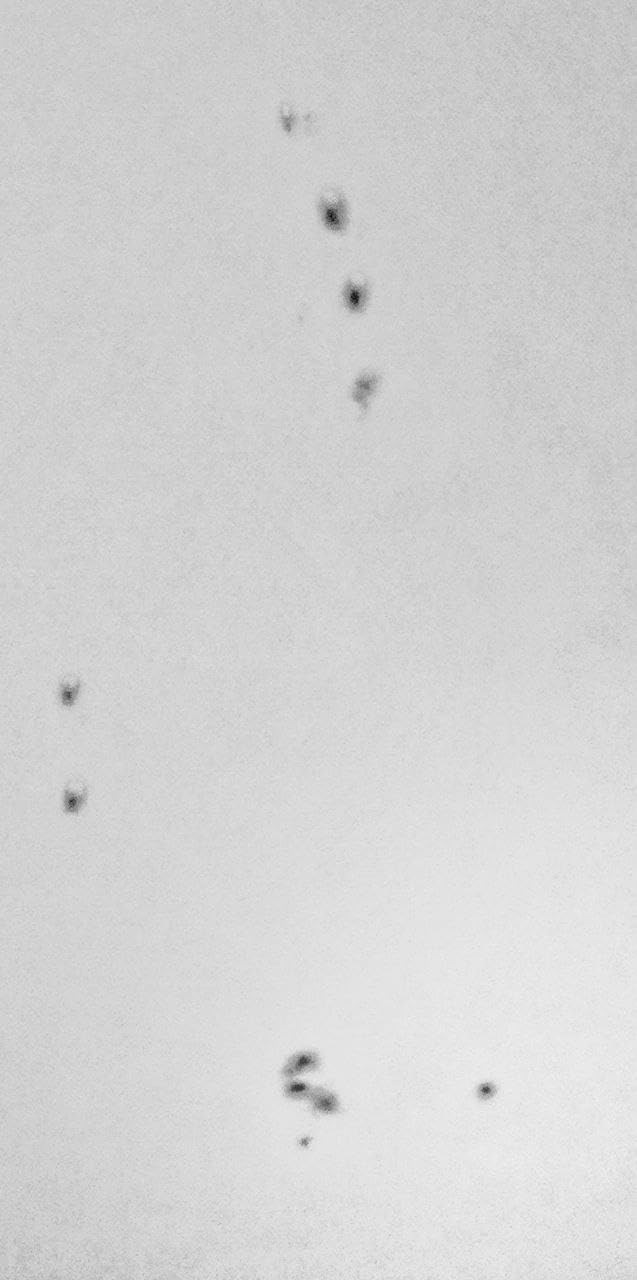
Handle it like the film it is, because that is exactly what it is. There is no protective glass over the surface, so a fingernail or a dusty knuckle leaves a permanent mark, and the exposed film will crease if the cell is dropped or clamped out of square.
The listed specification states a 1000x filter factor and blocking of 99.9% of incoming light, alongside ISO 12312-2:2015 certification. Verify the certification marking on the cell itself when yours arrives, and check for any doubled film layer before you ever load it, because two layers in series is not the certified product.
Is Baader AstroSolar worth the step up from black polymer film?
If you already know you like the natural orange Sun from a black polymer sheet, the difference is small and you should keep your money. If image sharpness and a whiter Sun matter to you, AstroSolar is widely considered the best of the films, and this is the cleanest way to use it without building anything.
The cost is fragility. Generic film is more forgiving of field use because a scratch in the substrate does not open a light path. AstroSolar film has no such buffer.
Will it fit a telescope that is advertised as 70mm?
Probably, but measure. The cell fits 70mm to 92mm of tube outer diameter, and what a manufacturer calls a 70mm telescope is usually a smaller aperture inside a tube nearer 70mm across. If your measured outer diameter is 68mm or 94mm, this cell is the wrong tool.
For those sizes the Rainbow Symphony filter or a cut sheet is the practical answer.
8. Rainbow Symphony 70mm Black Polymer Filter – Best Ready-Made Starter Filter
Rainbow Symphony Solar Filter 70mm Black Polymer
Black polymer film in a rim mount
70mm inner diameter
2.76 by 2.76 inches
Weighs 18.14 g
Pros
- Ready-made so there is no cutting or taping
- Rainbow Symphony appears on approved solar filter lists
- Adhesive felt strips dial in the fit
- Very light at 18.14 g
Cons
- Cardboard rim is not very durable
- Sizing is confusing because a 70mm telescope is not a 70mm tube
- One filter per package
Rainbow Symphony makes ready-made rim-mounted filters in several sizes from 50mm up to 101mm, and this 70mm version is the one most first-time buyers land on. It is already built: you slip it over the objective and the adhesive felt strips take up the slack.
That is a genuinely useful thing for someone who does not want to make their own filter. It is also a filter you replace sooner. The cardboard rim has no weather resistance and no structural rigidity, so treat it as a fair-weather accessory rather than a permanent front cell.
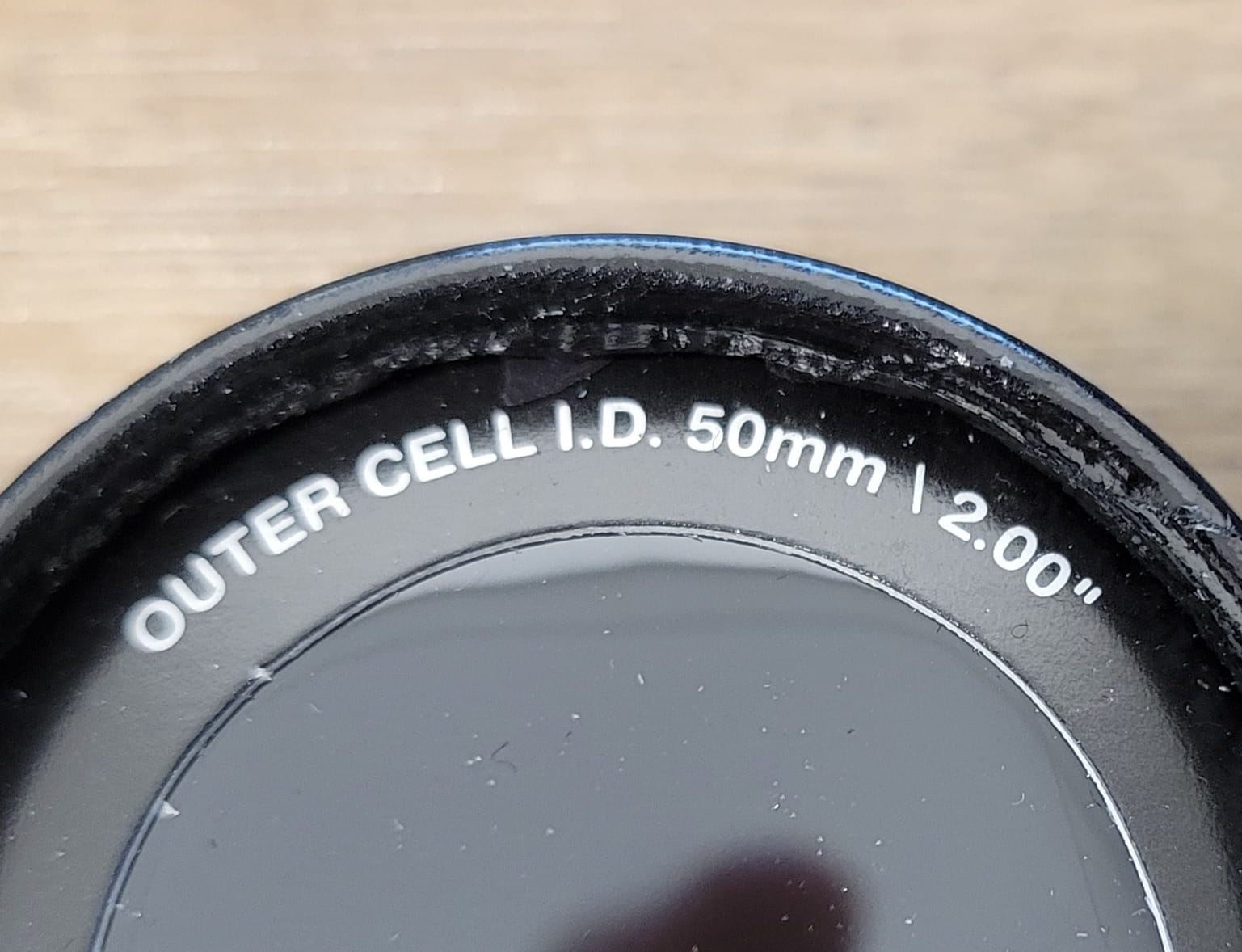
The sizing is the trap. A telescope sold as 70mm usually has an aperture noticeably smaller than its tube, and what matters is the tube’s outer diameter. The 70mm inner diameter here fits a 70mm tube and nothing narrower, so measure before you order.
Rainbow Symphony appears on tested and approved solar filter lists, and the film is multi-coated for optical performance with a natural orange tint on the Sun. Some owners have used the same filter for a decade, which says more about how gently it was treated than about the component itself.
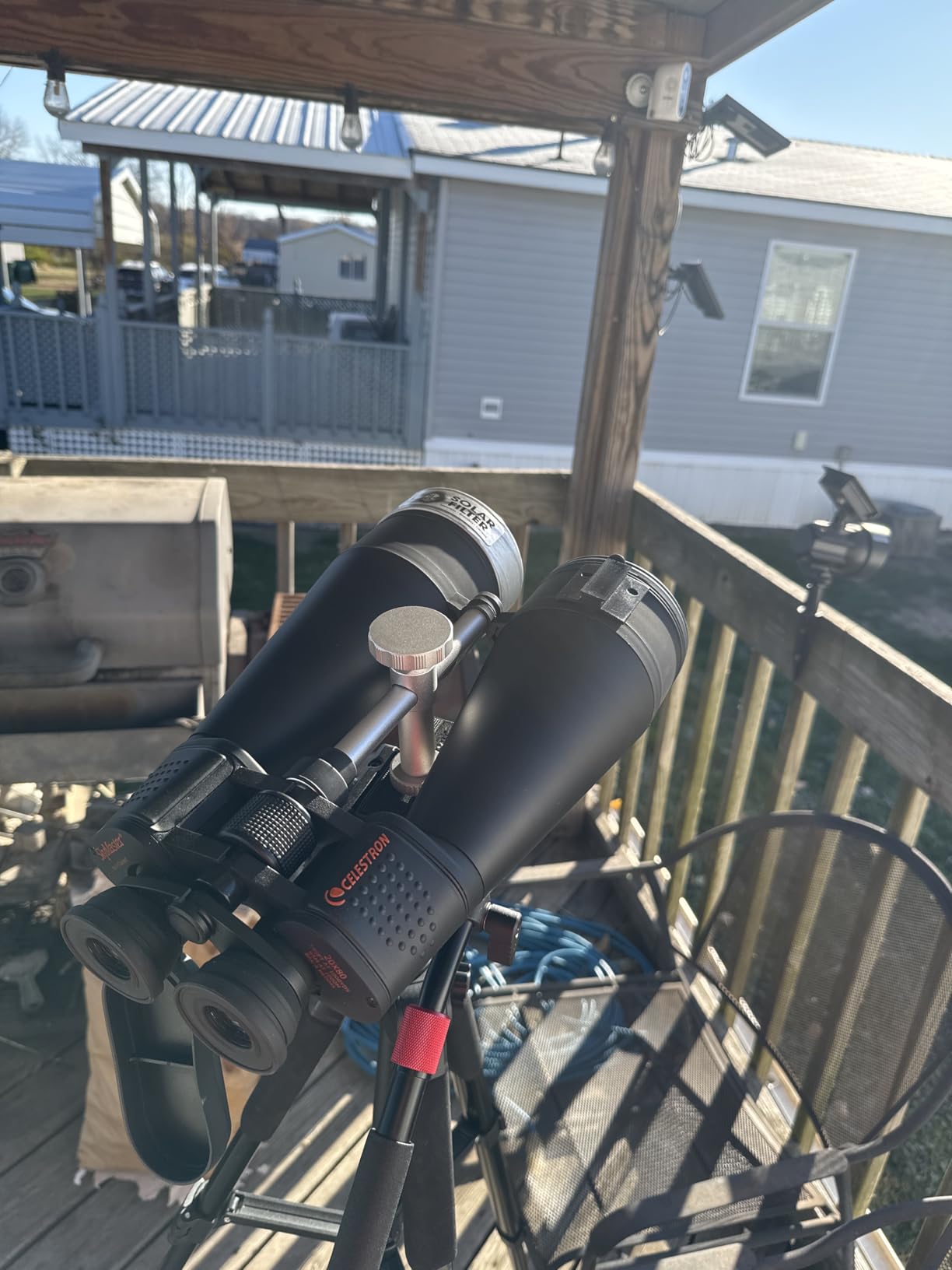
Is a 70mm filter right for a 70mm telescope?
Not automatically. If the tube’s outer rim measures 70mm exactly, yes. If it measures 76mm, the filter will sit short of the rim and vignette. If it measures 60mm, the filter will sit loose and can drop down far enough to matter.
That confusion is exactly why we put the measurement walkthrough below. Thirty seconds with calipers removes all the guesswork, and it is the step most often skipped.
Can this filter be used for solar photography?
It sits over the front of the objective, which is the correct place for a solar imaging filter, and the multi-coated film passes enough light for a camera at fast shutter speeds on a bright surface. Set your camera to its fastest shutter and lowest ISO, and use a fast preview to frame before your longest exposure.
For cleaner results, observers typically pair a front-mounted white-light filter like this one with a dedicated energy-absorbing filter on the camera body itself. Those are a separate category of product.
How to Measure Your Telescope for the Right Filter Size
The number that decides your filter is the outer diameter of the tube at the front rim, not the aperture printed on the box. Aperture is the diameter of the lens or mirror. Tube outer diameter is how wide the physical tube is that the filter has to sit on, and it is always larger.
Forum threads about solar filter sizing go on for pages because people measure the wrong thing and buy a filter that either under-covers the objective or hangs off it.
Find the front rim. Look at the objective end of the tube, the side with the dew shield or lens cell, and find the outermost edge of the metal or plastic ring.
Measure across it. With digital calipers if you have them, or a tape measure if you do not. Measure the outside of the rim, across the flat, at two points 90 degrees apart.
Add an inch to the total. For a film sheet, this is how much material you need so the excess can fold over the lip and block light leaking around the edge. A 90mm tube needs roughly 115mm of material per side.
Check for a taper. Some dew shields taper or step. Measure the smallest part of the front cell, because that is where the filter has to seat.
Match to a product. Any fitted cell has a fixed inner diameter range. Any sheet has a size. If your measurement falls between two sheet sizes, take the larger one.
If your tube measures under 75mm, the fitted options get scarce and a cut sheet is usually the better path. Between 75mm and 100mm, you have the most choice of ready-made cells. Above 100mm, you are in large-sheet or custom glass territory.
Film or Glass: Which Solar Filter Material to Choose
Film is the practical default for almost everyone. Metalized polymer sheeting is thin, light, cheap relative to fabricated glass cells, and every reputable version is certified to ISO 12312-2:2015(E) with optical density rated around ND5, meaning it removes more than 99.999% of visible light along with harmful ultraviolet and infrared.
Glass cells are built like the optics they protect: a coated glass element seated in a heavy metal ring. They never crease, they survive being dropped, they sit flat and square with no tension, and they can be wiped clean. They also cost several times more and weigh considerably more on the front of a tube.
Both work. If your observing is backyard and weather-limited, a fitted cell is the safer long-term purchase. If you travel, teach, or run outreach sessions, film in a taped ring is lighter, cheaper to replace, and easier to make several sizes of.
One thing to be completely clear about: a grey neutral density filter is not a solar filter. Neutral density is designed for visual control of brightness and does not block the infrared and ultraviolet that a telescope concentrates. Using one pointed at the Sun is one of the fastest ways to damage your eye.
White-Light or H-Alpha: What Each Filter Shows You
A white-light filter is what every product in this roundup uses. It gives you a natural orange or white Sun and shows sunspots with penumbra, limb darkening, and granulation on stable days. It works on any telescope, any aperture, and costs a fraction of a dedicated solar scope.
H-alpha filters isolate one narrow red wavelength at 656.3nm. That is where chromospheric structure lives, so an H-alpha filter shows you prominences, filaments, and flares that white-light simply cannot. The trade is that they are tuned for a specific telescope design and image quality varies a great deal between units.
For a first solar setup, buy white light. Add H-alpha later if you find yourself chasing prominences rather than sunspots.
Solar Viewing Safety: Rules You Do Not Skip
None of the products in this roundup are safe to use in a way that deviates from these rules.
Front-mount only. The filter goes over the objective before any sunlight enters the tube. Eyepiece solar filters, including old ones from kits, are unsafe on any telescope. Sunlight reaching the eyepiece has already been concentrated by the objective.
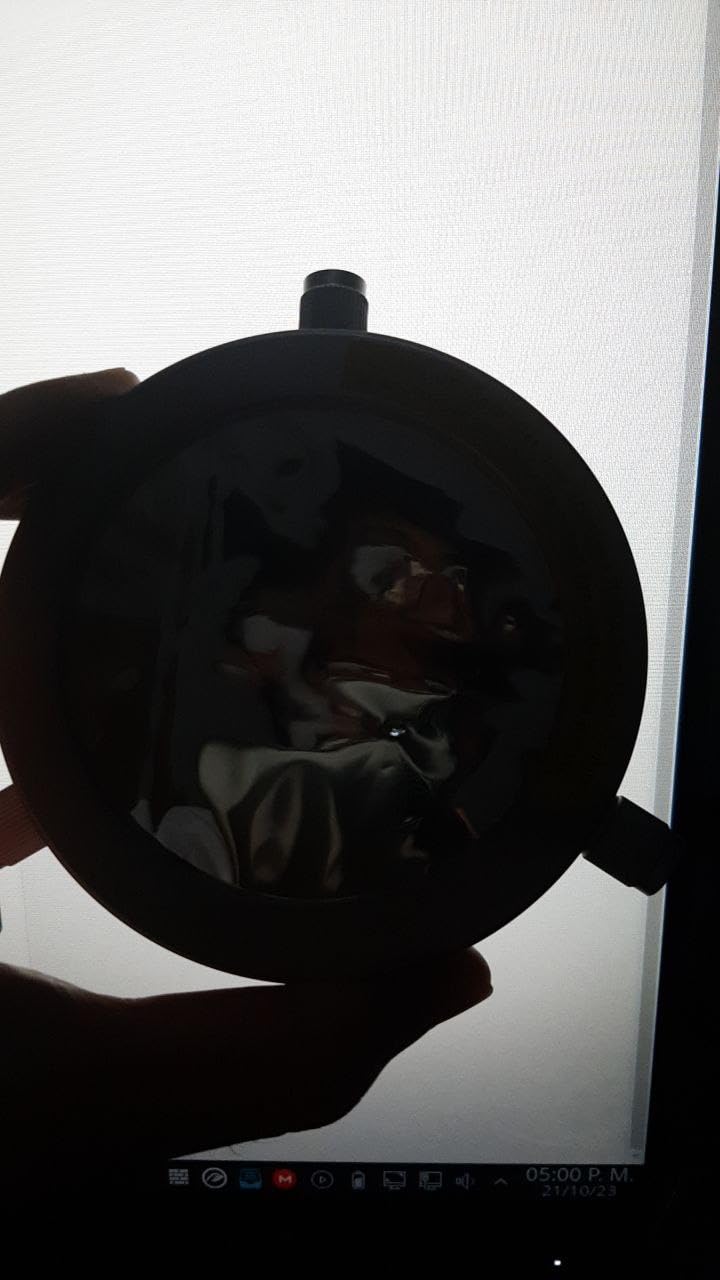
Inspect before every session. Hold the filter up to a bright lamp in a darkened room and look for pinpoint holes. If you see stars of light, the filter is damaged. Mark defects with an indelible pen and keep that face away from the Sun.
Secure the attachment positively. Straps, screws, or a snug ring. Tape alone on a large flat sheet in a breeze is not a positive attachment, which is why the fitted cells exist.
Cover or remove the finder scope. A finder is an unfiltered fast optic pointed at the same object. Use a manufacturer solar cap, or remove the finder entirely for the session.
Never leave the scope unattended. Not for a minute, not to answer the door. The whole point of a filter is that it is a barrier between the concentrated beam and your eye.
Watch the aperture ceiling. Above roughly ten inches, observers report added fire risk with little visible gain, because daytime turbulence limits resolution long before aperture does.
Replace anything torn or creased. Film develops pinholes and tears with age and handling. Storage flat between clean sheets in a dry place extends its life; a filter stored folded for months will not.
A pinhole inspection takes under a minute. It is the single highest-value habit in this whole hobby.
Two Traps to Avoid: Herschel Wedges and Open Truss Tubes
A Herschel wedge is a small piece of uncoated glass that sits at the back of a Newtonian telescope and reduces the incoming light by tilting the optical path. It is not a solar filter. It removes no infrared and no ultraviolet, which are the wavelengths that do the damage, and sustained use has been documented as a risk to internal baffles and to anyone standing near the eyepiece.
If a wedge arrives with your scope, keep it for optical use on faint objects. Do not use it on the Sun.
An open truss tube, common on many Dobsonians and collapsible scopes, has gaps between the truss rods rather than a solid tube. Those gaps let direct sunlight reach the primary mirror even with a front cell fitted. Any filter on an open truss needs a full shroud over the tube, or the scope should only be used for solar work with a solid, tested front cell and a shroud fitted top to bottom.
Both traps appear repeatedly in forum discussions from owners who learned them the hard way, and neither is mentioned in most competing roundups.
DIY Solar Filters: Building a Safe Film Cell
You can absolutely make your own solar filter from certified film, and for many observers it is the most satisfying option. The material is the easy part. The discipline is the part that keeps it safe.
Measure your tube first. Outer diameter at the front rim, plus about an inch of total material per side for overlap.
Cut slightly oversize. Trim the corners of the square so each flap folds down without creasing across the aperture. Creases are where leaks start.
Do not tension the film. Pulling it tight in a frame can stretch the substrate and eventually tear it. Let the cell hold the film rather than the film holding the cell.
Sandwich it, do not float it. Place the film over the tube lip and run a strip of tape along each folded flap, or seat it in a flat ring of foam board taped to the rim so nothing can lift.
Count the layers. Some listings ship film that arrives doubled or with a backing sheet still attached. One certified layer is what you want. Two layers of unknown density is not a safer filter, it is an unverified one.
Leak check before the Sun. Hold it to a bright lamp in a dark room. Every pinpoint of light is a hole that must be marked with an indelible pen and kept facing away from the objective.
Check the film for certification before you cut it. A manufacturer with a multi-decade record and a traceable certification mark is worth a little more than an anonymous listing, and uncertified marketplace film is the single most common way people get hurt in this hobby.
Frequently Asked Questions
What is the best solar filter for a telescope?
The best solar filter is any front-mounted filter certified to ISO 12312-2:2015(E) that fully covers your objective and secures positively. For most observers that means a sheet of Thousand Oaks polymer film cut to your measured tube outer diameter, which gives an ND5 optical density blocking more than 99.999% of light. Pick a fitted cell instead if you want no cutting and no taping, and match its inner diameter range to your tube.
Can I make my own solar filter for my telescope?
Yes, using certified solar film and a proper cell. Measure the outer diameter of your tube at the front rim and cut the film about an inch larger per side. Trim the corners so the flaps fold without creasing the aperture, avoid tension that can stretch the substrate, and tape or seat the film so it cannot lift. Confirm there is only one layer of film, then check it against a bright lamp in a dark room before pointing the scope at the Sun.
What happens if you look at the sun through a telescope without a solar filter?
A telescope concentrates sunlight 100 to 1,000 times more than your naked eye, so an unfiltered view can destroy your retina in a fraction of a second. The injury is called solar retinopathy, it is often painless at first, and it is usually permanent. The same beam can also melt eyepiece glass and start a fire on the tube. This is why filters must mount on the front of the objective and why eyepiece solar filters are unsafe.
How do I know what size solar filter I need?
Measure the outer diameter of the telescope tube at the front rim, not the aperture printed on the box. Aperture is the lens or mirror diameter, and the tube around it is always wider. Use digital calipers or a tape measure across the rim at two points, note any taper in the dew shield, then add about an inch per side when cutting film so the excess can fold over the lip and block edge leaks.
How do I check my solar filter for pinholes?
Take the filter into a darkened room and hold it up to a bright lamp or the Sun with the unlit side facing you. Any pinpoint of light is a pinhole and means the filter must not be used until it is replaced. Mark defects with an indelible pen so you always know which face is compromised, and run this inspection before every single observing session, since pinholes develop with age, creasing, and handling.
Final Verdict
Two rules settle almost everything: buy a filter certified to ISO 12312-2:2015(E), and mount it over the front of the objective. Everything else is preference and fit.
For most people, the Thousand Oaks 4×4 sheet is the best solar filter for telescopes to start with. It has the deepest review history in this roundup, a 5-year guarantee, and enough material for any scope up to about 90mm across the rim. Own a big tube, or want more cutoffs from one sheet, and the 6×6 or 8×8 does the same job with more room. Own a Celestron 8 inch SCT and want zero assembly, and the EclipSmart 8 inch cell is the premium pick. Every pick in this guide was re-checked against current certification guidance for 2026, so treat this roundup as the live version rather than a snapshot.
Measure your tube before you order, inspect the film against a lamp before every session, and cover or pull the finder. Those three habits, plus a front-mounted ISO-certified filter, are the whole difference between safe solar observing and a trip to the emergency room.