
A light pollution filter is a coated piece of glass that screws onto the back of a telescope eyepiece or into a camera filter thread. It blocks the narrow wavelengths produced by sodium, mercury and modern white LED street lighting while passing the emission lines of astronomical targets, so deep-sky objects stand out against a darker background. That is the whole idea, and it is the idea behind every recommendation in this guide to the best telescope filters for light pollution in 2026.
What filters cannot do is turn a bad sky into a good one. A light pollution filter recovers contrast that skyglow has washed away, and on an emission nebula from a suburban backyard that difference is dramatic. On a galaxy or a star cluster it is close to nothing, which is the single most repeated point of confusion among first-time buyers.
So this roundup is split in two, because the two halves of this market are barely related. Five filters here are 1.25 inch threaded glass for eyepieces and visual observing. Five are 2 inch mounted or threaded filters built for cameras and imaging. If you only ever look through an eyepiece, the imaging half of this list is wasted money. If you only ever shoot pictures, the visual half will not fit your train.
We compared all ten across the specifications each maker publishes and the patterns in hundreds of buyer reports, focusing on the four things that actually decide a purchase: what wavelengths the filter blocks, how much light it passes, what physical size it is, and which targets respond to it at all. Below, every pick states plainly who it suits and where it falls short.
One note before we start, because it changes several verdicts. Most of the buying guides written before 2020 assume sodium and mercury street lighting. Those lamps are being replaced by broadband white LED across most towns, and broadband UHC and CLS filters block far less of an LED spectrum than a sodium-era filter did. Where that matters, we say so.
Table of Contents
Top 3 Picks for Light Pollution Filters in October 2026

SVBONY 1.25 Inch UHC Filter
- UHC light pollution reduction
- 1.25 inch filter thread
- Aluminum frame
- Optical glass

SVBONY SV220 7nm Dual-Band
- Dual 7nm Ha and O-III bands
- Over 94% transmission
- 2 inch M48 thread
- Imaging only

Optolong L-Extreme 7nm Filter
- 7nm dual narrowband
- One-shot colour compatible
- 2 inch thread
- Emission nebula imaging
Best Telescope Filters for Light Pollution at a Glance for October 2026
All ten filters in the same place, with the specification that decides compatibility listed first. The thread size column is the one to check before anything else, because a filter that does not physically fit your eyepiece or camera is the most common reason these purchases get returned.
| Product | Specs | Action |
|---|---|---|
| SVBONY 1.25 Inch UHC Filter |
|
Check Latest Price |
| SVBONY SV220 7nm Dual-Band |
|
Check Latest Price |
 Astromania 1.25 Inch UHC Filter Astromania 1.25 Inch UHC Filter |
|
Check Latest Price |
 Celestron UHC/LPR 1.25 Inch Celestron UHC/LPR 1.25 Inch |
|
Check Latest Price |
 SVBONY CLS 1.25 Inch Filter SVBONY CLS 1.25 Inch Filter |
|
Check Latest Price |
 Astromania 2 Inch O-III Filter Astromania 2 Inch O-III Filter |
|
Check Latest Price |
 Optolong L-Enhance 2 Inch Optolong L-Enhance 2 Inch |
|
Check Latest Price |
| Optolong L-Extreme 7nm 2 Inch |
|
Check Latest Price |
 Celestron 2 Inch Oxygen III Celestron 2 Inch Oxygen III |
|
Check Latest Price |
 NEEWER 1.25 Inch 10 Piece Set NEEWER 1.25 Inch 10 Piece Set |
|
Check Latest Price |
1. SVBONY 1.25 Inch UHC Filter – Best Overall Visual Pick
SVBONY Telescope Filter, 1.25″ UHC Filter Improve Contrast for Telescope
1.25 inch / 31.75mm thread
Multi-coated optical glass
Aluminum frame
40 g
Pros
- Noticeably darkens sky background and boosts emission nebula contrast
- Does not cut infrared so it works on guide scopes
- Sharp views of the Pleiades and Orion with visible star colour
- Well-cut threads and solid build
Cons
- Less effective against modern LED street lighting
- Gain over no filter can be modest under darker skies
This is the filter we come back to most, and the reason is the size of its user base. Six hundred and eleven buyer reports is far more than any other 1.25 inch filter here, which means the pattern in the feedback is consistent rather than anecdotal. The dominant report is a darker background sky and a real jump in contrast on emission nebulae from suburban and Bortle 5 to 8 sites.
What makes it a genuinely useful general-purpose filter is that it leaves infrared alone. That detail, which no spec sheet shouts about, means it still works on a guide scope under thin cloud, where an IR-cut filter would be actively wrong. It also means stars keep a little more of their natural colour than a filter tuned tightly to visible lines.
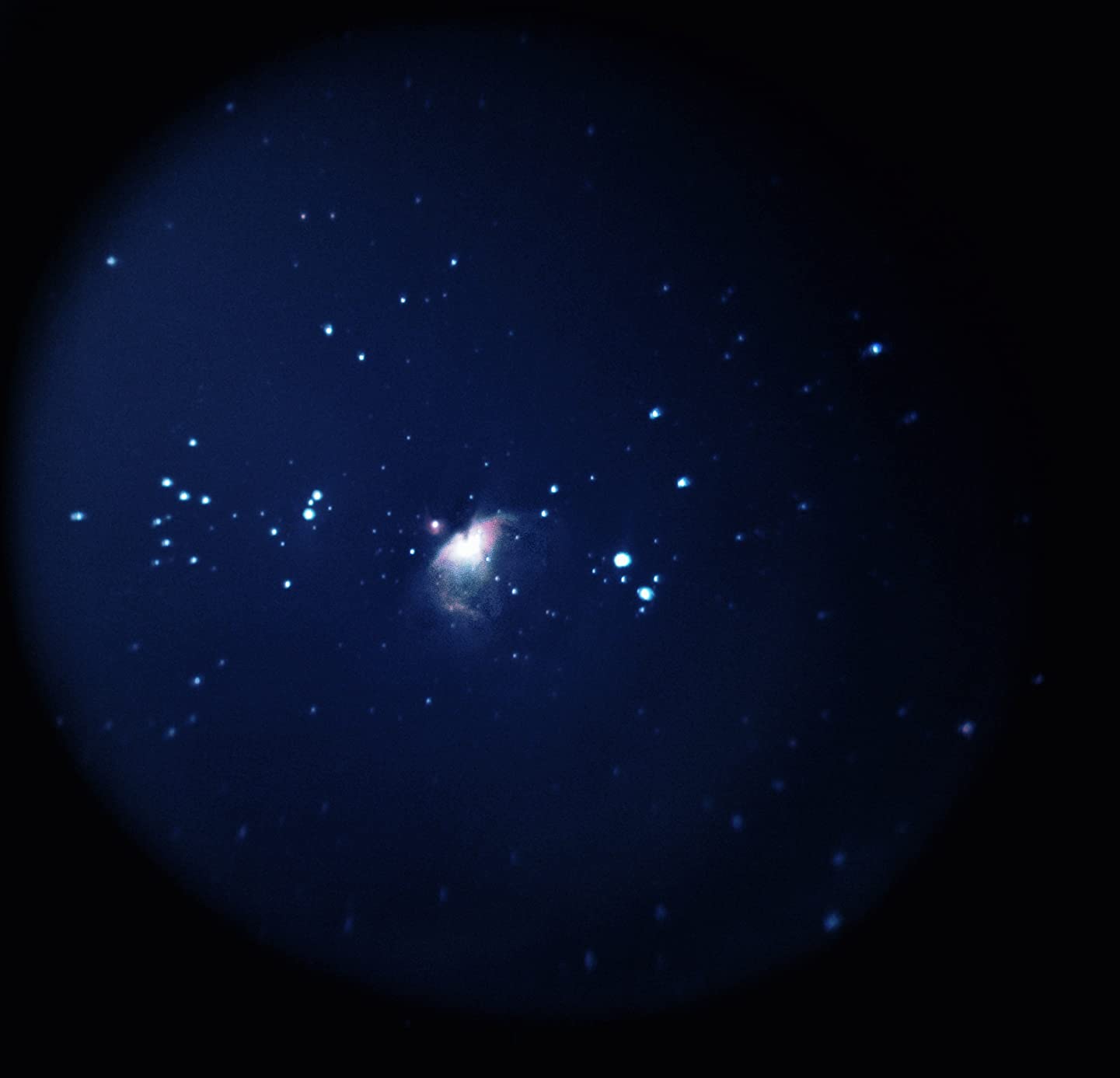
Physically it is unremarkable in the best way: optical glass in an aluminum frame, 40 g, 31.75mm thread, standard 1.25 inch eyepiece barrel. It will screw onto almost any 1.25 inch eyepiece you own, and it will also sit in a 1.25 inch imaging adapter if you want to try it on a camera.
The honest limitation is the LED problem. Users with older sodium and mercury street lighting nearby report a bigger improvement than users on modern white LED, and that gap shows up repeatedly in the reviews. If your town’s lighting has been converted in the last decade, set expectations at a moderate contrast gain rather than a dramatic one.
Who this filter suits
A suburban or small-town observer on emission nebulae who wants one filter that will fit every 1.25 inch eyepiece in the case and will not hurt anything else they do. It is also the safest recommendation here for a first purchase, because the failure mode when it does not help is simply that you see less of the background sky.
Who should buy something else
If your only targets are galaxies, globular or open clusters, save the money. And if you shoot with a camera rather than an eyepiece, the imaging picks further down this list will do more for you than this one will.
2. SVBONY SV220 7nm Dual-Band Filter – Best Imaging Value
SVBONY SV220 Telescope Filter, 2″ 7nm Dual-Band Nebula Filter for Deep Sky
2 inch M48x0.75 thread
Dual 7nm OIII and Ha bands
Over 94% transmission
Waterproof optical glass
Pros
- Strong contrast from narrowband isolation on emission nebulae
- Works with one-shot colour cameras and cuts post-processing
- Anodized aluminum frame with waterproof glass
- Over 94% peak transmission
Cons
- Imaging only
- not usable at the eyepiece
- Not recommended for optics faster than about f/4.8
This is the filter that makes suburban nebula imaging practical, and at 4.8 from 122 reports it has the second strongest rating in the group. The design is simple to explain: two 7nm passbands, one at the OIII line at 500.7nm and one at H-alpha at 656.3nm, with strong rejection everywhere else.
Everything outside those two bands is blocked, which means city skyglow, moonlight and most starlight all fall away together. For a one-shot colour camera that is transformative, because the camera records a recognisable emission nebula in a single set of exposures rather than requiring separate H-alpha, OIII and SII channels composited in software.
The hardware details are good. Over 94% peak transmission means you are not paying for a narrow filter that also wastes half your signal, and the anodized aluminum frame with waterproof optical glass is the build you want for a filter that lives outside. It weighs 30 g, which is unremarkable in the best way.
Two restrictions are printed into the design and both are real. It is an imaging filter, so putting it on an eyepiece will give you a nearly black view of a narrow slice of the spectrum. And it is not recommended for scopes at f/4.8 or faster, because the steep light cone shifts the passbands off the emission lines they are tuned to.
Who this filter suits
A colour or one-shot CMOS imager on a moderately slow optical train who wants emission nebula data from a bright backyard without assembling a mono narrowband rig. If your scope is an f/5 refractor or f/8 SCT, this is close to ideal.
Who should buy something else
Owners of fast Newtonians and astrographs should look at the L-Enhance or the L-Extreme, both of which tolerate steep light cones. Anyone who wants to view through the same filter will need a separate visual filter entirely.
3. Astromania 1.25 Inch UHC Filter – Most Versatile for Suburban Skies
Astromania Telescope Filter 1.25 Inch UHC Filter Improve Contrast Nebula
1.25 inch / 31.75mm thread
Anti-reflection coated glass
Aluminum frame
8.53 g
Pros
- Makes invisible emission nebulae visible from suburban skies
- Optical glass with anti-reflection coatings
- Fits any standard 1.25 inch eyepiece
- Also produced in a 2 inch version
Cons
- Broadband UHC blocks less LED-spectrum light than narrowband designs
- Strongest results on larger apertures
The Astromania UHC sits in the gap between the cheapest generic glass and the premium branded filters, and at 156 reports the feedback is consistent about what it does. Users report previously invisible emission nebulae becoming visible from suburban skies, with the strongest results on larger aperture instruments.
That last point is the one buyers most often miss. A 1.25 inch filter dims everything passing through it, and dimming costs you aperture. In a small refractor the background darkens and so does the object, and the net gain can be negligible. In an 8 inch or larger Newtonian the same filter visibly transforms the view.
Build is straightforward and unremarkable: optical glass, aluminum frame, anti-reflection coatings, 8.53 g. The threads are described as fitting any standard 1.25 inch focuser eyepiece, and the same filter is produced in a 2 inch version if you later move to bigger glass.
Against a 4.4 average the criticism is consistent and worth stating plainly. Broadband UHC filters are less effective against modern LED street lighting, because the passband that blocks sodium and mercury lines does not sit on the broadband white emission. If you upgraded to a narrowband design, that is the reason.
Who this filter suits
A visual observer with a mid-size instrument who wants a straightforward UHC without paying for coating technology they will not see through an eyepiece. It is also a sensible second filter if you already own something in the CLS class and want more contrast on nebula.
Who should buy something else
Observers with a small aperture refractor should expect less than they hope. If your sky glow is dominated by LED rather than sodium, step up to a narrowband O-III design or one of the dual-band imaging filters.
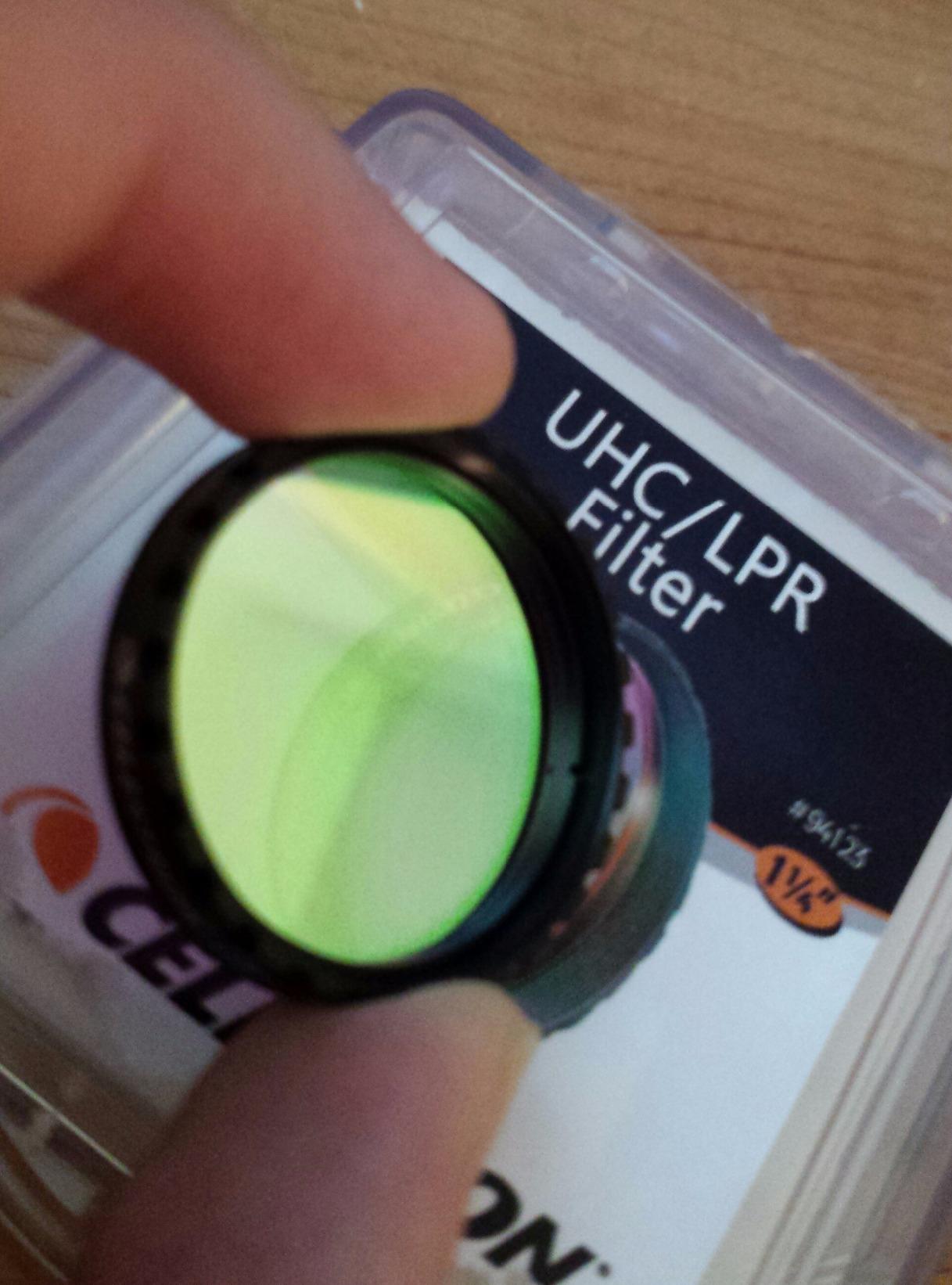
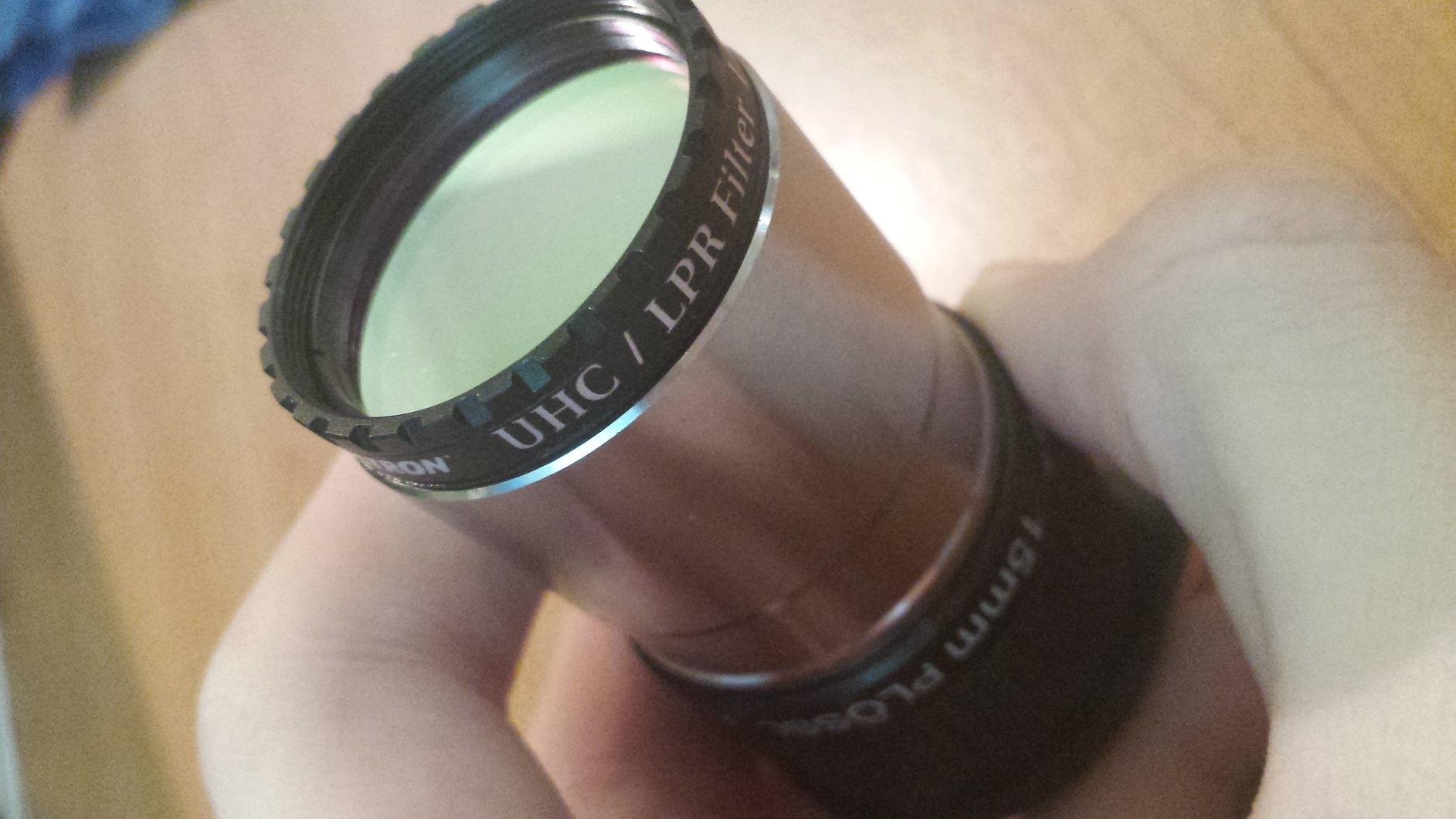
4. Celestron UHC/LPR 1.25 Inch Filter – Best for First-Time Buyers
Celestron UHC/LPR Light Pollution Reduction Filter for Telescopes – 1.25″
1.25 inch / 31.75mm thread
High transmission optical coating
Optical glass
0.03 kg
Pros
- Adds roughly 30 percent contrast on emission and planetary nebulae
- Backed by a two year limited warranty
- Works across a range of apertures
- Solid-feeling glass and threading
Cons
- Reflective coating can sheen in very dark conditions
- Dims some stars
- Less effective under LED street lighting
The Celestron LPR has been on sale for long enough that its user base spans an entire era of street lighting, and that shows up in the reviews. Users with older sodium and mercury skies report adding roughly 30 percent more contrast on targets like M42 and M27, which is a specific and believable figure rather than a vague claim of improvement.
It is also one of the few filters here with a stated warranty, at two years from the manufacturer, which matters if you are buying your first filter and want some recourse. The high transmission optical coating is intended primarily for visual use, and that is exactly what it is good at.
Users report being able to reveal the core of Andromeda from very bright suburban skies, which is not a claim you would expect from a broadband visual filter on a galaxy target. The mechanism is indirect: a darker background makes the surviving core easier to pick out, it does not add detail that was never there.
The complaints are worth hearing. The coating can produce a visible sheen inside the eyepiece in very dark conditions, some stars dim enough to disappear, and a minority of buyers find the contrast gain smaller than they expected. All four are ordinary, fixable facts about a visual filter rather than flaws.
Who this filter suits
A first-time filter buyer who wants a recognised brand name, a warranty behind it and a filter that certainly does something. It is a sensible first purchase for a suburban observer who plans to stay in eyepieces.
Who should buy something else
If you are under heavy LED skyglow, a CLS or narrowband design will do more. If you shoot pictures, a camera filter is the correct purchase and this one will not thread onto most imaging trains.
5. SVBONY CLS 1.25 Inch Filter – Best for Heavily Skyglowed Cities
SVBONY Telescope Filters, CLS 1.25″, Light Pollution Broadband Filter
1.25 inch eyepiece thread
90% transmission on emission lines
0.1% on sodium and mercury
Ion-assisted deposition coating
Pros
- Substantially improves Orion Nebula contrast even from Bortle 9 skies
- Independent tests put performance close to premium CLS filters
- Easy to place in front of a 1.25 inch sensor adapter
Cons
- Broadband CLS blocks less blue-white LED light
- Its 28.5mm thread is narrower than the usual 1.25 inch
This is the most technically interesting filter in the visual half of this list, because it publishes the numbers most brands keep vague. Ninety percent transmission across the main nebula emission lines at H-alpha 656nm, OIII 496 and 500nm, SII 672nm and H-beta 486nm, against 0.1% transmission of the sodium 589nm and mercury 435nm and 578nm lines.
Those figures come from an ion-assisted deposition coating, which is a harder deposition process than a standard multi-coating and is the reason the layer resists scratching and humidity. Independent transmission tests reported by buyers put the performance close to far more expensive CLS filters, which is remarkable for the tier it sits in.
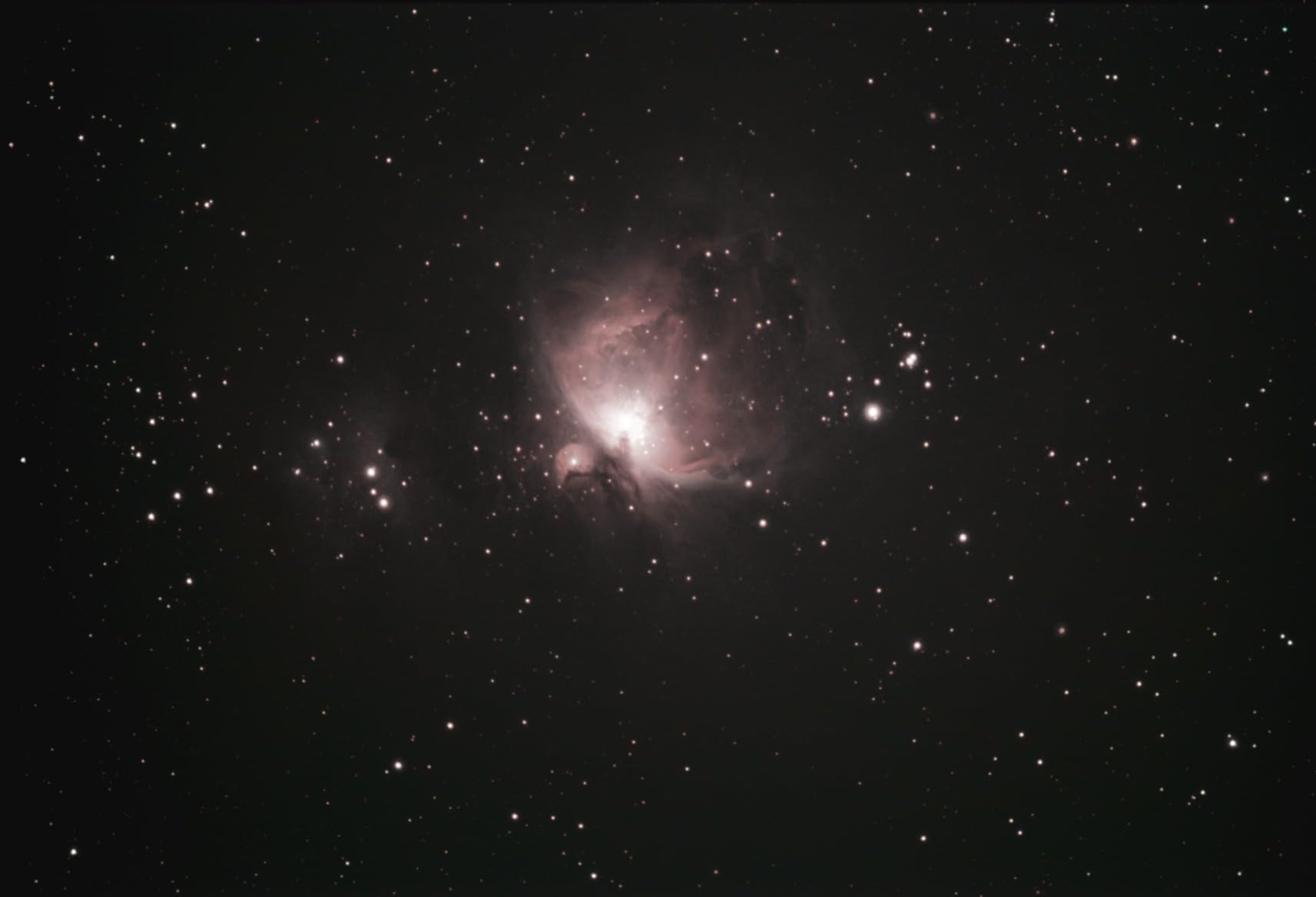
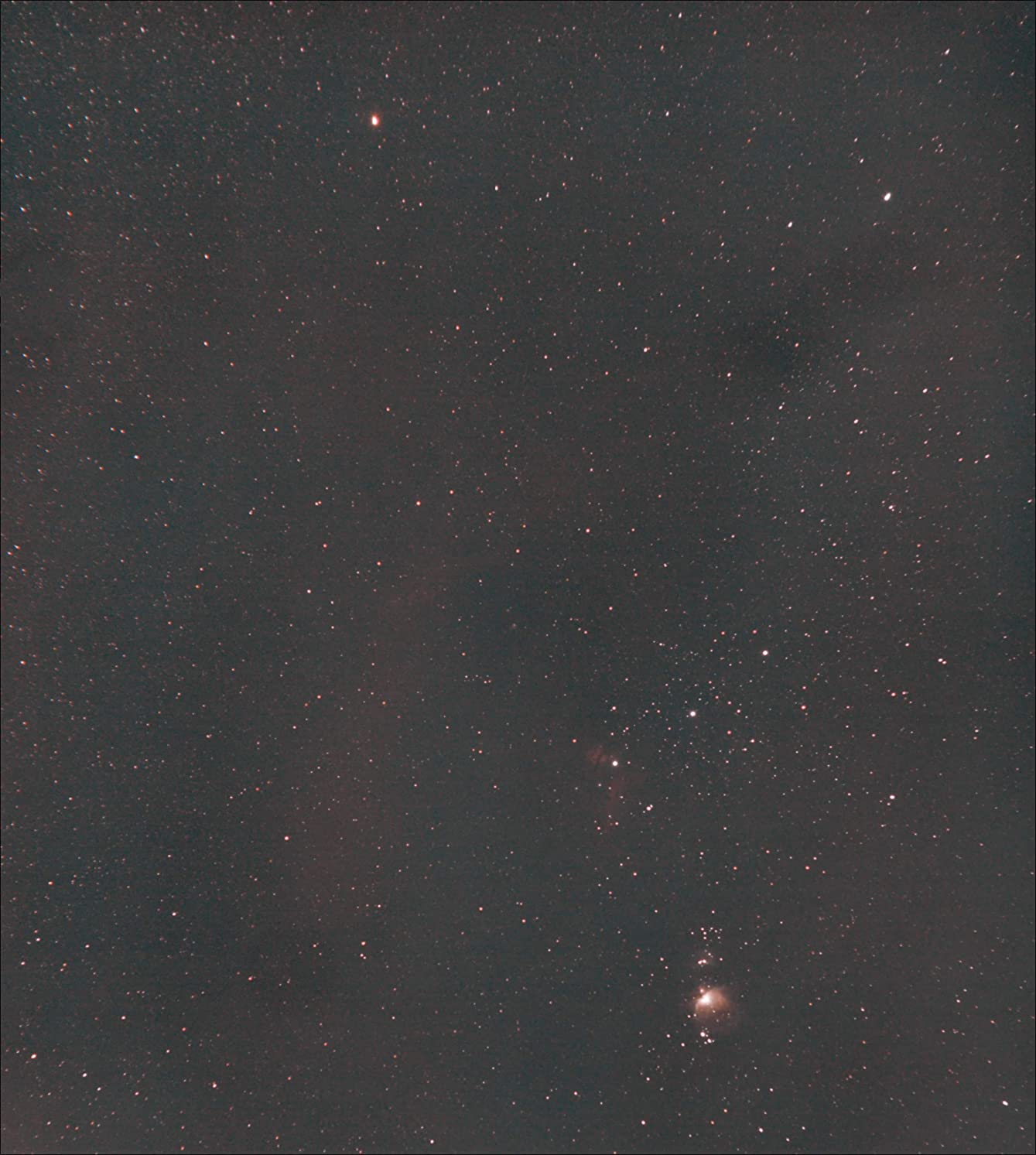
Owners report substantially improved Orion Nebula contrast and detail even from Bortle 9 skies, and it is also listed as working with colour CCD cameras and unmodified DSLRs. That makes it one of the few filters in this roundup that genuinely bridges the visual and imaging halves.
One specification deserves a flag rather than a footnote. The listed thread size is 28.5mm, which is narrower than the 31.75mm you will find on most 1.25 inch eyepieces. Check your own eyepiece barrel before ordering, because that mismatch is a common and avoidable return.
Who this filter suits
City observers under genuinely bright skies who want documented transmission rather than marketing adjectives, and anyone with a modified or unmodified camera who wants one filter for both roles. The Orion Nebula is the test object where it earns its place.
Who should buy something else
If your glow is blue-white LED, this broadband design is working against a spectrum it was not built to block. A dual-band imaging filter handles that case far better.
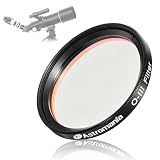
6. Astromania 2 Inch O-III Filter – Best for Planetary Nebulae
Astromania O-III Filter 2 Inch Telescope Filter Narrowband Nebula Filters
2 inch eyepiece thread
Passes 496nm to 501nm at about 95%
Dichroic with anti-reflection coating
14.2 g
Pros
- Makes the Veil
- Cat's Eye and Dumbbell nebulae stand out dramatically
- Improves contrast at dark sites as well as under heavy glow
- Each filter individually inspected and labelled with its measured transmission
Cons
- Does little for hydrogen-dominated targets like M42
- Passes near infrared so mono imagers need an IR cut
- Cuts about a full f/stop of light
An O-III filter is the specialist tool in this category, and it works because planetary nebulae and supernova remnants emit enormously in the doubly ionised oxygen lines between 496nm and 501nm. This one passes that band at about 95 percent and blocks virtually everything else visible, which is what produces the effect owners describe as dramatic.
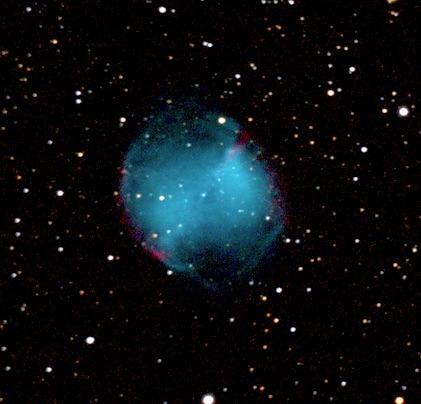
The Veil, the Cat’s Eye and the Dumbbell are the targets it was made for. On those it also improves contrast at dark sky sites, not just urban ones, which surprises people who assume narrowband filters only matter under glow. Narrow emission plus a dark sky is a combination you rarely get to enjoy.
Build details that matter: dichroic interference plus anti-reflection coating to reduce glaring and ghosting, and every single unit individually inspected and inscribed with its measured transmission. That last point is unusual at this tier and gives you a way to know what your specific filter actually does.
It threads smoothly onto 2 inch eyepieces and comes in a solid protective case, at 14.2 g. For visual use the view through it is effectively monochromatic, which is normal and expected for a dedicated narrowband filter rather than a fault.
Who this filter suits
Visual observers who want to see the Veil or a planetary nebula from a city, and imagers planning O-III data. It is a companion to a UHC rather than a replacement for one, because it only responds to oxygen-rich targets.
Who should buy something else
If M42 and the Lagoon are your targets, this filter does almost nothing. Mono imagers should also budget for a separate IR cut filter, because the near infrared this passes bloats stars.
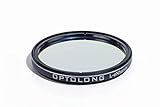
7. Optolong L-Enhance 2 Inch Filter – Best for Unmodified DSLRs
Optolong 2″ L-Enhance Dual Narrowband Light Pollution Filter (H-Alpha and H-Beta/O-III)
2 inch M48x0.75 thread
Dual narrowband Ha and Hb/OIII
Multiple anti-reflective coatings
Tolerates fast focal ratios
Pros
- Makes faint emission nebulae shootable from unmodified DSLRs in Bortle 5 to 9 skies
- Allows longer exposures without light pollution gradients
- Suppresses the blue star halos added by achromatic refractors
- Wide bandpass works with fast optical trains
Cons
- Blocks a lot of light so capture times increase
- Not suited to galaxies or broadband targets
- Premium tier cost for the category
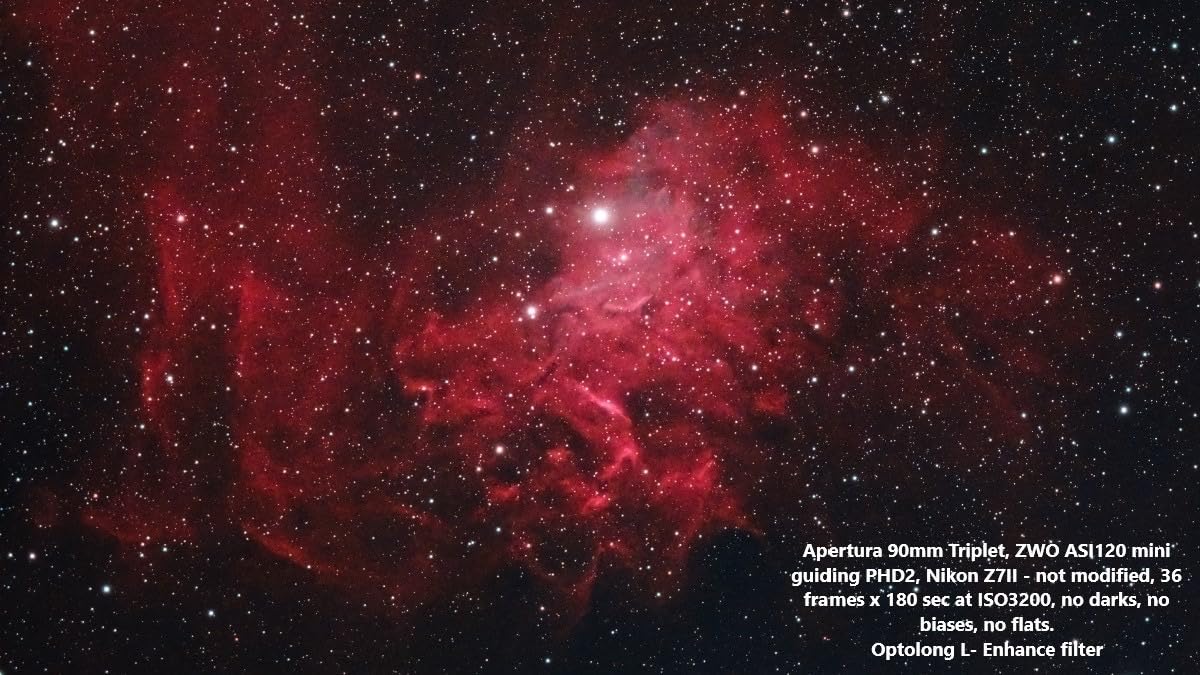
The L-Enhance exists for a specific and very common problem: a stock DSLR whose unfiltered sensor floods with light pollution at any exposure long enough to record a nebula. This filter’s two narrow bands pass H-alpha and the H-beta/OIII region, and everything between and around them is suppressed, which is what makes long exposures possible from a bright backyard.
Owners report exactly the outcome you would hope for. Faint emission nebulae become shootable from unmodified DSLRs in Bortle 5 to 9 skies, and you can push longer exposures without the light pollution gradients that normally build in the corners and edges of a broadband frame.
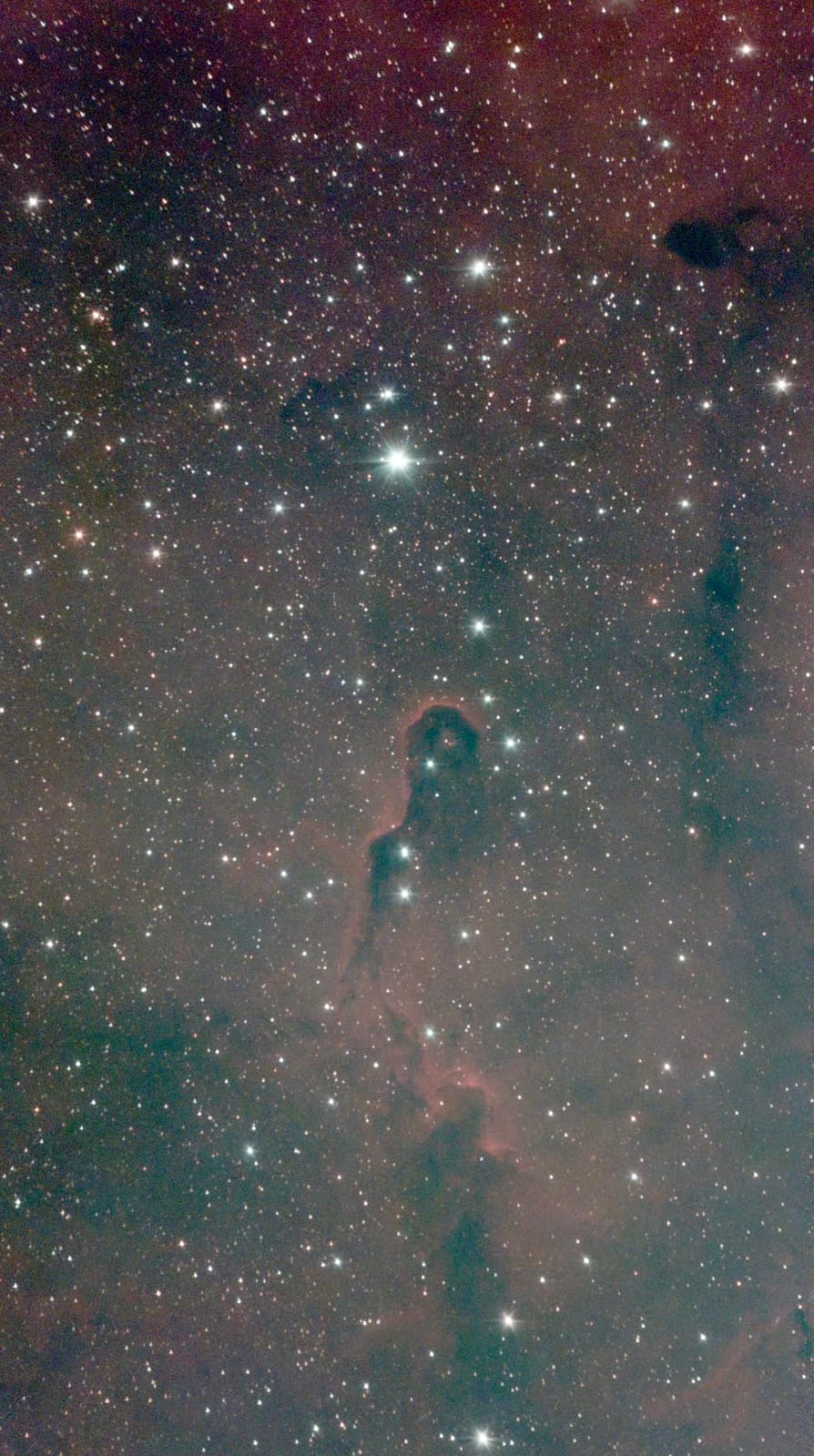
The wide bandpass is the underrated feature. It is broad enough to work with fast optical trains such as an f/2 astrograph, where a 7nm design would suffer badly from bandpass shift. For anyone with a fast Newtonian or a wide-field refractor, that tolerance decides the purchase.
There is a second-order benefit users mention more than once: the filter suppresses the star field well enough to reduce the blue halos an achromatic refractor adds around bright stars. If you shoot with a budget achromat, that alone can clean up an otherwise ruined frame.
Who this filter suits
Anyone imaging with a camera that was not modified for astronomy, on anything from an f/2 astrograph to a slower refractor. If your current problem is that long exposures wash out from city glow, this is the direct answer.
Who should buy something else
Those who want to shorten integration times will not like the light it blocks. Galaxy and broadband imagers should skip it, and a mono rig on a fast scope would be better served by a narrower filter set.
8. Optolong L-Extreme 7nm Filter – Best for Astrophotography
Optolong L-Extreme 7nm Dual Narrowband Filter (H-Alpha and O-III) (2″)
2 inch filter thread
Dual 7nm Ha and OIII bands
Multi-coated glass
Designed for one-shot colour
Pros
- Very clean high-contrast emission nebula results
- Works under heavy light pollution and moonlight
- Single filter gives a full emission nebula on a one-shot colour camera
- Reviewers rate it the strongest in this group
Cons
- 7nm bandpass suits slower focal ratios only
- Longer integration time than wider dual-band designs
- Useless for galaxies or broadband targets
The L-Extreme is the narrowest filter in this roundup, and it carries the highest average rating at 4.9 with 52 reports. The reason narrow wins in this category is straightforward physics: the narrower the passband, the less skyglow, moonlight and starlight gets through, so the signal from the nebula stands alone.
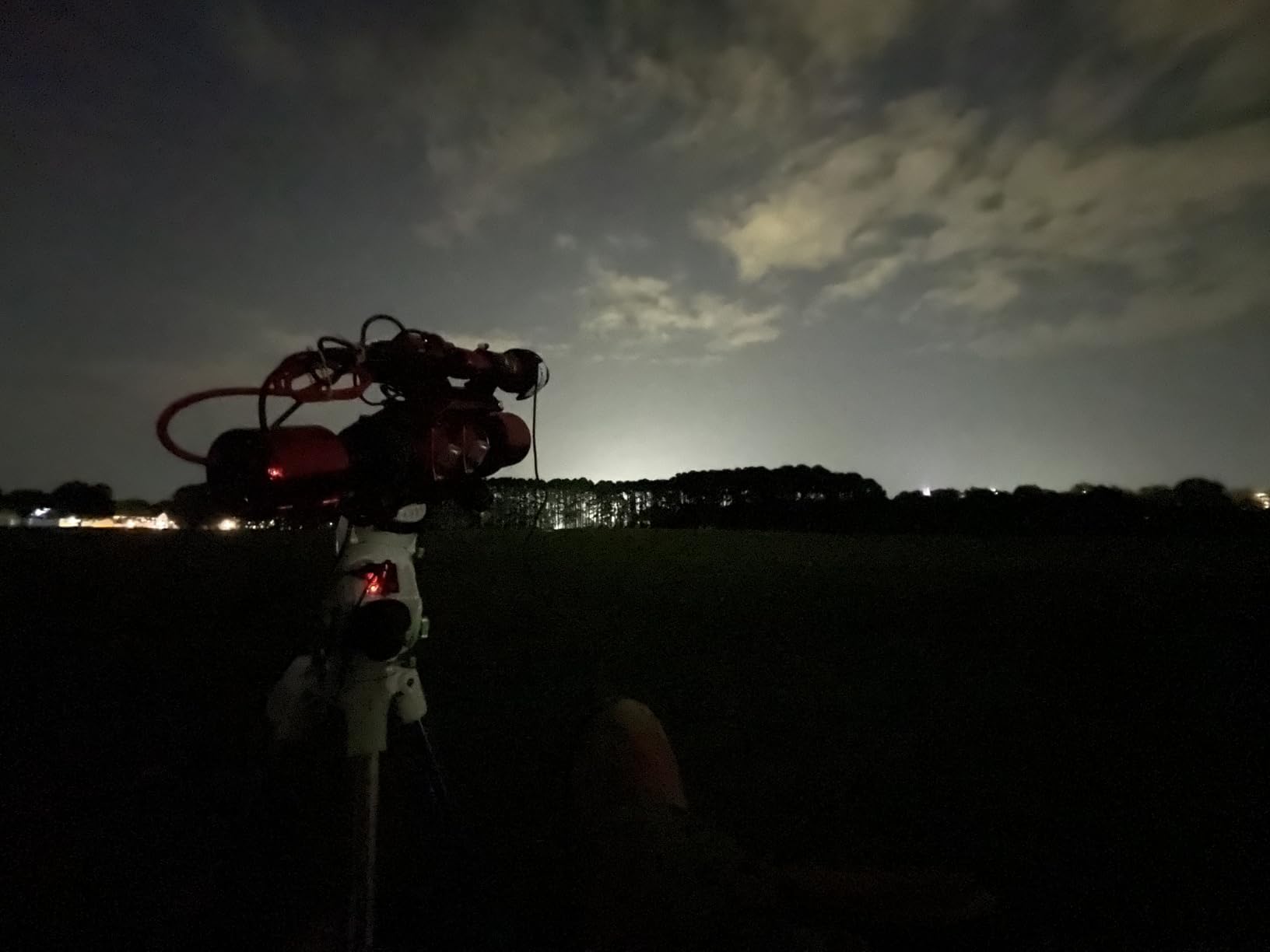
Owners cite two things consistently. The 7nm dual-band isolation produces clean, high-contrast emission nebula images with crisp structure, and the filter is designed for one-shot colour cameras so a single filter captures a full emission nebula without combining separate narrowband channels.

It is built for exactly the conditions people struggle with most: bright man-made light pollution and moonlit nights. When the Moon is up, a broadband frame is essentially ruined, and a 7nm dual-band filter is one of the few ways to keep shooting at all. Compatible with DSLRs, CCD and CMOS cameras, it fits a 48mm 2 inch thread.
The trade is time. A 7nm bandpass is narrower, so it suits slower focal ratios and needs longer integration than a wider dual-band design. That is a fair exchange for image quality, but it should be an informed one rather than a surprise in month two.
Who this filter suits
Astrograph and refractor imagers on slower focal ratios who want the cleanest possible emission nebula data from a bright site, including under moonlight. If your skies are bad enough that broadband gradients ruin frames, narrow is the answer.
Who should buy something else
Owners of very fast optical trains should use the L-Enhance instead, because a 7nm bandpass shifts badly at steep light cones. Galaxy imagers should not buy this at all.
9. Celestron 2 Inch Oxygen III Filter – Best for Star Halo Control
Celestron Oxygen III Narrowband Specialized Filter for Telescopes – 2″
2 inch / 50mm thread
Isolates 496nm and 501nm
Ultra-hard vacuum-deposited coating
0.02 kg
Pros
- Isolates OIII emission to boost planetary and nebula contrast
- Reduces unnatural coloured halos around bright stars
- Backed by a two year limited warranty
Cons
- Very object specific and little help on hydrogen-dominated nebulae
- Narrowband transmission makes small aperture visual use dim
- Lowest average rating in this roundup
This Celestron OIII filter is doing the same job as the Astromania one, with one stated priority that its maker leads with: eliminating unnatural coloured halos around bright stars. It isolates the same 496nm and 501nm doubly ionised oxygen lines, so the target list is identical, planetary nebulae and supernova remnants.
Owners confirm it sharpens planetary nebulae under light pollution, and the ultra-hard vacuum-deposited coating is the durability story for anyone who moves their kit around in a car. Like the Celestron LPR, it carries a two year limited warranty.
It fits cameras and accessories with standard 50mm filter threads, which is the 2 inch standard, and weighs 20 g. For imaging, a dedicated OIII channel at this width is exactly what you want for building a synthetic HOO or Hubble palette combination.
The 4.3 average is the lowest here, and the reviews explain why. The filter is very object specific, it offers little on hydrogen-dominated nebulae like M42, and narrowband transmission makes it dim and difficult through a small aperture. Buyers who expected a general purpose light pollution filter were disappointed; buyers who knew what it does are satisfied.
Who this filter suits
Imagers building a multi-band OIII channel, and visual observers with a large enough aperture who want the Veil or the Dumbbell to show structure. It is a specialist tool and a legitimate second narrowband filter.
Who should buy something else
If your problem is general skyglow on emission nebulae, this is the wrong shape of filter. Anyone on a small telescope will find the view too dim to enjoy.
10. NEEWER 1.25 Inch 10 Piece Filter Set – Best for Lunar and Planetary Work
NEEWER 1.25′ Telescope Eyepiece Filter Set (10 Pack), Including Planetary, Variable, UHC, Lunar & Starglow Filters for Moon Observation
10 pieces in a 1.25 inch thread
Five planetary colour filters
Two variable polarisers
6.42 ounces
Pros
- Ten filters covering planetary
- lunar
- polarising and light pollution use
- Threaded aluminum casings with decent dichroic glass
- Variable polarisers add real contrast control for planets and the Moon
- Protective storage case included
Cons
- Included UHC is weaker than a dedicated UHC filter
- Works best in apertures of 4 inches or more
- Variable polariser arrives as two thin screw-together pieces
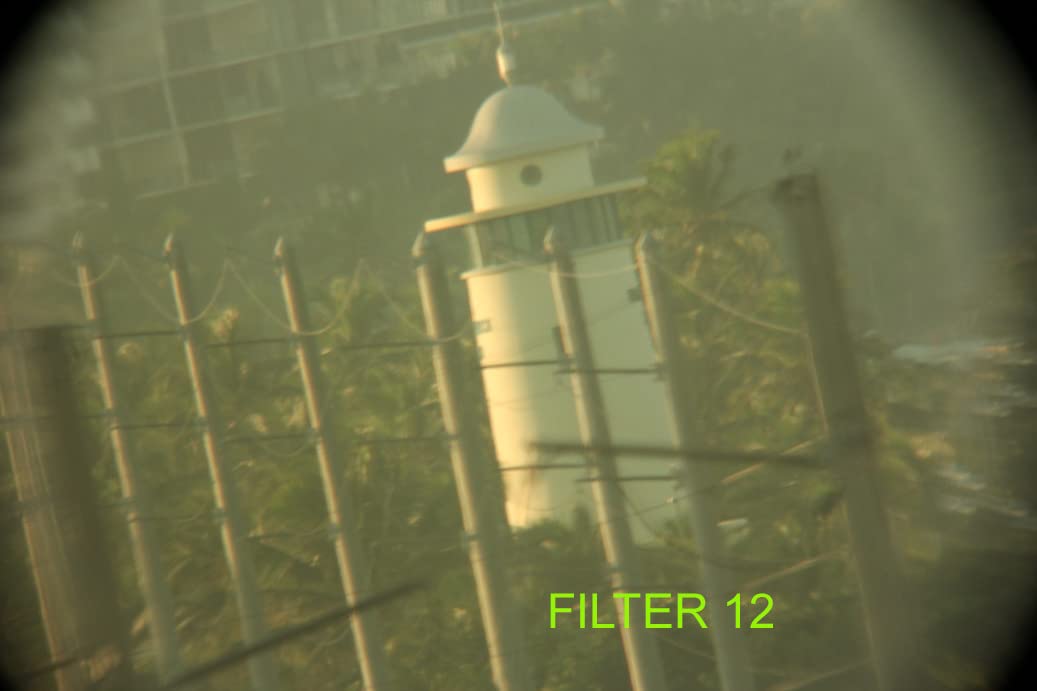
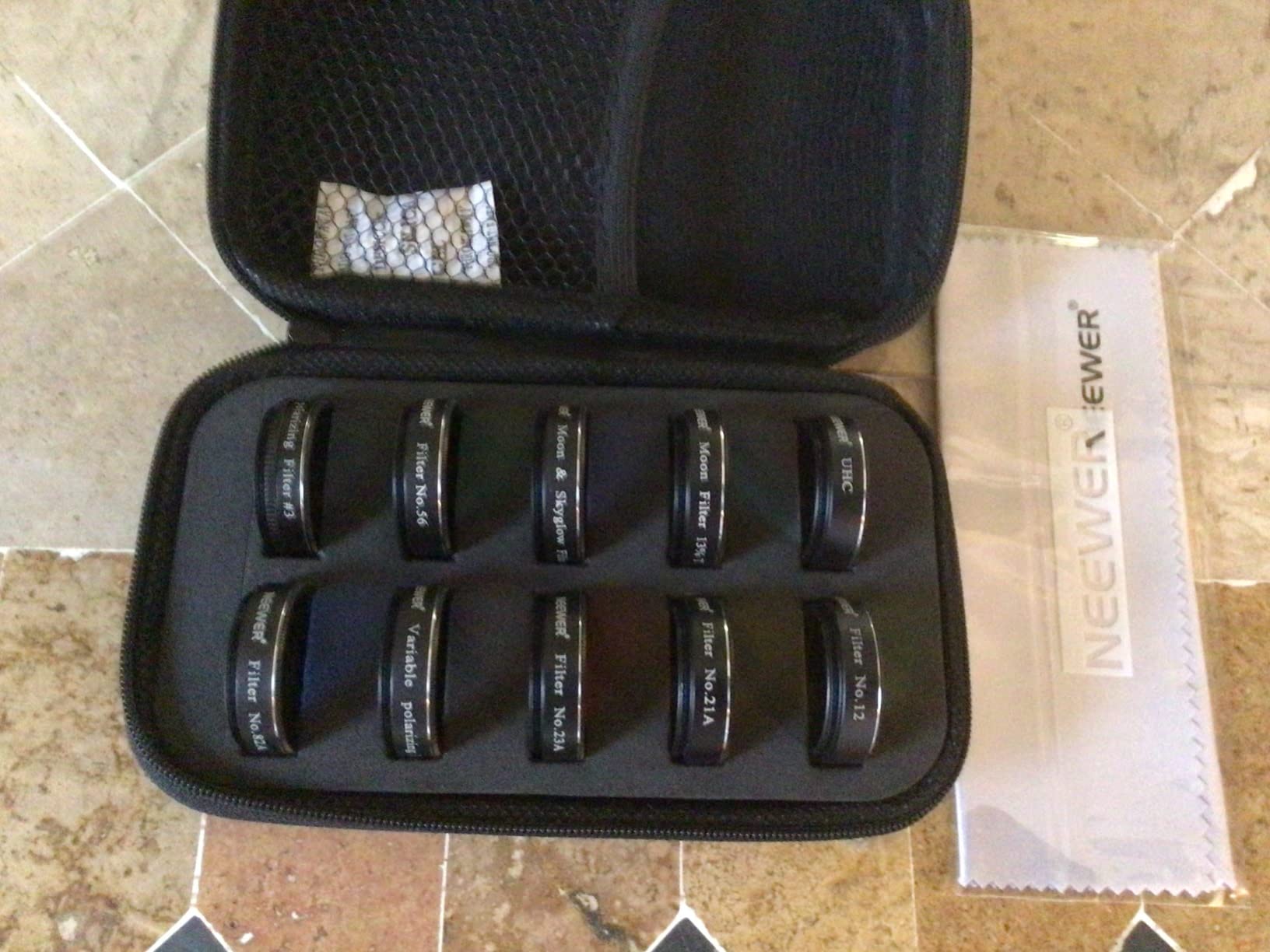
This set is a different proposition from the other nine, and it belongs in the list because a lot of light pollution work is really Moon and planet work. It contains five planetary colour filters, two variable polarising filters, a UHC filter, a lunar and starglow filter, and a 13 percent transmission lunar filter, all in 1.25 inch threads.
The variable polarisers are the sleeper. They adjust transmission from 40 percent down to 1 percent and can be stacked into a variable neutral density equivalent, which gives you a way to tune contrast on Jupiter’s belts or bring down the brightness of a full Moon without giving up detail.
Buyers consistently value the sheer number of filters, the quality of the threaded aluminum casings and the protective case. For someone building a first kit from scratch, having lunar, planetary, polarising and light pollution glass in one box removes a lot of guesswork and a lot of individual purchases.
The important limitation is that the included UHC is a modest performer next to a dedicated UHC filter, and reviewers say plainly that it will not defeat heavy broadband light pollution. Darkening filters also work best in apertures of 4 inches or more, for the same reason the Astromania UHC does.
Who this filter suits
A beginner or a lunar and planetary observer who wants one box to cover most of what filters do. It is the most useful set here if you observe the Moon, and the least useful if your entire interest is faint deep-sky objects.
Who should buy something else
Serious deep-sky visual observers should buy a dedicated UHC or CLS filter instead and treat this as an optional expansion. The set is weighted toward lunar and planetary work by design.
Filters That Will Not Help You
The most useful thing we can tell a first-time buyer is when not to buy a light pollution filter at all. Galaxies, globular clusters, open clusters and most reflection nebulae emit across a broad continuum rather than at a few narrow lines, so a filter that blocks everything except those lines has nothing to work with. The community consensus on this is repeated constantly in telescope forums, and it is correct.
The same applies to the Moon and planets. There is no narrowband emission to isolate, and lunar or planetary filters in this category exist for brightness control rather than skyglow rejection. If your observing time is mostly lunar and planetary, a set like the NEEWER 10 piece is a far better use of money than a UHC filter.
Astrophotography is different. Broadband filters designed to preserve natural star colour, often sold as L-Pro or L-Pro Max, are for people shooting galaxies and star fields from light polluted sites where a dual-band filter would remove all the signal they are trying to record. None of the ten filters here is a broadband L-Pro, which is why galaxies are not represented in the roundup.
The exception worth naming is reflection nebulae. They are lit by starlight reflected off dust, so they are broadband targets and a light pollution filter does not help them. If you want the Flame Nebula or the Blue Horsehead, a dark site or a broadband colour filter is the answer.
How to Choose a Light Pollution Filter: A Buying Guide
Before comparing models, establish how bright your sky actually is, because it determines whether a filter can do anything for you at all. The Bortle scale runs from 1 at a genuinely dark site to 9 in the middle of a city. At Bortle 4 or below, a light pollution filter mostly costs you brightness. From Bortle 5 upward, and especially from 7, it starts earning its place on emission nebulae.
To place your own sky, the free light pollution maps based on satellite radiance data are the most accurate starting point available, and a white-to-orange Bortle overlay tells you which class you sit in. A useful rule of thumb: if you cannot see the Milky Way’s core from your garden in summer, you are at Bortle 7 or worse and a filter is worth considering for nebulae.
Confirm these five things before you order
First, thread size. Visual filters are 1.25 inch, which is 31.75mm, and imaging filters are commonly 2 inch at 48mm with an M48x0.75 thread. The SVBONY CLS in this list lists a 28.5mm thread, which is narrower than the usual 1.25 inch barrel, so check your eyepiece. Second, mount type: threaded eyepiece glass, round mounted glass for a camera, or a clip-in filter for a specific DSLR body.
Third, focal ratio. On fast optical trains, especially f/2 astrographs, the steep light cone shifts the passband off its design wavelength, and a 7nm filter stops sitting on the emission line. Widen your choice to filters with a broader bandpass, or move the camera off-axis with a tilt adapter. Fourth, camera type. An unmodified DSLR can use a dual-band or CLS filter, while an astro-modified DSLR needs a separate UV and IR cut filter because the modified sensor responds to infrared and will produce bloated stars.
Fifth, and most importantly, your target type. Emission nebulae and planetary nebulae respond. Galaxies, star clusters, reflection nebulae, the Moon and the planets do not. Buying a light pollution filter before deciding what you want to see is the most common expensive mistake in this category.
Coatings, and what they actually buy you
Coating technology matters less than most guides imply, but the vocabulary is worth knowing. Multi-coating and anti-reflection coatings reduce surface reflections and ghosting, which mostly shows up as a cleaner view and fewer halos around bright stars. Ion-assisted deposition and ion gun assisted deposition use an ion beam during coating, producing denser, more durable films that resist scratching and humidity, which matters for glass that lives in a car.
Multi-bandpass technology, common in IDAS designs, is not a coating but an approach to stacking several passbands into one filter. You will see the term in specifications for filters outside this roundup. Neither coating changes what wavelengths get through, so do not pay a premium for a coating name when two filters block the same light.
Budget tiers, without the numbers moving
Where money actually matters is in bandwidth, not in branding. At the entry tier you are buying a broadband UHC or CLS in 1.25 inch, which works well on emission nebulae and is the right first visual purchase. The middle tier buys you a 2 inch narrowband OIII or a dual-band filter, which is where imaging performance jumps. The top tier is 7nm dual-band and multi-bandpass designs, which is where you pay for the ability to shoot under moonlight and heavy LED glow.
Two things are not worth paying extra for. A premium coating on a broadband filter, where the limiting factor is the width of the blocked band, and a filter size you cannot use. Buy the bandwidth that matches your target and the thread that matches your hardware, and spend nothing else.
One practical note for anyone processing images late into the morning. Screen glare and eye strain have nothing to do with skyglow, but they do have something to do with finishing the session, and our guides to blue light reading glasses and to pop filters with built-in lighting cover the desk setup side of a long night. If you are building a small workspace to image from, our picks for projector night lights with Bluetooth speakers and for light pads for tracing letters cover the other half of the problem: giving your eyes a dark-adapted corner to sit in.
Frequently Asked Questions
What is a good light pollution filter for a telescope?
A UHC or CLS filter in 1.25 inch is the standard choice for visual observing, because it blocks sodium and mercury light while passing hydrogen-alpha and oxygen-III emission, darkening the background sky around emission nebulae. If you also image, a 2 inch dual-band filter is the better long-term purchase.
Is a UHC filter good for galaxies?
Not really. Galaxies emit light across a broad continuum rather than at the few narrow lines a UHC filter passes through, so the filter removes signal without removing much skyglow. The same is true of globular and open clusters and most reflection nebulae. UHC filters are for emission and planetary nebulae only.
Do light pollution filters work for astrophotography?
Yes, and imaging is where the largest gains are. Dual-band and 7nm narrowband filters suppress skyglow and moonlight far more effectively than broadband designs, which is what makes emission nebulae shootable from bright backyards. The cost is longer exposure times, since a narrower bandpass transmits less total light.
What filter is best for viewing nebulae?
For visual observing, a 1.25 inch UHC or CLS filter is the best starting point, and a 2 inch O-III narrowband filter is the best second purchase for the Veil, Dumbbell and Cat’s Eye. For imaging, a dual-band filter passing H-alpha and O-III on a one-shot colour camera gives the strongest result under skyglow.
What filter is best for viewing Jupiter?
No light pollution filter is. Planet and Moon filters control brightness and colour rather than rejecting skyglow, so a variable polariser or a neutral density filter is the right tool for Jupiter, helping you hold detail in the belts and spots without flooding the view.
What size telescope filter do I need?
Eyepiece filters are 1.25 inch, or 31.75mm, and thread onto the barrel of a 1.25 inch eyepiece. Camera filters are usually 2 inch, or 48mm, with an M48x0.75 thread. Check the listed thread size before ordering, because a few 1.25 inch filters use a narrower 28.5mm barrel.
Does a light pollution filter make things brighter or dimmer?
Dimmer, always. The filter blocks part of the incoming light, so the background sky darkens and the target dims slightly too. That is the trade you are making: lower overall brightness for higher contrast. On small apertures the object dims as much as the background, so a UHC filter works best in 4 inches or more.
Are light pollution filters worth it?
They are worth it if you are under Bortle 5 skies and you observe emission or planetary nebulae, where the contrast gain is obvious. They are worth far less on galaxies, star clusters and reflection nebulae, and at Bortle 4 or below they mostly cost you brightness without buying contrast.
What is the difference between UHC and LPS filters?
UHC means ultra high contrast and LPS means light pollution suppression, and both describe broadband filters that block broad swaths of the visible spectrum while passing nebula emission lines. The practical difference is transmission and blocking strength, with CLS designs typically reporting around 90 percent transmission on emission lines.
What is the most accurate light pollution map?
Satellite-based sky brightness maps, such as those used by the World Atlas of Artificial Night Sky Brightness, are the most accurate public source because they measure upward radiance rather than light received at ground level. They show Bortle classes as a colour overlay you can check against your own garden.
The Verdict: Which Light Pollution Filter Should You Buy
For visual observers, the SVBONY 1.25 inch UHC filter is the pick to beat, with 611 buyer reports behind it and a user base large enough to make its strengths and weaknesses clear. It fits every 1.25 inch eyepiece, it leaves infrared alone so it stays useful on a guide scope, and its main weakness, weaker blocking of modern LED skyglow, is shared by every broadband filter in its class. If you observe the Veil specifically, add the Astromania 2 inch O-III as your second filter.
For astrophotographers, the choice is about focal ratio and how bad your sky is. On slower optics from a bright backyard, the SVBONY SV220 gives you 7nm isolation at over 94% transmission on a one-shot colour camera. On fast astrographs and Newtonians, the Optolong L-Enhance tolerates the steep light cone that would break a narrow filter. If moonlight is your main problem, the Optolong L-Extreme at 7nm is the cleanest result available in this roundup.
Before any of those, check the one thing that decides half these purchases: what you actually want to look at. If the answer is galaxies, star clusters or the Moon, no filter on this list will help, and your money is better spent on aperture, a dark site trip, or a binocular. If the answer is emission nebulae under a bright sky, any of the ten above will improve your view or your images, and the only real mistake is buying the wrong physical size.
This guide to the best telescope filters for light pollution in 2026 is built on published specifications and the pattern across hundreds of buyer reports, not on our own nights at the eyepiece. Where the evidence is thin, we have said so rather than filling the gap.