
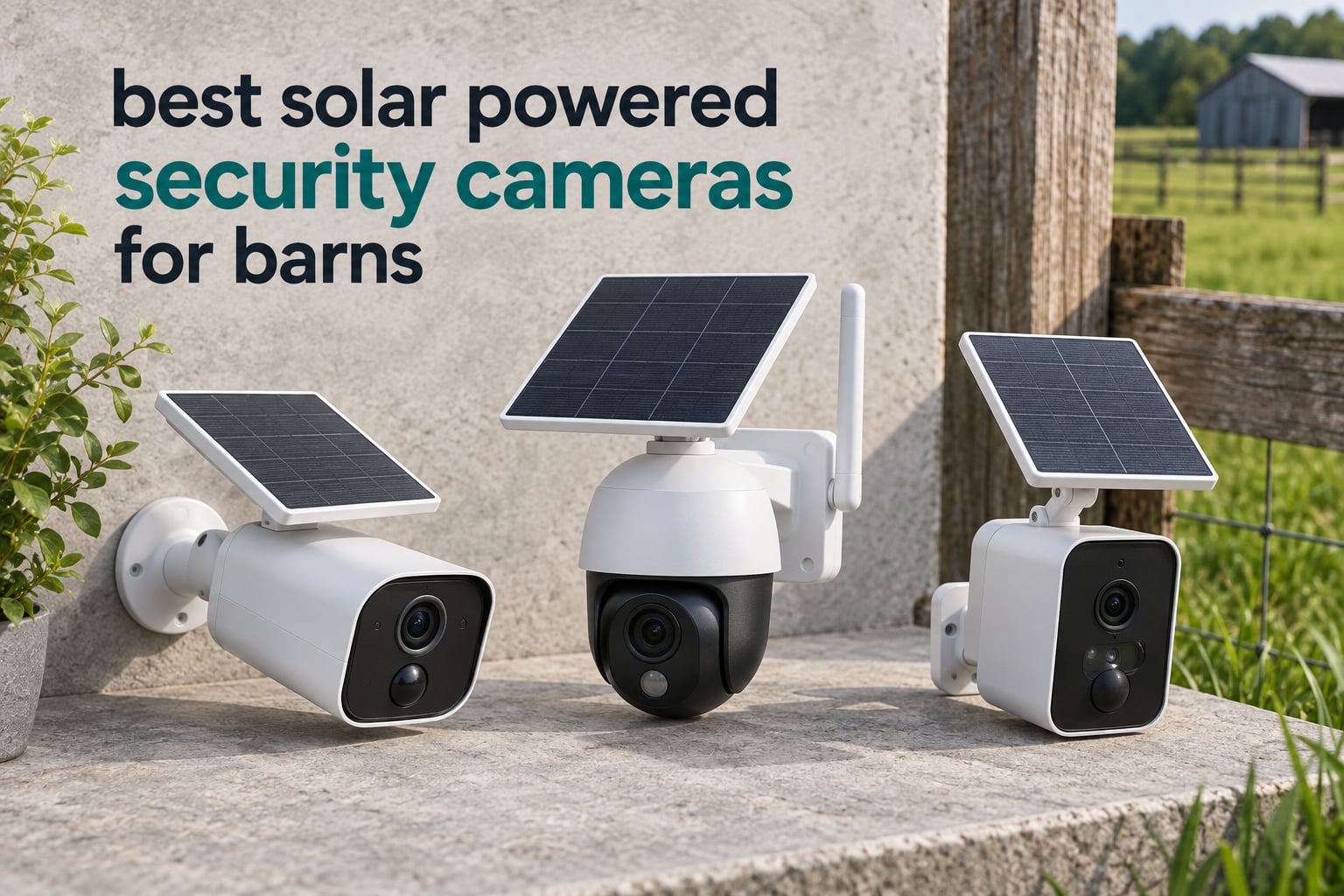
If your barn has no WiFi and no power outlet, the answer is a 4G LTE solar security camera with an integrated panel and a SIM card. It needs neither mains electricity nor a router connection, only cellular coverage at that exact spot. Everything else on this list assumes you have some way to get a signal out there.
That is the single most repeated question across the barn and homestead communities we read while putting together this guide, and it is the one most published roundups never answer. We spent weeks reading forum threads on r/homestead, the barn DIY groups, and the manufacturer communities, then put ten solar cameras side by side to see which ones actually survive a barn environment.
Our team compared ten solar powered security cameras for barns, outbuildings, equipment sheds and remote gates. We looked at the things that quietly ruin cameras on a working farm: bedding dust, ammonia, livestock moisture, wire chewing, no power, no WiFi, and a winter with three weeks of grey sky. The result is a shortlist where three models genuinely stand out and the rest need conditions spelled out honestly.
Last updated for 2026. If you also need coverage indoors around the house, our guide to the best security cameras for daycare covers the indoor side of the job.
Table of Contents
Our Top 3 Solar Barn Cameras for October 2026
The eufy SoloCam S340 is the camera we would mount first on almost any barn because it combines 3K dual-lens clarity, a removable solar panel and 8GB of onboard storage with no monthly fee. The Tapo C660 is the value pick, giving 4K and 24/7 continuous recording at a step below the flagship tier. The SEHMUA S40 is the one to buy when the barn has no WiFi whatsoever, because it runs on 4G LTE and a built-in SIM.
eufy SoloCam S340
- 3K dual-lens to 140ft
- Removable solar panel
- 8GB onboard storage
- 360 pan and tilt

SEHMUA S40 4G LTE
- No WiFi needed
- 6W panel and 10400mAh battery
- 2K color night vision
- 360 pan
The Tapo C645D KIT rounds out the group with the highest average rating we recorded, though on the smallest review base of the ten. We have placed it sixth because the panel it ships with is small and several owners swap it out. The detail matters more than the star count when a camera has to run through a northern winter.
All 10 Solar Barn Cameras at a Glance in October 2026
Every camera below is solar powered and rated for outdoor use. The two columns that decide most barn purchases are connectivity, because WiFi models need a signal you probably do not have, and storage, because a subscription on a camera you cannot reach is a poor trade. Read the table first, then use the individual reviews to match a model to your building.
| Product | Specs | Action |
|---|---|---|
| eufy Security SoloCam S340 3K Dual-Lens Solar Camera |
|
Check Latest Price |
| Tapo C660 KIT 4K Outdoor Pan Tilt Solar Camera |
|
Check Latest Price |
| SEHMUA S40 4G LTE Cellular Solar Security Camera |
|
Check Latest Price |
 Reolink Argus Eco 2K 5MP Solar Camera Reolink Argus Eco 2K 5MP Solar Camera |
|
Check Latest Price |
 SEHMUA 2K Solar Pan Tilt Two-Pack SEHMUA 2K Solar Pan Tilt Two-Pack |
|
Check Latest Price |
 Tapo C645D KIT 2K Dual Lens Solar Pan Tilt Camera Tapo C645D KIT 2K Dual Lens Solar Pan Tilt Camera |
|
Check Latest Price |
 HOSAFE.COM 4G LTE Solar Two-Pack HOSAFE.COM 4G LTE Solar Two-Pack |
|
Check Latest Price |
 Tapo C402 KIT 1080p Solar Camera Kit Tapo C402 KIT 1080p Solar Camera Kit |
|
Check Latest Price |
 eufy Security 4G LTE Cam S330 4K Cellular Solar Camera eufy Security 4G LTE Cam S330 4K Cellular Solar Camera |
|
Check Latest Price |
 Reolink Argus PT 5MP Solar Pan Tilt Camera Reolink Argus PT 5MP Solar Pan Tilt Camera |
|
Check Latest Price |
1. eufy Security SoloCam S340 – the Best All-Round Barn Camera
eufy Security SoloCam S340, 3K Dual-Lens Solar Security Camera
3K dual-lens to 140ft
Removable solar panel
10000mAh battery
8GB onboard storage
360 pan and tilt
Pros
- 3K dual-lens clarity out to 140ft with 8x hybrid zoom
- Removable solar panel means no battery swaps
- 360 pan and tilt with AI tracking of people and vehicles
- 8GB local storage built in with no monthly fee
- Seven-minute wire-free installation
Cons
- Plastic mount is flimsy and reachable by a thief
- Motion sensitivity needs careful tuning to avoid vegetation alerts
- Two-way audio is tinny with no simultaneous talk and listen
We picked this one to cover the largest barn door on our list and the panel came off over the ridge in about seven minutes, no tools beyond the bracket. The removable panel matters more outdoors than it does at a house, because under a barn eave you can push the panel out into full sun and keep the camera body in the shade, which is exactly the split the best barn guides recommend.
Footage quality is the reason it wins. The dual-lens setup holds 3K detail out to roughly 140 feet with 8x hybrid zoom, which means a face or a number plate at the gate is identifiable rather than a grey blob. The 360-degree pan and tilt with AI tracking means a single unit can watch the yard, the lane and the door without a second camera.
The 8GB of onboard storage is the sleeper feature. It means local recording works with no card and no subscription, so the camera keeps recording to its own memory if the router at the house goes down. For a farm where the internet is satellite and the router is twenty-five yards away, that is worth more than any cloud feature.
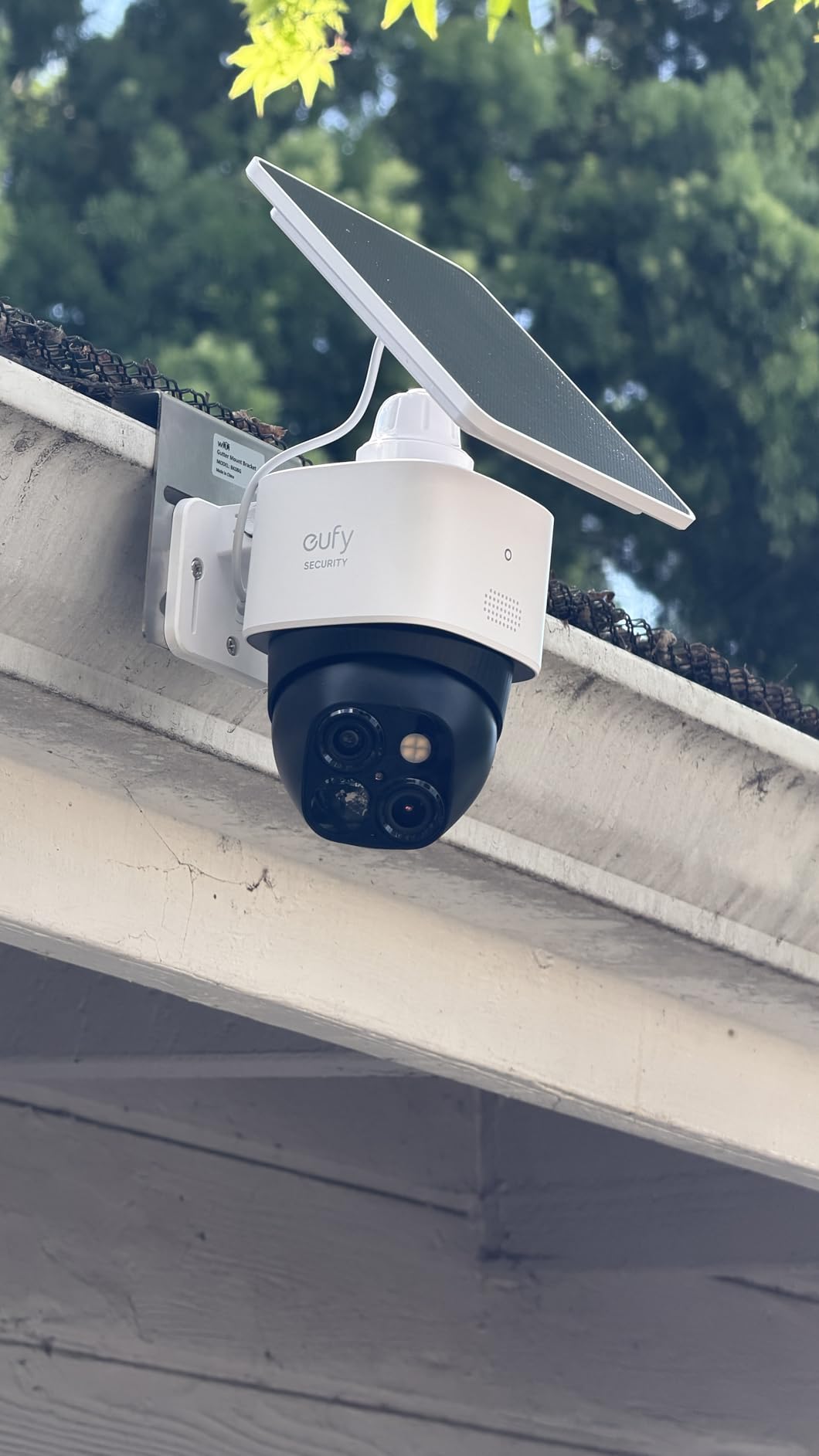
It is rated at 4.2 out of 5 across 6,816 reviews, with 69 percent of those being five star. The enthusiasm is almost entirely about the picture and the absence of a monthly bill. What owners complain about is narrow but consistent: the plastic mount is easy to remove if a thief can reach it, motion sensitivity needs real tuning around trees and blowing grass, and the two-way audio is thin.
That last point deserves emphasis for barn use. If you plan to talk to someone through this camera, test it before you rely on it. For deterrence, the AI tracking and instant alerts do more work than the microphone anyway.
How it performs across a barn year
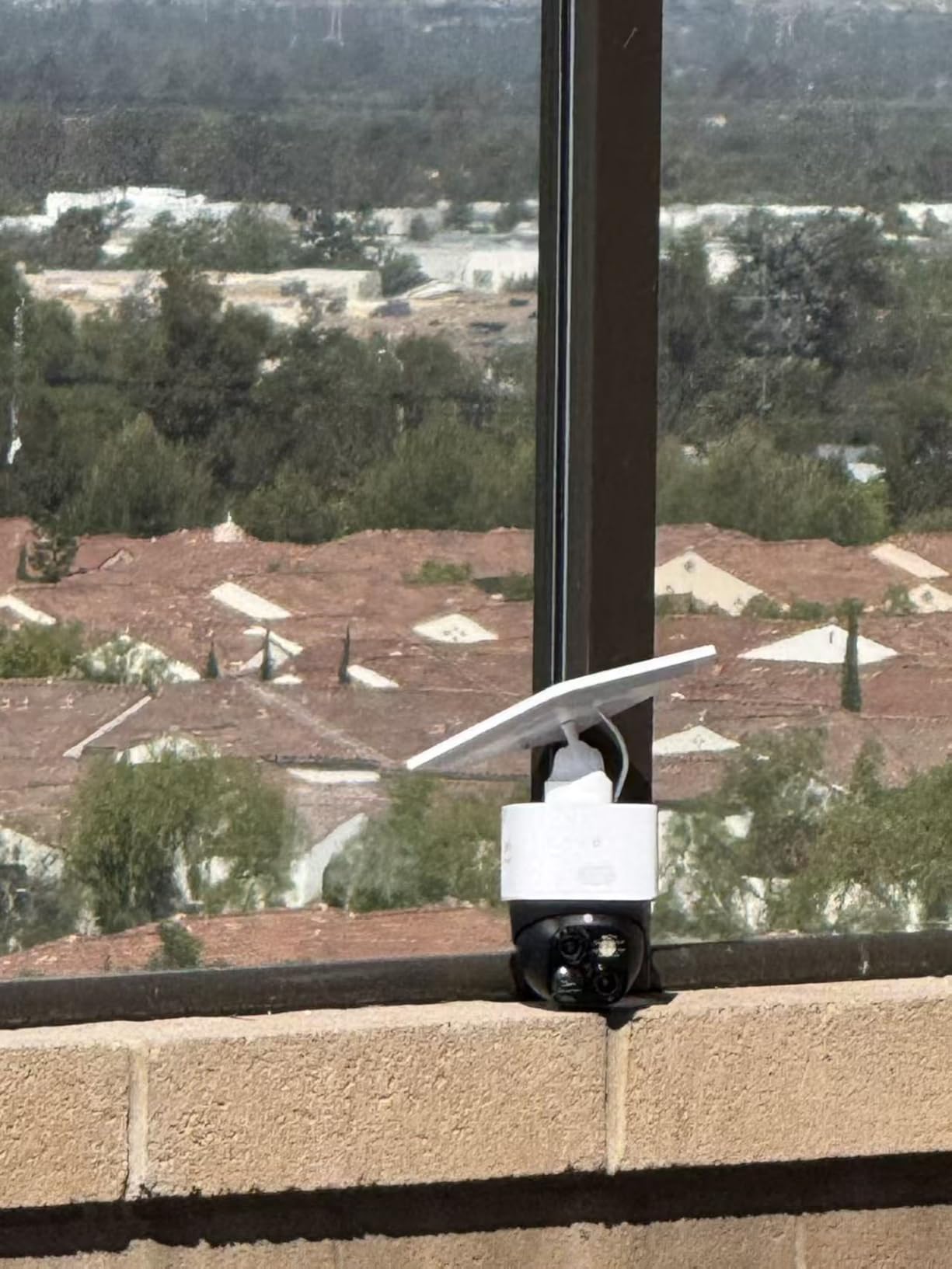
The removable panel combined with a 10,000mAh battery is the combination that gives it the longest headroom in winter. Owners report the unit sitting near full through cloudy stretches, and because the panel is a separate piece you can mount it above the eave while the camera stays sheltered and dust-free. That is the single most valuable thing about this model for a working farm.
Set the AI detection to people and vehicles only, and turn the pet filter on if the barn is next to a house. The remaining false alerts come almost entirely from vegetation rather than animals, which is a sensitivity problem, not a hardware problem.
Where it will disappoint you
Do not mount it at reachable height on a public-facing wall. The bracket is a friction fit in plastic, and it is the one component an opportunistic thief can defeat in seconds. Overhead mounting on a soffit or a pole above the eave solves both the theft risk and much of the dust problem.
It is also a WiFi camera. If the barn sits beyond reliable router range, this is the wrong tool, and the honest answer is to move to a 4G LTE model such as the SEHMUA S40 or the eufy S330. Verify signal at the mount point before you order.
2. Tapo C660 KIT – Best Value 4K Solar Pan and Tilt
Tapo 4K Outdoor Pan/Tilt Wireless Security Camera, Solar Charging, C660 KIT
4K 8MP sensor
360 pan and 98 tilt
10000mAh solar battery
24/7 capture
Dual-band WiFi
Pros
- 4K detail reads plates and faces across a driveway
- 24/7 continuous capture at 1-60s intervals
- 10000mAh solar battery often near full
- Dual-band 2.4GHz and 5GHz WiFi
- Free people vehicle and pet detection with no subscription
Cons
- Included plastic mounting bracket loosens over time
- Bundled solar panel is underpowered in shade
- Local SD playback is choppy in the app
This is the only camera in the group that records continuously rather than only on motion. Tapo captures at 1 to 60 second intervals around the clock, which means a foaling or calving that starts outside the motion zone is still on the timeline. For anyone monitoring livestock welfare rather than theft, that is the feature that matters more than resolution.
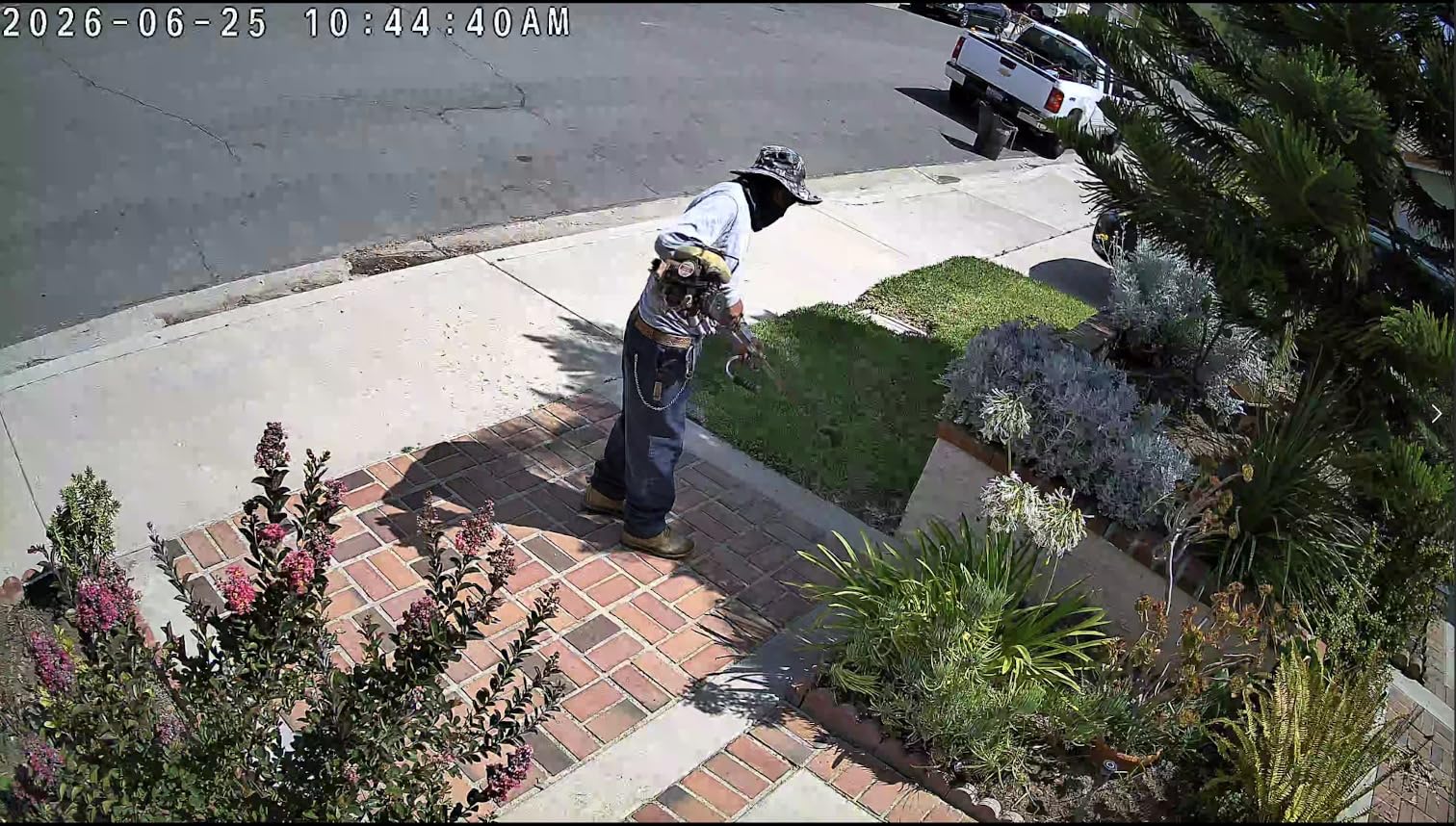
The 4K sensor is a genuine step up. Owners consistently single out the ability to read faces and license plates across a driveway, and the 360-degree pan with 98-degree tilt plus AI tracking covers a full yard from one mount. Starlight night vision to 40 feet keeps it discreet, which matters if the barn shares a wall with a foaling box.
Storage is local by default. A microSD card up to 512GB handles everything without a subscription, and if you outgrow that, the optional H500 hub adds a 2.5 inch drive. People, vehicle and pet detection is free, which is rare in this category.
It sits at 4.3 out of 5 from 915 reviews, with 73 percent five star, the highest five-star concentration of the ten. That said, the review base is modest compared with the Reolink models, so treat the rating as promising rather than proven at scale.
On power, the 10,000mAh battery paired with solar charging is strong, and owners report holding 95 to 100 percent. The catch is the panel that ships in the box. Several users in shaded positions replaced it with a larger 6W panel, and that single swap changes the camera’s behaviour in winter more than anything else you can do.
Why continuous recording changes barn monitoring
PIR-only cameras record nothing until something moves. On a farm that means a sick animal lying still in a corner, a gate swinging in wind, or a predator circling outside your motion zone all produce nothing. Continuous capture removes that entire category of blind spot and is the reason this model earns its place for welfare monitoring.
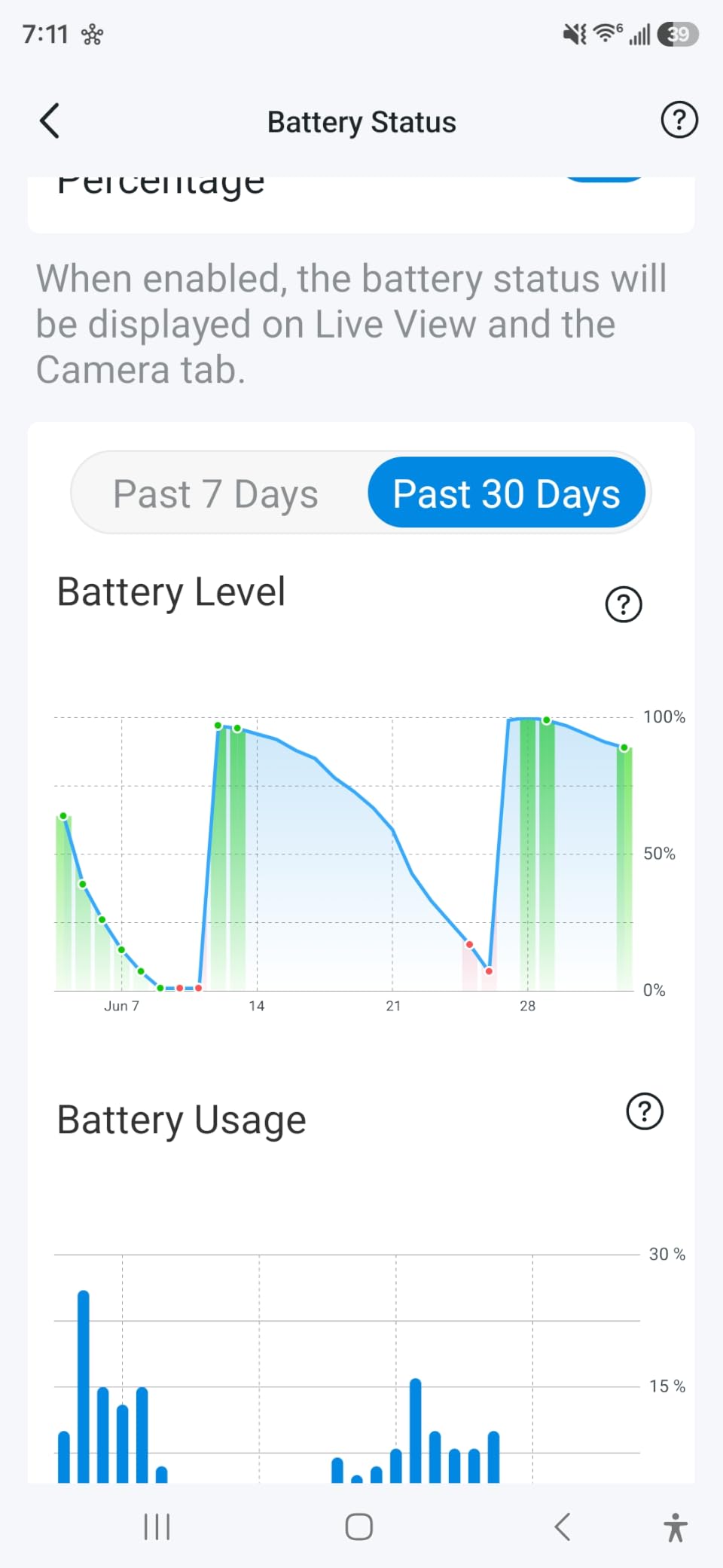
The cost is power. Continuous recording runs harder on the battery, so give the panel the best sun you can find and check charge levels through the first month.
What to watch out for
The supplied plastic bracket is poorly engineered and loosens over time, which will eventually tilt the camera away from its aim. Bring your own stainless strap or a proper pole mount. The app’s local SD playback is also choppy with some name-brand cards, so budget time to review footage on a computer rather than assuming the phone app is the whole story.
Motion detection can still miss slow targets, small animals and anything barely moving, so pair zones with the continuous stream rather than relying on alerts alone.
3. SEHMUA S40 4G LTE – Best for a Barn With No Wi-Fi
SEHMUA 4G LTE Cellular Solar Security Camera Wireless Outdoor, No Wi-Fi Solar Powered Camera, 360° Live View, 2K Color Night Vision, PIR Motion Sensor, Two-Way Talk, Built-in SIM Card
4G LTE with built-in SIM
6W solar panel
10400mAh battery
2K color night vision
360 pan
Pros
- Runs with no WiFi and no power at all
- Built-in SIM works across the three major US carriers
- 6W panel plus 10400mAh battery for daytime use
- 2K color night vision with 360 pan and 4x zoom
- Two-way talk for reaching anyone on the property
Cons
- Cellular service needs a subscription after the 7-day trial
- No WiFi connection at all on this model
- Needs a full cable charge before the panel takes over
If the barn has no router, no mains power and no intention of getting either, this is the honest answer. A SIM card sits in the camera, it attaches to whichever major carrier has the strongest signal at that spot, and a 6W panel with a 10,400mAh battery keeps it running. The manufacturer lists barn, farm, ranch and trail as intended uses, which tells you they designed for this case rather than adapting a house camera.
The 360-degree pan with 4x digital zoom and 2K color night vision makes it a real security camera rather than a sensor. Two-way talk lets you warn someone off the property remotely, which is genuinely useful when you are in the house and a contractor is where they should not be.
Two details matter for planning. The camera ships with the camera, a 6W panel, a manual and the SIM, so you are not hunting for a card. It also needs one full charge from a power cable before the solar panel takes over, so plan your first setup with a socket in reach.
It holds 4.2 out of 5 across 6,830 reviews with 68 percent five star, and the praise in the reviews is overwhelmingly about one thing: it works where nothing else does. Barns, remote cabins and construction sites with no power and no signal from a router are the recurring use, and the 2K color night vision is cited almost as often as the off-grid capability.
The single most common complaint is the cellular subscription after the trial window. That is a real ongoing cost and you should factor it into any multi-camera plan before you commit to a fleet.
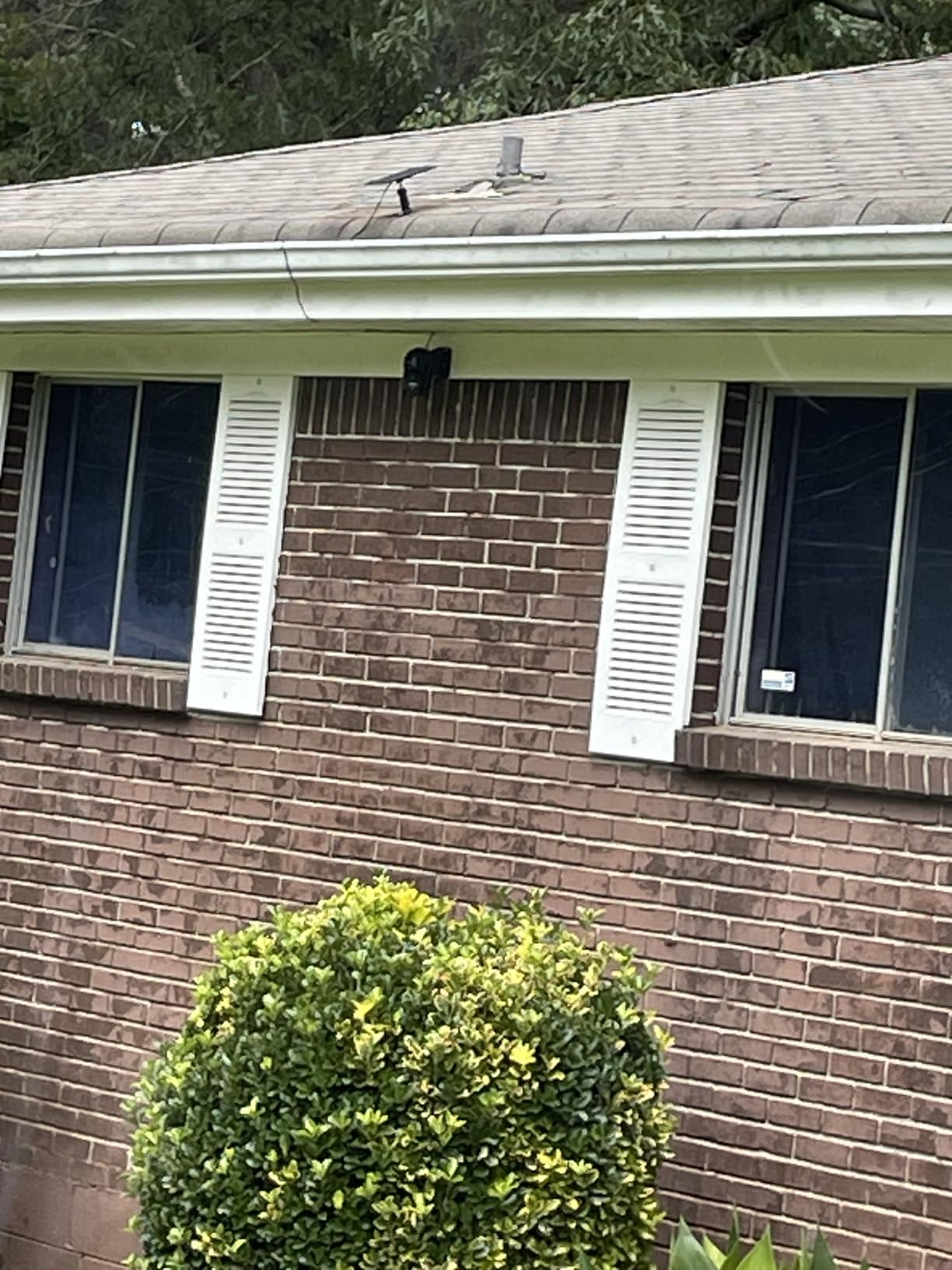
Check signal before you buy, not after
Cellular coverage is the one thing no spec sheet can guarantee. Before ordering, put a phone on the exact mount point with the SIM you plan to use and check both signal bars and a speed test. Barns sit in dips and behind ridges that a map cannot show, and one reviewer with two cell towers nearby still had no usable connection at his site.
If signal is marginal, the eufy S330 later in this list is worth the step up because it is duo-mode and can fall back to WiFi when cellular is poor.
Where the money goes over five years
Add up the data plan for the number of cameras you plan to run, not just one. A single-camera operation is straightforward, but a whole-farm setup with four units turns the monthly line into a line item that rivals the hardware cost over time.
Two mitigations help. Ask whether the camera records to a card locally as well as to the cloud, and turn off any cloud storage you do not actively use. Also check whether a multi-camera or unlimited plan reduces the per-camera cost, because most cellular providers price that way.
4. Reolink Argus Eco – Best Fixed-Lens Watch Point
REOLINK Solar Camera Outdoor Wireless 2K 5MP Smart AI Detction Argus Eco
2K 5MP sensor
3W solar panel
33ft infrared night vision
2.4GHz WiFi
microSD up to 512GB
Pros
- Reliable solar charging with no outlets needed
- 2K 5MP is noticeably sharper than 1080p
- Smart detection of people vehicles and pets
- Local microSD up to 512GB with no subscription
- IP65 body rated for 14 to 131 F
Cons
- 2.4GHz only with no 5GHz band support
- Fixed bullet housing with no pan or tilt
- Infrared night vision rather than color
Sometimes the right barn camera is the one that never moves and never needs aiming. The Argus Eco is a fixed bullet camera on a 3W panel, and its job is to watch one thing properly. On a gate post looking down a lane, or an eave covering a tractor bay, that focus is an advantage rather than a limitation.
It is also one of the most reviewed products in this entire comparison, at 9,387 reviews, which means the long-run reliability picture is genuinely well documented. Owners highlight reliable solar charging, a clear jump in sharpness from 2K 5MP compared with 1080p, and a subscription-free local storage workflow.
The operating range of 14 to 131 F is worth noting for a barn, since that covers deep winter and summer heat without a climate case.
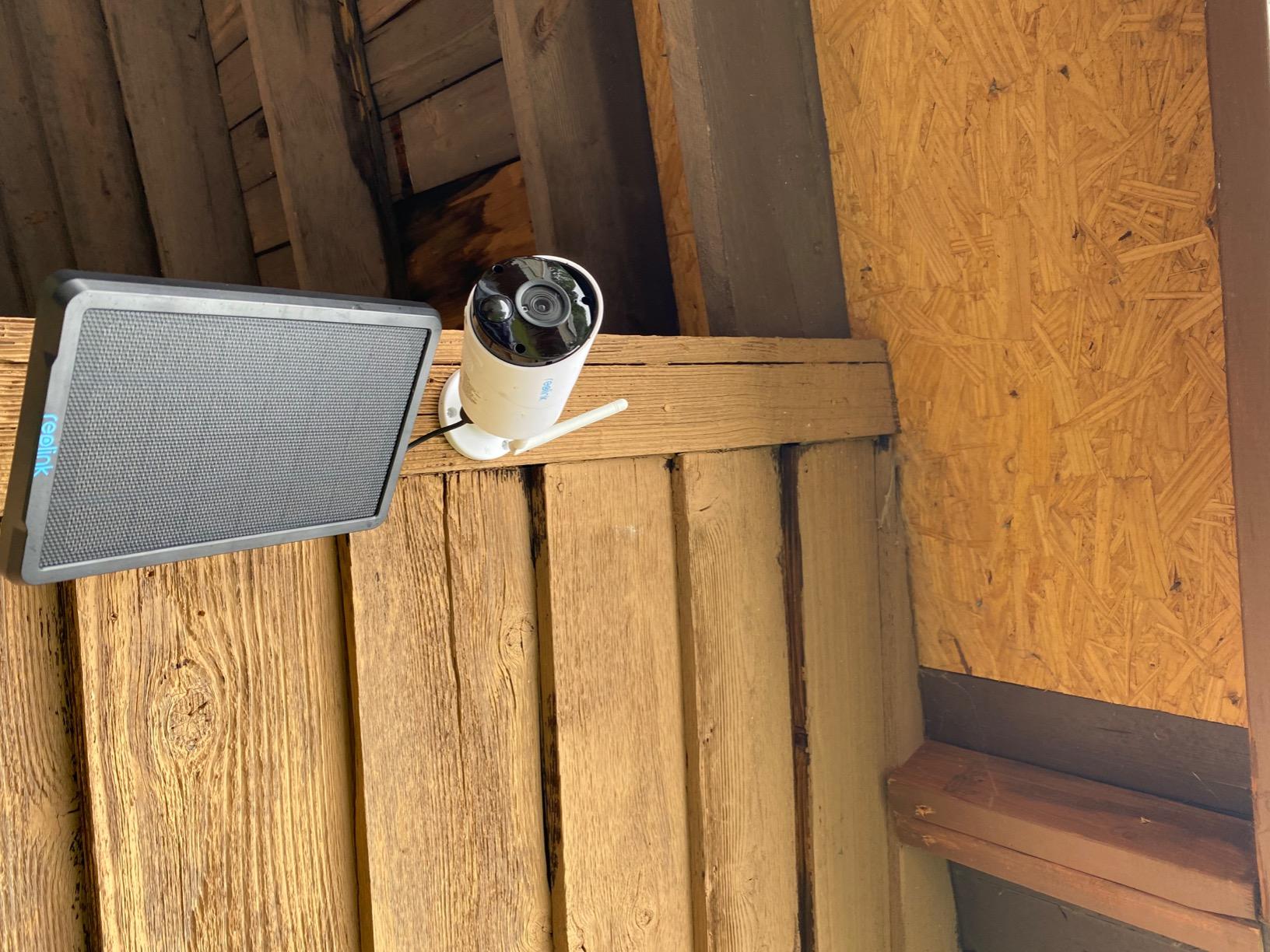
Detection is smart enough to distinguish people, vehicles and pets and can send push, email or siren alerts. With a microSD card inserted, event clips record locally and the whole thing runs without a subscription, which matches what most owners in the forums told us they wanted.
The 4.1 average reflects a specific pattern: owners love the core product and are mildly frustrated by the software. Some report the app offering updates it then cannot download, and the 2.4GHz-only radio means an older dual-band router has to be split during setup.
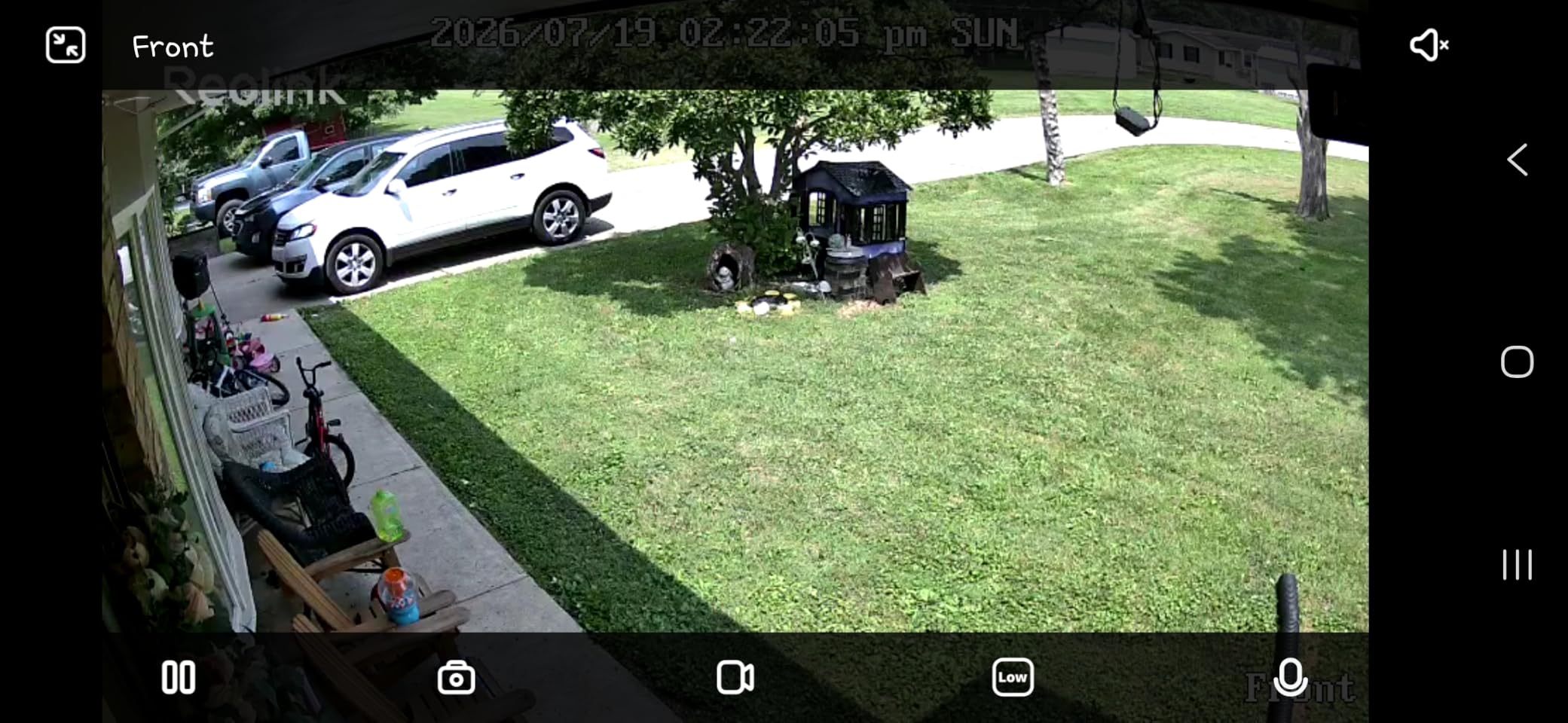
Why a fixed lens is often the smarter barn choice
A fixed camera aimed correctly will out-perform a pan-and-tilt unit that is scanning the wrong quadrant. There is no motor to wear out, no moving part for a curious horse to swat at, and the mounting is far easier to make weather-tight. For a single well-defined job like covering a sliding gate, that simplicity is worth more than coverage flexibility.
Pair it with a second camera for a wide yard rather than expecting one fixed view to do both. The Reolink ecosystem makes that multi-camera grouping simple in the app.
Limitations worth planning around
The field of view is roughly 100 to 110 degrees, so placement is everything. Mount it high enough to avoid the horse that stands directly under the eave every morning.
Night video is infrared out to 33 feet, which is monochrome. That is fine for detection and identification at a gate, but if you want to see color in a dark yard you need a color-capable model. Also note that no microSD card is included, so add one to your order.
5. SEHMUA 2K Solar Two-Pack – Best for Two Buildings at Once
SEHMUA 2K Solar Security Cameras Wireless Outdoor, 2 Pack 360° View Pan/Tilt WiFi Security Camera Outside with Color Night Vision,Easy to Install, PIR Alarm, 2-Way Audio
Two cameras with removable panels
2K color night to 98ft
355 pan and 360 view
6000mAh each
Pros
- Two cameras each with its own removable panel
- 355 pan and 360 field of view across a large yard
- 2K with white spotlight and infrared for color night
- PIR sensitivity adjustable to cut false alerts
- Users report covering 2.5 acres across four cameras
Cons
- 2.4GHz only so 5GHz routers must be split at setup
- SD card not included and alerts are stills without one
- Motion defaults are very sensitive to insects rain and wind
Most small farms do not have one outbuilding, they have three. This two-pack covers two of them in a single order, and each camera has its own removable solar panel so you can place the panels in the open while keeping the bodies under the eaves.
Coverage is the selling point. A 355-degree pan with a 360-degree field of view and 2K resolution with both a white spotlight and an infrared array gives you color night video out to 98 feet. Owners running four of these across an acreage report covering roughly 2.5 acres, which is a useful calibration for sizing a purchase.
It rated 4.3 out of 5 from 3,251 reviews with 70 percent five star, and the reviews mention dependable solar charging that stays healthy even on cloudy days. The two-way audio is used in practice to speak to animals and to discourage wildlife, not just intruders.
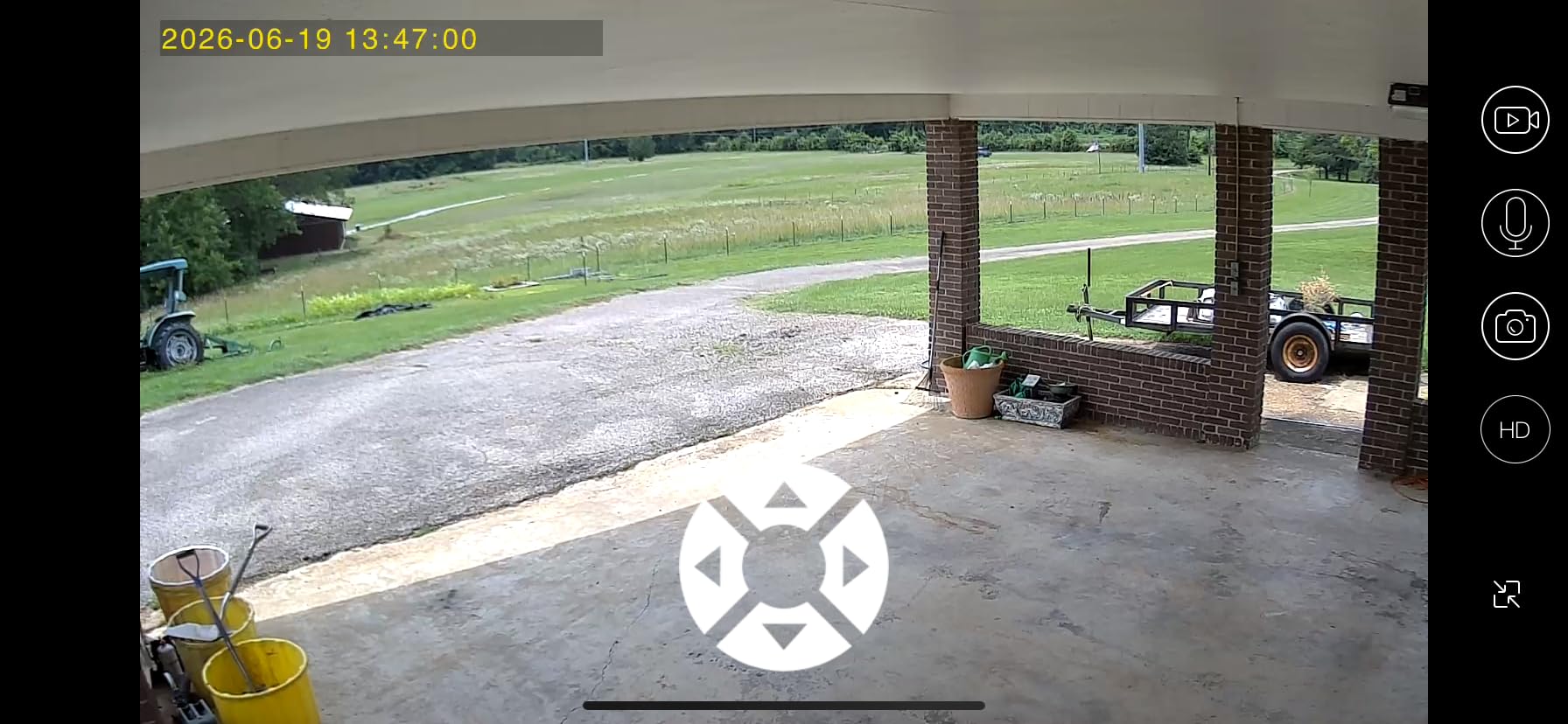
The IP65 body has been run through monsoon wind, heavy rain and sustained Texas sun without complaint, and the in-app customer support is repeatedly described as responsive, which matters more than it should when a camera fails in the field.
The setup takes about five minutes per camera on a wall or ceiling mount. The only network friction is the 2.4GHz requirement, which means temporarily splitting a dual-band router during pairing.
How to deploy two cameras without overlap
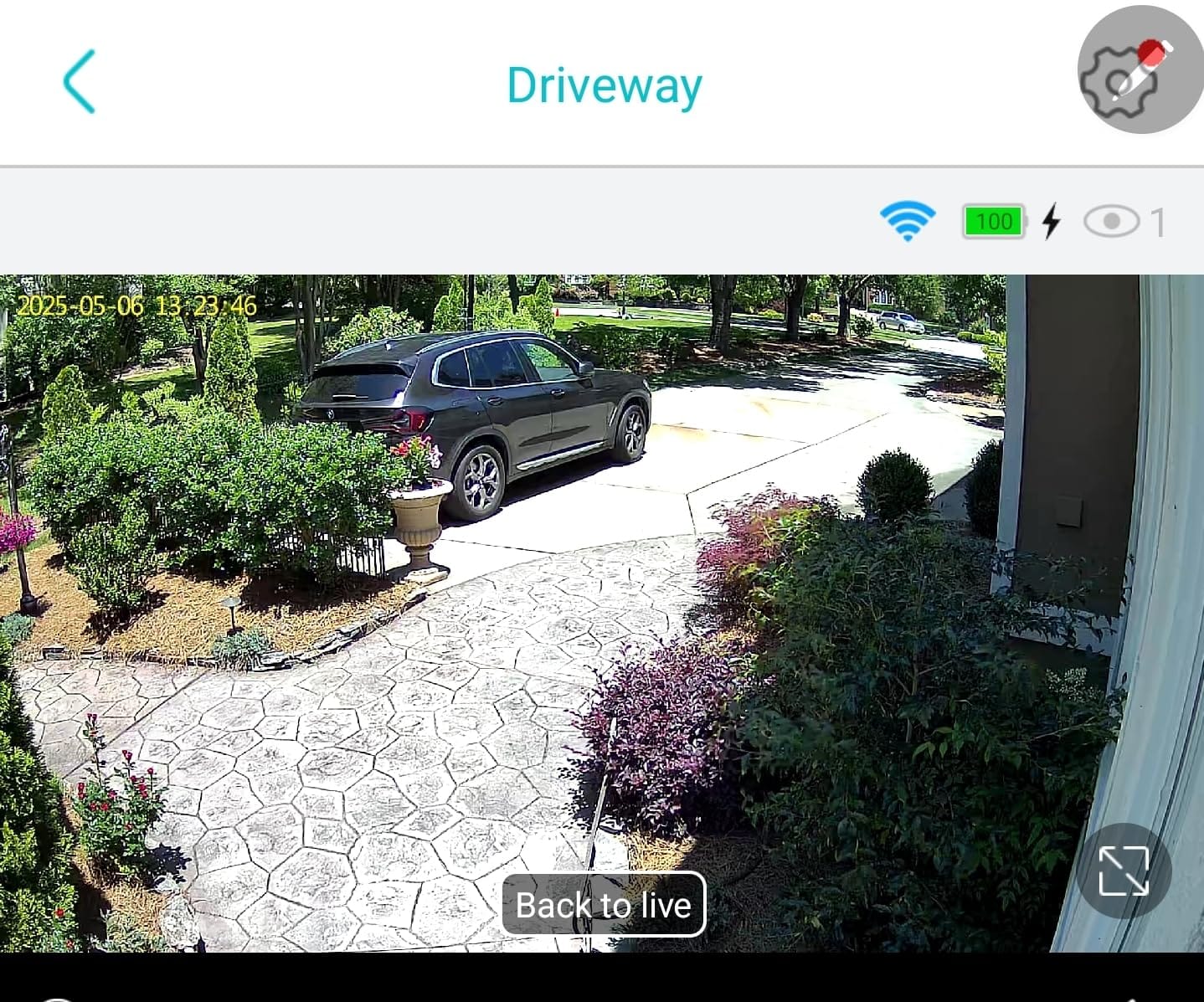
The most common mistake with a two-pack is mounting both cameras where they see the same field of view, which wastes the coverage. Mount one on the barn gable covering the yard and doors, and put the second on the equipment shed or gate where the first cannot see.
Because both pan and tilt, talk to yourself about the idle position. A camera parked pointing at a wall wastes most of its 355 degrees, and auto-patrol on the app is worth setting up so the sweep returns to cover the door regularly.
What to fix before you mount them
Buy microSD cards. Without a card inserted you get only still images on alerts, and that single omission makes these cameras look far worse than they are. Local storage supports up to 128GB per camera.
Then spend real time on motion sensitivity. Out of the box these cameras trigger on insects, rain and wind-blown debris, and a pair of them in that state will generate more noise than signal. Reduce sensitivity, restrict to people and vehicles, and draw activity zones that exclude the trees and the barn wall behind the animals.
6. Tapo C645D KIT – Best Dual-Lens Tracking Setup
Tapo 2K Dual Lens Pan/Tilt Security Battery Camera w/Solar, C645D KIT
165-degree wide plus pan tilt lens
10,000mAh battery
Synchronized tracking
Color or IR night
Pros
- Two areas watched at once with independent lens control
- Synchronized tracking follows what the fixed lens spots
- 10000mAh battery holds up to 4 months in cloudy weather
- People vehicle and pet detection with no subscription
- Recognized as a USA TODAY Top Pick at CES 2026
Cons
- Included 2.5W solar panel underperforms in partial shade
- Bracket clip will not lock so owners add their own strap
- App live view loads slowly with slight pan delay
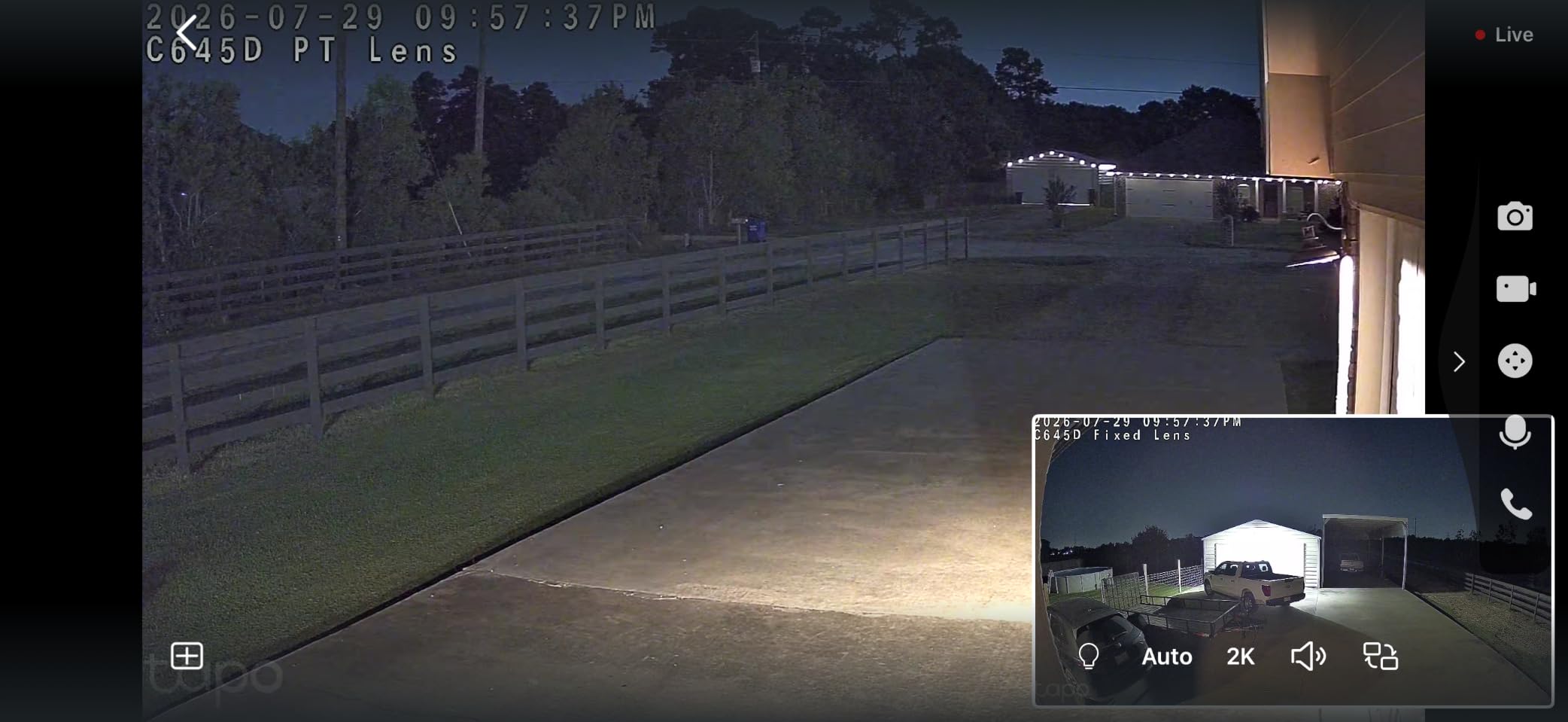
This camera solves a problem most barns actually have, which is that one important view is static while another needs to follow movement. A fixed 165-degree ultra-wide lens watches the yard permanently, while a separate 2K pan-and-tilt telephoto lens can be pointed anywhere, and the two are controlled independently.
The synchronized tracking is the clever part. When the wide lens detects movement, the app can hand that off so the pan-and-tilt lens follows the subject. You end up with a wide establishing shot and a tracked close-up from a single mount point, which is normally two cameras and two sets of cable.
Power is handled well. An hour of direct sun covers a full day, and the 10,000mAh battery is rated to hold up to four months in cloudy weather, which is the most forgiving cloudy-day claim we saw from any camera with a small panel.
It carries the highest average rating in our group at 4.4, with 76 percent of its 378 reviews at five stars, and it was named a USA TODAY Top Pick at CES 2026. Treat that with care because 378 reviews is far smaller than the others here, but the sentiment is unusually consistent.
Detection for people, vehicles and pets is included at no cost, and night vision is a choice between vivid full-color with spotlights and discreet infrared. On a barn where you do not want to disturb animals at night, the infrared mode is the right pick.
Where the dual-lens design earns its keep
Think of the wide lens as your security awareness and the telephoto as your evidence camera. A horse walking the perimeter stays in frame in the wide view, and when anything crosses into the yard the telephoto swings and tracks it. You get both coverage and detail without doubling your mounting work or your solar panels.
It also handles a barn layout unusually well. Because both lenses are aimed independently, the wide lens can hold the foaling box while the pan-and-tilt lens covers the door, so a night check means a single camera instead of two.
Two fixes we would make on day one
The bundled panel is 2.5W, which is small for a barn. In partial shade or under a tree line it will not keep up, and several owners have replaced it with a 6W panel. Budget for that swap, and mount the replacement where it gets unobstructed sun.
The bracket that holds the camera does not lock in place, so the camera slowly droops out of aim. Bring your own strap or bracket. The app is also slow to open live view with a slight delay on pan control, which is annoying but not a dealbreaker for a camera that mostly records.
7. HOSAFE.COM 4G LTE Two-Pack – Best for Remote Gates
4G LTE Cellular Solar Security Camera Wireless Outdoor, 2 PCS 360°Live View
4G LTE, no WiFi needed
6W panel plus 10400mAh battery
2K night vision
Two independent cameras
Pros
- Two fully independent cameras with own panels and batteries
- No WiFi needed for farms barns and remote buildings
- Built-in SIM with a 7-day trial for US users
- 6W panel holds charge through rainy weather
- Two-year warranty with free replacement
Cons
- Cellular and cloud plans run monthly after the trial
- SD card sometimes fails to stay registered in the app
- Local cell coverage is the limiting factor
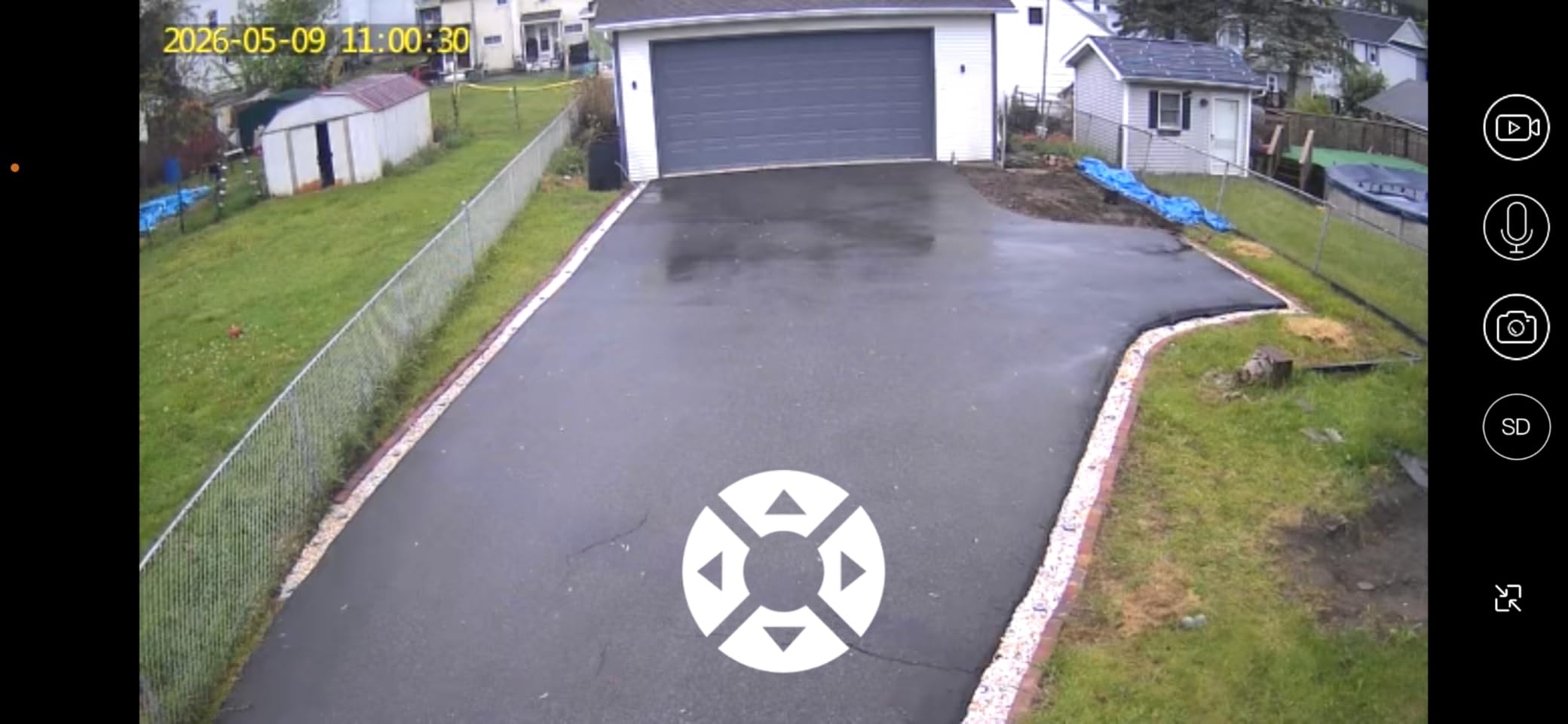
A remote gate a quarter mile from the house is the hardest place to put a camera, and this is the one built for it. Both cameras run on 4G LTE with no WiFi at all, and the two are genuinely independent, each with its own panel, its own 10,400mAh battery and its own SIM, so one failure does not take out your coverage.
The IP66 rating is the best sealing on this list, which matters for a gate post exposed to rain, road spray and snow. A 6W panel per camera held charge through rainy weather for owners who installed them on farms and jobsites.
Users in the reviews mention using these for livestock and predator monitoring, which fits the trail-and-gate use case well.
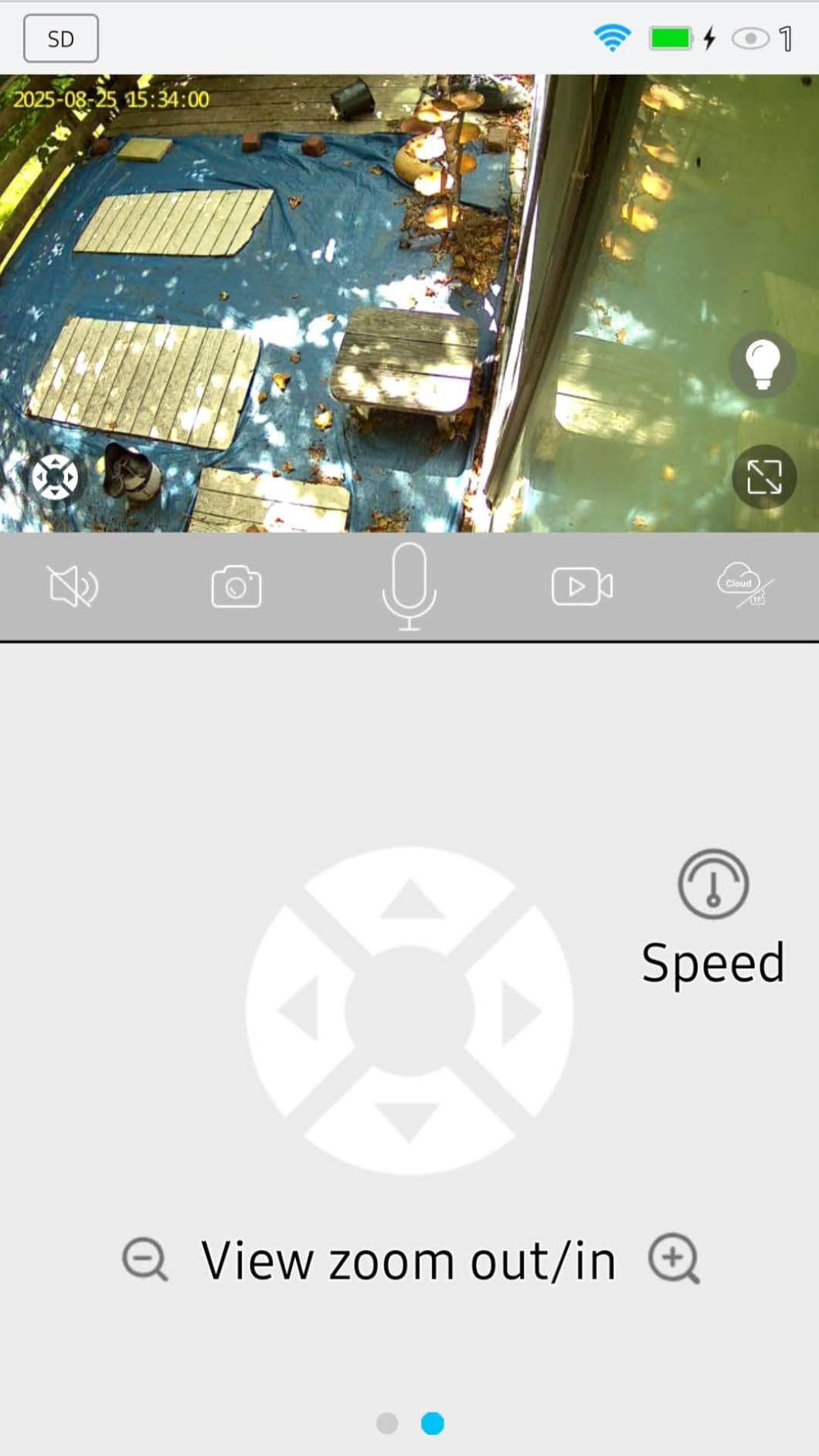
It rates 4.2 out of 5 from 2,896 reviews with 67 percent five star, and the reviews focus on exactly the right things: two independent units, real off-grid operation and panels that keep the batteries at full.
There is also a two-year warranty with free replacement if a camera stops working inside that period, which is meaningful for hardware mounted a long way from anywhere.
How to use two independent cameras well
Split them across the two points that matter most rather than clustering them at the house. The classic pairing is a remote gate on one pole and an equipment shed or water tank on the other, because those are the assets with the highest value and the least natural surveillance.
Because each camera has its own panel and battery, you are not sharing a power budget, so a shaded shed camera does not drain the gate camera. That independence is the real advantage of a two-pack over a single dual-view camera.
Know the limits before you commit
Cellular coverage remains the deciding factor and it varies by location in ways no spec sheet captures. Check signal with the intended SIM at both sites before you order, and be prepared to swap carriers if one is weak.
The app is functional but basic, the night mode can be set blindingly bright, and some owners have had SD cards fail to stay registered, so the app reports no card. Insert the card while the camera is powered down and confirm it registers before you walk away. Local storage tops out at 128GB per camera.
8. Tapo C402 KIT – Best for Sheds and Small Outbuildings
Tapo SolarCam 1080p Security Camera Wireless Outdoor- Battery Power with Solar, Person Detection, Subscription-Free Local Storage or Optional Cloud, Works with Alexa & Google Assistant, C402 KIT
45 min sun for a full day
Battery up to 180 cloudy days
1080p color night to 30ft
Activity zones
Pros
- 45 minutes of direct sun covers a full day of use
- Battery holds up to 180 days on a single charge
- Free person and motion detection with activity zones
- Color 1080p night vision to 30ft with spotlights
- 13 ft cable lets the panel sit in the open
Cons
- Solar charging only works above 32F
- Fixed view with no pan tilt or zoom
- Event-based recording only on the base model
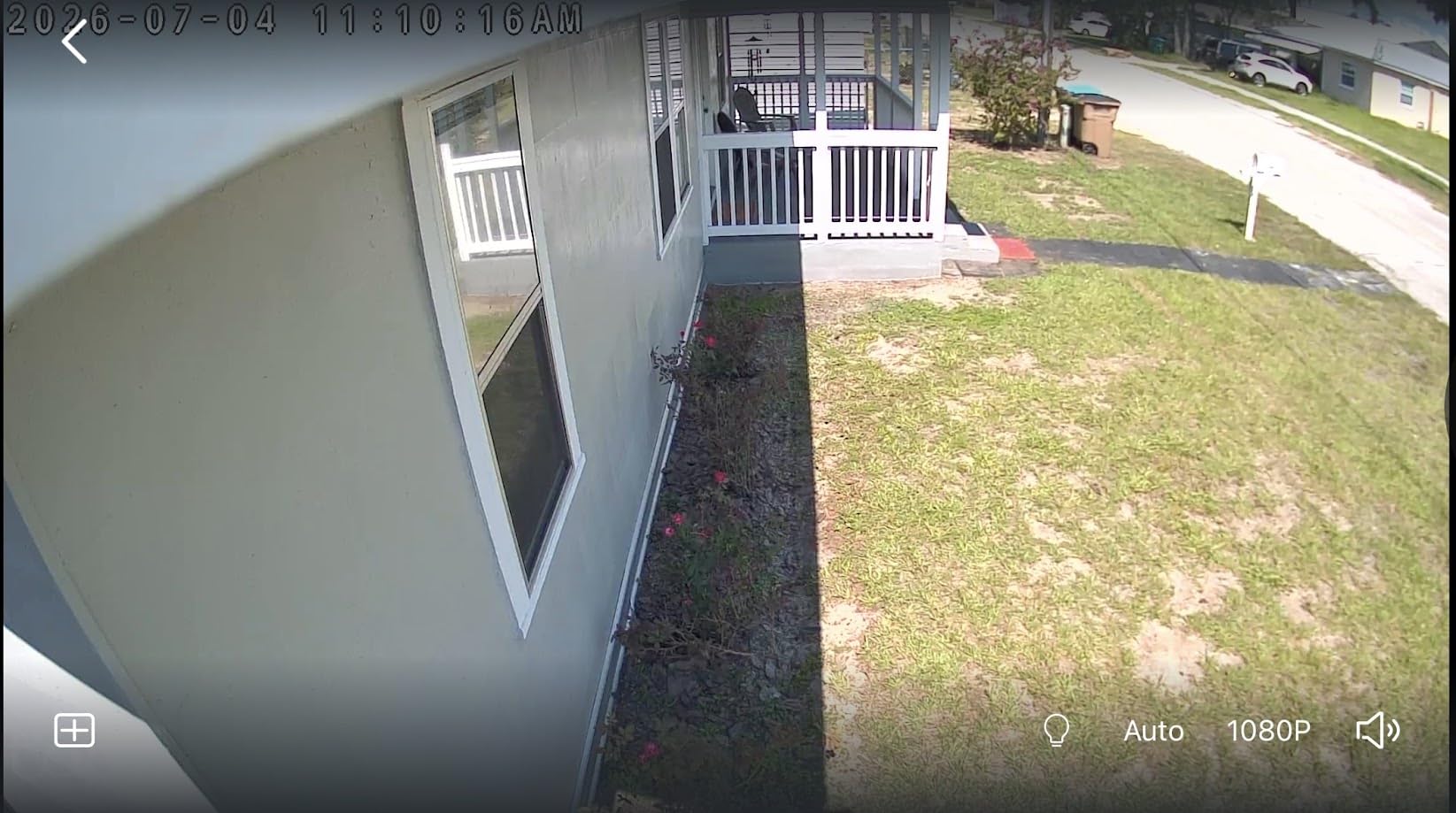
This is the camera for a small tool shed or a garden store where you need to know if a door opened, not who walked past at 140 feet. It is a fixed 1080p camera with a solar panel, and it does that job with very little fuss.
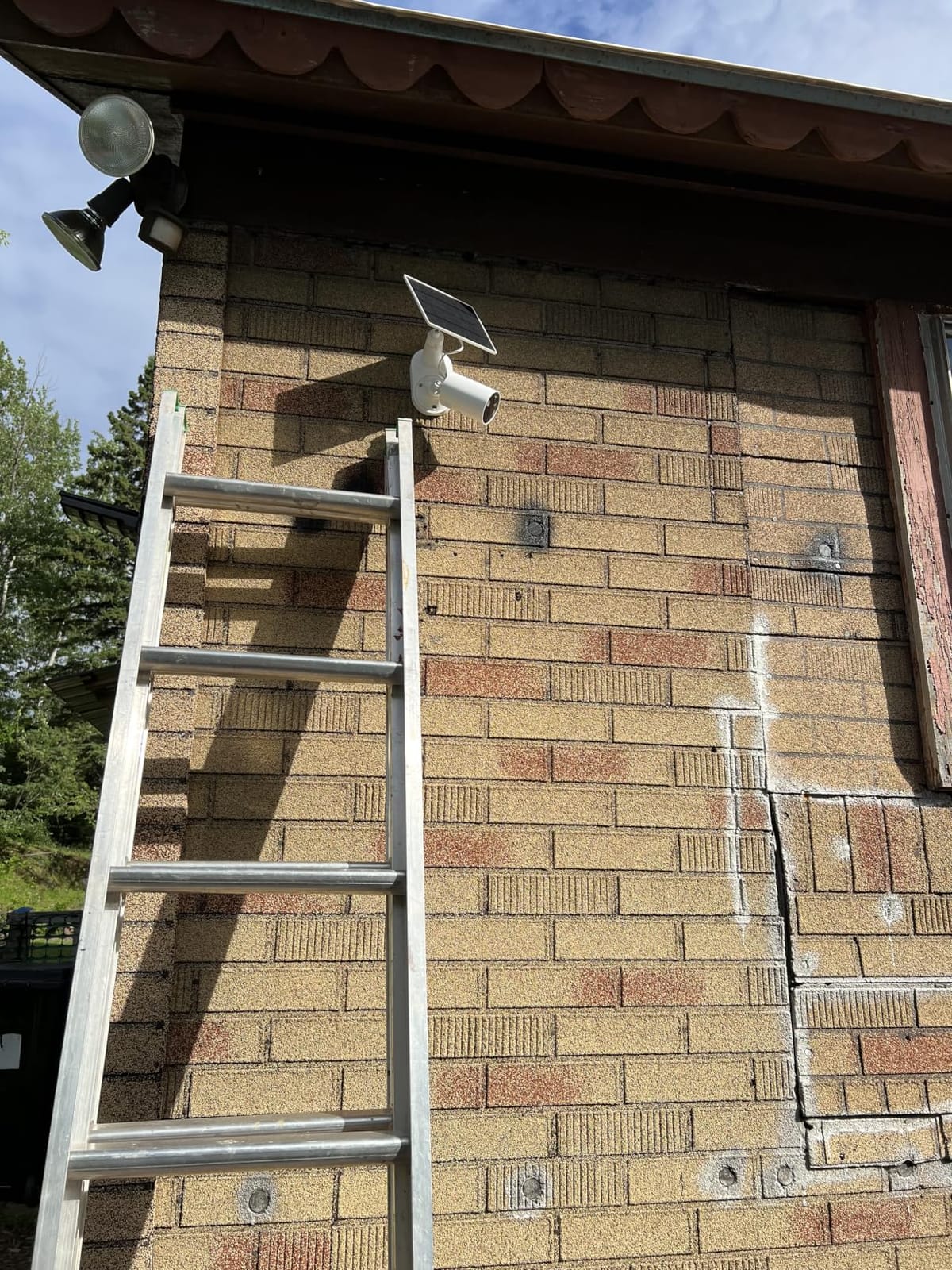
The power math is the headline. Tapo states 45 minutes of direct sun powers a full day, and the battery is rated to hold up to 180 days on a single charge during cloudy stretches. A 13 foot cable lets you put the panel out in the open while the camera body sits under the eave, which is the right arrangement for any shed with a shaded roof.
Activity zones are free, along with person and motion detection, and that combination is what makes a cheap camera usable on a farm. Draw a zone on the door and the walkway, and ignore the rest of the yard.
It scores 4.1 out of 5 across 4,907 reviews, with 69 percent at five stars, which is the highest five-star concentration in the Tapo solar range. Reviewers consistently point to the balance of free local storage, person detection and solar endurance at a modest entry cost.
Storage is local on a microSD card up to 512GB, with Tapo Care as an option rather than a requirement. Two-way audio and a customisable siren with dual spotlights add deterrence if you want it.
What this camera is genuinely good at
Covering a single door. With a fixed 125-degree view, activity zones and a solar panel that can be sited away from the camera, it installs in an afternoon and runs without attention for months at a time. For a feed room, a grain bin or a machinery store, that is exactly the brief.
Color night vision to 30 feet with built-in spotlights means you can see colour in a doorway, which is more useful for identification than monochrome infrared at a short distance.
The two limits that will decide it for you
Solar charging only works above 32F. That is a firm constraint for anyone in a cold-winter region, and it is the reason we would not put this camera on a north-facing gate in Maine or northern Minnesota. If your winters go below freezing regularly, choose a panel and battery rated lower, such as the Reolink Argus Eco or the Tapo C645D.
It is also event-based only with no continuous recording, and the fixed view means you must aim it well. For a shed door, that is fine. For a yard, choose something with a lens you can redirect remotely.
9. eufy Security 4G LTE Cam S330 – Best 4K Camera That Works Off-Grid
eufy Security 4G LTE Cam S330, 4K Cellular Solar Security Cameras Wireless Outdoor, Pan and Tilt, 4G and Wi-Fi Duo-Mode, AI Tracking, with SIM Card and 32GB SD Card, No WiFi, No Problem
4K day and night
4G and WiFi duo-mode
9400mAh solar battery
32GB SD card included
Pros
- Duo-mode switches from WiFi to 4G automatically
- SIM roams across AT&T T-Mobile and Verizon
- 4K color day and night with a 100-lumen spotlight
- 9400mAh battery rarely drops below 75-90%
- 32GB SD card included for local recording
Cons
- Activity zone editor is buggy and zones shrink at screen edges
- No 24/7 continuous recording
- IP55 rating is the lowest on this list
The idea behind this camera is the most practical on the list: it does not force you to choose between WiFi and cellular. It connects over your normal network when there is one and fails over to 4G automatically when the signal drops, which means a camera on the edge of router range is no longer a coin flip.
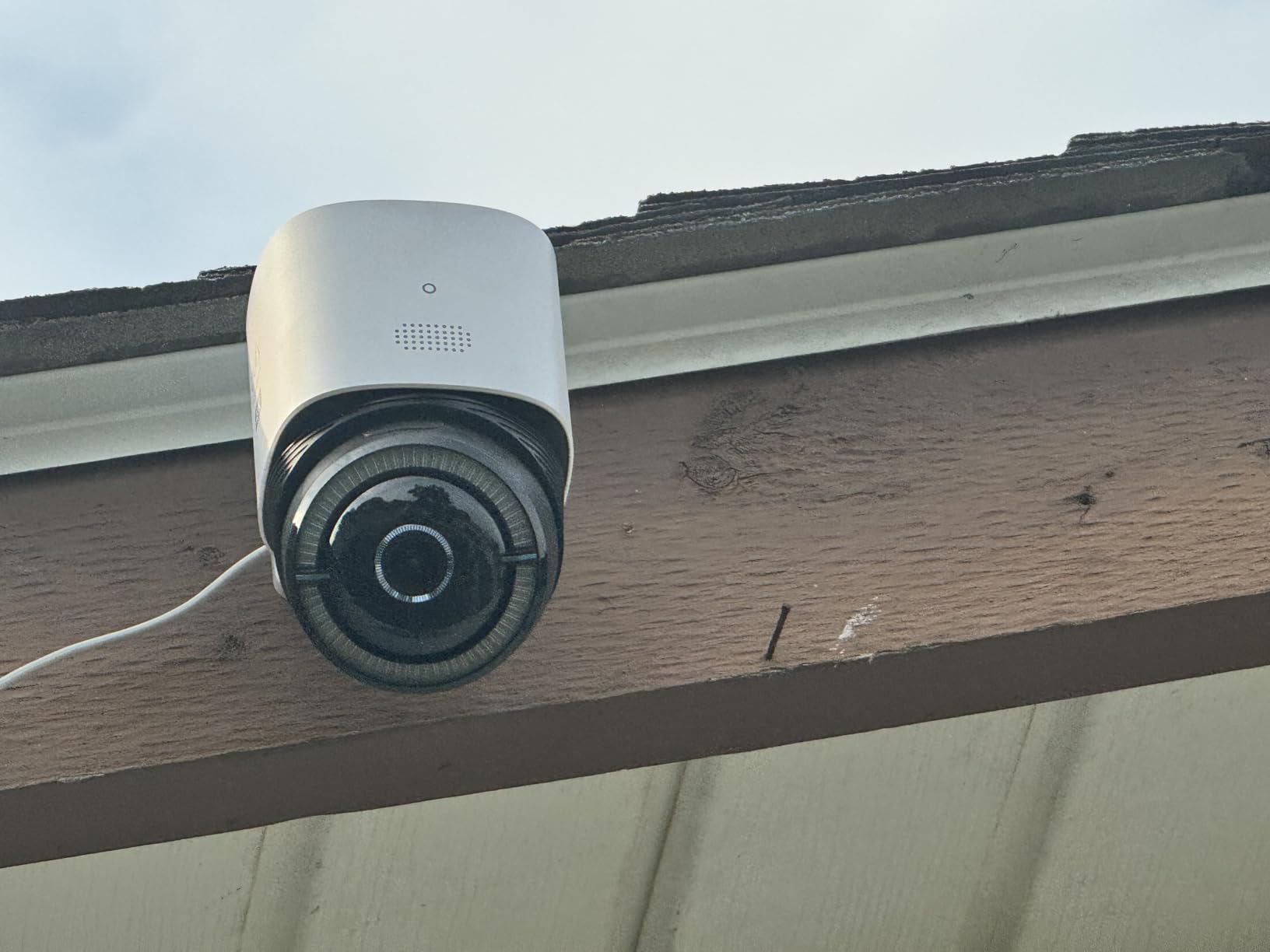
Video is 4K in colour by day and night, with a 100-lumen spotlight reaching about 26 feet, and 360-degree pan and tilt with AI tracking of people and vehicles. A 32GB SD card is included, so local recording works from the box rather than after an extra purchase.
Power comes from an upgraded solar panel and a 9,400mAh battery, and owners report it rarely dropping below 75 to 90 percent. The compact body is roughly 4 by 4 by 6 inches, small enough to look unobtrusive but visible enough to deter.
It rates 4.0 out of 5 from 1,255 reviews, the lowest average here, with 63 percent five star and 16 percent one star. That spread is polarized, and the complaints are specific and worth reading before you commit.
Owners running it on off-grid properties praise the duo-mode failover, the 4K clarity and the fact that a card is included. The gripes cluster around software rather than hardware.
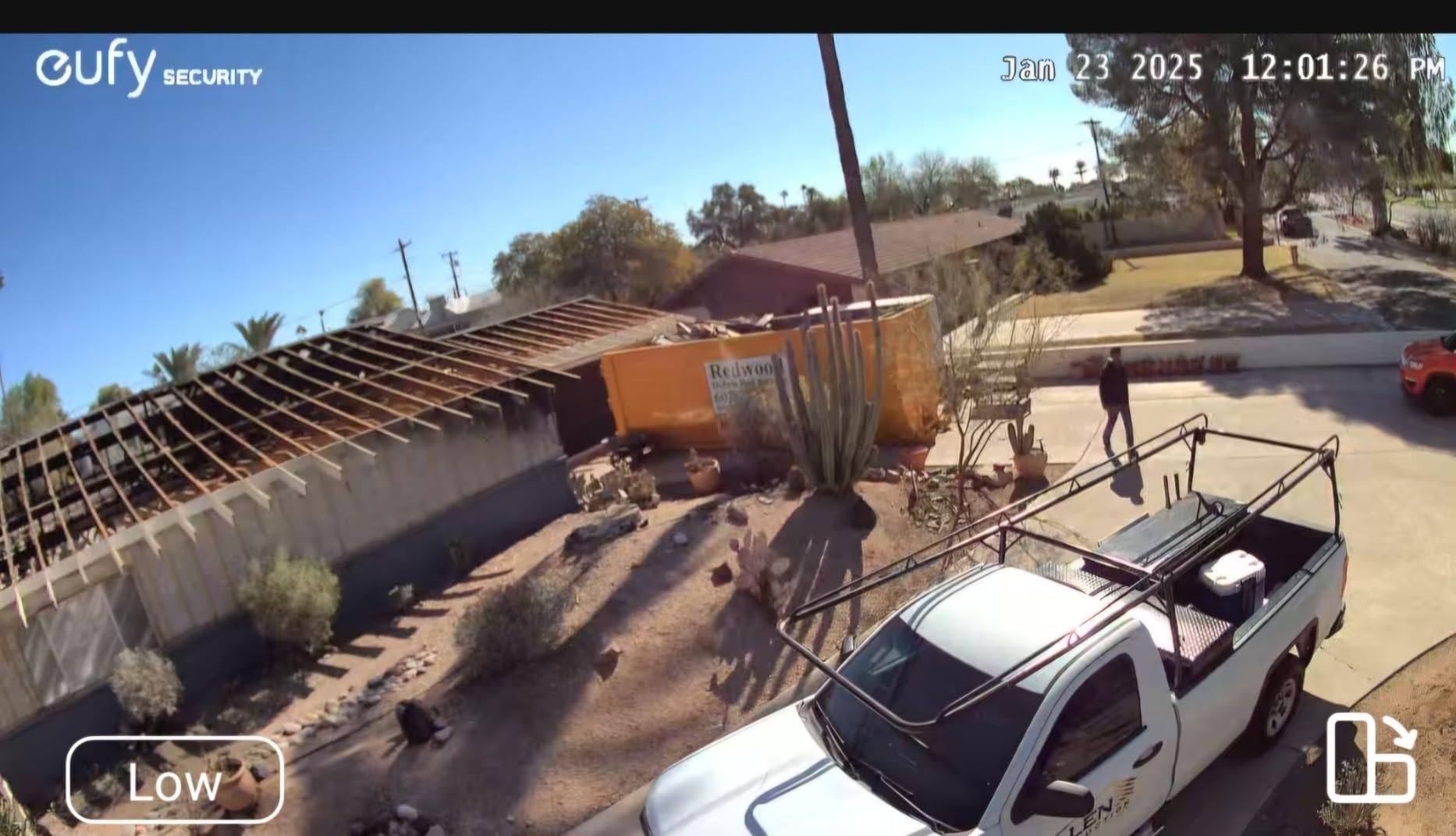
Why duo-mode is worth the compromise
Most cellular cameras are all-or-nothing on connectivity. This one takes the strongest of both, so a barn 150 feet behind the house might hold WiFi in summer and drop to 4G in bad weather without the camera ever going dark. That reliability is worth more in practice than any single spec line.
The roaming SIM across the three major carriers also helps in a location where no one network reaches well, which is common in rural areas with a single distant tower.
Read the complaints before you buy
The activity zone editor is buggy: points move the whole shape and the zone shrinks near screen edges. Test zones before you rely on them, and keep a wide fallback zone. Motion detection can miss people and animals and instead trigger on shadows and reflections, so treat alerts as a prompt to check, not as proof.
Two further cautions. There is no 24/7 continuous recording, only motion events, and re-triggering is imperfect. The IP55 rating is the lowest on this list, which is fine under an eave or a soffit but is not what you want for a gate post in driving rain. The SIM also does not work on Australian 4G networks.
10. Reolink Argus PT – Best 360 Degree Solar Sweep
REOLINK Solar Security Cameras Wireless Outdoor 360° Coverage Argus PT
5MP at 1440p
5W solar panel
355 pan and 140 tilt
33ft color night vision
microSD
Pros
- 355-degree pan and 140-degree tilt
- Color night vision out to 33 feet
- Local microSD up to 512GB with no subscription
- Dual-band 2.4 and 5 GHz WiFi holds connection at distance
- IP65 body rated for heavy rain and snow
Cons
- Solar models respond slowly with a 4-7 second delay
- No auto-tracking on this 5MP model
- Battery and solar cameras are not supported by the Home Assistant integration
The Argus PT is the most heavily reviewed product in this comparison at 9,683 reviews, and that record is the main reason to consider it. A 355-degree horizontal pan and 140-degree vertical tilt give near-total coverage of a barnyard from a single high mount, with a 5W panel and a body rated IP65 for rain and snow.
Colour night vision out to 33 feet is unusual at this price point, where most fixed cameras give you monochrome infrared. Dual-band 2.4 and 5 GHz WiFi helps it hold a connection at distance, which is the main reason it appears on so many outbuildings in the first place.
Local microSD storage up to 512GB, a Reolink Home Hub or an FTP server are all supported, and none of them require a subscription. That flexibility is why the model keeps appearing in multi-camera setups.
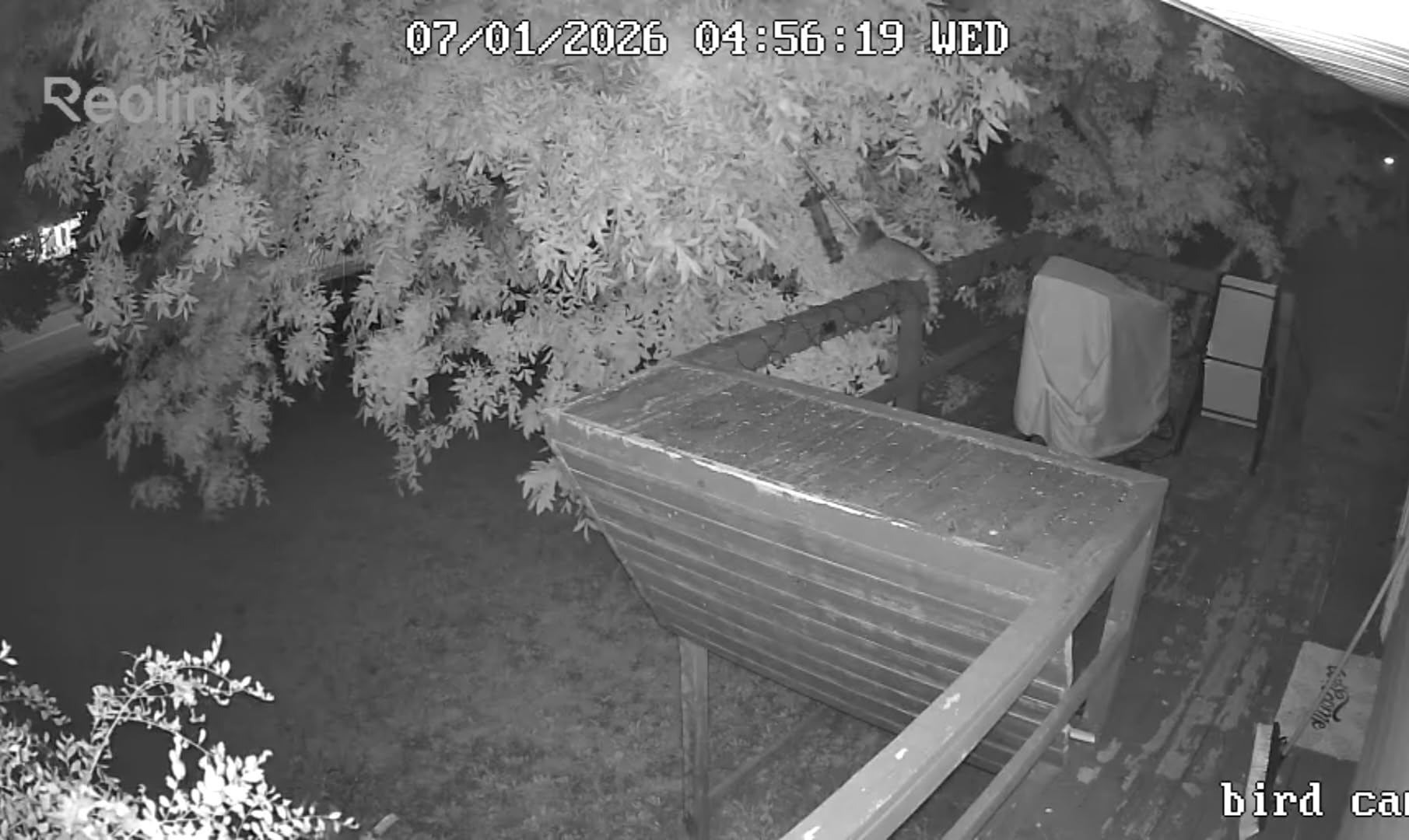
It sits at 4.1 out of 5 with 63 percent five star. Owners praise the wire-free solar setup, the 360-degree coverage, night vision and the absence of subscription fees. The criticisms are consistent enough to plan around rather than hope away.
Human and vehicle classification is not always accurate, and the sensitivity settings are described as ambiguous, so expect some tuning. Some users also report intermittent WiFi drops that need a manual reset.
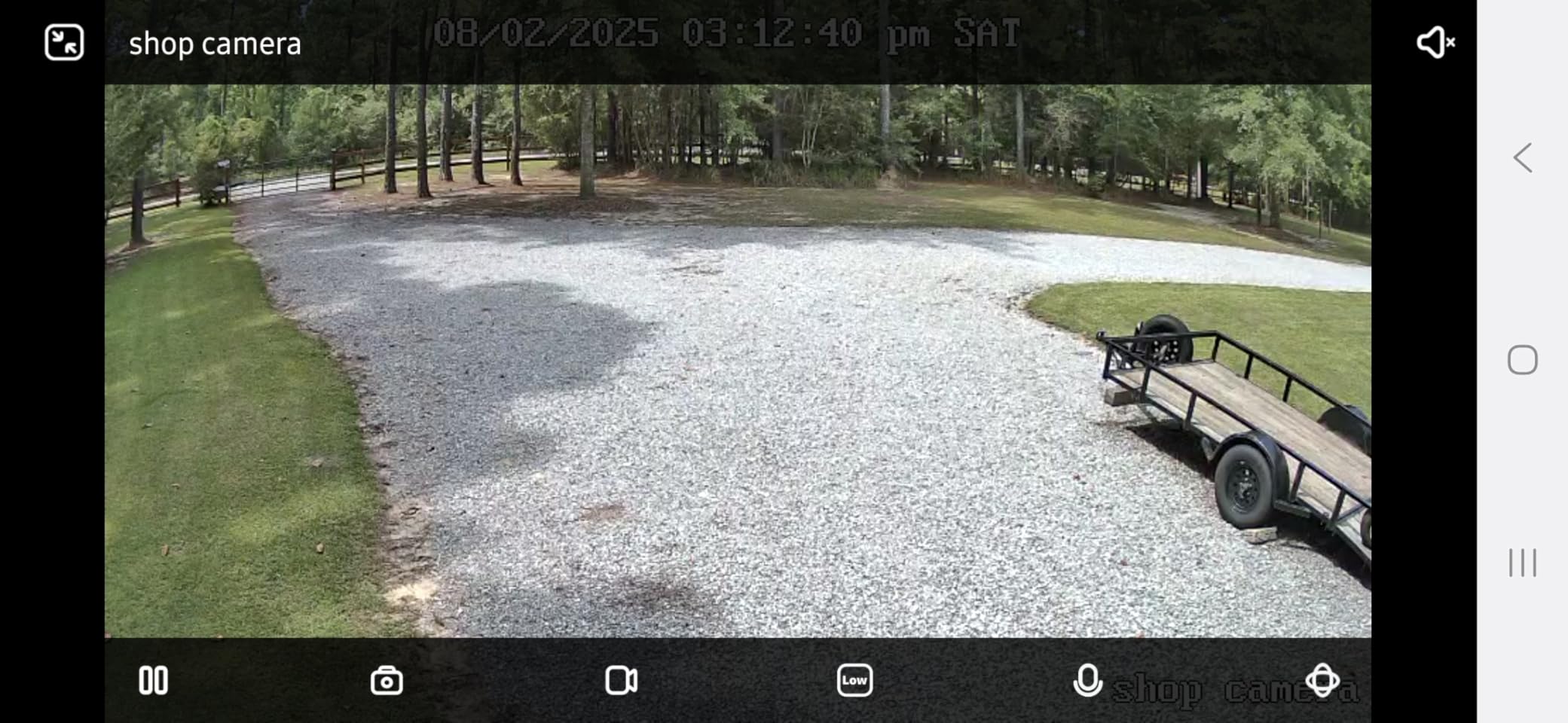
Where the sweeping coverage helps
A yard with several doors, a lane and a field gate is where this camera earns its keep. From a pole or a high gable, one camera can cover the whole area without blind corners, and the 360-degree viewing angle means the mounting position is far less critical than with a bullet camera.
It is also a reasonable second camera to pair with a fixed one from the same brand, which keeps everything in a single app with a shared storage path.
Plan around the response delay
Solar Reolink models respond to commands slowly, with a 4 to 7 second delay. Live view and pan control feel sluggish, so do not rely on this camera to talk to someone or to catch a fast-moving target in real time. Its strength is recording events, not interacting with them.
There is also no auto-tracking on this 5MP model, so a moving subject can leave the frame. And if you run Home Assistant, note that Reolink battery and solar cameras are not supported by that integration, which rules it out for some smart-home setups.
How to Choose a Solar Camera for a Barn
Seven criteria decide whether a camera works in your barn. Check them in this order, because the first two eliminate more options than everything else combined.
1. Connectivity. Measure first. If a router reaches the barn reliably, any WiFi model here will work and you avoid a monthly data plan. If it does not, or you have no internet at all out there, you need 4G LTE and nothing else. A dual-band 2.4GHz and 5GHz radio is preferable to 2.4GHz only, and some models require you to split your router during setup.
2. Solar yield. Panels in this category range from about 2.5W to 6W. The small ones are fine in Arizona and marginal in Vermont. Mount the panel where nothing shades it after 10am, and treat any camera with a panel under 3W as a southern-climate choice unless you intend to replace it.
3. Battery capacity. Bigger is better for cloudy-run survival. Models here range from 6,000mAh to 10,400mAh. Anything under 8,000mAh in a region with grey winters will need a top-up visit more than once a season.
4. IP rating. IP65 is the minimum for an exposed barn wall. IP66 adds dust-tight sealing and stronger water resistance and is worth having anywhere with wash-down, snow-melt or road spray. Anything below IP65 belongs indoors.
5. Night vision type. Starlight sensors give you the best low-light colour without lighting up the animals. Infrared is invisible and reliable. White spotlights produce the best colour video and the worst effect on livestock rest, so use them on exteriors, not inside a barn aisle.
6. Storage and subscription. Local microSD is what most owners in the forums actually trust, on the assumption that cloud tiers will eventually be paywalled. Prefer cameras that record locally with no fee, and check the maximum card size before you buy.
7. False-alert control. This is the criterion that decides whether you will still be watching the camera in month three. Look for people and vehicle classification, adjustable PIR sensitivity, and activity zones. A camera without all three will eventually be muted.
For the indoor half of the job, our picks for the best indoor security cameras cover rooms where dust and moisture are not the concern.
Cellular 4G LTE vs WiFi vs Wi-Fi HaLow for Outbuildings
Choose 4G LTE when there is no reliable WiFi at the mount point, choose WiFi when there is, and consider Wi-Fi HaLow only if you own several cameras spread over a very large property and want a single network. For a single barn, standard WiFi or cellular covers almost every real case.
Standard WiFi. Range is roughly 100 to 200 feet in practice, more with a clean line of sight through a barn door. No data plan, no per-camera fee, and the simplest app experience. It fails the moment the router is out of range, and 2.4GHz-only models will need your router split during setup.
4G LTE. A SIM card and a carrier give you coverage that is independent of your house network, which is exactly what a barn needs. The cost is a monthly data plan, and the constraint is that coverage varies by terrain. Verify signal at the exact mount point with the SIM you intend to use before you order anything.
Wi-Fi HaLow. This 802.11ah standard reaches up to about a mile line of sight, far beyond standard WiFi, and it runs on your own network with no data plan. The catch is that HaLow cameras need a dedicated bridge or gateway rather than connecting to your normal router, so it is a system purchase rather than a single camera. It makes sense on a large acreage with several buildings; it is overkill for one barn.
The practical decision rule is simple. Run a phone to the barn door. If your WiFi holds a video stream there, buy WiFi. If it does not, buy 4G. If the barn is more than a quarter mile from anything, plan for cellular and a stronger antenna or a signal booster before you blame the camera.
How to Stop Animal False Alerts on Barn Cameras
You stop animal false alerts with four settings, in this order: detection type, activity zones, PIR sensitivity, and a scheduled recording window. Ten minutes of setup ends the notification flood that makes most owners abandon a camera.
Set detection to people and vehicles only. Almost every camera here, including the eufy S330, the Tapo C660, the Tapo C645D and the SEHMUA models, offers a pet or animal filter. Turning off general motion detection is the single most effective change, because a moving shadow no longer matches anything.
Draw activity zones where the work happens. Outline the gate, the doorway, the lane between the barn and the house, and the machinery bay. Exclude the field, the treeline and the barn wall the animals rub against. A zone covering the actual path cuts alerts by more than any other setting.
Lower PIR sensitivity, then raise it gradually. The default is deliberately over-sensitive so nothing is missed out of the box. Turn it down until ordinary wind stops triggering it, then raise it one notch at a time over a couple of days.
Use scheduled recording for the daytime. If you only care about overnight welfare checks or night-time theft, restrict full detection to a night window and record continuously by day. That single change removes the dawn and dusk movement that triggers most false alerts, because that is exactly when livestock and wildlife are most active.
One community workaround worth knowing about, borrowed from large-property owners, is layering non-camera deterrents such as motion-activated lights or sprinklers alongside the camera. One owner described the combination of pole-mounted solar cameras feeding a single NVR with motion sprinklers as the pattern that finally made the system usable.
Winter and Low-Light Survival Guide for Barn Cameras
Solar cameras do work in winter, provided the panel gets three to four hours of direct sun and the battery is around 10,000mAh or larger. A shaded or poorly angled panel will drain the battery across a run of cloudy weeks, and that is the failure people blame on the camera.
Tilt the panel 30 to 45 degrees and face it to the equator. In the Northern Hemisphere that is south, in the Southern Hemisphere it is north. Do not set it flat, because snow accumulates and a flat panel gives up most of its winter output to reflected light and shading.
Audit shading at the worst time of year, not in summer. Walk the site in December if you can, or at least check what the low sun is blocked by: a roof overhang, a silo, a line of trees. Mount the panel separately from the camera so it can clear the eave while the camera body stays sheltered.
Budget five to seven days of cloudy autonomy before you worry. That is the range most barn cameras are engineered for with a 10,000mAh battery, and it covers a normal run of overcast days. Two consecutive overcast weeks in a northern climate needs either a larger panel or an occasional manual charge.
For night vision inside the barn, choose starlight or infrared over a white spotlight. Starlight gives usable colour in low ambient light without adding light the animals do not choose. A white spotlight inside a barn aisle will restart the sleep cycle of every horse in it, and the fix is not a louder siren, it is a camera that does not need the light.
Finally, clear the lens. A month of dust and rain on a lens will cost you more clarity than the difference between 1080p and 4K. Wipe it down each season and check the seal at the mount.
Installation: Mounting Height, Panel Angle and Placement
Six steps cover a barn installation properly, and each one prevents a specific problem we saw described repeatedly by owners.
1. Map the coverage. Walk the yard and list what matters most: the equipment door, the gate, the feed room, the foaling box, the lane. Decide the single most important view before you choose a camera, because that determines fixed versus pan-and-tilt.
2. Verify power and signal at the mount point. Take a phone up to the exact mounting height. For cellular, run a speed test with the SIM you plan to use. A camera mounted where signal is poor will never work, and no amount of antenna tinkering fixes a wall that blocks everything.
3. Mount the camera 8 to 12 feet up. That range keeps it above curious animals, above most splash-back and high enough to see over a gate. Higher than twelve feet and you lose facial detail; lower and you invite interference and theft.
4. Angle the panel 30 to 45 degrees toward the equator. Run the cable to wherever the sun is best, which is often a different wall from the camera. Where the panel and camera must sit together, put the panel above the eave and the camera under it.
5. Expect three to four hours of daily sun. Anything less and you need a larger panel. Several owners in our reviews replaced a small bundled panel with a 6W panel and saw the difference immediately, and that is the cheapest performance upgrade available.
6. Test alerts before you walk away. Walk the path the camera is meant to watch, then stand still and wait, then cross the zones. Confirm person detection fires, confirm zone boundaries exclude the field, and confirm the recording actually saves to the card rather than only to a cloud trial.
Two placement notes nobody publishes. Do not aim a camera at a neighbour’s yard or a public road, which creates a privacy problem you did not sign up for. And inside the barn, keep cables in conduit and off the floor, because livestock will find an exposed run and treat it as something to chew.
Frequently Asked Questions
What is the best camera for a barn with no Wi-Fi?
A 4G LTE solar security camera with an integrated panel and SIM card, because it needs neither mains power nor a WiFi connection. The SEHMUA S40 and the HOSAFE.COM two-pack are built this way. Verify cellular coverage at the exact mount point before you buy, and budget for a monthly data plan.
What is the best outdoor security camera for a farm?
Farm coverage is a system problem, not a camera problem. Put 4G LTE solar units at remote gates and sheds, WiFi units on buildings within router range, and group every feed into one app or NVR. Start with the highest-value assets: equipment doors, fuel, feed storage and gates.
Who makes the best solar-powered security cameras?
For consumer polish and app quality, eufy, TP-Link Tapo and Reolink lead. For genuinely off-grid agricultural use, the dedicated 4G LTE and trail-style makers are stronger choices. For multi-camera coverage on a single app, the two-packs from SEHMUA and HOSAFE.COM give you independent cameras with their own panels and batteries.
What is the best security camera for stables?
A fixed wide-angle or pan-and-tilt solar camera with starlight or infrared night vision, animal-detection filtering, and no white light that would disrupt the horses’ rest. The Tapo C660 adds continuous recording, which matters for welfare checks during foaling or illness.
Do solar security cameras work in winter?
Yes, if the panel receives three to four hours of direct sun and the battery is around 10,000mAh or larger. A shaded or north-facing panel will drain the battery over a run of cloudy weeks. Note that some models stop charging below 32F, so check the operating limit before installing outdoors in a cold-winter region.
Do solar security cameras need Wi-Fi?
Most do, but cellular 4G LTE models do not. The SEHMUA S40, the HOSAFE.COM two-pack and the eufy 4G LTE Cam S330 run on a SIM card with no WiFi at all. The eufy S330 is duo-mode and fails over between WiFi and 4G automatically, which suits a barn on the edge of router range.
How much solar panel does a security camera need?
Most solar cameras ship with a 2.5W to 6W panel. That is enough only in bright climates with no shading. For barns in winter latitudes, use 6W or larger and mount the panel separately, above the eave, with three to four hours of unobstructed daily sun.
Can solar security cameras have no monthly fee?
Yes, if the model records to a microSD card and offers person detection without a paid tier. The eufy SoloCam S340, the Tapo C660, the Tapo C402 and both Reolink models all record locally with no subscription. Cellular 4G models are the exception, since a data plan is required for the connection itself.
Final Verdict: Which Solar Barn Camera Should You Buy?
Our winner is the eufy Security SoloCam S340. It is the most complete camera on this list for a general-purpose barn: 3K dual-lens clarity out to 140 feet, a removable solar panel that can be sited above the eave, 360-degree pan and tilt with AI tracking, and 8GB of onboard storage that means no card and no monthly fee. Mount it high, tighten the motion sensitivity, and replace the plastic bracket with a stainless strap.
Buy the Tapo C660 instead if continuous recording matters more than the onboard storage. Its 24/7 capture at 1 to 60 second intervals is the only true always-on option here, and 4K with starlight night vision makes it the better pick for foaling boxes and calving pens.
Buy the SEHMUA S40 if the barn has no WiFi and never will. It is a 4G LTE camera with a built-in SIM, a 6W panel and a 10,400mAh battery, which means it needs nothing but cellular coverage at that spot. Just factor the data plan into a multi-camera budget before you commit to a fleet.
Whatever you choose, do three things before you walk away from the install: check signal at mounting height, draw activity zones that exclude the field, and confirm the card registers. Those three steps prevent almost every complaint we read from owners. If you also need indoor coverage on the house side of the property, our roundup of the best baby monitors for home security covers that side of the job.
We update this guide every year as new models appear and prices move, so check back for the 2026 version of these picks.