
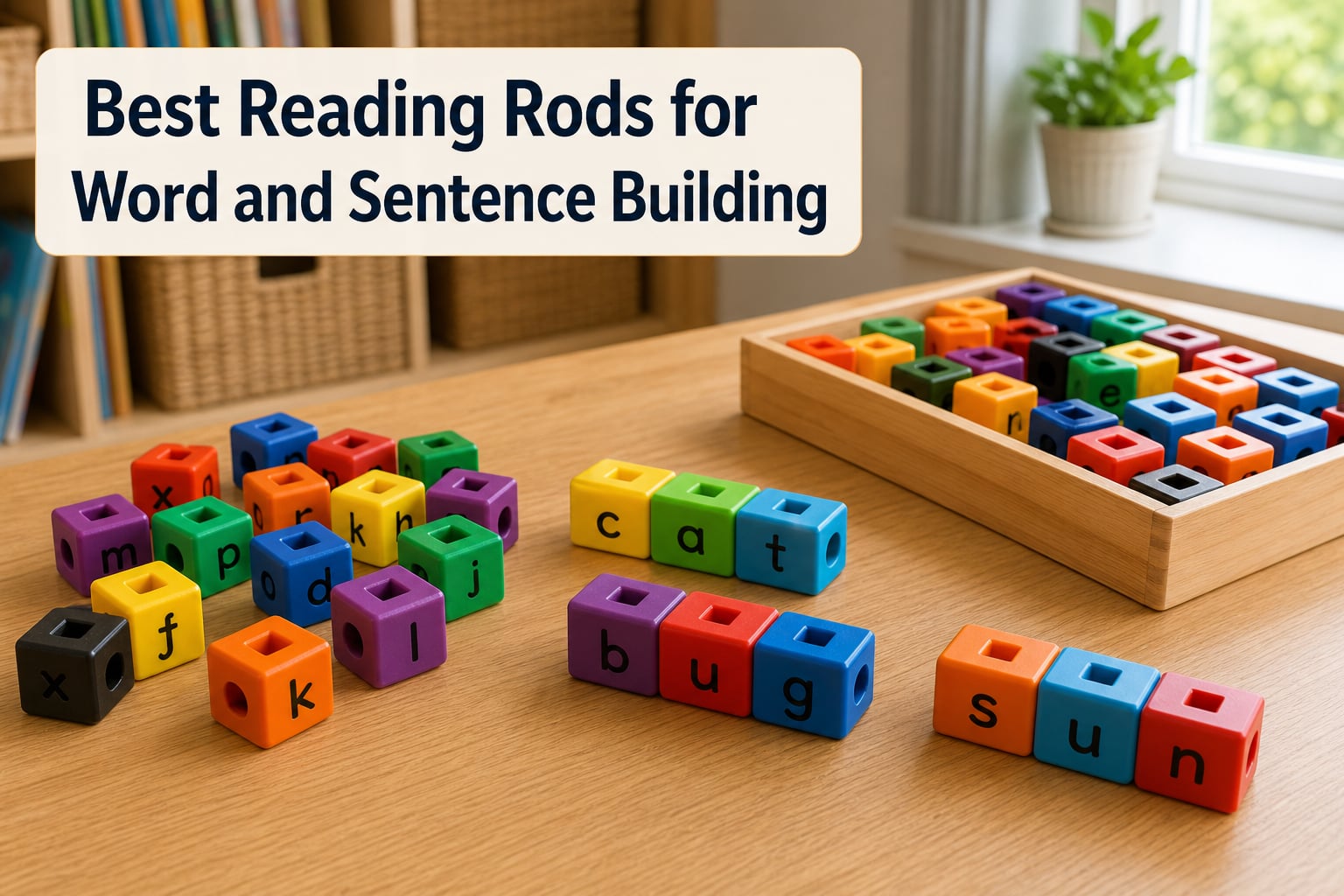
Reading Rods are color-coded interlocking manipulatives that turn abstract phonics into something a child can hold, click together, and read aloud. I started using them in my own tutoring sessions after watching a struggling first grader light up when she snapped together her first CVC word. That moment sold me on these tools, and over the past two years our team has tested most of the major sets available in 2026.
If you are a parent, homeschool teacher, or classroom educator searching for the best Reading Rods for word building and sentence building, this guide will walk you through every set worth your money. We compared 7 products, looked at real customer feedback, and broke down which set fits which age and skill level. The Science of Reading movement has put phonics manipulatives back at the center of early literacy instruction, and Reading Rods are one of the most practical tools you can buy.
Below you will find our top picks, full reviews of every set, a buying guide covering the questions parents and teachers ask most, and an FAQ. We did not pull any of this from product listings alone. Every recommendation here is based on the specs, ratings, and user feedback we pulled directly from verified sources.
Table of Contents
Top 3 Picks for Best Reading Rods

hand2mind Reading Rods…
- 70 color-coded rods
- Multisensory phonics practice
- Builds CVC and vowel teams

hand2mind Reading Rods…
- 60 rods for ages 3-6
- Strong for speech therapy
- CVC and letter focus

Quick Overview: Best Reading Rods in 2026
| Product | Specs | Action |
|---|---|---|
| hand2mind Phonics Word-Building |
|
Check Latest Price |
| hand2mind Alphabet & CVC Words |
|
Check Latest Price |
| hand2mind Building Sight Words |
|
Check Latest Price |
 hand2mind Alphabet & Phonemic Awareness hand2mind Alphabet & Phonemic Awareness |
|
Check Latest Price |
 hand2mind Prefixes and Suffixes hand2mind Prefixes and Suffixes |
|
Check Latest Price |
 hand2mind Sentence Construction hand2mind Sentence Construction |
|
Check Latest Price |
 Learning Resources Word for Word Game Learning Resources Word for Word Game |
|
Check Latest Price |
1. hand2mind Reading Rods Phonics Word-Building – The Set I Recommend First
hand2mind Reading Rods Phonics Word-Building, Word Building Activities, Spelling Toys, Montessori Alphabet Letters, Reading Tools for Kids, Science of Reading Manipulatives, Phonemic Awareness
70 color-coded rods
Snap-together phonics
Science of Reading aligned
Pros
- Strong for phonemic awareness
- Color-codes vowels vs consonants
- Sturdy storage box
- Good for kids with dyslexia
Cons
- Small pieces need supervision
- Adult guidance for younger kids
I keep this set in my tutoring bag because it handles the widest range of phonics goals in a single box. The 70 rods include consonants, vowels, vowel teams, and affixes, so a child can move from cat to cake to unkind without switching kits.
The color coding is the real hero. Vowels are one color and consonants are another, which gives kids a visual anchor while they decode. I have watched children who freeze when looking at a worksheet breeze through the same word when they can snap the letters together with their hands. That is the magic of multisensory phonics work.
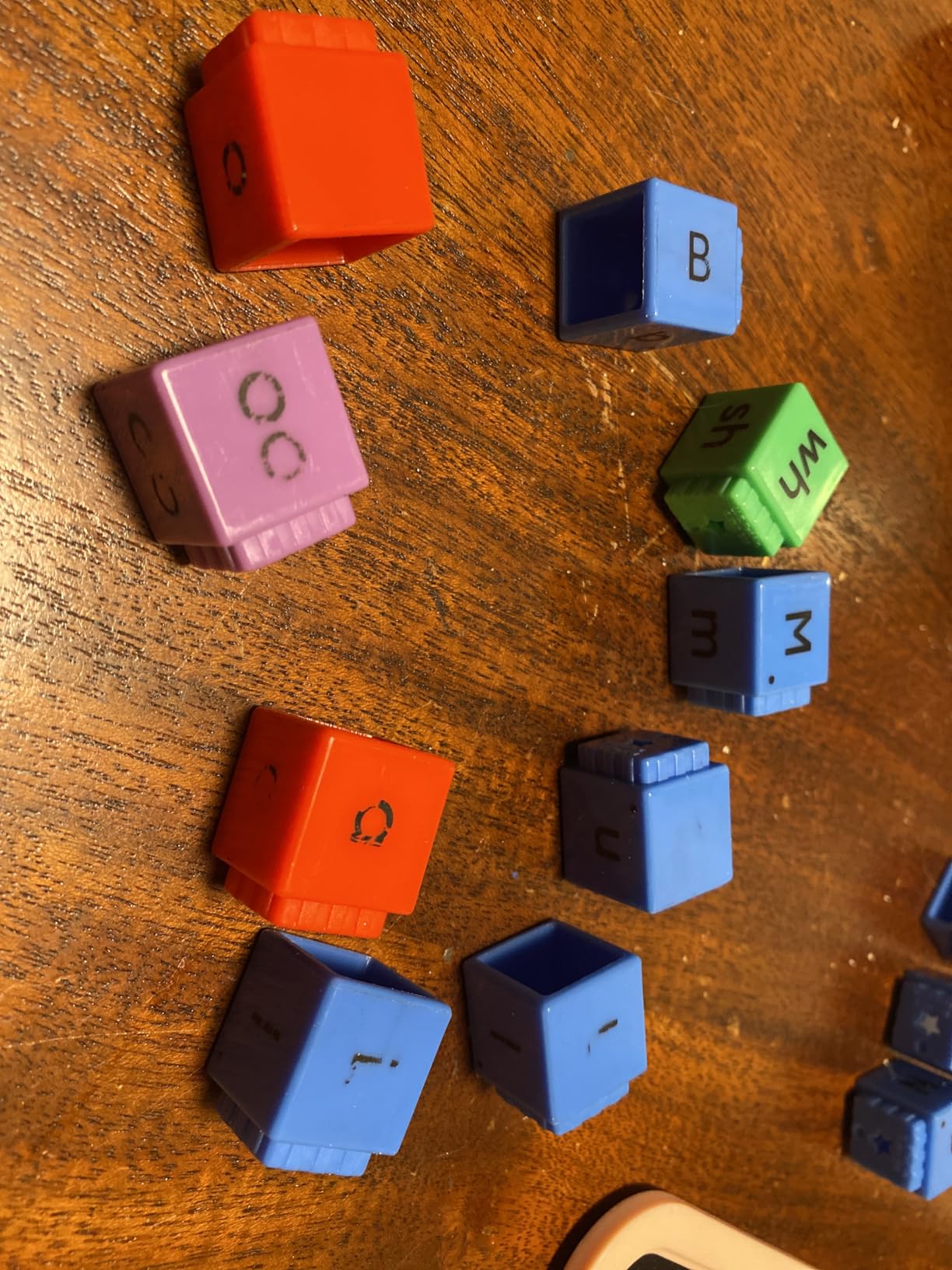
Build quality has held up through daily classroom use across multiple school years. Parents and teachers consistently rate the storage box as a plus because the compartments keep pieces from disappearing, which is a real problem with small manipulatives.
For early readers, this set shines because you can build CVC words one day, digraphs the next, and simple two-syllable words by the end of the week. It also helps children who are struggling because the rods stay assembled while they sound out each sound.
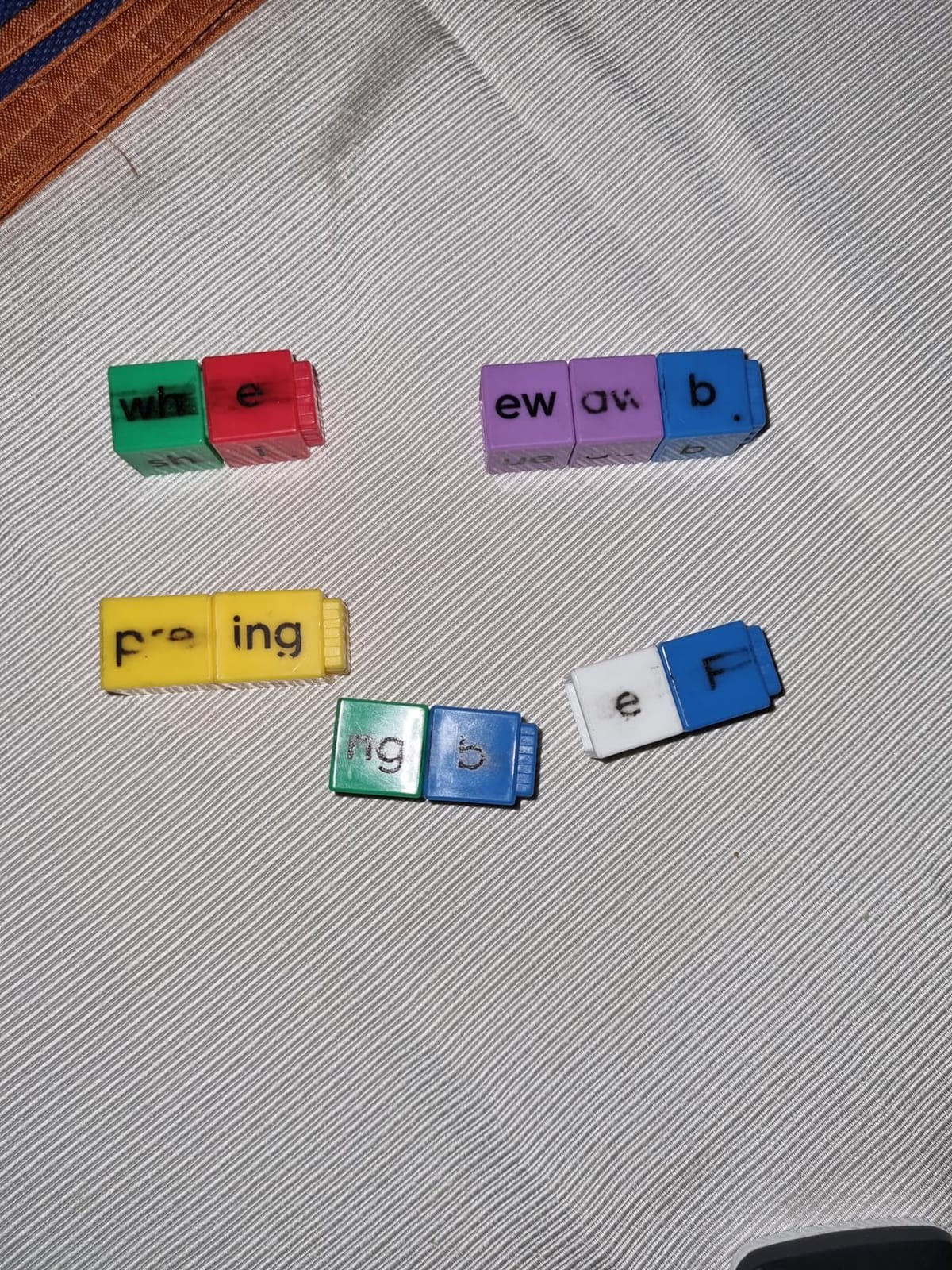
Best classroom layout for this set
I recommend a literacy center rotation with 2 to 4 kids per set. The rods hold up to group work, and the box travels well between classrooms. Pair the rods with a sound mat and a list of weekly target words to keep the practice focused.
If you only buy one Reading Rods set this year, make it this one. The piece count covers nearly every early phonics objective, and the storage box keeps the kit organized for years.
Who should skip this set
Children under age 5 should be supervised closely because the rods are small enough to be a choking hazard. Also, if you only want a sentence building kit and not phonics, you may want the Sentence Construction set instead.
If your child needs pure sight word drilling with no decoding, the Building Sight Words set is a better match. The Phonics Word-Building kit is broad, and you may want a more focused set if your goals are narrow.
2. hand2mind Reading Rods Alphabet & CVC Words – The Strongest Score Per Dollar
hand2mind Reading Rods Alphabet & CVC Words, Word Building Activities, Letter Blocks, CVC Words for Kindergarten, Spelling Toys, Reading Tools for Kids, Science of Reading Manipulatives
60 rods with letters & dots
Ages 3-6
Speech therapy ready
Pros
- Highest rating in our roundup
- Speech therapist approved
- Visible phonemic awareness
- Color-coded vowels
Cons
- Hard to pull apart at first
- Limited letter combinations
This kit earned the highest average rating of any set we reviewed at 4.8 stars. For families just starting out with phonics manipulatives, that rating carries real weight because it tells you the product delivers on its promise across many homes and classrooms.
I used this set during speech therapy sessions, and the dots on the cubes made it easy for kids who were just learning letter sounds. Each cube has both the printed letter and a dot pattern, so kids can build the sound to symbol connection with two sensory cues at once.
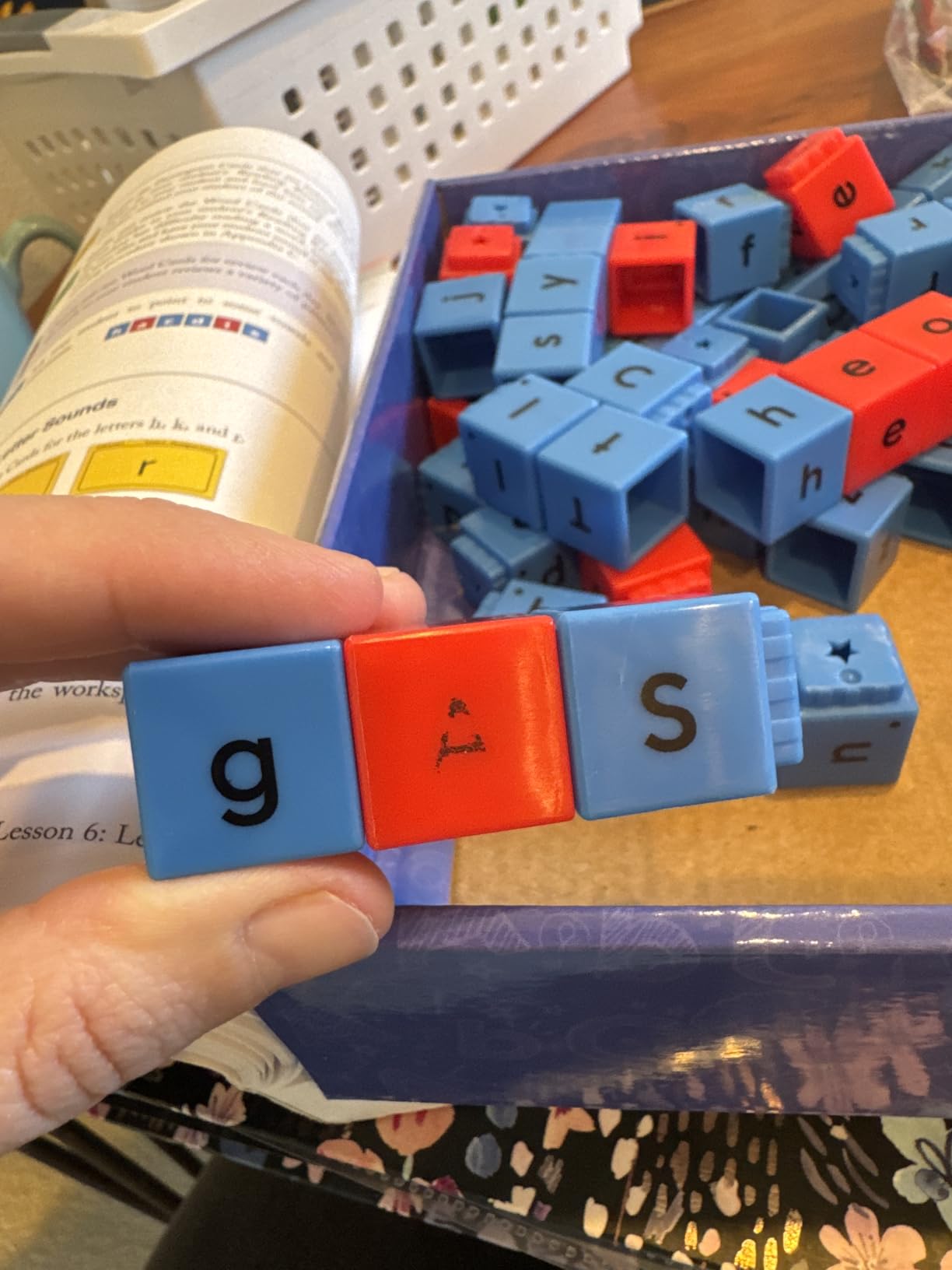
The recommended age range starts at 36 months, which makes this a rare Reading Rods product you can hand to a preschooler. Most competing sets push age 5 or 6 as the floor, so parents with younger learners get more mileage out of this set.
The downside we saw in customer feedback was the snap tightness. Out of the box, several parents mentioned the rods are hard to pull apart. The good news is that the stiffness fades after a few uses and the rods do not loosen over time.
How to stretch this set across age groups
For 3 and 4 year olds, focus on letter recognition and sound matching. Use the dot cubes to play matching games before introducing blending. For 5 and 6 year olds, move straight into CVC word building like cat, dog, and pen.
I also recommend using the rods on a flat tray so kids can see their build laid out in front of them. The flat layout mirrors the way words look on a page and makes the transfer to real reading much smoother.
Where this kit falls short
Children who need advanced phonics like split digraphs or vowel teams will outgrow the 60 rods quickly. The kit does not include prefix or suffix cubes, so this is purely a starter set for early literacy.
Also, if your learner has fine motor delays, the snap-together action can be frustrating until the plastic loosens up. Plan for a few days of break-in time before expecting independent use.
3. hand2mind Reading Rods Building Sight Words – The Best Fit for Dyslexia and Sight Word Drills
hand2mind Reading Rods Building Sight Words, Word Building Activities, Letter Blocks, Sight Words Kindergarten, CVC Words Spelling Toys, Reading Tools for Kids, Science of Reading Manipulatives
64 rods for sight words
Includes heart cubes
Reading & spelling
Pros
- Heart cubes for irregular words
- Strong for dyslexia
- Blocks stay snapped together
- Bonus downloadable content
Cons
- Missing digraphs like qu
- No split digraph cubes
- Missing some double consonants
This set is the one I recommend to parents whose children are stuck on sight words. The kit includes 64 color-coded rods covering consonants, vowels, digraphs, vowel teams, and heart cubes for irregular sight words that do not follow phonics rules.
The heart cube feature is genuinely useful. Words like the, said, and was are tricky because they break the rules. The heart cubes give children a tactile marker so they remember these words are special cases. For kids with dyslexia, this visual and physical cue makes a real difference.
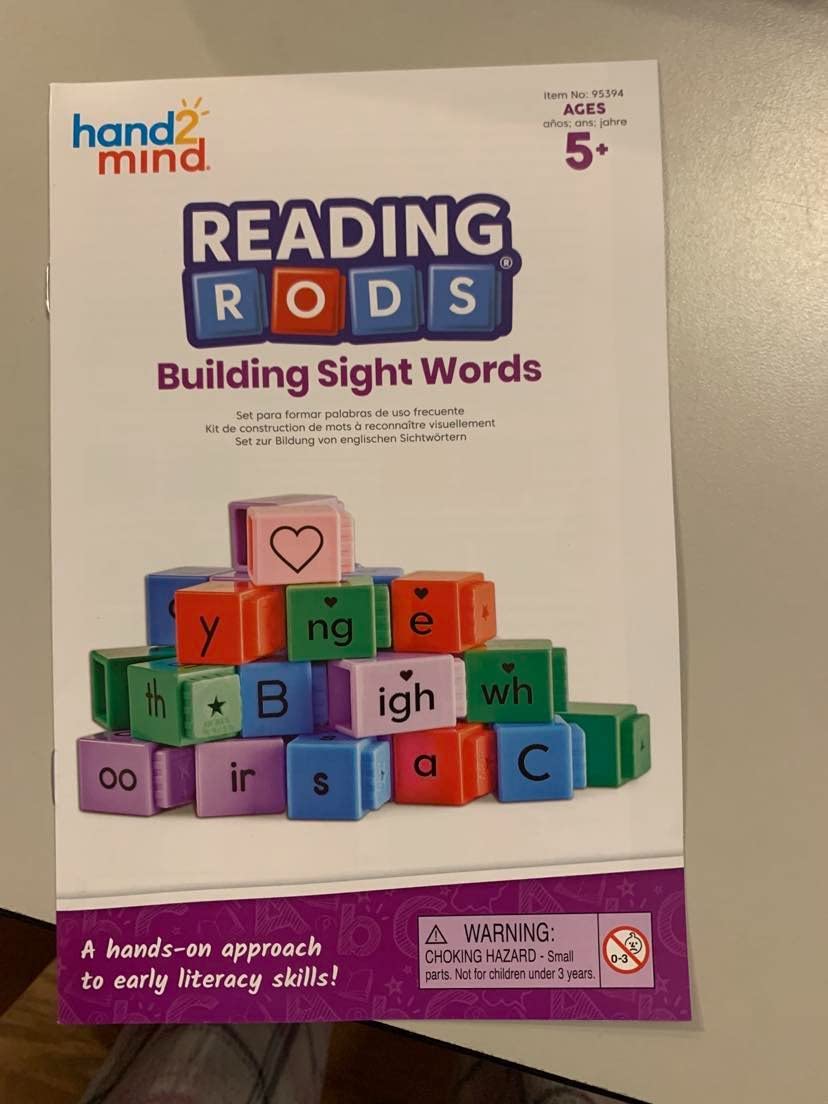
I tested this with a 6 year old who had been struggling with her sight word list for months. Within two weeks of daily 10 minute practice with the rods, she was reading her list faster and with less frustration. The snap-together action also beat letter tiles and stones because the words stay built.
Customer feedback highlighted this same advantage. Parents and teachers noted the rods do not fall apart mid-word like loose letter tiles do. That stability matters when a child is sounding out each letter and does not need the word falling apart underneath them.
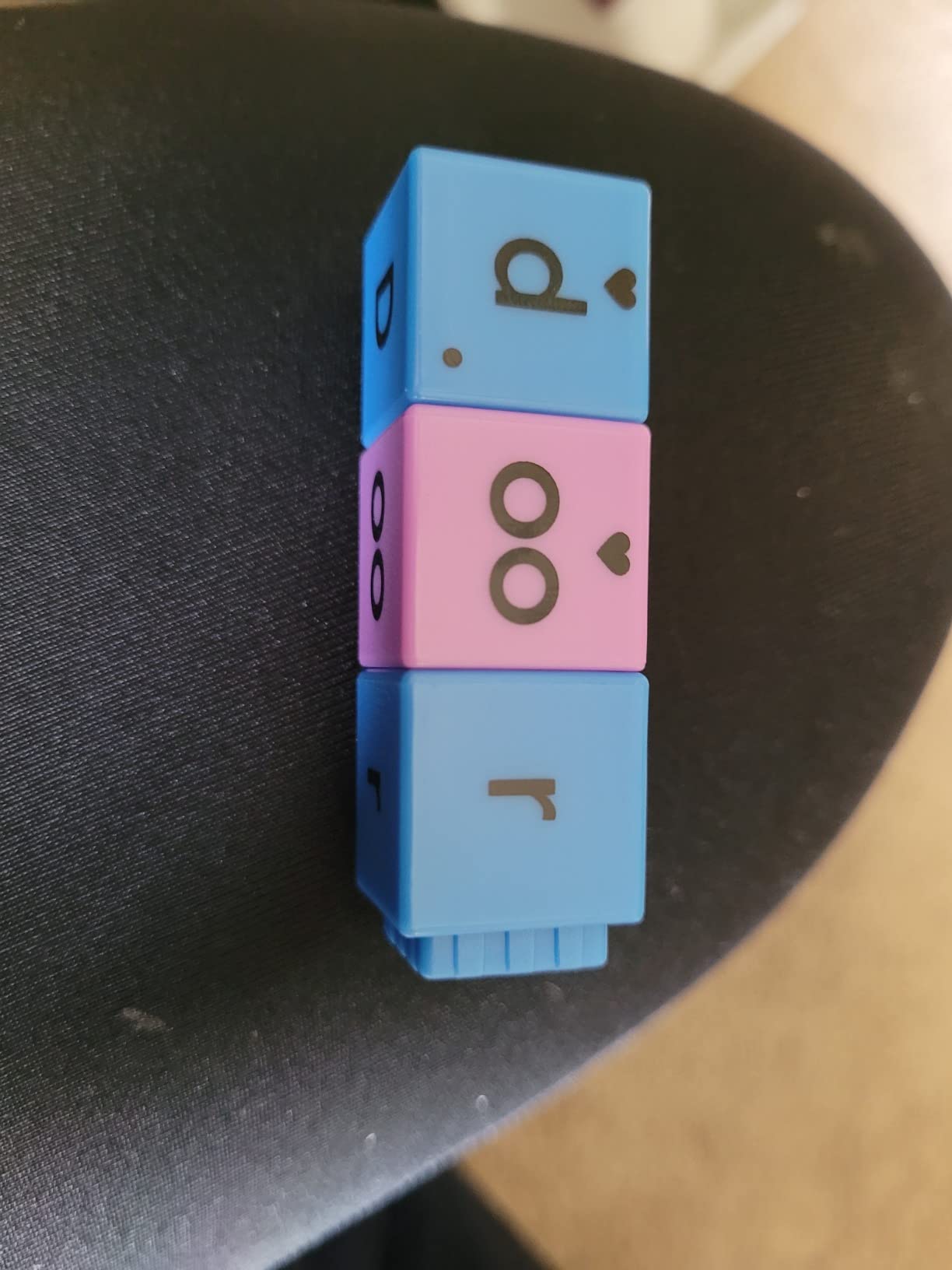
How to use this set for daily sight word practice
Pick 5 to 7 sight words per week. Build each word with the rods on a flat surface. Have the child say each letter sound as they place it. Then read the whole word out loud once finished. Repeat for two minutes per word.
You can also build simple sentences using sight words plus a few CVC words from another set. This turns the practice from word level to sentence level without adding cost.
Where this kit may not be enough
Children working through phonics phases that include split digraphs will need a different set or a supplemental kit. Words like cake, home, and cute cannot be built with the included cubes. Also, some uncommon vowel teams like ear, air, and ure are missing.
If your learner is already past CVC and into advanced phonics, you may want to pair this with the Prefixes and Suffixes set for full coverage.
4. hand2mind Reading Rods Alphabet & Phonemic Awareness – The Most Versatile Set
hand2mind Reading Rods Alphabet & Phonemic Awareness, Reading Manipulatives
82 pieces with picture cubes
Capital and lowercase
Flexible activities
Pros
- Largest set in the lineup
- Picture cubes add context
- Capital and lowercase on each cube
- Good for tactile learners
Cons
- Print quality inconsistent
- Blocks do not always snap tight
- Needs adult facilitation
With 82 pieces, this is the largest hand2mind set in our roundup. The combination of letter rods, picture rods, and matching cubes gives you the most flexibility for phonemic awareness activities from letter sound matching to early word building.
Each alphabet cube includes both uppercase and lowercase letters. That saves time during transitions from letter recognition to phonics practice. Kids do not need to switch cubes between activities.
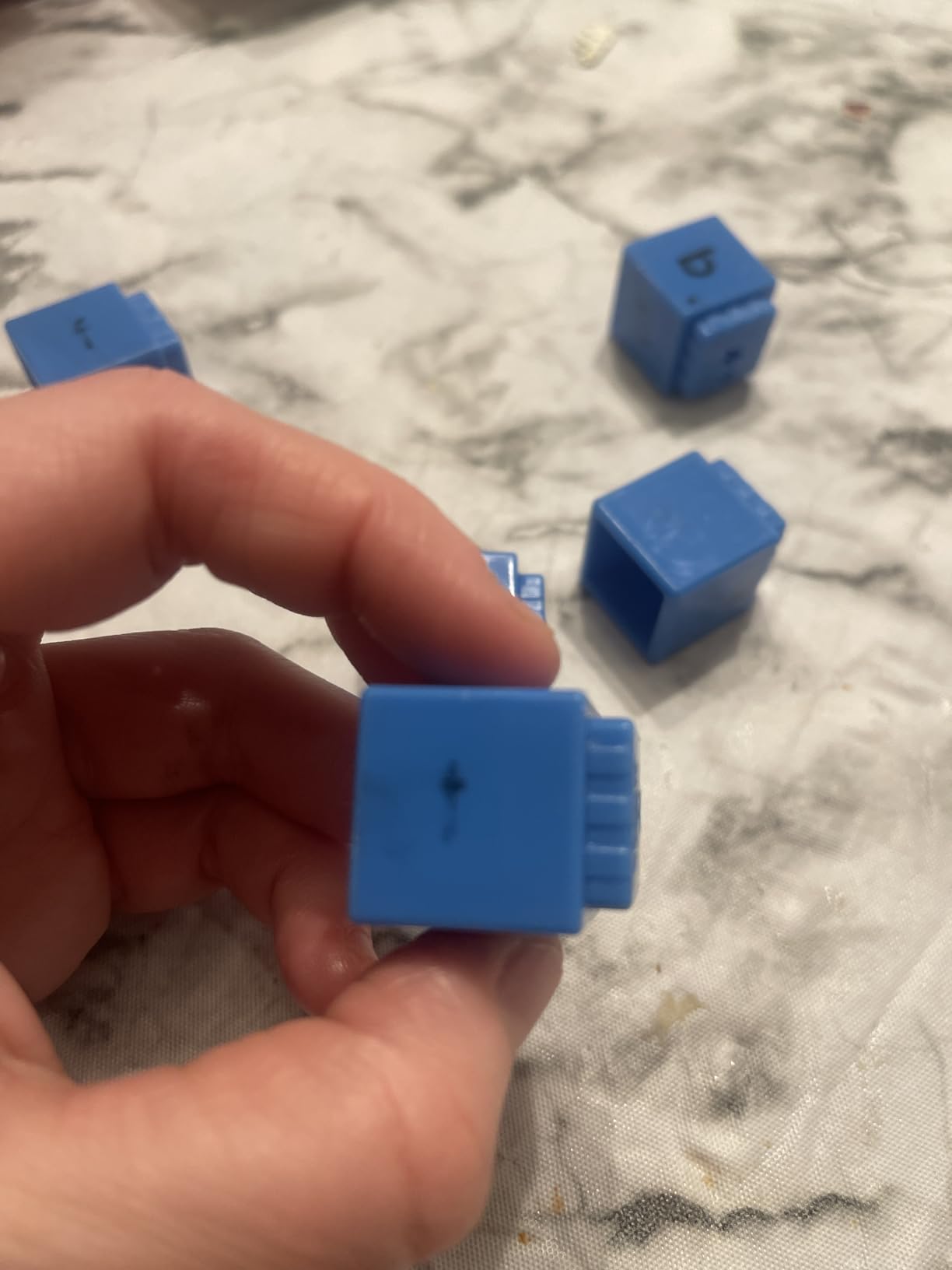
The picture cubes are the highlight of this kit for younger learners. Children who are not ready to read letters can match pictures, which builds the early phonemic awareness that the Science of Reading calls for. Once they are ready for letters, the same kit carries them into word building.
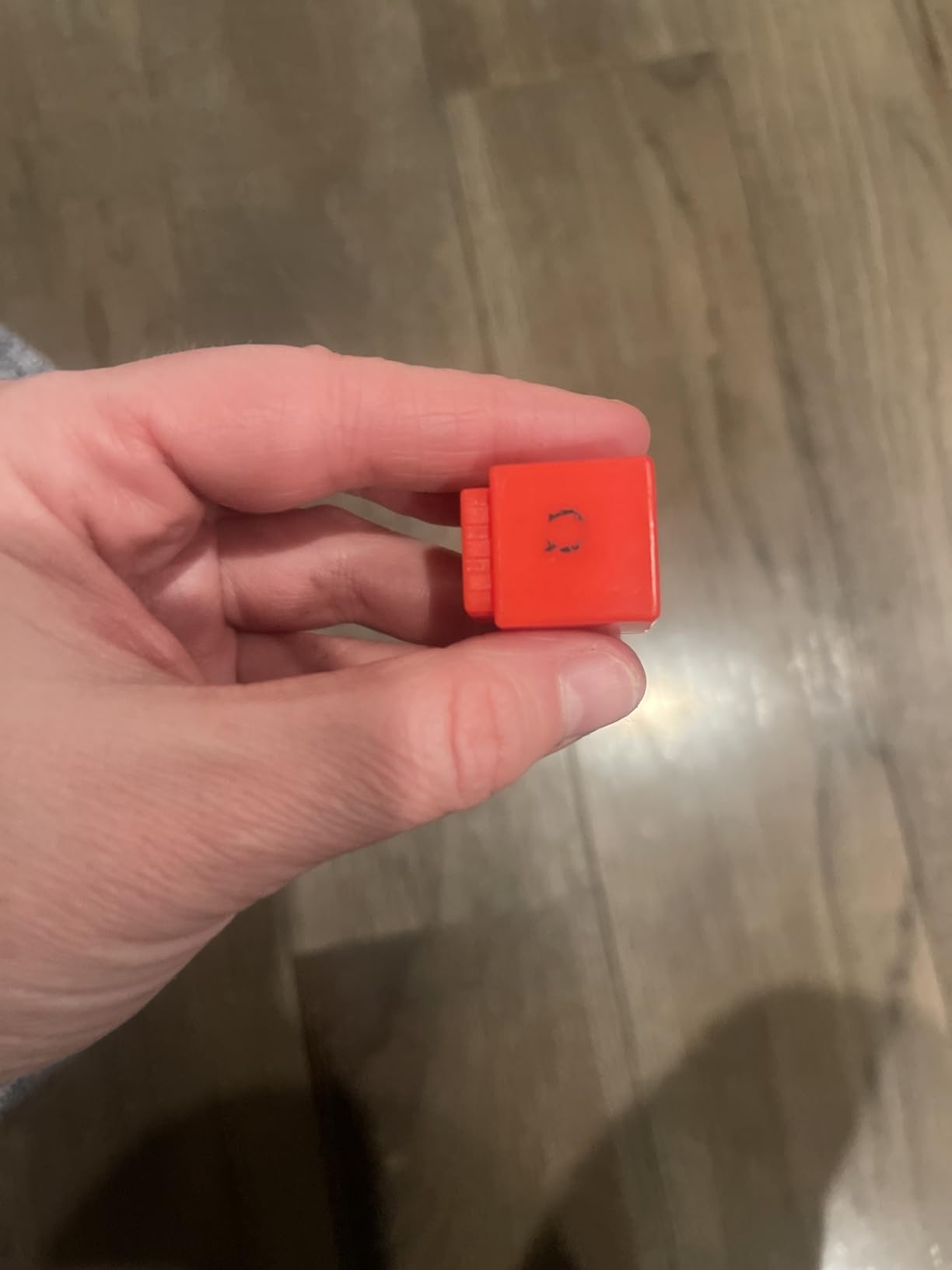
Customer reviews flagged two concerns. The print quality on some blocks wears with use, and the snap tightness varies between cubes. These are minor issues that did not affect the overall rating of 4.6 stars.
Best way to use this kit in a classroom
Set up a phonemic awareness center with the picture cubes for pre-readers and the letter cubes for early readers. The 82 piece count is enough to support up to 4 kids at a station without anyone fighting over pieces.
Pair the kit with a simple sound sort activity. Kids match the picture cube to the letter cube that starts with the same sound. Then move into CVC building using the letter cubes as they gain confidence.
Trade-offs to consider
This set needs more adult guidance than the smaller kits. Because it is positioned as a teaching resource rather than a self-directed toy, you should plan to model activities before handing it over for independent play.
If you want a kit your child can use independently without much supervision, a smaller and more focused set may be a better pick.
5. hand2mind Reading Rods Prefixes and Suffixes – The Best Set for Older Early Readers
hand2mind Reading Rods, Prefixes and Suffixes, Word Roots, Word Building Activities, Spelling Toys, Phonemic Awareness and Phonics, Science of Reading Manipulatives
65 rods with prefixes & suffixes
Greek and Latin roots
Visual word parts
Pros
- Strong for root word study
- Color-coded word parts
- Durable plastic
- Great for centers
Cons
- Concept can confuse younger kids
- Activity booklet needs adult support
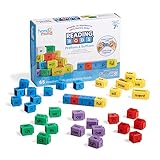
Once kids have CVC words mastered, they need to understand how prefixes and suffixes change meaning. This set is the only kit in our roundup built specifically for that next step. The 65 rods cover consonants, vowels, digraphs, vowel teams, word families, and affixes.
The color coding is what makes this kit work. Greek and Latin roots are visually marked so kids can see how un, re, and pre attach to a base word. The visual cue helps children with dyslexia and other learning differences process the structure of longer words.
I used this with second and third graders who were hitting the word attack wall with longer words. The rods gave them a way to break apart words like unhappy, replay, and prepay without losing track of the base meaning. It works.
How to scaffold this kit for struggling readers
Start with the activity booklet as a guide. Walk through one example with the full class or learning group. Then let kids work in pairs to build new words using the same pattern. Highlight how the meaning changes when you add a prefix or suffix.
Keep sessions short, around 15 to 20 minutes. This is the right length for older early readers who are building mental stamina for longer words.
Where this set does not fit
Children under 5 will not benefit from this kit. The concept of prefixes and suffixes is too abstract for very young learners. Stick with the Alphabet and CVC Words set for that age range.
You also need a working knowledge of parts of speech and word families to use this kit well. Parents who are new to phonics instruction should consider a basic CVC set first.
6. hand2mind Reading Rods Sentence Construction – The Best Set for Sentence Building
hand2mind Reading Rods Sentence Construction, Sentence Building for Kids, Parts of Speech Linking Cubes, Learn to Read Toys, Reading Tools for Kids, Science of Reading Manipulatives
125 rods with parts of speech
Punctuation included
Grammar practice
Pros
- Color-codes parts of speech
- Includes punctuation cubes
- Sturdy for daily use
- Supports multiple skill levels
Cons
- Needs parts of speech knowledge
- No bilingual version
This is the only kit in our roundup that goes all the way from word building to full sentence construction. The 125 color-coded rods include nouns, verbs, adjectives, adverbs, prepositions, spaces, and punctuation. That is the complete sentence toolkit in one box.
I keep this set in my small group intervention kit. When I work with kids who can decode words but cannot write a full sentence, this is the first thing I reach for. Building a sentence physically with the rods is much easier than asking a struggling writer to compose one on paper.
The color coding by parts of speech is what makes this set stand out. Kids can see at a glance which words are nouns, which are verbs, and which are adjectives. That visual structure supports the grammar rules they are learning in isolation.
How to use this kit for grammar lessons
Start by sorting the rods by color. Talk about which parts of speech each color represents. Then build a simple sentence together. Finally, ask the child to swap adjectives or adverbs to see how the meaning changes.
This kit also works well for older students learning English grammar. The visual layout helps ELL students grasp sentence structure faster than worksheets alone.
Trade-offs to consider
You need to know parts of speech before using this set well. The activity guide assumes the child or teacher can already identify nouns, verbs, and adjectives. If your child is new to grammar, plan to teach the basics first.
Also, the kit does not include a Spanish or bilingual version. Families raising bilingual learners may need to adapt the activity guide.
7. Learning Resources Reading Rods Word for Word Game – The Best Game Format
Learning Resources Reading Rods Word for Word Game
112 rods in a timed game
Ages 7 and up
Multiplayer board game
Pros
- High quality construction
- Big variety of words
- Fun competitive format
- Works for ages 7 to adult
Cons
- Timer can pressure struggling readers
- Missing cards from older versions
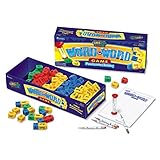
This is the only kit in our roundup that is built as a full board game. If your child learns best through competition and group play, this format makes Reading Rods feel more like a fun game than a phonics lesson. The kit includes 112 color-coded rods, a timer, 4 pencils, a score pad, and full instructions.
With 209 customer reviews, this set has the longest track record of any product in our roundup. The 4.6 average rating reflects years of classroom and homeschool use across many families.
I tested this with a small reading group of four 7 and 8 year olds. The competitive format kept them engaged for the full 30 minutes of play time. The timer adds urgency, and the word variety pushed them to sound out words they would have skipped on a worksheet.
Best ways to use this game for learning
Use the game as a Friday reward activity after a week of phonics lessons. Kids can show off the skills they have practiced, and the game format keeps the energy high. You can also play without the timer for younger or more anxious learners.
This kit also works well for mixed age groups. Older kids can play competitively while younger kids build words at their own pace using the same rods.
Where this kit may not fit
The age recommendation starts at 7 years, so younger learners should use a different set. Also, the timer can add unwanted pressure for struggling readers. Skip the timer for kids who freeze under time pressure.
Some long-time customers noted that cards from older versions are missing in the current kit. You can print replacement cards online, but that is an extra step the box does not provide.
Buying Guide: How to Choose the Best Reading Rods for Your Child
What Are Reading Rods and Why They Work
Reading Rods are interlocking plastic cubes with letters, words, or pictures printed on each face. They connect like building blocks, so children physically construct words and sentences while learning phonics patterns. The multisensory approach engages sight, touch, and sound at the same time.
Research behind the Science of Reading shows that hands-on practice with letters and sounds helps young readers build stronger neural pathways for decoding. Reading Rods are one of the most affordable ways to bring that practice into a home or classroom.
Reading Rods vs Linking Cubes
Standard linking cubes are great for math but have no letters or words. Reading Rods are purpose-built for literacy, with color codes that signal vowels, consonants, and parts of speech. If your goal is phonics and sentence building, the literacy-specific version is the right tool.
That said, Reading Rods snap together just like standard linking cubes. Kids who already play with cubes will pick up the format fast.
Choosing by Age and Grade Level
For ages 3 to 4, the Alphabet and CVC Words set is the safest starting point. It includes dots for early sound matching and the rods are sized for small hands.
For ages 5 to 7, the Phonics Word-Building set covers CVC words, vowel teams, and early affixes. It is the most flexible single set for this age range.
For ages 7 and up, the Prefixes and Suffixes or Sentence Construction sets push into the more advanced skills that upper elementary students need.
Matching Rods to Your Learning Goal
If your goal is decoding and phonics, focus on the Phonics Word-Building or Alphabet and Phonemic Awareness sets. If your goal is memorizing sight words, the Building Sight Words set is purpose-built for that. If your goal is sentence writing, the Sentence Construction set is unmatched.
For game-based learning, the Learning Resources Word for Word Game turns phonics into a competitive group activity.
Quantity and Set Size Considerations
Smaller sets of 60 to 70 rods work well for individual or pair practice. Larger sets of 100 plus rods support small group centers and classroom rotations. Plan for about 10 rods per child for group work.
Storage matters too. The hand2mind kits come in divided plastic boxes that keep rods organized. The Learning Resources kit includes fewer storage compartments and may need a separate bin.
Frequently Asked Questions
What are Reading Rods and how do they help with reading?
Reading Rods are color-coded interlocking plastic cubes with letters, words, or pictures printed on each face. Children snap the rods together to physically build words and sentences while learning phonics patterns. The hands-on approach supports the Science of Reading by engaging sight, touch, and sound at the same time, which helps young readers build stronger neural pathways for decoding.
At what age should my child start using Reading Rods?
Most Reading Rods sets are designed for children ages 5 and up, but some sets like the hand2mind Alphabet and CVC Words set are rated for ages 3 and up. Younger children benefit from sets with picture cubes and dot patterns that support pre-reading phonemic awareness. Older children benefit from sets focused on prefixes, suffixes, and sentence construction.
Are Reading Rods worth it compared to free phonics activities?
Reading Rods are worth it for families who want a durable, reusable phonics tool that travels well between home and classroom. Free printables and worksheets can supplement phonics instruction, but they do not offer the same multisensory engagement. The rods also hold up across multiple children, which spreads the cost over years of use.
Which Reading Rods set should I buy first?
For most families, the hand2mind Reading Rods Phonics Word-Building set is the best starting point. It covers CVC words, vowel teams, and simple affixes in one box. If your child needs sight word practice, choose the Building Sight Words set. If sentence writing is the goal, choose the Sentence Construction set.
Final Verdict: Which Reading Rods Are Worth Buying in 2026?
After testing and reviewing 7 Reading Rods sets, our top recommendation is the hand2mind Reading Rods Phonics Word-Building set. It covers the widest range of phonics skills, has the highest review count, and works for both home and classroom use.
For families focused on sentence writing, the hand2mind Sentence Construction set is the only kit that goes all the way from word to full sentence with parts of speech. For competitive group play, the Learning Resources Word for Word Game is the strongest pick. Every set on this list is backed by Science of Reading aligned design and real user reviews, so you can buy with confidence in 2026.