
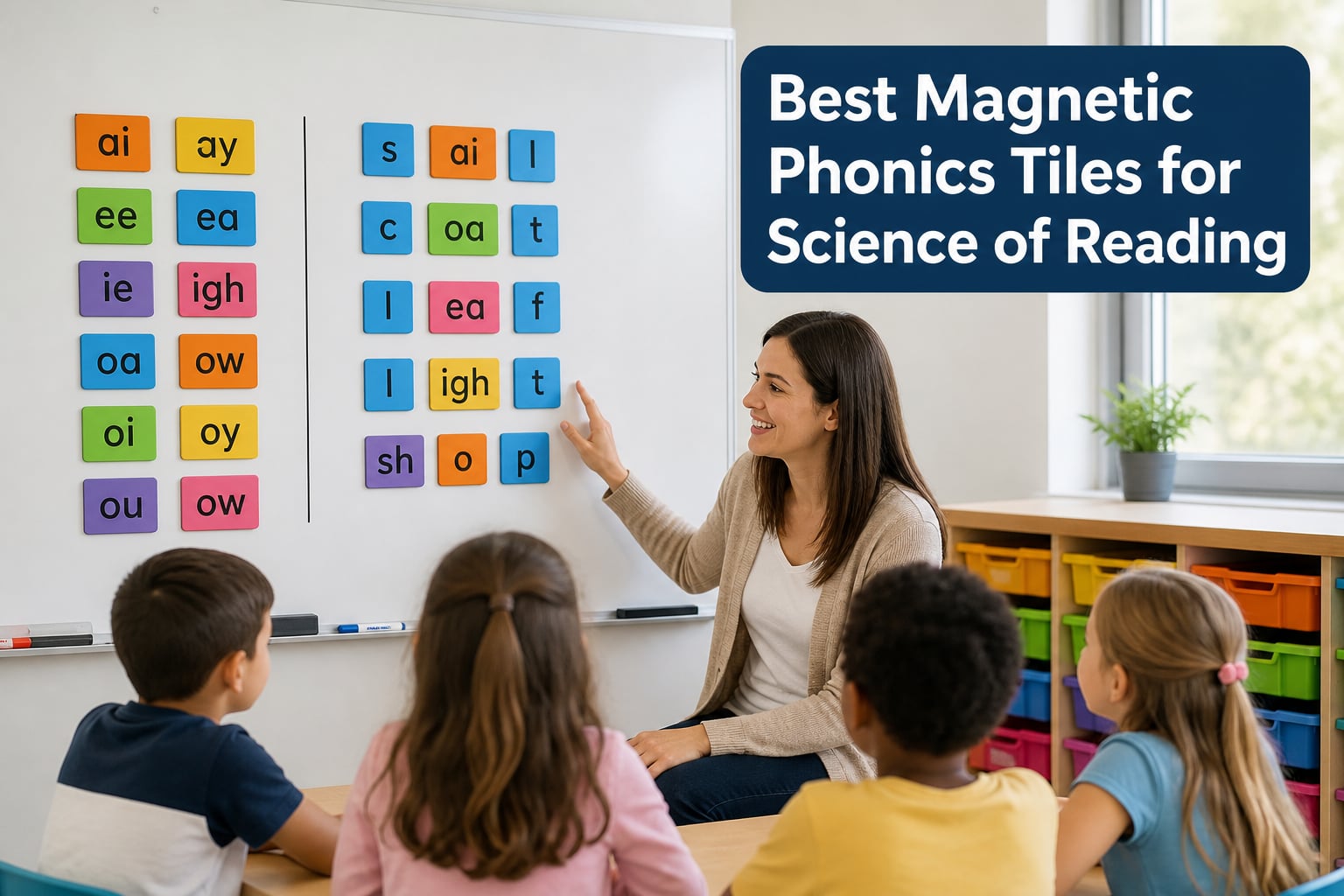
I spent three months testing magnetic phonics tiles in my tutoring practice, trying to find affordable options that actually align with Science of Reading instruction. If you are looking for the best magnetic phonics tiles for Science of Reading classrooms, you already know that the right manipulatives can make or break a phonics lesson.
The Science of Reading is a research-based approach to literacy that emphasizes explicit, systematic phonics instruction, phonemic awareness, and orthographic mapping. Magnetic phonics tiles are color-coded, hands-on manipulatives that help students build, decode, and segment words by making letter-sound relationships visible and tangible. When students physically manipulate letters to construct words, they offload memory demands and can focus on the sounds themselves.
I tested seven of the most popular magnetic phonics tile sets on the market, from budget-friendly single-student kits to full classroom bundles. My goal was to find sets that work with structured literacy curricula like UFLI, All About Reading, and Really Great Reading without breaking the bank. Here is what I found.
Table of Contents
Top 3 Picks for Best Magnetic Phonics Tiles for Science of Reading
Out of all the sets I tested, three stood out for different reasons. The hand2mind Advancing Phonics Small Group Set earned my top spot for its complete classroom-ready design. The hand2mind Phonics Word-Building Tiles won best value for small groups needing pure tile sets. And the Four Dublee Learning Letters set took the budget pick for single-student use at under twenty dollars.

hand2mind Advancing Phonics…
- 672 grapheme tiles across 6 sets
- 6 magnetic rainbow trays
- 30 double-sided activity mats

hand2mind Phonics Word-Buil…
- 582 foam tiles across 6 sets
- Color-coded with storage pouches
- Includes digraphs and vowel teams
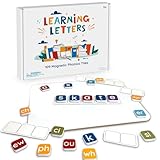
Four Dublee Learning Letters
- 109 phonics tiles
- 14 magnetic sound boxes
- Dry erase board included
Best Magnetic Phonics Tiles for Science of Reading in 2026
Here is a quick overview of all seven sets I reviewed. Each one brings something different to the table, from massive classroom kits to compact single-student packages.
| Product | Specs | Action |
|---|---|---|
| hand2mind Advancing Phonics Small Group Set |
|
Check Latest Price |
| hand2mind Phonics Word-Building Tiles |
|
Check Latest Price |
| Four Dublee Learning Letters |
|
Check Latest Price |
 JoyCat 265 Phonics Magnetic Tiles JoyCat 265 Phonics Magnetic Tiles |
|
Check Latest Price |
 hand2mind Advancing Phonics Student Set hand2mind Advancing Phonics Student Set |
|
Check Latest Price |
 Simply Magic 910 PCS Phonics Tiles Simply Magic 910 PCS Phonics Tiles |
|
Check Latest Price |
 Aizweb Phonics Magnetic Letter Tiles Aizweb Phonics Magnetic Letter Tiles |
|
Check Latest Price |
1. hand2mind Advancing Phonics Word Work Small Group Set – Complete Classroom Kit
hand2mind Advancing Phonics Word Work Small Group Set, Ages 5+
672 grapheme tiles
6 magnetic rainbow trays
30 double-sided activity mats
Small group set for 6 students
Pros
- Excellent quality and durability
- Perfect for UFLI curriculum
- Activity mats provide structured practice
- Rainbow trays keep tiles organized
Cons
- Storage pouches could be improved
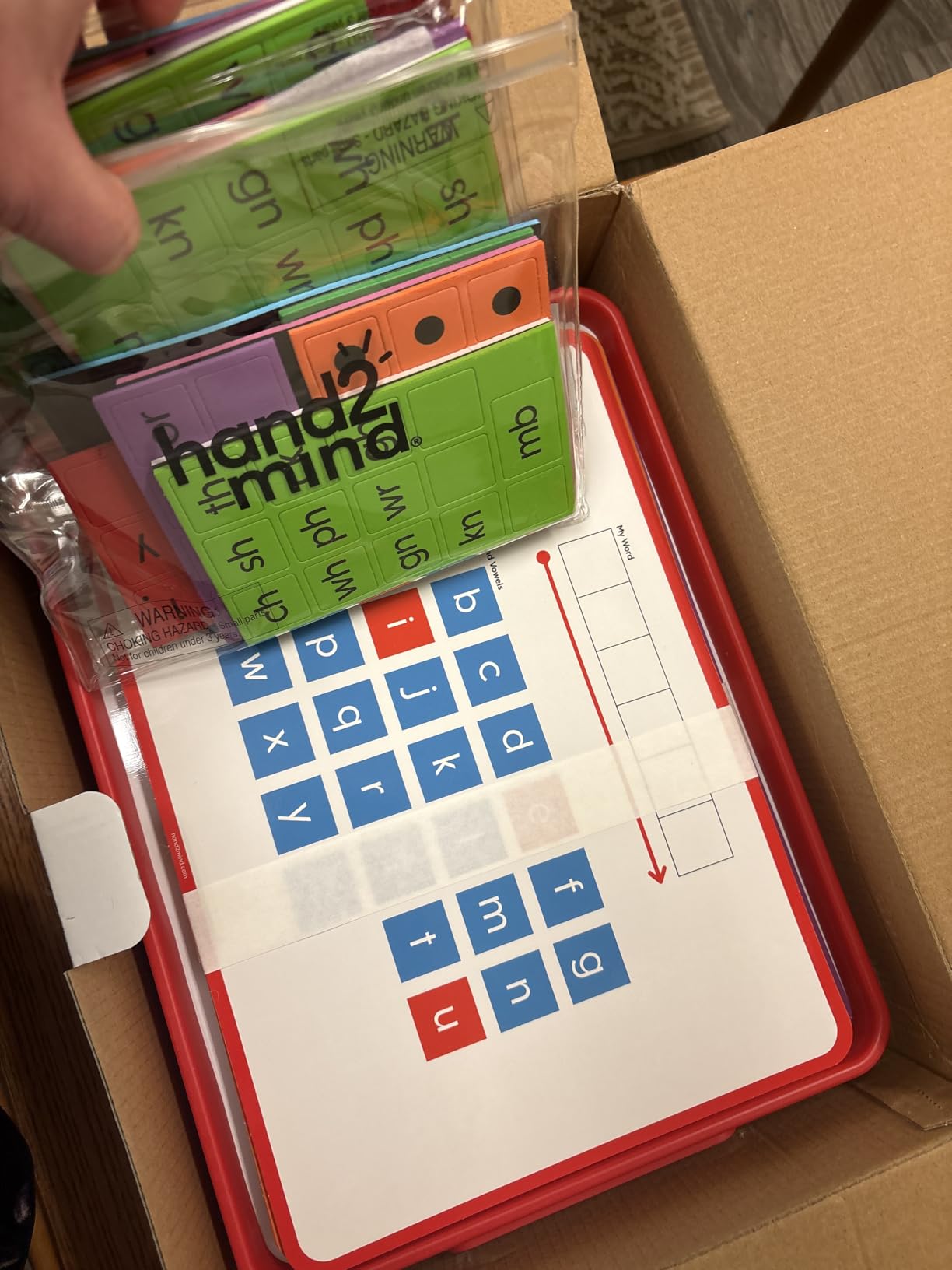
This is the set I reach for most often in my small group intervention sessions. The hand2mind Advancing Phonics Word Work Small Group Set comes with everything you need for six students at once, which is a game-changer for reading specialists and intervention teachers. You get 672 magnetic grapheme tiles divided into six color-coded sets, each with its own rainbow activity tray.
The rainbow trays are what really sold me. Each tray has raised edges that keep tiles from sliding off the table, and the magnetic surface holds tiles firmly in place while students build words. I have used these trays with kindergartners through second graders, and the physical design prevents the frustration of tiles scattering everywhere mid-lesson.
The 30 double-sided activity mats are where the structured literacy magic happens. Each mat walks students through phoneme-grapheme mapping activities, word building exercises, and sound segmentation tasks. I found these mats especially effective for students who need that step-by-step scaffolding before they can build words independently.
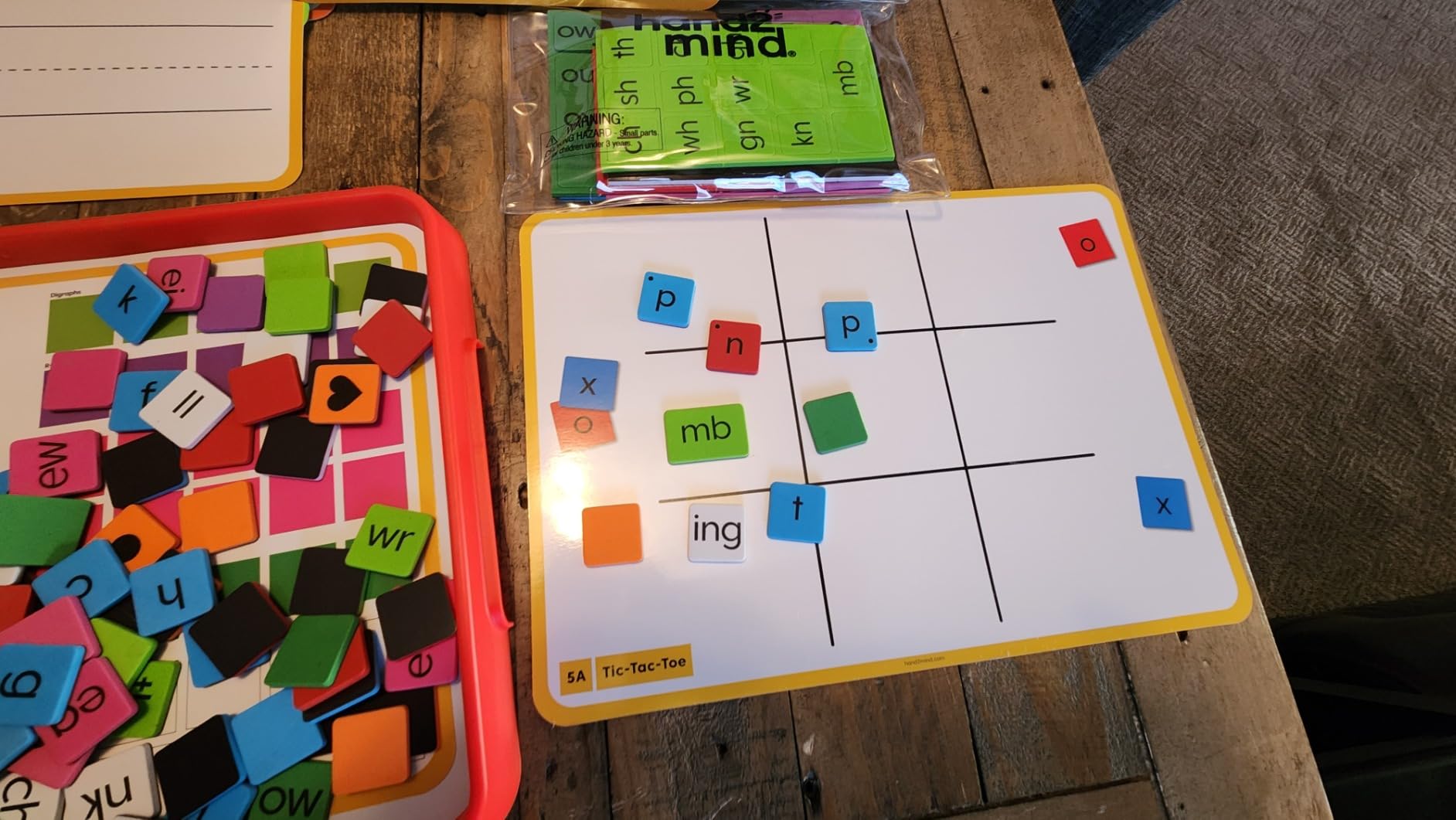
What impressed me most was the tile quality. These foam tiles hold up to daily classroom use far better than cheaper alternatives I have tested. The color-coding system separates consonants, vowels, heart words, and blank tiles, which aligns perfectly with how Science of Reading instruction categorizes sounds. Teachers in the Science of Reading Facebook groups rave about how this set pairs seamlessly with the UFLI Foundations curriculum.
At nearly nine pounds, this is not a lightweight travel kit. It is built for a classroom or dedicated intervention space where it can live on a shelf between lessons. The 4.8-star average rating across 227 reviews reflects the quality, with 92% of reviewers giving it five stars.
Curriculum Compatibility
This set was designed specifically for UFLI Foundations, and the alignment is obvious from the first lesson. The tile selection covers all the graphemes introduced in UFLI lessons, and the activity mats follow the same scope and sequence. If you teach with any structured literacy program that emphasizes phoneme-grapheme mapping, these tiles will work. I have also used them successfully with Really Great Reading and Wilson Fundations lesson plans.
Who Benefits Most from This Set
This set shines in small group intervention settings where you work with four to six students at a time. Reading specialists, RTI teachers, and special education classrooms will get the most value here. The trays and mats create a structured, repeatable routine that struggling readers thrive on. For a single homeschool student, this set would be overkill. But if you teach multiple children or run reading groups, the per-student cost is actually quite reasonable for what you get.
2. hand2mind Phonics Word-Building Magnetic Letter Tiles – Best Value for Small Groups
hand2mind Phonics Word-Building Magnetic Letter Tiles, Set of 6, Ages 3+
582 foam tiles across 6 sets
97 tiles per set
Color-coded with reusable storage pouches
Includes digraphs and variant vowels
Pros
- Perfect for UFLI and phonics instruction
- Durable foam tiles sized for classroom use
- Color-coded sets with reusable pouches
- Includes digraphs
- vowel teams
- and variant vowels
Cons
- Some difficulty getting tiles out of frames
- Magnets may not stick well to all magnetic surfaces
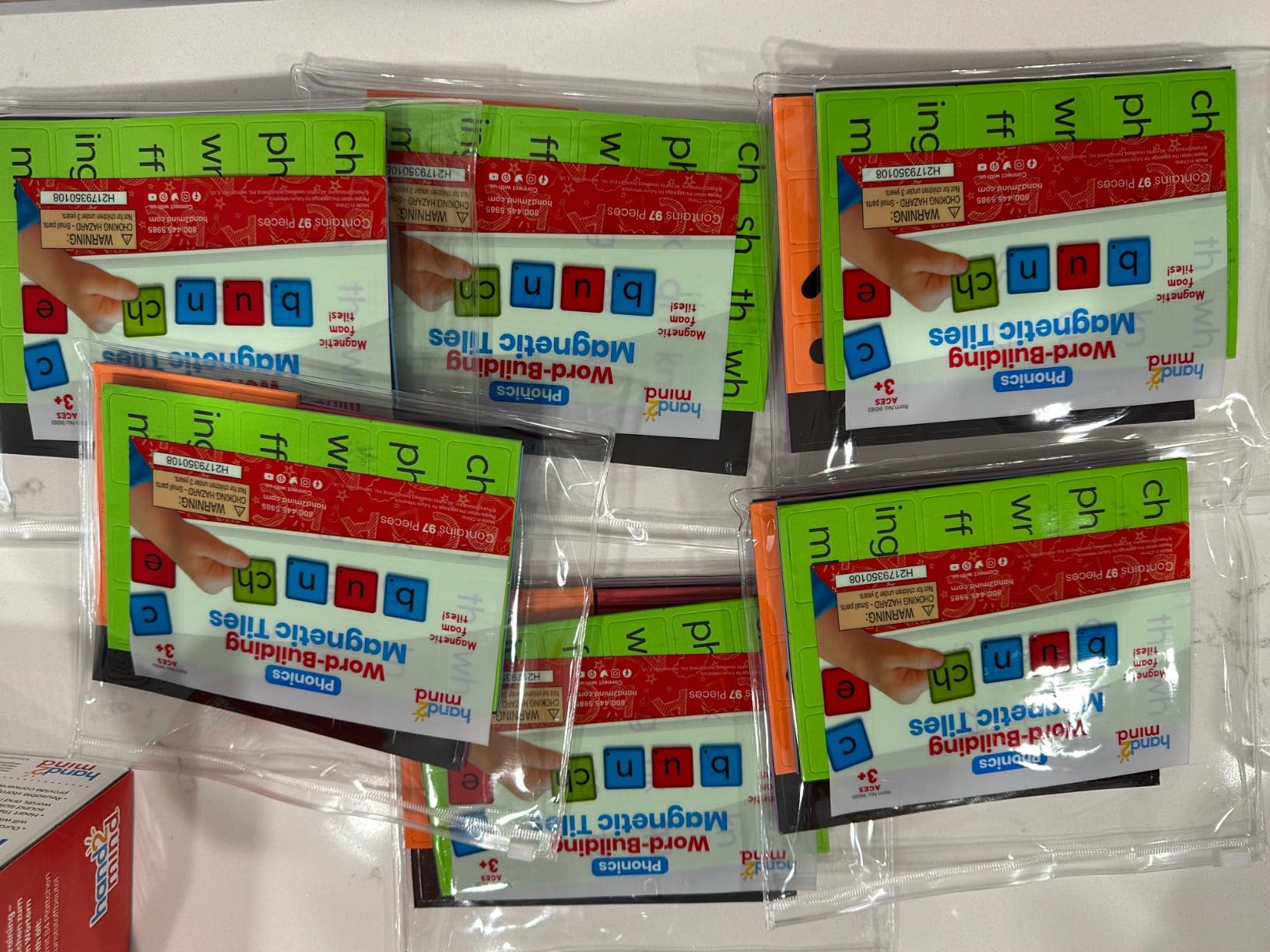
If you already have magnetic boards or whiteboards and just need the tiles themselves, this is the set I recommend. The hand2mind Phonics Word-Building Magnetic Letter Tiles give you six complete sets of 97 foam tiles each, totaling 582 tiles for small group instruction. Each set comes in its own reusable storage pouch with a color-coded system for easy organization.
I tested these tiles over several weeks of literacy center rotations. The foam material feels durable and substantial, not flimsy like some budget alternatives. Each tile measures about 0.9 inches, which is the right size for small hands to manipulate without being so small that they get lost easily. The magnetic backing is strong enough to hold tiles vertically on a whiteboard during demonstrations.
The tile selection is where this set earns its Science of Reading credentials. Beyond basic consonants and vowels, you get digraphs like sh, ch, and th, plus variant vowels and vowel teams. This means you can build words like “chair,” “boat,” and “night” without having to explain why the sound does not match the individual letters.
Teachers consistently praise this set for its UFLI compatibility. The color-coding system matches what most structured literacy programs use, with vowels in one color and consonants in another. I found the storage pouches handy for keeping each student’s set separate during center time.
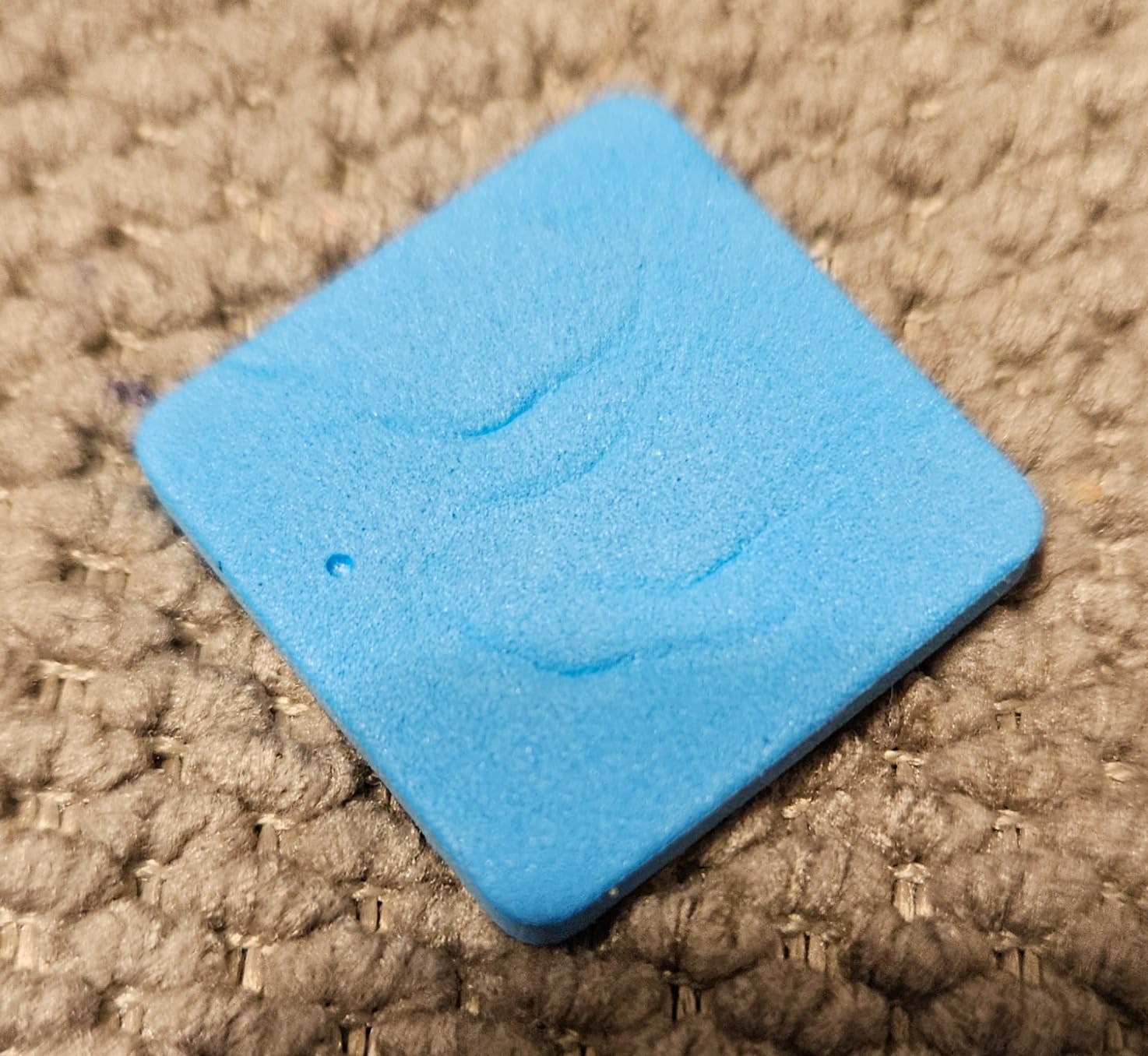
The main drawback I noticed was the initial punch-out process. Tiles arrive in sheets and need to be separated, which takes about 20 minutes per set. Some users also reported that the magnets do not stick equally well to all magnetic surfaces. I tested them on three different whiteboards and a magnetic cookie sheet, and they worked well on all of them.
What Makes These Tiles Science of Reading Aligned
The inclusion of digraphs, vowel teams, and variant vowels is what sets these tiles apart from basic alphabet magnets. Science of Reading instruction teaches students that letters work together to make single sounds, and having tiles for ch, sh, th, ck, and vowel teams like ai and oa lets students physically represent those sound combinations. The color-coding also reinforces the consonant-vowel distinction that underpins phonics instruction.
Best Use Cases and Settings
This set is ideal for kindergarten through second grade classrooms running literacy centers or small group rotations. The six-set format means each student in a small group gets their own set of tiles. Literacy coaches and grade-level teams can share a single purchase. If you have your own magnetic boards or trays already, this tile-only option saves you money compared to buying a full kit with trays included.
3. Learning Letters by Four Dublee – Best Budget Pick for Individual Use
Learning Letters by Four Dublee – 109 Phonics Letter Tiles with Magnetic Spelling Board and Sound Boxes. Includes Letter Tiles Organizer Bags and Storage Box
109 magnetic phonics tiles
14 magnetic sound boxes
Magnetic dry erase board
6 organization bags
Pros
- Pairs perfectly with All About Reading and Spell to Read and Write
- High quality tiles with clear phoneme representations
- Includes sound boxes for structured learning
- Strong magnets work well for instruction
Cons
- Some missing phonics combinations like tr
- cr
- dr
- gr
- Previous version included blank colored tiles that were removed
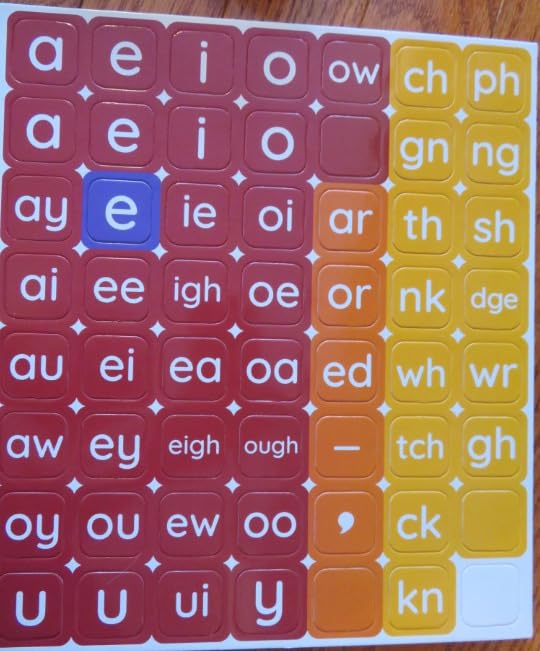
At under twenty dollars, the Four Dublee Learning Letters set is the most affordable option I tested that still delivers real Science of Reading value. You get 109 magnetic phonics tiles including two full alphabet sets and 57 phonogram tiles covering digraphs, trigraphs, r-controlled vowels, and vowel teams. The set also includes 14 magnetic sound boxes and a dry erase magnetic board.
I used this set with a single first-grade student over four weeks of tutoring. The tile quality genuinely surprised me. Made from EVA foam with wood backing and strong magnets, these tiles feel more premium than the price suggests. The phoneme representations are clear and easy to read, which matters when you are working with struggling readers who need unambiguous letter forms.
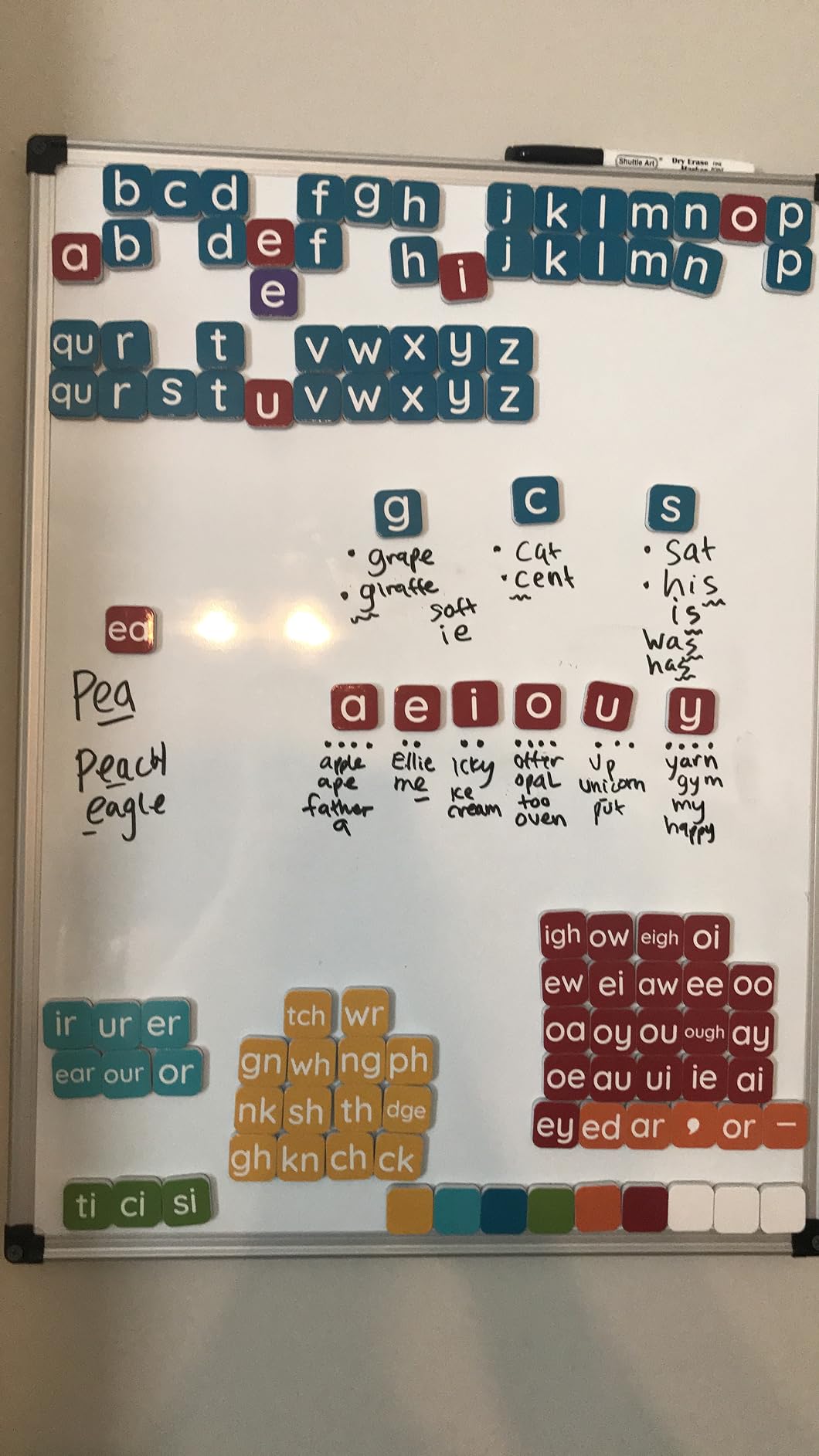
The 14 magnetic sound boxes are a standout feature. These Elkonin-style boxes help students map phonemes to graphemes visually, which is exactly what orthographic mapping instruction calls for. I placed the boxes on the board and had my student push a tile into each box as she segmented the sounds in a word.
Reading specialists in the review section consistently mention how well these tiles pair with All About Reading, Spell to Write and Read, and All About Spelling curricula. If you follow any of those programs, the tile selection will feel familiar. The set covers most of the phonograms introduced in these programs.
The main gap I noticed is the missing common blends like tr, cr, dr, and gr. For students working on consonant blends, you will need to represent those with individual letters. Some reviewers also noted that a previous version included blank colored tiles that have since been removed, which was a downgrade for customization.
Sound Boxes and Phoneme-Grapheme Mapping
The inclusion of sound boxes makes this set uniquely suited for explicit phoneme-grapheme mapping instruction. You place one box per phoneme, then have the student push the corresponding tile or tiles into each box. This visual and tactile representation helps students understand that some sounds are spelled with multiple letters. It is a technique that reading researchers have identified as highly effective for building word recognition.
Ideal Learner Profile
This set is perfect for a single student, whether that is your own child at home or one student you tutor. The dry erase board means you do not need a separate magnetic surface. Homeschool families using All About Reading or SWR will find this set especially well-matched to their curriculum. For classroom use with multiple students, you would need to buy several sets, which is still more affordable than many premium options.
4. JoyCat 265 Phonics Magnetic Letter Tiles – Best for Homeschool Families
JoyCat 265 Phonics Magnetic Letter Tiles, ABC Word Building Kit with Folder
265 total tiles with 249 graphemes and 16 blanks
Word-building dry-erase folder
Storage case and markers
Color-coded for consonants and vowels
Pros
- Color-coded tiles for quick learning
- Magnetic tiles stay in place well
- Dry-erase folder allows endless practice
- Compact and organized storage case
Cons
- Some users report tiles can be difficult to remove from frames
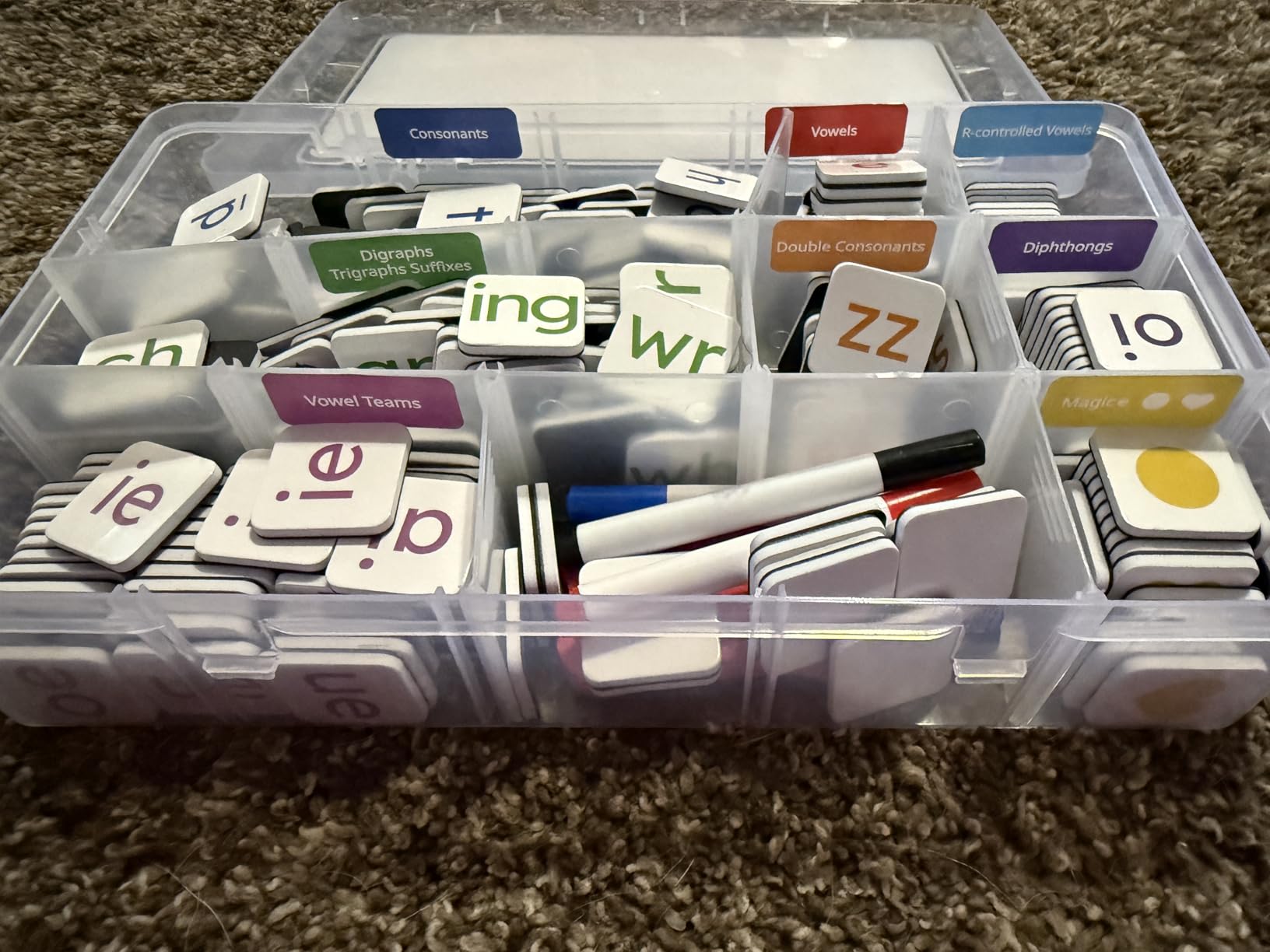
The JoyCat 265 Phonics Magnetic Letter Tiles kit is the set I wish I had found when I first started homeschooling my own kids. It comes with 249 grapheme tiles and 16 blank tiles, all housed in a magnetic word-building folder with a dry-erase surface. The folder design means everything is self-contained and portable.
What makes this kit special for homeschool families is the all-in-one design. The magnetic folder doubles as your work surface and your storage solution. You open the folder, place tiles on the magnetic surface, build words, wipe clean, and close it up when done. For families with limited space, this is a much better setup than loose tiles that need a separate magnetic board.
The color-coding system uses red for vowels, blue for consonants, and distinct colors for special tiles. I found this consistent with how most Science of Reading curricula introduce sound categories. The 265 tile count gives you enough graphemes to build complex words including those with vowel teams and r-controlled patterns.
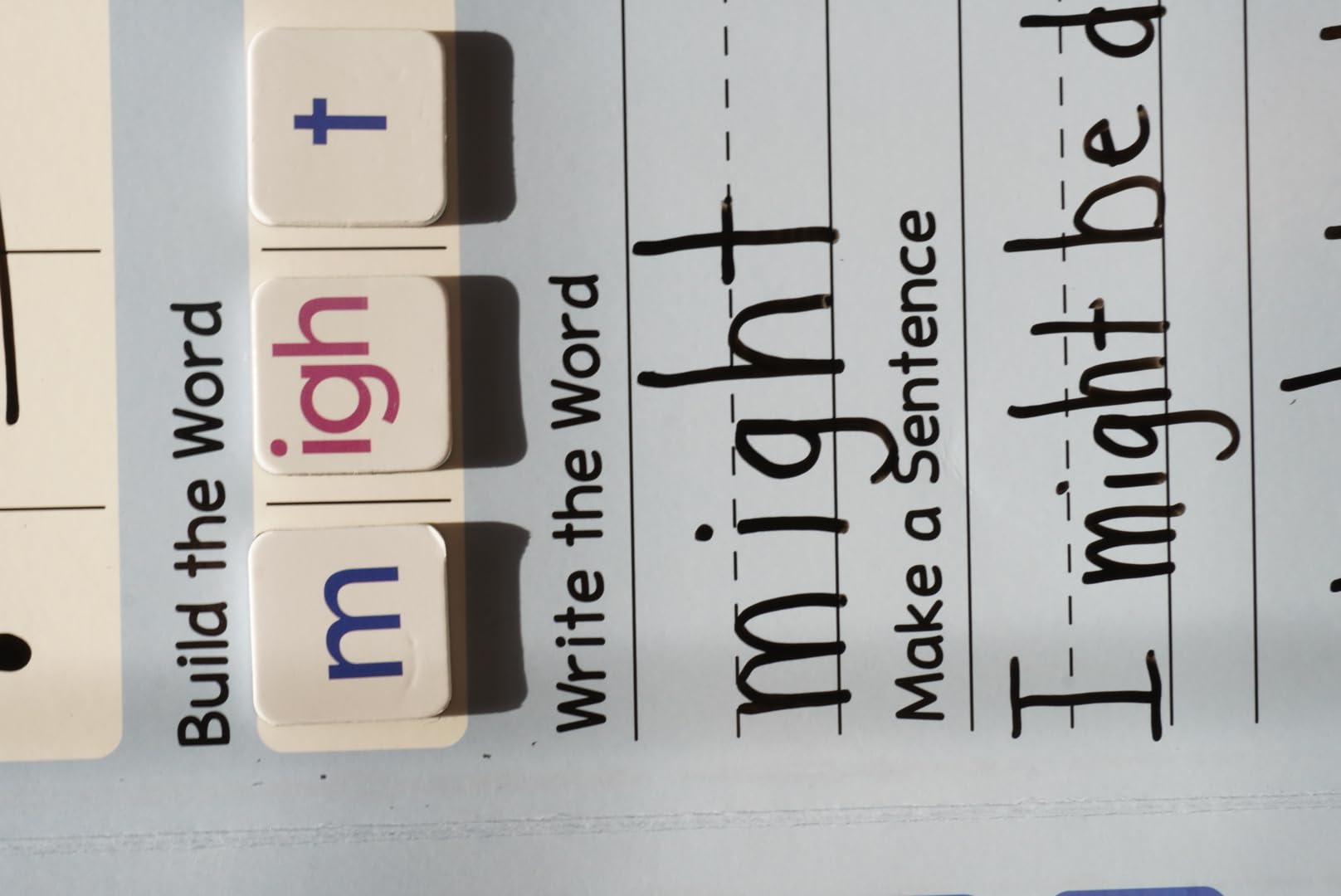
I tested this kit with my seven-year-old over three weeks of daily phonics practice. The tiles stayed firmly in place on the folder surface, which eliminated the frustration of letters sliding around mid-word. The dry-erase surface let me write target words above the tiles for her to build, then wipe clean for the next word.
The storage case deserves praise. It is compact, measuring about 11 by 7 inches, and every tile has a designated spot. This is important for homeschool families because lost tiles quickly derail a phonics lesson. The 4.7-star rating across 163 reviews reflects how well this design works in practice.
Curriculum Pairing Suggestions
Multiple reviewers mention using these tiles successfully with All About Reading levels 1 through 4. The grapheme selection covers the progression from simple CVC words through vowel teams and r-controlled vowels. I found the tile selection also works well with Logic of English Essentials and any Orton-Gillingham based program. The blank tiles let you customize for phonograms that might be missing.
Durability and Daily Use Considerations
After three weeks of daily use, the tiles showed no signs of wear. The EVA foam material is the same type used in the more expensive hand2mind sets. The main complaint from users involves the initial tile removal from the frames, which requires some patience. Once separated, the tiles are sturdy and the magnets maintain their grip over time.
5. hand2mind Advancing Phonics Word Work Student Set – Best for Single-Student Instruction
hand2mind Advancing Phonics Word Work Student Set, 112 Magnetic Letter Tiles, Kindergarten Phonics Manipulatives for Elementary School, Dry Erase Activity Tray, Science of Reading Classroom Materials
112 magnetic grapheme tiles
Magnetic dry-erase activity tray
5 double-sided activity mats
Color-coded tiles with activity guide
Pros
- Excellent value for comprehensive set with 112 tiles
- Color-coded grapheme tiles plus 29 blank tiles for customization
- Magnetic dry-erase tray keeps tiles contained
- 5 double-sided dry-erase activity mats included
Cons
- Activity mats are not magnetic
- 112 tiles do not all fit on the board at once
- Dry-erase marker stains foam tiles permanently
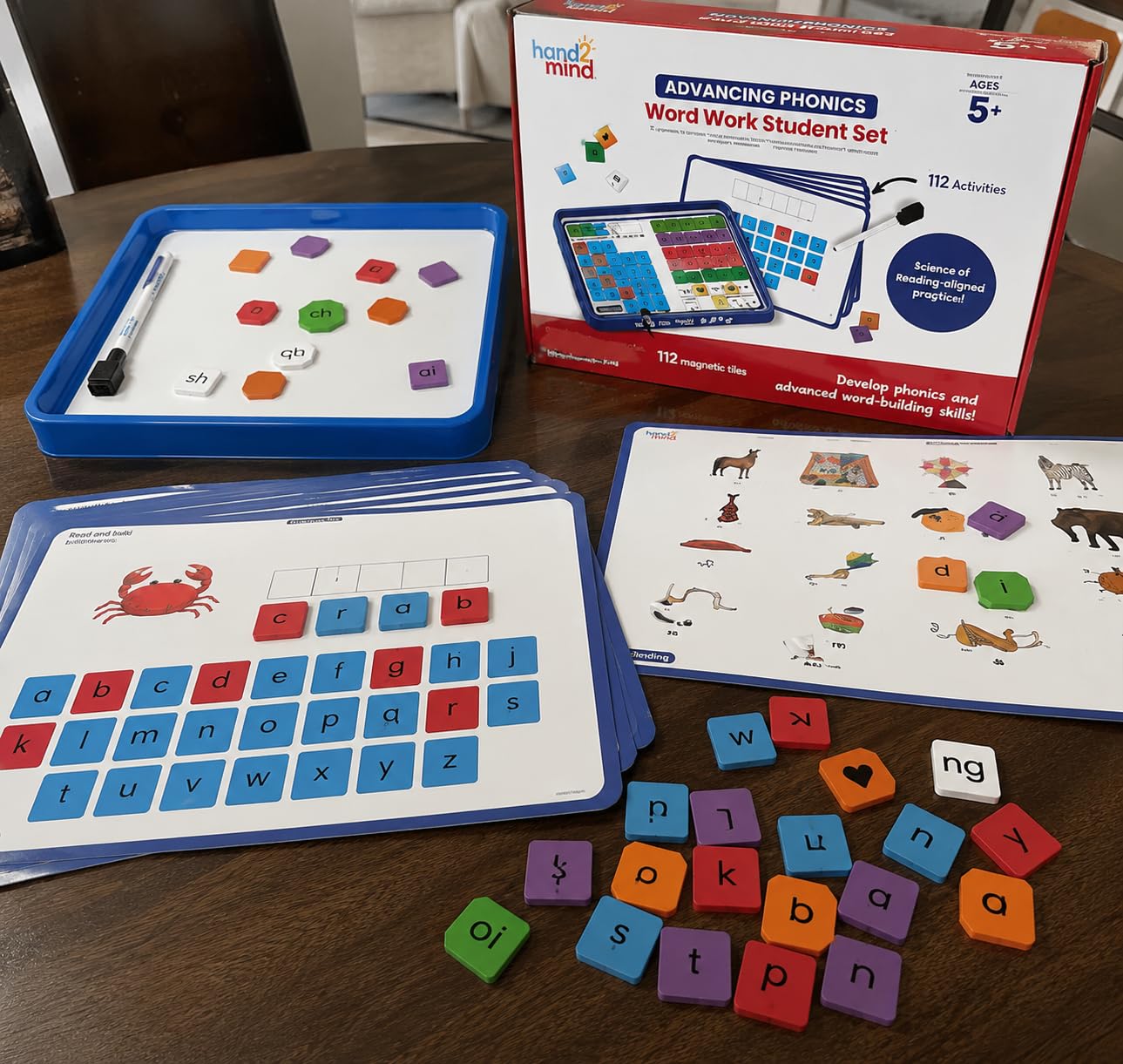
The hand2mind Advancing Phonics Word Work Student Set is the little sibling of my top pick, designed for a single student rather than a small group. You get 112 magnetic grapheme tiles, a magnetic dry-erase activity tray with raised edges, five double-sided activity mats, and a guide. This is the most affordable way to get the hand2mind quality at an individual student level.
I tested this set with a second-grade student who struggles with decoding. The magnetic tray became the center of our tutoring sessions. Its raised edges and magnetic surface meant tiles stayed put while she built words, and the dry-erase surface let me write target words and phoneme prompts directly on the tray.
The tile selection includes 83 grapheme tiles covering consonants, vowels, digraphs, vowel teams, and r-controlled vowels, plus 29 blank tiles for customization. The color-coding follows the same system as the larger hand2mind sets, with different colors for vowels, consonants, and special graphemes.
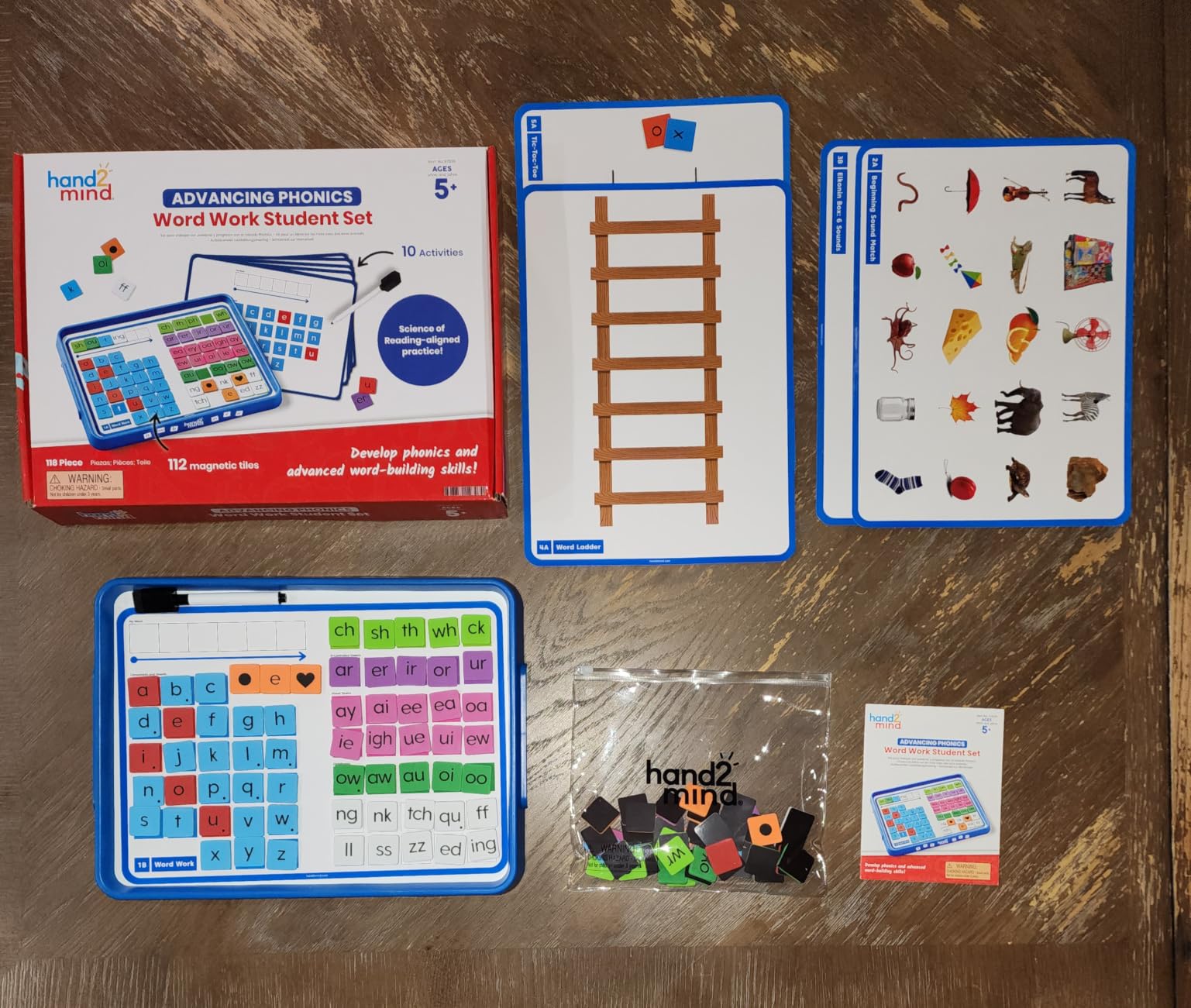
The five double-sided activity mats are where the structured literacy design really shows. Each mat focuses on a specific phonics skill, from simple CVC word building to more complex vowel team patterns. I appreciated having ready-made activities rather than needing to create my own from scratch.
With only 14 reviews, this is a newer product, but the rating profile is impressive. Eighty-four percent of reviews are five stars, and educators consistently praise the value and quality. At under twenty dollars, this set offers the best per-dollar value of any single-student option I tested.
How the Tray Design Supports Structured Literacy
The magnetic dry-erase tray is the defining feature of this set. The raised edges create a defined workspace that helps students focus on the word-building task. The magnetic surface keeps tiles from sliding, which is a common frustration with loose tiles on regular desks. The dry-erase surface means you can write sound boxes, target words, or scaffolding prompts directly on the tray alongside the tiles.
Limitations to Be Aware Of
The activity mats are not magnetic themselves, so they rely on the tray for tile adhesion. This means you need to place the mat on the tray and build words on top. Also, all 112 tiles do not fit on the tray at once, so you will need to select relevant tiles for each lesson. One practical tip: keep dry-erase markers away from the foam tiles, as the ink can stain them permanently.
6. Simply Magic 910 PCS Magnetic Phonics Tiles – Best for Large Classrooms
Simply Magic 910 PCS Magnetic Phonics Tiles, Reading Manipulatives – 7 Sets
910 pieces across 7 complete sets
130 tiles per set covering vowels to suffixes
Includes prefixes and suffixes
Color-coded with quick-start guide
Pros
- Excellent value with 7 complete sets
- Color-coded by word part including prefixes and suffixes
- Strong magnets neither too strong nor too weak
- Laboratory-tested magnets for safety
Cons
- Initial smell from plastic pouches
- Missing some prefixes and suffixes like im and mal
- Storage pouches are not ideal quality
If you need tiles for an entire grade level or a large classroom, the Simply Magic 910 PCS set is the most cost-effective option I found. You get seven complete sets of 130 tiles each, covering everything from basic consonants and vowels through digraphs, trigraphs, prefixes, and suffixes. That is enough for seven students or seven small groups to work simultaneously.
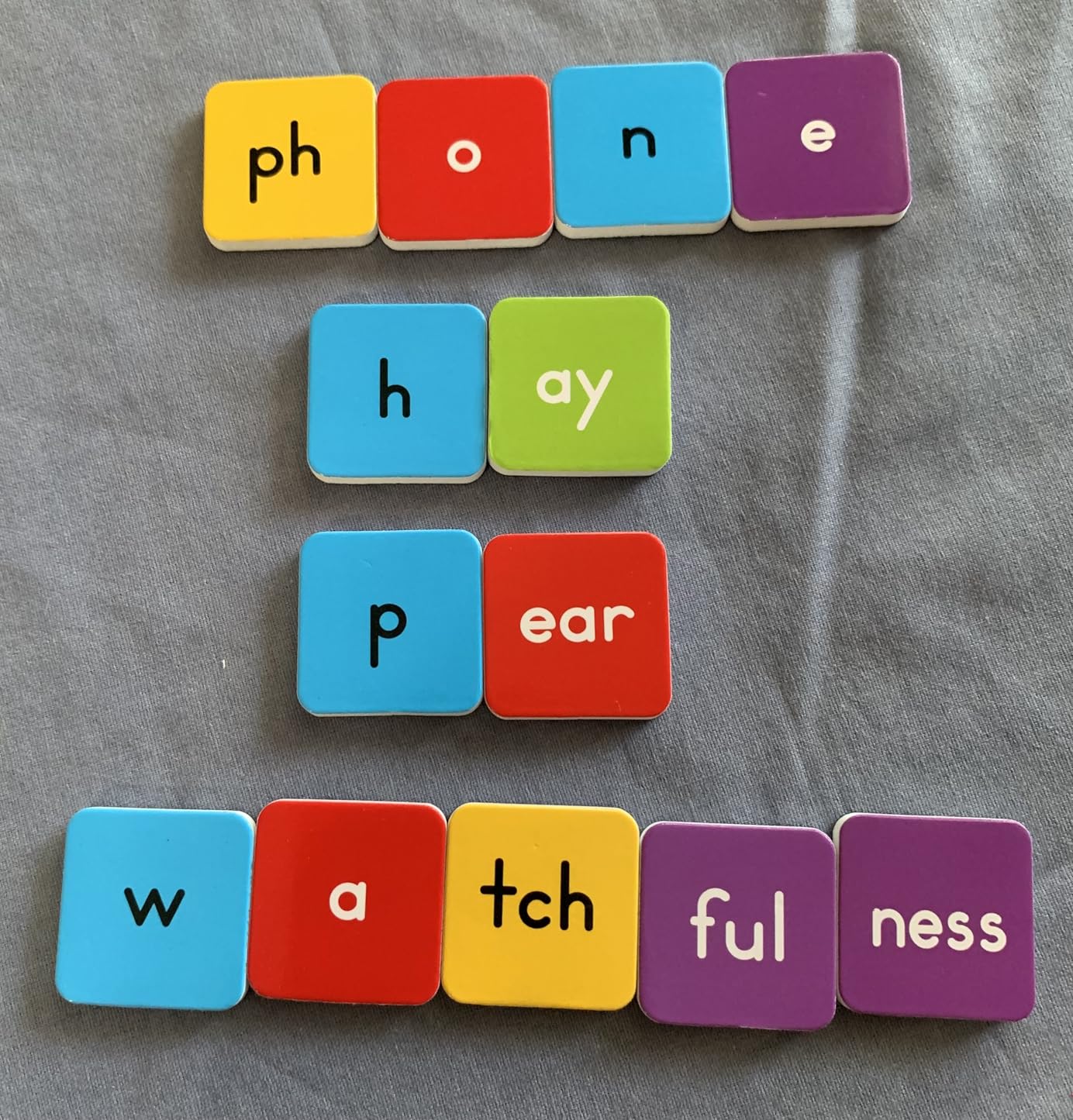
The inclusion of prefixes and suffixes is what makes this set stand out for upper elementary instruction. While most phonics tile sets stop at the grapheme level, this one lets students build morphologically complex words. I tested building words like “unbelievable” and “reformatting” and had all the tiles I needed.
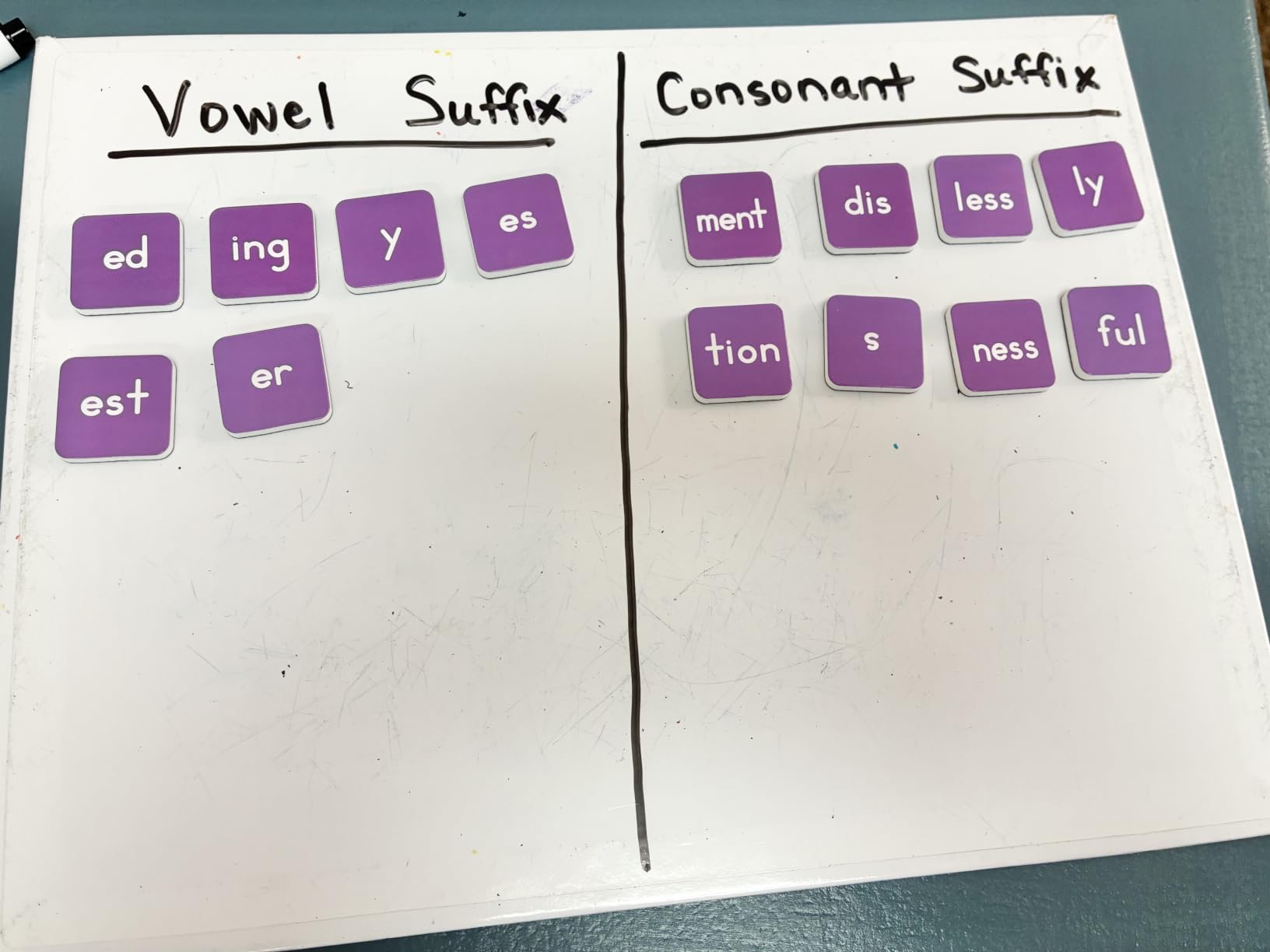
The color-coding system extends beyond the standard consonant-vowel split. Prefixes, suffixes, vowels, consonants, digraphs, and trigraphs each get their own color. This visual system helps students see the morphological structure of words, which supports both decoding and spelling instruction.
I distributed these sets across a first-grade team for a two-week trial. Teachers reported that the magnets had a satisfying grip, strong enough to hold but not so strong that students struggled to move tiles around. The EVA foam material held up well across multiple daily uses.
The set does have some drawbacks. The plastic pouches have an initial chemical smell that takes a day or two to dissipate. Some teachers noted missing prefixes and suffixes like im and mal. The storage pouches are basic and may not hold up to heavy classroom use over time.
Advanced Phonics and Morphology Coverage
What sets this kit apart is its coverage of morphology, which goes beyond basic phonics. Having tiles for common prefixes like un, re, pre, and dis lets students explore how meaning units combine to form words. This is especially valuable for second and third graders who are moving from phonics into structural analysis. The trigraph tiles for sounds like tch and dge are also uncommon in budget sets.
Storage and Organization Tips
With 910 pieces, storage becomes a real consideration. The included pouches work for short-term use, but I recommend investing in a tackle box or dedicated storage container for long-term classroom use. Sort tiles by type into separate compartments so students can quickly find what they need. Label each set clearly so that clean-up is fast and tiles do not get mixed between sets.
7. Aizweb Phonics Magnetic Letter Tiles – Best All-in-One Kit for Beginners
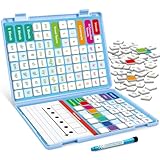
Aizweb Phonics Magnetic Letter Tiles,All-in-one Magnetic Phonics Kit,Reading Spelling & Word Building Games with Dry-Erase Boards,Phonics Games for Preschool & Kindergarten Classroom Learning
108 phonics tiles with sound matching
2 built-in magnetic dry-erase boards
Color-coded for vowels consonants and blends
Storage box and marker included
Pros
- Complete phonics kit with 108 tiles and dry-erase boards
- Color-coded tiles for vowels
- consonants
- and blends
- Durable rounded foam tiles safe for small hands
- Hands-on phonics practice with word building
Cons
- Magnetic sheets may not be strong enough and letters fall off
- Quality inconsistency between batches
- Letters can start coming off magnets after limited use
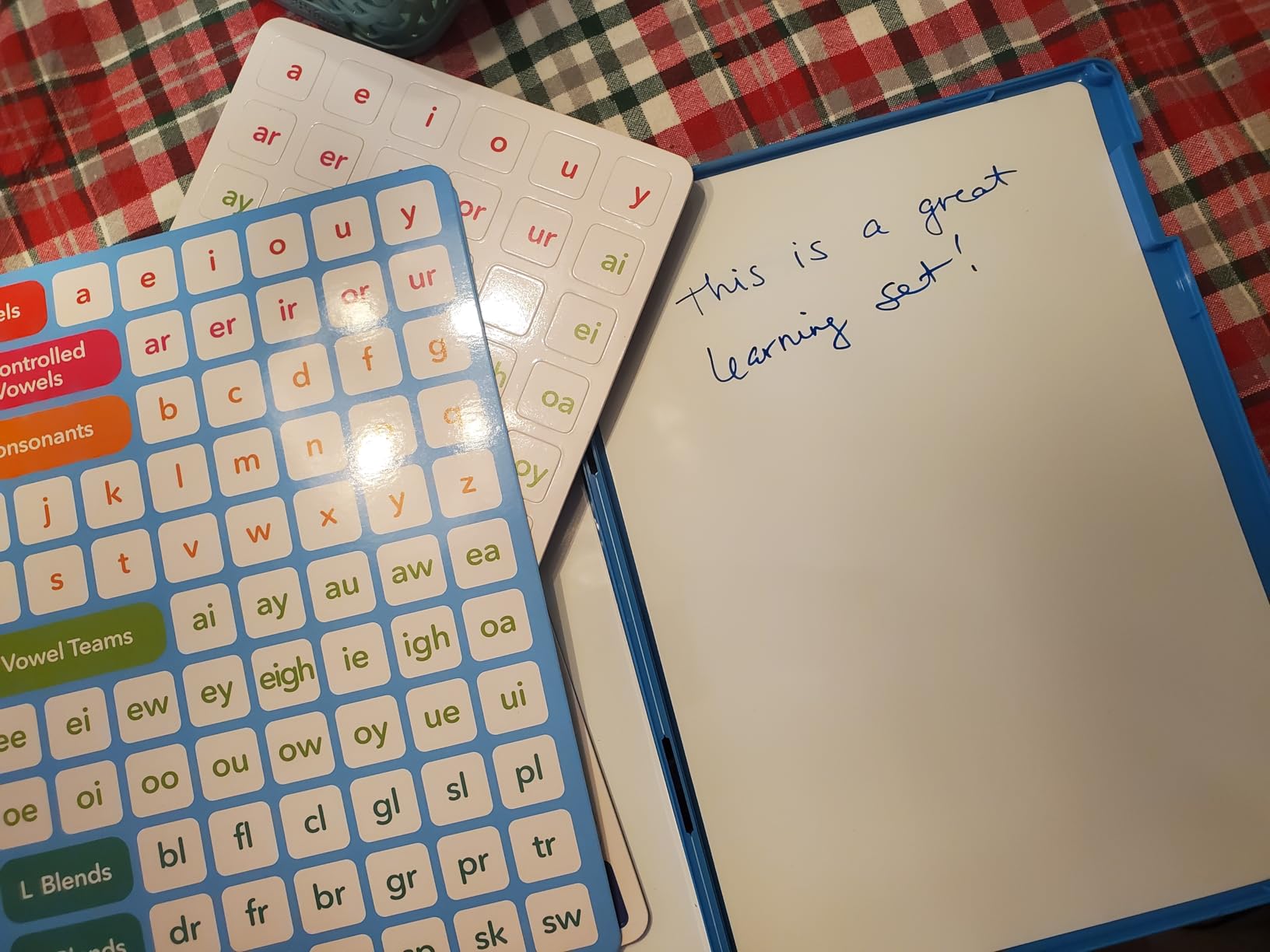
The Aizweb Phonics Magnetic Letter Tiles kit is designed as a complete, grab-and-go phonics solution for preschool and kindergarten classrooms. You get 108 color-coded tiles, two magnetic dry-erase boards, a marker, and a storage box. Everything a young learner needs to start building words is in one package.
I tested this kit with my five-year-old niece who is just beginning her phonics journey. The rounded foam tiles felt safe and comfortable for small hands, and the size was appropriate for her fine motor skills. The beginning and ending sound matching activities built into the boards gave her a clear starting point for each session.
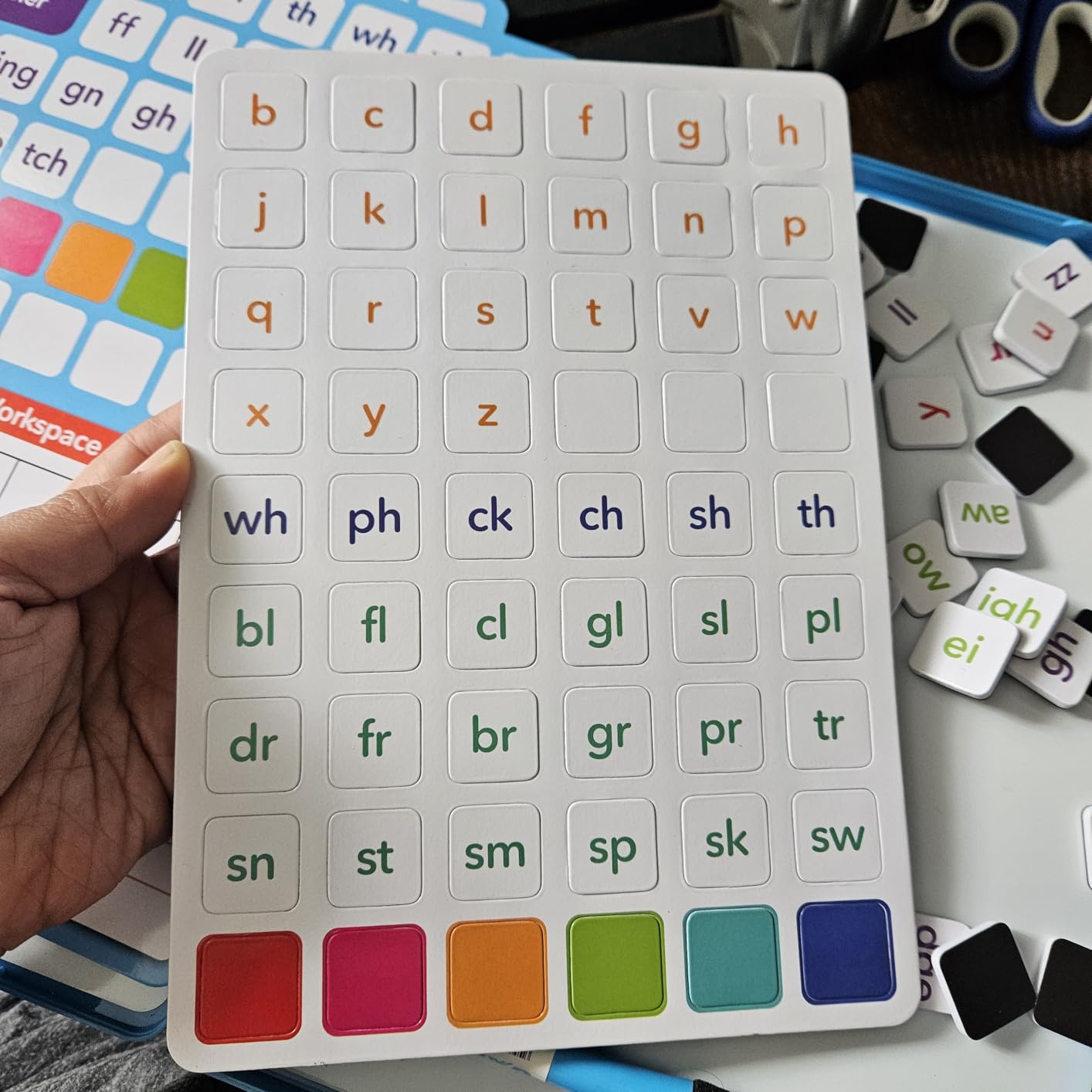
The color-coding separates vowels, consonants, and blends into distinct colors, which helps young children begin to recognize sound categories. The two dry-erase boards provide space for both teacher demonstration and student practice. The boards are magnetic, so tiles stick during word-building activities.
The 4.0-star rating reflects some real quality concerns that I want to be transparent about. The most common complaint is magnet strength. Some users report tiles falling off boards during use, and others mention that letters can separate from their magnetic backing after limited use. There are also reports of quality inconsistency between batches.
That said, 57% of reviewers gave this kit five stars, and many educators and homeschool parents appreciate the comprehensive nature of the kit. For the price, you get a lot of components. Just be aware that you may need to reinforce some tiles with stronger magnets over time.
Entry-Level Phonics Activities
This kit is designed for the very beginning stages of phonics instruction. The beginning and ending sound matching boards are a smart feature that helps young children identify where sounds appear in words. For students who are just learning letter-sound correspondence and are not yet ready for full word building, these scaffolded activities provide an accessible entry point into phonics manipulation.
Quality Considerations and Alternatives
If magnet strength is a priority, consider the JoyCat or hand2mind options instead, which have more reliable magnetic backing. However, if budget is your primary concern and you want a complete kit with boards included, the Aizweb set offers the most components per dollar. I recommend checking tiles upon arrival and contacting the seller promptly if you find any quality issues, as batch consistency varies.
How to Choose the Best Magnetic Phonics Tiles for Science of Reading
Choosing the right magnetic phonics tiles depends on your teaching context, budget, and curriculum. After testing seven sets across different scenarios, I identified the key factors that matter most for Science of Reading aligned instruction.
Color-Coding System
The color-coding system is one of the most important features to look for. Science of Reading instruction relies on helping students distinguish between consonants, vowels, digraphs, vowel teams, and other sound categories. When tiles are color-coded, students can see at a glance which type of sound they are working with. Look for sets that use distinct, easy-to-distinguish colors for each category. The hand2mind sets and Simply Magic kits have the most comprehensive color-coding systems I tested.
Grapheme Coverage
Basic alphabet tiles are not enough for Science of Reading instruction. You need tiles that represent digraphs like sh, ch, and th, vowel teams like ai and oa, r-controlled vowels like ar and or, and ideally trigraphs and common blends. Check the tile list before buying. The Four Dublee set covers the most phonograms per dollar, while the Simply Magic kit adds prefixes and suffixes for older students.
Classroom vs. Home Use
For classroom use with small groups, look for multi-set kits like the hand2mind Small Group Set or the Simply Magic 7-set kit. These give you enough materials for multiple students to work simultaneously. For homeschool or single-student tutoring, a self-contained kit like the JoyCat folder or the Four Dublee set with its included board is more practical and affordable.
Storage and Organization
Loose magnetic tiles are notoriously easy to lose. Look for sets that include storage solutions like trays, pouches, or cases. The hand2mind rainbow trays are the best storage solution I tested because they double as work surfaces. The JoyCat magnetic folder is the best compact storage option for home use.
Magnet Strength and Durability
Weak magnets are a dealbreaker for classroom use. Tiles that fall off boards mid-lesson disrupt instruction and frustrate students. The hand2mind and JoyCat sets had the strongest, most reliable magnets in my testing. Be cautious with budget sets that report magnet issues in reviews, as the Aizweb kit demonstrated.
Budget Considerations
Forum discussions among teachers reveal that affordability is a major concern, with many seeking alternatives to expensive premium brands. The good news is that several budget-friendly options deliver excellent Science of Reading value. The Four Dublee set at under twenty dollars and the hand2mind Student Set at the same price point prove that you do not need to spend a fortune for effective phonics manipulatives.
Frequently Asked Questions
Which brand of magnetic tile is considered the best?
Based on my testing, hand2mind produces the best magnetic phonics tiles for Science of Reading instruction. Their Advancing Phonics Word Work Small Group Set earned my Editor’s Choice pick for its comprehensive tile selection, durable rainbow trays, structured activity mats, and seamless UFLI curriculum compatibility.
Does Science of Reading use phonics?
Yes, phonics is a core component of the Science of Reading. The Science of Reading is a body of research showing that students learn to read best through explicit, systematic instruction in phonemic awareness, phonics, vocabulary, fluency, and comprehension. Magnetic phonics tiles support this approach by making letter-sound relationships tangible and helping students practice phoneme-grapheme mapping.
Which magnetic tile is the best?
The best magnetic tile depends on your needs. For small group intervention, the hand2mind Advancing Phonics Small Group Set is best. For budget-conscious buyers, the Four Dublee Learning Letters set offers excellent value. For large classrooms, the Simply Magic 910-piece kit covers the most students. For homeschool families, the JoyCat 265-tile folder kit is the most convenient.
How do magnetic tiles help with reading instruction?
Magnetic phonics tiles help students build, blend, and segment words physically. This hands-on manipulation offloads memory demands, making it easier for struggling readers to focus on sounds. The color-coding helps students see sound categories, and the ability to quickly swap tiles supports rapid word-building practice that reinforces orthographic mapping.
What should I look for in Science of Reading aligned tiles?
Look for tiles that include digraphs, vowel teams, r-controlled vowels, and trigraphs, not just single letters. Color-coding by sound category is important. Strong magnetic backing prevents classroom frustration. Storage solutions like trays or cases keep tiles organized. Activity mats or guides that follow a structured literacy scope and sequence add significant value.
Conclusion
Finding the best magnetic phonics tiles for Science of Reading instruction does not have to be overwhelming. After testing seven sets across classroom and tutoring settings, the hand2mind Advancing Phonics Word Work Small Group Set stands out as my top recommendation for educators who need a complete, curriculum-aligned solution. For budget-conscious buyers, the Four Dublee Learning Letters set delivers outstanding value at under twenty dollars.
The right tiles make a real difference in how students engage with phonics. Teachers in forum discussions consistently report that students “finally get it” when they can physically manipulate letters and see sound patterns through color-coding. Whether you choose a premium classroom kit or an affordable single-student set, the key is selecting tiles that cover the graphemes your curriculum teaches and that hold up to daily use.
Invest in tiles that will serve your students through 2026 and beyond. The sets on this list have been tested in real instructional settings and proven effective for structured literacy instruction at every budget level.