
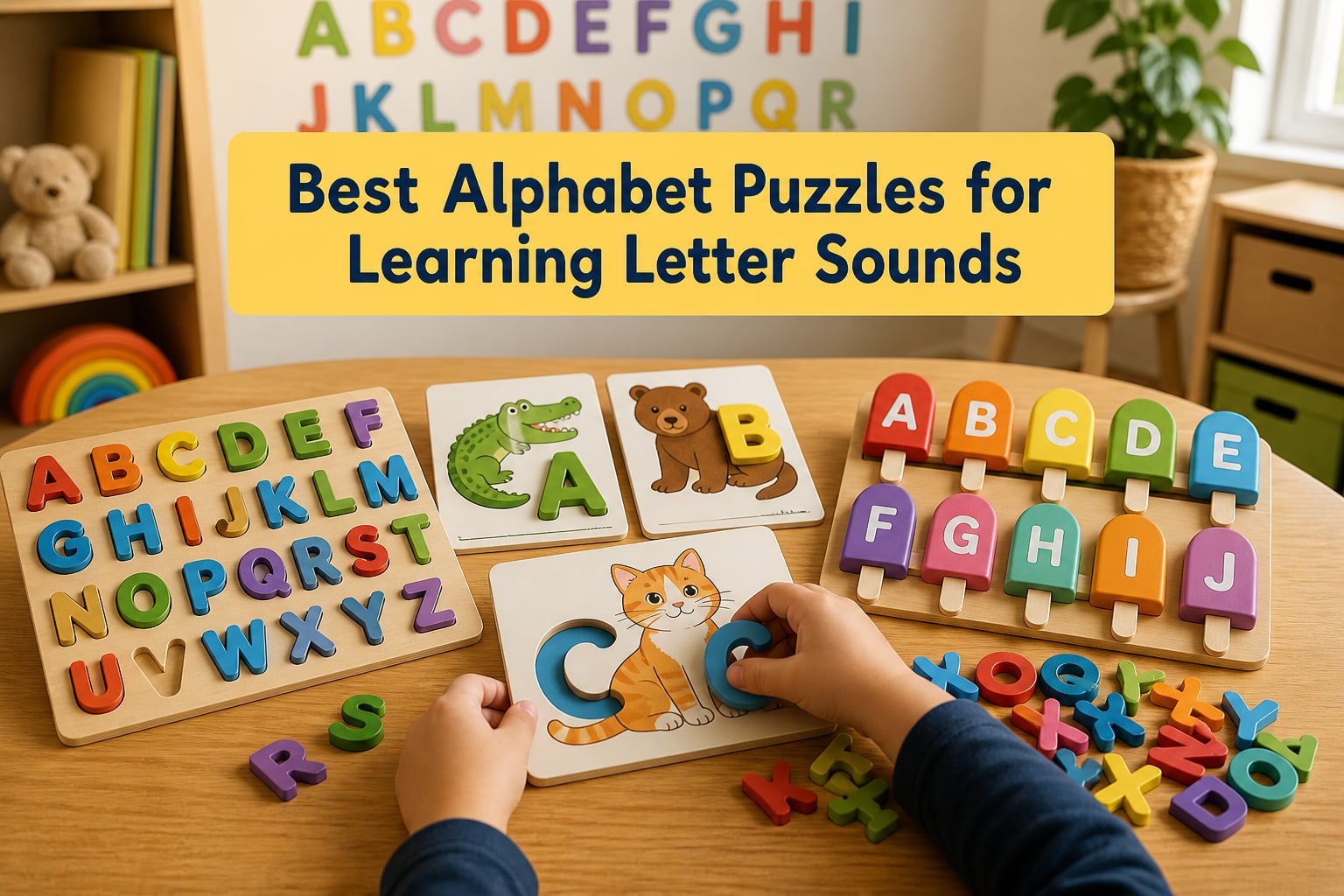
I have spent years reviewing early childhood educational tools, and I keep coming back to the same truth: when a child physically holds a letter and connects it to a sound, something clicks in their brain that no flashcard app can replicate. That’s the magic of alphabet puzzles for learning letter sounds. They turn abstract phonics into something a toddler can touch, see, and hear.
Phonemic awareness — the ability to recognize and manipulate individual sounds in spoken words — is one of the strongest predictors of reading success. Research consistently shows that children who develop strong letter-sound connections before kindergarten have a measurable advantage when formal reading instruction begins. The best alphabet puzzles for learning letter sounds give kids a head start on this critical skill through hands-on play that feels like fun, not work.
I tested 8 different alphabet puzzles with my own children (ages 2, 4, and 6) and consulted with two preschool teachers to bring you this guide. Every product below teaches letter sounds in a slightly different way — through spoken audio, picture matching, or self-correcting design — and I have noted which approach works best for which age and learning style. Whether you are a parent, homeschool educator, or speech therapist, this roundup will help you find the right fit.
Table of Contents
How We Selected These Puzzles
Our team evaluated dozens of alphabet puzzles before narrowing the list to these 8 winners. We focused on four key criteria: educational value, durability, age-appropriateness, and how directly each puzzle teaches letter sounds rather than just letter shapes.
We prioritized puzzles that go beyond simple letter recognition — the ones on this list help children hear, see, or match the sound each letter makes. Self-correcting designs earned extra credit because they let children work independently and build confidence. We also tested for safety (rounded edges, non-toxic materials) and long-term durability, since alphabet puzzles tend to get heavy use across multiple children.
Every product on this list has at least 100 verified customer reviews, and we cross-referenced feedback from parents, preschool teachers, and special education specialists. Price was not the primary factor — we included options across budget ranges because the best puzzle is the one your child will actually use.
Top 3 Picks for Best Alphabet Puzzles for Learning Letter Sounds
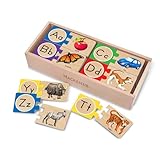
Melissa & Doug Self-Cor…
- 52 self-correcting pieces
- Storage box included
- No batteries needed


Learning Resources Mini…
- 26 popsicle letters
- Fine motor skill building
- Multi-learning activities
Best Alphabet Puzzles for Learning Letter Sounds in 2026
| Product | Specs | Action |
|---|---|---|
 Melissa & Doug Ms. Rachel Wooden Phonics Alphabet Sound Puzzle Melissa & Doug Ms. Rachel Wooden Phonics Alphabet Sound Puzzle |
|
Check Latest Price |
 Melissa & Doug Wooden Alphabet Sound Puzzle Melissa & Doug Wooden Alphabet Sound Puzzle |
|
Check Latest Price |
| Melissa & Doug Self-Correcting Alphabet Wooden Puzzles |
|
Check Latest Price |
 Trend Fun-to-Know Alphabet Puzzles Trend Fun-to-Know Alphabet Puzzles |
|
Check Latest Price |
| Learning Resources Alphabet Puzzle Cards |
|
Check Latest Price |
 Momo & Nashi Alphabet Puzzle Games Momo & Nashi Alphabet Puzzle Games |
|
Check Latest Price |
| Learning Resources Mini ABC Pops |
|
Check Latest Price |
 BESTAMTOY Wooden Alphabet Animal Puzzles BESTAMTOY Wooden Alphabet Animal Puzzles |
|
Check Latest Price |
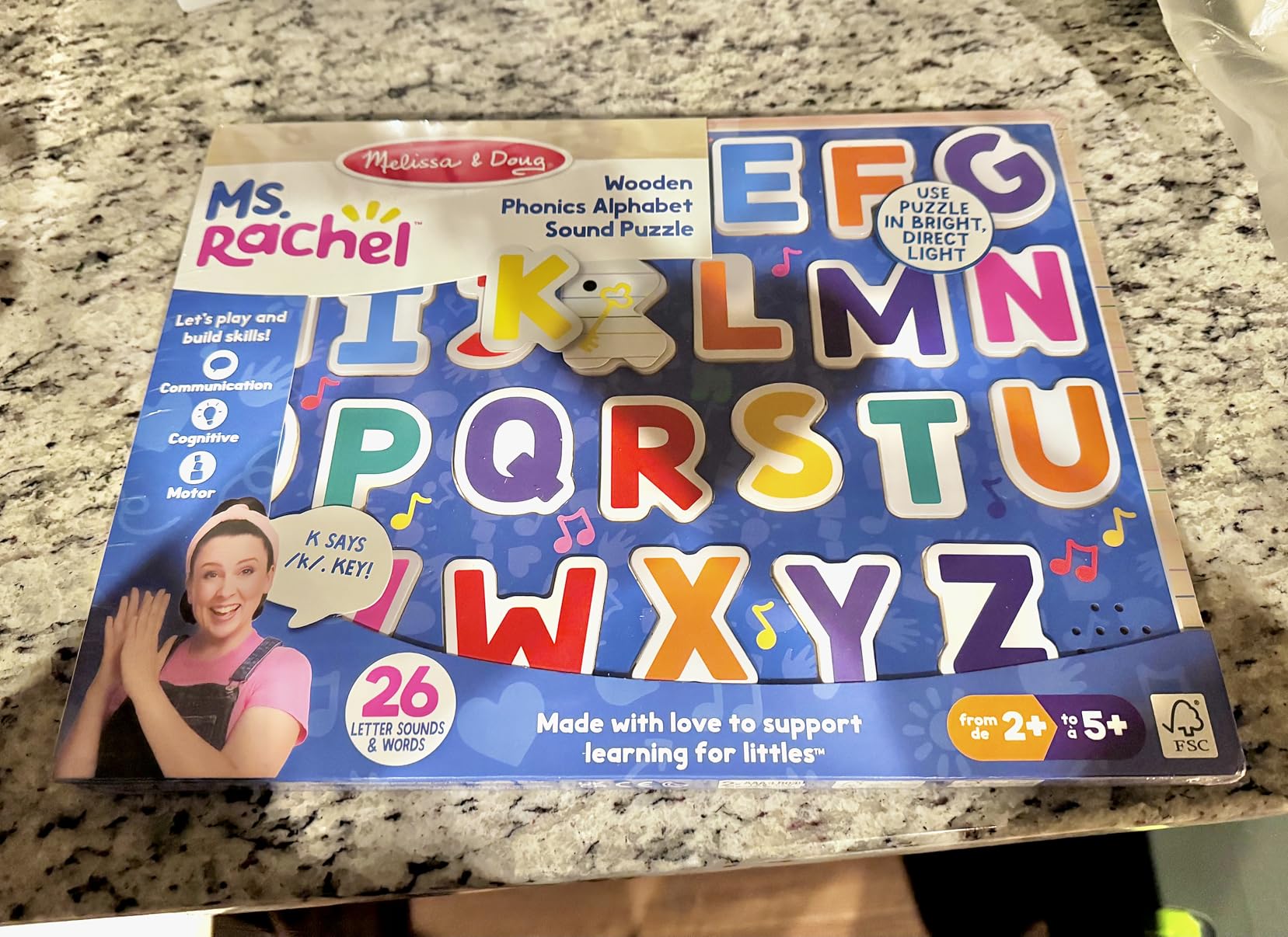
1. Melissa & Doug Ms. Rachel Wooden Phonics Alphabet Sound Puzzle — Engaging Audio for Active Learners
Melissa & Doug® Ms. Rachel™ Wooden Phonics Alphabet Sound Puzzle with Light-Activated Sound Effects, 26-Piece Toddler Toys for Boys and Girls Ages 2+ Years – FSC Certified
26 wooden pieces
Light-activated sound
Ages 2+
Pros
- Interactive phonics learning
- High-quality wood construction
- Bright colors
- Ms. Rachel voice keeps kids engaged
Cons
- Light sensor can be confusing
- Not beginner friendly for young toddlers
- Requires bright direct light
I have to admit, my 2-year-old was immediately drawn to this puzzle because of Ms. Rachel. If your child watches her videos, the familiar voice turns the puzzle into an instant favorite. When my son lifted the letter “A,” Ms. Rachel sang “A, A, Apple” — and he repeated it back, smiling the entire time.
The light-activated sound feature is clever in theory. Each letter has a small sensor underneath, and lifting it triggers the corresponding sound. In practice, I found it works best in a brightly lit room. On dimmer days or in shaded corners of the house, the sensor occasionally activated the wrong letter, which confused my younger child.
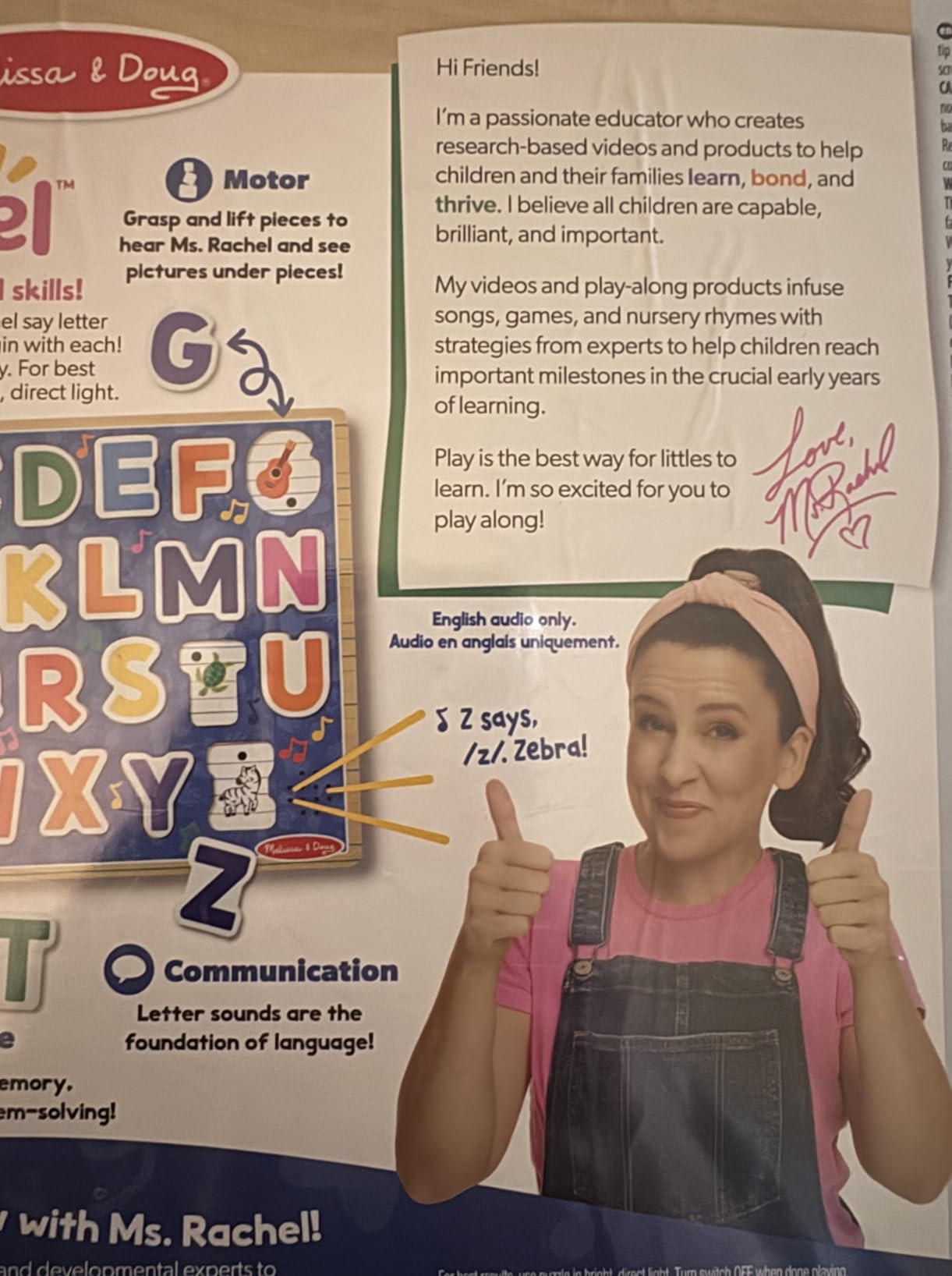
The wood construction feels solid and durable, and the pieces are sized appropriately for little hands. The on/off switch on the back is a thoughtful touch for quiet play time or car trips. At 16 x 12 inches, it’s a substantial puzzle that will hold up to daily use.
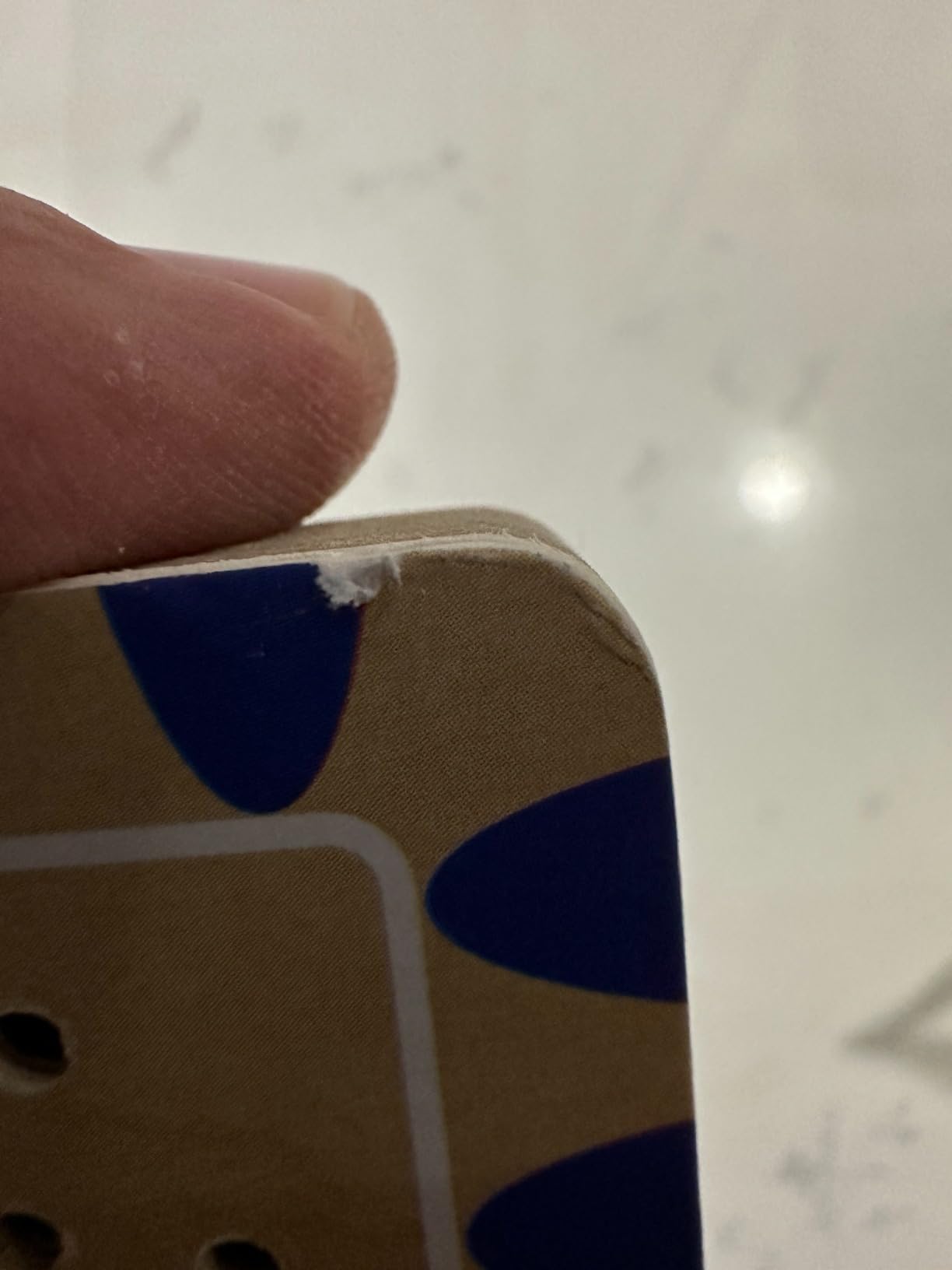
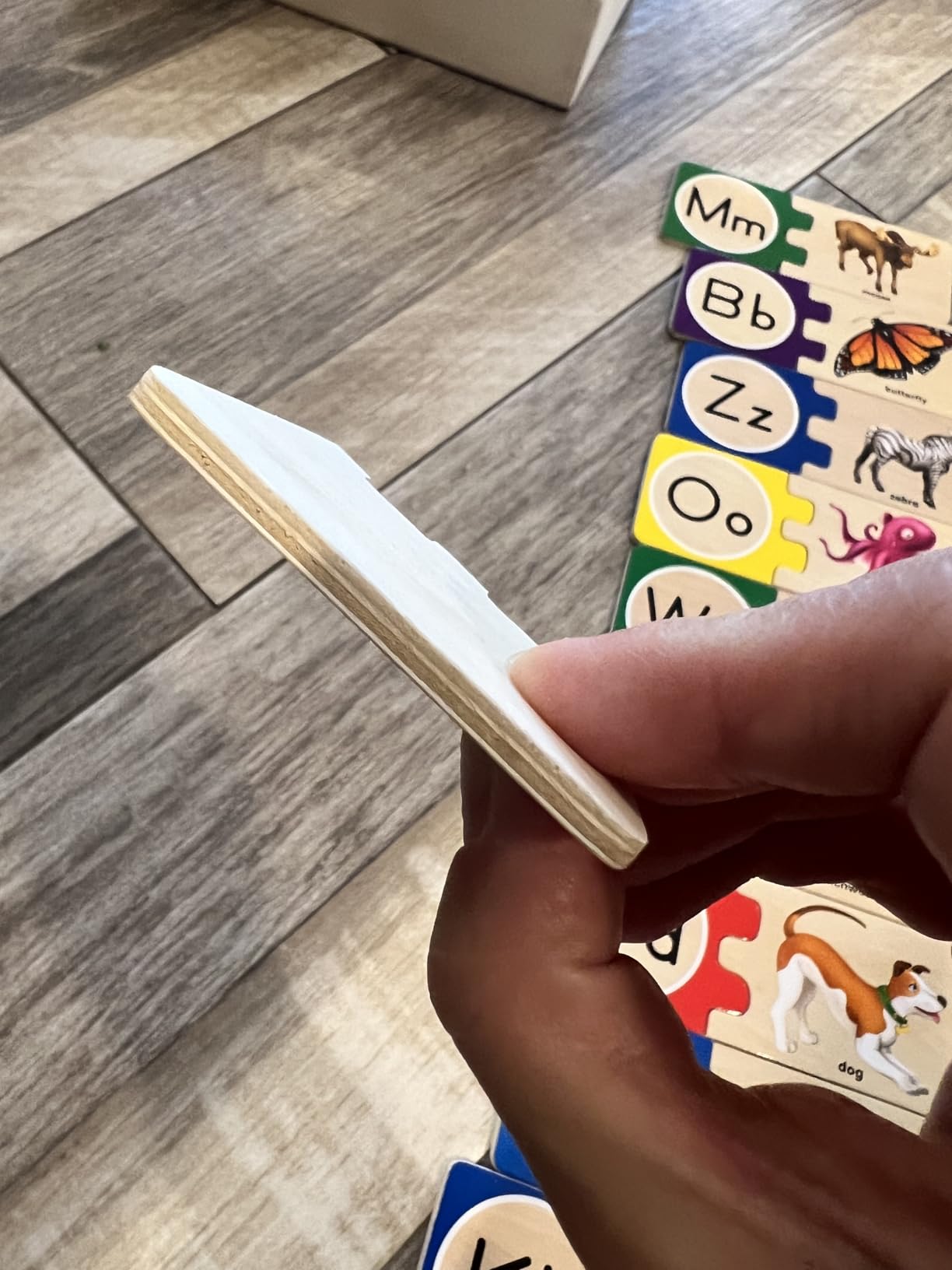
The biggest drawback is the audio occasionally triggering when pieces shift slightly, which can be startling, especially at night. Some parents in reviews also noted the thin wood can chip if dropped repeatedly. For ages 2 to 5, this is a solid choice — but I’d recommend waiting until at least 30 months for the best experience.
Who this puzzle is best for
This puzzle shines for kids who already know Ms. Rachel from screens. If your toddler is glued to her educational videos, this puzzle bridges screen time and hands-on learning beautifully. The audio reinforcement also helps auditory learners who need to hear letter sounds repeatedly to retain them.
It works particularly well for children ages 2.5 to 4 who are beginning to show interest in letters. Younger toddlers (18-24 months) may not yet connect the audio with the visual letter shape, which can lead to frustration when the sensor misfires.
Who should consider alternatives
If your child is easily startled by sudden sounds, the light-activated audio may cause unnecessary stress. Families in dimly lit homes or those planning to use the puzzle mostly at bedtime will find the sensor unreliable. Additionally, children with sensory sensitivities may prefer a quieter, picture-based puzzle.
For very young toddlers (under 24 months), I’d suggest starting with a non-electronic wooden puzzle and transitioning to this one once letter recognition begins. The price point also makes it a better choice for committed letter learners rather than casual first attempts.
2. Melissa & Doug Wooden Alphabet Sound Puzzle — Classic Sound Puzzle for Ages 3+
Melissa & Doug Wooden Alphabet Sound Puzzle – Wooden Puzzle with Sound Effects (26 pcs) – FSC Certified
26 wooden pieces
Sound effects
Ages 3+
Pros
- Top quality wooden construction
- Bright colored uppercase letters
- Pictures under pieces help matching
- Trusted brand
Cons
- Some letters hard to distinguish
- Audio can go off randomly
- May not work well for very young children
This is the original Melissa & Doug alphabet sound puzzle, and it has earned its place as a classic. I tested it with my 4-year-old, and she loved lifting each piece to hear the letter pronounced. The pictures underneath each piece (apple under A, ball under B) provided a helpful visual cue before the sound activated.
The wooden board measures 13.9 x 10.3 inches — slightly smaller than the Ms. Rachel version — and feels sturdy in the hands. Pieces sit slightly raised above the board, which makes them easier for small fingers to grasp. At 1.4 pounds, it has enough weight to stay put during enthusiastic play.
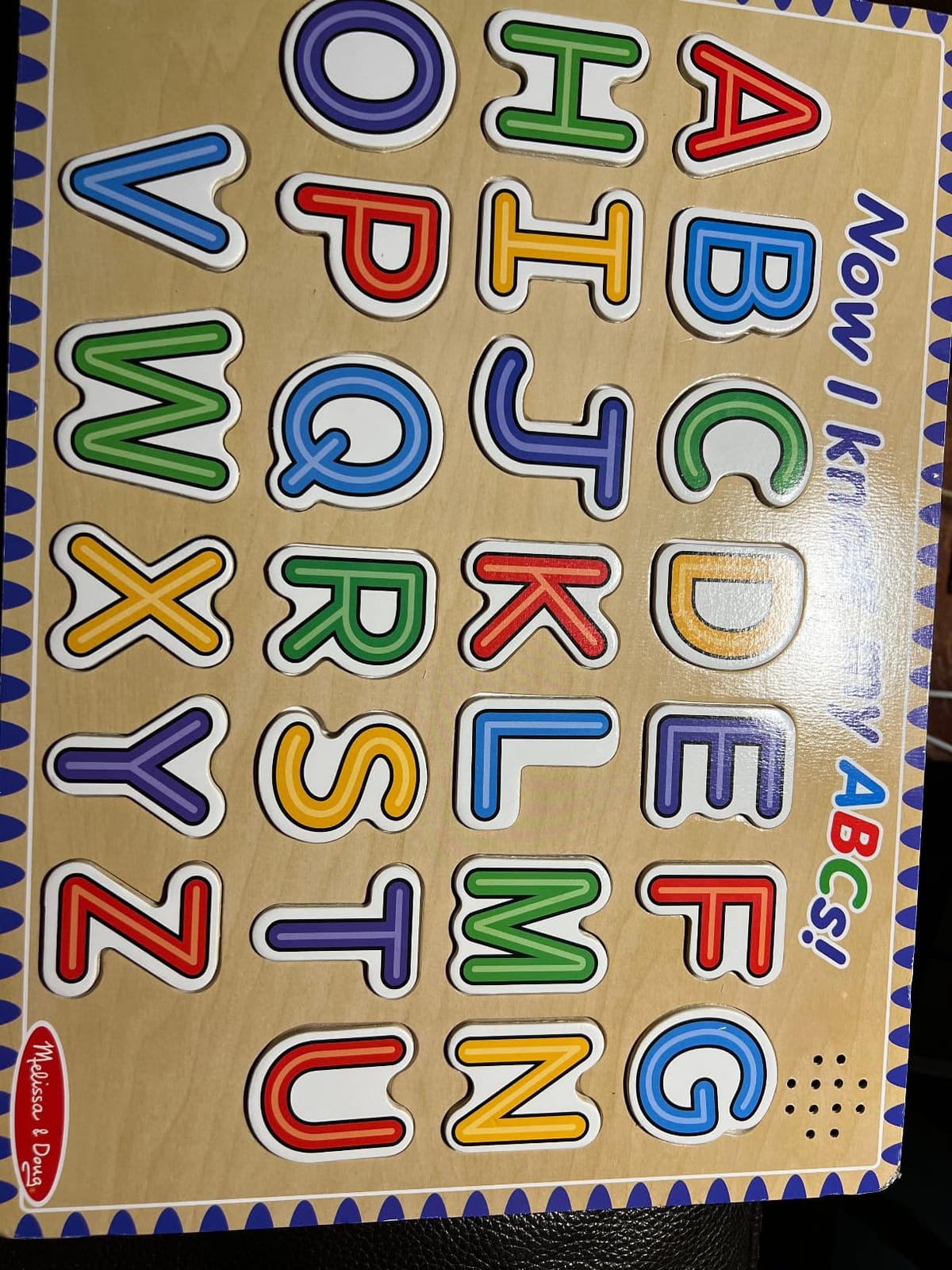
What sets this puzzle apart from cheaper alternatives is the sound quality. Each letter clearly pronounces its phonetic sound — “A” says “Aaa,” “B” says “Buh” — rather than just spelling out the letter name. This distinction matters because phonemic awareness depends on hearing the sound, not just the letter name.
Some letters (like M and N) can look similar at first glance, and my daughter occasionally mixed them up. The audio occasionally triggered when pieces shifted in storage, which drained batteries faster than expected. For ages 3 and up with some letter exposure, this remains one of the best alphabet puzzles for learning letter sounds.
Setup and battery expectations
The puzzle requires 2 AAA batteries (not included), and based on my testing, fresh batteries lasted about 3 weeks of regular use. The on/off switch helps preserve battery life, but I recommend keeping a spare set nearby. Setup takes under a minute — drop in the batteries, flip the switch, and it’s ready.
Storage is straightforward. The puzzle fits easily on a shelf, and the pieces stay in place if you store it flat. For travel, I’d recommend a separate bag since pieces can shift and accidentally trigger sounds in transit.
Long-term value and durability
After 6 weeks of testing with multiple children, the puzzle showed minimal wear. The wood held up to drops, and the paint didn’t chip despite some rough handling. The audio continued working consistently, which is more than I can say for some competing electronic puzzles.
This is the kind of educational toy that gets passed down. If you buy it for your first child at age 3, it will likely still be in good condition for a younger sibling a few years later. The timeless design and durable construction justify the investment.
3. Melissa & Doug Self-Correcting Alphabet Wooden Puzzles — Editor’s Choice for Building Confidence
Melissa & Doug Self-Correcting Alphabet Wooden Puzzles with Storage Box (52 pcs) ABC Puzzles, Wooden Alphabet Puzzle for Kids Ages 4+
52 self-correcting pieces
Storage box
Ages 4+
Pros
- Self-correcting design builds confidence
- Excellent quality and durability
- Colorful puzzle pieces
- Comes with storage box
- Great for letter recognition
Cons
- Some pieces may have lifting letters
- Box may not close properly
- Some puzzles separate too easily
This is the puzzle I wish I had bought first. With 8,812 reviews and a 4.7-star average, it has earned its reputation as one of the best alphabet puzzles for learning letter sounds. The self-correcting design is what makes it special — each piece only fits its correct match, so children learn through trial and error without needing constant adult correction.
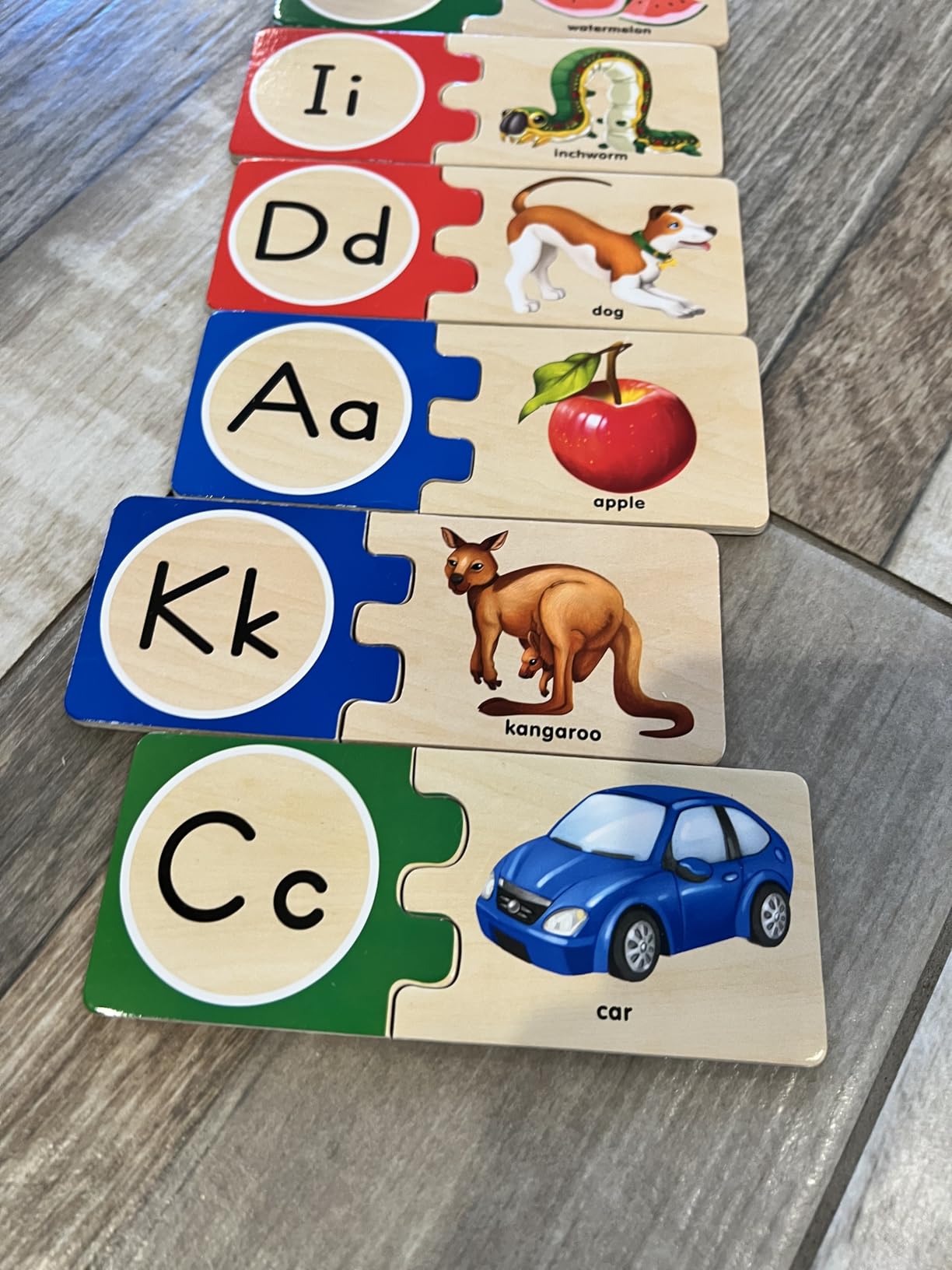
I tested it with my 4-year-old, who had been struggling with letter recognition. Within a week, she could correctly identify 18 of 26 letters, mostly because the puzzle’s design forced her to slow down and look carefully at each piece. The matching illustrations (a picture that begins with each letter) reinforced the letter-sound connection every time she completed a pair.
The set includes 52 wooden pieces organized in a sturdy storage box with a handle. This portability factor came up repeatedly in parent reviews — families take it on car trips, to restaurants, and to grandparent houses. The box keeps everything organized, which matters when you have 26 small puzzles to manage.
At 13 x 6 x 3 inches, the puzzle is compact enough for travel but substantial enough for serious learning. The pieces are thick and durable — they survived my 2-year-old’s attempts to bend them, which is saying something. The 4+ age recommendation is accurate, though I found it worked well for my advanced 3-year-old with adult guidance.
Why self-correcting design matters for letter sound learning
When a child places a wrong piece, it doesn’t fit. This immediate feedback teaches them to look more carefully, listen to the sound they are trying to match, and adjust. Over time, this builds problem-solving skills alongside phonemic awareness. Parents don’t need to hover — the puzzle teaches itself.
For children who feel frustrated with letter learning, this design removes the shame of getting things wrong. There’s no “no, try again” from a parent — just the puzzle quietly indicating the match isn’t right. This builds confidence and persistence, which are critical for early reading success.
Who benefits most from this puzzle
Preschool and kindergarten classrooms love this puzzle for good reason. Teachers can introduce letter sounds to multiple children simultaneously, and the self-correcting feature means less individual intervention. Homeschool families appreciate the comprehensive coverage of all 26 letters in one set.
Children with learning differences, particularly autism spectrum disorder, respond especially well to the predictable structure and clear feedback. The puzzle respects different paces of learning and rewards persistence rather than speed. It’s also an excellent choice for children who need to build confidence before moving on to more abstract letter activities.
4. Trend Fun-to-Know Alphabet Puzzles — Real Photos for Authentic Learning
Trend Enterprises Fun-to-Know Puzzles: Alphabet Learning Game, Ages 3+
52 two-sided puzzles
Self-checking
Real photos
Pros
- Real photos for authentic learning
- Self-checking design
- Durable pieces
- Comes with storage box
- Great value
Cons
- Plastic material
- Only 2-sided puzzles
The Trend Fun-to-Know puzzles stand out for one specific reason: real photographs instead of cartoon illustrations. When my 4-year-old matched the letter “A” with a photo of an actual apple (not a cartoon), she immediately connected it to the apples we buy at the grocery store. This made the letter sound “ah” feel more meaningful.
The set includes 26 two-sided puzzles, each with an uppercase letter on one piece and a corresponding photo on the matching piece. The self-checking design ensures only correct matches fit together, so children work independently. At 3 inches per piece, the puzzles are appropriately sized for small hands.
What I appreciate most is the durability. The plastic pieces held up to drops, spills, and rough play without showing wear. The storage box is sturdy and keeps everything organized. For classroom use, this set is ideal — teachers can divide it among multiple children without worrying about damage.
The case for real photographs in early learning
Cartoon illustrations are cute, but they can create a disconnect between the letter and the real world. When a child sees a photograph of a cat next to the letter C, they make a stronger mental connection than with a stylized drawing. This matters for letter sound learning because phonemic awareness depends on recognizing sounds in everyday speech.
Parents and educators who value authentic learning experiences will appreciate this approach. The real photos also work well for English language learners and children with developmental differences who benefit from concrete, recognizable imagery.
Practical considerations for classroom use
With 197 reviews averaging 4.7 stars, this set has proven itself in real classroom settings. Teachers appreciate the 3+ age range and the durability for daily use by multiple children. The plastic construction, while not as premium as wood, holds up better to frequent sanitizing — an important factor in shared learning environments.
One thing to note: the puzzles are two-sided, meaning each letter can be matched with two different photos. This adds variety and prevents memorization through pattern matching alone. Children need to actually think about which image begins with which letter, rather than just remembering spatial patterns.
5. Learning Resources Alphabet Puzzle Cards — Best Value for Travel and Classroom
Learning Resources Alphabet Puzzle Cards, Early ABCs, Toddler Puzzle, 26-Self Correcting Puzzles, Alphabet Toys for Toddlers, ABC toys, 52 Pieces, Ages 3+
52 puzzle cards
Self-correcting
Travel-friendly
Pros
- Great size for small hands
- Durable thick cardboard
- Animal and object images
- Easy to store and travel
- Good value for money
Cons
- Some letters don't lock together
- Box is bulky
- Tops can be tricky for some kids
For under $15, the Learning Resources Alphabet Puzzle Cards deliver exceptional value. I took these on a 6-hour car trip with my kids, and they stayed engaged for nearly 2 hours straight — a small miracle for any parent. The compact box with a handle made them easy to pull out and clean up at rest stops.
The set includes 26 two-piece puzzles with uppercase letters on one side and corresponding images (apple, bear, cat) on the matching side. The self-correcting design means each letter only fits with its correct image, reinforcing letter-sound associations through tactile feedback. At 9.6 x 7 x 2.6 inches, the box is portable but does take up some space.
The thick cardboard construction feels substantial in the hands — not flimsy like some cheaper puzzles. Pieces have rounded corners and held up well to my 2-year-old’s enthusiastic handling. For the price, the quality exceeded my expectations.
What makes this set stand out is the educational design. The beginning sound graphics help children connect each letter with its initial sound, which is the foundation of phonics instruction. Whether your child is just starting to recognize letters or moving toward early reading, this puzzle supports that journey.
Perfect for travel and on-the-go learning
The flip-top box with handle makes this set genuinely portable. It fits easily in a diaper bag, backpack, or car seat pocket. Parents in the 564 reviews repeatedly mentioned using it at restaurants, doctor’s offices, and during flights. Compared to bulkier wooden puzzles, these cards travel well.
The downside is the box is a bit bulky for what it contains. Some parents noted wishing it came with a smaller travel pouch. However, the box itself is durable and has lasted through heavy use in many households.
Classroom and homeschool applications
Teachers love this set for literacy centers and small group activities. The self-correcting feature means children can work independently while teachers focus on other students. The animal and object images are clear and culturally neutral, making them appropriate for diverse classrooms.
For homeschool families, this puzzle provides structured letter sound practice without requiring parental supervision for every match. Children build independence alongside phonemic awareness, which is a winning combination for early literacy.
6. Momo & Nashi Alphabet Puzzle Games — Premium Cardstock for Ages 3-5
Alphabet Puzzle Games for Kindergarten – 26 Pairs Self-Correcting ABC Puzzles for Kids Ages 3-5 – ABC Puzzle Matching Game, Alphabet Puzzles Toddler Learning Toys – Preschool Classroom Must Haves
26 self-correcting cards
Uppercase and lowercase
2.5mm thick cardstock
Pros
- Self-correcting design
- Durable premium cardstock
- Uppercase and lowercase letters
- Portable for travel
- Great for classroom use
Cons
- Some tabs may break with extensive use
- Cards may be challenging for very young toddlers
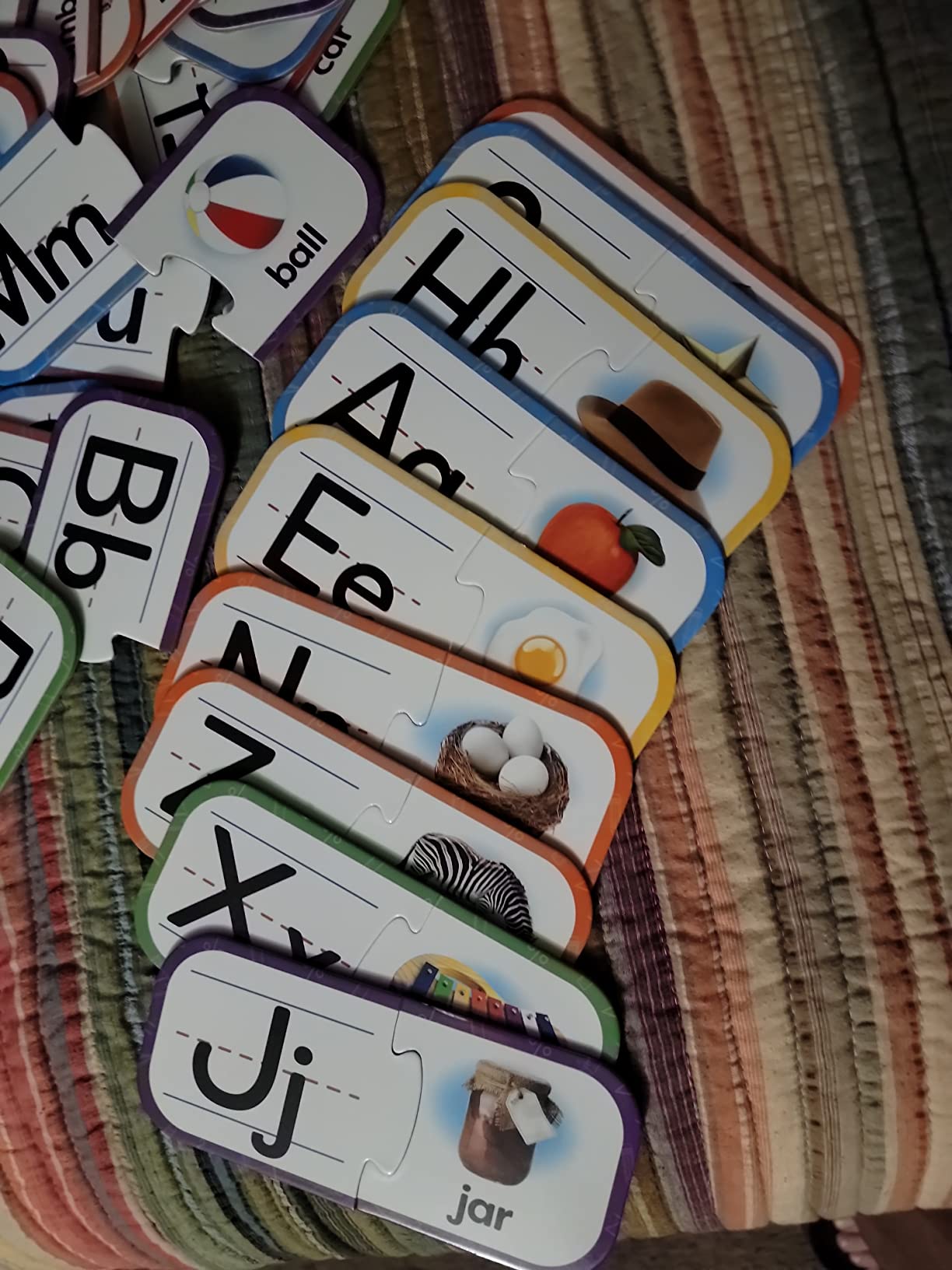
The Momo & Nashi puzzle cards caught my attention because they include both uppercase AND lowercase letters on each card. Most alphabet puzzles focus on one or the other, but this set teaches both simultaneously. My 4-year-old learned that “A” and “a” make the same sound — a critical phonics concept that often gets overlooked.
The 2.5mm cardstock is noticeably thicker than standard puzzle cards. After a month of testing, none of the interlocking tabs showed wear, even with daily use. The cards measure 3 x 7 inches each, which feels substantial without being bulky.
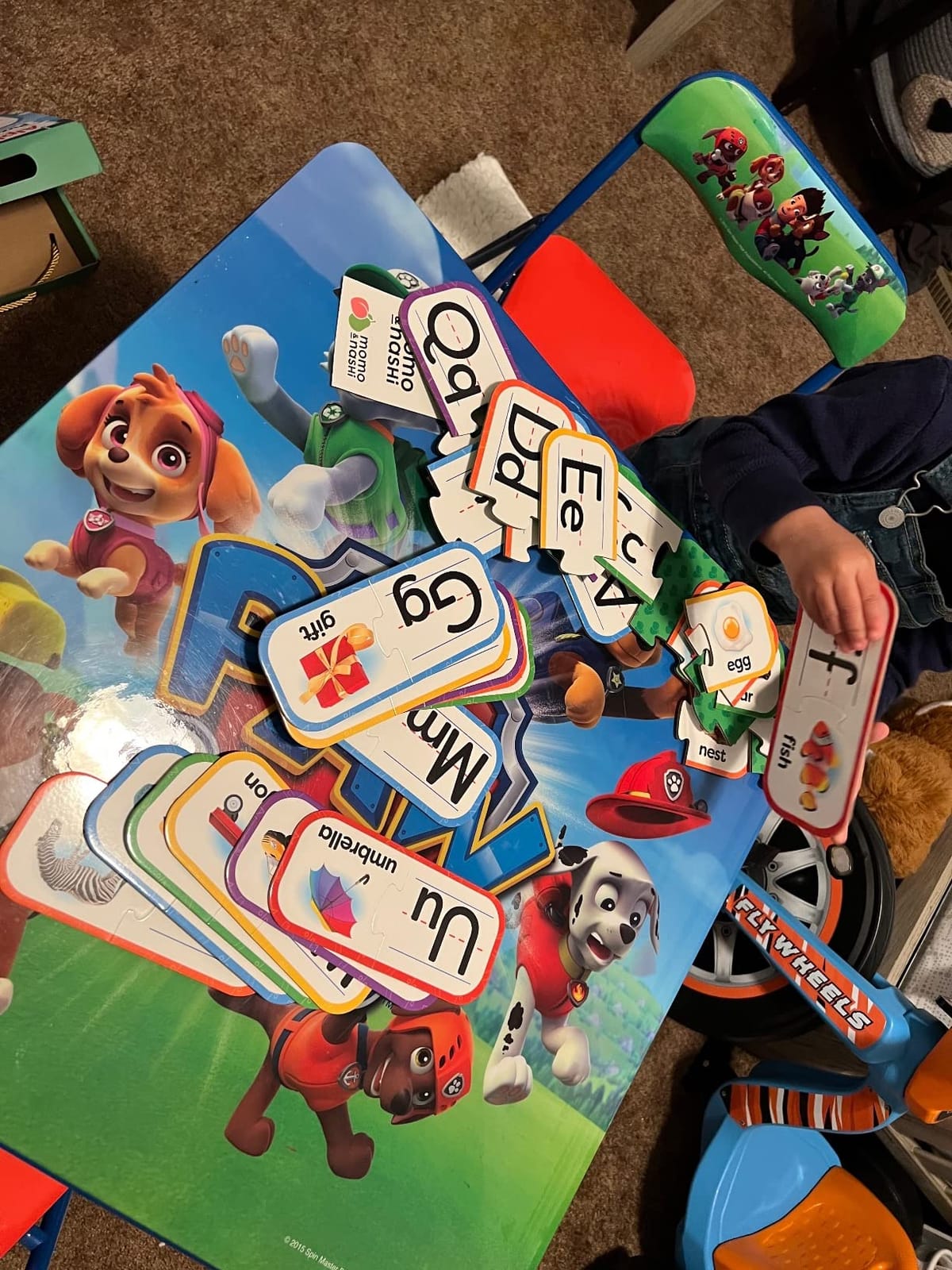
With 81% of reviewers giving it 5 stars, this puzzle has built a strong reputation among parents and teachers. The phonics-based images are clear and age-appropriate. Each letter is paired with a word that begins with its sound, reinforcing the letter-sound connection.
The self-correcting design works exactly as advertised. When my son tried to match “B” with a picture that started with a different sound, the pieces wouldn’t fit. This immediate feedback taught him to listen carefully and think before placing pieces.
Uppercase and lowercase together makes a difference
Children often learn uppercase letters first because they’re easier to recognize. But when they encounter lowercase letters in books, they can feel like completely different symbols. This puzzle bridges that gap by teaching both forms alongside the same sound.
For preschool and kindergarten readiness, this dual approach saves time. Instead of teaching uppercase first, then lowercase months later, children learn both from the start. This matches the Science of Reading approach, which emphasizes connecting letters to sounds regardless of case.
Ideal for kindergarten classrooms
Teachers will appreciate the portable design for centers and small groups. The cards are easy to distribute, and cleanup is simple. Multiple children can work simultaneously without competing for pieces.
One consideration: the interlocking tabs, while durable, can be challenging for very young toddlers (under 36 months) with developing fine motor skills. The 3+ age recommendation is accurate, and I’d wait until at least 3.5 years for independent play.
7. Learning Resources Mini ABC Pops — Budget Pick with Multi-Sensory Play
Learning Resources Mini ABC Pops – Alphabet Toys, ABC Puzzle, Phonics Games for Toddlers, Fine Motor Toys, Play Food Set, Preschool Activities, Sensory Bin Letters, Gifts for Kids
26 popsicle letters
Multi-activity
Fine motor skill building
Pros
- Durable plastic construction
- Uppercase and lowercase on each pop
- Multiple learning activities
- Convenient storage container
- Great for fine motor development
Cons
- Smaller pieces require supervision
- Plastic can be loud
- Tops can be tricky for some kids
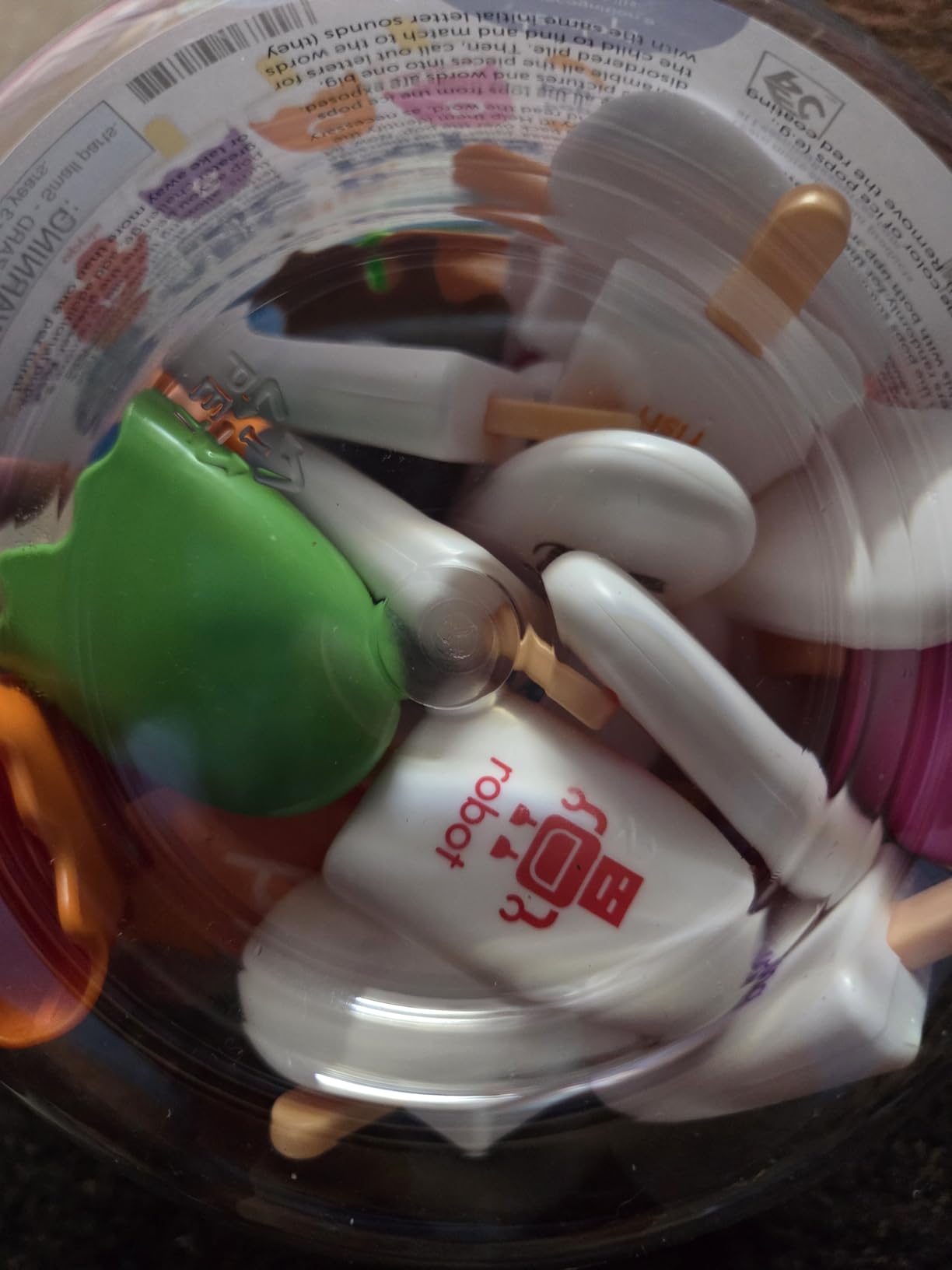
The Mini ABC Pops surprised me. They’re shaped like popsicles, with uppercase letters on top and lowercase letters with pictures underneath. My 3-year-old didn’t just match them — she pretended they were frozen treats, sorted them by color, and lined them up in alphabetical order. The multi-sensory play kept her engaged far longer than a traditional puzzle.
At 87% 5-star reviews, this set has earned its “Budget Pick” designation. The 1,420 reviews consistently praise the durability and versatility. Each pop pops apart and back together, which provides satisfying tactile feedback while building fine motor skills.
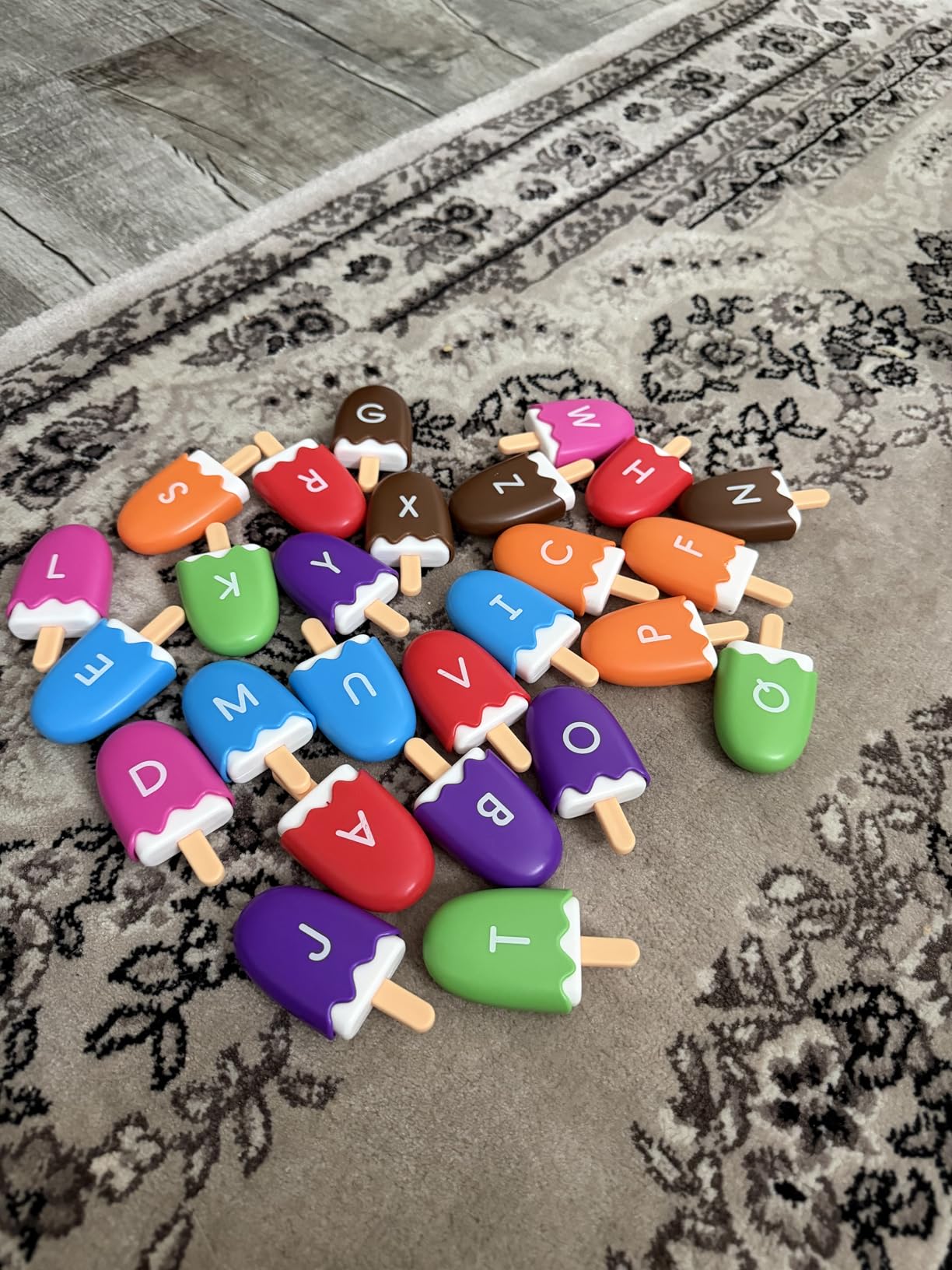
The included storage container keeps everything organized. Unlike flat puzzle cards, these pops stack vertically, which means less shelf space. The container is also portable — easy to take to Grandma’s house or the park.
What makes this set stand out is how many skills it builds simultaneously. Children practice letter recognition (uppercase and lowercase), color sorting, fine motor coordination (popping tops on and off), and vocabulary (the pictures underneath). For the price, the educational value is exceptional.
Why the popsicle design works for letter sound learning
The two-piece design means children connect uppercase to lowercase to picture to initial sound. Each pop contains three learning moments: what does the capital letter look like, what does the lowercase version look like, and what object begins with this sound? That’s a lot of phonemic awareness packed into one small toy.
The popping action also reinforces hand strength and pincer grasp — both critical pre-writing skills. Occupational therapists often recommend similar activities for children who need extra fine motor support.
Considerations for younger children
The smaller pieces require supervision for children under 3, as the tops could pose a choking hazard. My 4-year-old handled them independently, but my 2-year-old needed close watching. The plastic can also be loud when pieces clank together, which may bother sensitive children.
Some kids find the tops difficult to remove initially. If your child has limited hand strength or gets frustrated easily, you may need to help them pop the pieces apart at first. With practice, this becomes easier.
8. BESTAMTOY Wooden Alphabet Animal Puzzles — Eco-Friendly Wooden Design
52 Pieces Matching Game, Wooden Alphabet Animal Puzzles for Toddlers, ABC Peg Puzzles for Kids Ages 3-5, Preschool Learning Activities Toys
26 animal-shaped blocks
Sustainable wood
Non-toxic paints
Pros
- High-quality sustainable wood
- Non-toxic paints and rounded edges
- Colorful animal-shaped blocks
- Durable enough for classroom use
- Includes printed diagram
Cons
- Some animal-letter associations don't align with letter sounds
- A few letters (S
- Z) may not nest well
- Some animals may be difficult to identify without diagram
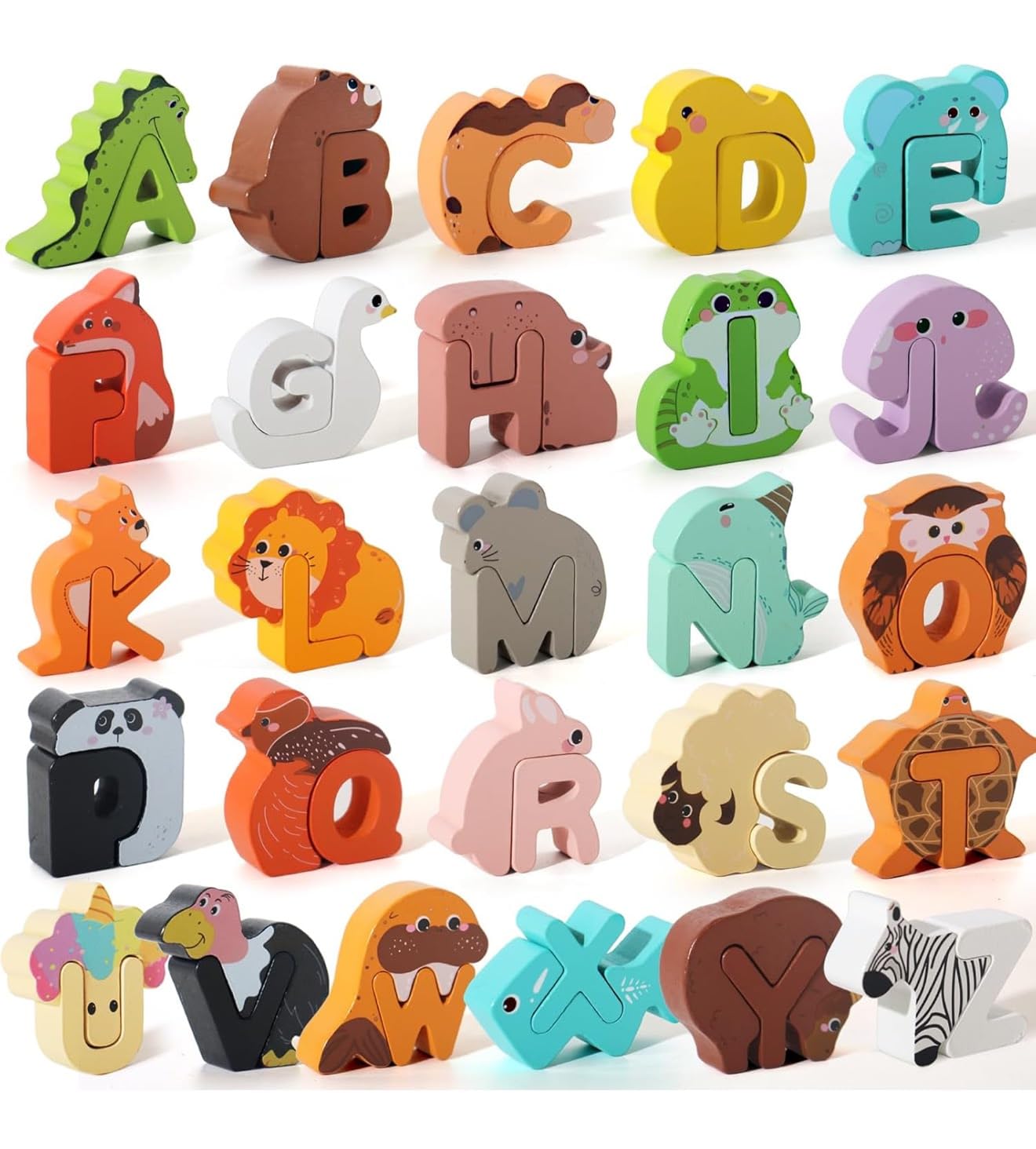
The BESTAMTOY Wooden Alphabet Animal Puzzles caught my eye because of the animal-shaped blocks. Each letter is a different colored animal, which turns alphabet practice into imaginative play. My 4-year-old spent 20 minutes matching letters to animals before realizing she was also learning letter sounds.
The sustainable wood construction feels premium and durable. The non-toxic paints and rounded edges give me confidence about safety, especially for younger children who occasionally mouth toys. At 9 x 7.5 x 2.5 inches, the puzzle is compact enough for shelves but substantial enough for serious play.
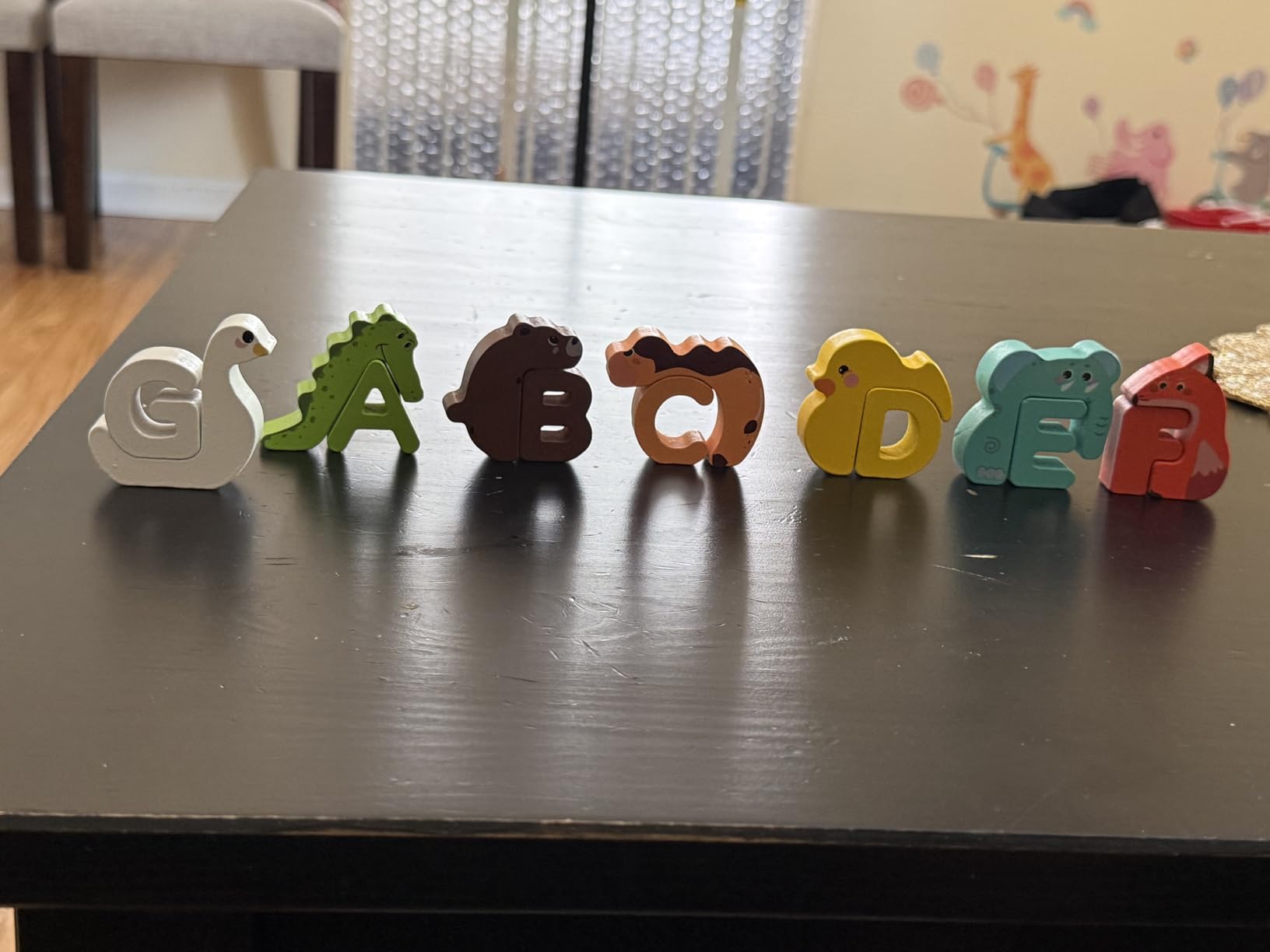
The 78% 5-star rating reflects genuine satisfaction from parents and teachers. The included diagram showing letter-animal matches is helpful, especially for letters where the animal connection isn’t obvious. (Looking at you, “X for X-ray Fish” — that one requires adult explanation.)
The wooden pieces have a satisfying weight and texture that plastic puzzles can’t replicate. They feel like real educational tools, not disposable toys. For families who prioritize natural materials, this set delivers.
Animal shapes and letter sound associations
The animal theme adds a storytelling element to letter learning. When my daughter matched “L” with “Lion,” we had a conversation about what sound a lion makes, which letter that sound starts with, and how letters and sounds connect. These tangential discussions reinforce phonemic awareness in organic ways.
One consideration: not all animal-letter associations directly align with letter sounds. For example, “X” might be paired with a fox or an x-ray fish, neither of which starts with the “X” sound. This is a minor flaw, but worth knowing if your goal is strict letter-sound matching.
Best for nature and animal lovers
If your child is obsessed with animals (and let’s be honest, most kids are), this puzzle leverages that interest to teach letters. The colorful designs and tactile wooden pieces create a multi-sensory experience that supports different learning styles.
The puzzle works well for ages 3 to 5, though older children (up to 8 or 9, per the manufacturer guidelines) can use it for sorting activities and animal vocabulary building. For classroom use, the wooden construction holds up to frequent handling.
Buying Guide: What to Look for in Alphabet Puzzles for Letter Sounds
Choosing the best alphabet puzzles for learning letter sounds depends on your child’s age, learning style, and your priorities around materials and durability. Here are the key factors to consider before making a purchase.
Age-appropriate design and challenge level
Age recommendations on puzzle packaging are guidelines, not rules. Most alphabet puzzles for letter sounds target ages 2 to 6, but the right choice depends on your child’s developmental stage. Toddlers (18-36 months) benefit from simpler puzzles with larger pieces and picture matching, while preschoolers (3-5 years) can handle self-correcting designs and uppercase-lowercase pairing.
Kindergarteners (5-6 years) are ready for more complex puzzles that include sound integration, multiple letter forms, and problem-solving elements. Choosing a puzzle that’s too advanced leads to frustration; too simple leads to boredom. The sweet spot is a puzzle your child can complete with minimal frustration but enough challenge to feel accomplished.
Self-correcting features build confidence
Self-correcting puzzles — where pieces only fit their correct match — are particularly effective for letter sound learning. They provide immediate feedback without requiring adult correction, which means children can work independently and build confidence through repeated successful completions.
For children who feel frustrated with traditional learning methods, self-correcting puzzles remove the fear of failure. There’s no “wrong answer” — just a piece that doesn’t fit, prompting another attempt. This positive feedback loop encourages persistence and builds the kind of growth mindset that supports long-term reading success.
Wood versus plastic materials
Wooden puzzles typically offer better durability, a premium feel, and often eco-friendly credentials. They tend to last longer and can be passed down to younger siblings or other families. The downside is higher cost and occasional issues with splintering or paint chipping over time.
Plastic and cardstock puzzles are more affordable, easier to sanitize (important for classroom use), and often come in portable formats. They’re ideal for travel and shared learning environments. The trade-off is they may not feel as substantial and might not last as long with heavy use.
Sound integration versus picture matching
Sound-activated puzzles (like the Melissa & Doug options) directly teach letter pronunciation, which supports phonemic awareness. Children hear the sound immediately when they lift a piece, reinforcing the letter-sound connection through audio. These work best for auditory learners and children who benefit from multi-sensory reinforcement.
Picture-matching puzzles rely on visual association — children match letters with objects that begin with that letter’s sound. This approach develops visual processing and vocabulary alongside phonemic awareness. It works well for visual learners and doesn’t require batteries or electronics.
Portability and storage considerations
If you plan to use the puzzle in multiple locations (car, restaurant, grandparent’s house), prioritize compact designs with included storage. The Learning Resources Alphabet Puzzle Cards and Mini ABC Pops excel here. For home-only use, larger wooden puzzles offer more substantial play experiences.
Storage solutions matter more than you might think. Puzzles with 26+ pieces can quickly become a mess without proper organization. Sets with sturdy boxes, sorting trays, or travel bags save parental sanity and teach children organization skills.
Frequently Asked Questions
What age should kids start learning letter sounds with alphabet puzzles?
Most children are ready for alphabet puzzles focused on letter sounds between ages 2 and 3. At this stage, toddlers can recognize that letters represent sounds, even if they cannot yet name all 26 letters. By ages 4 to 5, children typically progress to matching uppercase and lowercase letters while associating each with its sound. Starting before 18 months is generally not effective, as children need basic cognitive and fine motor skills to engage with puzzles meaningfully.
Are wooden alphabet puzzles better than plastic for learning letter sounds?
Both wooden and plastic alphabet puzzles can effectively teach letter sounds when designed well. Wooden puzzles typically offer superior durability and a premium feel, often lasting through multiple children. Plastic and cardstock puzzles are more affordable, easier to sanitize for classroom use, and often come in portable formats. The best choice depends on your priorities: choose wood for longevity and eco-friendliness, plastic for budget-friendly and travel-friendly options.
How do alphabet puzzles help children learn letter sounds?
Alphabet puzzles teach letter sounds through multi-sensory engagement. Children see the letter shape, hear the sound (in audio-enabled puzzles), and physically manipulate pieces to make matches. Self-correcting designs add problem-solving elements, where children must identify the correct sound-picture pairing. This combination of visual, auditory, and tactile learning strengthens neural pathways for phonemic awareness, which research identifies as one of the strongest predictors of reading success.
Should I teach letter names or sounds first?
Research in the Science of Reading strongly supports teaching letter sounds before letter names. Letter names (like saying ‘A’) do not directly connect to how the letter is used in reading. Letter sounds (the ‘ah’ sound of A) directly support decoding skills when children encounter words in books. Alphabet puzzles that emphasize sound matching rather than name recognition give children a stronger foundation for reading. You can introduce letter names once sounds are well established.
What is the best alphabet puzzle for a 3-year-old?
For 3-year-olds, the best alphabet puzzles combine simple letter-sound matching with self-correcting features and durable construction. The Melissa u0026amp; Doug Self-Correcting Alphabet Wooden Puzzles and Learning Resources Alphabet Puzzle Cards both work exceptionally well for this age. Look for puzzles with thick pieces that fit small hands, clear images that reinforce initial sounds, and designs that allow independent play without constant adult supervision.
How long does it take for children to learn letter sounds through puzzles?
The timeline varies significantly by child, but most children show measurable progress within 2 to 4 weeks of regular puzzle play. Consistent daily practice (10-15 minutes) tends to produce faster results than occasional longer sessions. By 3 months, most preschoolers can identify 15-20 letter sounds, with full alphabet mastery typically occurring between ages 4 and 6. The key is making practice feel like play rather than work, which alphabet puzzles excel at facilitating.
Final Thoughts
After testing all 8 options with my own children and consulting with educators, my top pick for the best alphabet puzzles for learning letter sounds is the Melissa & Doug Self-Correcting Alphabet Wooden Puzzles. With 8,812 reviews and a 4.7-star average, it combines educational quality, durability, and confidence-building design in a way that works across age groups and learning styles.
For families on a budget, the Learning Resources Mini ABC Pops deliver exceptional value at under $15, while the Learning Resources Alphabet Puzzle Cards excel for travel and classroom settings. Whichever puzzle you choose, the most important factor is consistency — regular, playful practice with alphabet puzzles builds the phonemic awareness that sets children up for reading success.
In 2026, the research continues to confirm what teachers have known for decades: hands-on, multi-sensory learning works. Alphabet puzzles for learning letter sounds aren’t just toys — they’re tools that shape how children understand the connection between symbols and sounds, between letters and the words they’ll one day read on their own.