
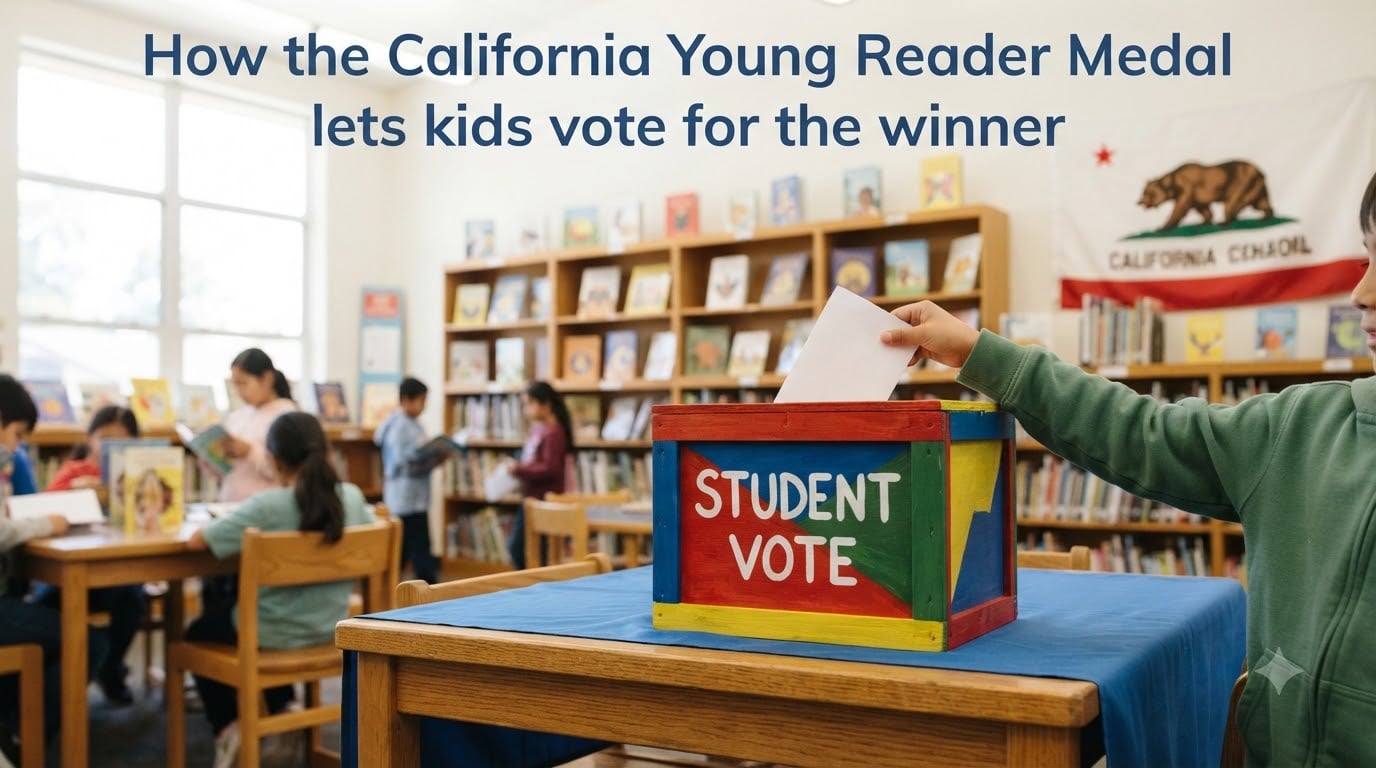
When was the last time a grown-up let you pick the winner of an award? That is exactly what the California Young Reader Medal does. Since 1974, this program has handed the power to the readers themselves, letting California students pick the books they think deserve a medal. I have spent weeks reading through the official program guides and talking with school librarians to put together this clear, parent-friendly walkthrough of how it all works.
Table of Contents
What Is the California Young Reader Medal?
The California Young Reader Medal (CYRM) is a student-choice book award program run by the California Library Association. It gives young readers across the state a real vote in choosing which books deserve to be celebrated each year.
The program runs across five grade-level categories, and the winners are chosen entirely by student votes. Authors and illustrators who take home a CYRM receive a bronze medal designed just for the award, and the winning books often get a big boost in library checkouts and classroom use.
The mission is simple: get kids reading for fun. By giving children a voice in literary awards, the program turns reading into a community activity. Schools, public libraries, and classrooms join together to read the nominated books, then cast their ballots in a state-wide vote.
A Brief History of CYRM Since 1974
The California Young Reader Medal started in 1974, making it one of the oldest student-choice awards in the United States. It was created by teachers and librarians who wanted a way to motivate recreational reading, and millions of California children have taken part since then.
Over the decades, the program has grown from a single category into the five we see today. Picture books were added later to make sure even the youngest readers had a category of their own. The bronze medal design has changed a few times, but the core idea has stayed the same: kids decide which books win.
How the Voting Process Works Step by Step?
The voting process is the heart of the California Young Reader Medal. Here is exactly how it works, from the time a school year begins to the moment the winners are announced.
Step 1: Schools and Libraries Receive the Nominee List
Each spring, the CYRM committee publishes a list of nominated books for the next school year. Teachers and librarians receive these lists and start building their reading programs around them. The nominees are selected by a committee of California educators and librarians who look for well-written, age-appropriate, recreational titles.
Step 2: Students Read the Nominated Books
Between May and March of the following year, students read the nominated books in their category. There is no required order, but students must read all the books in a category before they can vote in that category. Schools often organize reading clubs, book talks, and reading logs to keep track of progress.
Step 3: Teachers and Librarians Verify Reading
Before students can vote, a teacher or librarian must sign off that the student has read every nominee in the category. This simple step keeps the vote fair and makes sure the winners truly reflect what kids loved.
Step 4: Students Cast Their Ballots
Once a student has read all the nominees, they fill out an official CYRM ballot. The ballot asks for the student’s favorite book in the category. Schools collect the ballots and submit them to the CYRM committee, usually by mail, by the postmark deadline of April 1.
Step 5: Votes Are Counted and Winners Announced
After the postmark deadline, the CYRM committee counts all the ballots from across California. Winners are usually announced in the spring, and award ceremonies are held to celebrate the authors and the student readers who voted.
Step 6: Bronze Medal Ceremonies
Authors of the winning books receive a bronze CYRM medal. Some schools and libraries host local ceremonies to celebrate, and the official award ceremony brings together authors, students, and educators from around the state.
The Five CYRM Categories Explained
The California Young Reader Medal is split into five categories so readers of every age can participate. Each category covers a different grade range and reading level.
Picture Books for Younger Readers (K-2)
This category is for younger readers in kindergarten through second grade. Picture books are typically short, illustrated stories that adults can read aloud or that early readers can enjoy on their own.
Primary Books (Grades 3-4)
Primary category books are aimed at students in third and fourth grade. These are usually chapter books with illustrations, perfect for kids who have just transitioned from picture books.
Intermediate Books (Grades 5-6)
The intermediate category covers middle-grade readers in fifth and sixth grade. These books often introduce more complex plots and themes while still being accessible to younger readers.
Middle School Books (Grades 6-9)
The middle school category targets students in grades six through nine. Books in this category are usually longer, with more mature themes and characters navigating tween and early teen experiences.
Young Adult Books (Grades 9-12)
The young adult category is for high school readers in grades nine through twelve. These books tackle more sophisticated topics and are similar to the novels found in traditional YA literature.
Students can vote in any category for which they have read all the nominees, but they cannot vote in a category without finishing every book in that category first.
Key Dates and Deadlines for 2026
Knowing the timeline helps schools and families plan their reading year. Here are the typical dates for the 2026 cycle:
May of prior year: New nominees announced for the upcoming school year.
September to March: Reading window when students explore the nominated books.
Late winter/early spring: Schools collect signed ballots from verified readers.
April 1: Postmark deadline for submitting ballots to the CYRM committee.
Late spring: Winners announced, and bronze medal ceremonies are held.
Exact dates can shift slightly each year, so it pays to check the official CYRM website for current cycle dates.
How Students, Teachers, and Parents Can Get Involved?
Getting involved is easy and free. Here is how each group can participate.
For Students
Talk to your school or public librarian about the CYRM nominees for your grade level. Build a reading schedule, track your progress, and join reading discussions to share what you think of each book. When you have read them all, ask for your ballot and cast your vote.
For Teachers and Librarians
Register your school with the CYRM program, download the official nominee lists, and weave the books into your reading curriculum. Book talks, reading contests, and classroom discussions all help students stay motivated through the long reading window.
For Parents
Encourage home reading by setting aside family reading time, visiting the library together, and asking your child about each nominee. You can also volunteer to help organize school-wide voting days or coordinate a parent-led book club around the nominees.
Why CYRM Matters for Young Readers?
The California Young Reader Medal does more than pick a favorite book. It builds reading habits that last a lifetime. When students have a real vote in an award, they feel ownership over the books they read, and that sense of agency carries over into other learning.
Programs like CYRM also connect kids across the state. A student in San Diego and a student in Sacramento are reading the same books and casting the same votes, building a quiet community of young readers. Our team has seen firsthand how a single nominee can spark dozens of classroom conversations and family reading nights.
CYRM also gives teachers a free, ready-made reading program that aligns with recreational reading goals. And for authors, the award is a meaningful recognition that comes straight from the audience they write for.
Comparing CYRM to Other State Reader Awards
The California Young Reader Medal is one of several student-choice awards across the country. The Nutmeg Book Award in Connecticut, the Sequoia Award in California for older readers, and the Dorothy Canfield Fisher Award in Vermont follow similar models. CYRM stands out for its five-category structure, its long history dating back to 1974, and its strong ties to the California Library Association.
Frequently Asked Questions
How does the California Young Reader Medal voting work?
Students read all the nominated books in a category, get verification from a teacher or librarian, then fill out an official ballot. Schools collect the ballots and submit them by the postmark deadline of April 1. The book with the most votes in each category wins.
What are the California Young Reader Medal categories?
The five categories are Picture Books (K-2), Primary (Grades 3-4), Intermediate (Grades 5-6), Middle School (Grades 6-9), and Young Adult (Grades 9-12). Students can vote in any category where they have read all the nominees.
When are California Young Reader Medal winners announced?
Winners are typically announced in late spring after the April 1 postmark deadline. Bronze medal ceremonies are held shortly after to honor the winning authors and the student readers who voted.
Who can vote for the California Young Reader Medal?
California students in grades K-12 can vote, provided they have read every nominated book in the category they want to vote in. A teacher or librarian must verify their reading before ballots are submitted.
How are books nominated for the California Young Reader Medal?
A committee of California educators and librarians selects the nominees each year. They look for well-written, age-appropriate books that appeal to recreational readers in each grade-level category.
Conclusion
The California Young Reader Medal is one of the few awards where kids truly decide who wins. By reading the nominees, casting ballots, and participating in bronze medal ceremonies, California students get a real voice in literature. Whether you are a student, teacher, librarian, or parent, joining the CYRM program is a free and rewarding way to build a love of reading that lasts well beyond 2026.