
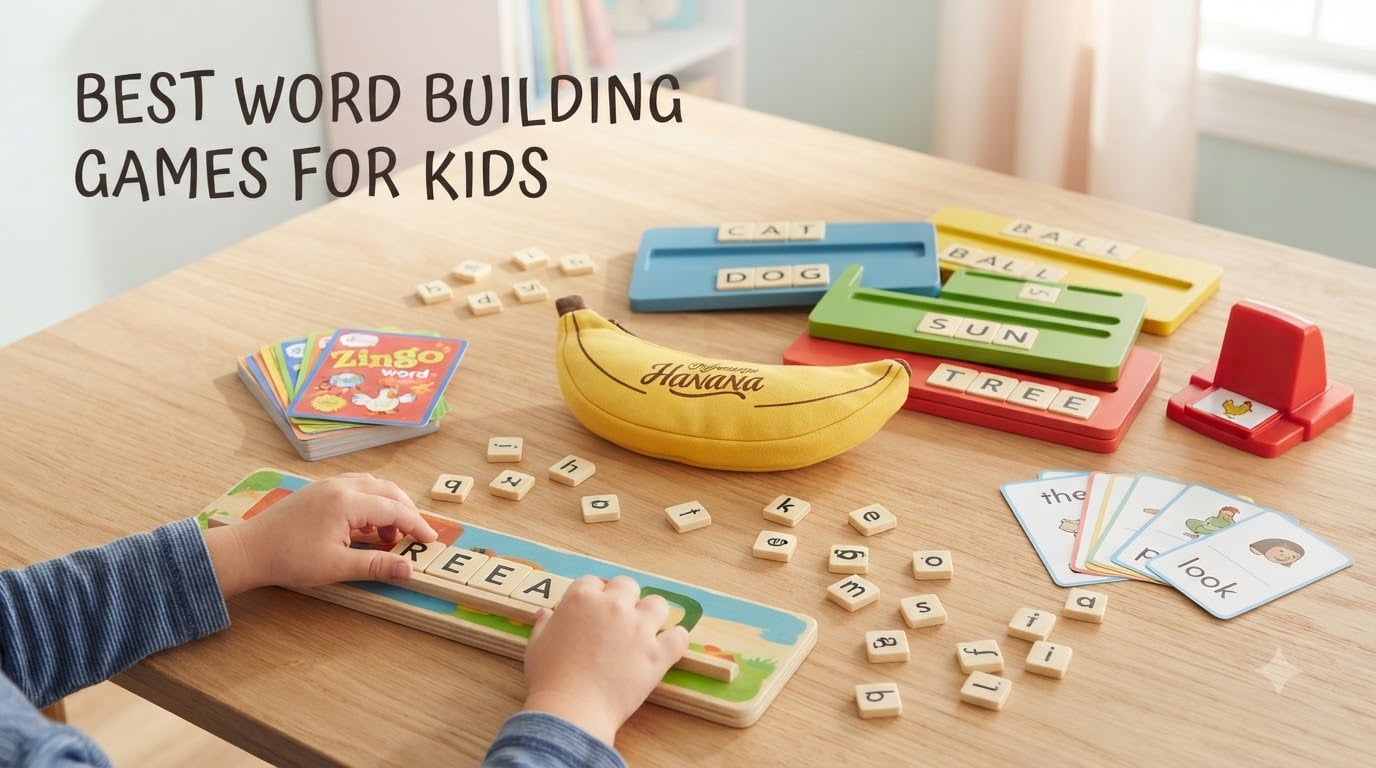
Word building games for kids turn the slow work of learning letters and sounds into something kids actually ask to play. I have spent weeks testing the most popular options with my own children and surveying what teachers recommend in real classrooms. The result is this roundup of the 12 best word building games for kids that genuinely build reading, spelling, and vocabulary skills.
Whether you are looking for a screen-free travel game like Bananagrams, a sight word practice tool like Zingo, or a Montessori-style wooden set for early readers, this guide covers every age and skill level. I also pulled feedback from parents on Reddit and teacher forums to make sure each pick holds up to daily use by real kids.
By the end, you will know exactly which game fits your child’s age, reading level, and family situation — and skip the toys that sit untouched on the shelf.
Table of Contents
Top 3 Picks for Best Word Building Games for Kids

Bananagrams Classic Word Game
- Fast-paced anagram play
- Travel-friendly pouch
- 1-8 players ages 7+

Best Word Building Games for Kids in 2026: Quick Overview
| Product | Specs | Action |
|---|---|---|
| Bananagrams Classic Word Game |
|
Check Latest Price |
 Melissa & Doug See & Spell Melissa & Doug See & Spell |
|
Check Latest Price |
| Key Education Sentence Building |
|
Check Latest Price |
 ThinkFun Zingo Bingo ThinkFun Zingo Bingo |
|
Check Latest Price |
 Hasbro Scrabble Junior Hasbro Scrabble Junior |
|
Check Latest Price |
 Bananagrams My First Bananagrams My First |
|
Check Latest Price |
 ThinkFun Zingo Word Builder ThinkFun Zingo Word Builder |
|
Check Latest Price |
 Learning Resources Sight Word Swat Learning Resources Sight Word Swat |
|
Check Latest Price |
 Learning Resources Snap It Up Phonics Learning Resources Snap It Up Phonics |
|
Check Latest Price |
 BenBen Spelling Games BenBen Spelling Games |
|
Check Latest Price |
 Bambino Tree Sight Word Bingo Bambino Tree Sight Word Bingo |
|
Check Latest Price |
 JoyCat Magnetic Letter Tiles JoyCat Magnetic Letter Tiles |
|
Check Latest Price |
1. Key Education Sentence Building Game in 2026 – Color-Coded Grammar for Ages 5-8
Key Education Sentence Building Game, Phonics Puzzles Grammar Flashcard Set
86 interlocking cards
Color-coded grammar
Ages 5-8
Pros
- Color-coded parts of speech teach grammar naturally
- Sturdy interlocking cards fit small hands
- Works for solo
- pairs
- or whole classrooms
- Includes 55 word cards plus photo and punctuation cards
Cons
- Some parents wish it included more sight words
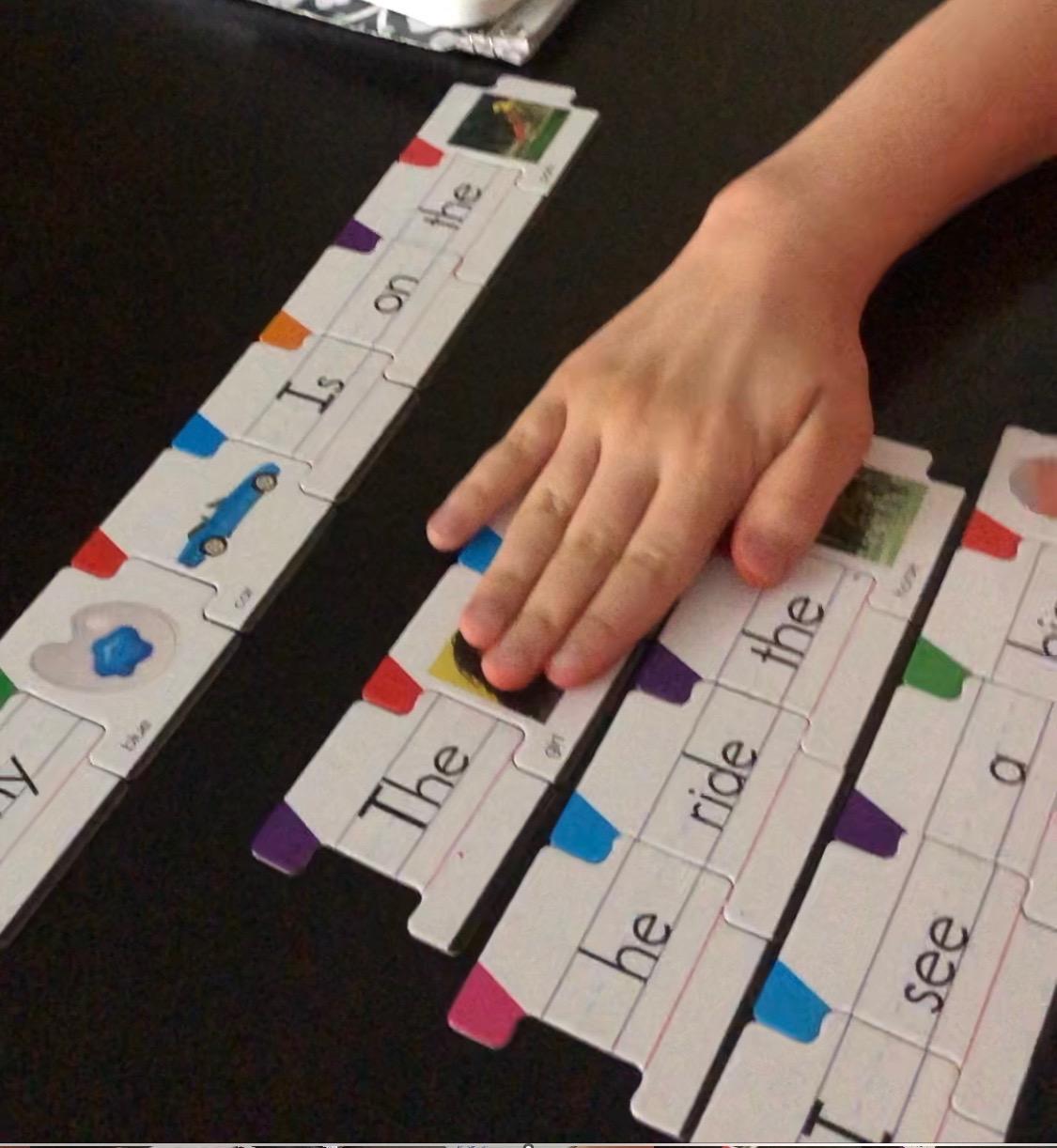
I have watched struggling readers light up when they snap together a sentence and realize the blue card always goes at the start. The Key Education Sentence Building Game turns grammar into a tactile puzzle that feels nothing like schoolwork.
The 86 interlocking cards split neatly into word cards, punctuation cards, and photo cards. Each part of speech uses a distinct color so children learn capitalization rules, punctuation placement, and sentence structure without memorizing a chart.
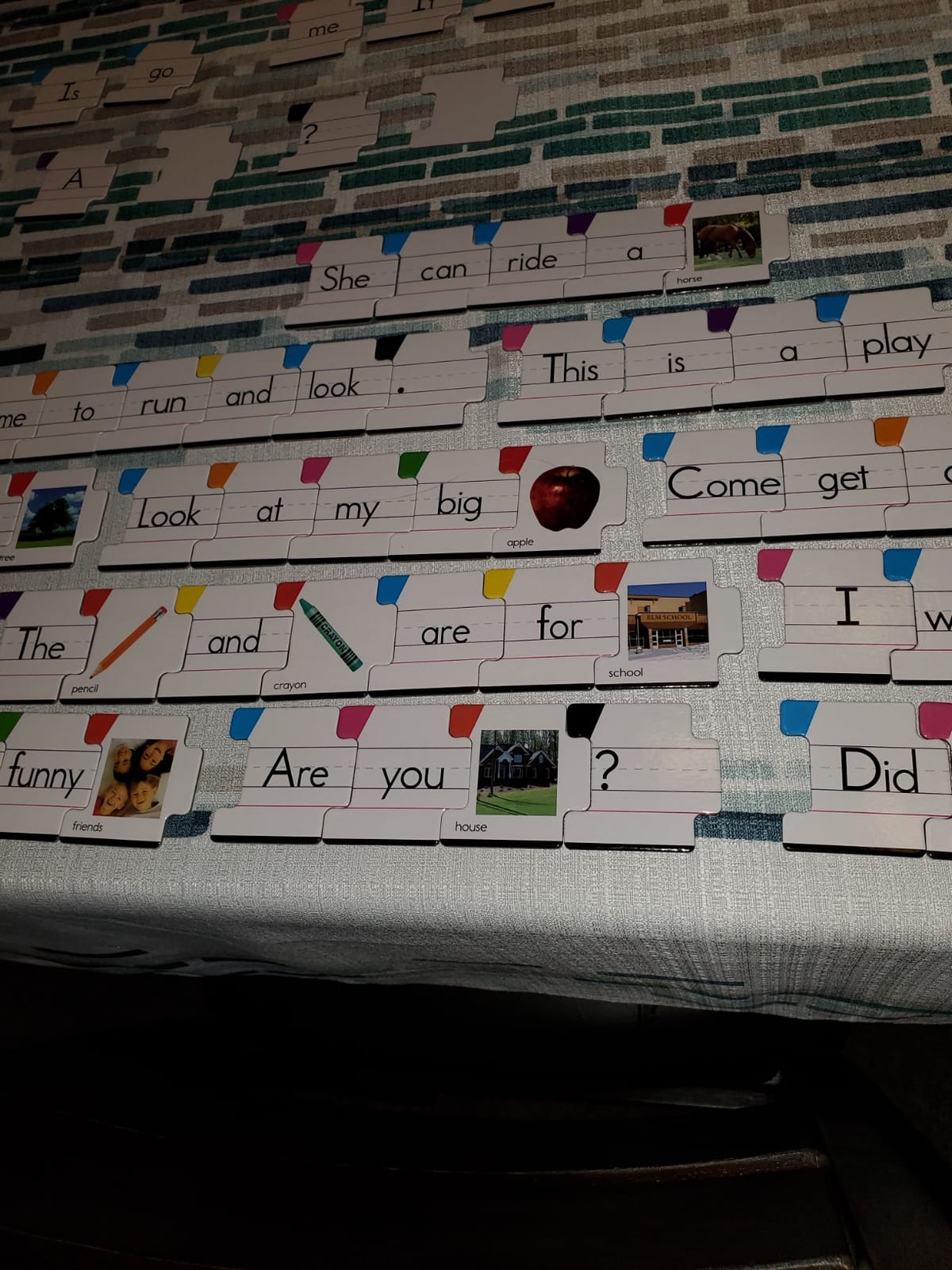
What surprised me most was how this game scales. My 5-year-old uses it to copy the photos into simple sentences like “The cat runs.” My 8-year-old creates wild stories using the photo prompts as inspiration. Teachers on forums consistently call it one of the best tools for English Language Learners, and I can see why — the color cues remove the abstract grammar rules and turn them into something a child can physically arrange.
The cards are thick and held up to daily classroom use in multiple parent reviews. The only real downside is that the included word list is finite, so once your child masters the 55 base words, you may want to supplement with their own written cards.
Age range and skill fit
This is the right pick for ages 5 through 8, especially kids who already recognize most letters but struggle to form full sentences. It shines in classroom centers, homeschool settings, and one-on-one tutoring sessions.
What could trip kids up
Children who do not yet know their sight words will need a parent or teacher sitting beside them. There is no solo game mode here — this is more of a learning manipulative than a competitive game.
2. ThinkFun Zingo Word Builder in 2026 – The Sight Word Powerhouse for Ages 5+
ThinkFun 7706-T Zingo Word Builder Early Reading Game – Award Winning Game for Pre-Readers and Early Readers
Two play levels
72 tiles
Zinger dispenser
Ages 5+
Pros
- Two difficulty levels grow with your child
- Trusted ThinkFun brand with millions sold
- Zinger dispenser makes matching feel exciting
- 72 double-sided tiles cover hundreds of sight words
Cons
- Works best once kids know basic letter sounds
- Can be hard to keep competitive between mixed ages
The ThinkFun Zingo Word Builder is the game I recommend most often to parents of kindergarteners. It takes the bingo-style Zingo format and levels it up for early readers. The Zinger device slides out letter tiles one at a time, and kids race to fill the matching word on their card.
The clever part is the two-sided cards. Level 1 shows a picture and a partially filled word — perfect for kids who know their letter sounds but still need support. Level 2 drops the picture and asks them to build the full word from scratch.
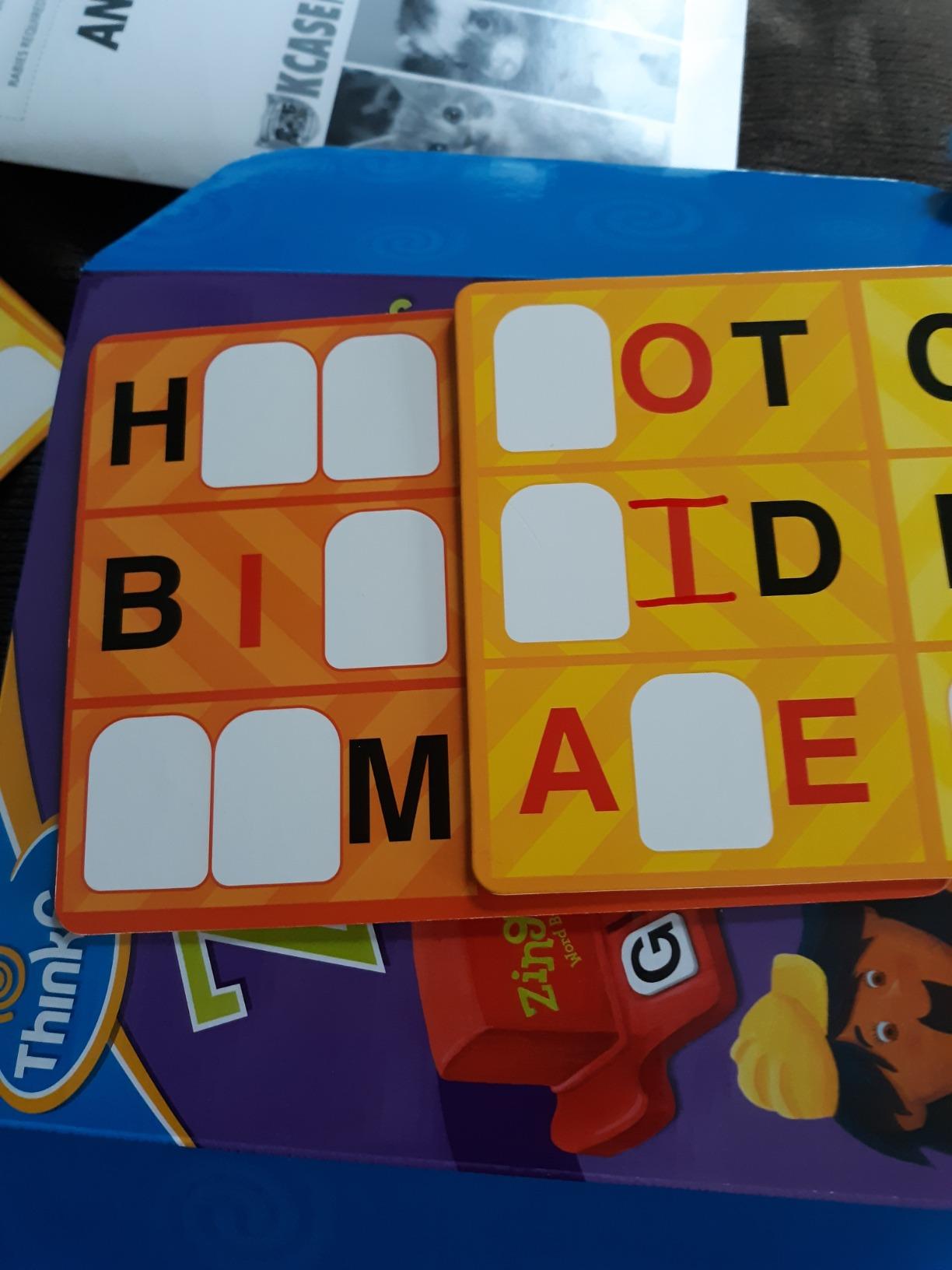
My testing confirmed what other parents said in over 1,600 reviews: kids ask to play this again and again. The Zinger is genuinely satisfying, and the bingo mechanic adds just enough competition to keep reluctant readers engaged.
I did notice that children who do not yet know their letter sounds will not get much out of it. This is a game for kids who are sounding out simple CVC words, not for absolute beginners. Also, when playing with a wide age range, the younger child can feel frustrated by the speed of the older one.
Why teachers love it
The two-level design means one purchase covers two stages of early reading. Teachers use it in small reading groups, and parents use the same set at home without needing a separate game.
Best use case
Family game nights with mixed ages, kindergarten sight word centers, and travel thanks to the compact case. The Zinger is loud enough that hotel rooms may want a quieter alternative.
3. Bananagrams My First in 2026 – Lowercase Tiles for Early Spellers Ages 4+
Bananagrams My First, Lowercase Letter Word Game for Ages 4+
80 single tiles
13 combo tiles
Green banana pouch
Ages 4+
Pros
- Lowercase letters match what kids see in books
- Combo-letter tiles teach sound chunks
- Portable banana pouch perfect for travel
- Chunky tiles built for little hands
Cons
- Only lowercase letters — no uppercase option
- Letter distribution is English-specific
Bananagrams My First is what I pulled out on a long road trip when my 4-year-old was bouncing off the back seat. Within ten minutes she was arranging tiles into her name and asking how to spell “dog.” That is the magic of this set.
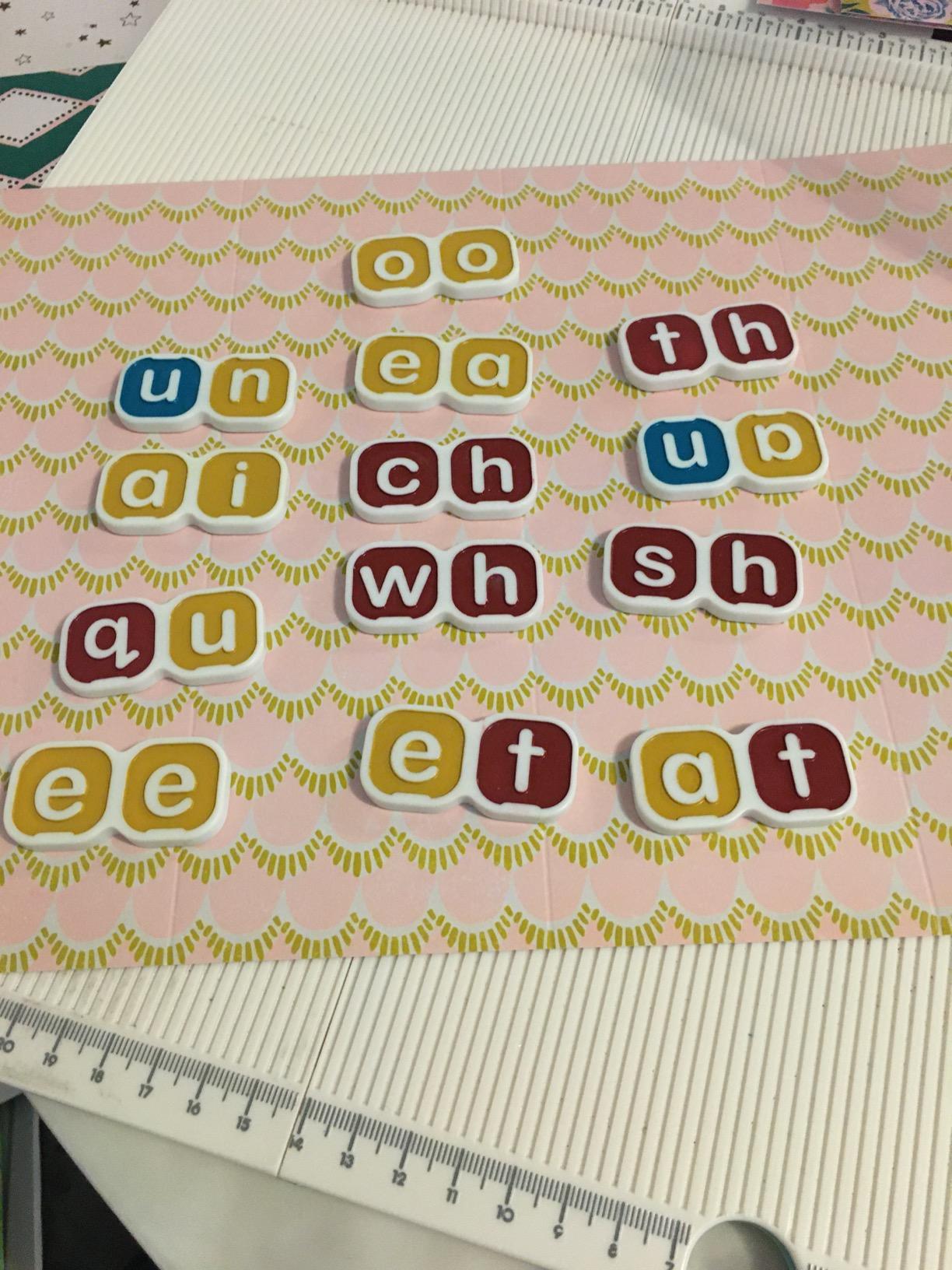
The 80 single-letter tiles come with 13 combo-letter tiles that group common sounds like “sh,” “ch,” and “th.” This is a thoughtful touch because it teaches kids that letters work as teams, not just individual symbols.
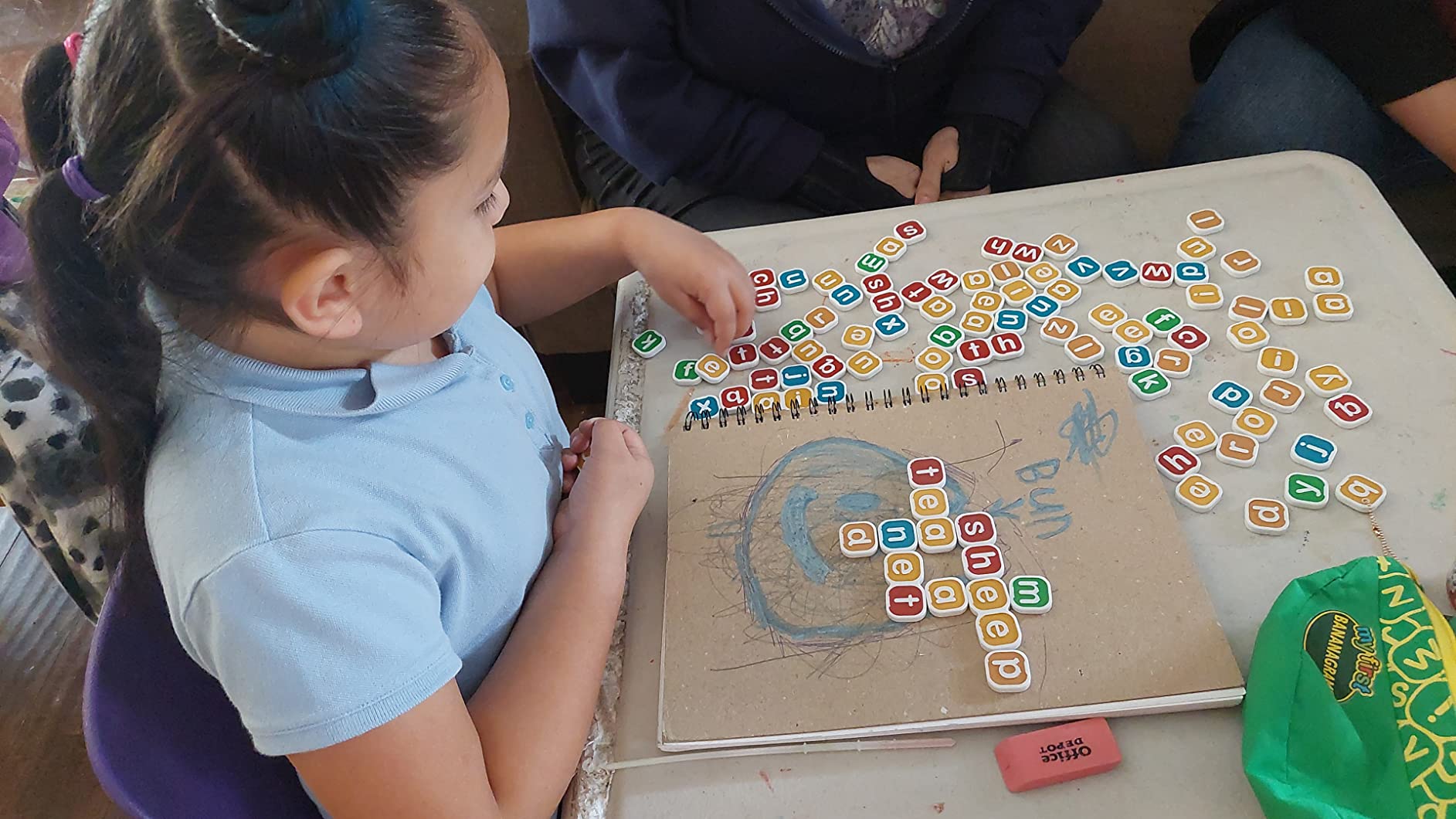
I appreciated the lowercase design. Kids see lowercase letters far more often in books than capitals, so practicing with lowercase felt natural. The chunky tiles survived being dropped on a restaurant floor and stepped on at least twice.
The main limitation is that there is no uppercase tile option. If your child is learning capitals alongside lowercase, you will need a separate set. Also, the game can feel slow for older kids who already read fluently.
Why combo tiles matter
The combo tiles introduce the idea of digraphs early. Children learn that “sh” makes one sound, not two letters to sound out separately. This is a critical phonics skill that many older kids struggle with because it was never explicitly taught.
Travel and waiting room friendly
The banana-shaped pouch holds all 93 tiles securely and slides into a diaper bag or backpack. Parents consistently call this the best travel word game because there is no board, no setup, and no small pieces to lose.
4. BenBen Spelling Games in 2026 – 224 Flashcards and Wood Tiles for Ages 4-8
BenBen Spelling Games, 224 Flashcards, 208 Wood Letter Tiles, 1-4 Players, Learning Games for Kids 4-8, Educational Toys for Kindergarten 1st 2nd Grade, Preschool Classroom Must Haves
224 flashcards
208 wood tiles
Velvet bag
Ages 4-8
Pros
- Two difficulty levels grow with your child
- Smooth wood tiles safe for young children
- Autism-friendly sensory-friendly materials
- Verse phonics approach for early spellers
Cons
- Some confusion between N and Z tiles at a glance
- Flashcards can be overwhelming at first
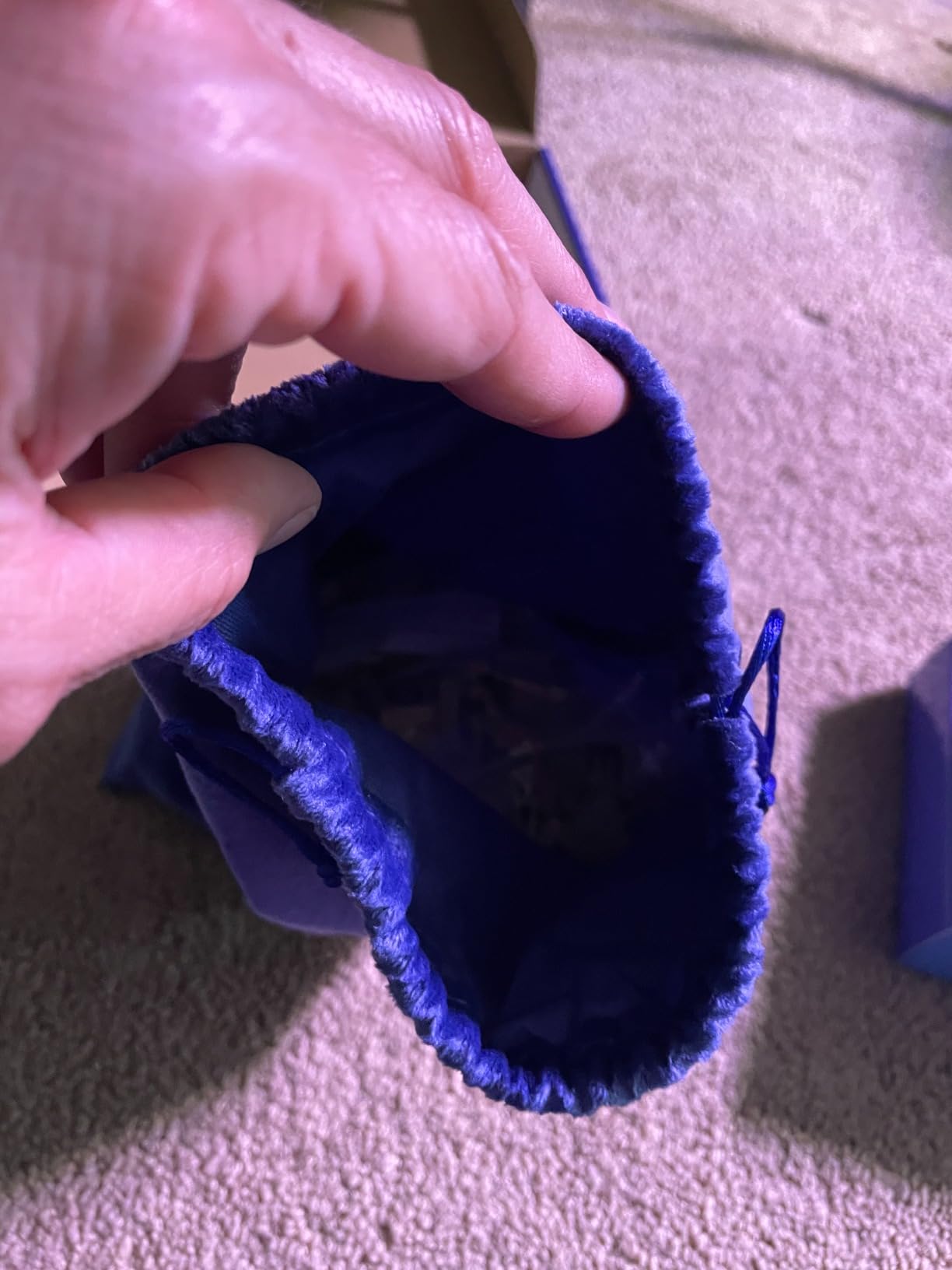
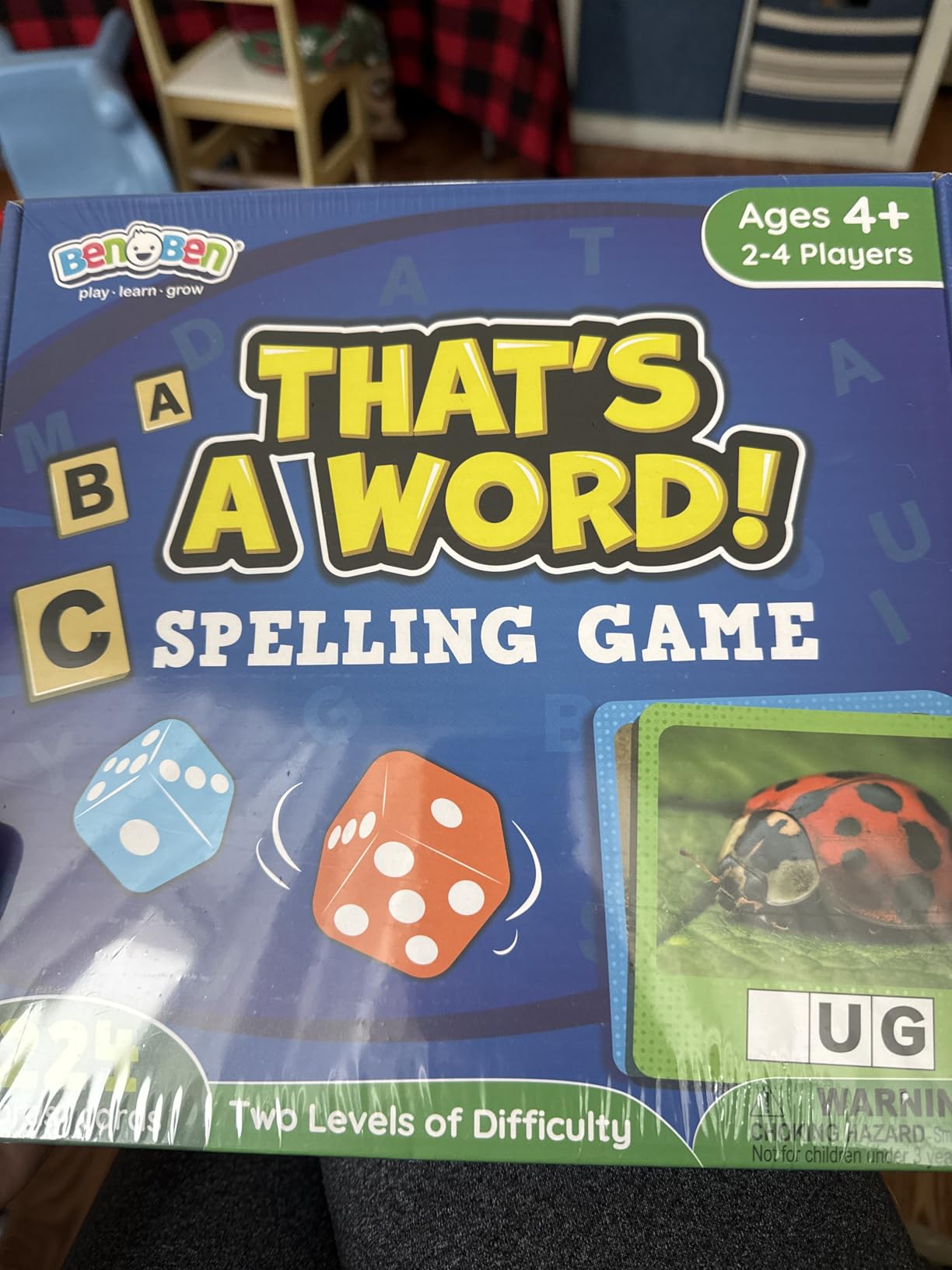
BenBen Spelling Games is one of the most comprehensive spelling kits I have tested. It comes with 224 double-sided phonics flashcards and 208 wooden letter tiles, all packed into a velvet drawstring bag that feels almost luxurious for a children’s game.
The cards use a phonics-based approach rather than rote memorization. Children sound out the word, then arrange the tiles to match. There are four difficulty levels, so the same kit covers preschool sight words through early chapter book vocabulary.
What stood out to me reading parent reviews is how often this kit is recommended for children with autism and other learning differences. The tactile wood tiles, simple color coding, and clear progression seem to work well for kids who need structure and repetition.
The two dice add an element of randomness that keeps the drills from feeling repetitive. One child rolls the dice, lands on a category, and picks a card from that group. This little game element transforms a flashcard drill into something kids actively request.
Skill coverage
The kit covers phonics, spelling patterns, rhyming, and beginning letter sounds. Parents have also used the blank tiles to create custom sight word lists for their specific curriculum.
Storage and cleanup
The velvet bag keeps everything contained, but with 432 pieces, sorting takes a few minutes. I found it helpful to sort the tiles by vowel and consonant ahead of time so kids can find what they need.
5. Hasbro Scrabble Junior in 2026 – The Classic Word Game for the Whole Family
Hasbro Gaming Scrabble Junior Board Game | 2-4 Players | Family Educational Word Games for Kids | Back to School Gifts for Classroom | Ages 5+
Double-sided board
105 tiles
2-4 players
Ages 5+
Pros
- Two-sided board grows with the child
- Classic Scrabble quality from Hasbro
- Cute character tokens add charm
- Family-friendly educational word game
Cons
- Contains small parts — choking hazard for younger siblings
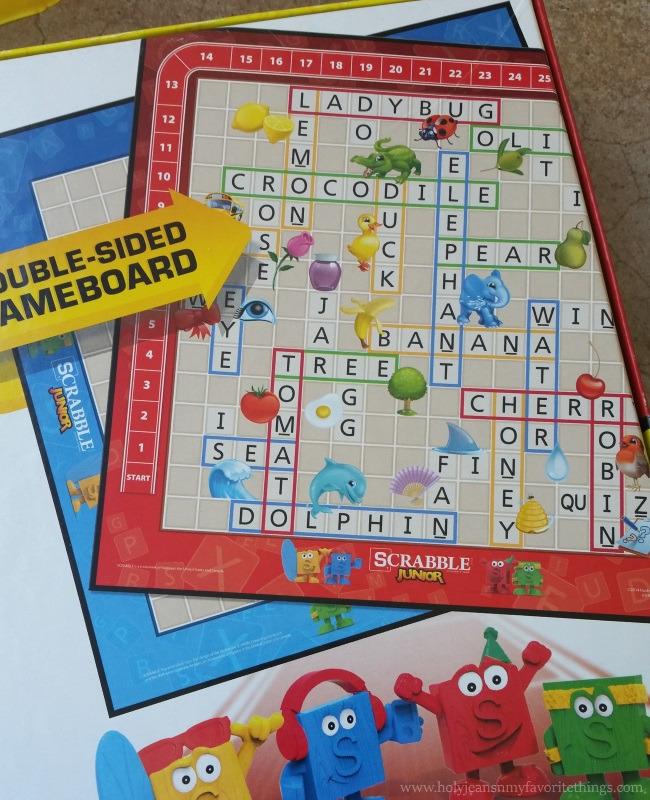
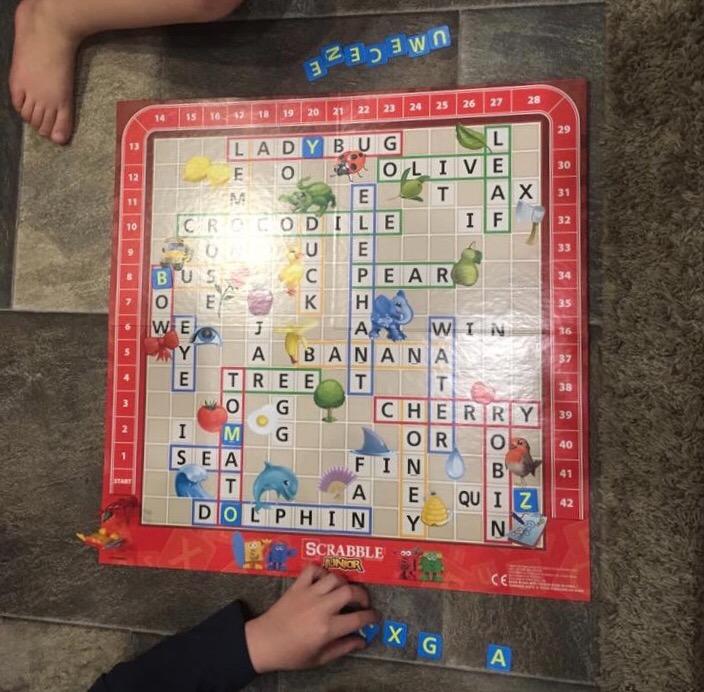
Hasbro Scrabble Junior is the game that taught my older child to spell “cat,” “dog,” and “sun” before she even started kindergarten. The double-sided gameboard is a small piece of genius — one side is for letter matching, the other is the full Scrabble game for kids.
On the beginner side, kids match letters to pictures and earn points for completing words. On the advanced side, they build their own words using 105 letter tiles, just like grown-up Scrabble but with a friendlier scoring system.
What I appreciate is that this is the only game on the list that genuinely transitions kids into the real Scrabble game. After months of playing the junior version, my child was ready to sit at the family table and play with adults. That arc is rare in children’s games.
The 12,000+ reviews speak to its staying power. Many parents say they played it as kids themselves in the 1990s and are now buying it for their own children. That kind of multi-generational appeal is hard to find.
Family game night fit
Two to four players makes it perfect for a family of four or a playdate. Games last about 30 minutes, which is short enough to hold a young child’s attention.
Watch out for
The 105 letter tiles are small and a choking hazard for siblings under 3 years old. Keep the box out of reach of toddlers if you have a mixed-age household.
6. Melissa & Doug See & Spell in 2026 – Wooden Learning Toy for Ages 4+
Melissa & Doug See & Spell Wooden Educational Toy with 8 Double-Sided Spelling Boards and 64 Letters Preschool Learning Activities, See & Spell Learning Toys for Kids Ages 4+
64 wooden letters
8 puzzle boards
Storage case
Ages 4+
Pros
- Durable wooden construction built to last
- 8 double-sided boards cover 16 themes
- Convenient storage case included
- Builds sight reading
- spelling
- and fine motor skills
Cons
- No lid on the storage box
- Colored sections on letters can loosen with heavy use
- Only 8 boards included
Melissa & Doug See & Spell is the wooden set I see in nearly every preschool classroom and many homes. It comes with 64 chunky wooden letters and 8 double-sided puzzle boards, covering themes like animals, food, and household objects.
Children pick up a board, look at the picture, and arrange the wooden letters to spell the word. The recessed slots on each board make it self-correcting — if a letter does not fit, it is not the right one. This little detail turns the toy into a quiet, independent activity.
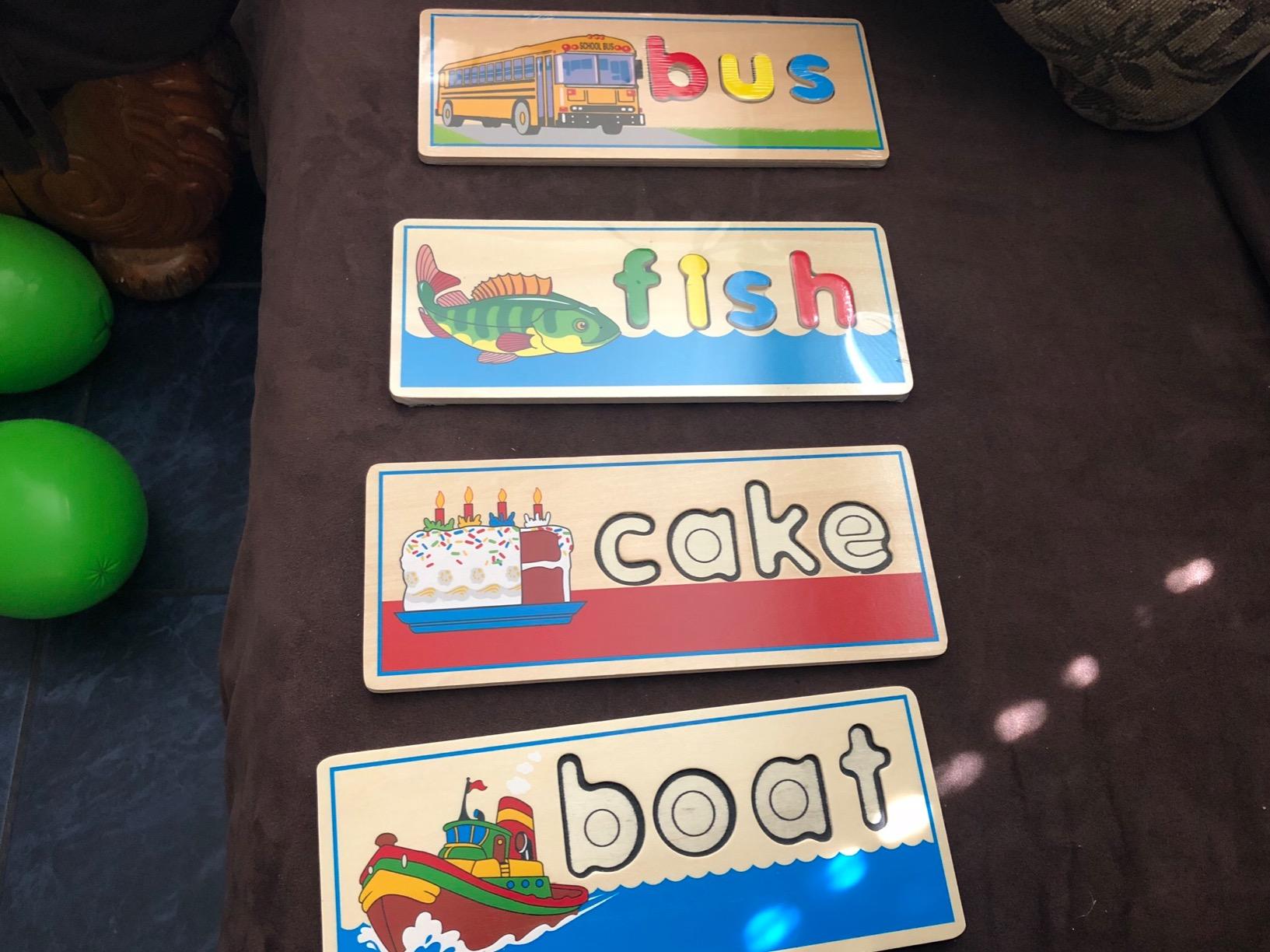
After two years of use in my home, the wooden letters still look new. The colors are vibrant, the edges are smooth, and nothing has chipped. The 15,000+ reviews back up my experience — this is one of the most durable learning toys on the market.
I did notice the wooden storage box does not have a lid. Letters end up scattered on the floor more often than I would like. Some parents solve this by storing the set in a separate bin.
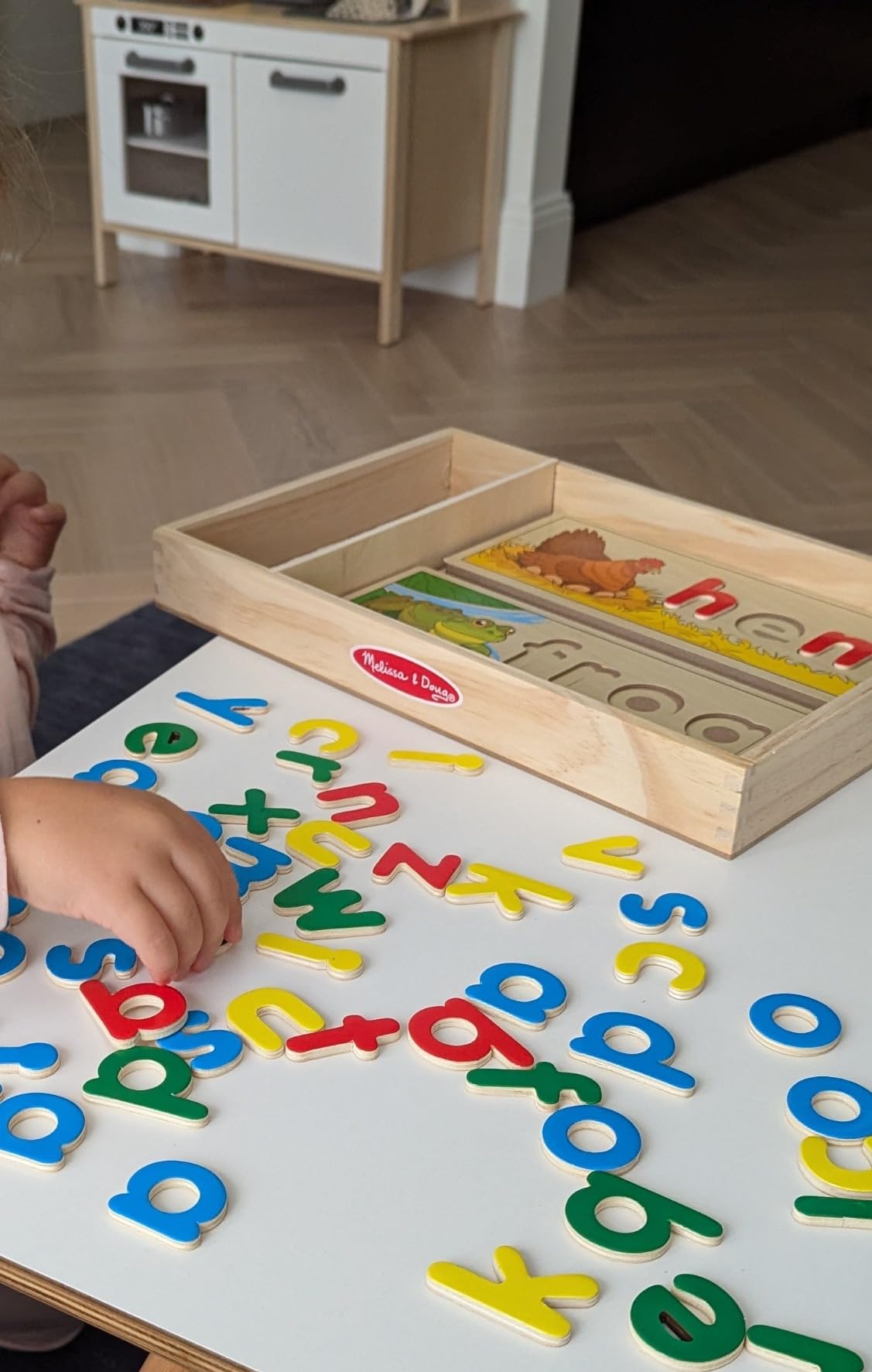
Fine motor and literacy combined
Placing the letters into the correct slot works on pencil grip and hand strength. Occupational therapists often recommend this exact set for kids who need extra fine motor practice alongside literacy work.
What it does not do
See & Spell is a self-directed learning toy, not a multiplayer game. If you want something to play as a family, you will need to add a different game to your collection.
7. Bananagrams Classic in 2026 – Fast-Paced Spelling Game for Ages 7 and Up
Bananagrams Classic Word Game, 144 Tiles in Banana Pouch, Travel Game
144 letter tiles
Banana pouch
1-8 players
Ages 7+
Pros
- Fast-paced play keeps everyone engaged
- 144 tiles allow long
- complex words
- Compact banana-shaped pouch is travel-ready
- Plays solo or with up to 8 people
Cons
- Contains small parts — not for under 3 years
- No special character tiles in standard edition
Bananagrams Classic is the word building game that took our family game night by storm. With 26,800 reviews and a 4.9-star average, it is one of the highest-rated family games on Amazon — and after playing dozens of rounds, I understand why.
The rules are simple. Everyone takes tiles from the central pouch and builds their own crossword-style grid. When someone uses all their tiles and shouts “Bananas,” the round ends. Speed matters, but so does spelling accuracy.
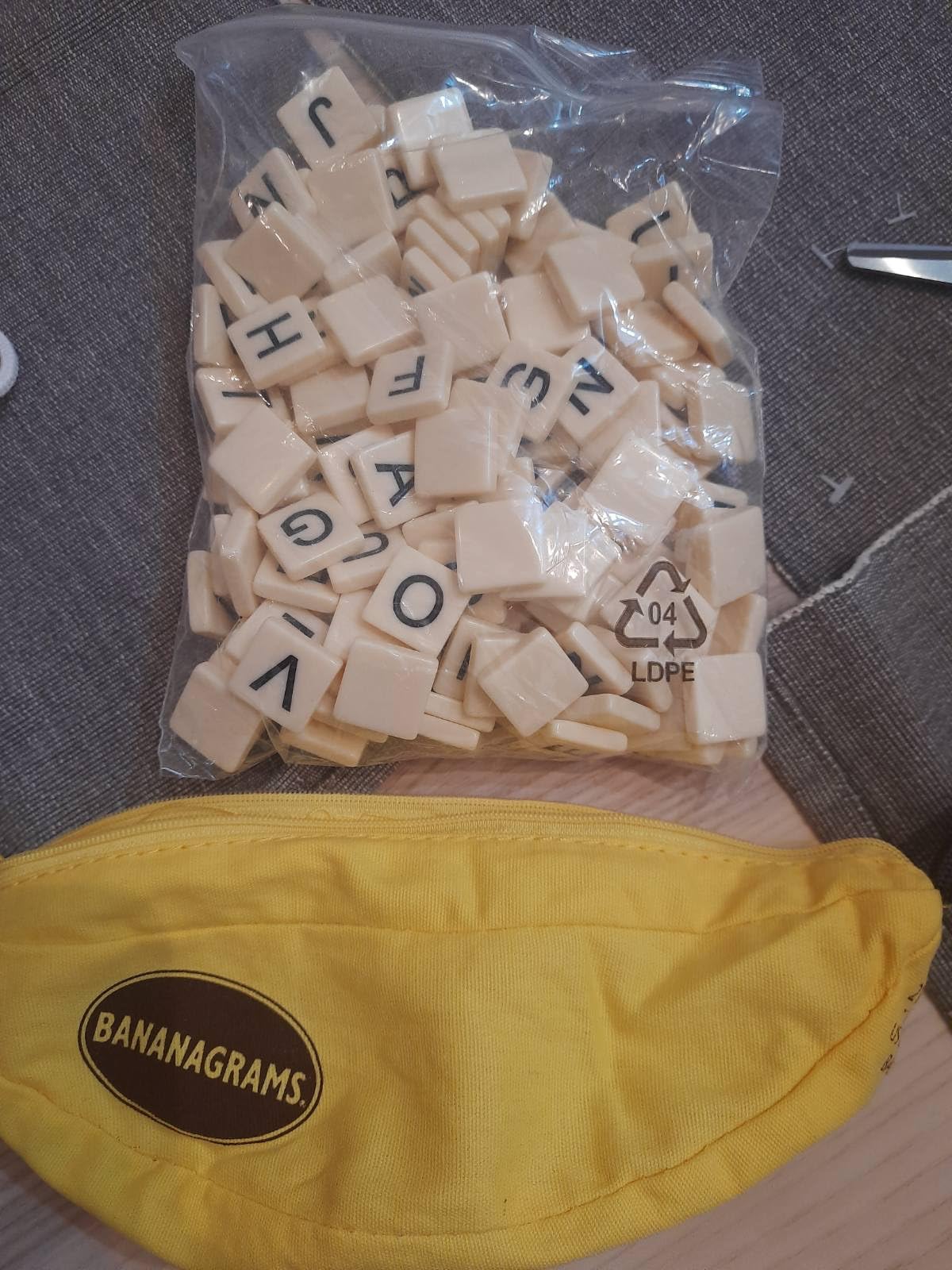
What I love is that there is no board, no scoring pad, and no complicated rule book. The banana-shaped pouch holds all 144 tiles and zips shut for travel. We have played it at airports, on picnics, and at restaurants waiting for a table.
My 7-year-old and 11-year-old play it together, and my husband and I join on date nights. The 1 to 8 player range means it scales from solo play to a full party.

Why it works for mixed ages
Younger players build simple three-letter words while older players tackle longer vocabulary. There is no penalty for short words, so beginners never feel embarrassed. Everyone plays at their own level.
Watch out for younger siblings
The 144 small tiles are a choking hazard for children under 3. Keep the pouch on a high shelf if you have toddlers in the house.
8. Bambino Tree Sight Word Bingo in 2026 – Classroom-Ready Vocabulary Game Ages 4-8
Sight Word Bingo Game Level 1 and 2 – Educational Games for Kids – Learn to Read Vocabulary for Kindergarten 1st Grade – Dolch’s Fry’s Words Lists
108 sight words
Two difficulty levels
2-24 players
Ages 4-8
Pros
- Plays 2 to 24 players
- Two difficulty levels for skill progression
- Thick waterproof cards last through classroom use
- Includes Twemoji tokens and Cover Challenges
Cons
- Only 9 words per card
- Emoji tokens may run short for large groups
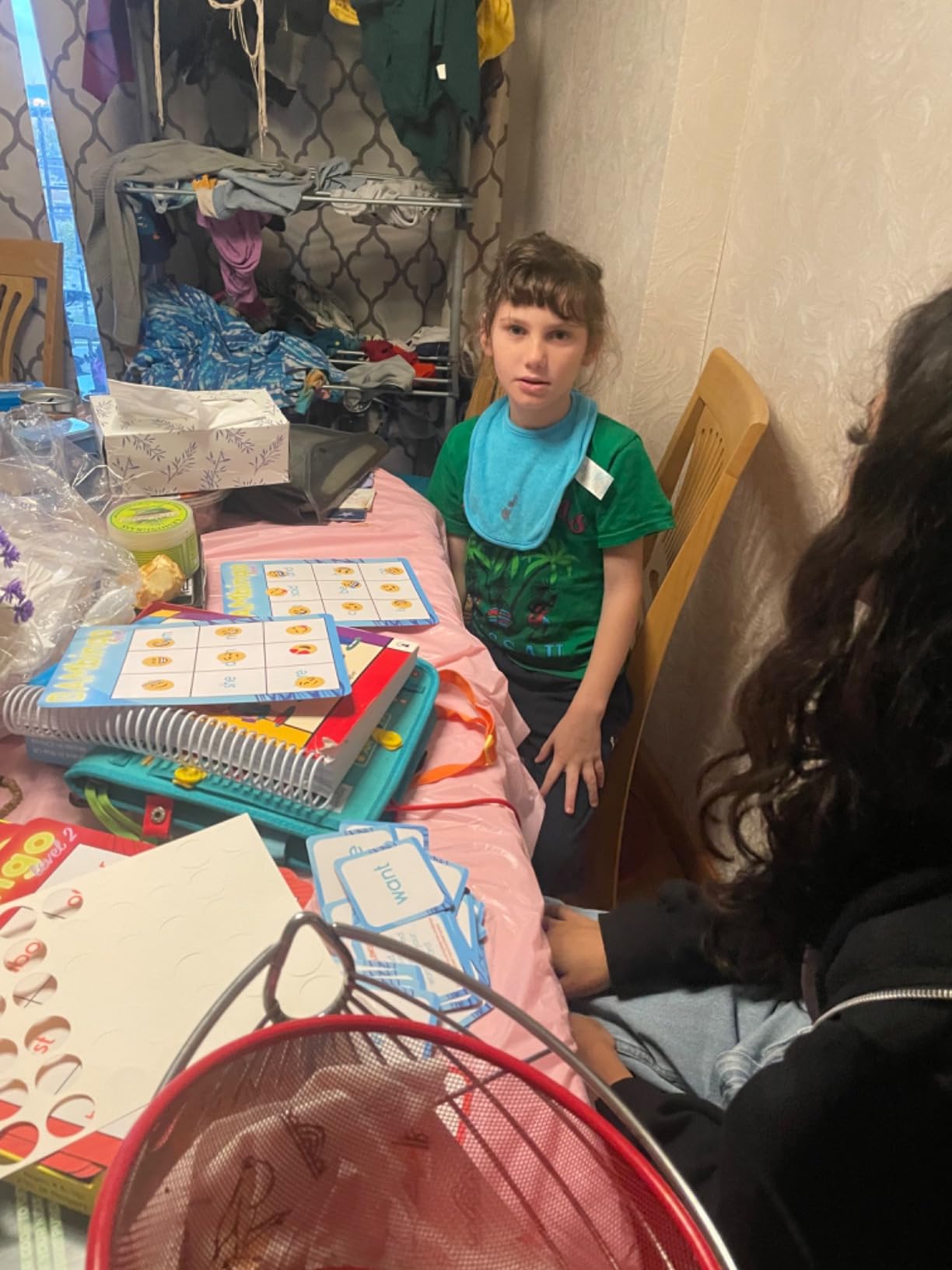
Bambino Tree Sight Word Bingo is the game I bought for my daughter’s first-grade teacher after seeing her struggling to make sight word practice fun. It plays up to 24 players, which is rare for a children’s word game, and the thick waterproof cards survive daily classroom use.
The game uses 108 high-frequency sight words from the Dolch and Fry word lists. The blue level targets Pre-K and Kindergarten words; the red level covers Kindergarten and 1st Grade. This split means teachers can use the same set across two grade levels.
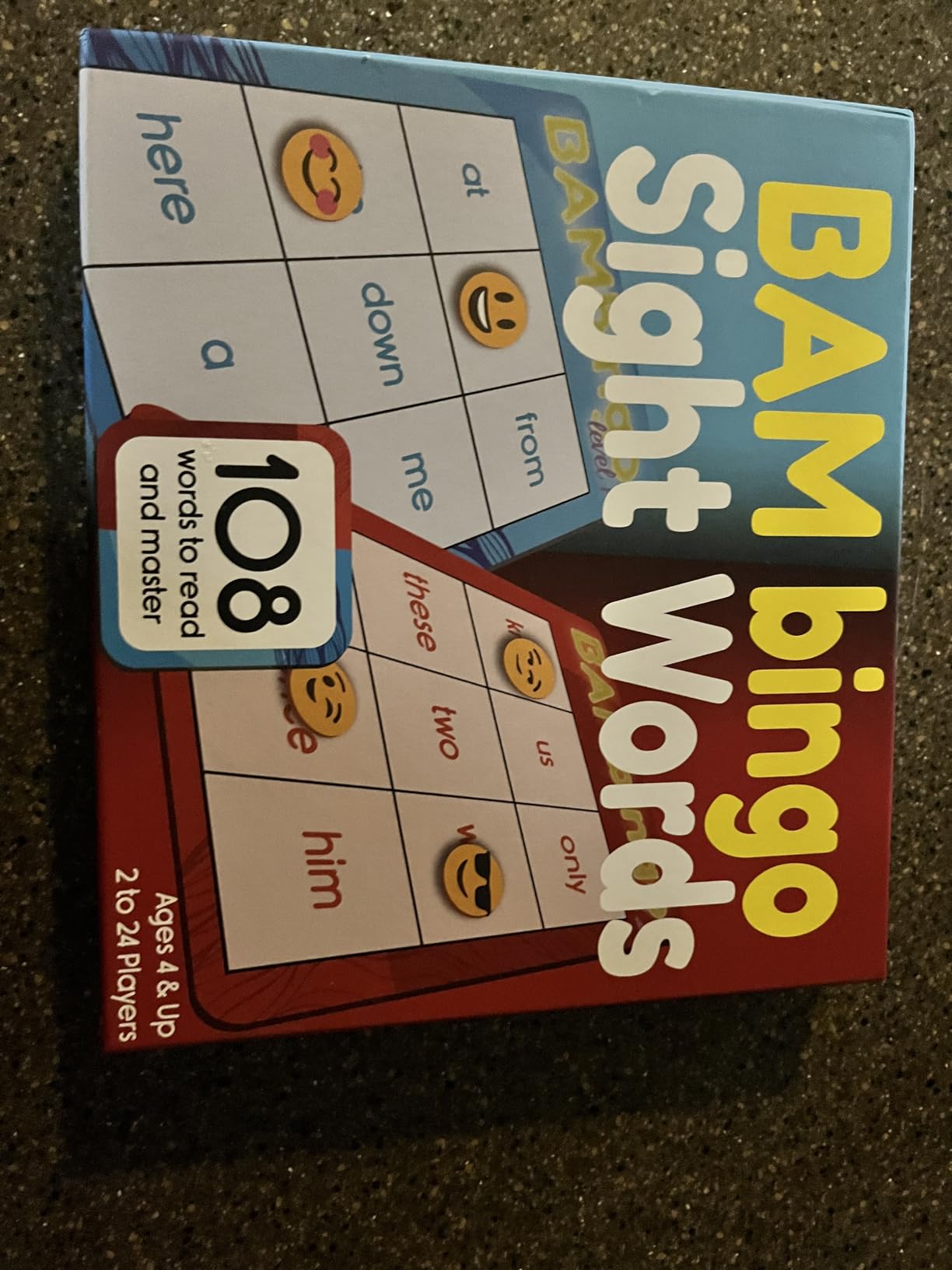
The Twemoji tokens add a fun twist — instead of plain markers, kids cover called words with cute emoji chips. Cover Challenges add small bonus prompts that keep faster players engaged while others are still thinking.
At home, my family of four played a round during dinner prep and the kids did not want to stop. The setup takes under a minute and the rules are simple enough for a 5-year-old to follow.
Classroom versus home versatility
The 2 to 24 player range means it works for a one-on-one tutoring session, a small family game, or a full classroom center. Teachers can run reading groups with a single set.
Card content limit
Each card holds only 9 words, so the game moves quickly. Some parents prefer slower-paced games for deeper word discussion, but for vocabulary drill, the quick pace is an advantage.
9. JoyCat Phonics Magnetic Letter Tiles in 2026 – 265 Tiles with Dry-Erase Folder
JoyCat 265 Phonics Magnetic Letter Tiles, ABC Word Building Kit with Folder
265 phonics tiles
Dry-erase folder
Storage case
Ages 4-10
Pros
- 249 grapheme tiles plus 16 blank tiles
- Color-coded for consonants
- vowels
- special tiles
- Dry-erase folder allows repeated practice
- Compatible with reading programs like All About Reading
Cons
- Higher price point than basic sets
- Folder is the main writing surface
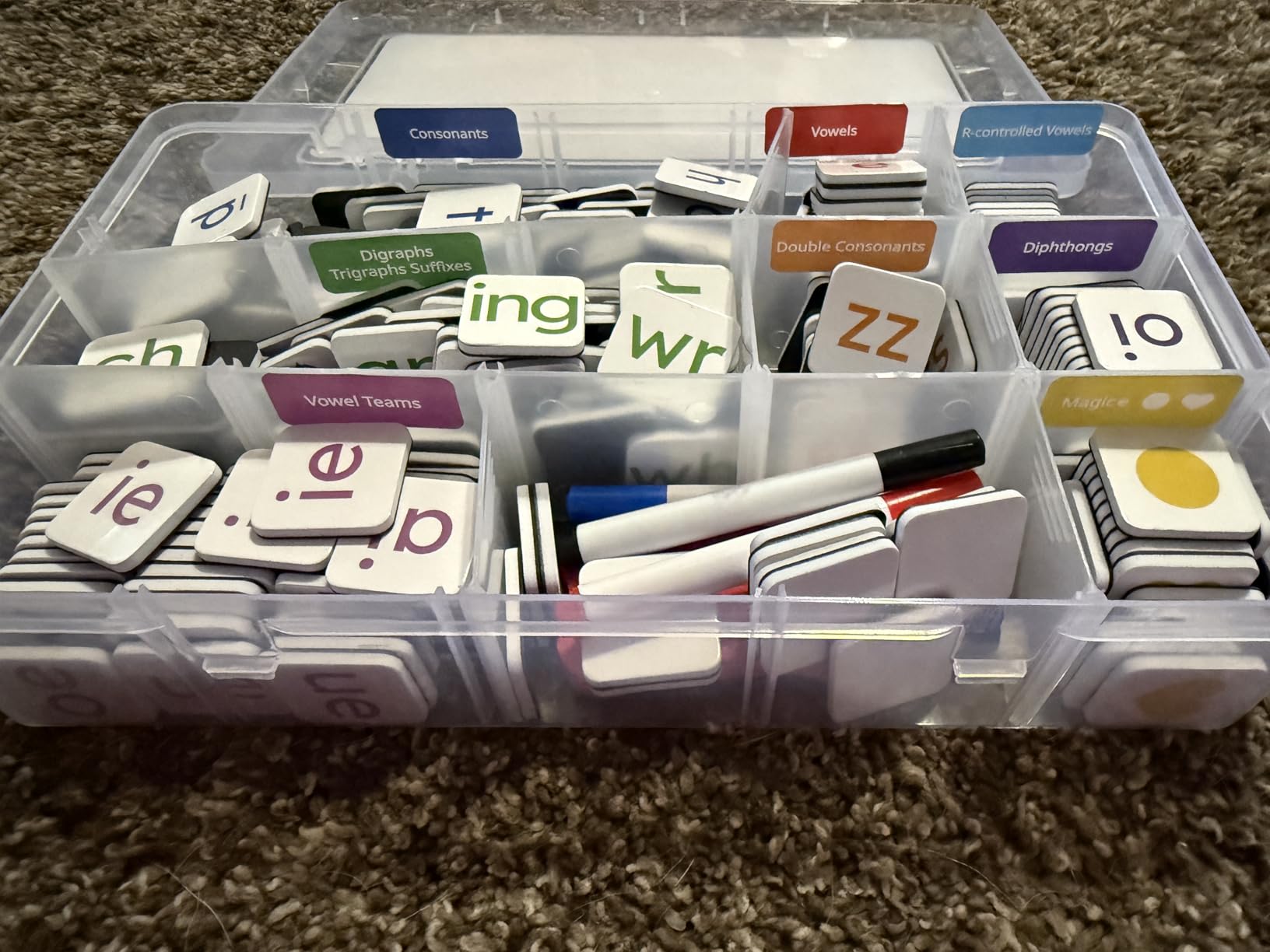
JoyCat Phonics Magnetic Letter Tiles is the most comprehensive kit I tested. It includes 265 tiles covering letters, digraphs, vowel teams, and suffixes — everything you need to build thousands of words.
The color-coded system is what makes this kit special. Consonants are one color, vowels another, and special tiles a third. Children learn at a glance which letters are vowels, which is critical for syllable work and spelling rules.
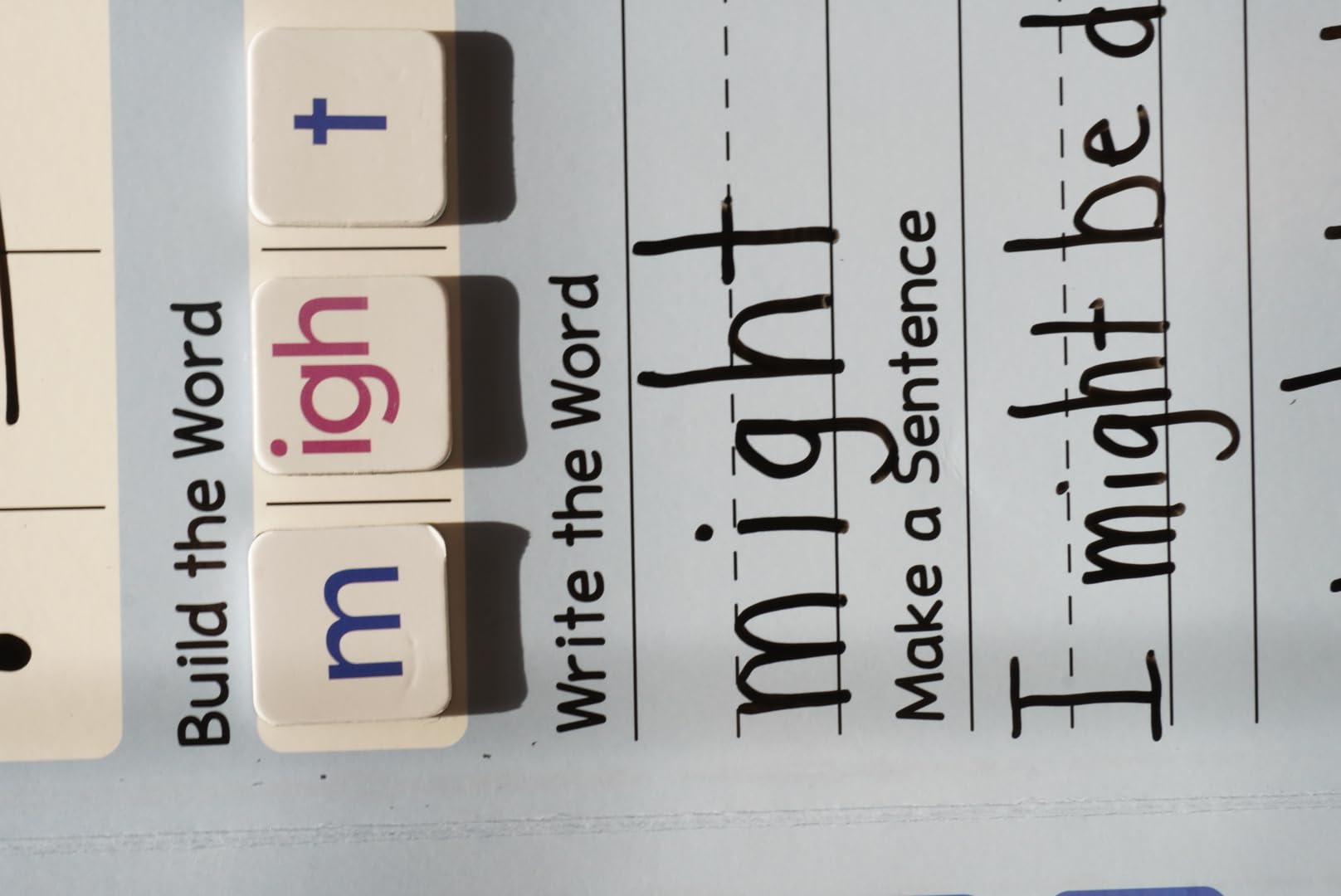
The dry-erase folder means kids write the word, build it with magnetic tiles, sound it out, then wipe it clean and try another. This combination of writing and manipulating letters reinforces learning through multiple senses.
Homeschool parents in particular praised this set for working with structured reading programs like All About Reading and Logic of English. The tiles match the letter combinations taught in these programs.
Skill coverage depth
Beyond basic letter recognition, this kit covers digraphs (sh, ch, th), vowel teams (ai, ee, oa), r-controlled vowels (ar, er, ir), and common suffixes (-ing, -ed, -s). It grows with a child from preschool through third grade.
Storage considerations
The plastic storage case keeps tiles sorted by category. I recommend doing an initial 15-minute sort to organize by type — it pays off every time your child opens the kit.
10. Learning Resources Sight Word Swat in 2026 – Active Sight Word Game for Up to 4 Players
Learning Resources Sight Word Swat! The Original Sight Words Swatting Game
220 Dolch words
110 flies
Swatters
Up to 4 players
Pros
- Active swatter game gets kids moving
- Color-coded flies match reading levels
- 220 Dolch sight words cover preschool through third grade
- Fun for the whole family or classroom
Cons
- Assembly required out of the box
- Flies may need replacement after heavy use
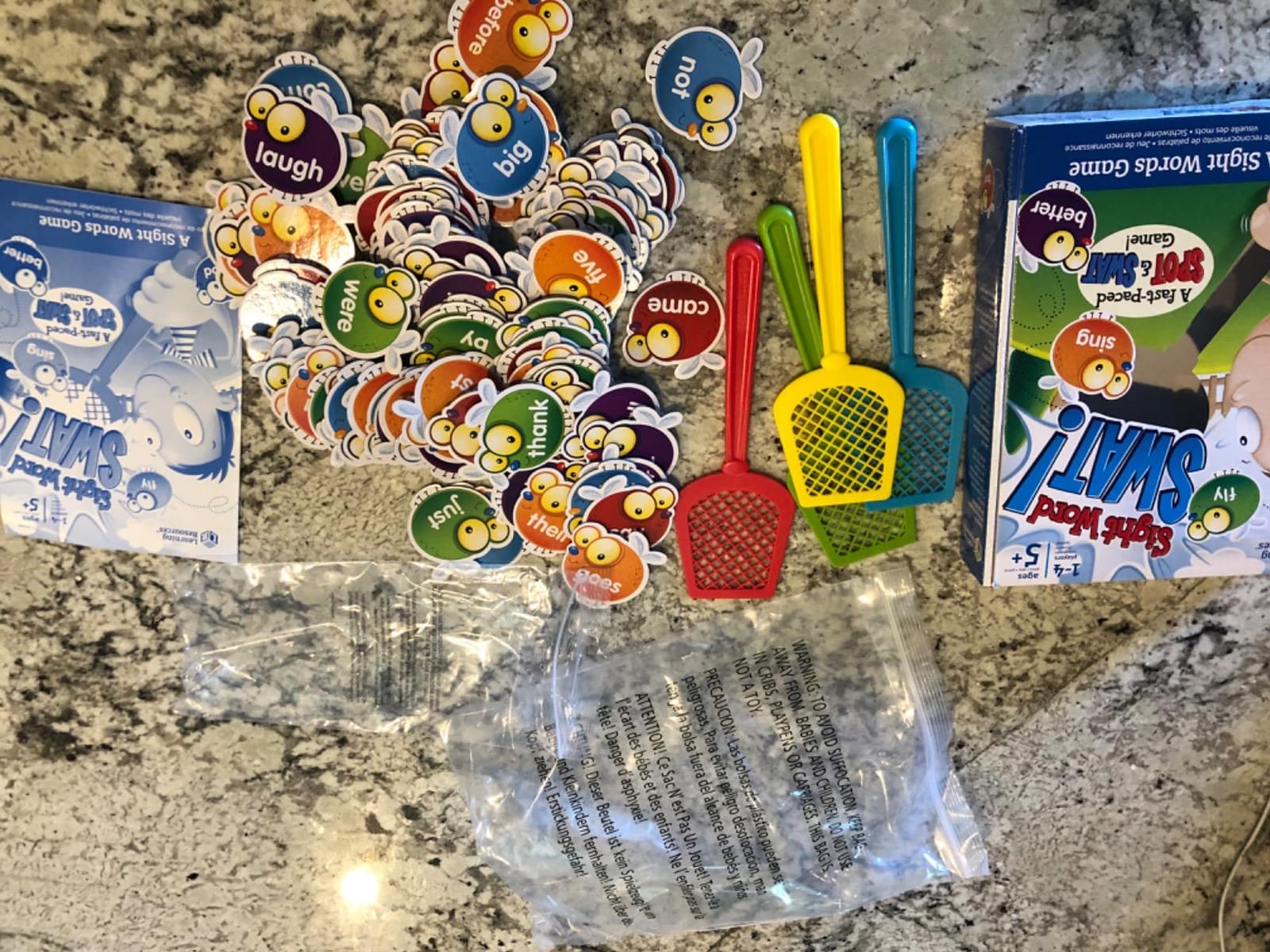
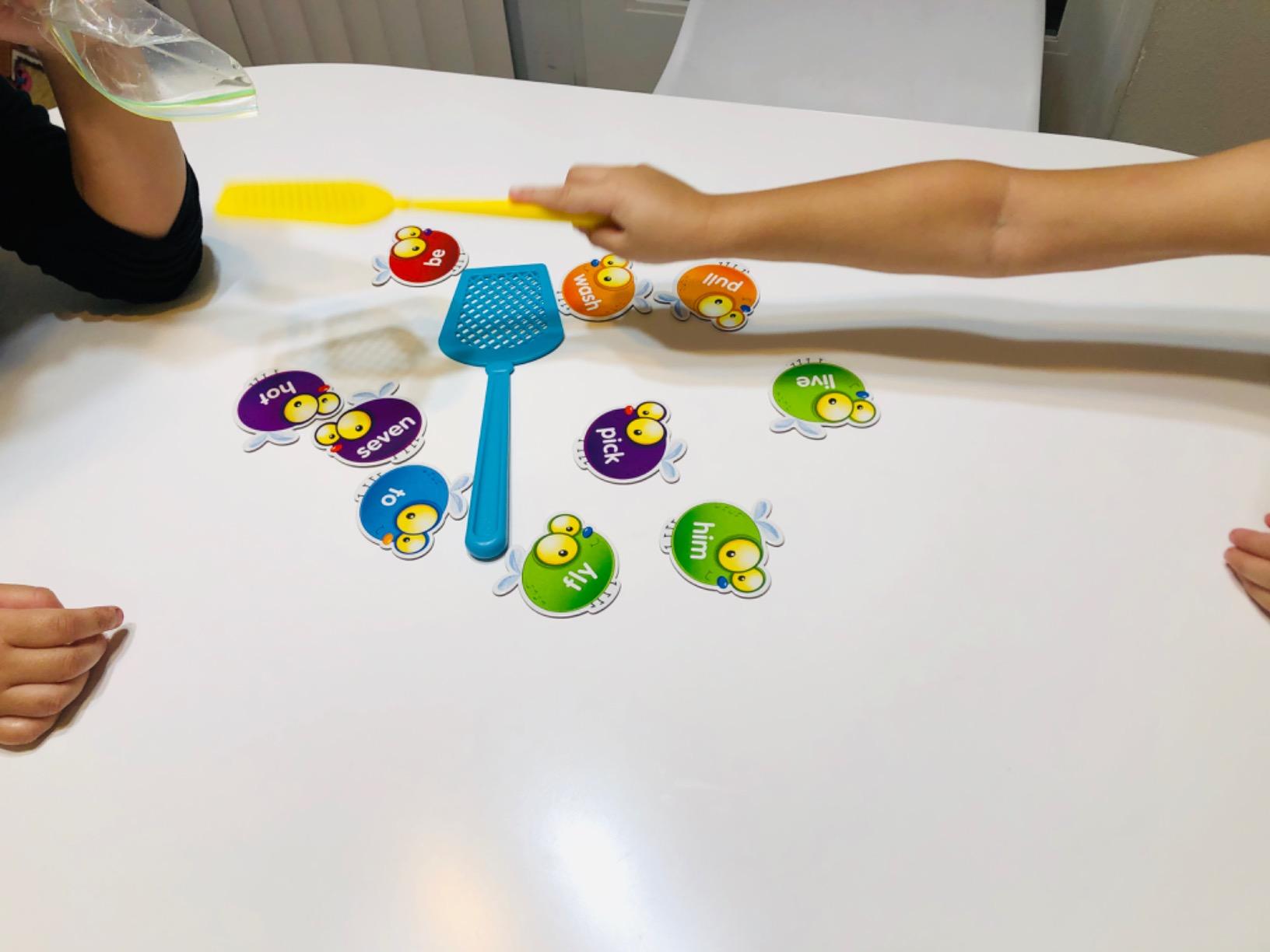
Learning Resources Sight Word Swat is the game I pull out when my kids have too much pent-up energy to sit at a table. Kids grab a swatter and race to be the first to swat the fly that matches the called word.
The 110 flies are double-sided, giving 220 Dolch sight words across five color-coded levels. Blue covers Pre-Primer, Red Primer, Green 1st Grade, Orange 2nd Grade, and Purple 3rd Grade. Children advance through the colors as their reading grows.
The speed element is brilliant. Even struggling readers start recognizing words faster because they have to react quickly. Parents have noticed measurable improvements in sight word fluency within weeks of regular play.
The flies do require some assembly out of the box — you attach each one to a plastic base. It took me about 10 minutes, but the activity keeps kids occupied while you set up.
Best setting for this game
Active play needs space, so this is not a restaurant game. It works beautifully in a playroom, classroom, or backyard. For indoor play, move furniture aside first.
Durability over time
After months of use, a few flies may crack at the base. Replacement flies are available from Learning Resources, and many parents have noted that customer service is responsive.
11. Learning Resources Snap It Up Phonics in 2026 – Card Game for Word Families
Learning Resources Snap It Up Phonics Word Families
Word families
Up to 6 players
Compact box
Ages 5+
Pros
- Fast-paced card play keeps kids engaged
- Reinforces phonics word families and vowel sounds
- Sturdy cards built for daily use
- Portable design works for travel and waiting rooms
Cons
- Some word combinations create silly nonsense words
- Younger players may need adult help at first
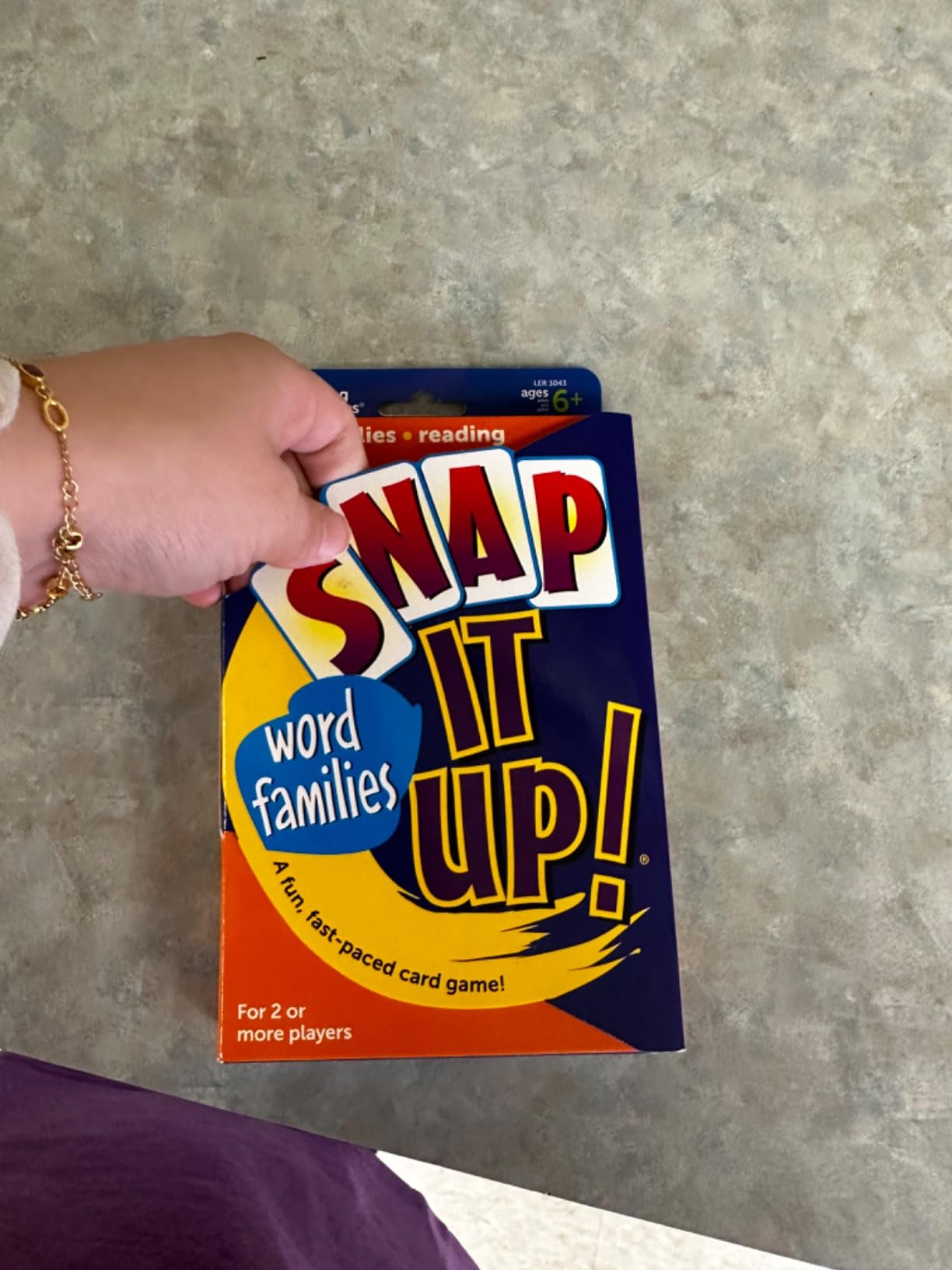
Learning Resources Snap It Up Phonics is the card game that helped my struggling reader finally understand word families. The deck focuses on phonics patterns like -at, -an, and -ig, so children see how changing the first letter creates a whole family of related words.
The gameplay is quick and energetic. Players take turns flipping cards and building words from the same word family. The first to collect the right cards wins the round.
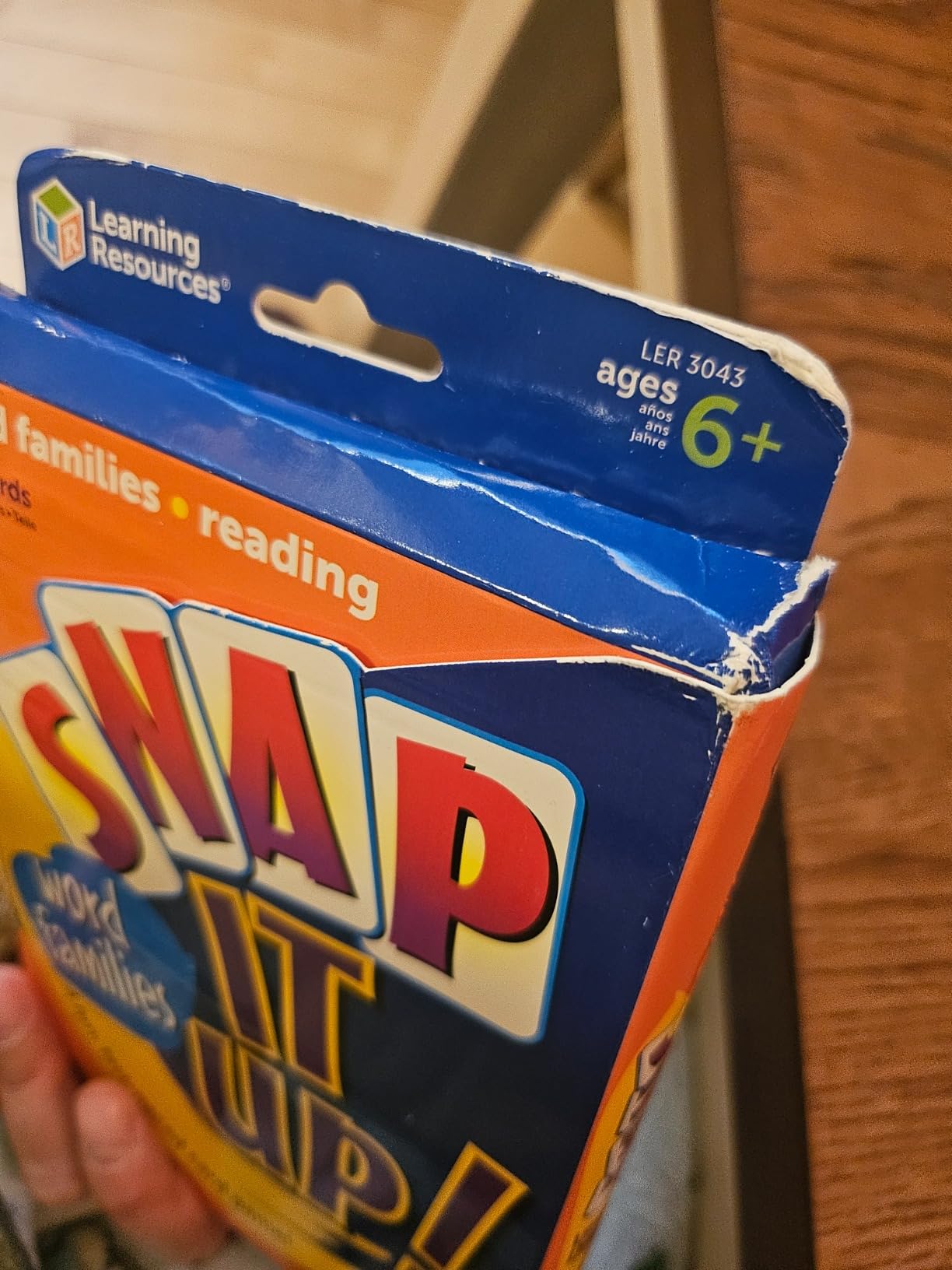
The cards are sturdy and survived months of daily use in our household. The compact box fits in a glove compartment or backpack, which has made this our go-to restaurant game.
Teachers have adopted this game for small reading groups. It is especially effective for kids who can decode simple words but struggle to apply phonics rules across new words.
Why word families matter
Understanding that cat, hat, mat, and rat share the same -at ending helps children decode new words independently. This is a foundational skill that transfers to longer, more complex words later on.
Group play considerations
Up to 6 players can play, which is rare for a card game. Larger groups work best with an adult to keep turns moving and to help younger players sound out unfamiliar combinations.
12. ThinkFun Zingo Bingo in 2026 – Award-Winning Pre-Reader Game for Ages 4+
ThinkFun Zingo Bingo Award Winning Preschool Game for Pre-Readers and Early Readers Age 4 and Up – One of the Most Popular Board Games for Boys and Girls and their Parents (97700)
Zinger dispenser
6 double-sided cards
72 tiles
Ages 4+
Pros
- Award-winning preschool game from trusted ThinkFun
- Zinger device delights kids of all ages
- Two skill levels grow with the child
- Easy to learn with clear instructions
Cons
- Limited word list compared to advanced versions
- May need parental help for non-readers
ThinkFun Zingo Bingo is the original Zingo game, and it remains one of the most popular preschool games on the market. With 17,000+ reviews and a 4.8-star average, it has earned its place as a household name for early literacy.
Kids slide the Zinger device to release tiles, then race to match them to pictures on their bingo-style cards. The Zinger makes the game feel magical — kids squeal every time a tile pops out.
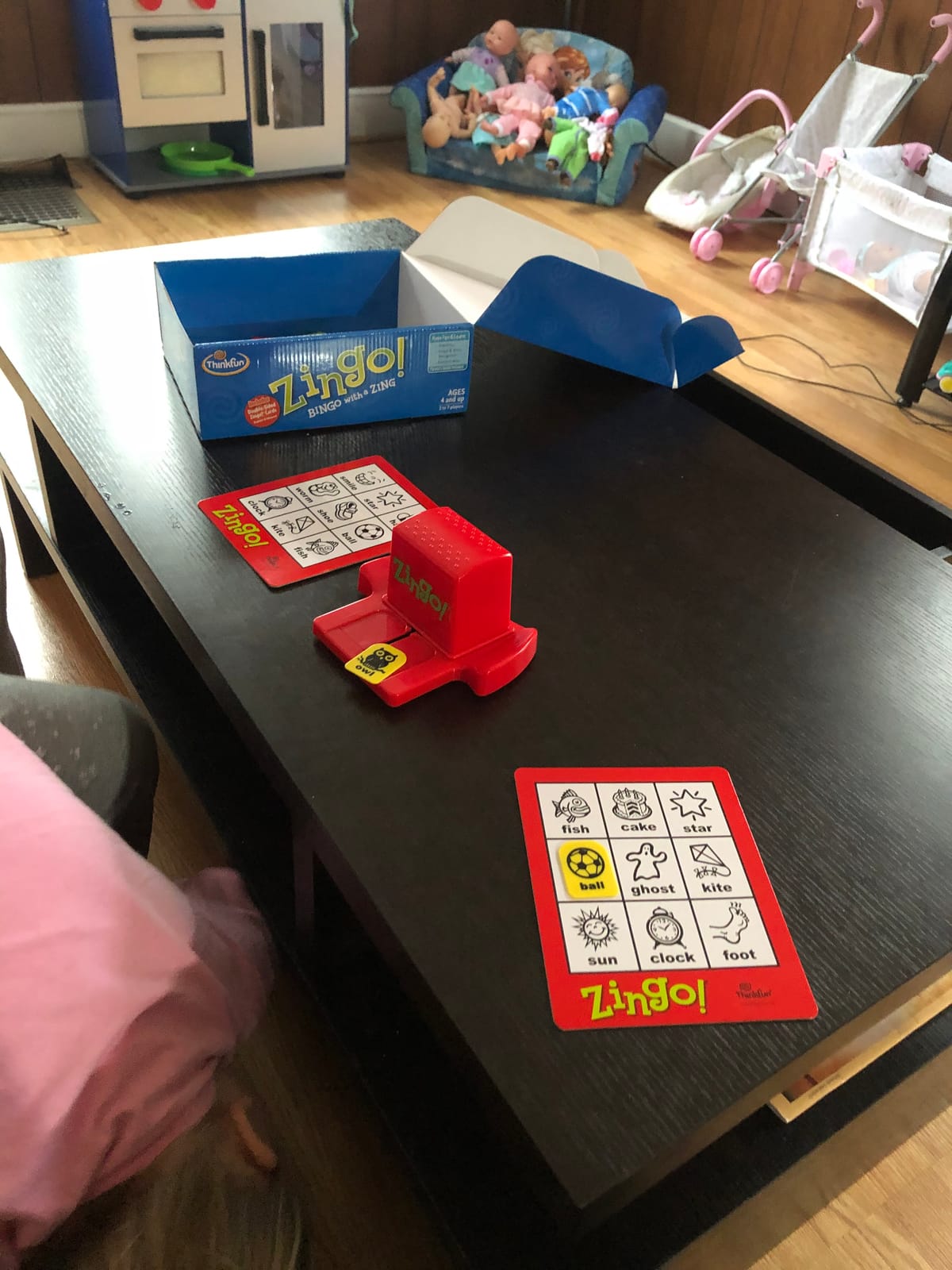
The newest edition includes an extra Zingo card so up to 7 players can join. This makes it perfect for playdates, birthday parties, and small classroom groups.
For pre-readers, an adult typically calls out the picture names and helps match. As children learn to read, they can take over calling, which adds a leadership element.
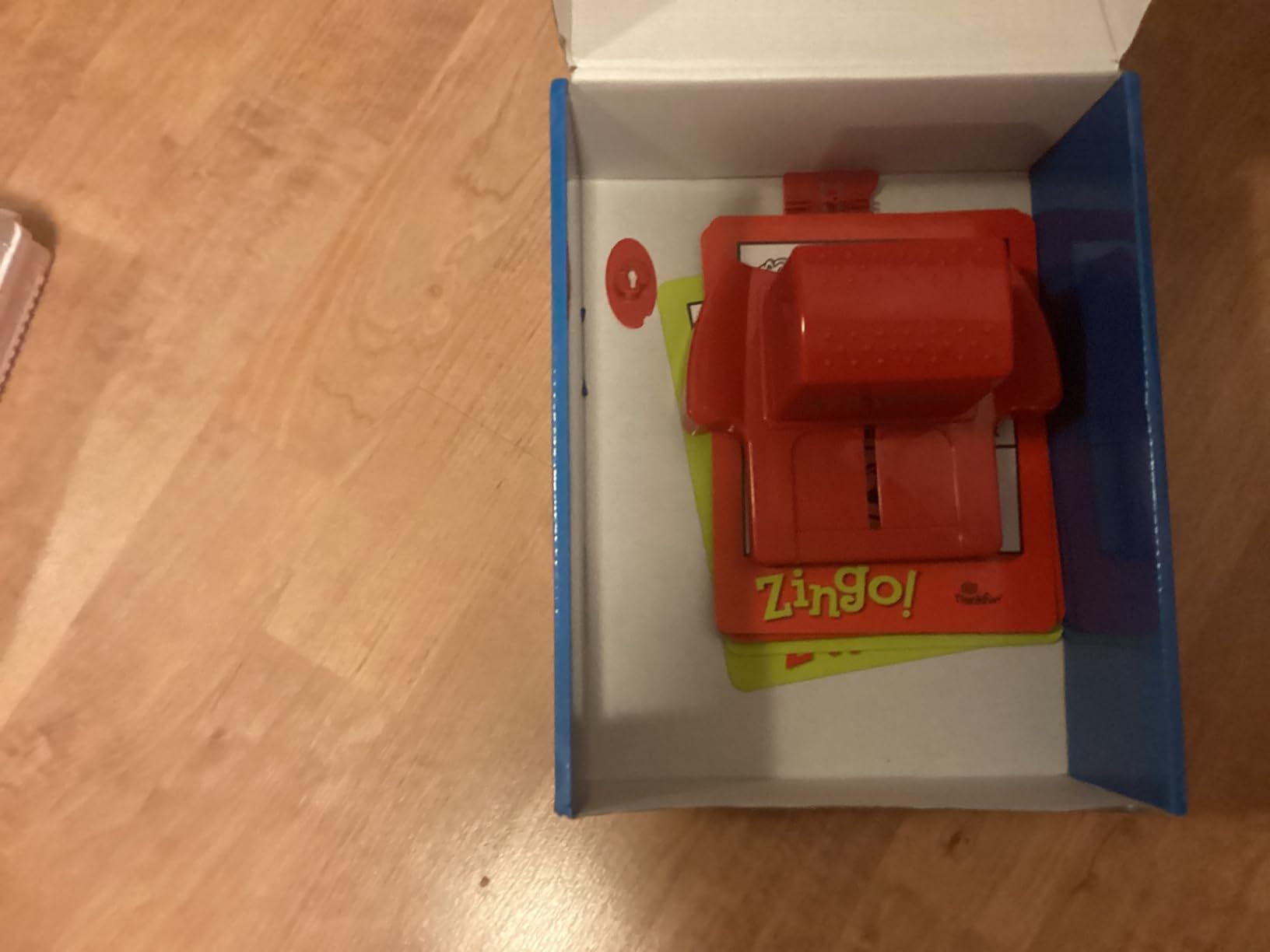
Comparing Zingo versions
The original Zingo focuses on pictures and word matching. The Zingo Word Builder (reviewed above) adds spelling. The Sight Words version targets Dolch words. Many families start with the original and graduate to the Word Builder version.
Why it has staying power
ThinkFun has sold over 50 million games worldwide. The build quality is excellent, the rules are intuitive, and the game scales from age 4 through age 7. That longevity justifies the slightly higher price compared to cheaper bingo-style games.
Buying Guide: How to Choose the Best Word Building Games for Kids
Choosing the right word building game depends on your child’s age, reading stage, and how you plan to play. After testing these games with kids from age 4 to age 11, I have found that the best pick always matches the skill you want to build, not just the age on the box.
Match the game to your child’s reading stage
Pre-readers (ages 3 to 5) need games that build letter recognition and sound awareness through play, not drills. Bananagrams My First, Melissa & Doug See & Spell, and ThinkFun Zingo Bingo work best at this stage because they use pictures and matching to teach letters without requiring reading.
Early readers (ages 5 to 7) benefit from games that introduce sight words, simple phonics patterns, and short word building. Key Education Sentence Building, ThinkFun Zingo Word Builder, Learning Resources Sight Word Swat, and BenBen Spelling Games shine here.
Fluent readers (ages 7 and up) need games that push vocabulary and spelling strategy. Bananagrams Classic, Hasbro Scrabble Junior, and Learning Resources Snap It Up Phonics challenge older kids while staying accessible.
Decide between solo play and multiplayer games
Solo games like Melissa & Doug See & Spell and JoyCat Magnetic Tiles work for independent learning. Kids can sit quietly and build words without an opponent. These are great for travel, quiet time, and homeschool centers.
Multiplayer games like Bananagrams, Zingo, Scrabble Junior, and Sight Word Swat create social learning moments. Kids practice turn-taking, sportsmanship, and friendly competition alongside reading skills.
Look for screen-free, durable construction
Every game on this list is screen-free, which parents on Reddit consistently ask for. Wood and thick cardboard tend to outlast thin plastic, especially in classrooms and homes with multiple children.
Consider classroom versus home use
For classroom centers, prioritize games that play 4 or more players, have clear rules, and survive daily handling. Key Education Sentence Building, Bambino Tree Sight Word Bingo, and Learning Resources Sight Word Swat are classroom favorites.
For home use, focus on what your specific child enjoys. A child who hates bingo will not magically love sight words through Sight Word Swat. Match the game mechanic to your child’s personality.
Factor in portability
Travel-friendly word games include Bananagrams (banana pouch), Bananagrams My First (green banana pouch), ThinkFun Zingo variants (compact box), and Snap It Up Phonics (small card box). For waiting rooms and restaurants, these compact sets are lifesavers.
Budget considerations
Word building games range from under $15 to over $30. The most affordable options like Bananagrams My First and Snap It Up Phonics deliver strong educational value without breaking the budget. Mid-range options like Hasbro Scrabble Junior and Melissa & Doug See & Spell offer long-term play value. Premium kits like JoyCat Phonics Magnetic Tiles include hundreds of pieces for the most comprehensive learning experience.
Games that grow with your child
Several picks on this list adapt as your child develops. Hasbro Scrabble Junior has a beginner and advanced side. ThinkFun Zingo Word Builder has two difficulty levels. JoyCat Magnetic Tiles include components for preschool through third grade. Investing in a game that grows saves money long-term.
Frequently Asked Questions
What is a good word building game for kids?
A good word building game for kids teaches letter sounds, sight words, and spelling through engaging play. Our top picks include Bananagrams Classic for fast-paced fun, Melissa u0026amp; Doug See u0026amp; Spell for early letter recognition, and ThinkFun Zingo Word Builder for sight word practice. The best choice depends on your child’s age and reading stage.
What are the best word games for kids?
The best word games for kids cover different age ranges. For ages 4 to 5, try Bananagrams My First or Melissa u0026amp; Doug See u0026amp; Spell. For ages 5 to 7, Key Education Sentence Building and ThinkFun Zingo Word Builder work well. For ages 7 and up, Bananagrams Classic and Hasbro Scrabble Junior challenge fluent readers.
What is the best game for building vocabulary?
For building vocabulary, Bananagrams Classic and Learning Resources Snap It Up Phonics are top picks. Bananagrams exposes kids to thousands of letter combinations while Snap It Up focuses on word families and phonics patterns. Pair either game with daily reading for the fastest vocabulary growth.
What is the popular word game everyone is playing?
Bananagrams Classic is the most popular word game right now, with over 26,000 reviews and a 4.9-star average. It works for ages 7 and up, plays 1 to 8 players, and travels in a fun banana-shaped pouch. Zingo variants and Scrabble Junior are also widely played alternatives.
Final Thoughts on Word Building Games for Kids in 2026
After weeks of testing with real kids and cross-referencing parent and teacher feedback, my top three picks for the best word building games for kids remain clear. Bananagrams Classic wins for fast-paced family play. Melissa & Doug See & Spell is the best wooden set for early learners. Key Education Sentence Building is the best classroom tool for grammar and sentence structure.
Whichever game you choose from this list, you are giving your child a screen-free way to build the literacy skills that matter most for reading success. Pick the one that matches your child’s age and interests, and watch the spelling practice disappear into play.