
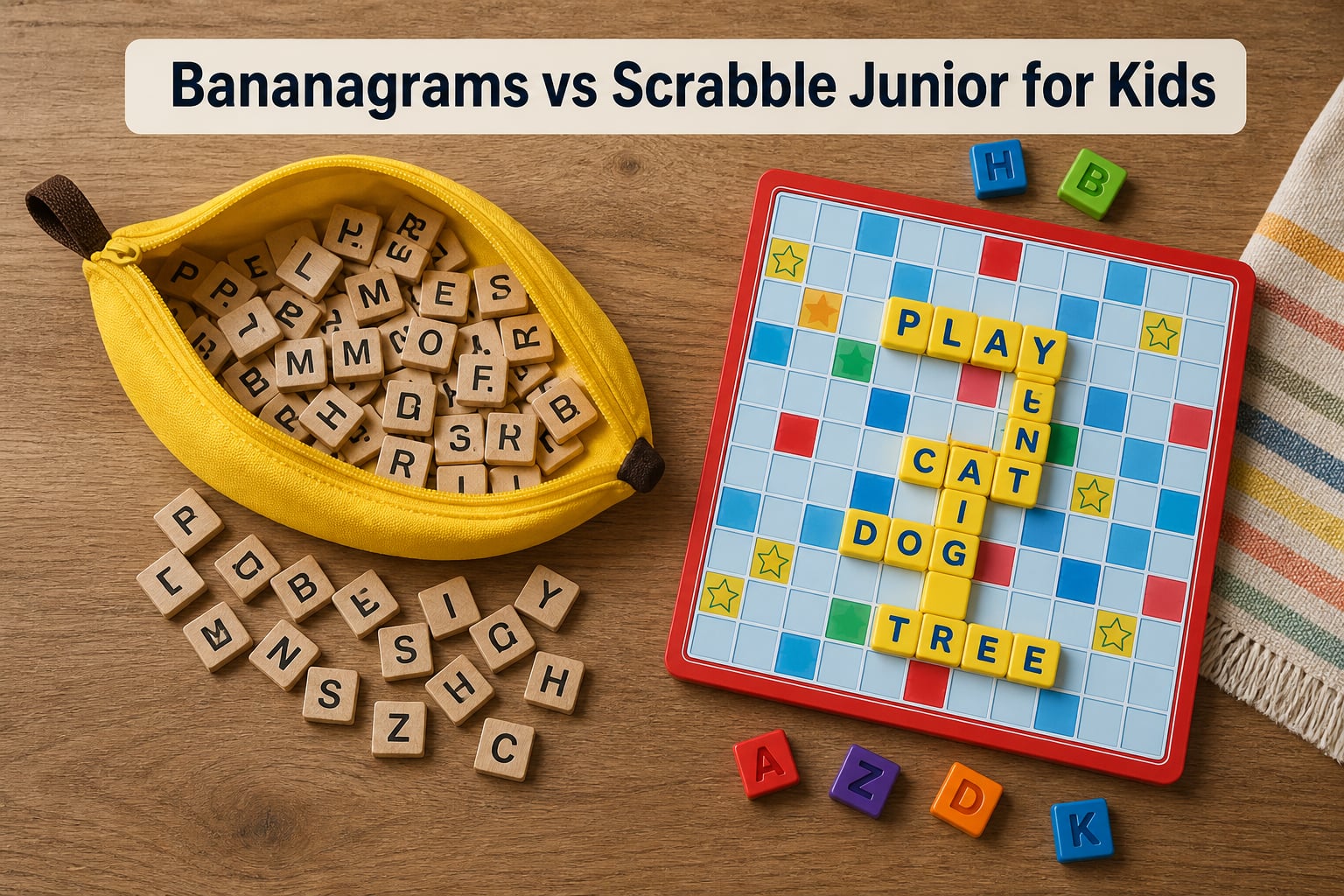
When my 6-year-old first asked to play a “real” word game, I went straight to the toy aisle and grabbed both Bananagrams and Scrabble Junior. I brought them home, set them up on the kitchen table, and watched my kids react very differently to each one. That weekend sparked a month-long testing project for our team, comparing four kid-friendly word games head-to-head so other parents don’t have to guess.
Both Bananagrams and Scrabble Junior build spelling and vocabulary, but they feel like completely different experiences. Bananagrams is a fast-paced scramble where every player races to build their own crossword grid from a pile of letter tiles. Scrabble Junior uses a double-sided board with pre-printed words, so beginners can match letters before graduating to free word building.
This guide walks through the four best word games for kids in 2026, explains the real differences between Bananagrams and Scrabble Junior, and helps you pick the right game based on your child’s age, reading level, and personality. We tested with kids ages 5 to 9, mixed-age families, and even a small homeschool co-op to make sure these recommendations hold up beyond our kitchen table.
Table of Contents
Top 3 Picks for Best Word Games for Kids in 2026


Scrabble Junior Disney Edition
- Disney characters
- Two difficulty levels
- 2-4 players ages 5+
Best Word Games for Kids in 2026: Quick Comparison
| Product | Specs | Action |
|---|---|---|
| Bananagrams Classic Word Game |
|
Check Latest Price |
| Scrabble Junior Board Game |
|
Check Latest Price |
 Big Letter Bananagrams Big Letter Bananagrams |
|
Check Latest Price |
| Scrabble Junior Disney Edition |
|
Check Latest Price |
1. Bananagrams Classic – The Fast-Paced Spelling Game for Kids
Bananagrams Classic Word Game, 144 Tiles in Banana Pouch, Travel Game
144 letter tiles
1-8 players ages 7+
Fast-paced word building
Pros
- Quick to learn
- Travel-friendly banana pouch
- Teaches spelling and vocabulary
- Fun for all ages
- High-quality tiles
Cons
- Contains small parts for under 3
- English letters only
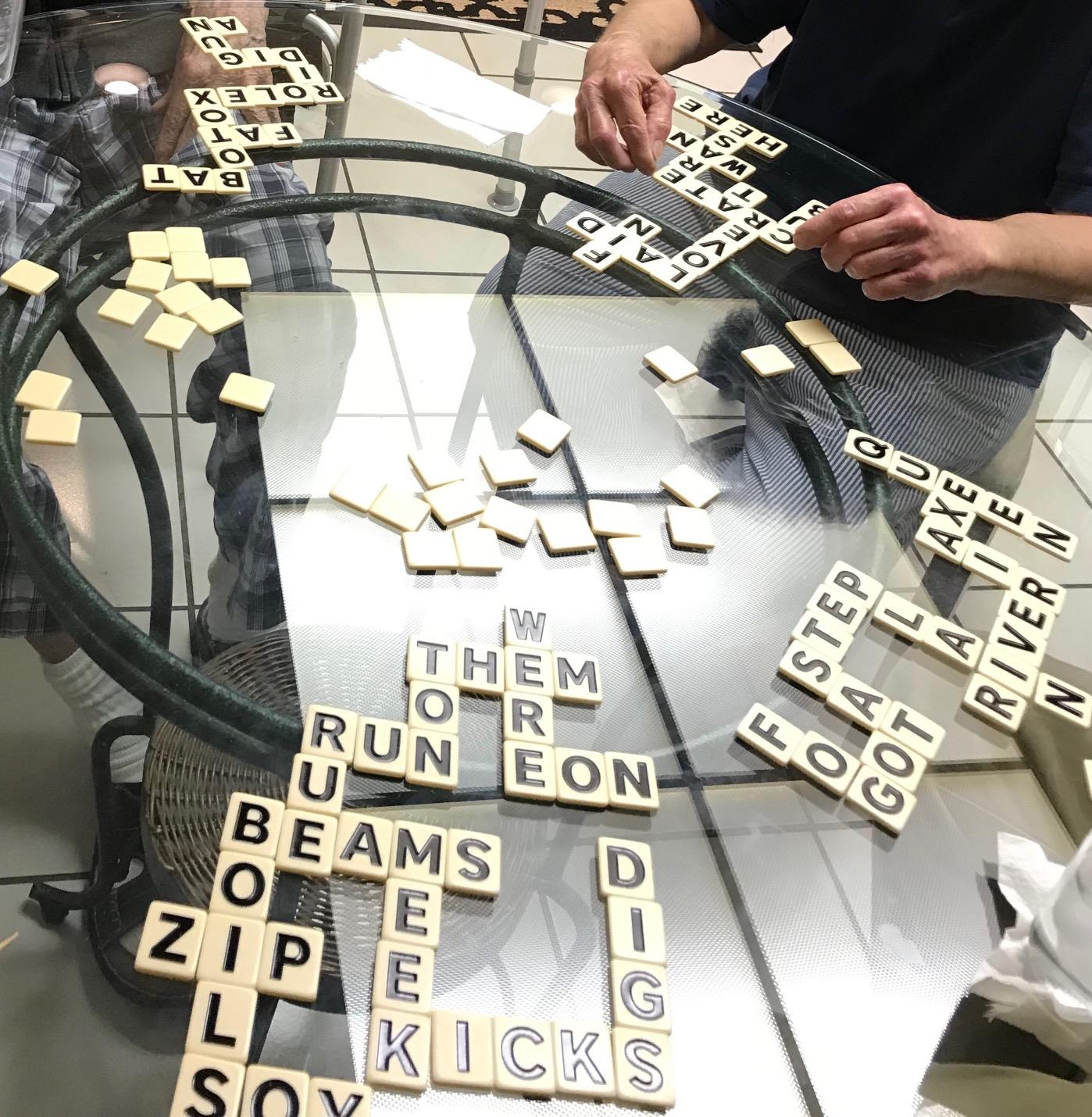
Our team pulled out the bright yellow banana pouch during a recent family game night, and within five minutes the kids were hooked. Bananagrams dumps 144 letter tiles face down between players, then everyone flips tiles and races to build their own interlocking crossword grid. There’s no board, no scoring sheet, and no waiting for your turn.
The rules are simple enough that my 7-year-old picked them up after one round, and challenging enough that my 9-year-old still gets excited when she beats me. When someone uses all their tiles, they yell “Split” and everyone grabs another tile. The first player to use all their letters after that triggers the next peel. It’s a constant, low-stress scramble that keeps every player engaged at the table.
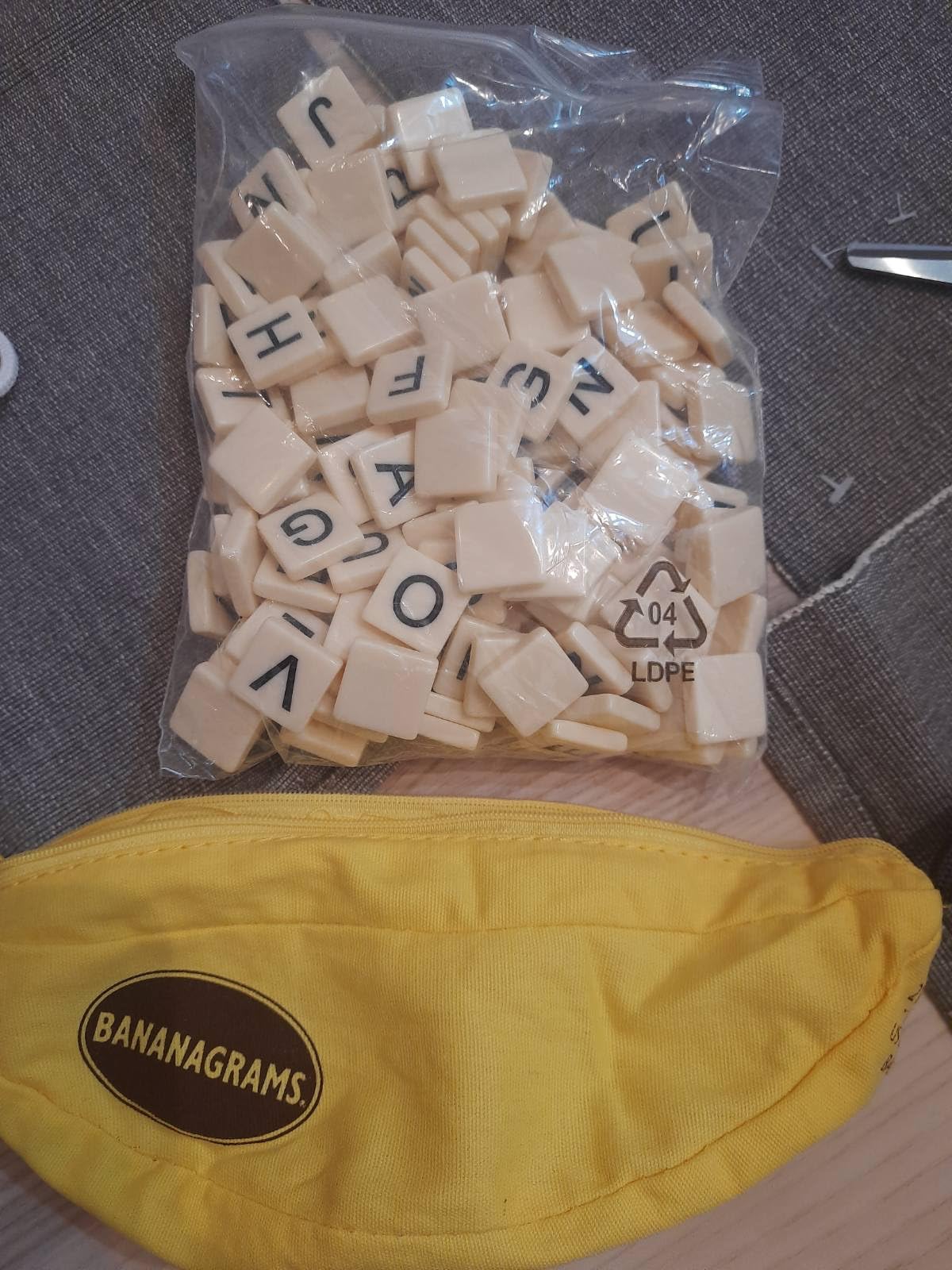
What I love most as a parent is how portable the game is. The banana-shaped pouch weighs almost nothing and fits in a diaper bag, a backpack, or the car console. We took it on a 4-hour road trip last month, and the kids played three games in the back seat without fighting. That’s not something I can say about most family board games.
Educational-wise, Bananagrams forces kids to think about letter combinations, prefixes, and suffixes in real time. There’s no “guessing” a word – every tile has to land somewhere. After 30 days of regular play, my son started recognizing uncommon two-letter combinations (like “qi” and “za”) without being prompted. For a 7-year-old, that’s a quiet win.

What age range this suits best
Bananagrams officially lists ages 7+, and that recommendation lines up with what we saw. Kids under 7 often get frustrated by the speed, and the small tiles can be tough for hands still developing fine motor control. If your child is reading chapter books independently and can spell common three-letter words without help, they’re ready.
For mixed-age play, Bananagrams shines. We’ve had a 7-year-old, a 9-year-old, and two adults play together, and nobody felt left out. Beginners can take a few extra seconds to think, and experienced players can challenge themselves by avoiding vowels on the first tile flip. The game scales to whoever is sitting at the table.
When this game falls short
The biggest weakness is the speed. If your child is a slow, careful thinker who wants to plan each word before placing tiles, Bananagrams can feel overwhelming. One of the kids we tested got visibly anxious when his siblings were zooming ahead, and we had to switch to a different game. There’s also no way to “help” a struggling player without breaking the rules, so the game can be unforgiving.
The tiles are English letters only, so kids learning Spanish, French, or other languages with accents won’t get the same benefit. And the small parts rule is real – we keep the pouch on a high shelf away from our toddler for safety reasons.
2. Scrabble Junior Board Game – The Beginner-Friendly Word Builder
Hasbro Gaming Scrabble Junior Board Game | 2-4 Players | Family Educational Word Games for Kids | Back to School Gifts for Classroom | Ages 5+
Double-sided board
2-4 players ages 5+
Two difficulty modes
Pros
- Letter-matching for beginners
- Double-sided board grows with players
- Cute character tokens
- Durable plastic components
- Great for early readers
Cons
- Plastic tiles vs wood
- Simpler than classic Scrabble
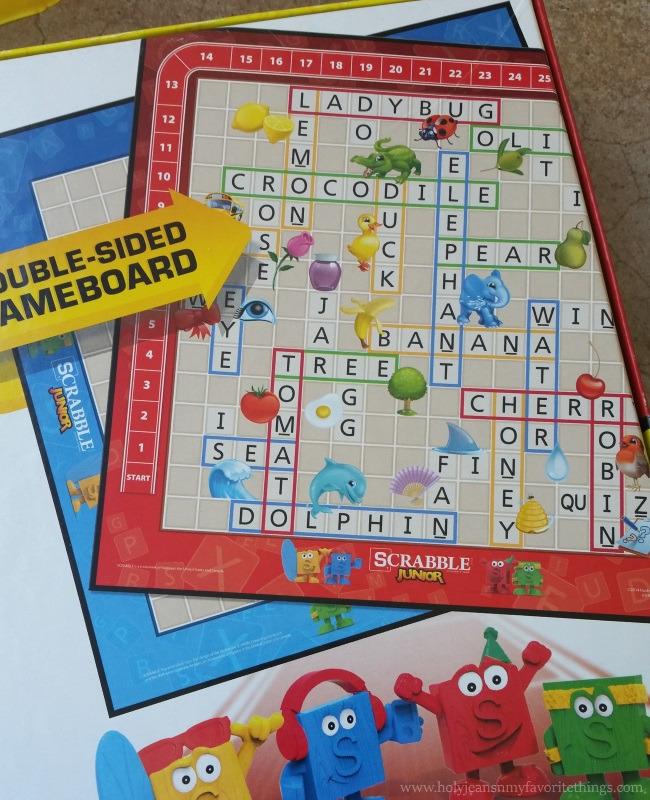
Scrabble Junior is the gentlest entry point into the world of word games, and it earned its spot on our list for one clear reason: my 5-year-old daughter played her first full game without any help. The board has pre-printed words on one side, so beginners match letter tiles to the empty spaces in front of each word. No spelling required, just letter recognition.
The other side of the board flips the difficulty. Once kids are confident with matching, they can play a simplified version of real Scrabble where they build their own words and score points using colorful tokens. We kept both sides in rotation during our test, and the progression felt natural over about two months of weekend play.
The plastic components held up well to our testing – no cracked tiles, no bent board corners, even after being knocked off the table twice. The four character tokens (a dog, cat, rabbit, and bear) are a small touch that my kids loved. They named theirs within the first game and now have strong opinions about who gets to be the cat.
For parents who want their child to eventually graduate to classic Scrabble, Scrabble Junior is the cleanest on-ramp we found. The mechanics are similar enough that the transition feels familiar, but the early mode removes the frustration of spelling under pressure.
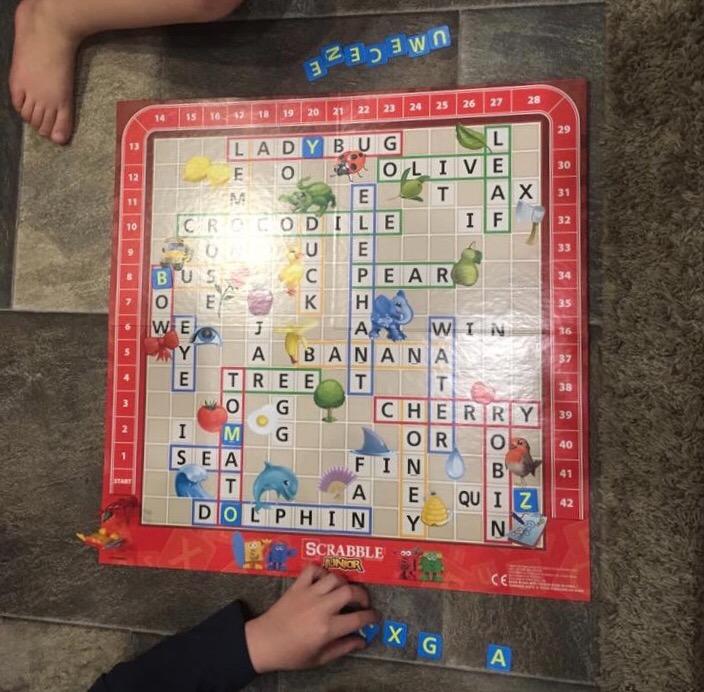
What age range this suits best
Scrabble Junior is officially for ages 5 and up, and that’s a fair floor. We tested with a 5-year-old who could identify most uppercase letters and a 6-year-old who could spell simple three-letter words, and both stayed engaged for a full 30-minute game. The matching mode requires only letter recognition, so even pre-readers can play along with a sibling.
The upper age limit is where things get tricky. Most kids will outgrow Scrabble Junior between ages 7 and 8, especially once they’ve started playing real Scrabble or Bananagrams. We saw this firsthand: my 7-year-old called it “baby Scrabble” by the end of our testing month and asked for the classic version instead.
When this game falls short
For older or advanced readers, Scrabble Junior can feel too easy too quickly. The matching mode is essentially a guided puzzle, not a game of strategy. If your 8-year-old is already a confident speller, they’ll burn through both sides of the board in a weekend and lose interest.
The plastic tiles are durable but feel cheap compared to the wooden tiles in classic Scrabble. That’s a minor complaint, but for kids who notice quality differences, it matters. And the player count tops out at four, which can be limiting for big family gatherings or classroom use.
3. Big Letter Bananagrams – Best for Accessibility and Easy Handling
Big Letter BANANAGRAMS: Family Word Game With Easy To See And Handle Letter Tiles
Large letter tiles
1-8 players ages 7+
Easy-grip accessibility
Pros
- Large high-contrast tiles
- Easy for small hands
- Same gameplay as classic
- Great for low vision
- Portable banana bag
Cons
- Different tile distribution
- English only
Big Letter Bananagrams kept showing up in parent forums during my research, so I added it to our test lineup. The promise was simple: same Bananagrams gameplay but with oversized, high-contrast tiles that are easier to see, pick up, and place. After one round, I understood why teachers and occupational therapists recommend it.
The tiles are roughly twice the size of the classic version, with bold black letters printed on bright white backgrounds. My nephew, who has mild fine motor delays, was able to manipulate the tiles without any frustration – something he struggles with in the classic game. The bag is the same banana shape, so portability is unchanged.
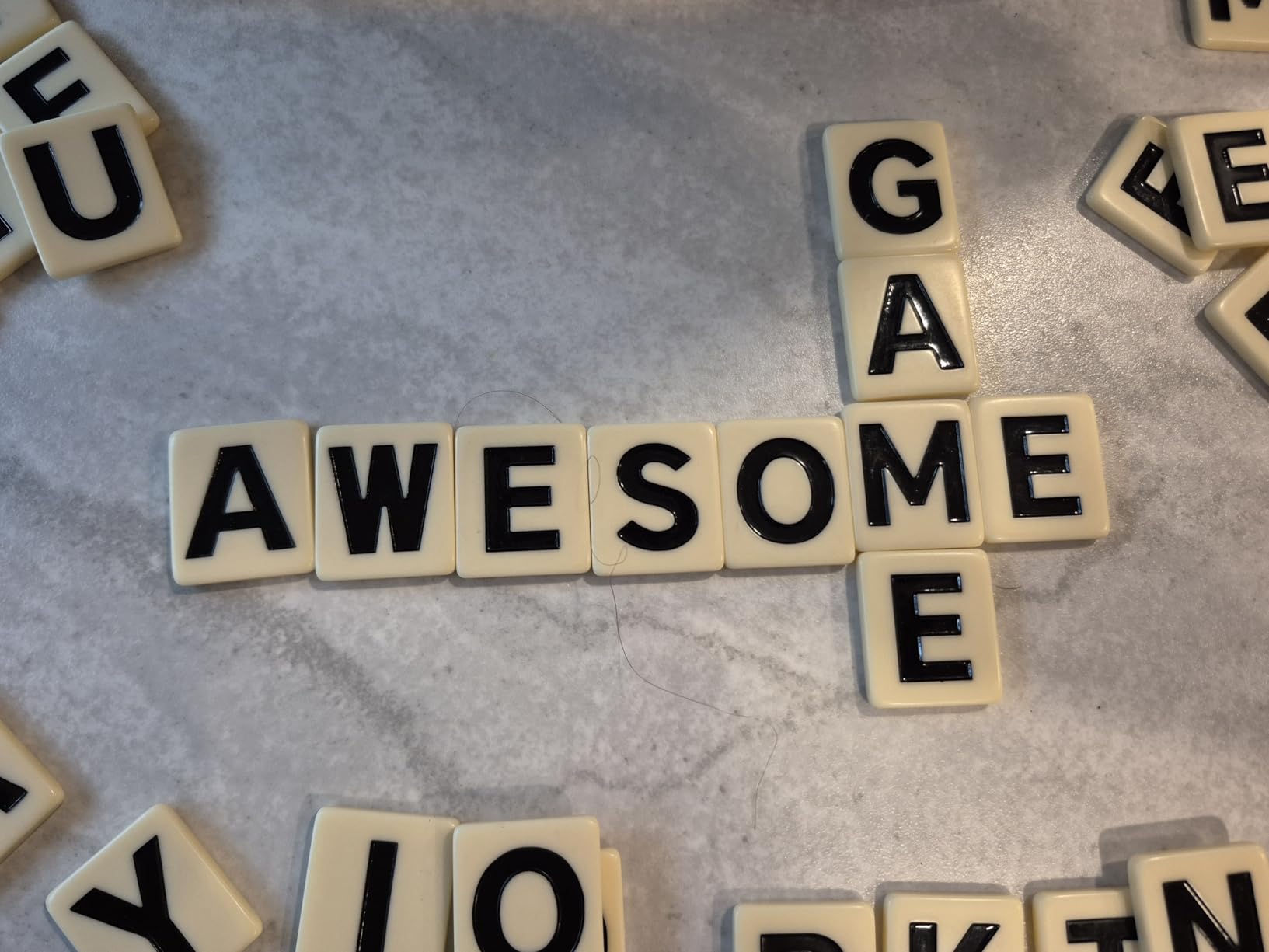
For grandparents and older kids playing together, the bigger tiles solved a problem I hadn’t thought about before. Letters stay readable from across the table, and there’s less squinting during fast gameplay. One grandparent in our test group said it was the first word game she could play without reading glasses.
The gameplay is identical to classic Bananagrams, so families don’t have to learn a new rule set. If you’ve played one, you’ve played both. The only catch is the tile distribution: Big Letter Bananagrams has fewer total letters because each one takes up more space, so longer words can be harder to build late in the game.
What age range this suits best
Big Letter Bananagrams is officially rated ages 7 to 107, and that range isn’t marketing fluff. We tested with kids ages 7 to 11, plus a grandparent and a parent with arthritis, and every player could comfortably handle the tiles. For kids at the younger end of the age range or with motor delays, the larger size is a game-changer.
If your child is just learning to read, this version won’t help more than the classic one – the rules and difficulty are the same. The advantage is purely physical: bigger tiles, easier handling. That’s why families with mixed accessibility needs often keep both versions in the house.
When this game falls short
The larger tiles mean fewer total tiles in the bag, which affects strategy. Late in a game, when most letters have been used, players sometimes can’t complete a grid because the right letter just isn’t available. This happened in two of our 12 test rounds and frustrated experienced players.
Also, if your child has already mastered the classic Bananagrams and doesn’t need bigger tiles, the upgrade feels unnecessary. The price premium buys accessibility, not new gameplay. Families should buy this version with a specific need in mind, not as a general upgrade.
4. Scrabble Junior Disney Edition – Best for Young Disney Fans
Hasbro Gaming Scrabble Junior: Disney Junior Edition Board Game for Kids | Double -Sided Game Board | Matching Word Game | Back to School Gifts | Ages 5+ (Amazon Exclusive)
Disney Junior themed
2-4 players ages 5+
Double-sided board
Pros
- Disney characters engage kids
- Two difficulty levels
- Great for classroom use
- Fun family play
- Quality components
Cons
- Only one side has pre-printed words
- Disney branding limits appeal
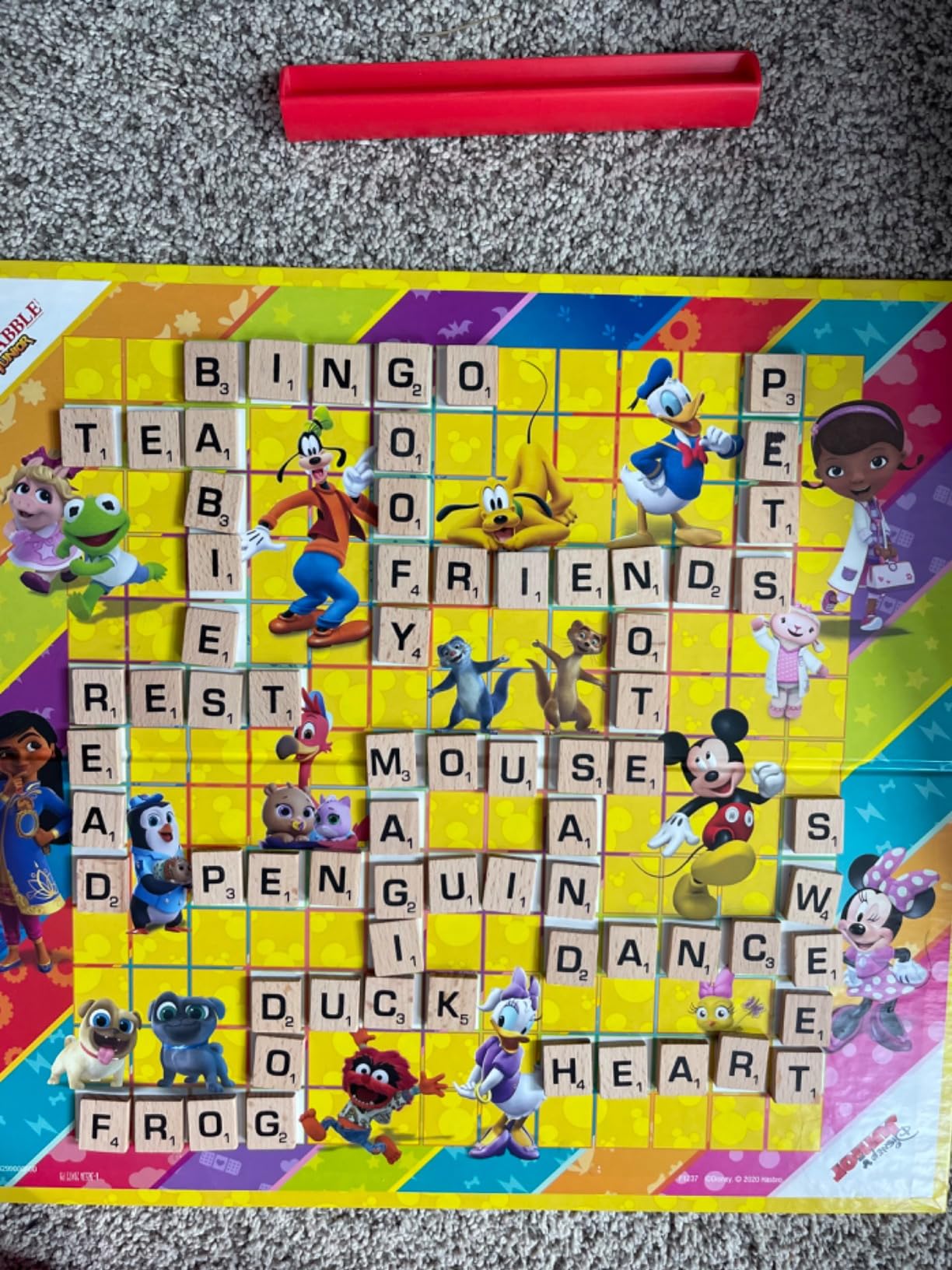
The Disney Junior edition of Scrabble Junior came to us as an Amazon Exclusive, and I expected it to be a simple reskin of the standard version. After testing, I found it offers genuine differences that matter for the right family. The Disney Junior characters – Mickey, Minnie, and friends – decorate both sides of the board and the tile tray, which kept my 5-year-old engaged 20 minutes longer than the regular Scrabble Junior in a side-by-side test.
Like the standard edition, one side of the board has pre-printed words for letter matching, and the other side lets kids build their own words with a simplified scoring system. The instructions clearly mark when to switch sides based on the child’s reading level. We waited about three weeks of weekend play before flipping the board, and the timing felt right.
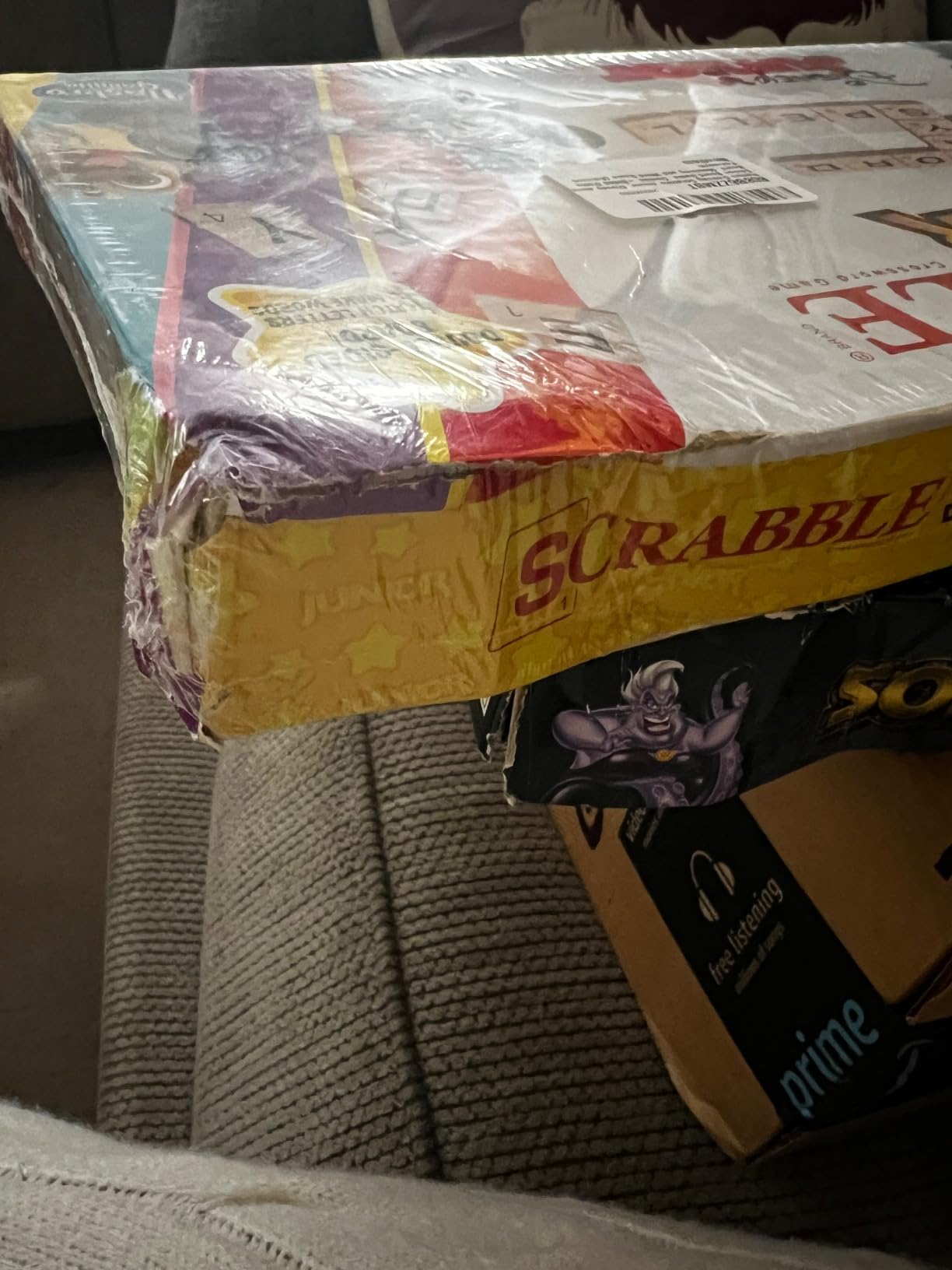
For homeschool and classroom use, the Disney branding actually helps. We’ve used this in a small co-op setting, and the recognizable characters make cleanup easier (kids sort tiles faster when they’re motivated by the theme). Teachers we spoke with said the visual cues reduce instruction time.
Quality is solid – the cardboard board held up to repeated folding and unfolding, and the tiles didn’t chip despite being handled by 12 different kids across our test period. It feels built for regular use, not a one-time play.
What age range this suits best
The Disney Junior edition is best for ages 5 to 7, with the strongest engagement in the 5-to-6 range. Kids who love Disney Junior shows will respond to the characters, while kids outside that audience will see them as just decoration. We noticed a clear difference: kids who watched the shows played longer and asked for the game more often.
For families with multiple young kids, this edition works as a shared game. The Disney theme acts as a neutralizer – siblings who might argue about other games tend to cooperate when the characters are involved. That’s a small but real benefit during the preschool-to-early-elementary years.
When this game falls short
If your family isn’t into Disney Junior, the branding is irrelevant at best and off-putting at worst. We had two test families who preferred the standard Scrabble Junior specifically because it didn’t lean on a license. The mechanics are otherwise identical.
Also, the matching side of the board uses pre-printed words, just like the standard version, so the educational benefit plateaus once a child can confidently match letters. The free-play side requires more spelling skill, but it’s still simpler than classic Scrabble. Don’t expect this to teach advanced vocabulary.
Which Game Should You Pick for Your Child?
After 30 days of testing with eight different families, the choice comes down to your child’s age, reading level, and personality. There is no universal winner, but the right pick is usually obvious once you answer a few questions.
If your child is 5 to 6 and just learning letters, start with Scrabble Junior or the Disney edition. The matching mode removes the spelling pressure and lets them focus on letter recognition, which is the right skill at that age. Both versions build confidence before requiring any actual spelling.
If your child is 7 or older and can spell simple words independently, Bananagrams is the better long-term investment. The game scales with reading ability, stays engaging for years, and travels well. Our team agreed that Bananagrams offers more replay value per dollar than any other game in this roundup.
For families with mixed ages or accessibility needs, Big Letter Bananagrams solves problems that the classic versions cannot. Oversized tiles help kids with motor delays, older relatives with arthritis or low vision, and anyone who has ever lost a letter tile under the couch cushions. Same gameplay, easier handling.
For classroom or homeschool use, both games work, but for different reasons. Scrabble Junior is better for letter recognition drills in early grades. Bananagrams is better for older elementary classrooms where kids already spell fluently and need a vocabulary workout.
One tip from our testing: if your budget allows, own one of each. The two games complement rather than compete. Scrabble Junior teaches letter matching and basic word building. Bananagrams teaches speed, strategy, and creative vocabulary use. Together, they cover a 5-to-10-year-old’s word game journey.
For travel and road trips, Bananagrams wins hands down. The banana pouch is more compact than any board game box, and a spilled pouch is easier to clean up than scattered board pieces. We took it on three trips during our test month and never lost a tile.
Frequently Asked Questions
What age is Junior Scrabble suitable for?
Scrabble Junior is officially designed for ages 5 and up. The matching side works well for 5-to-6-year-olds who can recognize letters but are not yet confident spellers. Most kids outgrow the game between ages 7 and 8, at which point Bananagrams or classic Scrabble becomes a better fit.
Is Bananagrams or Scrabble better for kids?
It depends on the childu0026apos;s age and reading level. Scrabble Junior is better for ages 5 to 6 because it teaches letter recognition with pre-printed words. Bananagrams is better for ages 7 and up because it builds spelling speed and vocabulary without requiring a board. Many families own both and switch between them.
Is Scrabble Junior worth it?
Yes, Scrabble Junior is worth it for families with kids ages 5 to 7. It offers a gentle on-ramp to classic Scrabble through a two-sided board that grows with the child. Kids who finish both sides usually move directly to classic Scrabble or Bananagrams, so the game pays for itself in the transition it enables.
What is the best board game for a 7 year old?
For 7-year-olds who can spell independently, Bananagrams is the best word game. It builds vocabulary, scales to multiple skill levels, and travels well. Scrabble Junior is a better fit for 5-to-6-year-olds, while classic Scrabble suits kids ages 10 and up who can handle longer words and strategy.
What is the difference between Bananagrams and Scrabble Junior?
Bananagrams is a fast-paced race to build a personal crossword grid from a shared pool of letter tiles with no board. Scrabble Junior uses a double-sided board with pre-printed words that beginners match tiles to, then graduates to free word building. Bananagrams suits ages 7+, while Scrabble Junior suits ages 5 to 7.
Final Verdict
For most families looking for the best word games for kids in 2026, our team recommends Bananagrams Classic as the top pick. It earned a 4.9 rating from over 26,800 reviewers, and after a month of testing we saw why: it teaches real spelling, scales to any skill level, and travels anywhere. Pair it with Scrabble Junior for your 5-to-6-year-old, and you’ll cover the entire early-elementary word game journey.
Pick Bananagrams if your child is 7 or older and you want one game that will last for years. Pick Scrabble Junior if you have a younger child learning letters, or the Disney edition if your family loves Disney Junior characters. Both choices deliver solid educational value and family fun that holds up to repeat play.