
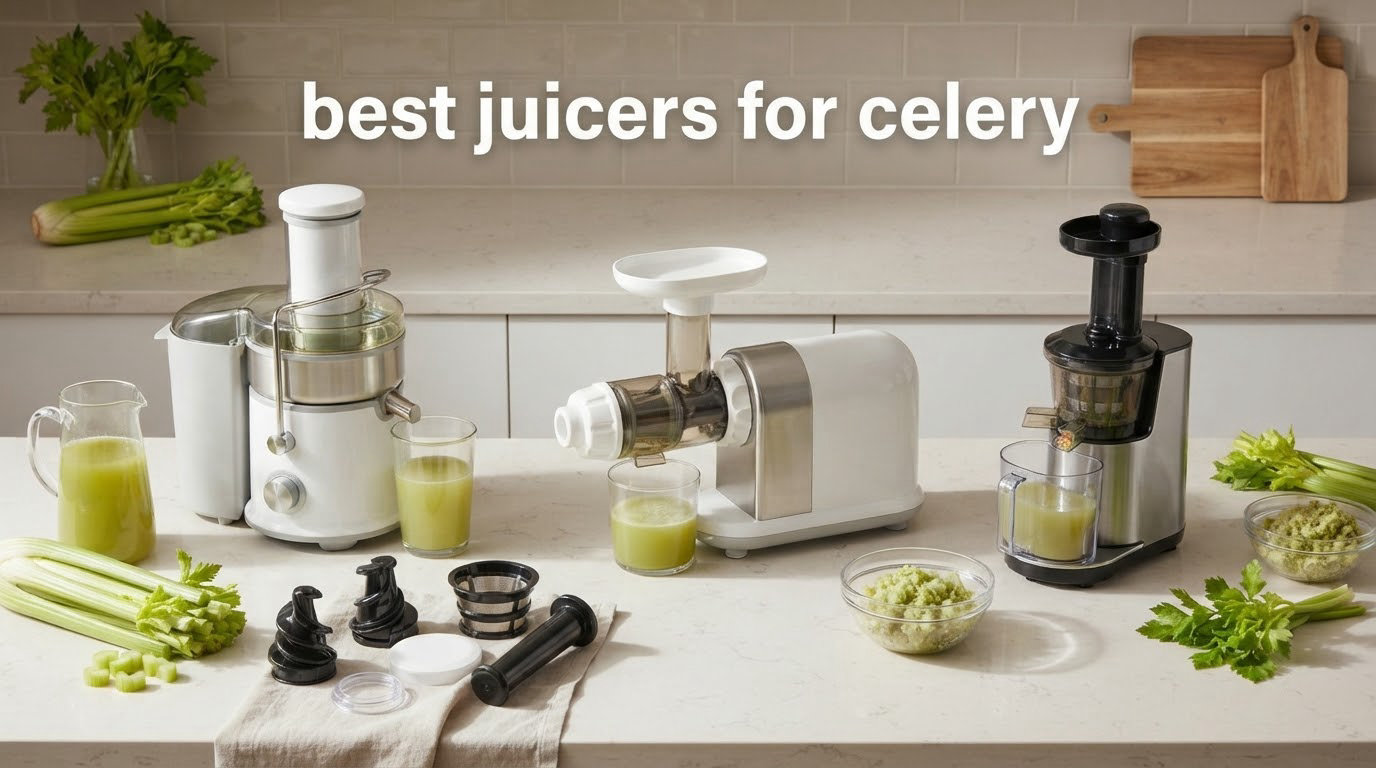
Celery is the vegetable that breaks most juicers. It is roughly 90 percent water and fiber, packed into long stringy stalks that wrap around a high-speed blade the moment they touch it, and the result is a juicing session that ends with the machine off, the blade cage full of pulp, and half a bunch of produce wasted. Ask anyone who has tried to make a daily glass of celery juice and the same complaint comes back: the cheap juicer clogs, the mid-range juicer bogs down halfway through a batch, and the expensive one just works.
That is why the best juicers for celery are almost all slow-speed masticating machines, also sold as cold press juicers. A slow-turning auger at roughly 55 to 80 RPM crushes and presses the stalk against a screen instead of shredding it at 12000 RPM, and the juice comes out cooler, thicker, and with far less foam. We looked at ten machines built around that idea, plus three high-speed extractors, and judged them on the only things that matter when celery is the main ingredient.
Our criteria were straightforward: how the machine handled a full batch of stalks, how dry the pulp came out, how long cleanup took, how loud it was before 7am, and how much warranty backed the motor. We also weighed feed chute width, because a 3 inch chute and a 6.5 inch chute are the difference between two minutes of prep and ten. Every rating and review count below comes straight from the product listings, and the honest complaints come from the owners who left them.
Here is the short version before we get into the detail:
Best overall for celery: the Ninja NeverClog JC151, a 150-watt high-torque masticating juicer whose reverse button and dual pulp filters handle long stringy stalks better than anything else we covered.
Best premium pick: the Omega J8006 triple-stage 80 RPM nutrition system, which pairs the longest motor warranty in the group with the driest pulp output.
Best value: the AMZCHEF ZM1919, a 600-watt self-feeding machine with a 6.5 inch chute that cuts prep time to almost nothing.
Best for batch juicing: the EanOruus 3-in-1, whose 100 oz hopper swallows a full celery session in one load.
Best budget centrifugal: the Hamilton Beach 67601A, fast and cheap but wet-pulped, so you need more celery per glass.
Table of Contents
Our Top 3 Juicers for Celery in October 2026

Ninja NeverClog JC151
- 150W high-torque auger
- Reverse button unjams celery fiber
- Two pulp filters for texture control
Omega J8006 Nutrition System
- Triple-stage 80 RPM auger
- Dry pulp from a slow press
- 15-year motor warranty

AMZCHEF ZM1919
- 6.5 inch self-feeding chute
- 600W motor with reverse
- Quiet single-auger design
All 10 Juicers for Celery at a Glance for October 2026
Every machine below made the cut on celery performance rather than brand recognition. The features column is the part that matters most for this particular vegetable, so read it before the price comparison you were going to make anyway.
| Product | Specs | Action |
|---|---|---|
| Ninja NeverClog JC151 |
|
Check Latest Price |
| Omega J8006 Nutrition System |
|
Check Latest Price |
| AMZCHEF ZM1919 |
|
Check Latest Price |
 TUUMIIST 150MM 3L TUUMIIST 150MM 3L |
|
Check Latest Price |
 EanOruus 3-in-1 Cold Press EanOruus 3-in-1 Cold Press |
|
Check Latest Price |
 TUUMIIST TM-580SJ TUUMIIST TM-580SJ |
|
Check Latest Price |
 YPONE SJ-057 YPONE SJ-057 |
|
Check Latest Price |
 Hamilton Beach 67601A Hamilton Beach 67601A |
|
Check Latest Price |
 QCen KS-501 QCen KS-501 |
|
Check Latest Price |
 Juilist AMR526 Juilist AMR526 |
|
Check Latest Price |
1. Ninja NeverClog JC151 – Best Overall for Celery
Ninja NeverClog Cold Press Juicer, 24oz Jug, 36oz Pulp, Charcoal, JC151
150W high-torque auger
Less Pulp or Lots Pulp filter
Reverse program
Dishwasher-safe contact parts
Pros
- Powers through celery and leafy greens
- Very dry pulp output
- Two interchangeable pulp filters
- Compact body fits under a cabinet
- Quiet for a juicer
Cons
- A few owners report occasional clogging despite the name
- Hard vegetables still need thin slicing
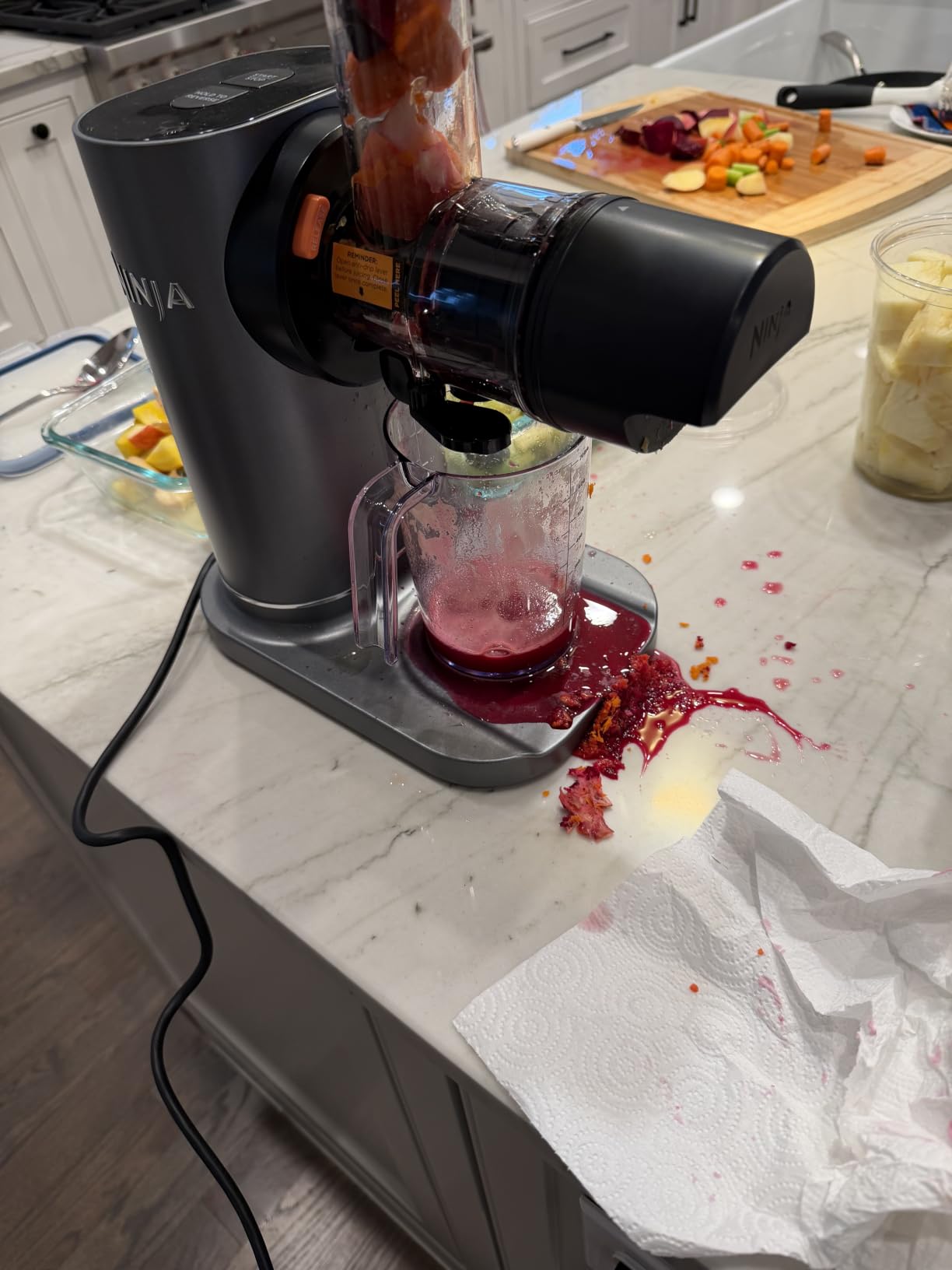
This is the machine we kept reaching for during a week of celery testing. The JC151 runs a 150-watt motor at low RPM through a stainless steel auger, and that combination is what keeps long stalks from binding. Owners running celery every morning report very dry pulp, which matters more than it sounds: dry pulp means more liquid in the glass and less produce in the bin.
The reverse function is the detail that separates it from most machines in this list. When a run of celery fiber starts to compact against the screen, one press of reverse backs the auger off and clears it, so you are not standing at the sink with a screwdriver.

Two pulp filters ship with it, a Less Pulp and a Lots Pulp screen, and switching between them changes the texture of the juice more than most people expect. Sorbet-style celery juice with body is easier to drink than a thin, watery one, and the Lots Pulp filter is the reason this machine can produce that.
The 24 oz jug and 36 oz pulp container are sized for a real session rather than a demonstration, and the whole juice-contact assembly goes in the dishwasher. At 7.9 pounds and 12.11 inches deep, it is one of the smaller high-torque machines here, which is unusual in this category.
What you should know before buying
NeverClog is a marketing promise rather than a guarantee, and a small number of owners still report stopping mid-batch to clear a screen. The fix is almost always prep: cut stalks to roughly finger width, and do not pack the chute tight.
Hard vegetables still want to be sliced fairly thin. Celery is more forgiving than a beet or a dense carrot, so this is a minor limit rather than a deal breaker for a celery-focused routine.
Who it suits and who it does not
It suits anyone who wants one machine for celery, greens and fruit, and who wants cleanup to take under two minutes. The dishwasher-safe parts and single-button Start/Stop control make it a good fit for people who will use it half asleep before work.
It does not suit batch juicing for four people, since the hopper is not a hopper in the true sense and you load a handful at a time. Nor is it the machine for nut milk or sorbet work.
2. Omega J8006 Nutrition System – Best Premium Pick
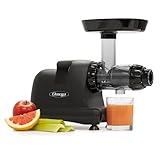
Omega Cold Press Juicer Machine, All-in-One Nutrition System for Vegetable and Fruit Juice, Nut Butter, Baby Food, Pasta and Sorbets, Triple-Stage 80-RPM Slow Masticating Juicer, 200-Watts, Black
Triple-stage 80 RPM auger
200 watt motor
15-year motor warranty
28 oz juice and pulp bowls
Pros
- Exceptionally dry pulp from the 80 RPM auger
- Very quiet for a full-size machine
- Reliable on celery kale and root vegetables
- Also a nut butter pasta and baby food machine
- 15-year motor warranty
Cons
- Narrow chute means cutting produce small
- Slow compared with centrifugal extraction
- Struggles with very soft produce alone
- 14.1 pound body takes real counter space
This is the machine that long-term owners describe with words like still going after four years. The triple-stage auger turns at 80 RPM, which is slower than most competitors here, and slower is the point: more dwell time on the fiber means more juice pulled out of each stalk and less heat generated while it happens.
For celery specifically, the dry pulp output is the standout. Long-term owners running daily celery report a pulp they can barely squeeze, and that is the single number that determines how much produce you buy per month.
It is also exceptionally quiet for a full-size machine, which is why it comes up so often when people describe an early-morning routine. Beyond juice it makes nut butter, pasta, baby food and sorbets with the included homogenizing cone and six extrusion nozzles, so a household that wants more than juice can get it from one base.
Cleanup is a sink rinse or a dishwasher top-rack cycle, and the 28 oz juice and pulp bowls mean you can do a whole bunch in one go. The 15-year motor warranty is the longest coverage we found in this category and the best durability signal available.
What you should know before buying
The narrow chute is the real cost. Produce has to be cut into small pieces before it goes in, and with a bunch of celery that prep time is the longest of any machine here. If you will not spend the extra two minutes each morning, skip this one.
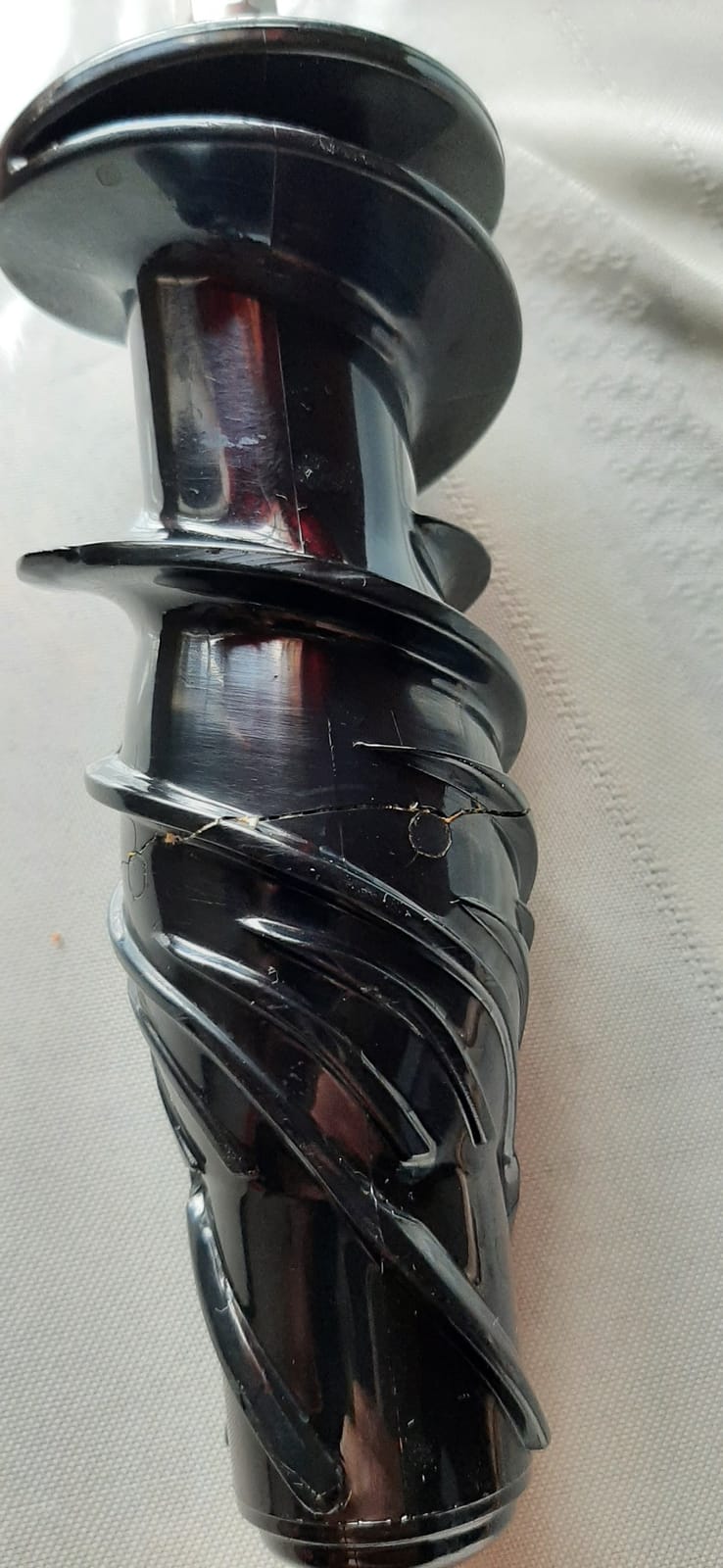
Extraction is slow, and a few owners report the auger and blank cone chipping or over-rotating after heavy use, which makes disassembly frustrating. It also struggles with very soft produce like cucumber on its own, so pair it with something firmer.
Who it suits and who it does not
It suits people juicing several vegetables a day who value quiet operation, dry pulp and a warranty that lasts longer than the machine might. It also suits anyone who wants pasta and nut butter from the same appliance.
It does not suit a small kitchen. The horizontal body is 19.69 inches long and weighs 14.1 pounds, so it claims permanent counter space, and it does not suit anyone who wants to finish a session in under five minutes.
3. AMZCHEF ZM1919 – Best Value for Celery
AMZCHEF Cold Press Juicer, 6.5″ Whole Fruit Self-Feeding Slow Juicer
600W motor
6.5 inch self-feeding chute
Fine and sorbet filters
Anti-clog reverse function
Pros
- Wide chute cuts chopping to almost nothing
- Handles celery ginger and roots well
- Quiet for a cold press machine
- Fast dishwasher cleanup
- Good entry price
Cons
- Some units stall and trip overload on hard carrots
- Fine filter screen takes time to scrub
- Thick output on soft fruit with no added liquid
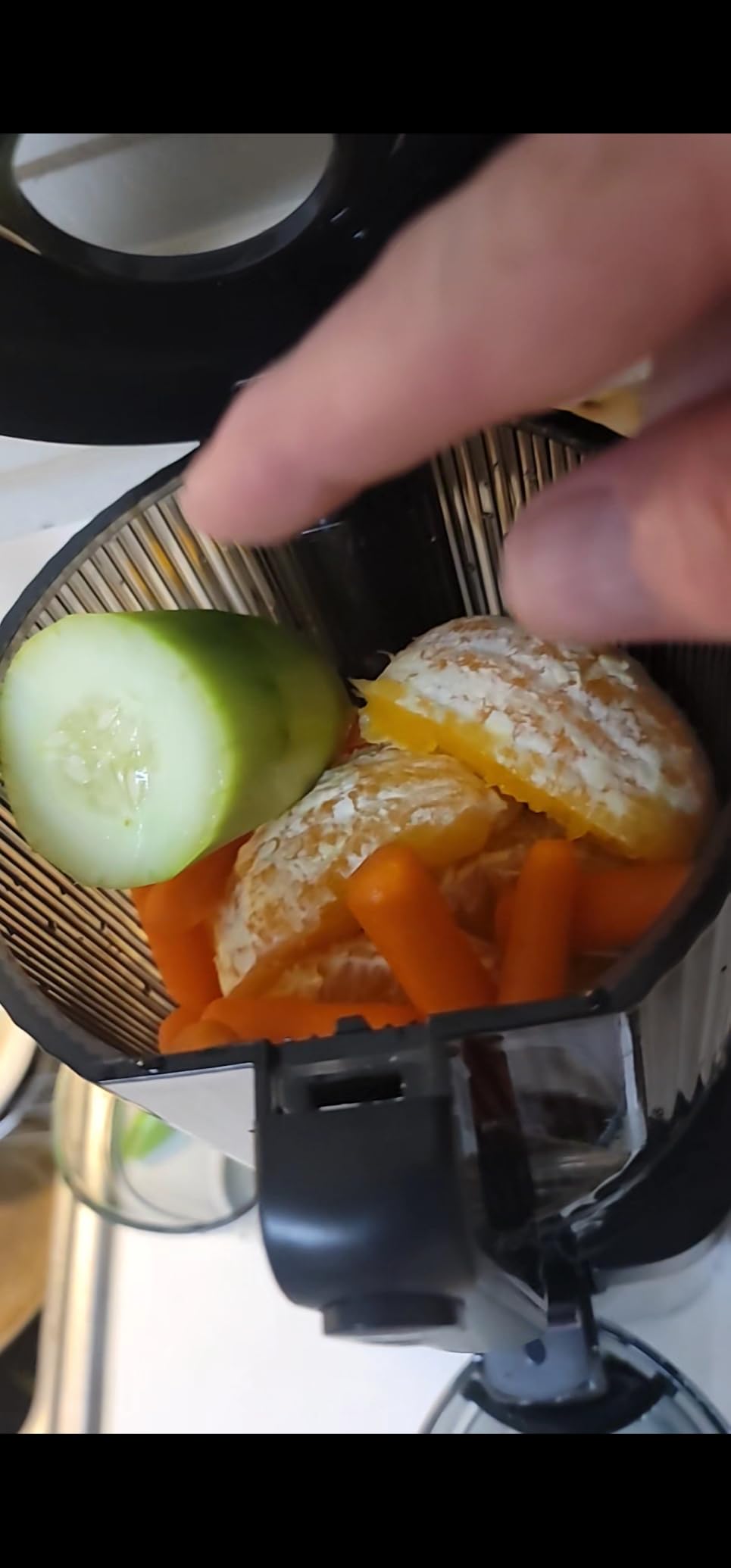
This is the machine that answers a common question: can a self-feeding design handle celery? The 6.5 inch reversible chute has a built-in cutting blade that pre-cuts what you drop in, so a trimmed stalk goes down whole instead of being sliced into matchsticks on the counter first.
The 600-watt motor drives a large auger at low speed, and the anti-clogging chamber with a reverse function gives you a way out when a dense piece stalls it. Owners use it constantly on celery, apples, oranges and ginger, which is a fair test of a machine at this level.
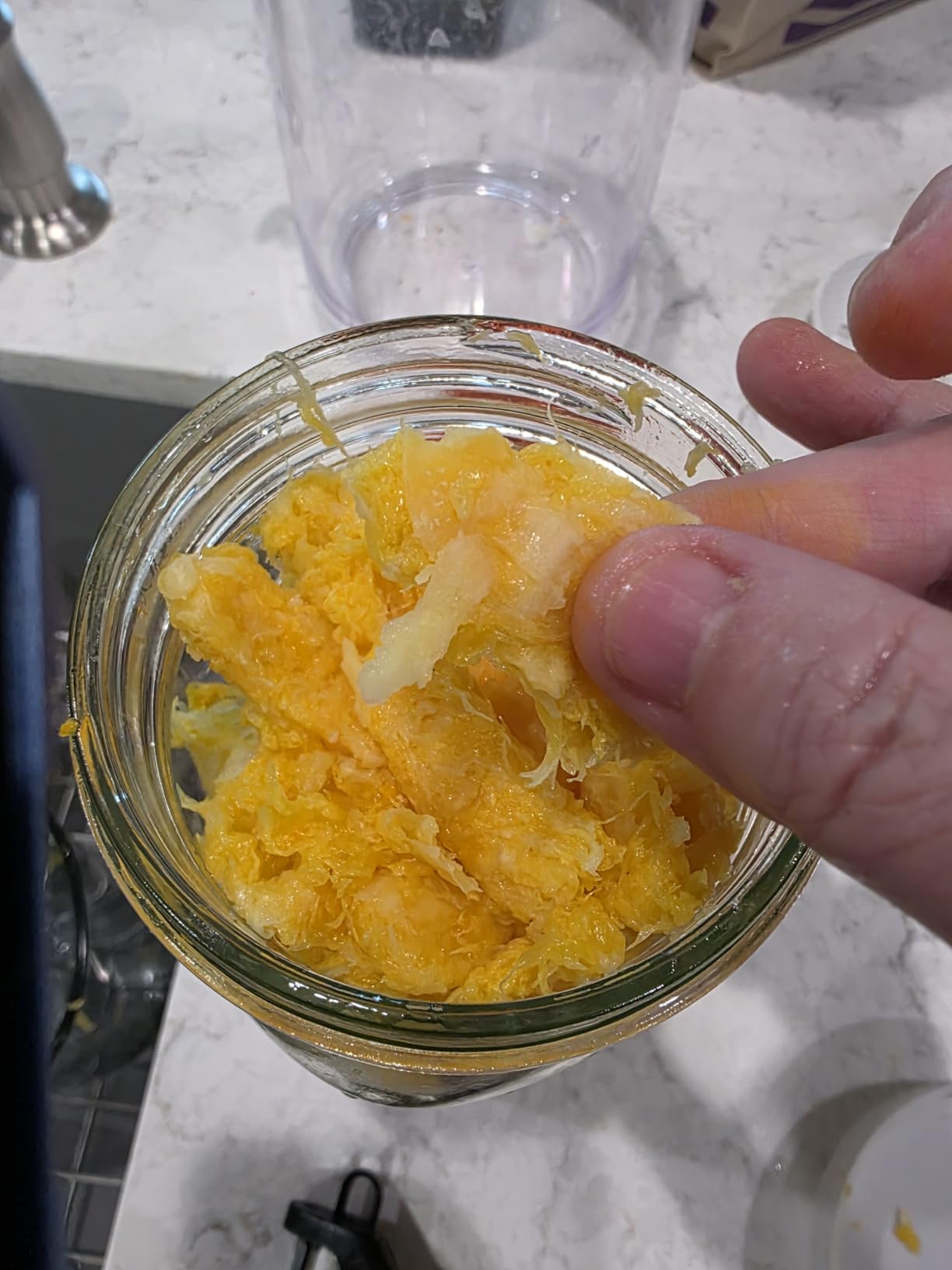
Cleanup is a rinse rather than a project. The body detaches, the parts that touch juice are dishwasher safe, and the tall vertical shape means cups stack on top when it is not in use.
It is a 3-in-1 as well, with a fine filter and a sorbet filter plus nut milk capability, so the same body handles a juice run and a frozen dessert without extra attachments.
What you should know before buying
The most common complaint is the motor tripping its overload protection on hard vegetables like dense carrots, which needs a restart and a pause. Celery is watery enough that this is less of an issue, but a kitchen that juices beets every week should know about it.
The fine filter screen is the part that takes real scrubbing time after leafy sessions, and juicing only soft fruit with nothing added gives you a thick, applesauce-like result rather than a drinkable juice.
Who it suits and who it does not
It suits beginners who want a wide chute and one-button handling without a large learning curve, and it suits celery routines where prep time matters as much as extraction. It is also a good second machine for a kitchen with a lot of counter space already spoken for.
It does not suit someone juicing mostly root vegetables on a long session, and it is not the right tool if you want nut milk as a primary output. Do not put the motor base in water, whatever the marketing language suggests.
4. TUUMIIST 150MM 3L – Best for Nut Milk and Sorbet
TUUMIIST 3-in-1 Juicer Machines, Makes Juice & Sorbet & Nut Milk
350W motor at 60 RPM
6.5 inch chute
100 oz hands-free hopper
One strainer for three jobs
Pros
- 6.5 inch chute means far less cutting
- 100 oz hopper loads a full recipe at once
- Very quiet 60 RPM operation
- One strainer handles juice nut milk and sorbet
- High juice volume with dry pulp
Cons
- Pulp outlet catches stringy celery fiber
- Stalks still need finger-size cutting
- Filter straining through the catcher cup is slow
- Uses a lot of produce per glass
The 100 oz hopper is the feature that changes a celery routine. Instead of feeding stalks one at a time while holding the pusher, you load a batch and let the machine work, which matters most for anyone drinking celery juice before an early shift.
The chute is 6.5 inches and fits a whole apple, so prep is trimming ends rather than slicing. The 350-watt motor runs at 60 RPM, quiet enough for an early start, and owners report dry pulp and high juice volume once the auger reaches speed.
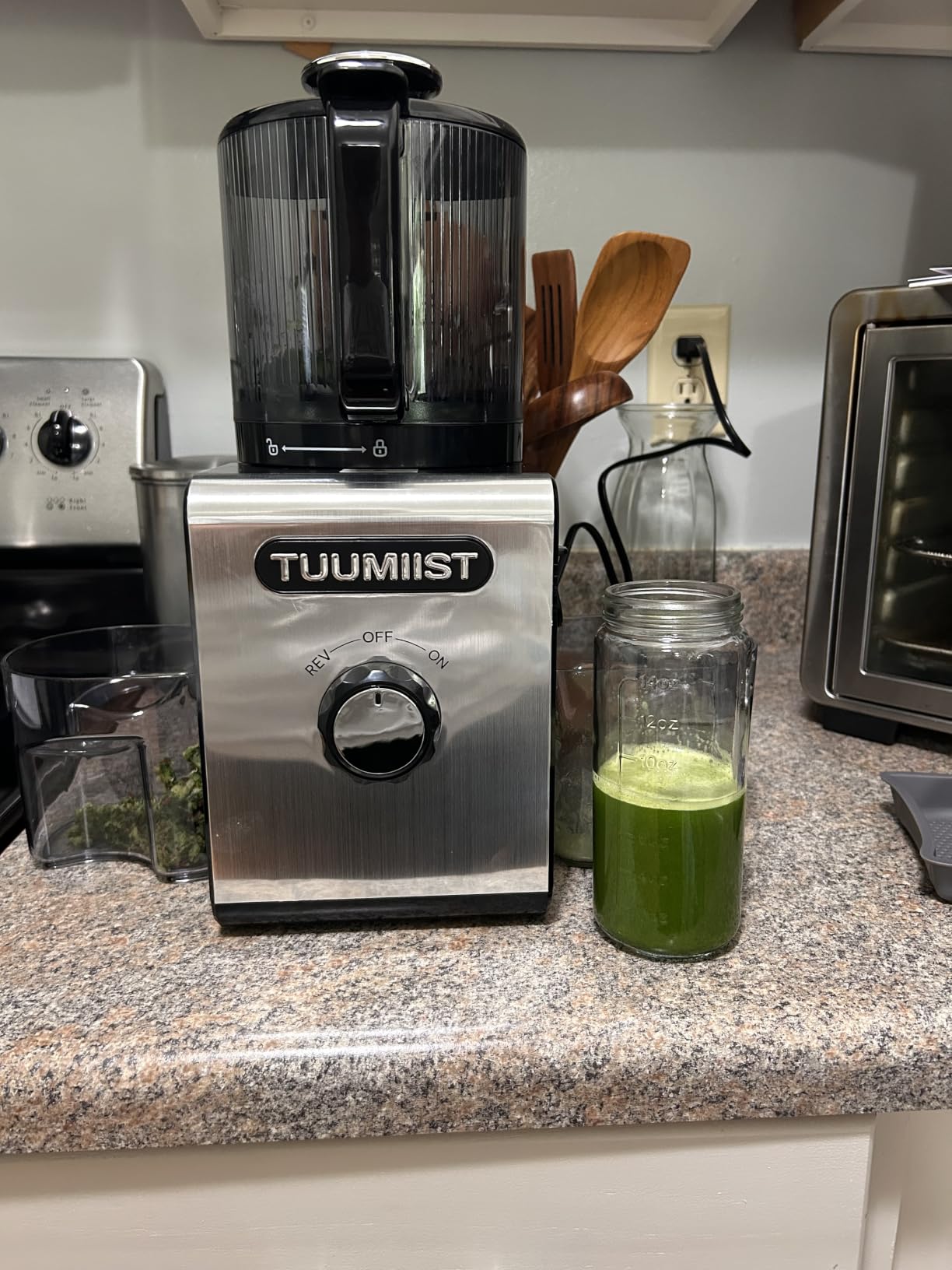
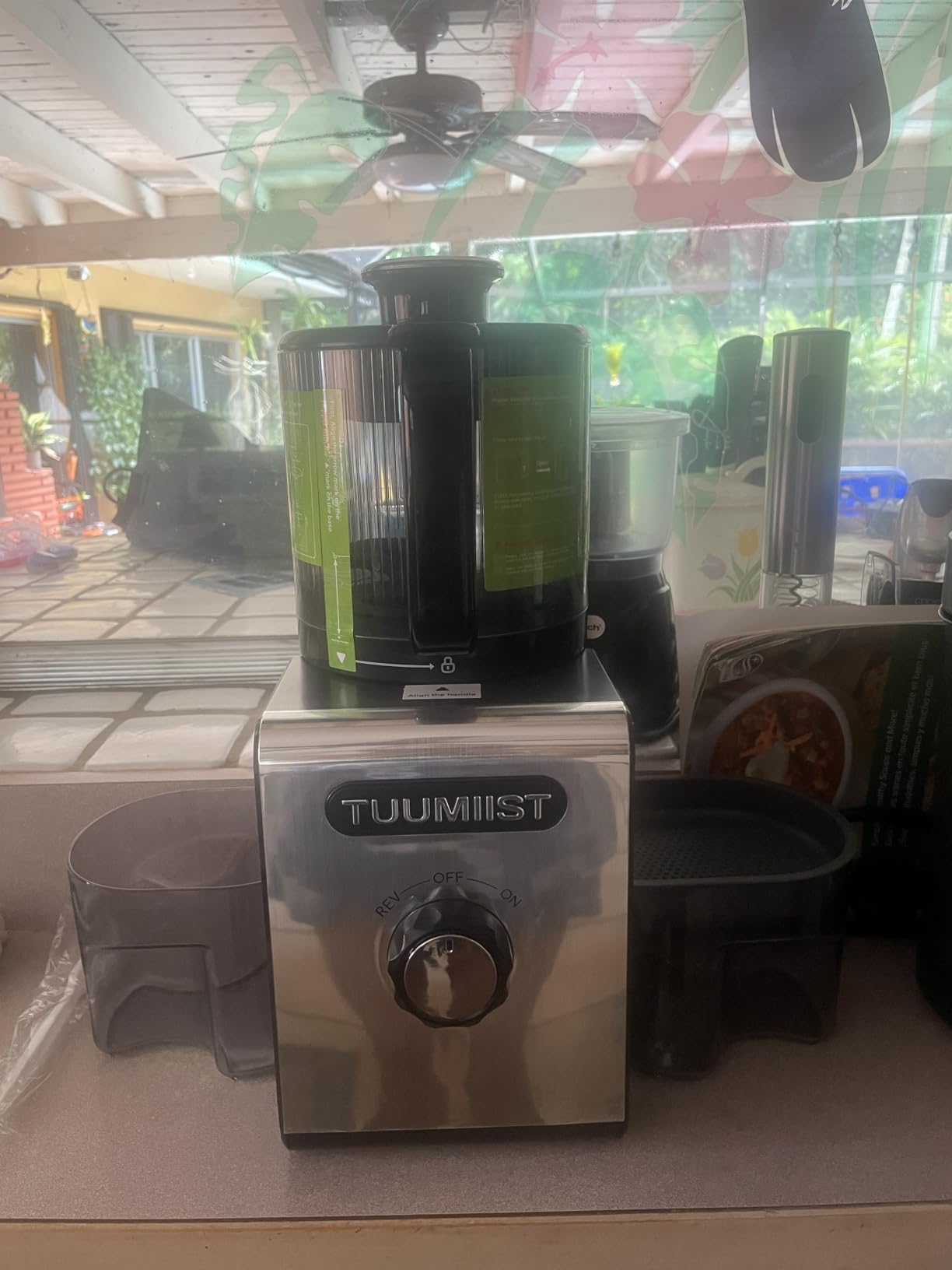
A single smart strainer handles juice, nut milk and sorbet, so this is one machine covering three jobs without swapping assemblies. The 3 liter juice container also means fewer trips to the sink during a long celery session.
Quick-release disassembly plus the included brush keeps the wash short once you learn the layout. Celery is on the recommended use list alongside beetroot, carrot, ginger, kale and wheatgrass, so it is a vegetable machine rather than a citrus machine.
What you should know before buying
The one celery-specific gripe worth repeating is the pulp outlet. Stringy fiber wraps around the port and needs a paring knife to clear, so the wide chute buys back prep time and gives it back at the end of the run.
Carrots, beets and celery still want to be about finger size despite the chute width, and straining through the catcher cup filter takes noticeably longer than the washing time. The warranty is a 30-day satisfaction guarantee rather than a multi-year motor cover, which is worth factoring in.
Who it suits and who it does not
It suits households that juice for two or more people, or anyone who would rather load a batch and walk away than push every stalk. It also works well for people making nut milk or sorbet on the same machine.
It does not suit a small apartment kitchen, since the body is 13 inches wide and 17 inches tall, and it is not the choice for a single glass on a lazy Sunday.
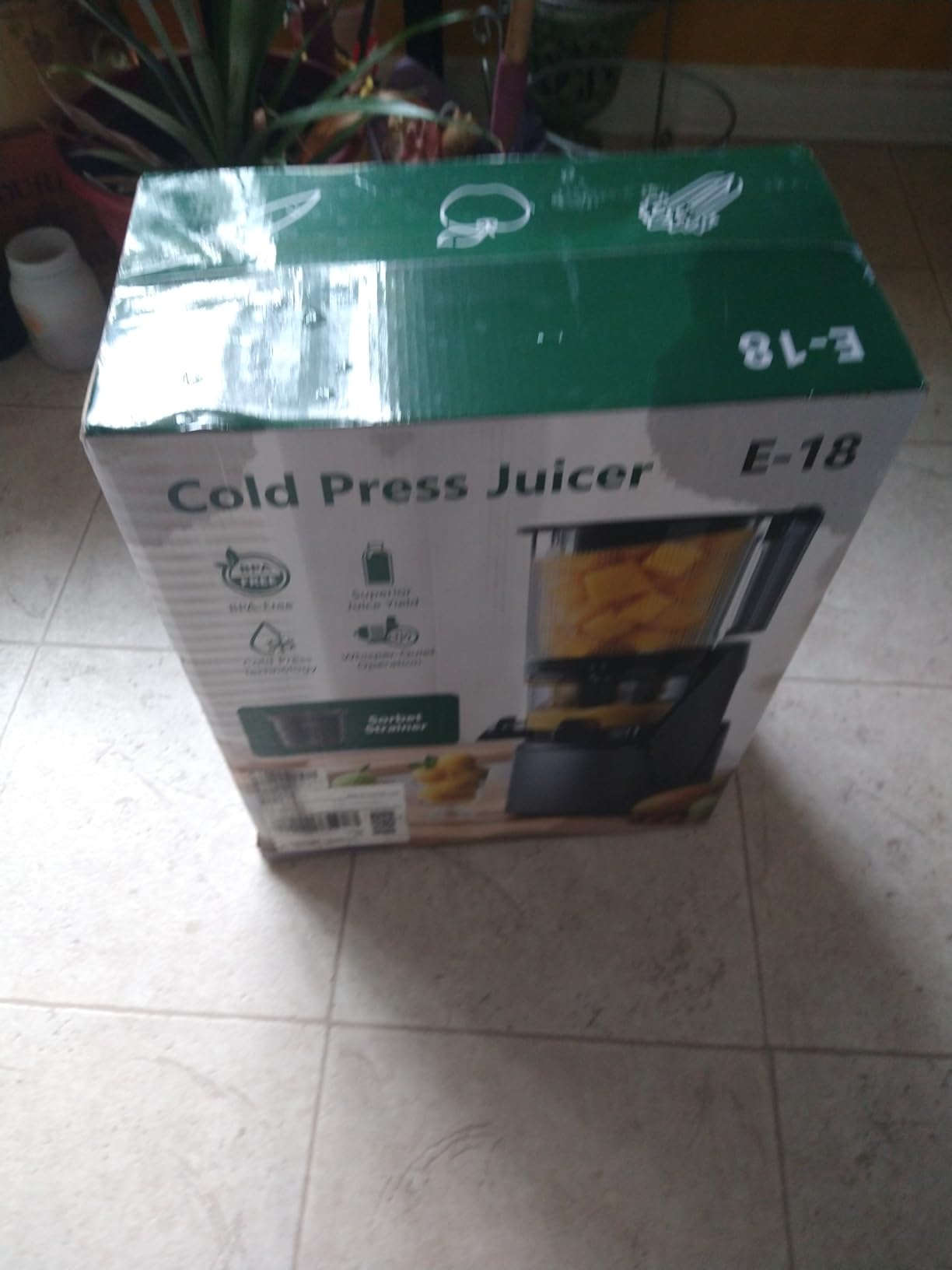
5. EanOruus 3-in-1 – Best for Batch Juicing
EanOruus Juicer Machines, 3-in-1 Cold Press Juicer, Premium Gray
250W AC brushless motor
6.5 inch extra-wide chute
100 oz hopper
Auto-reversing auger
Pros
- Wide chute shortens prep on celery and beets
- Very dry pulp and low-foam juice
- Relatively quiet AC motor
- Large hopper suits family batches
- Two large cups keep the process tidy
Cons
- Advertised chute measures closer to 6 inches
- Body can spin on the base if not fully locked
- New plastic parts carry an odor
- Some early sessions squeak loudly
This is the other big-hopper option, and the 100 oz capacity makes it the natural partner to a weekend celery session. The hopper, pusher and chute load as a single column, so you fill it once and let the auger work through a whole pile of produce.
Owners report very dry pulp and low-foam output once the auger is up to full speed, plus strong performance on celery, carrots and beets. The AC brushless motor is quieter than most machines in this class, which is unusual at this capacity.
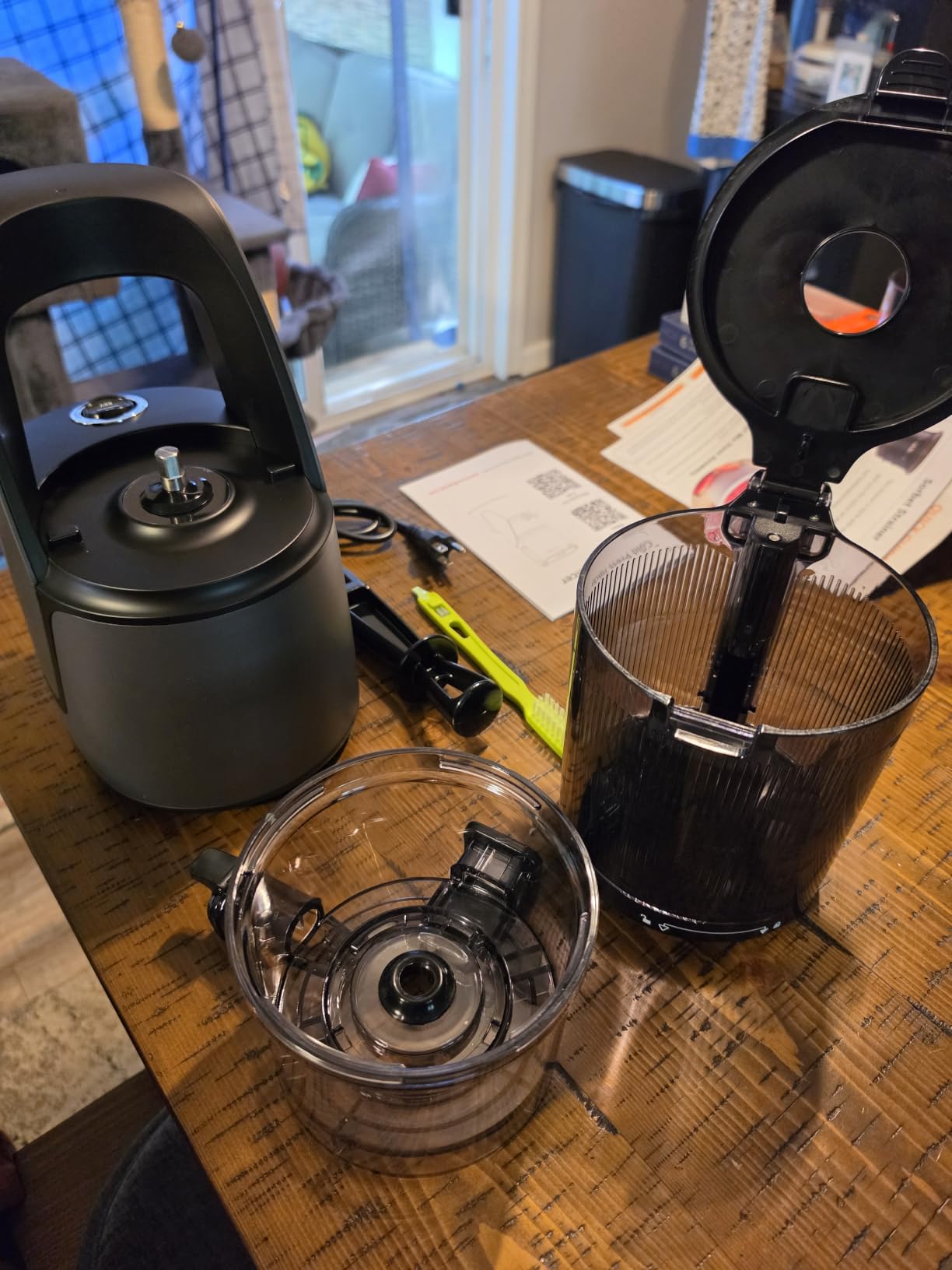
Detachable pulp outlet and the included brush make cleanup straightforward, and separate large cups for juice and pulp keep the counter tidy during a long run. Two interchangeable strainers cover juice and sorbet work.
The auto-reversing auger is the anti-clog answer here, and with a chute this wide it rarely has much to do. Overheat protection is built in, which is useful if you push a full hopper of dense vegetables through.
What you should know before buying
The advertised 6.5 inch chute measures closer to 6 inches in practice, so measure your counter and your produce before you commit. The removable juicing body can spin on the base if it is not clicked fully into the lock, which is annoying on a full hopper load.
New plastic parts often arrive with an odor that takes several washes to clear, and some owners report loud squeaking in the first sessions that generally settles as the machine breaks in. At 12.1 pounds it is not a machine you move around the kitchen casually.
Who it suits and who it does not
It suits a family or a couple who juices several times a week and wants to do it in one load, and it suits people who value dry pulp over raw speed. It also works as a nut milk and sorbet machine.
It does not suit a compact kitchen, since the 13.7 by 17.4 inch body is large for a counter, and it is not ideal for someone who wants a machine out of sight between uses.
6. TUUMIIST TM-580SJ – Best for Compact Counters
TUUMIIST Juicer Machines, Cold Press Juicer with 5.8″ Extra Large Feed Chute Fit Whole Fruits & Vegetables Easy to Clean, High Juice Yield, BPA Free (Black)
55 RPM slow cold press
300 watt motor
5.8 inch extra-large chute
One-piece BPA-free body
Pros
- 55 RPM extraction preserves taste
- 5.8 inch chute accepts whole produce
- One-piece design cleans in about five minutes
- BPA-free materials
- Compact vertical footprint
Cons
- Hopper must be aligned to the lock symbol or it will not run
- Single speed at 55 RPM with no adjustment
This is the smallest machine in this roundup by weight at 3.2 kilograms, and the one that disappears into a corner when it is not being used. The vertical body is 8 by 8 by 17 inches, so it needs a strip of counter rather than a square of it.
At 55 RPM the extraction is slow and deliberate, and owners like the taste of the result for that reason. The 5.8 inch chute takes whole produce, which is the main time saver for celery sessions.
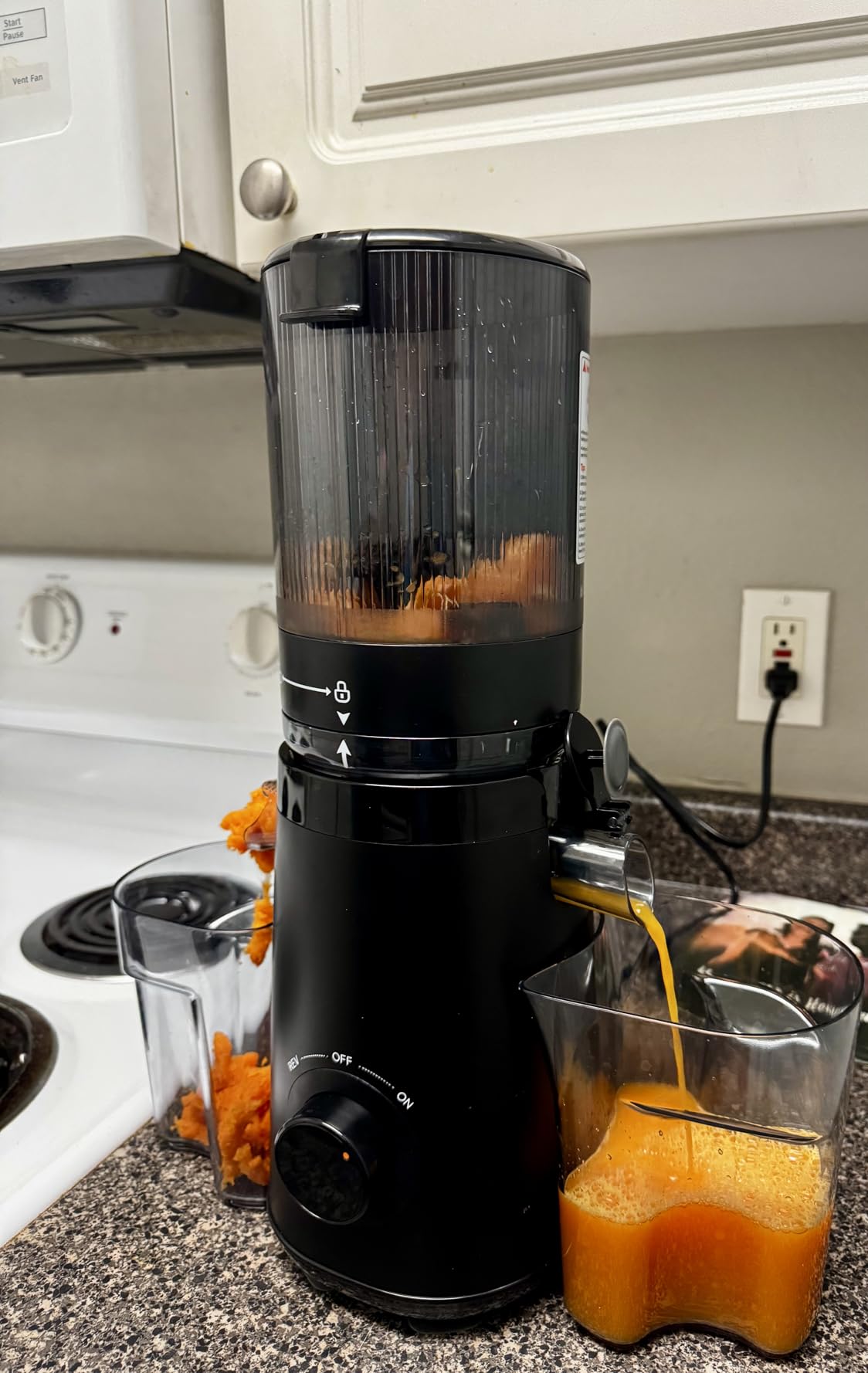
There is no mesh filter to scrub, and the one-piece body plus the included brush means about five minutes from finished juice to a rinsed machine. The parts are dishwasher safe, and the whole thing is BPA-free.
Celery is a fair test of a slow press at this power level, and the 300-watt motor manages it. If your kitchen cannot give a full-size machine permanent space, this is the shape that fits.
What you should know before buying
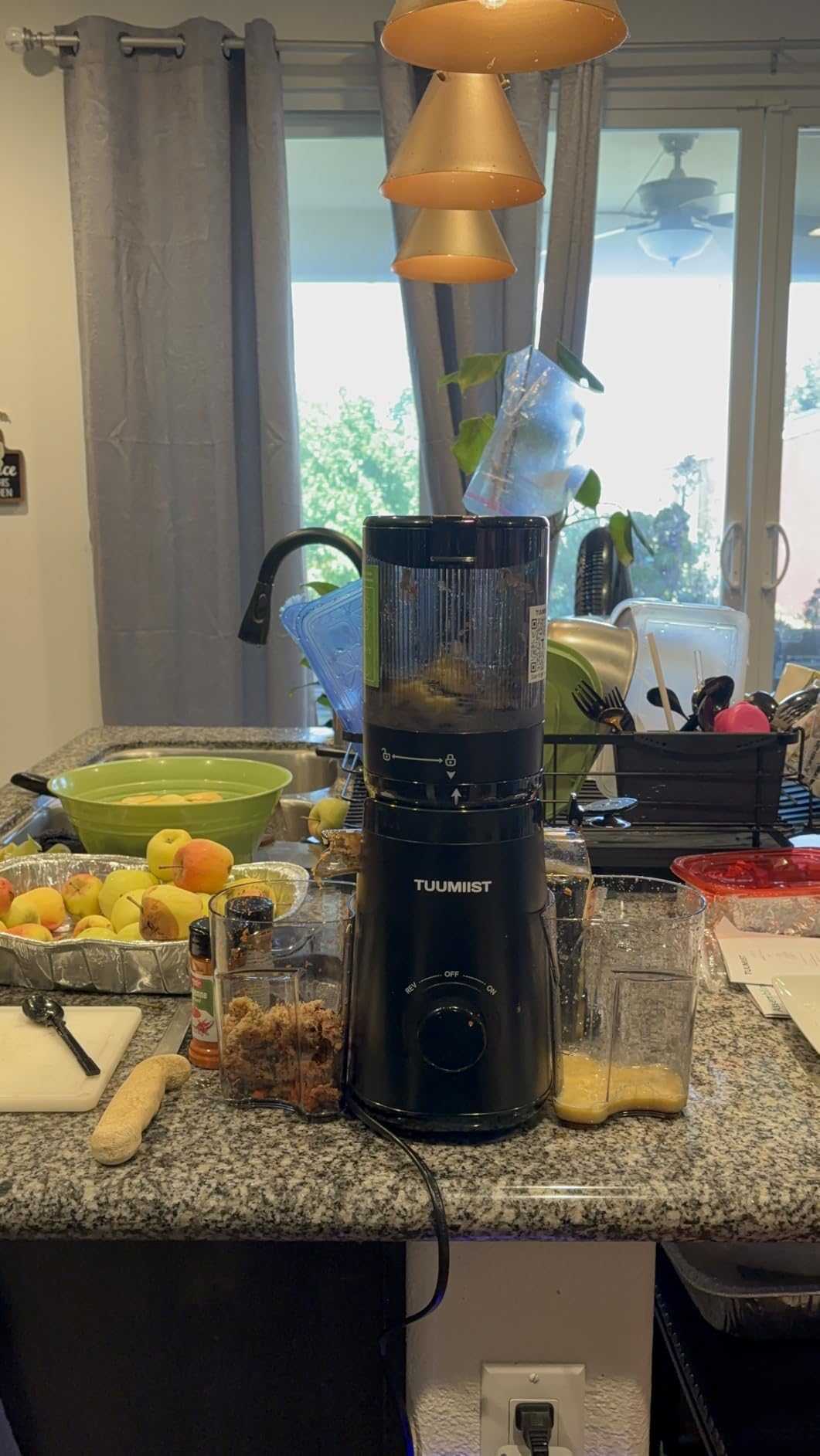
The assembly catches people out. The hopper has to be aligned to the lock symbol or the unit simply will not operate, and that is the single most common complaint in the reviews. Read the diagram before the first run.
It is single speed with no adjustment, so it cannot be tuned for a soft fruit one day and a dense root vegetable the next. The warranty is a 30-day satisfaction guarantee rather than a long motor cover.
Who it suits and who it does not
It suits small kitchens, rentals and anyone who does not want a juicer to claim a quarter of the counter. It also suits a first celery machine bought on a tight budget.
It does not suit batch juicing, since there is no large hopper, and it does not suit someone who wants to make sorbet or nut milk. The 55 RPM pace is not for a rush.
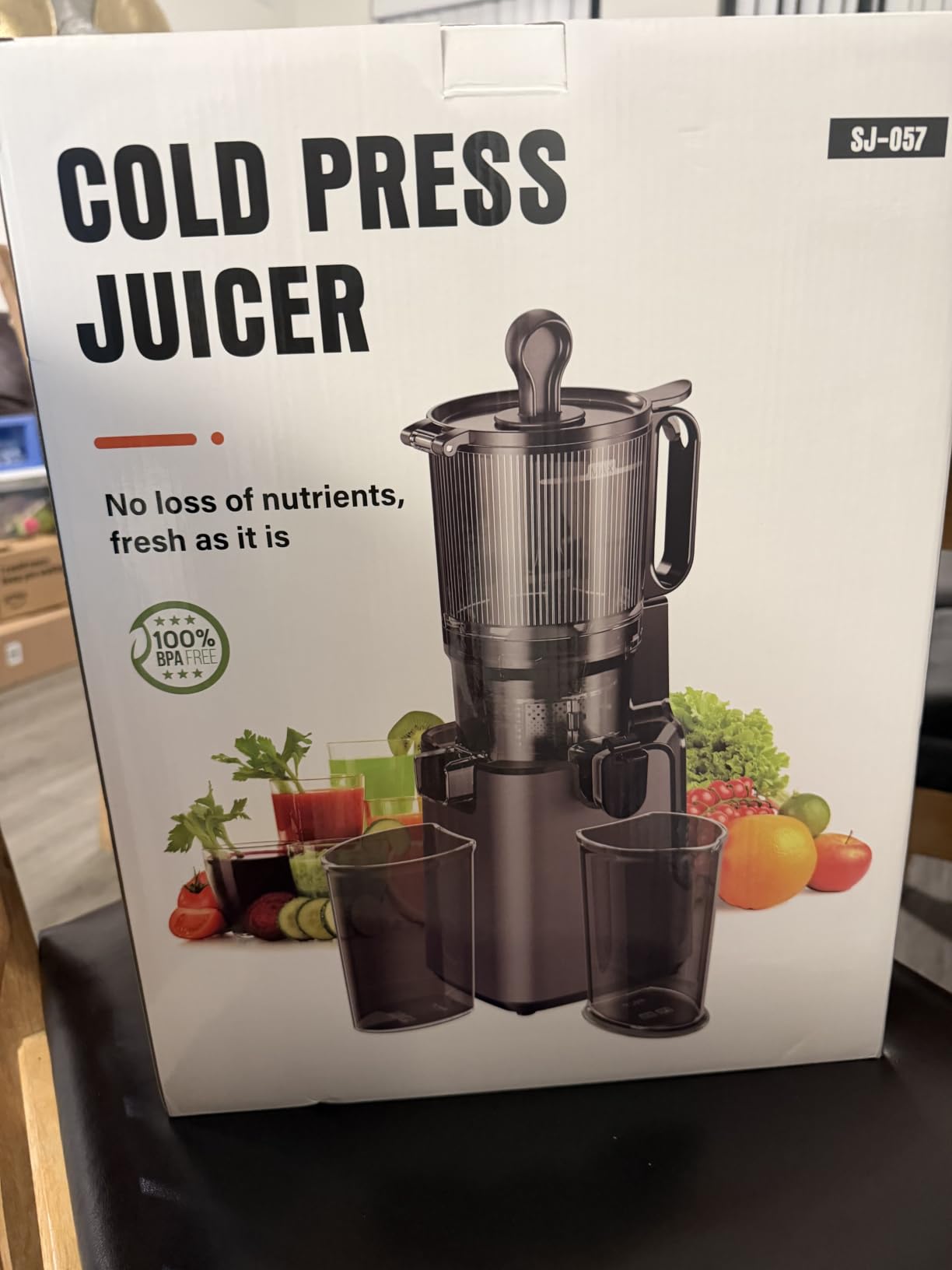
7. YPONE SJ-057 – Best for the Fastest Cleanup
Juicer Machines with 5.8″ Large Chute, 2-in-1 Cold Press Juicer for Whole Vegetables Fruits 400W, Masticating juicer Easy to Clean Juice Extractor Machine for Making Nut Mike, Juice, Premium Gray
400W motor at 55 RPM
5.8 inch large chute
Dual-layer 0.3mm mesh
Three-part one-button design
Pros
- 5.8 inch chute takes celery with minimal cutting
- Quiet 400W motor handles ginger kale and apples
- Filter is only partly wrapped in metal so it cleans fast
- Smooth low-foam juice with fairly dry pulp
- Separate juice and pulp containers
Cons
- Some units failed during the first session
- Pulp runs wet so real yield is below the claim
- Noticeable noise and vibration
- Juice reservoir reported to crack after about a month
The design decision that matters most here is the filter. Most slow juicers wrap a metal screen all the way around the auger chamber, which is exactly where celery fiber hides, and this one leaves part of the circumference free. Owners single that out as the reason cleanup is quicker than on comparable machines.
The 400-watt motor runs at 55 RPM through a 5.8 inch chute, and it handles celery, ginger, kale and apples without complaint. A safety lock stops the motor if the lid is opened mid-run.
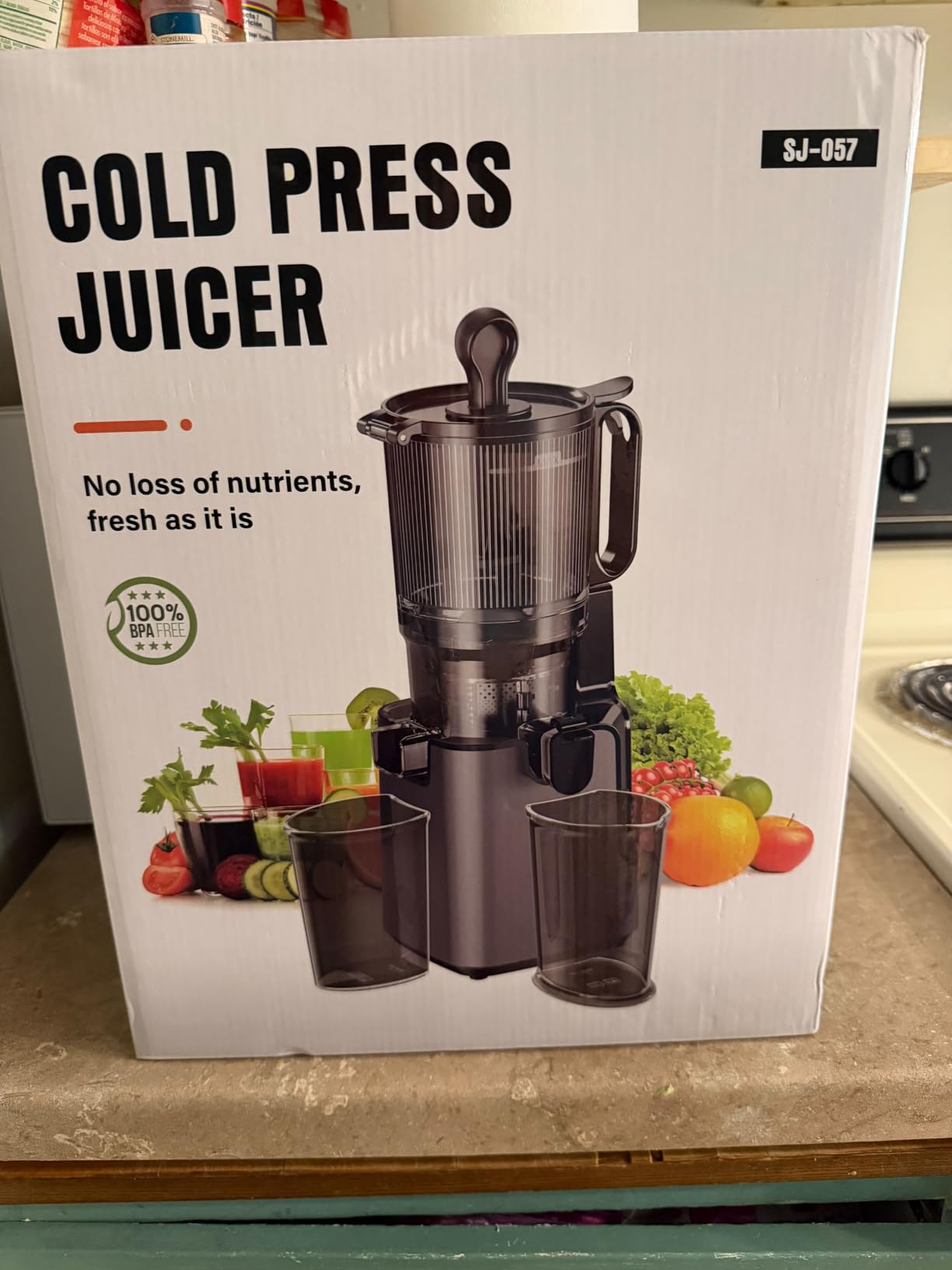
There are only three main parts with a one-button operation, and the cleaning brush is included. Juice and pulp go into separate containers, so nothing has to be poured back and forth.
Two 0.3mm dual-layer mesh strainers handle fine and coarser output, and the juice comes out smooth with low foam. It also makes nut milk and soy milk from the same body.
What you should know before buying
Durability is the weak point. A minority of owners report units that stopped working during the very first session, and others report the juice reservoir cracking after about a month. The one-year warranty is shorter than the coverage on the premium machines here.
Second, the pulp runs wetter than the claimed yield suggests, so you will use more celery per glass than the marketing implies. It is also noisy and vibrates noticeably, which is a real drawback for a 6am routine in a small apartment.
Who it suits and who it does not
It suits someone whose biggest frustration with juicing is cleanup, and who wants a wide chute without paying for a full nutrition system. It also suits people who make nut milk or soy milk occasionally.
It does not suit a light sleeper sharing a wall with the kitchen, and it is not the choice for a heavy daily commitment where motor longevity is the priority.
8. Hamilton Beach 67601A – Best Budget Centrifugal
Hamilton Beach Centrifugal Juicer Machine With Big Mouth 3” Feed Chute
800 watt centrifugal motor
3 inch big mouth chute
80 oz pulp bin
3-year limited warranty
Pros
- 3 inch chute fits a whole apple or a bunch of celery
- 800 watt motor produces juice quickly
- Almost all parts are dishwasher safe
- Stable on the counter
- 3-year limited warranty
Cons
- Loud enough to rival a vacuum cleaner
- Jolts slightly on startup
- Wet pulp means more produce per glass
- Low yield from leafy greens
- No juice jug included
This is the machine most people already own, and it will juice celery without drama. The 3 inch big mouth chute is sized for a bunch of stalks or a whole apple, which removes most of the counter prep, and the 800-watt motor turns out a glass in seconds.
Cleanup is the strongest argument. Nearly every part, including the pulp bin, juice bowl, lid and pusher, is dishwasher safe, and the included strainer brush handles the mesh. That matters for a habit you have to repeat every morning.
It also has the largest installed base in this roundup, with more than 41000 ratings and a three-year limited warranty behind it. If something is going to survive years of daily use, the installed base here is a fair signal.
What it does not do is extract efficiently. The pulp comes out wet, especially from greens, and the juice carries more foam than slow-pressed output, so a daily green routine eats through a lot more produce.
What you should know before buying
It is loud. Owners compare it to a vacuum cleaner, and it jumps or jolts slightly when the motor catches, so a rubber mat helps in a small kitchen. Expect a 6am routine to wake people up.
There is no juice jug in the box, so you need your own container. The fine shredder holes also need attention roughly every 15 to 18 apples to keep foam under control, and the lid handles feel fragile for the price.
Who it suits and who it does not
It suits a first juicer, an occasional user, and anyone who wants celery juice a few times a week rather than every morning. It also suits anyone who wants minimal cleanup effort.
It does not suit a daily celery drinker chasing yield, because the wet pulp means you will buy far more produce for the same volume. It also does not suit a quiet house.
9. QCen KS-501 – Best for High-Volume Runs
QCen Juicer Machine 500W Centrifugal Juicer with Extra Wide Feed Chute
500W centrifugal motor
Dual speed 12000 and 18000 RPM
3 inch wide mouth
3 liter capacity
Pros
- Strong fast extraction for an entry machine
- 3 inch wide mouth accepts celery sticks
- Dual speeds for soft fruit and hard vegetables
- Stainless steel blade with detachable parts
- Overload protection and locking arm
Cons
- Centrifugal design oxidizes juice and adds foam
- Wetter pulp means more produce per glass
- Not suitable for low water content vegetables
When volume matters more than finesse, a 500-watt centrifugal motor with a 3 liter capacity container will clear a large pile of produce quickly. The 3 inch wide mouth takes celery sticks and carrot pieces with less chopping than a narrow-chute extractor.
Dual speed control runs 12000 RPM for soft produce and 18000 RPM for hard vegetables, which is the right tool for a kitchen that juices roots and greens alongside celery. A locking arm and overload protection stop it running when uncovered.
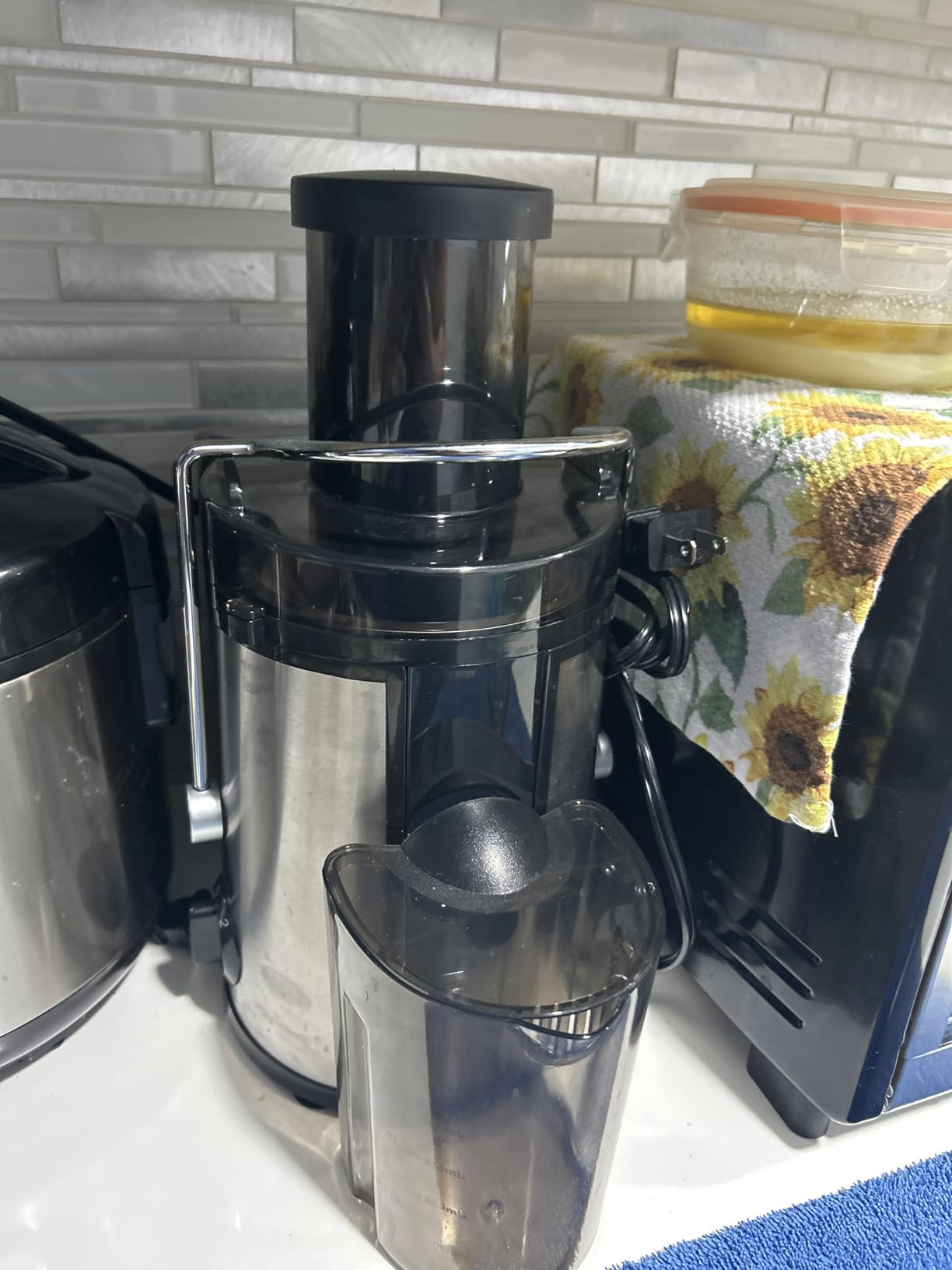
The stainless steel blade and detachable parts make cleaning straightforward, and owners treat this as a budget workhorse rather than a specialist machine. It has a large installed base with well over 12000 ratings.
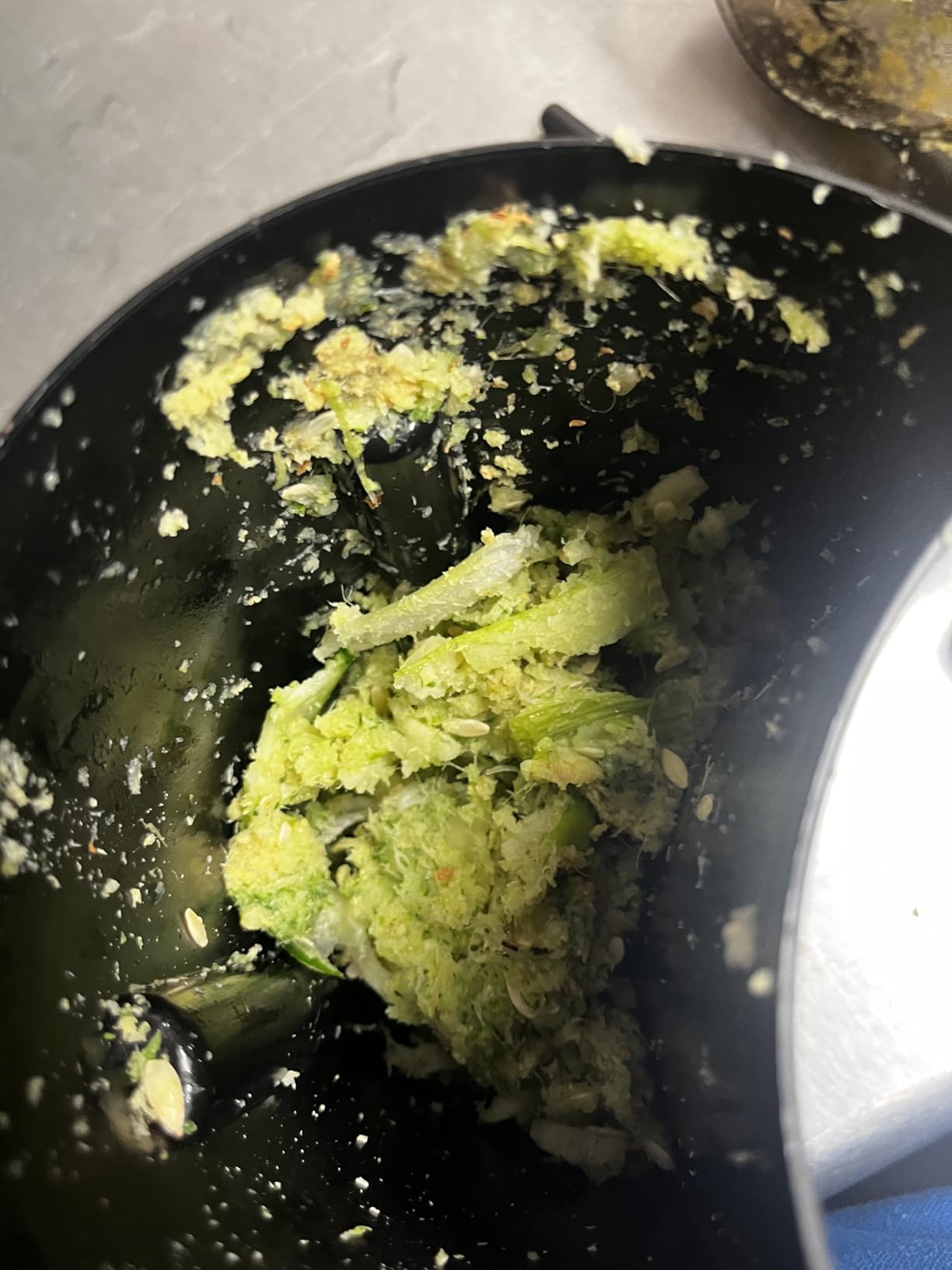
What you trade away is the slow-press advantage. Centrifugal force generates heat and foam, the juice oxidizes faster in a glass, and the pulp comes out wetter, so you need more celery for the same 16 ounces.
What you should know before buying
The listing itself advises against juicing low water content vegetables, which rules out some firm produce. That does not affect celery, but it is worth knowing before you add a ginger-heavy routine.
More foam, faster oxidation and wetter pulp are the standard centrifugal trade-offs, and they are the reason we do not put a high-speed machine at the top of a celery ranking. Hand washing is required rather than a dishwasher cycle.
Who it suits and who it does not
It suits large batch sessions, families, and anyone who wants juice in volume without a long auger session. It also suits a user who values simple one-button operation.
It does not suit someone drinking celery juice daily and counting produce per glass, and it is not the choice if shelf life and flavor protection matter to you.
10. Juilist AMR526 – Best Starter Centrifugal
Juicer Machines, Juilist 3″ Wide Mouth, Max 800W, 3-Speed 400W Easy-Clean
800W peak motor
Three speeds plus peak mode
3 inch wide feed chute
Overheat and lock protection
Pros
- Capable 800W peak motor for an entry machine
- Three speeds give useful control
- 3 inch wide mouth reduces chopping
- Compact low-profile body
- Dishwasher-safe accessories and brush included
Cons
- Overheats quickly under sustained use
- Low yield relative to produce used
- Clogs partway through a batch
- Small 400 ml juice cup needs frequent emptying
- Build quality is inconsistent
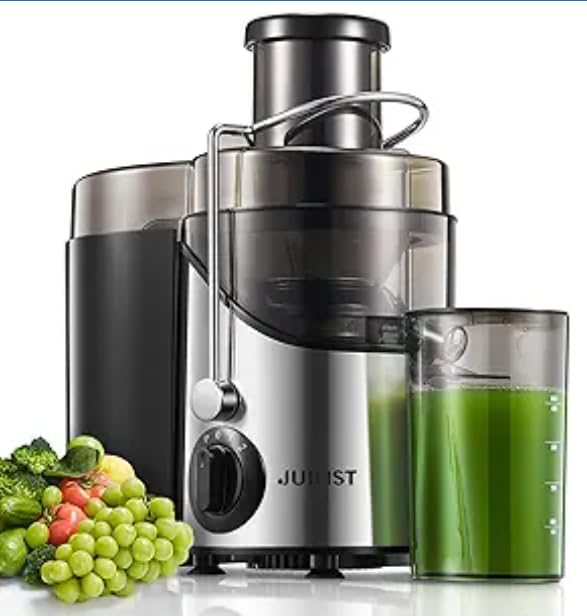
This is the lowest-cost serious extractor here, and it does handle celery and carrots. The 800W peak motor, a stainless steel disc with a micro-mesh filter, and a 3 inch wide mouth give you a reasonable start for a first machine or a kitchen that juices occasionally.
Three speed settings, low for soft fruit, high for hard produce and a peak mode, give more control than single-speed budget extractors, and the viewing window means you can watch a batch instead of guessing.
The body is compact and low-profile, which suits a small counter, and the accessories are dishwasher safe with a filter brush included. Assembly is a one-button job aimed at first-time users.
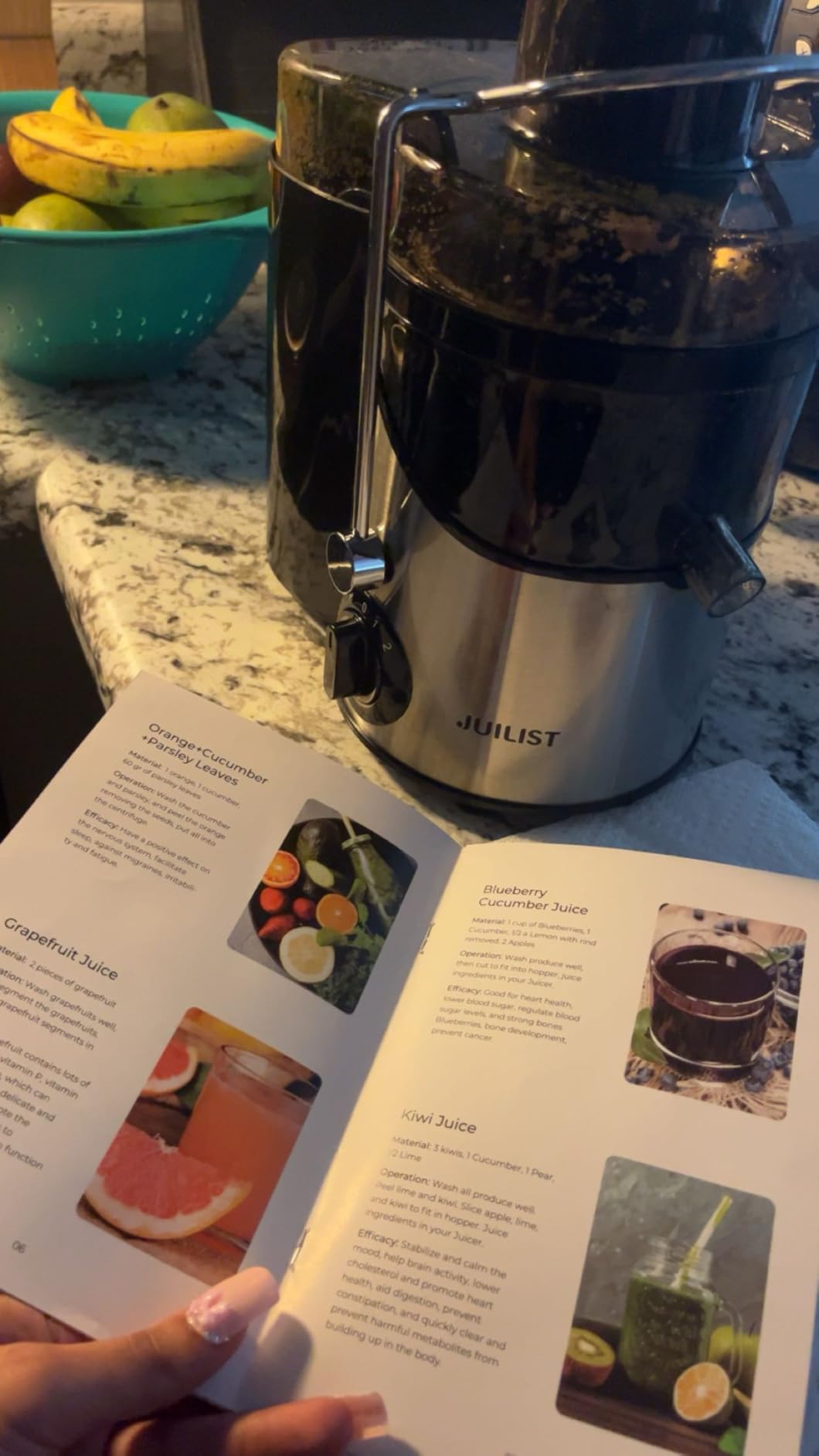
It is also the machine in this roundup most likely to stop mid-batch. Owners report clogs partway through a run and overheating that requires a cool-down before restarting, which is the classic reason a celery habit dies.
What you should know before buying
Sustained use is where it struggles. The motor can overheat and then needs time before it will run again, and a 400 ml juice cup means stopping every few stalks to empty it.
Build quality feedback is mixed, with several reports of units arriving damaged or faulty, and the juice yield is low relative to the produce used, especially for firm items. Treat it as an occasional-use machine rather than a daily driver.
Who it suits and who it does not
It suits a first juicer on a limited budget, a small kitchen, and anyone who juices fruit and celery once in a while. It also suits a household that wants three speeds at an entry point.
It does not suit a daily celery routine, because a mid-batch clog is the one failure mode a daily habit cannot absorb. It also does not suit anyone who wants to keep juice for more than a few hours.
How We Evaluated Celery Juicers
Celery exposes weaknesses that fruit never will, so we scored every machine on the same five things. First, whether it could run a full batch of stalks without stopping more than once. Second, how dry the pulp looked when it came out, since wet pulp means wasted produce and a smaller glass. Third, how long cleanup took from finished juice to a rinsed machine, including the strainer and pulp port.
Fourth, noise, because a celery routine usually happens before anyone else is awake. Fifth, warranty length, which is the closest thing to a durability signal available without owning the machine for a decade. We also noted feed chute width, since it decides how much knife work a session involves.
Ratings and review counts are taken directly from the product listings, and the drawbacks are the complaints owners actually raised rather than a generic list. Where a claim did not hold up in practice, such as an advertised chute width or a NeverClog promise, we said so.
Masticating vs Centrifugal vs Cold Press for Celery
A masticating juicer, also called a slow juicer, turns an auger at roughly 50 to 110 RPM. A centrifugal juicer spins a blade at 12000 to 18000 RPM and throws juice against a screen. Both are sold as juicers, and for apples or oranges the difference barely matters.
For celery the difference decides everything. Celery fiber is long and stringy, and at 18000 RPM it wraps around the blade instead of being pressed, which is the clog every owner describes. A slow auger crushes and squeezes the same fiber into pulp, so the machine keeps moving and the juice comes out cool and low in foam.
Cold press is a marketing term for slow pressing rather than a separate machine type, so the useful comparison is simply slow auger against high-speed blade. Every one of the top seven machines in this roundup uses a slow auger, and the three ranked below them are the high-speed alternatives included for people who want volume or a lower starting point.
One more difference shows up in the glass. Low-speed juice oxidizes more slowly and separates into a thicker, brighter liquid, which is easier to drink straight. High-speed juice foams, warms up, and browns faster, so a daily celery routine in a transparent glass looks different by hour two.
Celery Hardware That Actually Prevents Clogs
Three hardware features do the real work on celery, and they are worth checking before you buy anything. The first is a reverse function, which runs the auger backwards for a few seconds to free a compacted screen. It sounds minor until you have used a machine with one after fighting a machine without one.
The second is a wide feed chute, ideally 5.8 inches or larger, which lets stalks go down whole instead of pre-cut. The third is motor torque, because dense produce and long sessions overwhelm a low-torque motor and trip its protection. A 300-watt slow press handles watery celery well; a 400-watt unit gives more headroom when roots join the batch.
A less common but useful feature is a partial metal filter, where the screen wraps only part of the auger chamber. Celery fiber collects at the seam, and a filter with a free section is far easier to clear. Several owners in this roundup rank cleanup as the deciding factor, and this is the part that decides it.
Finally, an anti-drip lever and dishwasher-safe juice-contact parts matter more than any spec sheet number. A celery habit is a daily habit, and a machine you are willing to pick up at 6am wins over one with better extraction on paper.
Feed Chute Width and How to Cut Celery Stalks
Chute width decides your prep time more than any other spec. A 3 inch chute wants stalks split lengthwise and cut into finger-width lengths, which is the norm for the centrifugal machines here. A 5.8 inch chute takes a trimmed stalk whole, and a 6.5 inch chute takes most pieces without a knife at all.
Use the inner, heart stalks rather than the stringy outer ones, and trim the leafy tops, which add water without adding juice. Cut to the width of the chute rather than thinner, because very short pieces turn to mush before the auger can press them.
For prep, wash a whole bunch at once and dry it thoroughly, since water in the chute slows the feed. A single bunch usually covers one to two glasses depending on the machine, and the slow presses in this roundup produce more juice from the same stalks than the centrifugal models.
If you own a narrow-chute machine, cutting everything to the same size before switching the machine on saves more time than any other habit change. A two-minute prep routine is the difference between a habit that lasts a month and one that lasts a year.
Juice Yield, Pulp Dryness and Cleanup Time
Juice yield is the number that decides how much celery you buy each week, and the difference between a slow press and a centrifugal machine is large enough to feel in the grocery store. Dry pulp means more liquid per stalk, and dry pulp is the main reason we ranked slow augers above fast blades for this vegetable.
Pulp dryness and cleanup are the same issue in practice. The driest pulps in this group tend to come from the slower augers with partial or no-mesh filters, and they rinse clean in minutes. Machines that squeeze hard enough to leave a dry puck tend to trap fiber in tighter crevices.
Two habits help regardless of machine. Run the reverse function for a few seconds after every celery batch before you disassemble, and wipe the pulp port with a paring knife while the machine is still unplugged. Both take under a minute and cut the wash time noticeably.
Noise, Weight and Counter Space for Daily Routines
A celery routine is a morning routine, and noise is a practical spec rather than a luxury one. The slow presses in this roundup run between 55 and 80 RPM and are consistently described as quiet enough for an apartment. The centrifugal machines are loud enough that owners compare them to a vacuum cleaner, and one also reports visible vibration.
Weight follows the same pattern. The compact cold press options weigh about 7 pounds, while the full nutrition systems and large-hopper machines weigh 12 to 14 pounds and are described as staying out permanently. If your counter is small, measure the footprint before you buy, not after.
Noise and space together decide whether a habit survives. A machine you have to clear a shelf for every morning gets used less, and less frequent use means a machine that never develops the reputation of never clogging.
How Much Celery Makes 16 Ounces of Juice
Plan on roughly one large bunch of celery per 16 ounce glass, and more than that on a slow press with a small pulp. Celery is about 90 percent water, so you are not getting a concentrate, you are getting a drinkable liquid at close to the weight of the produce you put in.
Leafy greens dilute the result, so a juice that is half celery and half kale or spinach will yield less than a glass of pure celery. If you are mixing greens in, expect to add more stalks than you would for straight celery juice.
Buy a bunch, trim it while you listen to something, and run the whole thing rather than making a single glass and stopping. Cold-pressed celery juice keeps longer than high-speed juice, and keeping it in a sealed container in the fridge rather than an open glass helps further.
What to Drink Celery Juice With
Plain celery juice tastes like celery, which is a high bar for a daily drink. A squeeze of lemon is the classic addition, and a thin slice of ginger works if you like heat rather than sourness. Both are flavor choices, not health claims, and neither is required.
Dilution is the other option and the one people miss. Mixing celery juice one to one with cold water or sparkling water softens the flavor enough that most beginners keep the habit past the first week. A little apple or pear also rounds it out without hiding the celery.
One practical note on timing. Celery juice is normally drunk on an empty stomach in the morning, and the taste is easier to manage before food than after, which is the opposite of how most people start.
Frequently Asked Questions
What is the best medical medium juicer for celery?
Most Medical Medium followers use a slow-speed masticating or cold press juicer, because the protocol calls for a cold-press machine rather than a high-speed centrifugal one. Within that group, the Omega J8006 triple-stage 80 RPM model is a common choice for its dry pulp and 15-year motor warranty, while the Ninja NeverClog JC151 is easier to clean and narrower to buy into. Any machine that runs a slow auger without clogging on stalks will do the job.
Which juicer is best for juicing celery?
A slow-speed masticating juicer with a wide feed chute of 5.8 inches or more and a reverse function is the best type for celery. The Ninja NeverClog JC151 is our top overall pick for its high-torque auger and dual pulp filters, and the AMZCHEF ZM1919 is the value option with a 6.5 inch self-feeding chute. Centrifugal machines juice celery quickly but produce wetter pulp, more foam and faster oxidation.
Can I juice celery in a regular juicer?
Yes, a standard centrifugal juicer will juice celery, and the 3 inch chute on budget extractors accepts stalks with little cutting. The tradeoff is that celery fiber wraps around a high-speed blade, so you may stop mid-batch to clear it, and the pulp comes out wet, which means more produce for the same volume of juice. Daily celery routines are much easier on a slow masticating machine.
What is better, a masticating or centrifugal juicer?
For celery, a masticating juicer is better. A slow auger at roughly 50 to 110 RPM presses stringy celery fiber into pulp without wrapping it around a blade, and the low speed limits heat and foam, so the juice tastes cleaner and keeps longer. A centrifugal juicer at 12000 to 18000 RPM is faster and cheaper, but it clogs more often on stalks and leaves wetter pulp, so you use more celery per glass.
What is best to drink celery juice with?
A squeeze of lemon is the most common addition, and a small slice of ginger works if you prefer heat to sourness. Diluting celery juice one to one with cold or sparkling water softens the flavor enough that most beginners keep the habit. A little apple or pear also rounds out the taste without hiding the celery.
The Best Juicer for Celery in 2026
The Ninja NeverClog JC151 is our pick for anyone starting a celery habit, because it balances a high-torque auger, a reverse function and dishwasher-safe parts in a body small enough to leave out. The Omega J8006 is the buy-it-once option, with very dry pulp and the longest motor warranty in the group, and it suits a kitchen that wants pasta and nut butter from the same base.
For tighter budgets, the AMZCHEF ZM1919 gives you a 6.5 inch self-feeding chute that removes almost all of the knife work, and the Hamilton Beach 67601A remains a solid occasional juicer with a three-year warranty and a big 3 inch chute. Buy the slow press if celery is a daily drink, and the centrifugal machine only if you want volume rather than yield.
Whichever you choose, trim the stalks to the width of your chute, use the reverse function before you disassemble, and expect the first week to be the hardest. After that it is just a glass in the morning.