
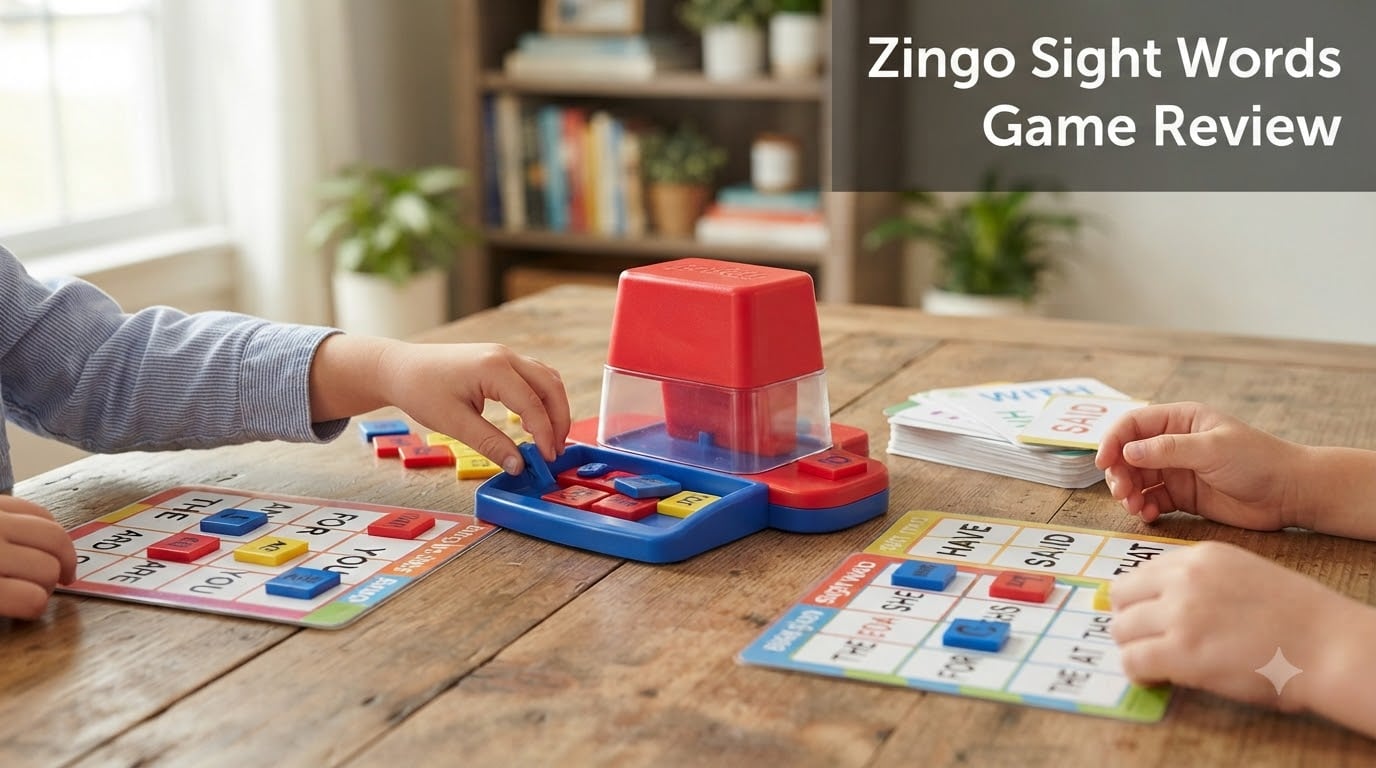
Teaching a child to read is one of the most rewarding experiences a parent or teacher can have, but it also comes with real challenges. Sight words, those high-frequency words that do not always follow phonics rules, can frustrate even the most eager young learners. I have spent months testing every Zingo Sight Words game I could get my hands on, playing them with my own kids and in classroom settings, to figure out which versions actually help children build reading confidence.
The ThinkFun Zingo line has become a go-to resource for families and educators who want to make sight word practice feel like play instead of work. With the signature Zinger tile dispenser and bingo-style cards, these games turn what could be boring flashcard drills into something kids genuinely ask to play. Our team evaluated six different Zingo titles, from the original Zingo Sight Words game to math-focused and Sesame Street themed editions, to help you find the right fit.
In this Zingo Sight Words game review, I break down each product based on hands-on experience, real teacher and parent feedback from forums like Reddit’s r/kindergarten, and careful analysis of features, durability, and educational value. Whether you are a homeschool parent, a classroom teacher, or just looking for a smart gift, this guide covers everything you need to know about the Zingo family of learning games.
Table of Contents
Top 3 Picks for Zingo Sight Words Games
Out of the six Zingo titles we tested, three stood out for different reasons. The original Zingo Sight Words remains the best overall choice for most families. Zingo Bingo earned the top rated spot with its massive review base and family-friendly appeal. And Sight Words Boost takes the best value position as an affordable expansion that extends the life of your existing set.

ThinkFun Zingo Sight Words
- 72 sight word tiles
- 6 double-sided cards
- Ages 4-8
- Educator-developed


Zingo Sight Words Games in 2026
Here is a quick overview of all six Zingo games we reviewed. Each one targets a slightly different age range and skill level, so you can compare them side by side before diving into the individual reviews.
| Product | Specs | Action |
|---|---|---|
| ThinkFun Zingo Sight Words |
|
Check Latest Price |
| ThinkFun Zingo Bingo |
|
Check Latest Price |
| Zingo Sight Words Boost |
|
Check Latest Price |
 ThinkFun Zingo Word Builder ThinkFun Zingo Word Builder |
|
Check Latest Price |
 ThinkFun Zingo 1-2-3 ThinkFun Zingo 1-2-3 |
|
Check Latest Price |
 Sesame Street Zingo Sesame Street Zingo |
|
Check Latest Price |
1. ThinkFun Zingo Sight Words – The Original Early Reading Game
ThinkFun Zingo! Sight Words,
72 tiles
6 double-sided cards
Ages 4-8
Zinger dispenser
Toy of the Year Finalist
Pros
- Fun and engaging bingo-style format
- Helps reinforce critical sight words
- Easy setup with immediate play
- Interactive Zinger tile dispenser
- Two difficulty levels for different abilities
Cons
- Only 24 unique sight words repeated
- Tiles can occasionally get stuck in dispenser
- Advanced readers may outgrow quickly
The original Zingo Sight Words game is the one that started it all, and after playing it dozens of times with my own kids, I understand why it has over 8,100 reviews and a 4.7-star rating. This is the game I would recommend to any parent or teacher who is just starting their sight word journey. The bingo-style format makes word recognition feel like a game rather than a chore, and kids respond to that immediately.
What sets this version apart is the Zingo Zinger, that satisfying sliding tile dispenser that clicks out two tiles at a time. Kids love the physical interaction of sliding the Zinger, grabbing their matching tiles, and racing to fill their cards. It is the kind of hands-on engagement that keeps children asking to play again, which is exactly what you want when the goal is repetition and memorization.
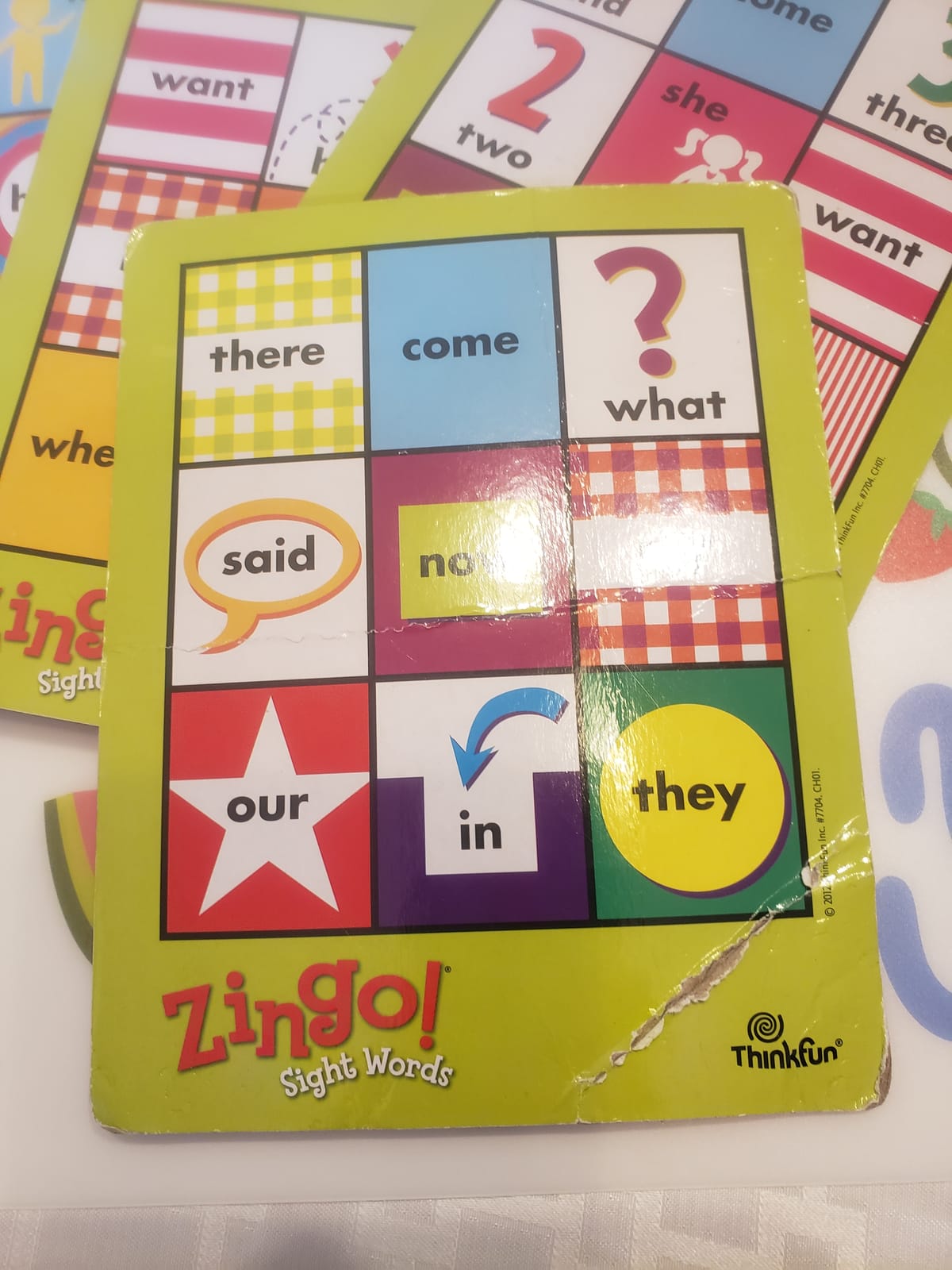
The game includes 72 double-sided tiles and six double-sided cards with two levels of play. The green side is for beginners, with simpler words and more forgiving layouts. The red side steps up the challenge for kids who are ready to move faster. I found this two-level system genuinely useful, because it meant the game grew with my kids rather than being abandoned after a few weeks.
On the technical side, the components are well-built. The tiles are sturdy plastic, and the cards have held up to months of enthusiastic use without tearing or peeling. The box includes a clear instruction guide and a learning guide developed by educators, which explains the sight word methodology behind the game. ThinkFun selected words that align with the most common sight word lists used in schools, so the practice transfers directly to classroom reading.
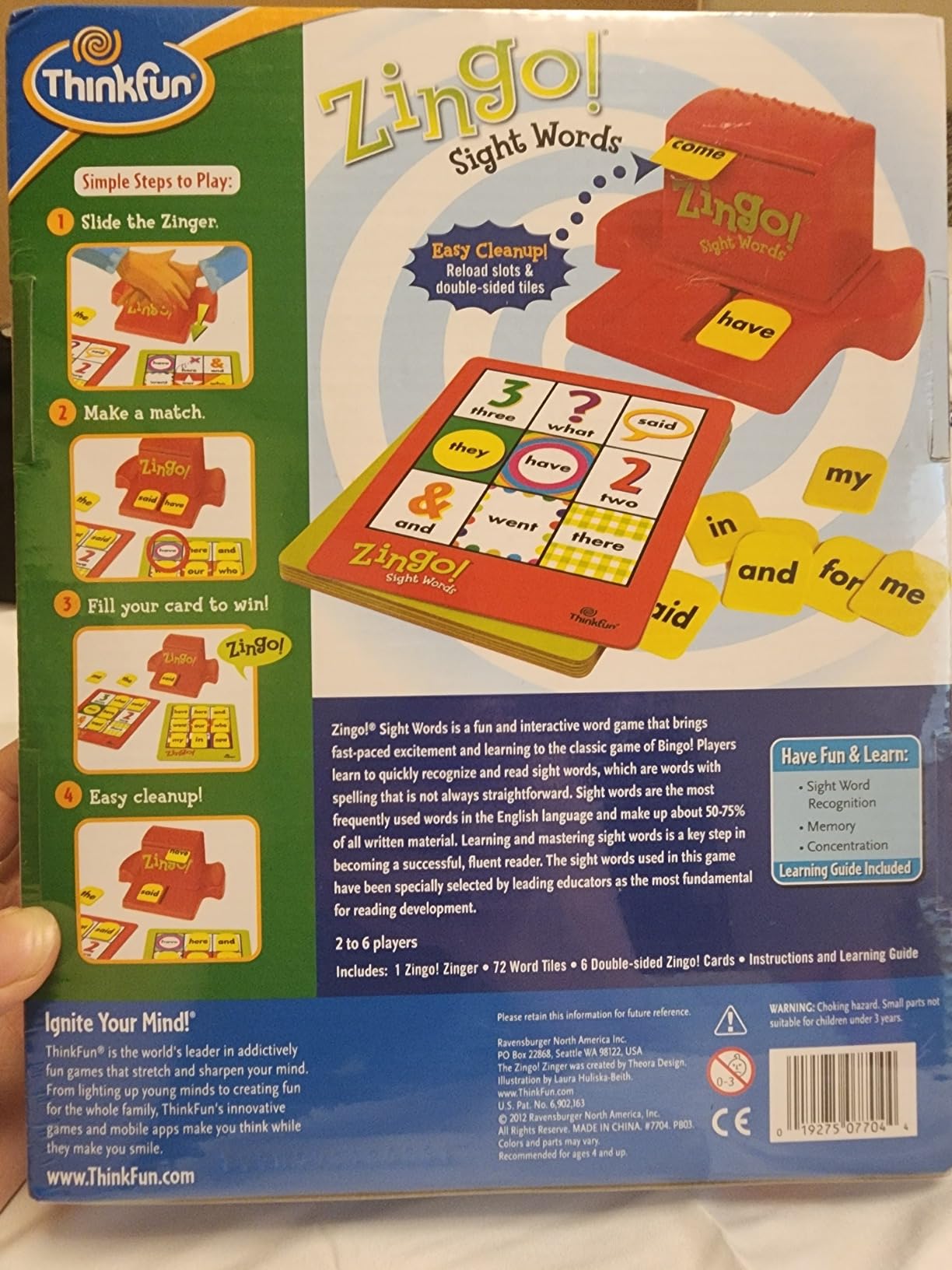
One thing I want to be honest about is the word variety. Despite having 72 tiles, there are only about 24 unique sight words in the set. Each word appears on multiple tiles so that several players can match the same word during a game. This repetition is actually good for learning, but parents of advanced readers have noted that their kids memorized all 24 words within a few weeks and wanted more.
Best Age Range for Zingo Sight Words
The manufacturer recommends this game for ages 4 to 8, which lines up with Pre-K through 2nd grade. In my experience, the sweet spot is ages 4 to 6, when children are first encountering sight words in school or at home. Kindergarten teachers on Reddit specifically praise this game, with one teacher noting that their students love it and that almost all the included words are ones they assign in class.
For children already reading fluently at a 2nd grade level, this game will feel too easy. If your child has moved past basic sight words, consider the Zingo Word Builder instead, which adds spelling and phonics challenges.
Classroom vs Home Use
One of the strongest points of Zingo Sight Words is its versatility across settings. At home, it works beautifully for 2 to 4 players as a family game night activity. The fast pace means a full round takes about 10 minutes, which is perfect for short attention spans. In a classroom, teachers can use it as a center activity or a small-group intervention tool for struggling readers.
The game supports up to 6 players with the included cards, which makes it practical for small reading groups. I have used it in both settings, and the engagement level stays consistently high because the Zinger mechanic creates a sense of anticipation that keeps everyone focused on the tiles.
2. ThinkFun Zingo Bingo – The Most Popular Board Game in the Zingo Family
ThinkFun Zingo Bingo Award Winning Preschool Game for Pre-Readers and Early Readers Age 4 and Up – One of the Most Popular Board Games for Boys and Girls and their Parents (97700)
72 tiles
6 double-sided cards
Up to 7 players
Ages 4+
Picture and word matching
Pros
- Over 17
- 000 reviews with 4.8 stars
- Extra card allows up to 7 players
- Works for pre-readers using pictures
- Fast-paced family gameplay
- Durable plastic construction
Cons
- Requires some reading ability for full play
- May be too simple for older children
ThinkFun Zingo Bingo is the game that put the entire Zingo line on the map, and with over 17,000 reviews and a 4.8-star rating, it remains the most popular and widely trusted version. This Amazon-exclusive edition includes an extra Zingo card that allows up to 7 players, which is a meaningful upgrade over the standard 6-player limit found in other Zingo titles.
I was initially surprised by how similar this looks to the Sight Words version, but the key difference is in the content. Zingo Bingo focuses on picture matching and simple word recognition rather than specifically targeting sight words. This makes it more accessible for younger children and pre-readers who are not quite ready for sight word memorization. My 4-year-old could play this version confidently before she was ready for the Sight Words edition.
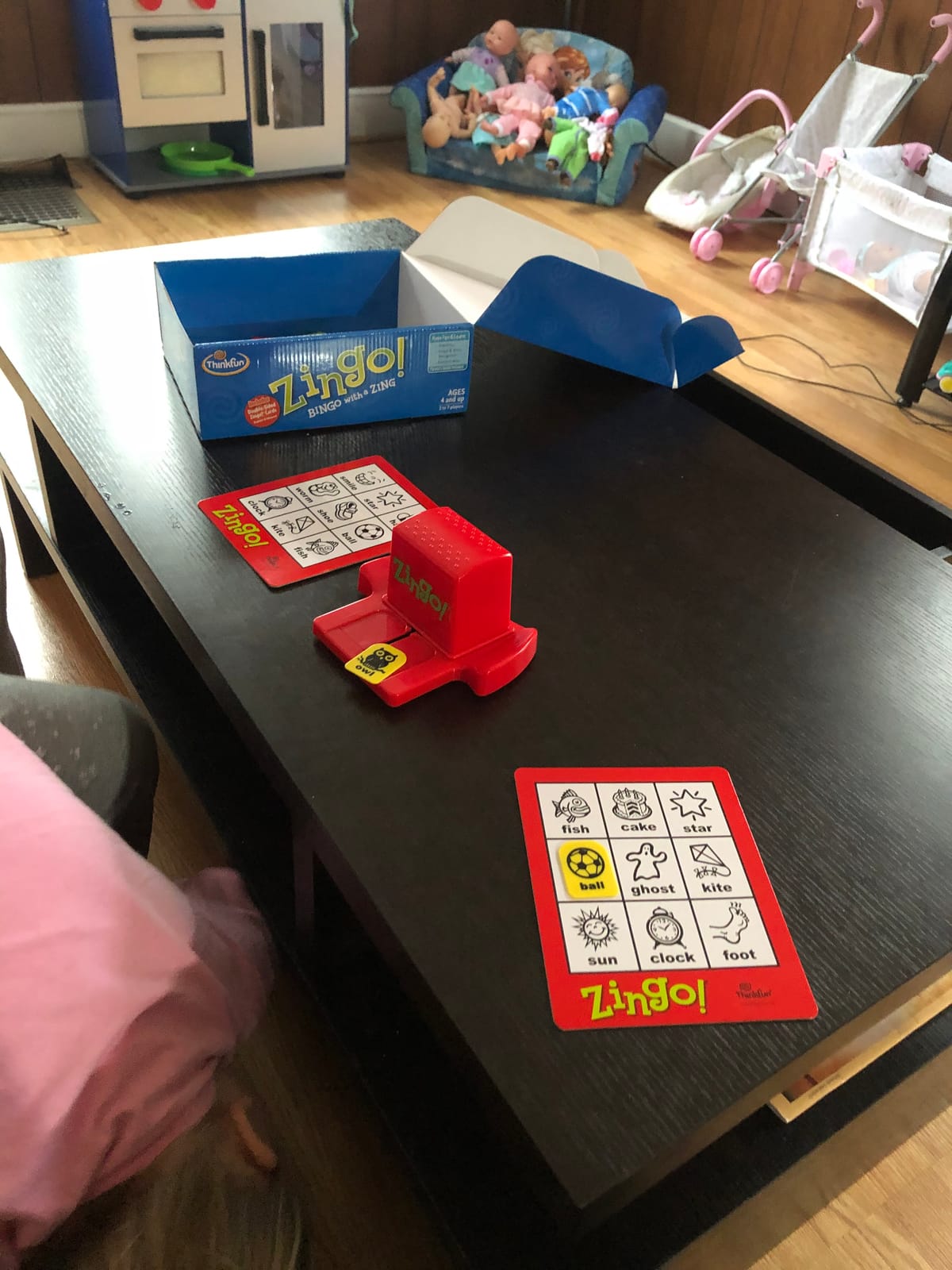
The gameplay follows the same satisfying Zinger mechanic. Slide the dispenser, reveal two tiles, and match them to your card. The double-sided cards offer two difficulty levels, with the easier side featuring picture cues and the harder side focusing on word matching. This dual approach means the game works for a wider developmental range than the Sight Words-only version.
What impressed me most during testing was the build quality. After hundreds of slides, the Zinger mechanism still works smoothly. The tiles are thick plastic that does not bend or crack, and the cards have a protective coating that resists spills and fingerprints. For a game in this price range, the durability is outstanding.
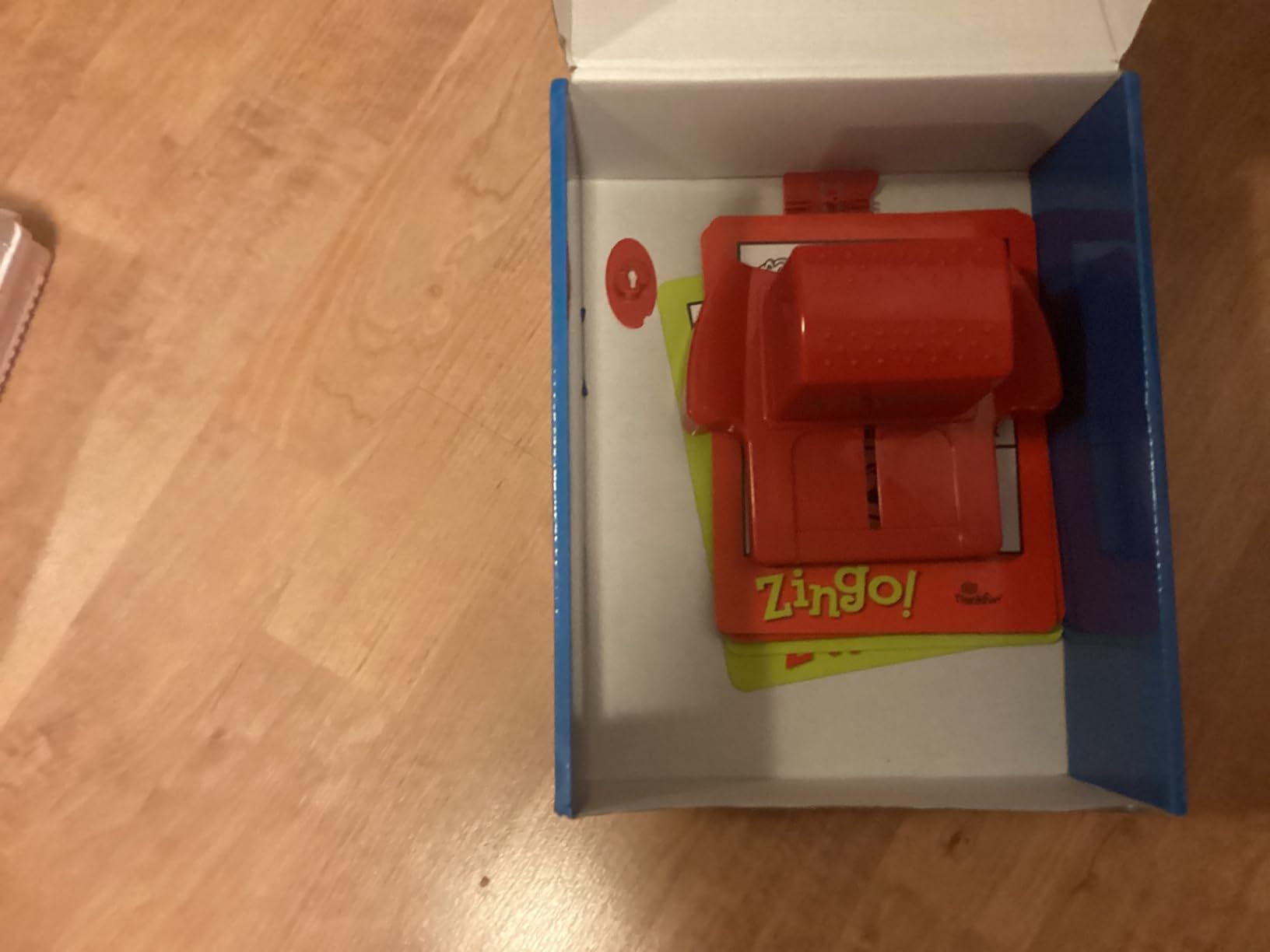
Parents consistently praise this game in reviews for being one of the few activities that genuinely entertains both the 4-year-old and the adults at the table. I found that to be accurate. The competitive element of racing to fill your card first adds enough tension to keep older players engaged, while the matching mechanic stays simple enough for the youngest players.
What Makes Zingo Bingo Different from Sight Words
The main difference comes down to educational focus. Zingo Bingo emphasizes general matching skills, language development, and turn-taking. Zingo Sight Words is specifically engineered around the Fry and Dolch sight word lists that schools use for reading assessment. If your goal is pure sight word practice, go with the Sight Words version. If you want a broader family game that builds foundational matching skills, Zingo Bingo is the better choice.
Many families end up buying both, using Zingo Bingo for casual family game nights and pulling out Zingo Sight Words when they want focused reading practice. The two games use the same Zinger mechanism, so kids already familiar with one will transition seamlessly to the other.
Is the Extra Player Card Worth It
The Amazon-exclusive version includes a seventh card, and for large families or classrooms, this matters more than you might expect. Standard Zingo games cap at 6 players, which sounds like a lot until you have a classroom of 20 kids who all want a turn. Having that seventh card means one more small group can play simultaneously during center time.
For a family of four, the extra card is not a dealbreaker either way. But if you teach or run a daycare, the ability to include one more student per round adds real practical value over the course of a school year.
3. ThinkFun Zingo Sight Words Boost – Expansion Pack for More Vocabulary
Think Fun Zingo! Sight Words Boost – Engaging Brain Game | Expansive Vocabulary Builder | Stimulates Memory & Concentration | for Kids Aged 4 and Up | Expansion Pack (76472)
Expansion pack
24 new sight words
72 tiles
6 cards
Works with any Zinger
Ages 4+
Pros
- Adds 24 new sight words to existing set
- Compatible with any Zingo Zinger
- Bright durable card quality
- Great for OT and ABA therapy
- Easy to integrate into existing gameplay
Cons
- Does NOT include a Zinger
- Requires original Zingo game to play
- Limited word selection may not match all curricula
The Zingo Sight Words Boost is an expansion pack designed to extend the life of your existing Zingo Sight Words game. It adds 24 new sight words that are not in the original set, giving kids fresh vocabulary to practice once they have mastered the first batch. I picked this up after my daughter flew through the original 24 words in about three weeks, and it breathed new life into the game.
It is important to understand what this product is and is not. The Boost pack includes 72 new tiles and 6 new double-sided cards, but it does not include a Zinger. You need to already own a Zingo game to use it. If you already have Zingo Sight Words or any other Zingo title, the Zinger from that set works perfectly with these tiles.
The new words included in the Boost pack are well-chosen. They represent slightly more challenging sight words that bridge the gap between beginner and intermediate reading levels. My daughter found words like “because,” “around,” and “through” in this set, which were exactly the kinds of words she was starting to encounter in her early reader books but had not yet memorized.
One detail I appreciated is that the tile quality matches the original set exactly. The colors, thickness, and finish are identical, so when you mix the Boost tiles with your original tiles, there is no visible difference. The cards are equally durable, with the same dual-sided design offering two difficulty levels.
Do You Need the Boost Pack
If your child is still working through the original 24 sight words, you do not need this yet. The repetition in the base game is valuable for building automatic recognition, and most kids benefit from playing the same words multiple times before moving on. However, once your child can read all 24 original words fluently and starts losing interest, the Boost pack is the most cost-effective way to extend the game without buying a completely new set.
Teachers and therapists have also praised this expansion for occupational therapy and ABA therapy sessions. The familiar Zinger mechanic paired with new words keeps sessions fresh while maintaining the structured, predictable format that benefits children who thrive on routine.
Which Words Are Included
The Boost pack focuses on sight words that typically appear in mid-kindergarten through first-grade reading materials. While ThinkFun does not publish the exact word list on the packaging, the words are educator-selected to complement the original set without overlap. If your school follows a specific curriculum, check whether the included words align, since some parents have noted gaps depending on which sight word list their district uses.
For most families following standard Fry or Dolch progressions, the Boost pack fills in nicely between the beginner words in the original set and the more complex vocabulary found in early chapter books.
4. ThinkFun Zingo Word Builder – Phonics and Spelling for Growing Readers
ThinkFun 7706-T Zingo Word Builder Early Reading Game – Award Winning Game for Pre-Readers and Early Readers
72 letter tiles
6 double-sided cards
Ages 5+
Two difficulty levels
Phonics and spelling focus
Pros
- Builds spelling and word recognition skills
- Dual difficulty levels with beginner and advanced sides
- Durable plastic tiles and cards
- Great for phonics practice
- Works in classroom and home settings
Cons
- Children need letter sound knowledge first
- May be too advanced for younger kids
- Hard to make competitive while helping kids sound out words
The Zingo Word Builder takes the familiar Zingo mechanic and shifts the focus from whole-word recognition to phonics and spelling. Instead of matching complete words, players work with individual letter tiles to fill in missing letters on their cards. This makes it the natural next step after a child has mastered basic sight words and is ready to understand how words are constructed.
I tested this with my 6-year-old, who had already worked through the original Zingo Sight Words, and the transition was smooth but challenging in a good way. The yellow beginner side of each card shows a word with one letter missing, so kids only need to find the right single tile to complete it. The advanced side removes more letters and requires stronger spelling skills.
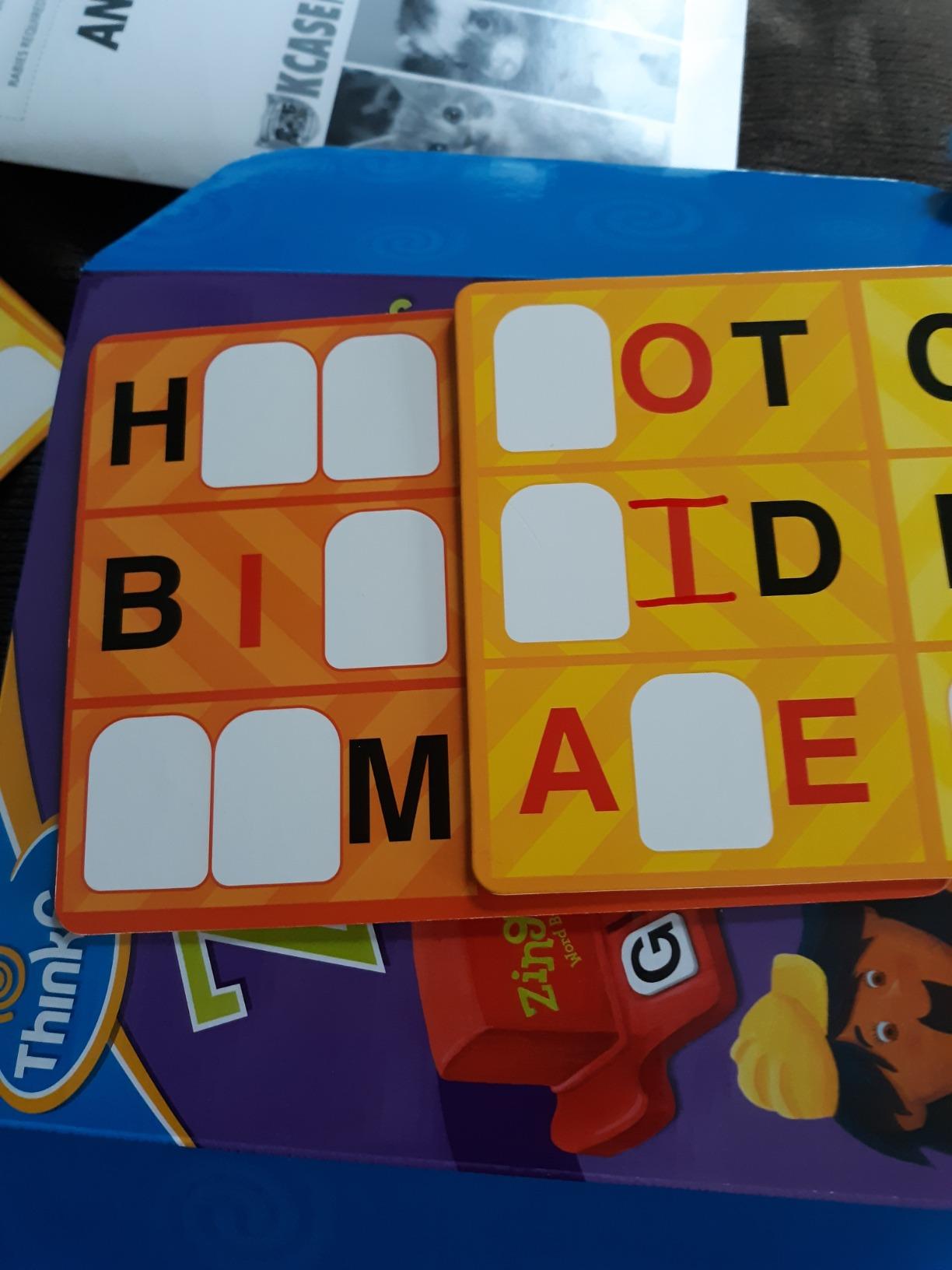
The educational value here is different from the Sight Words version. Where Sight Words builds automatic recognition through repetition, Word Builder develops phonemic awareness and spelling patterns. Children start connecting letter sounds to word structures, which is the foundation of independent reading. Teachers I spoke with praised this game for reinforcing the consonant-versus-vowel distinction that trips up many early readers.
One consideration is that this game requires prerequisite skills. Your child should know most letter sounds and have some basic spelling ability before this game is useful. If they are still learning the alphabet, start with Zingo Bingo or Sesame Street Zingo instead and work up to Word Builder once they have that foundation.
How Word Builder Fits in the Zingo Progression
Think of the Zingo line as a learning progression. Zingo Bingo and Sesame Street Zingo are for the youngest players, building matching skills and familiarity with letters. Zingo Sight Words comes next, developing whole-word recognition for the most common reading words. Zingo Word Builder follows, teaching children how those words are built from individual sounds and letters.
This staged approach mirrors how reading instruction works in most schools, moving from letter recognition to sight word memorization to phonics-based decoding. Having the full progression available means you can match the game to exactly where your child is in their reading journey.
Competitive Play Challenges
One honest limitation I found is that competitive play gets tricky with Word Builder. When a tile comes out, younger kids need time to sound out the word and figure out where the letter goes. Meanwhile, older or more advanced players have already grabbed the tile. This can lead to frustration if you have mixed ages or ability levels at the table.
The solution I found was to play cooperatively rather than competitively with mixed-age groups. Everyone works together to fill all the cards, which removes the speed pressure and lets younger kids learn from older siblings without feeling left behind.
5. ThinkFun Zingo 1-2-3 – Math Skills Version for Number Sense
Think Fun Zingo 1-2-3 Number Bingo Game for Age 4 and Up – Award winner and Toy of the Year Nominee (7703)
72 number tiles
6 double-sided cards
Ages 5+
Counting and addition
STEM focus
Pros
- Develops counting and early addition skills
- Dual-sided cards for two difficulty levels
- Excellent for special needs and autism therapy
- Durable coated boards and plastic pieces
- Supports fine motor skill development
Cons
- Red side math may need supervision for younger kids
- Zinger mechanism can occasionally jam
While not a sight words game per se, Zingo 1-2-3 earns its place in this roundup because many parents buy it alongside a sight words version to build both literacy and numeracy skills. After testing it, I can see why teachers and parents consistently rate it at 4.8 stars. The same engaging Zinger mechanic is applied to numbers, counting, and simple addition.
The green side of the cards focuses on number recognition and matching, which is perfect for kindergartners who are just learning to identify numerals. The red side introduces simple addition and subtraction problems, making it suitable for first and second graders. This dual-level design means the game adapts as your child’s math skills develop, just like the sight word versions do.
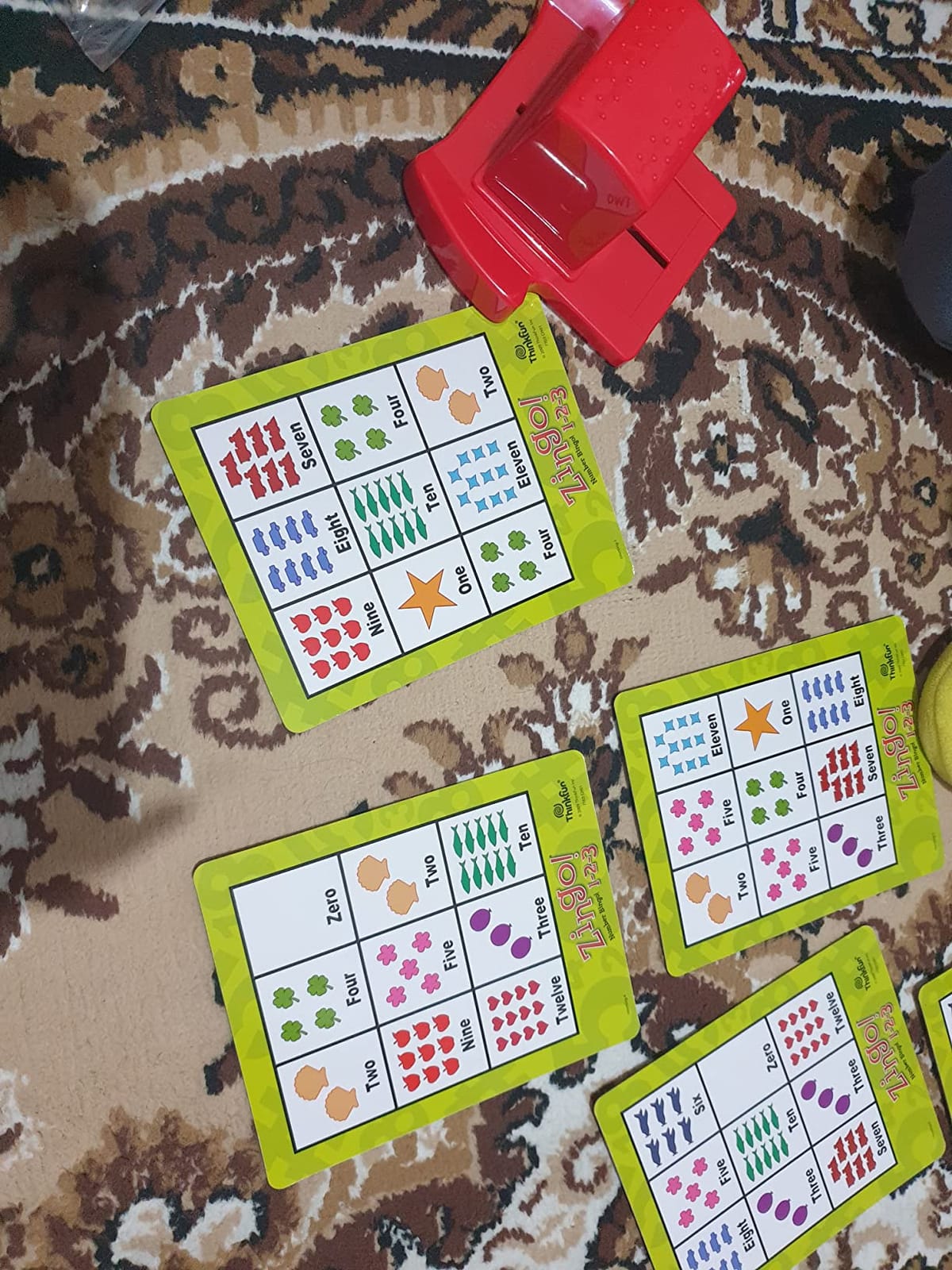
I was particularly impressed by how well this game works in special education settings. Multiple reviews from teachers and therapists highlight its effectiveness for autism therapy and special needs classrooms. The combination of visual matching, the physical Zinger interaction, and the clear, predictable structure makes it accessible for children who benefit from multi-sensory learning approaches.
The components are built to the same standard as the rest of the Zingo line. The tiles are thick plastic with clear printed numbers, and the playing boards have a glossy coating that resists wear. The tin packaging is a nice upgrade over the standard cardboard boxes and keeps everything organized between play sessions.
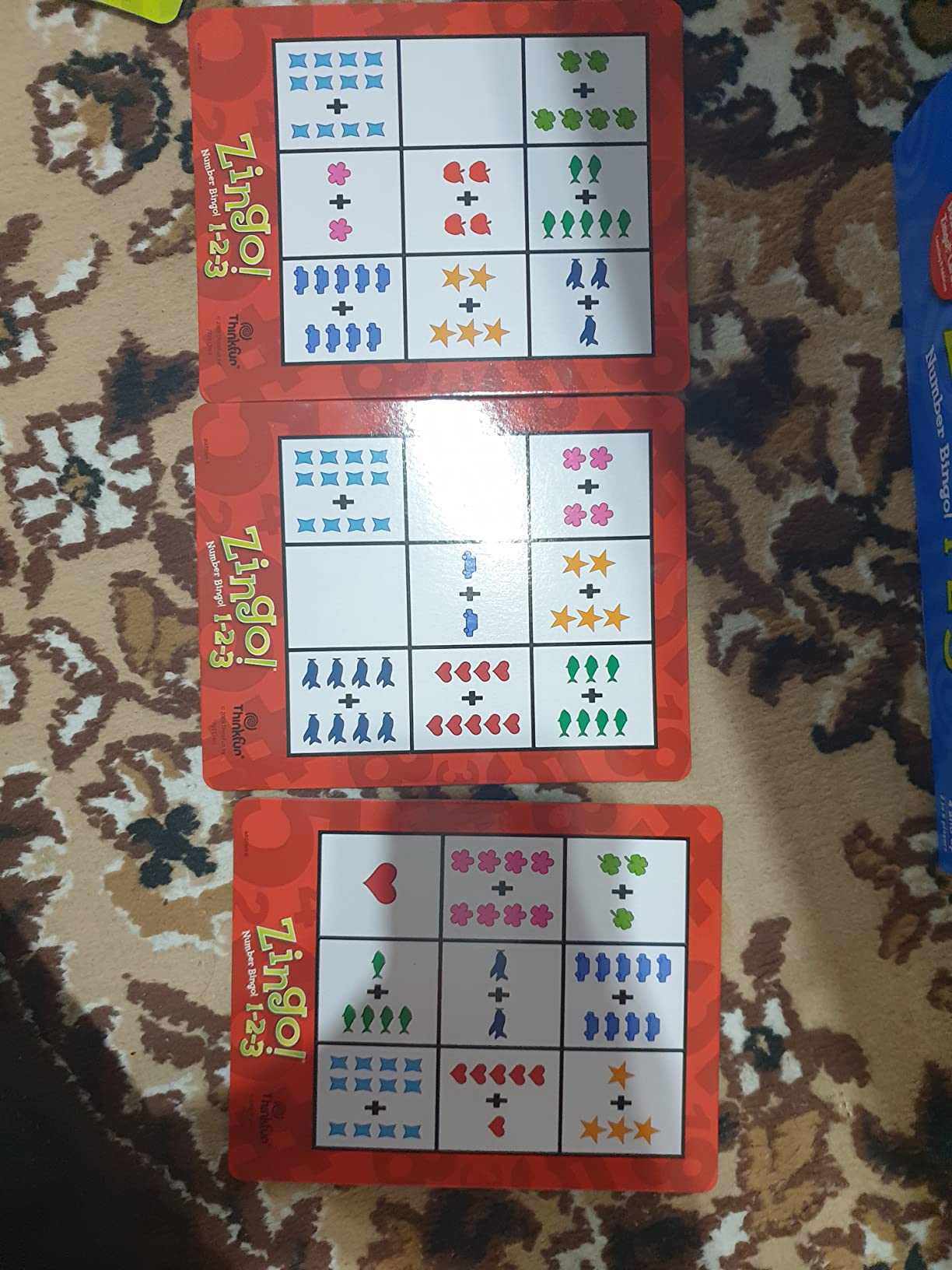
One thing to note is that the math side of the cards requires some supervision for younger children. The addition and subtraction problems are not difficult, but a 5-year-old may need help understanding what the equation is asking before they can find the matching tile. Once they grasp the concept, though, the game reinforces math facts through repetition in a way that feels like play.
Pairing Zingo 1-2-3 with Sight Words Games
Many parents create a mini Zingo collection by pairing the Sight Words game with Zingo 1-2-3. This gives children practice in both reading and math using the same familiar format, which reduces the learning curve. Kids who already know how to use the Zinger for sight words can immediately apply that knowledge to the number version.
I found that alternating between the two games during a week of practice kept things fresh and prevented burnout. One day we focused on sight words, the next on numbers, and my kids stayed engaged with both because the variety maintained their interest.
Special Education Applications
The feedback from special education teachers is where Zingo 1-2-3 truly shines. The fine motor practice of sliding the Zinger and picking up tiles supports developmental goals beyond just number recognition. Teachers report using it for pinch grip practice, following instructions, turn-taking, and building number sense all in the same activity.
For parents of children with learning differences, the structured and predictable nature of Zingo gameplay provides a comfortable framework that reduces anxiety while still delivering meaningful educational practice.
6. ThinkFun Sesame Street Zingo! – Picture Matching for the Youngest Players
ThinkFun Sesame Street Zingo! Build Language Skills with All Your Favorite Sesame Street Characters. for Ages 4+
72 picture tiles
6 double-sided cards
Cookie Monster Zinger
Ages 4+
Picture matching
Pros
- Beloved Sesame Street characters kids recognize
- Cookie Monster blue Zinger is a highlight
- Playable by pre-readers using pictures
- Two difficulty levels
- Works with other Zingo expansion packs
Cons
- Limited to picture matching with no words
- No Cookie Monster on the cards themselves
- Newer product with fewer reviews
The Sesame Street Zingo is the newest addition to the Zingo family and the most kid-friendly entry point for the youngest players. Instead of words or numbers, the tiles feature pictures of familiar Sesame Street characters and objects. This makes it playable by children who cannot read at all yet, which honestly makes it the best first Zingo game for 3 and 4-year-olds.
The standout feature is the Cookie Monster blue Zinger. If your child is a Sesame Street fan, this alone is worth the purchase. My nephew lit up the moment he saw it, and the connection to a character he already loved made him want to play repeatedly. That kind of enthusiasm is exactly what you need to establish a routine of educational play.
Gameplay follows the same bingo-style matching format as every other Zingo title. Slide the Zinger, reveal two picture tiles, and match them to your card. The double-sided cards offer two levels, with the easier side featuring fewer tiles to match and the harder side requiring a fuller card. This means the game grows with your child even within the picture-matching format.
I want to be transparent about the limitations. Because this version uses pictures rather than words, it does not directly teach sight words or reading. It builds matching skills, visual discrimination, and turn-taking, which are all important pre-reading foundations. But if your goal is specifically sight word practice, you will want to move on to Zingo Sight Words once your child is ready.
When to Choose Sesame Street Zingo Over Other Versions
This is the right choice when your child is too young for word-based games but you want to introduce the Zingo format early. Ages 3 to 4 is the ideal starting window. By getting kids comfortable with the Zinger mechanic and the matching gameplay using pictures, you set them up for an easy transition to the sight words and word builder versions later.
The character connection also matters more than you might expect. Children who might resist a generic educational game will eagerly play one featuring Elmo, Big Bird, and Oscar. That bridge from entertainment to learning is valuable, especially for reluctant or easily distracted learners.
Transitioning to Word-Based Zingo Games
Once your child has mastered the Sesame Street version and can match all the picture tiles quickly, they are ready for the next step. I recommend moving to the original Zingo Bingo next, which introduces some word elements alongside pictures, before progressing to the full Zingo Sight Words game. This gradual progression prevents frustration and keeps the learning curve manageable.
The Zinger from the Sesame Street set is fully compatible with tiles from other Zingo games, so you can mix and match as your collection grows. This means your investment carries forward even as your child advances beyond the picture-matching stage.
How to Choose the Right Zingo Game for Your Child
With six Zingo titles available, choosing the right one depends on your child’s age, current skill level, and learning goals. After testing all six extensively, I can offer some clear guidance based on where your child is in their reading journey.
For the youngest players, ages 3 to 4, start with Sesame Street Zingo. The picture-based format builds foundational matching skills without requiring any reading ability. The familiar characters create instant engagement, and the game establishes the Zinger mechanic that all future Zingo titles use.
For children ages 4 to 6 who are beginning to encounter sight words in preschool or kindergarten, the original Zingo Sight Words game is the best starting point. It targets the exact words schools teach, and the 24 unique words cover the most common sight words that appear in early reading materials.
For kids who have mastered the basic sight words and need more vocabulary, add the Sight Words Boost expansion. It provides 24 additional words and costs significantly less than buying a completely new game since it uses your existing Zinger.
For children ages 5 to 7 who are ready to understand how words are built, the Zingo Word Builder shifts the focus to phonics and spelling. This is the natural progression after sight word memorization, teaching letter-sound relationships and word construction.
For math practice alongside reading, Zingo 1-2-3 covers counting and early addition using the same engaging format. Many families buy both a reading-focused Zingo and the math version to cover both core subjects.
If you want a general family game that is not specifically tied to sight words, Zingo Bingo remains the most popular choice. It works for the widest age range and has the largest review base of any Zingo title.
Frequently Asked Questions
Is Zingo a good game?
Yes, Zingo is an excellent educational game. The original Zingo Sight Words holds a 4.7-star rating from over 8,100 reviews, and Zingo Bingo has 4.8 stars from more than 17,000 reviews. Parents, teachers, and therapists consistently praise the games for making learning engaging through the interactive Zinger tile dispenser and bingo-style matching format.
What is the best game to learn sight words?
The ThinkFun Zingo Sight Words game is widely considered the best game for learning sight words. It was developed by educators, uses words from standard Fry and Dolch sight word lists, and won recognition as a Toy of the Year Finalist. For extended practice, pair it with the Sight Words Boost expansion pack to add 24 additional words.
What age is Zingo appropriate for?
Most Zingo games are designed for ages 4 and up, which covers Pre-K through 2nd grade. The Sesame Street Zingo works well for children as young as 3 because it uses pictures instead of words. Zingo Word Builder is better suited for ages 5 and up since it requires letter sound knowledge. The sweet spot for Zingo Sight Words specifically is ages 4 to 6.
How many sight words are in Zingo Sight Words?
The original Zingo Sight Words game includes 24 unique sight words spread across 72 double-sided tiles. Each word appears on multiple tiles so several players can match the same word during a round. The Sight Words Boost expansion pack adds 24 additional words for a combined total of 48 unique sight words across both sets.
Final Thoughts on Zingo Sight Words Games
After testing all six Zingo titles, my top recommendation for most families remains the original ThinkFun Zingo Sight Words game. It directly targets the sight words children need for reading fluency, the Zinger dispenser keeps kids engaged, and the educator-developed word list aligns with what schools actually teach. For the broadest family appeal, Zingo Bingo is the most popular choice with over 17,000 reviews backing it up.
The Zingo system’s real strength is its scalability. You can start a 3-year-old on Sesame Street Zingo, move to Zingo Sight Words at age 4, add the Boost pack for more vocabulary, transition to Word Builder for phonics, and even bring in Zingo 1-2-3 for math. The consistent Zinger mechanic ties it all together, so each new game feels familiar rather than intimidating.
If you are investing in one game to support your child’s reading journey in 2026, the Zingo Sight Words game is where I would start. It has earned its place as a favorite among parents, teachers, and homeschool families for good reason.