
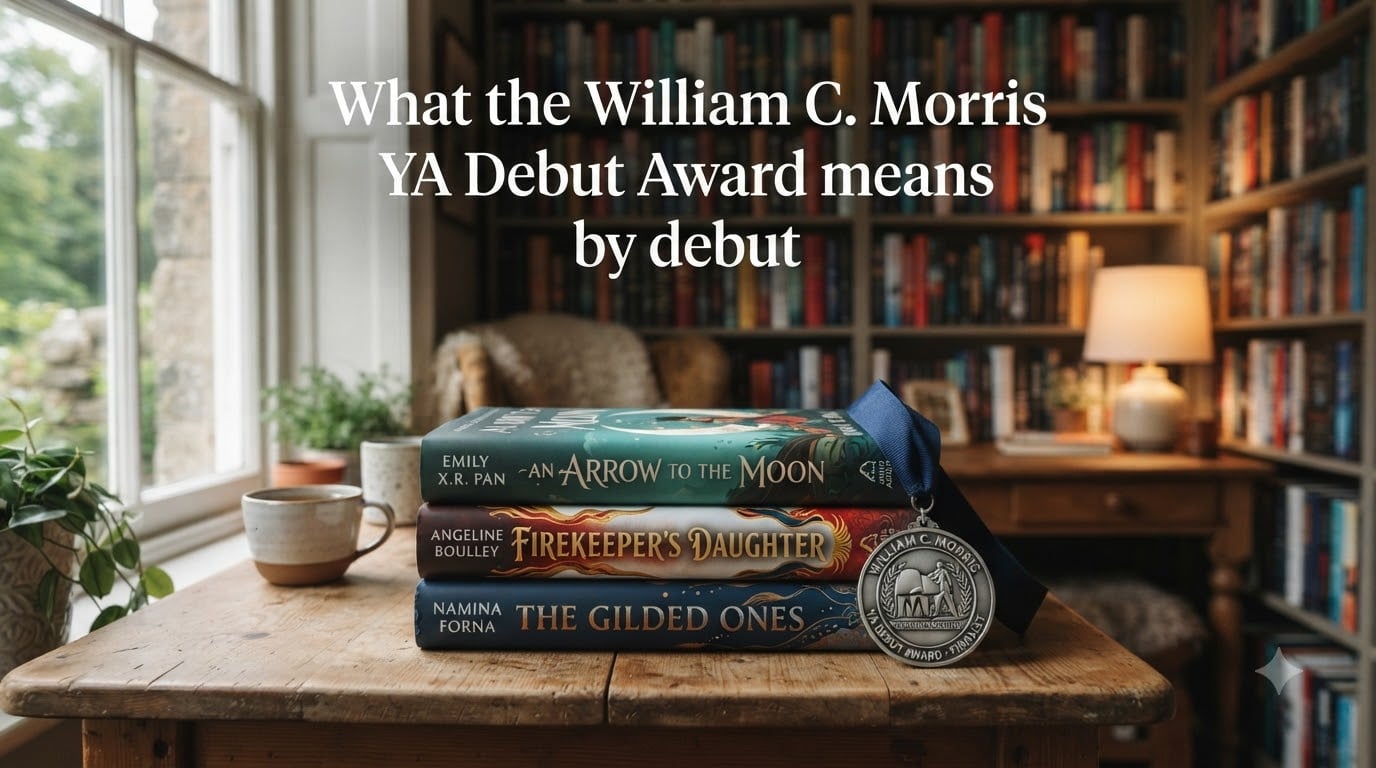
The William C. Morris YA Debut Award is an annual literary honor given to a debut book published by a first-time author writing for teens. First given in 2009, the award celebrates impressive new voices in young adult literature and signals that a debut novel has earned recognition from librarians and the broader YA community.
I dug into this award because the word “debut” sounds simple until you read the fine print. What counts as a debut for the Morris Award? Who qualifies, and who does not? Our team unpacked the rules, the history, and the recent winners so you can understand exactly what the Morris Award means by “debut” and why it matters.
Table of Contents
What Is the William C. Morris YA Debut Award?
The William C. Morris YA Debut Award is an annual book prize administered by YALSA, the Young Adult Library Services Association, a division of the American Library Association. It honors a single debut book published in the previous year by a first-time author writing for teens.
YALSA created the award to shine a spotlight on fresh voices in YA literature. Unlike the Newbery or Printz, which often reward established names, the Morris Award exists specifically to recognize the work of authors publishing their first book for a teen audience.
Award at a Glance
Full name: William C. Morris Young Adult Debut Award
Administered by: YALSA (Young Adult Library Services Association)
Parent organization: American Library Association (ALA)
First awarded: 2009
Eligibility: debut books by first-time authors writing for teens, ages 12 to 18
Annual winner: one title per year, with a shortlist of finalists announced in advance
Who Was William C. Morris?
William C. Morris was a respected book editor and longtime champion of young adult literature. He worked at Harcourt and other major publishers, helping to shape the modern YA category during decades when teen fiction was often dismissed as a lesser literary form.
Morris advocated for books that took teenagers seriously as readers. He pushed for stories that respected the emotional and intellectual lives of young readers, and he mentored new writers who wanted to contribute to the genre. After his death, YALSA established the award in his name to honor his belief that powerful new voices deserve early recognition.
Knowing the namesake matters. The award is not just a marketing prize. It carries the values Morris championed: literary quality for young readers, plus a commitment to launching new authors whose first YA book deserves a wide audience.
How the Morris Award Was Established in 2009?
YALSA announced the Morris Award in 2008 and first presented it in 2009. The inaugural winner was “A Curse Dark as Gold” by Elizabeth C. Bunce, a fantasy retelling set in a small Pennsylvania town.
The award was created during a surge in YA publishing. The early 2000s saw the rise of mega-bestsellers like Harry Potter and Twilight, and the category was poised to grow. YALSA wanted a dedicated prize that rewarded debut talent specifically, rather than a single award that mixed famous and new authors together.
Since then, the Morris Award has become one of the most respected prizes for debut YA fiction on the annual book-award calendar. Winners are announced at the ALA Midwinter Meeting, typically in January, with the press coverage alerting readers, librarians, and booksellers to titles worth adding to collections.
What “Debut” Means for the Morris Award?
The word “debut” is the heart of this award, and YALSA defines it precisely. To qualify, the nominated book must be the author’s first publication in any format, including self-published work, in any genre. An author with prior picture books, middle-grade novels, or adult fiction is generally not eligible. The book must also be a work of young adult literature intended for readers ages 12 to 18.
Three Core Eligibility Rules
First-time author status: the book is the author’s first published work of any kind, in any genre, in any format (print, digital, or self-published).
Young adult audience: the book is published for a teen readership, typically ages 12 to 18, and deals with themes and language appropriate to that age group.
U.S. publication: the book must be published in the United States between the designated dates for the award year, usually late fall of the previous year through the end of the award year.
What Does Not Count as a Debut?
Authors who previously published in adult fiction, middle-grade, or children’s picture books are not eligible, even if their YA book is their first book for teens. Authors who previously self-published the same title and then released it through a traditional publisher are also typically ruled out. Pseudonyms that conceal a prior publishing history may disqualify a book if the committee discovers the connection.
The award’s strict definition of “debut” is what makes the Morris Award unique. It is not a career lifetime prize or a yearly “best of” list. It is squarely about first books, and the promise within them.
How Winners Are Selected Each Year?
The selection process is run by a committee of YALSA members, mostly practicing librarians who work with teens. Each year, the committee reads the eligible pool of debut YA novels published in the U.S. and narrows the field through several rounds of discussion and voting.
The committee first publishes a long list of nominated titles, then trims that to a shortlist of typically five finalists. The finalists are announced in December, and the winner is announced at the ALA Midwinter Meeting in January. The winner receives a cash prize and a personalized award sticker, and the sticker alone tends to drive significant library and bookstore sales.
Unlike some awards that rely on jury votes alone, the Morris Award selection is transparent and committee-led. Each year’s finalists reflect the committee’s collective reading priorities, which tend to favor literary quality, original voice, and authentic teen experience.
Recent Morris Award Winners (2024-2026)
Tracking the most recent winners is a quick way to see what kind of books the award celebrates. Here is the recent list, including the 2026 honoree.
2026 winner: “Four Ways to Heal the World,” a debut novel by Lila Quintero Weaver exploring immigration, family, and resilience in the American South.
2025 winner: “The Snows of Fate,” a fantasy debut by Priya Anand that the committee praised for its prose and world-building.
2024 winner: “Salt the Water,” a literary debut by Ceridwen Dovey about identity and reinvention.
Finalists each year often include a mix of contemporary realism, fantasy, romance, and historical fiction. The shortlist is a strong reading list in its own right, and many of the finalists become enduring favorites in teen library collections.
What the Award Means for Debut Authors’ Careers?
Winning the Morris Award changes the trajectory of a debut author. Because the award is administered by YALSA and stamped with ALA credibility, it carries weight with librarians, booksellers, and reviewers. Library orders typically spike after the winner announcement, and independent bookstores add the book to front-of-store displays.
For authors, the practical effects include:
Higher profile among librarians, who are the primary buyers of YA fiction in the U.S.
Increased book sales in the months following the announcement
Stronger leverage for a second-book deal and contract negotiation
Invitations to school visits, festivals, and library conferences
A long-term credential that helps with grants, residencies, and future awards
Several past winners have spoken about the award as a launchpad. The Morris sticker on a cover tells a reader, librarian, or buyer that this debut was vetted by experts who read dozens of first novels that year. For a debut author, that signal is hard to manufacture on their own.
Morris Award vs. Other Debut Book Awards
The Morris Award is the most prominent U.S. award dedicated solely to debut YA authors. A few other debut-focused prizes exist in adjacent spaces, and it helps to know how they differ.
William C. Morris YA Debut Award: debut YA fiction for ages 12 to 18, U.S. publication, run by YALSA.
Hemingway Foundation/PEN Award: debut fiction for adults, run by PEN America, open to U.S. authors.
Center for Fiction First Novel Prize: debut adult or crossover novels, judged by the Center for Fiction.
Andre Norton Nebula Award for Middle Grade and Young Adult Fiction: focuses on speculative fiction for younger readers.
The Morris Award is the only major U.S. award that combines two specific criteria: debut status and young adult audience. That combination is what makes it such a useful signal for readers who want to find emerging voices in teen fiction specifically.
Frequently Asked Questions
What is a debut award?
A debut award is a literary prize given to an author for their first published book. The William C. Morris YA Debut Award is the leading U.S. prize for debut books written for teen readers.
What are some awards for debut authors?
Major U.S. debut book awards include the William C. Morris YA Debut Award for young adult fiction, the Hemingway Foundation/PEN Award for adult fiction, and the Center for Fiction First Novel Prize.
Who won the Morris Award in 2026?
The 2026 William C. Morris YA Debut Award winner is Four Ways to Heal the World by Lila Quintero Weaver, honored at the ALA Midwinter Meeting.
What does the Morris Award mean for authors?
The Morris Award gives debut YA authors credibility with librarians, booksellers, and reviewers. It typically boosts library orders, bookstore sales, and the author’s leverage for a second book deal.
Why the Morris Award Matters for YA Readers and Writers
The William C. Morris YA Debut Award fills a specific gap in the YA literary world. It tells readers which debut books passed the toughest gatekeepers, and it tells debut authors that a strong first book will be recognized on its own terms.
If you are a reader looking for fresh YA voices, follow the annual finalists list. If you are an author, the Morris Award is a clear signal of what the YA community values in a debut. Either way, knowing what the William C. Morris YA Debut Award means by “debut” makes you a better reader and a better supporter of new voices in 2026 and beyond.