
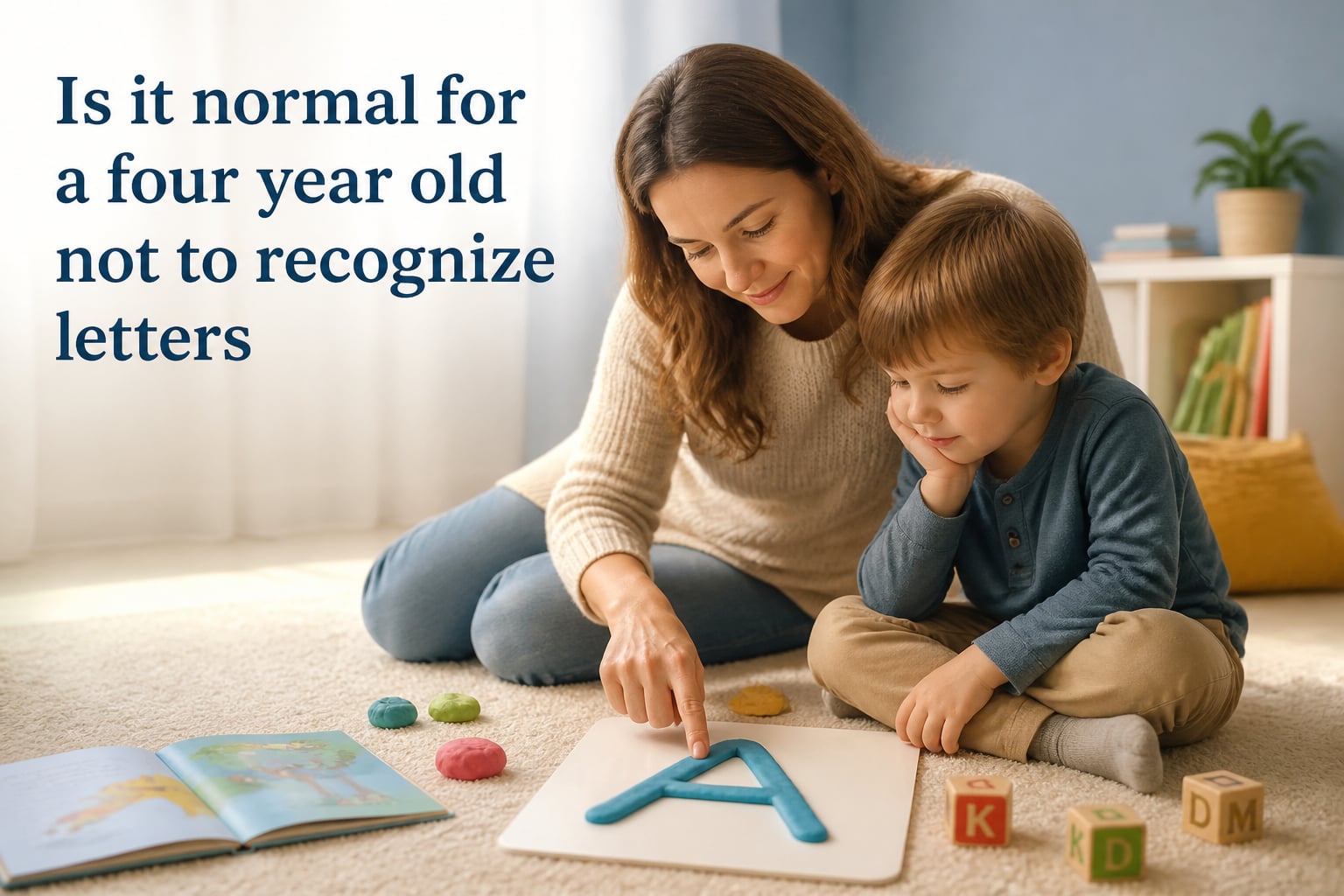
If your four year old cannot recognize letters yet, take a breath. Yes, it falls within the normal range of development for many children at this age. Researchers and early childhood educators consistently point out that letter recognition skills follow a wide developmental window, typically spanning ages 3 through 6.
I have worked with hundreds of families asking this exact question. The honest answer is reassuring: most four year olds who cannot recognize letters are simply on the later end of a normal curve, not failing or broken. About 30 percent of children entering kindergarten do not yet know all their letters, according to data from the U.S. Department of Education’s Early Childhood Longitudinal Study.
This guide will walk you through what typical letter recognition looks like at each age, the most common reasons children struggle, and what you can do at home to help. You will also learn the specific signs that suggest a learning difference worth discussing with a professional.
Table of Contents
Yes, It Is Often Normal for a Four Year Old Not to Recognize All Letters
Four year old letter recognition follows a wide range of normal development, and most children who cannot identify letters at this age are simply working through the process at their own pace. According to research from the National Center for Education Statistics, fewer than half of four year olds can recognize all 26 uppercase letters with confidence, and many more know only a handful.
Children typically learn uppercase letters first because those shapes are more visually distinct. Lowercase letters, with their similarities (b, d, p, q), come later. A child who knows 8 letters at age 4 is often in the same developmental lane as a child who knows 20. Both are within the normal range.
What matters more than the count is whether your child is making progress over time. If they knew 2 letters six months ago and now know 6, they are on track. If that number has not changed despite regular exposure, it may be worth exploring why.
Common reassuring signs include singing the ABC song correctly, recognizing letters in their own name, asking “what letter is that?” during reading time, and showing interest in print. These behaviors tell us the brain is ready and the wiring is forming.
Letter Recognition Milestones by Age
Letter recognition follows a predictable, if flexible, sequence. Knowing where your child sits on this spectrum can replace worry with clarity.
Age 2 Letter Recognition: What to Expect
At age 2, most children recognize no letters formally, though they may identify the first letter of their name. Their literacy work is happening behind the scenes through listening, vocabulary building, and exposure to books. Singing the ABC song at this age is about rhythm and memory, not letters.
Age 3 Letter Recognition: Typical Skills
By age 3, many children recognize a few letters, especially those in their name and common environmental print like the M in McDonald’s. According to the National Association for the Education of Young Children, three year olds typically know 0 to 10 uppercase letters. They may also begin pointing to letters in books and asking what they say.
Age 4 Letter Recognition: Where Most Children Land
Four year olds usually know between 10 and 20 letters, with significant variation. Some children at this age know all 26 uppercase letters. Others know only a handful. Both patterns fall within typical development. The shift from rote memorization to actual letter identification often happens between ages 4 and 5.
Age 5 Letter Recognition: Pre-Kindergarten Expectations
By age 5, most children recognize all or most uppercase letters, and many are beginning lowercase as well. Children entering kindergarten who do not yet know their letters are not behind. They have a year of structured instruction ahead to build these skills. Research shows that children who learn letters in kindergarten perform equally well in reading by third grade as those who learned them earlier.
Why Some Children Struggle with Letter Recognition
Several common factors explain why some bright, verbal four year olds cannot recognize letters. Understanding the root cause helps you choose the right support.
Missing the Phonological Awareness Foundation
Phonological awareness, the ability to hear and play with individual sounds in spoken language, is a critical prerequisite to letter learning. Children who have not yet developed this skill often struggle to make the connection between a letter shape and its sound. Research from the National Reading Panel found that phonological awareness instruction is one of the most effective ways to prevent reading difficulties.
If your child cannot rhyme, blend sounds together, or hear that “cat” and “car” start the same way, their brain may not yet be ready to map letters to sounds. Building these oral skills first often unlocks letter recognition naturally.
Oral Language Skills and Letter Learning
Children with strong oral vocabulary sometimes lag in letter recognition because their verbal skills mask underlying phonological gaps. They can talk about complex topics but cannot isolate the sounds within words. This is one of the most common patterns I see in families who reach out for help.
Strong talkers often benefit from explicit sound games before letter work. Activities like “what sound do you hear at the start of dog?” build the foundation that letter recognition depends on.
Visual Processing and Memory Differences
Some children struggle with letter recognition because their brains process visual information differently. Letters are abstract symbols, and recognizing them requires visual discrimination and memory. Children with differences in this area often confuse similar-looking letters like b, d, p, and q, or struggle to remember a letter from one day to the next.
Multi-sensory instruction (touching, building, moving through letter shapes) helps these children build stronger neural connections than flashcards alone.
Signs That May Indicate a Learning Difference
Most letter recognition delays resolve with time and practice. Some patterns, however, suggest a closer look is warranted.
Warning Signs to Watch For
A learning difference may be present if your four year old shows several of these signs consistently over 6 months or more:
Knows fewer than 5 letters after a year of regular exposure
Cannot recognize any letter in their own name
Shows no interest in print, books, or written words
Has persistent difficulty with rhyming or clapping syllables
Confuses letters that look similar even after multiple corrections
Has a close family member with dyslexia or reading difficulties
One or two of these signs does not mean a learning difference is present. A pattern of several, persisting over time, is worth a conversation with your pediatrician.
Red Flags for Dyslexia in Preschoolers
Dyslexia is a neurologically based difference that affects how the brain processes language. It often runs in families and is not related to intelligence. In preschoolers, early signs include delayed speech, difficulty learning nursery rhymes, trouble with letter names, and persistent letter reversals after age 7. According to research from Yale’s Center for Dyslexia and Creativity, early identification and intervention dramatically improve outcomes.
If dyslexia runs in your family and your child is struggling with letters, do not panic. Early awareness means early support, and evidence-based interventions work extremely well.
Practical Activities to Support Letter Recognition at Home
You do not need a curriculum, flashcards, or apps to help your child learn letters. The most effective approaches are playful, multi-sensory, and built into daily life.
Multi-Sensory Letter Activities That Work
Multi-sensory learning engages touch, sight, and movement at the same time. This approach is supported by decades of reading research and helps all children, especially those who struggle with traditional methods.
Try these activities:
Form letters with playdough, pipe cleaners, or wiki sticks
Draw letters in sand, salt, or shaving cream on a tray
Walk letters on the floor with tape, jumping from one to the next
Build letters with LEGO bricks or wooden blocks
Trace letters in the air with a finger while saying the sound
Each activity creates multiple memory paths in the brain, making letters easier to recall.
Everyday Letter Recognition Games
Letters hide in plain sight throughout your day. Point them out naturally without turning every moment into a lesson.
Try these games:
I Spy: “I spy something that starts with the letter B” (book, banana, ball)
Letter of the Week: focus on one letter for 7 days, hunting for it on signs, packages, and books
Name Hunt: ask your child to find all the A’s in the grocery aisle
Magnetic Letters on the fridge: rearrange them during conversation, not formal drills
Letter Bingo: cover letters as you hear them in stories
Keep sessions short, under 10 minutes, and stop before your child loses interest. Curiosity builds skill faster than pressure.
Reading Aloud and Letter Awareness
Reading aloud is one of the most powerful ways to build letter awareness without direct instruction. As you read, pause occasionally to point out letters, especially the first letter of your child’s name or favorite character’s name.
Children who are read to daily show stronger letter knowledge by kindergarten than those who are not. The connection is so strong that the American Academy of Pediatrics now recommends reading aloud from birth as a public health intervention.
You do not need to quiz your child while reading. Simply making print visible and meaningful during shared reading time does the work.
When to Seek Professional Evaluation
If your four year old shows no progress in letter recognition after 6 to 12 months of regular exposure, or if you notice several warning signs from the lists above, consider reaching out for support.
Start with your pediatrician. They can screen for hearing and vision issues, discuss developmental history, and refer you to specialists if needed. Early intervention programs, available in every U.S. state for children ages 3-5, offer free evaluations and support for developmental concerns, even without a formal diagnosis.
A speech-language pathologist can assess phonological awareness and oral language skills. A child psychologist or educational consultant can evaluate for dyslexia and learning differences. None of these evaluations will label your child negatively. They simply give you information to support them better.
Frequently Asked Questions
How many letters should a four year old be able to recognize?
Most four year olds recognize between 10 and 20 letters, though the range varies widely. Some children know all 26 uppercase letters at this age, while others know only a few. Both patterns fall within normal development. The exact number matters less than whether your child is making steady progress over time.
What should a 4 year old know academically?
A typical four year old can name some colors, count a few objects, recognize some letters (especially in their own name), sing the ABC song, hold a crayon correctly, listen to and retell simple stories, and follow multi-step directions. They do not need to read, write their name perfectly, or count to 100. These skills build across the preschool years.
Should a 5 year old be able to recite the alphabet?
Yes, most five year olds can recite the alphabet song, though reciting and recognizing are different skills. A child may sing the song from memory without being able to point to letters. By age 5, recognizing most uppercase letters is typical, and many children are beginning lowercase letters as well.
Can an autistic child learn the alphabet?
Yes, autistic children can absolutely learn the alphabet. Many autistic children develop strong letter recognition, sometimes earlier than their neurotypical peers, especially when letters align with their interests. Other autistic children may need more time or different teaching approaches. Letter recognition alone is not a diagnostic indicator for autism.
The Bottom Line on Four Year Old Letter Recognition
If your four year old does not yet recognize letters, you can set down the worry. Four year old letter recognition follows a wide developmental window, and most children who are slow to learn letters catch up by kindergarten without lasting effects. What helps most is gentle, multi-sensory exposure woven into daily life, not flashcards or pressure.
Watch for steady progress rather than a specific count. Build phonological awareness through songs, rhymes, and conversation. Read aloud every day. Make letters something your child encounters with curiosity, not stress. If concerns persist after 6 to 12 months, your pediatrician can help you find the right support.
Your child is learning whether or not the letters stick today. Trust the process, enjoy the journey, and reach out for help if the journey feels stuck.