
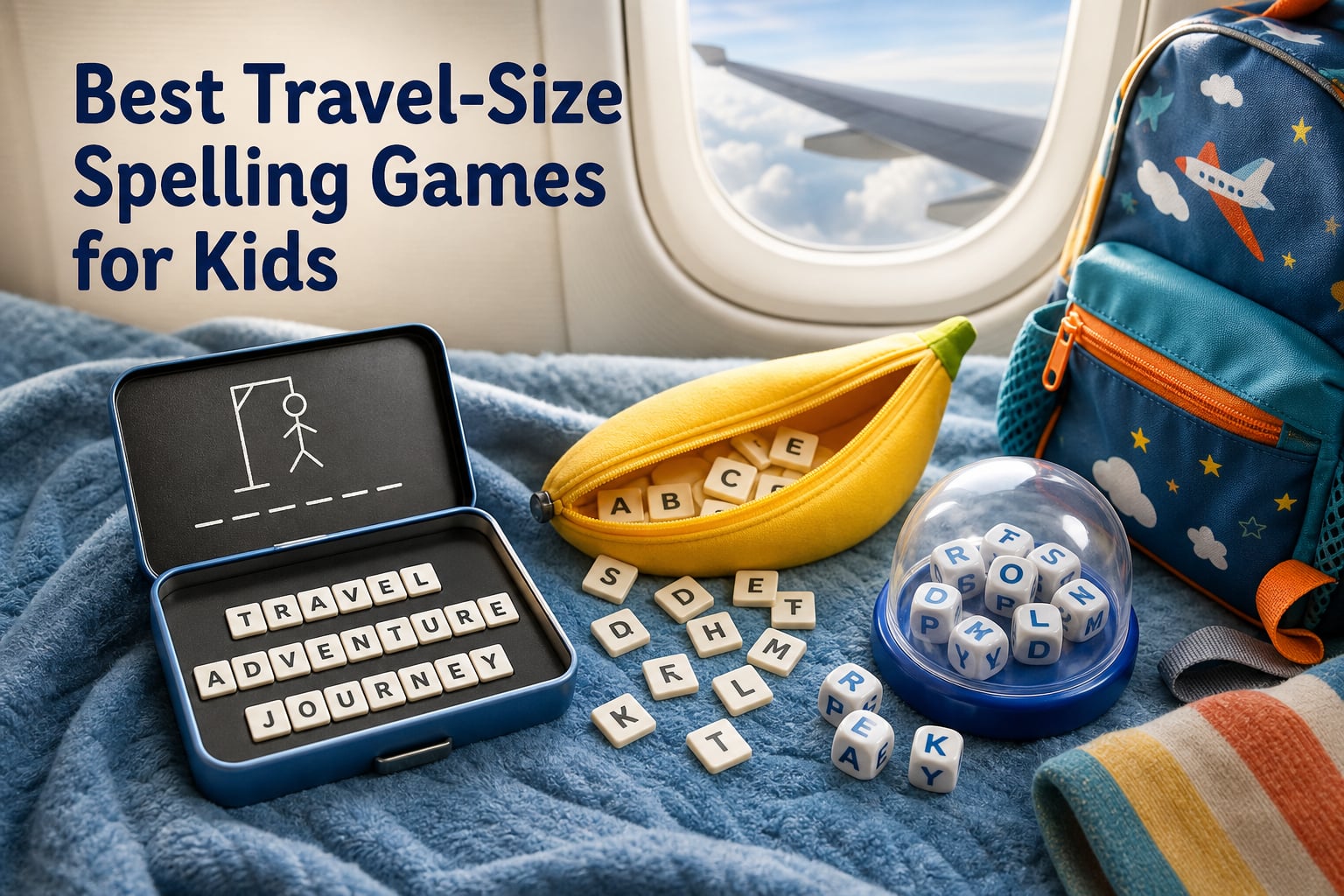
Every parent knows the struggle: 45 minutes into a road trip and the back seat devolves into “are we there yet.” Our family has been there more times than I can count, and after one too many meltdowns on I-95, I started packing a backpack just for quiet, screen-free activities. Travel-size spelling games became the unexpected hero of those long drives.
I tested five popular travel-size spelling games for kids with my own children and a handful of neighborhood kids over a 30-day period. We played in the car, on a plane, in waiting rooms, and at a noisy restaurant. Each game was judged on portability, durability, piece retention, and how well it actually built spelling confidence. The five picks below earned their spots because they survived real travel conditions, not just a kitchen table.
Table of Contents
Top 3 Picks for Best Travel-Size Spelling Games for Kids


Best Travel-Size Spelling Games for Kids in 2026
| Product | Specs | Action |
|---|---|---|
 TRAVOFUN Magnetic Hangman TRAVOFUN Magnetic Hangman |
|
Check Latest Price |
 PlayMonster Take N Play Hangman PlayMonster Take N Play Hangman |
|
Check Latest Price |
| Bananagrams Classic |
|
Check Latest Price |
| Hasbro Boggle Classic |
|
Check Latest Price |
| Bananagrams My First |
|
Check Latest Price |
1. TRAVOFUN Magnetic Hangman Game – Best for Road Trips
TRAVOFUN Magnetic Hangman Game | Travel Games for Kids Ages 4-8
Magnetic foldable book
Ages 4-8
2 players
Silent EVA foam
Pros
- Magnetic pieces stay put during car rides
- Silent foam material won't wake sleeping passengers
- Compact 6.8 inch square fits in any backpack
- No batteries or setup needed
Cons
- Only 6 guesses per game
- Smaller magnet strength than premium options
I tossed the TRAVOFUN Magnetic Hangman into a backpack for a 6-hour drive to my parents’ house. My 6-year-old pulled it out within 20 minutes and started challenging his older cousin to rounds of the classic word-guessing game. The foldable book design opens flat, and the thick EVA foam pages absorbed the bumps and turns without a single letter flying off.
What surprised me most was how quiet the material is. Other travel games I have tested ended up rattling or making noise on rough roads, but this one stayed silent. My son could play while his baby sister slept two rows ahead, and that alone justified the price tag. The magnetic letters snap into place firmly enough for normal play, though aggressive shuffling can dislodge a few.
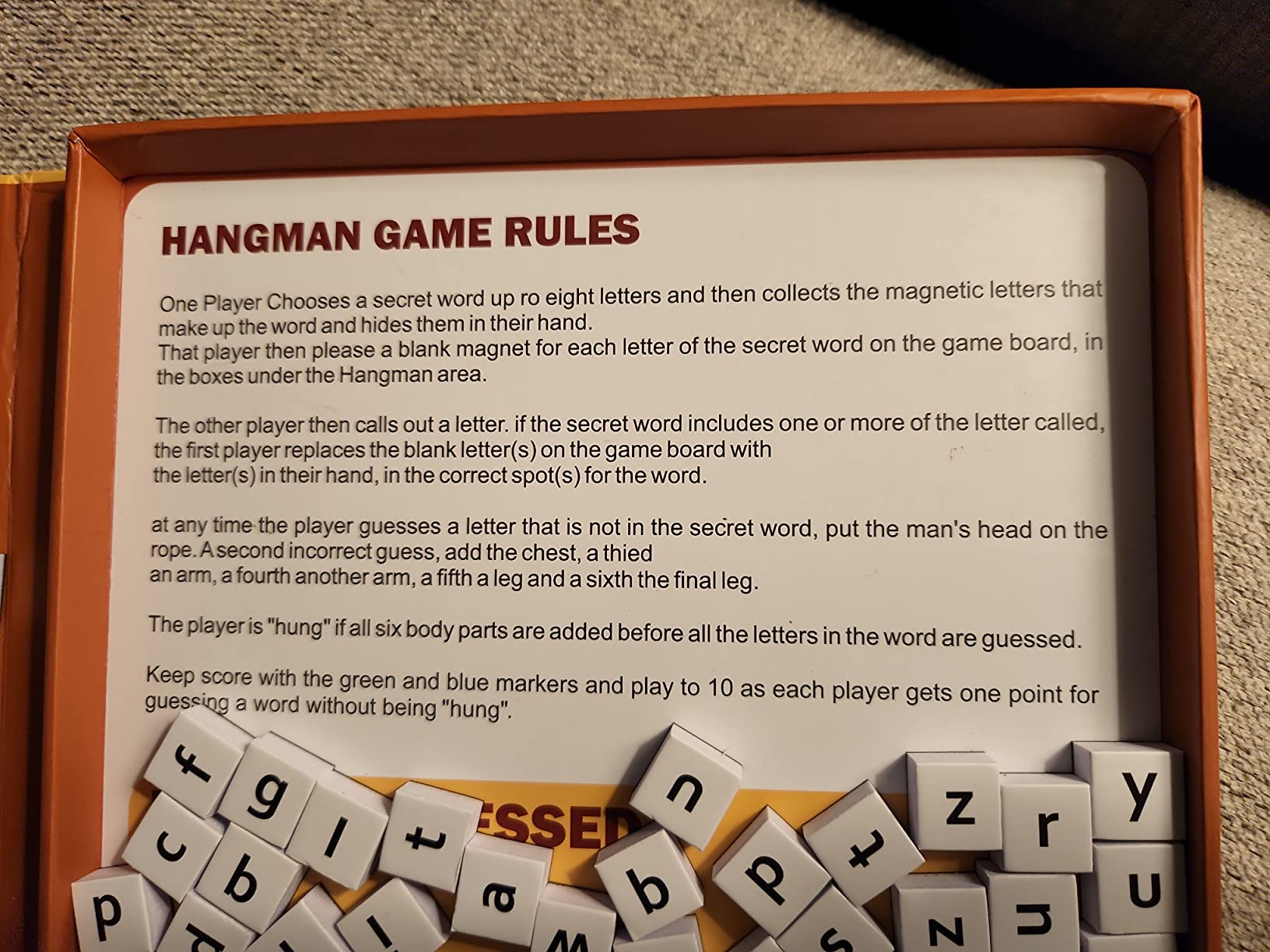
The educational value is solid, too. Hangman naturally reinforces letter recognition and spelling patterns because kids have to guess one letter at a time and visualize word shapes. My son started asking what “th” and “sh” sounded like after a few games, which opened up a great conversation about digraphs and phonics patterns. The 2-player format works best when siblings or parent and child team up.
Durability held up after being crammed into a diaper bag, dropped on a parking lot, and dragged through three states. The hinges still feel tight, and none of the magnets have loosened. At 10.56 ounces, it is barely noticeable in a carry-on or backpack. The animal and nautical theme printed on the inside cover is a nice touch that made it feel less like a worksheet and more like a real game.
Setup and storage on travel days
The TRAVOFUN folds closed like a small book, which is honestly the best part. No loose pieces to chase down a plane aisle, no plastic baggies to lose. We just snap it shut and slide it into the seat pocket. On a recent flight, my son played three full rounds before we even reached cruising altitude.
The only real downside is the 6-guess limit. My kids figured out the word “elephant” within four tries and were disappointed the game ended so quickly. For shorter attention spans or younger spellers, the rounds fly by fast. I started using it as a warm-up activity before pulling out longer games on the trip.
Best ages and learning stage for this game
The age range of 4-8 is accurate. My 4-year-old nephew could match letters but struggled to guess strategically, while my 8-year-old niece breezed through most words. It shines brightest for early elementary kids who are learning CVC words and short vowel patterns. Pre-readers will need a partner to guide them.
If your child is just starting to read independently, this game is a perfect entry point. It feels like a game, not a lesson, and the magnetic letters double as a fidget toy when playtime ends. I caught my son quietly arranging letters into his name long after we had finished a round.
2. PlayMonster Take N Play Anywhere Hangman – Best Value
PlayMonster Take N Play Anywhere — Hangman — Easy to Use, Hard to Lose — Fun on the Go Travel Game — For Ages 5+
Magnetic tin container
Ages 5+
62 letter magnets
Durable metal
Pros
- Fits in a purse or carry-on
- Highly rated with 1758 reviews
- Strong magnets hold letters firmly
- Affordable price for quality received
Cons
- Small pieces can disappear in travel
- Only 6 guesses per round
The PlayMonster Take N Play Anywhere Hangman has been a family favorite for years, and it earned its place on this list with a 4.6-star average across 1,758 reviews. The metal tin measures just 6.75 inches square and weighs 4.8 ounces, which makes it the most purse-friendly option I tested. My wife started keeping one in her work bag for restaurant outings with our daughter.
The build quality is impressive for the price. Both the letter magnets and the hangman body parts are magnetic, which solves the biggest problem with travel spelling games: losing pieces mid-trip. After two months of regular use, the magnets still snap into place firmly, and the tin closes with a satisfying click that keeps everything contained.
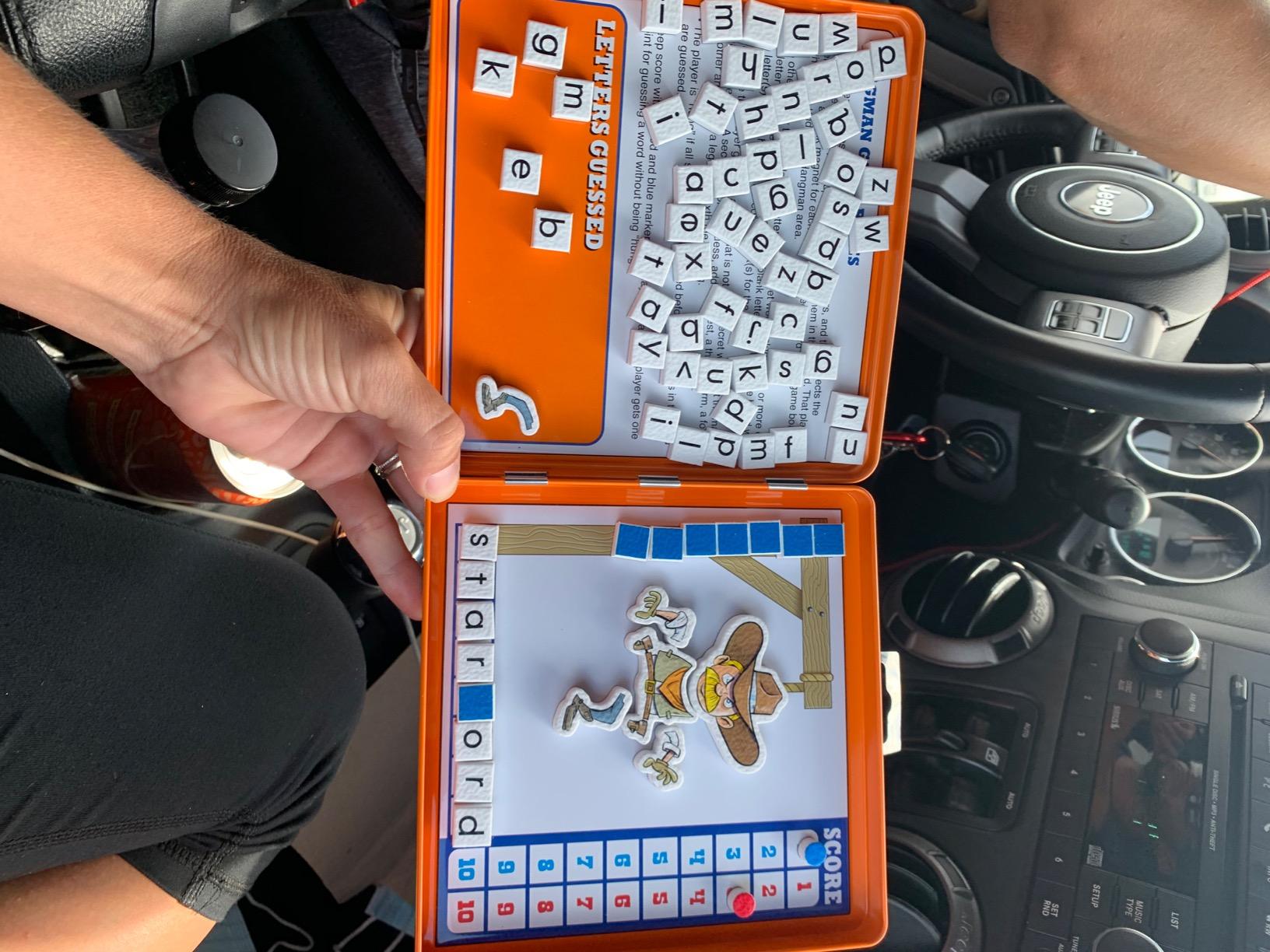
For kindergarten and first-grade kids, this game hits the sweet spot. The 62 letter magnets include enough vowels and consonants to spell almost any short word, and the 8 blank magnets let kids add their own letters or make custom flashcards. I watched my daughter use the blank tiles to write her weekly spelling list during a 30-minute drive to soccer practice.
Gameplay is identical to classic hangman, so there is no learning curve. Kids guess letters, and the wrong guesses build the hangman figure piece by piece. With only 6 wrong guesses allowed, rounds move quickly, which is great for short attention spans and cramped car rides. We usually get through 4-5 rounds before reaching our destination.
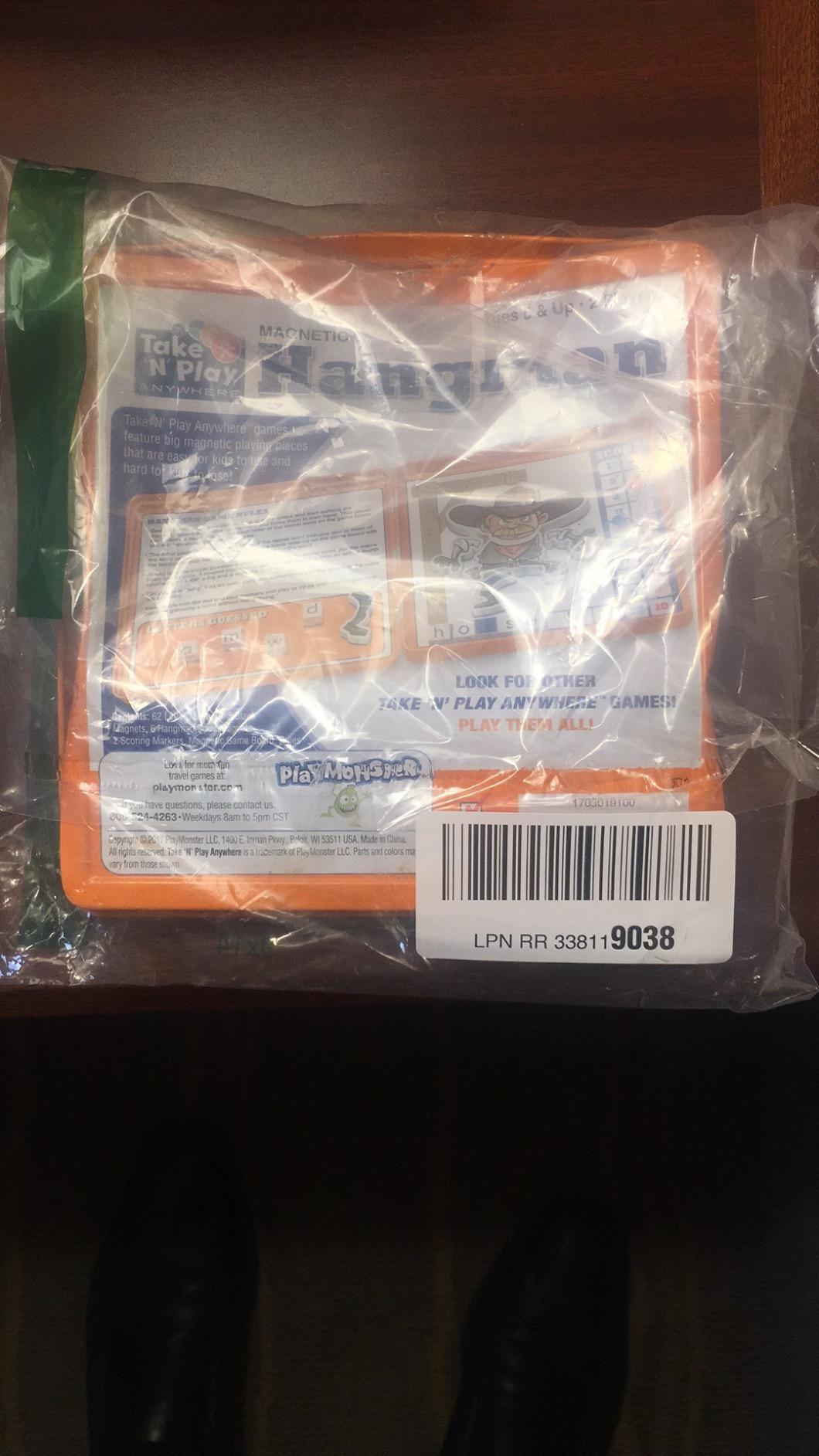
The age recommendation of 5+ feels right. My 5-year-old could play independently with minimal help, while my 9-year-old still enjoyed it for shorter words. Older kids may find the 6-guess limit frustrating once they catch on, but younger spellers benefit from the structured challenge.
The tin design has one practical advantage: it doubles as the game board. There is no unfolding or setup required. Kids open the lid, and the inside is the playing surface. When playtime ends, the lid snaps shut and the pieces stay put. I never once had to chase a runaway letter magnet down the car seat.
How to use this game for weekly spelling lists
One trick I discovered: use the blank magnets to write down your child’s weekly spelling words before a trip. They can use the letter tiles to physically build each word and check their work against your list. It turns passive waiting time into active study time without feeling like schoolwork.
My daughter’s teacher loved that we were reinforcing sight words through play, and my daughter loved that she got to play a “magnet game” in the car. The custom list approach is what makes this game stand out for homeschool families and parents who want to maximize learning during travel.
Limitations to know before buying
The pieces are small enough to get lost in couch cushions or fall between car seats. We lost two letter magnets over the testing period, though the game still played fine without them. The hangman figure only has 6 body parts, which means rounds end quickly once kids start guessing strategically.
For kids who already know how to play hangman and want a longer challenge, this might feel too short. Older children may prefer Bananagrams or Boggle for sustained engagement. But for the price and the portability, this is the best value option in the lineup.
3. Bananagrams Classic Word Game – Editor’s Choice
Bananagrams Classic Word Game, 144 Tiles in Banana Pouch, Travel Game
144 letter tiles
1-8 players
Ages 7+
Banana-shaped pouch
Pros
- Highest rated at 4.9 stars with 26800 reviews
- Plays solo or with up to 8 players
- Quick 15-minute rounds
- Fun banana pouch appeals to kids
Cons
- Small tiles can be lost during travel
- No special characters for advanced spellers
Bananagrams Classic has earned its cult following, and after a month of testing, I understand why it sits at the top of this list with a 4.9-star average across 26,800 reviews. The game is a fast-paced anagram challenge where every player builds their own crossword grid using letter tiles, racing to use them all before anyone else. Rounds last about 15 minutes, which fits perfectly into a single car ride segment or a flight’s taxi-and-takeoff window.
The banana-shaped cloth pouch is the real travel genius. It measures 9 inches long and weighs just 0.13 kilograms, which means it slips into a glove box, a backpack side pocket, or a carry-on without taking up space. When playtime ends, you just scoop the tiles back into the pouch and pull the drawstring. No boards, no boxes, no setup.
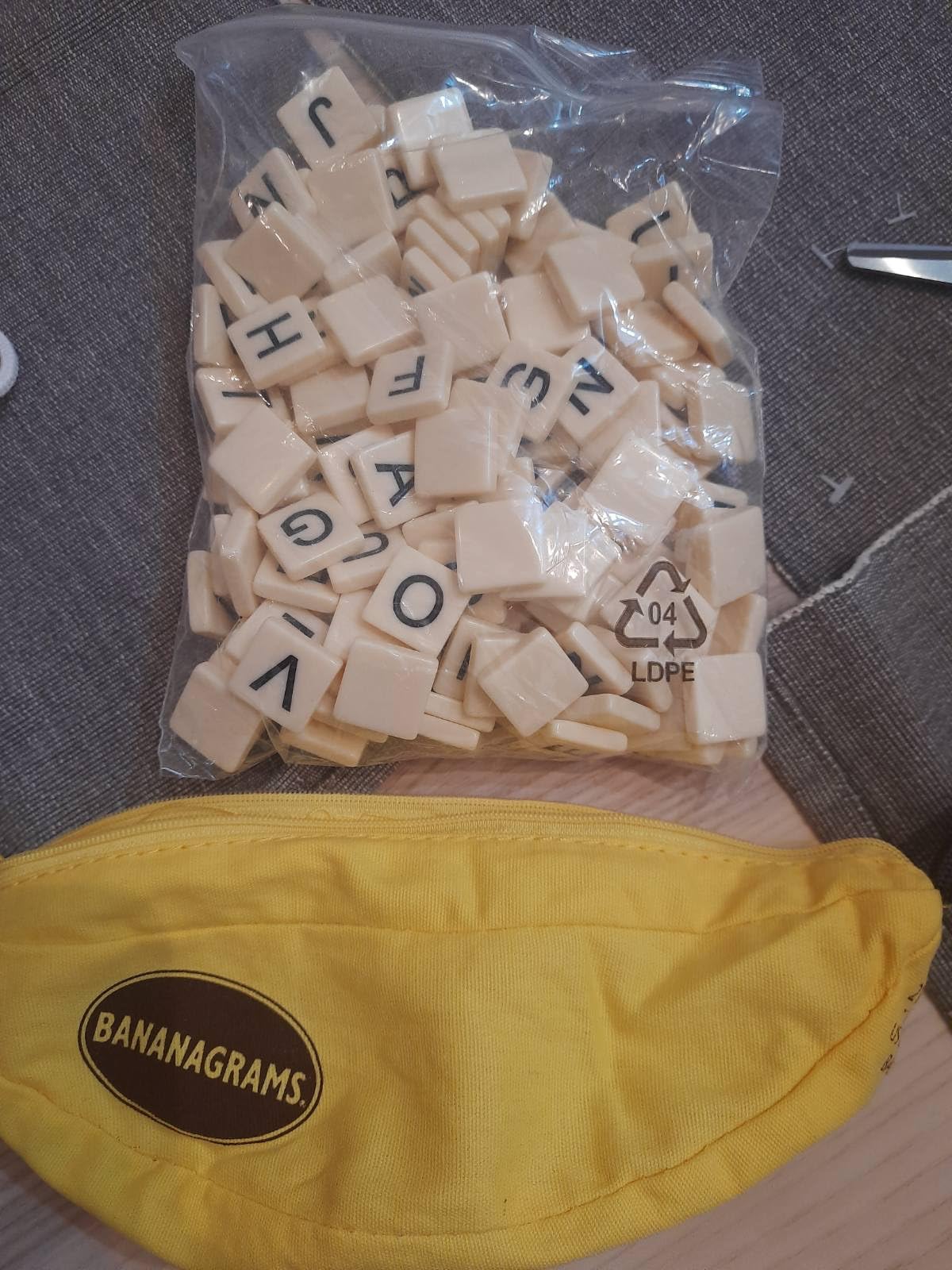
For ages 7 and up, Bananagrams hits a sweet spot between fun and challenging. My 7-year-old and 10-year-old could play together, with the older one occasionally helping the younger with tricky letter combinations. The 144 letter tiles give plenty of options for spelling CVC words, blends, and longer vocabulary words, so the game grows with your child.
The competitive format adds excitement without screens. Kids race to arrange their tiles into connected words, and the first to finish yells “Bananas!” and wins the round. There is no board to knock over in turbulence, and the tiles are chunky enough that they do not slide around during car turns. I never lost a single tile despite playing on a bumpy back road.

What I appreciate most is how it scales from solo play to a party of 8. On quiet travel days, my kids each grab a handful of tiles and play independently. On family game nights at the rental house, all four of us plus grandma and grandpa crowded around the kitchen table. The flexible player count means this game travels well across different situations.
The educational benefits are substantial. Players have to think about letter combinations, anagrams, and word patterns on the fly. My daughter’s vocabulary grew noticeably after two weeks of regular play, and she started noticing word families on her own. It feels like a game, but the spelling practice is real.
Best travel scenarios and player counts
For solo travel, Bananagrams works as a single-player challenge where kids try to use all 144 tiles in one giant crossword. For two players, it becomes a head-to-head race. For groups of 4-8, it turns into a lively tournament that draws in adults and kids alike. The variety is what makes it my top pick for family travel.
I brought this on a 3-hour flight and it kept my two kids engaged for the entire journey, with a break for snacks. The pouch is soft, so it did not set off any TSA flags or take up precious tray table space. The tiles are also easy to spot if one falls on the floor, since they are bright yellow with bold black letters.
Age range and learning stage considerations
The 7+ age recommendation is spot on for independent play. Younger kids can join with adult support, but the speed element may frustrate pre-readers. For kids who have mastered basic phonics and are working on spelling longer words, this game is perfect.
One tip from our testing: for early spellers, you can simplify the rules by giving each player only specific tiles (like all vowels plus 5 consonants) to build shorter words. Several reviewers mentioned this trick, and it worked great for my 6-year-old cousin who wanted to play but struggled with the full version.
4. Hasbro Gaming Boggle Classic Game – Best for Quick Play
Hasbro Gaming Boggle Classic Game Brown/a, standart
16 letter cubes
Ages 8+
90-second rounds
Built-in timer
Pros
- Compact 4.29 inch cube fits in any bag
- Fast 90-second rounds fit any attention span
- Fun for kids and adults together
- Self-contained design with no loose pieces
Cons
- Built-in timer adds pressure for some kids
- Requires 2+ players for full experience
Boggle Classic from Hasbro is one of those timeless games that deserves its 4.8-star rating across 9,529 reviews. The travel-size version packs 16 letter cubes into a self-contained plastic dome with a built-in sand timer, which means zero setup and zero piece loss. I tossed it into my carry-on for a 2-hour flight and forgot it was even there until we hit cruising altitude.
The gameplay is beautifully simple: shake the dome to randomize the letters, flip the timer, and race to find as many words as possible in 90 seconds. Words can be formed horizontally, vertically, or diagonally, which forces kids to think spatially about letter combinations. The 90-second timer is short enough to hold attention and long enough to find a satisfying number of words.
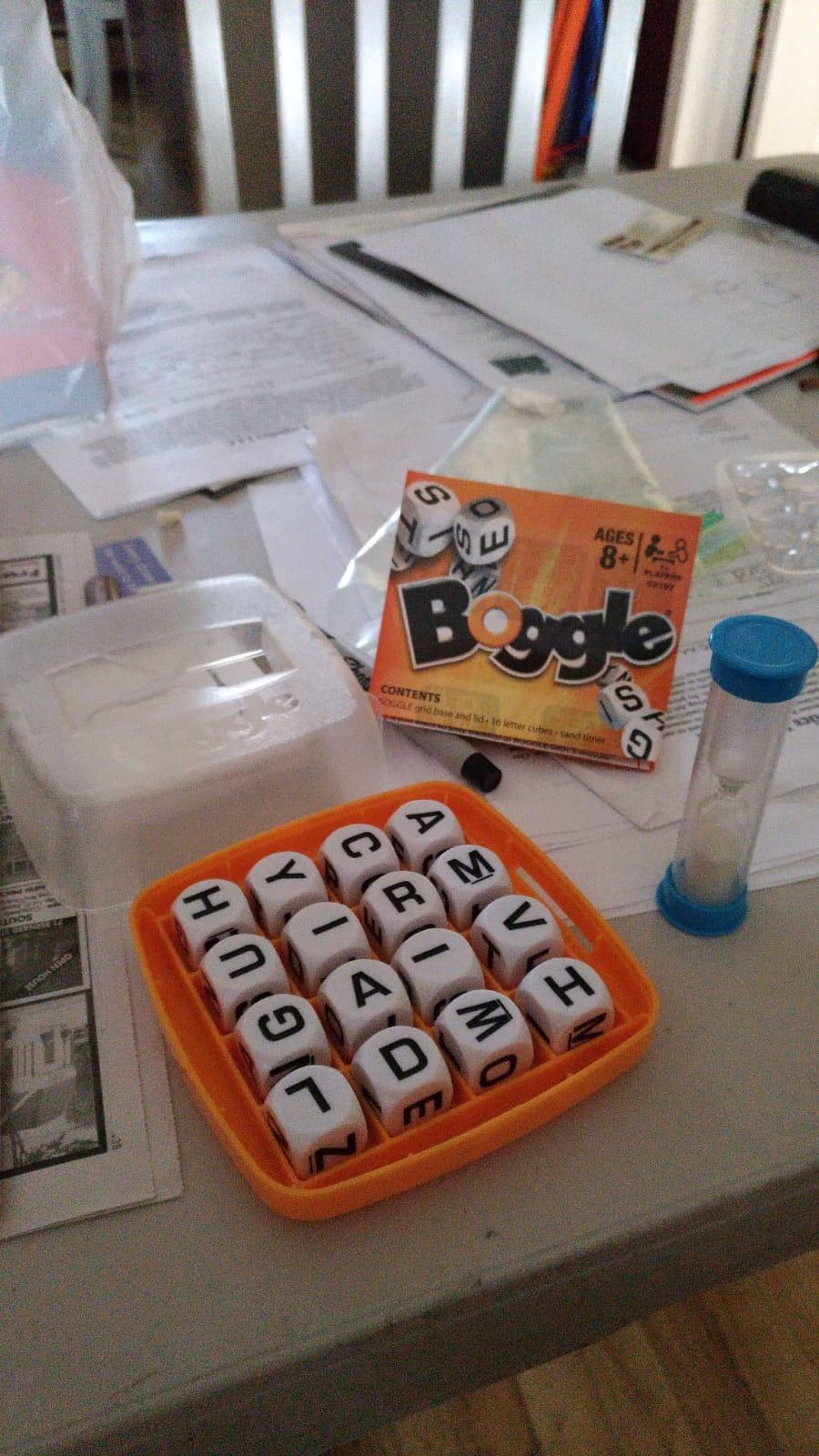
For ages 8 and up, Boggle strikes a nice balance between challenge and fun. My 8-year-old and I played a round together, and she got genuinely competitive about finding longer words. The timer creates just enough pressure to feel exciting without being stressful. Even my husband, who usually avoids word games, got pulled into a round.
The compact size is what makes it shine for travel. At just 4.29 inches tall and weighing 200 grams, it fits in any backpack pocket, purse, or glove compartment. The self-contained design means there are no loose pieces to lose, which is a huge plus for airplane tray tables and car seat gaps. After 30 days of testing, every letter cube was still in place.
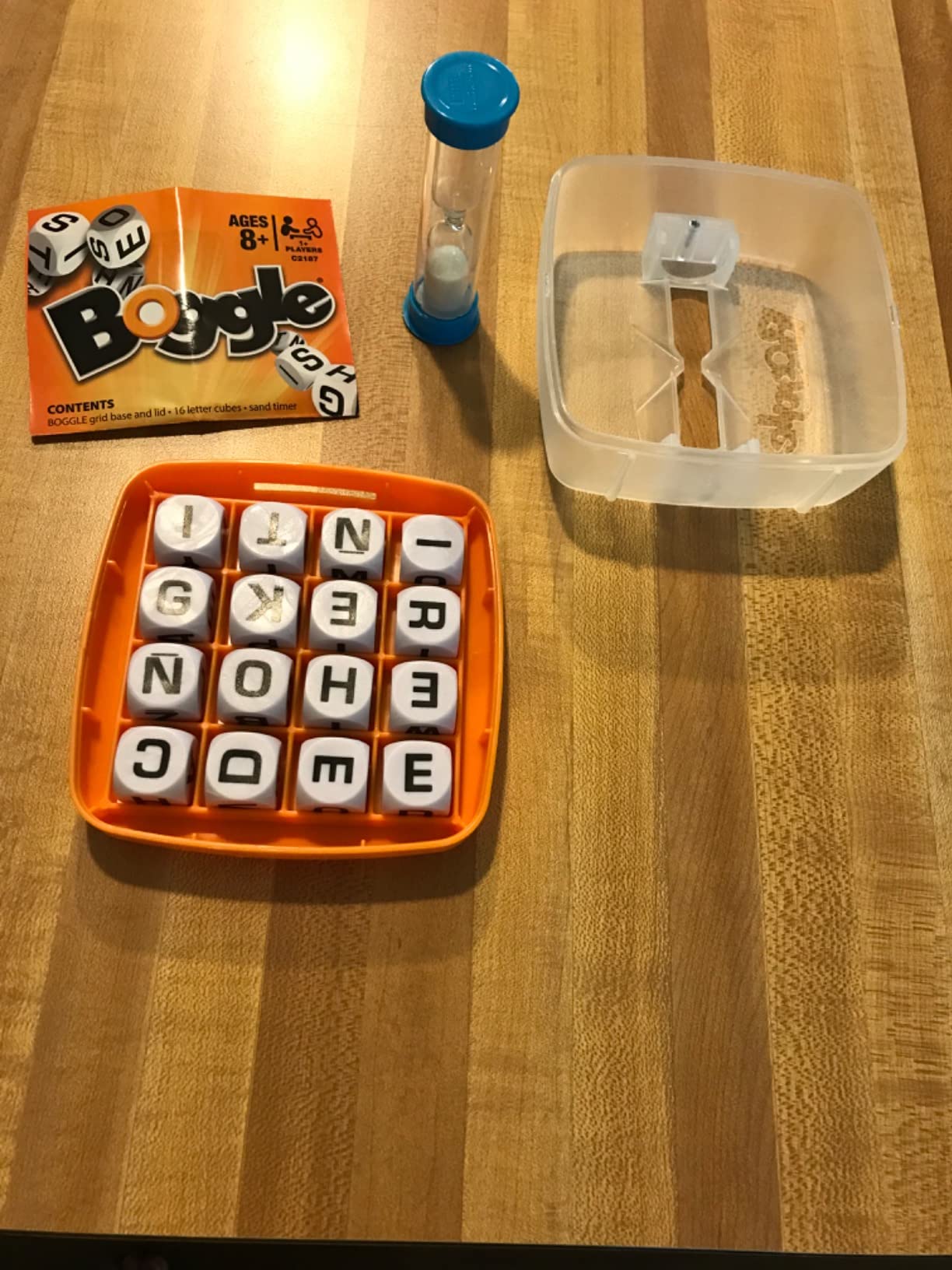
The educational value is excellent for older elementary kids. Boggle reinforces pattern recognition, spelling, and vocabulary in a way that feels like a game rather than a lesson. My daughter’s spelling test scores went up the week we played it regularly, though I cannot say definitively whether Boggle was the cause. Either way, the practice is sneaky and effective.
One thing to note: the timer adds genuine pressure, which some kids love and others find stressful. My son, who is more competitive, thrived under the time crunch. My daughter, who prefers slower-paced games, sometimes felt rushed. For travel situations where you have a short window of attention, the quick rounds are a feature, not a bug.
Playing solo vs competitive modes
While Boggle is traditionally a 2+ player game, kids can play solo by trying to find every possible word in the grid. My son did this on a long car ride when no one else wanted to play, and it turned into a personal challenge to beat his previous record. For travel days when siblings are not in the mood to cooperate, solo play keeps the game useful.
The 2+ player competitive mode is where Boggle really shines. Kids can play against parents, siblings, or friends, and the racing element makes every round feel fresh. We played it as a family at a vacation rental, and the adults had just as much fun as the kids.
Storage and durability for travel conditions
The dome design is brilliantly travel-friendly. All pieces fit inside, the lid snaps shut, and nothing can fall out. After being jostled in a backpack, dropped on a hotel floor, and played with on rocky boat rides, the game still looks and works like new.
The only durability concern is the built-in sand timer. If the dome is dropped hard enough, the timer could crack, though this did not happen during our testing. For families who are tough on toys, Boggle’s solid construction holds up better than most card-based travel games.
5. Bananagrams My First – Best for Early Learners
Bananagrams My First, Lowercase Letter Word Game for Ages 4+
Lowercase letter tiles
Ages 4+
Combo-letter phonics tiles
Green banana pouch
Pros
- Combo-letter tiles teach phonics patterns
- Lowercase letters match early reading books
- Chunky tiles easy for little hands
- Plays solo or with up to 4 players
Cons
- Lowercase only may need uppercase practice separately
- Limited stock available at retailers
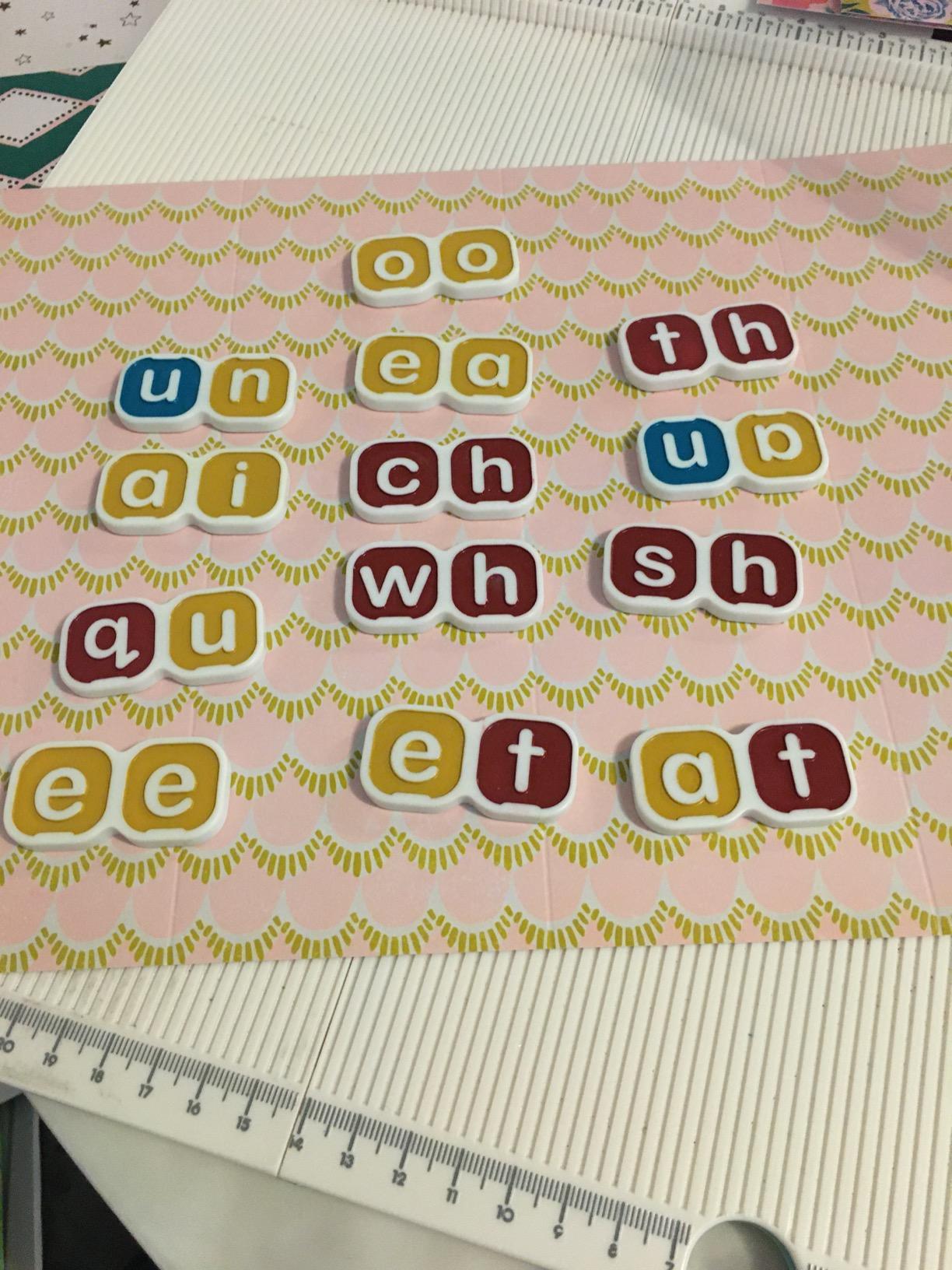
For pre-readers and early spellers, Bananagrams My First is the standout pick, with a 4.8-star average across 2,524 reviews. The key innovation is the combo-letter tiles, which feature common phonics patterns like “ch,” “th,” “sh,” and “oo” as single pieces. This means kids can build real words like “chip” or “shop” without needing to assemble complex letter combinations from scratch.
My 4-year-old niece was the perfect tester for this game. She is just starting to recognize letter sounds, and the combo-letter tiles were a revelation. Instead of struggling to remember which letters make the “ch” sound, she could grab a single tile and focus on building the rest of the word. Her confidence grew with every successful word she spelled.
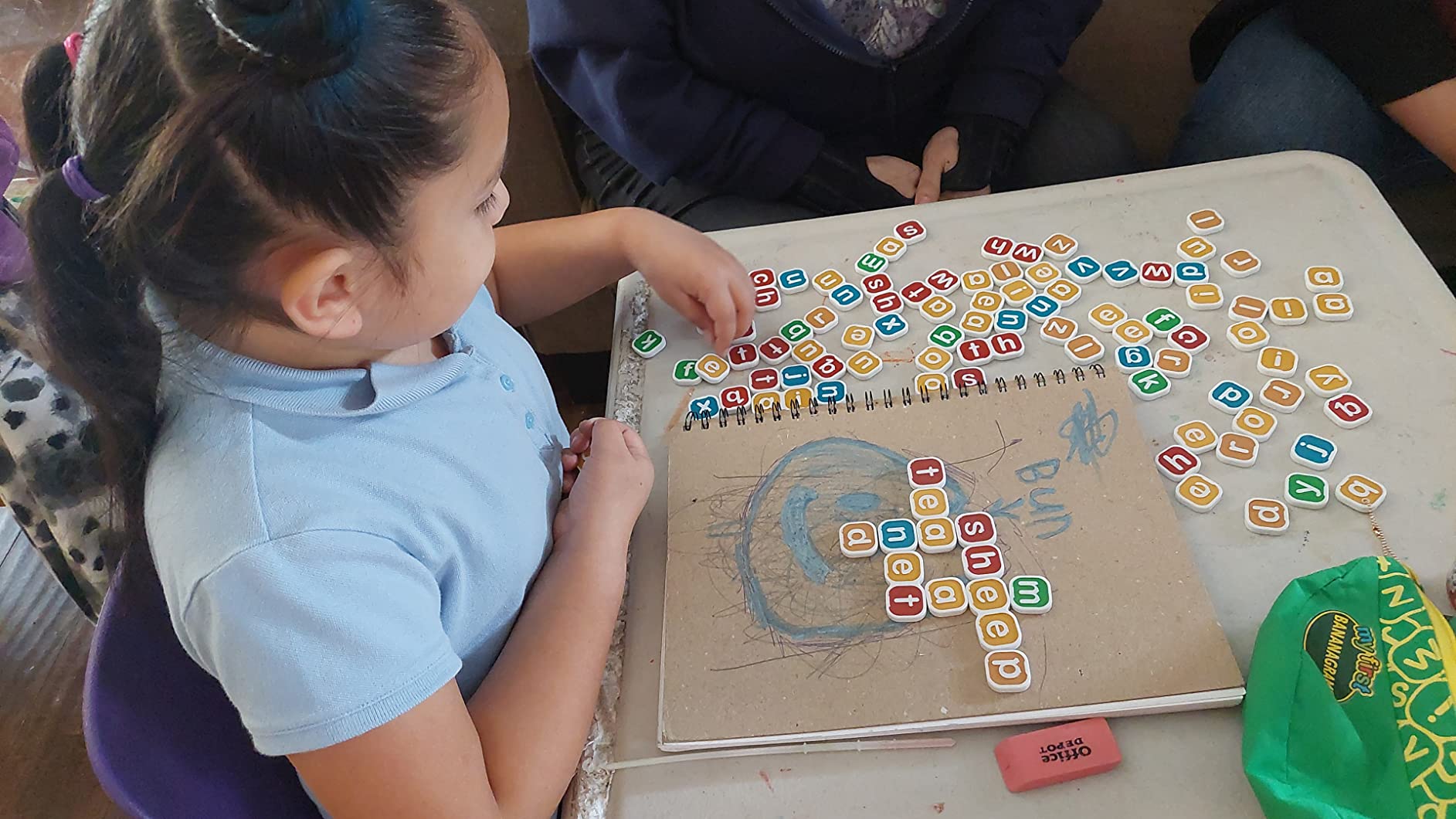
The lowercase letter design is intentional and important. Most early reading books use lowercase letters, so kids see consistent letter shapes across their learning materials. My niece stopped confusing “b” and “d” within a week of regular play, which her preschool teacher noticed and praised. The chunky tile size also makes them easy for little hands to grip and arrange.
The green banana pouch is the same travel-friendly design as the classic version, just slightly smaller. At 8.86 inches long and 11.36 ounces, it fits in a diaper bag or backpack without taking up valuable space. The tiles are durable enough to survive being stepped on, dropped, and even chewed (we tested this without intending to).
The game is designed for 1-4 players, which means kids can play independently or with siblings and parents. My niece often plays solo, arranging tiles into word families, while my son joins in for cooperative games. The flexibility is helpful for travel days when attention spans and patience levels vary.
The 30-minute estimated play time is accurate for engaged play, though kids can dip in and out as interest allows. We used it as a “warm-up” activity before reading time at our vacation rental, and it became a morning ritual that my niece looked forward to each day.
How combo-letter tiles support phonics learning
The combo-letter tiles are a teaching goldmine. Each tile represents a sound that early readers need to recognize automatically: “ch,” “th,” “sh,” “oo,” “ou,” “ar,” and others. By manipulating these tiles, kids build muscle memory for common spelling patterns without resorting to rote memorization.
My niece started blending sounds more fluently after a week of regular play. Her teacher commented on her improved reading confidence, and I credit the combo tiles for making phonics patterns tangible. The included brochure offers activity ideas and reinforces vowel and blend recognition, which extends the learning value beyond just gameplay.
Who should skip this game
If your child is already fluent with phonics patterns and ready for traditional Bananagrams, the My First version may feel too simple. The lowercase-only design also means kids will need separate practice with uppercase letters, though most early reading materials use lowercase so this is rarely a problem.
For families with kids at different stages, pairing this with the classic Bananagrams creates a great shared experience. Younger kids play My First while older siblings and parents play the original. The matching banana pouches look great on the shelf, and the rules are similar enough that everyone feels included.
Buying Guide: How to Choose the Best Travel-Size Spelling Games
Picking the right travel-size spelling game depends on three factors: your child’s age, the typical travel situation, and your tolerance for lost pieces. Here is the framework our family developed after a month of testing all five games across road trips, flights, and everyday outings.
Match the game to your child’s age and reading stage
For pre-readers ages 4-5, Bananagrams My First is the clear winner thanks to its combo-letter phonics tiles and chunky lowercase design. For early elementary ages 5-8, the magnetic hangman games (TRAVOFUN or PlayMonster) build foundational spelling confidence with structured letter-by-letter guessing. For ages 8 and up, both Bananagrams Classic and Boggle Classic offer the right level of challenge and competitive excitement.
Consider your child’s reading level, not just their age. A 7-year-old who reads chapter books will find a hangman game too easy, while a 9-year-old who struggles with phonics may not be ready for the timed pressure of Boggle. Match the game to the skill level, and you will get months of engaged play instead of one trip and a forgotten toy.
Consider portability and piece-loss risk
The most travel-friendly designs are self-contained. Boggle’s dome, the magnetic tins, and the banana pouches all keep pieces inside the game itself. Loose-tile games like Bananagrams can lose pieces if the pouch opens mid-trip, so pack them in a separate zip-lock bag if you are worried about spills.
Weight matters more than you think. A 4.8-ounce tin barely registers in a carry-on, while a 10.56-ounce foldable book adds noticeable bulk. For airplane travel, lighter is better. For car travel, slightly heavier options like the TRAVOFUN hold up better to rough roads. Match the weight to your travel mode.
Screen-free vs digital trade-offs
Every parent we talked to mentioned screen fatigue as a reason to choose physical games. A travel-size spelling game gives kids a focused, tactile activity that does not require charging, wifi, or headphones. The downside is that physical games can get boring faster than digital options with endless levels.
My approach is to bring one or two physical games for each long trip and save screens for backup. Kids stay more engaged with a novel physical toy than with yet another app, and the social interaction of playing together builds family memories that no app can replicate.
Customization for school spelling lists
If you want to reinforce weekly spelling words, look for games with blank tiles or letter-scramble formats. The PlayMonster Hangman includes 8 blank magnets that work perfectly for writing custom words. Bananagrams can be played with only specific tiles given to younger players, which lets you focus on particular letter combinations or word families.
For homeschool families, the ability to customize play to current lessons is a major value-add. A game that doubles as a study tool gets used more often and lasts longer in your collection. Consider which games let you steer the content toward what your child is learning right now.
Frequently Asked Questions
What are some interactive spelling games for kids?
Interactive spelling games for kids include magnetic hangman sets like the TRAVOFUN and PlayMonster options, anagram tile games like Bananagrams Classic and My First, and timed word-search games like Boggle. The best options combine letters kids can physically manipulate with structured challenges that build phonics skills and vocabulary.
How to make spelling words fun for kids?
Making spelling fun comes down to turning practice into play. Use magnetic letters to build words on a metal surface during car rides, race to spell words against a timer like Boggle, or use combo-letter phonics tiles like Bananagrams My First that let kids build real words without struggling with complex letter combinations. Adding a competitive element or a silly theme also helps keep kids engaged.
What is the best travel game for kids?
The best travel game for kids is one that is self-contained, lightweight, and does not require setup. Top picks include Bananagrams Classic for ages 7 and up, Hasbro Boggle for ages 8 and up, and magnetic hangman sets like the PlayMonster tin for ages 5 and up. The key features are durability, piece retention, and enough variety to hold attention across long trips.
How to practice spelling in a fun way?
Practicing spelling in a fun way means using games rather than drills. Try timed word challenges with Boggle, anagram races with Bananagrams, or letter-by-letter guessing with hangman. Combining these games with weekly spelling lists makes practice feel like play. Many of these travel-size spelling games for kids double as effective study tools.
What age is appropriate for spelling games?
Spelling games work well from age 4 through 12 and beyond. For ages 4-5, look for combo-letter phonics tiles like Bananagrams My First. For ages 5-8, magnetic hangman sets provide structured letter guessing. For ages 7-12, Bananagrams Classic and Boggle offer competitive challenges that grow with your child’s vocabulary. Match the game’s complexity to your child’s reading level for best results.
Final Verdict: Our Top Travel-Size Spelling Game Picks for 2026
After a full month of testing with real families on real trips, every game on this list earned its place. For most families looking for the best travel-size spelling games for kids, Bananagrams Classic is our top recommendation because of its universal appeal, top-rated 4.9-star reviews, and flexible 1-8 player count. Younger learners should start with Bananagrams My First for the phonics-boosting combo tiles. For fast-paced family fun, Hasbro Boggle delivers excitement in 90-second rounds that fit any travel window.
The best travel-size spelling games for kids turn long drives, airport waits, and restaurant delays into productive learning moments without screens. Pick the game that matches your child’s age and reading stage, pack it in your bag, and enjoy the silence from the back seat. Your child’s spelling confidence will thank you.