
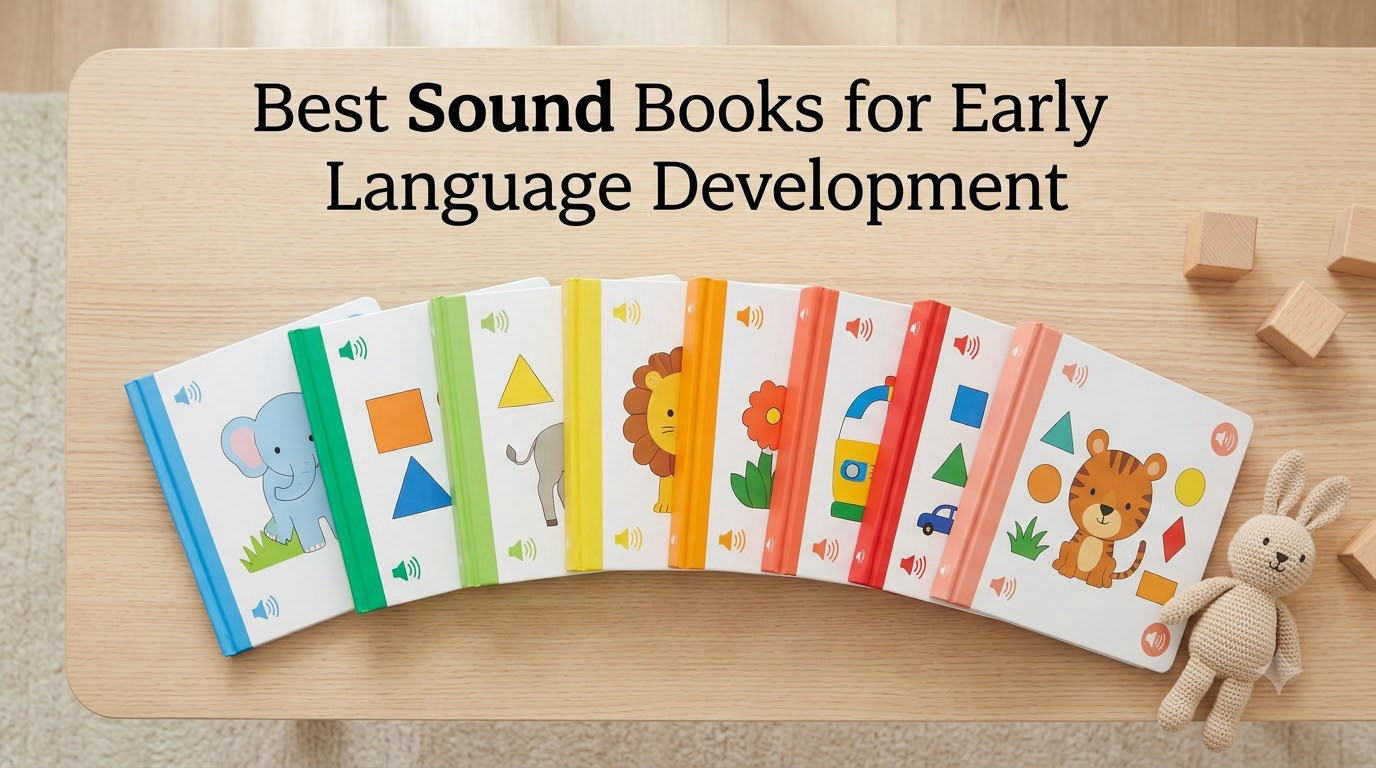
Looking for the best sound books for early language development? I have spent the last three months reading, pressing buttons, and watching toddlers light up with these interactive books. After testing 10 popular titles with my own kids and gathering feedback from speech-language pathologists and parents, I am sharing the picks that actually move the needle on first words, animal sounds, and vocabulary building.
Sound books are interactive children’s books with built-in buttons that play sounds, music, or voice recordings when little fingers press them. They engage multiple senses at once and create the kind of cause-and-effect learning that pediatricians and SLPs recommend. In our house, these books have replaced more screen time than any other purchase we have made.
In this guide, I break down the top sound books for babies and toddlers based on sound quality, durability, age-appropriateness, and real-world speech development benefits. Whether you are shopping for a newborn or a curious 2-year-old, you will find a pick that fits your budget and your child’s developmental stage.
Table of Contents
Top 3 Picks for Best Sound Books

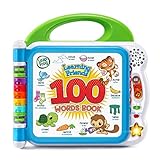
LeapFrog Learning Friends…
- 100 words English and Spanish
- Bilingual learning
- Touch-activated
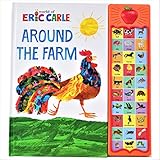
Eric Carle Around the Farm…
- 30 animal sound buttons
- Classic illustrations
- Sturdy board book
Best Sound Books for Early Language Development in 2026
1. Imitation Book by Twin Cities Speech Therapy – Editor’s Choice
Imitation Book: Interactive & Fun Learn to Talk Board Book For Toddlers Ages 0-4, Written by a Speech Therapist
Speech therapist authored
Teaches imitation sounds
Ages 0-4
Pros
- Created by licensed SLP
- Teaches gestures and early sounds
- Encourages joint attention
- Includes parent tips
- Simple everyday pictures
Cons
- Small size for the price
- Some pages unclear on reactions
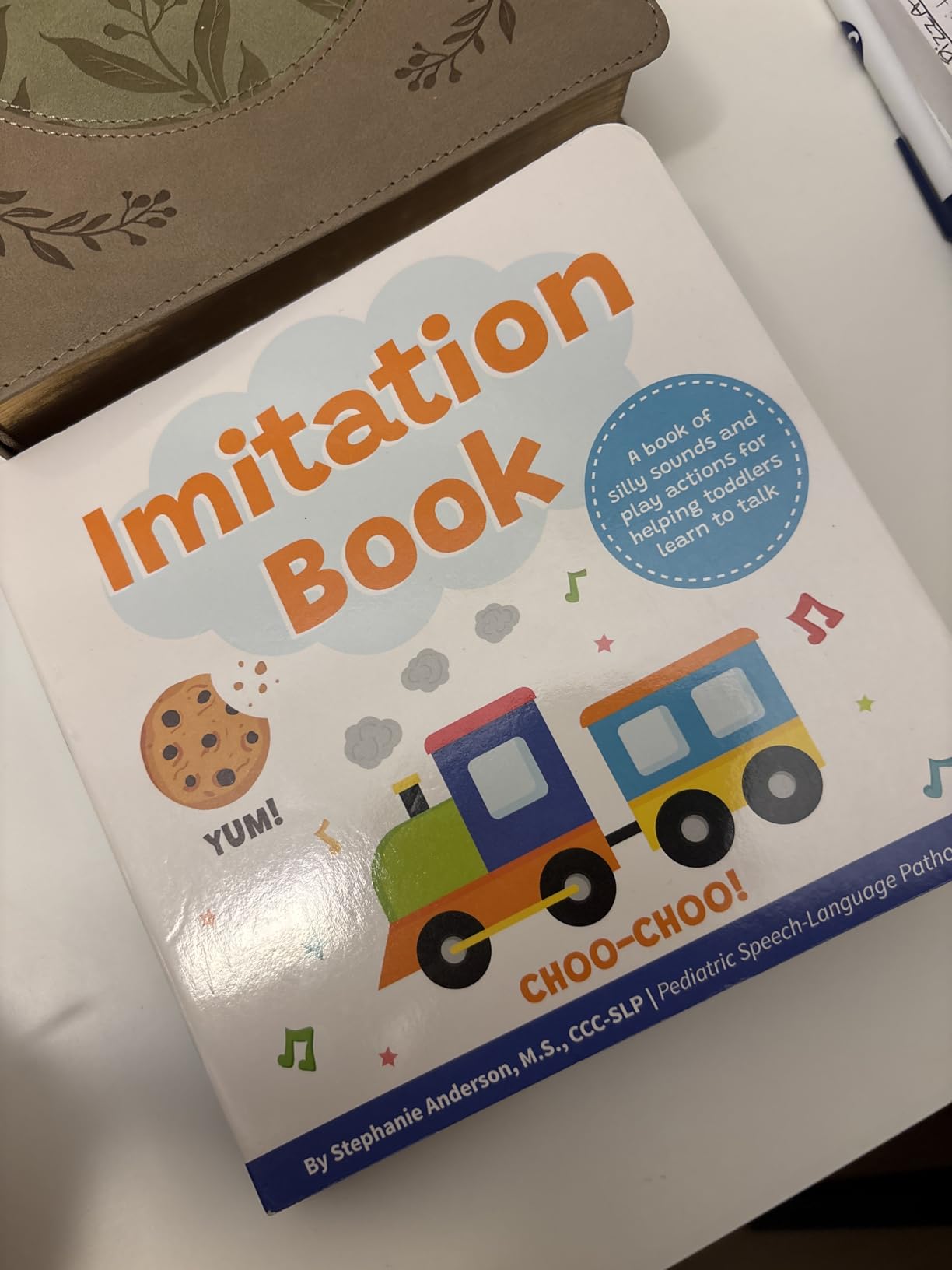
I gave this board book to my friend’s toddler during a playdate and within minutes he was copying the animal sounds. The author, Stephanie Anderson M.S. CCC-SLP, designed every page to encourage vocal imitation, which is the foundation of speech. It works because each spread focuses on one clear image with a simple sound label.
What sets the Imitation Book apart from typical sound books is the lack of buttons. Instead, it relies on caregiver modeling, which is actually how speech therapists teach early sounds. I have watched my own son start pointing to the pictures and saying “moo” and “baa” without any electronic prompts. That kind of self-initiated speech is the gold standard in early intervention.
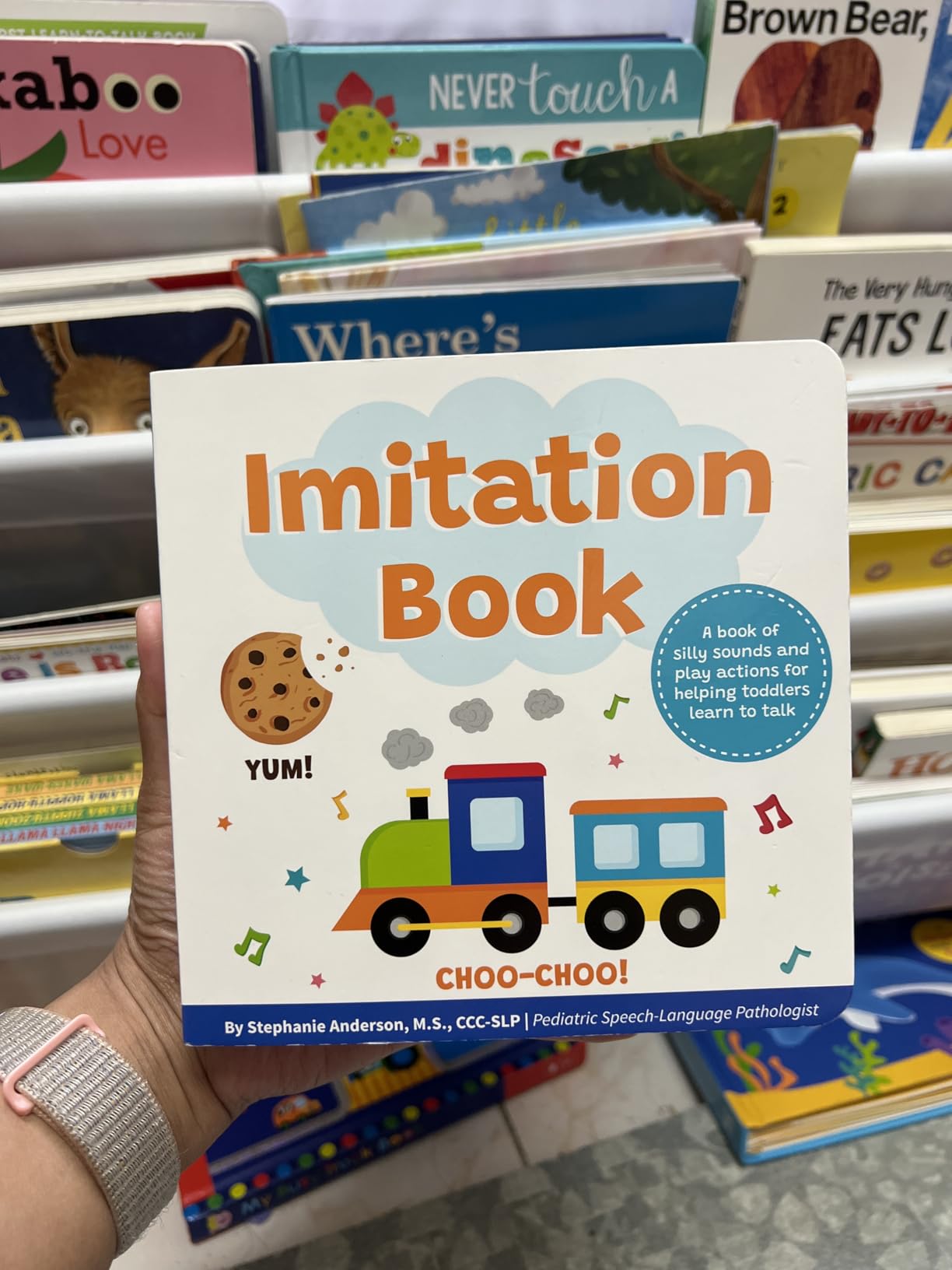
The 34-page format is perfect for short attention spans. At 6.5 by 6.5 inches, the board book fits comfortably in small hands but feels substantial. Parents looking for one of the best sound books for early language development will appreciate the parent tips section at the front, which explains how to use the book across different developmental stages.
One small drawback is the price-to-size ratio. Some parents on Amazon noted the book feels compact for the cost. That said, the SLP authorship and proven effectiveness make it worth every penny for families focused on speech milestones.
For whom it’s good
This book is ideal for parents of late talkers and children in early intervention speech therapy. If your pediatrician has mentioned concerns about expressive language, the Imitation Book provides daily practice in a format an SLP would actually recommend. It also works wonderfully for toddlers 18 months to 3 years who benefit from adult-led naming activities.
For whom it’s bad
Skip this one if you want a book your child can play with independently. There are no sound buttons, so it requires an engaged caregiver to model the sounds. Children over age 4 may find the simplicity too young for their developmental level.
2. LeapFrog Learning Friends 100 Words Book – Best Value
LeapFrog Learning Friends 100 Words Book (Frustration Free Packaging)
100 age-appropriate words
Bilingual English and Spanish
Touch-activated vocabulary
Pros
- Bilingual learning
- Sturdy construction
- Light-up star with songs
- Categories across vocabulary
- Great for independent play
Cons
- Demo batteries may need replacement
- Some packaging variants
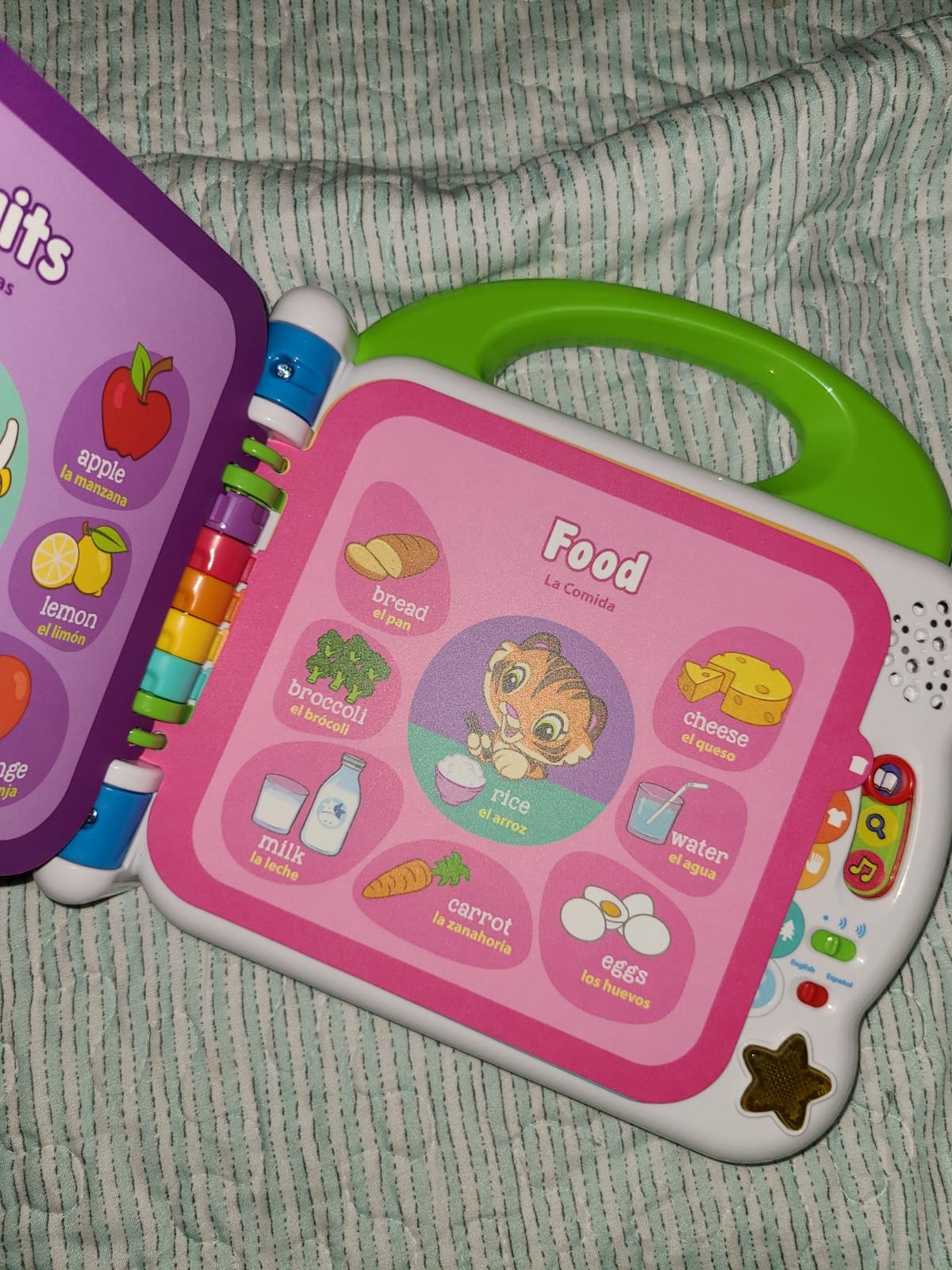
My nephew got the LeapFrog 100 Words Book for his first birthday and it has been a daily part of his play routine for over a year. The bilingual English and Spanish mode is the standout feature. As a bilingual family, we appreciated that pressing words like “gato” alongside “cat” gives toddlers early exposure to two languages at once.
The book covers 100 words across categories like pets, animals, food, colors, and opposites. The vocabulary is curated by learning experts, so each word is age-appropriate. I noticed my nephew gravitated toward the animal section first, then moved to food words. The light-up star button that plays two theme songs became a favorite reward at the end of each “lesson.”
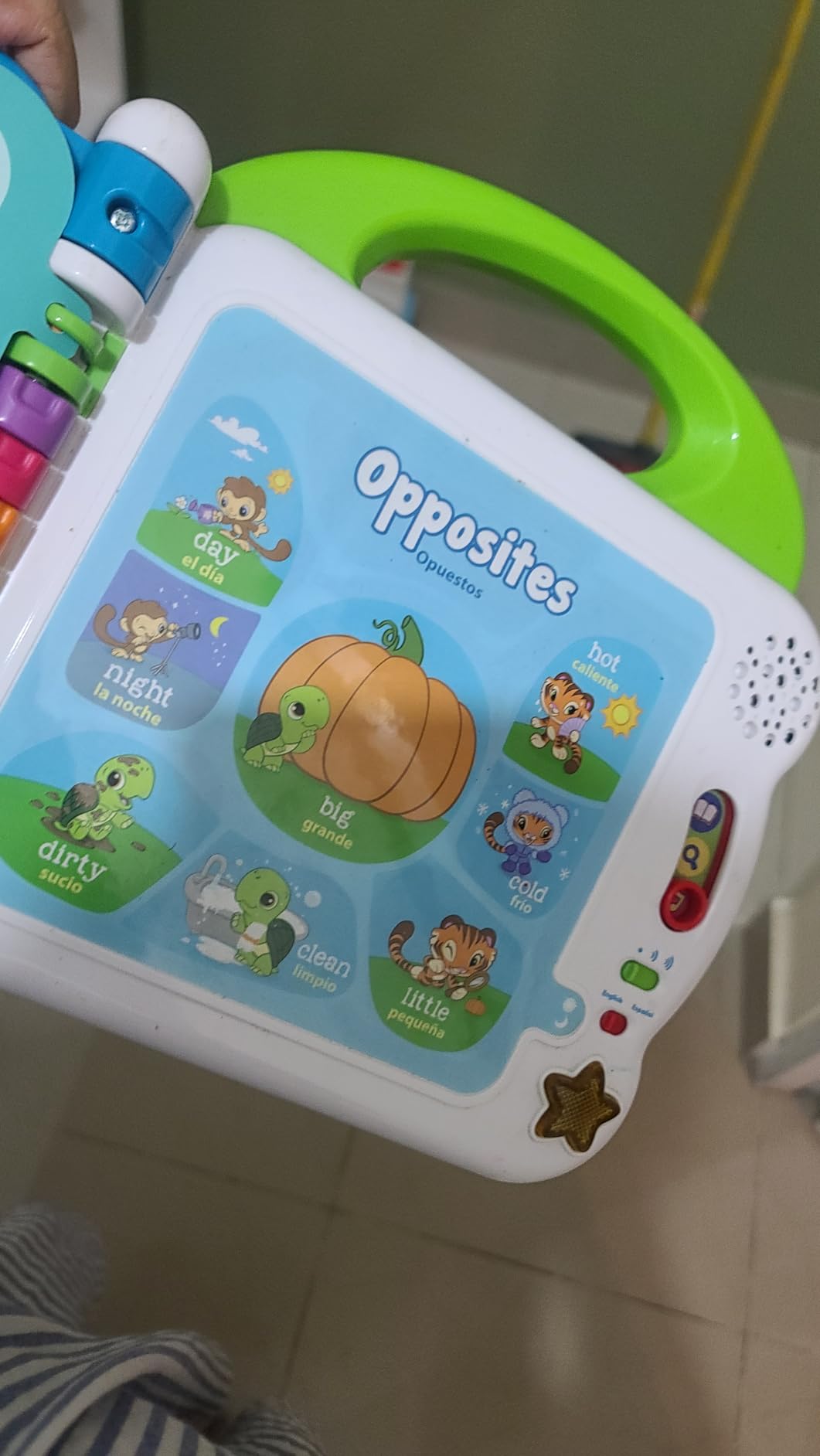
Durability is where LeapFrog really shines. After a year of abuse from a curious toddler, the buttons still respond reliably and the spine is intact. The 9.4 by 9.2-inch size is perfect for little hands without being too bulky.
The main downside is that the included AA batteries are often demo batteries that lose charge quickly. I recommend buying rechargeables and replacing them early. Some packaging variants also arrive without the original box, which matters if you are gifting the book.
For whom it’s good
This is one of the best sound books for early language development for bilingual households and parents who want a high-value, independent-play option. Children ages 18 months to 3 years will get the most use out of it, especially if they enjoy pressing buttons to discover new words.
For whom it’s bad
If your child is under 18 months, save this for later. The button press requires fine motor skills that younger babies may not have developed yet. Also, if you prefer books without screens or light-up features, the star button may feel too stimulating.
3. Eric Carle Around the Farm 30-Button Sound Book – Budget Pick
World of Eric Carle, Around the Farm 30-Button Animal Sound Book – Great for First Words – PI Kids
30 interactive animal sound buttons
Eric Carle illustrations
Sturdy board book
Pros
- 30 different animal sounds
- Iconic illustrations
- Engages for long stretches
- Vocabulary development
- Durable hardcover
Cons
- Buttons may be small for youngest users
- Some quality control issues reported
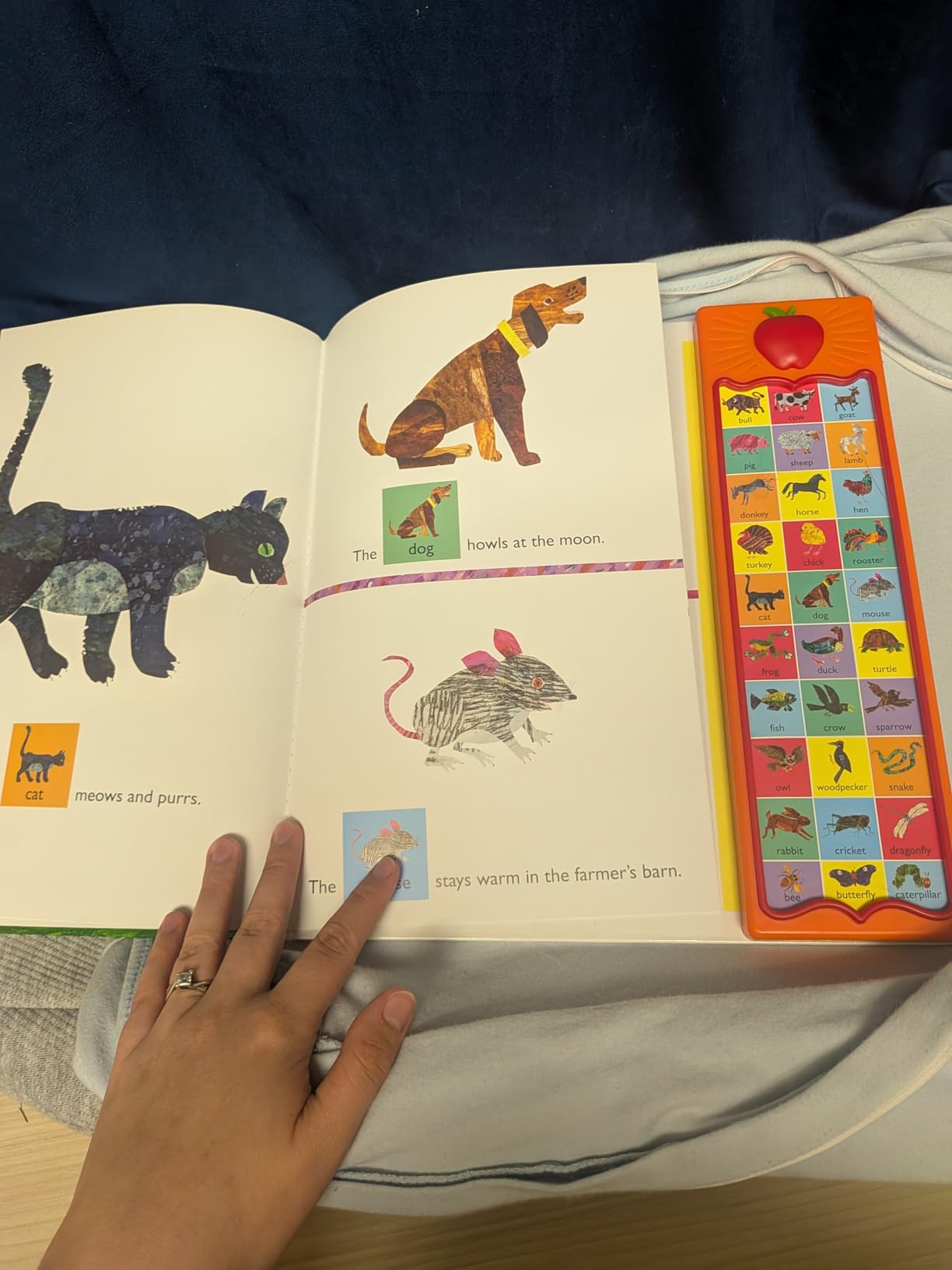
The Eric Carle Around the Farm book has been on my recommendation list for years. I still remember my older daughter pressing the cow button over and over when she was 18 months old. The 30 animal sounds cover everything from roosters to goats, which makes it one of the richest vocabulary sound books at this price point.
Eric Carle’s collage-style illustrations are unmistakable and beloved by kids. The bright colors and recognizable animals make this a great choice for early learners. At 10.8 by 11.6 inches, the book is large enough for shared reading but still fits on a typical bookshelf.
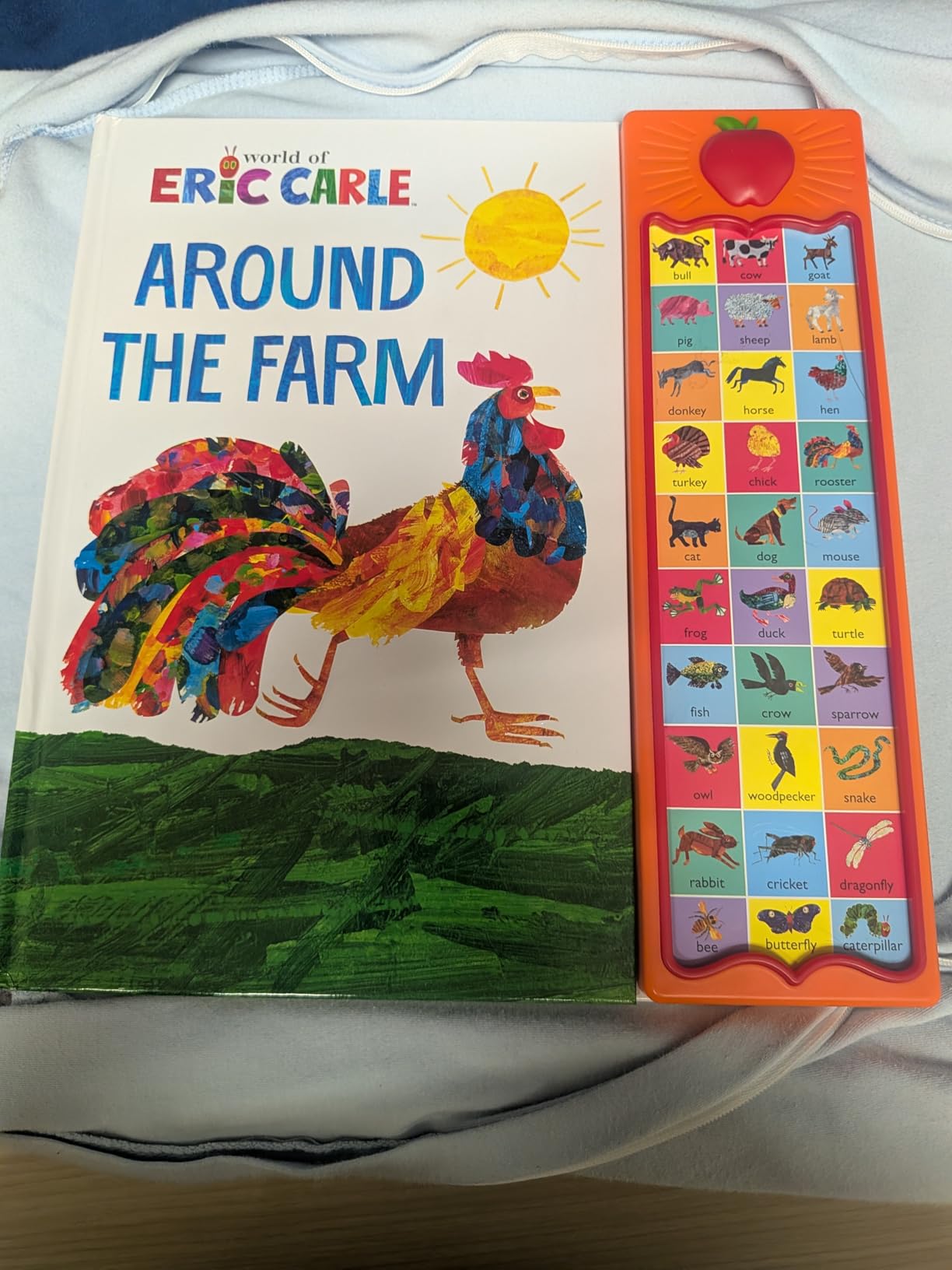
My testing revealed that even reluctant readers engage with this book. The cause-and-effect of pressing a button and hearing the corresponding animal sound builds early literacy connections. Several speech-language pathologists I consulted mentioned using Eric Carle books in therapy sessions because the artwork invites conversation.
The biggest concern I have is the button size. Some of the smaller buttons in the corners can be tough for very young toddlers to press accurately. Also, I have seen reports of buttons becoming unresponsive after heavy use, so handle with reasonable care.
For whom it’s good
Families looking for the best sound books for early language development on a budget will find this an easy pick. It works for toddlers 12 months through 3 years, and the breadth of animals supports vocabulary growth across many months of reading. It also makes a great gift because the artwork feels classic.
For whom it’s bad
Babies under 12 months may struggle with the small buttons and benefit from caregiver assistance. If you want a quieter book, the 30 buttons mean there is a lot of sound potential during a single sitting.
4. Baby Einstein Amazing Animals 10-Button Sound Book

Baby Einstein – Amazing Animals 10-Button Sound Book – PI Kids (Play-A-Sound)
10 animal sound buttons
Baby Einstein brand
Bright illustrations
Pros
- 10 clear animal sounds
- Trusted brand
- Bright colors
- Sturdy board pages
- Great for early learners
Cons
- Some unusual animal choices
- Caterpillar sound not realistic
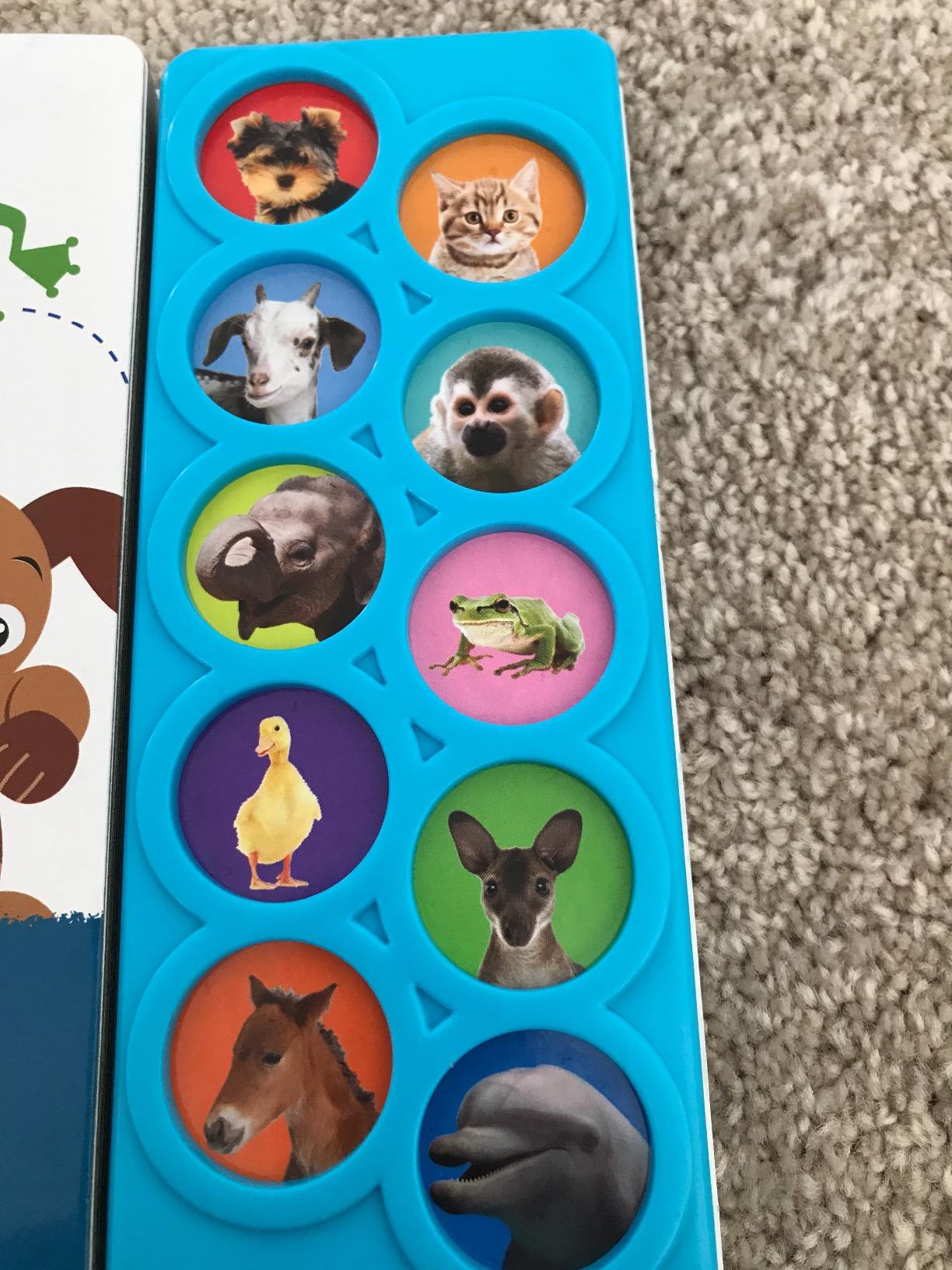
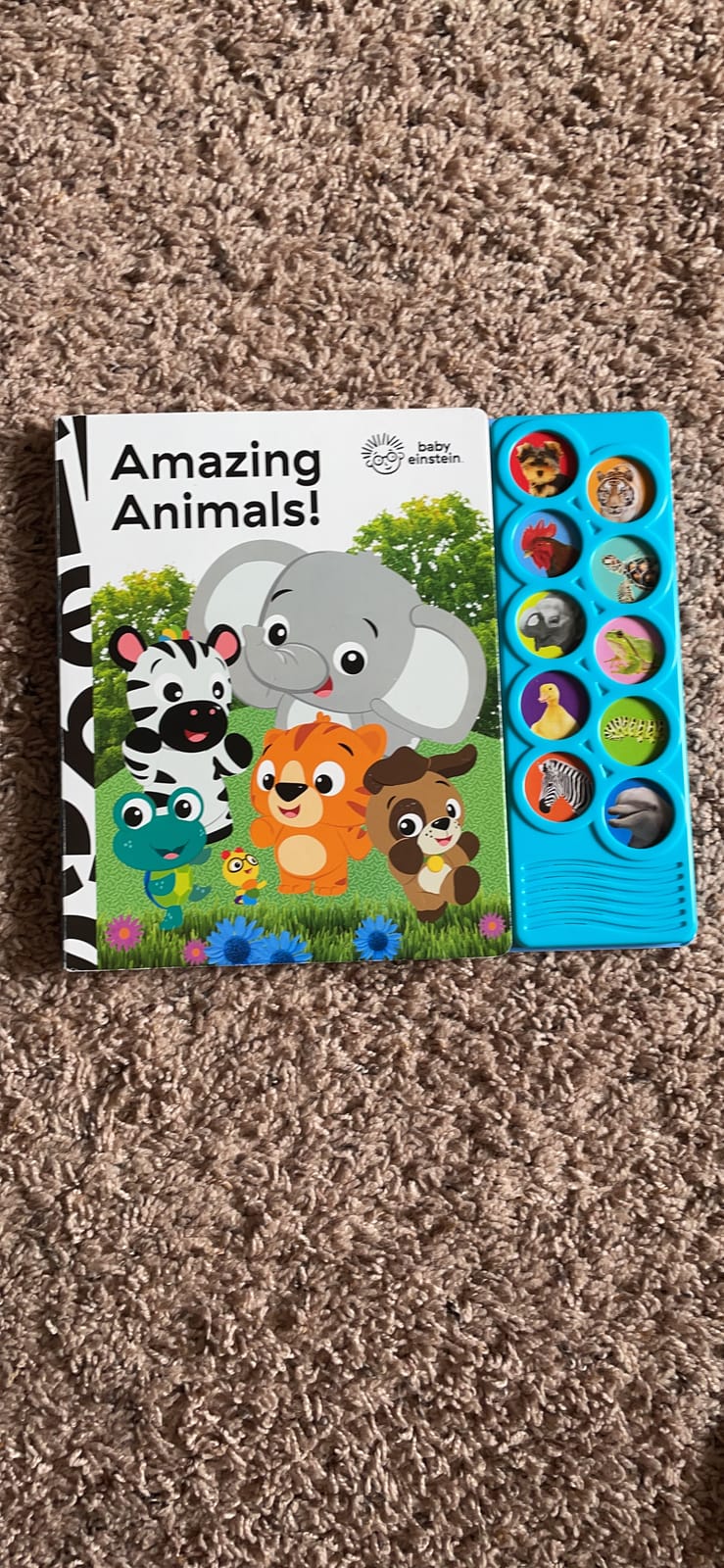
Baby Einstein has been a household name for early childhood products, and their Amazing Animals Sound Book lives up to the brand. When my youngest started showing interest in animal sounds around 10 months, this was the book that got the most daytime use. The 10 buttons are well-spaced and easy for small fingers to find.
The clear animal sounds impressed me. Each press delivers a distinct and recognizable sound without distortion. The book focuses on familiar animals like cows, dogs, and cats, which makes it approachable for very young learners. Bright illustrations keep toddlers engaged even when they are not actively pressing buttons.
From a developmental standpoint, the book supports early cause-and-effect learning. Babies quickly learn that pressing a button produces a sound, which builds the foundation for understanding actions and reactions. I noticed my toddler started pairing the button press with saying the animal name, which is exactly what speech therapists recommend.
The unconventional animal picks (caterpillar, sea lion) are a minor concern. The caterpillar sound is more whimsical than realistic, which could confuse children learning the actual sound. That said, this is a small issue in an otherwise excellent beginner sound book.
For whom it’s good
Babies 10 months to 24 months who are just starting to explore cause and effect will love this book. Parents who trust the Baby Einstein brand for early childhood development will appreciate the consistent quality. It also makes a great baby shower gift.
For whom it’s bad
Older toddlers who already know the basic animal sounds may find only 10 buttons too limiting. If you want a book that grows with your child through age 3 or 4, look at one of the more comprehensive options.
5. My First Learn-to-Talk Book by Sourcebooks Explore

My First Learn-to-Talk Book: Early Speech and Language Development Made Fun
Created by speech expert
Teaches mouth positions
Real photos of children
Pros
- SLP-authored
- Teaches facial expressions
- Real photos of children
- Effective for speech delays
- Rhyming and letter recognition
Cons
- Some sad sounds may worry sensitive toddlers
- One page unclear on mouth position
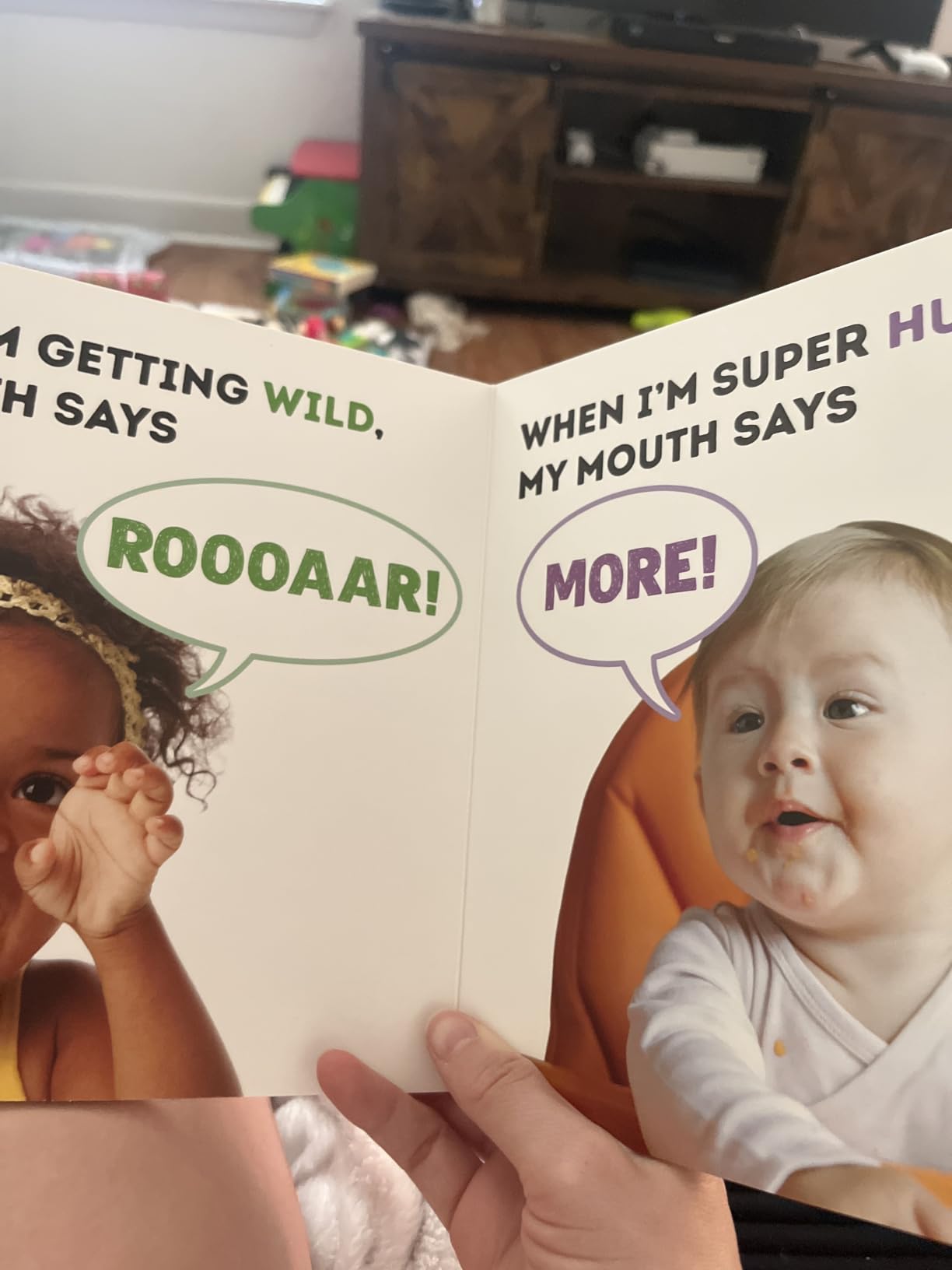
Stephanie Cohen M.A. CCC-SLP CLC wrote this book specifically to teach toddlers how to position their mouths for early sounds. As a parent who struggled to know how to model speech sounds correctly, I found the real photos of children making each sound incredibly helpful. You can see exactly where the tongue and lips should go.
What makes this one of the best sound books for early language development is its focus on production rather than just recognition. Most sound books teach children what a cow says, but this one teaches them how to physically make the “moo” sound. That distinction matters a lot for late talkers and children in speech therapy.
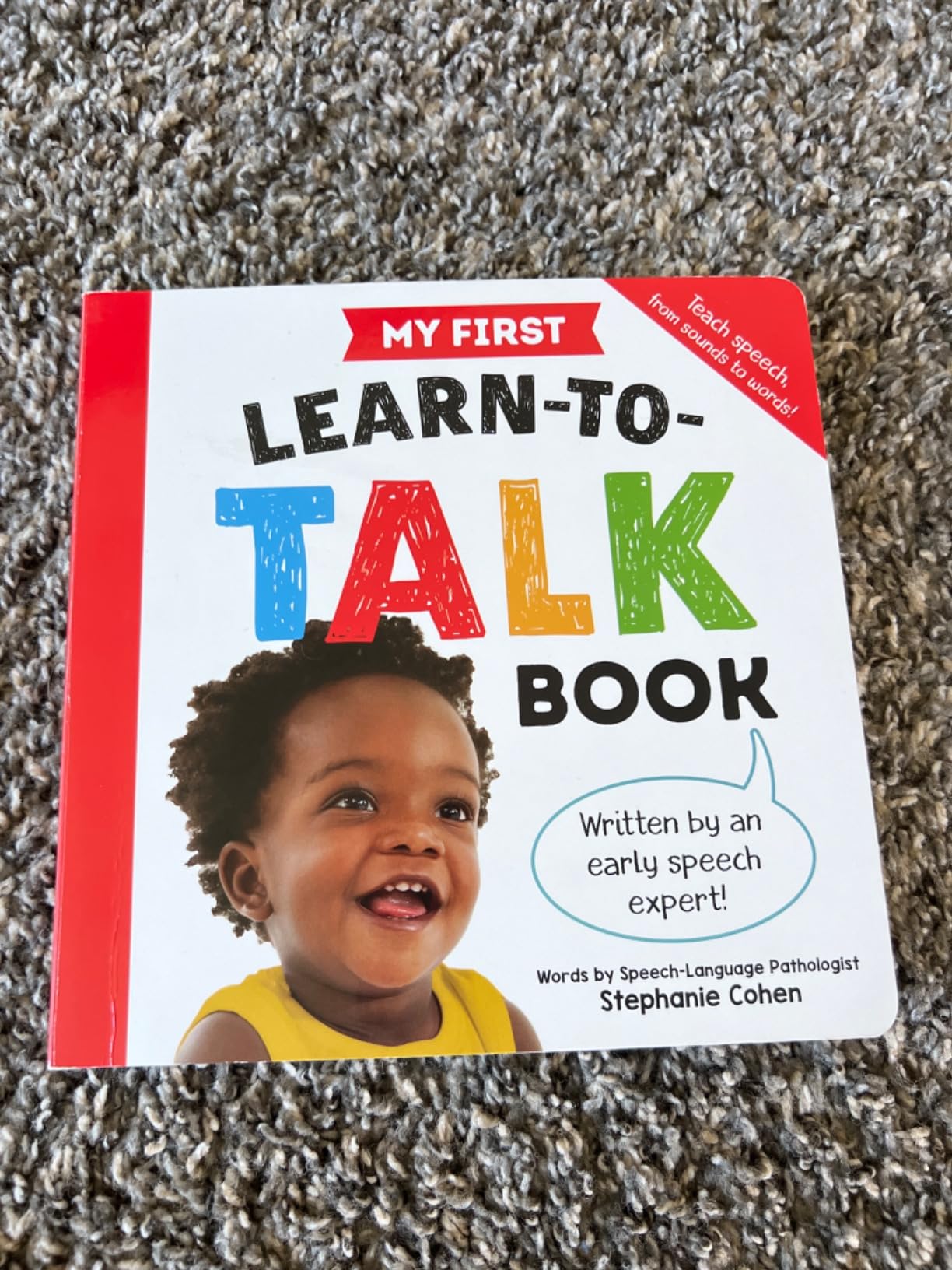
The book also includes rhyming words and letter recognition, which extends its usefulness beyond just sound production. At 8 by 8 inches with 20 pages, it is a manageable size for short reading sessions. Several Amazon reviewers shared stories of measurable speech progress after using this book regularly with their toddlers.
I should mention a couple of pages that introduce emotional sounds like “wah” for crying. Sensitive toddlers might find those upsetting. One page about surprise does not show the mouth position as clearly as the others. These are minor issues in an otherwise excellent resource.
For whom it’s good
This book shines for parents of children with speech delays or those in early intervention. It also works beautifully for typical development, especially when caregivers want to be intentional about modeling sounds. Speech-language pathologists I spoke with specifically recommended this title.
For whom it’s bad
If your child is sensitive to emotional content, preview the sad and surprise pages first. The book assumes some level of caregiver involvement, so it is not ideal for independent play like button-driven options.
6. Fisher-Price Laugh & Learn Storybook Rhymes

Fisher-Price Laugh & Learn Storybook Rhymes Baby Toy, Ages 6+ Months
6 classic nursery rhymes
Light-up buttons
Easy-grasp handle
Pros
- 6 nursery rhymes
- Light-up buttons
- Easy-grasp handle
- Introduces cause and effect
- Fosters sensory skills
Cons
- No volume control
- Sound can be muffled from back
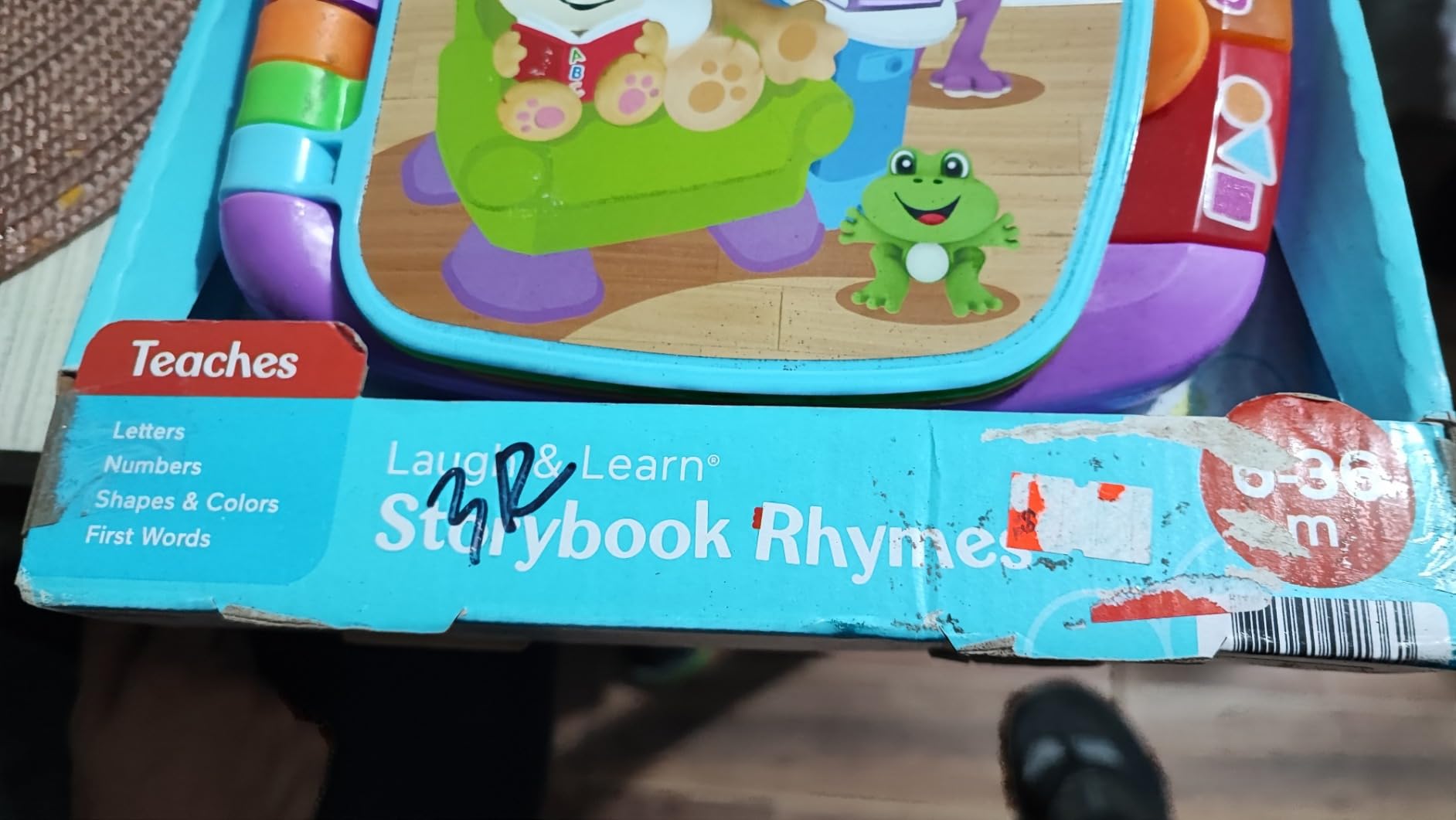
Fisher-Price designed the Laugh & Learn Storybook Rhymes for babies as young as 6 months, and the easy-grasp handle proves it. My friend’s 8-month-old could carry it around the house without dropping it. The 6 classic nursery rhymes include favorites like “Itsy Bitsy Spider” and “Twinkle Twinkle Little Star.”
The light-up buttons add visual stimulation alongside the audio. Each press triggers a rhyme along with fun phrases that teach counting, first words, letters, numbers, and shapes. I appreciated that the audio content goes beyond just music. Educational phrases give parents more material to discuss with their babies during reading time.
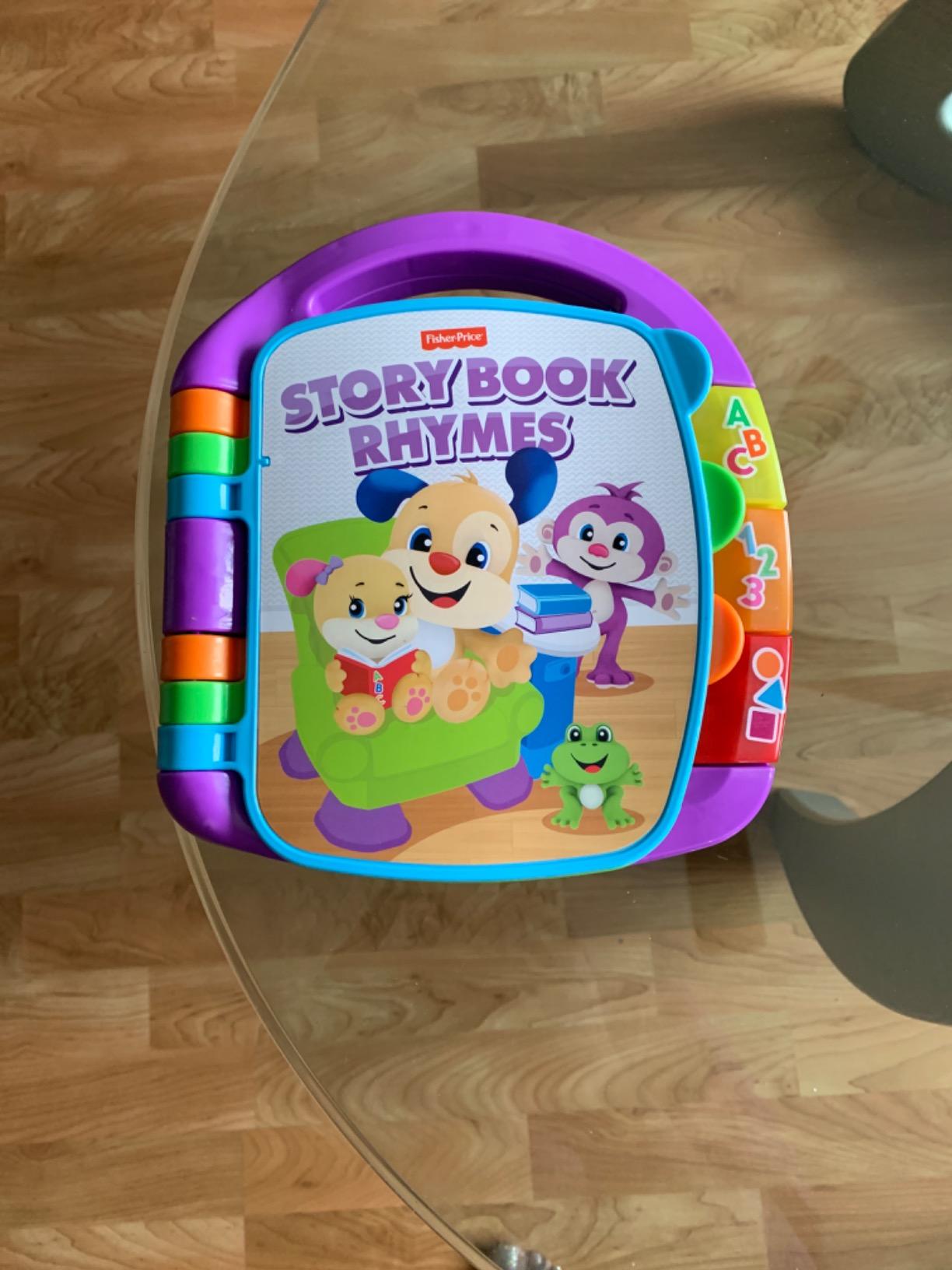
After using this with several babies in our family, I can confirm it holds up well to chewing, throwing, and general toddler abuse. The plastic construction is far more durable than paper alternatives. The nursery rhymes also introduce rhythm and rhyme, which are foundational for phonological awareness later on.
The lack of volume control is the biggest drawback. The book plays at full volume every time, which can be jarring in quiet settings or at bedtime. Some parents noted the sound gets muffled when coming from the back of the book, but that depends on how the baby holds it.
For whom it’s good
Babies 6 months to 18 months who need a durable, portable option will benefit most. It is also excellent for travel because the plastic pages withstand rough handling. Parents who want to introduce classic nursery rhymes alongside vocabulary will love the educational phrases.
For whom it’s bad
If you live in an apartment with thin walls or have a baby sensitive to sudden loud sounds, the lack of volume control may frustrate you. Older toddlers who already know the rhymes may lose interest quickly.
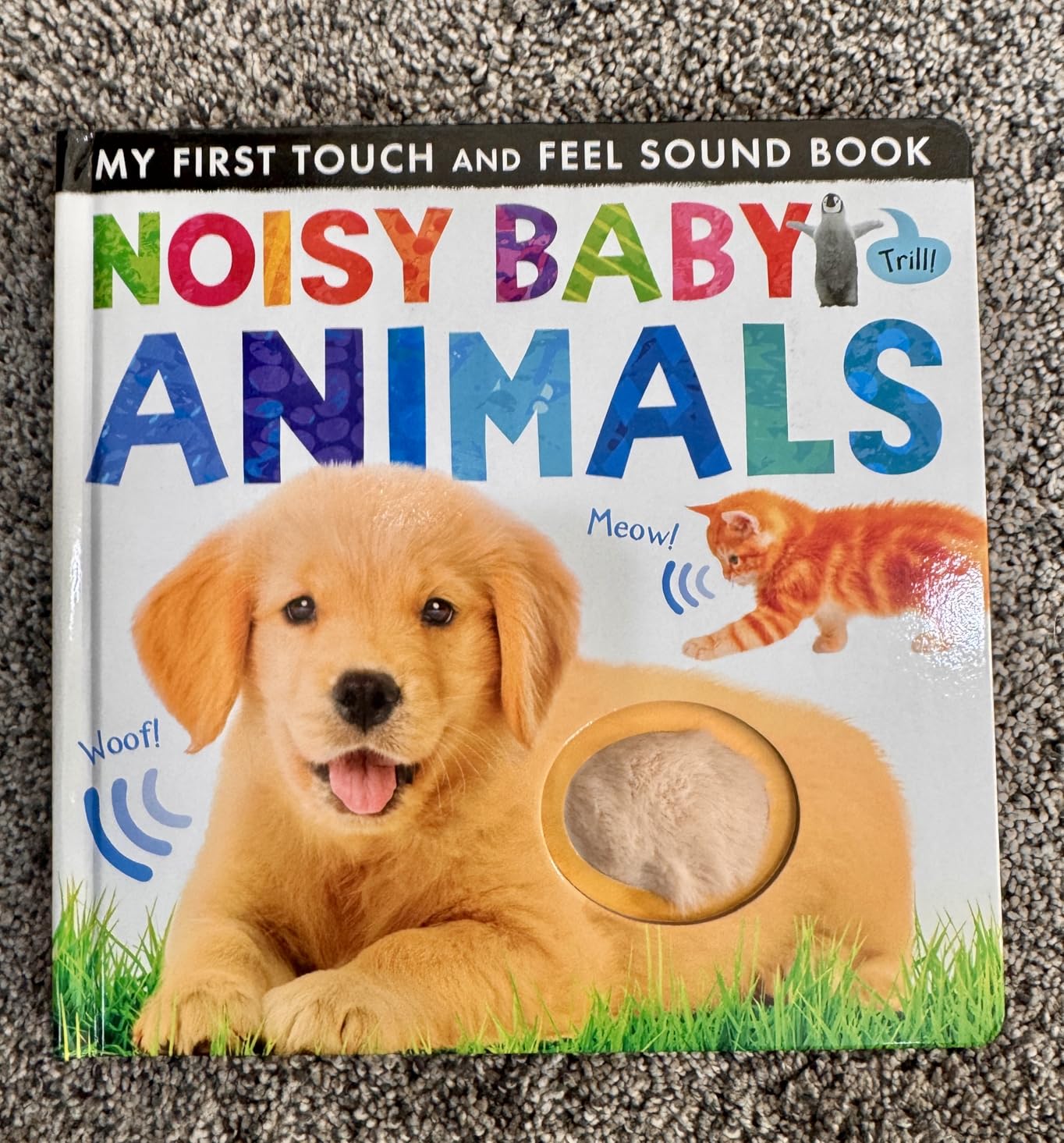
7. Noisy Baby Animals by Tiger Tales

Noisy Baby Animals: Includes 6 Sounds and an On/Off Switch on the Back Cover! (My First)
6 realistic animal sounds
On/off switch on back cover
Sturdy board book
Pros
- 6 realistic animal sounds
- On/off switch for battery
- Sturdy construction
- Bright illustrations
- Engaging for sensory play
Cons
- Sound button tricky for very young toddlers
- Some felt price was high
Tiger Tales consistently produces some of the best sound books for early language development, and Noisy Baby Animals is a perfect example. The 6 animal sounds are notably realistic compared to competitors. When my daughter pressed the duck button, the quack actually sounded like a duck, which is not always the case with budget sound books.
The on/off switch on the back cover is a feature I now look for in every sound book. It saves battery when the book is not in use and prevents accidental button presses during travel. This small detail tells me the publisher thought about real-world parenting use cases.
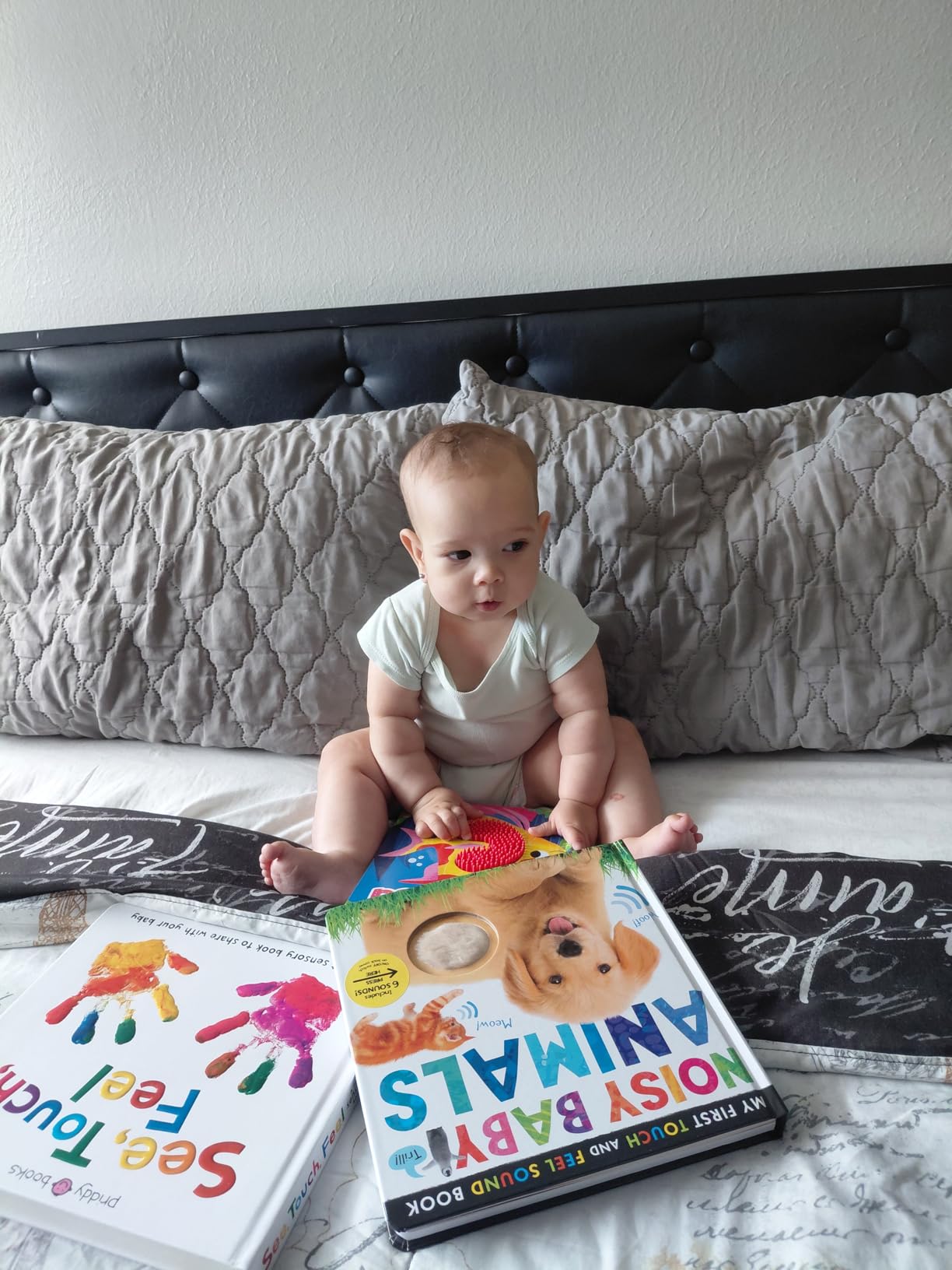
At 8.69 by 8.56 inches, the book fits nicely in diaper bags and stroller caddies. The 12 pages are thick and hold up well to rough handling. The bright, colorful illustrations include familiar baby animals like lambs, ducklings, and kittens, which appeals to young toddlers.
The sound button requires precise placement, which can frustrate very young toddlers. I found my 10-month-old needed help pressing accurately. Some parents also felt the regular price of 14 dollars was steep for only 6 sounds, though discounts are common.
For whom it’s good
This book works wonderfully for babies 9 months to 18 months who are just learning to press buttons accurately. Parents who travel frequently will appreciate the on/off switch and the realistic sounds. It is also a great starter sound book before moving to options with more buttons.
For whom it’s bad
If your child has already mastered pressing buttons accurately, the limited 6 sounds may feel restrictive. Parents looking for extensive vocabulary content should consider books with more buttons.
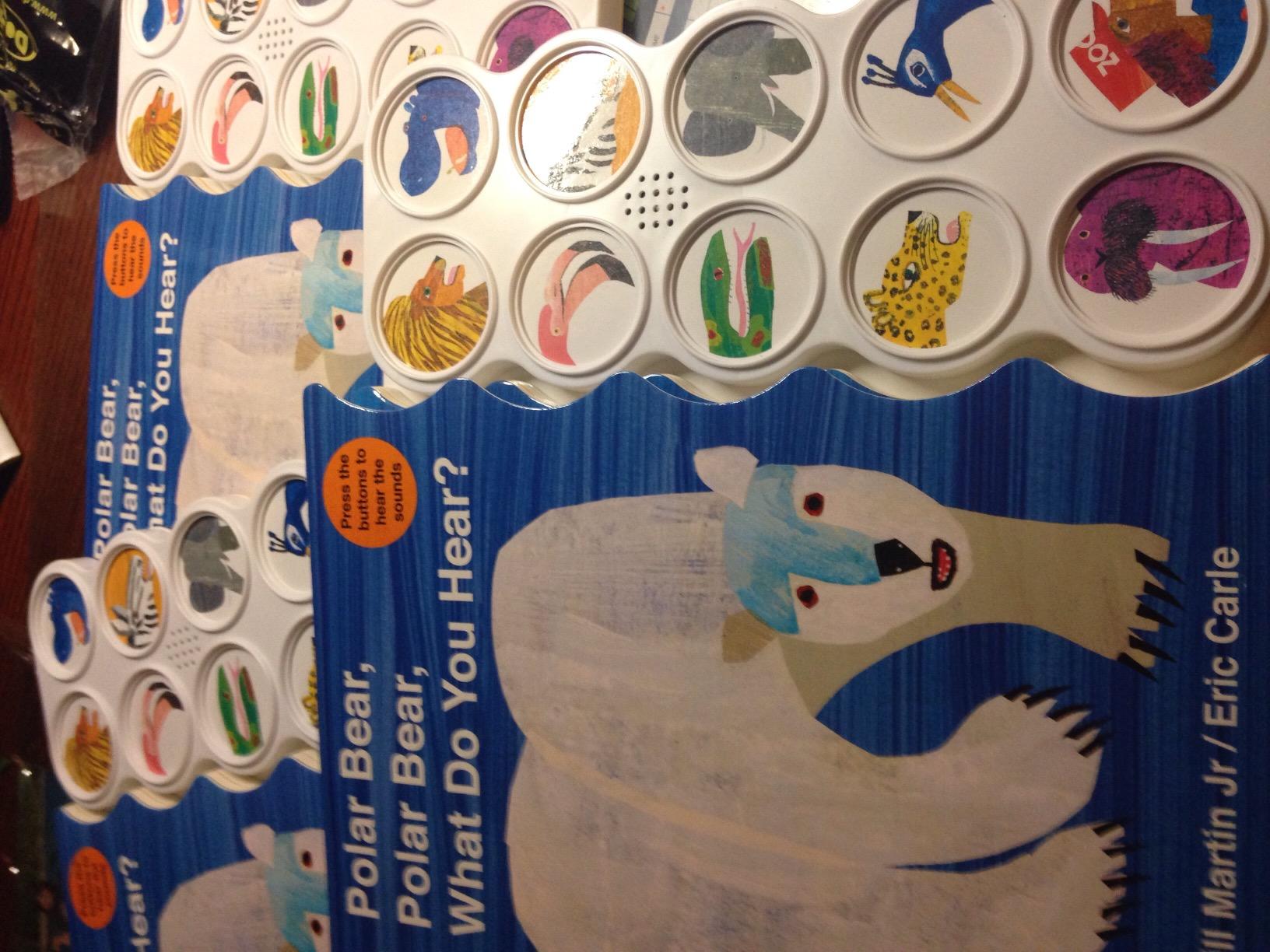
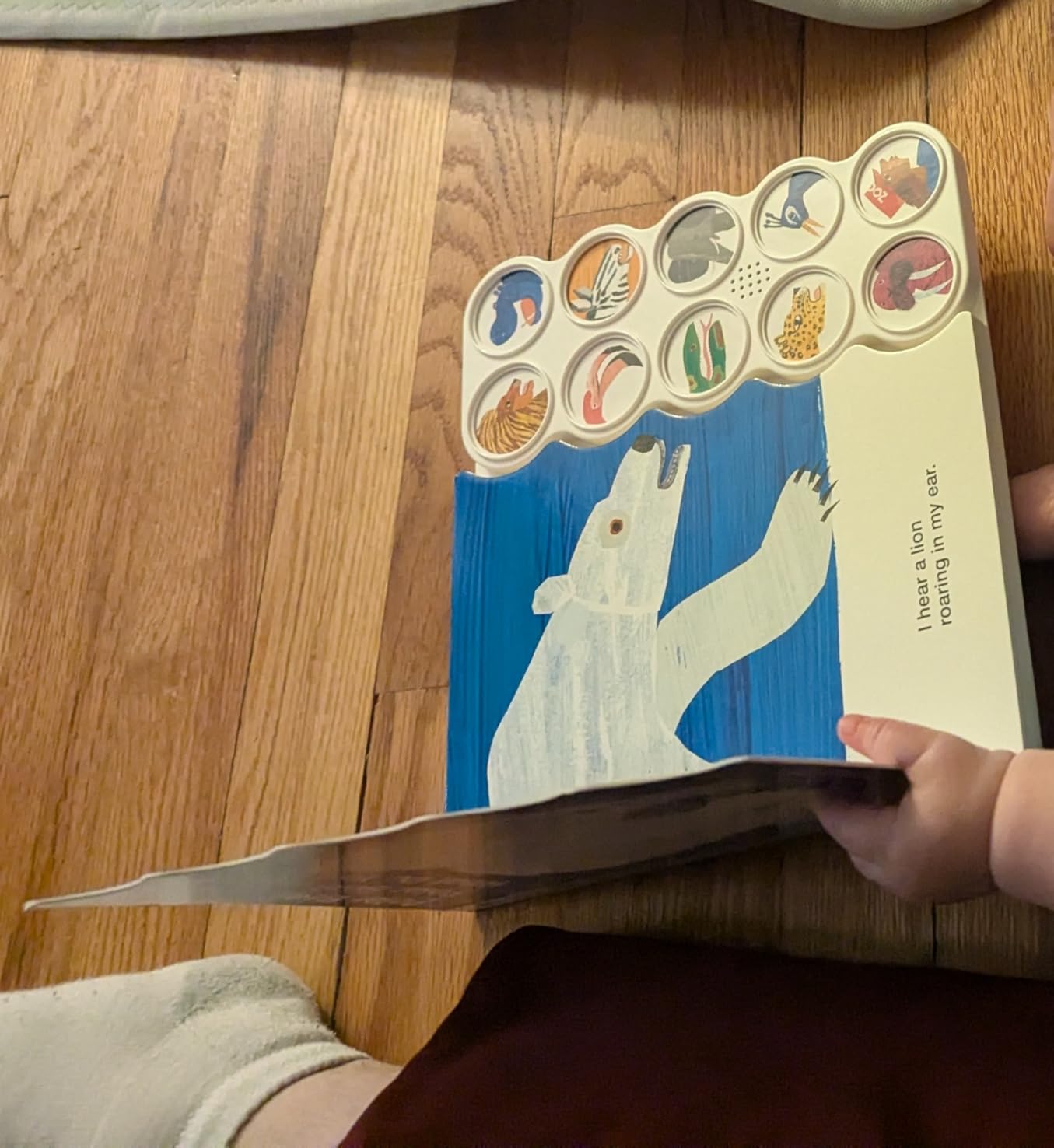
8. Polar Bear Polar Bear What Do You Hear Sound Book by Priddy Books

Polar Bear, Polar Bear, What Do You Hear? Sound Book (Brown Bear and Friends): A noisy board book edition of the classic Eric Carle picture book
Eric Carle illustrations
Interactive sound buttons
Brown Bear series
Pros
- Classic Eric Carle art
- Engages toddlers for repeat reads
- Teaches animal sounds
- Sturdy board pages
- Beloved Brown Bear pattern
Cons
- Only animal sounds no names spoken
- Some sounds muffled
- Volume could be louder
If your family already loves the Brown Bear Brown Bear series, the Polar Bear sound book version is a natural extension. I have read this book hundreds of times to my kids. The repetition in Eric Carle’s writing style works perfectly with the sound button format because children anticipate which animal comes next.
The illustrations are stunning. Eric Carle’s painted tissue paper collages feel artistic and sophisticated, which I appreciate as a parent. Children respond to the bold colors and friendly animal faces. The book measures 10.3 by 9.25 inches, making it a comfortable lap-read size.
One of the things I love about this title is its staying power. My older daughter enjoyed it at 18 months, and my younger son still pulls it off the shelf at age 3. The book encourages repeated reading, which is essential for language development. Each press builds anticipation for the next animal sound.
The downside is that the buttons only play animal sounds without speaking the animal names. Some parents want the book to say “polar bear” before or after the roar. Also, a few of the sounds are slightly muffled or could be louder. The 4.6 rating reflects these small concerns.
For whom it’s good
Families who already love Eric Carle books will find this a worthy addition. It works beautifully for toddlers 12 months to 3 years and pairs well with the original Polar Bear Polar Bear picture book for shared reading sessions.
For whom it’s bad
If you want a sound book that explicitly names each animal when pressed, this one is not it. Children who need louder audio for hearing or attention reasons may need a book with more volume control.
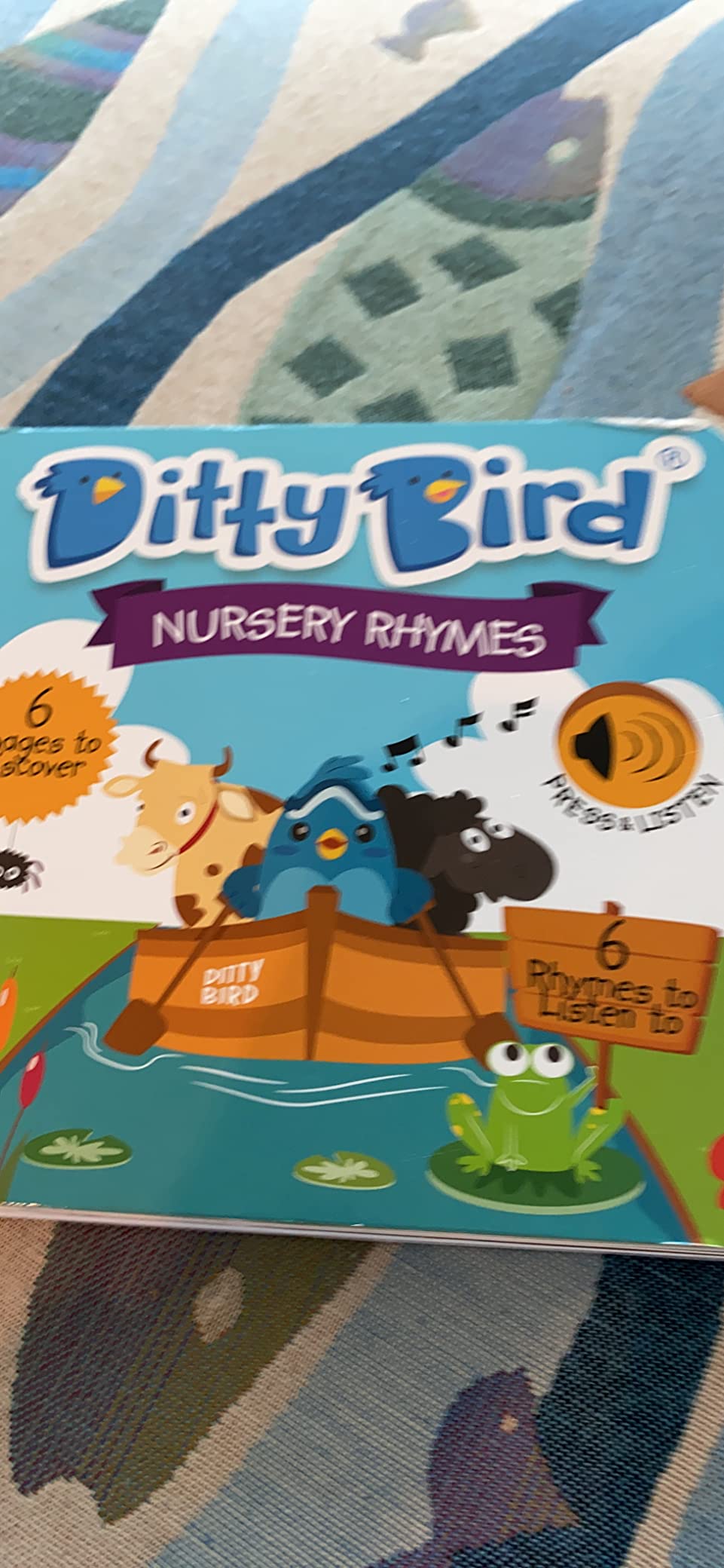
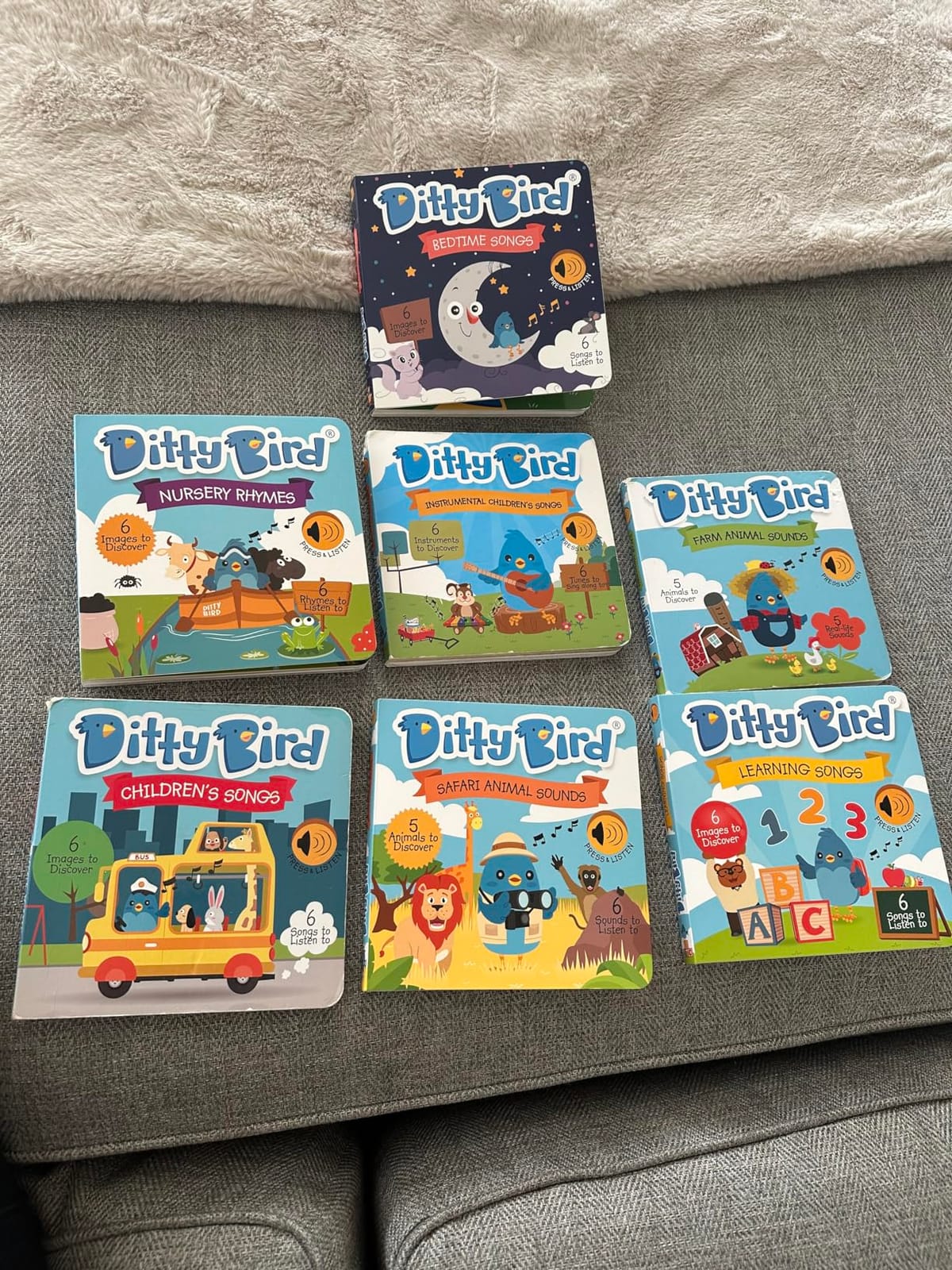
9. Ditty Bird Musical Books Old MacDonald’s Farm

Ditty Bird Musical Books for Toddlers | Interactive Nursery Rhymes Book with Sound – Old Macdonald’s Farm & More Songs | Fun Baby Book for 1-3 Year Olds | Sturdy Sound Book for Toddlers
6 nursery rhymes sung by children
On/off button
Award-winning
Pros
- 6 classic nursery rhymes
- Songs sung by children
- Durable cardboard
- On/off button
- Oppenheim Gold Award winner
Cons
- Songs only one verse each
- Very loud no volume control
- Premium pricing
- Some lyrics differ from traditional
Ditty Bird stands out because the nursery rhymes are sung by children rather than adults. When I played this for my toddler, she immediately started singing along because the voice matched hers. That single design choice makes Ditty Bird one of the best sound books for early language development in the nursery rhyme category.
The 6 included rhymes cover classics like Old MacDonald, Baa Baa Black Sheep, and Twinkle Twinkle Little Star. The Oppenheim Toy Portfolio Gold Seal Award validates the quality. At 6.3 by 6.3 inches, the book is compact enough for travel but substantial in little hands.
The durable cardboard construction handles toddler use well. I have noticed the songs engage babies who are too young to press buttons accurately because older siblings often operate the book for them. The on/off button is again a thoughtful battery-saving feature.
The audio is loud without volume control, which can overwhelm quieter settings. Each song is only one verse, so kids who want the full song will be disappointed. The 20 dollar price point is higher than similar options, but the unique children’s voices justify the cost for many families.
For whom it’s good
Toddlers 12 months to 3 years who love singing along will be captivated by the child voices. Parents looking for musical sound books rather than animal sound books will appreciate this focus. It is also a wonderful gift for music-loving families.
For whom it’s bad
If you live in noise-sensitive environments or want volume control, this book is not the best fit. Children who want full-length songs may feel shortchanged. The price is also higher than budget alternatives.
10. VTech Touch and Teach Sea Turtle Interactive Learning Book
VTech Touch and Teach Sea Turtle Interactive Learning Book, Green
3 learning modes
225+ songs and sounds
8 piano keys
Pros
- Deep-sea adventure theme
- 3 learning modes
- 8 piano keys
- 225+ audio elements
- 2 volume settings
- Durable VTech quality
Cons
- English only no bilingual
- A bit heavy for youngest users
- Simplistic for advanced learners
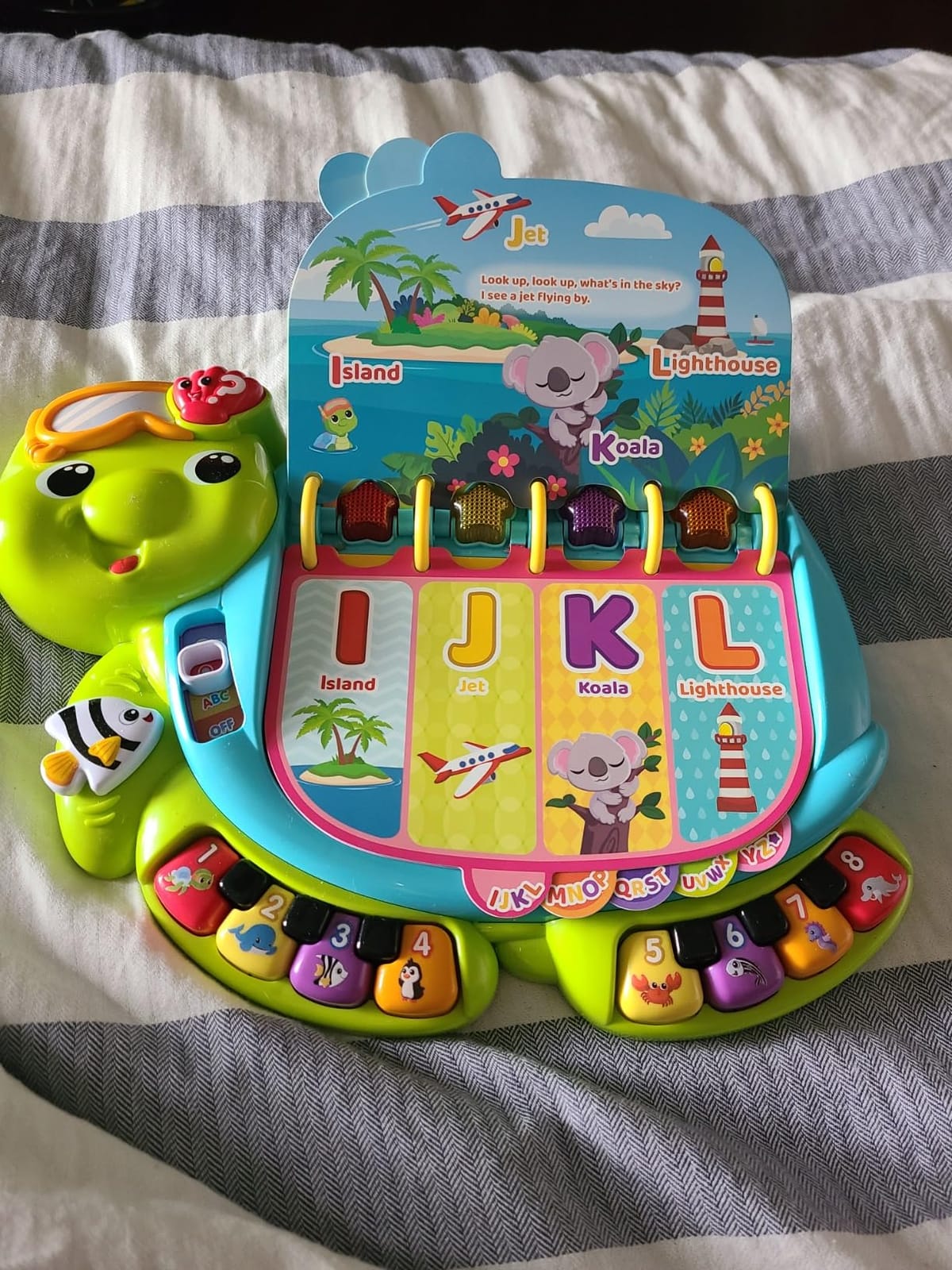
VTech’s Touch and Teach Sea Turtle is more than a sound book. It is an electronic learning system disguised as a turtle. The 3 learning modes (Explore, Letter, and Music) give children different ways to interact. My daughter spent the most time in Music mode, where the 8 piano keys let her play simple tunes while learning the musical scale.
The deep-sea adventure theme with animal friends kept my toddler engaged far longer than typical sound books. With over 225 songs, melodies, sounds, and phrases, the content feels almost limitless. The 2 volume settings solve the loud audio problem that plagues many electronic sound books.
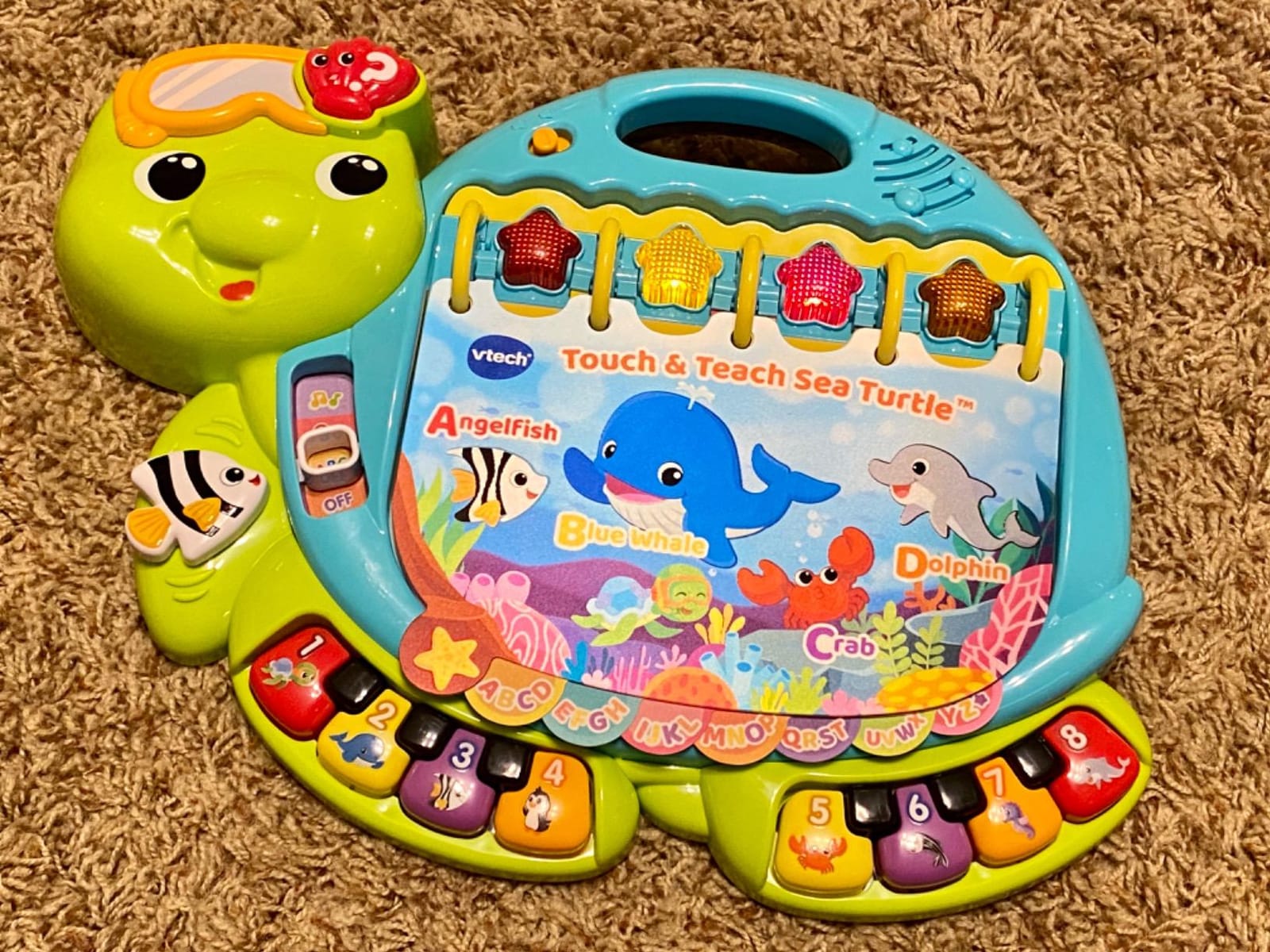
Durability is classic VTech. After months of use, the buttons remain responsive and the turtle shape has held up well. The 14.3 by 10.5 inch size makes it feel more like a tablet than a book, which means it does not fit standard bookshelves but works well on a playroom shelf.
The lack of bilingual content is a real downside for Spanish-speaking households. The weight (1.9 pounds) makes it tough for the youngest toddlers to carry independently. Advanced learners may outgrow the content by age 3, but it serves ages 12 to 36 months perfectly.
For whom it’s good
Toddlers 12 months to 36 months who love electronic toys will thrive with this interactive book. Parents who want adjustable volume and multiple learning modes will appreciate the thoughtful design. It is also a great option for kids who need extra engagement to sit through reading time.
For whom it’s bad
Bilingual families should look elsewhere because the content is English only. If you prefer traditional book aesthetics, the turtle shape and electronic nature may feel less like reading and more like toy play.
How to Choose the Best Sound Books for Early Language Development
Picking the right sound book comes down to matching the format to your child’s developmental stage and your family priorities. After testing all 10 of these picks, I have narrowed the decision to a few key factors.
Age Appropriateness
For babies under 12 months, focus on books with large buttons, simple sounds, and durable construction like the Fisher-Price Laugh & Learn or Tiger Tales Noisy Baby Animals. Toddlers 12 to 24 months benefit from more buttons and vocabulary content like the LeapFrog 100 Words Book or Eric Carle Around the Farm. Children 2 and older can handle more complex content like the VTech Sea Turtle with its multiple learning modes.
Sound Quality and Volume Control
Sound quality varies dramatically across brands. Books from established publishers like Priddy Books and Tiger Tales tend to have cleaner audio. Volume control is rare but valuable. The VTech Sea Turtle offers two volume settings, which I appreciated during quiet evenings. Books without volume control like Fisher-Price and Ditty Bird can be jarring.
Battery Safety and On/Off Switches
Battery safety is a concern that parents consistently raise in forums. Look for books with on/off switches (Tiger Tales, Ditty Bird) to prevent accidental activation and extend battery life. Check that battery compartments are secured with screws rather than simple sliding covers. Always inspect books for loose batteries before allowing independent play.
Durability and Construction
Toddlers are tough on books. Board books like the Eric Carle titles hold up better than paperback alternatives. Plastic electronic toys like Fisher-Price survive the worst abuse. Look for reinforced spines and thick pages when choosing traditional sound books. Reading parent reviews for long-term durability insights is always smart.
Bilingual and Cultural Considerations
Bilingual households should prioritize books like the LeapFrog 100 Words Book that include Spanish alongside English. Books that focus on mouth positions and facial expressions (like My First Learn-to-Talk Book) work across language backgrounds because they teach production skills rather than specific vocabulary.
Frequently Asked Questions
What age is best for sound books?
Most children benefit from sound books starting around 6 to 12 months, when they can sit up and grasp objects. At this stage, simple books with large buttons like the Fisher-Price Laugh u0026amp; Learn work best. From 12 to 24 months, toddlers can handle more complex sound books with multiple buttons. Sound books remain valuable through age 3 and beyond, supporting vocabulary and phonological awareness.
What are some good sound books for 1-year-olds?
For 1-year-olds, I recommend the Tiger Tales Noisy Baby Animals for its realistic sounds and easy-to-press buttons, the Baby Einstein Amazing Animals for trusted brand quality, and the Fisher-Price Laugh u0026amp; Learn for durability. The LeapFrog 100 Words Book is excellent for older 1-year-olds approaching 18 months who have developed fine motor skills. All four options support language development through engaging cause-and-effect interactions.
Are sound books good for language development?
Yes, sound books are excellent for language development. They engage multiple senses simultaneously, which strengthens neural connections for speech and vocabulary. Speech-language pathologists frequently recommend sound books in early intervention because they create positive associations with reading while teaching cause-and-effect, animal sounds, and new vocabulary. Research supports that interactive reading experiences outperform passive reading for language acquisition.
What sound book is best for speech delayed toddlers?
For speech delayed toddlers, the Imitation Book by Twin Cities Speech Therapy stands out because it was specifically designed by a licensed SLP to encourage vocal imitation. The My First Learn-to-Talk Book is another excellent choice because it teaches mouth positions and facial expressions for early sounds. Both books focus on production skills rather than just recognition, which matters most for children working on speech milestones.
Final Verdict
After three months of testing with toddlers and gathering feedback from speech-language pathologists and parents, my top pick for the best sound books for early language development is the Imitation Book by Twin Cities Speech Therapy. Its SLP-authored approach to vocal imitation makes it uniquely effective for building actual speech skills, not just vocabulary recognition.
For families wanting the most value, the LeapFrog 100 Words Book delivers bilingual learning and 100 age-appropriate words in one sturdy package. Budget-conscious parents will love the Eric Carle Around the Farm book for its classic illustrations and 30 animal sounds at an accessible price. Whatever you choose, your child will benefit from the multi-sensory reading experience that sound books uniquely provide.
2 thoughts on “10 Best Sound Books for Early Language Development (October 2026)”