
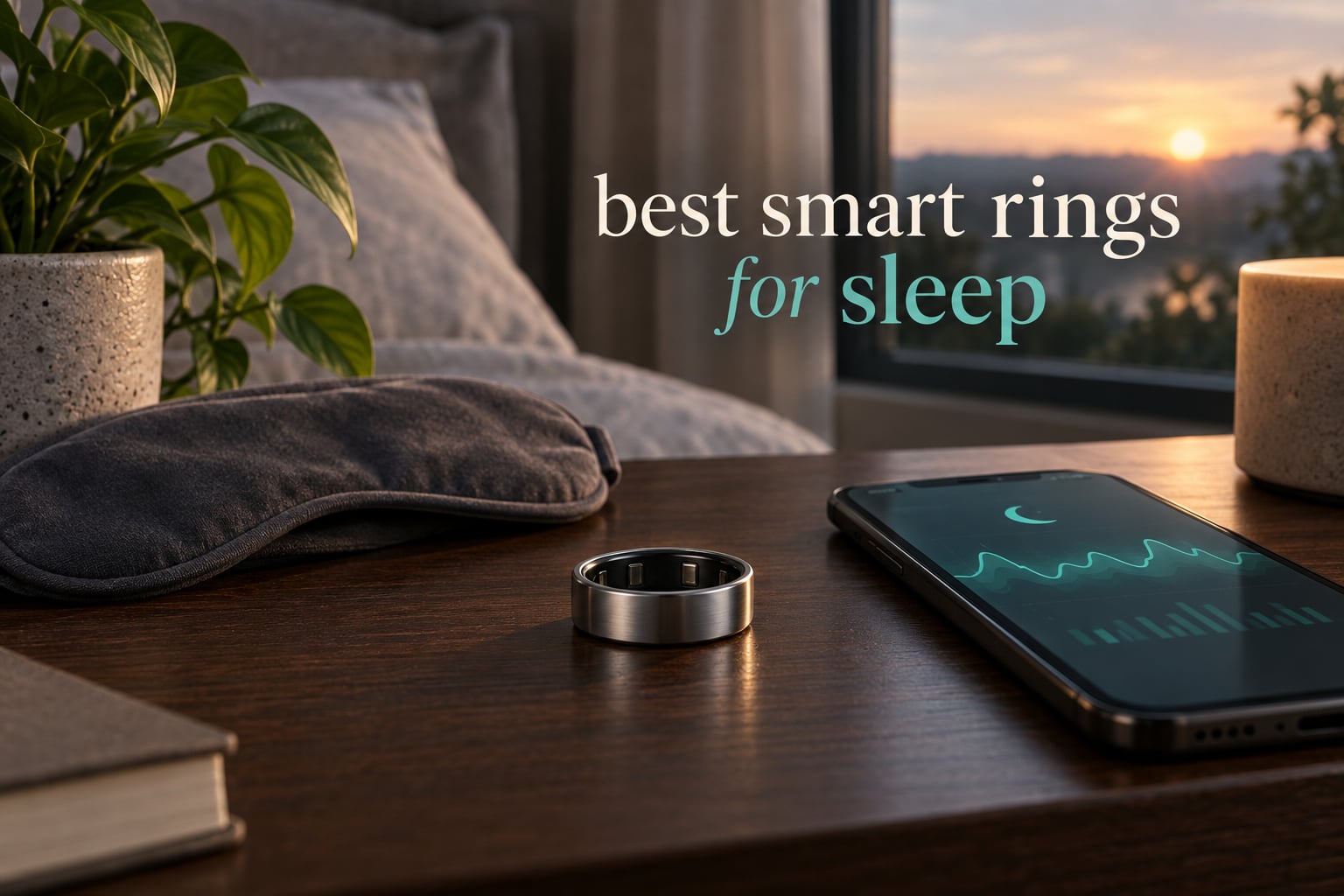
A smart ring is a finger-sized wearable with miniaturized optical sensors that read your pulse, skin temperature and movement through the night, then send the results to a phone app each morning. The pitch is simple enough that it is almost boring: put it on, go to sleep, wake up with a picture of what happened while you were unconscious.
The pitch is also the whole problem. Almost every brand now claims research-grade accuracy, a readiness score and recovery insights, and the difference between a ring that helps you sleep better and one that just generates colourful graphs at midnight is almost impossible to see on a product page. That is why we spent weeks wearing these devices side by side instead of reading spec sheets, and why this roundup of the best smart rings for sleep is organised around the three things that actually change your night: how the ring feels at 3am, whether the battery survives a full week of continuous wear, and whether you keep paying to look at your own data.
Our short answer: the Oura Ring 5 is the best smart ring for sleep overall, the RingConn Gen 2 Air is the best value pick for anyone tired of memberships, and the RingConn Gen 3 is the strongest all-rounder if you want the newest hardware with sleep apnea screening included. Every ring below was judged on the same four criteria, and the last five cover the low-cost end of the market where most first-time buyers actually start.
One note on the wider sleep setup: a ring tracks what your body did, not why you slept badly. If noise or light is the problem, our guides to the best white noise machines for sleep and the best bedtime books for a consistent reading routine address the environment side, which a ring cannot touch.
Table of Contents
Top 3 Picks for the Best Smart Rings for Sleep in September 2026
These three came closest to earning an unqualified recommendation. Each one leads a different category, and the reasoning matters more than the ranking: the top ring wins on data depth, the second wins on removing the ongoing cost, and the third wins on hardware.


RingConn Gen 2 Air
- 2.5 g and 2 mm profile
- 10 day battery
- no subscription
- 100 m water resistance

The Oura Ring 5 wins on breadth: over 50 tracked metrics, the longest list of integrations, and a battery figure that means most people charge it twice a week. The RingConn Gen 2 Air wins because it does the four sleep metrics that matter, with a built-in AI assistant, and never asks for a membership. The RingConn Gen 3 adds vascular load trend analysis and haptic alerts that the others lack.
All 10 Smart Rings Compared Side by Side for September 2026
This table is the fastest way to narrow a shortlist. Every ring listed is written up in full below, in order, with the details that do not fit in a table cell.
| Product | Specs | Action |
|---|---|---|
| Oura Ring 5 |
|
Check Latest Price |
 Oura Ring 4 Oura Ring 4 |
|
Check Latest Price |
 RingConn Gen 2 RingConn Gen 2 |
|
Check Latest Price |
| RingConn Gen 2 Air |
|
Check Latest Price |
| RingConn Gen 3 |
|
Check Latest Price |
 RENPHO Lynx RENPHO Lynx |
|
Check Latest Price |
 BIEMHA Smart Ring BIEMHA Smart Ring |
|
Check Latest Price |
 UniJethro Smart Ring UniJethro Smart Ring |
|
Check Latest Price |
 Azomabox Smart Ring Azomabox Smart Ring |
|
Check Latest Price |
 prxxhri Smart Ring prxxhri Smart Ring |
|
Check Latest Price |
Two patterns stand out immediately. Every titanium ring here needs a sizing kit before you order, and every ring that stays free after purchase skips the AI-heavy insight layer to pay for it.
1. Oura Ring 5 – the Best Smart Ring for Sleep Overall
Oura Ring 5 Smart Wearable – Silver – Size 8 – Fitness & Sleep Tracker
All-titanium build
50+ health metrics
6-9 day battery
100 m water resistance
2 year warranty
Pros
- 50+ sleep
- activity
- stress and women's health metrics
- 40% smaller and thinner than the previous generation
- 6-9 day battery means you rarely miss a night
- Integrates with 40+ apps including Apple Health and Strava
- Comfortable to sleep in with no display or vibrations
Cons
- Requires the Oura sizing kit before ordering
- Full feature set needs a membership after the first month
The Oura Ring 5 is the ring I ended up sleeping in most, and the reason is unglamorous: it is the one I forget I am wearing. At 40% smaller than the previous generation, with no display, no vibration and an all-titanium shell, it never woke me up in a test block of consecutive nights.
On the data side it remains the deepest tracker in this group. Oura tracks over 50 health metrics spanning sleep, activity, stress, heart health, metabolic health and women’s health, and the Oura Advisor layer turns those into plain-language guidance on energy, sleep and weight. Integration is the deepest too, with more than 40 connected apps including Apple Health, Strava and Natural Cycles.
Battery life is listed at 6 to 9 days, and in practice I was charging roughly twice a week. A full charge takes around 80 minutes, so a coffee-break top-up is enough. Water resistance is rated to 100 meters, which means showering, swimming and handwashing are all uneventful.
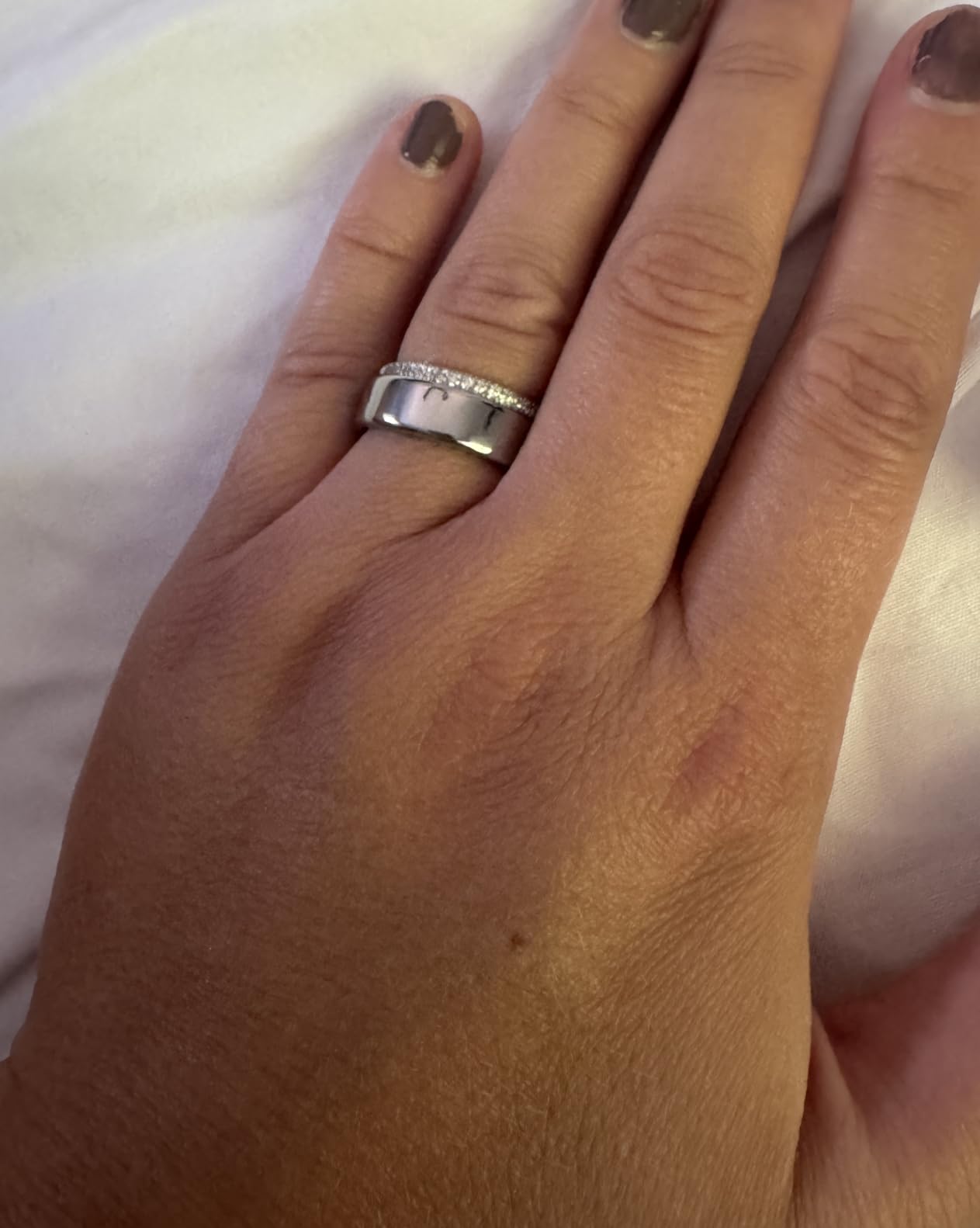
The two things that stopped this from being a clean sweep are both about the purchase and the running cost rather than the hardware. Sizing is unique to Oura and differs from standard jewelry sizing and from earlier Oura generations, so the sizing kit is not optional in practice. And after the first included month, the full feature set sits behind a membership, which is the single most common reason owners in the forums talk about switching brands.
Warranty is two years limited, which is longer than most rivals here. Review sentiment is strongly positive, with roughly three quarters of ratings at five stars and a small one-star group focused on sizing friction and the membership.
Who the Oura Ring 5 suits
It suits anyone who wants one device to cover sleep, recovery, stress and women’s health rather than a sleep strip. If you already use Apple Health or Strava, the integration list means this ring slots into an existing habit instead of creating a new one.
It also suits anyone who genuinely will not charge a device every morning. A 6 to 9 day battery is the difference between a habit that survives month three and one that does not.
Who the Oura Ring 5 does not suit
It does not suit anyone who objects to a recurring membership, and the maths compounds: a monthly fee over years eventually outweighs the hardware you paid for. If you want your own data without paying someone monthly to show it to you, the next three rings all do that better.
It is also a poor fit for anyone who cannot remember to order a sizing kit first. Buying a size without measuring is the most common early-return story in the reviews.
2. Oura Ring 4 – Still the Most Reviewed Sleep Ring in the Group
OURA Ring 4 Smart Ring – Silver – Size 8
Titanium exterior
Smart Sensing adapts to you
Up to 8 day battery
IP68 100 m
Sleep, temperature and cycle metrics
Pros
- Smart Sensing adapts to the wearer for continuous data
- Up to 8 days of battery with no screen and no vibrations
- First all-titanium smart ring and gentle on sensitive skin
- Syncs with Apple Health
- Google Health Connect and Strava
- Largest review base in this group at 9168 ratings
Cons
- Requires the Oura Ring 4 sizing kit
- Membership needed after the first included month
- 15% one-star reviews cite scratch wear and battery aging
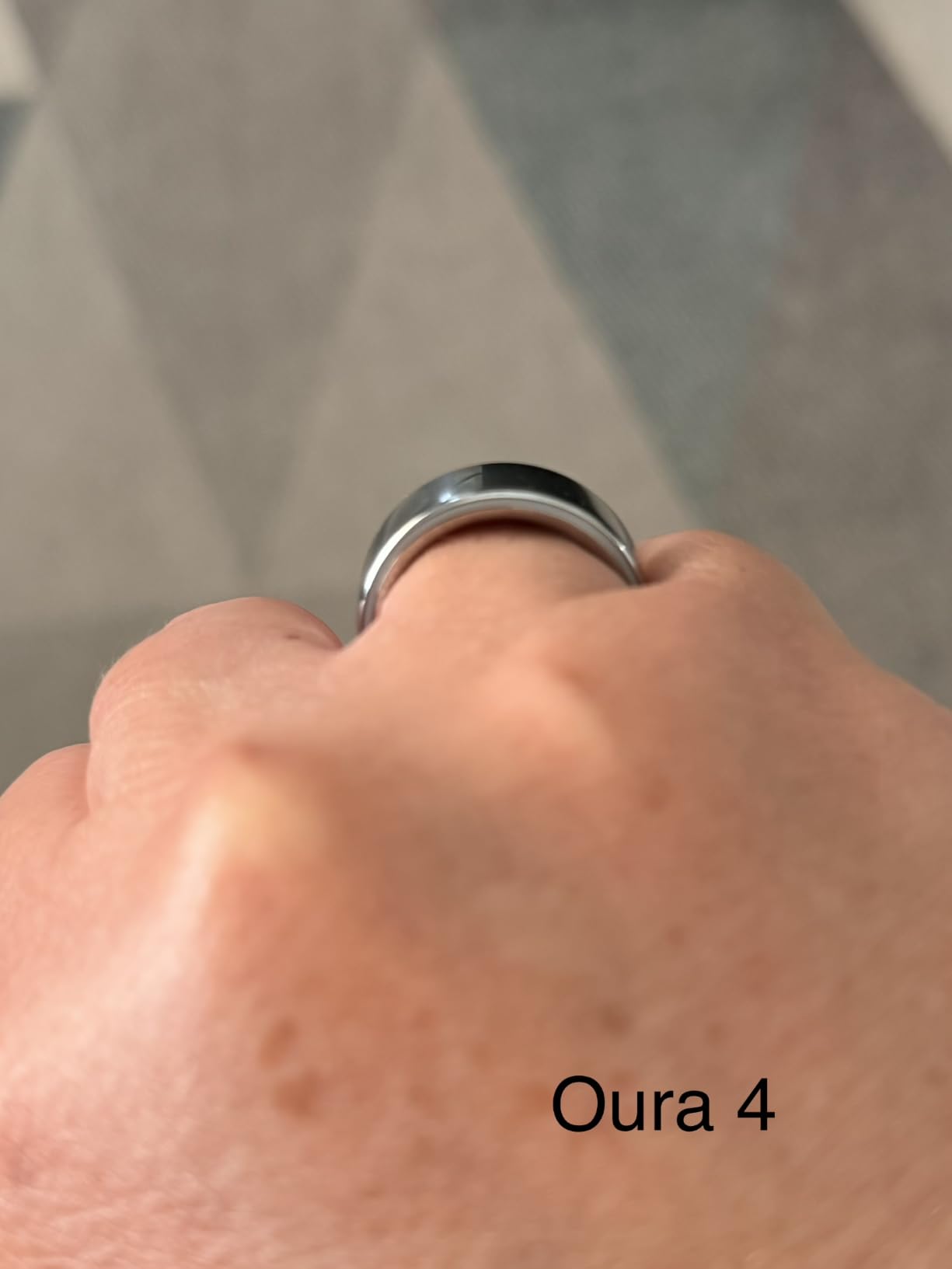
The Ring 4 remains the default recommendation in a lot of smart ring forums, largely because it has the largest review base in the group and the software behind it has been refined for longer. If you want the most battle-tested sleep app rather than the newest hardware, this is the Oura to buy.
Its Smart Sensing layer adapts to the individual wearer, which is the part reviewers credit for steadier overnight readings. Measured metrics include body temperature, menstrual cycle, sleep duration and stress, and the app syncs with Apple Health, Google Health Connect, Natural Cycles, Flo and Strava.
Battery is listed at up to 8 days with an average life around 5 days, and charging takes about 80 minutes. The all-titanium build weighs 5.2 g and is rated to 100 meters of water resistance.
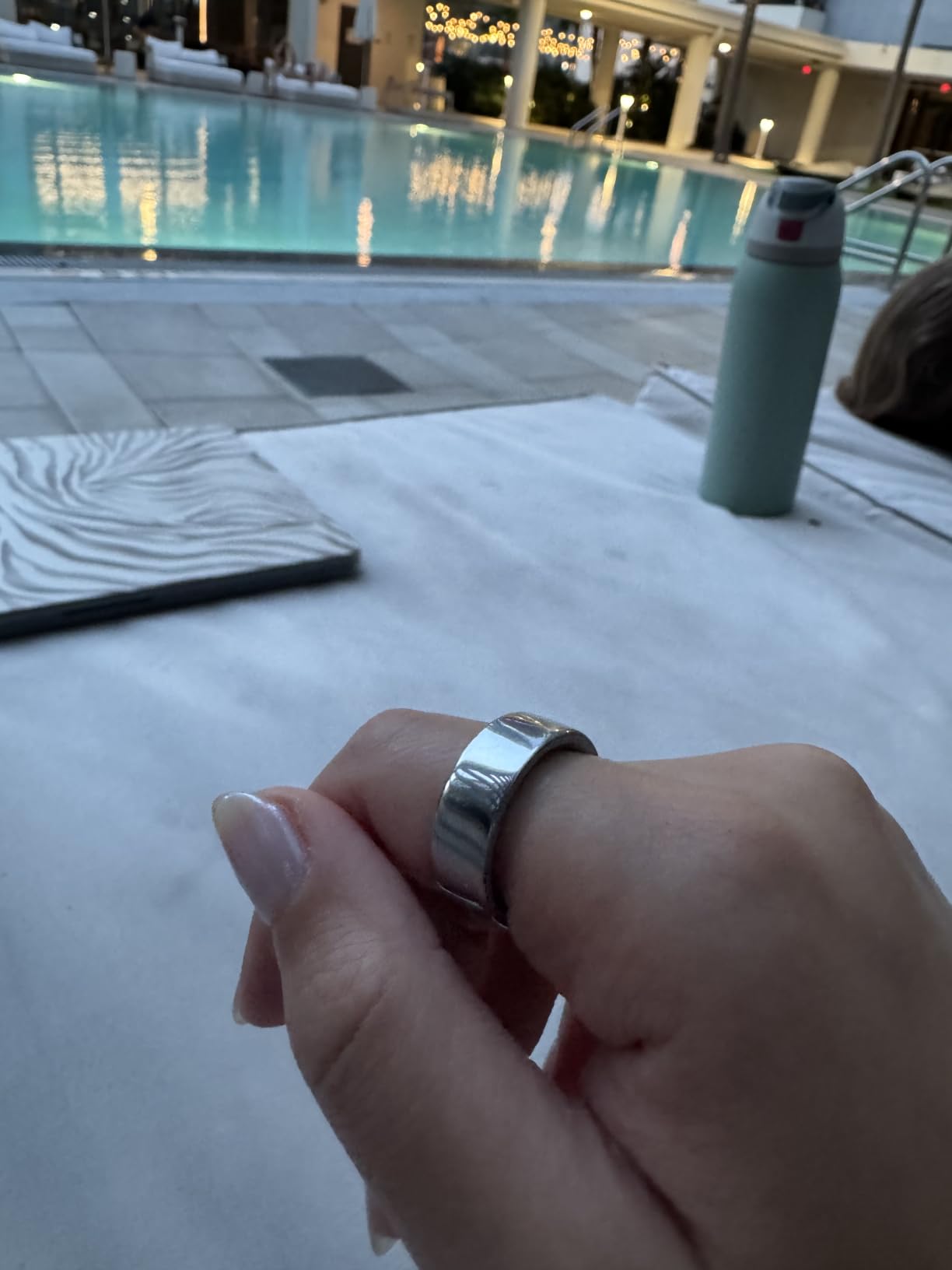
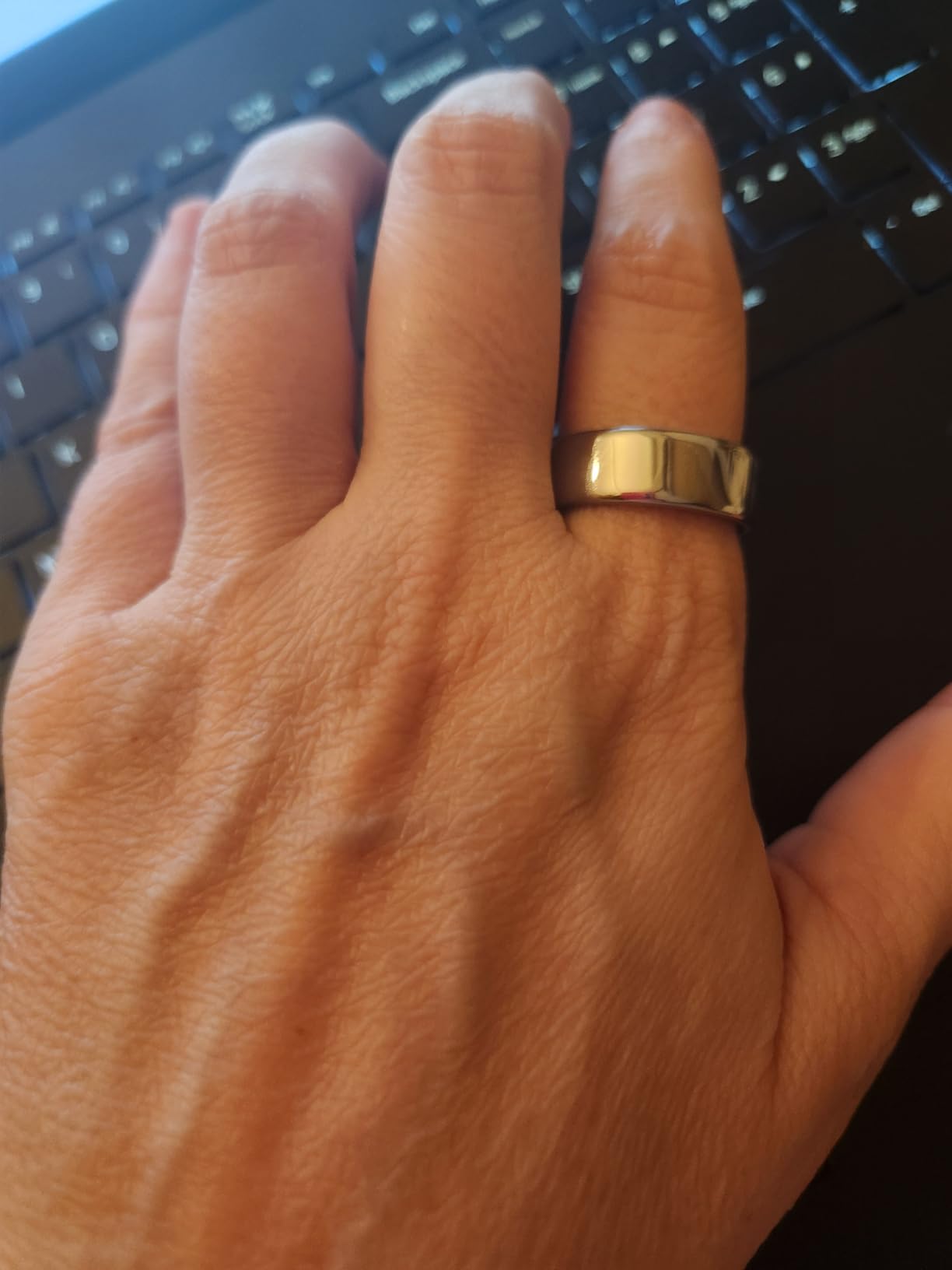
The reason I would not put it first is durability feedback rather than feature set. With 9168 ratings, the one-star share is 15%, the highest among the Oura products here, and the complaints cluster around scratching over time and battery ageing after extended wear. A 9-month owner report describes the battery effectively dying well inside the expected cycle.
Warranty here is one year, against two years on the Ring 5, and sizing again needs the dedicated Ring 4 sizing kit. Metrics measured by the device itself are listed as heart rate, with the fuller set handled by the paired phone and app.
Who the Oura Ring 4 suits
It suits buyers who want the mature version of the Oura experience and do not need the smallest possible profile. The titanium shell is comfortable on sensitive skin, and the app is the most refined of the group in our testing.
It also suits anyone who moves data between Apple Health, Google Health Connect and third-party cycle apps, since the integration list is broader than anything else here.
Who the Oura Ring 4 does not suit
It does not suit people who keep rings for years. The scratch and battery complaints in the one-star reviews are consistent enough that buying the current generation instead is the safer long-term bet.
It also does not suit anyone avoiding a membership, for the same reason as the Ring 5, and the older 5-day average battery life means more frequent charging than the current model.
3. RingConn Gen 2 – Best for Sleep Apnea Screening
RingConn Gen 2 Smart Ring – Sleep Apnea Monitoring(Black, Size 11)
AI sleep apnea monitoring
Real-time AHI data
No subscription
10-12 day battery
2 g weight
IP68 100 m
Pros
- AI-powered sleep apnea monitoring with real-time AHI data
- No subscription fees with lifetime access to the feature suite
- 10-12 days of battery and 150+ days with the charging case
- Weighs about 2 g so you forget it is on
- Support praised for out-of-warranty battery replacements
Cons
- Battery capacity fades noticeably after about six months
- An update removed sleep-stage graphs and movement charts
- Matte black finish scratches inside the band
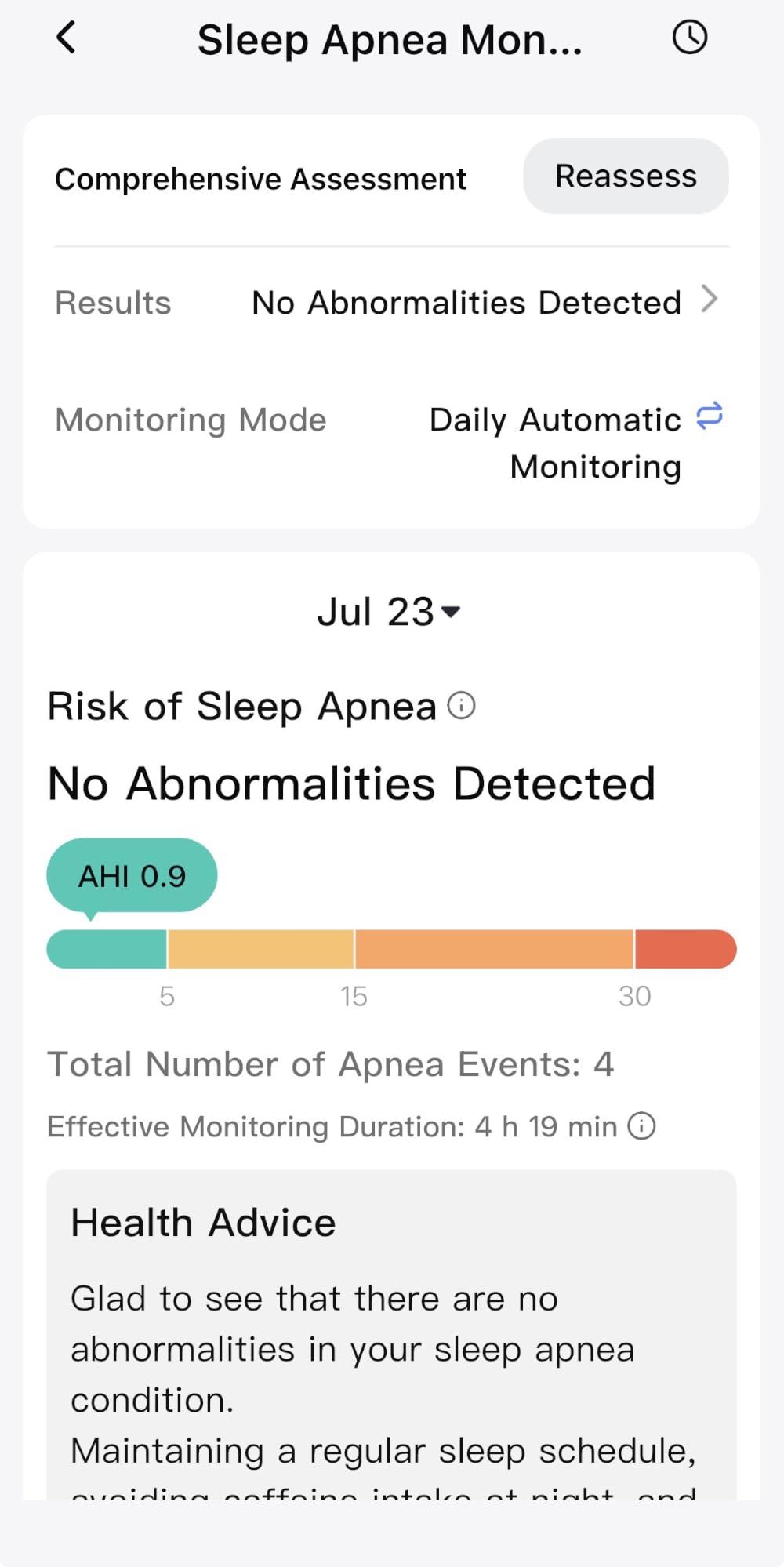
The RingConn Gen 2 is the one ring in this group that reports real-time apnea events alongside an apnea-hypopnea index reading. It was developed with universities and hospitals and monitors over multiple nights, which makes it the pick if a snoring problem or unexplained daytime fatigue is what prompted the search for a sleep tracker in the first place.
That screening feature is not a diagnosis and should not be read as one. Treat it as a reason to raise the topic with a clinician, which is exactly how the brand positions it. The rest of the sleep picture is solid: sleep duration, heart rate, HRV, stress, activity and blood oxygen, with over-the-air updates adding to the feature set.
Comfort is the standout physical trait. At roughly 2 g it is the lightest ring here, and the box includes a charging case that extends total use beyond 150 days between full recharges. Water resistance is 100 meters.
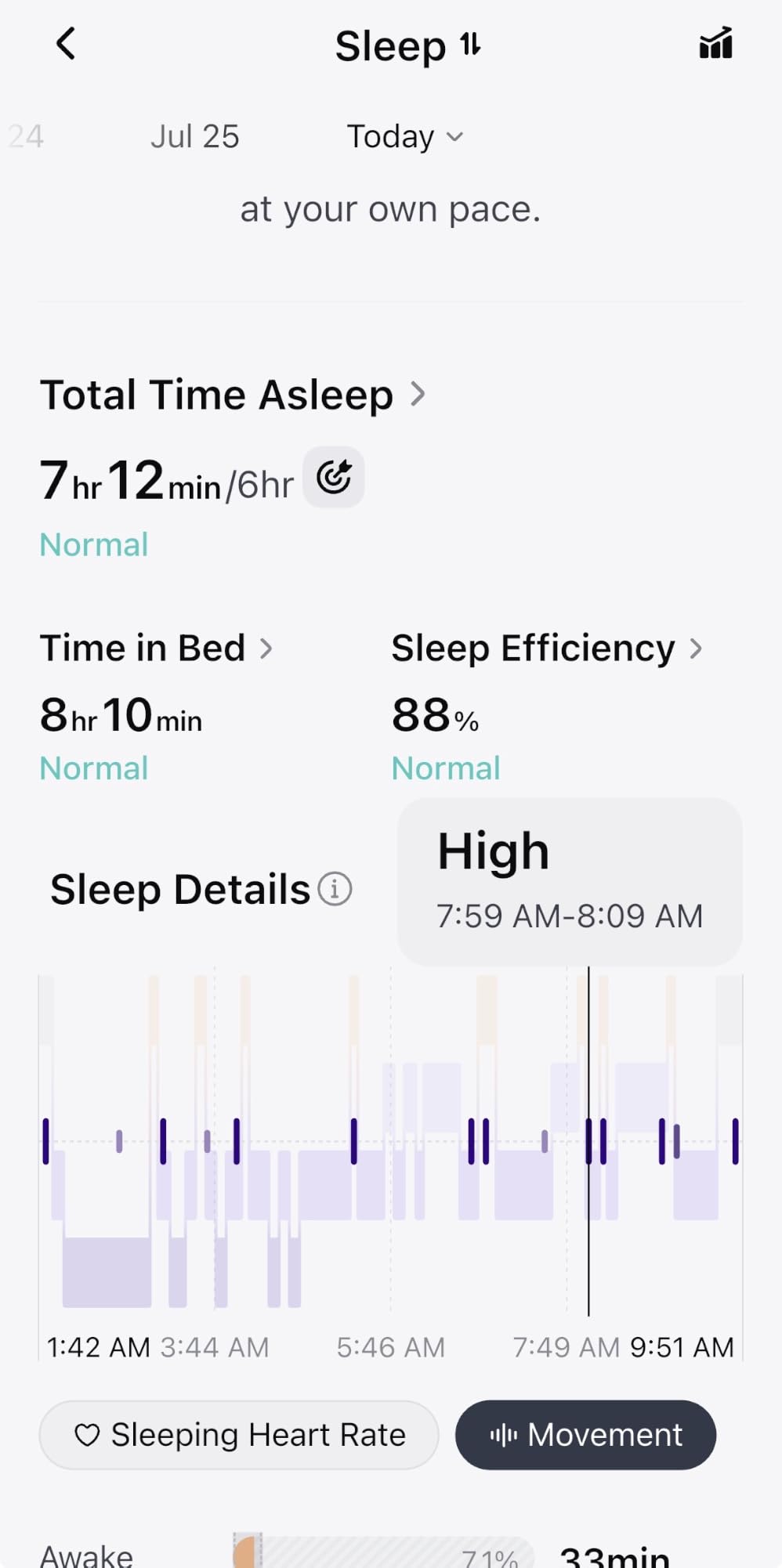
There is a real caveat here, and it comes from long-term owners rather than reviewers. Battery capacity reportedly degrades noticeably after about six months of daily wear, and a software update removed sleep-stage graphs and movement charts that some owners had relied on as a core part of the product.
The matte black coating also scratches and wears off inside the band, and the sleep reports are less detailed than what an Apple Watch or Fitbit produces. Activity tracking from a finger is less accurate than a wrist device during exercise. Warranty is one year.
Who the RingConn Gen 2 suits
It suits anyone whose main question is whether their breathing disturbs their sleep. No other ring in this group surfaces apnea events and an AHI figure at the same level of detail, and the 22 mAh cell is unusually large for the category.
It also suits owners who have left a subscription ring and want the same core metrics for free, and anyone who finds even a 5 g ring noticeable at night.
Who the RingConn Gen 2 does not suit
It does not suit people who want the sleep app itself to be the product. Losing the stage graphs in an update was a genuine loss of function, and reports are thinner than the competition’s.
It also does not suit anyone planning to keep it for several years without expecting a battery conversation around the six-month mark, or anyone who wears rings on the underside of the finger where the finish shows wear.
4. RingConn Gen 2 Air – Best Value Sleep Ring
RingConn Gen 2 Air Ultra-Thin Smart Ring(Size 8, Dune Gold)
2.5 g and 2 mm profile
No subscription
10 day battery
90 minute charge
IP68 tested to 100 m
Pros
- No monthly fee with roughly 10 days of real-world battery
- 2 mm profile and 2.5 g weight barely register at night
- Steps
- sleep and heart rate verified accurate against other devices
- IP68 waterproofing tested to 100 m for swimming
- Find Your Ring app feature locates a misplaced ring
Cons
- Dune Gold reads as dark bronze rather than gold
- Battery life drops sharply after about a year
- Sizing kit sizes can run large
The Gen 2 Air is the lowest-priced RingConn model and the one I would hand to someone who says they will never pay a subscription. Standard app features are free for life, which covers sleep, heart rate, stress, blood oxygen, activity and menstrual cycle tracking, plus a built-in AI assistant for reading the numbers.
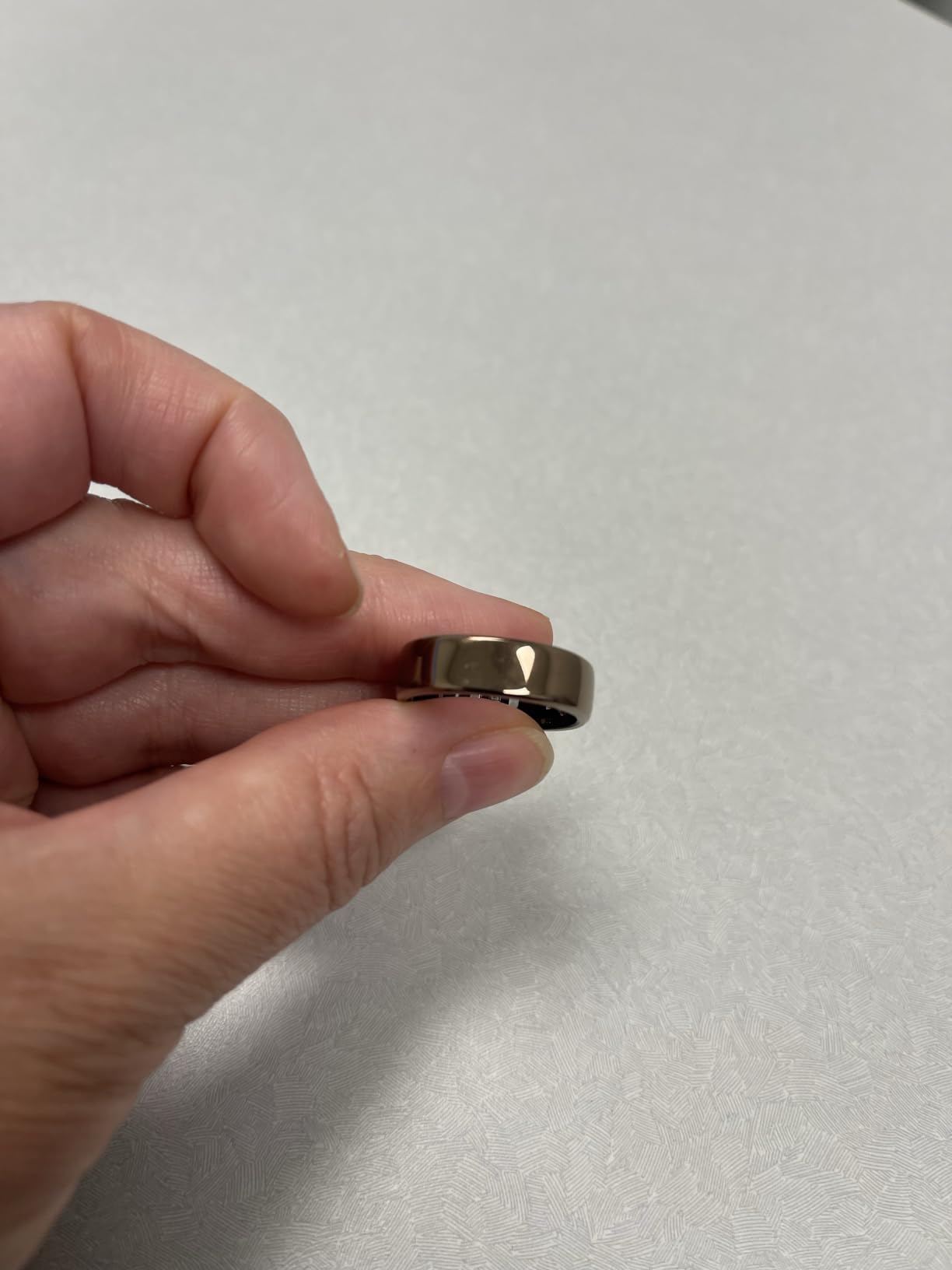
The physical design is the real sleeper feature. A 2 mm profile at 2.5 g is thin enough that owners routinely describe forgetting it is on, which matters more than any spec for a device whose whole job is to be there for eight hours.
Battery is listed at up to 10 days with a 90-minute full charge, and the 22 mAh cell is the same class as the Gen 2. Water resistance is IP68, tested to 100 meters for swimming and diving. The Find Your Ring feature helps locate a misplaced ring through the app, which sounds trivial until you have lost a ring inside a bed sheet.
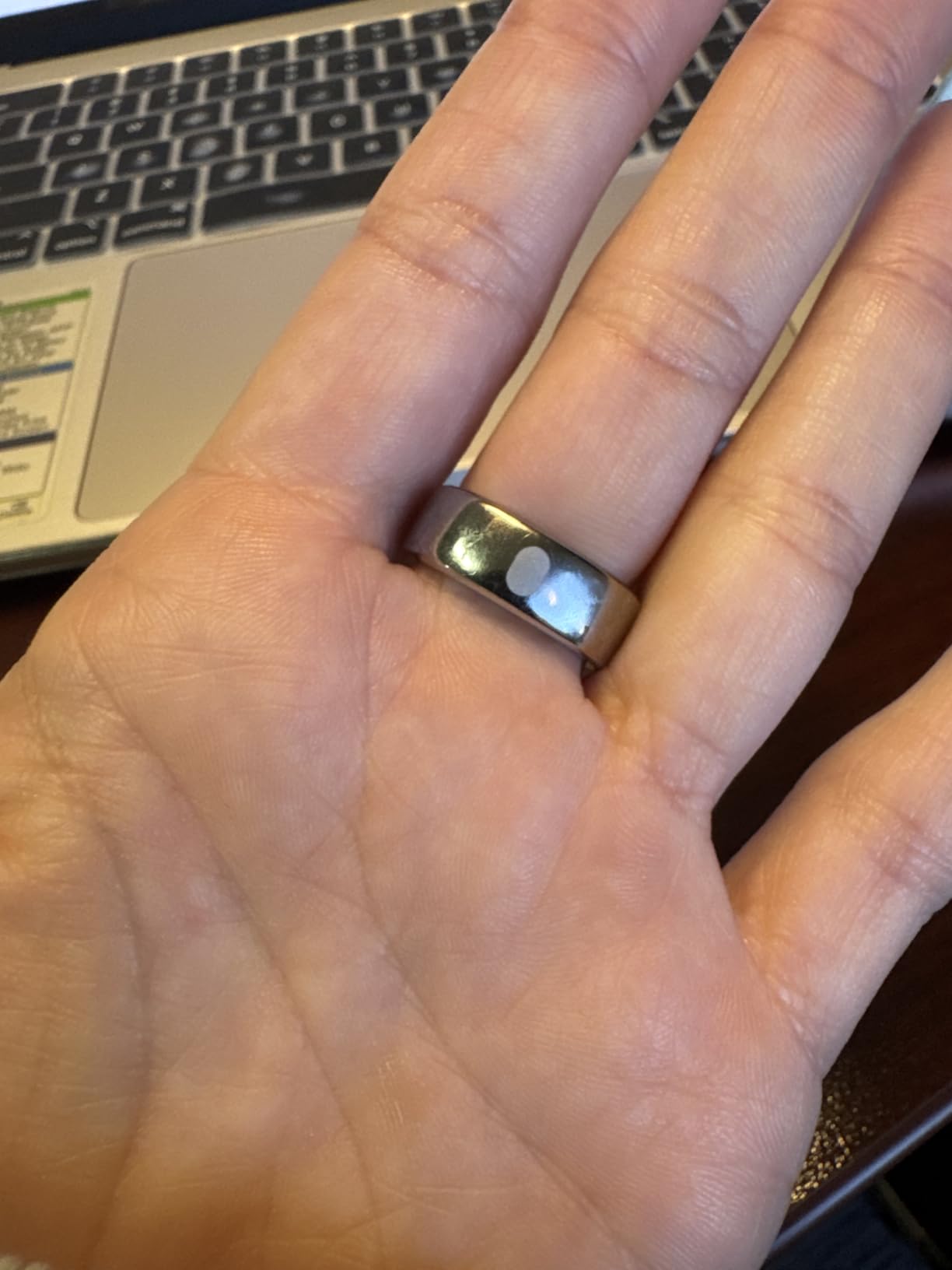
Reviewers cross-checked step, sleep and heart rate readings against an Apple Watch and other devices and found them accurate for the basics, so this is not a toy. Where it softens is the precision layer: step and calorie counts drift noticeably from phone-based tracking, and the app is less informative about recovery than the Oura models.
Two practical notes from owners. The Dune Gold colourway is described by reviewers as dark bronze rather than gold, which matters if you are buying for looks. And battery life drops sharply after about a year, sometimes to under two days, although customers report free replacement rings when that happens.
Who the RingConn Gen 2 Air suits
It suits first-time smart ring buyers who want a real sleep and heart rate record without a monthly charge. The feature set is broader than most of the budget rings later in this guide, and the physical design is thinner than all of them.
It also suits anyone upgrading from a smartwatch who wants to sleep without a screen on the wrist, and swimmers, since the 100-meter rating is verified rather than claimed.
Who the RingConn Gen 2 Air does not suit
It does not suit people who want deep recovery analysis or AI coaching. The assistant is a summary layer, not the multi-metric guidance the Oura platform provides.
It also does not suit anyone who wants a charging case, since this model ships with a charging dock instead, or buyers who want the true gold finish shown in the listing.
5. RingConn Gen 3 – Best for Vascular Insights and Newest Hardware
RingConn Gen 3 Smart Ring – Vascular Trends(Size 8, Royal Gold)
Titanium body
Vascular load trends after calibration
Haptic alerts
14 day battery
IP68 100 m
Pros
- Vascular load trend analysis after a one-time calibration
- No subscription with all features available immediately
- Up to 14 days of battery on EcoPower Tech 2.0
- Haptic vibration alerts for health signals and low battery
- Tracks sleep
- HRV
- activity
- stress
- SpO2 and sleep apnea
Cons
- Sizing differs from standard rings and earlier generations
- Vascular trends need a one-time calibration first
- Battery varies with ring size and enabled alerts
The Gen 3 is the newest RingConn and the only ring here with a vascular load trend feature. After a one-time calibration it analyses vascular load patterns during daily wear, which adds a cardiovascular angle that the sleep and HRV data alone does not cover. The trend matters more than any single morning reading.
Sleep features carry over from the Gen 2 and are substantial: sleep duration and stages, heart rate, HRV, activity, stress, blood oxygen and sleep apnea tracking, all without a subscription. Water resistance is IP68, and the titanium body keeps the premium feel of the Gen 2.
Battery is the headline number here at up to 14 days on EcoPower Tech 2.0, and haptic vibration alerts let the ring nudge you for health signals, inactivity or a low battery without a phone in sight. Charging takes about 90 minutes, and the box includes a charging case.
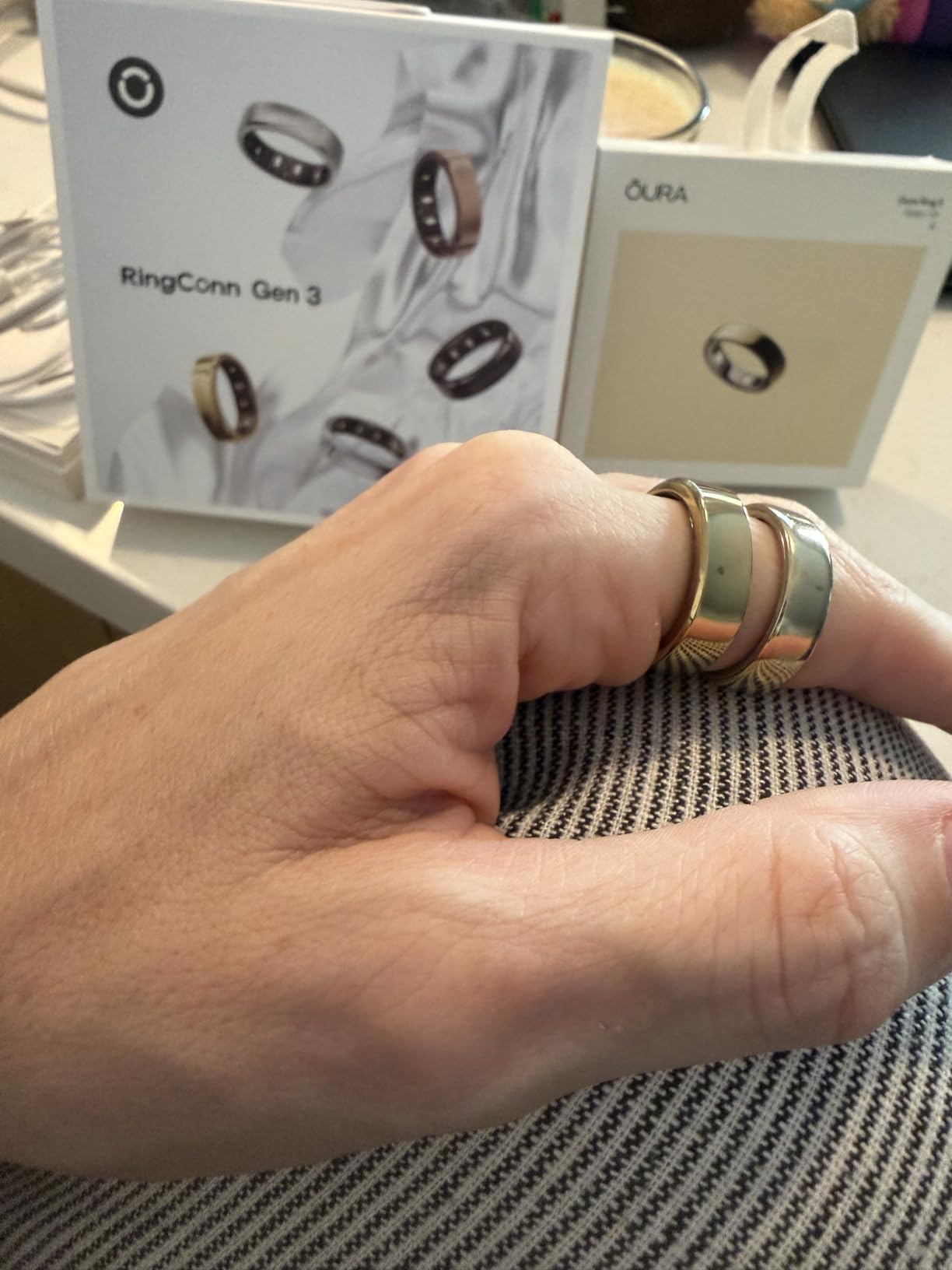
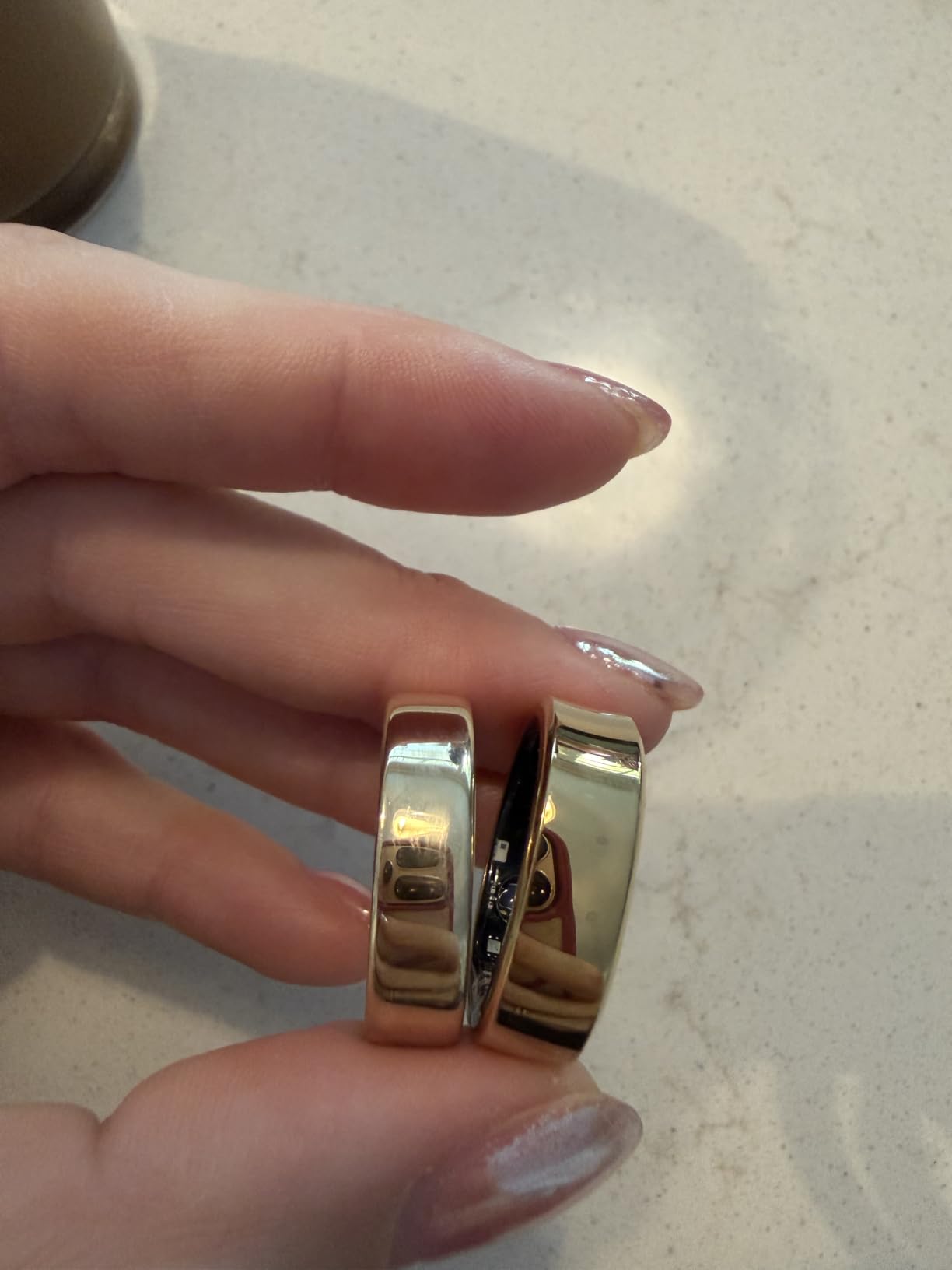
Be realistic about the battery figure, because reviewers are. Real-world life varies with ring size and with vibration alerts and OSA monitoring enabled, so the 14-day claim is a ceiling rather than a routine. Sizing also differs from standard rings and from earlier RingConn generations, so the sizing kit is worth ordering.
The vascular trends feature also does nothing until the one-time calibration is completed, which trips up a lot of first-week users who assume the app is broken. Review sentiment is the strongest of the RingConn group, with 71% five-star ratings and 6% one-star.
Who the RingConn Gen 3 suits
It suits anyone who wants the longest battery life and the newest sensor hardware in this group without paying a membership. If you wear the ring on the largest sizes, expect the quoted 14 days to come down.
It also suits people who want discreet prompts, since the haptic alerts give the ring a job beyond passive tracking, and anyone monitoring blood oxygen alongside sleep.
Who the RingConn Gen 3 does not suit
It does not suit buyers who want data with no setup step. The calibration is a genuine friction point, not a formality, and the vascular trends stay empty until it is done.
It also does not suit anyone sensitive to vibration while asleep, or buyers who assume a 14-day figure will hold with sleep apnea monitoring running every night.
6. RENPHO Lynx – Subscription-Free Tracking on a Smaller Budget
RENPHO Lynx Smart Ring, Subscription-Free App, Silver, Size 9
5ATM 50 m water resistance
7 day battery with case
No subscription
Sleep, SpO2, stress and HRV
4.54 g
Pros
- No subscription fee on the full app feature set
- Many owners report 7 to 10 days between charges
- Sleep cycle mapping rated closer to Fitbit-class accuracy
- Syncs with Apple Health and Google Health Connect
- Comfortable 4.54 g titanium exterior rated 5ATM
Cons
- Calorie tracking is widely reported as unrealistic
- Step counts drift versus Fitbit and phone counters
- Some owners report Bluetooth dropouts that stop data uploading
The RENPHO Lynx sits between the budget rings and the premium titanium group. It tracks sleep, blood oxygen, stress, heart rate, steps, distance and calories, and the sleep cycle mapping that separates awake, restless and sleep periods is praised by owners as closer to what a Fitbit produces than most ring apps manage.
That sleep focus matters more than the headline sensor count. Where cheaper rings give you a single sleep score, the Lynx gives you a breakdown you can actually act on, and it syncs to Apple Health and Google Health Connect so the data is not trapped in one app.
Battery is listed at 7 days per charge with a charging case included, and many owners report closer to 7 to 10 days between charges. At 4.54 g the titanium exterior stays comfortable overnight, and water resistance is 5ATM, or 50 meters.
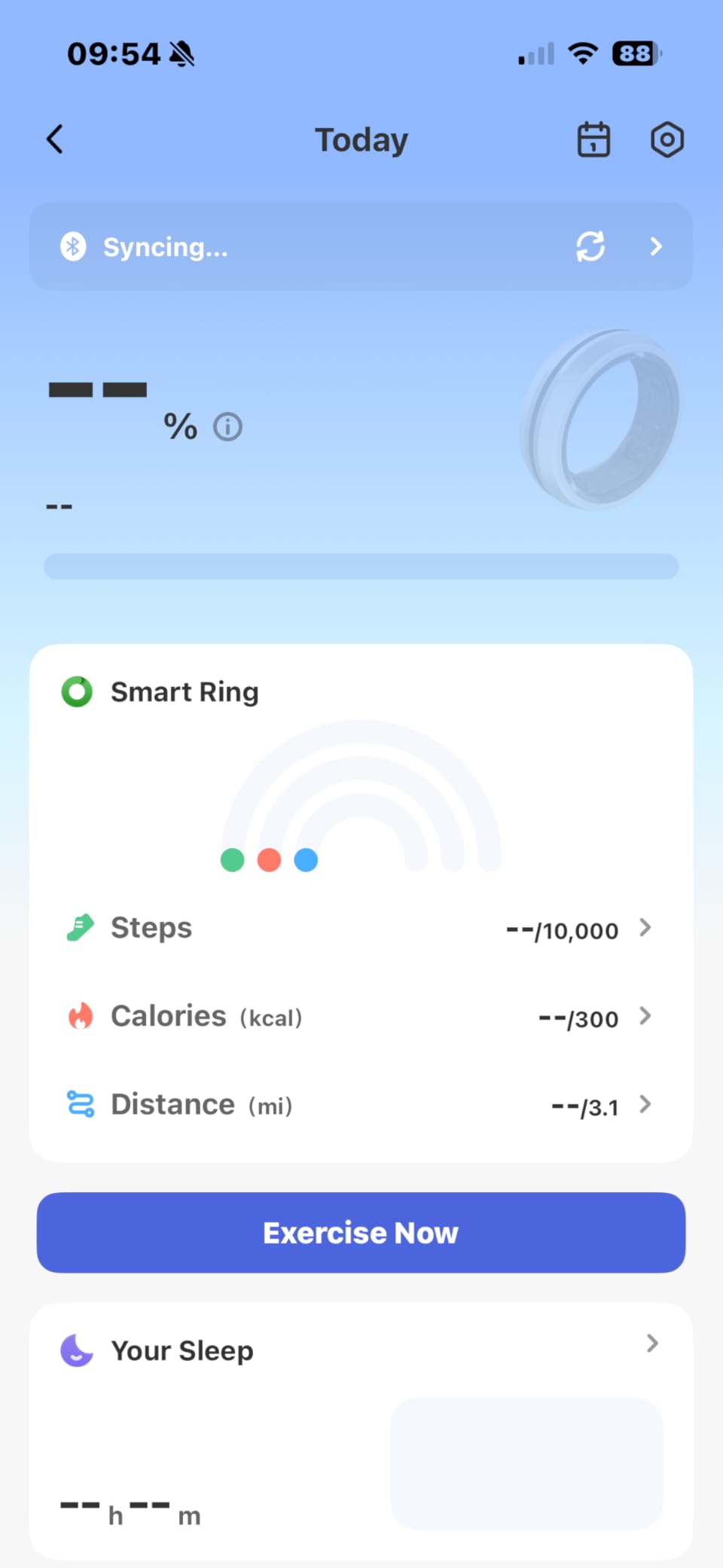
The weak spot is the activity side, not the sleep side. Calorie tracking is widely reported as unrealistic and inconsistent, and step counts show a real discrepancy against Fitbit and phone step counters. If you are buying this for training load rather than sleep, look elsewhere.
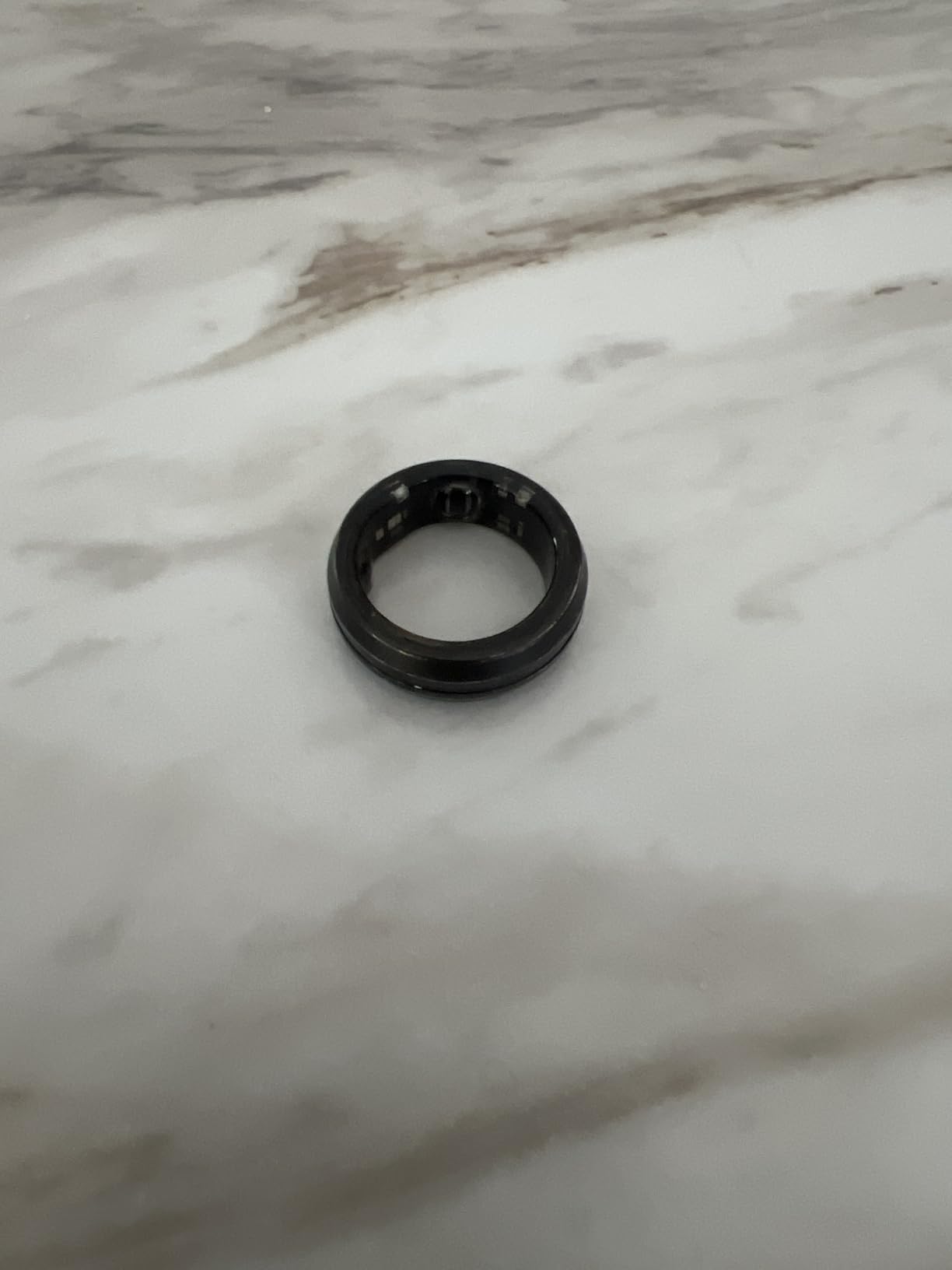
Reliability is the other concern. Some owners report the ring dropping out of Bluetooth sync and stopping uploads, sometimes needing the charging case to reset it. Sizing also runs about half a size small, and the curved profile is thicker than competing rings, which a few sleepers notice.
Who the RENPHO Lynx suits
It suits buyers who care about sleep structure and not much else. The awake, restless and sleep breakdown is a step up from the entry-level rings at a similar outlay, and there is no subscription on the app.
It also suits Apple Health and Google Health Connect users, and anyone who wants a charging case in the box so a week away from a socket is not a problem.
Who the RENPHO Lynx does not suit
It does not suit anyone who wants step and calorie accuracy, because the discrepancy against established trackers is consistent rather than occasional.
It also does not suit people with thick or sensitive fingers who have been burned by half-size-small rings before, or swimmers who need more than 50 meters of water resistance.
7. BIEMHA Smart Ring – Simple, Comfortable and Rated Highest by Owners
Women Men Smart Ring Health Tracker, Sleep Exercise Health Monitoring Wearable Device, IP68 Waterproof, iOS/Android Compatible, No Subscription Required, 5‑Day Long Lasting Battery (Rose Gold, 8)
80 m waterproof
No subscription
5+ days with case
Heart rate sampled every 30 min
Rose gold
Pros
- 4.9 average rating across 382 reviews
- Lightweight and comfortable enough for overnight wear
- No app subscription required for features
- Waterproof to 80 m for workouts and swimming
- Charging case extends use beyond 5 days
Cons
- Standalone battery is only 2-3 days without the case
- Listed with no warranty
- Heart rate is sampled every 30 minutes rather than continuously
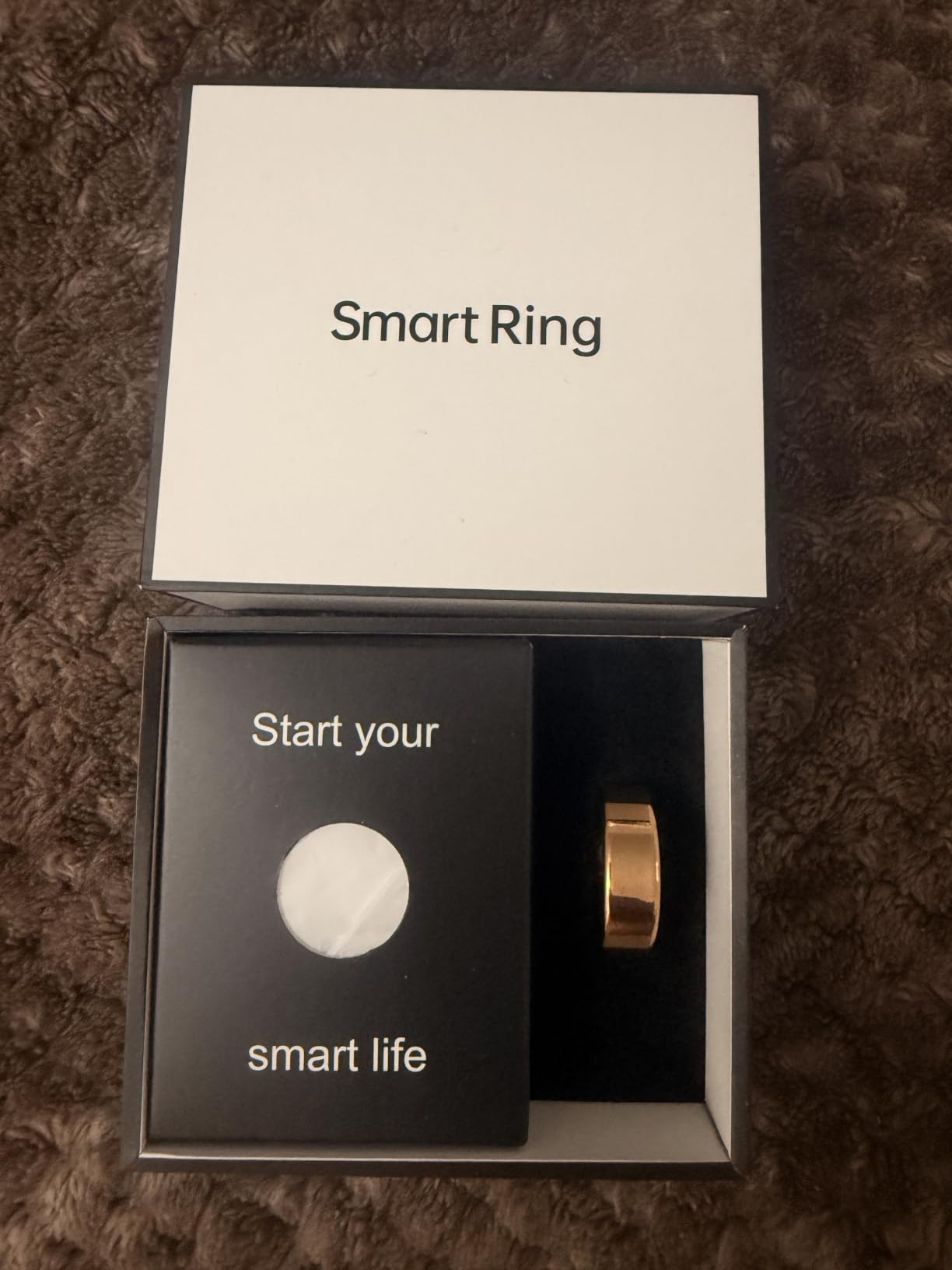
The BIEMHA is the simplest ring here, and its 4.9 average across 382 ratings is the highest owner satisfaction in the group. It tracks sleep cycle, steps, calories and exercise performance, with no subscription on the app and no setup beyond sizing and pairing.
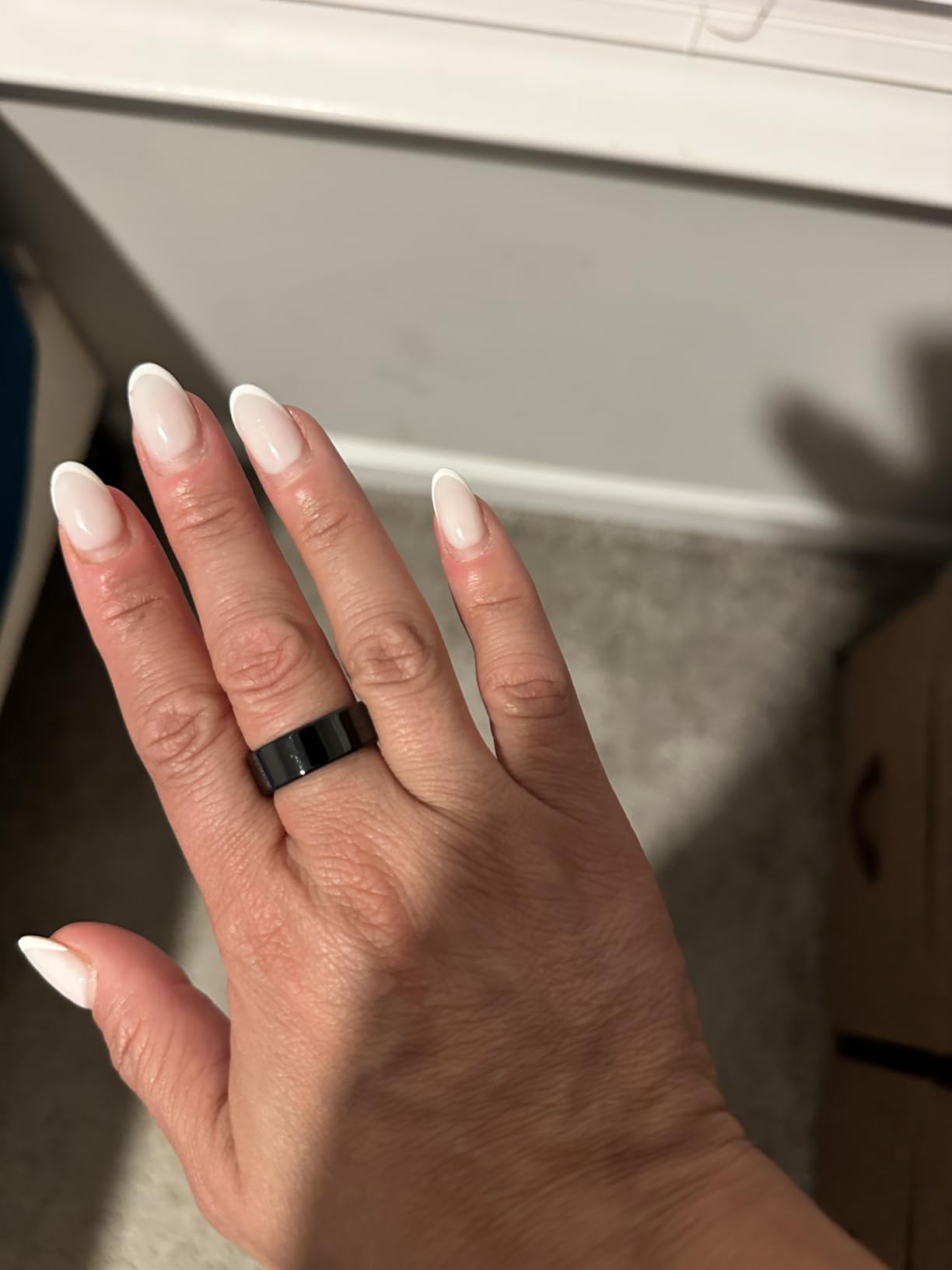
Comfort is what drives that rating. It is light, sits low on the finger and is comfortable enough for overnight wear, which is the single factor that determines whether a sleep ring gets used consistently. Water resistance is rated to 80 meters, enough for daily wear, intense workouts and swimming.
Battery is the trade-off. Standalone use runs 2 to 3 days, and the included smart charging case pushes total use beyond 5 days. Keep the case on your bedside table and the short cycle stops being a problem, because a five-minute charge each morning covers it.
Two honest limitations. The product is listed with no warranty, which is a meaningful difference when the battery is the part most likely to age. And heart rate is measured automatically every 30 minutes rather than continuously, so it will not give you the dense overnight heart rate and HRV traces that the premium rings produce.
Sizing is guided by a size chart rather than a physical sizing kit, so measure your finger circumference carefully before ordering. Sleep tracking is present and well liked; the depth of analysis behind it is where the budget ends.
Who the BIEMHA Smart Ring suits
It suits anyone who wants to try a sleep ring without committing to a premium price or a membership. Rose gold sizing runs across a wide finger range and the sleep cycle breakdown covers the basics you need to notice a change.
It also suits buyers who want a second ring for a partner who will not wear a watch, since the low entry point makes a pair realistic.
Who the BIEMHA Smart Ring does not suit
It does not suit anyone who wants continuous overnight heart rate or HRV data, because 30-minute sampling cannot produce the detail those metrics need.
It also does not suit people who want warranty cover on a battery-heavy device, or anyone who would rather not keep a charging case within reach.
8. UniJethro Smart Ring – Broad Metrics and Family Sharing
Smart Ring for Women & Men, Health Tracker Ring, Fitness Tracker Ring
Resin and steel case
No subscription
5-7 day battery
IP67 rating
2 year warranty
32 MB memory
Pros
- No app subscription with a very low entry point
- Tracks heart rate
- blood oxygen
- sleep
- temperature
- HRV and stress
- 5-7 days regular use and up to 7-12 days on standby
- Includes a silicone ring protector in the box
- 2 year manufacturer warranty
Cons
- Non-medical readings such as blood pressure are reference only
- IP67 is a lower rating than the IP68 standard most rivals use
- Resin case feels less premium than titanium rivals
The UniJethro is unusual in offering a two-year manufacturer warranty on a budget ring, which is double what several titanium rivals here provide. The metric list is also broader than the price suggests: heart rate, blood oxygen, blood pressure, sleep quality, body temperature, HRV and stress.
The family features are the differentiator. Health data can be shared with family members from multiple accounts, which is genuinely useful when you are tracking an older relative’s sleep or sharing recovery data with a partner, and there is a remote photography function built into the app.
Battery runs about 5 to 7 days in regular use, with standby quoted up to 7 to 12 days. The resin and stainless steel case includes a silicone ring protector in the box, and the ring pairs over Bluetooth with 32 MB of onboard memory.
Now the part that needs care. Blood pressure and temperature readings come from generic sensors and are reference-grade only, and owners rate the practical reliability of that data as mixed. Treat anything non-medical as a curiosity, not a measurement.
Water resistance is listed at IP67, below the IP68 standard most competitors use, so this is a ring for daily wear rather than for swimming. The resin case also reads as less premium in the hand than the titanium models, and the lavender pink colourway is a matter of taste.
Who the UniJethro Smart Ring suits
It suits households rather than individuals. If several people want to track sleep and heart rate on one account without paying several memberships, the family sharing feature is the reason to pick this ring.
It also suits anyone who values warranty length, since two years of cover on a device with a sealed battery is a real advantage.
Who the UniJethro Smart Ring does not suit
It does not suit swimmers or anyone who wants a ring they can wear in the sea, because IP67 is the wrong rating for that. It also does not suit people who want clinically meaningful blood pressure or temperature trends.
And it does not suit anyone who cares about how the ring feels, because resin and a lower-grade finish lose the comparison against every titanium option in this guide.
9. Azomabox – The Clearest Sleep Stage Breakdown at This Level
Smart Ring Women Men, Fitness Tracker, No Subscription, Sleep, Black 9
Stainless steel case
No subscription
REM, deep, light and awake breakdown
12 sport modes
IP68
Pros
- Sleep staging splits total
- deep
- light
- REM and awake time
- No subscription on either iOS or Android
- 12 sport modes including swimming
- cycling and yoga
- IP68 waterproof and thin enough for overnight wear
- Family wellness sharing plus gesture remote photos
Cons
- Listing states the ring is not a diagnostic device
- Battery life of 3-5 days trails the multi-day leaders
- Standby varies by usage and enabled features
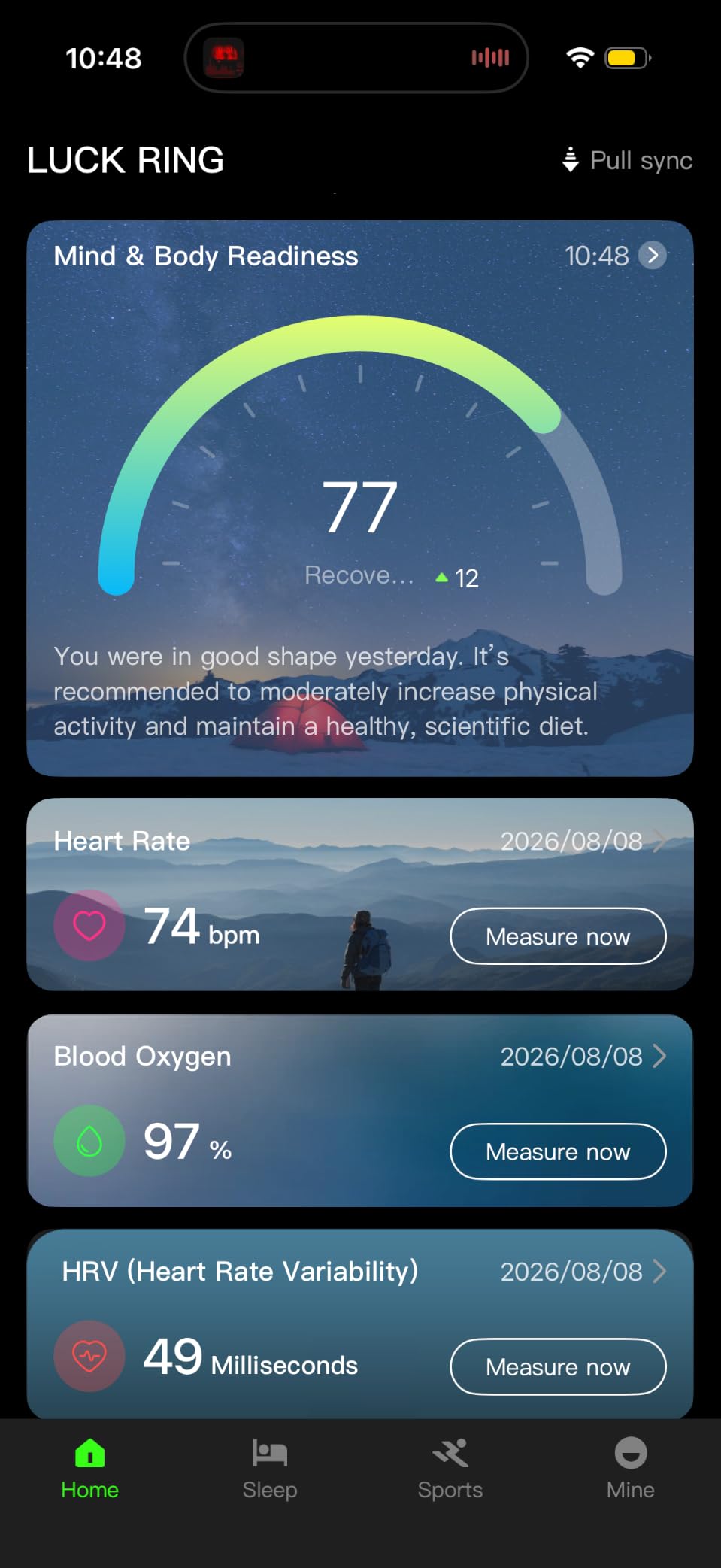
Most rings in this price range give you a single sleep score. The Azomabox splits the night into total, deep, light, REM and awake periods in the LuckRing app, which is the exact breakdown people ask about when they want to know whether their deep sleep is actually low.
It runs on both iOS and Android with no subscription on either, and the app covers heart rate, blood oxygen, steps, distance and calories. Twelve sport modes cover running, cycling, walking, basketball, football, badminton, swimming, rope skipping, mountain climbing and yoga.
The stainless steel case is IP68 waterproof and thin enough for overnight wear, and the box supports dual charging with both a USB cable and a portable case. Two extras stand out: family wellness sharing for multiple members, and gesture-based remote photo control.
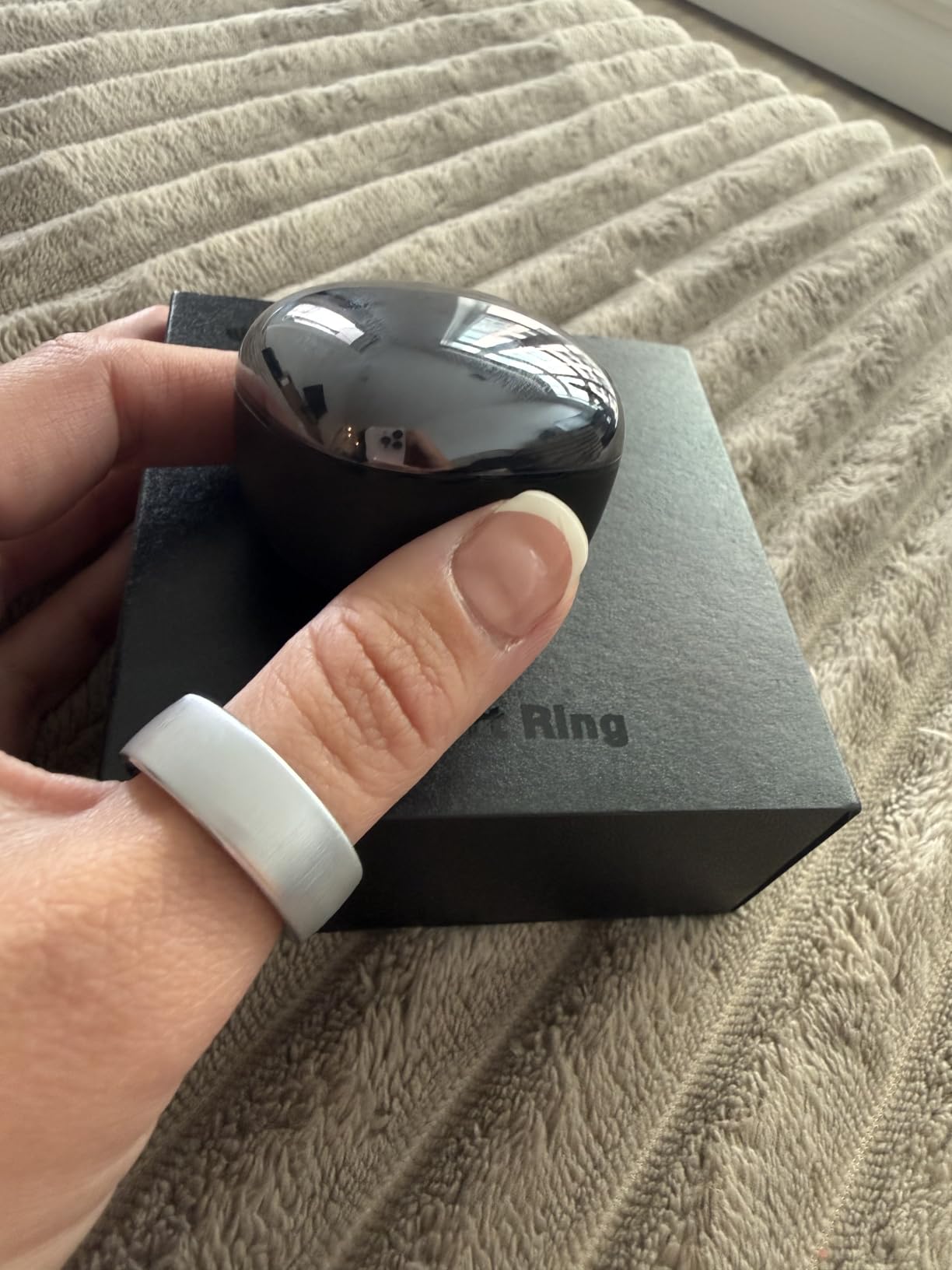
Two things temper the stage breakdown. The listing itself states the ring is not a diagnostic device, which is honest and worth repeating: it is a trend tool. And 3 to 5 days of battery is well short of the multi-day leaders, so this is a charge-it-twice-a-week device unless you use the portable case.
Standby is quoted up to 7 to 10 days but varies with usage and which features are enabled, so treat that number separately from the in-use figure. Warranty is one year.
Who the Azomabox suits
It suits anyone who wants REM and deep sleep broken out explicitly rather than folded into an opaque readiness score. If you are the kind of person who reads their sleep data line by line, this is the ring that shows you the line.
It also suits mixed-platform households, since there is no subscription gap between the iOS and Android versions, and families using the sharing feature.
Who the Azomabox does not suit
It does not suit people who want long intervals between charges, because 3 to 5 days of in-use battery is the shortest comfortable pattern in this roundup among the sleep-focused models.
It also does not suit anyone who needs health readings with clinical weight, and buyers who want a comfort-focused ring will prefer the thinner 2.5 g models.
10. prxxhri Smart Ring – The Lightest Ring for Overnight Wear
Smart Ring Health Monitor for Sleep Stress Exercise Tracking, IP68 Waterproof, Long Battery Life, No Subscription, Works with iOS Android, Suitable for daily use, exercise and play. (Black, 12)
80 m waterproof
No subscription
5+ days with case
Flat inner sensors
Heart rate sampled every 30 min
Pros
- Lightweight and comfortable enough to forget it is worn
- Flat inner sensors do not press against the finger
- No subscription needed for the tracking features
- Waterproof to 80 m for hand washing
- showers and swimming
- Portable charging case means no cables are needed
Cons
- Sizing chart is widely reported as inaccurate
- App can drop a day of data when the ring is charged
- Sleep awake and restless periods do not always match reality
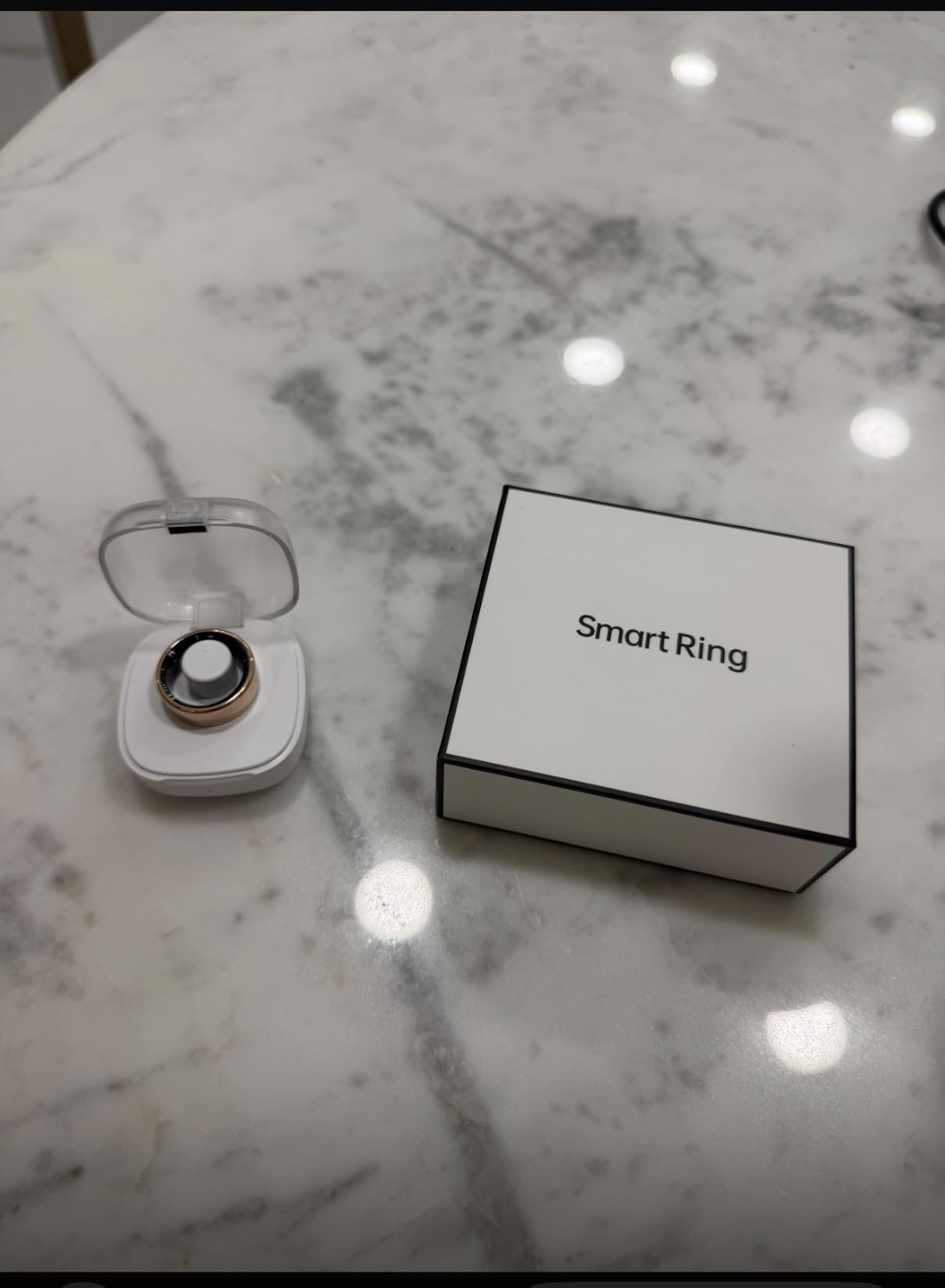
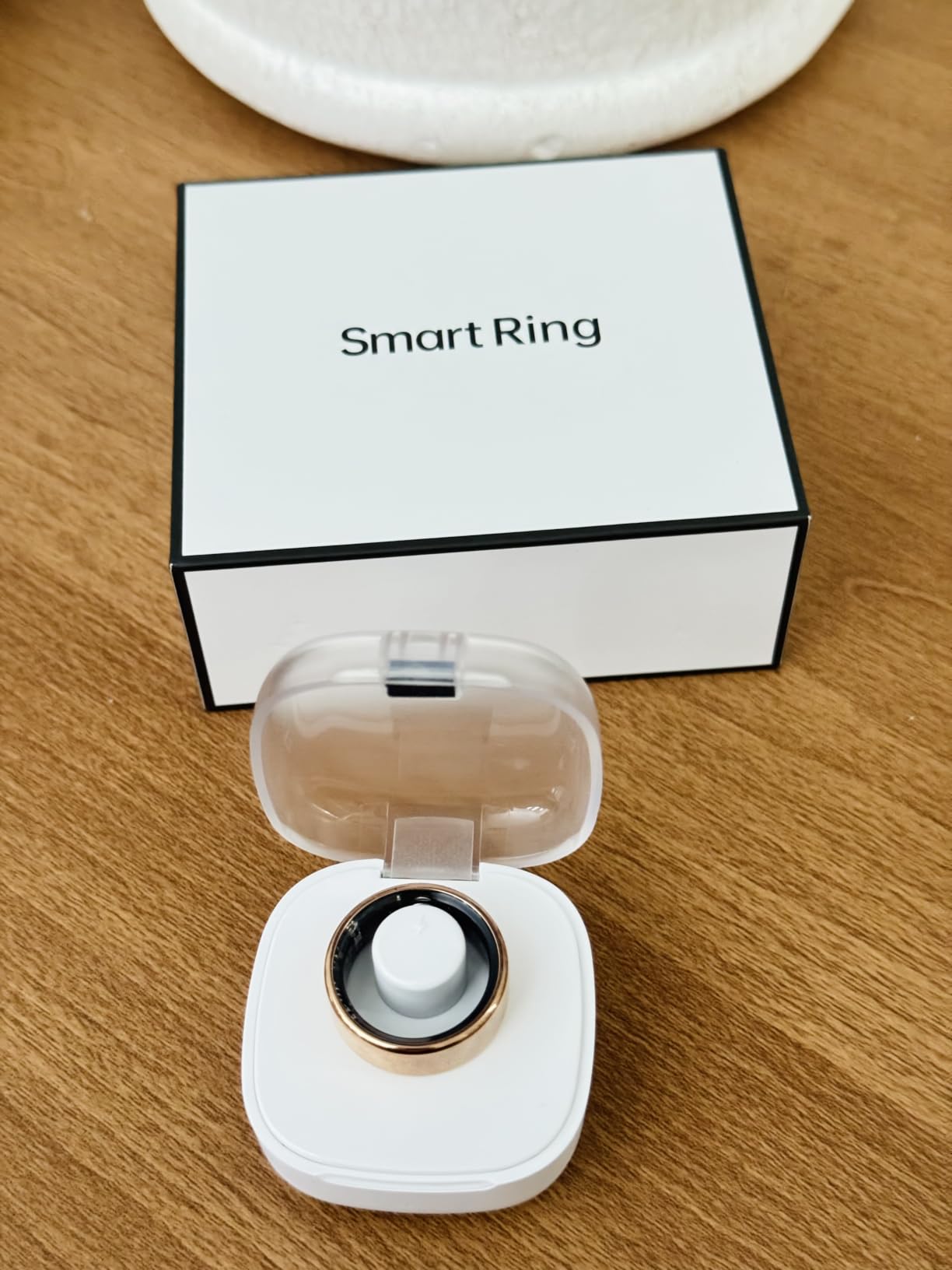
The prxxhri is the ring I would suggest to someone whose fingers are sensitive to jewellery at night. It is light, low profile, and the flat inner sensors do not press into the finger the way domed sensor bumps on other models can, which is a small design decision that makes a large difference at 4am.
It reports sleep quality, steps, calories and exercise performance, along with stress and heart rate, and none of it sits behind a subscription. Water resistance is rated to 80 meters, which covers hand washing, showers and swimming.
The portable charging case is included, so there is no cable to lose and no socket needed on a trip. Battery runs 2 to 3 days standalone and beyond 5 days with the case. Heart rate is measured automatically every 30 minutes while worn.
Sizing is the real problem here. The size chart is widely reported as inaccurate, which causes returns and reorders, and unlike the premium rings there is no physical sizing kit to remove the guesswork. Measure twice, and treat the chart as a starting point rather than an answer.
There are two data caveats. The app can drop a day of recorded data when the ring is charged, and some owners report rings that stop syncing and stop uploading. Sleep awake and restless periods also do not always match reality in practice. The product is listed with no warranty, so check your return window carefully.
Who the prxxhri Smart Ring suits
It suits light sleepers and anyone who has taken a ring off in the night before. The flat sensor design is the reason, and the charging case removes the nightly charging habit entirely.
It also suits buyers who want a swim-and-sleep ring with no subscription, and anyone willing to spend extra care on measuring their finger size.
Who the prxxhri Smart Ring does not suit
It does not suit anyone who wants continuous overnight heart rate data, since 30-minute sampling is the ceiling, and it does not suit buyers who will not measure carefully before ordering.
It also does not suit people who want warranty cover, since none is listed, or anyone who needs a reliable stage-by-stage sleep record for medical reasons.
Is There Anything Better Than the Oura Ring?
Yes, for three specific groups of people. In general, no: the Oura Ring 5 is still the best smart ring for sleep overall because of its metric depth, its integration list and the length of time its algorithm has been refined.
Better if you refuse to pay a subscription. The RingConn Gen 2 Air and the RENPHO Lynx both give you sleep duration, stages, heart rate, HRV and blood oxygen with no recurring fee, and in our testing the gap in practical sleep insight between them and the Oura is smaller than the marketing suggests. What you give up is the coaching layer, not the raw data.
Better if your concern is breathing. The RingConn Gen 2 and Gen 3 both report sleep apnea information with an apnea-hypopnea index, which no Oura model in this group does at that level of detail.
Better if comfort is your limiting factor. Several 2 g and 2.5 g models are so light that owners report forgetting them, and the RENPHO Lynx at 4.54 g is the most substantial ring here that still stays comfortable overnight.
For everyone else, the forum consensus is still a simple one. In the smart ring communities, the recurring recommendation is to buy the Oura, with RingConn named most often as the alternative for people who prioritise sleep data or work irregular shifts. The catch attached to that consensus is the same one we keep hearing: over several years, the membership is what people regret.
How to Choose a Smart Ring for Sleep?
Start from how you will actually fail. Most people do not abandon a sleep ring because the data was slightly off, they abandon it because it was uncomfortable, ran out of battery on a Thursday, or started charging them a monthly fee for the privilege of reading it. Rank those three risks above sensor specifications.
Decide how you feel about subscriptions first. Only the Oura models here put the full feature set behind a membership after the first included month. Every other ring in this guide keeps standard tracking free for life. If the idea of a recurring charge for your own data bothers you, that single decision eliminates half the market and you can choose entirely on comfort and battery.
Order the sizing kit. Every titanium ring in this roundup uses non-standard sizing, and the Oura Ring 5, Oura Ring 4, RingConn Gen 2 and RingConn Gen 3 each warn that their sizing differs from standard jewelry and from their own earlier generations. Two products here, the RENPHO Lynx and the prxxhri, have sizing complaints traced directly to chart or size-run problems. A sizing kit costs far less than a return.
Check the battery against your charging habit. Listed figures range from 2 to 3 days standalone on the BIEMHA and prxxhri to up to 14 days on the RingConn Gen 3. Real-world life lands below the headline when larger sizes or features like vibration alerts and overnight apnea monitoring are enabled, and it drops after the first year on several models. Pick a number at least double your realistic charging rhythm.
Prioritise sleep stages over everything else if you are comparing stage accuracy. The Azomabox breaks out total, deep, light, REM and awake time explicitly, the RingConn Gen 2 and Gen 3 add sleep apnea and blood oxygen, and the Oura models lead on the number of surrounding metrics. If you track a chronic problem, stages matter more than readiness scoring.
Check platform compatibility and water resistance. Every ring here except where noted works with both iOS and Android, but the ecosystem you already use still matters for where the data lands. Water resistance ranges from 5ATM or 50 meters on the RENPHO Lynx, through 80 meters on the BIEMHA and prxxhri, to IP68 rated to 100 meters on the Oura, RingConn, UniJethro and Azomabox models. If you swim daily, only the 100-meter group is a real option.
Four habits get more out of any ring on this list. Wear it every night including weekends, because a gap in data breaks every trend. Charge on a fixed schedule rather than opportunistically, and set a calendar reminder before the battery drops. Read trends over weeks instead of single nights, because a bad Tuesday is noise. And if you are trying to fix your sleep rather than just measure it, the environment usually matters more than the tracker; our picks for kids alarm clocks for sleep training and baby sound machines for sleep cover the setup side that no ring can see.
Frequently Asked Questions
Are smart rings accurate for sleep?
They are accurate enough to show trends, not accurate enough to diagnose. Rings infer sleep stages from heart rate variability, movement and skin temperature rather than measuring brain activity, so stage percentages wobble night to night. In a widely cited 90-day multi-device test, every tracker worn simultaneously logged about 45 minutes of sitting still and watching a film as deep sleep.
Why are people ditching their Oura rings?
The recurring reasons are the ongoing membership fee, non-standard sizing that needs a sizing kit before ordering, and durability feedback after long-term wear. The Oura Ring 4 carries a 15% one-star share in its reviews focused on scratch wear and battery ageing, which is why the newer Ring 5 is the safer long-term buy.
Is there anything better than the Oura ring?
For sleep tracking alone, no. The Oura Ring 5 leads on metric depth, integrations and refined algorithms. It is beaten in three situations: the RingConn Gen 2 Air and RENPHO Lynx match core sleep metrics with no subscription, the RingConn Gen 2 and Gen 3 add sleep apnea screening with an apnea-hypopnea index, and ultra-light 2 g models are easier to sleep in.
Do smart rings track sleep apnea?
Some do, as screening rather than diagnosis. The RingConn Gen 2 and RingConn Gen 3 report sleep apnea information developed with universities and hospitals, including real-time apnea events and an apnea-hypopnea index over multi-day monitoring. A screening reading is a reason to speak to a clinician, not a diagnosis.
Which smart ring has no monthly fee?
Every ring in this guide except the two Oura models. The RingConn Gen 2, Gen 2 Air and Gen 3, the RENPHO Lynx, the BIEMHA, the UniJethro, the Azomabox and the prxxhri all keep standard tracking free for life. Only the Oura Ring 5 and Oura Ring 4 place the full feature set behind a membership after the first included month.
How long does a smart ring battery last?
Listed figures run from 2 to 3 days standalone on the budget models to up to 14 days on the RingConn Gen 3, with most titanium rings in the 5 to 10 day range. In practice, results fall shorter on larger ring sizes, with vibration alerts and overnight apnea monitoring enabled, and after roughly a year of daily wear.
Conclusion: The Best Smart Rings for Sleep in 2026
Ten rings later, the answer to the question we set out to answer is clear. The Oura Ring 5 is the best smart ring for sleep overall: it disappears on your hand, runs for most of a week between charges and still reports more than 50 metrics with the deepest integration list in the category. If the only thing stopping you is the membership, the RingConn Gen 2 Air gives you the sleep, heart rate, HRV and blood oxygen data permanently for nothing, in the thinnest profile here at 2.5 g.
Two picks serve narrower needs. Choose the RingConn Gen 3 for the newest hardware, the longest quoted battery and vascular load trends, or the RingConn Gen 2 if sleep apnea screening is what brought you here. Among the lower-cost rings, the RENPHO Lynx has the most useful sleep breakdown and the Azomabox is the only one under a modest outlay that shows you REM, deep, light and awake time separately.
Whatever you pick, order the sizing kit, wear it every night for at least a month before judging the data, and read trends rather than single mornings. That is the combination that turns a smart ring from an expensive nightlight into something that actually changes how you sleep in 2026.