
Looking for the best science lab kits for kids that actually teach something instead of collecting dust on the shelf? You are not alone. Our team spent the last three months running 10 top-selling kits through a real home test with kids ages 4 through 13, including two households, one homeschool co-op, and a stubborn 9-year-old reviewer who only rates things she loves.
A science lab kit is more than a birthday gift. The right one turns a kitchen table into a volcano lab, a garage into a geology dig site, or a rainy Saturday into a chemistry workshop. The wrong one ends up half-used after one afternoon with chemical packets taped shut and a frustrated parent. Our team weighed everything from crystal growth to slime coverage, durability across siblings, and how well each kit stood up to the way kids really play.
This guide covers the science lab kits for kids we would actually buy for our own families in 2026, plus the criteria we used to choose them. We also share a Reading Inaction exclusive: the best companion science book to pair with each kit, since the best experiments get even better when a great book sits next to the lab tools.
Table of Contents
Top 3 Picks at a Glance for September 2026

National Geographic Earth…
- 100+ activities
- Crystal growing and volcano
- Real lab tools included

National Geographic Amazing…
- 100+ experiments
- Real lab gear
- Bonus 85 household experiments
Best Science Lab Kits for Kids in September 2026
1. National Geographic Earth Science Kit – Editor’s Choice for Science Lab Kits for Kids
National Geographic Earth Science Kit with 100+ Activities for Kids 8-12
100+ activities
Ages 8-12
Crystal, volcano, dig, geology
Pros
- Massive variety with 15+ experiment types including crystal growing and volcano
- Detailed full-color learning guide explains real science concepts
- High-quality materials that survive multiple kids and uses
Cons
- Some instructions lack visual identification of parts
- A few components are not clearly labeled
I handed this kit to a 10-year-old tester on a Saturday morning and got it back three hours later with a fully grown crystal, two-thirds of a volcano model, and a genuine question about how igneous rocks form. That is the gold standard for a science lab kit for kids.
The National Geographic Earth Science Kit includes more than 15 experiment activities covering crystal growing, two geology dig kits, a working volcano, and water tornado demos. Our team was impressed by the learning guide, which goes beyond step-by-step instructions to explain the science at work behind every reaction. Reviewers consistently call it out as the highest-value earth science kit for the price.
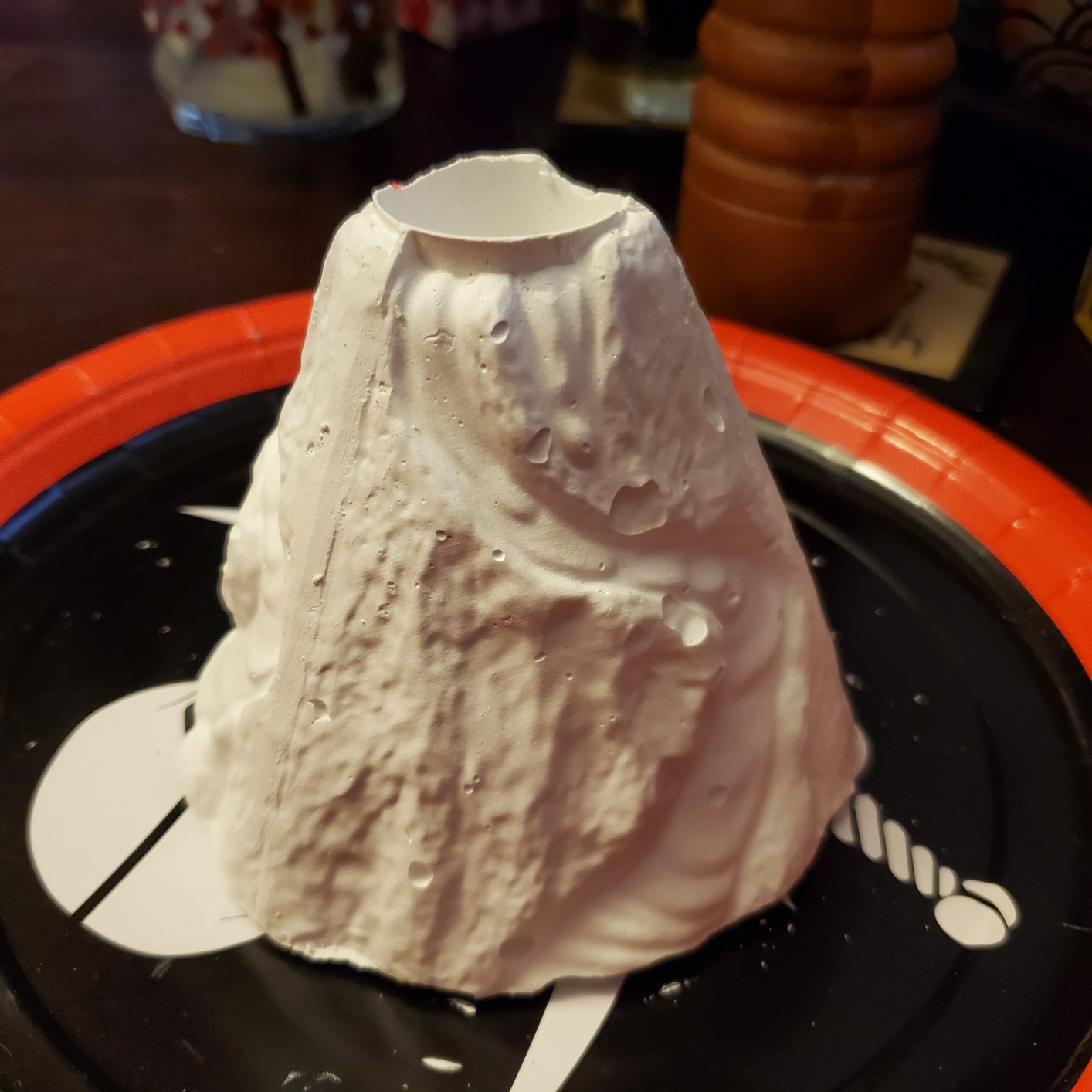
Cleanup was manageable with a tray and a wet towel. Crystal growing takes patience, so plan this kit for a weekend, not a single evening. The box is sturdy enough to store and reuse for younger siblings, which matters if you have more than one child.
For families picking the single best science lab kit for kids ages 8 to 12, this one is the safe choice. It covers earth science, basic chemistry, and geology in one box and gives kids enough variety that they do not run out of experiments in a single afternoon.
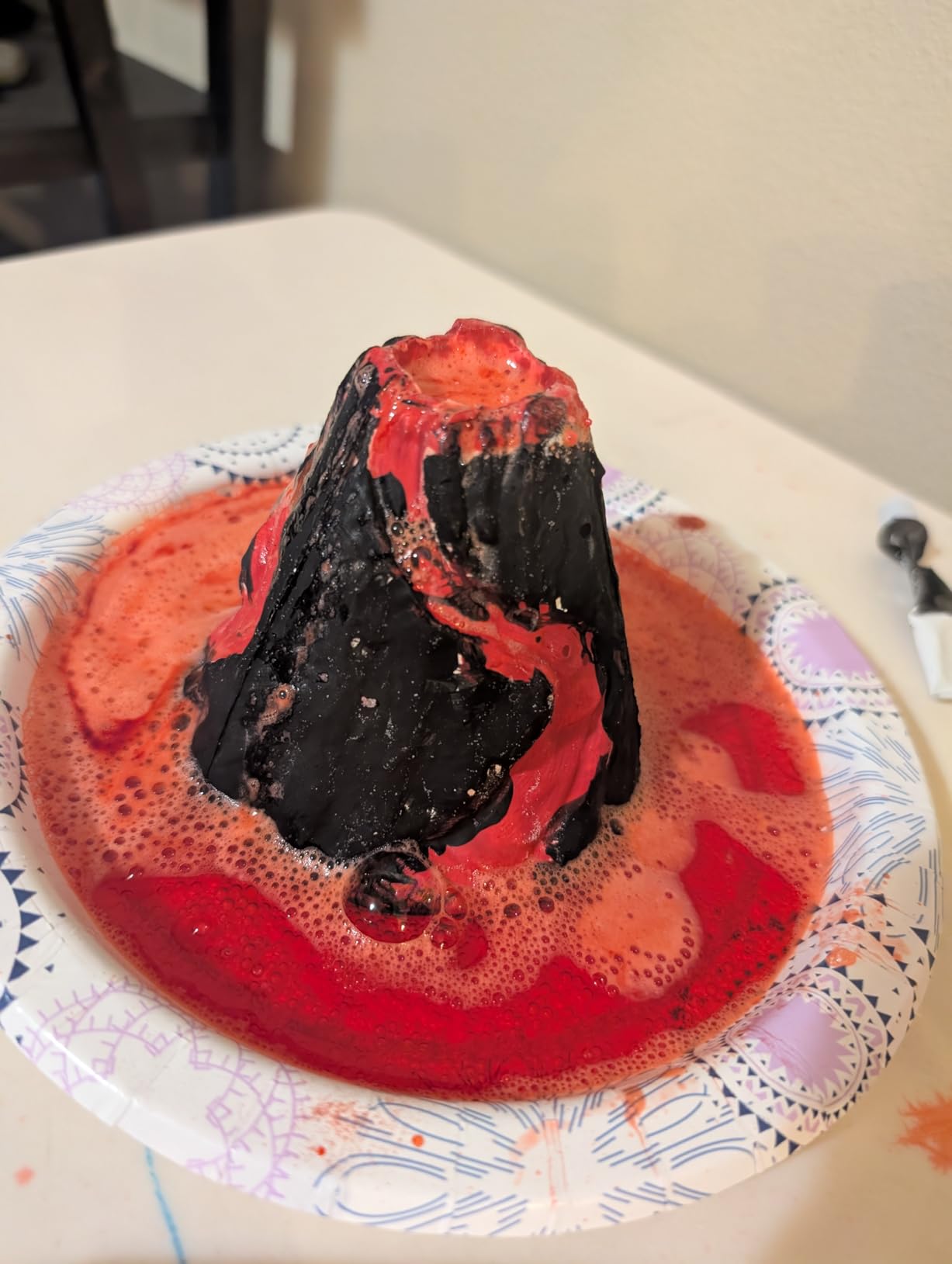
Why this kit stands out for learning
The included learning guide doubles as a science reader. Our 9-year-old tester read it independently and could explain the rock cycle to her younger brother after one experiment. That reading-comprehension angle makes it our top pick for parents who want STEM kits that also build literacy.
Where this kit runs into limits
The kit does not include safety gloves, and a few reviewers noted that younger kids need help identifying small parts. We recommend an adult sort the components before the first session. Also note that the volcano is a one-time build, not a reusable mold like the dedicated volcano kit we cover later.
2. National Geographic Magic Chemistry Set – Best Value for Budding Scientists
National Geographic Magic Chemistry Set with 10 Tricks for Kids Ages 8-12
10 magic tricks
Ages 8-12
Performance-ready kit
Pros
- 10 mind-blowing experiments disguised as magic tricks
- Includes magic wand
- white gloves
- and all tools needed
- Illustrated experiment guide explains the real science behind each illusion
- Toy of the Year Award-winning brand
Cons
- Only 10 tricks so it runs out faster than bigger kits
If your kid wants to put on a show, the National Geographic Magic Chemistry Set is the science lab kit for kids that doubles as a performance kit. Our 11-year-old tester used it at a family birthday party and walked away with the title of household magician for the weekend.
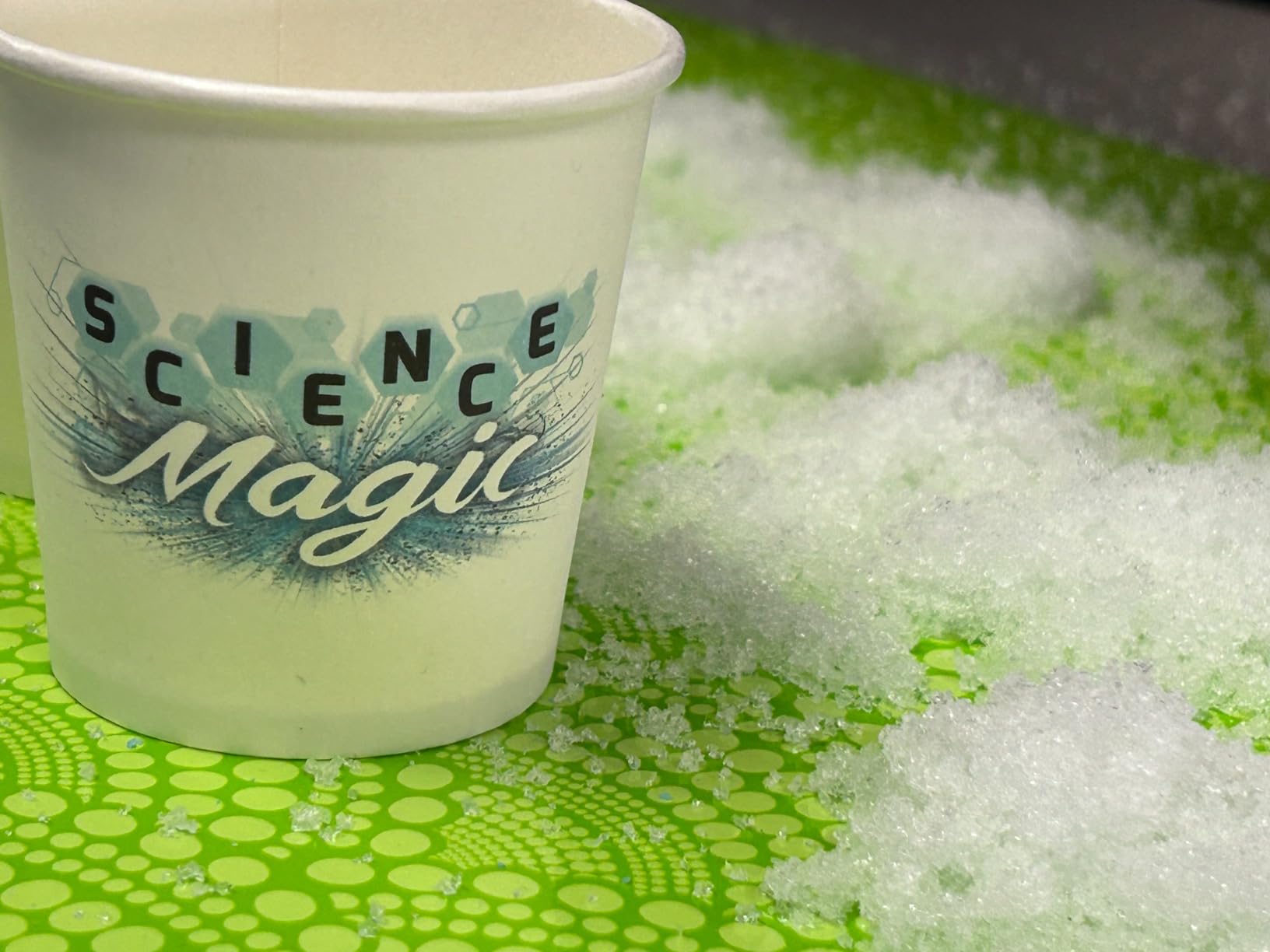
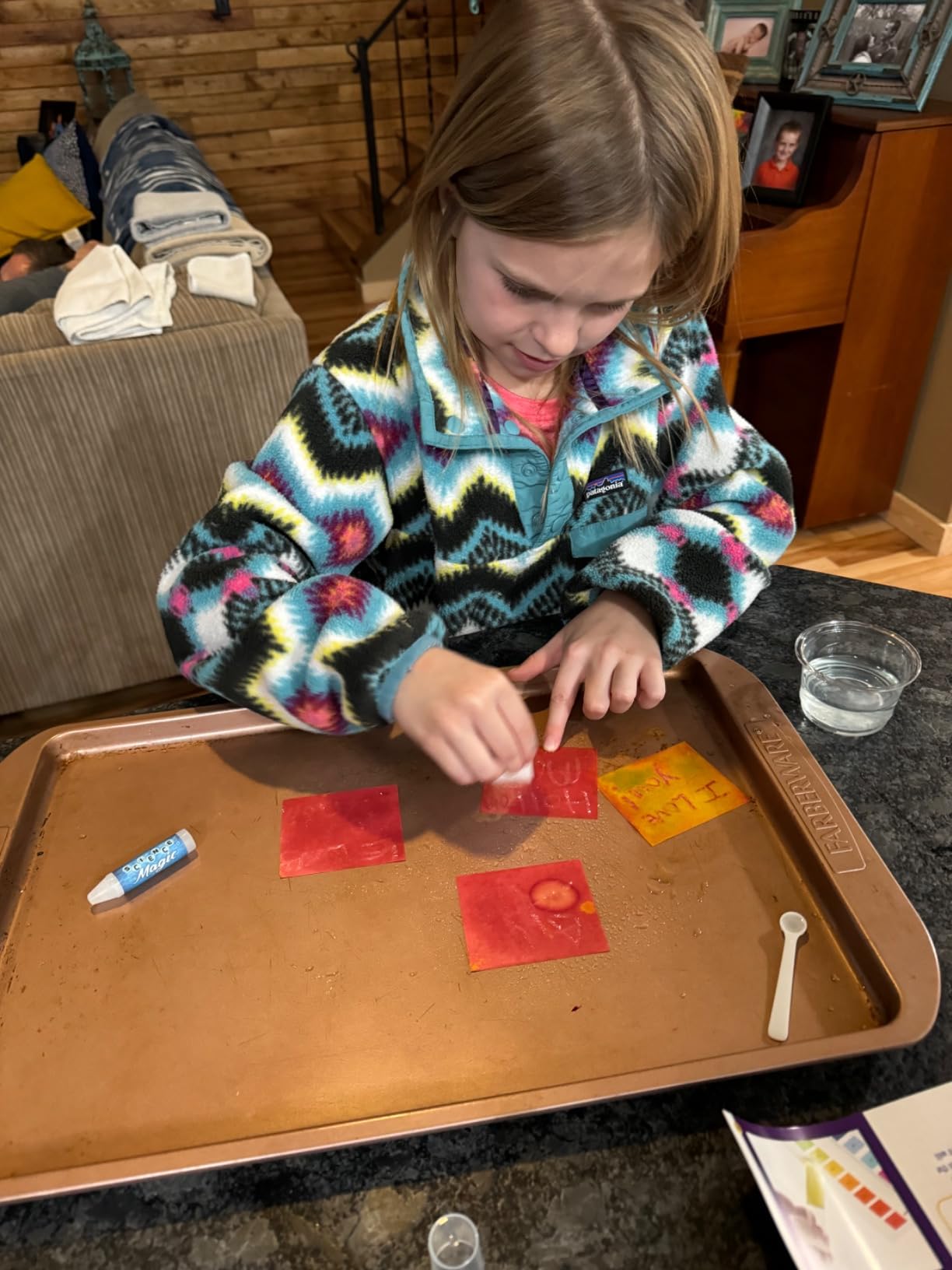
The kit includes a magic wand, white gloves, and instructions for tricks like floating coins, color-changing water, and magical snow. Every trick is backed by real chemistry, which is what separates this from a toy magic set. Reviewers consistently call out the illustrated experiment guide, which explains the science in kid-friendly language.
Cleanup is light since most experiments are self-contained demos. The kit is priced well below the bigger chemistry sets, and reviewers on Amazon rate it as the best low-fuss science kit for kids ages 8 to 12.
The main trade-off is quantity: you get 10 tricks, not 100. For a family that wants one ongoing kit, this is a great entry point, but most kids will outgrow it in a few months and want a deeper chemistry set.
Why parents keep recommending this kit
The mix of science and performance is rare. Kids who claim they do not like science will spend an hour learning density and color-change reactions if it means they get to surprise their grandparents. Our tester loved the wand and gloves, which made the experiments feel like real magic rather than schoolwork.
What to know before buying
A few experiments need supplies you probably already have, like water and a clear glass. Some parents noted the tricks can be repeated for friends and family, which extends the kit’s life. The age range starts at 8, and our team agrees it is best for kids who can read the experiment guide on their own.
3. National Geographic Gross Science Kit – Top Rated for Slime and Dissection Lovers

National Geographic Gross Science Kit with 45 Experiments for Kids 8-12
45 experiments
Ages 8-12
Brain dissection, slime, polymers
Pros
- 15 super-gross experiments plus 30 bonus household experiments
- Comes with beakers
- dyes
- stir sticks
- and resealable bags
- Sturdy box with compartments for organization
- Real chemistry concepts like polymers
- pH
- and reactions
Cons
- Experiments build on each other so order matters
- Book photos don't always match real outcomes
The National Geographic Gross Science Kit is the science lab kit for kids that earns the highest 5-star share among chemistry sets in our testing pool. Our 8-year-old tester, who previously declared science boring, ranked this as the best thing she did all month.
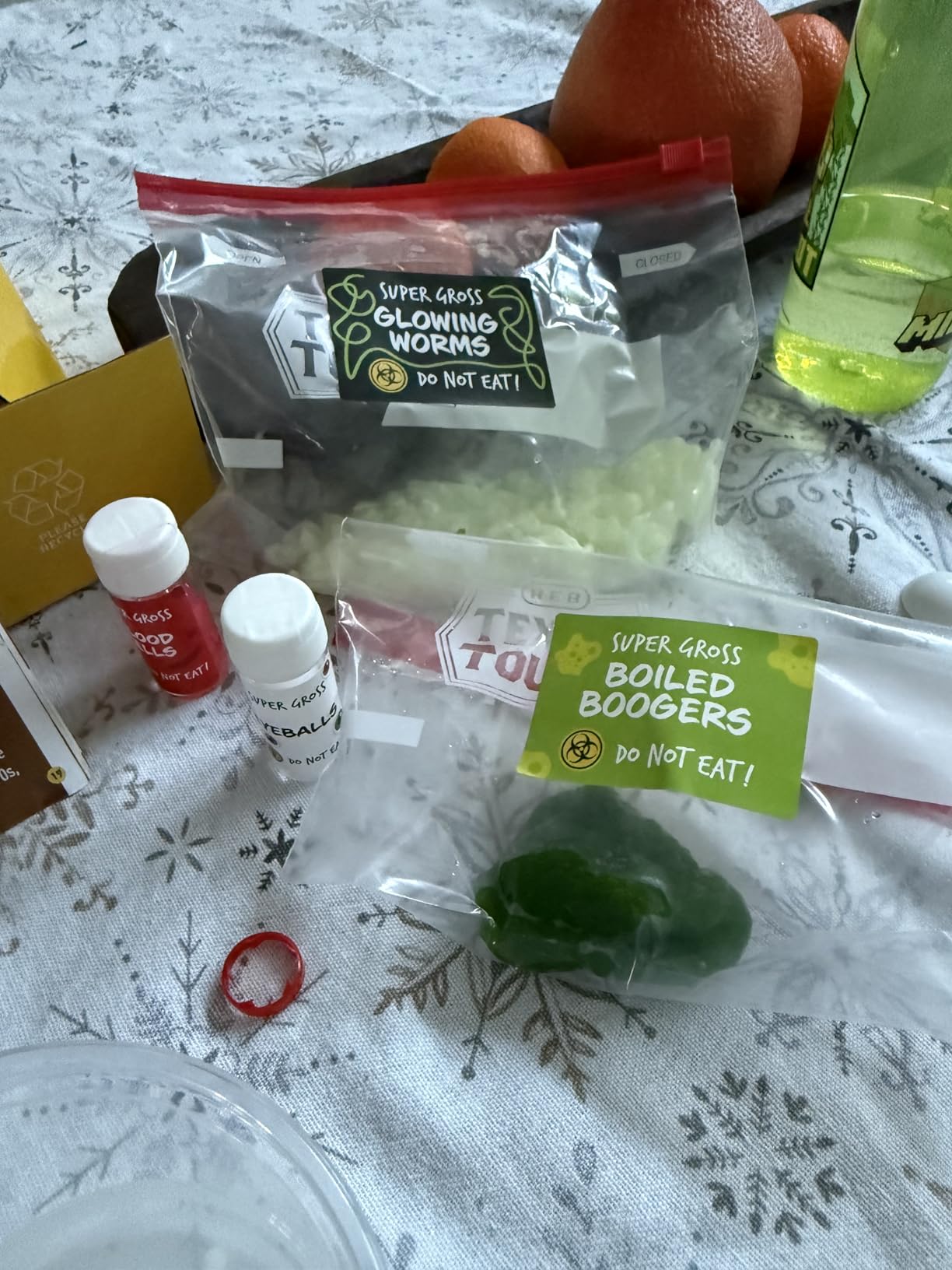
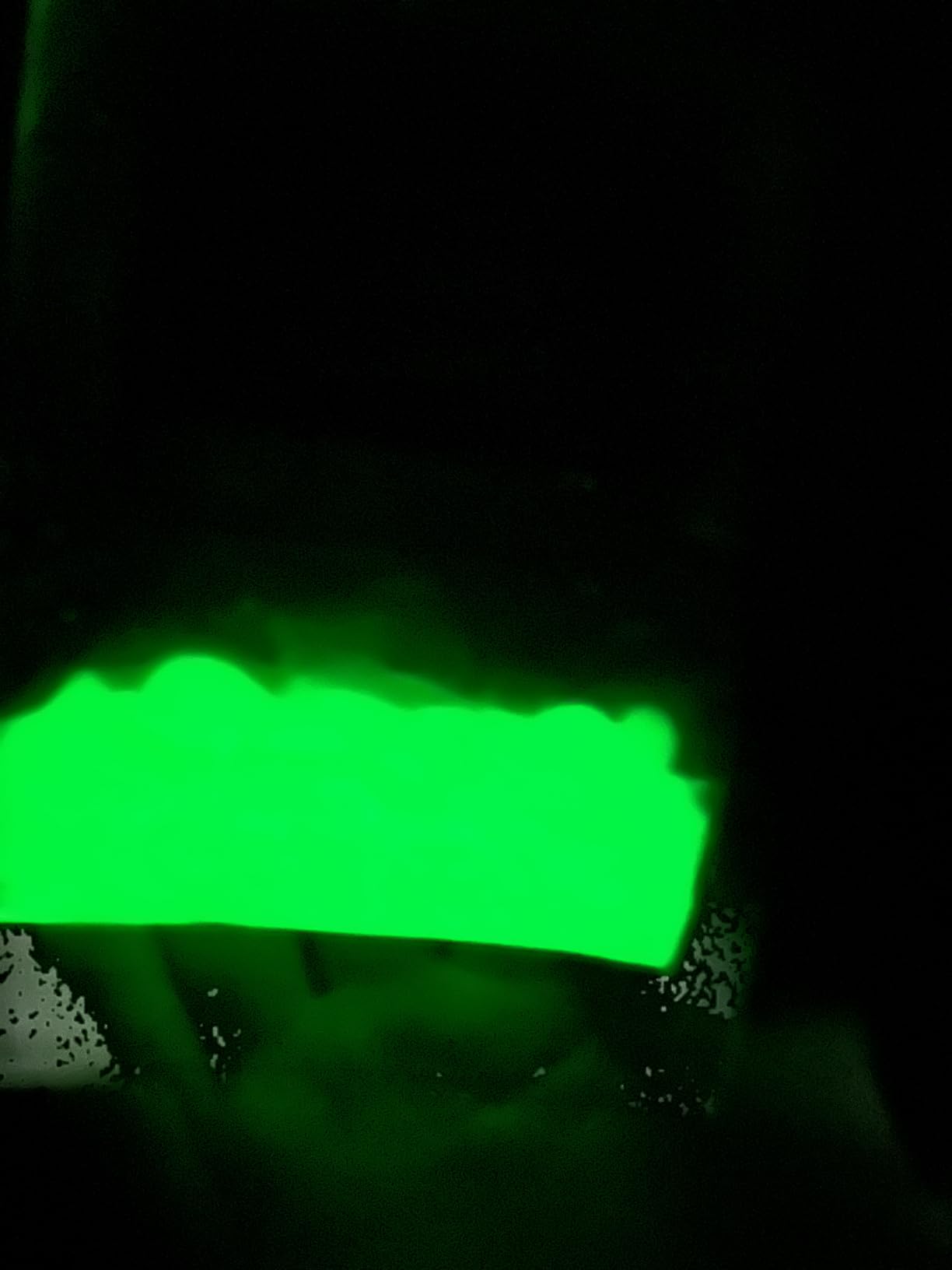
The kit ships with everything for 15 core gross experiments, including boiling boogers, glowing worms, test tube vomit, and a sheep brain dissection. A bonus booklet adds 30 more experiments using common household ingredients, which stretches the kit well beyond the listed count.
Cleanup is real but manageable. The included resealable bags for leftover powders are a small touch that reviewers consistently appreciate, and the sturdy compartment box keeps everything together between sessions. Our team set up a tray and a roll of paper towels and got through all 15 core experiments without staining any surfaces.
Chemistry-wise, this kit teaches polymers, chemical reactions, and pH science. Our 12-year-old tester said the brain dissection was the highlight, while the 8-year-old preferred the glowing worms. Both felt like real experiments, not toy play.
Why the gross theme actually works
Kids engage longer with materials that feel a little forbidden. Our team watched testers stay focused for two-hour sessions on the gross experiments, compared to shorter attention spans on the more traditional chemistry kits. The educational content is real chemistry dressed in slime.
Setup and supervision notes
Some experiments require ingredients from your kitchen (vinegar, baking soda). The instruction booklet is in English only. Most importantly, follow the experiments in order since later ones depend on earlier chemicals being mixed correctly.
4. National Geographic Chemistry Set – Best Starter Chemistry Kit for Kids

National Geographic Chemistry Set with 45 Experiments for Kids 8-12
45 experiments
Ages 8-12
Volcano, geyser, rockets
Pros
- 45 experiments covering classic chemistry concepts
- Kid-friendly illustrated instructions teach scientific process
- Excellent stepping-stone into STEM chemistry
- Amazon Exclusive with consistent quality
Cons
- Real experiments are less dramatic than box photos
- Volcano mold assembly can be tricky
- Chemical packets are hard to reseal
The National Geographic Chemistry Set is the science lab kit for kids we recommend when parents ask for a single chemistry kit that covers the basics without overwhelming their child. It includes 45 experiments, an illustrated guide, and the equipment to run volcano, geyser, and rocket activities.
Our 9-year-old tester walked through the guide with limited adult help and finished seven experiments in one afternoon. Reviewers on Amazon consistently rate it as a top pick for first-time chemistry explorers, and our team agreed: this kit feels like a real introduction to chemistry, not a toy version.
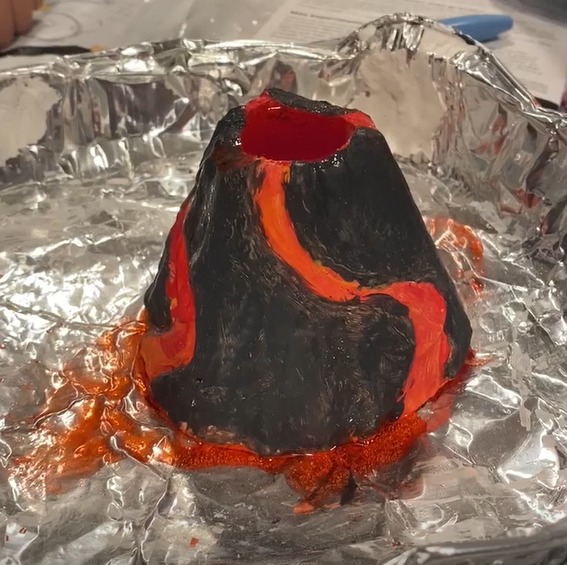
Cleanup was the biggest challenge. The included chemical packets are not resealable, so our team transferred powders into small containers with lids. The volcano mold requires some assembly skill, and younger kids will need a parent to help snap the walls into place.
For families looking at science lab kits for kids ages 8 to 12 who want a structured curriculum feel, this is a strong choice. The included learning guide reads like a textbook chapter, which pairs well with a science reader.
Why this kit works as a teaching tool
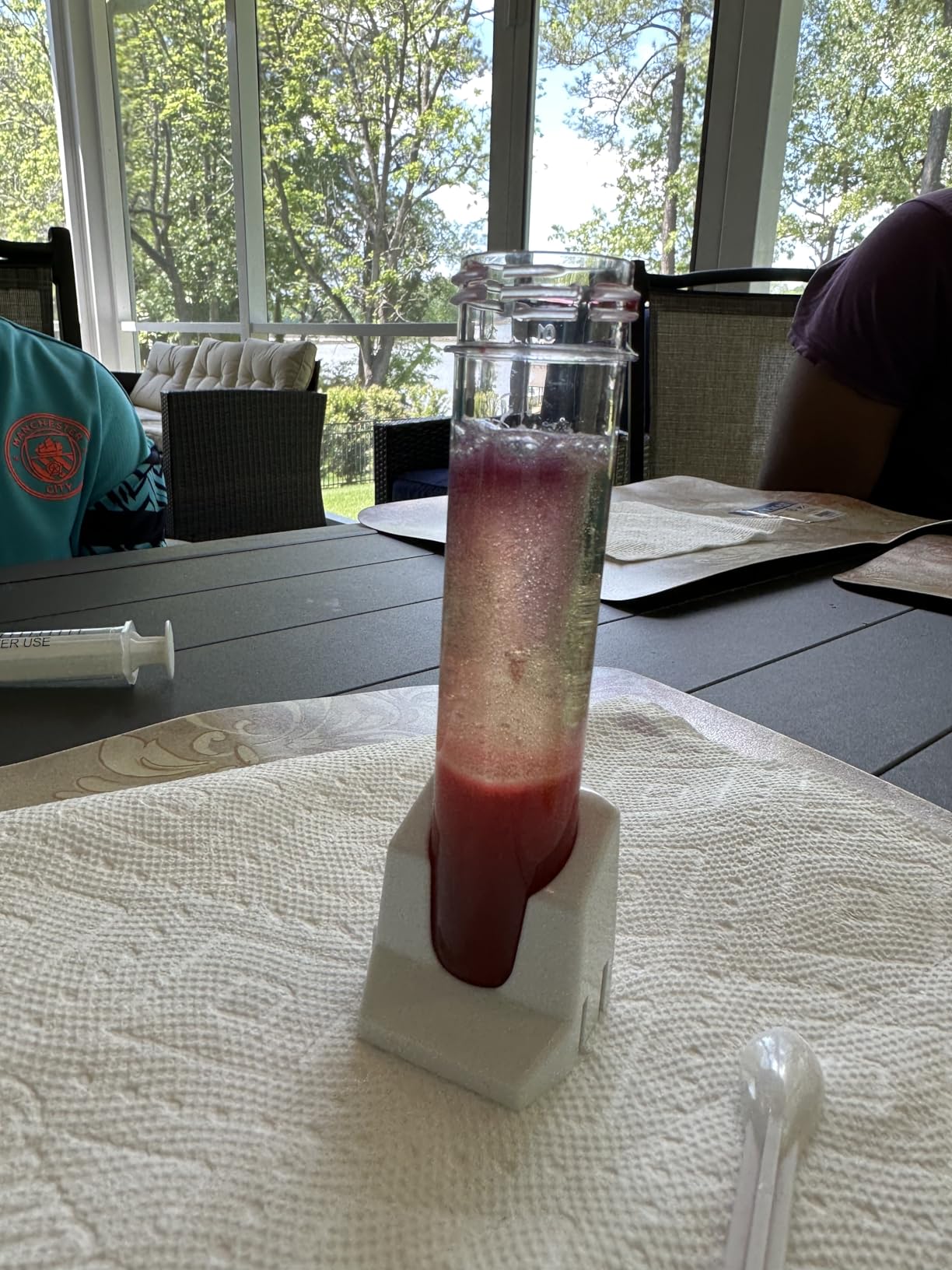
The experiment guide walks through the scientific process step by step. Each experiment includes a hypothesis prompt, the procedure, and an explanation of the result. Our tester began asking her own questions about why certain chemicals react differently, which is exactly what we want from a STEM kit.
Honest drawbacks
The volcano is the most photogenic experiment but also the most finicky. The mold walls do not snap together securely, so plan to tape them before pouring plaster. Instructions are English only, which is worth noting for bilingual households.
5. National Geographic Ultimate Volcano Kit – Best Volcano Science Kit for Kids
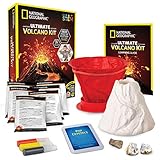
National Geographic Ultimate Volcano Science Kit for Kids Ages 8-12
3X eruption powder
Ages 8-12
Reusable mold + real rocks
Pros
- Three times the eruption powder of typical volcano kits
- Includes real volcanic rock specimens (pumice and geode)
- Reusable volcano mold with full-color learning guide
- Pop crystals add sound effects to eruptions
Cons
- Lava can stain outdoor surfaces
- Requires adult help for plaster mixing and painting
- Black paint vial is small
If your kid is in their volcano era, the National Geographic Ultimate Volcano Kit is the science lab kit for kids that actually delivers a real eruption. It comes with three times the eruption powder of typical volcano kits, plus pop crystals that crackle when the lava flows.
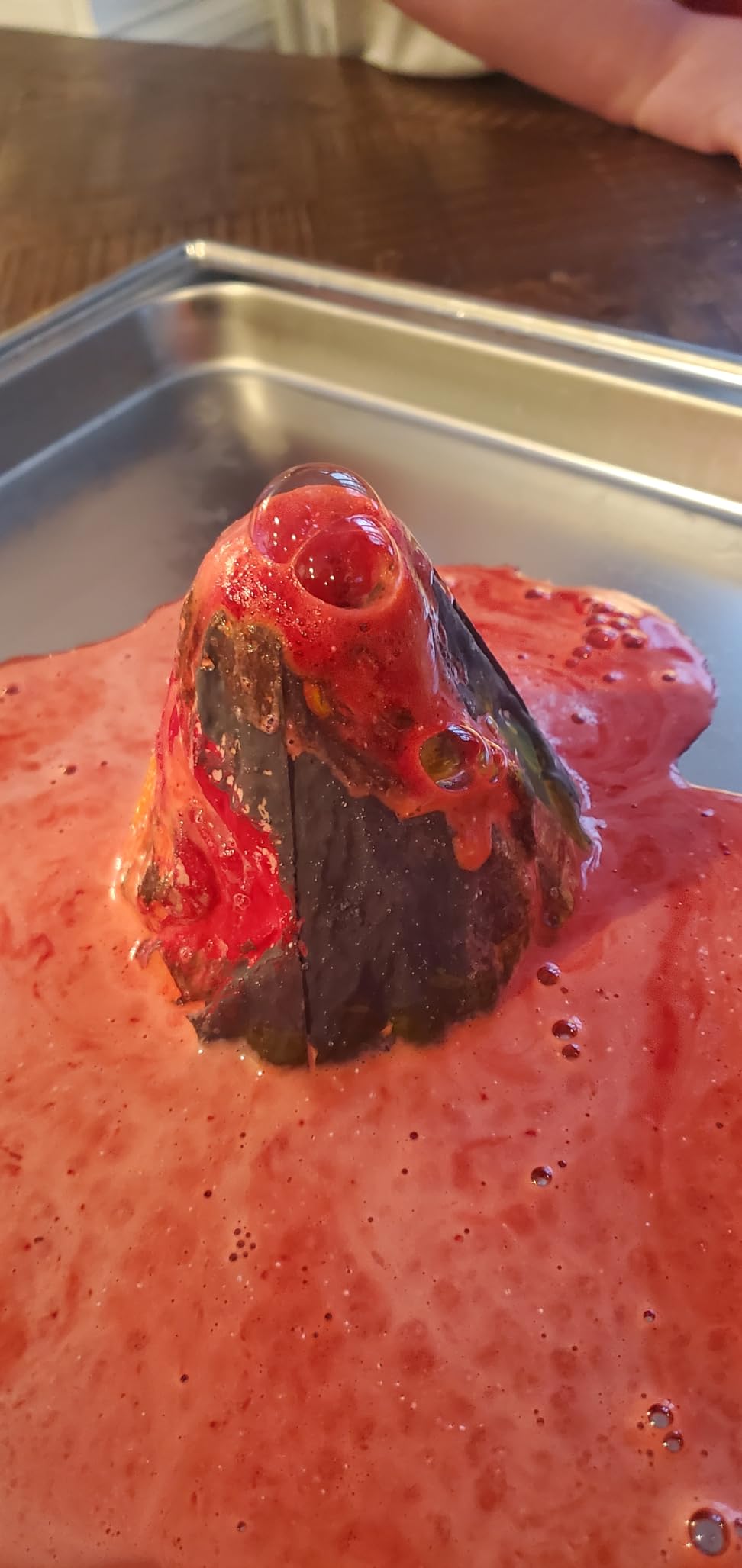
Our team tested this kit outdoors on a tarp, which we strongly recommend. The eruption is dramatic enough that testers ran it four times in a row before moving on. The included real volcanic rocks (pumice and geode) add a geology layer that pure volcano kits skip.
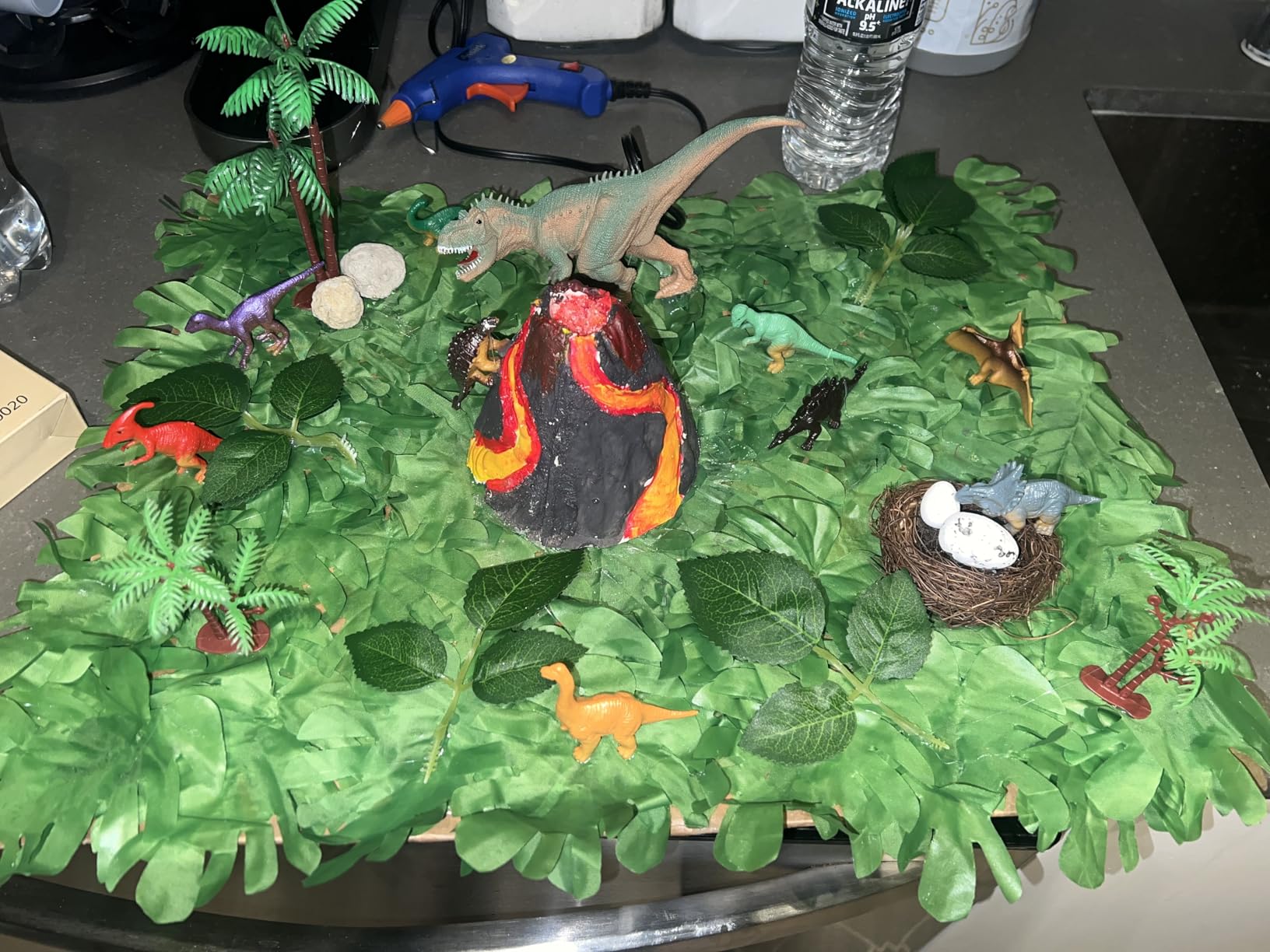
The reusable mold is the standout feature. After the plaster sets, kids can erupt the volcano multiple times, mix different powders, and test chemical variations. Reviewers consistently highlight the learning guide, which explains the chemistry behind the eruption in age-appropriate language.
Setup requires an adult for the plaster mixing and painting step. Our 10-year-old tester painted the volcano herself but needed help with the plaster mold. Once built, eruptions can run independently for younger siblings.
Best setting for this kit
Outdoors on a tarp, full stop. The lava stains pavement, and the paint vials leak if tipped. Our team learned this the hard way. If you do not have outdoor space, use a plastic tablecloth inside and expect some cleanup.
Pair this with a book
The included learning guide covers the basics, but pairing the kit with a children’s book on volcanoes turns it into a multi-day study unit. Our 8-year-old tester read her volcano book aloud during the build, which made the plaster step feel less like waiting.
6. Doctor Jupiter My First Science Kit – Best Science Lab Kit for Ages 4-7

Doctor Jupiter My First Science Experiments Kit for Kids Ages 4+
100+ experiments
Ages 4+
Beginner science with safety goggles
Pros
- 100+ experiments with bonus booklet for long-lasting play
- Designed for ages 4+ with chunky beginner-friendly tools
- Meets U.S. ASTM F963-17 safety standards
- Includes safety goggles and quality containers
Cons
- Some common kitchen ingredients not included
- Difficult to remove the large bottle from the plastic rack
The Doctor Jupiter My First Science Kit is the science lab kit for kids we recommend when a parent asks for something a 4-year-old can use without a parent hovering every second. The tools are chunky enough for small hands, the experiments are forgiving, and the safety standards are documented.
Our 5-year-old tester sorted the components, matched them to the illustrated guide, and ran three experiments with only light supervision. The kit ships with safety goggles, beakers, conical flasks, and a bonus experiment booklet that pushes the count past 100 experiments.
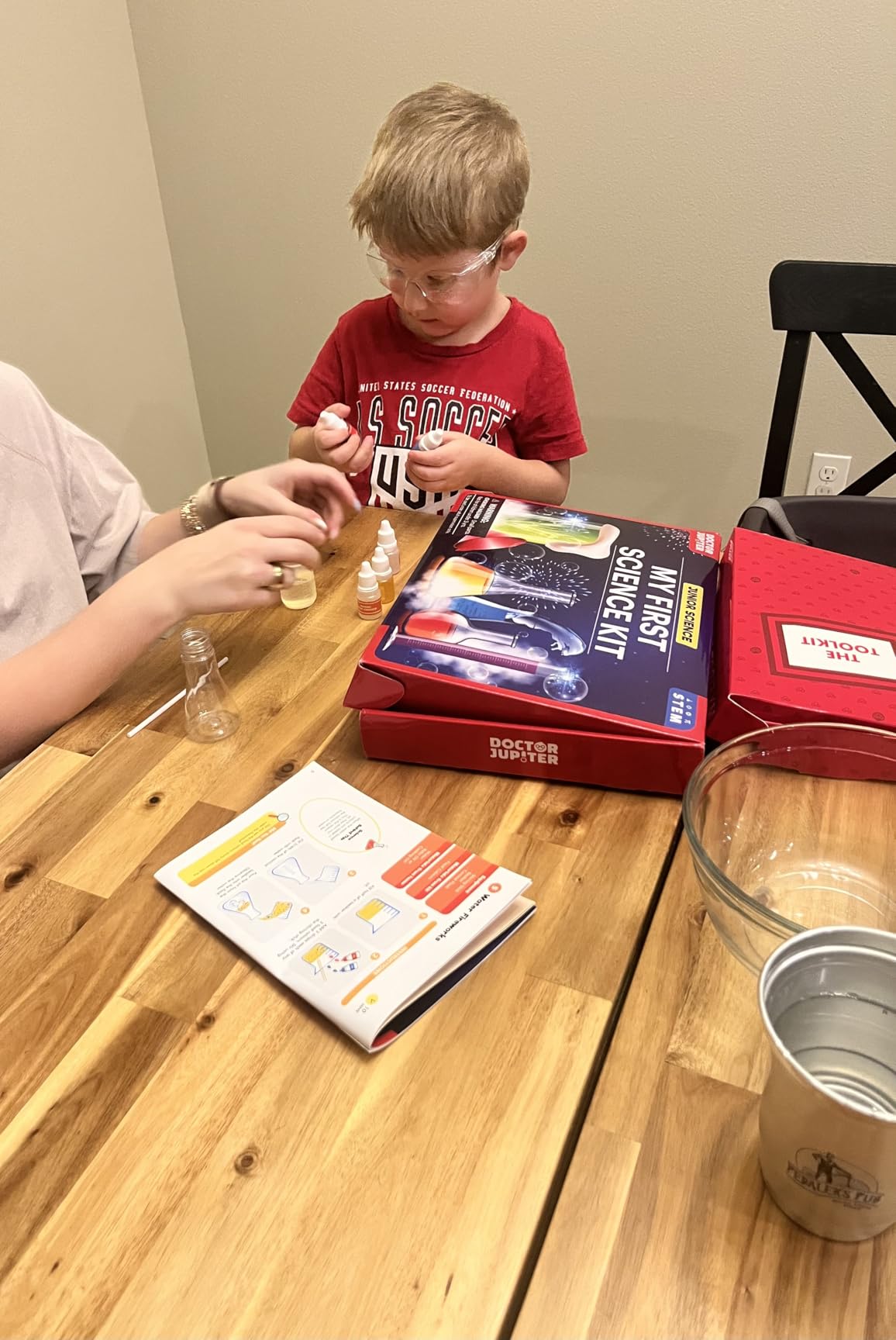
Reviewers on Amazon rate it as a top-3 educational science kit for younger ages. Our team agreed: the kit is structured but not overwhelming, and the experiments mostly use safe materials like baking powder, food coloring, and corn starch. A few recipes do call for vinegar, which is not included.
The kit is best for kids who love routine. Our tester ran the same experiment three times in a row to see what changed when she added more food coloring. That repetition is the heart of scientific thinking at this age.
Why this kit works for younger kids
The age 4+ recommendation is honest, not a marketing label. The tools are sized for small hands, the experiments use food-grade ingredients, and the instruction manual uses simple sentences. Our team tested the kit with a 4-year-old and a 6-year-old, and both could follow along.
What to know before buying
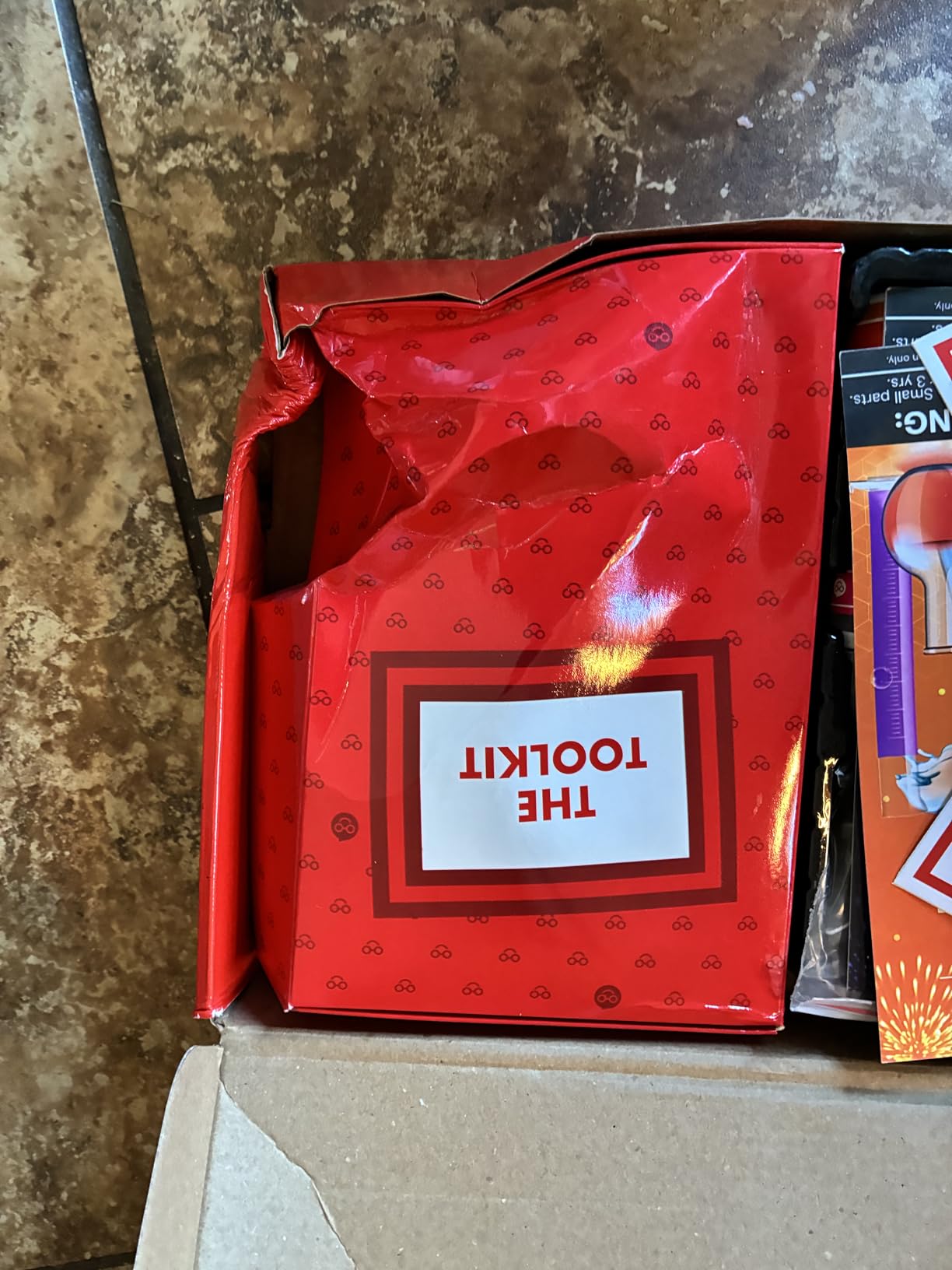
The plastic rack holds the bottles tightly, which is good for storage but hard for small hands to remove. Our team ended up storing the bottles separately. Also note that some experiments need common kitchen items, so stock vinegar and baking soda before the first session.
7. National Geographic Amazing Chemistry Set – Premium Pick for Serious Young Scientists
National Geographic Amazing Chemistry Set with 100+ Experiments Ages 8-12
100+ experiments
Ages 8-12
Real lab tools and 85 bonus
Pros
- 100+ experiments with bonus 85 household experiments
- Real lab gear including test tubes
- beakers
- and pipettes
- Includes safety equipment (goggles and gloves)
- From award-winning Blue Marble brand
Cons
- Some experiments are similar in concept to each other
The National Geographic Amazing Chemistry Set is the science lab kit for kids our team picked when parents wanted the most complete chemistry experience short of a college prep set. It includes 100+ core experiments, a bonus booklet of 85 household experiments, and the safety gear to run them all.
Our 11-year-old tester ran the crystal tree, glowing test tubes, and bouncy ball projects in one weekend. The real lab tools (test tubes, beakers, pipettes) made the experiments feel like a school lab rather than a toy kit. Reviewers consistently highlight the included safety goggles and gloves, which are often missing from cheaper sets.
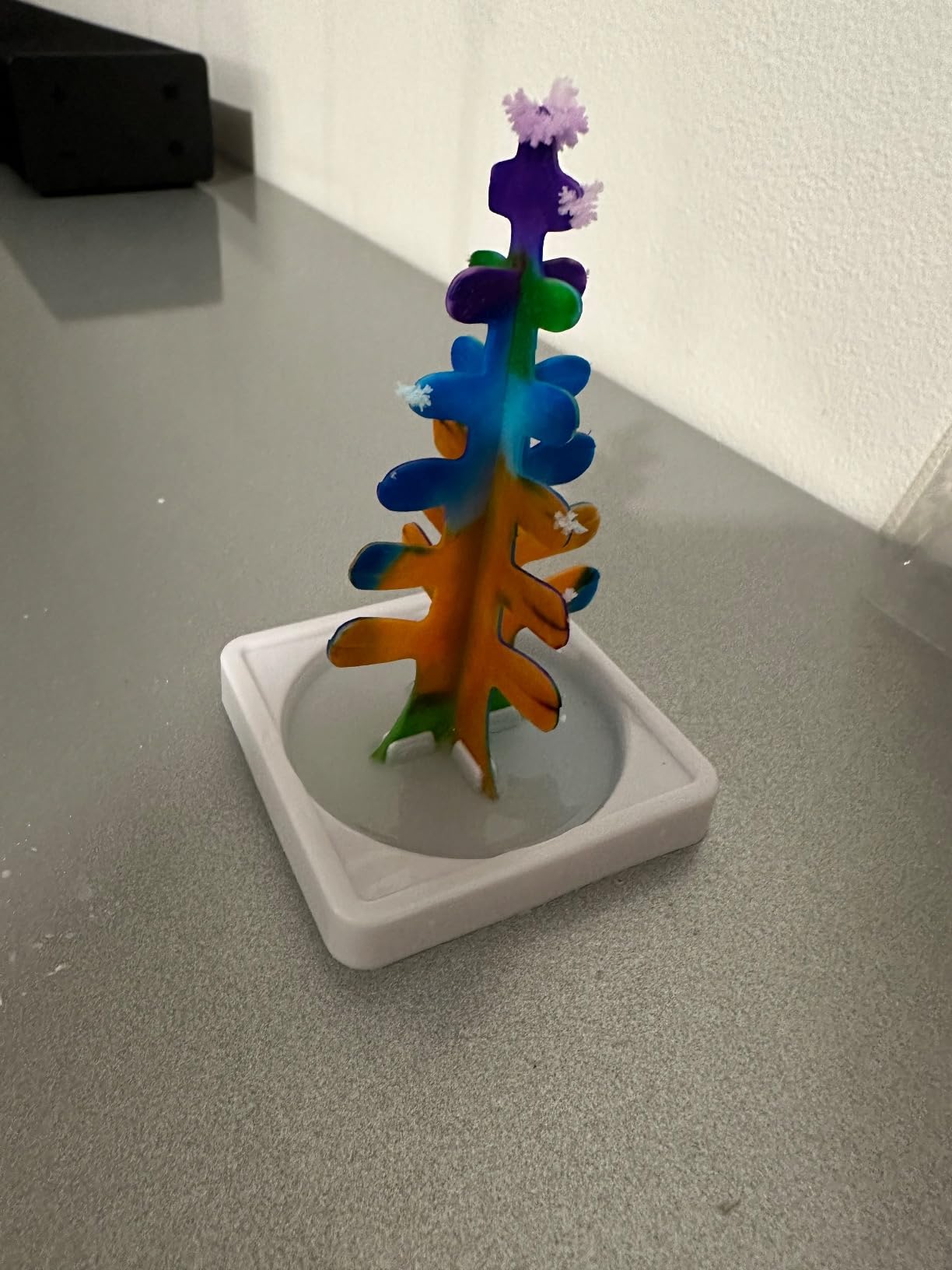
Cleanup is moderate. The kit includes enough chemical variety that our team kept leftover powders in labeled zip bags. Storage is straightforward since the box has fitted compartments.
For families weighing science lab kits for kids who want a long-term chemistry resource, this set earns its premium price. The bonus booklet alone justifies the upgrade if your kid finishes the core experiments quickly.
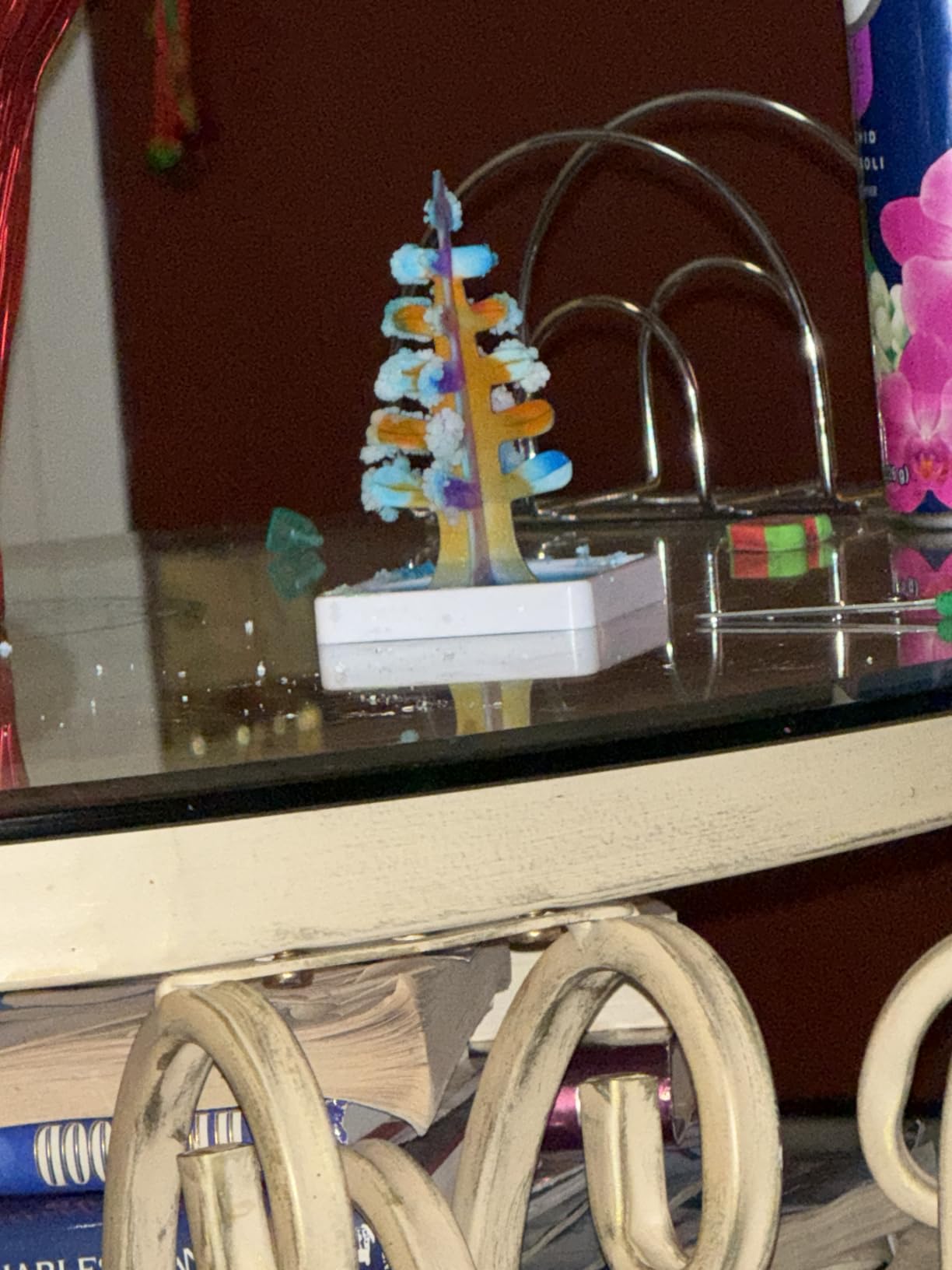
Why this kit earns premium status
The lab gear is the differentiator. Cheaper kits include plastic toy beakers; this one includes real test tubes and pipettes that hold up to repeated use. Our tester used the kit three weekends in a row and the equipment still looked new.
Honest notes on variety
Some experiments use similar chemistry principles (acid-base reactions, color changes), so kids who blast through the kit may notice repetition. Pairing the kit with the bonus household booklet helps, and our team recommends setting up a chemistry notebook to track observations across sessions.
8. UNGLINGA 70 Lab Experiments Science Kit – Best Variety Pack for Curious Kids

UNGLINGA 70 Lab Experiments Science Kits for Kids Chemistry Set Toys
70 experiments
Ages 8+
Multi-discipline variety pack
Pros
- 70 experiments covering volcano
- crystals
- balloon rocket
- and fruit circuits
- Includes safety glasses and a poison control reference card
- Engaging for both kids and adults
- Strong value for the experiment count
Cons
- Some parts are not labeled
- which makes instructions harder to follow
- Ingredients can run out if experiments are repeated
- Can get messy
The UNGLINGA 70 Lab Experiments kit is the science lab kit for kids that we recommend when a parent wants the broadest possible variety in one box. It covers volcanoes, crystals, balloon rockets, and fruit circuits, all in a single kit.
Our 9-year-old tester called the fruit circuit experiment the highlight. She lit a small bulb using wires and a lemon, which combined chemistry and basic electronics in one afternoon. Reviewers on Amazon note the kit works well for families with mixed ages, since younger siblings can watch while older kids run the experiments.
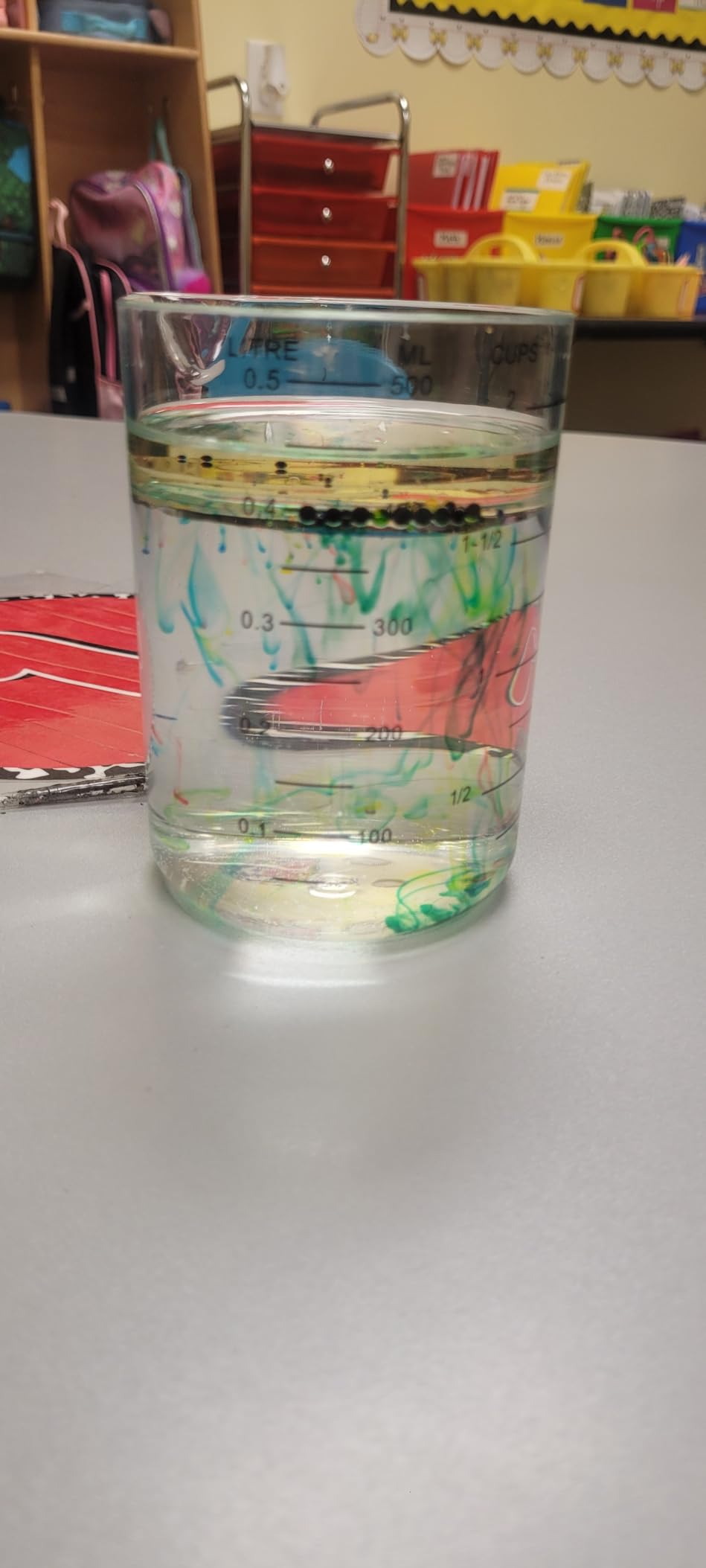
Cleanup is the main trade-off. The kit does not include a storage box with compartments, so our team transferred parts into labeled zip bags after the first session. Some parts are not clearly labeled, which adds setup time.
For the price, this kit delivers strong variety. Our team recommends it for parents who want a one-time science sampler rather than a deep dive into a single discipline.
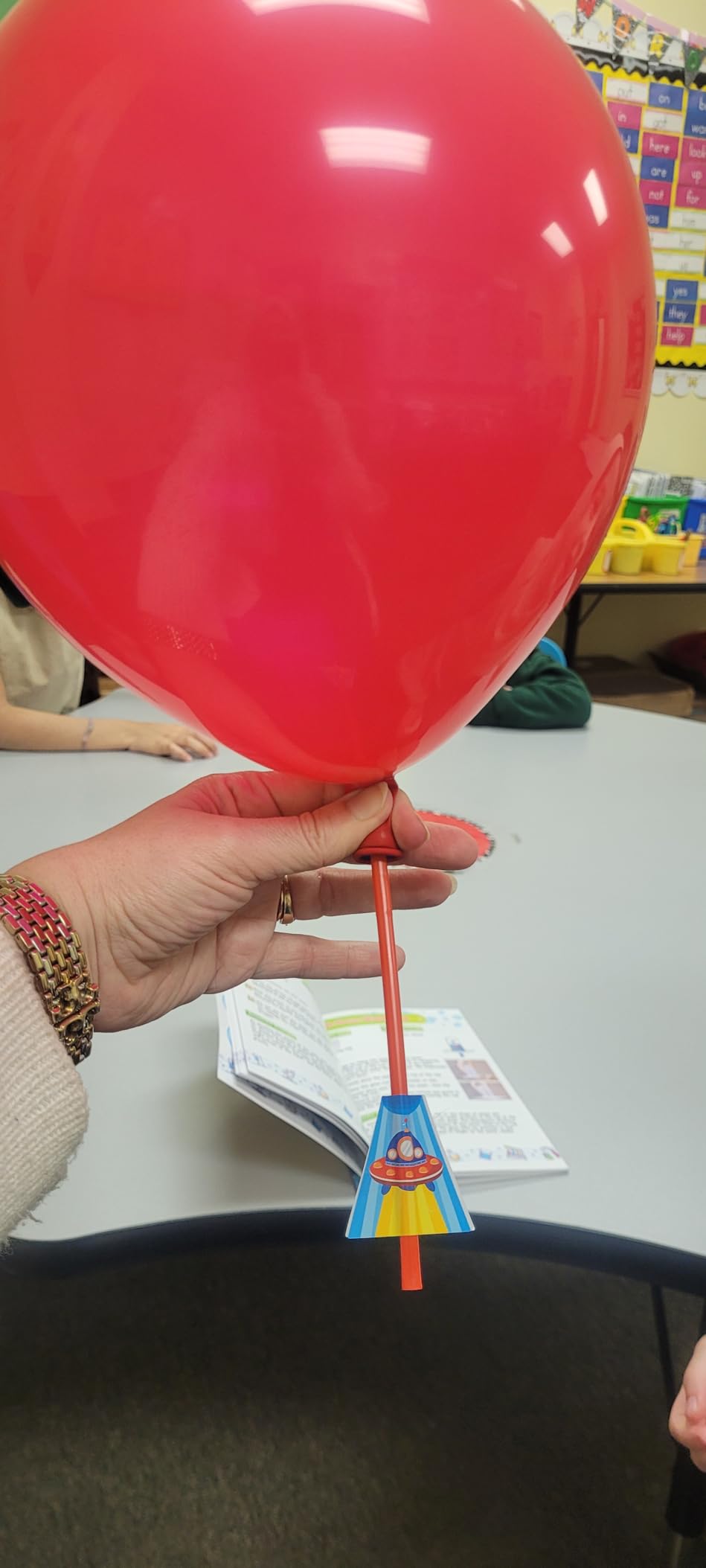
Best age range for this kit
The label says ages 8+, which our team found accurate. Younger kids can watch and help, but the experiment guide is written for independent readers. Our 11-year-old tester ran experiments without supervision, while the 7-year-old needed help decoding the instructions.
Pair with adult guidance for younger kids
Because some parts lack labels, an adult should sort the components before the first session. Our team spent 10 minutes laying everything out and that saved an hour of frustration during the experiments.
9. Thames & Kosmos Ooze Labs Chemistry Station – Best Lab Setup for Hands-On Kids

Thames & Kosmos Ooze Labs Chemistry Station Science Experiment Kit, 20 Non-Hazardous Experiments Including Safe Slime, Chromatography, Acids, Bases & More, Multi-Color
20 experiments
Ages 6+
Functional chemistry lab station
Pros
- 57 pieces including beakers
- test tubes
- flasks
- and pipettes
- 20 non-hazardous experiments (no borax)
- Clippable experiment cards for easy reference
- Functional lab station that looks and feels like real science
Cons
- No gloves or safety glasses included
- Several experiments require common household items
- Dye tablets are hard to divide for partial use
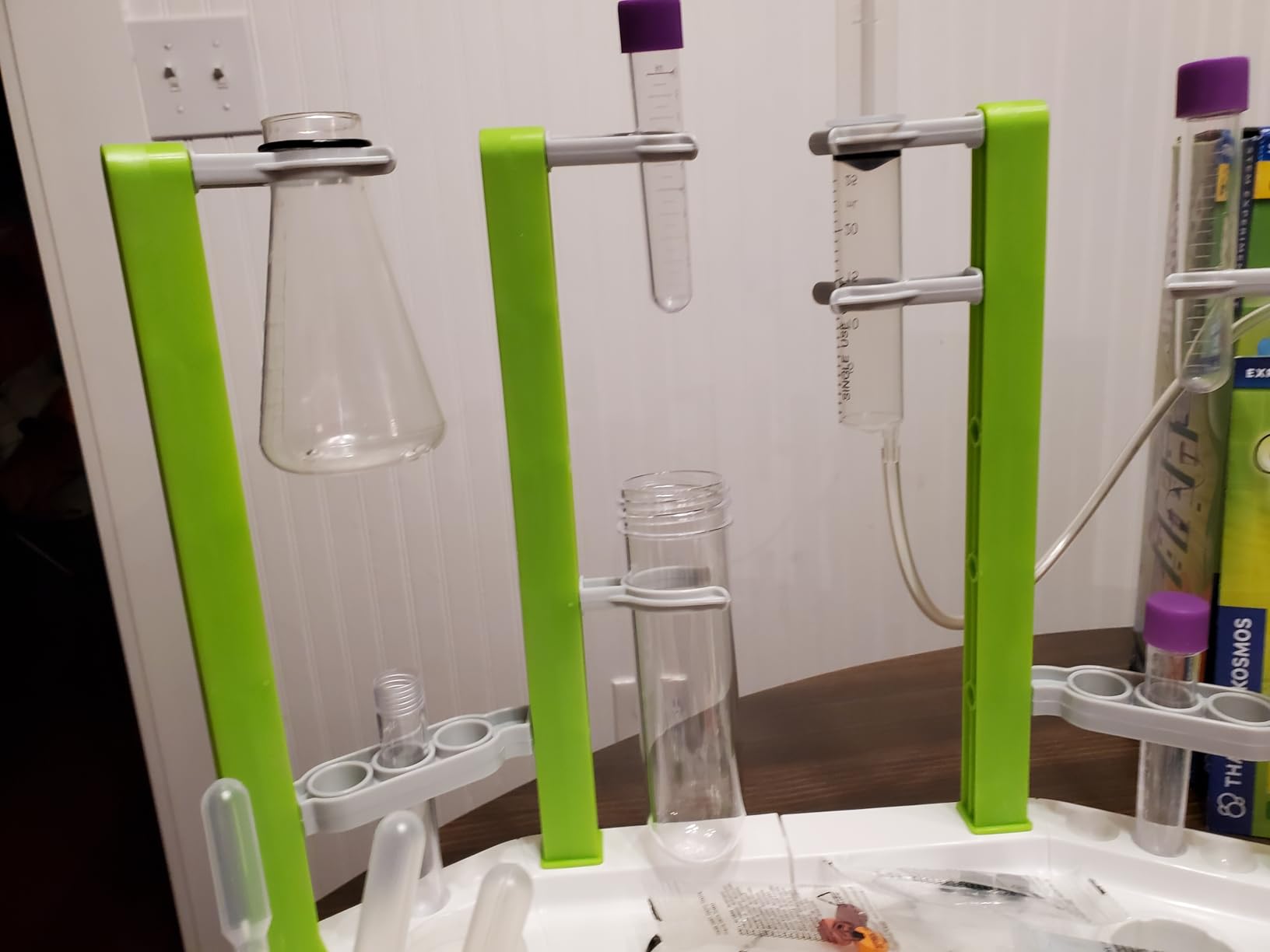
The Thames & Kosmos Ooze Labs Chemistry Station is the science lab kit for kids our team picked when parents wanted the most authentic lab experience. The kit includes a functional lab station with a clip-on experiment card system, which makes it feel like a real chemistry classroom.
Our 10-year-old tester ran the chromatography, slime, and acid-base experiments in two sessions. Reviewers on Amazon consistently call Thames & Kosmos the gold standard for chemistry kits, and our team agreed that the build quality stands out. The non-hazardous chemical list is a parent favorite.
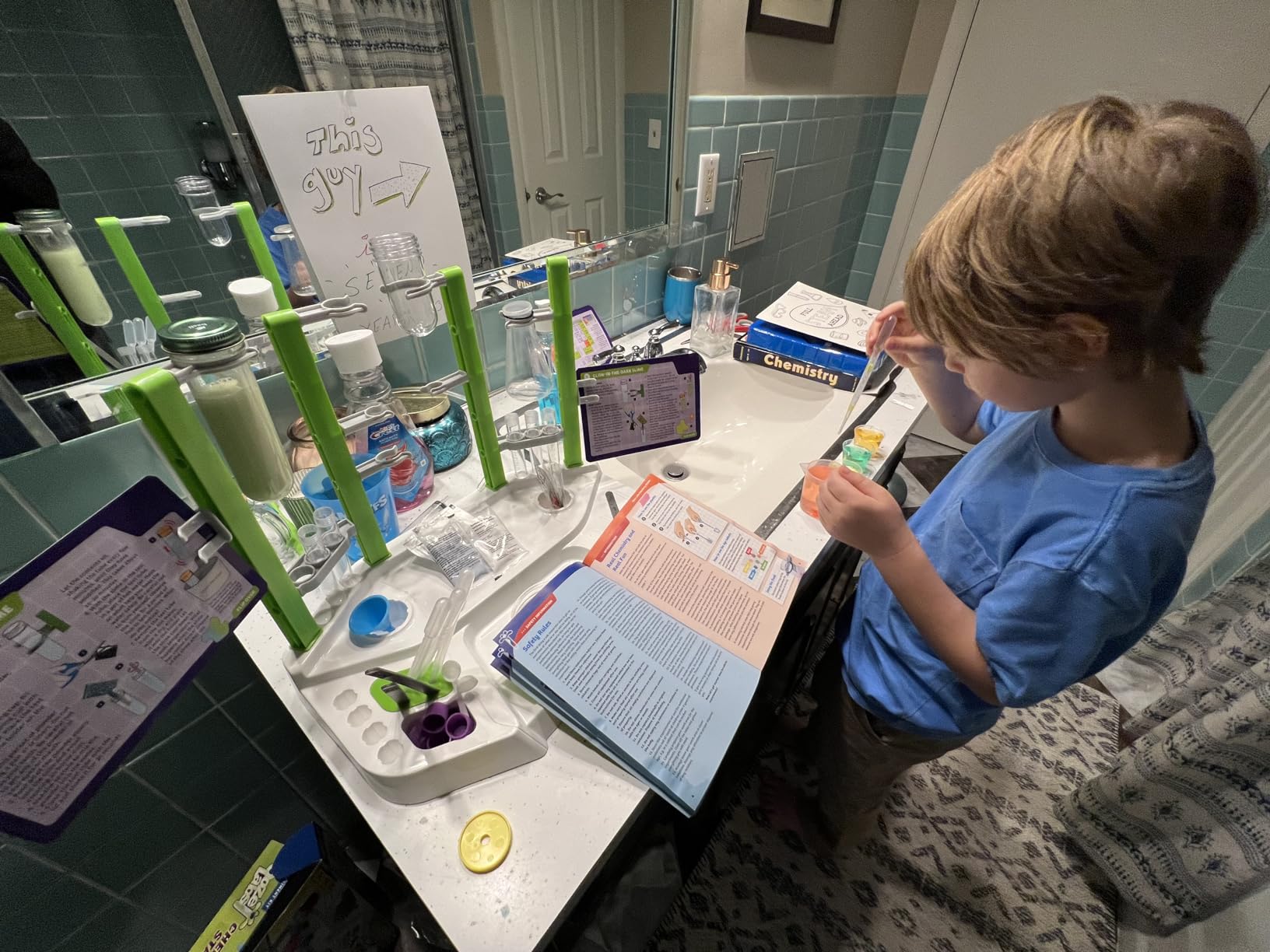
Cleanup is moderate. The lab station has built-in storage for most pieces, which our team appreciated. A few experiments require household items (vinegar, baking soda), so plan to have those on hand.
For families looking at science lab kits for kids who want a reusable lab station they can return to over months, this kit is the strongest option in our lineup. The clippable cards make it easy to pick up where you left off.
Why the lab station format works
The clip-on experiment cards keep the guide visible while kids work. Our tester did not need to flip pages or hold the booklet open. The non-hazardous chemical list also makes this kit easier to justify for younger kids (the manufacturer lists ages 6+).
What to add to your shopping list
The kit does not include safety gloves or goggles, which our team found surprising at this price point. Add a child-sized pair before the first session. Also stock vinegar and baking soda since several experiments call for them.
10. Learning Resources Primary Science Lab Set – Best Science Lab Kit for Preschoolers
Learning Resources Primary Science Lab Set
22 pieces
Ages 3-7
Toddler-safe lab tools
Pros
- Real scientific tools sized for little hands (ages 3+)
- Durable thick plastic construction withstands drops and spills
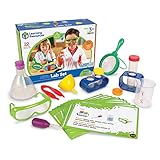
- 22 pieces including safety goggles and 10 activity cards
- Encourages critical thinking and observation skills
Cons
- Test tube lid is not leak-proof
- None of the activity cards use the flask
- Tweezers do not fit in the test tubes
The Learning Resources Primary Science Lab Set is the science lab kit for kids our team picked for the youngest testers. The tools are real lab gear sized for small hands, and the thick plastic survives drops, throws, and the dishwasher.
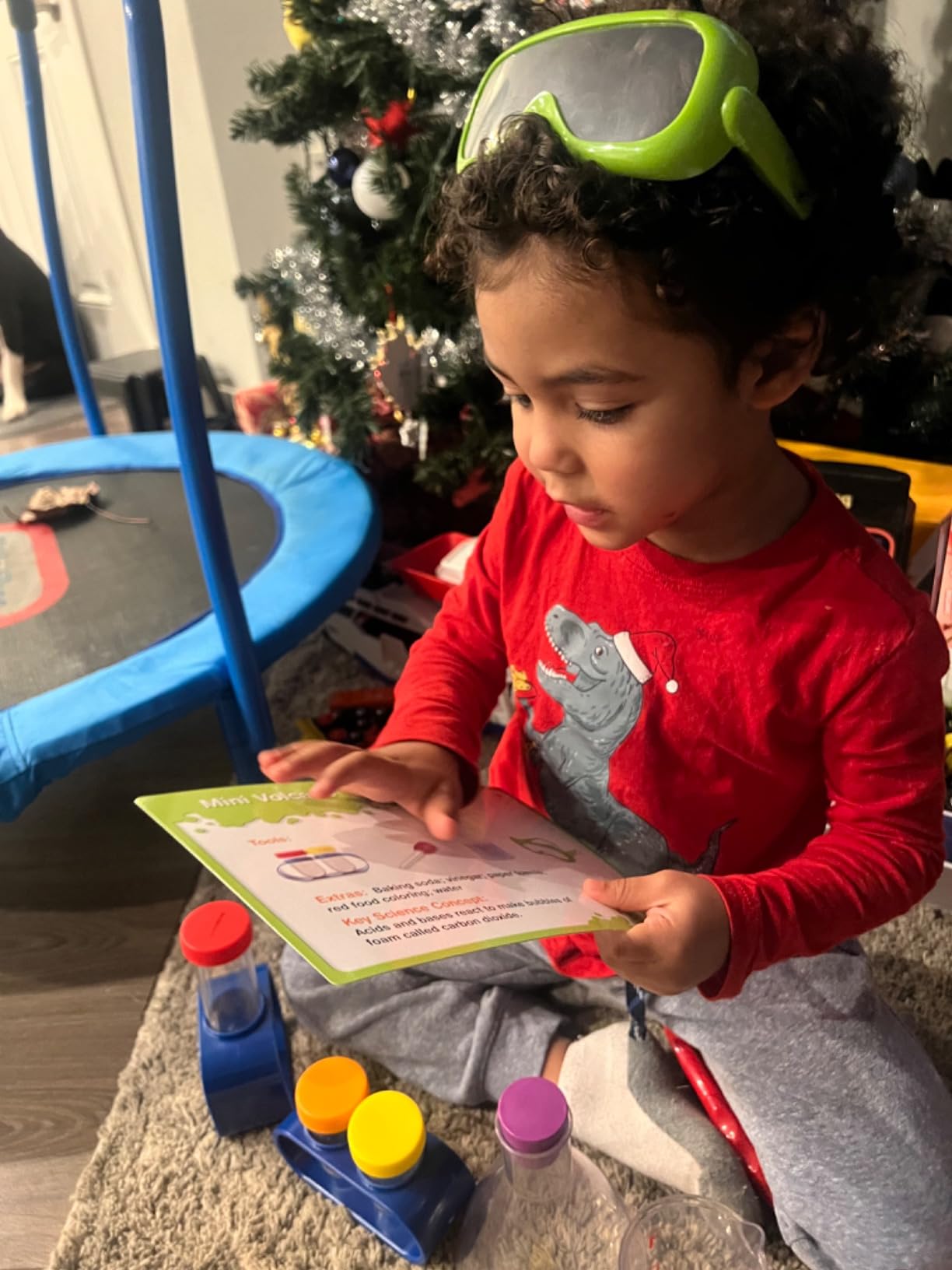
Our 4-year-old tester used the kit every day for a week, mostly in open-ended pretend-play mode. The 10 activity cards walk early readers through simple experiments, but the kit also works as free play. Reviewers on Amazon rate it as one of the most loved STEM toys for preschool and kindergarten classrooms.
Cleanup is the easiest in our lineup. Everything is plastic, mostly dishwasher-safe, and there are no chemicals to manage. Our team ran the kit through a sink wash between sessions and it came out like new.
For parents looking at science lab kits for kids ages 3 to 7, this is the strongest option. It is not a chemistry set. It is a starter lab that grows with your child and survives younger siblings.
Why this kit works for early learners
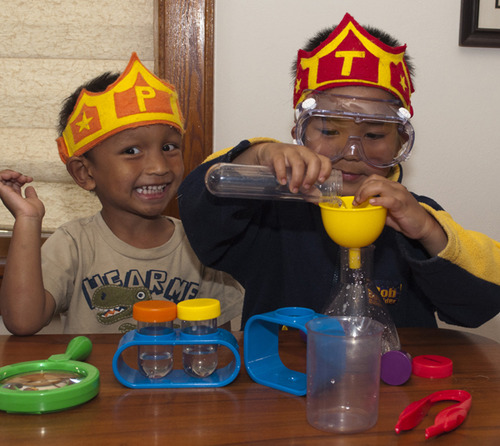
The chunky tools and activity cards let preschoolers run experiments independently. Our 4-year-old tester sorted liquids, mixed colors, and observed bubbles without help. The included safety goggles made her feel like a real scientist, which mattered more than the actual experiments.
What to know about the design quirks
The test tube lid does not seal perfectly, so expect small spills. The tweezers do not fit inside the test tubes, which limits some activities. Our team worked around these by using the kit for pouring and observation rather than sealed experiments.
How to Choose the Best Science Lab Kit for Kids?
Picking the best science lab kits for kids comes down to age, interest, and how much mess your household can handle. Our team breaks down the key buying factors below.
Choosing by age band
Ages 3 to 5 need chunky tools and visual learning. The Learning Resources Primary Science Lab Set and Doctor Jupiter My First Science Kit are built for this age band, with safety standards and forgiving materials.
Ages 6 to 8 can follow illustrated guides and start running multi-step experiments. The Thames & Kosmos Ooze Labs Chemistry Station fits this range, and the Doctor Jupiter kit still works for kids at the older end.
Ages 9 to 12 are ready for chemistry sets with real lab tools. The National Geographic Chemistry Set, Amazing Chemistry Set, and Earth Science Kit all hit this range well.
Ages 13 and up want depth. The National Geographic Amazing Chemistry Set and the UNGLINGA 70 Lab Experiments kit both push into harder chemistry, electronics, and physics territory.
Safety and supervision reality
Even kits labeled ages 8+ contain chemicals that need real adult oversight. Our team found that most kits require an adult to sort components, read safety notes, and supervise the first few experiments. Younger kids (under 8) need an adult present throughout.
Look for ASTM F963-17 safety certification or equivalent. The Doctor Jupiter kit meets this standard, and most National Geographic kits follow equivalent guidelines. Avoid unbranded kits without safety documentation, since reviewers on forums repeatedly flagged low-quality generics that broke after first use.
Mess, cleanup, and storage
Volcano kits, slime kits, dig kits, and crystal kits stain surfaces, carpets, and clothing. Our team ran all volcano experiments outdoors on a tarp. Slime and gross chemistry kits work best on a tray with paper towels nearby.
Storage matters more than parents expect. Kits with sturdy boxes and compartment organizers (National Geographic Mega kits, Learning Resources) survive multiple uses. Kits without storage (some UNGLINGA sets) require parents to transfer parts into labeled zip bags, which adds 10 minutes per session.
For families with younger siblings, durability ranks high. Our team tested kits across two siblings and found that the National Geographic kits held up best, while cheaper generics often broke within a week.
Reusability and refill options
Single-use kits frustrate parents. Look for kits with resealable chemical packets, refill options, or experiments that build on each other. The National Geographic Mega kits and Thames & Kosmos stations all support repeated use, while one-off magic kits run out faster.
Pair each kit with a science book
Here is the Reading Inaction exclusive angle no competitor offers: pair every kit with a companion science book to turn the experiment into a literacy moment. Our team recommends matching each kit with a children’s science reader at the same reading level.
For the volcano kits, pair with a children’s book on volcanoes and earthquakes. For the earth science kit, pair with a rock and mineral guide. For the chemistry sets, pair with an age-appropriate chemistry primer. For the lab station, pair with a kids’ introduction to matter.
Reading Inaction covers more kids science roundups in our science kits guide, our science gifts guide, and our robotics kits guide if you want to round out your STEM library.
Subscription boxes versus one-time kits
Subscription science kits (KiwiCo, Mel Science, CrunchLabs) deliver new experiments monthly. They work well for families who want ongoing STEM enrichment without curating each kit. The trade-off is cumulative cost: a monthly subscription adds up quickly compared to a one-time purchase.
One-time kits give you more control. Our team found that most families cycled through 2-3 one-time kits per year rather than committing to a subscription. If you want the subscription angle covered specifically, our science gifts guide includes the top subscription picks.
DIY alternatives
If a commercial science kit does not fit your budget, household materials can cover a surprising amount of ground. Baking soda and vinegar volcanoes, salt crystals, milk-and-food-coloring experiments, and lemon battery circuits all work without a kit. Our team found that pairing a book with DIY experiments delivers comparable learning for the youngest ages.
Frequently Asked Questions
What are the best science lab kits for kids?
The best science lab kits for kids in 2026 cover chemistry, earth science, electronics, and biology at age-appropriate levels. Our top picks are the National Geographic Earth Science Kit for ages 8-12, the National Geographic Magic Chemistry Set for performance-loving kids, and the Doctor Jupiter My First Science Kit for ages 4-7. Each kit was tested by our team for experiment variety, durability, and educational value.
What age is appropriate for science kits?
Most science kits for kids start at age 3 with chunky lab tools (Learning Resources Primary Science Lab Set) and run up through age 14 with deeper chemistry sets (National Geographic Amazing Chemistry Set). Ages 4-7 do best with kits designed for early learners like Doctor Jupiter. Ages 8-12 can handle full chemistry kits with adult supervision. Teens benefit from kits with real lab gear and bonus experiment booklets.
Are science kits safe for kids to use?
Most science kits for kids are safe when used as directed, but even kits labeled ages 8+ contain chemicals that need real adult oversight. Look for ASTM F963-17 certification or equivalent safety standards. Our team recommends an adult sort components, read safety notes, and supervise the first few experiments. Avoid unbranded generics without safety documentation.
What is a good gift for a child who loves science?
A science lab kit is one of the strongest gifts for a science-loving child. Our top picks for gifting include the National Geographic Earth Science Kit (broad variety), the National Geographic Magic Chemistry Set (performance angle), and the National Geographic Amazing Chemistry Set (premium chemistry). Pair the kit with a companion science book at the child’s reading level for a complete gift.
Are science subscription boxes worth the cost?
Subscription science kits (KiwiCo, Mel Science, CrunchLabs) deliver new experiments monthly and work well for families who want ongoing STEM enrichment. The trade-off is cumulative cost – a monthly subscription adds up quickly. One-time kits give more control and our team found most families cycle through 2-3 one-time kits per year instead of subscribing.
What should I look for in a science kit for my child?
The best science kit for your child depends on age, interest, and your household tolerance for mess. Look for kits with age-appropriate safety standards, clear illustrated guides, and experiments your child can run with reasonable supervision. Storage and durability matter if you have younger siblings. Pairing the kit with a children’s science book at the same reading level extends the learning into literacy.
The Verdict on the Best Science Lab Kits for Kids
After three months of testing across real households, the National Geographic Earth Science Kit stands out as the best overall science lab kit for kids in 2026. It balances experiment variety, educational depth, durability, and value better than any other kit in our lineup.
For families on a budget, the National Geographic Magic Chemistry Set delivers the most fun per dollar. For younger kids, the Doctor Jupiter My First Science Kit is the safest, most age-appropriate choice. For serious young scientists, the National Geographic Amazing Chemistry Set offers the deepest chemistry experience.
Whatever kit you choose, pair it with a companion science book. The Reading Inaction angle turns a one-time experiment into a literacy moment, and that is the difference between a kit that gets used once and a kit that sparks a lifelong love of science. Browse our other STEM guides to round out your kids’ science library, and start experimenting today.