
Finding the best reading workbooks for a gifted reader is harder than it sounds. Standard grade-level pages get finished in 15 minutes, then your child is bored, frustrated, or quietly reading a novel under the desk.
I have a child who reads two to three grade levels ahead. We have worked through dozens of workbooks over the last four years, and the ones we kept are the eight in this guide. Each one stretches an advanced reader, builds real comprehension, and respects how smart kids actually think. If you also want broader guidance on choosing age-appropriate books, that resource pairs well with this list.
Gifted readers need workbooks that challenge without crushing. The picks below are the ones our family and our homeschool circle trust, organized from grade 1 through high school readiness.
Table of Contents
Top 3 Picks for a Gifted Reader

Reading Detective A1
- Critical thinking focus
- Text evidence practice
- Both fiction and nonfiction

Evan-Moor Daily Reading…
- Daily skill progression
- Engaging illustrations
- Progressive difficulty

Reading for the Gifted…
- Colorful illustrations
- History and science topics
- Open-ended questions
Reading Detective A1 wins my editor’s choice because it is the only workbook in this roundup built from the ground up around critical thinking. The passages are real excerpts from books kids actually want to read, and the questions ask them to pull evidence, infer meaning, and argue with the text.
Evan-Moor Daily Reading Comprehension Grade 1 is the top-rated pick for younger gifted readers. It starts gently, then ramps up the difficulty so a six-year-old who already reads chapter books still feels challenged by the end of the year.
Reading for the Gifted Student Grade 6 is the best value. It is colorful, packed with open-ended questions, and broad enough to spark dinner-table conversations about history and science.
Best Reading Workbooks for a Gifted Reader in 2026
The best reading workbooks for a gifted reader in 2026 are Reading Detective A1, Evan-Moor Daily Reading Comprehension, and the Flash Kids Reading for the Gifted Student series because they pair above-grade-level passages with critical thinking questions rather than rote recall. Here is how all eight picks compare side by side.
| Product | Specs | Action |
|---|---|---|
| Evan-Moor Daily Reading Comprehension Grade 1 |
|
Check Latest Price |
 Reading for the Gifted Student Grade 3 Reading for the Gifted Student Grade 3 |
|
Check Latest Price |
 Reading for the Gifted Student Grade 4 Reading for the Gifted Student Grade 4 |
|
Check Latest Price |
 Carson Dellosa Comprehensive Curriculum Grade 4 Carson Dellosa Comprehensive Curriculum Grade 4 |
|
Check Latest Price |
| Reading Detective A1 |
|
Check Latest Price |
| Reading for the Gifted Student Grade 6 |
|
Check Latest Price |
 Evan-Moor Daily Reading Comprehension Grade 7 Evan-Moor Daily Reading Comprehension Grade 7 |
|
Check Latest Price |
 SAT Reading Comprehension Workbook SAT Reading Comprehension Workbook |
|
Check Latest Price |
1. Evan-Moor Daily Reading Comprehension Grade 1 — Top Rated for Young Advanced Readers
Evan-Moor Daily Reading Comprehension, Grade 1 – Homeschooling & Classroom Resource Workbook, Reproducible Worksheets, Teaching Edition, Fiction and Nonfiction, Lesson Plans, Test Prep
Grade 1
Daily skill build
Reproducible
Pros
- 87 percent 5-star reviews
- Engaging illustrations for young readers
- Progressive difficulty from easy to challenging
- Strong for English language learners
- Short passages fit young attention spans
Cons
- Some users wish it was thicker
- Strategy practice section feels open-ended
- Limited writing required
My first grader tore through this one. The first unit is genuinely gentle, with picture-supported short passages and simple recall. By the final unit, the questions were asking my child to compare two stories and explain which character changed more. That arc is what makes this the right workbook for a gifted first grader.
The book targets grade 1, with a listed reading age of 6 to 7. In our home, that lined up well with a child decoding at a third-grade level who still needed the comprehension stretch.
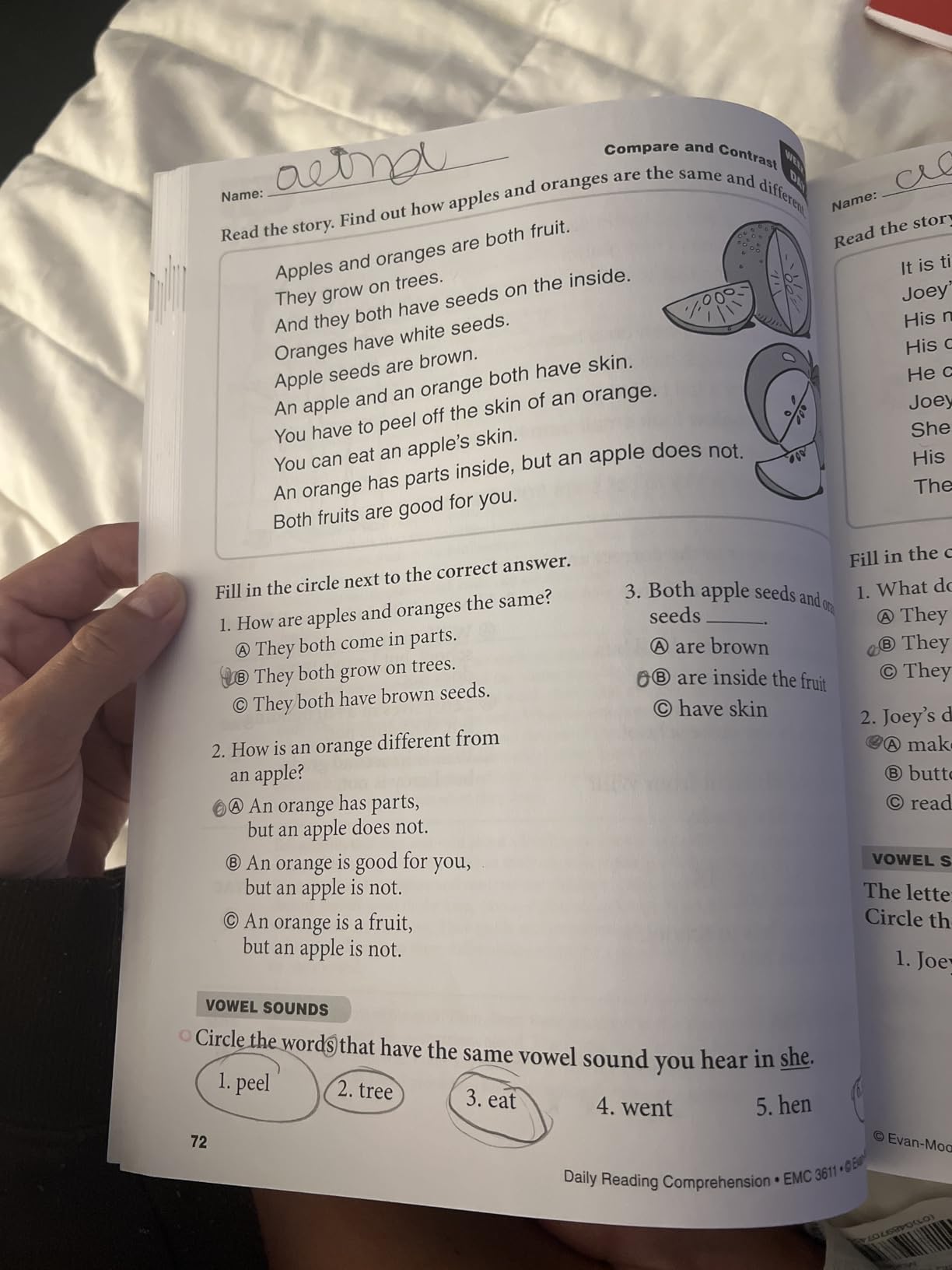
The individual stories are on the simpler side, and that is intentional. The skill progression is the point. Each week targets one comprehension skill, such as cause and effect, fact and opinion, sequencing, or drawing conclusions. After eight weeks my child could point to a passage and name which skill we were practicing.
The teaching edition includes reproducible worksheets, which we reused with our younger child. One workbook, two learners, a full year of practice.
This pick is Prime eligible and carries 882 reviews at a 4.8-star average, with 87 percent of reviewers giving five stars. For a gifted six or seven-year-old, this is where I would start.
What Reading Level Is It Really?
It is a true grade 1 book that climbs toward grade 2 by the back half. Gifted first graders reading one to two years ahead stay engaged because the questions get harder even when the text stays accessible. Strong second graders will find it comfortable rather than challenging.
How Independent Is the Work?
Mostly independent. Directions are simple and illustrations carry a lot of the meaning, so a fluent reader can complete a daily page alone in about 10 minutes. The strategy pages ask kids to explain their thinking, and that is where my child needed me nearby.
2. Reading for the Gifted Student Grade 3 — Best Enrichment for an Advanced 8-Year-Old
Reading for the Gifted Student Grade 3 (For the Gifted Student)
Grade 3
Flash Kids
Challenging activities
Pros
- Designed for gifted learners
- Variety of history
- science
- and arts topics
- Good for classroom enrichment
- Colorful and engaging
- Reasonable price
Cons
- Discontinued title
- Only 1 left in stock
- Some quality control issues
This is the workbook I wish I had found sooner. Reading for the Gifted Student Grade 3 assumes from page one that your child is already a strong reader. The passages are longer, the vocabulary is richer, and the questions ask for opinions rather than just answers.
My third grader loved the variety. One day we were reading about ancient Egypt, and the next it was a short biography of an inventor. By the end of the week we were debating whether a fictional character’s choice was brave or reckless.
The publisher lists it for kindergarten through grade 3 with a reading age of 5 and up. In practice it worked for us from late second grade through third. A child reading at grade level will find parts of it genuinely difficult, which is by design.
It averages 4.5 stars across 38 reviews, and most parents say the content itself justifies the hunt. The catch is availability: this is a discontinued title with only 1 copy in stock as of 2026, and it does not ship with Prime. If it is available when you read this, grab it. If it is gone, the Grade 4 and Grade 6 editions in this list cover similar ground.
What Grade Level Is It Really For?
Think late second grade through fourth grade for a gifted reader. The label says grade 3, but the questions reach upward, asking kids to synthesize across a passage rather than recall facts. A child working a year ahead will find it appropriately demanding without being discouraging.
How Much Teacher Planning Does It Need?
Almost none. The format is a passage followed by activities, so it works as an independent supplement to any reading curriculum. We slotted it in as a twice-a-week enrichment block, and it required no preparation beyond checking answers together.
3. Reading for the Gifted Student Grade 4 — Best for Gifted Test Prep
Reading for the Gifted Student Grade 4 (For the Gifted Student)
Grade 4
Flash Kids
Gifted test prep
Pros
- Helped kids pass gifted program tests
- Colorful and engaging pages
- Wide informational topic range
- Strong value versus tutoring
- Good standardized test preparation
Cons
- Only 1 left in stock
- Some reviewers say it fits closer to grade 3
Multiple parents in our homeschool co-op used this workbook to prepare for gifted program admissions, and the verdict was consistent: it worked. The passages are denser than the Grade 3 book, the questions push toward synthesis, and the topics match what gifted program assessments actually draw from.
The Grade 4 edition is labeled for kindergarten through grade 6 with a reading age of 5 and up. We found it landed best from late third grade through fourth. A child reading comfortably at grade 4 will feel challenged, while a child reading at grade 5 or above may finish it quickly.
It averages 4.4 stars across 31 reviews, and the most common praise is that it builds the reading stamina and topic breadth that gifted screening rewards. One parent in our group credited it directly for her daughter passing the program’s assessment.
Stock is thin, with only 1 copy left as of 2026. The silver lining is that this edition is Prime eligible, so it arrives quickly once you order.
Is It Right for Gifted Program Testing?
Yes, as a preparation tool rather than a test simulator. It exposes kids to the informational writing style, vocabulary, and multi-step question format that gifted assessments use. Families in our circle paired it with a practice test for format familiarity and used this book for the underlying skills.
What Reading Level Suits It Best?
Several reviewers noted it runs closer to grade 3 than grade 4 in difficulty. For a gifted reader that is actually useful information: hand it to a strong third grader for a genuine stretch, or to a fourth grader who needs confidence plus breadth before moving to harder material.
4. Carson Dellosa Comprehensive Curriculum of Basic Skills 4th Grade Workbook — Best All-in-One
Pros
- 544 pages of comprehensive content
- Covers reading
- math
- English
- writing
- spelling
- grammar
- Answer key in the back
- Strong for classroom and homeschool
- Great value for the page count
Cons
- Some typos reported in certain copies
- May be too easy for advanced learners
- Animations do not engage all kids
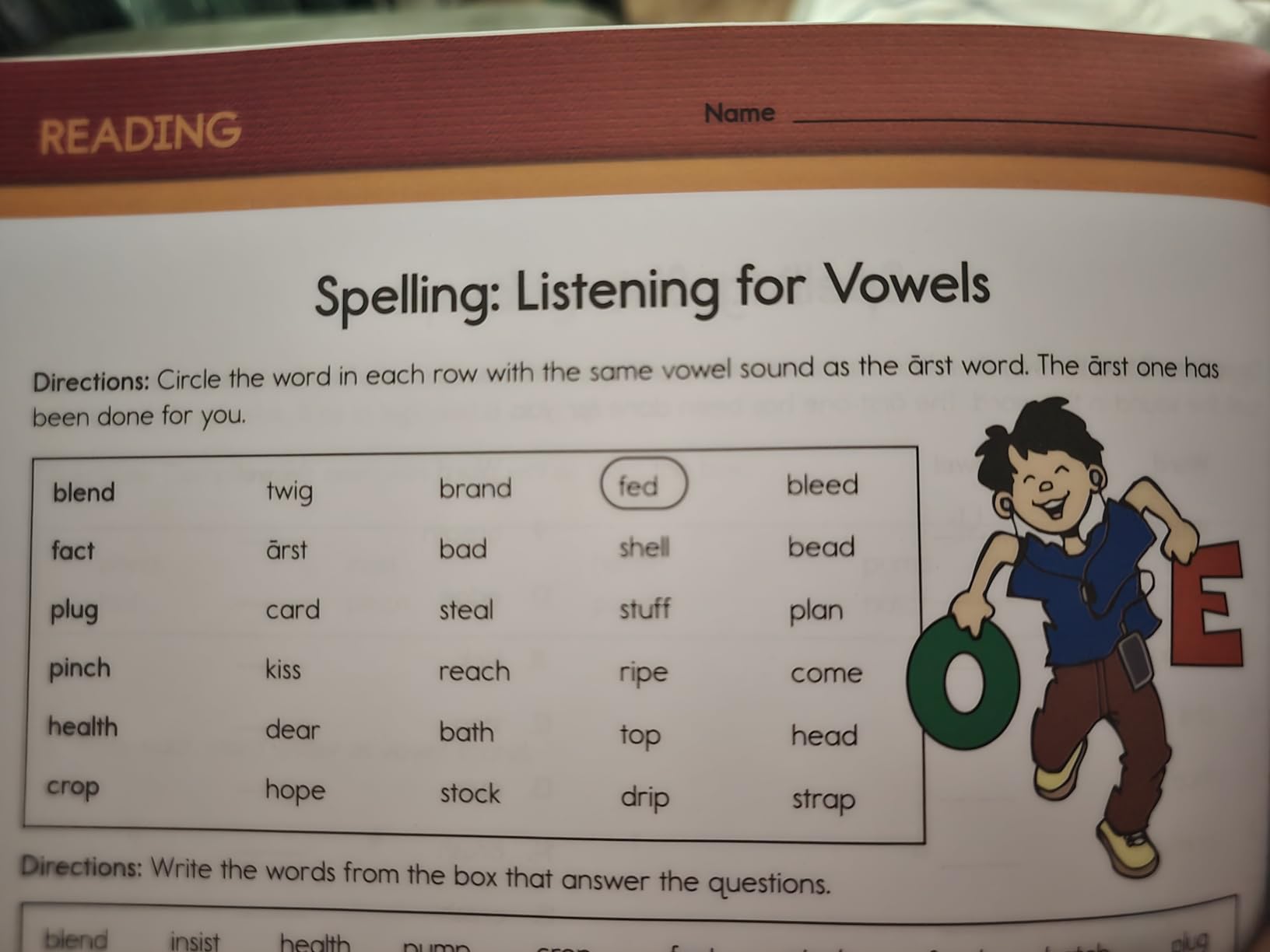
Sometimes the best reading workbook is one that also covers everything else. The Carson Dellosa Comprehensive Curriculum Grade 4 packs 544 pages of reading, math, English, writing, spelling, and grammar into one volume. For a gifted fourth grader who finishes work in a flash, this is the resource you keep on the shelf.
Our family used the reading and writing sections most heavily. The passages sit at a grade 4 to 5 level and include both fiction and nonfiction, and the writing prompts push toward paragraph-level structure, which is exactly what gifted fourth graders should be practicing.
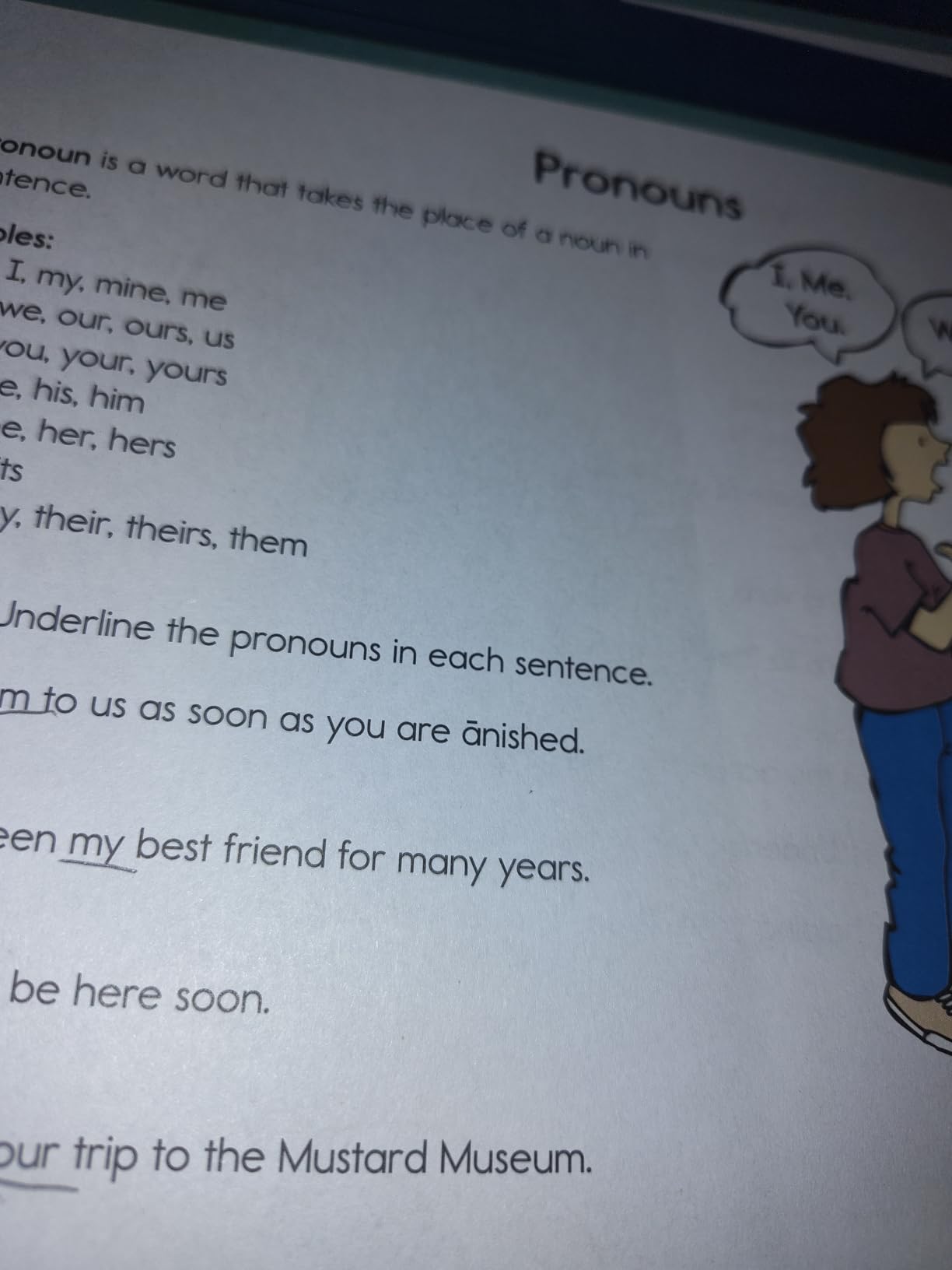
What surprised me was the math. The problems go well beyond grade 4 in places, with multi-step word problems that genuinely require thinking. We treated those sections as enrichment rather than review.
This workbook is Prime eligible and has 2,261 reviews averaging 4.6 stars, with roughly 80 percent five-star ratings. That volume of feedback matters, because when a workbook has been used by thousands of families you can trust the pacing and quality.
The answer key sits in the back of the book rather than a separate insert, which is convenient. Pages are reproducible for classroom or family use.
Which Subjects Does It Actually Cover?
Reading comprehension, language arts, writing, spelling, grammar, and math, all in one binding. It is the only book in this roundup that spans the full grade-level skill set, which makes it a strong anchor for an at-home program. The trade-off is that reading gets a fixed slice of those 544 pages rather than the whole book.
How Hard Is It Really?
It is comprehensive but not deep. A gifted fourth grader reading two years ahead will breeze through the reading passages, and several reviewers note it can run easy for advanced students. Use it for coverage and routine, then bring in a reading-specific pick from this list for real stretch.
5. Reading Detective A1 — Editor’s Choice for Critical Thinking
Reading Detective® A1
Grade 5 and up
Critical Thinking Co.
Text evidence
Pros
- Builds critical thinking and inference skills
- Real passages from popular books
- Detailed answer key with explanations
- Aligned with Common Core
- Great practice with both fiction and nonfiction
Cons
- Some errors in answer keys
- Not Prime eligible
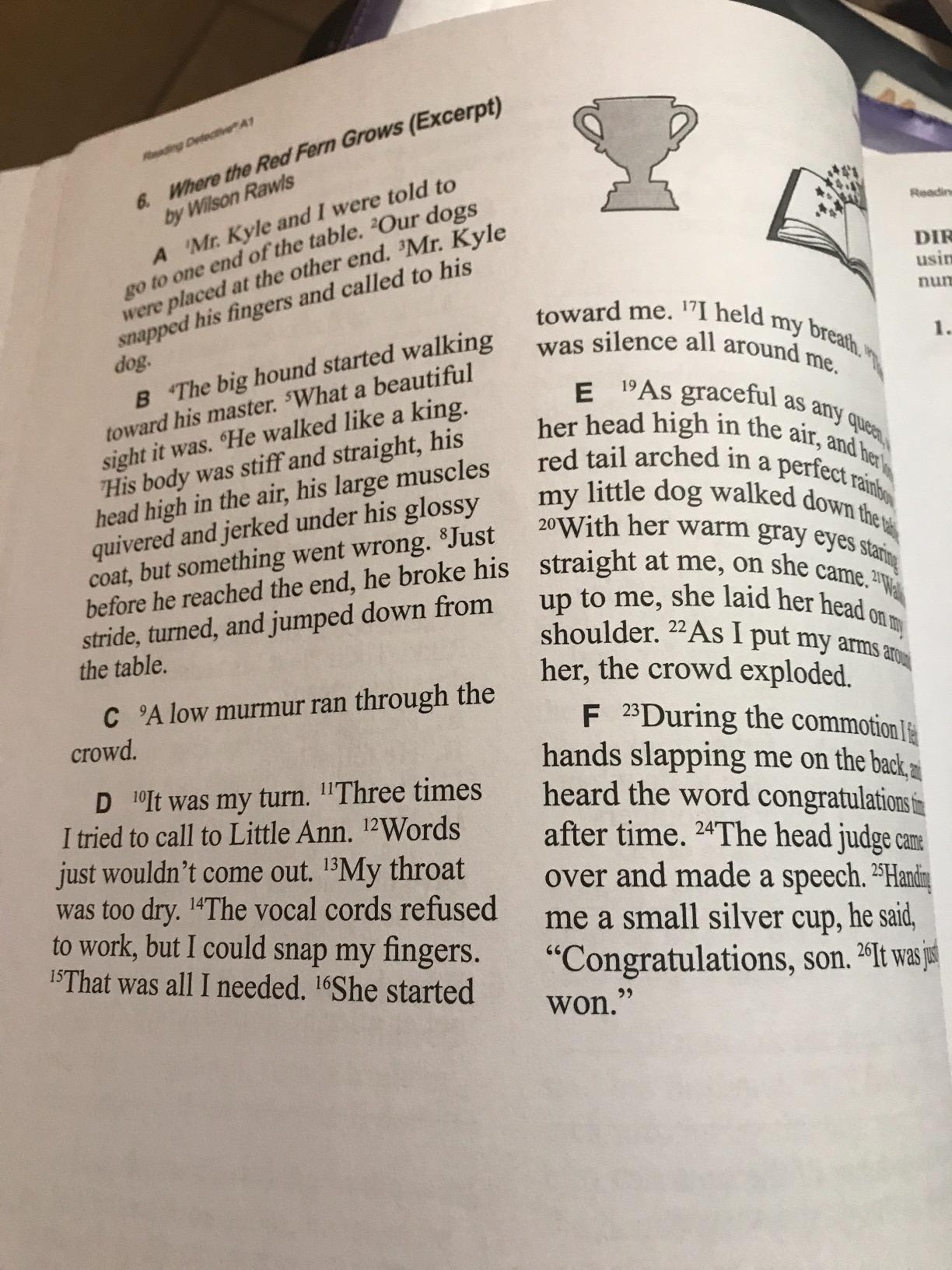
If I had to keep one workbook from this entire list, it would be Reading Detective A1. It is the only book here that treats critical thinking as the goal rather than a bonus. Every passage ends with questions that ask your child to point to evidence, make an inference, or evaluate an argument.
The listed reading age is 10 to 11, and the publisher recommends grade 5 and up. In our home we started it with a strong third grader who was hungry for harder material, and with support it worked. For most families, grades 4 through 7 is the sweet spot.
What sold me was the answer key. Every answer includes an explanation, not just a letter. When my child got one wrong, we could read together why, and what evidence in the passage would have pointed the other way. That is gold for a gifted learner who often finishes work without checking it.
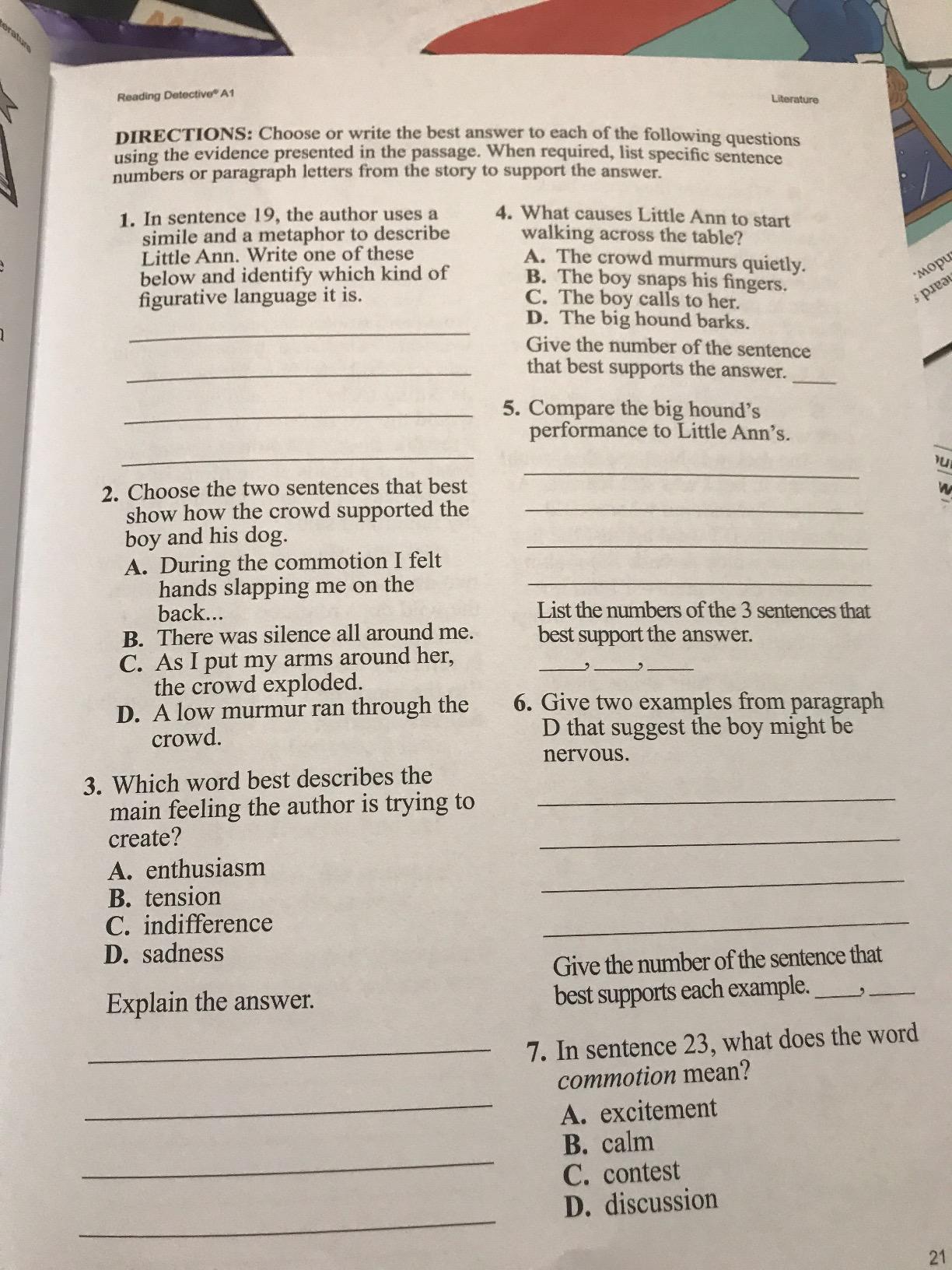
The book runs 192 pages and is aligned with Common Core standards, covering both fiction and nonfiction passages drawn from real published books. Many passages are excerpts kids recognize, which removes the complaint that practice texts are boring.
It averages 4.8 stars across 152 reviews. The most common criticism is occasional errors in the answer key, and we found two over a school year. Both were clearly wrong, easy to spot, and turned into a lesson on checking work rather than trusting answer keys blindly.
What Reading Level Suits It Best?
Grades 4 through 7. A fluent reader who can decode anything but has never been asked to defend an answer with evidence will get the most from it. Kids below grade 4 can use it with a parent, since the passages are short but the thinking demands are real.
How Much Help Does the Answer Key Give?
More than any other workbook here. Each explanation names the reasoning skill and points back to the passage, so the key doubles as a mini lesson. That makes it work for self-directed older kids and for parents who want to teach rather than just grade.
6. Reading for the Gifted Student Grade 6 — Best Value for Older Gifted Readers
Reading for the Gifted Student Grade 6 (For the Gifted Student)
Grade 6
Flash Kids
History and science
Pros
- Colorful illustrations on every page
- Topics spark great family conversations
- Independent work friendly
- Good balance of challenge
- Open-ended questions and essay opportunities
Cons
- Heavy focus on history and science
- Some passages may bore certain students
- Not Prime eligible
Reading for the Gifted Student Grade 6 is the best value in this roundup. The book runs 192 pages in full color, and the passages go well beyond what typical grade 6 workbooks offer.
What we loved was the topic range. Passages cover ancient civilizations, modern inventions, art history, and short stories, and the open-ended prompts ask kids to form and defend opinions. For a gifted reader who usually waits for everyone else to finish, this book finally gave mine pages worth chewing on.
The publisher lists it for kindergarten and up with a reading age of 5 and up, which is misleading. In our home it worked from grade 5 through 7. A child reading at grade level will find it challenging, and a gifted fifth grader will feel right at home.
It averages 4.6 stars across 36 reviews, with parents praising the balance of challenge. Reviewers consistently note kids can work through it independently, which matters if you are juggling multiple learners. It is in stock as of 2026 and ships within 2 to 3 days, though without Prime.
What Reading Level Suits It Best?
Grades 5 through 7 for a gifted reader, despite the grade 6 label. The passages are informationally dense, which is where the challenge comes from rather than from advanced vocabulary. Strong fourth graders who love nonfiction can also grow into it.
How Much Fiction Is Included?
Not much, and that is the main trade-off. The book leans heavily on history and science, and some reviewers flag that fiction-loving kids find certain passages dry. If your child wants stories, pair this with the Reading Detective A1 pick above, which draws from published fiction.
7. Evan-Moor Daily Reading Comprehension Grade 7 — Best Daily Practice Structure
Pros
- Organized by skill for daily practice
- Great for homeschool and classroom
- Teaching guide by week and day
- Short stories with follow-up questions
- Both fiction and nonfiction passages
Cons
- Limited extended or open-ended responses
- May need supplementation for advanced readers
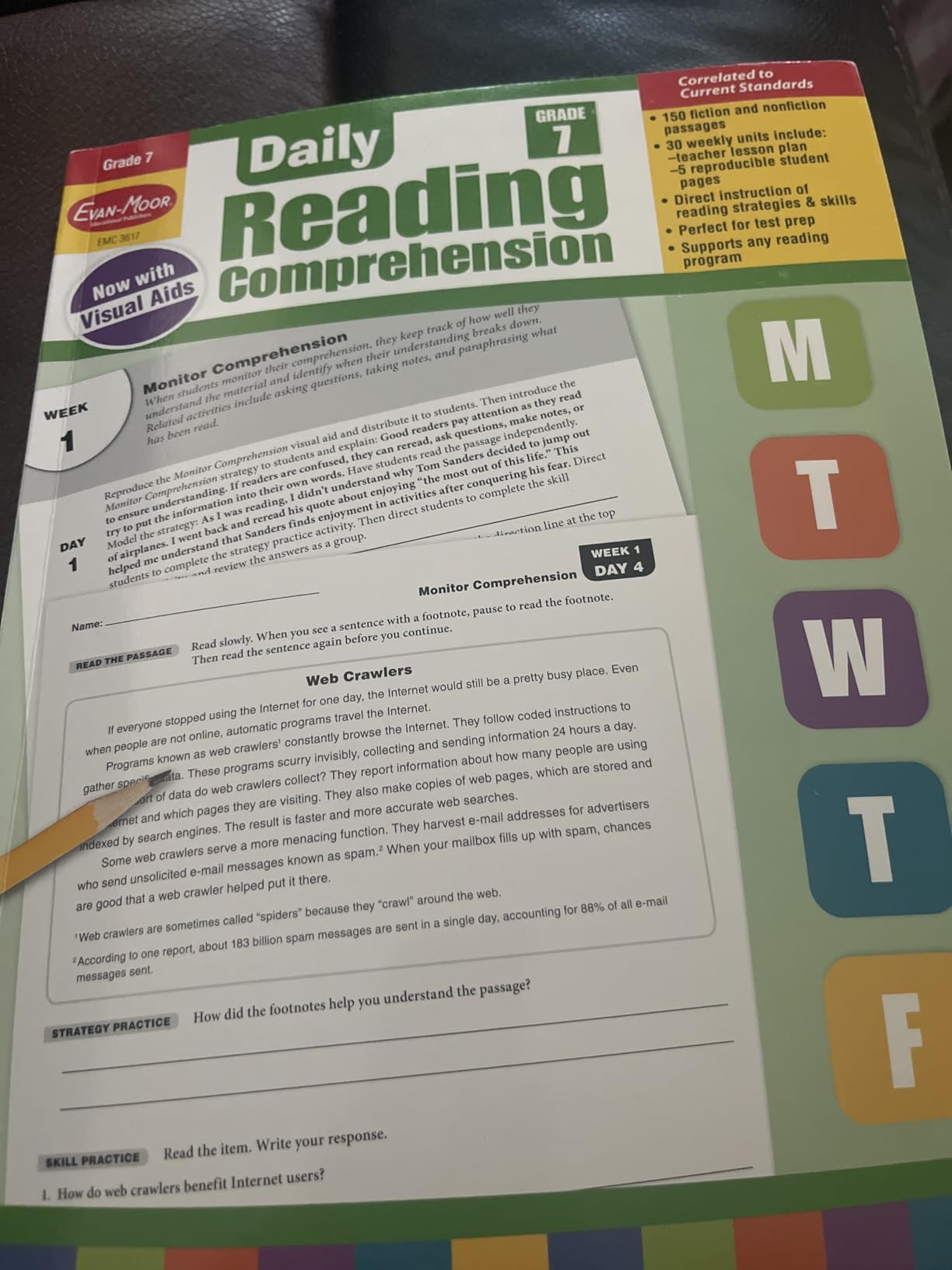
Evan-Moor’s Grade 7 Daily Reading Comprehension is the most structured workbook in this roundup. It is built around 30 weeks of lessons, with one short passage and a small set of questions each day. For a gifted seventh grader who needs a daily habit more than another textbook, this is a strong pick.
What sets it apart is the teaching guide. The publisher includes lesson plans for the entire year, organized by week and by day, which meant I did not have to plan anything. Open the book, read the day’s lesson, move on.
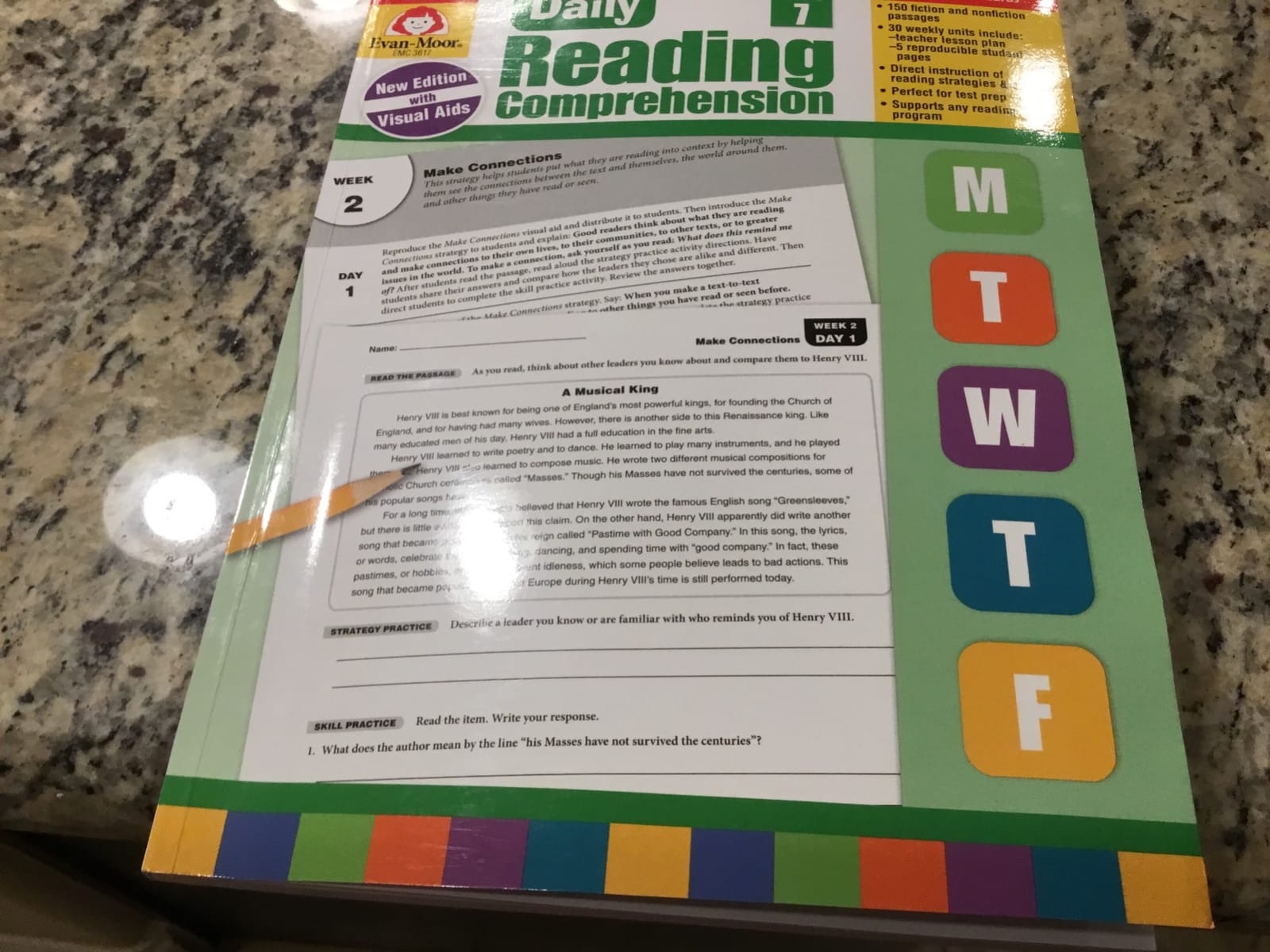
The passages are short, typically 200 to 400 words, keeping the daily commitment under 20 minutes. For a gifted reader who finishes longer assignments in 10 minutes, that length is actually useful. It forces focus on the quality of analysis rather than volume of reading.
It averages 4.6 stars across 461 reviews, and reviewers consistently praise the skill-by-skill organization and the teaching guide. The most common critique is that the questions are mostly short answer with limited room for extended responses.
This edition is Prime eligible and runs 208 pages, which makes it one of the most practical picks here for a full school year.
How Much Planning Does It Require?
Essentially none, which is its biggest selling point for homeschool families. The teaching guide maps every day of the year, and the reproducible pages work for more than one child. It is the closest thing in this list to an open-and-go reading program.
Is It Challenging Enough for a Gifted Reader?
Yes at grade level, no for a child reading two or more years ahead. The passages can feel easy for strongly advanced seventh graders, so use it for daily skill maintenance and pair it with harder novel study or the SAT workbook below for depth.
8. SAT Reading Comprehension Workbook — Best for Teen Test Prep
SAT Reading Comprehension Workbook: Advanced Practice Series
SAT prep
ILEX Publications
College Board style
Pros
- Detailed explanations for each question
- Easy-to-follow techniques
- Matches College Board question style
- Saves time during the test
- Effective for classroom or self-study
Cons
- Some vocabulary used slightly incorrectly
- Passages slightly easier than the actual SAT
By the time a gifted reader reaches high school, the question shifts from enrichment to performance. The SAT Reading Comprehension Workbook from ILEX is the right tool for that stage. It is a focused practice book, not an enrichment program.
The book runs 156 pages and works through the question types that dominate the SAT reading section: main idea, inference, vocabulary in context, and paired passages. Every question comes with a full explanation, which is what makes it usable for self-study.
What I appreciated was the question style. The items mimic College Board pacing and tone, and the techniques section teaches kids to move efficiently rather than over-read. A motivated tenth grader can use it entirely on their own.
It averages 4.5 stars across 56 reviews, with explanation quality the most common praise. The most frequent critique is that passages run slightly easier than the real SAT, which for practice is arguably a feature: kids build technique and confidence before facing the harder live test.
This pick is Prime eligible, which matters when a test date is approaching. For families with a teen in the house, it is the kind of workbook that pays for itself quickly compared with a prep course.
When Should a Teen Start Using It?
Ninth or tenth grade for a gifted reader, well before a real test date. The techniques take repetition to become automatic, and advanced readers benefit from unlearning the habit of reading every word. Starting early also means the actual SAT feels like review rather than a sprint.
Can They Use It Independently?
Yes, and that is the design. Explanations are detailed enough that a self-directed student can diagnose their own mistakes, and reviewers specifically recommend it for self-study. A parent or tutor only needs to step in for pacing and accountability.
How to Choose Reading Workbooks for a Gifted Reader
Choosing the best reading workbooks for a gifted reader comes down to five things. Here is what our family learned after four years of trial and error.
Look for Critical Thinking, Not Just Harder Content
Many workbooks aimed at advanced readers simply put longer passages in front of the same recall questions. That is not what gifted learners need. Look for books that ask for inference, evidence, comparison, and evaluation. Reading Detective A1 in this list is the clearest example.
Match the Level to Your Child’s Reading, Not the Grade Label
Publisher grade labels are loose guides at best. A gifted reader working two years ahead needs material that matches their actual reading level, even if the cover lists a younger grade. Trust your child and the sample pages over the printed grade number.
If you are unsure where to start, our guidance on choosing age-appropriate books walks through the same principle for novel selection.
Demand a Real Answer Key
The single most useful feature a workbook can have for a gifted reader is an answer key that explains rather than just lists. Reading Detective A1 sets the standard here. When a bright child gets an answer wrong, an explanation turns a frustrating moment into a learning one.
Avoid Repetition Fatigue
Gifted readers finish pages faster and notice patterns sooner. A workbook that recycles the same question type for 50 pages will lose them by page 12. Look for books that rotate question types, genres, and topics. The Flash Kids Gifted Student series does this well.
Balance Challenge With Enjoyment
Harder is not automatically better. A workbook that frustrates a gifted reader is just as bad as one that bores them. The strongest picks in this list sit in the sweet spot where the work feels like effort but not punishment.
Frequently Asked Questions
What is the best reading curriculum for homeschooling?
The best reading curriculum for homeschooling depends on your child’s level, but for gifted readers the strongest picks are Reading Detective A1 for critical thinking, Evan-Moor Daily Reading Comprehension for daily skill building, and the Flash Kids Reading for the Gifted Student series for breadth and enrichment. Match the level to your child’s actual reading ability rather than the printed grade.
What are the best homeschool curriculum workbooks?
The best homeschool curriculum workbooks for advanced readers pair above-grade-level passages with critical thinking questions. Reading Detective A1, Evan-Moor Daily Reading Comprehension, and Carson Dellosa Comprehensive Curriculum are the strongest picks in this roundup because they build real comprehension rather than rote recall.
What IQ is considered gifted in elementary school?
In most U.S. school districts, a score of 130 or higher on a standardized intelligence test is considered gifted, which typically falls in the top 2 to 3 percent of a child’s age group. Schools often identify gifted readers through a combination of test scores, reading assessments, and teacher recommendations rather than IQ alone.
What are some good books for advanced readers?
Good books for advanced readers include age-appropriate novels with rich vocabulary and complex themes, paired with workbooks that build comprehension and critical thinking. For structured practice, the Reading Detective series and Evan-Moor Daily Reading Comprehension workbooks pair well with regular novel reading.
What is the Jacob’s Ladder reading comprehension Program for Gifted Students?
Jacob’s Ladder is a reading comprehension program designed for gifted students that moves learners from literal recall up to higher-order analysis. It uses short passages followed by question ladders that gradually require inference, comparison, and evaluation, similar in spirit to the Reading Detective A1 workbook reviewed in this roundup.
Final Thoughts on Reading Workbooks for a Gifted Reader
After four years and dozens of workbooks, our family keeps coming back to three. Reading Detective A1 is the answer when your child is ready for real critical thinking. Evan-Moor Daily Reading Comprehension Grade 1 is the answer for a young advanced reader who needs structure. Reading for the Gifted Student Grade 6 is the answer when you want value and breadth.
The best reading workbooks for a gifted reader in 2026 are the ones your child will open without being asked. Start with one, see how it lands, and add a second if your child wants more challenge. Pair workbook time with real novel reading, and your gifted reader will keep growing for years.