
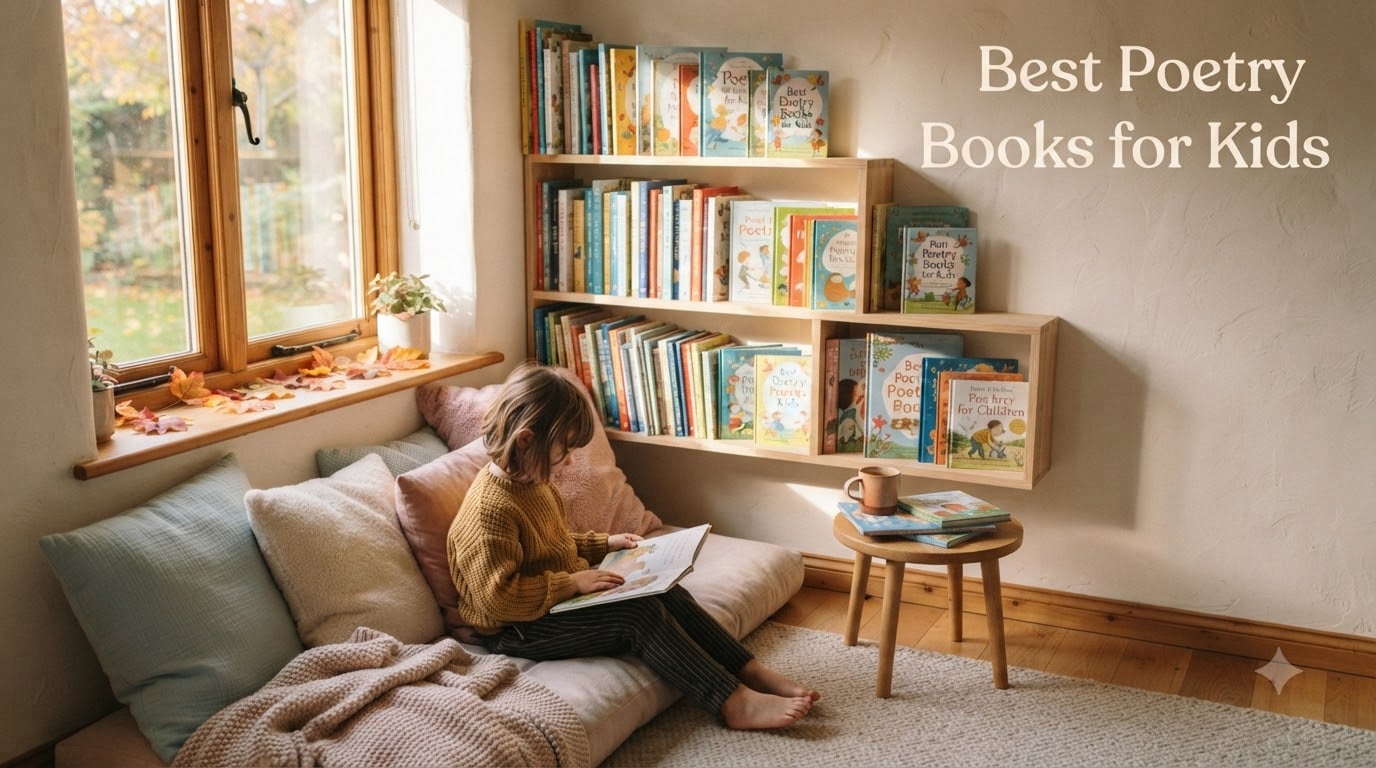
When my daughter was four, she asked me to read her “the funny poem about the boa constrictor” every single night for three months. That poem came from one of the best poetry books for kids I had pulled off our shelf, and it turned bedtime into our favorite part of the day. Poetry books for kids have a kind of magic that other books sometimes lack: short bursts of rhythm, surprise, and humor that even wiggly toddlers can sit still for.
I’ve spent years reading poetry to my three kids, gifting poetry books to nieces and nephews, and recommending them to other parents at the playground. In this guide, I’m sharing the best poetry books for kids that have earned their place on our shelves, organized by age range and reading style. Whether you have a toddler, an elementary reader, or a tween who insists they don’t like poetry, there’s a book here that will change their mind.
Table of Contents
Top 3 Picks for Best Poetry Books for Kids
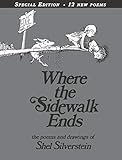
Where the Sidewalk Ends by…
- 183 pages
- ages 4+
- whimsical drawings
- 40th anniversary edition with bonus poems
The Random House Book of…
- 248 pages
- ages 3-10
- organized by themes
- illustrated by Arnold Lobel

Best Poetry Books for Kids in 2026: Quick Comparison
| Product | Specs | Action |
|---|---|---|
| Where the Sidewalk Ends |
|
Check Latest Price |
| A Light in the Attic |
|
Check Latest Price |
 The Random House Book of Poetry for Children The Random House Book of Poetry for Children |
|
Check Latest Price |
 A Child’s Garden of Verses A Child’s Garden of Verses |
|
Check Latest Price |
 Poetry for Kids: Robert Frost Poetry for Kids: Robert Frost |
|
Check Latest Price |
 National Geographic Book of Nature Poetry National Geographic Book of Nature Poetry |
|
Check Latest Price |
| National Geographic Book of Animal Poetry |
|
Check Latest Price |
 Sing a Song of Seasons Sing a Song of Seasons |
|
Check Latest Price |
1. Where the Sidewalk Ends – The Classic That Started It All
Where the Sidewalk Ends with 12 Extra Poems: Poems and Drawings
183 pages
Hardcover
Ages 4+
40th Anniversary Edition
Pros
- Timeless
- whimsical poems that appeal to all ages
- Classic Silverstein illustrations
- Short poems perfect for bedtime
- Includes 12 bonus poems
Cons
- A few poems may feel too deep for sensitive younger readers
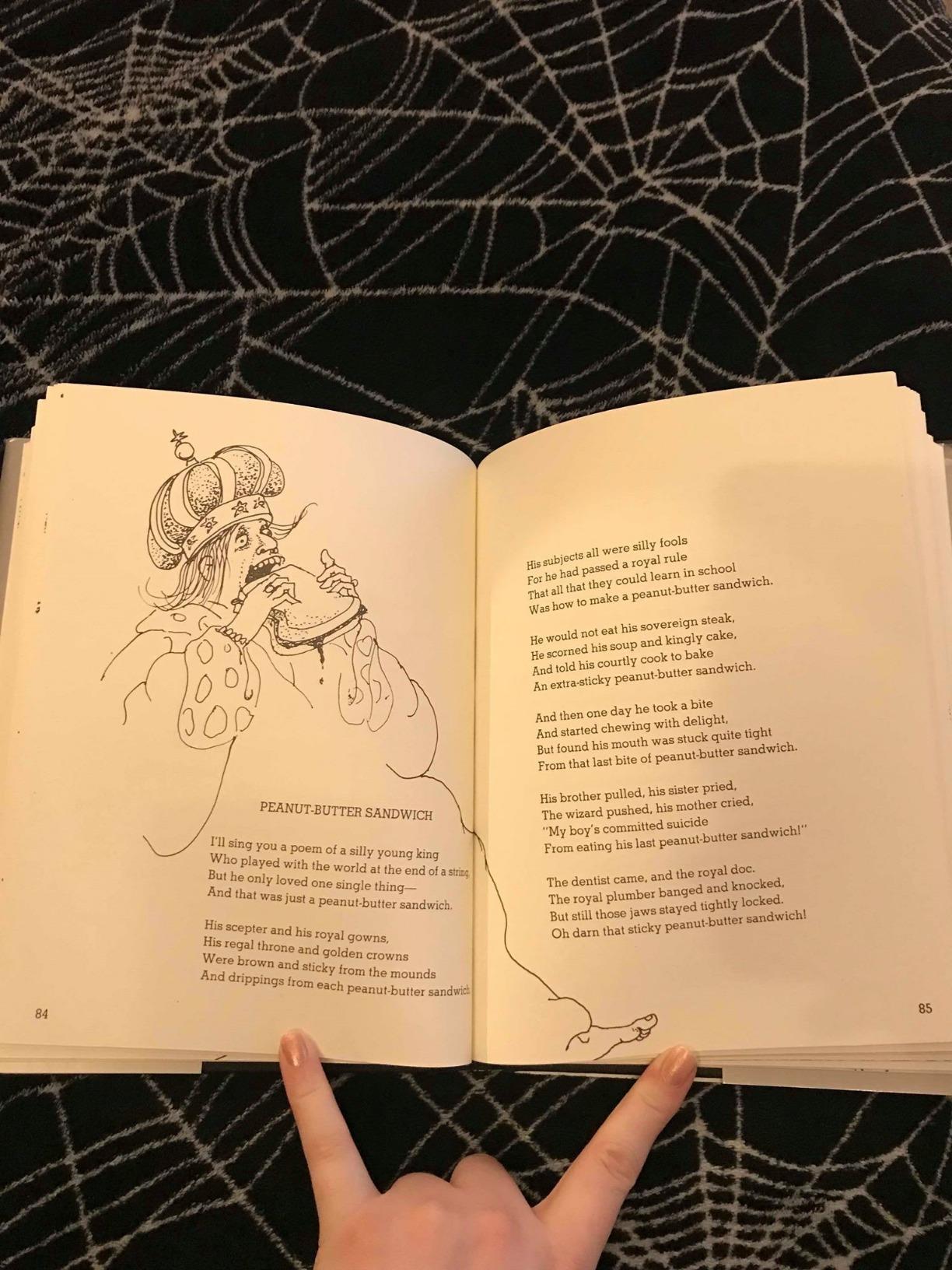
I bought this 40th anniversary edition when my oldest was turning five, and it became the book we’d reach for when nothing else worked. Shel Silverstein’s poems are short enough that a tired parent can read three or four in five minutes, and funny enough that kids request them by name. My kids still quote “Sarah Cynthia Sylvia Stout” whenever it’s time to clean their room.
The 40th anniversary edition includes 12 extra poems you won’t find in older copies, which makes it the version I’d recommend for new buyers. The hardcover binding holds up to the kind of handling only a beloved library book endures, and the whimsical line drawings on every page keep reluctant readers flipping through on their own. This is the book I gift at every baby shower and birthday for kids ages four and up.
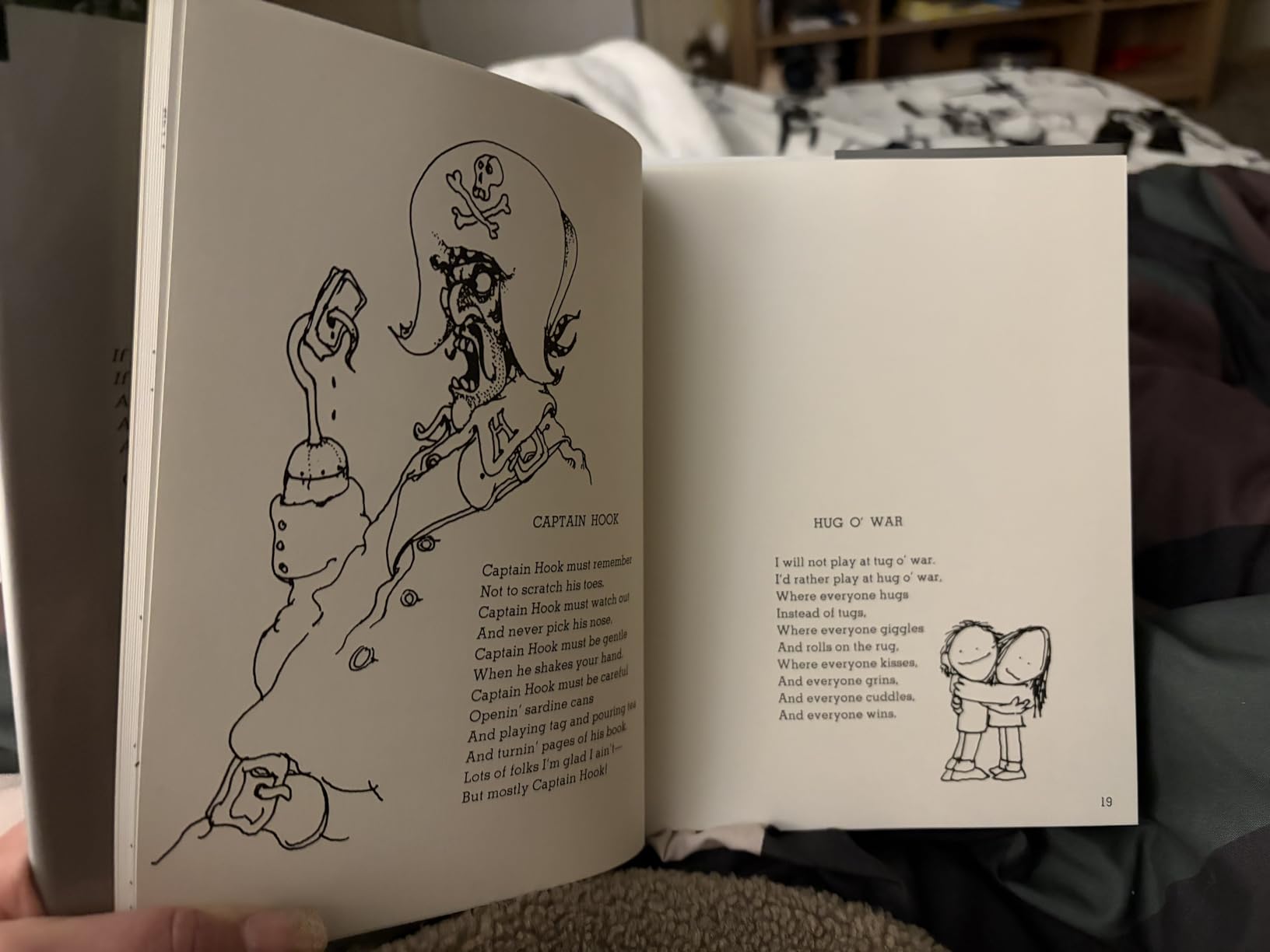
What makes this the best poetry book for kids in my experience isn’t the literary acclaim. It’s that my kids ask for it. We’ve owned our copy for seven years, and it’s never once sat on the shelf for a month. The poems work as read-alouds for preschoolers, independent reading for early elementary, and as a starting point for older kids who want to write their own silly verses.
Who This Book Is Best For
This collection shines for kids ages 4 to 10 who like humor, surprise endings, and a touch of the absurd. The short poem format is ideal for bedtime reading when attention spans are running low, and the rhythmic language is forgiving for emerging readers sounding out words. If you have one poetry book in your home, this should be it.
What to Watch Out For
A few Silverstein poems touch on darker themes like death and loneliness. They’re not inappropriate, but very sensitive children might find certain poems unsettling. I’d suggest reading through the book once before sharing with a particularly sensitive child under age six.
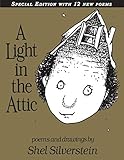
2. A Light in the Attic – Silverstein’s Perfect Companion
A Light in the Attic with 12 Extra Poems
185 pages
Hardcover
Ages 4+
Special Edition with 12 Extra Poems
Pros
- Companion to Where the Sidewalk Ends
- 12 bonus poems in special edition
- Durable hardcover format
- Whimsical surreal illustrations
Cons
- English-only text
If your family loves Where the Sidewalk Ends, A Light in the Attic is the natural next step. Silverstein wrote this collection to stand alone, but together the two books feel like volumes of the same beloved series. My middle child actually prefers this one because of the upside-down desk in the attic, which felt mysterious to her in a way the sidewalk never did.
The special edition includes 12 extra poems that you won’t find in original printings, including some shorter verses that work beautifully as quick read-alouds. I keep this book on the top shelf and bring it down for “special” poetry nights when my kids want something new. At 185 pages, it provides months of bedtime material.
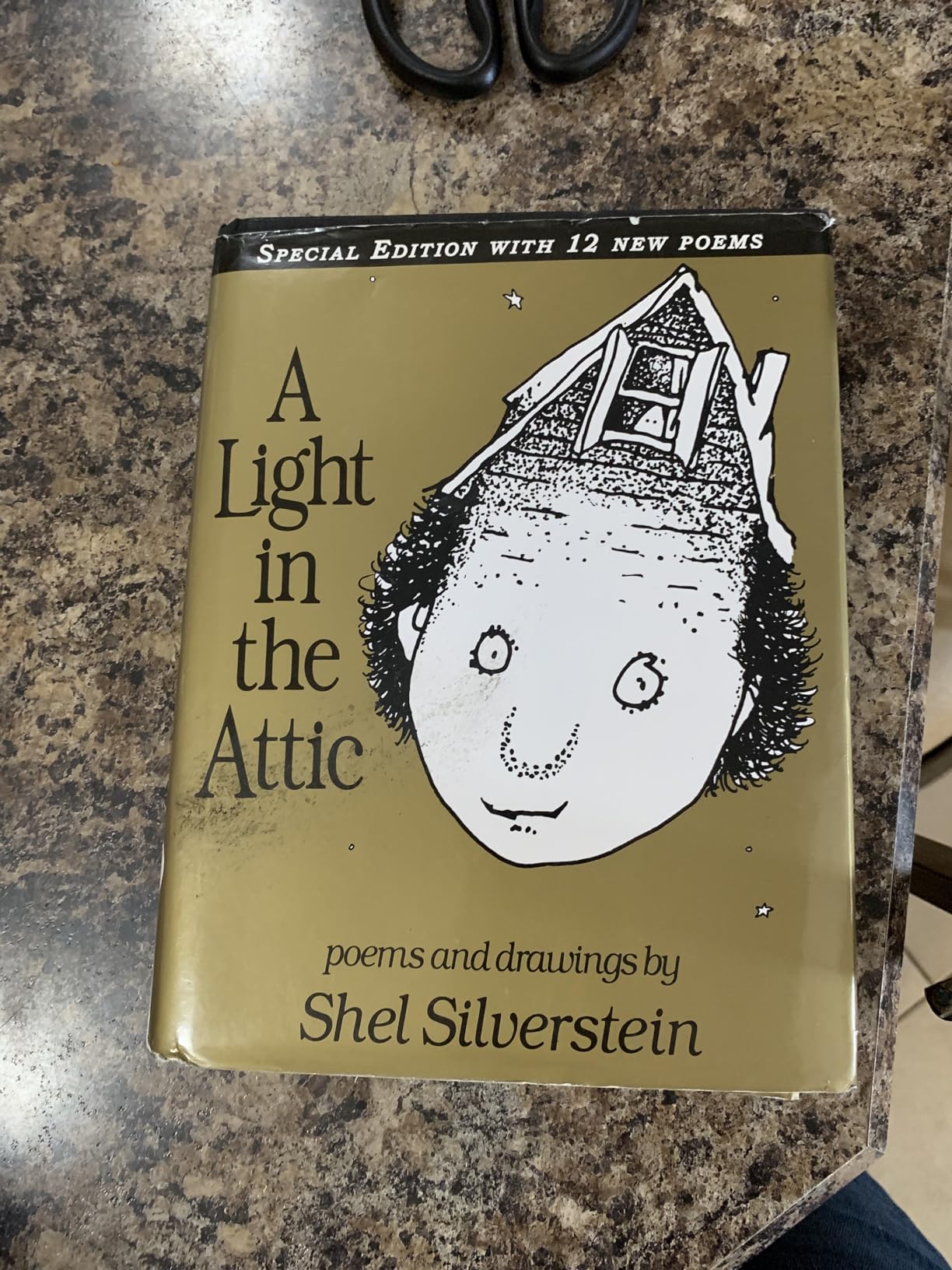
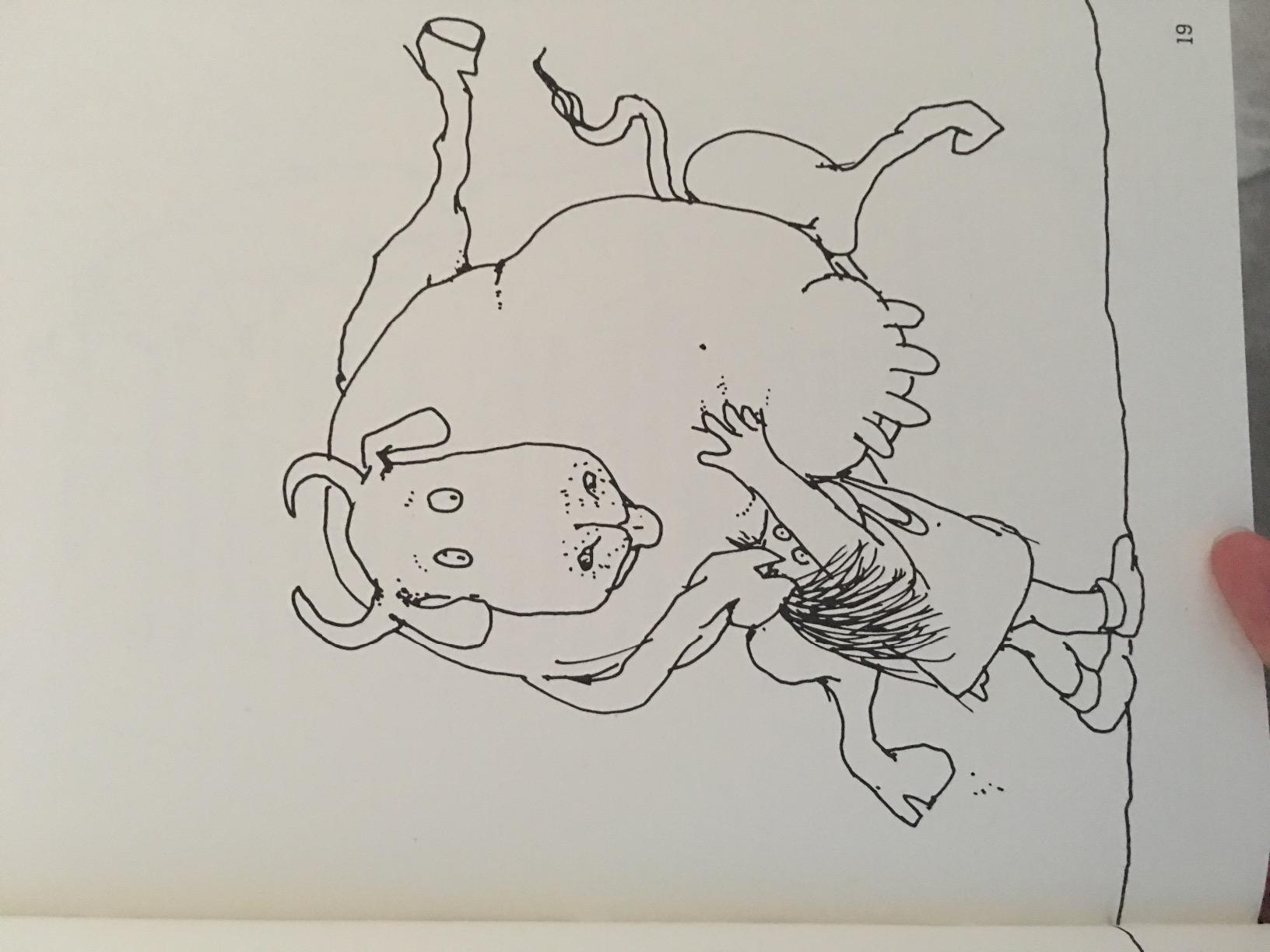
The illustrations have that same Silverstein charm: childlike drawings that somehow capture emotions more clearly than realistic art ever could. There’s a comfort in knowing every drawing in this book was made by the same hand, and that the author and illustrator are one person. Kids notice that, and they trust it.
Who This Book Is Best For
Kids ages 4 and up who love Silverstein’s humor will eat this up. It’s also a wonderful gift for grandparents looking for a high-quality poetry book to share during visits. The poems work especially well for read-aloud because the rhythm is so strong that kids start memorizing them after just a few readings.
What to Watch Out For
Like its companion book, some poems touch on heavier themes. Also, because this is the special edition with extra poems, it’s slightly more expensive than the standard edition. If budget matters more than bonus content, the original version is still a wonderful choice.
3. The Random House Book of Poetry for Children – The Best Anthology
The Random House Book of Poetry for Children
248 pages
Hardcover
Ages 3-10
Themed Anthology
Pros
- 248 pages of themed poems
- Beautiful Lobel illustrations
- Used by teachers nationwide
- Excellent value for the price
Cons
- Some poems may be advanced for younger children
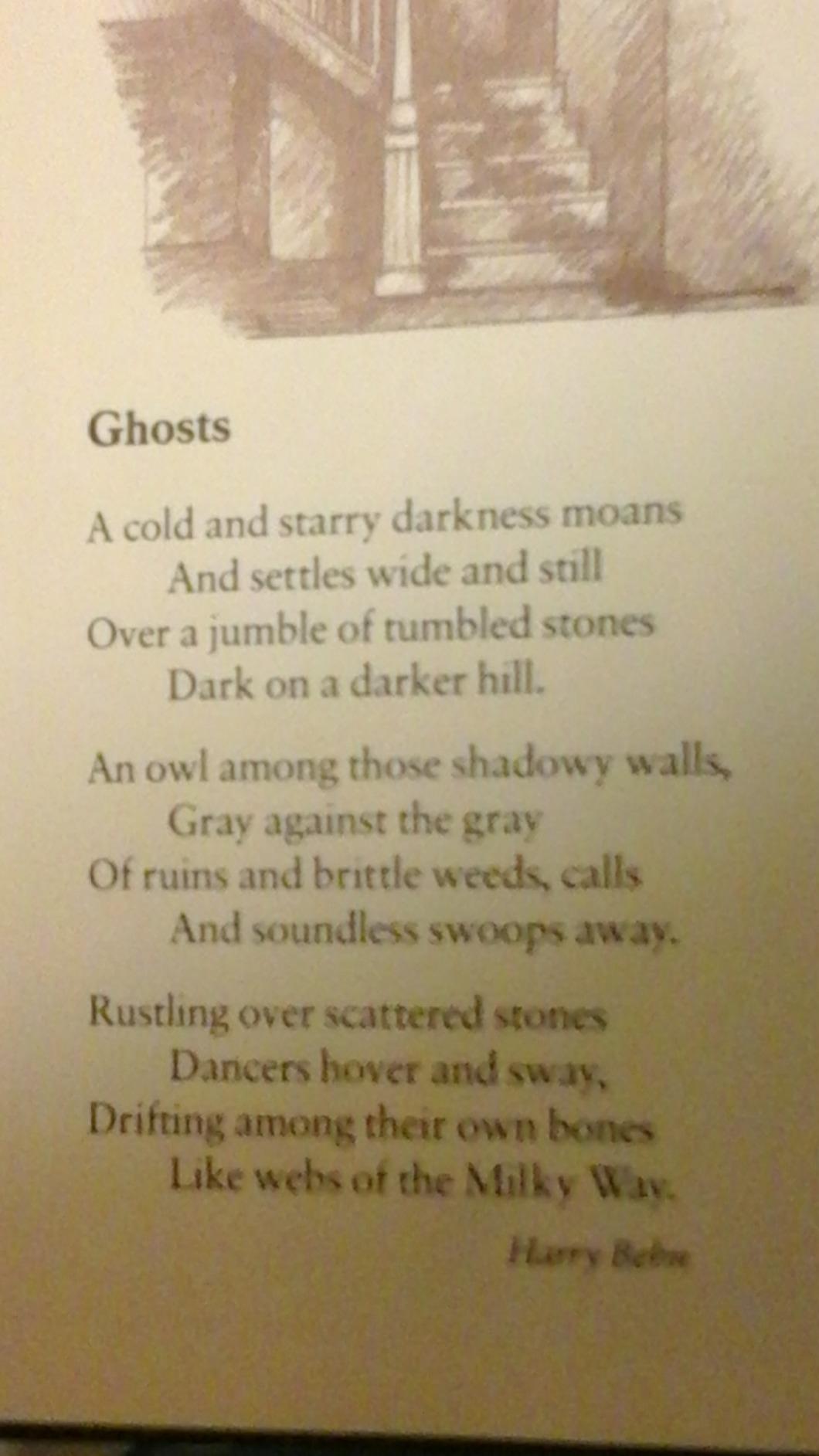
When my daughter’s second-grade teacher asked parents to donate a poetry book to the classroom, this is what I bought for the whole class. The Random House Book of Poetry for Children has been a staple of elementary classrooms for over 40 years, and once you flip through it, you understand why. Editor Jack Prelutsky organized poems by theme (animals, weather, sleep, play) which makes it incredibly easy for kids to find poems they care about.
Arnold Lobel’s illustrations are the kind that make you slow down and study them. His frogs, bears, and quiet country scenes bring warmth to every page. The large 248-page format means there’s a poem for every mood, every season, and almost every family moment. We’ve been reading from this book for three years and haven’t covered half of it.
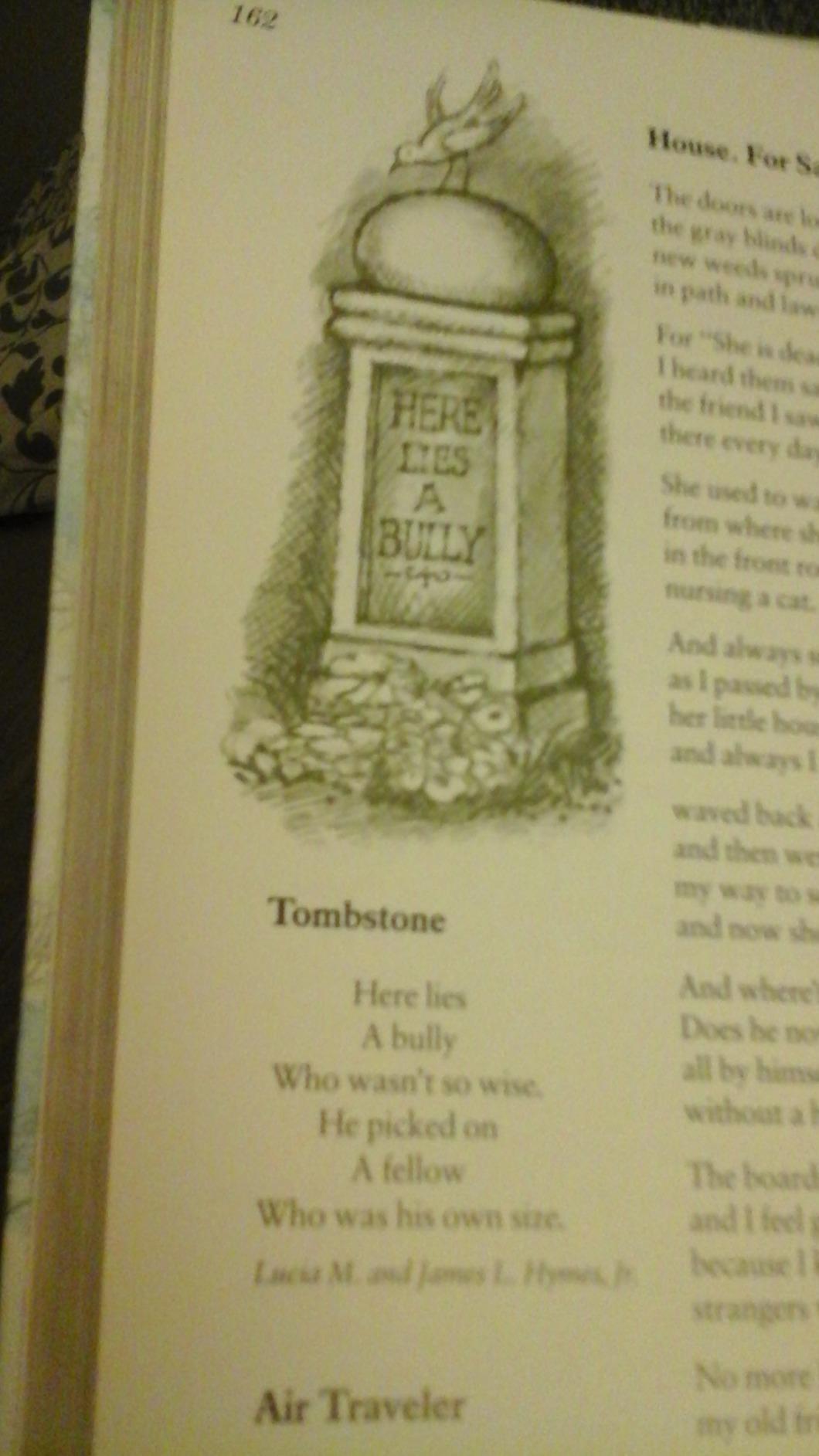
What I appreciate most as a parent is the range of poem types included. There are silly poems, tender poems, short poems, longer poems, and poems that introduce kids to poetic devices like metaphor and rhyme scheme. For families doing any kind of homeschool or supplementing reading instruction, this book practically teaches itself.
Who This Book Is Best For
Families who want one comprehensive poetry anthology to span multiple ages will love this. It’s perfect for ages 3 through 10, with sections simple enough for toddlers and complex enough for tweens. Teachers and homeschool parents will get tremendous value because the thematic organization supports curriculum planning.
What to Watch Out For
At 2.25 pounds, this is a hefty hardcover that young toddlers may struggle to hold. The poem selection includes some pieces with more complex vocabulary that may sail over the heads of preschoolers. I found reading a few pages at a time works better than trying to make our way through a chapter.
4. A Child’s Garden of Verses – The Vintage Classic
A Child’s Garden of Verses
67 pages
Hardcover
Ages 2+
Tasha Tudor Illustrated Edition
Pros
- Timeless Stevenson poetry
- Beautiful Tasha Tudor watercolors
- Large format perfect for reading aloud
- Nearly every page illustrated
Cons
- Some poems contain dated language
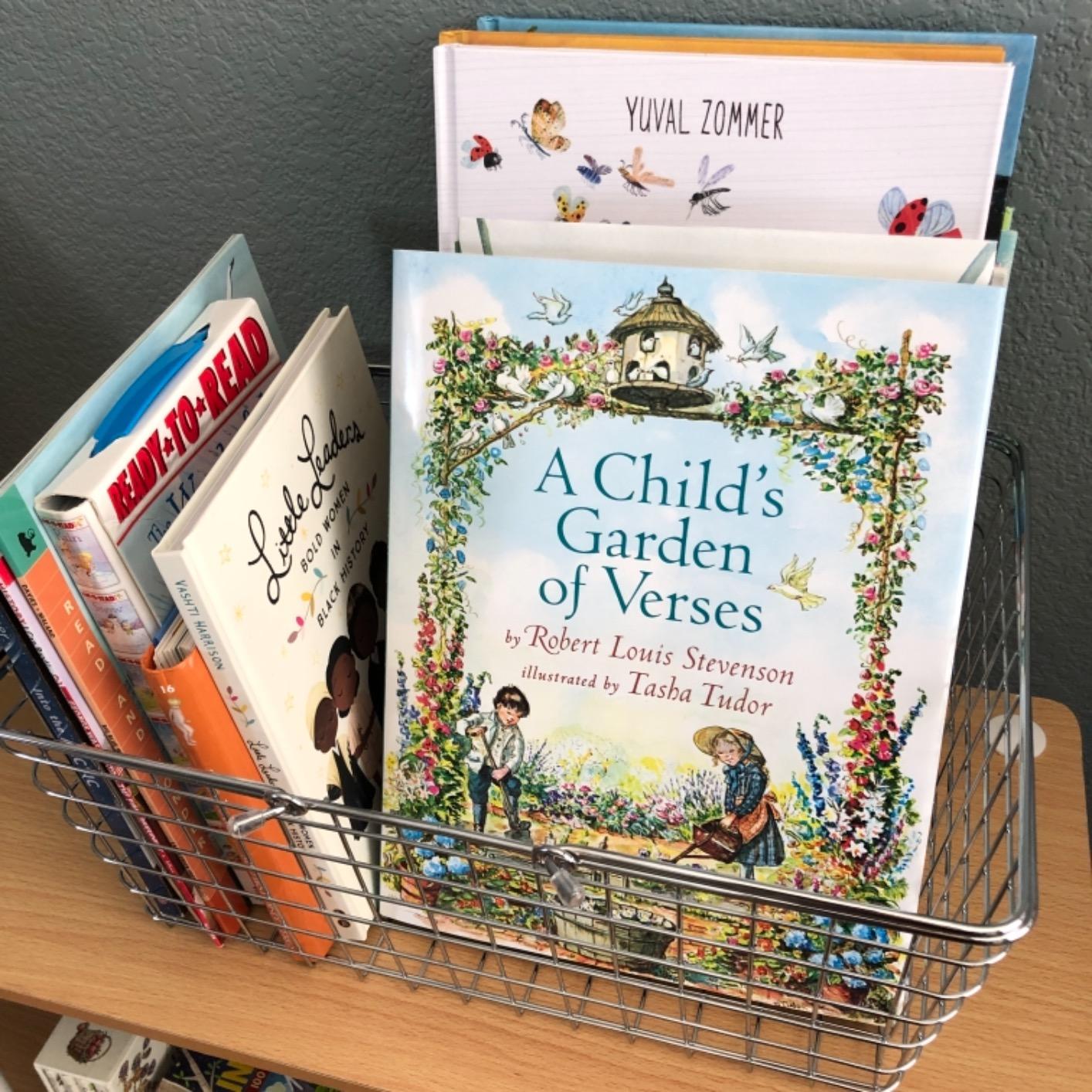
My mother gave this Tasha Tudor edition to my daughter for her second birthday, and it instantly became the most-thumbed book in our house. Robert Louis Stevenson wrote these poems in the 1880s, and over a century later, they still capture what it feels like to be small in a big world. “The Land of Counterpane” (about playing with toys on the bed) and “My Shadow” are still my kids’ favorites.
Tasha Tudor’s watercolor illustrations are what elevate this edition above all others. They feel like windows into another century, full of children in pinafores and wooden toys. The large 9-by-11-inch format makes this book perfect for reading aloud at bedtime, because the illustrations are detailed enough to study together before sleep.
What I didn’t expect was how much this book would become a multi-generational bridge. My mother read her tattered childhood copy to me, and now I’m reading her gift to my daughter. Stevenson has that timeless quality where kids don’t notice the poems are 130 years old. The rhymes feel as fresh as anything written today.
Who This Book Is Best For
This is the best poetry book for kids ages 2 to 6 in my experience. The shorter, simpler poems work beautifully for toddler attention spans, and the pictures keep young children engaged even when the language is more complex. It’s also a wonderful baby shower gift that will grow with the child for years.
What to Watch Out For
Because the poems are over a century old, some language feels dated. Phrases like “wee” and archaic verb forms might confuse very young listeners. I usually paraphrase or skip those without losing the poem’s charm. The 67-page length is shorter than the other books on this list, so it’s not a deep dive into Stevenson’s full work.
5. Poetry for Kids: Robert Frost – Best for Older Kids
Poetry for Kids: Robert Frost
48 pages
Hardcover
Ages 5-10
Illustrated Classic Poet
Pros
- Beautiful full-color illustrations
- Introduces classic American poet
- Commentary helps explain each poem
- Great for homeschool literature
Cons
- Some Frost poems deal with heavy themes like loss
When my son turned eight, I wanted to introduce him to “real” poetry, the kind that adults also appreciate. Poetry for Kids: Robert Frost turned out to be the perfect bridge. Michael Paraskevas’s colorful, almost storybook illustrations make Frost’s classic poems feel approachable, while Jay Parini’s brief commentaries give kids enough context to understand what Frost was thinking about.
The collection includes famous poems like “Stopping by Woods on a Snowy Evening” and “The Road Not Taken,” plus some shorter, sweeter pieces. The hardcover binding is high-quality, and the 48 pages make it feel manageable. My son read this book cover to cover in two sittings, then asked for more Frost.
What makes this book special is how it treats kids like intelligent readers. The commentaries don’t talk down; they treat each poem as a small puzzle worth thinking about. My son started asking questions about metaphor and rhyme after reading these, which is exactly the response I was hoping for.
Who This Book Is Best For
Kids ages 7 to 10 who are ready for “real” poetry beyond silly verses will love this. It’s an excellent addition to any homeschool literature curriculum. Parents who enjoyed Frost in their own school days will get to share that experience with their children.
What to Watch Out For
Some Frost poems address heavier themes like loss, loneliness, and mortality. One reviewer specifically noted that the poem “Out, Out-” deals with a child’s death and might be too intense for sensitive kids. I’d recommend reading through this book before handing it to a younger child.
6. National Geographic Book of Nature Poetry – Most Beautiful
National Geographic Book of Nature Poetry: More than 200 Poems With Photographs That Float, Zoom, and Bloom! (NGK Poetry)
192 pages
Hardcover
Ages 3-5
200+ Poems with Photographs
Pros
- Stunning National Geographic photography
- 200+ poems from classic and modern poets
- Edited by former US Children's Poet Laureate
Cons
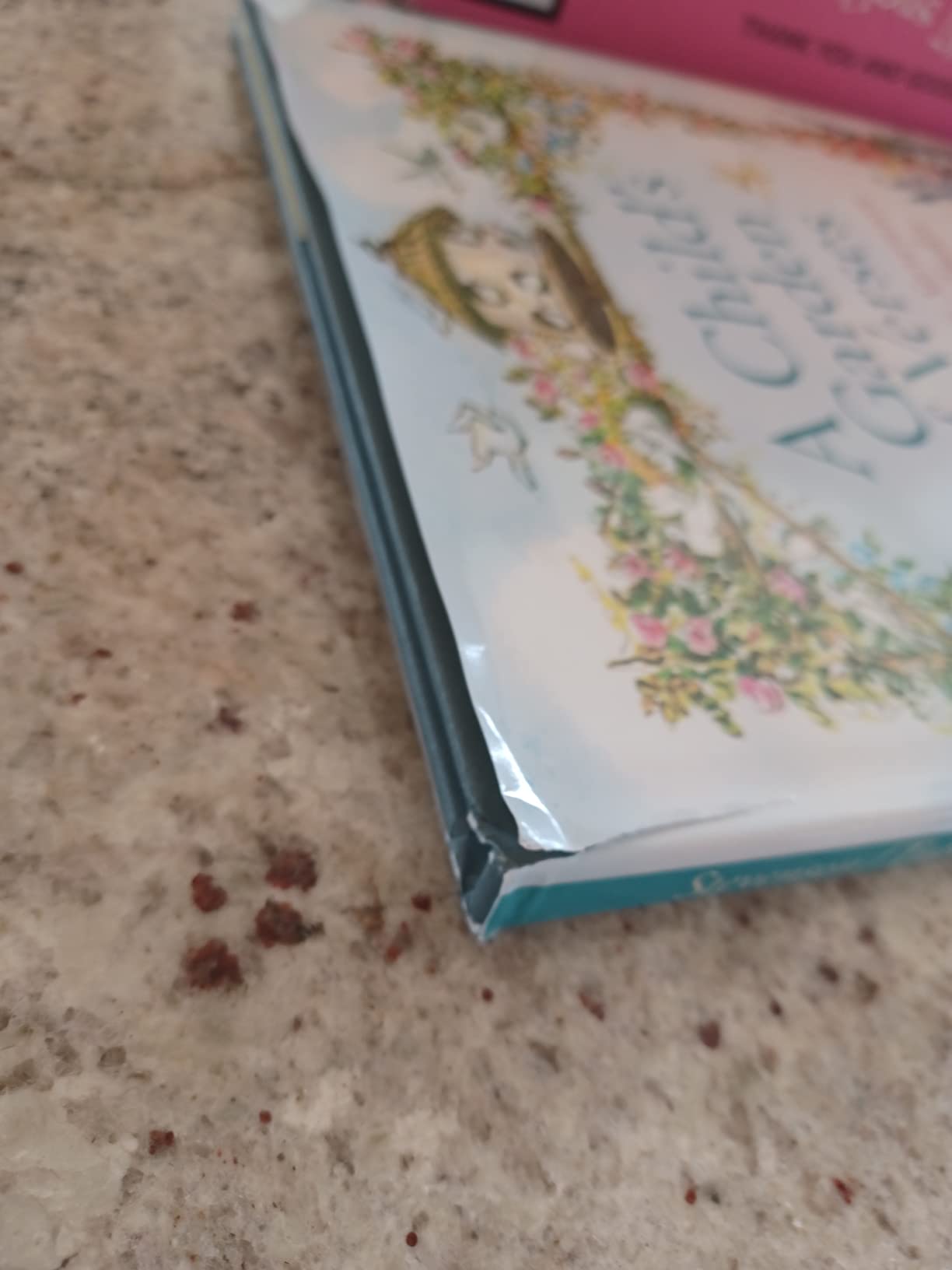
- Some reports of cover arriving damaged
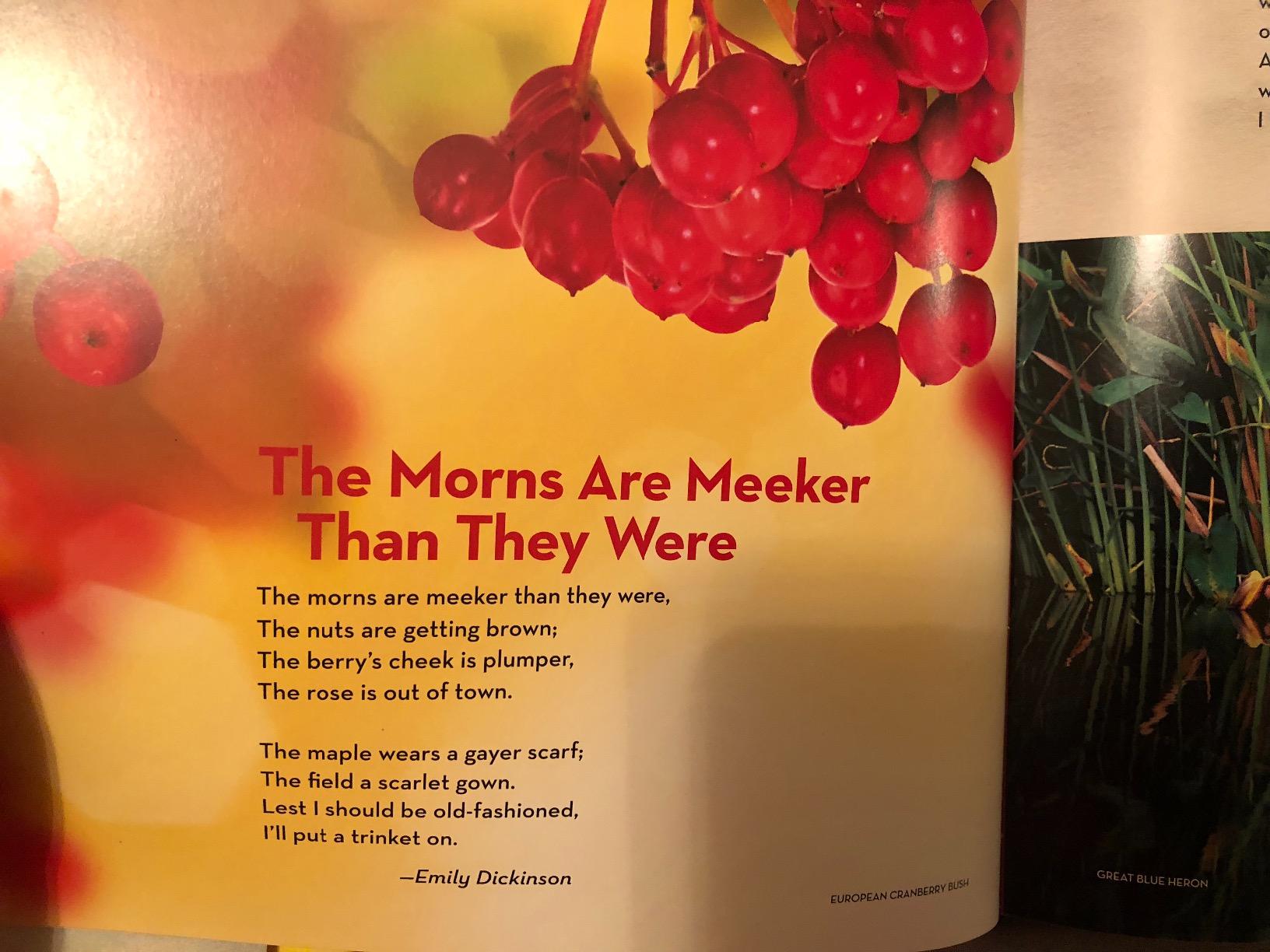
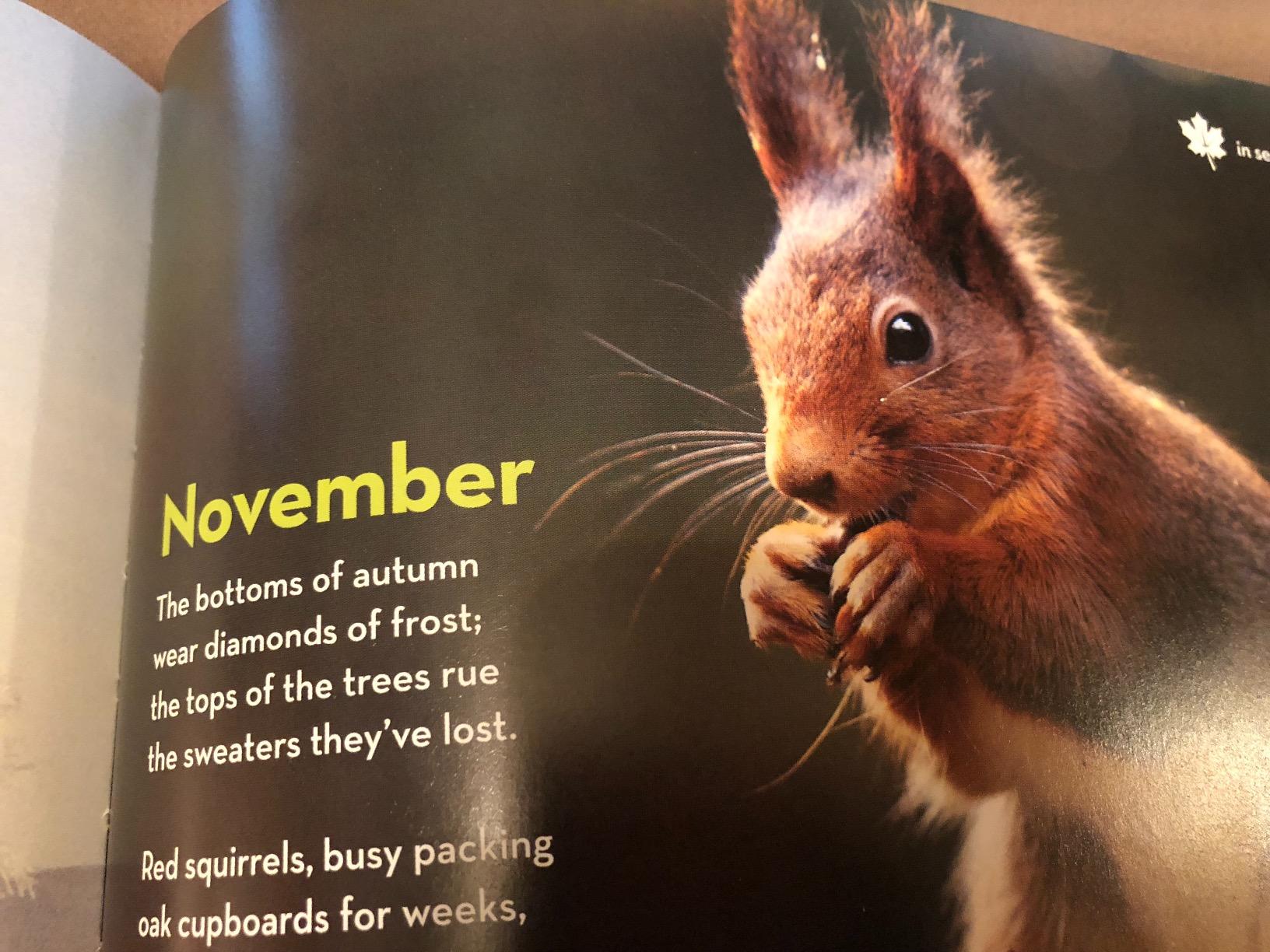
This book stopped me in my tracks the first time I opened it. National Geographic Book of Nature Poetry pairs gorgeous full-page wildlife photographs with over 200 poems about the natural world. Edited by former US Children’s Poet Laureate J. Patrick Lewis, the collection spans classic poets like Emily Dickinson alongside contemporary voices. It’s the kind of book that gets left open on the coffee table because the photographs are too beautiful to hide.
What makes this collection different from other nature-themed poetry books is the quality of the photography. These aren’t simple illustrations. They’re National Geographic-level images that transport kids to rainforests, oceans, and savannas. My kids spent an entire afternoon just looking at the photographs before we even read a poem.
The poems are organized loosely by nature theme, which makes it easy to flip to sections about weather, seasons, or specific animals. We’ve used this book for science units, poetry units, and just for browsing on rainy afternoons. The hardcover format holds up to constant handling.
Who This Book Is Best For
This is the best poetry book for kids ages 3 to 10 who love animals and nature. The visual appeal makes it work for kids who don’t think they like poetry yet. It’s also a wonderful gift for grandparents, teachers, and anyone who wants a coffee-table-worthy poetry book that the whole family can enjoy together.
What to Watch Out For
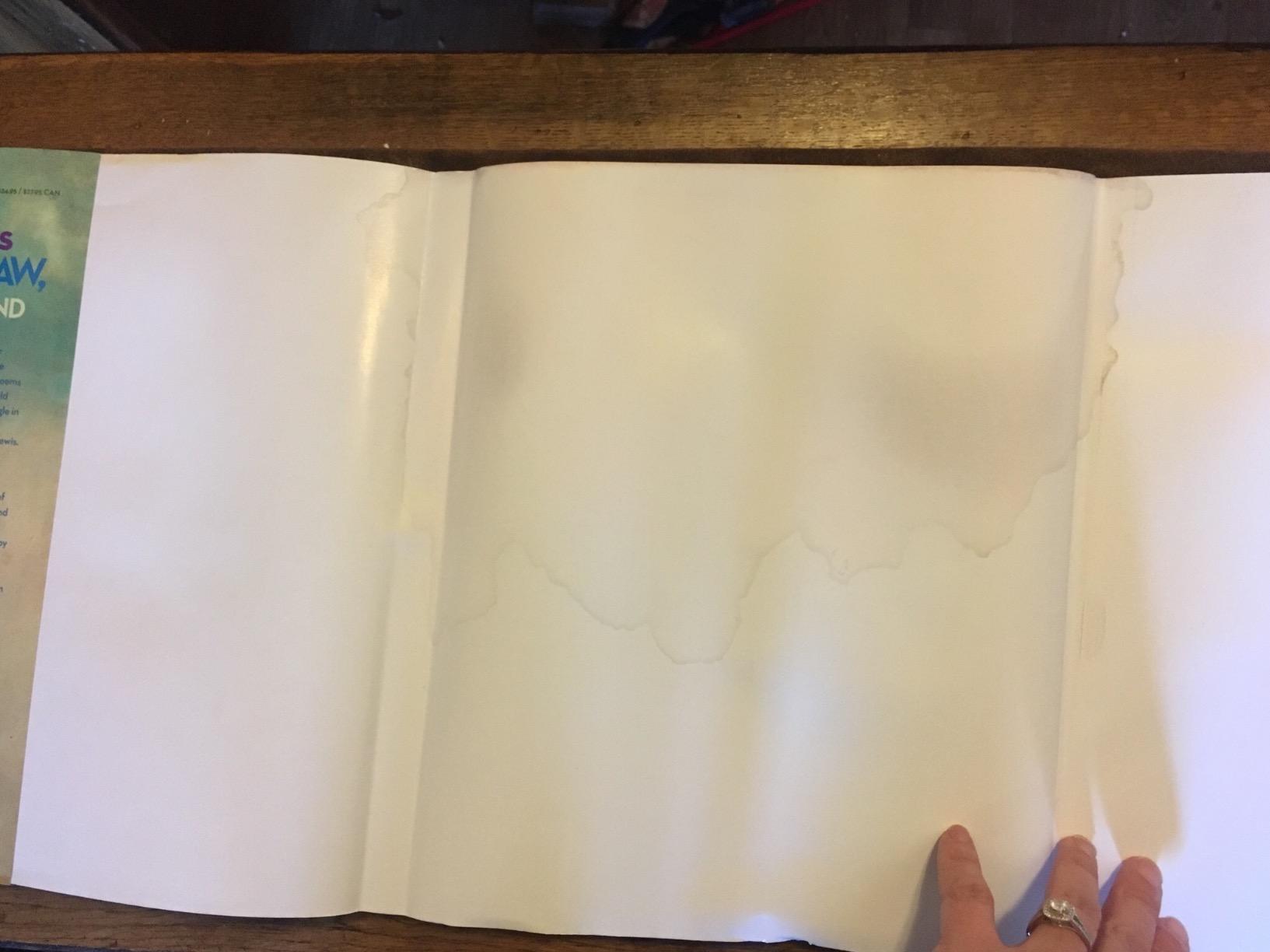
A few reviewers noted their copies arrived with damaged covers. I’d suggest ordering from a retailer with good return policies. The 2.34-pound weight makes this a substantial book that’s better for lap reading than carting around in a backpack.
7. National Geographic Book of Animal Poetry – Best for Animal Lovers
National Geographic Book of Animal Poetry: 200 Poems with Photographs That Squeak, Soar, and Roar! (NGK Poetry)
192 pages
Hardcover
Ages 5-10
200 Poems in 9 Themed Chapters
Pros
- 200 poems across 9 themed animal chapters
- Includes classic and modern poets
- Variety of styles from haiku to free verse
Cons
- One Walt Whitman poem may be inappropriate for young children
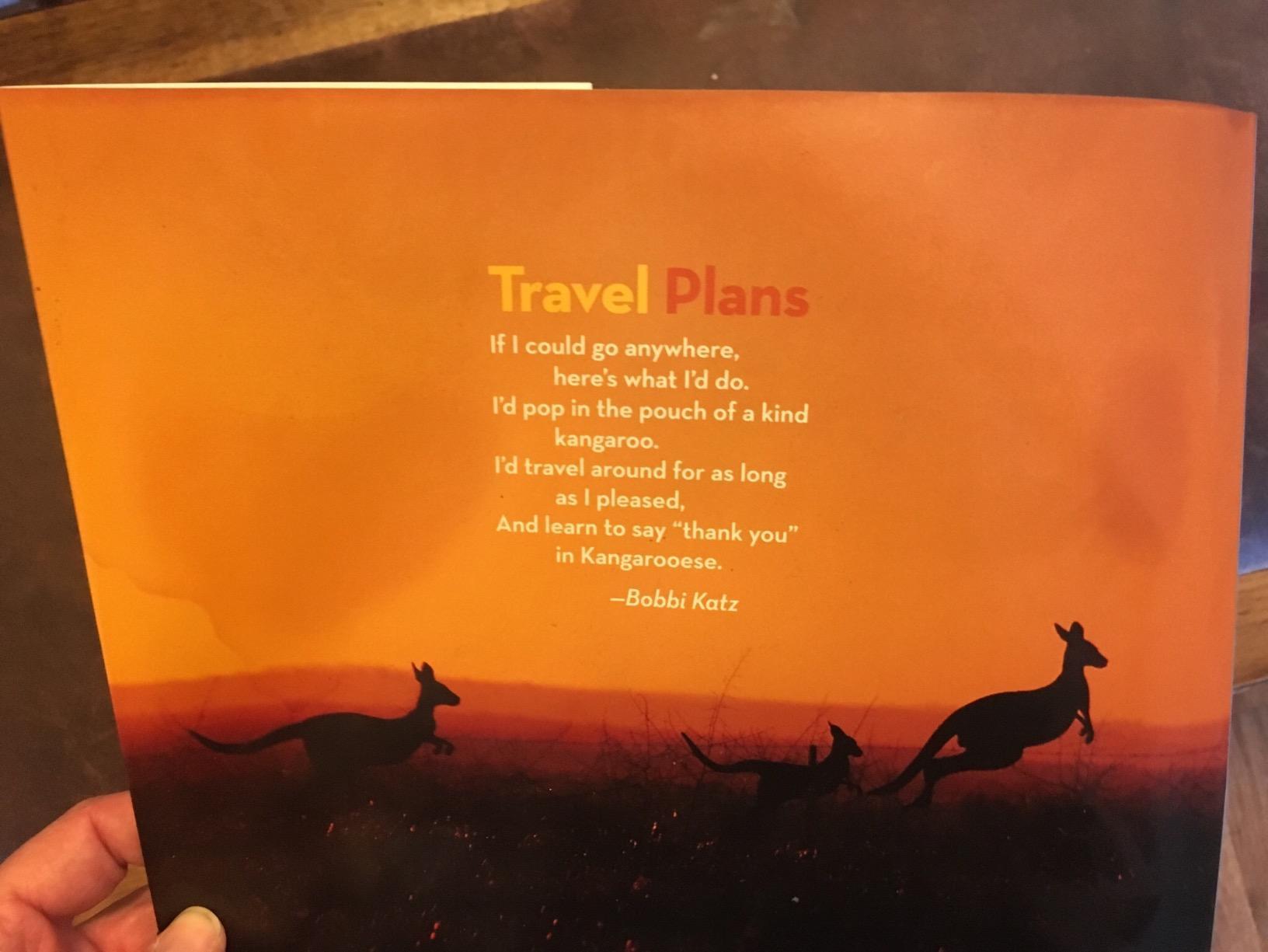
If your kid is obsessed with animals, this is the poetry book that will get them writing their own verses. National Geographic Book of Animal Poetry organizes 200 poems into nine themed chapters: Big Ones, Little Ones, Winged Ones, Creatures of the Sea, and more. Each section is filled with stunning photographs and poems from Emily Dickinson, Robert Frost, Ogden Nash, and contemporary poets.
My animal-obsessed middle daughter devoured this book in a weekend. She particularly loved the chapter on small creatures, which has poems about caterpillars and ladybugs. The variety of poetry styles is impressive: there are haikus, free verse, concrete poems, and rhyming verses. It’s like getting a poetry sampler and a wildlife guide in one.
What I appreciate is how J. Patrick Lewis curated poems that work for different reading levels within the same book. Shorter, simpler poems sit alongside more complex ones, so kids can grow into the collection. We’ve been reading from this for over a year and still find new favorites.
Who This Book Is Best For
Kids ages 5 to 10 who love animals, science, and visual books. This is also a wonderful resource for classrooms studying ecosystems, habitats, or specific animal groups. The themed chapters make it easy to pair with science curriculum.
What to Watch Out For
One reviewer noted a Walt Whitman poem that they felt was inappropriate for young children. The vast majority of poems are age-appropriate, but I’d recommend a quick scan before sharing with very young or sensitive kids. The book’s weight makes it better suited to home than travel.
8. Sing a Song of Seasons – Best for Daily Reading
Sing a Song of Seasons: A Nature Poem for Each Day of the Year
336 pages
Hardcover
Ages 3-8
365+ Poems for Each Day
Pros
- 365+ poems for daily reading
- Beautiful seasonal illustrations
- Features 90+ poets with ribbon bookmark
- Includes indexes by poet and first line
Cons
- Secular perspective may not suit all families
Sing a Song of Seasons solved a problem I didn’t know I had: how to make poetry part of our daily routine. This gorgeous anthology contains over 365 poems, one for each day of the year, organized by month and season. Each poem is paired with a beautiful illustration by Frann Preston-Gannon, and the ribbon bookmark makes it easy to find today’s poem.
We’ve made this our morning poetry ritual. We open to today’s date, read the poem together, and talk about what it makes us think of. The poem quality is consistently high, and the variety is incredible. Langston Hughes, Emily Dickinson, Shakespeare, and contemporary poets all appear. My kids now have favorite days of the year based on which poems appear.
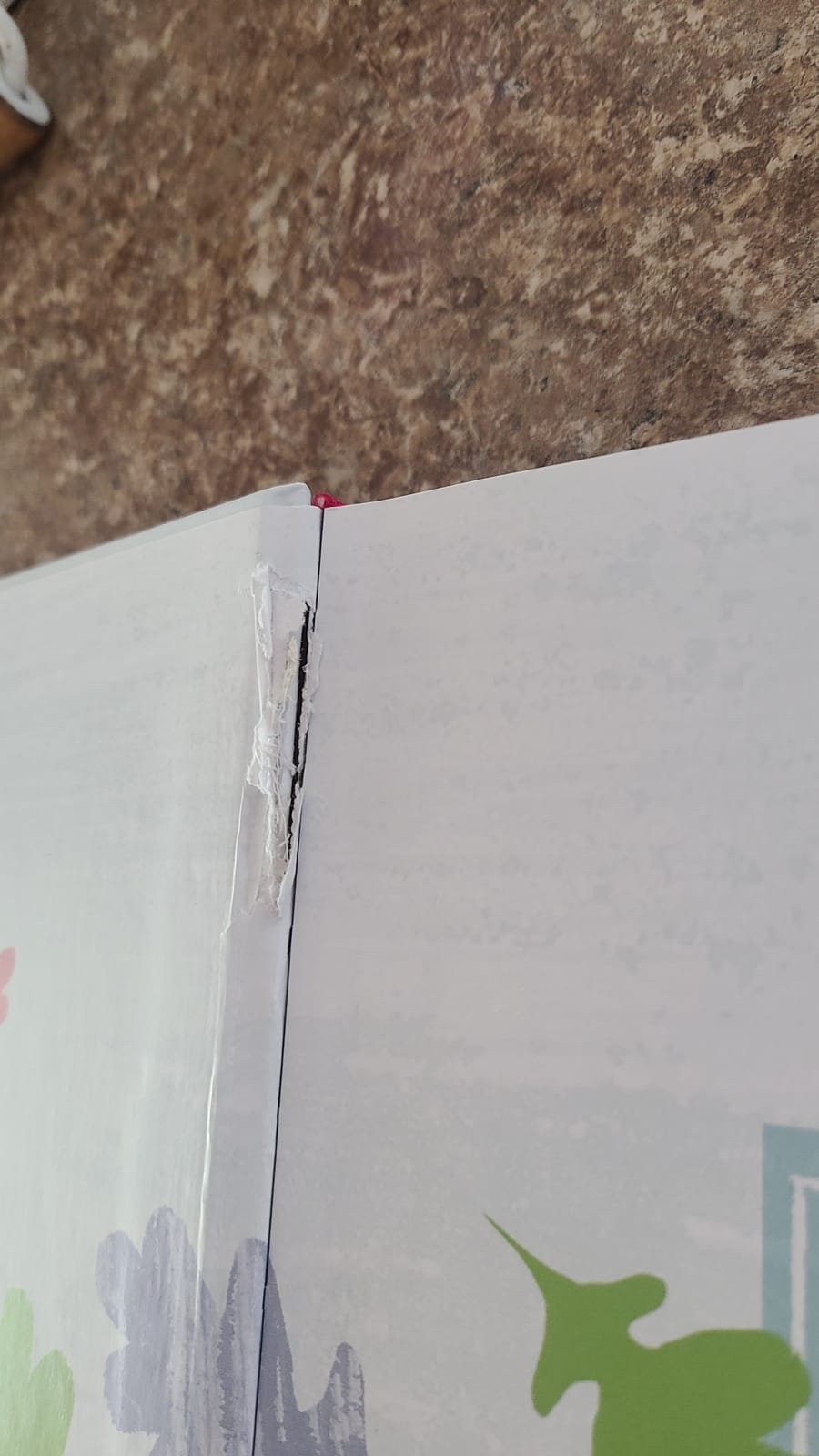
The book is a beautiful object in its own right. At 336 pages with full-color illustrations and a sturdy hardcover, it feels like a gift even when you buy it for yourself. The indexes by poet and first line make it easy to return to specific poems when your child asks, “Where is the one about the cat?”
Who This Book Is Best For
Families who want to build a daily poetry practice will love this. It’s also a wonderful coffee table book that sparks conversation when guests visit. Ages 3 to 8 get the most out of this, though older kids and parents enjoy it too. It’s the perfect baby shower or new-grandparent gift.
What to Watch Out For
The selection comes from a secular perspective, so families looking for explicitly religious poetry should look elsewhere. At 4.76 pounds, this is the heaviest book on our list and definitely stays on the coffee table. The thick format isn’t suited for travel.
How to Choose the Best Poetry Book for Your Child
Choosing poetry books for kids comes down to three things: age, reading style, and what your family values. After eight years of reading poetry to my kids, I’ve learned that the “right” book is the one your child actually opens.
Match the Book to Your Child’s Age
For toddlers and preschoolers (ages 2-4), focus on short, rhyming poems with bright illustrations. A Child’s Garden of Verses and Sing a Song of Seasons both work beautifully at this age. Board books of single poems are also wonderful for this stage.
For early elementary (ages 5-8), kids can handle longer poems and more complex themes. Where the Sidewalk Ends, The Random House Book of Poetry, and the National Geographic anthologies all shine here. This is the age when poetry becomes truly magical.
For older elementary and tweens (ages 9-12), Poetry for Kids: Robert Frost and A Light in the Attic introduce more sophisticated work. Kids this age often enjoy writing their own poems in response.
Consider Illustrated vs Text-Heavy
Illustrated poetry books win for younger kids because visuals hold attention and help comprehension. As kids get older, text-heavy collections introduce them to how poetry actually looks on the page. I recommend having both types in your home library.
Try Poetry Teatime
If you haven’t tried poetry teatime yet, I cannot recommend it enough. The concept is simple: dedicate a regular afternoon to reading poetry aloud while enjoying treats. My kids now associate poetry with cookies and hot chocolate, which makes them willing to sit through even longer poems. Poetry becomes a celebration instead of an assignment.
Build a Poetry Habit
The single best thing you can do is read poetry to your kids regularly. Even five minutes a day adds up. Sing a Song of Seasons makes this easy with its one-poem-a-day structure, but any of these books work if you commit to reading one poem at breakfast or bedtime.
Don’t Worry About “Understanding” Everything
Poetry doesn’t need to be analyzed to be enjoyed. Kids absorb the rhythm, the sounds, and the feelings long before they understand every word. Some of my kids’ favorite poems are the ones they didn’t fully understand until years later. That’s part of the magic of poetry books for kids: they grow with your child.
Frequently Asked Questions
What is the best poetry book for beginners?
Where the Sidewalk Ends by Shel Silverstein is widely considered the best poetry book for beginners. Its short, funny poems and whimsical drawings appeal to children as young as 4, and the rhythmic language is easy for new readers to sound out. The Random House Book of Poetry for Children is another excellent beginner choice because its themed organization helps kids find poems they care about.
What is the most famous poem for kids?
The most famous children’s poem is arguably The Road Not Taken by Robert Frost, but in terms of poems kids actually love to hear, Sarah Cynthia Sylvia Stout from Where the Sidewalk Ends and The Land of Counterpane from A Child’s Garden of Verses are perennial favorites. These poems appear in school curricula and family read-aloud collections worldwide.
What are some good poetry books for 3rd grade students?
For 3rd graders (ages 8-9), the best poetry books are The Random House Book of Poetry for Children (themed anthology with something for everyone), Poetry for Kids: Robert Frost (introduces classic American poetry with helpful commentary), and A Light in the Attic by Shel Silverstein (sophisticated humor that appeals to this age). All three work well for both independent reading and classroom read-alouds.
At what age should I start reading poetry to my child?
You can start reading poetry to babies from birth. Rhythmic language and rhyming poems soothe infants and build early language skills. By age 2, most toddlers can sit for short illustrated poems. By age 4, children can follow longer poems and start memorizing favorites. The key is matching poem length and complexity to your child’s attention span rather than their age.
Final Thoughts on Building a Poetry Library
The best poetry books for kids are the ones your family returns to again and again. After years of reading poetry to my children, I can tell you that every book on this list has earned its place through repeated requests, giggles at familiar poems, and quiet moments when a verse suddenly made sense in a new way.
If you’re starting fresh, I’d begin with Where the Sidewalk Ends for humor, A Child’s Garden of Verses for vintage charm, and Sing a Song of Seasons for daily ritual. Add the others as your child’s interests grow. Poetry has a way of turning reluctant readers into lifelong book lovers, and every poem you share is a small gift your child will carry with them for years.