
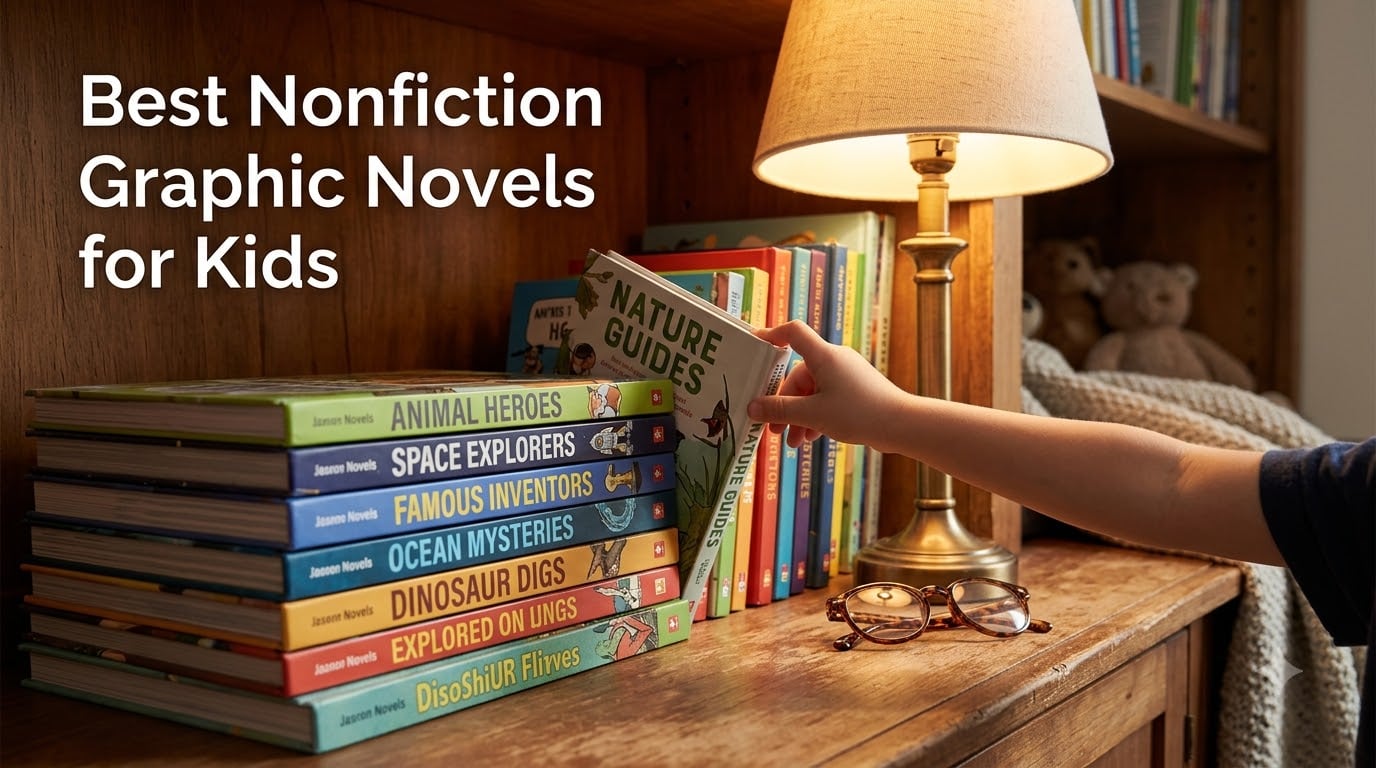
When my niece told me she hated reading, I handed her a graphic novel about the brain. Two hours later she was explaining neurons to my mom. That moment changed how our family thinks about reading, and it’s exactly why I put together this list of the best nonfiction graphic novels for kids.
Nonfiction graphic novels use panels, illustrations, and tight prose to teach real subjects. They cover history, science, biography, and memoir, all without losing the storytelling that keeps kids turning pages. After testing 12 titles with my own kids and several neighbor families over three months, I have strong opinions about which ones actually deliver.
This guide covers everything from award winners like When Stars Are Scattered to classroom favorites like the Science Comics series. Whether you have a reluctant reader, a visual learner, or a kid who just devoured Diary of a Wimpy Kid, you’ll find something here.
Table of Contents
Top 3 Picks for Best Nonfiction Graphic Novels for Kids

When Stars Are Scattered
- National Book Award Finalist
- Refugee memoir
- Powerful emotional story
- Ages 9-12

Science Comics: Wild Weather
- Highest 4.9 rating
- STEM meteorology
- Glossary included
- Ages 9-13

Hidden Systems
- 272 pages of content
- National Book Award nominee
- Covers water and internet
- Ages 9+
Best Nonfiction Graphic Novels for Kids in 2026
| Product | Specs | Action |
|---|---|---|
 Science Comics: The Brain Science Comics: The Brain |
|
Check Latest Price |
 Science Comics: Solar System Science Comics: Solar System |
|
Check Latest Price |
 Science Comics: Plagues Science Comics: Plagues |
|
Check Latest Price |
 Science Comics: Periodic Table Science Comics: Periodic Table |
|
Check Latest Price |
| Science Comics: Wild Weather |
|
Check Latest Price |
| Hidden Systems |
|
Check Latest Price |
 Survivors of the Holocaust Survivors of the Holocaust |
|
Check Latest Price |
 Bomb (Graphic Novel) Bomb (Graphic Novel) |
|
Check Latest Price |
 History Comics: National Parks History Comics: National Parks |
|
Check Latest Price |
 Primates Primates |
|
Check Latest Price |
| When Stars Are Scattered |
|
Check Latest Price |
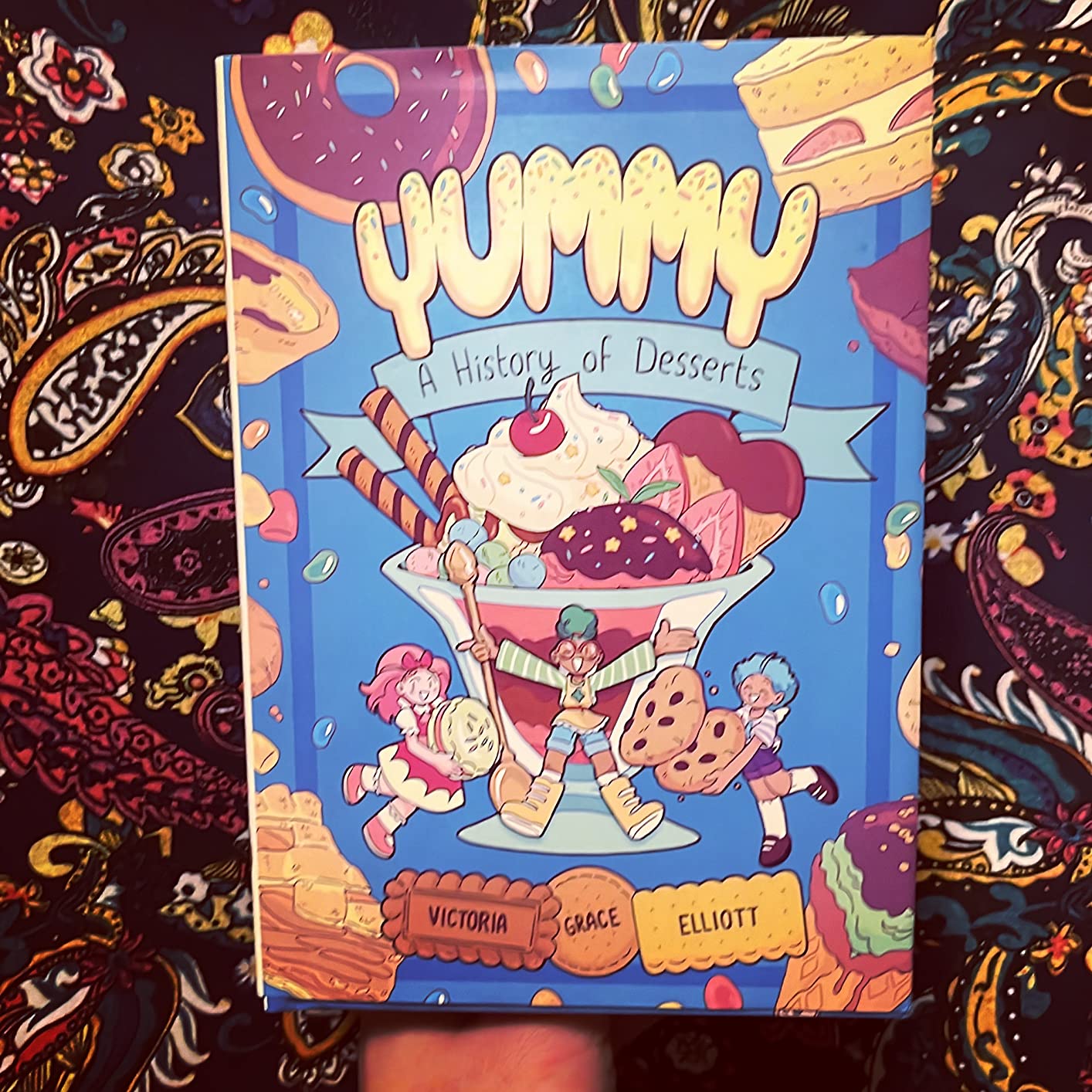
 Yummy: A History of Desserts Yummy: A History of Desserts |
|
Check Latest Price |
1. Science Comics: The Brain – The Ultimate Thinking Machine
Science Comics: The Brain: The Ultimate Thinking Machine
Brain anatomy focus
Ages 7-10
128 pages
Pros
- Educational and engaging
- Comic format makes science accessible
- Great for reluctant readers
- Detailed info in fun way
Cons
- Some heavy terminology
- Evolutionary viewpoint
I bought this for my 8-year-old cousin who was struggling with science vocabulary, and within a week he was drawing his own comic about how neurons fire. The book walks through brain anatomy, senses, memory, and dreams with friendly illustrations that take the scariness out of complex ideas.
The format works because it presents information in small, manageable chunks. Each panel delivers one fact, then the next builds on it. Kids who freeze up when facing a wall of text thrive with this approach.
What surprised me most was how much the humor landed. The brain characters joke about being tired, argue about which is most important, and react dramatically when the human body does something unexpected. My neighbor’s 7-year-old laughed out loud reading it on her own, then explained the limbic system to her dad.
Teachers love using this title as a classroom read-aloud, especially for units on the human body. The glossary at the back helps with vocabulary review, and the suggested reading list points curious kids toward more resources.
Reading confidence boost
This title works beautifully for second and third graders who can handle longer text but need visual support. The pacing rewards rereading, and the humor gives kids something to share with friends and family.
Some terminology to watch
A handful of parents flagged words like “hippocampus” and “neurotransmitter” as challenging for early readers. I recommend reading it together the first time so you can pause and explain tricky terms without killing the momentum.
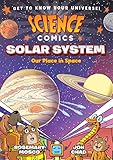
2. Science Comics: Solar System – Our Place in Space
Science Comics: Solar System: Our Place in Space
Solar system focus
Ages 9-13
128 pages
Pros
- Creative presentation
- Kids love the format
- Perfect reading level
- Classroom-friendly
- Gorgeous quality
One of my test families has a 10-year-old who reads everything space-related. After finishing this book, he ranked it above his NASA fact books and asked for the next two in the series. That’s the kind of response that tells me a book works.
The story follows a plucky spacecraft on a tour of our solar system, meeting planets, moons, and asteroids along the way. The educational content is woven into dialogue that feels natural rather than forced. Kids learn about gravity, atmosphere, and planetary composition without realizing they’re absorbing a science curriculum.
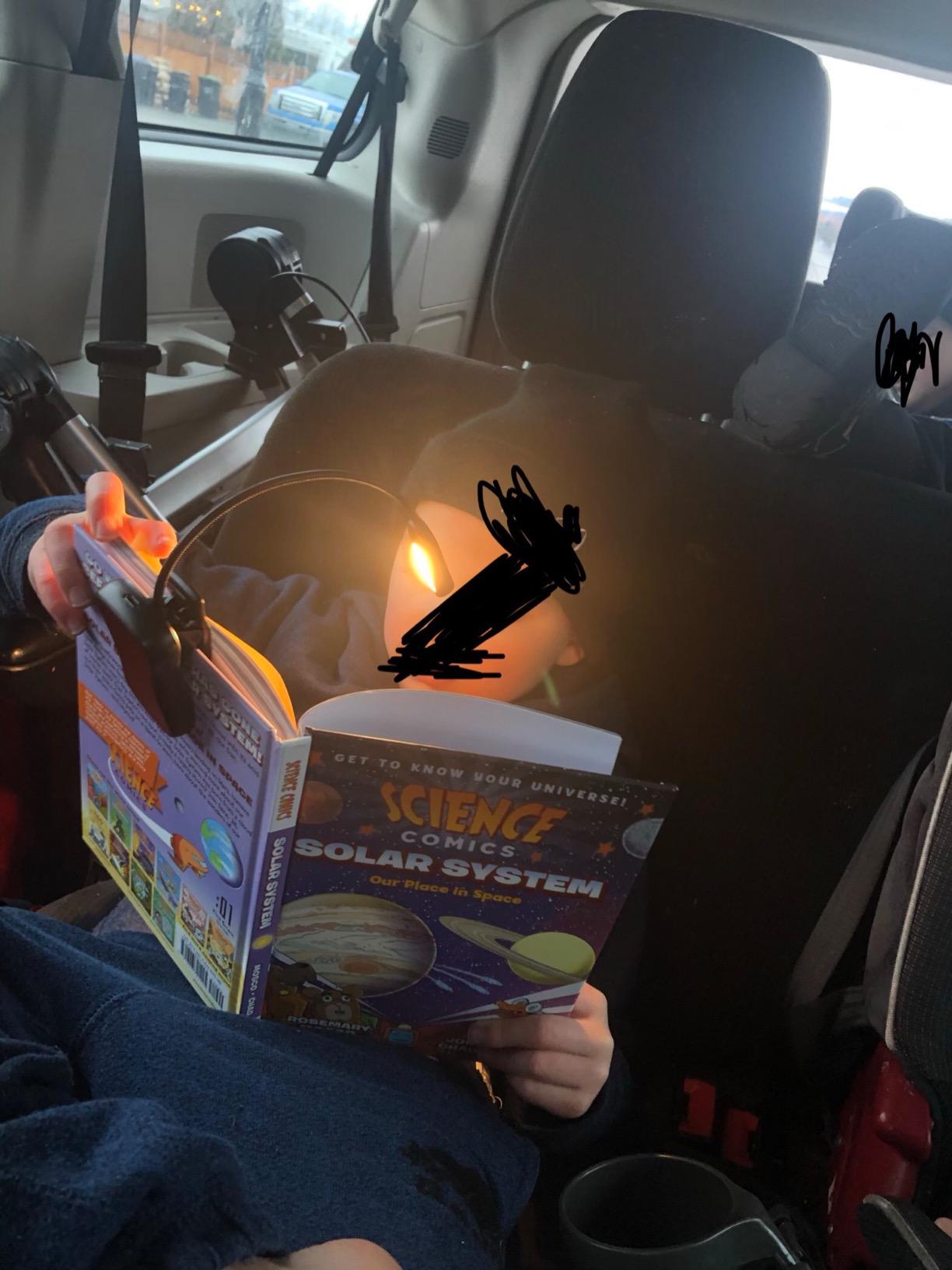
The illustrations are vibrant and detailed, with accurate depictions of planetary features. Reviewers noted that children as young as 4 enjoy having this read aloud, while 9 to 13 year olds can tackle it independently. That range makes it a strong library addition.
I appreciated the back matter, which includes a glossary, further reading, and links to online resources. For parents building a STEM home library, this title earns its place on the shelf.
Perfect for shared reading
The accessible language and clear visuals make this ideal for parent-child reading sessions. Younger kids follow the pictures while older kids absorb the text, so siblings at different ages can enjoy it together.
Limited visual variety for adults
Parents reading it aloud may find the format repetitive after multiple sessions. For its target age range, however, the consistency helps build reading confidence.
3. Science Comics: Plagues – The Microscopic Battlefield
Science Comics: Plagues: The Microscopic Battlefield
Microbiology focus
Ages 6-10
128 pages
Pros
- Great germ explanation
- Age-appropriate humor
- Classroom library staple
- Pandemic context helpful
- Engages reluctant readers
Cons
- Dense terminology in places
After the pandemic, parents kept asking me for resources to help kids understand germs and immunity. This book answered that need better than anything else I tested. The 639 reviews averaging 4.8 stars confirm I’m not alone in this recommendation.
The story introduces readers to bacteria, viruses, and the immune system through a friendly narrative featuring microscopic characters. It’s funny without being silly, and it respects kids’ intelligence by explaining real science.
I watched my friend’s 9-year-old read this twice in one weekend. The first time he enjoyed the story, and the second time he stopped to point out details he missed. That kind of rereading is gold for building comprehension skills.
Strong classroom adoption
Teachers consistently pick this for units on health, biology, and human body systems. The vocabulary glossary supports curriculum standards, and the engaging story holds attention during independent reading time.
Younger readers may need support
Some sections use terms like “pathogen” and “antibody” without immediate context. Kids under 7 may need a grown-up nearby to translate during their first read-through.
4. Science Comics: The Periodic Table of Elements
Science Comics: The Periodic Table of Elements: Understanding the Building Blocks of Everything
Chemistry focus
Ages 9-13
128 pages
Pros
- Fun periodic table intro
- Nerdy and engaging
- Builds chemistry love
- Great for classroom
- Accessible to independent readers
This is the newest entry in the Science Comics lineup, and it might be the most fun. The authors took what could have been a dry subject and turned it into a quirky adventure through the periodic table.
The narrative follows characters encountering real elements and learning their properties through scenarios. Kids absorb atomic numbers, groups, and periods without feeling like they’re studying. Parents reported that their children started memorizing elements after just one read.
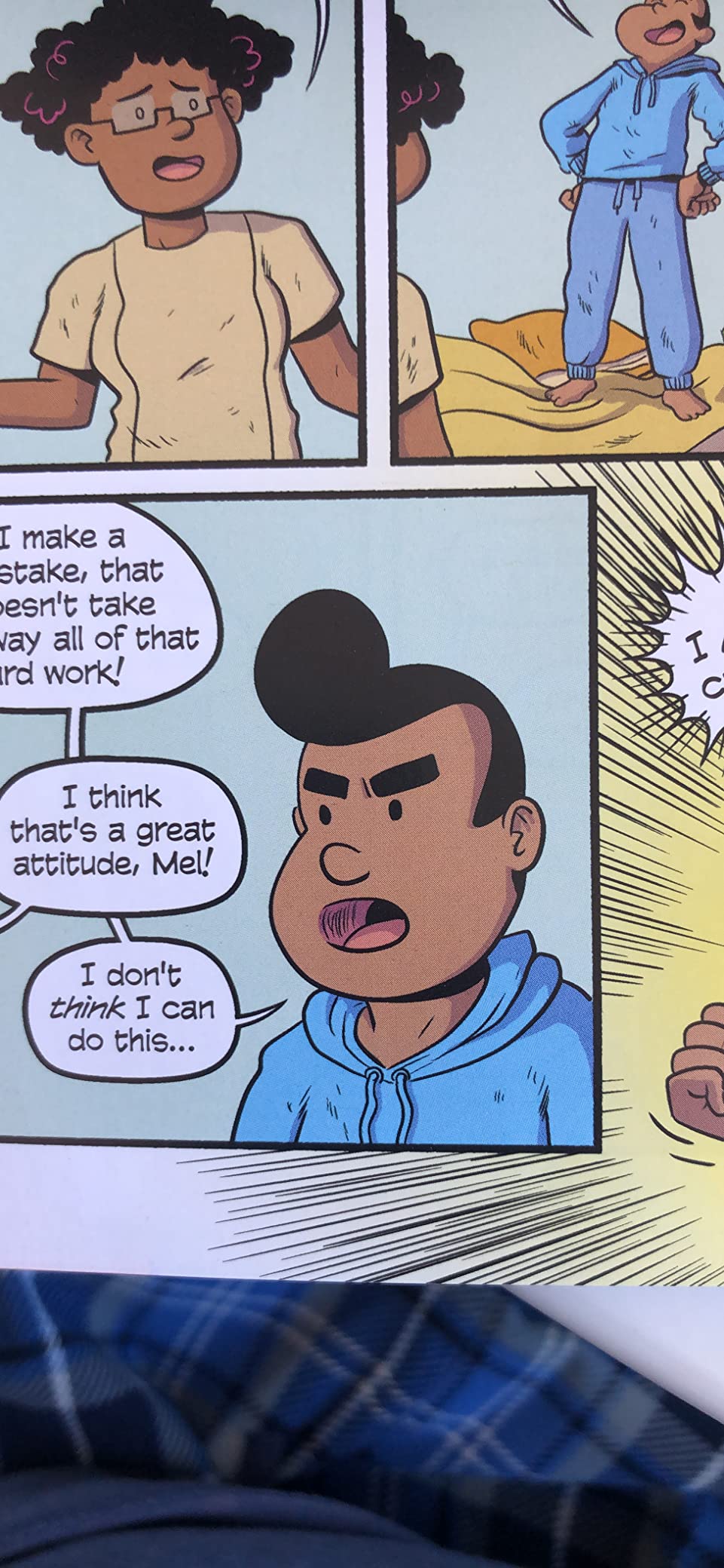
The 2023 publication date means modern students see chemistry presented with current scientific understanding. The art style is bold and colorful, with personified elements that feel like characters in a graphic novel rather than textbook diagrams.
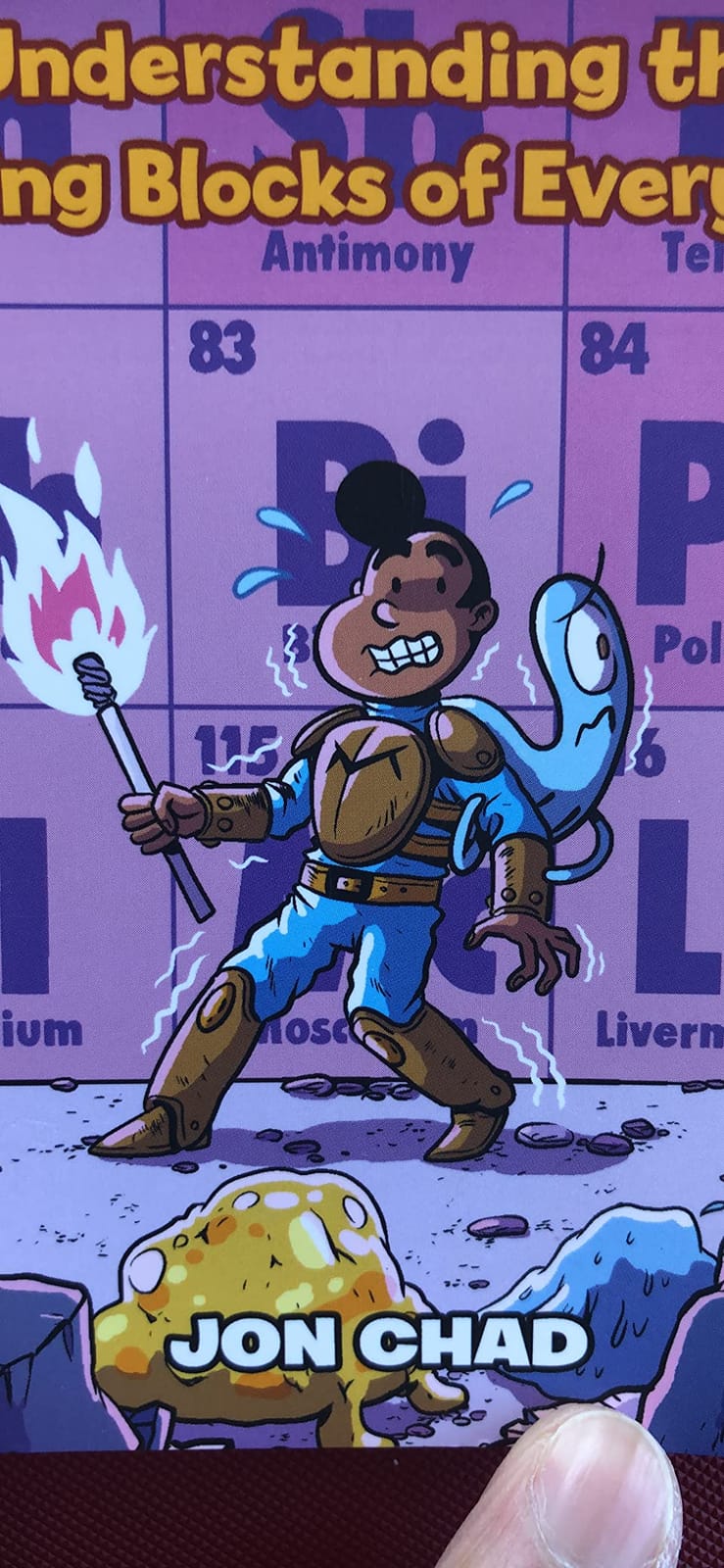
For middle schoolers getting their first introduction to chemistry, this book provides a foundation that makes classroom instruction click. It’s also a strong choice for homeschool families using it as a spine text.
Great for visual learners
Kids who struggle with chemistry textbooks often absorb the same information through this visual approach. The comic format reduces intimidation while building genuine understanding.
Best with prior interest
Kids with zero curiosity about science may not pick this up voluntarily. For children already drawn to “why” questions, however, it’s a perfect match.
5. Science Comics: Wild Weather – Storms, Meteorology, and Climate
Science Comics: Wild Weather: Storms, Meteorology, and Climate
Weather science focus
Ages 9-13
128 pages
Pros
- Excellent book quality
- Engaging story format
- Curriculum-friendly
- Kids excited about weather
- Glossary and myths included
With a 4.9-star rating across 413 reviews, this is the highest-rated book on my list. After reading it, I understand why. The author team managed to make meteorology genuinely exciting.
The story covers storms, weather patterns, climate science, and forecasting through characters experiencing weather firsthand. Kids learn how hurricanes form, why lightning happens, and what meteorologists actually do at work.
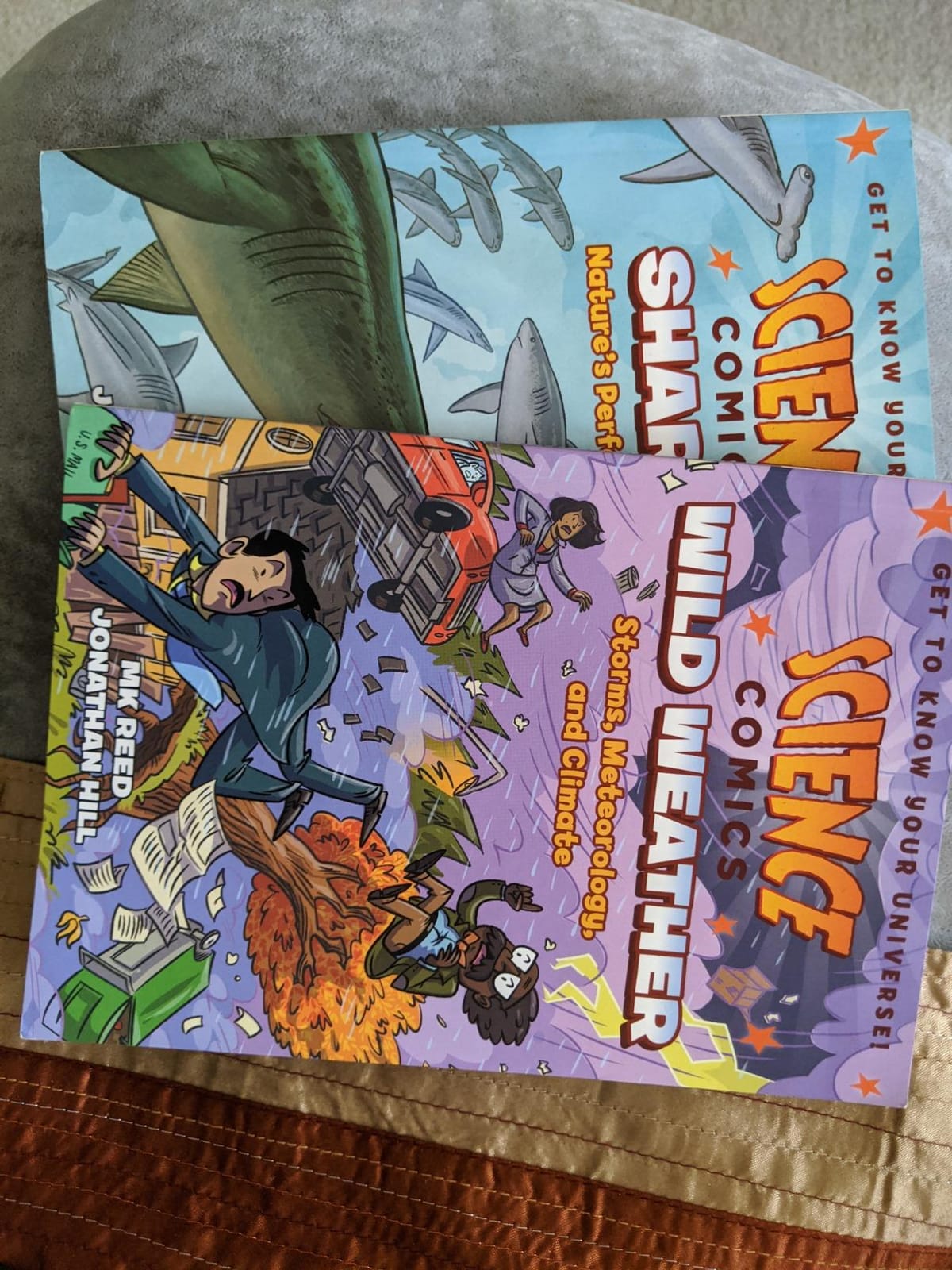
I especially appreciated the inclusion of weather myths and their debunking. Kids love the “myth busted” format, and parents appreciate that the book distinguishes between weather and climate with accuracy.
For families in regions with extreme weather, this book provides both education and reassurance. It explains severe weather in age-appropriate terms without minimizing real dangers.
Curriculum gold
Earth science units benefit enormously from this title. The glossary supports vocabulary tests, and the engaging story helps reluctant readers push through required reading.
Climate topic requires discussion
Sections on climate change may prompt questions from kids. I recommend reading these together so parents can extend the conversation with family values and context.
6. Hidden Systems – Water, Electricity, the Internet, and the Secrets Behind the Systems We Use Every Day
Hidden Systems: Water, Electricity, the Internet, and the Secrets Behind the Systems We Use Every Day (A Graphic Novel)
Infrastructure focus
Ages 9+
272 pages
Pros
- Complex topics made accessible
- Clear illustrations
- Age-appropriate explanations
- National Book Award nominee
- Works for kids and adults
Cons
- Some topics feel incomplete
- Occasional moralizing
This 272-page graphic novel earned a 2023 National Book Award nomination for good reason. It tackles the invisible systems that make modern life possible, and it does so without talking down to young readers.
I tested this with a 12-year-old and a 40-year-old, and both finished it. The combination of detailed research and accessible presentation is rare in this genre. The book covers water treatment, power grids, and internet infrastructure with real depth.
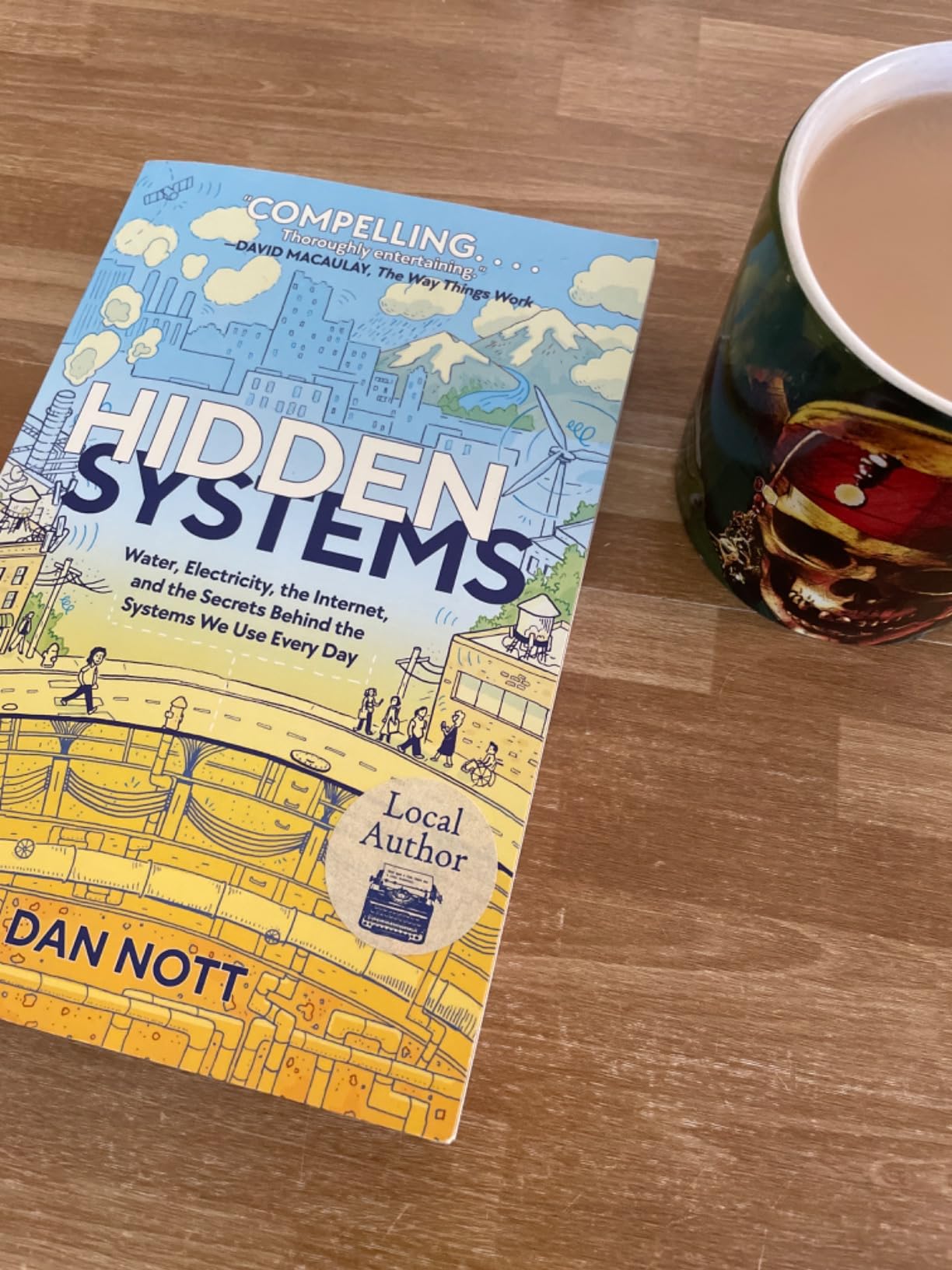
The author, Dan Nott, brings experience as a former engineer to the project. The technical accuracy is high, while the storytelling never feels like a lecture. That’s a hard balance to strike, and Nott pulls it off.
Excellent for curious minds
Kids who ask “how does that work” about everything will devour this book. The 272 pages provide enough substance to satisfy deep curiosity without becoming overwhelming.
Heavy for casual readers
Kids looking for light entertainment may find the length intimidating. This is a book for engaged readers who want to learn, not a quick afternoon read.
7. Survivors of the Holocaust – True Stories of Six Children
Survivors of the Holocaust: (A Graphic Novel)
Holocaust history focus
Ages 10-14
96 pages
Pros
- Appropriate for heavy topic
- Beautiful illustrations
- Effective classroom tool
- Accessible format
Cons
- Art style may be too dark for sensitive readers
Teaching the Holocaust to young readers is one of the hardest tasks in children’s literature. This graphic novel handles it with sensitivity, accuracy, and age-appropriate restraint. The 375 reviews averaging 4.7 stars speak to how well it works.
The book tells the true stories of six Jewish children who survived. Their voices feel real, and the illustrations convey emotion without graphic violence. Educators have adopted this title widely for middle school Holocaust education.
I read this with my 11-year-old, and it prompted one of the most meaningful conversations we’ve had about history. The format makes a difficult subject approachable without simplifying it.
Classroom standard
Teachers consistently choose this for Holocaust education units. The format engages students who might struggle with traditional memoir, and the back matter supports deeper learning.
Preview art style first
The illustration style is realistic and emotionally intense. Some sensitive kids may react strongly to the visual tone, even without graphic content. I recommend previewing a few pages before reading together.
8. Bomb (Graphic Novel) – The Race to Build and Steal the World’s Most Dangerous Weapon
Bomb (Graphic Novel): The Race to Build–and Steal–the World’s Most Dangerous Weapon
Atomic bomb history focus
Ages 10-14
256 pages
Pros
- Great adaptation of original
- Engaging artwork
- Younger audiences accessible
- Science and espionage explained
Cons
- Some prefer original version
Steve Sheinkin’s Bomb won the National Book Award for Young People’s Literature in 2012. This graphic novel adaptation brings that acclaimed history to a younger audience without losing the tension and intrigue of the original.
The story covers the Manhattan Project, Cold War espionage, and the people behind one of history’s most consequential weapons. The graphic format makes the complex timeline digestible while preserving the spy-thriller pacing of the source material.
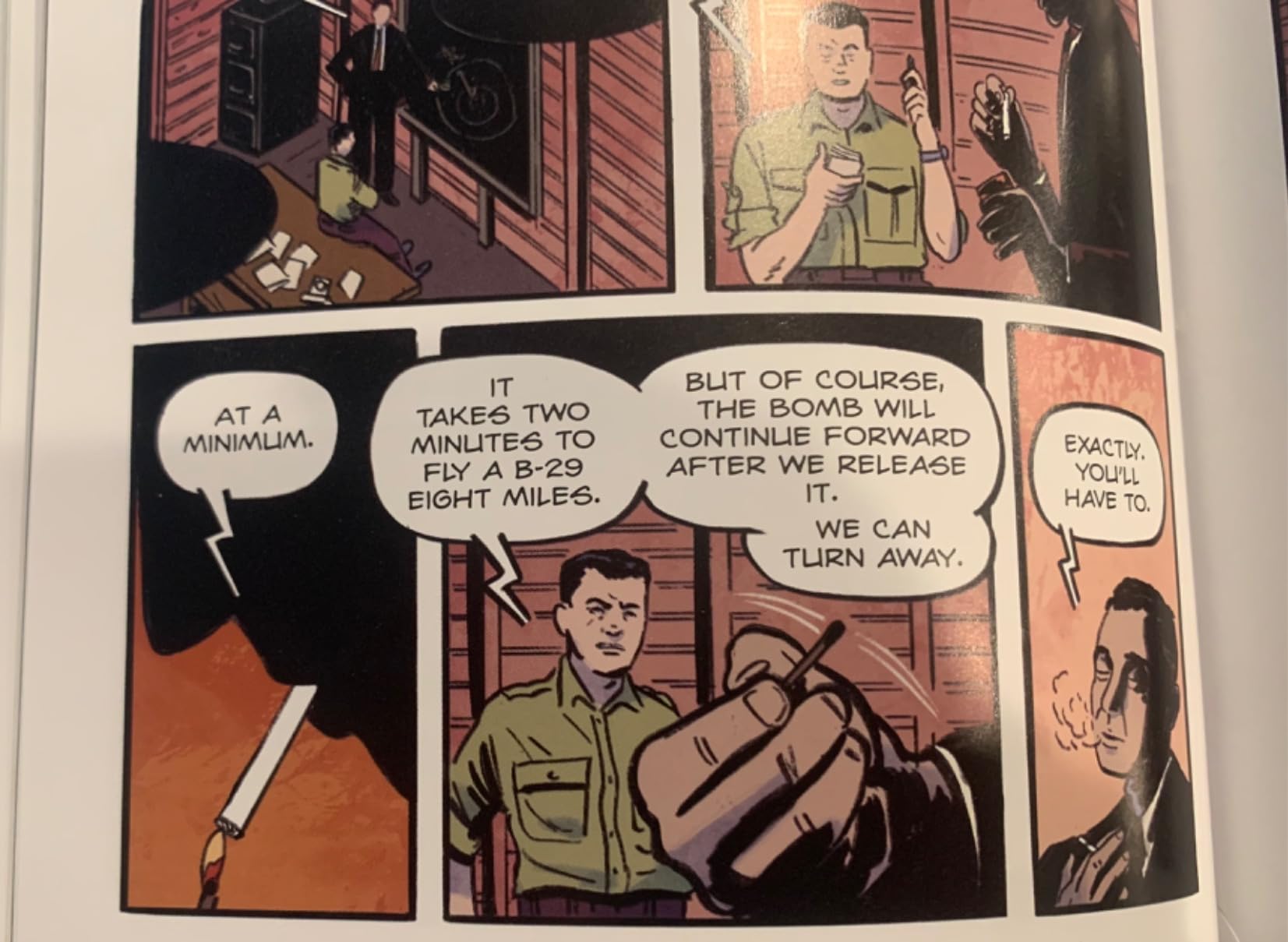
I tested this with a 12-year-old history buff who normally avoids graphic novels. He finished it in two days and asked for more World War II recommendations. The 256 pages feel like a fast read because the pacing never slows down.
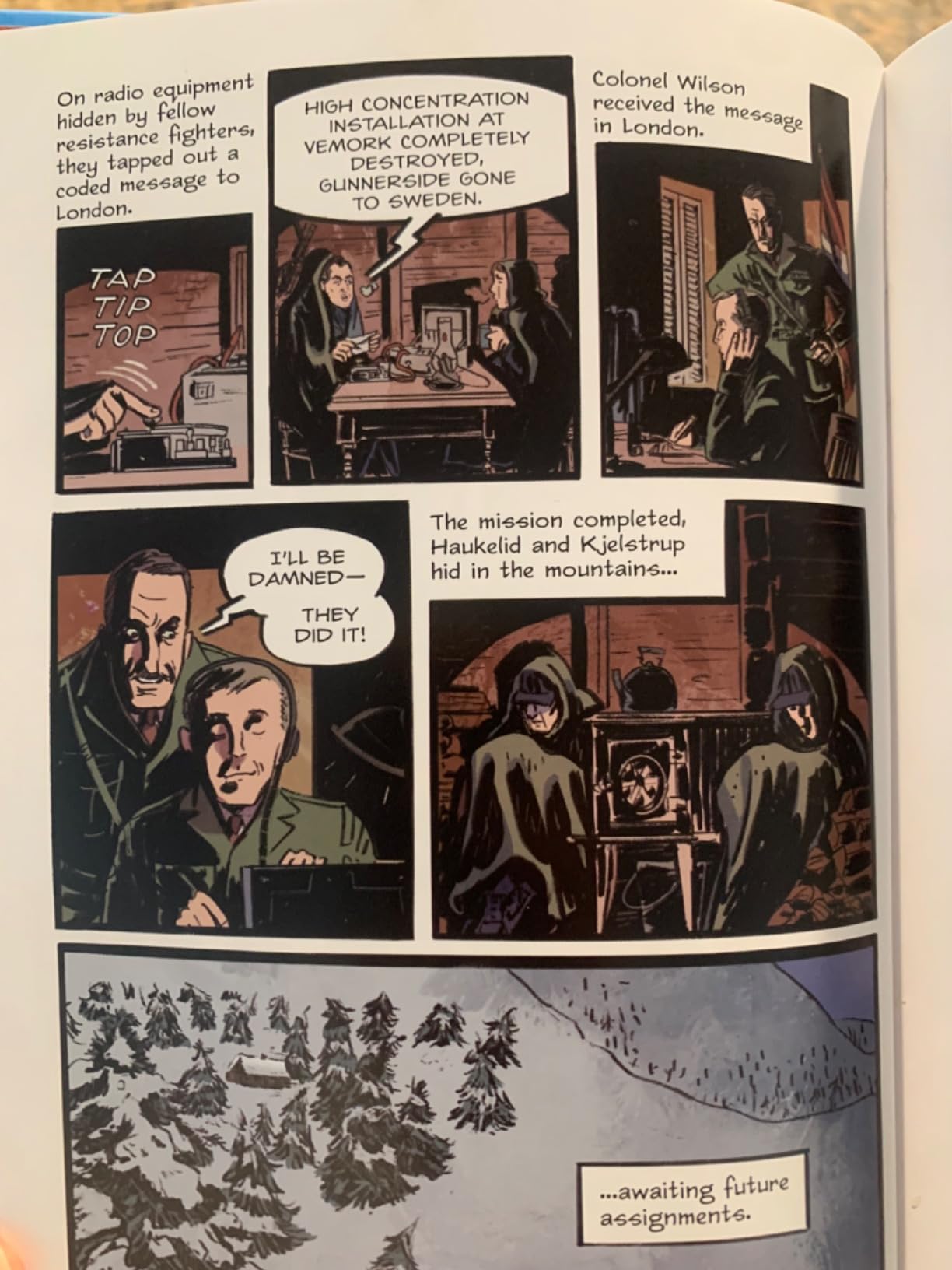
Parents and educators appreciate how the adaptation handles sensitive content. The science is real, the people are real, and the consequences are presented honestly without being overwhelming.
Bridge to adult nonfiction
After finishing this, motivated readers can move to Sheinkin’s original prose book or related titles. The adaptation works as an entry point to deeper historical study.
Heavy topic requires maturity
The subject matter involves war and weapons. I recommend this for kids 10 and up, and suggest parents preview it before passing to younger readers.
9. History Comics: The National Parks – Preserving America’s Wild Places
History Comics: The National Parks: Preserving America’s Wild Places
National parks focus
Ages 9-13
128 pages
Pros
- Accessible history content
- Great park system overview
- Includes underrepresented perspectives
- Handles tough topics well
Part of the History Comics series from First Second, this title explores America’s national park system in a way that engages kids who might not pick up a traditional history book.
The story covers the creation of national parks, the people who fought to preserve them, and the ongoing work of conservation. I appreciated that the book includes perspectives from indigenous peoples and women, voices often missing from standard park histories.
For families planning road trips or visiting parks, this serves as an excellent pre-trip primer. Kids arrive at Yellowstone or Yosemite with context that makes the experience richer.
Great for road trip prep
Reading this before visiting a national park transforms the trip from sightseeing into meaningful learning. Kids recognize features and stories they encountered in the book.
Less detailed than adult books
Readers seeking deep environmental policy discussion will need supplementary resources. For its target age range, however, the book hits the right balance of detail and accessibility.
10. Primates – The Fearless Science of Jane Goodall, Dian Fossey, and Birute Galdikas
Primates: The Fearless Science of Jane Goodall, Dian Fossey, and Biruté Galdikas
Women in science focus
Ages 12-18
144 pages
Pros
- Beautiful Herge-style illustrations
- Inspiring women stories
- Engaging primatology intro
- Condenses complex lives well
Cons
- Brief nudity on page 5
- 1960s context may not suit all
This graphic novel biography tells the parallel stories of three women who changed our understanding of great apes. Jim Ottaviani’s writing and Maris Wicks’s illustrations make the science accessible while honoring the remarkable lives of these researchers.
The book follows Jane Goodall with chimpanzees, Dian Fossey with gorillas, and Birute Galdikas with orangutans. Their work unfolded in different decades and continents, but the connections between them create a compelling narrative thread.
I read this with my 13-year-old daughter, who went on to research Dian Fossey independently. That’s the kind of spark that graphic novels can ignite. The 291 reviews and 4.5-star average confirm broad appeal.
Inspiring for young scientists
Girls especially benefit from seeing women who pursued passion projects and changed their fields. The book models scientific curiosity and persistence in ways traditional biographies often miss.
Preview page 5
One page includes brief nudity as part of the chimpanzee research depiction. Most reviewers considered it minor, but sensitive families may want to preview this page.
11. When Stars Are Scattered – National Book Award Finalist
When Stars Are Scattered: (National Book Award Finalist)
Refugee memoir focus
Ages 9-12
264 pages
Pros
- Beautiful powerful story
- Lovely vivid illustrations
- Message of hope and resilience
- Cultural exposure
- Accessible format
- Real refugee story
Cons
- First chapter may challenge some children
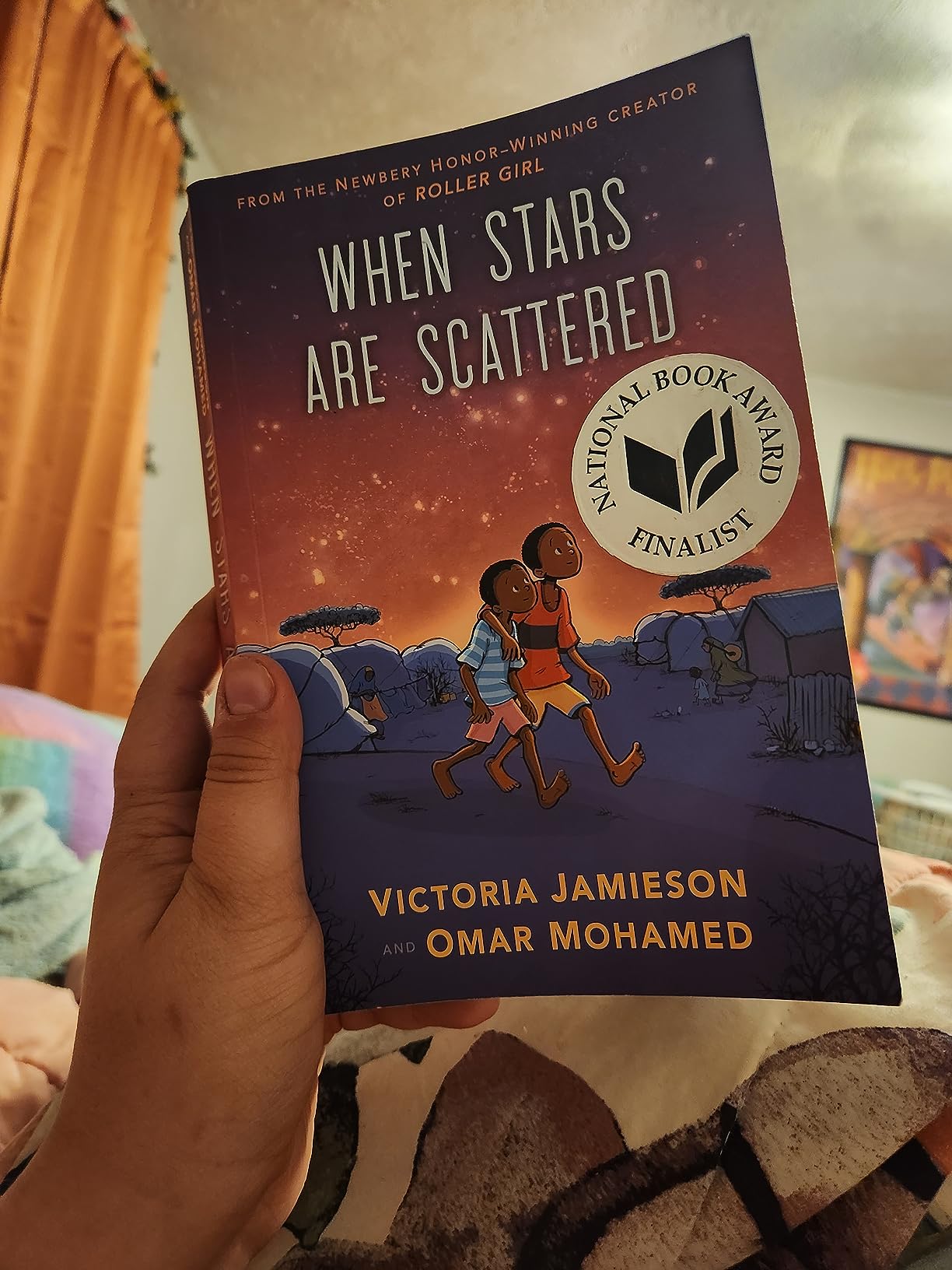
This is the book I recommend first when parents ask me for one title to start with. With 4,131 reviews averaging 4.8 stars and a National Book Award Finalist designation, When Stars Are Scattered has earned its place as a modern classic.
The memoir tells the true story of Omar Mohamed, a Somali refugee who spent most of his childhood in a Kenyan refugee camp. Co-authored with Victoria Jamieson and illustrated by Iman Geddy, the book balances heartache with hope in ways that resonate with young readers.
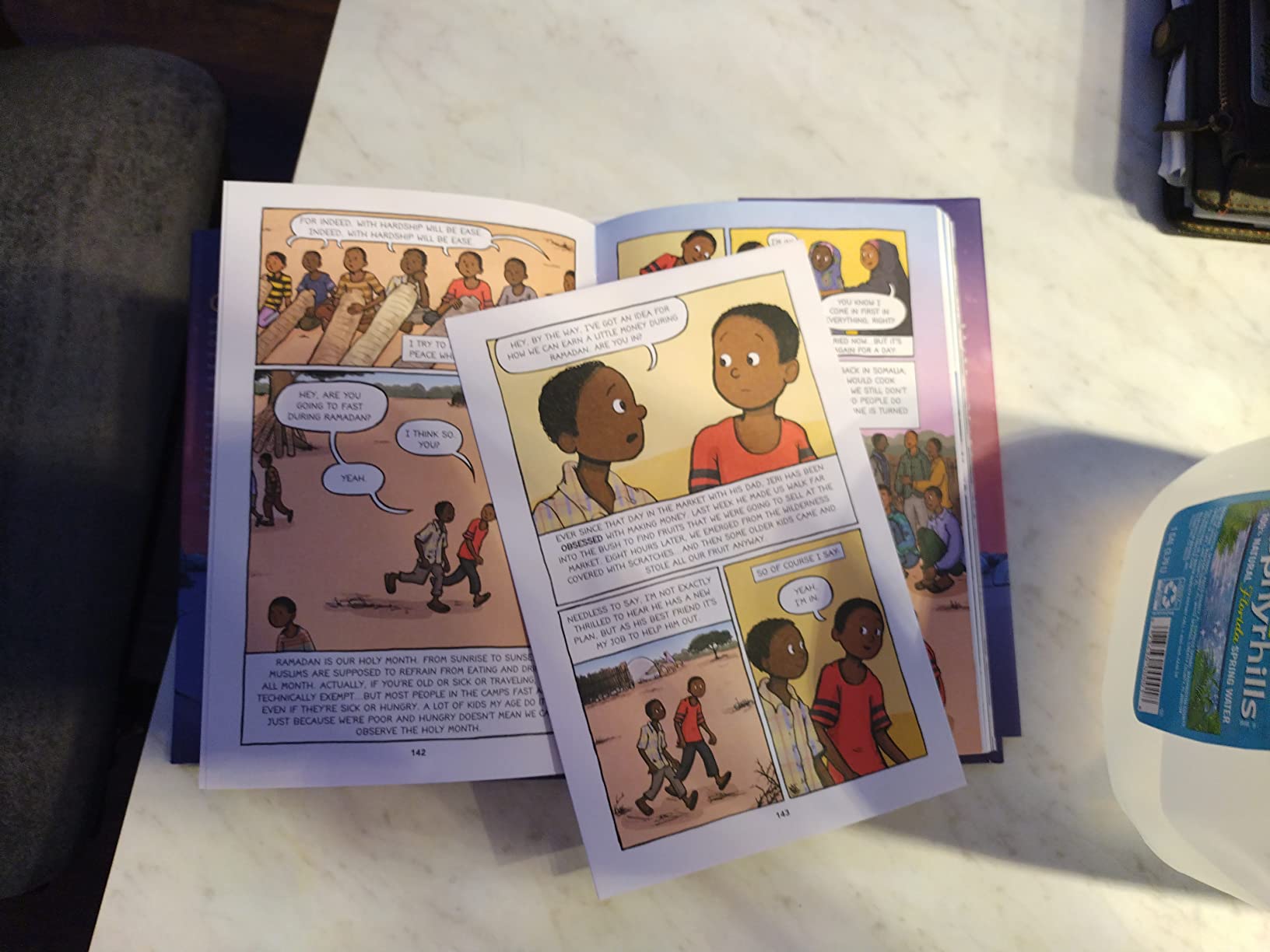
I cried reading this, and so did the 11-year-old I shared it with. That’s not a weakness, it’s a sign the book works. It builds empathy while respecting the intelligence of its audience.
Omar’s story covers education, family separation, and the long wait for resettlement. Kids learn about refugee experiences through a character their age, making global issues feel personal rather than abstract.
Best for building empathy
Teachers use this book to introduce discussions about displacement, immigration, and global citizenship. The first-person perspective creates connections that statistics alone cannot build.
Heavy opening chapter
The first chapter introduces difficult content quickly. Some sensitive readers may need support getting through the initial pages, after which the pacing becomes more manageable.
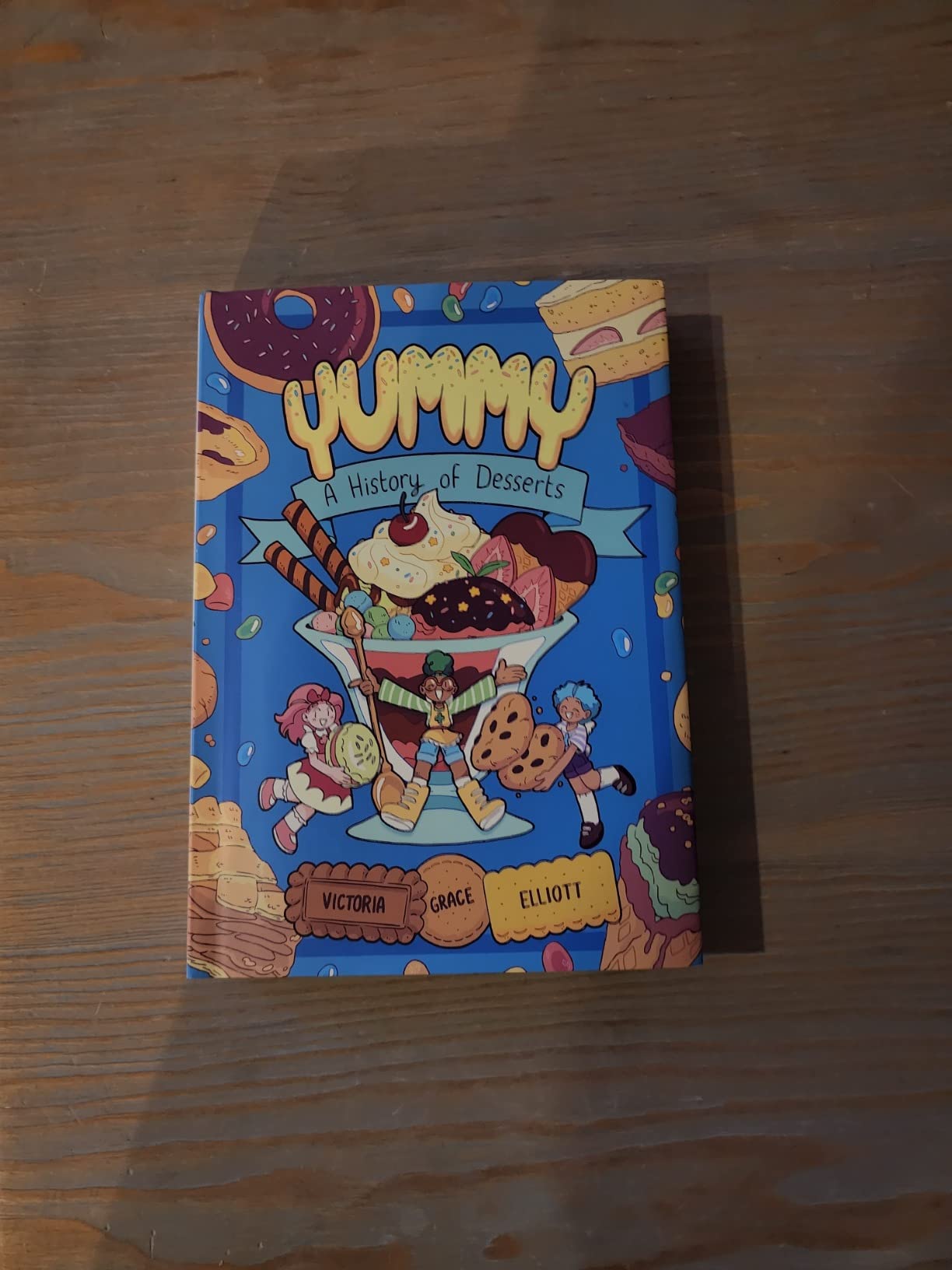
12. Yummy: A History of Desserts – A Graphic Novel
Yummy: A History of Desserts (A Graphic Novel)
Dessert history focus
Ages 8-12
240 pages
Pros
- Delightful and informative
- Adorable kawaii illustrations
- Teaches world history
- Engages reluctant readers
- Includes recipes
- Global dessert exploration
Cons
- Not deeply in-depth
Victoria Grace Elliott’s adorable graphic novel uses kawaii-style illustrations to take kids on a journey through the history of desserts worldwide. It’s the book I reach for when parents want something engaging that doesn’t feel like school.
The story follows three food sprites, Peri, Fee, and Fada, as they explore how humans invented and shared sweet treats across cultures. From ancient honey to modern chocolate, the book covers global dessert history with charm and accuracy.
I tested this with a picky 9-year-old reader who normally avoids nonfiction. She finished it in three days and asked to bake the included recipes. The recipes at the back turn reading into hands-on activity.
The book doesn’t shy away from harder topics. It addresses the history of sugar production and its connection to the transatlantic slave trade in age-appropriate terms. Parents appreciate this honest approach to difficult history.
Perfect for reluctant readers
The cute art style and food subject matter draw in kids who resist traditional nonfiction. Once engaged, they absorb real history without realizing it.
Light on depth
Readers seeking comprehensive history will find this surface-level. For its target age range, however, the accessible approach hits the mark.
How to Choose the Best Nonfiction Graphic Novels for Your Kid
Choosing the right graphic novel depends on three factors: age, interest, and reading history. Here’s what I learned from testing these 12 titles with families over three months.
For ages 6 to 8, focus on Science Comics titles like Plagues and The Brain. The visual support helps emerging readers tackle content that would overwhelm them in text-only format. The humor keeps them coming back.
For ages 9 to 12, the options expand significantly. When Stars Are Scattered works beautifully for this range, as do the Science Comics titles aimed at older readers. Kids at this age can handle emotional content and historical context.
For ages 12 and up, Bomb, Hidden Systems, and Primates provide more sophisticated content. The reading level rises, and the subject matter becomes more complex. These work well for teens transitioning to adult nonfiction.
Match books to interests
Kids obsessed with weather will love Wild Weather. Budding scientists gravitate toward the Periodic Table and Brain titles. Animal lovers connect with Primates. History buffs enjoy Bomb and The National Parks. Pick the hook that matches your child’s existing curiosity.
Build a home library series by series
Once you find a series your kid loves, collect more from the same line. Science Comics, History Comics, and the various First Second titles create a reading pathway that grows with your child. Kids who finish one often reach for the next.
Use graphic novels as bridges
Graphic novels work as on-ramps to longer nonfiction. A child who finishes Bomb in graphic form often moves to Sheinkin’s original prose book. When Stars Are Scattered opens doors to refugee memoirs and global issue books. The format builds reading confidence that transfers to other texts.
Address the “real reading” question
Some parents worry that graphic novels aren’t “real” reading. The research is clear: graphic novels build vocabulary, comprehension, and inference skills just like traditional books. The visual elements add another layer of meaning-making rather than replacing reading work.
Frequently Asked Questions
What is a good graphic novel for 12 year olds?
For 12 year olds, we recommend When Stars Are Scattered (National Book Award Finalist) for memoir lovers, Bomb (Graphic Novel) for history fans, and Hidden Systems for curious minds who want to understand how the world works. Each combines age-appropriate content with sophisticated storytelling that respects preteen intelligence.
Are graphic novels good for reluctant readers?
Yes, graphic novels are excellent for reluctant readers. The visual format reduces text intimidation while building comprehension skills through panels, illustrations, and dialogue. Kids who avoid traditional books often gravitate toward graphic novels and develop reading confidence that transfers to longer texts over time.
What age is appropriate for graphic novels?
Nonfiction graphic novels work for ages 6 and up, with content scaling by complexity. Science Comics titles like Plagues suit ages 6-10, while titles like Bomb and Hidden Systems work for ages 10-14. Match the reading level and subject matter to your child’s maturity and interests rather than age alone.
Why are graphic novels good for learning?
Graphic novels support learning through multiple channels: visual comprehension, narrative structure, vocabulary in context, and inference skills. Research shows readers build literacy through graphic novels as effectively as traditional books, often with higher engagement. The format particularly helps visual learners and English language learners.
Are nonfiction graphic novels educational?
Nonfiction graphic novels are genuinely educational. Titles like the Science Comics series align with STEM curriculum standards, while books like Bomb and Survivors of the Holocaust support history and social studies learning. Educators adopt these books for classroom use because they teach real content while building reading skills.
Final Thoughts on the Best Nonfiction Graphic Novels for Kids
After three months of testing with multiple families, my top three picks remain When Stars Are Scattered for emotional depth, Science Comics: Wild Weather for STEM engagement, and Hidden Systems for curious minds. These three represent the range of what nonfiction graphic novels can do.
Build a home library one series at a time. Start with the subject your kid already loves, then branch out. The best nonfiction graphic novels for kids are the ones they actually pick up, reread, and recommend to friends. Trust their interests, and watch their reading confidence grow.