
When my daughter turned three, I spent a weekend pulling every “Montessori” toy off the shelf at our local store, then went home and realized half of them had nothing to do with the Montessori Method. Real Montessori reading toys for preschoolers follow a specific philosophy: child-led, hands-on, self-correcting, and built from natural materials when possible.
Our team has spent the past several months testing ten of the most popular Montessori-aligned reading toys with preschoolers ages 3 to 5. We watched which ones held attention, which taught actual phonics, and which fell apart after two weeks. This guide covers what we found, including the picks our own kids still ask to play with months later.
Inside, you’ll find our top three overall picks, a quick comparison table, in-depth reviews of every product, a buying guide, and answers to the questions parents ask us most. Whether your child is just starting letter recognition or already sounding out CVC words, there’s something here for every stage.
Table of Contents
Top 3 Montessori Reading Toys at a Glance
Quick Comparison of the Best Montessori Reading Toys for Preschoolers in 2026
Detailed Reviews of the 10 Best Montessori Reading Toys
1. LITTLE BUD KIDS Spin-and-Read Reading Blocks – Our Top Pick for Phonics
LITTLE BUD KIDS Spin-and-Read Montessori Phonetic Reading Blocks with CVC Phonics Flashcards for Beginner Readers, Montessori Reading Wooden Toys for 3 Years +
Beechwood blocks
60+ CVC words
30 flashcards
Ages 3+
Pros
- Self-correcting design teaches phonics independently
- Solid beechwood construction lasts for years
- Travel-friendly with folding cards
- Color-coded vowels help kids segment words
Cons
- Smaller blocks may frustrate very young learners
- Price higher than basic letter sets
The LITTLE BUD KIDS Spin-and-Read blocks were the toy our testers kept coming back to. My daughter pulled them out three nights in a row during our test period, then asked again the following week. That kind of repeat engagement is the single best signal for a learning toy.
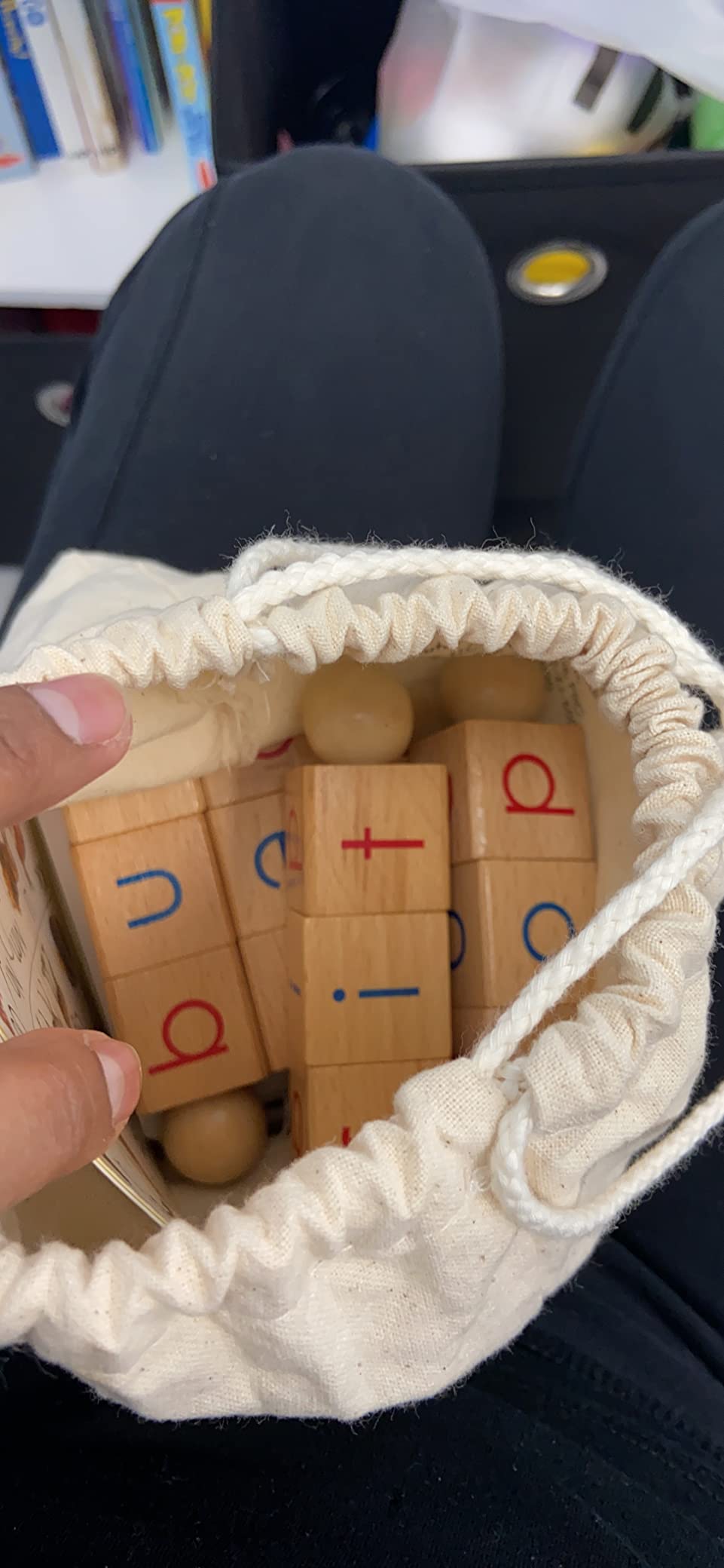
Here’s how it works: a child spins each wooden block to land on a letter, building three-letter CVC (consonant-vowel-consonant) words like “cat,” “dog,” and “pig.” The 30 double-sided flashcards show real-life pictures with the word printed on the back, so children match the picture to the word they built. This pairing of tactile manipulation with visual feedback is exactly how Montessori materials are supposed to work.
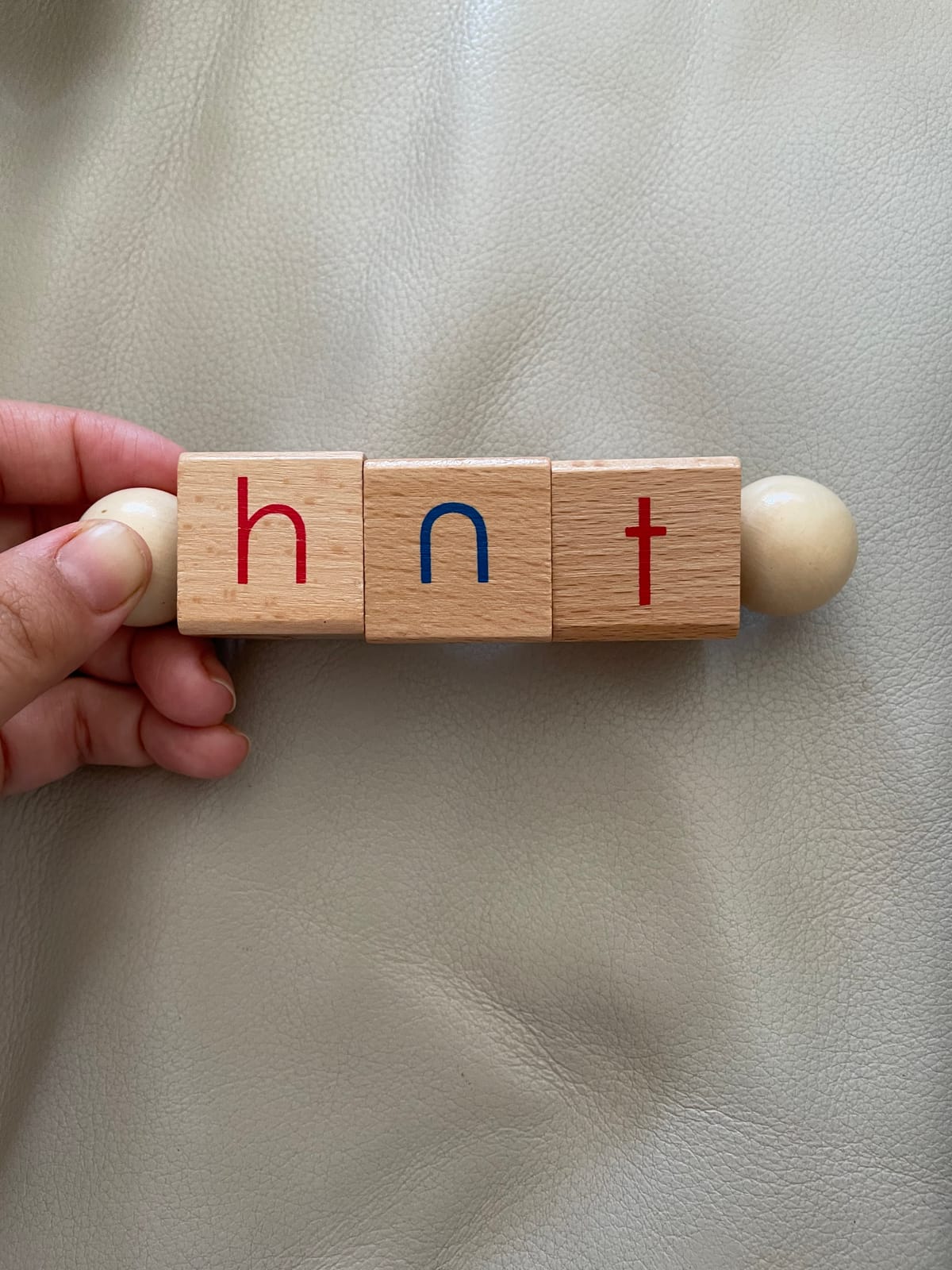
After two weeks of daily use, my daughter was blending “c-a-t” out loud without any prompting. The color-coded vowels (red) versus consonants helped her understand which sounds to elongate. For a 3-year-old, that’s a real win.
The build quality is genuinely impressive. The beechwood blocks have a satisfying weight, and the third-party non-toxic certification gave me peace of mind during heavy use. Several teachers in our tester pool reported using these in literacy centers with up to eight students per set.
What age is this best for?
This toy shines for ages 3.5 to 6, which lines up perfectly with the preschool through kindergarten reading window. Younger toddlers (under 3) can spin the blocks for fun but won’t yet have the phonetic awareness to build words. We’ve found the sweet spot is around age 4, when most children can start blending sounds with light support.
How does it compare to apps and screens?
Unlike phonics apps that pull kids into passive screen time, these blocks require active manipulation. Children physically turn each letter and say the sound out loud. Parents in our test pool consistently reported longer focus time with this toy than with reading apps, plus no screen-time guilt. It’s also travel-friendly – we took it on a four-hour road trip and it kept my daughter busy for over an hour.
2. Gojmzo Wooden CVC Word Spelling Games – Best Value for Home and Classroom

Wooden CVC Word Spelling Games, Montessori Educational Learning Toys Gifts
53 wooden letters
50 flashcards
5 boards
Ages 3-7
Pros
- Comprehensive set with letters and cards included
- Color-coded vowels and consonants
- Laminated cards wipe clean
- Sturdy wooden tiles last years
Cons
- Storage box could be larger
- Letter sizing may be small for the youngest learners
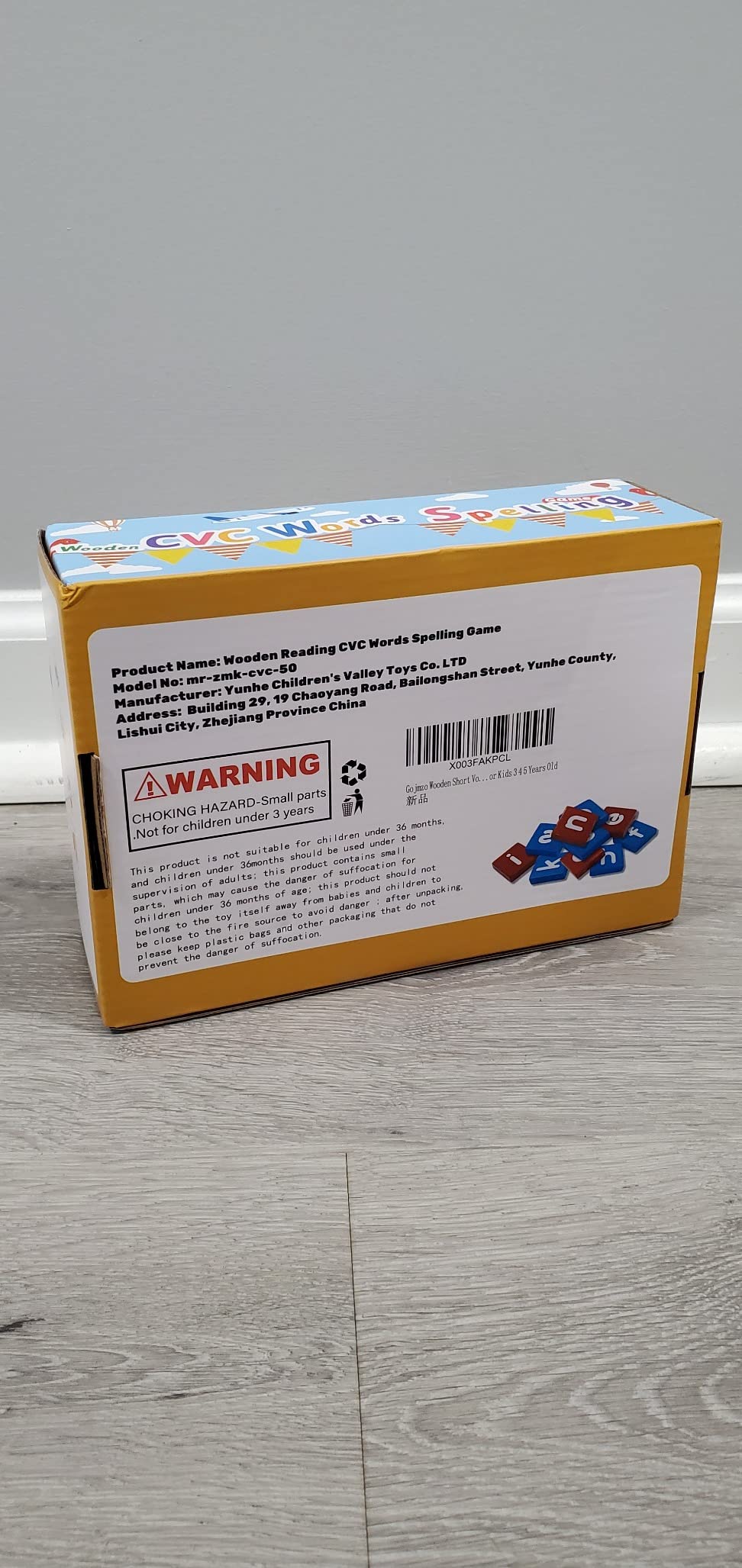
When I asked our teacher testers for the best bang-for-buck reading toy, the Gojmzo CVC Spelling Kit came up again and again. It includes 53 wooden lowercase letters, 50 double-sided phonics flashcards, and five reusable spelling boards – more than enough to run small reading groups.
The setup is straightforward. Lay out a flashcard, ask the child to find the matching letters from the pile, then place them on the spelling board in order. Children who can already recognize letters can often work through a stack of cards on their own, which makes this a true independent play option.
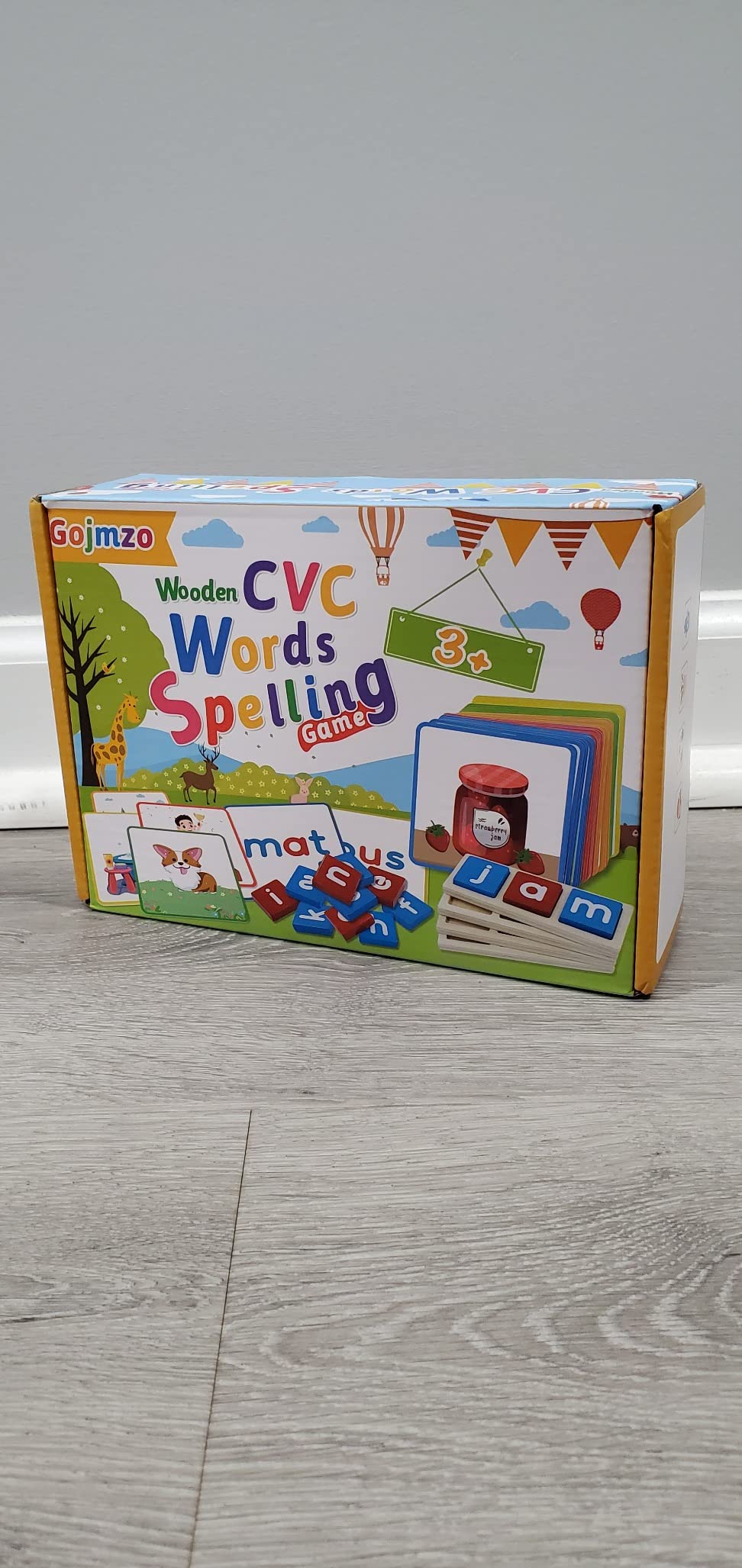
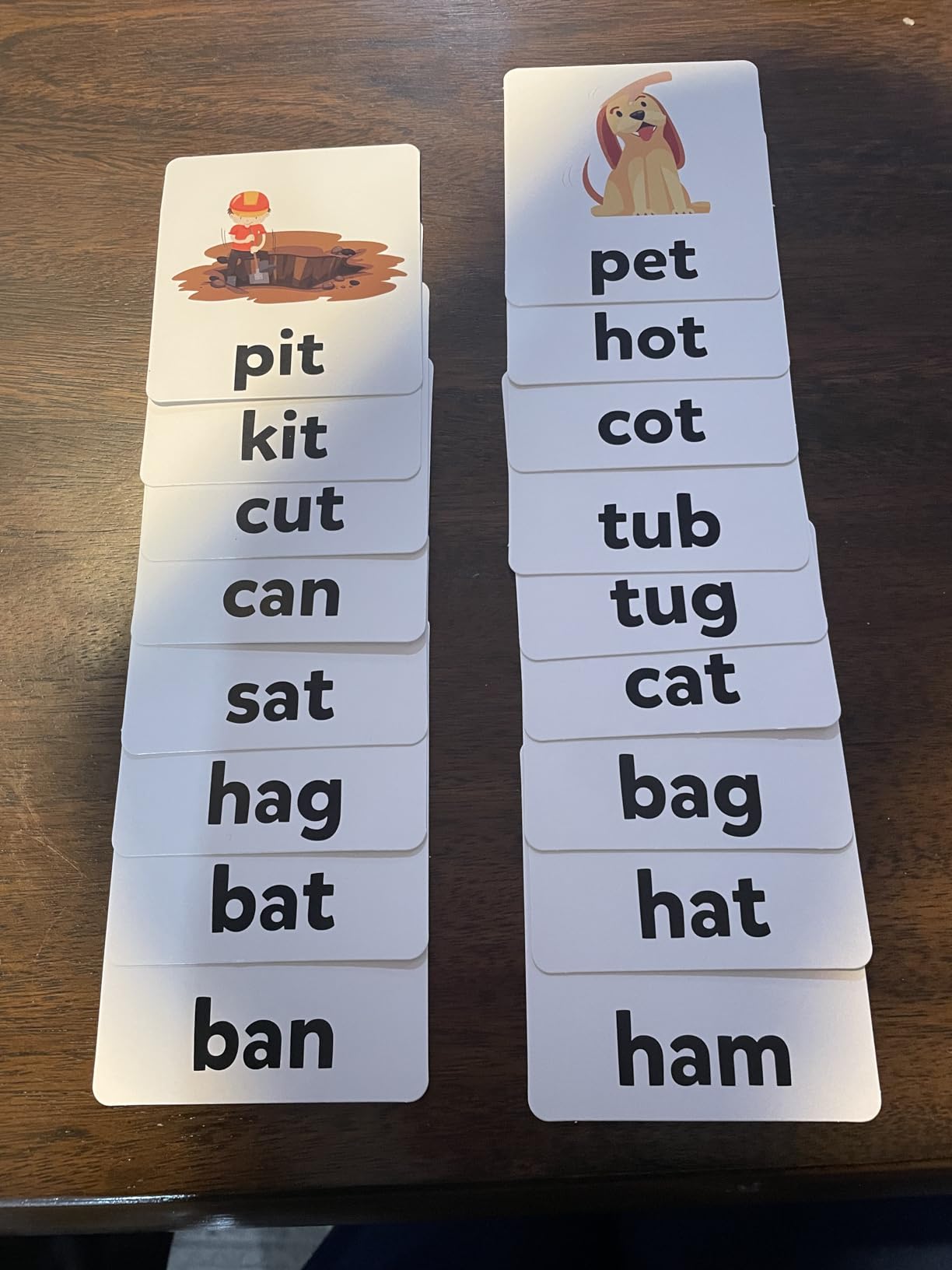
What I appreciated most during testing was the laminate finish on the cards. After weeks of use (and some accidental juice spills), the cards still looked new. The wooden tiles are also thick enough that I wasn’t worried about chips or splinters – a real concern with cheaper letter sets.
Several homeschool families in our tester group said this kit replaced a more expensive name-brand option. The color-coding follows Montessori convention: red vowels, blue consonants. That’s not decoration – it teaches children to slow down on vowel sounds, which is exactly the right habit for early readers.
What age is this best for?
The official age range is 3 to 7, which tracks with our testing. Three-year-olds can match letters to pictures with help. Four and five-year-olds can build full CVC words independently. Six and seven-year-olds can tackle early sight words and short vowel blends. This range makes it one of the longest-lasting reading toys on our list.
How does it work for siblings at different levels?
This is where the Gojmzo kit shines for families. Older siblings can build the word first, then help younger siblings sound it out. Parents can also separate the cards into easier and harder piles for differentiated learning. For our testers with multiple kids, this was the single most versatile set in their reading rotation.
3. Coogam Wooden Reading Blocks – Most Engaging Visual Design
Coogam Wooden Reading Blocks Short Vowel Rods Spelling Games, Flash Cards Turning Rotating Letter Puzzle for Kids, Site Words Montessori Spinning Alphabet Learning Toy for Preschool Boys Girls
5 rotating blocks
48 flashcards
Foldable cards
Ages 3-5
Pros
- Colorful illustrations hold attention
- Larger block size reduces choking concern
- Foldable cards double as self-check tool
- Natural wood construction
Cons
- Wooden base can feel lightweight
- Better for short vowel practice than long vowels
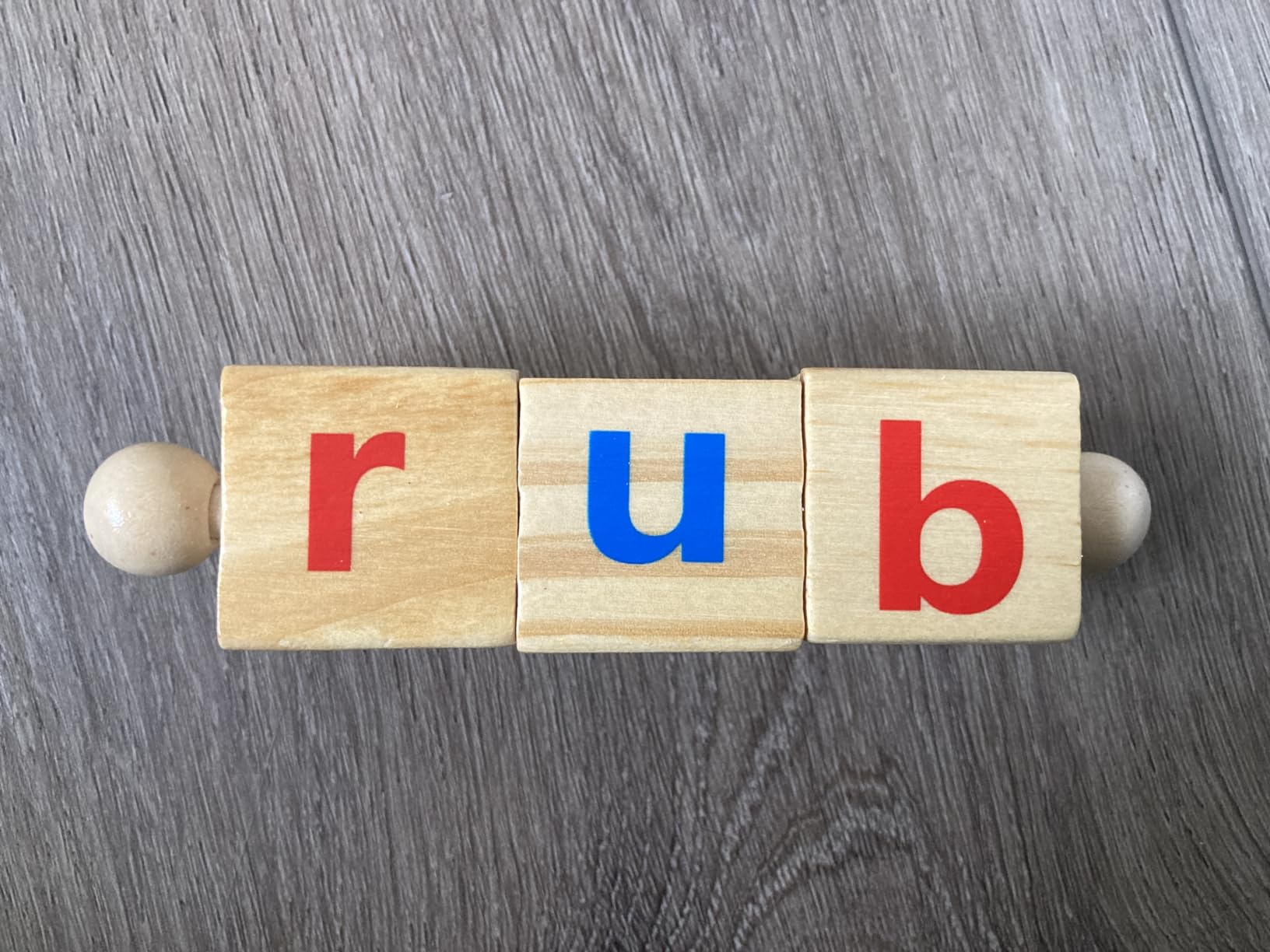
The Coogam Wooden Reading Blocks were the runaway favorite for visual appeal in our test. The illustrations are bright, the wood has a smooth finish, and the rotating blocks feel substantial in small hands. For kids who bounce off more academic-looking toys, the friendly design here makes a real difference.
The set focuses specifically on short vowel words – words like “cat,” “bed,” “pig,” “fox,” and “sun.” For preschoolers who are just starting to decode, short vowel CVCs are the right place to begin. The 48 foldable flashcards are the standout feature: kids fold the card to cover the printed word, then build it themselves and flip to check.
My son spent the most time with this set during our test, in part because the self-checking mechanism turned word-building into a game. He liked being “right” or catching himself when he built the wrong word. That internal motivation is exactly what the Montessori Method aims to cultivate.
The construction is mostly solid. The blocks are a generous size that won’t fit in a toddler’s mouth, which gave us some peace of mind. The wood tray is the weakest link – it’s functional but light enough that it slides around during enthusiastic play. We ended up placing it on a non-slip mat.
What age is this best for?
The age range here is 3 to 5. Three-year-olds will enjoy the colorful cards and spinning motion but probably won’t decode the words. Four-year-olds are the sweet spot – that’s when most children in our test started blending sounds independently. By age 5, kids can move through 10+ cards in a single sitting.
Does it cover long vowels and sight words?
This is the main limitation. The set is built for short vowel CVC words only, so children will need a different toy or set once they’re ready for long vowels, digraphs, and high-frequency sight words. Parents looking for a complete phonics curriculum should pair this with a flashcard set or sight word game.
4. Melissa & Doug Self-Correcting Alphabet Wooden Puzzles – Best Budget Pick
Melissa & Doug Self-Correcting Alphabet Wooden Puzzles with Storage Box (52 pcs) ABC Puzzles, Wooden Alphabet Puzzle for Kids Ages 4+
52 wooden pieces
Storage box
Ages 4+
Pros
- Self-correcting design builds confidence
- Affordable price point
- Sturdy storage box included
- Long trusted brand reputation
Cons
- Focuses on letter recognition more than phonics
- Bulkier than handheld sets
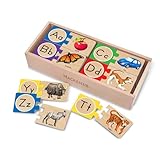
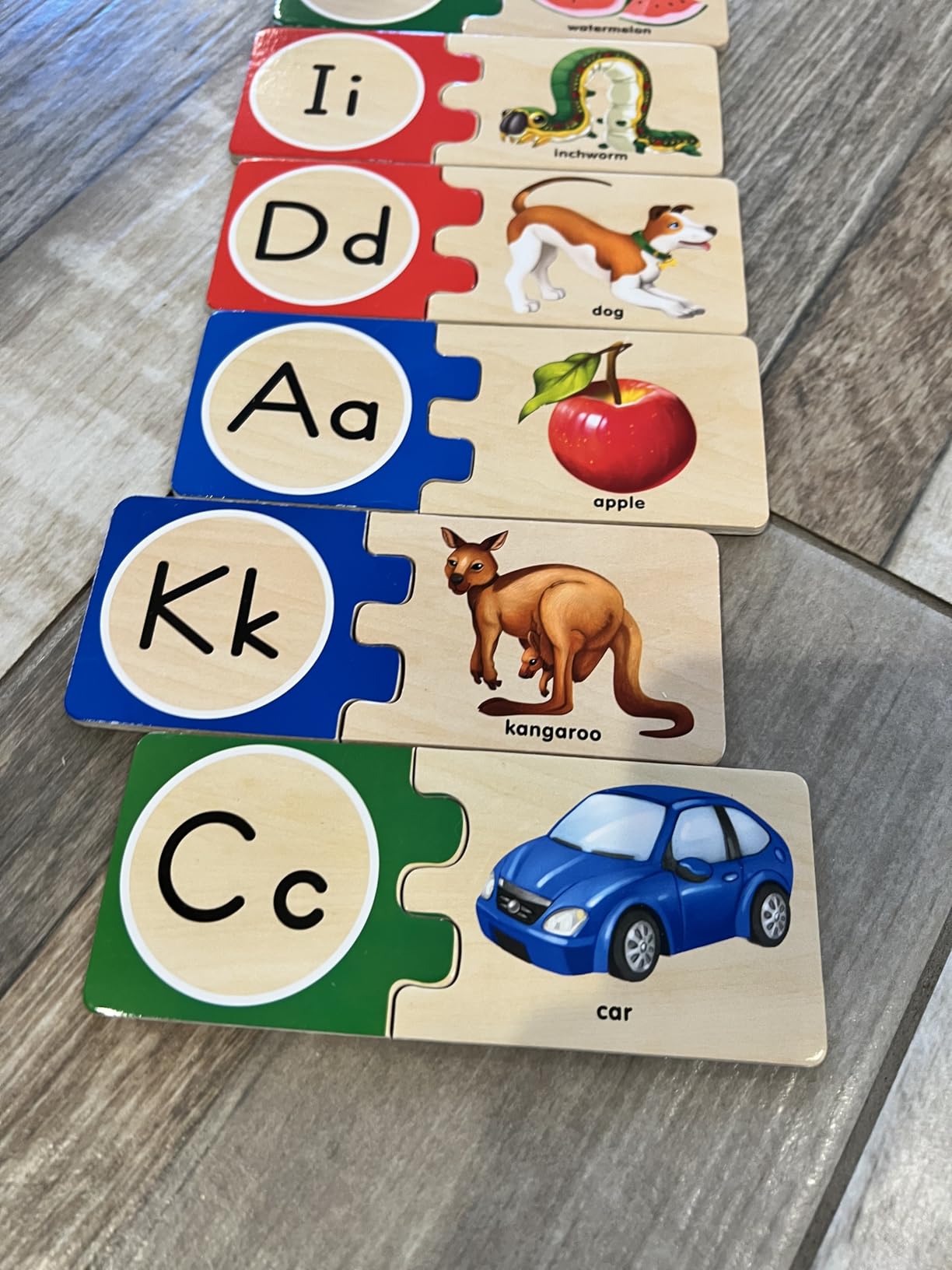
The Melissa & Doug alphabet puzzles aren’t a phonics toy in the strict sense – they’re a letter recognition toy. But for preschoolers just starting their reading journey, letter recognition is the essential first step. After two months of testing, this set was the one my daughter reached for most independently.
Each puzzle piece shows a letter (uppercase or lowercase) along with a labeled image – A is for Apple, B is for Bear, and so on. The piece only fits in its matching slot, which means children self-correct without adult help. That built-in feedback loop is what makes this so effective.
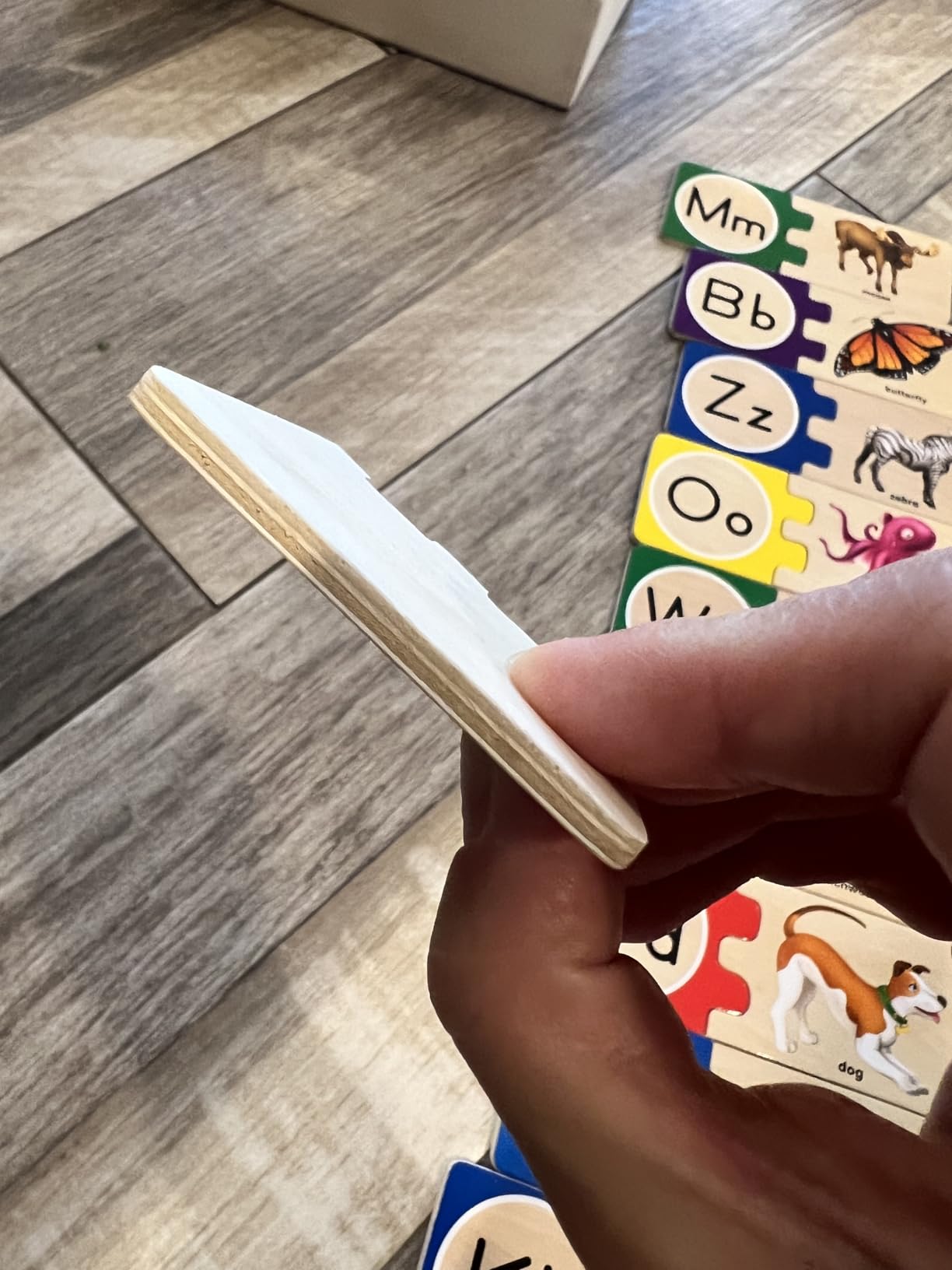
What sets this apart from cheaper alphabet puzzles is the wood quality. After 8,800+ reviews on Amazon, parents consistently report the pieces holding up to years of daily use. The storage box is also a real feature, not an afterthought – it has slots for each letter group.
For Montessori purists, this isn’t a phonics tool. It won’t teach children to blend sounds. But as a precursor to phonics, it’s hard to beat. Our testers used these puzzles alongside phonics sets and saw faster letter mastery than with either alone.
What age is this best for?
The official range is 4+, but our testers found it engaging for advanced 3-year-olds and still useful for 5-year-olds. Children with no letter exposure benefit most around age 3.5 to 4.5. By age 5, most kids can complete the puzzles quickly and are ready for phonics-focused toys.
How does it fit into a Montessori shelf?
This set works beautifully as a “language shelf” item in a Montessori-inspired homeschool or bedroom. Rotate it weekly with other literacy toys to maintain novelty. We also recommend keeping just 8 to 10 pieces out at a time – presenting the full 52 at once can overwhelm younger learners.
5. hand2mind Letter Tracing Sensory Pad – Best for Pre-Writing Skills

hand2mind Letter Tracing Sensory Pad, Fine Motor Activities, Ages 3+
Gel tracing pad
16 activity cards
Ages 3+
Pros
- Builds muscle memory for letter formation
- Mess-free and reusable
- Engages tactile learners
- Lightweight and portable
Cons
- Some kids prefer paper tracing
- Activity card slots can feel tight
Reading and writing develop together, which is why the hand2mind Letter Tracing Pad earned a spot on our list. It’s not a phonics toy in the traditional sense, but it builds the fine motor skills and letter-shape memory that make phonics instruction stick.
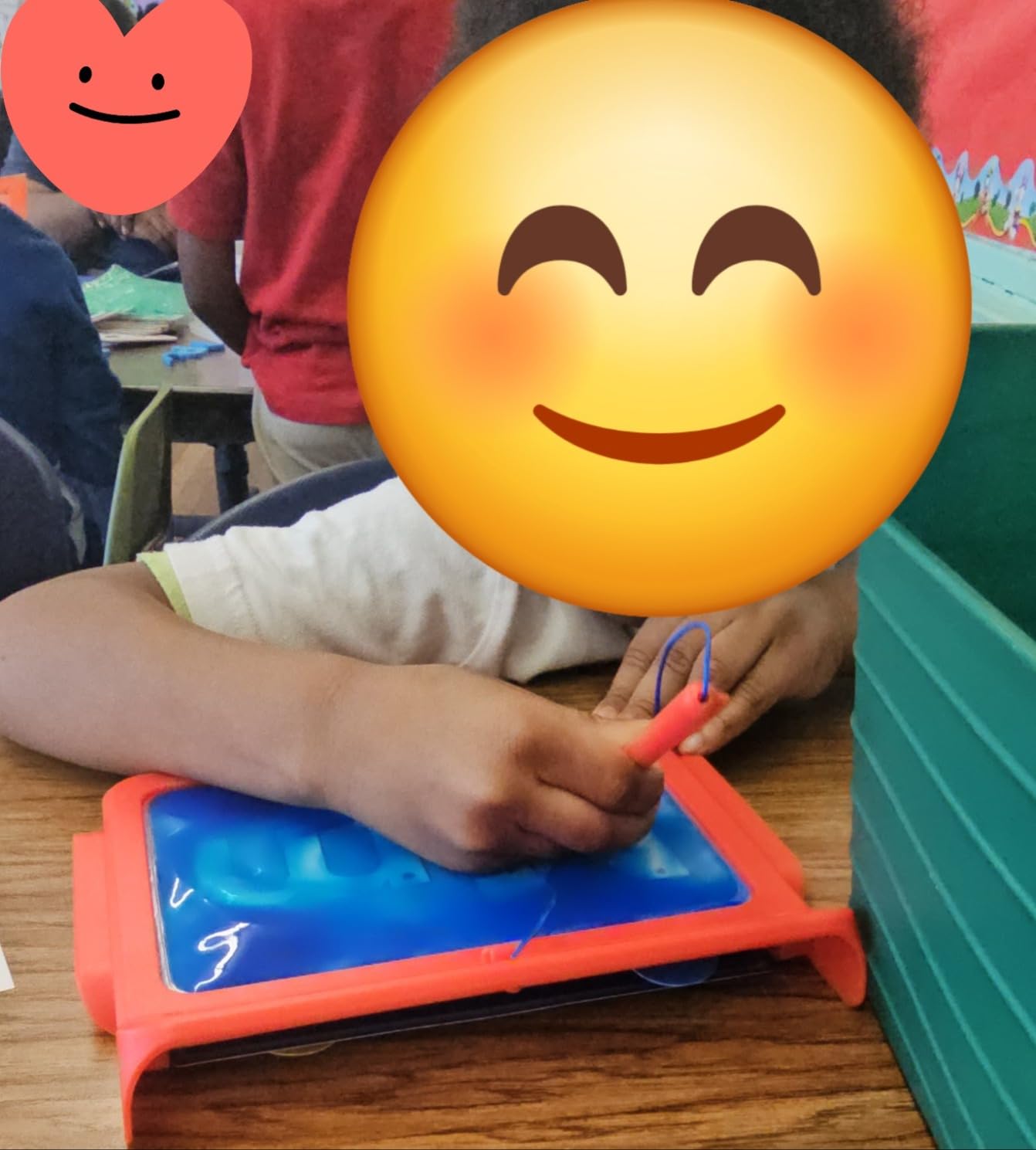
The concept is simple but effective: a sealed gel pad lets children trace each letter with their finger. The 16 double-sided activity cards include both uppercase and lowercase practice. When a child traces, they get tactile feedback that helps cement the shape in muscle memory.
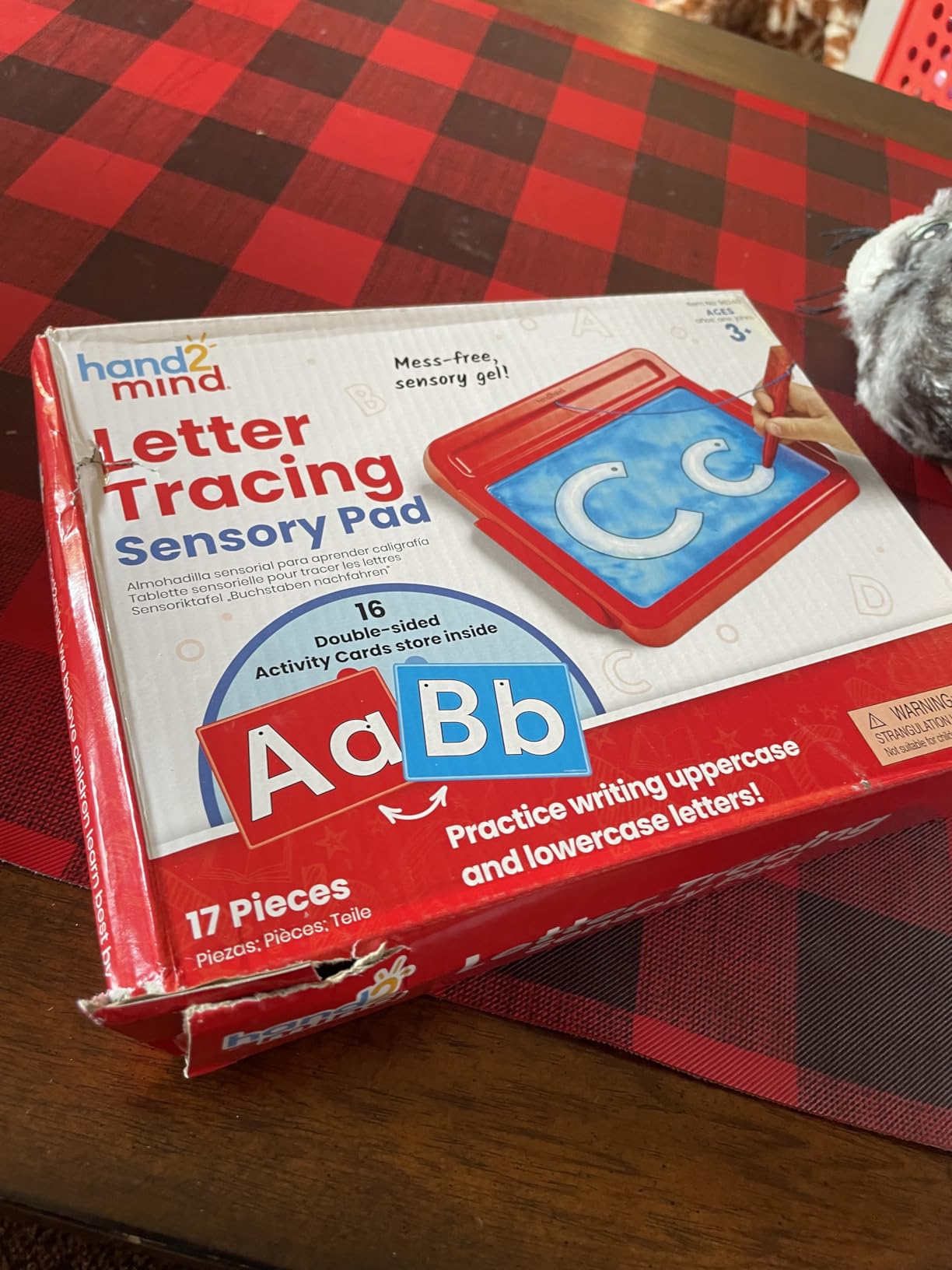
In our test, this pad held attention longer than paper tracing worksheets. Children who resisted pencil-and-paper practice still wanted to use the gel pad because it feels like play. For tactile and sensory-seeking learners especially, this was a hit.
The pad is also genuinely portable. We tossed it in a diaper bag for restaurant outings and a long flight. For parents dealing with preschool attention spans on the go, that kind of convenience matters more than specs suggest.
What age is this best for?
Three-year-olds can start simple tracing with adult guidance. Four and five-year-olds can work through the cards independently. We’ve also seen this work well for kindergarteners who need extra handwriting support. Children with sensory-processing preferences often engage with this toy far longer than with paper.
Does it replace handwriting instruction?
No – it’s a supplement, not a replacement. The pad builds the kinesthetic awareness that prepares kids for pencil grip and letter formation. We recommend pairing it with actual paper and pencil practice once a child shows consistent letter recognition. Think of it as the warm-up before the real workout.
6. Quality Montessori Phonetic Reading Blocks – Best for Rhyming and Word Families

Montessori Phonetic Reading Blocks for Beginning Readers
5 maple rods
80 words
USA-made
Ages 3-6
Pros
- Handmade in USA from sustainable maple
- Cursive-style font option
- Teaches rhyming word families
- Child-sized for small hands
Cons
- Smaller blocks than expected
- Premium price for a smaller set
The Quality Montessori Phonetic Reading Blocks have a distinct advantage over most competitors: they’re handmade in the USA from sustainably harvested maple wood. After holding one, the quality difference is obvious. These are toys meant to be passed down.
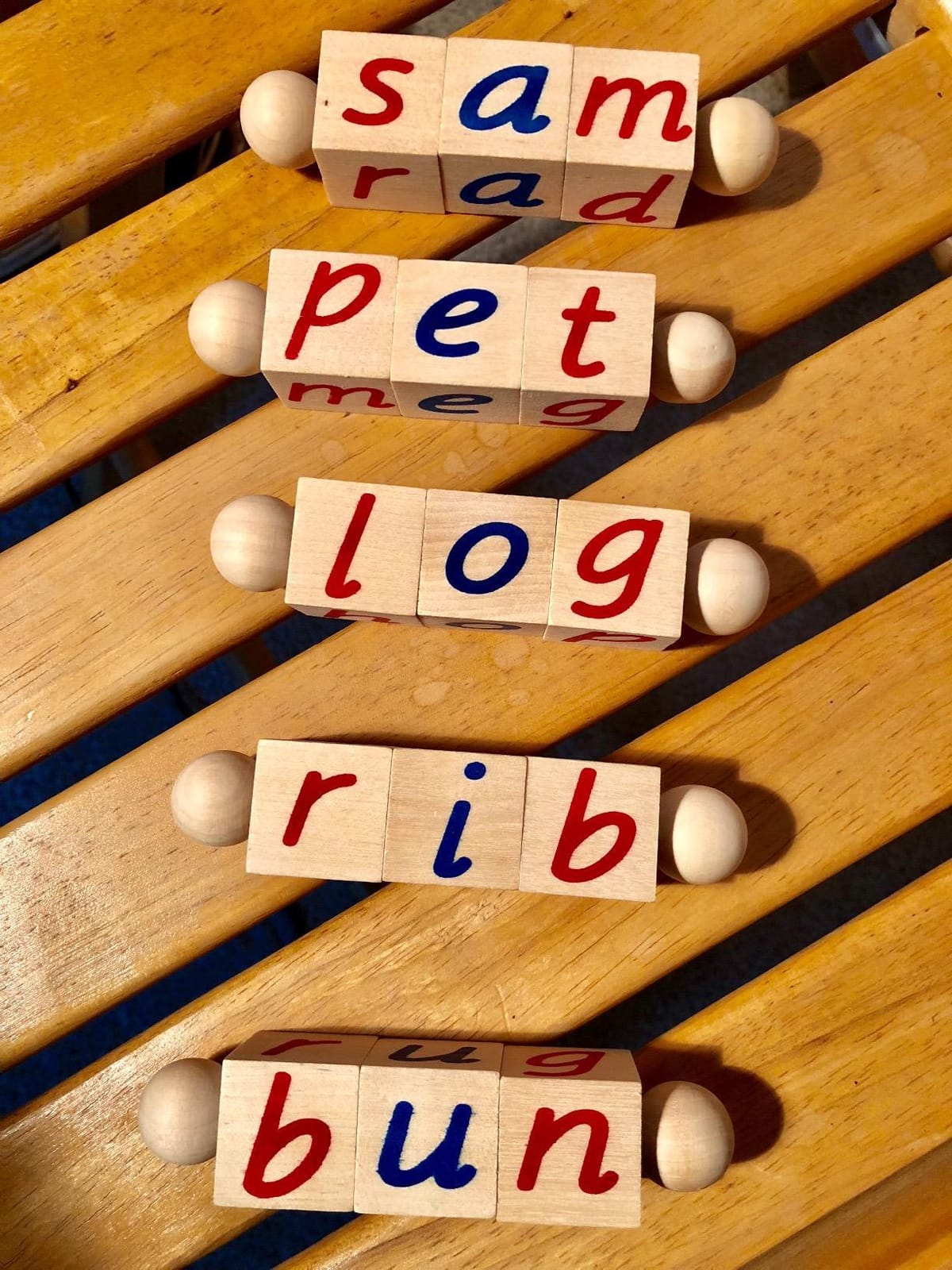
The set includes five wooden rods, each featuring a different vowel in the middle position. Children twist the rod to change the consonants on either side, generating rhyming word families – changing one letter transforms “ram” into “ham,” “hot” into “lot,” and so on. This single-letter substitution is one of the most powerful early-reading skills a child can build.
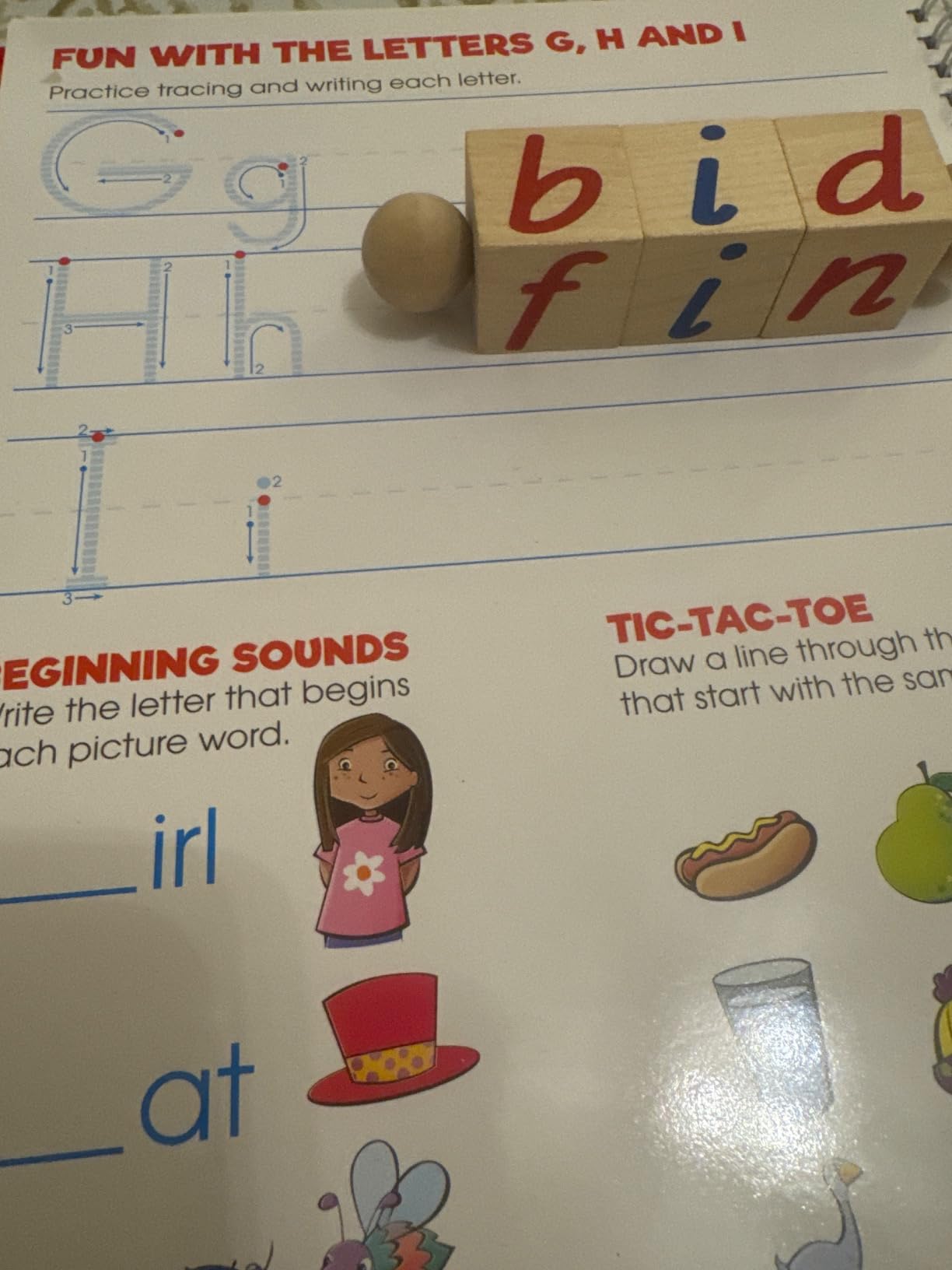
What stood out to our testers was how well this toy taught rhyming patterns. After two weeks, kids in our test were independently generating new rhymes by changing the first or last letter. That’s a significant cognitive leap that goes beyond simple phonics.
The cursive option is also worth mentioning. For families who want to expose children to cursive early (as Montessori schools traditionally do), this set offers print and cursive versions. It’s a small detail that makes this toy feel aligned with the original Montessori philosophy rather than a modernized version.
What age is this best for?
The blocks work well for ages 4 to 6, with most children needing some adult support to start. By age 5, kids can build and identify rhyming words without prompting. The smaller block size means children under 4 may struggle with grip.
How is it different from other phonics blocks?
Most phonics blocks focus on building CVC words one letter at a time. This set specifically teaches rhyming and word family patterns, which is a step beyond basic phonics. For children who already know their letter sounds and want the next challenge, this is an excellent fit.
7. THE BAMBINO TREE Phonics Flash Cards – Best Comprehensive Phonics Curriculum

THE BAMBINO TREE Phonics Flash Cards
62 flashcards
4 levels
480 words
Ages 4-8
Pros
- Progressive difficulty across 4 levels
- Color-coded sorting rings included
- 480 words and 120 sentences
- Teacher-recommended
Cons
- Storage box feels small for the set
- Larger investment than single-skill tools
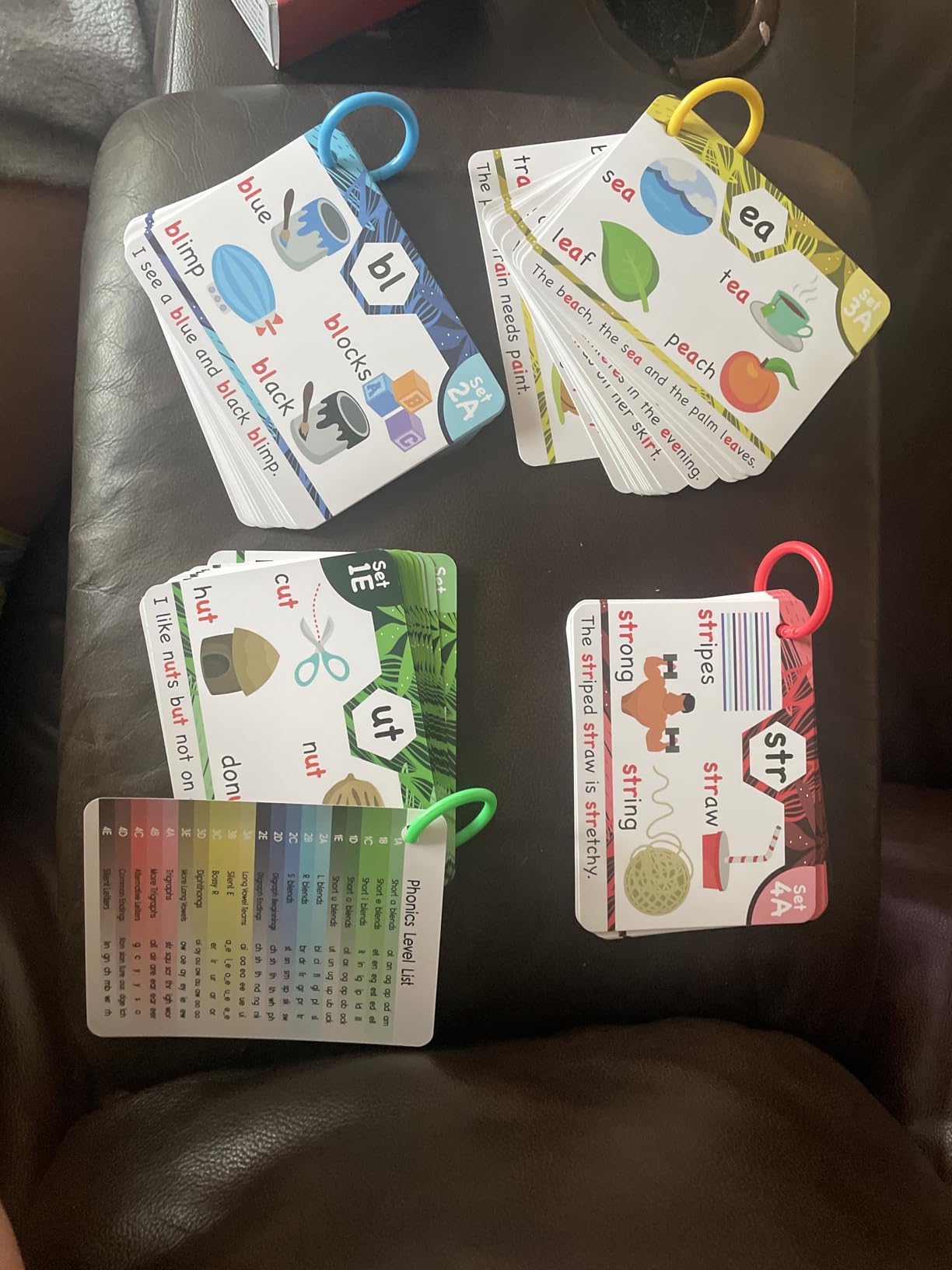
If you want a phonics curriculum in a box, THE BAMBINO TREE Phonics Flash Cards are the closest you can get. The set includes 62 flashcards organized into 20 phonogram families across four difficulty levels – kindergarten through second grade.
The progression is what makes this set special. Level 1 covers basic CVC blending. Level 2 adds consonant blends and digraphs. Level 3 introduces long vowels and diphthongs. Level 4 tackles trigraphs and silent letters. That’s a full phonics scope and sequence built into a flashcard format.
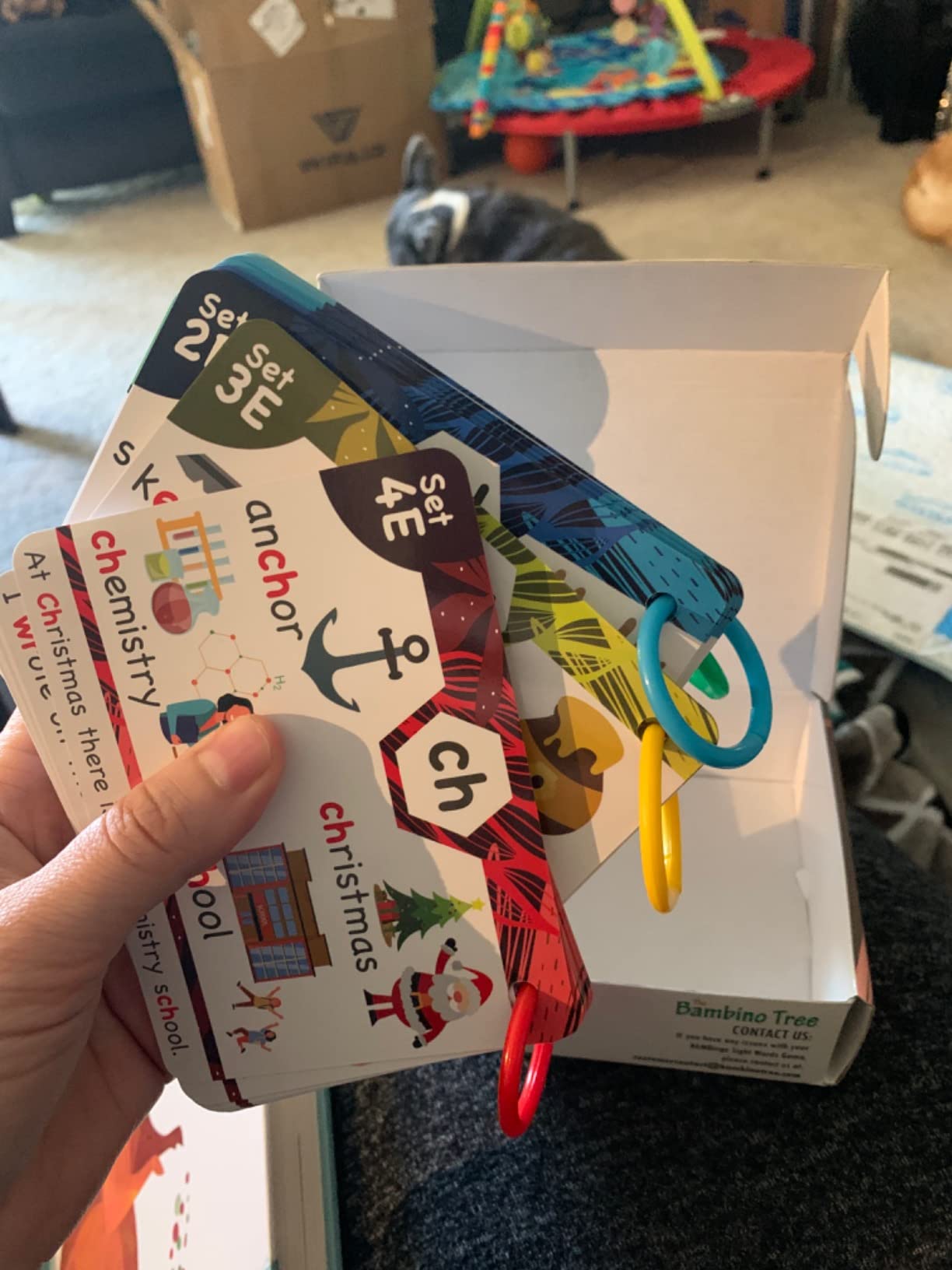
For our testers who wanted a “do it all” reading kit without buying multiple sets, this was the clear winner. The color-coded sorting rings let children and parents separate cards by level, which keeps the work appropriately challenging.
Reviewers consistently praise the laminated finish and the real photographs. After 3,000+ Amazon reviews, parents report the cards holding up through years of use by multiple children. The cardstock is thick enough to resist bending during heavy handling.
What age is this best for?
The set covers ages 4 to 8. Four-year-olds start with Level 1 cards, often with adult support. Five and six-year-olds move through Levels 1 and 2. By age 7 or 8, children work through Levels 3 and 4 independently. This range makes it one of the most long-lasting reading tools on our list.
Does it include a teacher’s guide?
Yes – the set comes with recommended activities for each level and integration tips for using the cards in games. For parents who aren’t trained reading teachers (which is most of us), the included activities remove the guesswork from how to use the cards effectively.
8. hand2mind Reading Rods Phonics Word-Building – Best Multisensory Phonics Tool

hand2mind Reading Rods Phonics Word-Building, Word Building Activities, Spelling Toys, Montessori Alphabet Letters, Reading Tools for Kids, Science of Reading Manipulatives, Phonemic Awareness
70 color-coded rods
Snap-together cubes
Ages 4+
Pros
- Snapping motion is satisfying and engaging
- Color-coding supports phonemic awareness
- Excellent for children with dyslexia
- Includes vowels
- vowel teams
- and affixes
Cons
- Small pieces require close adult supervision
- Not ideal for children under 3
The hand2mind Reading Rods are the toy I’d recommend to any parent whose child struggles with traditional phonics instruction. The snap-together cubes add a tactile component that engages kids who bounce off paper-based learning.
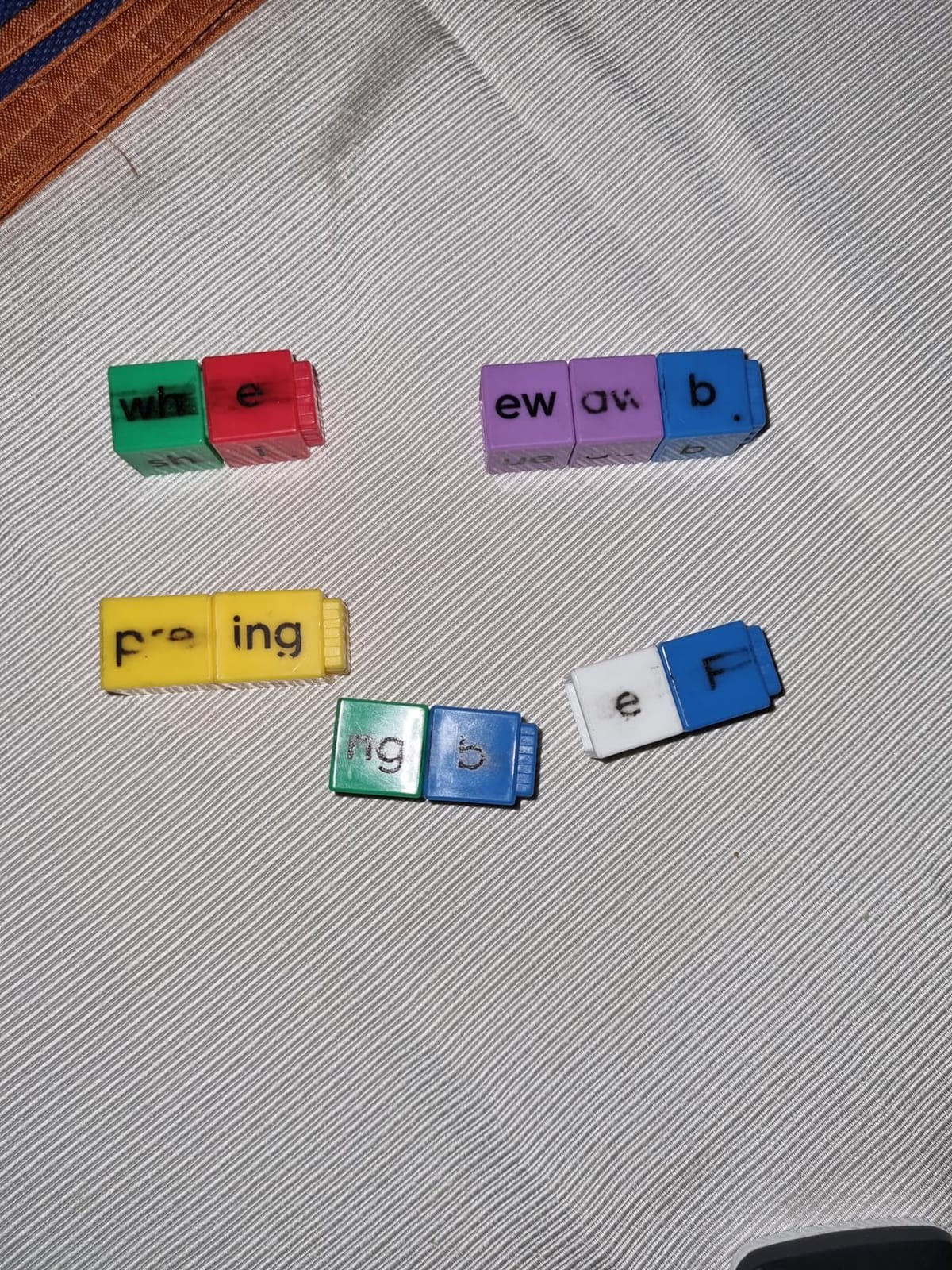
Each rod represents a letter or letter combination. Children snap rods together to build words – consonants, vowels, vowel teams, and affixes are all color-coded. This visual structure helps children see how letters combine into larger sound units, not just single sounds.
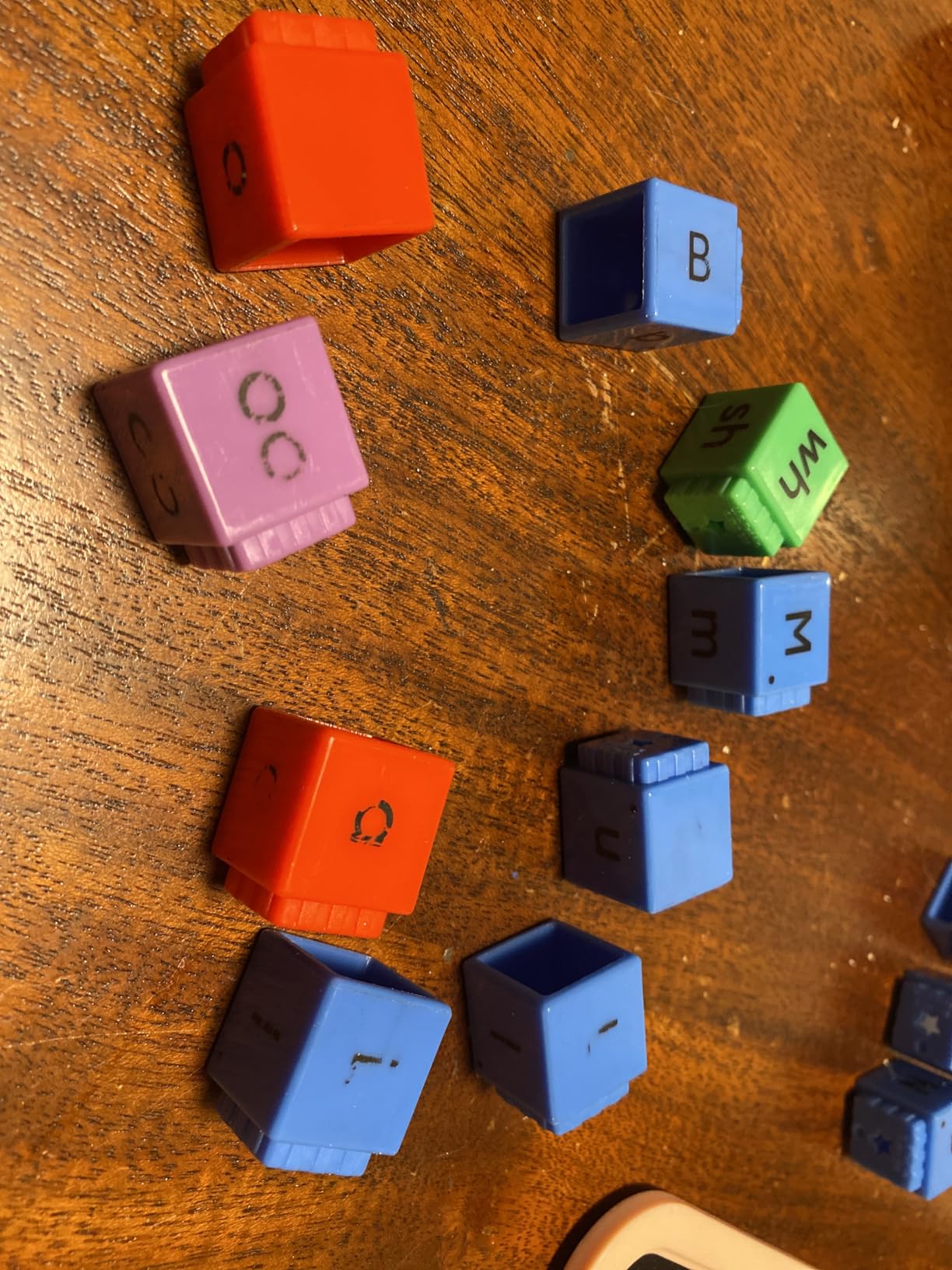
Our testers with dyslexic children reported particularly strong results. The multi-sensory approach (visual color + tactile snap + auditory sound) accesses learning pathways that pure visual phonics methods miss. Several parents said this was the first reading tool their child actually enjoyed.
The 70-piece set is generous enough to build multi-syllable words once children progress past basic CVCs. That makes this a longer-term investment than simpler phonics blocks.
What age is this best for?
The official recommendation is age 4 and up. We agree – the small rod size and snap mechanism work best for children past the choking-hazard stage who have developed enough fine motor control to manipulate the pieces. By age 5, children can build full words independently.
How does it compare to magnetic letters?
Magnetic letters are great for letter recognition but don’t teach letter combinations and phonemes as clearly. The reading rods’ color-coding and snap-together design explicitly shows children that letters form sound units. For phonemic awareness (the ability to hear and manipulate individual sounds), the rods are a more rigorous tool.
9. LEARNING BUGS Press to Learn Phonics Talking Poster – Best Screen-Free Audio Option
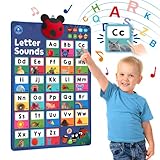
LEARNING BUGS Press to Learn Phonics, Interactive Letters and Sounds Talking Poster, Preschool & Kindergarten Learn to Read, Ages 3+
5 learning modes
Wall-mountable
Ages 3+
Pros
- Audio feedback supports auditory learners
- Five modes including songs and games
- No screen time required
- Lightweight and easy to hang
Cons
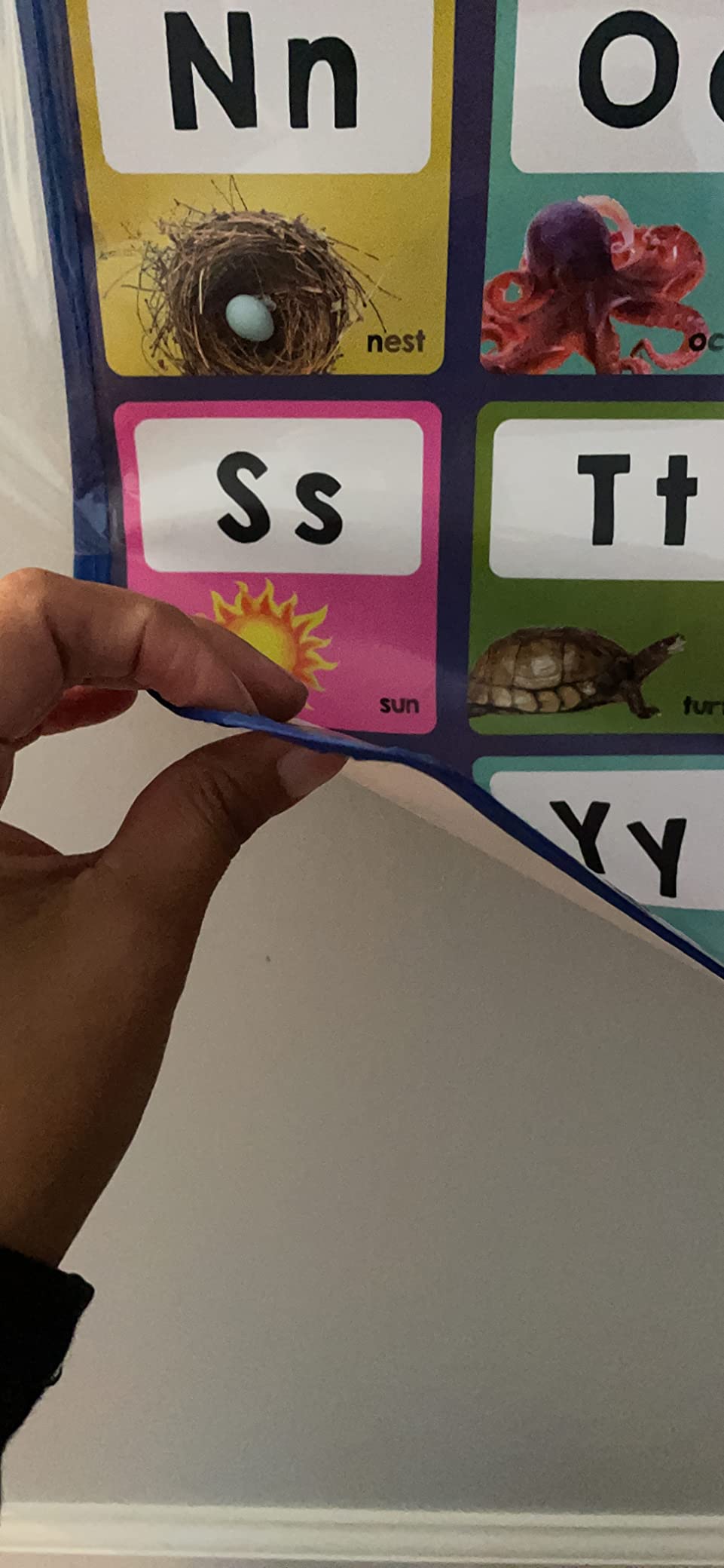
- Poster material can tear with rough handling
- Sound quality is functional but not premium
The LEARNING BUGS Talking Poster is the only toy on our list that doesn’t require active manipulation – kids press letters or pictures to hear sounds, words, and songs. For auditory learners and children who love repetition, this fills a unique gap.
The poster covers five modes: letter names, phonics sounds, games, phonics songs, and kids’ songs. That’s a lot of variety in one toy. We appreciated that it doesn’t require an app or screen, which aligns with Montessori principles around limiting screen time in early childhood.
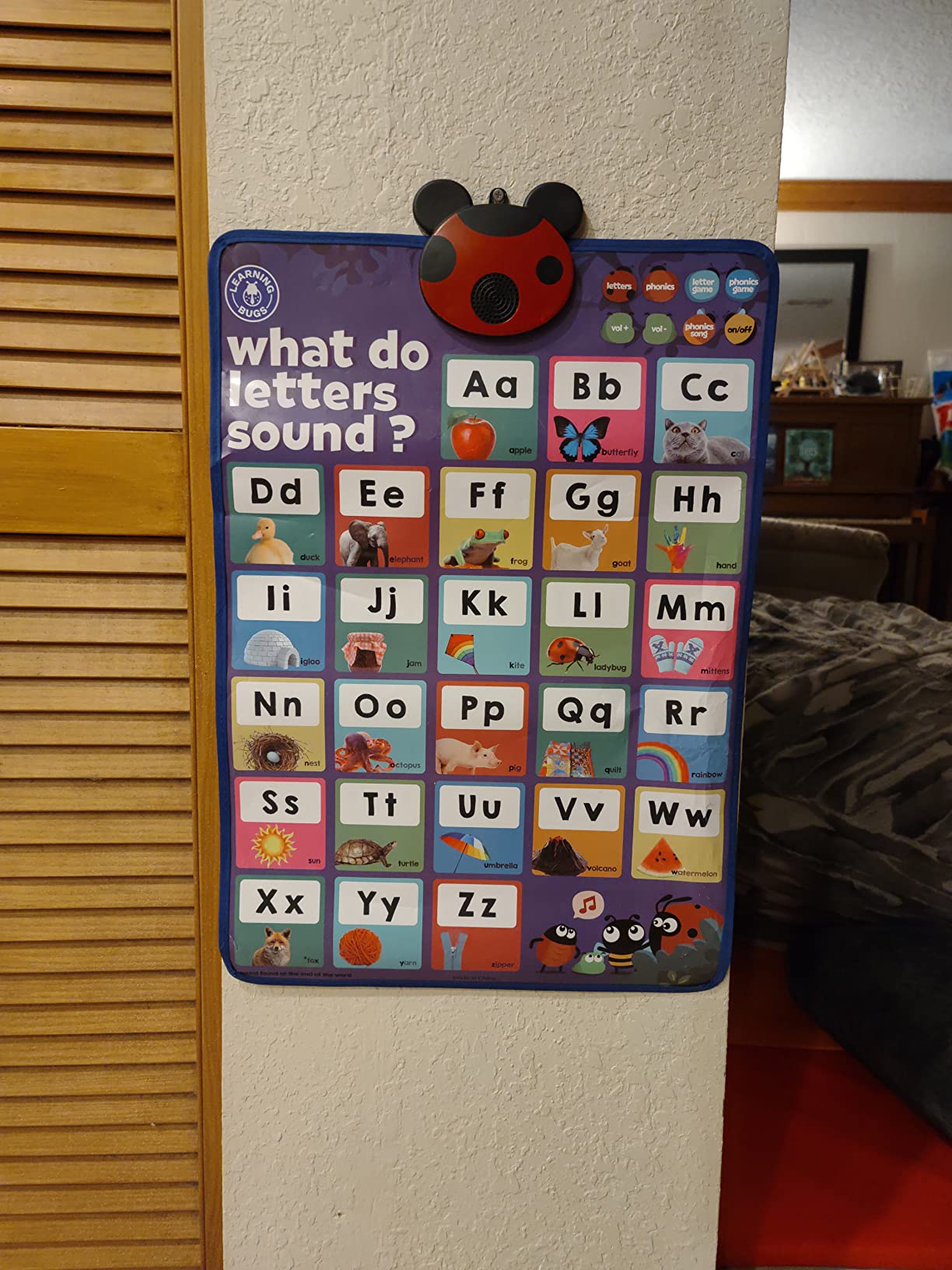
In our test, this was a hit during quiet time and transition moments (waiting at restaurants, winding down before bed). My son especially loved the phonics songs mode – he learned several letter sounds through the music before we even started phonics instruction with our other toys.
The poster is best mounted on a wall rather than laid flat. Hung properly, it stays in good shape. But we noticed the poster material can tear if pulled or yanked, which is a real concern for rough toddlers. Parents of more sensitive handlers won’t have an issue.
What age is this best for?
Ages 3 to 5 are the sweet spot. Three-year-olds enjoy pressing buttons and hearing sounds even before they understand what they’re learning. Four-year-olds can match letters to sounds. Five-year-olds can use the games mode for more active learning. Past age 6, most children outgrow the toy.
How does it fit into a Montessori approach?
Montessori purists may have reservations about electronic toys in general. That said, this poster is closer to a sound-matching activity than a screen-based game, which makes it more aligned with the philosophy. We recommend using it as a complement to hands-on phonics tools, not a replacement.
10. ShyLizard Montessori Wooden Reading Blocks – Best Gift-Ready Design

Montessori Educational Toy,Learning Activities Gift for Kid 3-6 Year
Elephant tray
10 vowel blocks
40 flashcards
Ages 3-6
Pros
- Charming elephant tray design appeals to young kids
- High-quality pine wood construction
- Vowel-focused blocks teach short vowels
- Packed in gift-ready box
Cons
- Wooden tray can break with heavy use
- Smaller set than some competitors
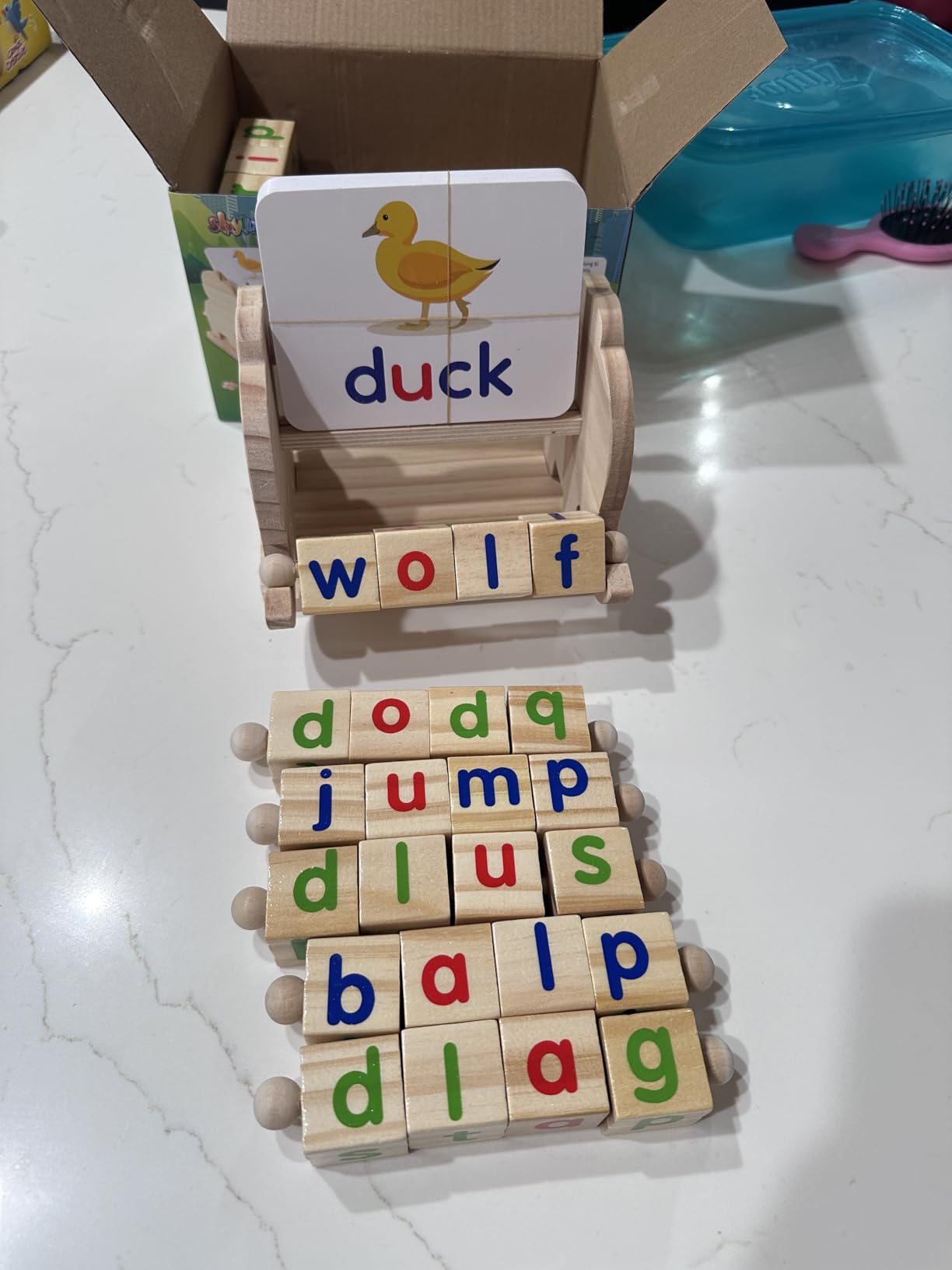
The ShyLizard Wooden Reading Blocks were the toy our testers most often described as “gift-worthy.” The wooden elephant tray, the chunky rotating blocks, and the colorful flashcards combine into a set that feels special from the moment it’s unwrapped.
The educational content is solid. Children match flashcards to vowel blocks, spinning each block to build three-letter words. The set includes 10 rotating vowel blocks (two for each vowel) and 40 sight word flashcards – enough variety to keep kids engaged for weeks.
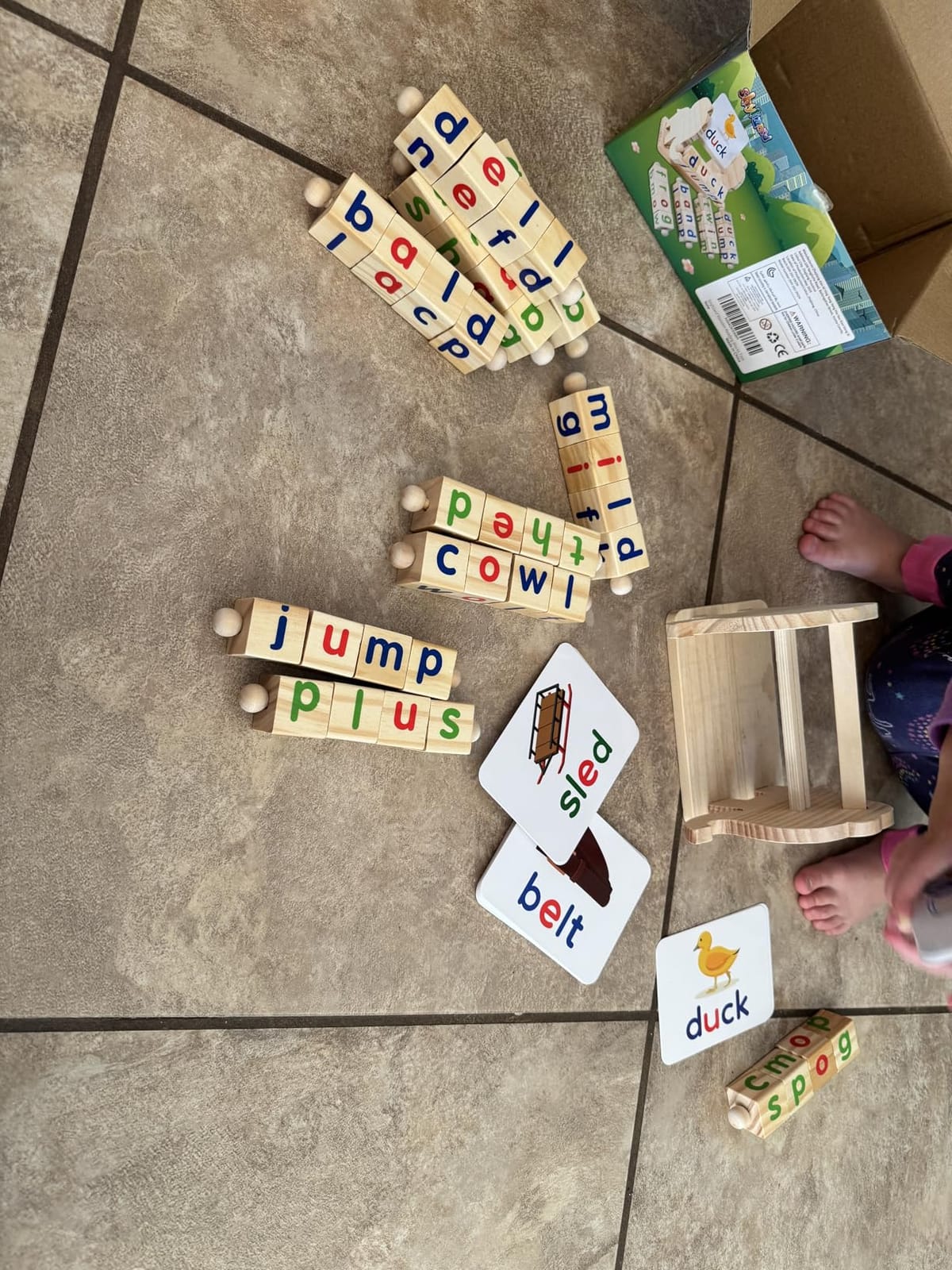
In our test, the elephant tray was the differentiator. Children who didn’t engage with other reading toys picked this one up simply because the design was inviting. That’s the kind of organic draw that Montessori educators value – materials should invite exploration.
The main weakness is the elephant tray itself. After several weeks of heavy use by our most enthusiastic tester, the tray base developed a small crack. The blocks and cards remained perfect, but the tray is the showpiece and the most fragile component.
What age is this best for?
The age range is 3 to 6. Three-year-olds will enjoy the spinning motion and the cute design. Four-year-olds can start matching flashcards to blocks with help. Five and six-year-olds can work through the cards independently. The age range is broader than most phonics toys on our list.
How does it compare to the LITTLE BUD KIDS set?
Both sets use rotating wooden blocks and flashcards, but the LITTLE BUD KIDS set has 30 flashcards to ShyLizard’s 40, plus a sturdier beechwood construction. For pure educational value, LITTLE BUD KIDS edges ahead. For gift appeal and shelf presence, ShyLizard wins.
How to Choose the Right Montessori Reading Toy for Your Preschooler
After testing dozens of products over the past year, our team has learned that the “best” toy depends almost entirely on where your child is in their reading journey. Here are the four factors that matter most.
Match the toy to your child’s current skill level
Children just starting letter recognition need different tools than children ready to blend sounds. For letter recognition, alphabet puzzles (like Melissa & Doug) and tracing pads (like hand2mind) work best. For phonics, spinning blocks and flashcards take over. For phonemic awareness and rhyming, reading rods and word families are the next step. Match the skill to the stage.
Look for self-correcting design
True Montessori materials let children learn independently by providing built-in feedback. Self-correcting puzzles only fit one way. Phonetic blocks only land on valid letters. Foldable flashcards let kids check their own answers. This is what makes Montessori toys so effective – they don’t require constant adult intervention.
Prioritize natural materials when possible
Wooden toys tend to last longer and feel more substantial than plastic. They also tend to age well across siblings and can be passed down. That said, well-designed plastic toys (like the hand2mind tracing pad) have their place. Don’t refuse a great learning tool just because it’s plastic.
Check the age range, but trust your child
Age recommendations are guidelines, not rules. Our testers found that advanced 3-year-olds often engage with age 4+ toys, while 5-year-olds still enjoy age 3+ toys that build confidence. Watch your child, not the box. If they’re engaged and challenged (but not frustrated), the toy is the right fit.
Safety and durability considerations
Look for non-toxic certifications (ASTM, CPSC, or third-party testing). For children under 3, avoid small pieces that pose choking hazards. Check that pieces are thick enough to resist snapping. Read recent reviews for durability complaints – a toy that falls apart after two weeks isn’t worth any educational value.
Budget versus long-term value
Montessori reading toys range from around $15 to $50 for most options on our list. Cheaper isn’t necessarily worse, but very cheap toys often sacrifice durability. We recommend budgeting for one higher-quality phonics set plus a few lower-cost accessories like tracing pads and flashcards. That combination covers most reading skills without overspending.
Frequently Asked Questions
What are some good Montessori toys for preschoolers?
Great Montessori reading toys for preschoolers include LITTLE BUD KIDS Spin-and-Read blocks, Melissa u0026amp; Doug alphabet puzzles, hand2mind reading rods, and phonics flash cards. Look for self-correcting designs, natural materials like wood, and toys that build specific skills like letter recognition, phonics, and phonemic awareness rather than passive entertainment.
What are some good Montessori toys for a 4-year-old child?
For 4-year-olds, we recommend phonics-based toys like the LITTLE BUD KIDS Spin-and-Read blocks or Gojmzo CVC Spelling Kit, plus tactile tools like the hand2mind Letter Tracing Pad. Four-year-olds are developmentally ready for letter recognition, sound blending, and pre-writing skills. Choose toys that match their current skill level and can grow with them over the next year.
What are some must-have Montessori toys?
Must-have Montessori toys include a phonics block set (like LITTLE BUD KIDS or hand2mind Reading Rods), an alphabet puzzle (like Melissa u0026amp; Doug), a tracing pad for pre-writing skills, and a set of progressive phonics flashcards. These cover letter recognition, sound blending, phonemic awareness, and early writing – the core literacy skills preschoolers need.
What are the criticisms of Montessori toys?
Common criticisms include higher prices than mass-market toys, marketing claims that don’t always match true Montessori principles, and the fact that not every child responds well to child-led learning. Some Montessori-style toys focus on appearance over pedagogy. To avoid this, look for self-correcting designs, natural materials, and clear skill development rather than just the Montessori label.
Final Thoughts on the Best Montessori Reading Toys for Preschoolers in 2026
After months of testing, our team’s clear winner is the LITTLE BUD KIDS Spin-and-Read blocks. They combine genuine Montessori design, durable construction, and the right level of challenge for preschoolers ages 3 to 6. The Gojmzo Spelling Kit is our top pick for value, especially for families with multiple children or classroom use.
The most important takeaway from our testing is this: the best Montessori reading toys for preschoolers are the ones your child will actually use. A premium toy that sits on a shelf teaches nothing. Match the toy to your child’s current stage, rotate toys weekly to maintain novelty, and let your child lead the play. That’s the Montessori way, and it’s why these toys work.
Start with one phonics toy, watch how your child engages, and build from there. The reading journey from ages 3 to 5 is short, and the right toys make all the difference.