
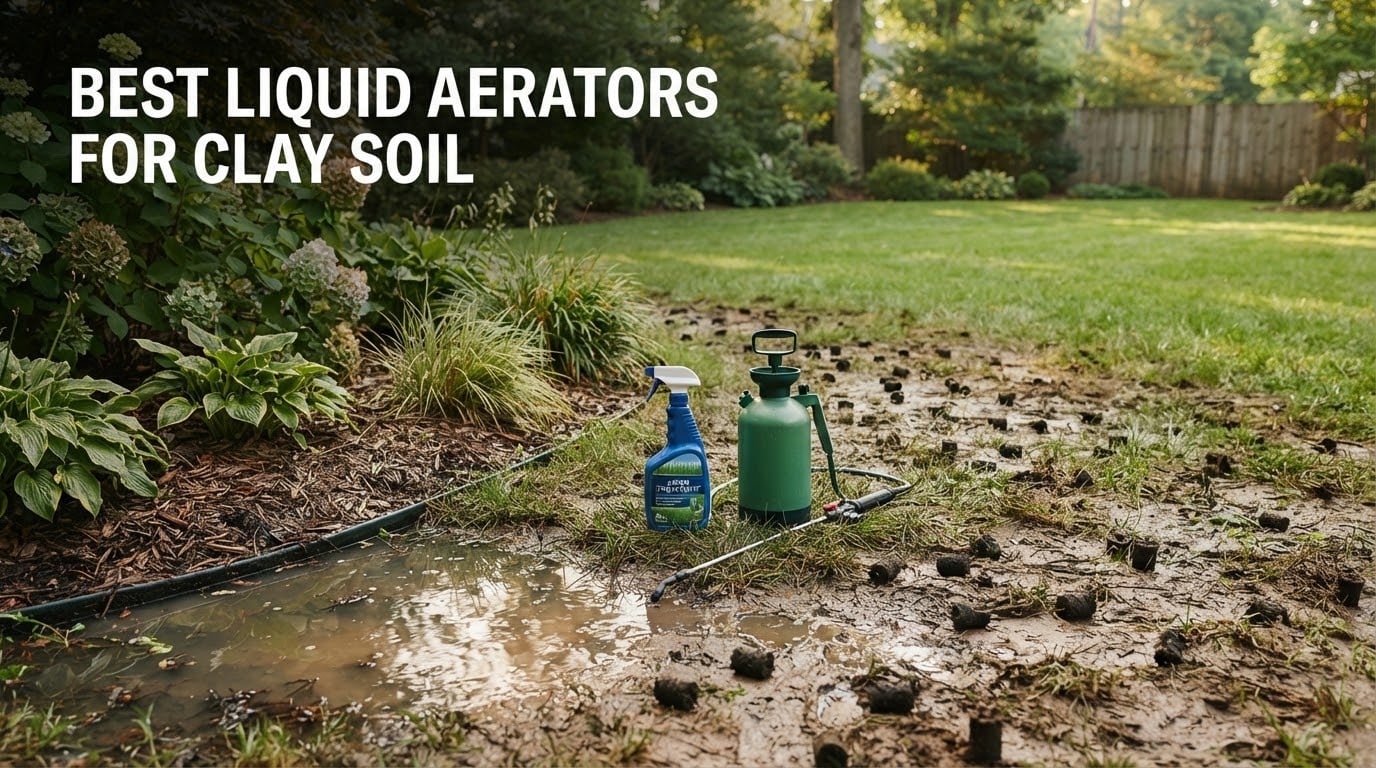
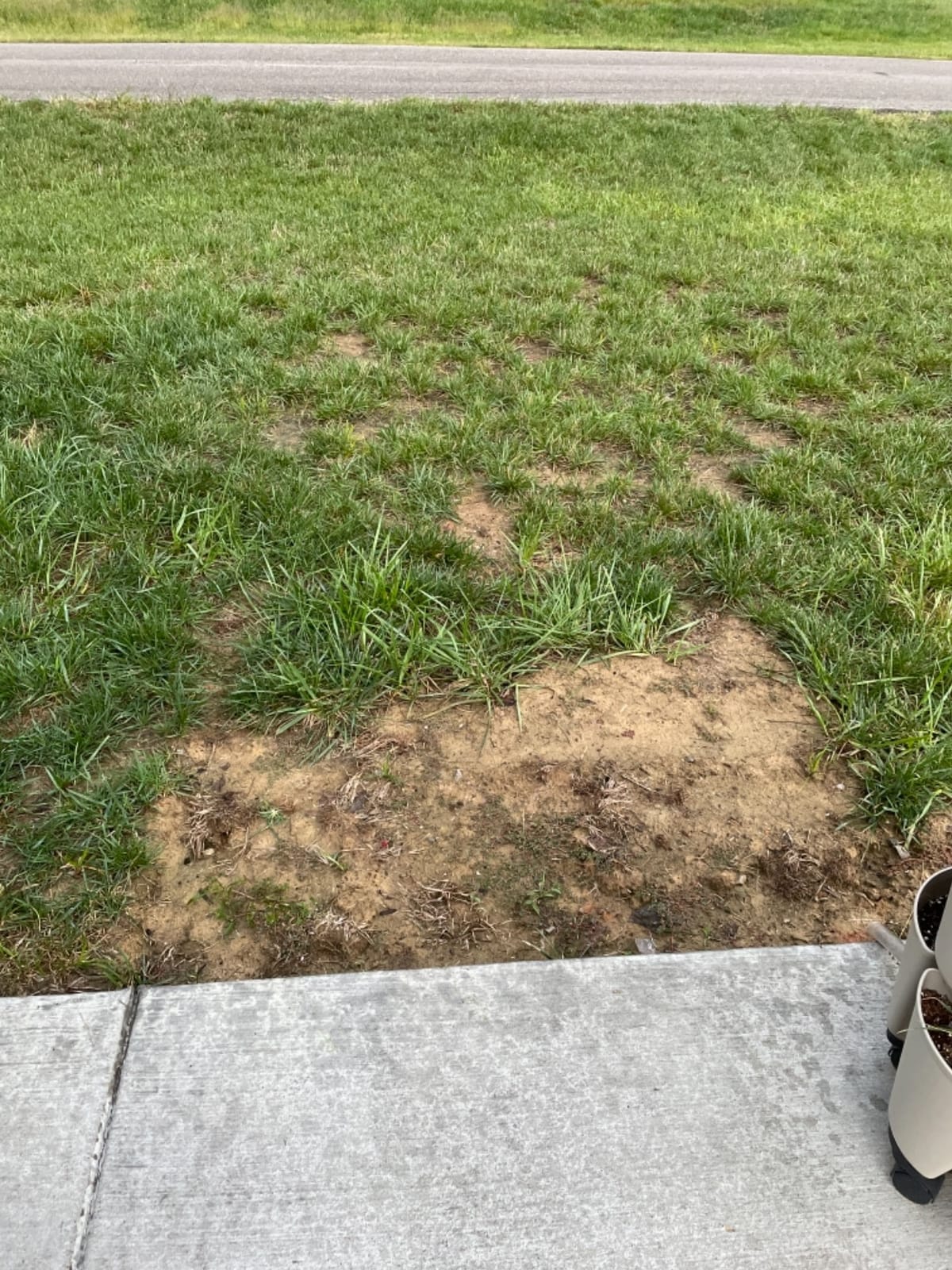
Ask anyone with a heavy clay yard what a lawn problem feels like and they will describe the same three symptoms. Water sits in low spots for days after a rain, the ground turns to brick in July, and grass thins out in rings where the kids walk. You can rake, fertilize, and water harder, and none of it touches the actual problem: clay packs into dense soil with almost no pore space, so air and water cannot move.
That is where the search for the best liquid aerators for clay soil comes from. A core aerator pulls plugs of soil out of the ground, which is effective but needs a rented machine, a dry lawn, and a weekend of cleanup. A liquid aerator is a spray treatment that disperses clay particles and opens microscopic channels in the root zone, and it reaches parts of the yard a machine cannot. We compared ten of them, read through roughly 15000 buyer reviews, and talked through the chemistry.
Here is the honest part before any product list. Liquid aeration is a complement, not a replacement. On r/lawncare, one user put it plainly: I use Lawn Stars liquid aerator and it’s been great. I have dense clay and it has helped a lot. That said, it doesn’t replace core aeration. University research on compacted clay has also found less structural change from liquid treatments than lawn care companies advertise. We will get into what the evidence supports in the evidence section below.
Table of Contents
Top 3 Picks for Clay Soil in October 2026
Simple Lawn Solutions Soil Loosener
- Covers 32000 sq ft per 32 oz bottle
- Use alone or with core aeration
- Targets standing water and poor drainage
- Safe for all grass types

LawnStar Liquid Lawn Aerator
- Covers 30000 sq ft per 32 oz
- 1:1024 hose-end mixing ratio
- 30-day money-back guarantee
- Multiple sizes including 1 gallon

Covington Liquid Lawn Aerator
- Humic acid and kelp base
- Kid and pet safe
- Quart to 2.5 gallon sizes
All 10 Liquid Aerators Compared in October 2026
| Product | Specs | Action |
|---|---|---|
| Simple Lawn Solutions Liquid Soil Loosener |
|
Check Latest Price |
| LawnStar Liquid Lawn Aerator 32 oz |
|
Check Latest Price |
| Covington Liquid Lawn Aerator 32 oz |
|
Check Latest Price |
 Turf Titan Thatch Buster 32 oz Turf Titan Thatch Buster 32 oz |
|
Check Latest Price |
 Grow More EZ Wet Soil Penetrant 26% Grow More EZ Wet Soil Penetrant 26% |
|
Check Latest Price |
 GS Plant Foods Soft Soil 1 quart GS Plant Foods Soft Soil 1 quart |
|
Check Latest Price |
 Covington Liquid Lawn Dethatcher 32 oz Covington Liquid Lawn Dethatcher 32 oz |
|
Check Latest Price |
 N-Ext Air-8 Liquid Aeration 1 quart N-Ext Air-8 Liquid Aeration 1 quart |
|
Check Latest Price |
 Yard Mastery Compaction Cure 1 quart Yard Mastery Compaction Cure 1 quart |
|
Check Latest Price |
 Superior Fulvic Humic Liquid 946 ml Superior Fulvic Humic Liquid 946 ml |
|
Check Latest Price |
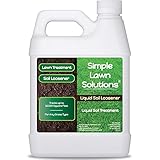
1. Simple Lawn Solutions Liquid Soil Loosener: Our Top Pick for Clay
Liquid Soil Loosener- Soil Conditioner-Use alone or when Aerating with Mechanical Aerator or Core Aeration- Simple Lawn Solutions- Any Grass Type-Great for Compact Soils, Standing water, Poor Drainage
32 oz liquid
Covers 32000 sq ft
Sprayer application
2 lb bottle
Pros
- Largest review base in the group at 9217 ratings
- 32000 sq ft of coverage per 32 oz bottle
- Works alone or stacked with core aeration
- Reduces run-off and standing water
- Safe on warm and cool season turf types
Cons
- Results take days to weeks rather than showing up instantly
- Can foam noticeably during application
- Listings do not always make the 32 oz bottle size clear
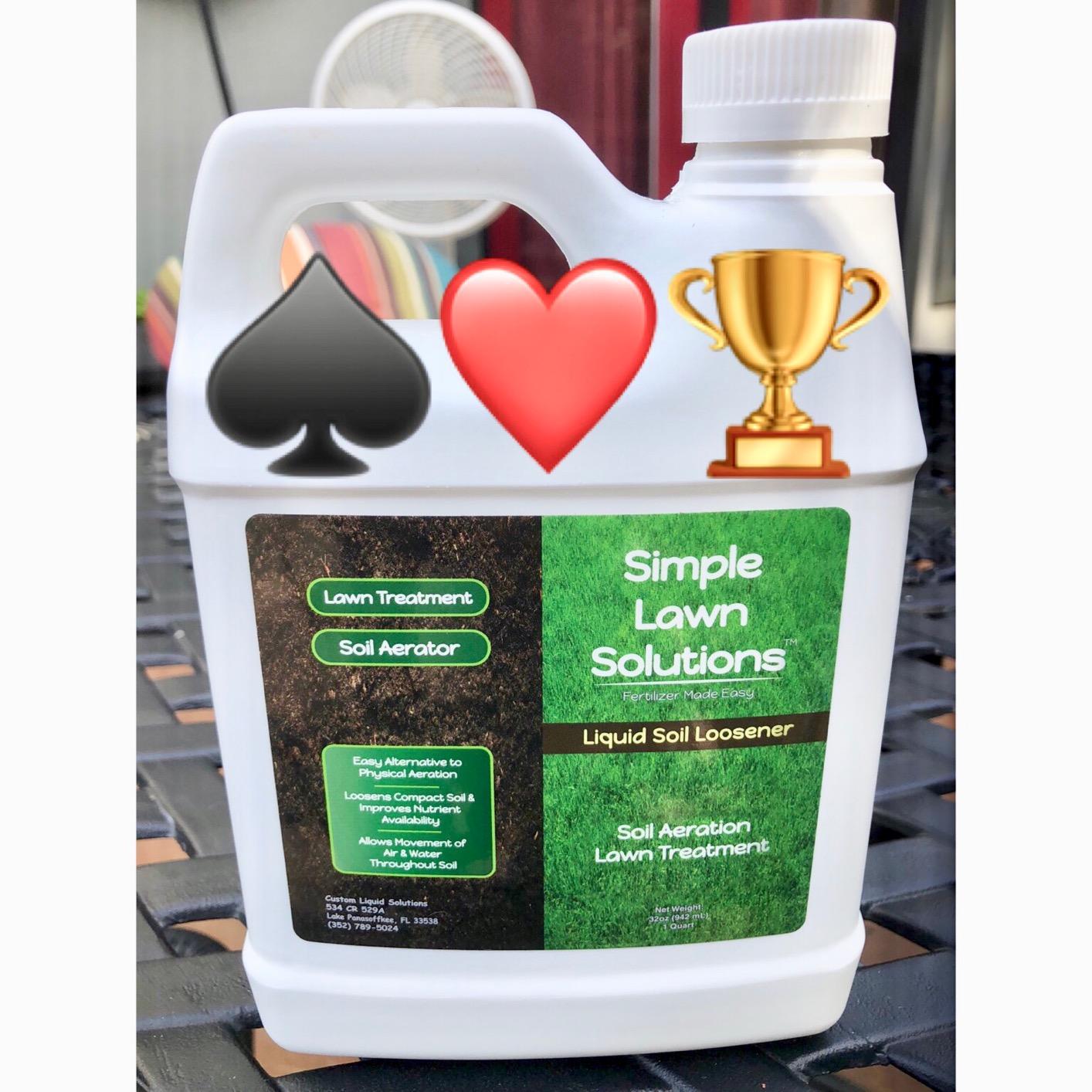
This is the bottle we keep coming back to for clay, and the reason is simple: the evidence base is enormous. At 9217 ratings averaging 4.2, there is no guessing about how it behaves on hard-packed ground. Reviewers with heavy clay describe softer ground, better infiltration, greener grass, and revived bare patches within roughly one to five weeks of application.
The coverage number is the practical headline. One 32 oz bottle treats up to 32000 square feet, which is a large front lawn from a single container. Because the coverage is that wide, owners often run a repeat program rather than a single pass, and the manufacturer explicitly positions it as a companion to mechanical or core aeration rather than a replacement.
We also like how the manufacturer states grass compatibility in plain language, listing Bermuda, St. Augustine, Zoysia, Buffalo, Centipede, Fescue, Ryegrass, and Kentucky Bluegrass. On a mixed yard that removes the guesswork, and the same bottle works on garden beds and vegetable plots.
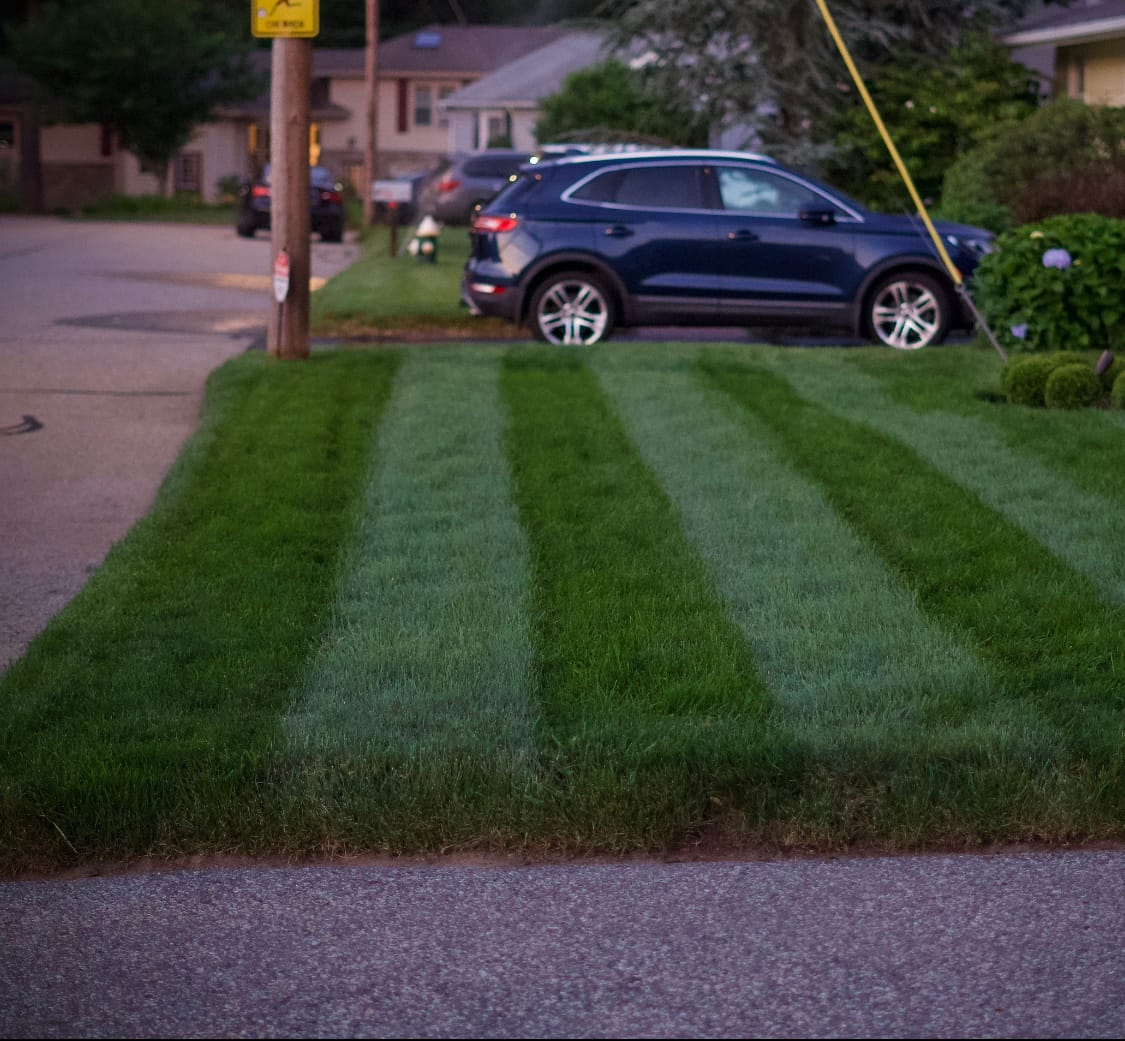
What gives us pause is the pattern in the reviews rather than the product. A minority of owners see limited change in their most severely compacted spots, and several describe results building only after two or three applications. The foaming is real too. It is not a fault since surfactants foam, but it means you should rinse the concrete before you walk away from the sprayer.
Who should buy the Simple Lawn Solutions soil loosener
Buy it if you have a broad lawn of heavy clay, you want one product that covers tens of thousands of square feet per bottle, and you plan to stay on a repeat schedule. It is the least risky choice in this roundup because the review history is so well documented, and the maker is a family-owned US business that customers report answers quickly.
This one suits a homeowner who wants to pair liquid treatment with a rented core aerator later in the season. Treat it as the pass that works between mechanical aerations, especially on a lawn with buried sprinkler lines or an uneven grade that a machine struggles to cover.
Who should skip it
Skip it if you need a visible result this week. Nothing in the review data suggests an overnight change, and anyone expecting a core aerator’s physical plug removal in a bottle will be disappointed. It also is not the right tool for hydrophobic dry patches that shed water, where a dedicated wetting agent is cheaper and better targeted.
2. LawnStar Liquid Lawn Aerator: Best Value for Large Clay Lawns
Liquid Lawn Aerator, Loosens and Conditions Compacted Soil, 32oz
32 oz liquid
Covers 30000 sq ft
1:1024 mixing ratio
2.2 lb bottle
Pros
- Covers about 30000 sq ft per 32 oz bottle
- Hose-end mixing ratio of 1:1024 is simple to dial in
- Quart and one-gallon sizes for bigger properties
- Backed by a 30-day money-back guarantee
Cons
- Several owners needed two or more applications to see real change
- Over-concentrating the mix can stress or kill grass
- Bare seed-free areas with severe compaction can stay hard
LawnStar is the product that shows up again and again in forum threads about soggy clay yards, and it earns that attention. In TheLawnForum’s Soggy Clay Yard thread, a user reports applying it and noticing that it seems like it is reducing how soggy the soil gets. That is exactly the outcome most clay owners are buying.
At 2112 ratings and a 4.2 average, the pattern in reviews is steady. Users report softened ground, greener turf, and improved water uptake over roughly two to five weeks. The bottle treats roughly 30000 square feet, and the one-gallon variant is there when a half-acre property puts a dent in a quart.
The 1:1024 hose-end ratio is the part we appreciate as a writer testing these. You set the dial, you spray, and there is no measuring cup involved. It is a lower barrier than products that ask you to mix four ounces into a specific volume of water and hope the math is right.
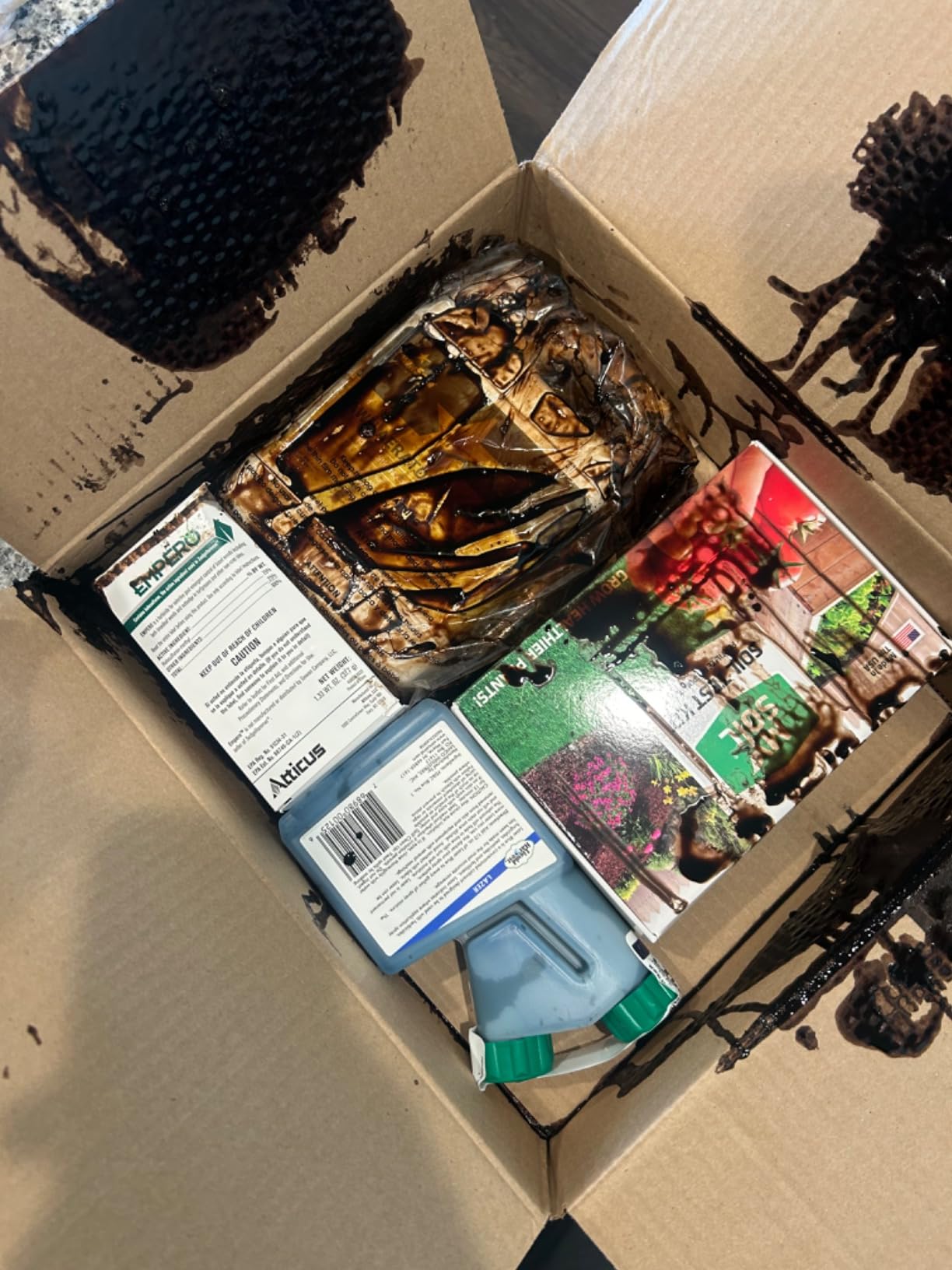
The honest weakness is over-concentration. Multiple reviewers report that pushing the mix stronger than the label directs stressed or killed grass. The product is hyper-concentrated by design, so a heavier hand is not a better result. It is worth setting the sprayer once on a test strip of lawn and checking before you cover the whole yard.
When LawnStar is the right buy
This is our pick for a big clay property where the treatment area makes cost per square foot the deciding factor. Two to five weeks of visible improvement is a reasonable expectation if you plan the season around it, and the 30-day guarantee takes some of the risk out of a first order.
It is also the one to buy if you plan to core aerate as well. Reviewers consistently describe using liquid first to soften the ground, then following with plugs and topsoil, which is a sequence that lands better on clay than either step alone.
When to choose something else
Choose a different option if your worst problem is bare, rock-hard ground with no seed in it. Owners report those areas can stay hard after treatment even when the surrounding lawn improves. If you want results without a repeat application, the longer timelines here will disappoint.
3. Covington Liquid Lawn Aerator: Most Versatile for Microbe-Fed Clay
Covington Liquid Lawn Aerator (32oz) – Soil Conditioner & Softener for Lawns & Gardens – Loosens Clay & Compacted Soil for Better Water & Nutrient Absorption – Liquid Aeration Concentrate, Made in USA
32 oz liquid
Humic acid, amino acid and kelp
Kid and pet safe
2 lb bottle
Pros
- Feeds beneficial soil microbes with humic acid and kelp
- Loosens clay so tools and aerator spikes penetrate further
- No strong odor compared with competing aerators
- Sizes from quart up to 2.5 gallons
Cons
- Label coverage of 3500-8000 sq ft is lower than some rivals
- Benefits can take weeks and several applications
- Hose-end dial setup is easy to misread
Covington takes a different tack from the surfactant-heavy options. Instead of leaning on chemistry alone, it pairs its clay-loosening action with humic acid, amino acids, and kelp to feed the soil biology that keeps structure open once you have loosened it. For a lawn program run season after season, that is a more complete approach than dispersal alone.
Reviewers use it on a 30-day repeat cycle, which matches how we would apply it. Over one to four weeks they report better water penetration, thicker turf, and reduced drought stress, with the strongest accounts coming from severely compacted yards. At 2099 ratings the feedback is well established, even though the average of 4.1 sits a touch below the leaders.
Two practical details stand out. It is listed as safe for children, pets, and other mammals, which matters if a dog uses the lawn as its main outdoor room. And owners specifically praise the absence of the sharp odor that shows up in complaints about several products in this category.
The catch is coverage math. The label rate works out to roughly 3500 to 8000 square feet per 32 oz bottle depending on the rate you pick, which is well below the Simple Lawn Solutions and LawnStar figures. If you have a large lawn, you are buying more product to cover it, and that changes the cost comparison considerably.
Who this product suits
Choose Covington when soil biology matters as much as raw loosening, when odor is a real concern in a household with small children, or when you want a program rather than a rescue treatment. Users on clay-heavy yards with dense, slow-draining patches report the most visible response.
We would pair it with gypsum or lime work on soils that also have a salinity problem, and it fits naturally into a fertilization schedule since the humic base is compatible with feeding programs.
Who should look elsewhere
Look elsewhere if coverage per dollar is your deciding factor, because you will use noticeably more product for the same lawn size. The hose-end sprayer dial is also easy to set wrong, and several owners waste product before they get the rate right.
4. Turf Titan Thatch Buster: Best for Thatch Alongside Aeration
Turf Titan Thatch Buster Liquid Lawn Aerator and Dethatcher (32 oz) with Hose End Sprayer – Liquid Soil Loosener for Compacted & Clay Lawns – Improves Drainage & Root Growth – Covers 6,000 Sq Ft
32 oz liquid
Hose-end sprayer included
Covers 6000 sq ft
2 lb bottle
Pros
- Hose-end sprayer included in the box
- Breaks down thatch faster than natural decomposition
- Works to seed into newly softened soil
- Company president gives direct personal support
Cons
- Slow acting
- with results often taking up to 45 days
- Several owners report no visible change after one or two passes
- Included sprayer criticized for poor dispersal
Thatch Buster is the only product here with a sprayer in the box, and for a first application that removes a real barrier. The microbe-based approach targets the organic layer between grass and soil, which on a neglected clay yard is often the reason water never reaches the ground. Users report that it converts thatch and old clippings into usable nutrients and that seed germinates into the softened layer without a machine.
We have to be straightforward about the rating. At 3.9 across 1227 reviews, this is the lowest-rated item in the group, and it carries the largest share of one and two star feedback. The manufacturer states visible improvement typically arrives within about 45 days of consistent application, which is a long wait for anyone hoping one bottle fixes a soggy yard.
The odor comes up repeatedly, and so do complaints about the bundled sprayer dispersing poorly and failing. If you already own a hose-end sprayer, the hardware complaint matters less. If you do not, the convenience still comes with a quality question mark.
Coverage is the other consideration. One 32 oz bottle is advertised at up to 6000 square feet, which is the smallest footprint in this roundup for a quart of product. That is appropriate if thatch is the dominant problem, but it makes the product an expensive answer to a whole-lawn compaction issue.
Why it makes the list
It earns a place for a specific situation: a lawn with a genuine thatch problem sitting on clay. Owners report genuine thatch breakdown and successful seed establishment, and the included sprayer means a first-timer can treat a small test area the same day it arrives.
We would use it as a companion step alongside a soil loosener rather than as the primary fix for standing water. Treat the patchy areas with Turf Titan, the whole yard with a higher-coverage product.
Where it falls short
It falls short for a large property with a limited patience window. The 45-day timeline, the odor, and the sprayer complaints together make it a harder recommendation than its thatch credentials deserve. Owners seeking a fast visible change report it simply did not move their soil.
5. Grow More EZ Wet Soil Penetrant: Best Wetting Agent for Dry Spots
Grow More EZ Wet Soil Penetrant 26% – 1 Quart of Biodegradable Non-Ionic Surfactant – Soil Wetting Agent for Better Drainage & Liquid Aeration for Lawns, Nurseries, & Landscaping
1 quart liquid
26% non-ionic surfactant
Biodegradable
Alcohol-free
Pros
- Highest 5-star share in the roundup at 72%
- Biodegradable and alcohol-free at a neutral pH
- Improves water uptake in containers and raised beds
- Helps leach excess salts
Cons
- Works as a surfactant rather than a true compaction treatment
- Costly per ounce compared with clay-focused products
- Some owners on hard dry turf saw little improvement
At 4.4 average across 1053 ratings, this has the strongest satisfaction ratio in the group, with 72 percent of reviews at five stars. It is a 26 percent non-ionic surfactant sold as a soil penetrant, biodegradable and alcohol-free at a neutral pH, and it is the product most reviewers reach for in containers, hanging baskets, and raised beds.
We include it with a clear caveat about what it is. This is soap chemistry, and several reviewers are candid that a generic surfactant would perform similarly. What it does well is getting water to absorb into soil that repels it, which is a different problem from the compaction most clay lawns have.
Used alongside a real liquid aerator, though, it is a sensible second step. Once you have opened pore space in compacted clay, a penetrant helps new water reach the root zone instead of channeling down the slope. Many owners in this category run both in the same program.
Where it earns its spot
It earns its spot for potted plants, hanging baskets, and raised beds where hydrophobic dry patches are the real complaint and a quart lasts a long time. It is also a good companion for a large clay program because it is alcohol-free and will not stress turf at label rates.
If you want to flush salts out of a container or improve water uptake in a newly planted bed without disturbing roots, this is the right tool and the concentration is strong enough to do the job with very little product.
Why it is not a clay fix
It will not break up compacted structure the way the products above do, and its cost per ounce is higher than the clay-specific concentrates. Owners on hard, dry turf report limited results for that reason. If standing water in a low spot is your problem, look elsewhere in this list.
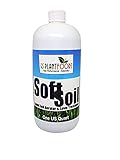
6. GS Plant Foods Soft Soil: Best Organic Choice for Family Lawns
Soft Soil by GS Plant Foods- Liquid Aerator and Lawn Treatment(1 Quart) – Liquid Aerator for Any Grass Type, All Season – Great for Compact Soils, Standing Water, Poor Drainage
1 quart liquid
Organic formula
Pet and family safe
2.1 lb bottle
Pros
- Organic formula reported safe for family and pets
- Softens hard red clay and hydrophobic dry patches
- Aerator spikes and forks penetrate softened ground easily
- Works alongside new seed and grass plugs
Cons
- Low coverage at about 500 sq ft per mixed gallon
- Strong unpleasant odor reported by multiple users
- Less effective in the hardest areas
Soft Soil is the option for households where an organic label and a pet-safe claim come first. The formula is reported safe for family and pets, works with any grass type, and is designed for compacted soil and standing water rather than for a specific turf variety.
The reviews are enthusiastic about one particular effect: people notice that aerator spikes, pitchforks, and garden tools suddenly push into ground that was hard enough to bounce them off. Owners running a reseeding program like using it as a pre-treatment so new seed can reach the soil surface instead of sitting on top of a crust.
Direction is 4 oz mixed into a gallon of water, and each mixed gallon covers roughly 500 square feet. That is the honest limitation. It is by far the lowest coverage per quart in this roundup, and it is the most common reason owners switch to a higher-coverage alternative after the first bottle.
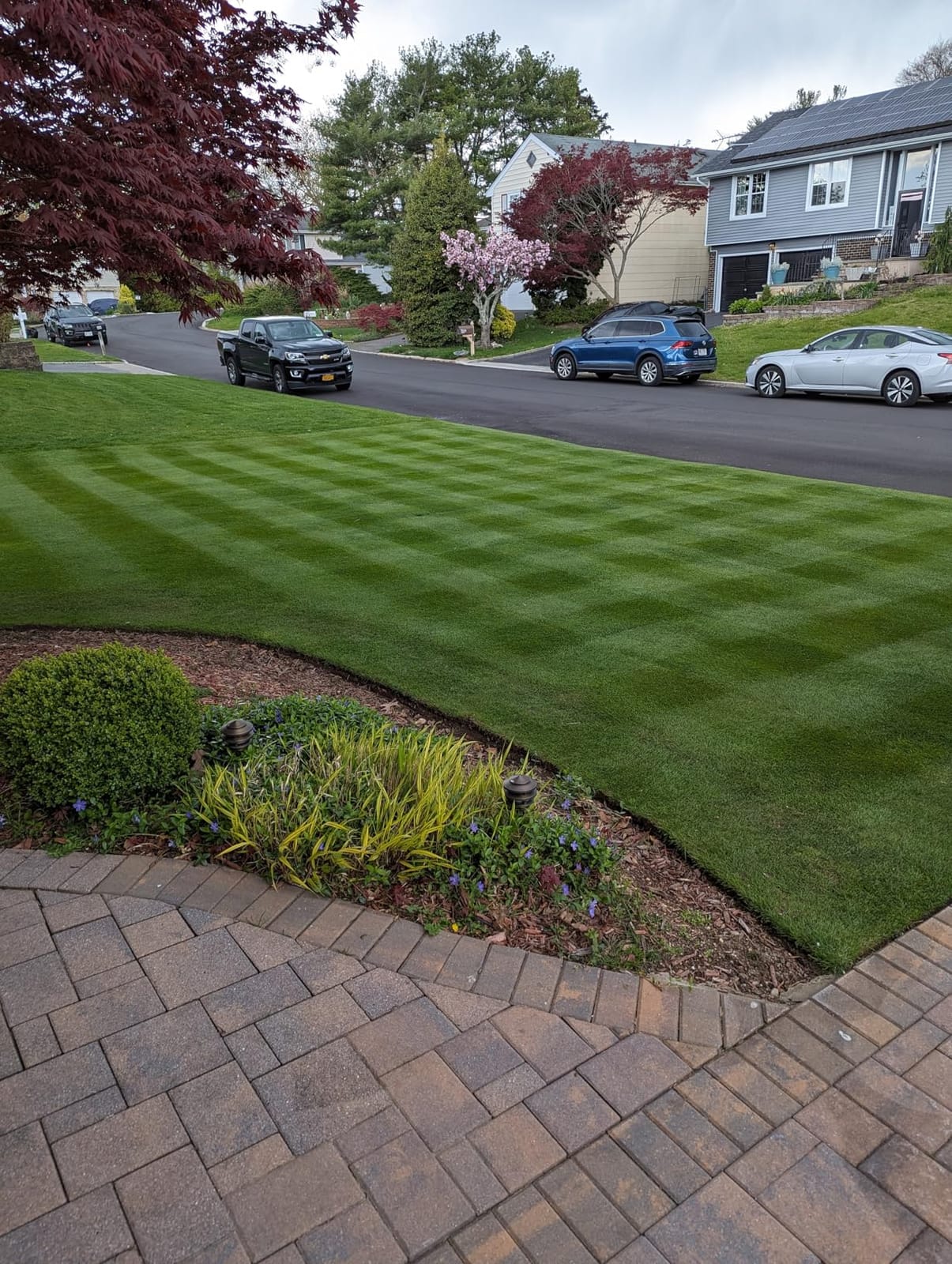
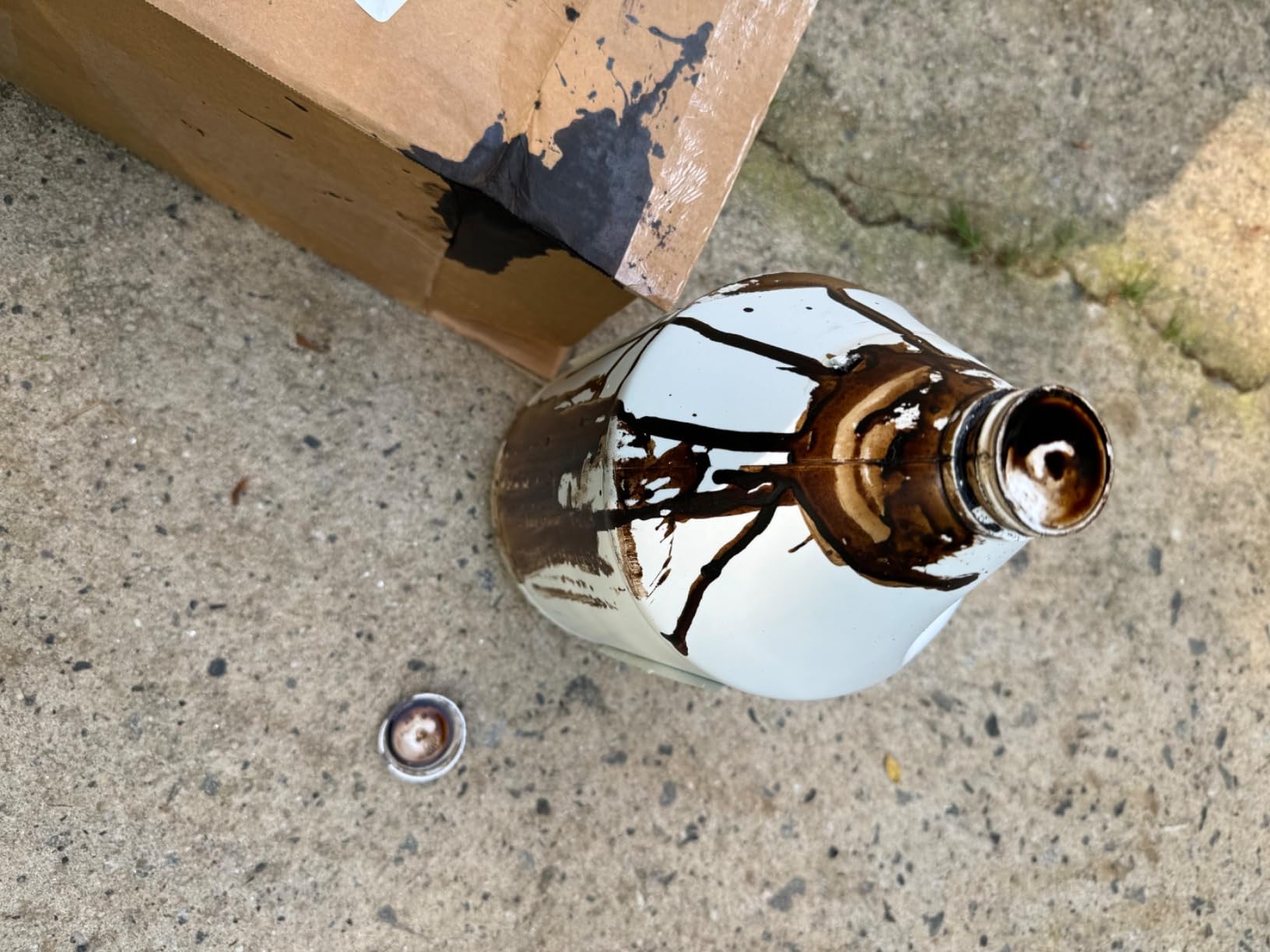
The odor draws consistent complaints from multiple users, and several report needing repeated applications before anything is obvious. On the hardest, most stubborn patches, effectiveness drops off compared with the rest of the yard.
Who should pick Soft Soil
Pick it for a small lawn, a vegetable garden, or a patchy area you are reseeding where you want an organic product with a family-safe profile. The 32 oz, 128 oz, and 5 gallon options mean you can scale it, but the per-square-foot economics favor smaller areas.
We would also choose it when the plan is to loosen a seed bed first and follow with mechanical aeration. Making the soil workable for tools is a different, and sometimes sufficient, goal on a small plot.
Who should pass
Pass if you have more than a few thousand square feet of heavy clay, because the coverage rate makes that a recurring expense. Also pass if strong odor would bother your household, since multiple reviewers raise it and no amount of dilution removes the smell.
7. Covington Liquid Lawn Dethatcher: Best Low-Odor Dethatcher
Covington Liquid Lawn Dethatcher (32oz) – Liquid Aerator Concentrate & Humic Thatch Remover, Soil Softener & Grass Thatch Buster for Lawns & Gardens – Kids & Pet Safe, Made in USA
32 oz liquid
Enzyme and mineral blend
Covers 8000-16000 sq ft
2 lb bottle
Pros
- Enzymes and minerals break down thatch and improve structure
- Users report greener
- thicker turf after seasonal applications
- No strong odor compared with competing dethatchers
- Kid and pet safe
- Responsive Covington customer service
Cons
- Mixed results
- with no thatch change in some treated zones
- Some orders arrive without an applicator
- Requires repeat seasonal applications to build results
This is a companion product rather than a standalone clay treatment, and the two are frequently confused. It is a liquid dethatcher that uses enzymes and minerals to break down thatch while loosening hard compacted soil and improving nutrient absorption and drainage. A 32 oz bottle covers roughly 8000 to 16000 square feet, and it works on nearly all grass types across lawns, gardens, and compost areas.
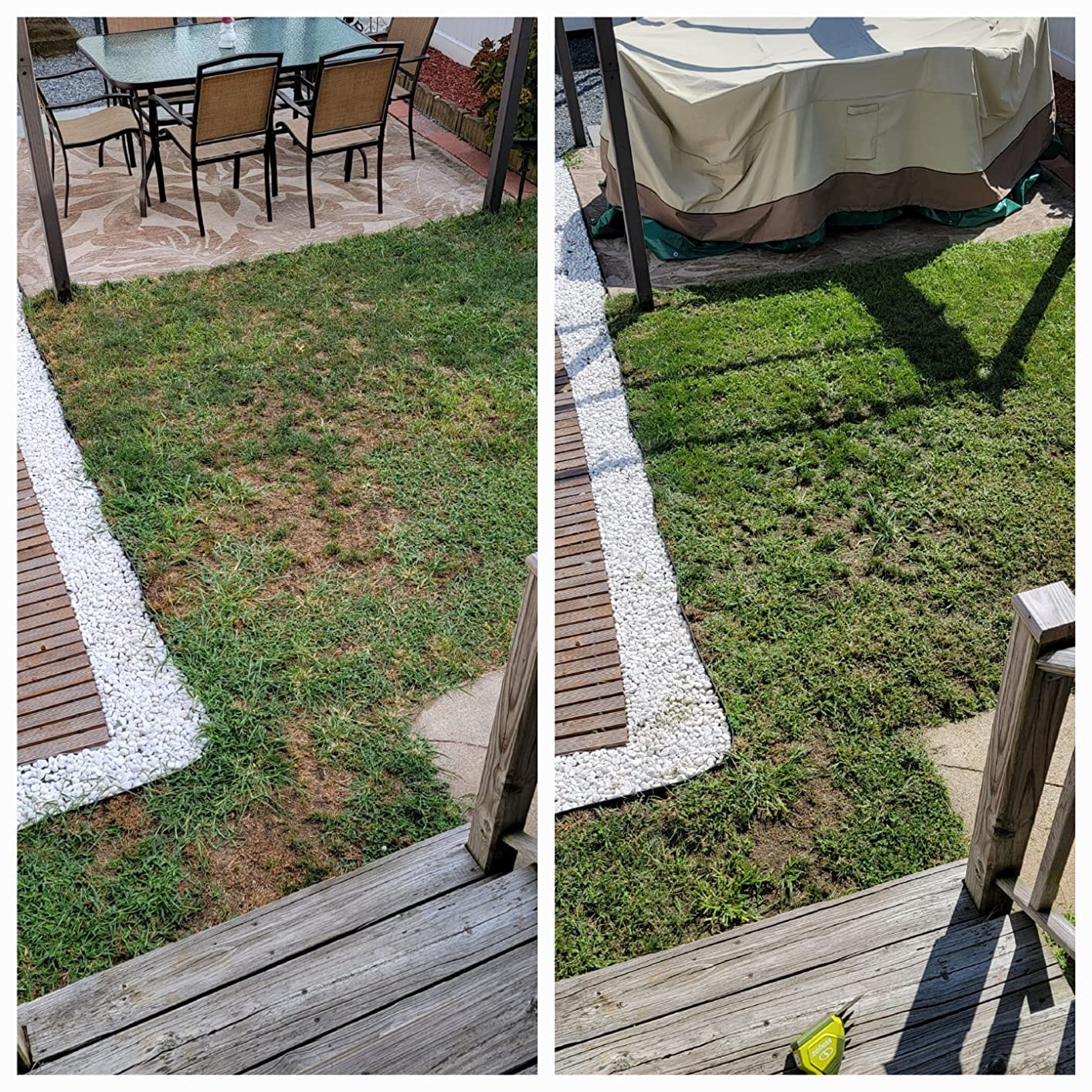
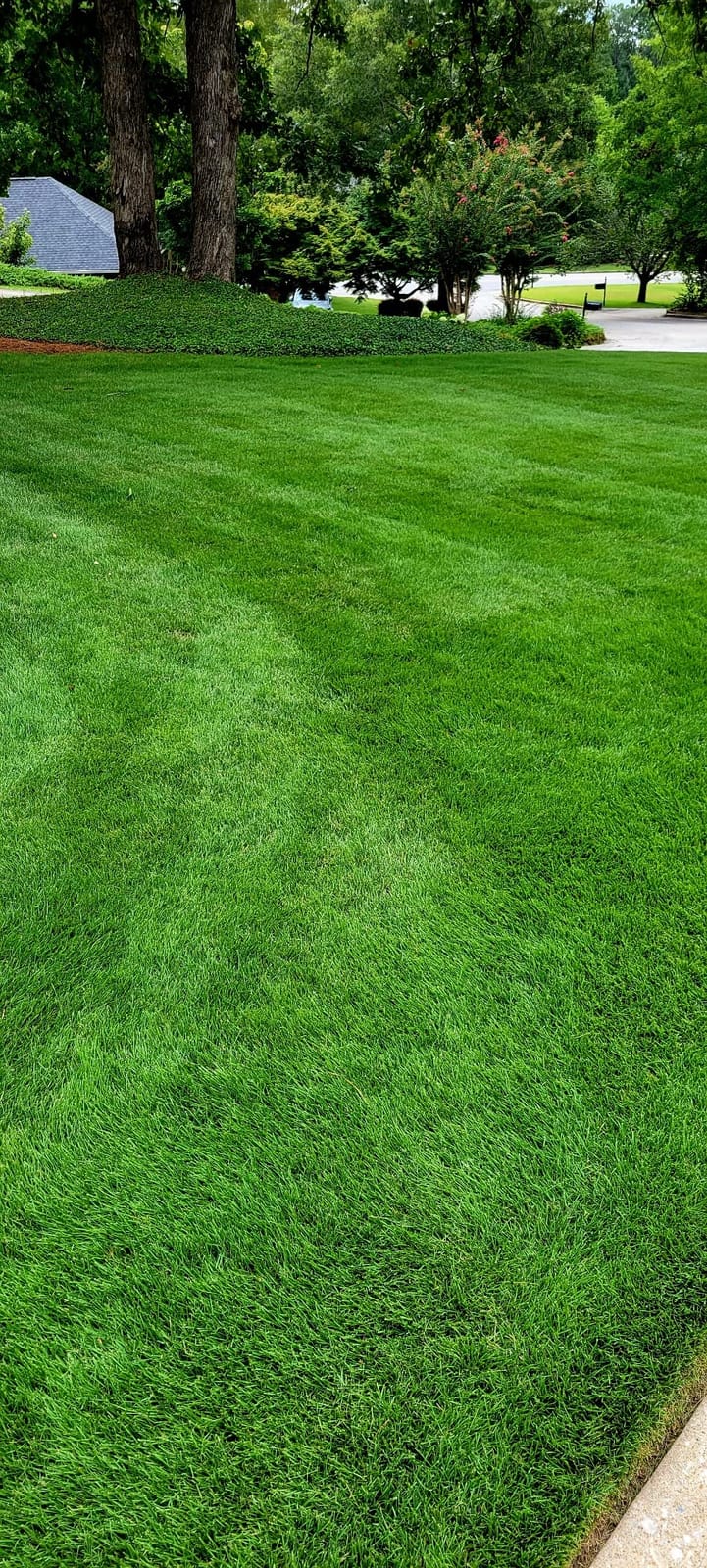
Long-term seasonal users on St. Augustine and silty clay report transforming patchy, weedy turf into dense grass. The no-odor claim is repeated often and is the main reason we included it despite the lower rating, because odor is a genuine obstacle for some households.
Be aware of the sample size. At 211 reviews this is the thinnest evidence base in the roundup, and 17 percent of those reviews sit at three stars or below. One reviewer ran a treated-versus-control comparison on neglected centipede with deep thatch and saw no difference at all.
Logistics are a minor but real issue. Some orders arrive without an applicator, which complicates a hose-end or pump sprayer setup on the day you need it. Mixing is 4 to 8 oz per gallon of water.
Where it fits in a clay program
It fits as the second step after a soil loosener, targeting the thatch layer that a compacted clay lawn builds up. If you are managing St. Augustine in a heavy clay region, that pairing is the scenario the reviews describe most favorably.
Choose it over other dethatchers when odor is disqualifying for you. Several owners with sensitive households chose it specifically to avoid a strong smell on a lawn their family uses daily.
What to expect
Expect a seasonal program, not a one-time fix. Results build with repeat applications, and the weakest reviews come from people who treated once and judged it immediately. If a low rating and a small sample size bother you, the higher-reviewed aerators in this list are the safer starting point.
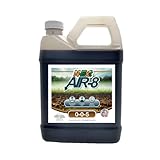
8. N-Ext Air-8 Liquid Aeration: Best for Clay With Sprinklers and Buried Lines
N-Ext Air-8 Liquid Aeration Bio-Stimulant with Humic Acid, 1 Quart
1 quart liquid
Humic acid bio-stimulant
Backpack sprayer
2 lb bottle
Pros
- Fractures soil structure for deeper water and root penetration
- Designed for clay and compacted soil
- No need to mark sprinkler heads
- fences or cable lines
- Quart and gallon sizes
- Users report greener turf within days
Cons
- Thick formula complicates mixing and sprayer flow
- Can stain concrete and patios if not rinsed promptly
- Some users on severely compacted soil saw no improvement
Air-8 is a humic acid bio-stimulant that fractures soil structure at a fine scale so water and roots can penetrate deeper. That makes it a strong fit for clay, precisely the soil where pulling plugs is hardest and where a machine risks hitting something buried. No sprinkler marking, no invisible fence locator, no utility locate call.
The user reports from clay-heavy regions are the most vivid in this roundup. At 159 reviews and a 4.2 average, the accounts describe a visible line where the application stopped, greener grass within days, and a screwdriver going into the ground more easily at about four weeks.
Application is a backpack or pump sprayer, and the label allows use any time during the growing season. That flexibility is useful on southern lawns where the window between heat stress and dormancy is narrow.
Why it works well on clay
The reason we like it for root-zone problems is the mechanism claim in the reviews, not just the marketing. Users report easier screwdriver penetration at four weeks, which is a more meaningful measure than a color change in the grass. A soil that will accept a screwdriver will accept fertilizer and new seed too.
It is a good fit for a yard where buried infrastructure makes a core aerator a gamble. The product has no requirement to mark anything, and the quart and gallon sizes cover a suburban lot without a repeat purchase.
What to watch out for
The formula is thick, which reviewers say complicates mixing and sprayer flow, and several report staining on concrete driveways and patios if it is not rinsed promptly. Plan your route so hardscapes get hosed at the end. A small number of users on severely compacted soil report no visible improvement at all.
9. Yard Mastery Compaction Cure: Best for Multi-Acre Programs
Compaction Cure Liquid Soil Aerator – Loosens Hard Soil & Improves Drainage – 1 Quart (32 oz) = Covers up to 5,333 sq ft – Liquid Aeration for Lawns, No Mechanical Aerator Needed – Yard Mastery
1 quart liquid
Covers up to 5333 sq ft
6-9 oz per gallon
2 lb bottle
Pros
- Reported to convert hard
- concrete-like clay within a couple of weeks
- Reduces run-off so water soaks in instead of sheeting
- Users on slow-spreading zoysia report bare spots filling in
- Green-up often visible within two days
- Sizes from 32 oz to 5 gallons
Cons
- Slow-release style program needs monthly applications to sustain gains
- Small review base of 76 ratings
- Some buyers cannot judge effectiveness without long-term use
Compaction Cure is built for scale. The quart covers up to 5333 square feet, and the size range runs from 32 oz all the way to 5 gallons, with the manufacturer listing coverage out to 640000 square feet at the large end. For anyone treating multiple properties or a large rural lawn, that is the widest range in this group.
Enthusiastic reports come from users on a biweekly or monthly program over compacted clay, particularly zoysia and shaded tree rings. They describe visibly softer soil within a couple of weeks, reduced run-off, and bare spots filling in. Green-up is reported as fast as two days, which is the earliest visible response claimed by any product here.
Mixing is 6 to 9 oz per gallon of water, and the label allows application in any season. Owners mention no unusual odor, which separates it from several competing products.
Where it makes sense
It makes sense for large areas and for a monthly program mindset. The reports of concrete-like clay softening in a couple of weeks are the most dramatic claims in the roundup, and they come from users committed to repeated application rather than a single pass.
If you maintain several properties or a multi-acre lawn, the bulk sizes remove the per-container math that makes other options expensive. The zoysia and shaded tree ring use case is well represented in the positive reviews.
Where caution is warranted
Caution is warranted because this is a newer item with a small review base of 76 ratings. Most of the neutral and negative feedback is not about failure but about needing repeated monthly applications or simply not yet seeing a change. Budget for a program rather than a rescue, and judge it after two or three cycles.
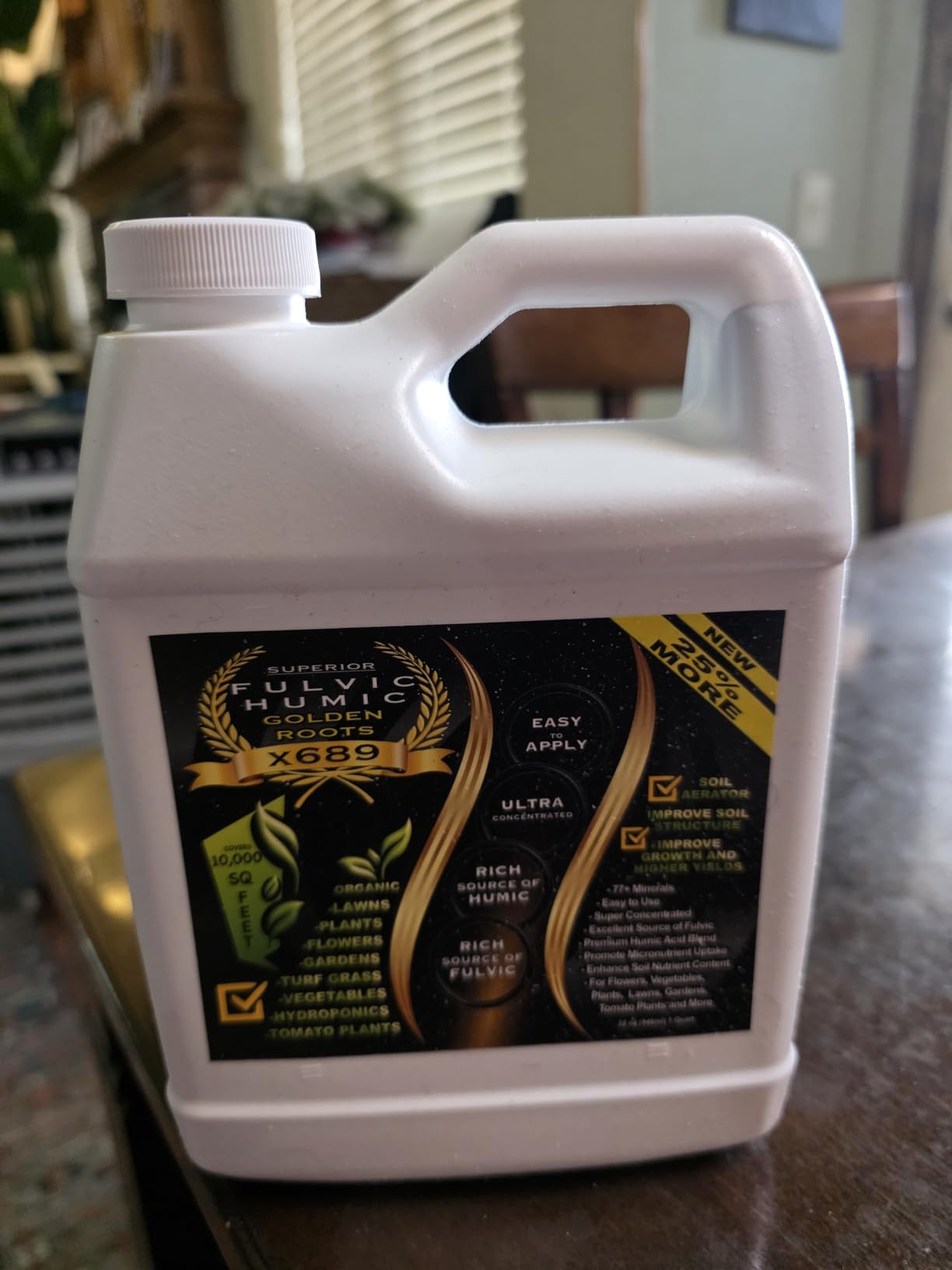
10. Superior Fulvic Humic Liquid: Best Humic and Fulvic Conditioner
Liquid Aeration for Lawn – Humic & Fulvic Acid, Covers 10,000 Sq Ft
946 ml liquid
Humic and fulvic acid
Covers 10000 sq ft
2 oz per gallon
Pros
- Highest average rating in the group at 4.6
- Supports water penetration in clay and compacted soil
- One 32 oz bottle treats up to 10000 sq ft
- Works on lawns
- gardens
- trees
- shrubs and containers
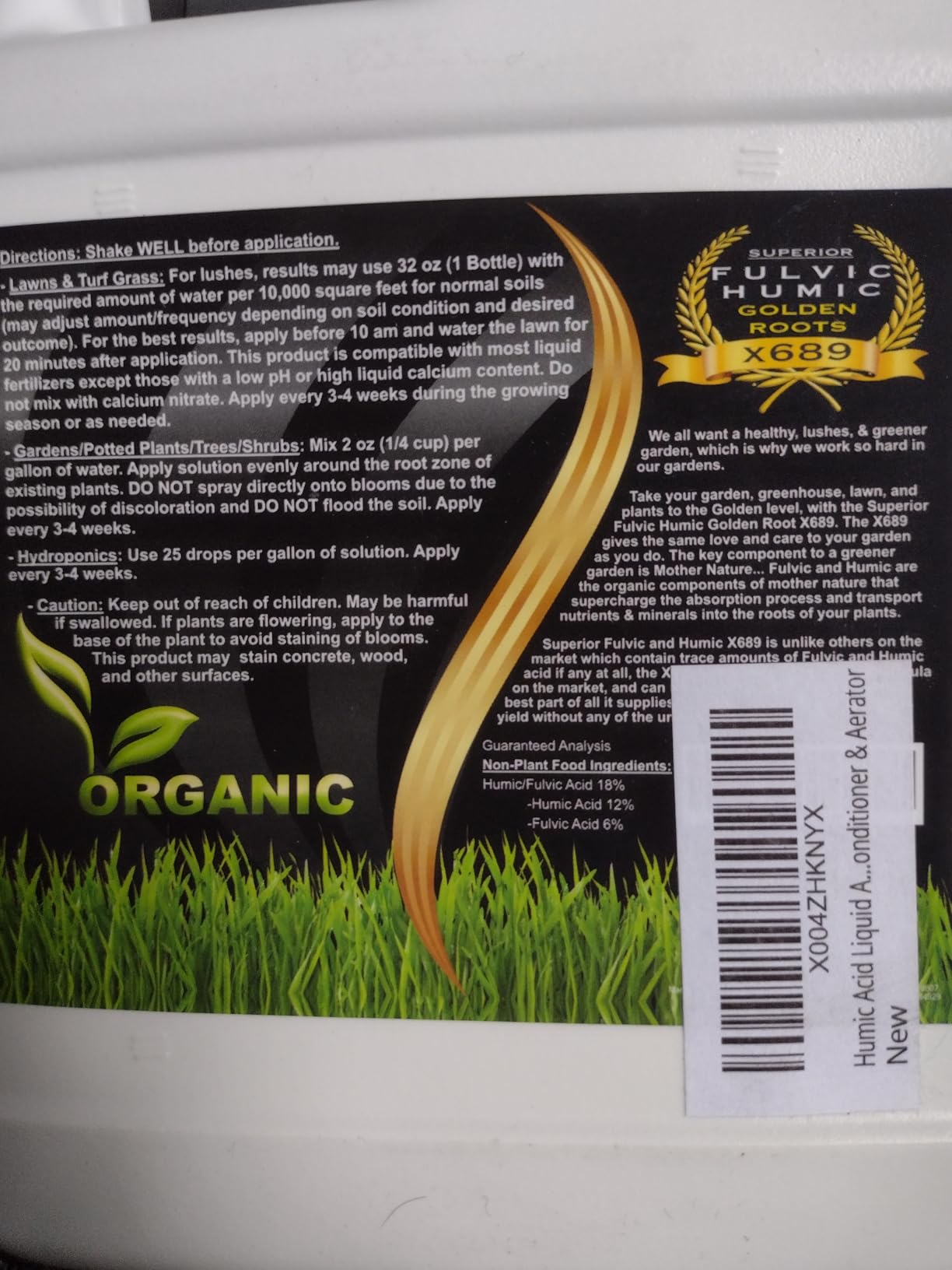
- Directions cover hose-end
- pump sprayer and watering can
Cons
- Humic and fulvic conditioner rather than a core substitute
- Small review sample of 42 ratings
- Works best as part of a regular program
This is a humic and fulvic acid concentrate built to support water penetration and soil structure in clay, hard, and compacted soils. The rating is the highest in the group at 4.6, with 73 percent of reviews at five stars and no one-star reviews at all, which is a distribution that is hard to find.
The sample is small at 42 ratings, so we would not build a whole lawn plan on it alone. What it does well is breadth of use. The same bottle can be applied to turf, gardens, vegetables, trees, shrubs, containers, and hydroponic systems, and the directions cover hose-end sprayers, pump sprayers, and a watering can.
Coverage is 10000 square feet per 32 oz bottle at 2 oz per gallon of water, and the label asks you to repeat every three to four weeks. That cadence fits a regular maintenance routine rather than a single treatment, and buyers describe it as a humic and fulvic conditioner that complements a lawn program.
In practice, that means it earns its place as the soil-feeding layer underneath a treatment schedule. If you already core aerate on a cycle, a product like this applied every few weeks keeps the opened structure biologically active instead of letting it close back up.
Who should choose it
Choose it if you are building a whole-property program rather than fixing one wet corner. Anyone tending a lawn, a vegetable garden, trees, and containers can use the same bottle, which simplifies the routine. The 10000 square foot coverage also beats most clay-focused concentrates in this roundup.
We would pair it with a higher-rated clay loosener on heavy soil, because humic and fulvic acid feed structure rather than dispersing clay particles on their own.
Who should wait
Wait if you need proof. Forty-two ratings is a thin base, and a program product on a 3 to 4 week cycle is a longer commitment than most people expect. If you want a fast structural change first, use a clay loosener and add this to the follow-up schedule.
Liquid vs Core Aeration on Clay Soil: What the Evidence Shows
Liquid aeration helps clay soil, but the peer-reviewed evidence for it on heavily compacted clay is thinner than the marketing suggests, and it does not remove physical soil. Research from the University of Georgia, led by Dr. Travis Shaddox and published between 2020 and 2022, compared core aeration, liquid aeration, fertilizer, seaweed extract, and an untreated control on compacted clay growing TifTuf bermudagrass. The mechanical treatment produced the meaningful structural changes.
That finding sits awkwardly next to what lawn service companies say. Several of them argue that liquid aeration reaches as much as a foot into the profile while core plugs only work a few inches, and that ammonium lauryl sulfate disperses clay particles in a way cores cannot. Both things can be true at once. Liquid treatment can improve infiltration and dispersion, while core aeration is what physically moves bulk soil and opens macropores. The dispute is about how much structural change you should expect from each.
Owners in the field tend to land in the same place the research does. The r/lawncare user who uses LawnStar on dense clay says it has helped a lot and then adds the important clause: it doesn’t replace core aeration. Other commenters in that same discussion pair a liquid clay-breaker with core aeration and topsoil rather than relying on liquid alone. On the DIY Lawn Aeration thread at texags, users recommend adding lime and gypsum alongside a liquid treatment to address salinity and compaction together.
Our read after comparing all ten products and their reviews is straightforward. Use liquid aeration as the first and most frequent pass, because it works around sprinklers, on slopes, and in the dog run or garden bed a rented machine will never reach. Use core aeration once or twice a year on a dry, mown lawn where equipment can run, because it is the only option that physically removes soil from the root zone.
One more note on liquid use that the forums raise often, because it is genuinely useful. On dry, hard-to-wet turf, a surfactant such as a penetrant reduces surface tension and helps water absorb where it lands. That is a different job from decompaction, and mixing the two up is why some owners feel a wetting agent did nothing for their clay.
How to Apply a Liquid Aerator on Clay Soil
Application is straightforward, and the difference between a good result and a disappointing one is following the label rate rather than guessing. Most owners in the reviews who complained about results were over-concentrating, and most owners who got results used the label rate and repeated the treatment.
1. Mow and clear the lawn first
Cut the grass to a shorter height and remove clippings so the spray reaches soil rather than a thatch canopy. Rake away debris from bare patches. Liquid products do not need a dry lawn the way core aeration does, but a clean surface gets the solution into the root zone instead of onto the thatch.
2. Dilute at the exact label rate
Most of these products are hyper-concentrated. LawnStar uses a 1:1024 hose-end setting, Compaction Cure calls for 6 to 9 oz per gallon, Soft Soil asks for 4 oz per gallon, and the humic concentrate uses 2 oz per gallon. Set the sprayer dial once, test on a small strip, and confirm the grass is not browning before you commit to the whole lawn.
3. Apply evenly and overlap the passes
Walk at a steady pace and overlap each pass slightly so you get uniform coverage without double-dosing any strip. Backpack and pump sprayers suit smaller lawns; hose-end sprayers suit broad areas. On hardscapes, rinse concrete and patios promptly, because the darker humic formulas are reported to stain if they sit.
4. Water it in
Liquid aeration needs moisture to move the chemistry downward into the profile. Water the treated area afterward so the solution carries into the root zone rather than evaporating on the surface. This step is where the surfactant works, since it is what allows water to soak in rather than run off the surface.
5. Follow with seed or fertilizer
Once the soil is softened, this is the right window for overseeding or a fertilizer pass. Organic matter and nutrients move further in loosened soil, and the humic-based options in this roundup pair naturally with a feeding schedule. On a heavy clay yard, compost topdressing in the same period adds the organic fraction that surfactants cannot supply.
6. Reapply on a schedule
Expect two to five weeks for visible change, and repeat on the cycle your label specifies. Several products in this roundup are designed for 30-day repeat programs, and the humic concentrate asks for a 3 to 4 week repeat. Results that build across applications are the normal pattern, not a sign that the first one failed.
7. Keep people and pets off until it dries
Several products here are specifically labeled safe for children and pets, including the Covington aerator, the Covington dethatcher, and the GS Plant Foods organic formula. Regardless of label, keep pets and children off the lawn until the treatment has fully dried and the area has been watered in, and keep runoff out of storm drains by avoiding application before heavy rain.
How to Choose a Liquid Aerator for Clay Soil
Coverage per gallon is the number that decides cost, and it varies enormously across these products. Simple Lawn Solutions and LawnStar both cover around 30000 to 32000 square feet per 32 oz bottle, while Soft Soil covers roughly 500 square feet per mixed gallon. That is a difference large enough to change your whole budget on a half-acre property, so check the coverage claim before you buy rather than comparing bottle prices.
Match the chemistry to the problem. Surfactant-led products such as Simple Lawn Solutions and LawnStar target standing water and infiltration. Humic and fulvic blends such as the Superior Fulvic Humic concentrate and Covington add soil biology and structure feeding. Microbe-based products such as Thatch Buster target thatch rather than compaction. If your issue is dry patches that shed water, a dedicated penetrant like Grow More is the correct tool and a clay loosener will not fix it.
Size to your soil severity, not to your optimism. Mild compaction on a large lawn suits a high-coverage concentrate. Severe, near-concrete clay in a small area suits a heavier rate and a repeat program, and may need a machine afterward. For bare, rock-hard patches with no seed, expectations should be modest, since review data across several products shows those areas responding slowest.
Think about what you are already applying. If you are working on a salinity problem, add lime or gypsum alongside your liquid treatment, as DIY users on the texags thread recommend. If thatch is building up, pair a soil loosener with a liquid dethatcher. If you have a high-traffic path or a garden bed, the liquid pass is often the only practical option, since a machine will not fit.
Finally, know when to stop treating and start rebuilding. Liquid aeration is a maintenance tool. Where the underlying problem is a drainage grade, a failing irrigation line, or soil that is physically compacted by construction traffic, the honest answer is a drainage fix, compost topdressing, sand amendment where appropriate, and a core aeration pass. Several products here are explicitly described by their makers as companions to core aeration rather than substitutes.
Frequently Asked Questions
What is the best aerator for clay soil?
For heavy compacted clay, a core aerator produces the only physical removal of soil and is the strongest single treatment. A liquid aerator is the better choice for areas a machine cannot reach, for lawns with buried sprinklers or lines, and for frequent maintenance between core passes. Many owners use both, with liquid first and core aeration later in the season.
Does liquid aeration work on clay soil?
Yes, for infiltration and dispersion. Liquid aeration lowers water surface tension and disperses clay particles so water and roots can move through the root zone. User reports on r/lawncare and TheLawnForum describe softer soil and less sogginess. However, University of Georgia research on compacted clay found less structural change from liquid treatments than from core aeration, so treat it as a complement rather than a replacement.
Can I use an aerator on clay soil?
Yes, with two adjustments. Core aeration on clay must wait until the soil is dry enough that the tines will pull plugs rather than smear, and liquid aeration needs moisture afterward to carry the solution into the root zone. Both are safe on clay when the moisture condition is right.
How to aerate clay soils?
Start by mowing low and clearing clippings. Apply a liquid aerator at the exact label dilution, using a hose-end sprayer or backpack unit, and overlap passes for even coverage. Water the treated area in so the solution reaches the root zone. Follow with seed or fertilizer once the soil is softened, and repeat on the cycle the label specifies. For structural change, follow up with core aeration on a dry lawn.
Is it worth aerating clay soil?
In most cases yes, because clay is the texture that benefits most from aeration. Watch for standing water that lasts days after rain, ground that hardens like brick in summer, patchy or thinning turf, and low spots that never dry out. If those signs are present, aeration addresses the cause rather than the symptoms.
What is the best liquid soil conditioner for lawns?
For broad compacted clay, the Simple Lawn Solutions Liquid Soil Loosener leads on coverage, with up to 32000 square feet per 32 oz bottle and the largest review base. For large properties the LawnStar Liquid Lawn Aerator is the strongest value. For a soil-biology approach the Covington Liquid Lawn Aerator pairs humic acid, amino acids, and kelp, and for containers and beds a dedicated surfactant such as Grow More is the right tool.
What is the best lawn fertilizer to apply after aeration?
Apply a slow-release nitrogen fertilizer after the soil has softened, because nutrients move further in loosened soil than in compacted clay. Pairing fertilizer with a humic or fulvic acid treatment supports both nutrient availability and soil structure. On heavy clay, topdressing compost in the same window adds the organic fraction that surfactants cannot supply.
Which is better, spring or fall aeration?
Timing depends on grass type. Cool-season lawns such as fescue and Kentucky Bluegrass are generally aerated in early spring or fall when they are actively growing. Warm-season lawns such as Bermuda, Zoysia, and St. Augustine are best aerated as they emerge from dormancy in late spring. Liquid products are more flexible and can be applied during the growing season, including every 3 to 4 weeks on repeat programs.
Our Recommendation for Clay Soil in 2026
If you are starting from scratch on a heavy clay lawn this year, the Simple Lawn Solutions Liquid Soil Loosener is the pick. It combines the widest coverage in the group with the largest review base, so you are relying on the most documented product available. The LawnStar Liquid Lawn Aerator is the better value for a large property, and the Covington Liquid Lawn Aerator is our choice when soil biology, odor, and pet safety drive the decision.
Whichever you choose, treat liquid aeration as part of a program rather than a single purchase. Apply at the label rate, water it in, expect two to five weeks for visible change, and plan a core aeration pass for the structural work a spray cannot do. Best liquid aerators for clay soil work best on a schedule, and the second and third applications are where most owners notice the yard finally starts to drain.