
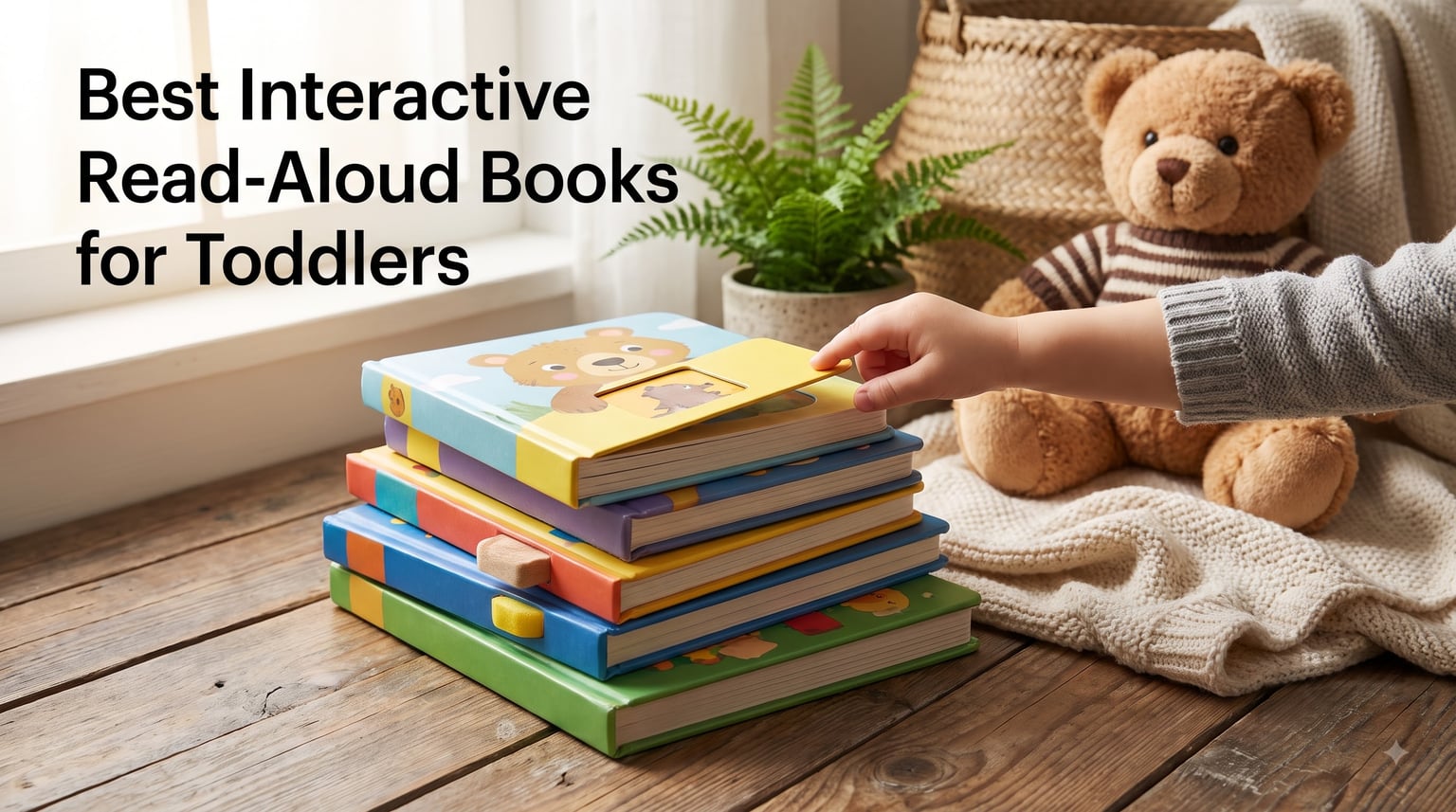
Interactive read-aloud books for toddlers are board and picture books built to make your child a participant instead of an audience, using flaps to lift, sound buttons to press, textures to touch, and repeated refrains they can shout back at you. That is the short answer, and it is the single idea that separates a story your toddler sits through from one your toddler asks to hear fifty times a day.
We read our way through 11 of the most-recommended interactive toddler books with a very willing two-year-old and a slightly less willing four-year-old, and we tracked which ones survived grabby hands, which ones got requested on repeat, and which ones quietly died in the toy bin. Our test pile ran from classic lift-the-flap board books to 30-button sound books to a talking electronic learning book. Every pick below earned its spot through repeat requests, not through marketing copy.
This roundup of the best interactive read-aloud books for toddlers covers what each book does, the age it truly fits, how well the interactive parts hold up to real toddler abuse, and which trade-offs parents complain about so there are no surprises. If you have ever tried reading to a toddler who will not sit still, the right book genuinely makes all the difference.
Table of Contents
Top 3 Picks for Interactive Read-Aloud Books for Toddlers

Dear Zoo: A Lift-the-Flap Book
- Big easy flaps
- Repetitive text
- Ages 1-3
- 91% five-star ratings
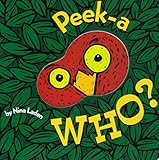
Peek-a Who? by Nina Laden
- Rhyming peekaboo flaps
- Ages baby-2
- Tiny and portable
- 88% five-star ratings
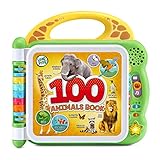
LeapFrog 100 Animals Book
- Bilingual English-Spanish
- 3 play modes
- Ages 18+ months
- 146k+ reviews
Dear Zoo by Rod Campbell is our overall winner because it does the one thing every parent wants from a read-aloud: it hands the story to the child. The text repeats the same line on every page, so by the third read your toddler is “reading” it out loud while lifting each flap to find which animal the zoo sent this time.
Peek-a Who? is the budget pick and the book we would grab first for a first birthday gift. At roughly the cost of a coffee, its die-cut window and rhyming reveals get genuine belly laughs from babies who have never sat through a book before.
The LeapFrog 100 Animals Book wins for tech-forward households and mixed-age siblings. It speaks animal names, sounds, and fun facts in both English and Spanish, and its 146,000-plus ratings from parents make it the most battle-tested interactive book on this list.
Best Interactive Read-Aloud Books for Toddlers in 2026
Here is the full lineup side by side. Every book below appears in a detailed review further down, so you can jump straight to whichever interactive style fits your child.
| Product | Specs | Action |
|---|---|---|
| Dear Zoo: A Lift-the-Flap Book |
|
Check Latest Price |
| Peek-a Who? by Nina Laden |
|
Check Latest Price |
 Where’s Spot? by Eric Hill Where’s Spot? by Eric Hill |
|
Check Latest Price |
 Don’t Push the Button! by Bill Cotter Don’t Push the Button! by Bill Cotter |
|
Check Latest Price |
 Stir Crack Whisk Bake Stir Crack Whisk Bake |
|
Check Latest Price |
 Polar Bear What Do You Hear? Sound Book Polar Bear What Do You Hear? Sound Book |
|
Check Latest Price |
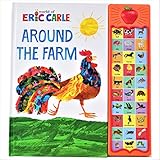 Around the Farm 30-Button Sound Book Around the Farm 30-Button Sound Book |
|
Check Latest Price |
 Green Eggs and Ham 12 Silly Sounds Green Eggs and Ham 12 Silly Sounds |
|
Check Latest Price |
 Let’s Learn ABCs Sound Book Let’s Learn ABCs Sound Book |
|
Check Latest Price |
 Babies Love Learning 4-Book Set Babies Love Learning 4-Book Set |
|
Check Latest Price |
| LeapFrog 100 Animals Book |
|
Check Latest Price |
1. Dear Zoo: A Lift-the-Flap Book
Dear Zoo: A Lift-the-Flap Book
By Rod Campbell
Little Simon
18 pages
Ages 1-3
#1 in Children's Zoo Books
Pros
- Big flaps easy for little hands
- Repetitive text builds early language
- Sturdy board book construction
- Animal reveal surprise every page
Cons
- Flaps can be ripped off by toddlers
- Simple story gets outgrown by age 3
I have read Dear Zoo so many times in 2026 that I could recite it during a power outage, and my toddler still lunges for the flap on every single page. The premise is beautifully simple: a child writes to the zoo asking for a pet, and each page brings a new animal in a crate or basket that your child opens. The elephant was too big, the giraffe too tall, and the suspense before each reveal is real.
What sells it as a read-aloud is the repetition. The same sentence structure repeats on every page, so somewhere around the fifth read my two-year-old started finishing the lines himself. That is exactly what early literacy experts mean when they talk about predictable text building confidence before a child can decode a single word.
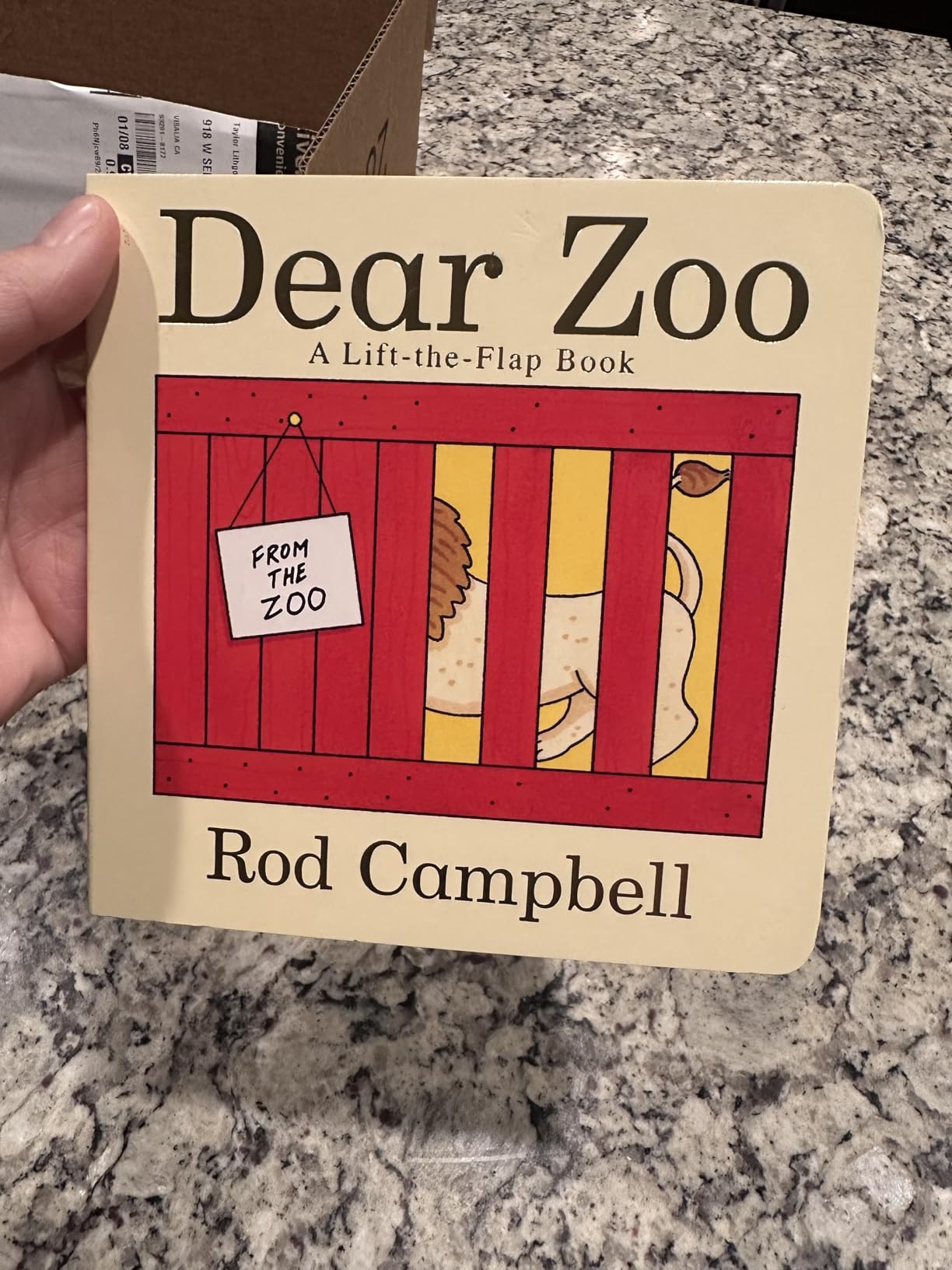
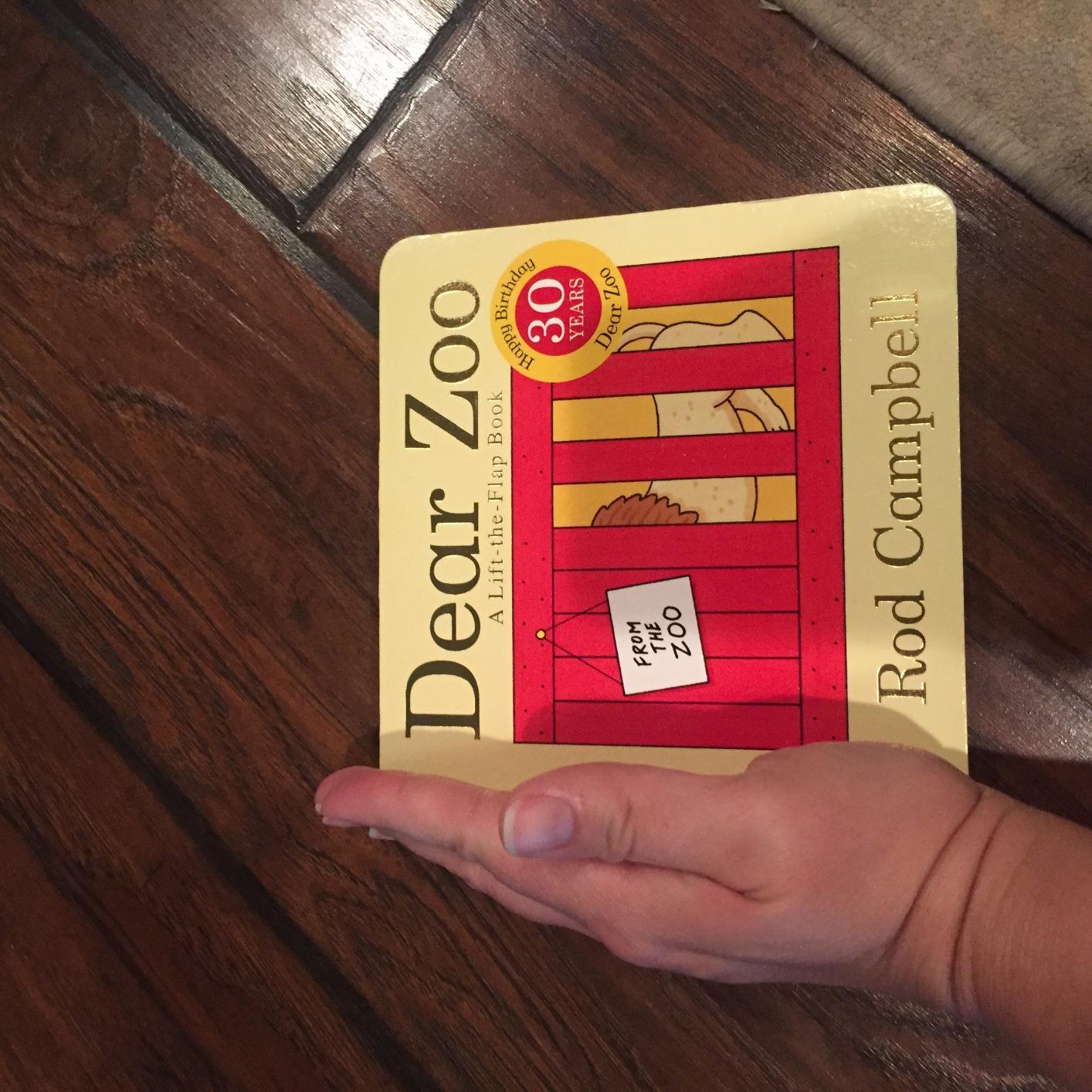
Physically, it is a chunky 6-inch square board book with flaps sized for clumsy fingers, and the pages wipe clean with a damp cloth after snack-time incidents. The flaps are among the sturdiest we tested, though no flap survives a determined one-year-old forever. Ours has two taped corners and zero shame about it.
The honest downside is that the story is thin, and by age three most kids have memorized it and moved on. Parents in reviews also mention the same thing we experienced: the flaps bend before they tear, so you get a grace period before repairs are needed.
What age is Dear Zoo best for
The sweet spot is roughly 12 to 30 months, which is exactly when lifting a flap feels like magic to a child. Under a year it still works as a peekaboo game if you operate the flaps yourself. Past three, keep it as an independent read for your child to “read” aloud to a stuffed animal.
How it holds up as a group storytime book
It works one-on-one and in small groups, because you can invite each child to open one flap in turn. For a classroom or library circle of more than six kids, the small page size fights you, so hold it high and walk a slow arc while the kids shout their guesses. It is also the single most gifted book on this list for a reason.
2. Peek-a Who? by Nina Laden
Peek-a Who? (Lift the Flap Books, Interactive Books for Kids, Interactive Read Aloud Books)
By Nina Laden
Chronicle Books
10 pages
Baby to age 2
5 inch square
Pros
- Engaging lift-the-flap format
- Simple fun rhyming text
- Sturdy board book
- Creates real anticipation
Cons
- Small size not for everyone
- Flaps can rip with very young children
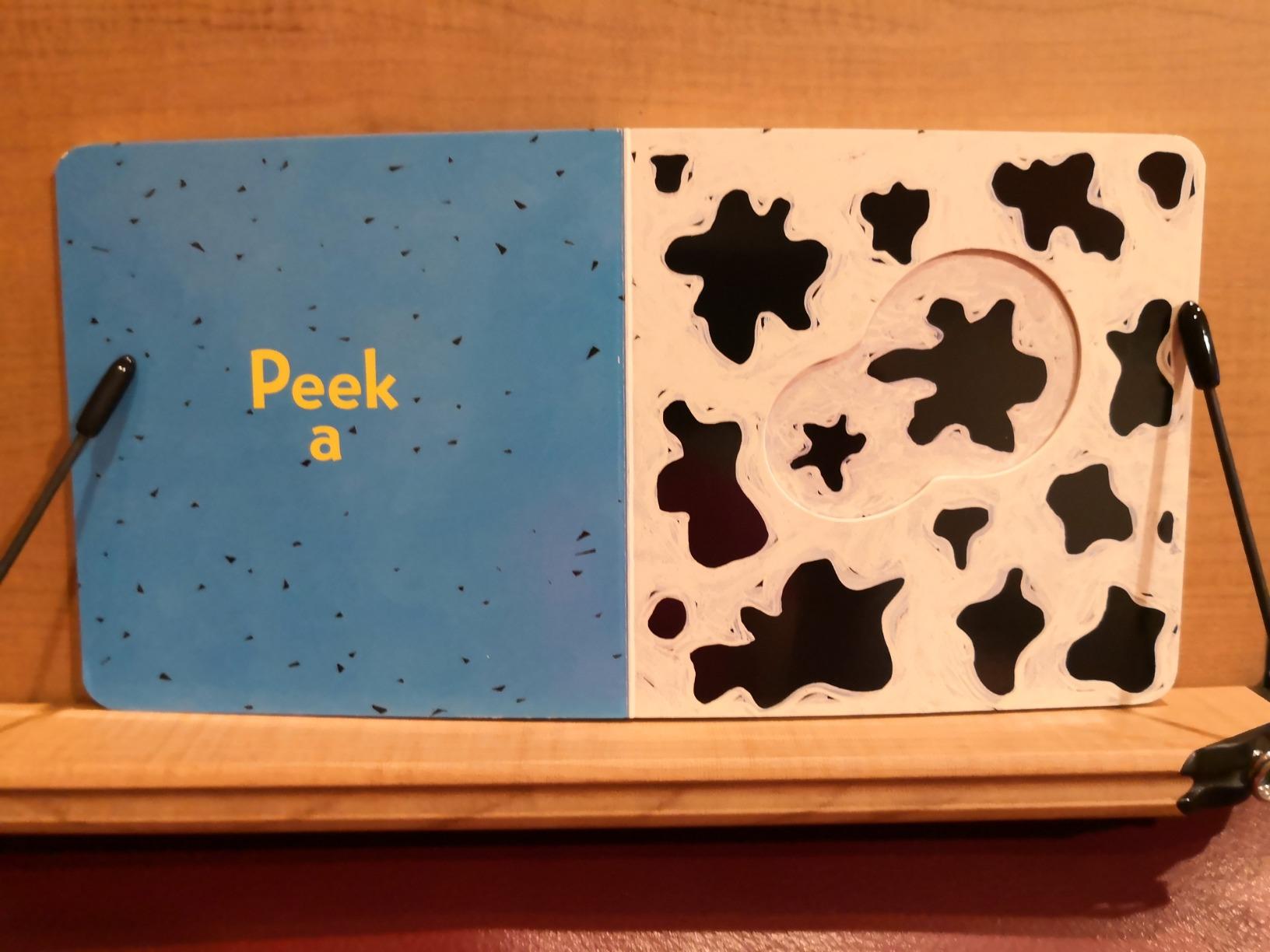
Peek-a Who? is the first book that ever made my baby genuinely laugh at a page. A die-cut hole shows a sliver of the picture, the text gives a rhyming clue, and your child guesses before you flip the page. “Peek-a MOO” and “Peek-a ZOO” land like punchlines when you sell the pause.
At 10 pages it is short enough for the shortest attention span in the house, and small enough to live in a diaper bag. This is the book I hand over in waiting rooms and on car rides when I need ninety quiet seconds. Roughly 88 percent of its ratings are five stars, which tracks with how reliably it works.
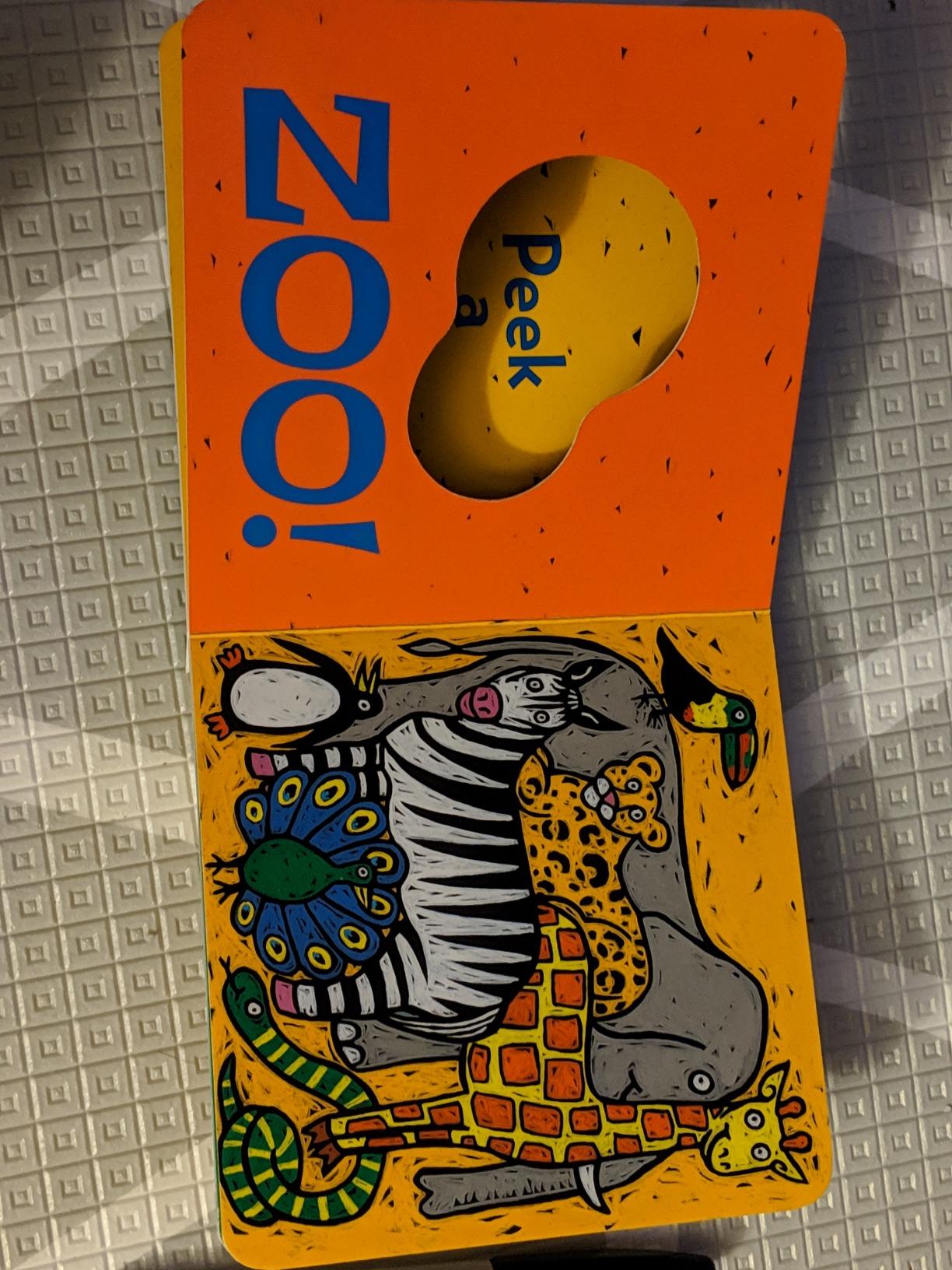
The construction is a real board book with thick pages, and the die-cut window is reinforced rather than flimsy. The flaps themselves are full-page turns rather than small tabs, which actually makes it more durable than classic tab-style flap books. Our copy has survived eight months of daily use with only minor denting on the cover.
The trade-off is the size: at 5 by 5 inches it is terrible for group reading and the pictures are small. It is also a very young book, and a three-year-old will be done with it in one pass.
What age is Peek-a Who? best for
Best from about 6 months to 24 months, with peak delight somewhere around 12 to 18 months when object permanence and guessing games collide perfectly. Treat it as a first interactive book rather than a long-term library staple.
Is it sturdy enough for aggressive toddlers
Yes, within reason, because the interactive element is a die-cut window and a page turn rather than small glue-on flaps. The pages themselves are the thick board style that shrugs off bending and chewing. If your child has already destroyed two flap books, this format is a smarter bet than most.
3. Where’s Spot? A Lift-the-Flap Book
Where’s Spot?: A Lift-the-Flap Book
By Eric Hill
Warne
22 pages
Ages 1-3
Spot series origin
Pros
- Classic search-and-find structure
- Bright charming illustrations
- Sturdy board pages
- Builds vocabulary
Cons
- Flaps bend easily with rough handling
- Some flaps less sturdy than Dear Zoo
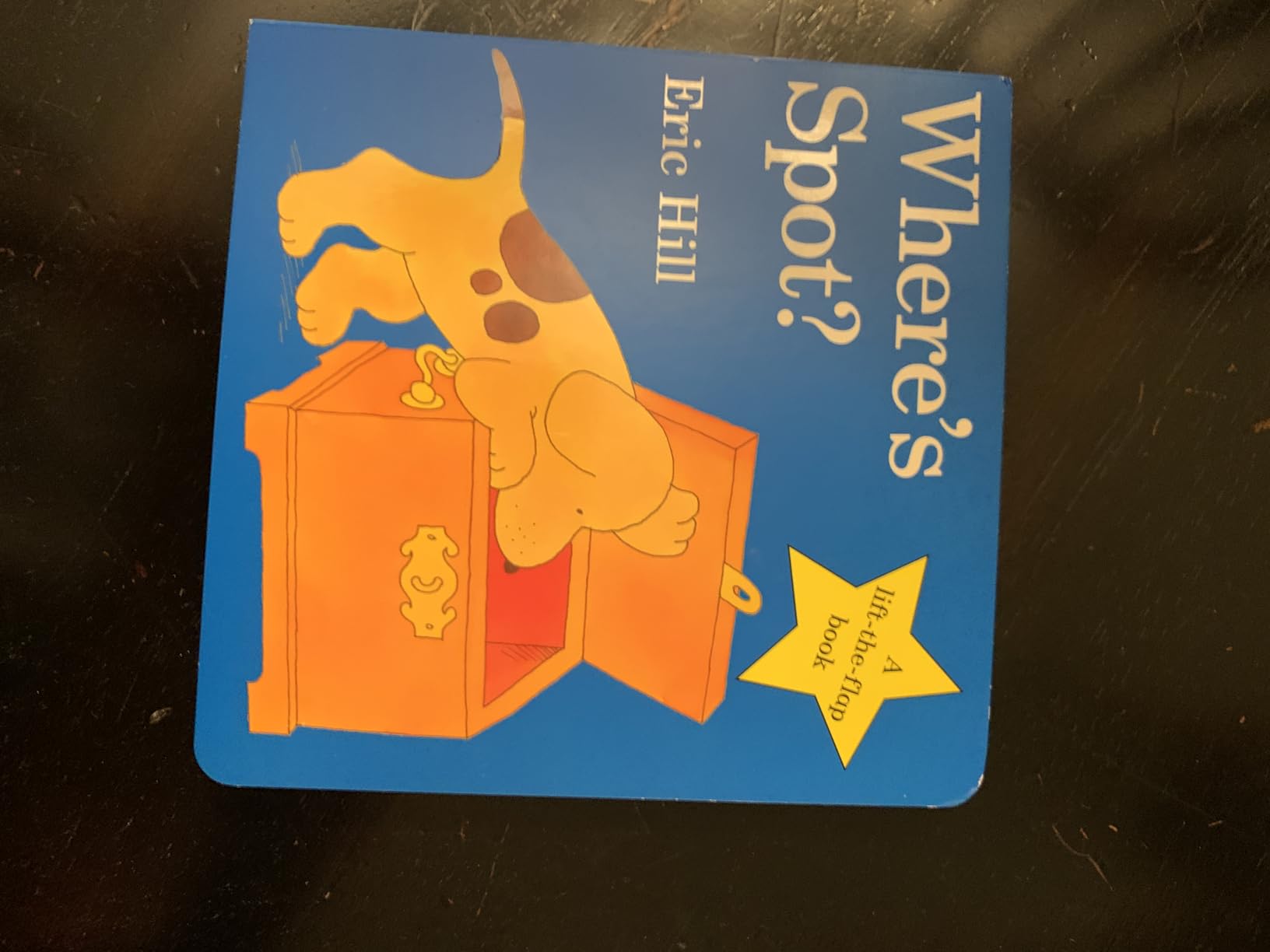
Where’s Spot? is the grandparent of the lift-the-flap genre, and reading it with my toddler made it obvious why it has never gone out of print. A mother dog hunts for her puppy everywhere, and every flap hides either Spot or something that is definitely not Spot. My kid’s job was to yell NO at a lion and an alligator, which she did with total commitment.
The question-and-answer rhythm is what makes it a great read-aloud training book. You ask where Spot is, you open the flap together, and your child supplies the answer. By the second week my daughter was leading the search herself, pointing at each flap and grunting until I cooperated.
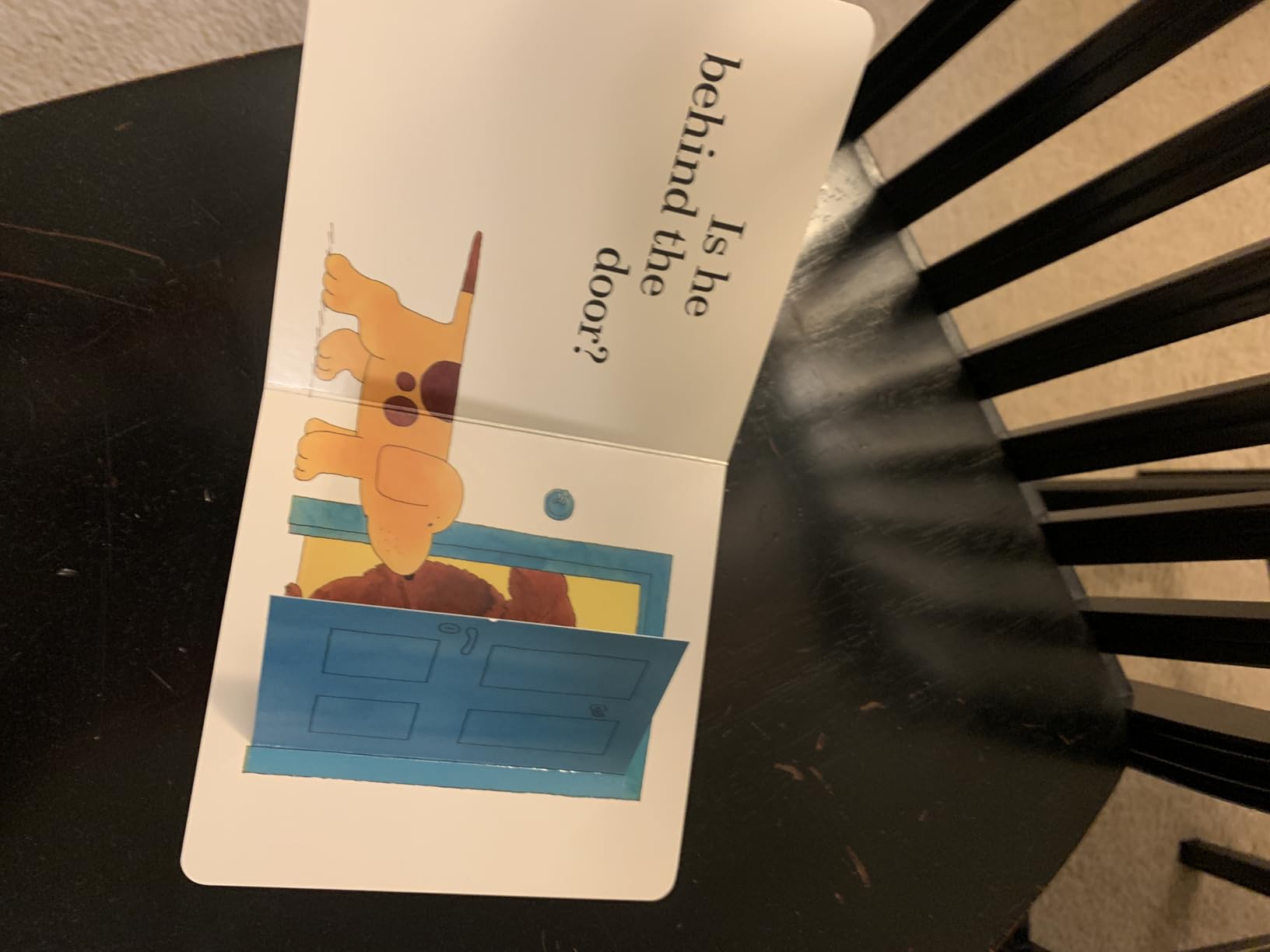
It is a 6-inch square board book with 22 pages, so it runs longer than Peek-a Who? without overstaying. The illustrations are bold, high-contrast, and uncluttered, which keeps the youngest readers oriented. The story builds simple positional vocabulary like under, in, and behind without ever feeling like a lesson.
The weak point is the flaps. Several parents in reviews, and I confirm from experience, report the same thing: they bend before they rip, but a determined 18-month-old will find the edge. Reinforce them with clear tape on day one and you double the book’s lifespan.
What age is Where’s Spot? best for
Best from 12 months to about 3 years, and the search structure grows with your child. At one they just open flaps, at two they guess, and at three they retell it. It also kicks off the wider Spot series if your child imprints on the character.
How it compares with Dear Zoo
They are stablemates, so parents ask which one to buy. Dear Zoo has bigger, sturdier flaps and stronger repetition, while Where’s Spot? has more pages, more peekaboo humor, and a search structure that invites guessing aloud. If you are buying one for a one-year-old, Dear Zoo; for a chatty two-year-old, Spot.
4. Don’t Push the Button! by Bill Cotter
Don’t Push the Button!: A Funny Interactive Book For Kids
By Bill Cotter
Sourcebooks Jabberwocky
32 pages
Ages 2-4
Large 10 inch format
Pros
- Cause-and-effect actions kids control
- Silly humor that lands
- Simple words for early readers
- Repeat-request favorite
Cons
- Button is illustrated not physical
- Too energizing for bedtime
- One gag that repeats
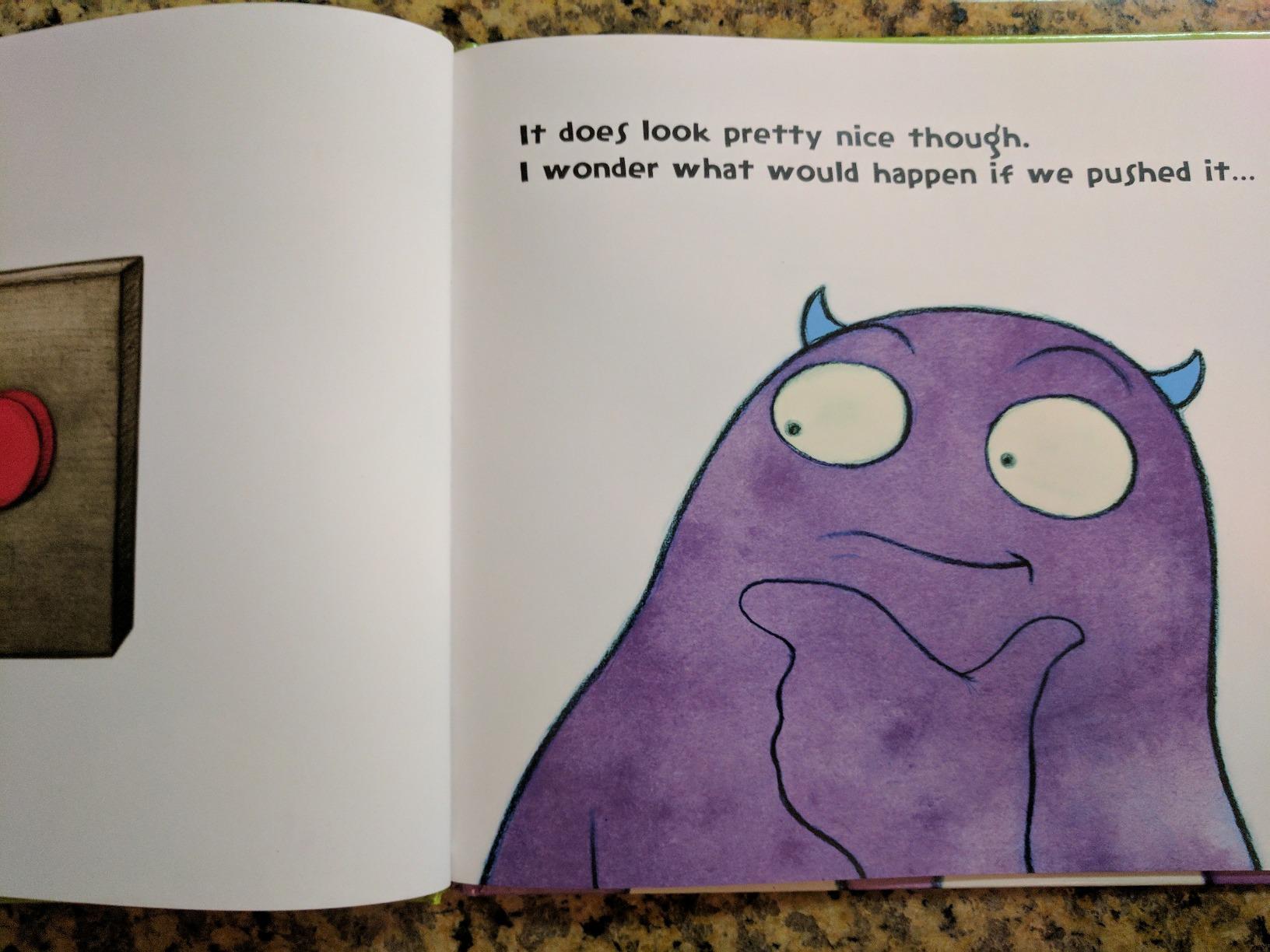
This is the book I reach for when my toddler physically cannot sit still, because it turns fidgeting into the plot. Larry the monster tells your child not to push the button, and of course your child pushes it, and every push changes something on the page. Rub Larry’s belly, tickle him, shake the whole book, and Larry reacts.
The first time we read it, my two-year-old laughed so hard he fell over, and then demanded it four more times. That is the entire value proposition of this book: it gives an active child a job, and the job is being gently naughty under parental supervision.
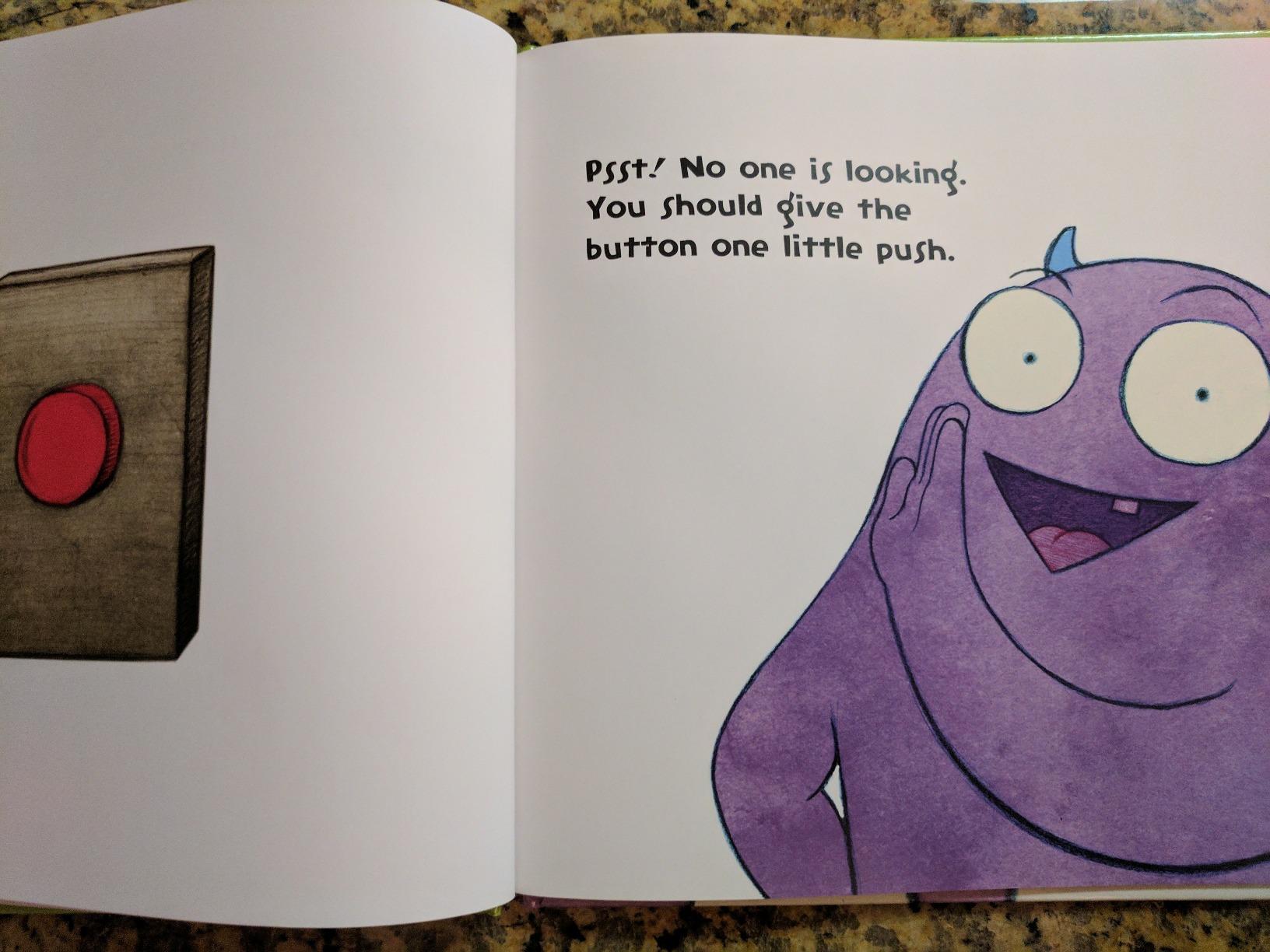
Physically it is a large-format paperback-style board book at about 10 inches tall, so it actually works for group reading, and the text is sparse enough for early readers to attempt alone. The pages are standard board thickness and have handled our read-and-shake sessions without damage. Nothing here requires batteries, which is quietly its best feature.
Two honest warnings from me and from other parents: the button is a picture, not a physical clicky thing, so a few toddlers feel cheated at first until they buy into the pretend. And never deploy this at bedtime, because it winds kids up like a jack-in-the-box.
What age is Don’t Push the Button! best for
Ages 2 to 4 are the target, and the pretend-play requirement is the reason it skews older than the flap books. Under two, many children cannot sustain the bit. Over four, the joke starts wearing thin, though it stays useful as a confidence book for brand-new readers.
Does it work for group storytime
It is one of the best circle-time books on this list because the whole class can shout the instruction together and share one imaginary button. Librarians consistently name it as a wiggly-crowd rescue title. Just plan an active follow-up, because nobody sits still after the shaking page.
5. Stir Crack Whisk Bake
Stir Crack Whisk Bake: An Interactive Board Book about Baking for Toddlers and Kids (America’s Test Kitchen Kids, Stocking Stuffer)
America's Test Kitchen Kids
Sourcebooks Explore
24 pages
Ages 1-3
Finger-motion actions
Pros
- Finger motions for stirring cracking frosting
- Teaches real baking steps
- Bright graphics
- Quality board construction
Cons
- Less engaging without real baking context
- Actions need adult supervision
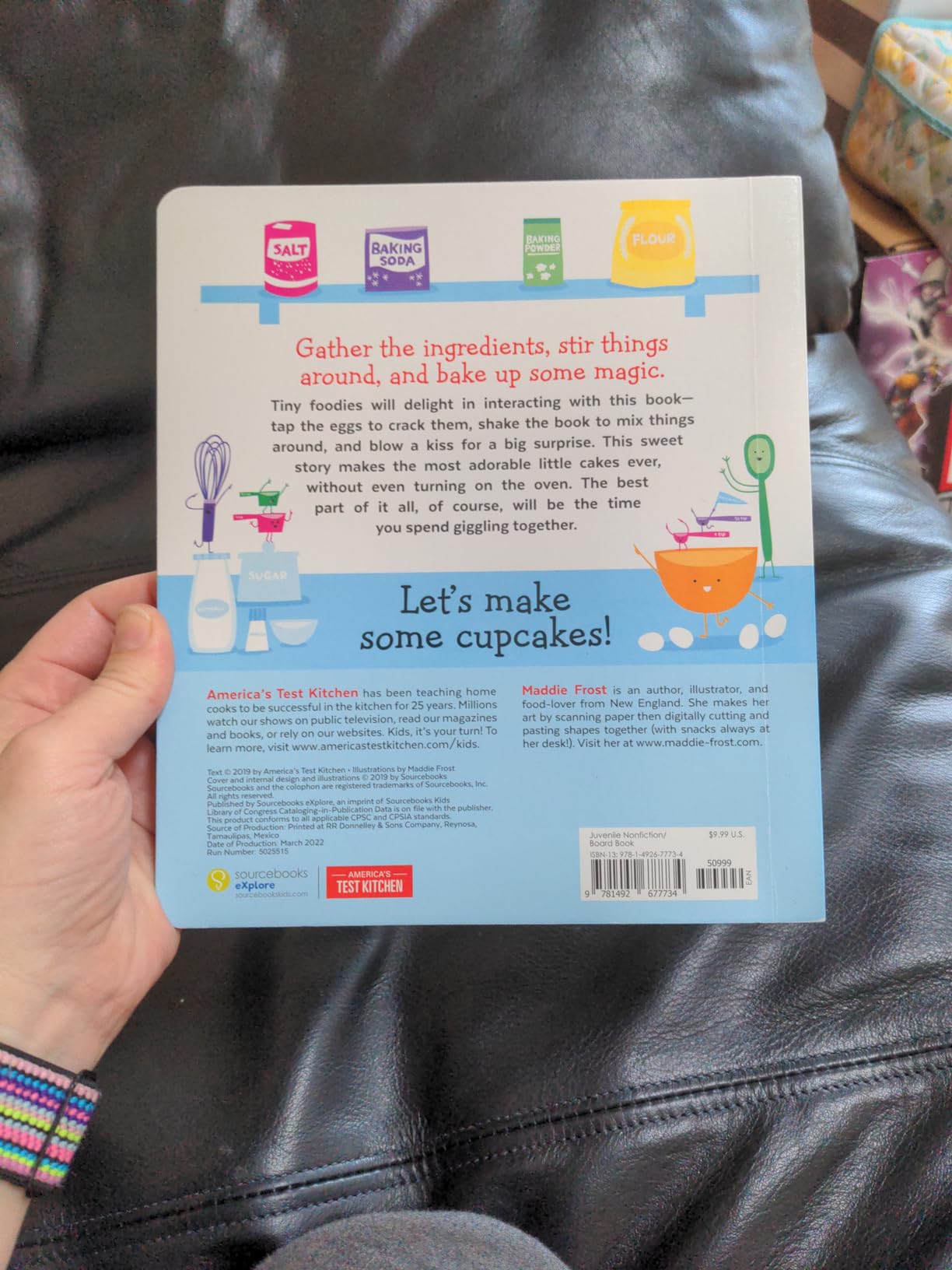
Stir Crack Whisk Bake is the interactive book I did not expect to love. Instead of flaps or buttons, your child performs the recipe with their fingers: circle the bowl to stir, tap the page to crack an egg, swipe across to spread frosting. It is a baking class disguised as a board book.
My toddler walked around pretending to crack eggs on furniture for a solid week after our first read. Because it comes from America’s Test Kitchen Kids, the steps are a real abbreviated recipe rather than vague baking vibes, which makes it a genuine bridge to helping in the actual kitchen.
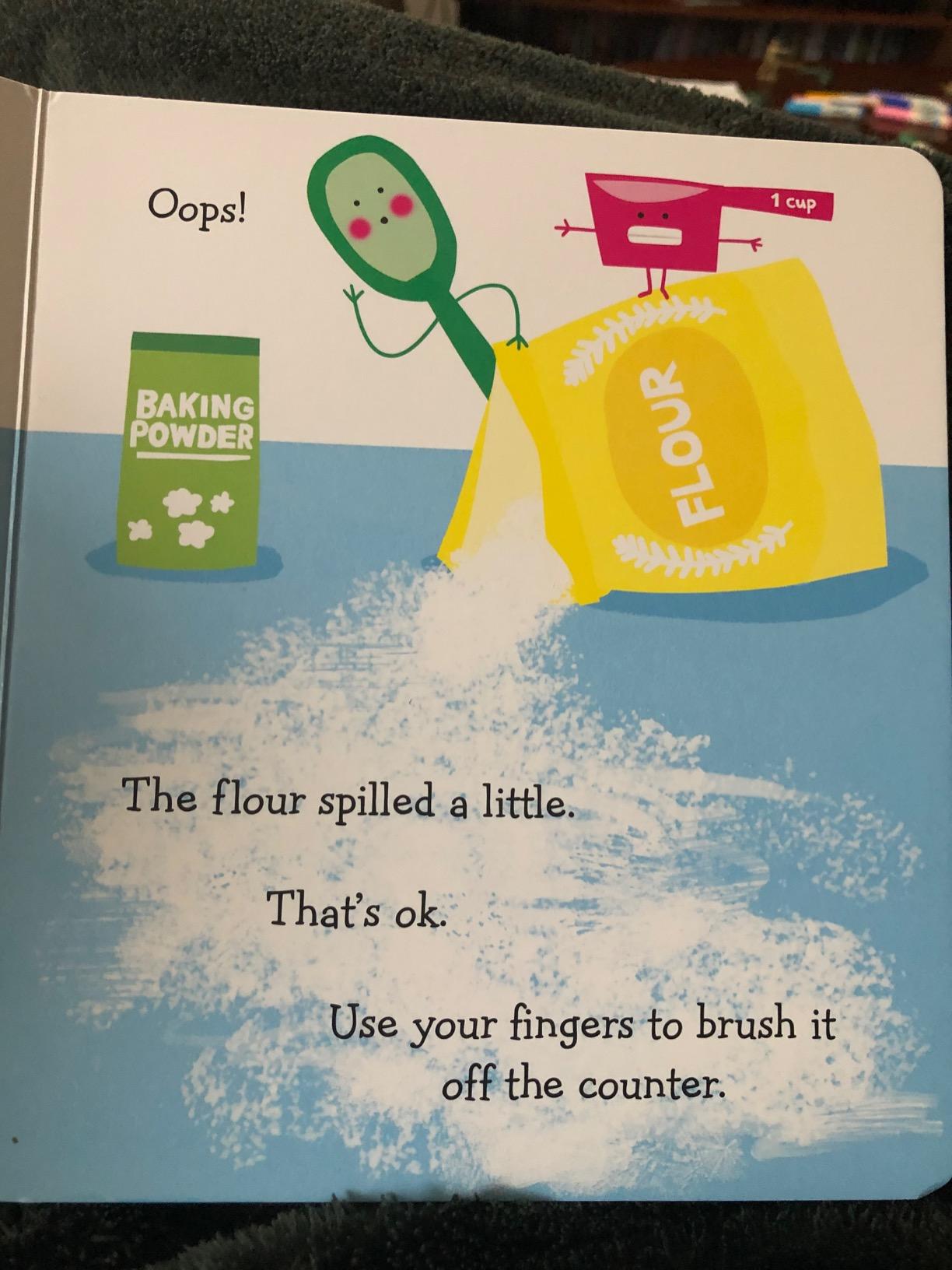
It is a chunky 7-inch square board book with 24 pages and a lovely thick spine that has taken our abuse well. The graphics are clean and uncluttered so the action you are supposed to perform is always obvious. Roughly 90 percent of its ratings are five stars, which is remarkable for a book with a fairly narrow premise.
The catch is that engagement depends on context. Parents whose kids help in the kitchen report this becomes a favorite, while parents who treat it as a passive bedtime story say interest fades. You also need to actually guide the motions at first, so it is more parent-work than a flap book.
What age is Stir Crack Whisk Bake best for
Ages 1 to 3 officially, but the real sweet spot is 18 months to 3 years, once a child can follow a modeled finger motion. Pair it with a weekend baking session and it becomes a tradition rather than a book.
Does it hold a toddler’s attention without real baking
Yes for most kids, because stirring and tapping are inherently fun actions, but expect it to shine brightest in a house that bakes. Teachers and librarians report it also works well as a movement break in group settings where every child stirs an imaginary bowl at once.
6. Polar Bear, Polar Bear, What Do You Hear? Sound Book
Polar Bear, Polar Bear, What Do You Hear? Sound Book (Brown Bear and Friends): A noisy board book edition of the classic Eric Carle picture book
By Bill Martin Jr and Eric Carle
Priddy Books
24 pages
Ages 1-3
10 animal sound buttons
Pros
- Beautiful Eric Carle illustrations
- Sound buttons engage toddlers
- Durable board format
- Teaches animal sounds
Cons
- Some sounds muffled not realistic
- No spoken animal names only sounds
- Volume could be louder
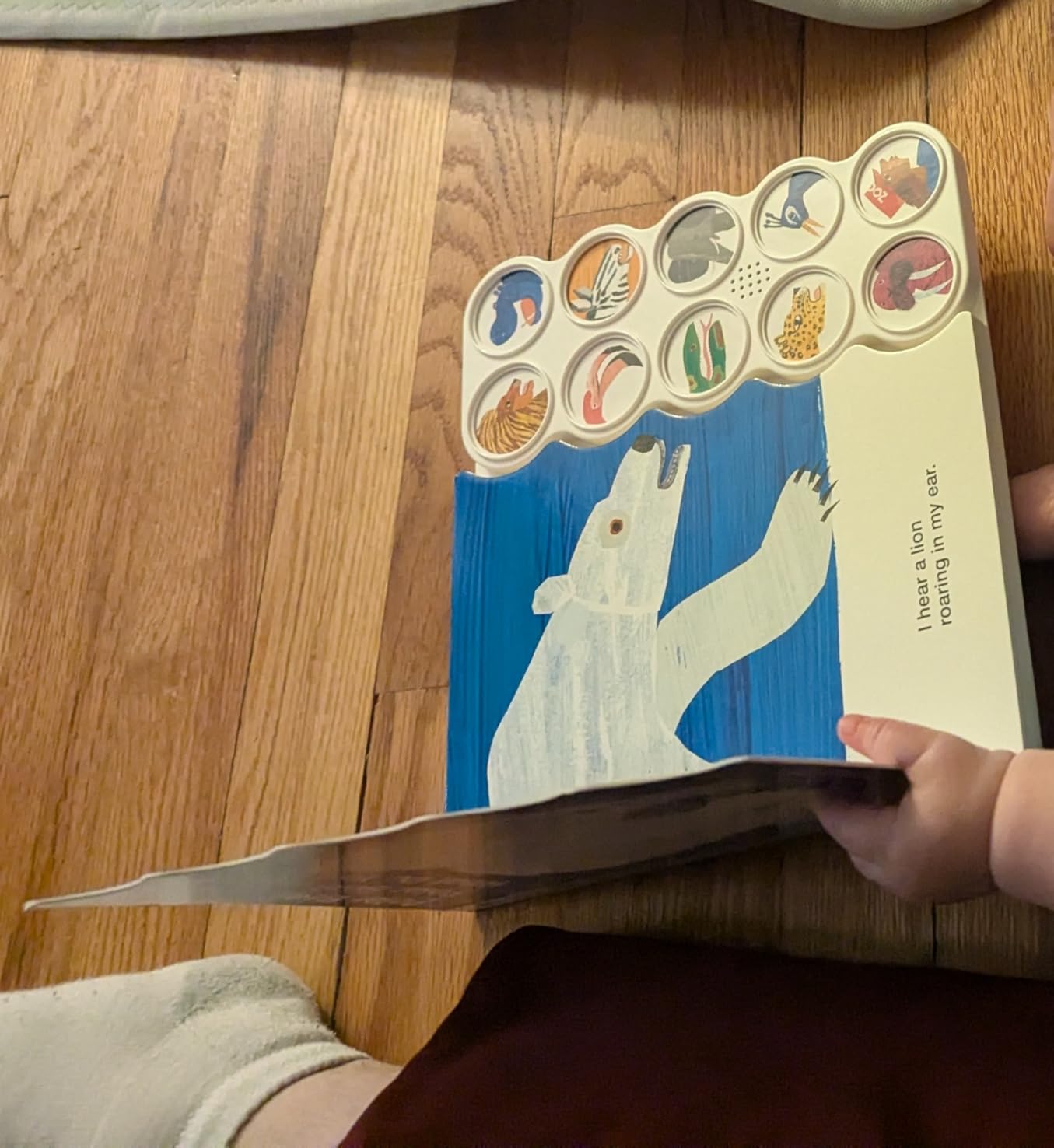
This is the noisy edition of the Eric Carle classic, and the marriage of that iconic collage art with sound buttons is nearly irresistible to a toddler. Each page introduces an animal, and your child finds the matching button on the side panel and presses it to hear the animal’s voice. Ten sounds, ten animals, one very proud child.
The read-aloud rhythm comes straight from the original book’s chain structure, where each animal hears the next. My toddler’s pattern was press, giggle, press again, and then finally let me finish the sentence. That is not a flaw, that is the whole point of a sound book.
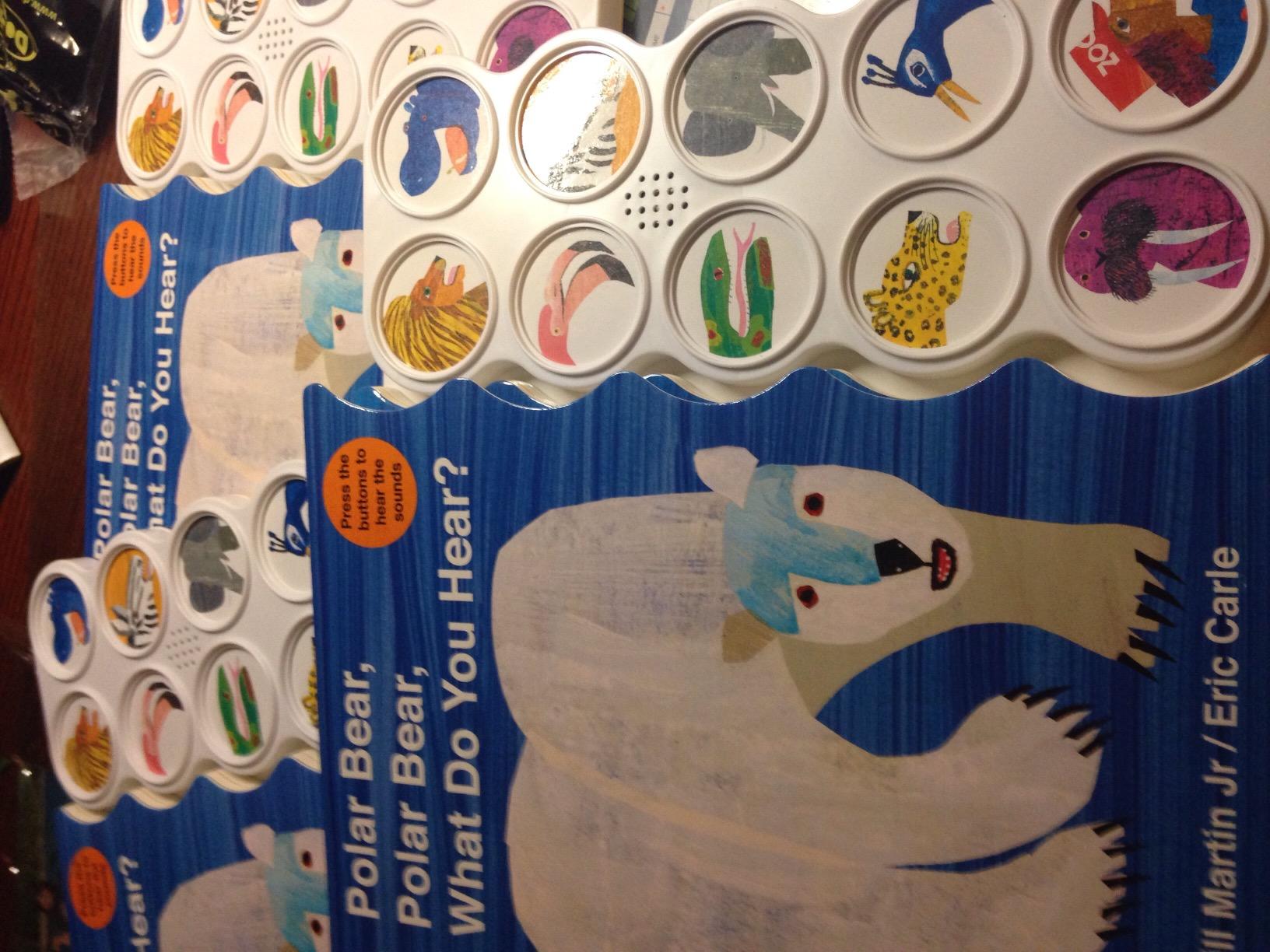
It is a large 10-inch board book with a thick sound panel that has survived being dropped off our couch more times than I can count. The button icons match the animals on the pages, so even pre-verbal kids can hunt-and-match successfully. This is also a genuinely good book for grandparents who want to be invited into the reading ritual.
The complaints in reviews are fair and I experienced all three: some recordings are muffled, a few sounds drift from realistic into cartoon territory, and nothing speaks the animal names, only the sounds. The panel is also the reason the book is heavy for its size, so it is a lap book rather than a carry-along.
Are the sound buttons toddler-proof
The panel itself is tough and the buttons need a deliberate push, which is good for durability but frustrating for very young kids at first. Plan to guide their hand for the first week. Note that sound books use replaceable button-cell batteries, so when sounds fade, swap the batteries before assuming the book broke.
Which is better, this or Around the Farm
Choose this one for the classic story structure and the gorgeous Carle art, with 10 sounds that follow the narrative. Choose Around the Farm if your child mainly wants maximum buttons and realistic noises, since it packs in 30. Many families eventually own both, and they serve different moods.
7. Around the Farm 30-Button Animal Sound Book
World of Eric Carle, Around the Farm 30-Button Animal Sound Book – Great for First Words – PI Kids
PI Kids
World of Eric Carle
24 pages
Ages 1-2
30 sound buttons
Pros
- 30 interactive sound buttons
- Bright Eric Carle illustrations
- Clear realistic animal sounds
- Durable under toddler use
Cons
- Buttons may need a firm press
- Some international copies arrived damaged
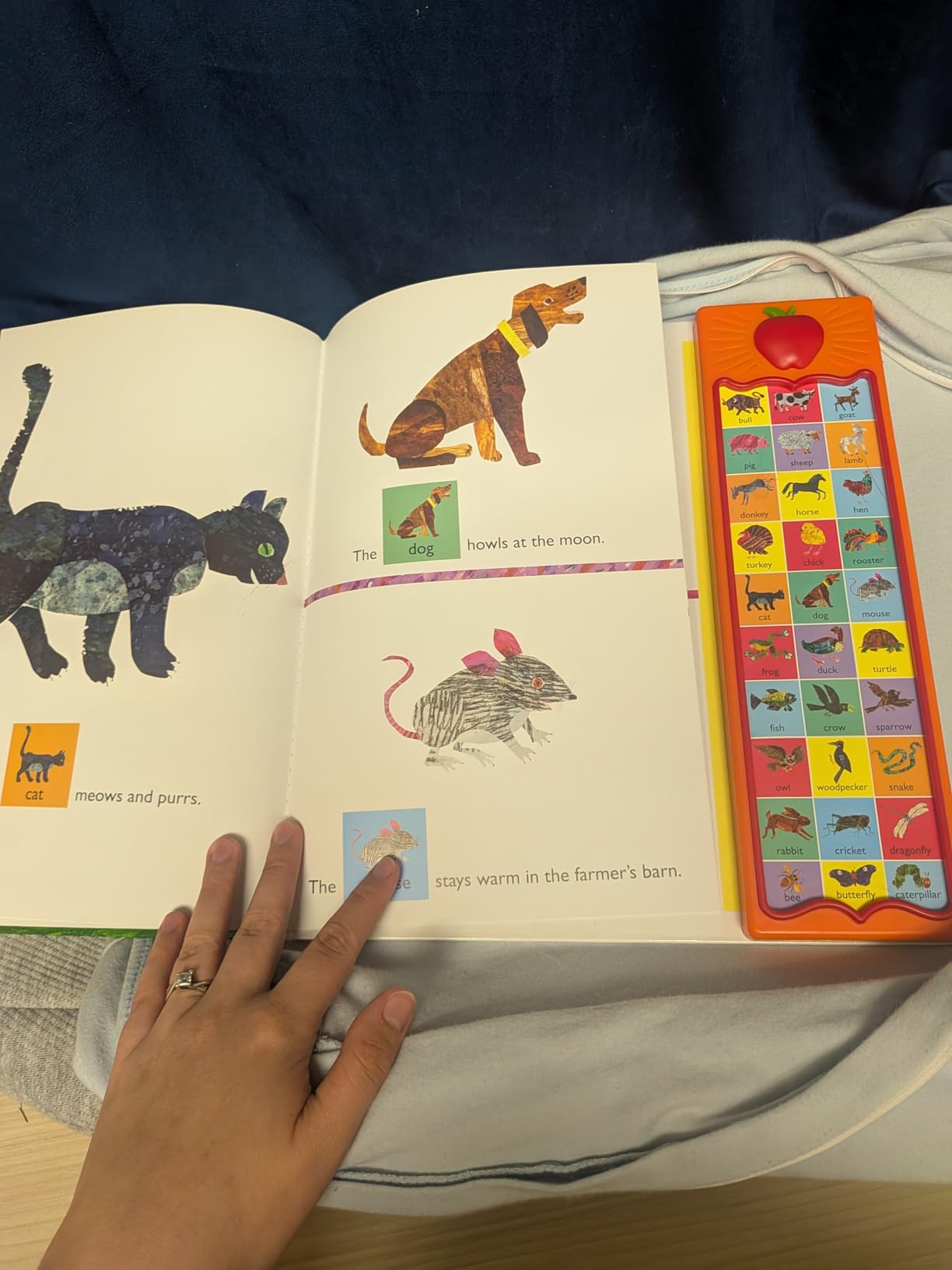
This is the sound book that ended all sound-book debates in our house, and its 27,000-plus ratings suggest we are not alone. Thirty buttons line the side panel, the pages walk through farm and forest animals, and your child hunts for the button that matches the picture. It is a first-words book wearing a noisemaker.
My toddler treated the button grid like a mission. She would scan the icons, press with her whole palm, and beam when the right animal answered. The sounds are clearer and more realistic than most sound books we tried, and there is a Very Hungry Caterpillar cameo hidden in there that delighted her older sibling.
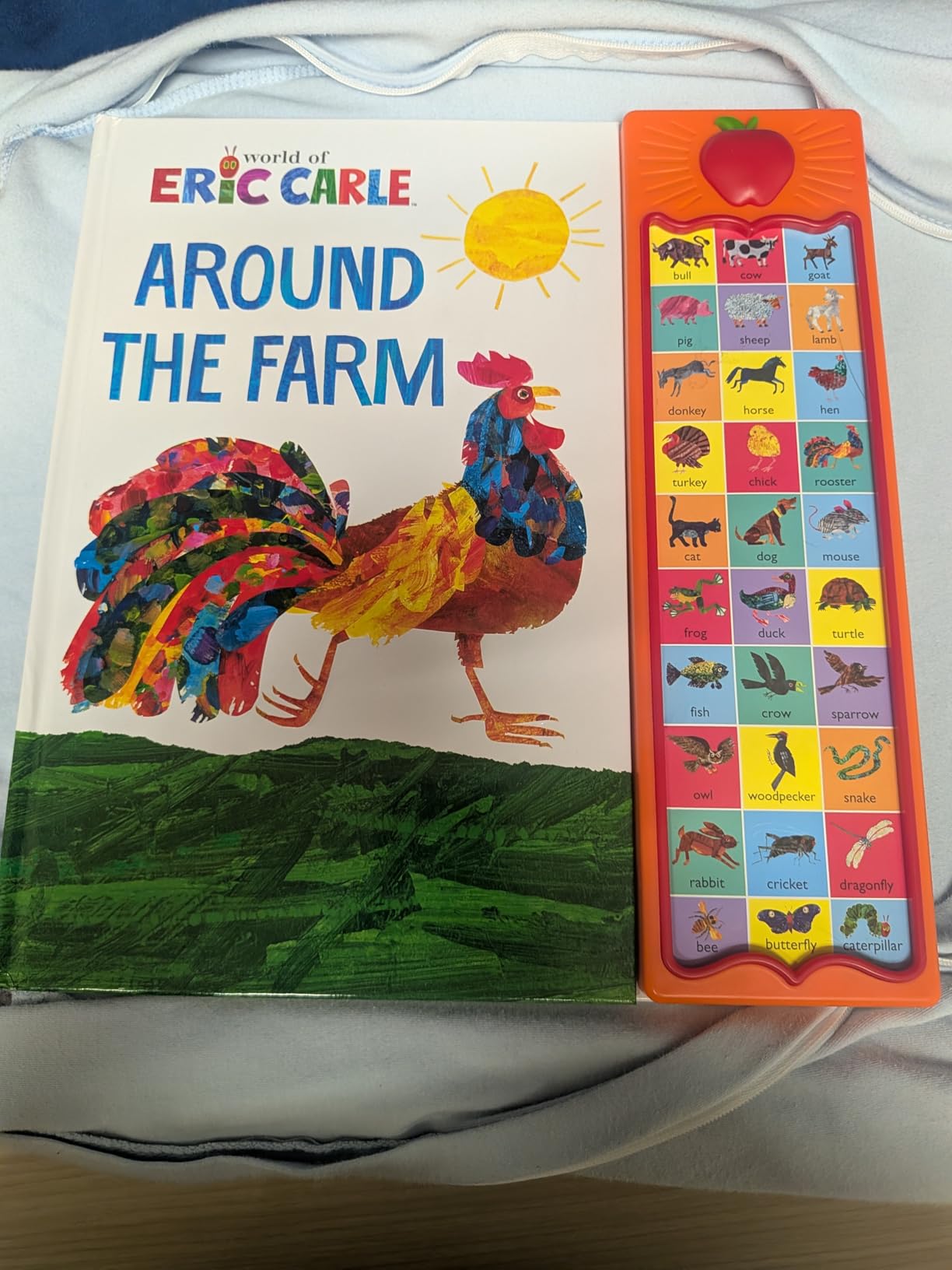
It is a big 11-inch book with a chunky panel, and it has held up to months of full-palm slamming without a single dead button, which is the durability benchmark that matters in this category. The wipe-clean coated pages have shrugged off juice. This is the book I hand to a toddler in the car seat when I need ten uninterrupted minutes.
Two minor issues from our run: the buttons need a firm press, so expect guided pressing until around 18 months, and a few parents reported copies arriving with cosmetic damage in shipping. Neither stopped it from being the most-requested noise-maker we own.
What age is the 30-button book best for
Officially 1 to 2 years, and that is honest, because the text is minimal and the real content is the button matching. It stays useful to around 3 as a first-words and animal-sounds drill, then hands off to story-driven books.
How loud is it and can you control it
Volume is moderate rather than ear-splitting, and there is no volume switch, so location is your only control. It is fantastic for car rides and playrooms, and a poor choice for waiting rooms or a sleeping sibling’s hallway. The battery door is screw-secured, which is a genuine plus over cheap sound books.
8. Green Eggs and Ham with 12 Silly Sounds
Dr. Seuss’s Green Eggs and Ham with 12 Silly Sounds!: An Interactive Read and Listen Book (Dr. Seuss Sound Board Books)
Dr. Seuss
Random House
14 pages
Baby to age 3
12 sound buttons
Pros
- Classic Seuss rhyme with sound effects
- 12 silly sounds add fun
- High quality board format
- Batteries included
Cons
- Story is condensed from the original
- Buttons may need battery activation
This is the gateway-drug version of Green Eggs and Ham, and I mean that as a compliment. The beloved rhyme scheme survives intact in condensed form, and twelve sound buttons punctuate the story with silly effects that your child controls. It is the rare sound book where the language itself is doing half the work.
Reading it aloud is a performance. The anapestic rhythm of Seuss is already engineered for read-alouds, and adding a button press at each sound cue gives a wiggly child a reason to track the page. My four-year-old, who considers himself past board books, commandeered the button assignment job immediately.
It is a 10-inch board book with 14 pages, so it is short, and honestly it needs to be, because the original is 62 pages and this is a tasting portion. Batteries arrived included and working in our copy. Construction matches the Random House sound-book standard, with a solid panel and pages that have survived enthusiastic slapping.
Be clear-eyed before buying: this is an abbreviated adaptation, not the full classic, and some parents felt shortchanged by that. A few reviewers also had to pull the battery tab or reset the panel before sounds fired. Purists should buy the original and let this one be the fun duplicate at grandma’s house.
What age is the Green Eggs sound book best for
It is labeled baby to 3 years, but the real audience is 18 months to 4 years, older than most books here, because the humor and rhyme reward kids who can anticipate. It is my top pick from this list as a birthday gift, since Seuss familiarity makes it feel like a real present rather than a baby thing.
Is the condensed story a dealbreaker
Not for toddlers, who experience it as a complete book rather than an adaptation. It becomes one if you are buying it as a replacement for the full classic. Our house treats this as the interactive version and the paperback as the bedtime version, and that split works well.
9. Let’s Learn ABCs Interactive Sound Book
Let’s Learn ABCs – Interactive Toddler Sound Book with 27 Buttons | Tracing, Alphabet Song, Children’s Board Book | Learn Letters & First Words | Fun Learning Activities for Boys & Girls
Kidsbooks Publishing
Listen and Learn series
24 pages
Ages 1-3
27 buttons plus alphabet song
Pros
- 27 sound buttons one per letter
- Includes alphabet song
- Letter tracing activities
- Bright engaging illustrations
Cons
- Some example words break phonics rules
- Song uses the older alphabet version
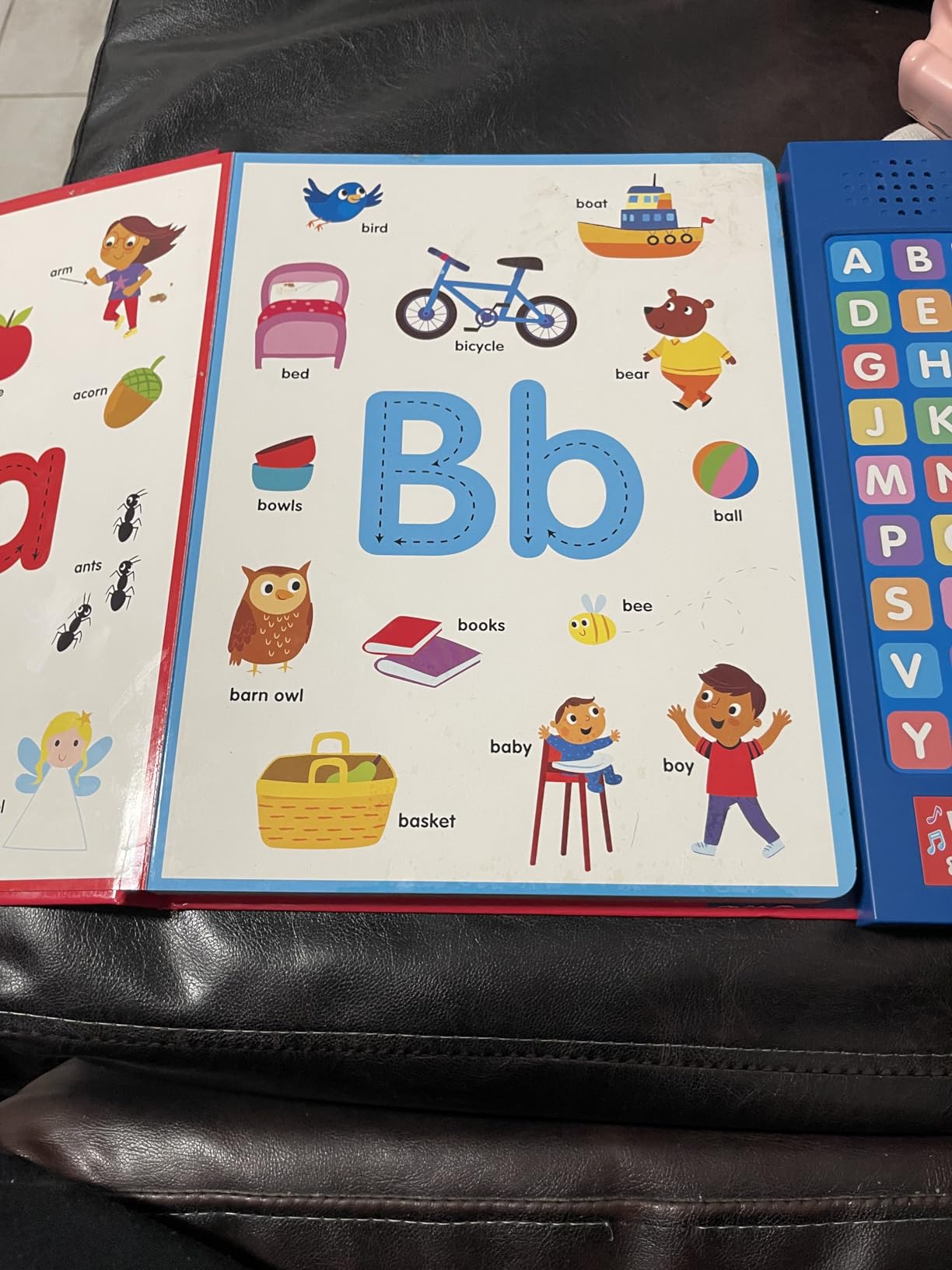
Let’s Learn ABCs was the book that taught my toddler to hunt for letters, because pressing the J button and hearing the letter name is deeply satisfying to a two-year-old. There are 27 buttons, one per letter plus the alphabet song, tracing grooves for finger practice, and bright illustration spreads for each letter.
As a read-aloud it works differently from the story books here. You are not narrating a plot, you are running a duet: I said the letter, she pressed it, and the book confirmed. That back-and-forth is exactly the kind of participation that keeps a toddler anchored to the page.
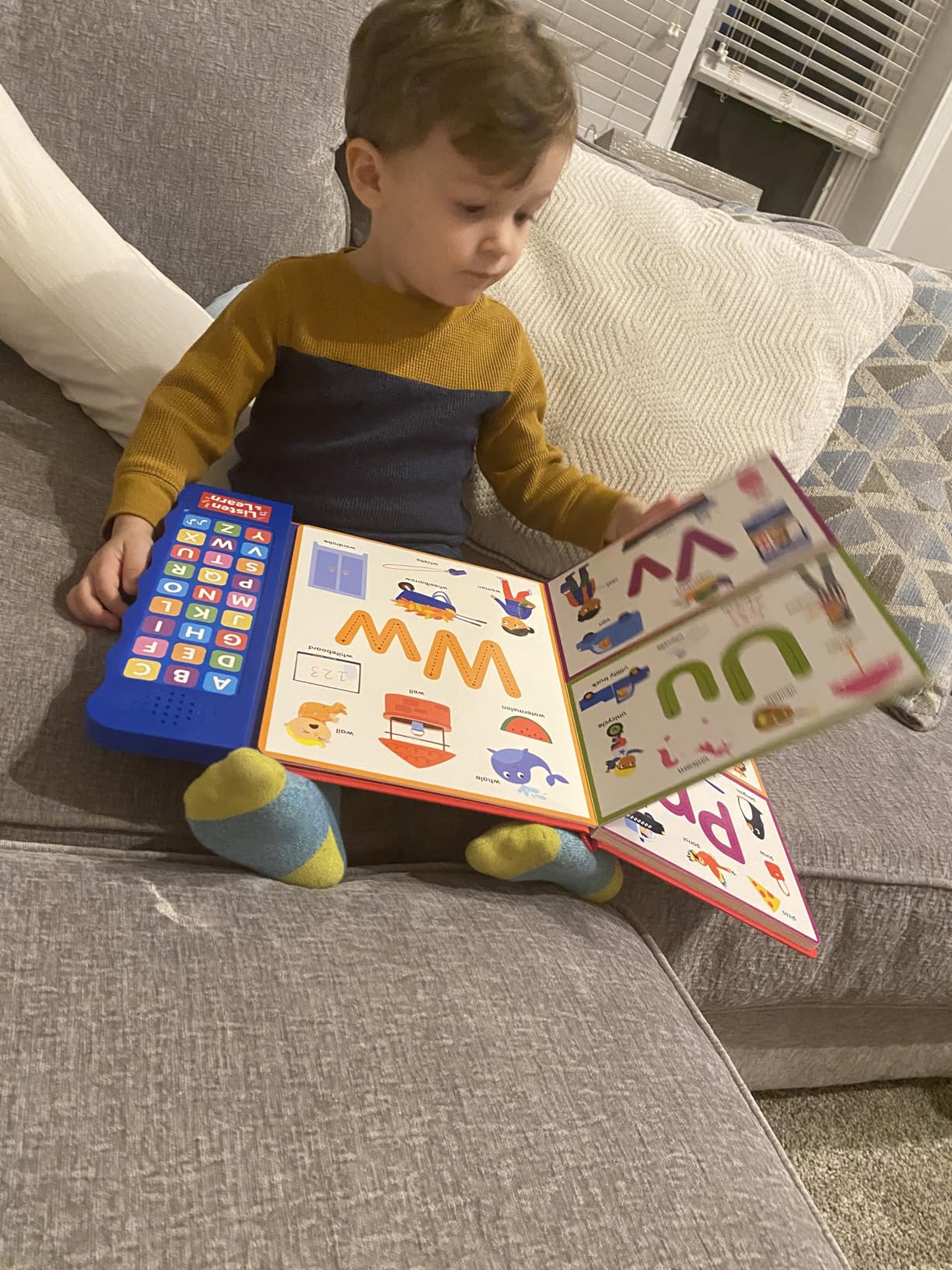
It is an 11.8-inch square board book, the biggest on this list, with a chunky panel that has handled daily button-mashing for months. The tracing element is a genuine bonus, because running a finger over letter shapes is a pre-writing skill that fits naturally between button presses.
Now the honest part, because this book has a real known flaw. Some example words use letter names rather than pure sounds, so G is for giraffe pronounced with a j sound, which conflicts with how phonics programs teach. The alphabet song is also the older version. Use it for letter recognition and it is excellent; use it as your phonics curriculum and it will fight you.
What age is the ABC sound book best for
Ages 1 to 3 on the label, and the tracing and letter-hunting really peak from about 2 to 3 years old. Earlier than that, treat it as a button toy with incidental letters, which is still a perfectly good time.
Can it actually teach letter sounds
It teaches letter names, recognition, and alphabetical order very well, and those matter. Pure phonics sounds are where it is unreliable, so if your preschool is teaching sounds-first, use this book for recognition and do the sounds yourself. Parents who expected a full phonics tool were the source of most negative reviews.
10. Babies Love Learning 4-Book Lift-a-Flap Set
4 Pack Babies Love Learning Lift-a-Flap Boxed Set: First Words, Animals, Colors, and Things That Go (Chunky Lift a Flap)
Cottage Door Press
4 chunky board books
48 pages total
Baby to age 2
First Words Animals Colors Things That Go
Pros
- Thick flaps that resist bending and ripping
- Single-flap pages easy for babies
- Four titles in one gift set
- Colorful simple illustrations
Cons
- Binding can give out after months of use
- Busy pages with too many objects
This four-pack is what I now give at every baby shower, because it solves the hardest problem in toddler books: flaps that survive. Each small book covers one theme, First Words, Animals, Colors, or Things That Go, and every spread has a single chunky flap sized for a whole baby hand rather than fingertips.
My one-year-old tester could operate these flaps alone on day one, which almost never happens, and that independence is the entire point. The text is a simple question per page, so the read-aloud script writes itself: ask, let them lift, name what appeared together. Repeat forever.
Construction is the standout, with noticeably thicker flaps than the classic lift-the-flap books above and a 90 percent five-star rating across the set. The 5.2-inch size is perfect for diaper bags and for small hands to carry around the house like treasure. Bilingual editions exist if you want them.
Two flaws worth knowing. The binding on one of our four books loosened after a couple of months of hard daily use, which multiple parents also mention, so some shelf-repair competence helps. And a few spreads are busier than I would like, with too many objects competing under one flap.
What age is the 4-book set best for
Baby to 2 years is the official range and it is accurate, with the sweet spot around 9 to 18 months. It is the earliest-appropriate pick on this list and the best value way to cover the entire flap-book phase in one purchase.
How durable are these flaps really
They are the thickest flaps we tested, and the single-flap-per-page design means fewer stress points than books with multiple small tabs. Expect the covers and binding to age faster than the flaps themselves. For a destructive toddler, this set is the safest flap bet available.
11. LeapFrog 100 Animals Book
LeapFrog 100 Animals Book, Green
LeapFrog by VTech
6 double-sided pages
3 play modes
Ages 18-48 months
Bilingual English and Spanish
Pros
- Fully bilingual English and Spanish
- Three play modes including fun facts
- Durable plastic survives drops and daily use
- Portable for travel
Cons
- Demo batteries may need replacing
- May arrive without retail box
The LeapFrog 100 Animals Book is the most-owned interactive book in America, with over 146,000 ratings, and after months with it I understand why. Touch a picture and the book speaks: animal names, animal sounds, or fun facts depending on the mode slider, in English or Spanish with the flick of a switch.
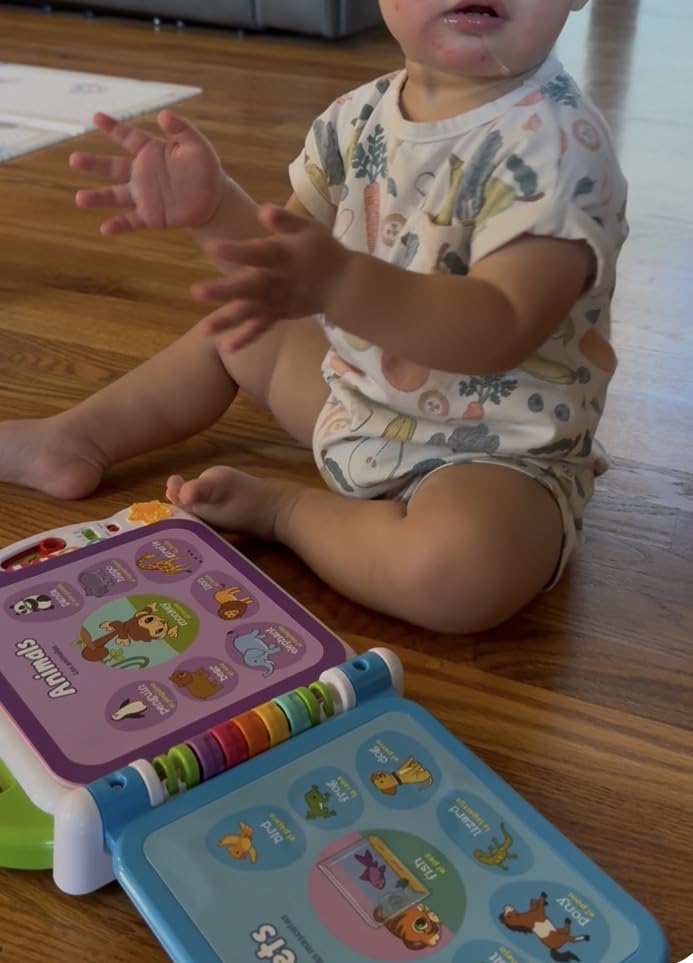
My two-year-old calls it “the animal book” and uses it as a solo activity while I make dinner, which is a different and equally valuable role than a lap read-aloud. The three modes genuinely change the experience, because name-mode becomes a quiz game and facts-mode gave my four-year-old actual early-science trivia to repeat at dinner.
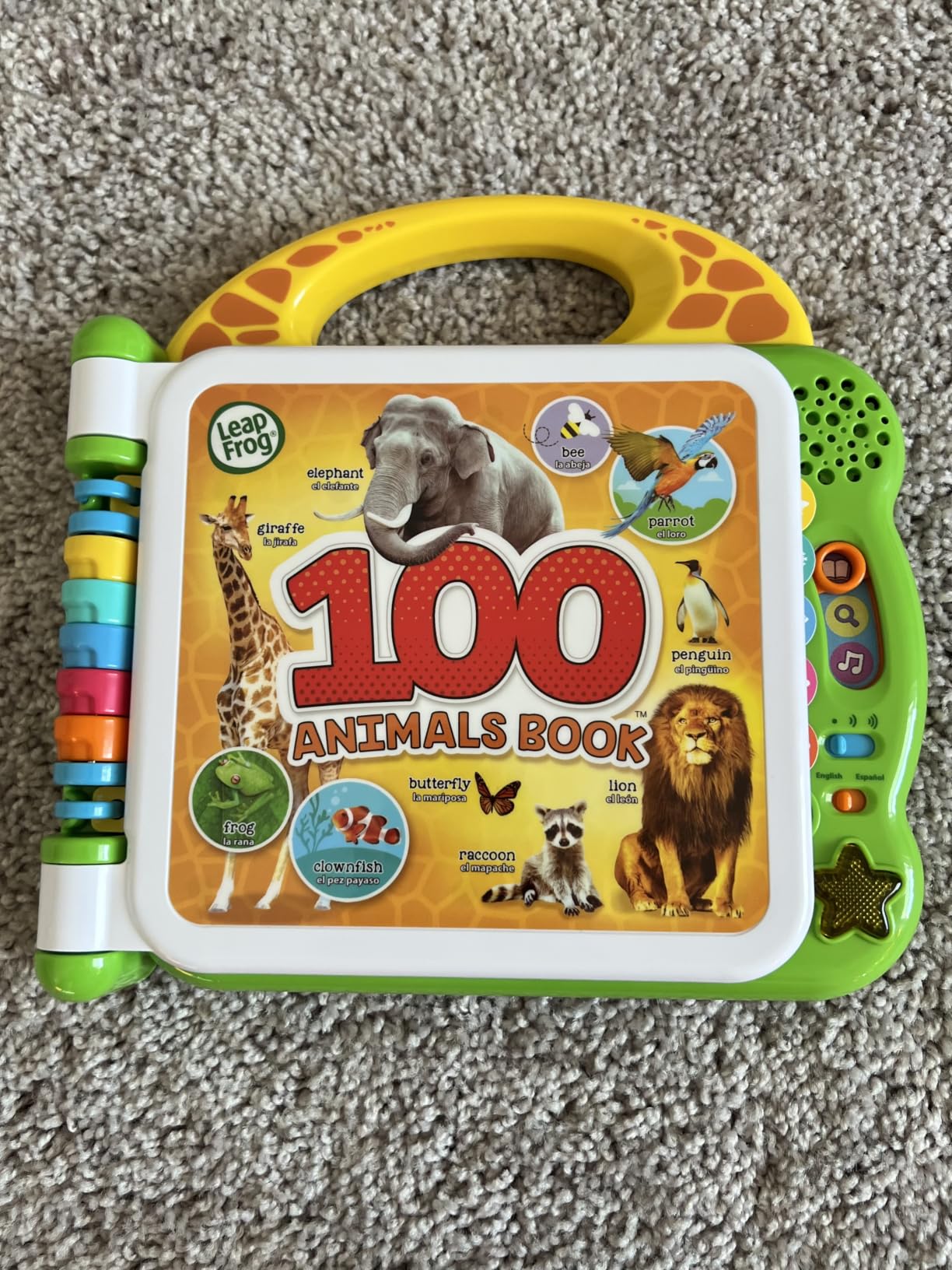
Physically it is plastic rather than cardboard, and that is its superpower: it has been dropped, sat on, and taken on two road trips with zero damage. The pages are six double-sided interactive spreads organized by habitat, and the whole thing wipes clean. Two AA batteries are included for demo, and ours were still going months later.
The criticisms are minor but real. The demo batteries are demo batteries, so buy a pack of AAs with it, and some orders arrive without retail packaging, which matters only if this is a gift. It is also the most expensive item on this list, though it is also the one with the longest usable lifespan, stretching to 48 months.
What age is the LeapFrog 100 Animals Book best for
The manufacturer range is 18 months to 4 years, which is the widest on this list and the best argument for its price. Under 18 months the touch responses are too abstract for most babies. From about 2 onward, especially with siblings of different ages, it earns its keep daily.
Is a talking book still a real read-aloud
It is, if you stay in the loop. I narrate the prompts, my child touches the pictures, and the book confirms, which is the same call-and-response structure as a flap book with better pronunciation than mine in Spanish. Treated as a babysitter it becomes screen-adjacent, so sit down with it at least half the time.
How to Choose Interactive Read-Aloud Books for Toddlers
After eleven books and one very sticky testing period, here is what actually predicts whether an interactive book becomes a favorite or clutter.
Match the interactive type to your child
There are four broad types in this roundup and they suit different temperaments. Lift-the-flap books like Dear Zoo and Where’s Spot? reward curiosity and suit the youngest readers. Action-and-imagination books like Don’t Push the Button! and Stir Crack Whisk Bake suit kids who cannot sit still. Sound books reward cause-and-effect learners who love pressing things. Electronic learning books suit toddlers who want independence.
The cheapest experiment is to hand your child one of each type at the library and watch which one they carry to the couch. Repeat that purchase, not the award stickers.
Durability decides everything
Forum threads full of parents repeat one complaint: flaps die fast. In our tests, thick single flaps like the Babies Love Learning set outlasted small multi-tab pages by a wide margin, and full-page-turn interactives like Peek-a Who? outlasted both because there is nothing glued on to tear.
Two protective habits work. Run a strip of clear packing tape along each flap hinge on day one, and save high-flap books for supervised reading rather than crib time. For truly destructive toddlers, go plastic with the LeapFrog or go die-cut with Peek-a Who.
Repetition and rhyme are features, not flaws
Every book your toddler demands fifty times a day is doing quiet developmental work. Predictable refrains let a child memorize and “read” along, which builds the confidence that precedes actual decoding, and rhyming text trains the ear for sound patterns that later become phonics.
So when a book feels repetitive to you, that is the point. Dear Zoo and Polar Bear, Polar Bear are engineered this way, and it is why they have survived decades of toddlers.
Sound books: batteries, volume, and realism
Sound books are the most requested and most complained-about category, so go in with eyes open. Budget for replacement batteries, since a “broken” sound book is usually a dead battery, and check that the battery door is screw-secured. Confirm there is a real on-off switch, because there is no volume control on most of these.
Sound quality varies more than price suggests. Around the Farm had the clearest, most realistic animal sounds we heard, while Polar Bear, Polar Bear was muffled on a couple of buttons. Realism matters more to toddlers than adults expect.
One-on-one versus group storytime
Big formats read well to groups, and small formats travel well but die in a circle of six kids. For group storytime I would pick Don’t Push the Button!, Green Eggs and Ham, or the large Around the Farm. For bedtime laps, Dear Zoo, Peek-a Who?, and the four-pack are the right size.
Teachers and librarians are the best free resource here, and their consensus matches ours: the best group books have a repeated line the whole room can chant.
Age bands that actually matter
6 to 12 months: choose die-cut and single-flap books with nothing to rip, so Peek-a Who? and the Babies Love Learning set. Your goal is association, not comprehension.
12 to 24 months: the golden flap-book window. Dear Zoo, Where’s Spot?, and Around the Farm all peak here, because lifting, pressing, and guessing are all thrilling new powers.
2 to 3 years: hand them the plot-and-participation books, Don’t Push the Button!, Stir Crack Whisk Bake, and the ABC sound book. This is also when the LeapFrog becomes a solo activity.
3 to 4 years: the condensed Green Eggs and Ham and the LeapFrog facts mode keep an older sibling engaged while still working for a younger one, which is the mixed-age problem every parent of two faces.
Frequently Asked Questions
What is the best interactive book for toddlers?
Dear Zoo by Rod Campbell is the best overall pick, with a 4.8-star rating from over 32,000 parents. Its big sturdy flaps, repetitive text, and animal-reveal surprises make it the easiest interactive read-aloud for toddlers aged 1 to 3.
What are some good read aloud books for toddlers?
The strongest read-aloud titles for toddlers are Dear Zoo, Where’s Spot?, Peek-a Who?, Don’t Push the Button!, Polar Bear What Do You Hear?, Green Eggs and Ham, and Stir Crack Whisk Bake. Each one uses repetition, rhyme, or a hands-on action that keeps a toddler involved in the story.
What are some good interactive books for toddlers?
Good interactive toddler books span four types: lift-the-flap (Dear Zoo, Where’s Spot?, Babies Love Learning), sound-button (Around the Farm, Polar Bear Polar Bear, Let’s Learn ABCs), action and pretend (Don’t Push the Button!, Stir Crack Whisk Bake), and electronic learning (LeapFrog 100 Animals Book).
What are some interactive books I can read aloud?
You can read Dear Zoo, Where’s Spot?, Peek-a Who?, and Green Eggs and Ham aloud with flaps and sound buttons punctuating the story, or read Don’t Push the Button! and Stir Crack Whisk Bake aloud while your child performs the actions on each page.
Final Verdict: The Books We Keep Reaching For
Eleven books later, three never left the rotation. Dear Zoo is the best interactive read-aloud book for toddlers overall, because repetition plus big flaps is a formula no toddler resists. Peek-a Who? is the unbeatable cheap thrill and the safest first book. The LeapFrog 100 Animals Book earns its higher price by lasting from 18 months to four years and covering two languages.
Match the book to your child rather than the awards: flaps for the curious, buttons for the cause-and-effect obsessed, action books for the wigglers. Whichever you pick, the win comes from reading it together, on repeat, long after you are sick of it. That repetition is where the language growth actually happens.