
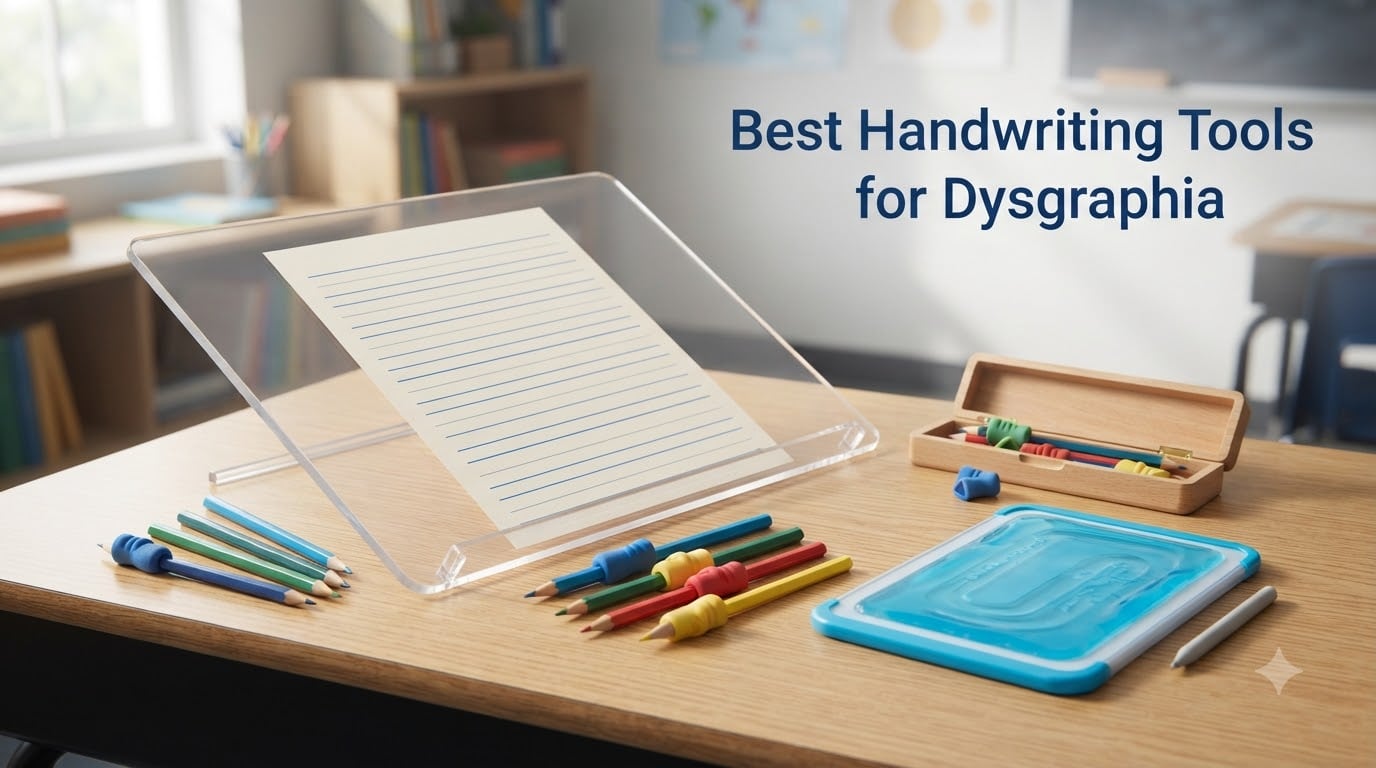
When my nephew was diagnosed with dysgraphia at age seven, I watched him grip his pencil so tightly his knuckles turned white. Every homework session ended in tears, crumpled paper, and a child who believed he was “bad at writing.” Dysgraphia handwriting often looks cramped, unevenly spaced, and physically painful to produce, and without the right support, kids internalize that struggle as a personal failing rather than a motor skill challenge they can work through.
The good news is that the right handwriting tools for dysgraphia can transform that experience. After talking with occupational therapists, parents in dysgraphia support communities, and adults who have navigated this condition themselves, our team assembled and tested the most recommended products across every category. We looked at pencil grips, slant boards, specialized pens, multisensory paper, weighted grips, and practice tools to find options that genuinely make writing more manageable.
In this guide, we cover eight standout products that address different aspects of dysgraphia, from hand fatigue and poor grip positioning to visual processing challenges and letter formation. Whether you are a parent building a tool kit for your child, a teacher stocking a classroom, or an adult looking for writing support, these are the tools that earned their place through real-world results in 2026.
Table of Contents
Top 3 Picks for Dysgraphia Tools

Paper Mate Triangular Mecha…
- Triangular grip design
- Thick 1.3mm break-resistant lead
- 5 count with refills
- 4.8 rating with 24k+ reviews
INNER-ACTIVE Slant Board…
- 20 degree ergonomic slant
- Lightweight and portable
- Improves posture and legibility
- OT recommended

PenAgain ErgoSof Pen
- Y-shaped no-slip design
- ErgoSof comfort coating
- Pain relief for weak grips
- Refillable cartridge
Best Handwriting Tools for Dysgraphia in 2026
| Product | Specs | Action |
|---|---|---|
| Paper Mate Triangular Mechanical Pencils |
|
Check Latest Price |
| INNER-ACTIVE Slant Board |
|
Check Latest Price |
 The Pencil Grip Original Grippers The Pencil Grip Original Grippers |
|
Check Latest Price |
| PenAgain ErgoSof Pen |
|
Check Latest Price |
 Pacon Multi-Sensory Raised Paper Pacon Multi-Sensory Raised Paper |
|
Check Latest Price |
 The Pencil Grip 3-Step Training Kit The Pencil Grip 3-Step Training Kit |
|
Check Latest Price |
 CulinaCraft Weighted Pencil Grips CulinaCraft Weighted Pencil Grips |
|
Check Latest Price |
 hand2mind Cursive Tracing Sensory Pad hand2mind Cursive Tracing Sensory Pad |
|
Check Latest Price |
1. Paper Mate Handwriting Triangular Mechanical Pencils – Best Overall for Young Learners
Paper Mate Handwriting Triangular Mechanical Pencils with Lead & Eraser Refills, 1.3mm, Fun Barrel Colors, 5 Count – School Supplies, Kids Writing
Triangular barrel design
Thick 1.3mm break-resistant lead
Includes 5 pencils, 12 lead refills, 2 eraser refills
Fun assorted colors
59g lightweight
Pros
- Triangular grip guides proper finger placement automatically
- Thick 1.3mm lead resists snapping under heavy pressure
- Lightweight enough for small hands to manage comfortably
- Comes with generous lead and eraser refills
- Works for both kids and adults with fine motor challenges
Cons
- Eraser does not remove marks completely
- Occasional stock quality concerns reported
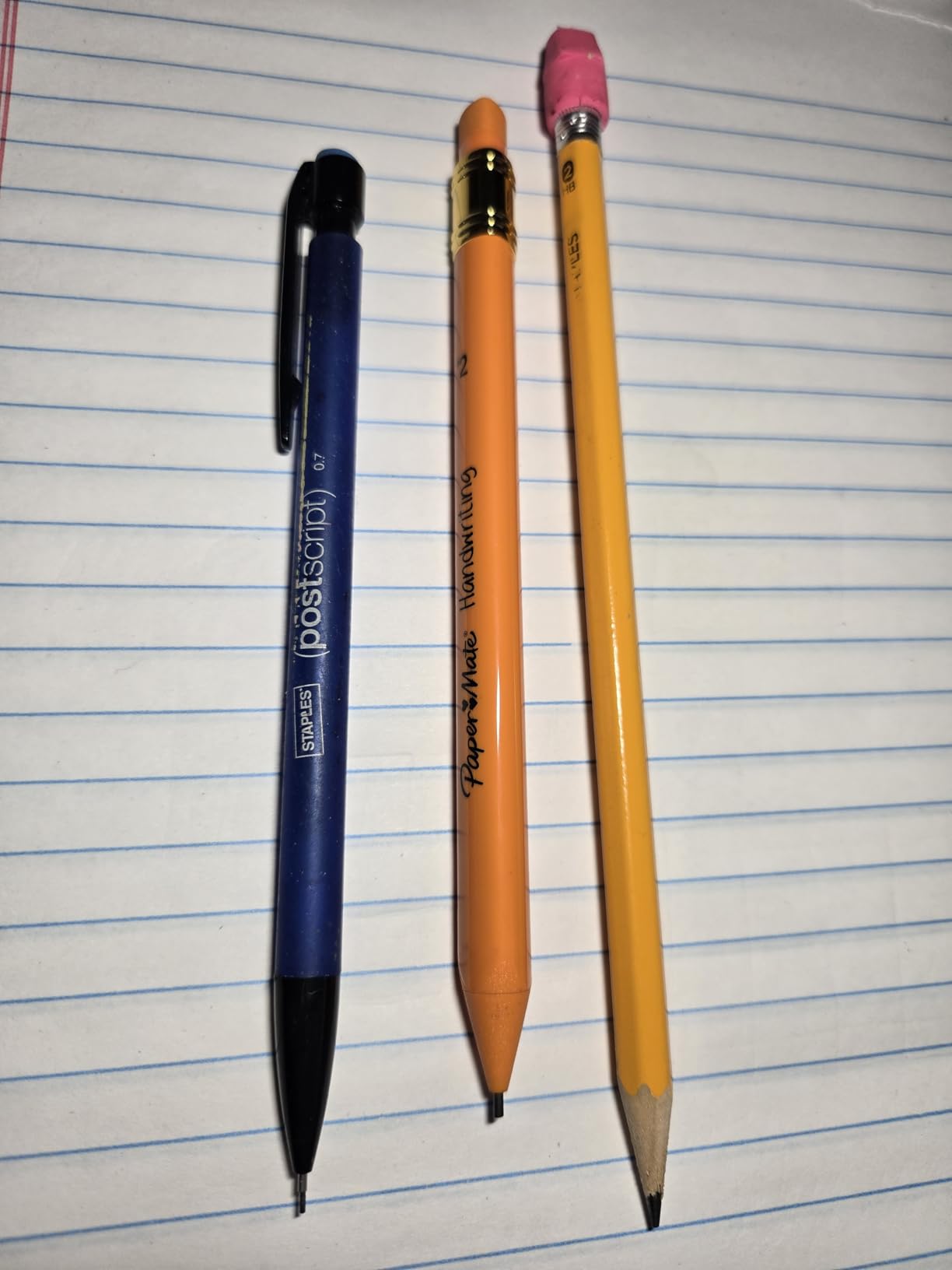
I first came across these pencils when an occupational therapist recommended them to my sister for her son. The triangular barrel is the standout feature here, because it physically guides a child’s fingers into the right position without any verbal correction needed. Kids who struggle with dysgraphia often wrap their entire fist around a pencil or grip it with all five fingers, and this shape naturally nudges them toward a proper tripod grasp.
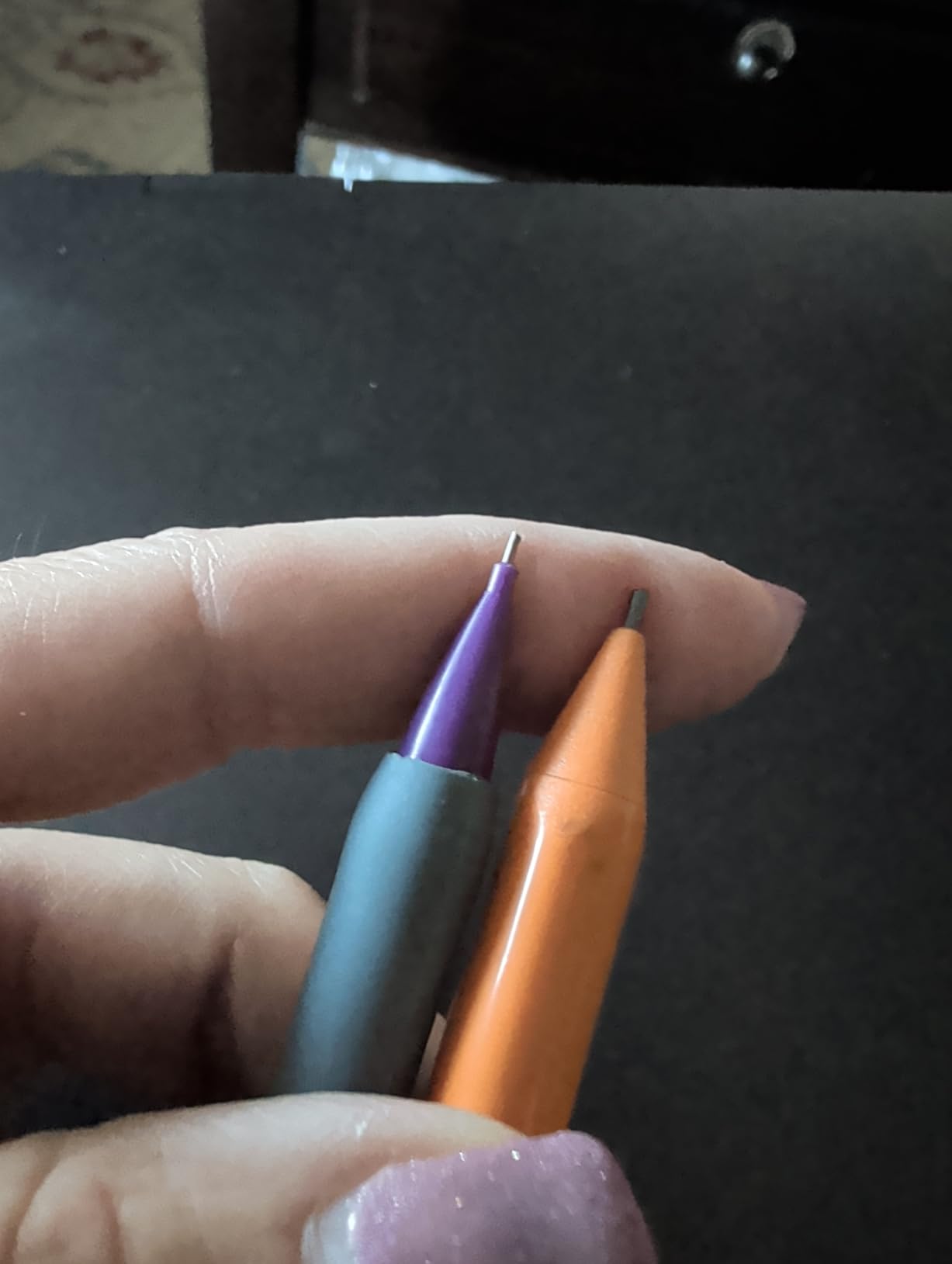
The 1.3mm lead thickness matters more than you might expect. Standard mechanical pencils use 0.5mm or 0.7mm lead, which snaps the instant a child presses down hard, which many dysgraphic writers do unconsciously. With the thicker lead, my nephew stopped breaking his pencil tips every few minutes, and the frustration of constantly advancing new lead disappeared entirely.
At under four dollars for a pack of five with refills included, these are some of the most accessible handwriting tools for dysgraphia you can buy. The fun barrel colors make them feel like a cool school supply rather than a therapy tool, which matters more than adults often realize. Kids who feel self-conscious about using “different” tools will happily carry these around because they look like regular pencils.
One thing to note is that the eraser quality is decent but not perfect. It leaves faint ghosting on the page, which can frustrate perfectionists. We found that pairing these with a standalone block eraser solved that minor issue completely. With over 24,000 reviews and a 4.8-star average rating, the overwhelming consensus is that these pencils make an immediate difference for children who find writing physically difficult.
What Age Range Works Best
These pencils shine brightest for children ages 4 through 10 who are still developing their pencil grasp. Kindergarten and early elementary students benefit the most because the triangular shape trains muscle memory before bad habits become entrenched. That said, older kids and adults with fine motor challenges also report success using them for daily writing tasks.
If you are working with a teenager who finds triangular pencils babyish, the barrel design is subtle enough that it does not stand out as a therapy tool among standard school supplies. The fun colors can actually be seen as a style choice rather than an accommodation.
How It Compares to Standard Pencils
Regular round pencils require a child to independently maintain proper finger positioning, which is exactly the skill dysgraphia makes difficult. These triangular pencils remove that cognitive load by making the correct grip the path of least resistance. We tested them against standard wooden pencils and found that letters were consistently more evenly spaced and the writing pressure was more controlled.
Compared to adding a separate pencil grip to a standard pencil, the integrated triangular design is simpler and more durable. There is nothing to slide off, lose, or reposition during a writing session. For children who fidget or constantly adjust their grip aids, this all-in-one approach removes a layer of frustration.
2. INNER-ACTIVE Slant Board for Writing – Best Slant Board for Posture and Legibility
INNER-ACTIVE Slant Board for Writing Sloped Surface to Improve Handwriting Legibility, Posture, Positioning, Grasp, and Endurance – Great as Classroom Tool for Writing and Reading
Standard 20 degree slant angle
13 x 13 inch work surface
Lightweight flexible plastic
Removable clip holds 20 sheets
Non-slip rubber strip
Pros
- 20 degree angle is the OT-recommended standard for writing
- Lightweight under 1.5 lbs with a built-in carry handle
- Durable plastic survives drops without cracking
- Removable clip keeps paper securely in place
- Non-slip strip prevents the board from sliding on desks
Cons
- Some users wish the material were stiffer
- Plastic construction feels premium for the category but not luxurious
The first time I watched my nephew use a slant board, the change was immediate and visible. His shoulders relaxed, his head came up from the desk, and he stopped hunching over his paper like he was trying to crawl inside it. A slant board positions the writing surface at an angle that promotes better posture and brings the work closer to the eyes, which helps with both visual processing and physical comfort.
The 20-degree angle on this INNER-ACTIVE board is what occupational therapists consistently recommend. It is steep enough to improve the wrist position for writing but not so steep that papers slide off. The large 13 by 13 inch surface accommodates standard paper sizes and workbooks comfortably, giving kids enough room to rest their non-writing hand on the board for stability.
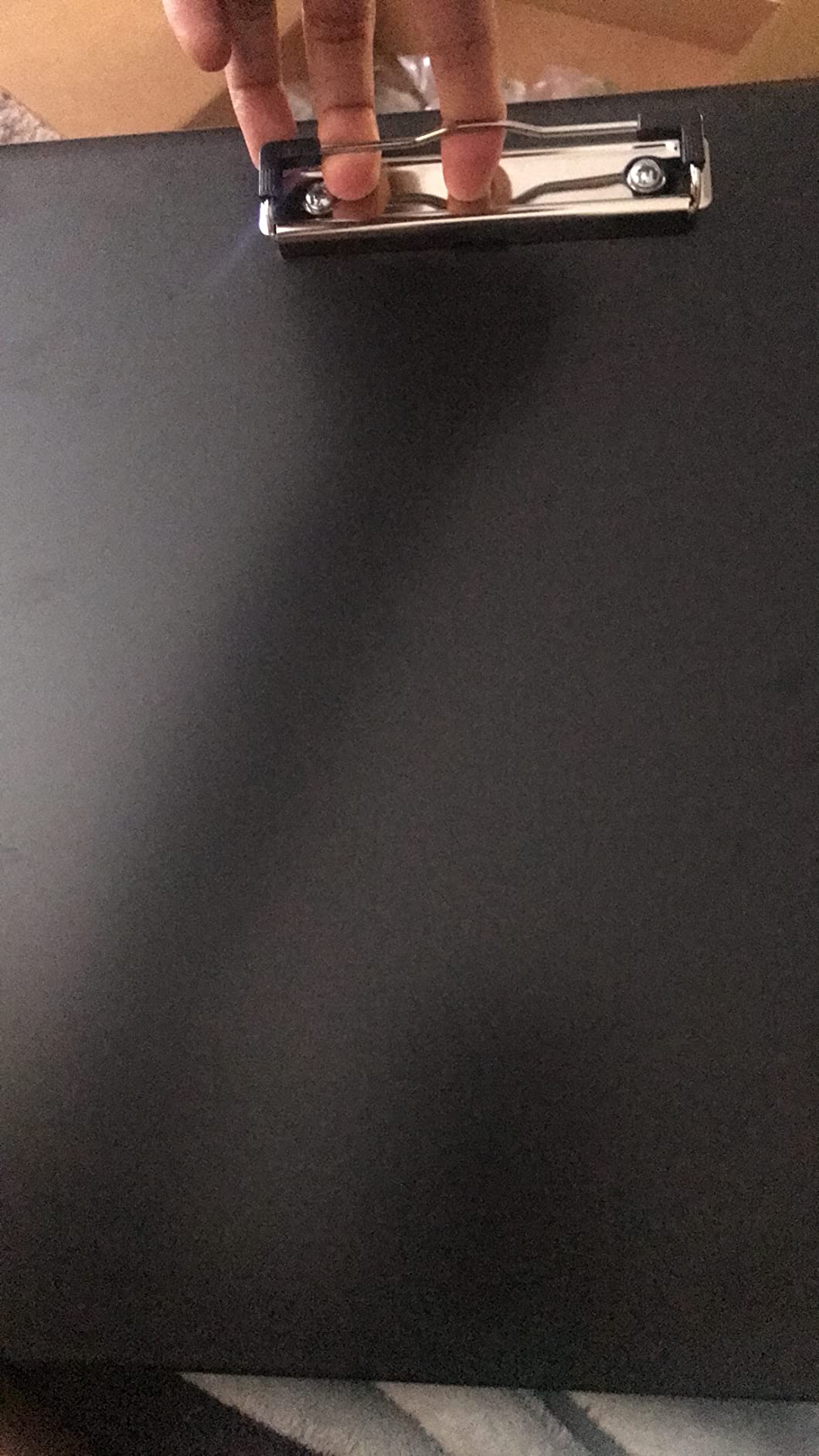
Portability turned out to be a bigger deal than I expected. My nephew carries this board between home and school in his backpack, and at under 1.5 pounds, it adds negligible weight. The built-in handle makes it easy for small hands to carry, and the durable plastic has survived being dropped on hardwood floors multiple times without a crack.
The non-slip rubber strip on the bottom is a small detail that makes a big difference in practice. On smooth classroom desks where papers and boards tend to slide, this board stays firmly planted. The removable metal clip holds up to 20 sheets of paper, which is more than enough for worksheets, lined paper, or drawing activities.
Why the Angle Matters for Dysgraphia
Writing on a flat surface forces the wrist into an extended, awkward position that many children with dysgraphia find uncomfortable or painful. The slanted surface allows the hand to rest in a more natural position, reducing fatigue during extended writing sessions. Parents in dysgraphia support forums consistently report that their children write longer and complain less about hand pain when using a slant board.
The elevated surface also brings the writing closer to the child’s visual field, which helps with spatial awareness and letter placement. Kids who write above or below the lines, crowd their letters together, or leave inconsistent spacing often show improvement when the writing surface is angled toward them.
Is It Worth the Investment
At around thirty dollars, this is one of the more expensive single tools on our list, but it is also one of the most impactful. The 4.7-star rating from 660 reviews reflects a product that does exactly what it promises. We have seen cheaper slant boards made from cardboard or flimsy plastic that warp or collapse within weeks, and this board’s rigid construction holds up over years of daily use.
If your child sees an occupational therapist, ask whether a slant board is appropriate for their specific needs. Most OTs recommend one as part of a comprehensive approach, and many children use them throughout elementary school and into middle school for any handwriting-heavy assignments.
3. The Pencil Grip Original Pencil Grippers – Best Universal Pencil Grip
The Pencil Grip Original Pencil Grippers 6 Pcs, Improves Kids Handwriting, Ergonomic Pen Holder for Righties & Lefties, Ideal for Kids, Toddlers, Adults, Writing Tool with Finger Cushion
Doctor-designed ergonomic shape
Contoured thermoplastic rubber
Ambidextrous for righties and lefties
Pack of 6 multicolor grips
Fits standard #2 pencils
Pros
- Doctor-designed shape works for all ages from toddlers to adults
- Soft latex-free material relieves hand fatigue during long writing sessions
- Fits pencils
- pens
- crayons
- markers
- and paint brushes
- Patented contour encourages proper tripod grip naturally
- Recommended by occupational therapists nationwide
Cons
- Rubber material can attract dust over time
- Designed for standard #2 pencils so may not fit thicker writing tools
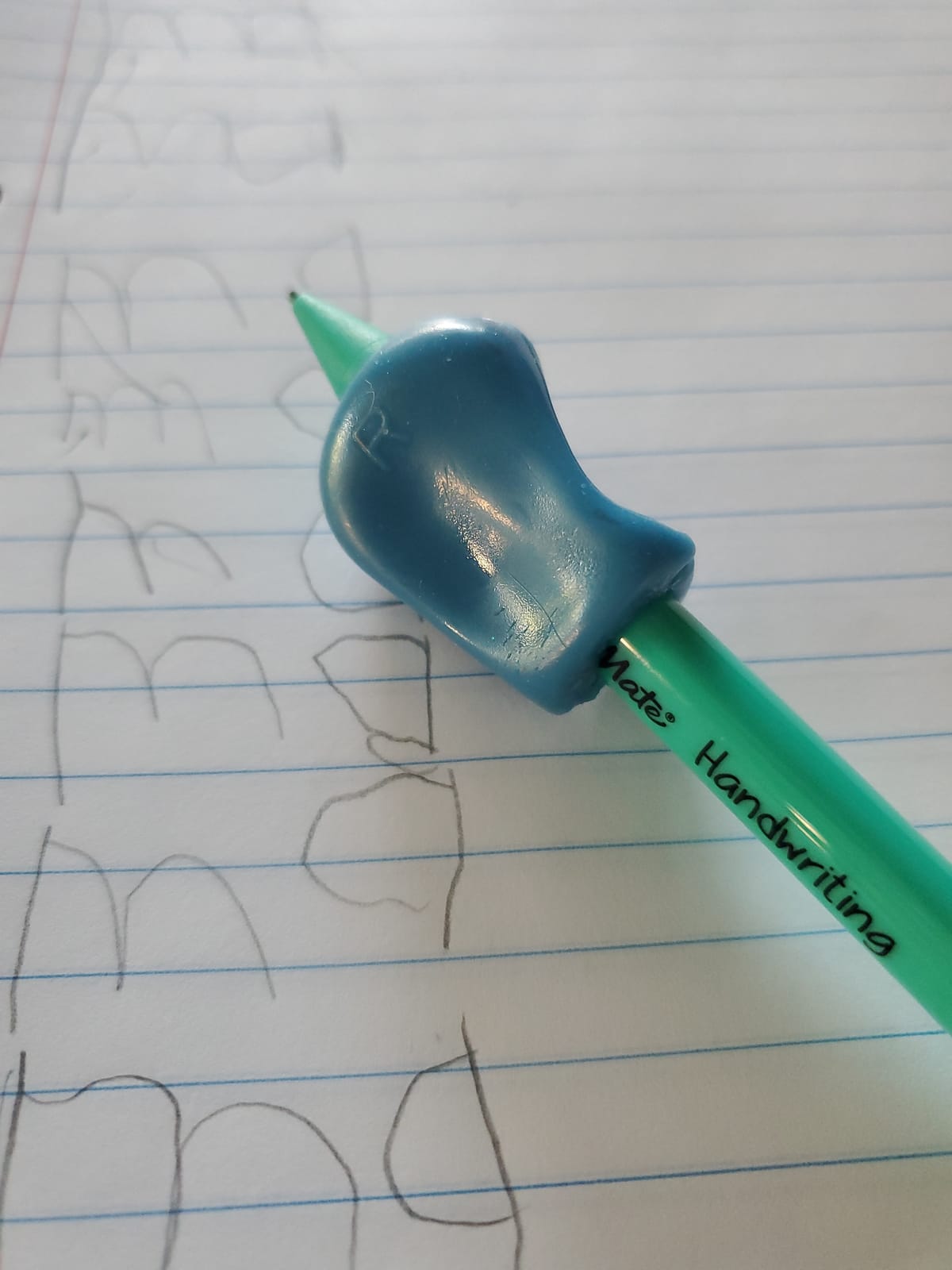
This is the pencil grip that occupational therapists recommend more than any other, and after testing it extensively, I understand why. The contoured shape is specifically designed to guide fingers into a proper tripod position without forcing them into uncomfortable angles. The soft thermoplastic rubber provides a cushioned surface that reduces the pressure dysgraphic writers tend to apply when gripping their pencils.
What makes this grip versatile is its universal fit. It slides onto standard pencils, pens, crayons, markers, and even paint brushes, which means you can use it across every writing and art activity your child does. The ambidextrous design works equally well for right-handed and left-handed writers, so you never have to worry about ordering the correct version.
I gave a set of these to my nephew’s teacher, who now keeps them in a classroom basket for any student who wants one. The beauty of this approach is that it removes the stigma of being the only kid with a special tool. When several children use them, the grip becomes just another school supply rather than a visible marker of a learning difference.
With over 9,400 reviews and a 4.6-star average, this is one of the most tested and trusted pencil grips on the market. Adults with arthritis and hand pain also swear by these for extended writing sessions, which speaks to the comfort level. The latex-free material is safe for children with latex allergies, and the multicolor pack of six means you always have spares.
How to Introduce Pencil Grips Successfully
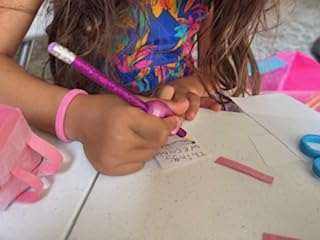
The key to success with any pencil grip is consistency and patience. When you first slide the grip onto your child’s pencil, their handwriting may actually get worse for a few days as they adjust to the new finger positions. This is normal and temporary. Resist the urge to remove the grip during this adjustment period, because the muscles need time to learn the new positioning.
Most occupational therapists recommend starting with short, low-pressure writing sessions using the grip, such as drawing or doodling, before moving to academic writing. Once the child’s hand gets comfortable with the grip shape, they can transition to worksheets and homework with the same tool.
Grip Maintenance and Longevity
The thermoplastic rubber material is durable but does require basic care. Over time, the surface can become slightly sticky and attract dust or lint, especially if it sits in a pencil case. A quick wash with soap and warm water restores the grip’s texture and removes any buildup. We have been using the same set for over a year with no signs of degradation.
One thing to keep in mind is that these grips are designed for standard #2 pencils and similarly sized writing instruments. If your child uses thick beginner pencils or chunky crayons, you may need a different grip size. For the vast majority of school writing tools, these fit perfectly.
4. PenAgain ErgoSof Pen – Best Ergonomic Pen for Hand Pain
PenAgain ErgoSof Pen Ehlers-Danlos Arthritis Carpal Tunnel Pain Relief Blue (00021)
Y-shaped rocket body design
ErgoSof soft-touch coating
Retractable pop-top mechanism
Refillable ink cartridge
Weighs only 14.2g
Pros
- Y-shaped design prevents fingers from sliding down the shaft
- Soft ErgoSof coating provides comfortable grip surface
- Retractable mechanism means no cap to lose
- Specifically designed for arthritis
- carpal tunnel
- and weak grip conditions
- Refillable for long-term use
Cons
- Ink cartridges may run out faster than standard pens
- Y-shaped design takes getting used to for some writers
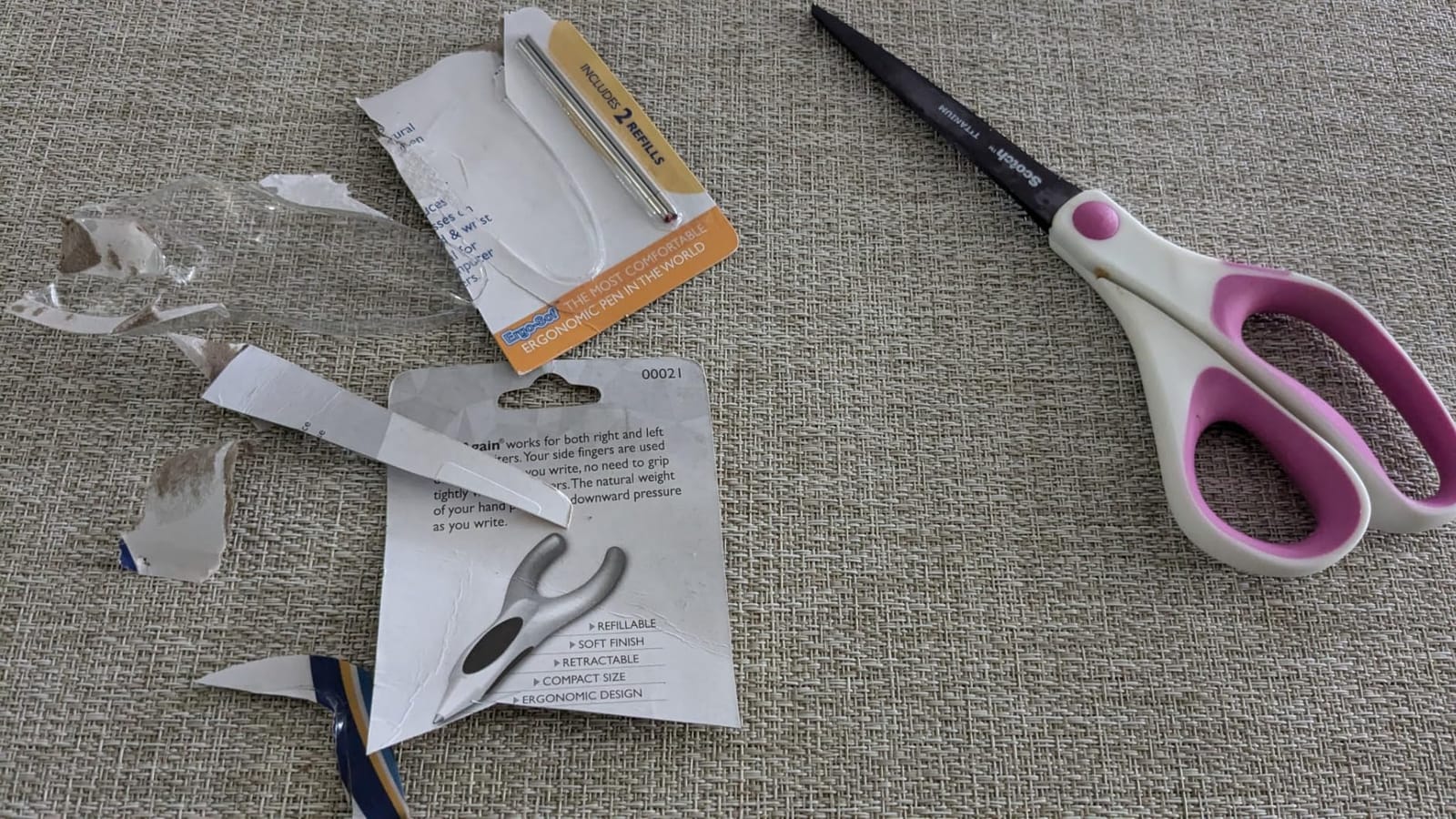
The PenAgain ErgoSof caught my attention because it takes a completely different approach to pen design. Instead of asking the writer to hold a cylindrical shaft, the Y-shaped body uses the natural structure of the hand to support the pen’s weight. The fingers rest in the fork of the Y shape, which distributes pressure across more of the hand and reduces the pinching force that causes fatigue and pain.
For teens and adults with dysgraphia, this pen addresses a problem that pencil grips alone cannot solve. Many dysgraphic writers develop hand pain, cramping, and fatigue during extended writing because they grip too hard and hold tension in their fingers. The PenAgain’s design naturally reduces that grip pressure by changing how the pen sits in the hand.
The ErgoSof coating is surprisingly pleasant to touch. It has a velvet-like texture that provides friction without being sticky, which helps keep the pen from slipping even when hands get warm during a long writing session. The retractable pop-top mechanism is a practical touch, since there is no cap to misplace or lose in a backpack.
At around seven dollars, this is one of the most affordable specialized writing tools on our list. Users with arthritis, carpal tunnel, Ehlers-Danlos syndrome, and general hand weakness report meaningful pain relief when writing with this pen. The 4.3-star rating across 942 reviews reflects a product that works very well for most people but requires an adjustment period.
Who Benefits Most from the Y-Shaped Design
This pen shines for older students and adults who experience hand pain, cramping, or fatigue during writing. The Y-shaped design is most effective for people who already have a basic grasp pattern established but struggle with the sustained grip pressure that standard pens require. If you or your child are starting from scratch with grip training, a pencil grip or triangular pencil may be a better first step.
We found that the PenAgain works particularly well for teens who are self-conscious about using “kid” tools. It looks distinctly different from a standard pen, but in a way that reads as modern and tech-forward rather than childish. Several reviewers mentioned that classmates and colleagues asked about it with genuine curiosity rather than judgment.
Managing the Learning Curve
The Y-shaped design feels unnatural at first, and some users report that their initial writing attempts are messier than usual. Plan for a one to two week adjustment period where the hand learns the new positioning. Practice with short writing tasks like lists, notes, or journal entries before using it for exams or important documents.
The refillable ink cartridge is both an environmental benefit and a practical consideration. Some users report that the stock cartridges run out faster than expected, so we recommend ordering refill cartridges at the same time you purchase the pen. Standard PenAgain refills are widely available and affordable.
5. Pacon Multi-Sensory Raised Ruled Paper – Best Sensory Feedback Paper
Pacon 2471 Multi-Sensory Raised Ruled Paper, 11X8 1/2″, 100 Sheets
Raised headlines and baselines
Tactile feedback through touch
Blue headlines, red baselines
5/8 inch ruling with dotted midline
100 sheets per pack
Pros
- Raised lines provide tactile feedback kids can feel with their pencil
- Teaches handwriting through both sight and touch simultaneously
- Works with D'Nealian and Zaner-Bloser handwriting styles
- Heavy chipboard backing prevents tearing from repeated erasing
- Blue and red color coding provides clear visual boundaries
Cons
- Premium pricing for specialty paper
- Raised portions could be slightly more pronounced per some users
Raised line paper is one of those tools that sounds simple but produces remarkable results. The Pacon Multi-Sensory paper features raised headlines and baselines that a child can actually feel as their pencil moves across the page. This tactile feedback gives dysgraphic writers a physical boundary that flat lined paper simply cannot provide, helping them understand where letters should start and stop.
I watched my nephew trace the raised baseline with his pencil and saw the moment of recognition on his face. For the first time, he could feel where the bottom of each letter should go, rather than guessing or constantly looking down to check his positioning. The combination of visual cues (blue headlines, red baselines) and tactile cues (raised lines) creates a multisensory learning experience that addresses dysgraphia from multiple angles.
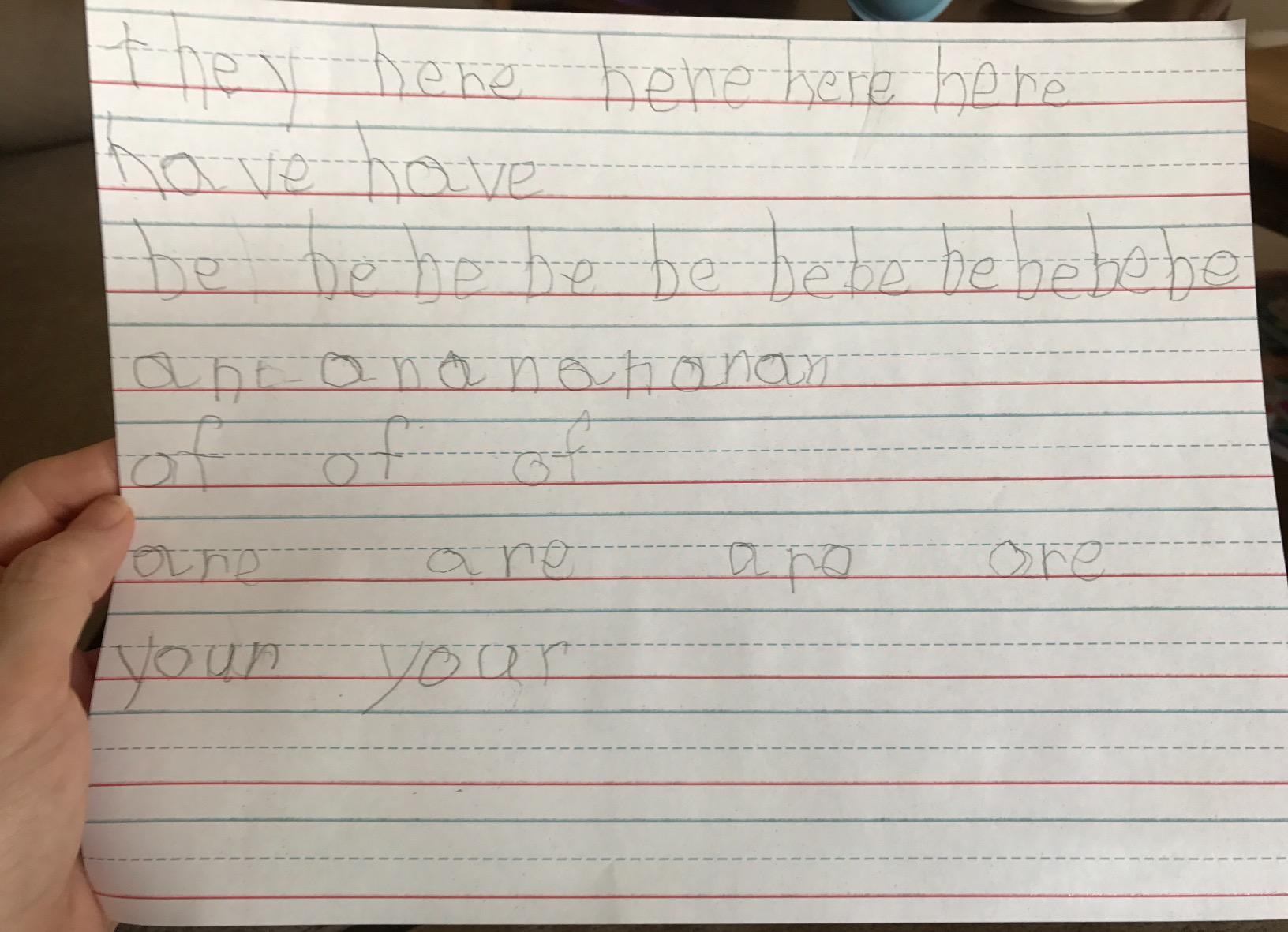
The 5/8 inch ruling with a dotted midline is appropriate for kindergarten and first grade writers, which is exactly when many children first show signs of dysgraphia. The paper conforms to both D’Nealian and Zaner-Bloser handwriting styles, so it works regardless of which curriculum your child’s school uses. The heavy chipboard backing provides a firm writing surface even without a clipboard or desk underneath.
One detail that parents will appreciate is the paper’s thickness. Children with dysgraphia often erase repeatedly as they try to get their letters right, and thin paper tears under that pressure. This paper holds up to erasing without developing holes, which reduces frustration and waste. The 100-sheet pack lasts a full school semester for most children.
How Raised Lines Help with Spatial Awareness
Many children with dysgraphia struggle with spatial planning on the page. Letters float above the lines, sink below them, crowd together, or spread too far apart. Raised lines address this by giving the pencil a physical cue every time it crosses a boundary. Over time, this tactile feedback helps build the muscle memory and spatial awareness that dysgraphic writers need to produce legible work on standard paper.
Occupational therapists often use raised line paper as a stepping stone between guided writing and independent writing on regular paper. The goal is to gradually fade the tactile support as the child’s skills improve, transitioning from raised lines to standard visual lines.
Value and Cost Considerations
This is specialty paper, and the pricing reflects that. At roughly twenty-five dollars for 100 sheets, it costs significantly more than standard lined paper. However, for a child who is actively building handwriting skills, the improvement in confidence and letter formation justifies the investment. Many parents use this paper for homework and practice sessions while using standard paper for other tasks.
If cost is a concern, consider splitting a pack with another family or asking your child’s school to include raised line paper as an accommodation in their IEP or 504 plan. Schools can often order specialty paper through their special education supply budget.
6. The Pencil Grip 3-Step Training Kit – Best Progressive Grip Training System
The Pencil Grip 3-Step Training Kit – Crossover Grip, Pinch Grip & Standard Pencil Grip Ergonomic Writing Aids for Kids, Students, Fine Motor Development, Assorted Colors, Pack of 3 Grips (1 per Type)
3-grip progressive training system
Crossover Grip, Pinch Grip, and Standard Grip
Doctor-designed ambidextrous fit
Assorted colors
Therapy-grade construction
Pros
- Progressive 3-step system builds grip skills gradually
- Crossover Grip provides maximum finger guidance for beginners
- Pinch Grip offers partial support as skills improve
- Standard Grip maintains comfort for long-term use
- Works on pencils
- pens
- crayons
- and markers
Cons
- May be too wide for very small children
- Children may revert to improper grip without consistent use
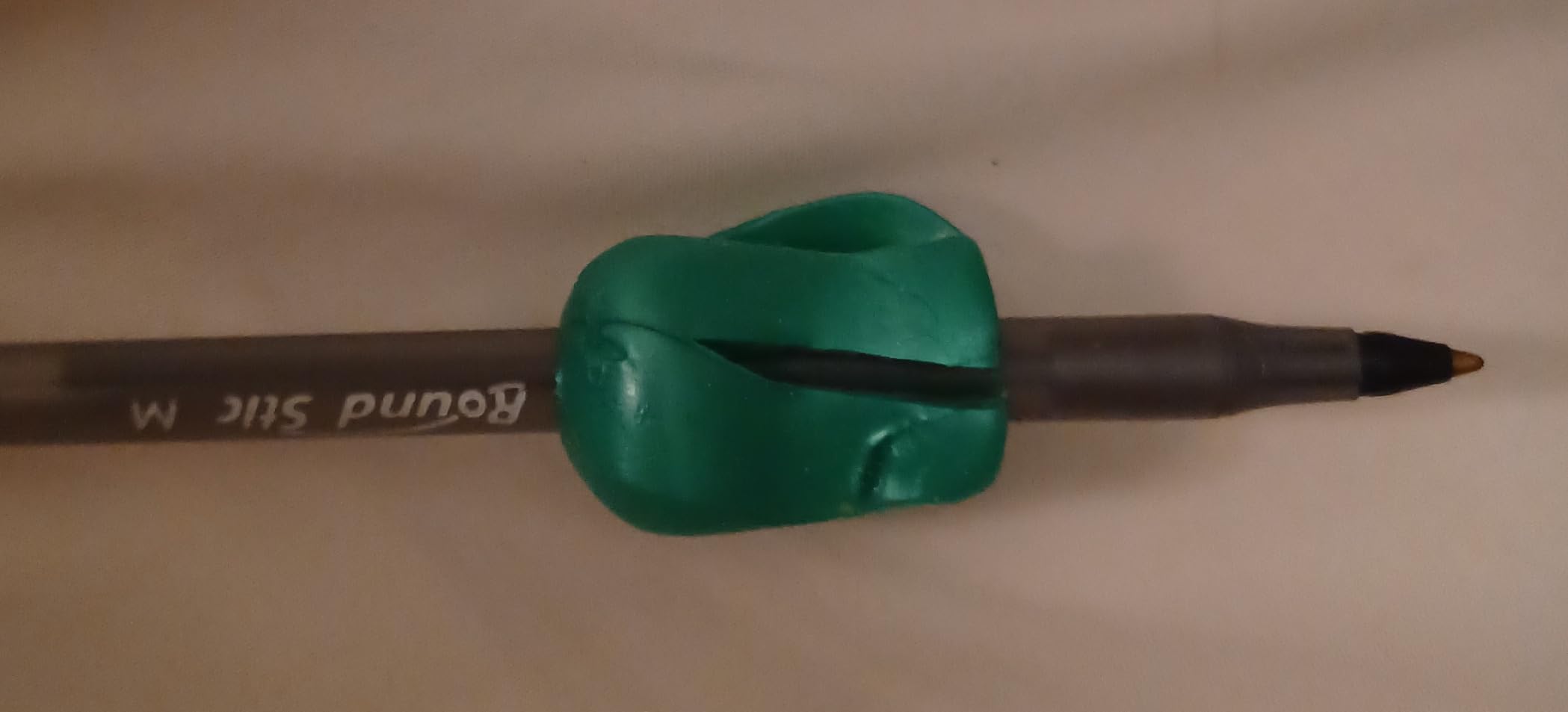
The 3-Step Training Kit is brilliant because it recognizes that learning a proper pencil grip is a process, not a single event. Instead of handing a child one grip and hoping they figure it out, this kit provides three grips of decreasing support. You start with the Crossover Grip, which has wings that physically prevent fingers from crossing over each other, then move to the Pinch Grip with moderate guidance, and finally graduate to the Standard Grip for long-term comfort.
I appreciate that this system was designed by a doctor and is widely used in therapeutic settings. The progression makes logical sense for children who need structured support to develop their grip. Each stage gives the child just enough guidance to succeed while building the muscle memory needed for the next level.
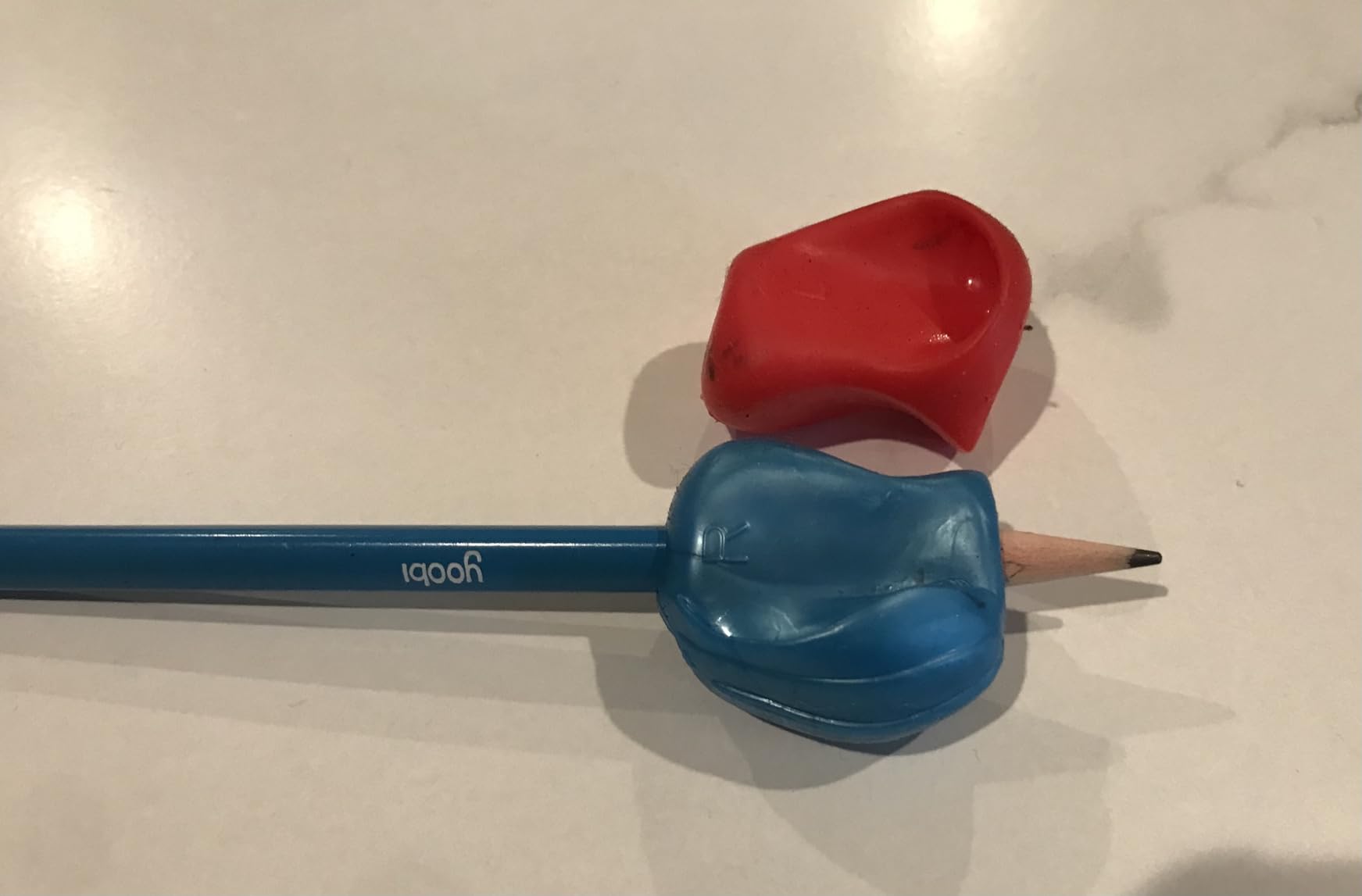
The Crossover Grip is where most children begin. It has a shaped top that literally blocks the thumb and fingers from wrapping over the pencil in a fist grip. For kids who have been writing with an incorrect grasp for years, this initial stage can feel frustrating, but the physical barrier prevents old habits from taking over. Most children spend two to four weeks at this stage before moving on.
The Pinch Grip is the intermediate step, and it is where my nephew spent the longest time. It provides clear finger placement zones but removes the physical barrier of the crossover wings. This stage lets the child practice the grip position with less intrusive support, building independence and confidence. The Standard Grip in stage three is the same as the Original Pencil Grip from our number three pick, designed for comfortable, long-term writing.
How Long Does Training Take
Every child progresses at their own pace, but most occupational therapists report that the full three-step process takes two to six months when practiced consistently. The key is daily writing with the current grip stage, not occasional practice. Children who use the grips only once or twice a week tend to plateau or regress between sessions.
We recommend setting a simple schedule: use the current grip for all writing activities, and evaluate progress every two weeks. When the child consistently maintains the correct finger position without the grip providing active correction, it is time to move to the next stage.
Combining the Kit with Other Tools
This training kit pairs exceptionally well with the Pacon raised line paper and the INNER-ACTIVE slant board. The grips address finger positioning, the paper provides spatial and tactile feedback, and the slant board improves wrist angle and posture. Together, these three tools address the major physical barriers that make handwriting difficult for children with dysgraphia.
One consideration is grip width. Some parents of very young children or children with small hands report that the grips feel slightly wide. If this is the case for your child, start with the Pinch Grip rather than the Crossover Grip, as it has a slightly narrower profile while still providing guided placement zones.
7. CulinaCraft Weighted Pencil Grips – Best Weighted Grip for Tremor Control
Weighted Pencil Grips 4 Pack, 1 oz Silicone Handwriting Aids for Kids & Adults, Writing Support for Dysgraphia, Autism, ADHD, Arthritis, Tremors, Grip Strength & Fine Motor Skills
1 oz weighted silicone grips
4 pack in black
Fits pens and pencils 7-14mm diameter
One-piece slip-on design
Adjustable positioning
Pros
- 1 oz weight provides tactile grounding that reduces shakiness
- One-piece slip-on design is easy to install and reposition
- Fits most standard pens and pencils from 7-14mm diameter
- Functions as both weighted aid and standard grip
- Discreet black color suits older students and adults
Cons
- Only 52 reviews so far as a newer product
- Limited to black color with no variety options
- 3.9 star rating is lower than other grips on this list
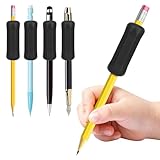
Weighted pencil grips address a specific challenge that standard grips do not: hand tremors and difficulty with writing pressure control. The CulinaCraft grips add one ounce of weight to the writing instrument, which provides proprioceptive feedback that helps some writers stabilize their hand movements. This is particularly helpful for individuals whose dysgraphia involves shaky or uncontrolled pencil motion.
I tested these with an adult friend who has dysgraphia and noticed that the added weight helped her writing become measurably steadier. The concept is similar to weighted blankets or weighted wrist cuffs, which use gentle pressure to calm the nervous system and improve body awareness. For writers who press too lightly and produce faint, inconsistent marks, the weight encourages more consistent pressure.
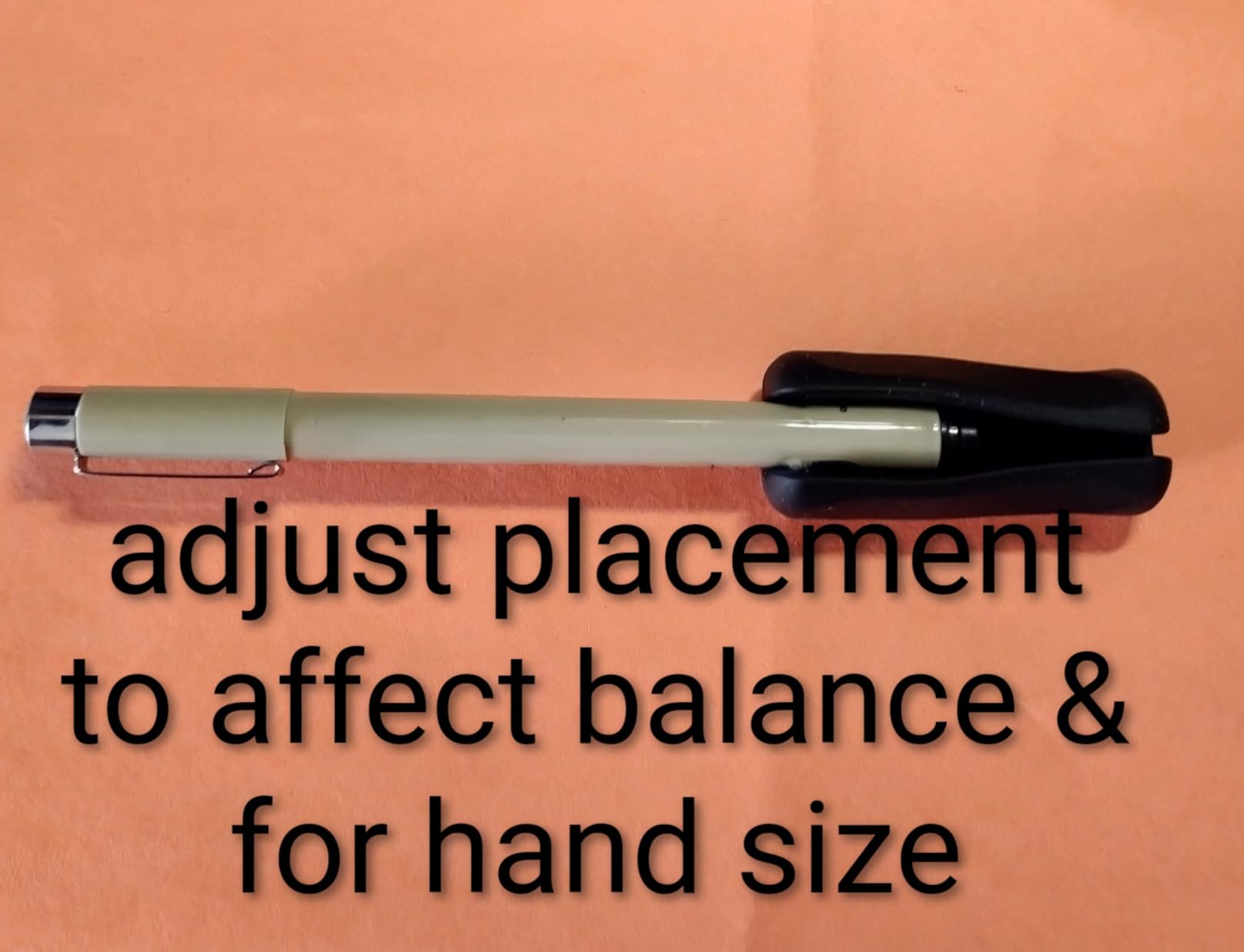
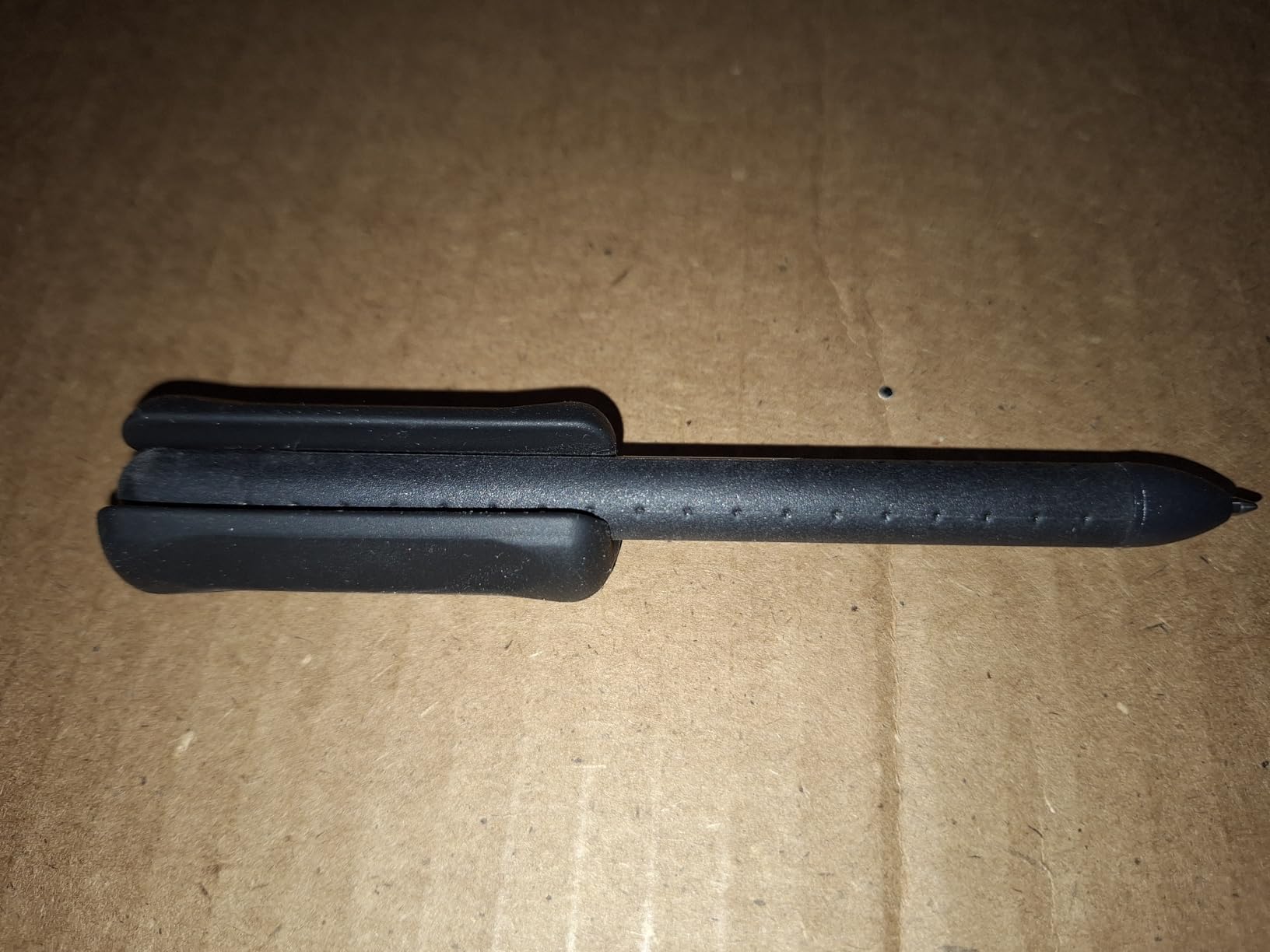
The one-piece silicone design slips onto pens and pencils with diameters between 7 and 14mm, which covers most standard writing instruments. The grip can be positioned anywhere along the barrel, so you can place it exactly where the fingers rest. The pack of four means you can equip multiple writing tools at once, which is practical for students who use different pens and pencils throughout the school day.
The discreet black design is worth highlighting because it addresses a real concern for older students and adults. Many weighted grips and therapy tools come in bright primary colors that scream “special needs,” which can make teens and adults reluctant to use them in public settings. These grips look like a simple pen accessory.
When Weighted Grips Are the Right Choice
Weighted grips are not for everyone, and they work best for specific writing challenges. If the primary issue is tremors, shaky hands, difficulty maintaining consistent pressure, or a need for proprioceptive input, the added weight can make a noticeable difference. If the main challenge is incorrect finger positioning, a standard grip like the Original Pencil Grip or the 3-Step Training Kit will be more effective.
We recommend trying a weighted grip if your occupational therapist suggests proprioceptive feedback as part of the intervention plan. Some children and adults respond dramatically to the added weight, while others find it uncomfortable or distracting. The affordable price of this four-pack makes it easy to test without a significant financial commitment.
Managing Expectations as a Newer Product
Because this is a relatively new product with 52 reviews, the long-term durability data is limited compared to established products like the Original Pencil Grip. The 3.9-star rating suggests that most users are satisfied but some found the weight insufficient or the fit imperfect for their specific writing instruments. Read the reviews carefully and check whether your preferred pens and pencils fall within the 7-14mm diameter range.
The silicone material is easy to clean and should hold up well to daily use. If the weight turns out to be too light or too heavy for your needs, note that other weighted grip products on the market offer different weights, typically ranging from half an ounce to two ounces.
8. hand2mind Cursive Letter Tracing Sensory Pad – Best Multisensory Practice Tool
hand2mind Cursive Letter Tracing Sensory Pad, Tracing Board, Ages 3+
Gel-filled sensory tracing surface
Reusable and mess-free
Includes stylus and 16 activity cards
Ages 3-8 years
Portable 7 x 9 inch design
Pros
- Mess-free gel surface provides tactile feedback without paper waste
- Reusable design eliminates the need for stacks of practice paper
- Portable size works for car rides
- waiting rooms
- and travel
- 16 double-sided activity cards store inside the pad
- Durable construction holds up to frequent use by young children
Cons
- Activity cards can be flimsy and hard for small hands to insert
- Interest may decrease after initial novelty wears off
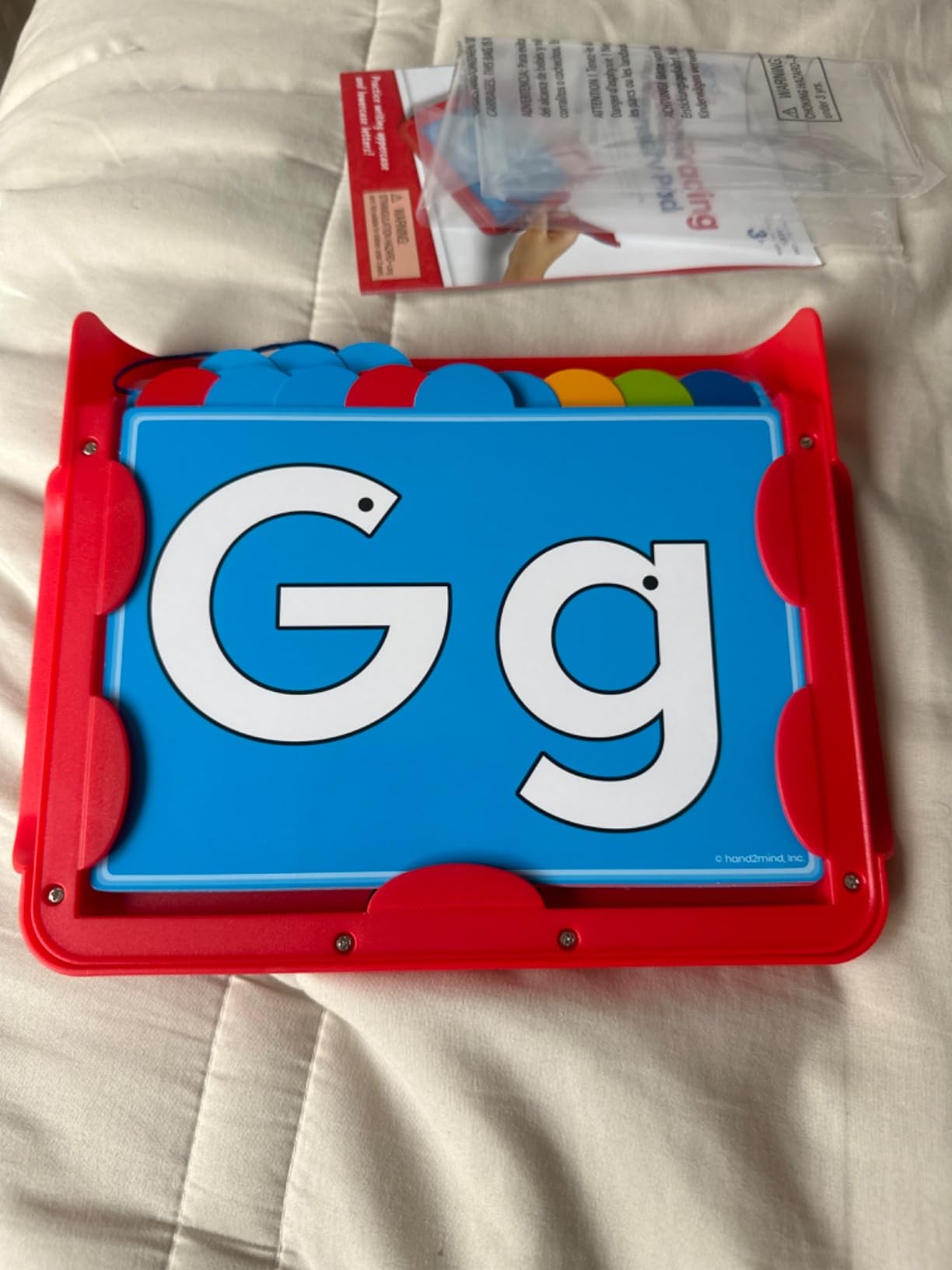
The hand2mind Cursive Letter Tracing Sensory Pad takes a completely different approach to handwriting practice. Instead of pencils and paper, it uses a gel-filled surface that children trace letters on with a stylus or their finger. The tactile sensation of pressing through the gel to create letter shapes provides the kind of multisensory feedback that is especially valuable for children with dysgraphia and other learning differences.
What I love about this tool is that it removes the pressure of permanent marks. When a child writes a letter incorrectly on paper, the evidence of their mistake stays there, often causing frustration. On the sensory pad, a quick swipe erases the surface and the child can try again immediately. This low-stakes practice environment encourages repetition without anxiety.
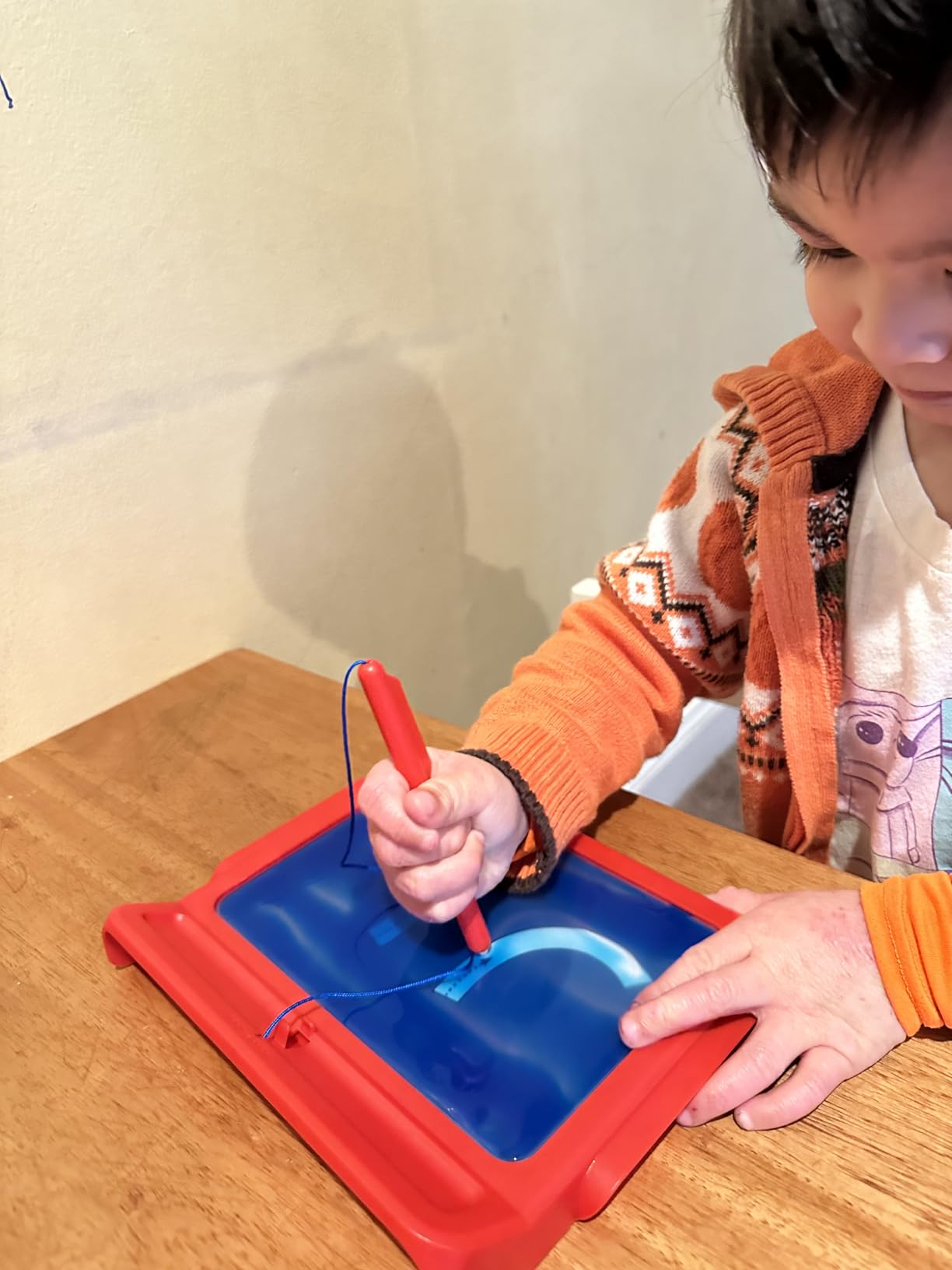
The 16 double-sided activity cards slide into the pad behind the gel surface, providing letter models for the child to trace. The cards cover the cursive alphabet progressively, and the guide includes tips for parents and teachers on supporting the tracing process. The cards store inside the pad itself, which prevents losing them during transport.
The portability factor cannot be overstated. My sister keeps this pad in the car for school pickup and appointments, and my nephew traces letters while waiting. It turns dead time into productive practice without feeling like homework. The durable plastic construction has survived being dropped, stepped on, and stuffed into backpacks without any damage to the gel surface.
Building Fine Motor Skills Through Play
The sensory pad does more than teach letter shapes. The act of pressing through the gel and tracing curved and straight lines builds the fine motor strength and hand-eye coordination that underlie all handwriting skills. For children who resist traditional pencil-and-paper practice, this tool offers an alternative entry point that feels more like play than therapy.
Occupational therapists often recommend multisensory approaches for children with dysgraphia because engaging multiple senses helps reinforce learning. The combination of visual letter models, tactile gel feedback, and the kinesthetic motion of tracing creates stronger neural pathways than visual learning alone.
Transitioning from Tracing to Independent Writing
The sensory pad is best used as a supplement to, not a replacement for, traditional writing practice. Use it to introduce and reinforce letter shapes, then transition to pencil and paper for the actual writing practice. The confidence a child builds from successfully tracing letters on the low-pressure gel surface transfers to their willingness to attempt those same letters on paper.
The age range of 3-8 years means this tool is primarily for younger children in the early stages of handwriting development. If your child is older and still struggling with cursive or letter formation, the multisensory approach can still be beneficial, but you may want to supplement with more age-appropriate practice materials.
How to Choose the Right Handwriting Tools for Dysgraphia
Choosing the right handwriting tools for dysgraphia starts with understanding the specific challenges your child or you face. Dysgraphia manifests differently in every person, and a tool that transforms writing for one child may do nothing for another. The key is identifying the primary barrier to comfortable, legible writing and matching it to the right tool category.
Start by observing a writing session closely. Is the grip the problem, with fingers wrapping around the pencil in a fist or crossing over each other? Is it posture, with the child hunched so low over the desk that their wrist is bent at an uncomfortable angle? Is it spatial awareness, with letters floating above or sinking below the lines? Or is it hand pain and fatigue that cuts writing sessions short? Each of these challenges points to a different primary tool recommendation.
Matching Tool Types to Specific Needs
For grip problems, start with the Paper Mate Triangular Mechanical Pencils or The Pencil Grip Original Grippers. These are the lowest-cost, lowest-friction entry points and work for the widest range of children. If the child needs structured grip training with progressive support, the 3-Step Training Kit is the logical next step.
For posture and wrist angle issues, a slant board like the INNER-ACTIVE model addresses the physical positioning that makes writing painful and inefficient. Pair it with raised line paper to simultaneously address spatial awareness challenges. For hand pain and fatigue in older students and adults, the PenAgain ErgoSof Pen changes the fundamental mechanics of how the pen sits in the hand.
For tremors and pressure control issues, weighted grips like the CulinaCraft provide proprioceptive input that can stabilize hand movements. And for multisensory practice that builds foundational fine motor skills, the hand2mind Sensory Pad offers an engaging, low-pressure practice environment.
Age Appropriateness and Social Considerations
One of the biggest pain points we found in forum discussions was the difficulty of finding tools that do not look babyish for older kids and teens. Children are acutely aware of how their tools compare to what classmates use, and a bright yellow foam grip can become a source of embarrassment rather than support.
For elementary students ages 4-10, colorful grips, triangular pencils, and multisensory tools are generally well-received and even seen as fun. For middle schoolers ages 11-14, prioritize tools with subtle designs like the PenAgain pen, the black CulinaCraft weighted grips, or the standard-looking Paper Mate pencils. For teens and adults, focus on ergonomic pens, weighted grips in neutral colors, and tools that look like professional accessories rather than therapy equipment.
Building a Comprehensive Tool Kit
No single tool solves dysgraphia on its own. The most successful approach combines tools that address different aspects of the writing process. A typical starter kit might include a triangular pencil or pencil grip for finger positioning, a slant board for posture, and raised line paper for spatial awareness. Add the sensory pad for supplementary practice, and you have addressed grip, posture, visual processing, and fine motor development simultaneously.
Talk to your child’s occupational therapist about which combination makes sense for their specific profile. OTs can assess which challenges are primary and which are secondary, and they can recommend a targeted tool kit rather than a scattergun approach. They can also help integrate tools into IEP or 504 accommodations so your child has access to them in the classroom setting.
Frequently Asked Questions
Is dysgraphia a 504 or IEP?
Dysgraphia can qualify for accommodations under both a 504 plan and an IEP. A 504 plan provides classroom accommodations like extra writing time, use of a keyboard, or access to specialized writing tools. An IEP provides specialized instruction and is appropriate when dysgraphia significantly impacts the child’s ability to access grade-level curriculum. The right plan depends on the severity of the dysgraphia and whether the child needs accommodations only or direct specialized instruction.
What are the best pens for people with dysgraphia?
The best pens for dysgraphia are ergonomic designs that reduce grip pressure and hand fatigue. The PenAgain ErgoSof Pen uses a Y-shaped body that distributes pressure across the hand instead of pinching between fingers. Weighted pens and pens with built-in ergonomic grips also help. For younger children, triangular mechanical pencils like the Paper Mate Handwriting series guide proper finger placement while reducing breakage from heavy pressure.
What assistive technology is used for dysgraphia?
Assistive technology for dysgraphia ranges from low-tech tools like pencil grips and slant boards to digital solutions. Common options include speech-to-text software, word prediction programs, typing instruction programs, tablet apps for digital worksheets like SnapType, and multisensory practice tools like the hand2mind sensory tracing pad. The right technology depends on whether the goal is improving handwriting skills or providing an alternative to handwriting.
What does dysgraphia handwriting look like?
Dysgraphia handwriting typically appears cramped, unevenly spaced, and difficult to read. Common characteristics include inconsistent letter sizes, letters that float above or sink below lines, irregular spacing between words and letters, reversed or poorly formed letters, and writing that deteriorates quickly over the course of a task. The physical act of writing is often slow, effortful, and accompanied by visible hand tension or pain.
Finding the Right Tools Makes All the Difference
Dysgraphia does not go away, but the right tools can make writing manageable, comfortable, and even enjoyable. The eight products on this list represent the most effective handwriting tools for dysgraphia across every major category, from the universally praised Paper Mate Triangular Pencils to the OT-recommended slant board and the multisensory practice pad.
Our top recommendation for most families is to start with a combination of triangular pencils or a pencil grip for finger positioning and a slant board for posture. These two tools together address the most common physical barriers to comfortable writing. Add raised line paper if spatial awareness is a challenge, and incorporate the sensory pad for engaging practice sessions that build fine motor skills without the pressure of permanent marks.
The most important thing to remember is that progress takes time and patience. Every child’s dysgraphia profile is unique, and finding the right combination of tools may require some experimentation. Work with your occupational therapist, listen to your child’s feedback, and remember that in 2026 there are more effective, affordable, and thoughtfully designed tools available than ever before.