
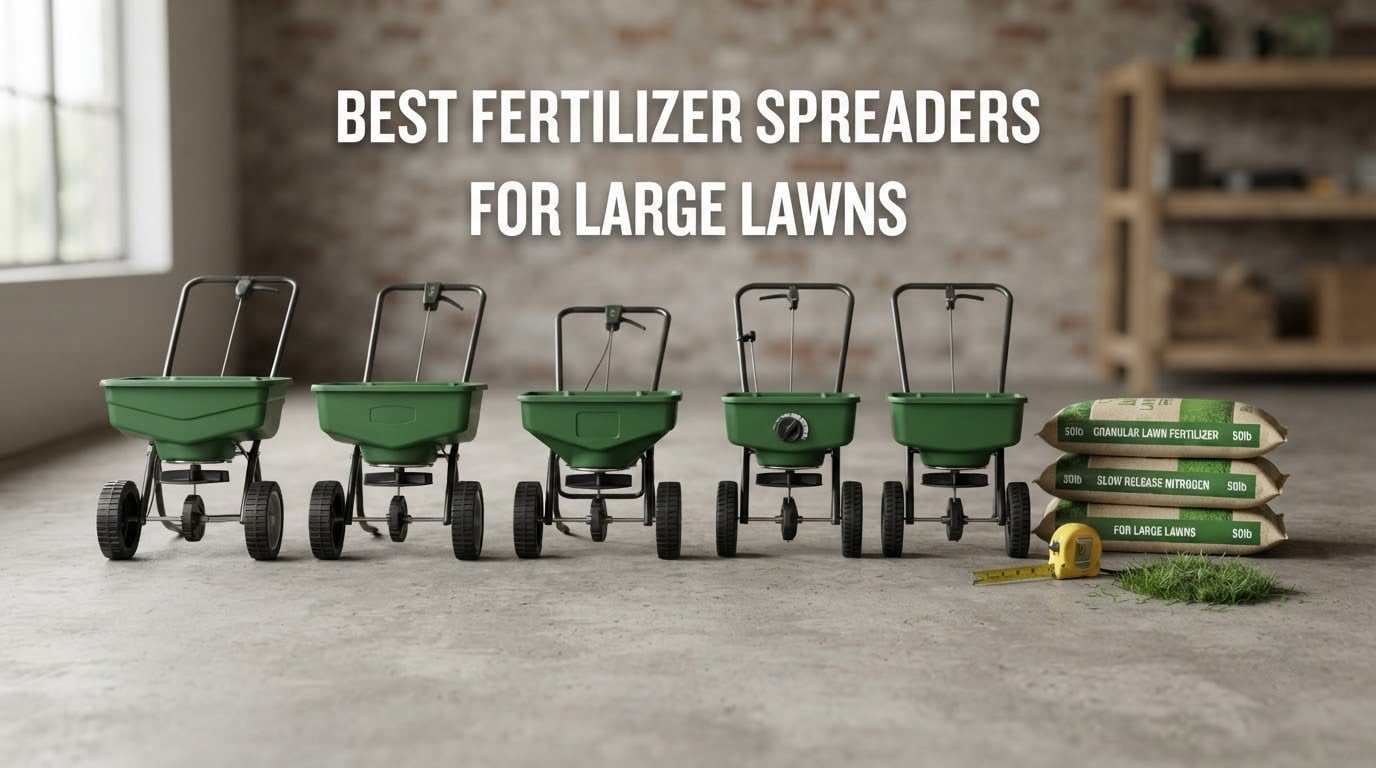
Most fertilizer spreader roundups are written for lawns the size of a city lot. This one is not. If you are spreading seed, fertilizer, lime, or ice melt across half an acre or more, the deciding number is hopper capacity, and anything under 60 lb will send you back to the bag for refills before you finish the back forty.
Here is the short answer. For a half acre, you want a 100 lb to 130 lb walk-behind or tow-behind broadcast spreader. Above one acre, tow a spreader behind a riding mower, ATV, or UTV, and pick one with a hitch you have actually measured. For seed work and precision around driveways, a drop spreader beats a broadcast model every time. Those three sentences answer the question most people are actually asking, and the eight spreaders below are ranked against them.
We compared all eight on the things that decide whether a large-lawn job gets finished: hopper capacity, coverage per load, spread width, tire type, gearing, flow control, and the refills you will make between the bag and the back corner. A broadcast spreader is a wheeled hopper that flings granules out through a spinning base plate; a drop spreader is the same idea inverted, dropping material straight down in a controlled band instead of throwing it. We also weighed in the complaints that show up again and again in lawn forums, like streaking from hard plastic wheels, material bridging in the hopper, and control levers you cannot reach from the seat.
We are not testing spreaders on a measured plot with a stopwatch, and we will not pretend otherwise. What follows is a comparison built from published specifications and from thousands of owner reports, with the fit and finish problems called out as plainly as the wins. If you want a broader look at how buying guides like ours are put together, our guide to the best floorstanding speakers for large rooms takes the same capacity-first approach to a very different machine.
Table of Contents
Top 3 Picks for Large Lawns for October 2026

Agri-Fab 130 lb Tow-Behind…
- 130 lb hopper covers up to 25000 sq ft
- Universal hitch for riding mowers
- 10-12 ft spread width
- 13 in pneumatic tires

Agri-Fab 130 lb Push Broadcast
- 130 lb hopper over 13 in pneumatic tires
- 10-12 ft spread width
- Direct rod flow control
- Powder-coated steel frame
Buyers Products ATVS100…
- 100 lb rustproof poly hopper
- 30 ft spread from a 12V motor
- Includes a rain cover
- Light 18 lb rack mount
All 8 Spreaders Compared for Large Lawns (October 2026)
| Product | Specs | Action |
|---|---|---|
| Agri-Fab 130 lb Tow-Behind Broadcast Spreader |
|
Check Latest Price |
| Agri-Fab 130 lb Push Broadcast Spreader |
|
Check Latest Price |
| Buyers Products ATVS100 ATV Rear Rack Spreader |
|
Check Latest Price |
 VEVOR 100 lb Walk-Behind Push Spreader VEVOR 100 lb Walk-Behind Push Spreader |
|
Check Latest Price |
 EarthWay 2150 50 lb Commercial Broadcast Spreader EarthWay 2150 50 lb Commercial Broadcast Spreader |
|
Check Latest Price |
 Buyers Products UTVS16 150 lb UTV Spreader Buyers Products UTVS16 150 lb UTV Spreader |
|
Check Latest Price |
 Buyers Products ATVS15A 15 Gallon ATV Spreader Buyers Products ATVS15A 15 Gallon ATV Spreader |
|
Check Latest Price |
 Agri-Fab 175 lb Tow-Behind Drop Spreader Agri-Fab 175 lb Tow-Behind Drop Spreader |
|
Check Latest Price |
1. Agri-Fab 130 lb Tow-Behind Broadcast Spreader — Best for Half-Acre to Acre Lawns
Agri-Fab Pull Behind Broadcast Spreader for Seed, Fertilizer, Salt and Ice Melt, 130 lb Hopper Capacity with Universal Hitch and 12 Ft Spread Width
130 lb hopper
25,000 sq ft per load
10-12 ft spread width
13 in pneumatic tires
Pros
- 130 lb hopper covers up to a half acre with far fewer refills
- Universal hitch connects to most riding mowers and lawn tractors
- Wide 10-12 ft spread width cuts the number of passes
- Steel tubing frame and enclosed gear housing
- Owners report even spread patterns and stable towing
Cons
- No automatic flow shut-off so the lever must be reached back to close
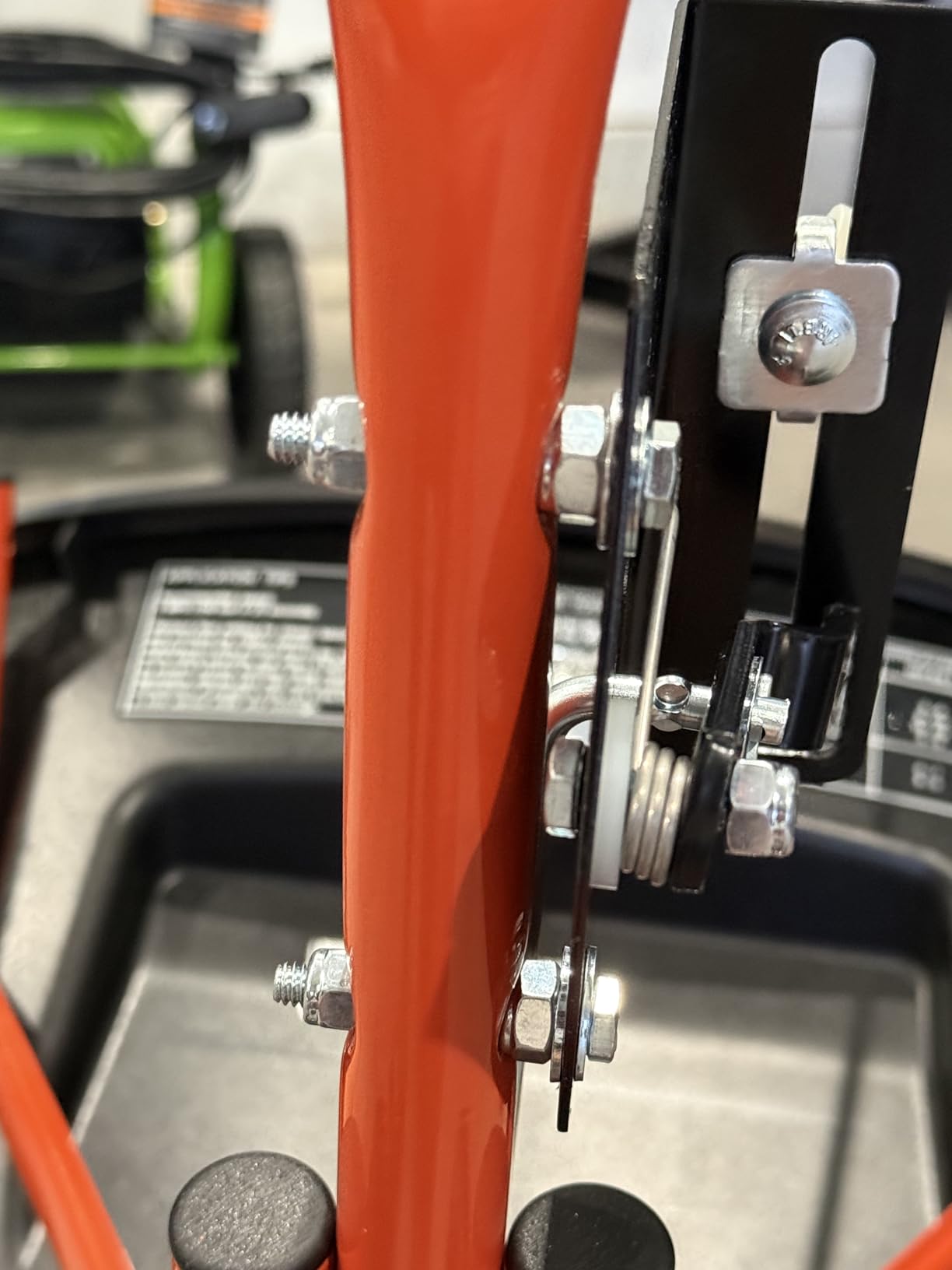
- Gears ship unlubricated and need greasing on assembly
- Some units arrive with a dead gearbox or a missing spring pin
This is the spreader I would put behind a riding mower on a half-acre to acre property, and it earned the top spot here for one reason: it removes the bottleneck that makes large-lawn work miserable. A 130 lb hopper covers roughly 25,000 sq ft at a typical application rate, which in practice means most people fill once, spread, and are done before the hopper runs out.
The universal hitch is the part that unblocks the purchase for most buyers. It connects to most riding lawn mowers and tractors without a welding project, and owners repeatedly describe how easily it tows over uneven pasture rather than hopping or tipping behind the mower.
The 10 to 12 ft spread width is the other reason this one gets the workload. At that width, a half acre takes roughly nine or ten passes, and a full acre takes fewer than twenty. The 13 in by 4 in pneumatic tires roll over ruts and soft ground without bogging down, and the steel tubing frame with an enclosed gear housing is a sensible combination for a machine that will live outside.
Assembly is the part people complain about most, and it is not a small complaint. Expect 45 to 90 minutes with a socket set, and grease the gears as you go, because they ship unlubricated. Owners with multi-acre properties describe the 100 lb-plus loads and the wide swath as the reason they keep coming back to it after trying cheaper models.
Check your hitch and gate width before you order
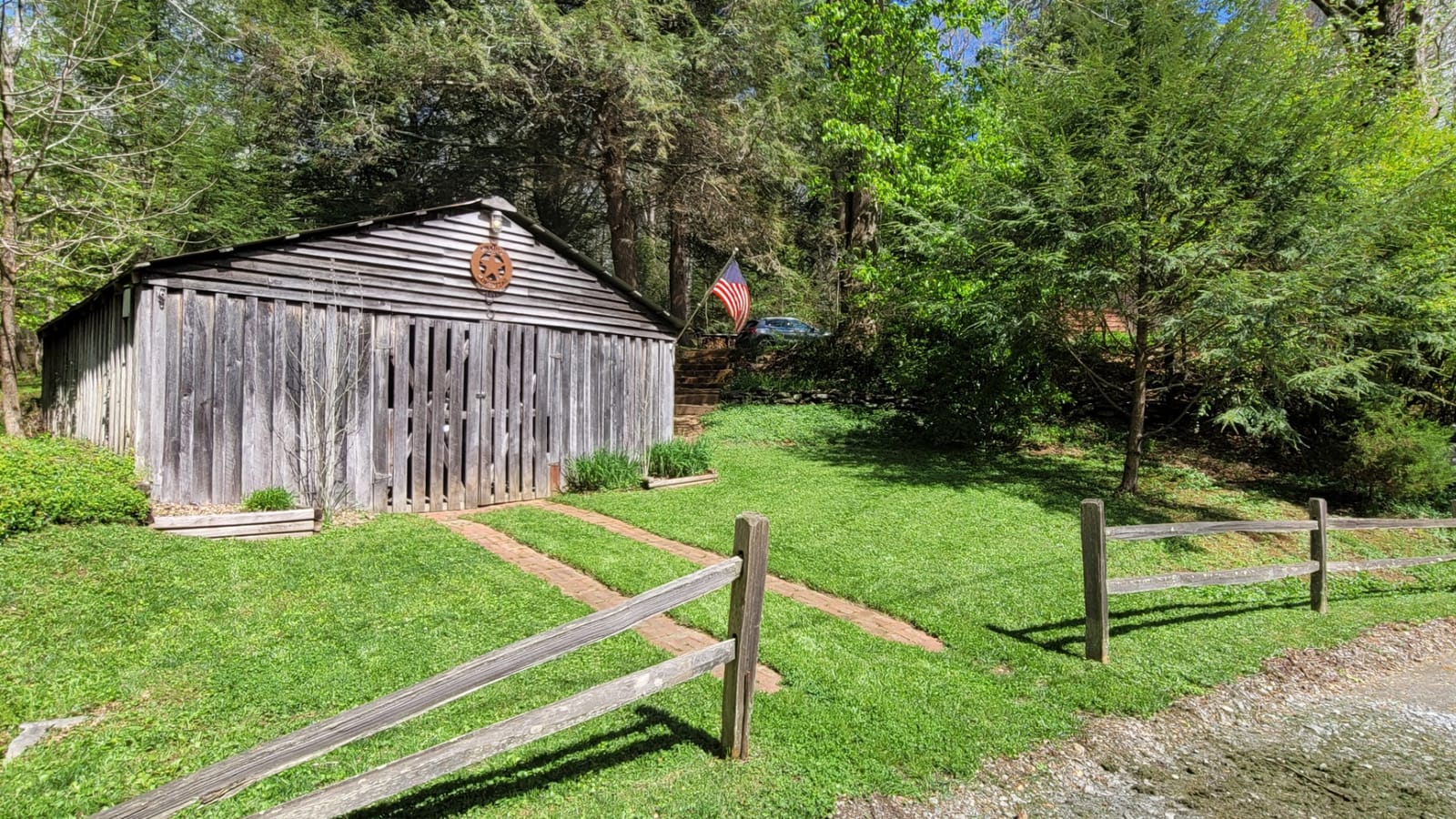
Universal does not mean universal. Measure the clearance between your mower’s rear and any obstacle at the narrowest point of your route, especially at gates, because a loaded 130 lb hopper is a long trailer tongue. If your route includes a gate narrower than about 36 inches, plan to carry sections past the gate or pick a spreader that disassembles quickly.
Know that flow control is a manual reach-back
There is no auto-stop on this model, so the flow lever has to be pulled by hand as you turn. That is the most common recurring usability complaint in the reviews, and it is easier to live with if you plan your passes so that turns happen at the ends of long runs rather than mid-strip. Greasing the gearbox on day one and checking the spring pin is fitted also prevents most of the early failures owners report.
2. Agri-Fab 130 lb Push Broadcast Spreader — Best Value for Big Yards
Agri-Fab 45-0462 Push Broadcast Spreader,Orange & Black,130-lb Capacity
130 lb hopper
25,000 sq ft coverage
13 in x 4 in pneumatic tires
Direct rod control
Pros
- Powder-coated steel frame and durable poly hopper holding 130 lb
- 13 in x 4 in pneumatic tires roll over hills and uneven ground
- Direct rod control gives a calibrated repeatable flow rate
- Spreads evenly with minimal clogging and shuts off cleanly
- Tall handle keeps taller users from hunching
Cons
- Agitator is only a cotter pin so damp material will not flow
- No side deflectors so product flies back at your legs
- Flow lever can fail to fully close and the flapper may need hand adjustment
If you want the capacity of a tow-behind but do not own a tractor, this push spreader is the strongest buy in the group, and it carries the highest average rating of the eight. Owners frequently compare it favorably to cheaper plastic big-box models, and the reason is not subtle: a powder-coated steel frame and a 130 lb poly hopper are simply harder to wear out than an all-plain push cart.
The 13 in by 4 in pneumatic tires are the detail that separates it from the streaking machines people complain about in lawn forums. When a spreader runs on hard skinny plastic wheels, granules build up, the pattern narrows, and you get dark stripes. Pneumatic tires at this width spread that weight out and keep rolling over hills without hopping.
The direct rod control is a plain, honest mechanism. You move a lever, the gate opens, and the same lever position gives you the same flow rate, which is exactly what calibration depends on. Owners report even spreading with minimal clogging and a clean shutoff with no leakage, and the tall handle keeps the machine comfortable for anyone over about five foot ten.
Two things work against it. The agitator is only a cotter pin, so damp or lumpy material will stall in the hopper until you shake the frame, and there are no side deflectors, which means granules bounce off your shins as you walk. Assembly runs roughly 1.5 to 2 hours, so budget an afternoon for the first setup.
Best choice when you have no towing vehicle
This is the model to beat for a half acre when a riding mower is out of reach or the property is too full of trees to tow anything behind. At 130 lb it still covers about 25,000 sq ft per load, so the refill math is as good as the tow-behind. A handheld or a 25 lb push model would force you back to the bag three or four times for the same job.
Keep material dry or learn to shake the hopper
The cotter-pin agitator is the honest flaw here. It will not break up a clump or scrape the bottom of the hopper, so damp fertilizer, moist compost, or wet manure will bridge and stop. Store your product under cover, spread on a dry day, and if you must spread damp material, expect to rock the frame as you walk. Also plan for granules at your legs; there is no side deflector to stop them.
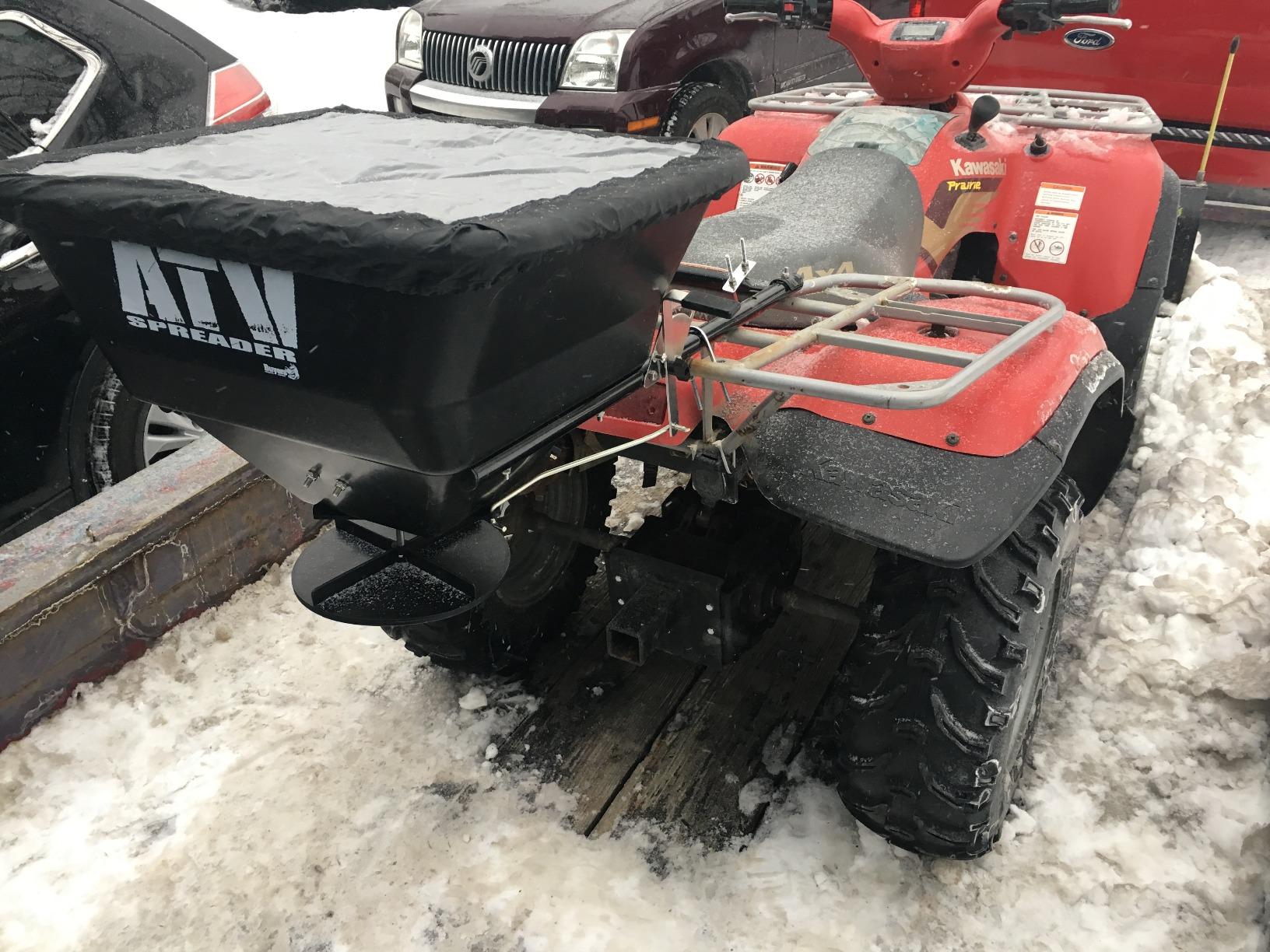
3. Buyers Products ATVS100 100 lb ATV Rear Rack Spreader — Best for ATV Owners
Buyers Products ATVS100 100 lb ATV Rear Rack Mount Broadcast Spreader
100 lb poly hopper
Up to 30 ft spread width
Enclosed 12V motor
18 lb unit with rain cover
Pros
- Rustproof polyethylene hopper carries 100 lb and resists salt and fertilizer
- Enclosed 12V motor spreads up to 30 feet wide
- Includes a rain cover to protect the load
- Manual feed-gate regulator gives practical flow control
- Light 18 lb unit that mounts to a standard rear rack
Cons
- Rack fit and load capacity must be confirmed before installation
- Spread pattern throws heavier to one side and may need compensating passes
- No agitator so damp or clumpy material can bridge
A 30 ft throw is the widest broadcast pattern in this group, and on an open property that width is the whole argument. One pass covers more ground than two passes of a 10 ft walk-behind, which is how this spreader covers acreage in a morning rather than an afternoon. The enclosed 12V motor provides the consistent rotation that a wide throw requires.
The 100 lb polyethylene hopper resists corrosion from rock salt and fertilizer, which matters for anyone using the same machine in winter. It weighs 18 lb empty, so mounting and dismounting on a standard ATV rear utility rack is quick, and the included rain cover is a genuine bonus on a machine that will live in a bed rather than a shed.
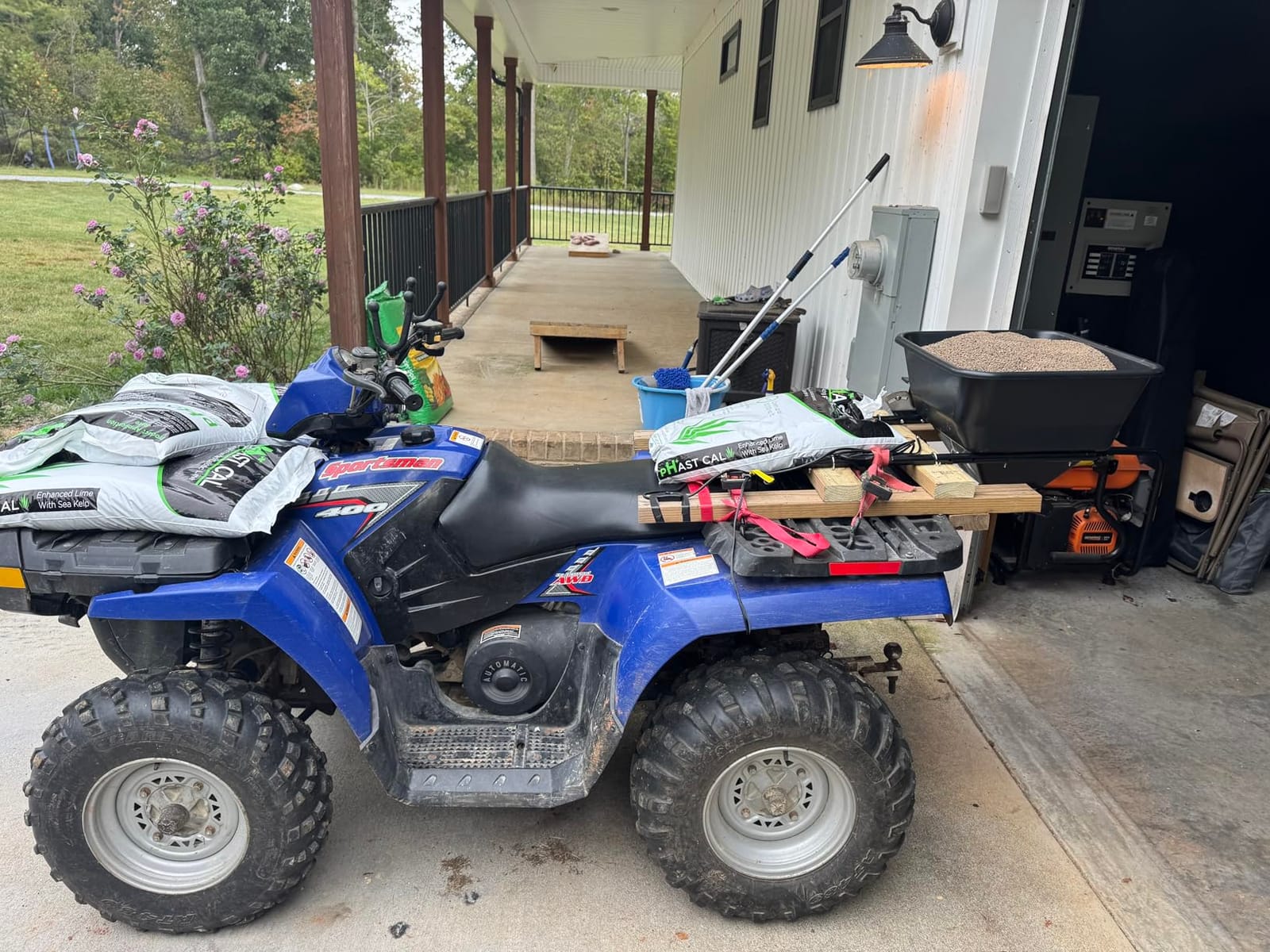
The manual feed-gate regulator is simple to adjust and gives you workable control over the flow rate. It is not a precision instrument, and owners are candid that the pattern throws a bit heavier to one side, which they manage with cross-passes in the opposite direction. The most common piece of advice in the reviews is to keep material completely dry and clump-free.
Before you buy, confirm two things on your own machine. The rear utility rack has to be rated for the loaded weight, and the rack geometry has to match the mount. Getting this wrong means the hopper sits too far back or too high, and no amount of adjustment fixes it.
Best for open acreage with a straight pass to drive
If your large lawn is pasture, a new-build plot, or an orchard with long open runs, the 30 ft pattern turns this into the fastest tool here. ATV owners rate it as good value for the capacity and throw it delivers, and it handles seed, fertilizer, animal feed, bagged rock salt, and ice melt without changing machines.
Expect to cross-pass and keep the load dry
Two honest limitations. The pattern is directional rather than symmetric, so budget for a second pass against the first to even things out, and the hopper has no agitator at all, which means damp material stops flow completely rather than merely slowing it. Treat this as a dry-weather, free-flowing-granule tool and it will serve you well for years.
4. VEVOR 100 lb Walk-Behind Push Spreader — Best for Fast Setup
VEVOR Broadcast Spreader 100 lbs Capacity Walk-Behind Push Spreader Black | For Lawn Garden, 0-9.8 ft Spreading Width, 13 in All Terrain Pneumatic Tires, Hopper Grate for Seed Fertilizer Salt Ice Melt
100 lb / 56L hopper
Up to 9.8 ft spread width
13 in all-terrain pneumatic tires
30-scale flow control
Pros
- 100 lb capacity in a 56L hopper covers a large area in one fill
- Pre-installed key components cut assembly time
- 13 in all-terrain pneumatic tires grip uneven ground
- Infinite adjustment across a 30-scale control system
- Powder-coated carbon steel frame and sealed gearbox
Cons
- Spread width is narrower than the 10-12 ft offered by tow spreaders
- Wheel speed changes the spread width so pace must stay consistent
The pre-installed design is the reason this one stands out. Key components ship already fitted, and the manufacturer claims that cuts assembly time by roughly 60 percent, which in practice means many owners are spreading the same afternoon the box arrives. On a big lawn that matters, because the alternative is a lost weekend before the work even starts.
The trapezoidal hopper is a quiet but real improvement. Its shape keeps material moving evenly toward the gate rather than letting a heavy pile sit dead center, and the 30-scale infinite adjustment gives finer control over the flow rate than a simple notched lever. The 100 lb capacity in a 56L hopper is a genuine large-lawn number, not a small spreader with a big label.
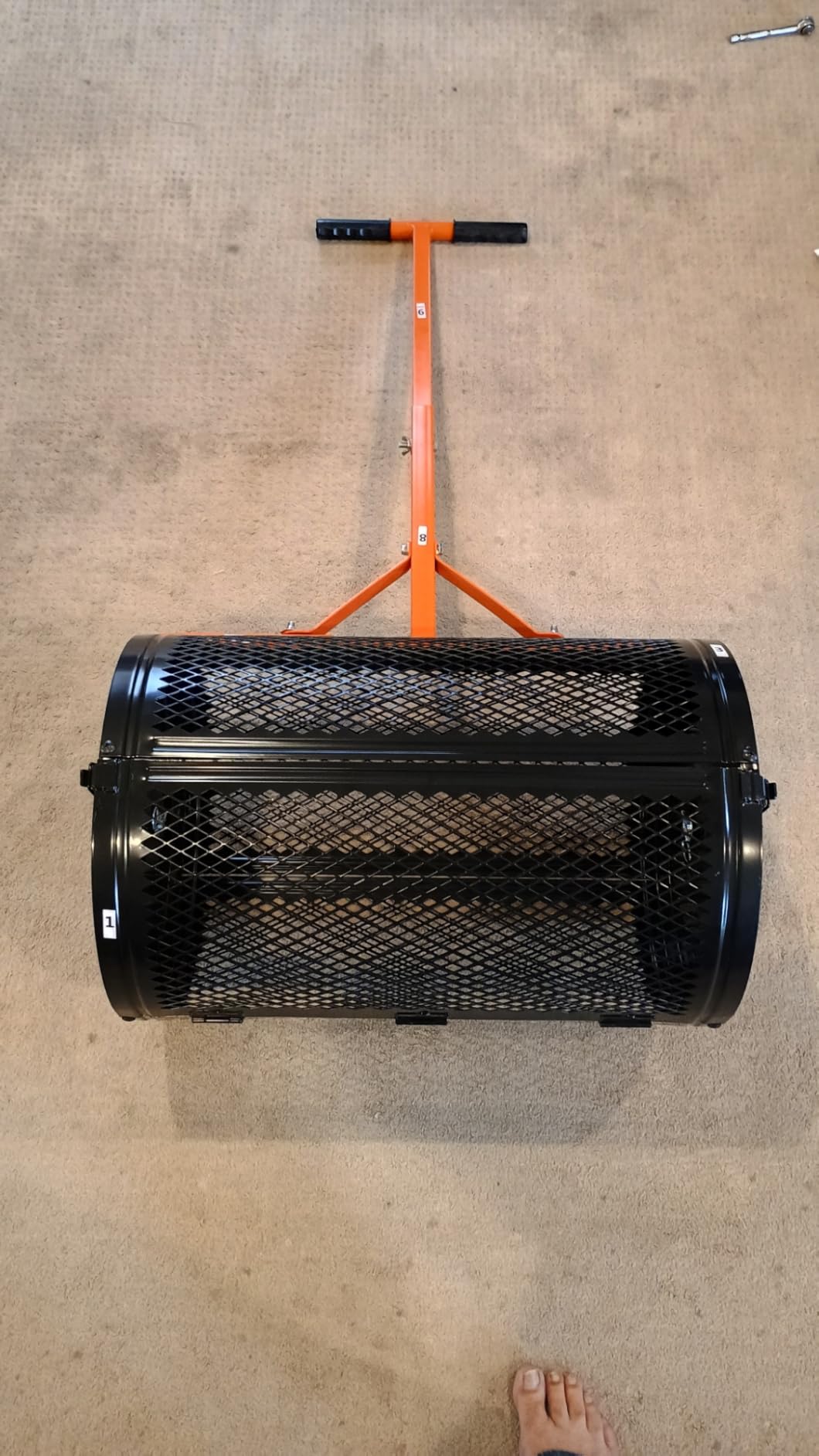
The 13 in all-terrain pneumatic tires with anti-slip rubber roll over uneven ground and give the machine real grip when you are pulling it back up a slope. The powder-coated carbon steel frame and sealed gearbox are built to resist corrosion, which is the right call for a machine that will handle ice melt as well as fertilizer.
There is one tradeoff you should decide on before buying. The listed spread width tops out around 9.8 ft, narrower than the 10 to 12 ft a tow-behind delivers, and the width changes with wheel speed. On a very large lawn, that means more passes and a steadier pace than a wider machine would demand.
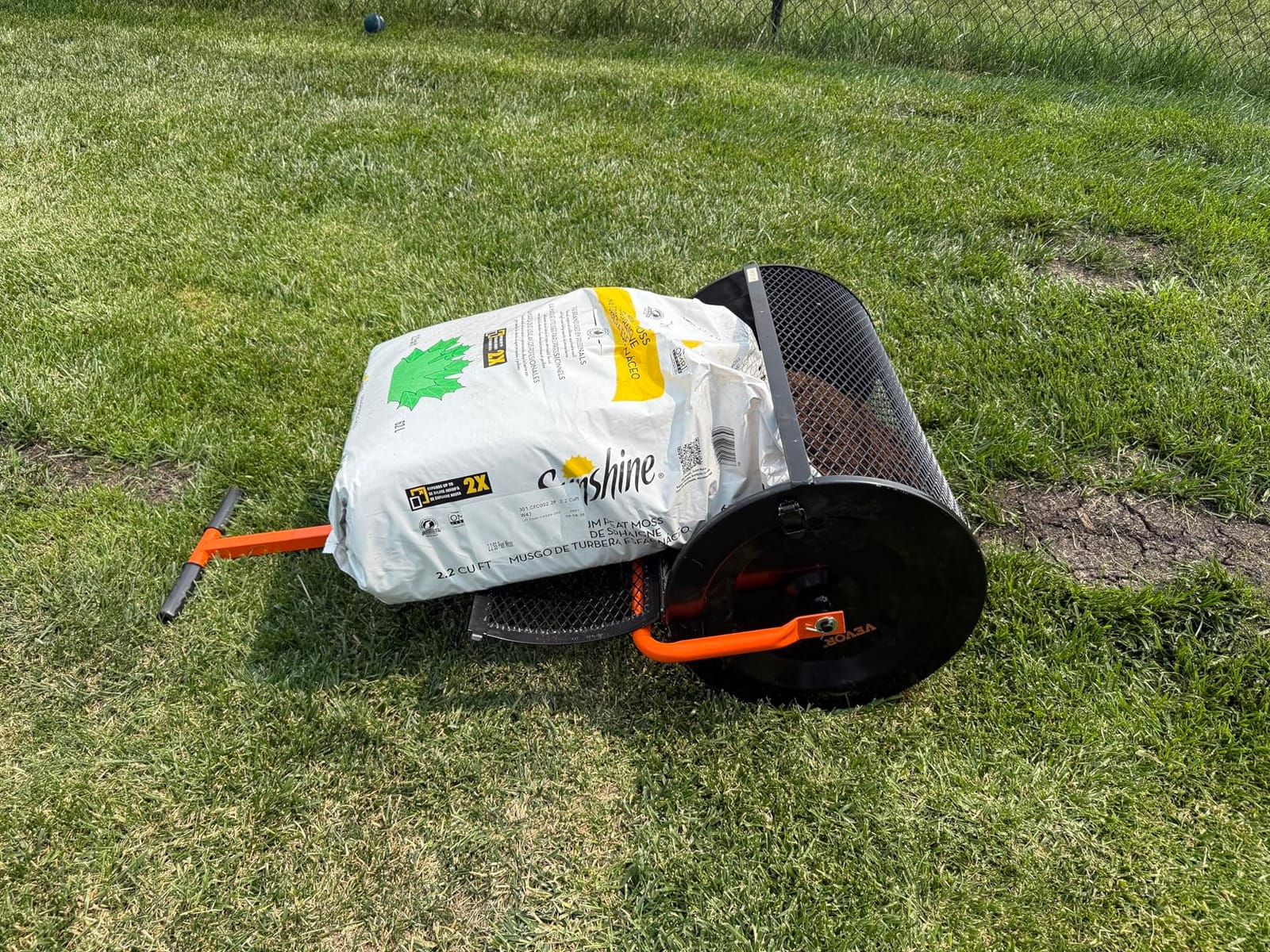
Best when you want capacity without a tow-behind
Owners routinely call this the best price-to-capacity ratio in the category, and it holds more than 1,100 reviews at a 4.2 average. If you have a large lawn, no tractor, and limited patience for assembly, it covers 100 lb of material in a single fill and gets you spreading quickly. The sealed gearbox and rust-resistant hopper also make it a fair choice for winter salt duty.
Hold a steady pace or the pattern narrows
The narrower throw is the honest cost, and reviewers note that the spread width varies with how fast the wheels turn. Pick a comfortable walking speed, mark your first pass, and keep to it. If you let the machine roll faster on the open lanes, you will lay less material there and end up re-doing the property. For anything past an acre, the pass count starts to add up.
5. EarthWay 2150 50 lb Commercial Broadcast Spreader — Best for Rough Ground
EarthWay 2150 Commercial 50 LB Broadcast Fertilizer Spreader. Heavy-Duty Walk-Behind Push Garden Seeder with Adjustable Drop Rate and Driving Handle. Large 13 inch Pneumatic Stud Tires
50 lb hopper
13 in pneumatic stud tires
Clog-free grate
Three-hole drop system
Pros
- 13 in high-flotation pneumatic stud tires glide over rough uneven lawn
- Clog-free grate separates large chunks and material keeps flowing
- Three-hole drop system with side-spread control for feathered edging
- Fully enclosed gearbox works in damp conditions
- Drop rate adjusted directly on the spreader
Cons
- 50 lb hopper is the smallest capacity in this group and means the most refills
- Listing shows only a one year limited warranty
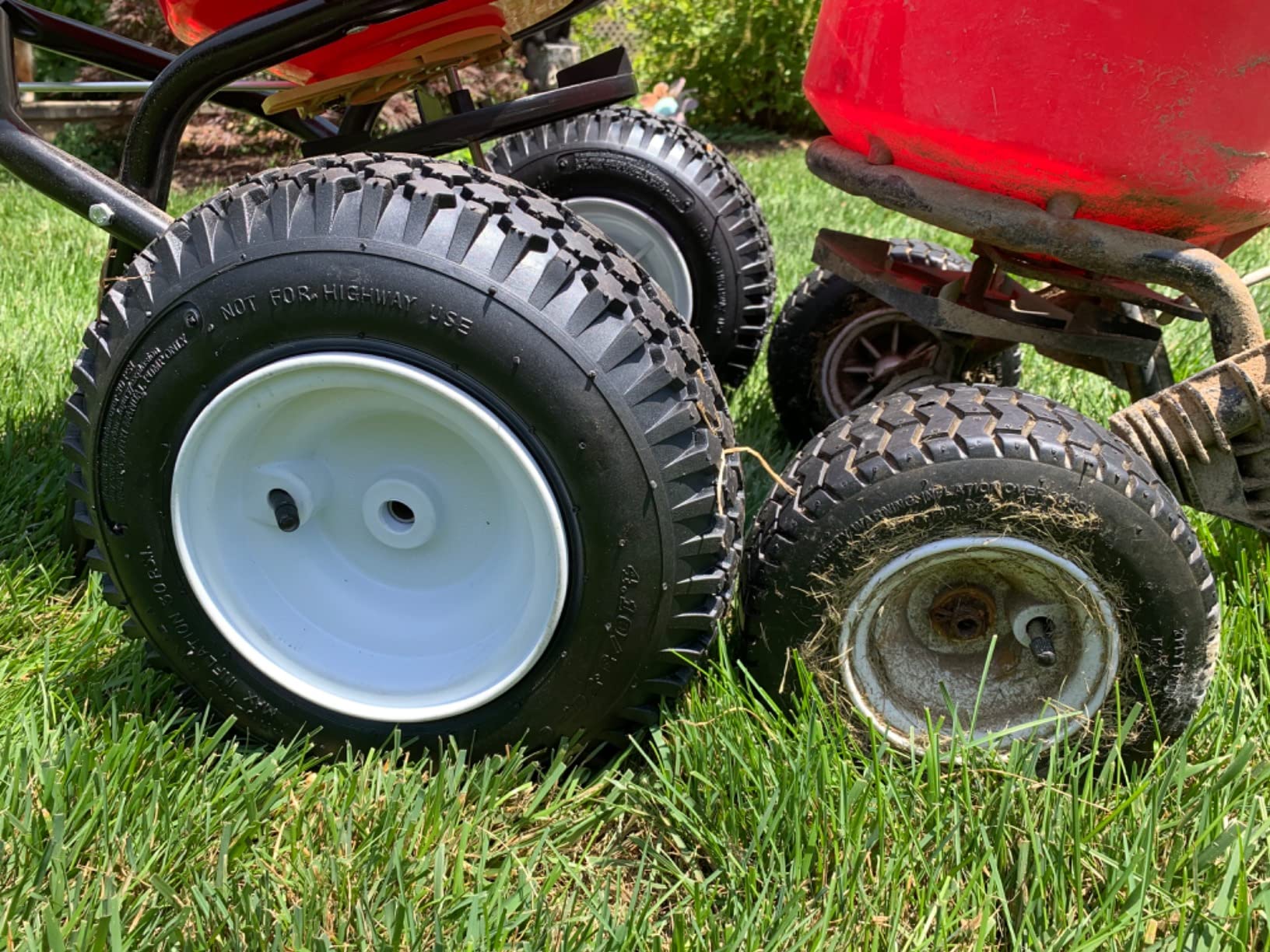
This is the traditional no-nonsense commercial walk-behind, and the reason to buy it is the tires. The 13 in high-flotation pneumatic stud tires on rustproof poly rims glide over rough, uneven ground that stops a conventional wheel dead. If your large property includes stony patches, thin topsoil, or ground that has never been properly leveled, that traction is worth more to you than raw capacity.
The clog-free grate is the feature owners mention most. It slides in and out, and it separates out large chunks so material keeps moving instead of bridging. The three-hole drop system with side-spread control produces an even pattern with feathered edging, which is unusually tidy for a broadcast machine and reduces the overlap you need at your borders.
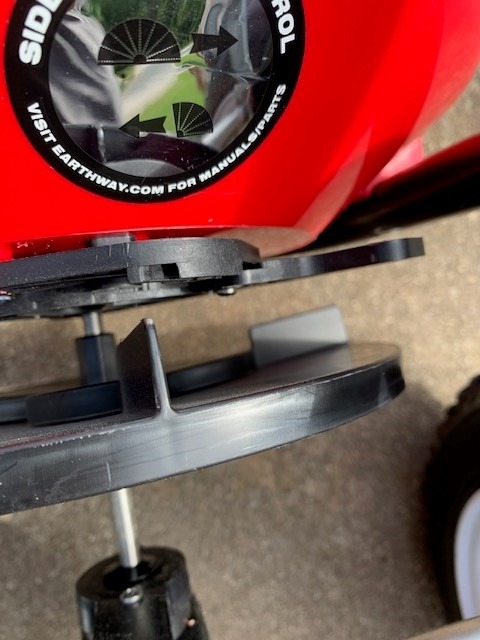
The fully enclosed gearbox is rated to work in damp or moist conditions, and long-term owners describe the machine as maintenance-light and durable. Drop rate is adjusted directly on the spreader, so you are dialing in the application rather than hunting for a setting on a separate chart.
Be realistic about the 50 lb hopper, because it is the smallest capacity in this group by a wide margin. On an acre-plus property, that means noticeably more refill trips than the 100 lb and 130 lb machines here, and refill time is exactly what you are trying to eliminate. The listing also shows only a one year limited warranty, though EarthWay backs it with lifetime technical support.
Best for rough, thin, or uneven ground
If your lawn is more field than lawn, the stud tires and the removable grate solve problems the other machines here create. Grate-equipped, enclosed-gearbox spreaders also tolerate damp conditions that will eventually corrode an open gearbox. For a property with gravelly patches, sandy spots, or ground that dries hard in summer, traction and flow reliability outrank hopper size.
The refill math is the reason to look elsewhere
Fifty pounds sounds like plenty until you work out the acres. A typical application on a large property can eat several hundred pounds, which turns into many trips back to the bag, and every trip is time you are not spreading. This is the machine to choose when the ground is the hard part. If the ground is fine and the acreage is not, spend the extra money on a 100 lb or larger hopper instead.
6. Buyers Products UTVS16 150 lb UTV Spreader — Biggest Hopper in the Group
Buyers Products UTVS16 150 lb UTV ATV Receiver Mount Broadcast Spreader
150 lb / 15 gallon hopper
Up to 30 ft spread width
2 in receiver hitch mount
Sealed 12V motor
Pros
- Large 15 gallon and 150 lb hopper means rare refills on big properties
- Rust-proof poly hopper stands up to fertilizer and salt
- Sealed 12V motor delivers a consistent 30 ft throw
- Adjustable mounting holes let the hitch tube be shortened
- Hopper pins off the tube frame for storage
Cons
- No agitator so damp or lumpy material stops flow completely
- Hopper can sag when loaded and a strap is needed
- Flow-control lever is poorly designed and often not reachable from a cab
- Hitch tube can stick out too far and need cutting
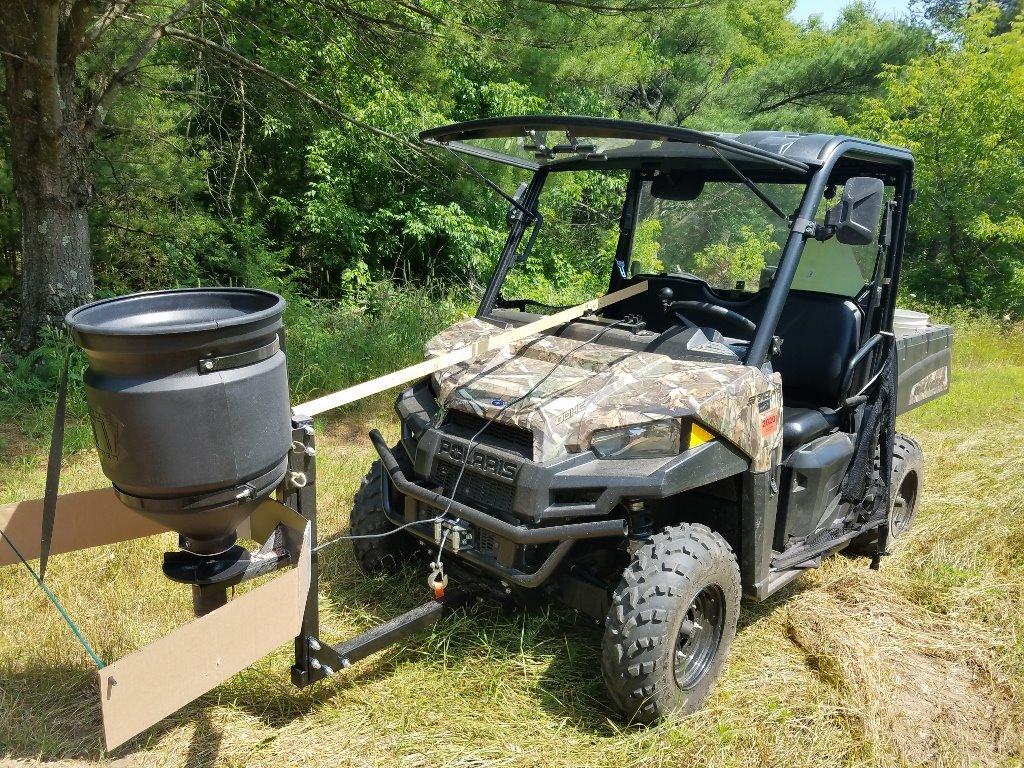
This is the largest hopper in the group, and on paper that makes it the fastest way to cover a very large property. A 15 gallon, 150 lb load with a 30 ft sealed-motor throw means you fill roughly once and drive. If your acreage is genuinely large and your UTV is the vehicle you already use for everything else, nothing else here moves that much material per trip.
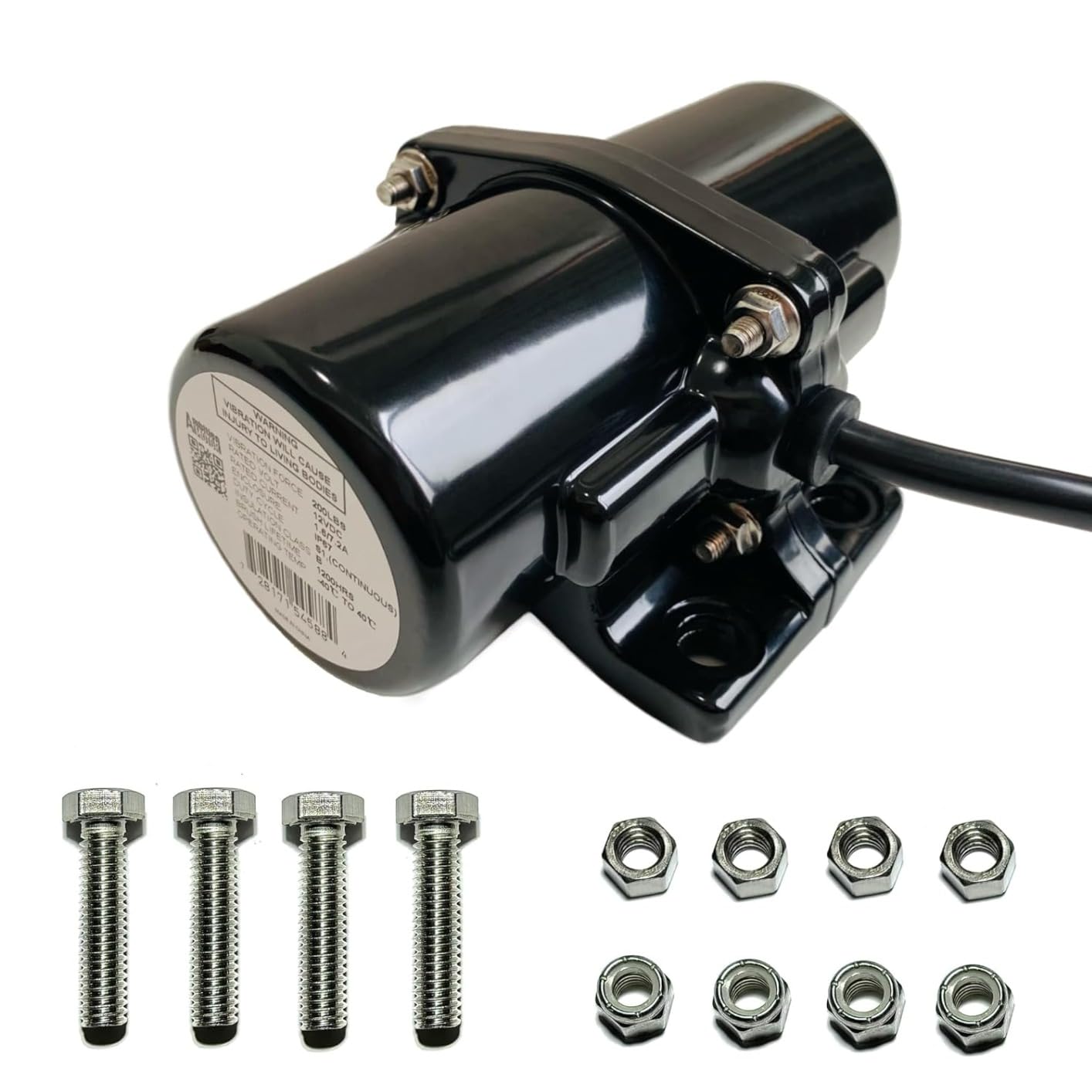
The hardware underneath is solid. Stainless steel fasteners, a rust-proof poly hopper, and adjustable mounting holes that let the hitch tube be shortened to fit many vehicles are all the right choices. The salt shield is well positioned to protect the undercarriage, and the hopper pins off the tube frame for storage.
What holds it back is the list of small things you will probably have to fix. The rating here is the lowest in the group, and the reviews explain why: the machine is genuinely capable, but most owners end up modifying something. The missing agitator is the big one, since damp material stops flow completely rather than just slowing down.
The hopper can sag toward the spinning spreader when fully loaded, which needs a strap. The flow-control lever is poorly designed and often unreachable from a cab. On some ATVs the hitch mount tube extends too far and has to be cut and redrilled, and the cigarette-lighter plug and wiring harness are reported to break or run short.
Best for owners who are comfortable fabricating
Buyers who like working with metal and wiring report that this spreader performs very well after modifications. A support strap, a bungee on the hopper, a repaired harness, and a reachable control lever turn it into a capable machine. If you take that in stride and the capacity figure matters most, 150 lb and a 30 ft throw is hard to argue with.
Not the choice if you want plug-and-play
If you want to bolt it on and go, this is not the one. Every owner reporting a problem reports a modification as the fix, and parts support is described as largely unresponsive. The no-agitator hopper also means dry, free-flowing material only, which rules out wet manure, damp compost, and fresh topsoil. Weigh the capacity win against that list before you commit.
7. Buyers Products ATVS15A 15 Gallon ATV Spreader — Best for Seeding Pasture
Buyers Products ATVS15A ATV 12V Broadcast Spreader 15 Gallon Hopper
15 gallon poly hopper
5-30 ft adjustable spread width
12V electric motor
ATV utility rack mount
Pros
- 15 gallon poly hopper reduces refill stops on larger jobs
- Adjustable 5-30 ft spread width gives real control over placement
- 12V electric motor runs consistently off an ATV or UTV power source
- Heavy poly tank with a built-in funnel will not rust
- Installs and removes in a few minutes with no modifications
Cons
- No agitator so material must be dry and clump-free or flow stops
- Mounting bracket can tilt forward when loaded and may need a brace
- Flow control gate design is frequently described as poor
- Some units ship with only a short pigtail and no wiring harness
Grass seed is light, and that changes the math. A 15 gallon hopper full of seed goes a long way, which is why several owners report seeding two acres of pasture without complaint. If your large property needs overseeding rather than fertilizing, this capacity is a genuine advantage over a fertilizer-sized machine, and the adjustable 5 to 30 ft spread width lets you place seed precisely where you want it.
The 12V electric motor provides consistent broadcast performance at a normal pass speed, and the built-in funnel in the heavy poly tank keeps material moving without rusting. The hopper will not corrode from salt or fertilizer, and install and removal take a few minutes, so it comes off when you are doing something else.
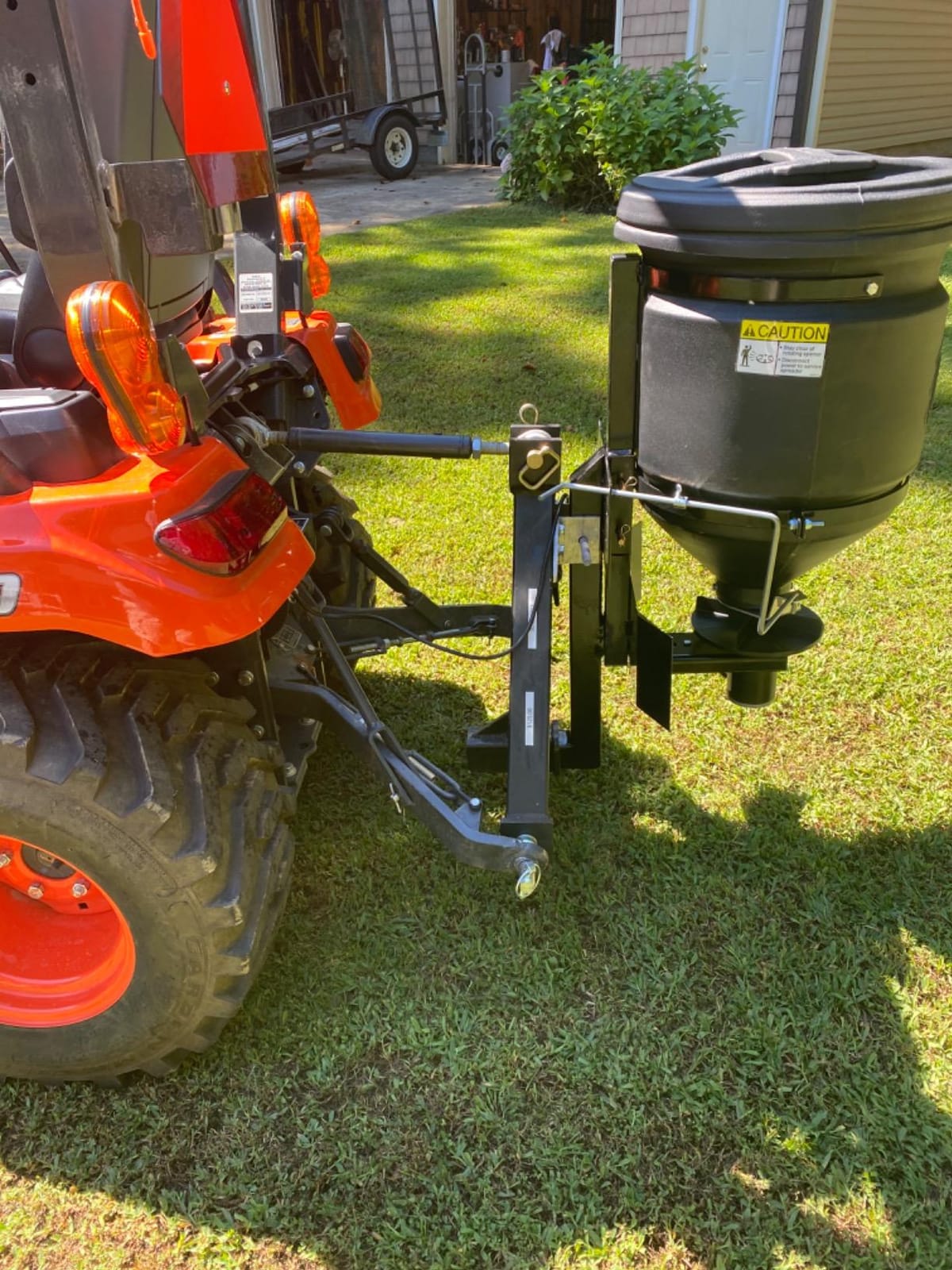
What makes this one work for owners without mods is the mounting bracket. It is stable enough that many owners fit it with no modifications at all, which is more than can be said for the other rack-mounted spreaders in this group. For consistent seed work at a 5 mph pass speed, the uniform application owners describe is the reason it earns its place.
The two persistent problem areas are the mount under load and the flow gate. The bracket can pitch forward when the hopper is full, and owners who add a fabricated brace or a ratchet strap report the spreader then performs well for the long term. The flow gate design is the most common complaint in the reviews.
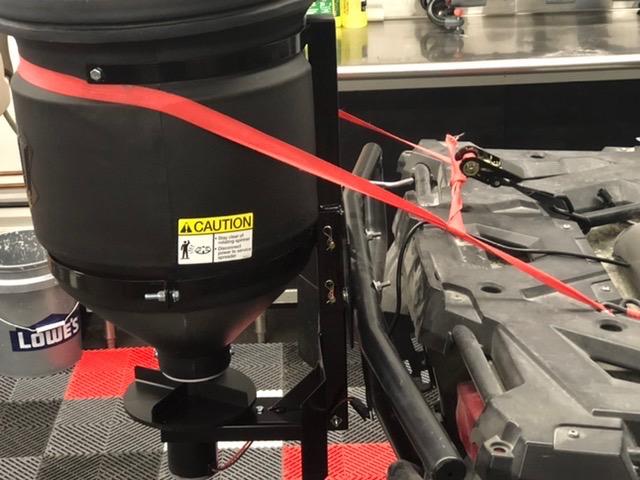
Best for overseeding large areas with grass seed
Overseeding a half acre or more, or seeding a new plot, is where the wide 15 gallon hopper pays off. The adjustable width means you can spread seed at 30 ft on open ground and pull it back to 5 ft where you are working close to an edge or a bed. Owners who fitted a support brace report the mount holds and the gate can be adjusted once and forgotten.
Plan on one modification and one dry-weather rule
Two things to know up front. The flow control gate needs attention in most cases, and the mount can tilt forward under a full load, so a ratchet strap or a simple brace is a worthwhile five-minute job. There is also no agitator, so keep material dry and clump-free. If you are spreading seed from fresh bags stored dry, this runs without drama.
8. Agri-Fab 175 lb Tow-Behind Drop Spreader — Best for Precision Near Hardscapes
Agri-Fab Tow Behind Lawn and Garden Drop Spreader for Seed, Fertilizer, Salt and Ice Melt, 175 lb Capacity with 42 In Spread Width
175 lb / 17 gallon hopper
Covers up to 1 acre
42 in drop width
Independent side control
Pros
- Largest hopper here at 175 lb and 17 gallons covering up to a full acre
- Drop design keeps fertilizer off driveways and away from neighboring lawns
- Each side of the hopper is controlled independently so output stays even in turns
- 42 in spread width matches a riding mower cut width
- Alloy steel frame with a mid-hopper partition that stops shifting on slopes
Cons
- Flow control arm creeps toward off under bumps and is hard to reach from a zero-turn
- Sharp unfinished metal edges can cut hands during assembly
- Thin factory paint means it will rust within months outdoors
Even on a large lawn, a portion of the property is not open turf. Driveways, walks, garden beds, and a neighbor’s boundary all need a drop spreader, and this is the best one here for that work. Material is released straight down in a controlled band instead of being thrown outward, so nothing lands on surfaces where it will wash off or burn.
It also has the largest hopper in the group at 175 lb and 17 gallons, covering about 40,000 sq ft or up to a full acre per fill. The 42 in spread width lines up with a riding mower cut width, which means you can follow your own mowing pattern and correct the strips you missed. Each side of the hopper is controlled independently, so the output stays even while you turn.
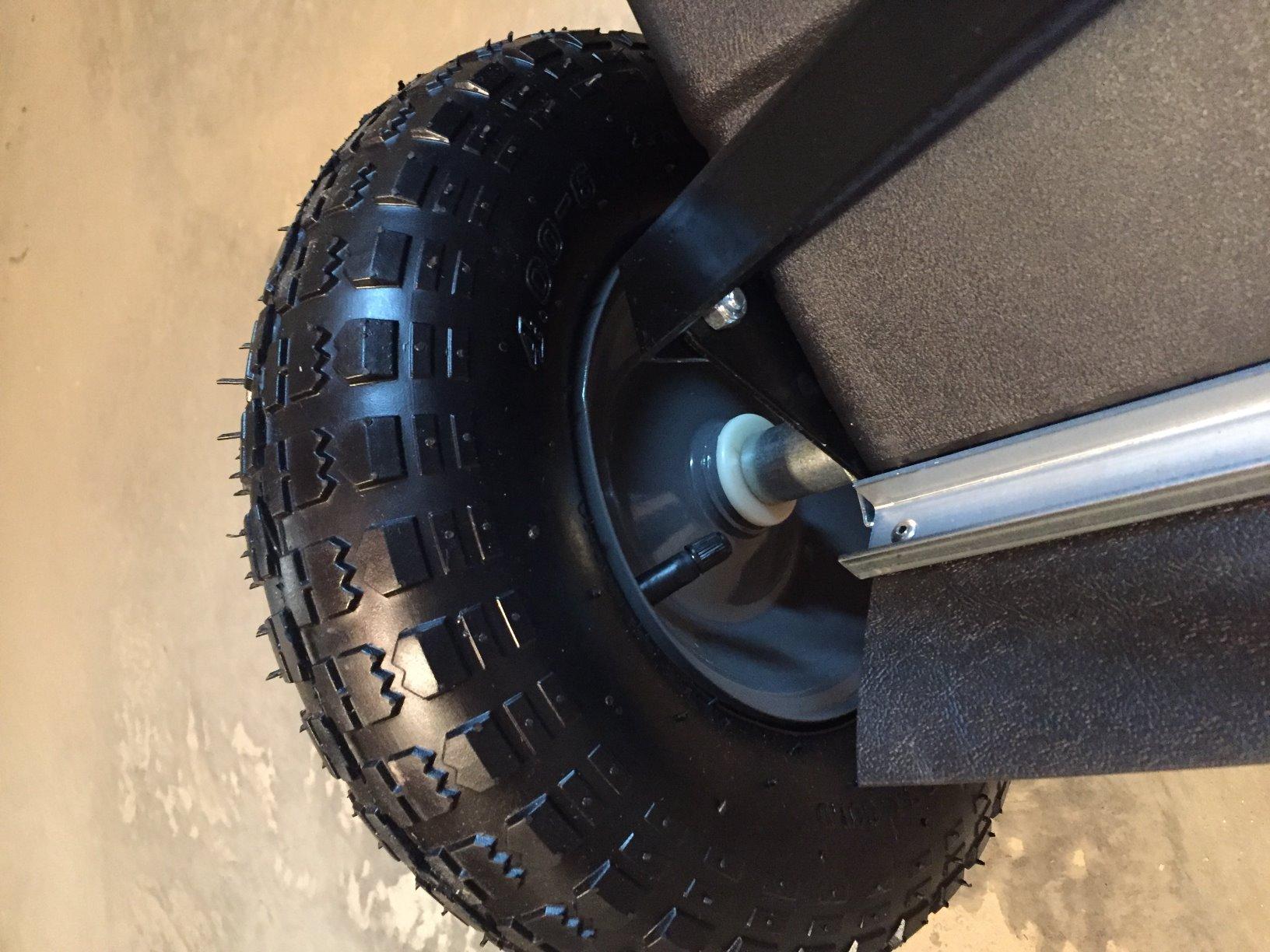
The heavy alloy steel frame is braced, and a mid-hopper partition stops material shifting on slopes. Owners on acre-plus and sloped properties report that it does not tip over and stays stable on steep grades, which is exactly the behavior you want from something you are pulling with a tractor. It is also the one spreader here rated for weed control products alongside seed, fertilizer, salt, and ice melt.
The negatives are about finish rather than function. The flow control arm creeps toward off under bumps and often cannot be reached from a zero-turn mower, and there are sharp unfinished metal edges that can cut your hands during assembly. The factory paint is thin, so it will begin to rust within months if it lives outdoors.
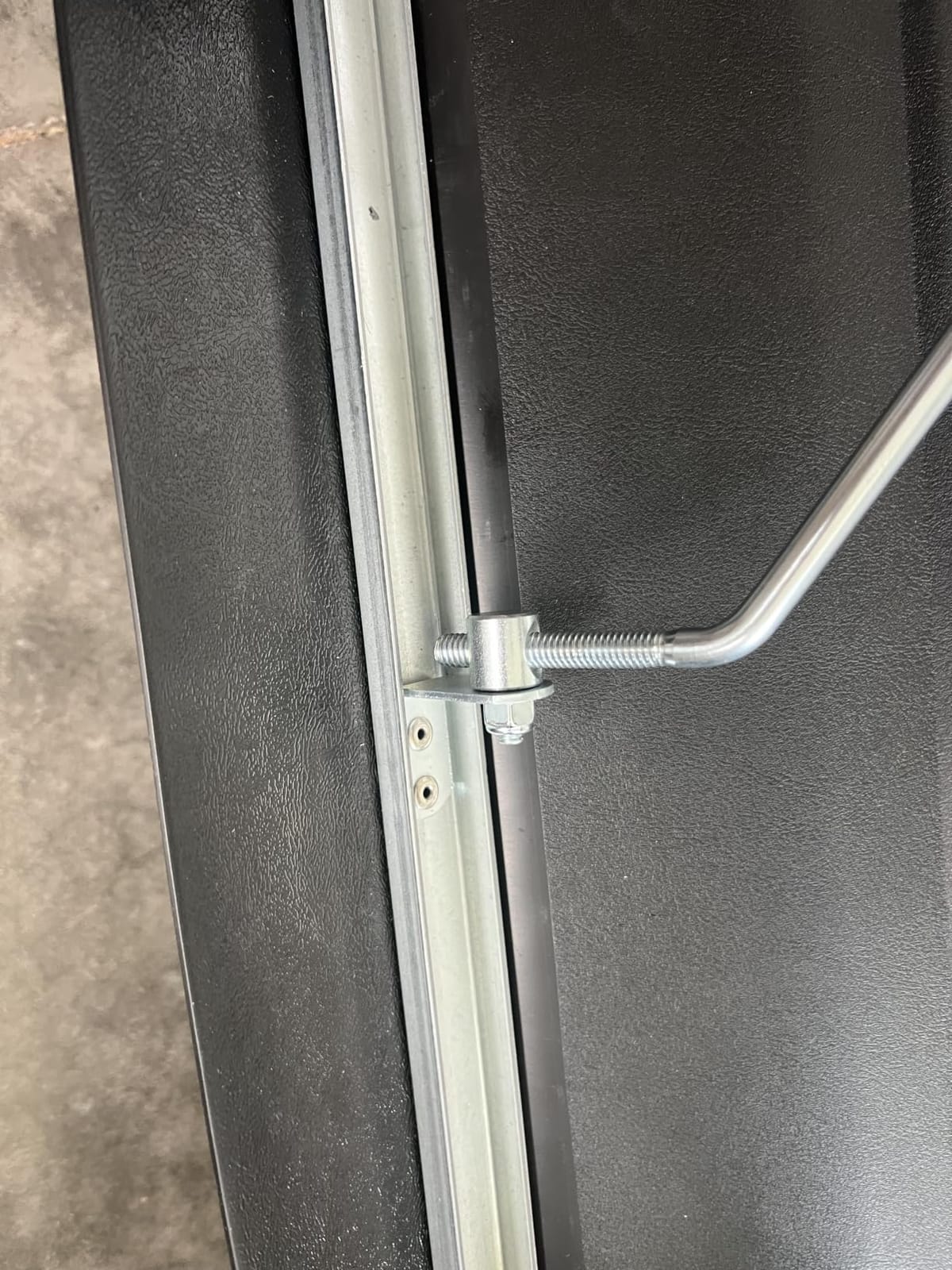
Best for edges, slopes, and anything beside a driveway
This is the machine for the parts of a large property a broadcast spreader cannot serve. The drop pattern keeps fertilizer off hardscapes and out of neighboring yards, and the independent side control keeps the rate even in a turn rather than dumping on one side. If you maintain a large lawn with a lot of border, this is where the money is well spent.
Mind the flow arm and keep it out of the weather
Two practical warnings. The control arm drifts toward off over bumps, so check it at every turn and after any rough stretch, and if you tow with a zero-turn mower, confirm you can reach the lever from the seat before you buy. On storage, the thin paint means you should not plan to leave it outside; touch up the frame and keep it under cover, or the corrosion starts within months.
What Size Spreader Do You Need for Your Lawn?
Work from acreage, not from a label. A typical lawn application runs somewhere in the range of a few pounds per thousand square feet, and the number that matters is how many pounds you need per treatment. Once you know that, divide by hopper capacity and you have your refill count before you spend anything. The bands below map lawn size to the class of spreader that handles it comfortably.
The pattern to notice is the jump at one acre. Up to half an acre, a 100 lb to 130 lb walk-behind does everything you need. Past one acre, walking becomes the bottleneck, and a tow-behind or a rack-mounted spreader driven by an ATV or UTV cuts the hours roughly in half. Our guide to the best strollers for large toddlers and other big-space picks follow the same capacity logic, so if the sizing math here is useful, that framing will be familiar.
A 50 lb hopper on a one-acre property will need several refill stops per application, and each stop is a walk back to the bag plus a walk out again. A 150 lb hopper needs one. That is the entire argument for paying for capacity, and it is a bigger factor on a large property than any single feature on the spec sheet.
Lawn size to spreader class
Use these bands as a starting point rather than a rule. A property with a lot of obstacles or tight access may want a smaller machine that is easier to maneuver, and a property that is wide open will reward a wider throw even at a lower capacity. As a general guide, quarter acre and under suits a 25 lb to 50 lb walk-behind, half acre suits 100 lb to 130 lb, one acre and above suits 150 lb and up on a tow-behind or rack mount, and anything past two acres is a job for the widest pattern you can get away with.
One more practical number: walk your property with a tape and count your obstacles before you commit to a tow-behind. A tow-behind that cannot clear a gate or a downspout will cost you more time than the refills ever would.
Who Makes the Best Tow-Behind Spreader? Hitch and Vehicle Fitment
The two tow-behind spreaders here are the Agri-Fab 130 lb broadcast and the Agri-Fab 175 lb drop, and between them they cover most large residential properties. Which brand you choose matters less than whether the hitch actually fits, because fitment is the number one purchase blocker people hit and the one most product pages gloss over.
For riding mowers and lawn tractors, a universal hitch that clamps to the drawbar is the simplest path and it is what the 130 lb broadcast uses. For ATVs and UTVs, you generally want a standard 2 inch receiver hitch mount, which is what the Buyers Products spreaders use. The hitch tube length is the variable to check, and adjustable mounting holes let you shorten it on some models rather than cutting steel yourself.
Gate width is the other hard limit. Measure the narrowest point on your full route, not just the driveway, and add clearance for the loaded hopper sitting behind your vehicle. Most farm and estate gates are wide enough for a broadcast spreader but not always for a 50 in wide drop spreader. If you have to lift the spreader over a gate post every run, that is a design flaw in your route, not in the machine.
Rough terrain changes the recommendation again. Pneumatic 13 in tires and a low center of gravity keep a loaded spreader tracking straight on slopes; a spreader that hops or tips on a grade is a spreader that will end up in a flower bed. That stability, more than the spread width, is what owners notice first in the field.
Which Is Better, a Broadcast or a Drop Spreader?
Broadcast is better for speed on open turf, and drop is better for everything with an edge. A broadcast spreader throws granules several feet to each side, so a 10 to 12 ft pass covers ground fast but also lands material on driveways, walks, and beds. A drop spreader releases material straight down in a controlled band, so the pass is narrow but the placement is exact.
For a large lawn, that means you will likely use both. Broadcast handles the acreage, and a drop spreader handles the borders, the slope under a tree line, and the strip along a driveway where overspray would wash onto concrete. That is precisely why the drop model stayed in this roundup even though it is slower.
There is one more consideration on large properties: overlap. A broadcast pattern is a fan, not a rectangle, so the outer edges of each pass are thinner than the center. Overlapping your passes by roughly one foot on each side is what keeps the rate even across the whole lawn, and that overlap is easier to hold when the machine has a consistent throw. Drop spreaders need far less overlap, which is another reason they are forgiving at the edges of a job.
How to Calibrate a Spreader and Set Your Walking Speed?
Calibration is the step that separates an even lawn from a striped one, and it is simpler than most spec sheets suggest. Start with the product label, which lists settings for the material and the target rate. Set the lever there, run the machine over a measured patch, weigh or collect what comes out, and adjust down if you are putting down more than the label calls for. Over-application burns, and under-application starves.
Do this once per material per season rather than every trip. A 30-scale infinite control like the VEVOR uses, or a three-hole drop system like the EarthWay, makes fine adjustment easy, but neither replaces a pan test with your actual product. Damp and dry granules of the same fertilizer can flow very differently, and only a test with your own bag tells you where the lever needs to sit.
Walking speed, overlap, and acres per hour
Most walk-behind spreaders are calibrated for roughly a normal walking pace, about 3 mph, and owners applying seed report consistent results around 5 mph. The rule of thumb is that a 10 ft spread width at a normal walking pace covers roughly an acre every half hour to three quarters of an hour including turns. A tow-behind behind a riding mower or an ATV at road speed covers several acres in that same window.
The single most common cause of streaking is speed variation, not the machine. If you push faster on the open lanes than on the turns, you lay less material in the fast sections. Pick a pace you can hold for an hour, and if you want to compare machine types, run a fixed-length pass with each and see how the pattern width and density change. You will find your answer faster than any spec sheet can give it to you.
Clean it out and store it dry
Granules left in a hopper absorb moisture and turn to concrete, which is how a working spreader becomes a brick. After every use, empty what is left, rinse the hopper and the base plate with water, and let it dry fully before you put it away. On the metal models, a light coat of spray lubricant on the frame and gearbox before storage prevents the surface corrosion that owners report starting within months on outdoor-parked machines.
Frequently Asked Questions
What is the best fertilizer spreader for a large yard?
For a half-acre property, a 100 to 130 lb walk-behind or tow-behind broadcast spreader is the right tool. Above one acre, tow a spreader behind a riding mower, ATV, or UTV, and choose one with at least 150 lb of hopper capacity so you refill once instead of several times.
Which push fertilizer spreader is best?
Among push models, the Agri-Fab 130 lb push spreader is the strongest all-round choice for large yards, with a powder-coated steel frame, 13 in by 4 in pneumatic tires, and direct rod control. It covers about 25,000 sq ft per load and carries the highest average rating in this group.
Is a fertilizer spreader worth it?
Yes, on any lawn above roughly a quarter acre. A spreader delivers a calibrated, even rate that hand-broadcasting cannot, which prevents burned patches, wasted product, and uneven growth. It also shortens the job, since a 10 to 12 ft pass covers far more ground than a person casting by arm.
How fast should you walk with a broadcast spreader?
Aim for a steady pace of about 3 mph, or roughly 5 mph when applying grass seed with a powered spreader. The important part is consistency, not the exact number, because varying your speed changes the deposit rate and causes the streaking people complain about.
Why does my spreader leave streaks?
Streaks usually come from wheels rather than the hopper. Hard skinny plastic wheels pick up granules, deposit them in lines, and change the effective spread width. Switching to a spreader on wide pneumatic tires, cleaning the wheels after each pass, and keeping a constant walking speed fixes most of it.
Final Verdict for Large Lawns
For most large properties, the Agri-Fab 130 lb tow-behind broadcast spreader is the best fertilizer spreader for large lawns you can buy, because a 130 lb hopper over a universal hitch solves capacity and transport in one machine. If you have no tractor, the Agri-Fab 130 lb push model gives you the same capacity on your own legs, and if you ride an ATV, the Buyers Products ATVS100 covers ground faster than anything else in the group.
Whichever one you choose, size it to your acreage, confirm the hitch and your gate widths before it arrives, and calibrate it with a real test of your actual product. Those three steps decide the outcome far more often than the brand on the hopper does. Our other large-space buying guides, including the best extra large playpens for toddlers and the best baby monitors for large homes with music, follow the same rule: match the machine to the size of the job first.