
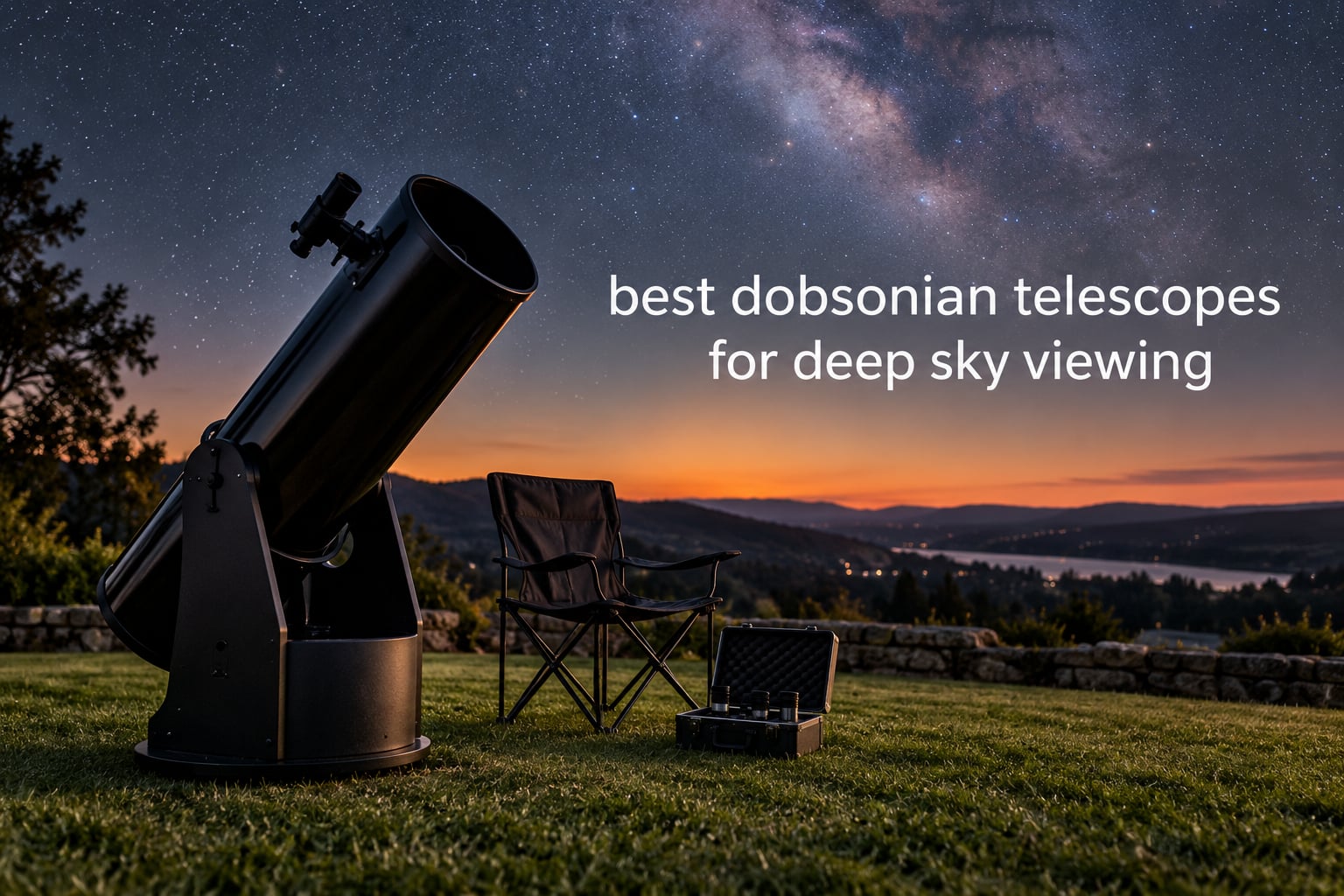
There is a short answer most guides skip. For deep sky viewing, an 8-inch Dobsonian is the sweet spot: it shows the Andromeda Galaxy, the Hercules Cluster and the Ring Nebula with real structure, fits in most cars, and stays light enough for one person to carry. Step up to 10 inches when your site is genuinely dark and you want the fainter galaxies and nebulae to hold detail.
Everything after that is about matching the tube to your constraints. A Dobsonian is a Newtonian reflector sitting on a friction-bearing alt-azimuth mount, which means you push the tube by hand and it stays where you left it. That simple design is why Dobsonians deliver more light-gathering power per pound than anything else you can put in the car.
We spent weeks reading owner reviews across all six scopes below, comparing aperture, focal ratio, tube construction and the small details that decide whether a first telescope survives past its first winter. The shortlist covers a full size ladder, from a 6-inch travel model to two 10-inchers, plus the one 8-inch that solves the hardest beginner problem: not knowing where to point it.
If you are shopping for children rather than yourself, our guide to telescopes for kids covers the setup conversation before you pick an aperture. For adults chasing faint fuzzies, keep reading.
Last updated for 2026. Six models, ranked by how much deep sky detail they actually deliver for the weight you have to carry.
Table of Contents
Top 3 Best Dobsonian Telescopes for Deep Sky Viewing in 2026

Celestron StarSense 8-Inch
- 8-inch 203mm aperture
- 1200mm f/5.9 optical design
- StarSense phone app points the sky
- 2 inch Crayford focuser
- 43.4 pounds

Sky-Watcher Classic 200P
- 8-inch aperture rated to magnitude 14.2
- 2 inch focuser with two eyepieces
- Tension Control handles
- Teflon bearings
- 45 pounds assembled
Sky-Watcher Flextube 250P
- 10-inch 250mm primary
- collapsible truss tube
- 40 pounds assembled
- 2 inch focuser
- right-angle finder
Every Pick at a Glance (October 2026)
| Product | Specs | Action |
|---|---|---|
| Celestron StarSense Explorer 8-Inch Dobsonian |
|
Check Latest Price |
| Sky-Watcher Classic 200 8-Inch Dobsonian |
|
Check Latest Price |
| Sky-Watcher Flextube 250 10-Inch Dobsonian |
|
Check Latest Price |
 Zhumell Z10 10-Inch Dobsonian Zhumell Z10 10-Inch Dobsonian |
|
Check Latest Price |
 Sky-Watcher Virtuoso GTI 150P Tabletop GoTo Sky-Watcher Virtuoso GTI 150P Tabletop GoTo |
|
Check Latest Price |
 HandyDob 6-Inch Ultra Light Dobsonian HandyDob 6-Inch Ultra Light Dobsonian |
|
Check Latest Price |
1. Celestron StarSense Explorer 8-Inch Dobsonian – Best Overall for Deep Sky
Celestron StarSense Explorer 8″ Dobsonian Telescope with Smartphone App
203mm parabolic primary
1200mm focal length
StarSense app pointing
2 inch Crayford focuser
43.4 lb
Pros
- App pointing removes the hardest beginner barrier
- Curated target list works from city skies
- 75 percent of reviews are 5 star
- Stable manual alt-azimuth tracking
- Bright Moon and galaxy views
Cons
- Must be re-collimated after any transport or bump
- Only a 25mm eyepiece is included
The StarSense dock recognises the star pattern overhead and works out where the tube is pointing, then puts arrows on your phone screen so you can steer the scope onto a target. On paper that sounds like a gimmick. In practice it removes the single reason most first telescopes end up in a closet, which is the hour you spend sweeping blindly before giving up.
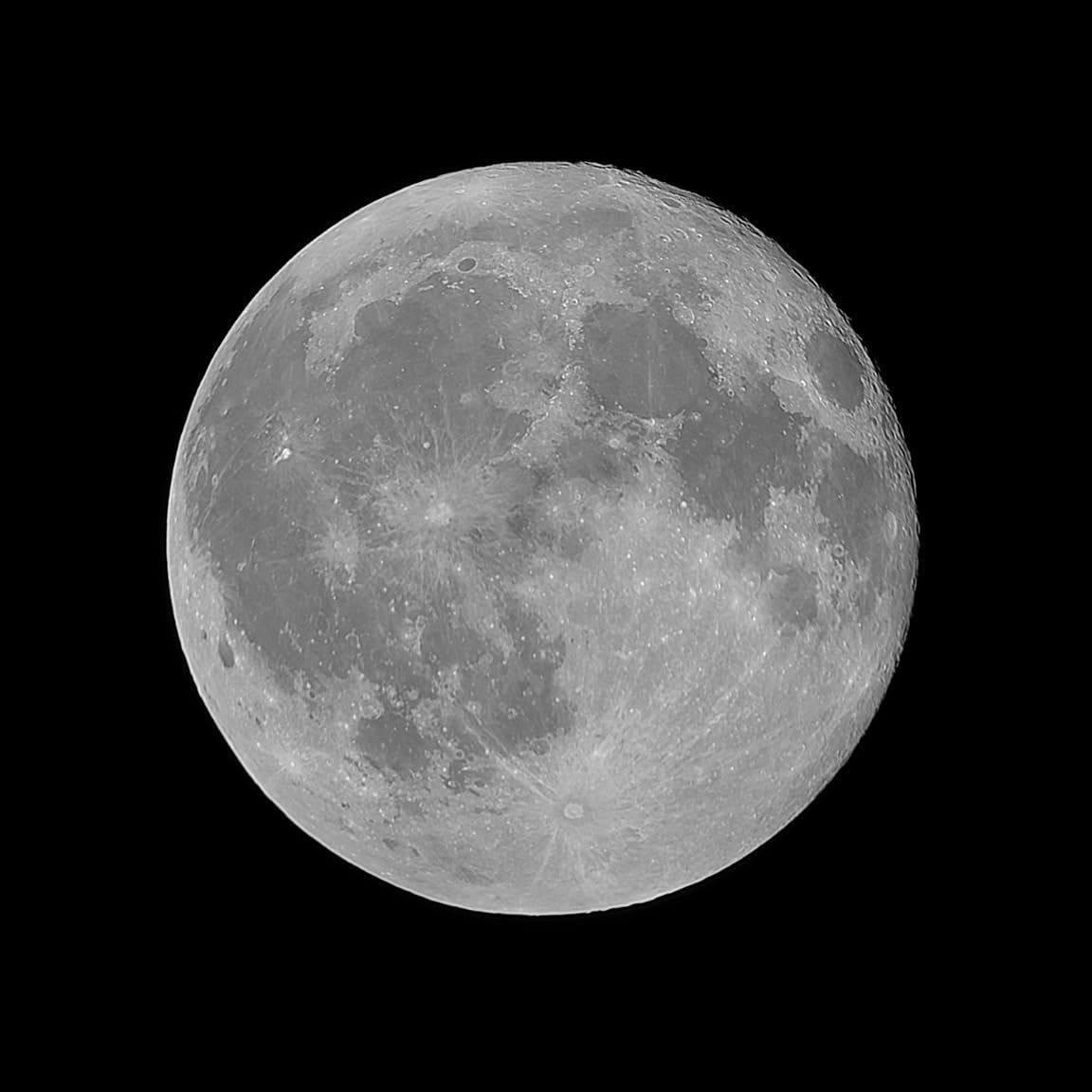
Optically this is an 8-inch 203mm reflector with a 1200mm focal length, so it sits around f/5.9 and gives you wide, bright fields on galaxies. Owners report sharp views of the Moon, Jupiter, Saturn, the Orion Nebula and M31, and the base tracks smoothly enough at high power to hold a planet steady while you watch.
The 2 inch Crayford focuser with a 1.25-inch adapter is a genuine step above the 1.25-inch-only designs, which matters once you start buying wide-field eyepieces. The included 25mm is a fine starter, but reviewers consistently say one cheap 2-inch eyepiece changes the experience more than any other accessory.
What you give up is weight. At 43.4 pounds with a 49 inch depth, this is a two-person lift from the car for most people, and the solid base has no way to collapse for a small flat.
What you will actually see with 8 inches of aperture
M31 fills a low-power field with a bright core and two faint arms, M13 resolves into hundreds of pinpoint stars rather than a blob, and M57 shows as a small grey ring that responds well to an OIII filter. At around f/6 you also get comfortable high magnification for Saturn, which is where the Celestron’s steadier base earns its place.
Where this is the wrong choice
If you already know how to star hop, the app is a nice-to-have rather than a necessity, and several owners report needing a laser collimator after every move. It is also the heaviest of the 8-inch options here and the priciest of the mainstream three, so a value-focused buyer may prefer the Sky-Watcher below.
2. Sky-Watcher Classic 200 8-Inch Dobsonian – Best Value Dobsonian
Sky-Watcher Classic 200 Dobsonian 8-inch Telescope – Solid-Tube – Simple, Traditional Design – Easy to Use, Perfect for Beginners, White (S11610)
203mm fully multi-coated primary
1200mm focal length
Magnitude 14.2 limit
Teflon azimuth bearings
45 lb assembled
Pros
- Largest review base of any pick here
- Tension Control handles aid fine pointing
- Comes with 2 inch focuser and two eyepieces
- Smooth Teflon azimuth bearings
- Bright wide views for the money
Cons
- Most polarised rating spread in the group
- Solid tube never collapses for storage
- No pointing aid of any kind
This is the design the deep-sky community keeps recommending to beginners, and the 240 reviews here are the largest sample in the group. Two thirds of owners rate it five stars for brightness and simplicity. About a fifth rate it one star, almost always for the same two reasons: collimation out of the box, and the fact that nothing helps you find anything.
The spec sheet is genuinely good for the class. Fully multi-coated borosilicate mirrors rated to a faintest stellar magnitude of 14.2, a 2 inch Crayford-style focuser with a 1.25-inch adapter, 25mm and 10mm wide-angle eyepieces, and a 9×50 straight-through finder. That is more usable equipment in the box than several competitors include.
The patented Tension Control handles are the part people underrate. They let you nudge the tube in small increments without the balance shifting first, which makes fine centring on a small galaxy far less fiddly than it sounds.
There is no electronics here at all. You need a star chart and some naked-eye target knowledge, and the learning curve is real. Budget an hour with a planisphere before your first night and that curve flattens considerably.

Why the review spread is so wide
The 19 percent one-star share is not mostly about optics. It clusters around first-night collimation and the bulk of a 45 pound, 49 inch instrument that will not fit anywhere sensible. Owners who spend twenty minutes collimating once and accept the tube as a permanent fixture tend to describe the opposite experience.
Where this is the wrong choice
If you live somewhere with genuine light pollution and no plan to travel, the 19 percent one-star cluster is really pointing at a different problem: without a pointing aid, suburban beginners lose targets before they ever see them. In that situation the Celestron above solves a problem this scope simply ignores.
3. Sky-Watcher Flextube 250 10-Inch Dobsonian – Best 10-Inch for Deep Sky
Sky-Watcher Flextube 250 Dobsonian 10-inch Collapsible Large Aperture Telescope – Portable, Easy to Use, Perfect for Beginners, White/Black (S11720)
250mm multi-coated primary
1200mm focal length
Collapsible truss tube
8x50 right-angle finder
40 lb assembled
Pros
- Ten inches of aperture in a 40 pound package
- Tube collapses without losing collimation
- Right-angle finder clears the way for wide fields
- Primary and secondary sit in separate tubes
- Lightest large-aperture option here
Cons
- Open truss has no light shroud
- Some units report sticky azimuth movement
- No Barlow included
Ten inches of aperture is where deep sky viewing changes character. Faint galaxies stop being smudges and start showing structure, larger globular clusters granulate into individual stars across the field, and the Dumbbell and Veil nebulae go from barely detectable to genuinely structured.
The Flextube gets that performance into a 40 pound package by splitting the optics into two separate tube sections joined by struts. Primary and secondary sit in different tubes, which also protects the big mirror from a dropped screwdriver. Owners report the Orion Nebula filling a dinner plate at 25mm.
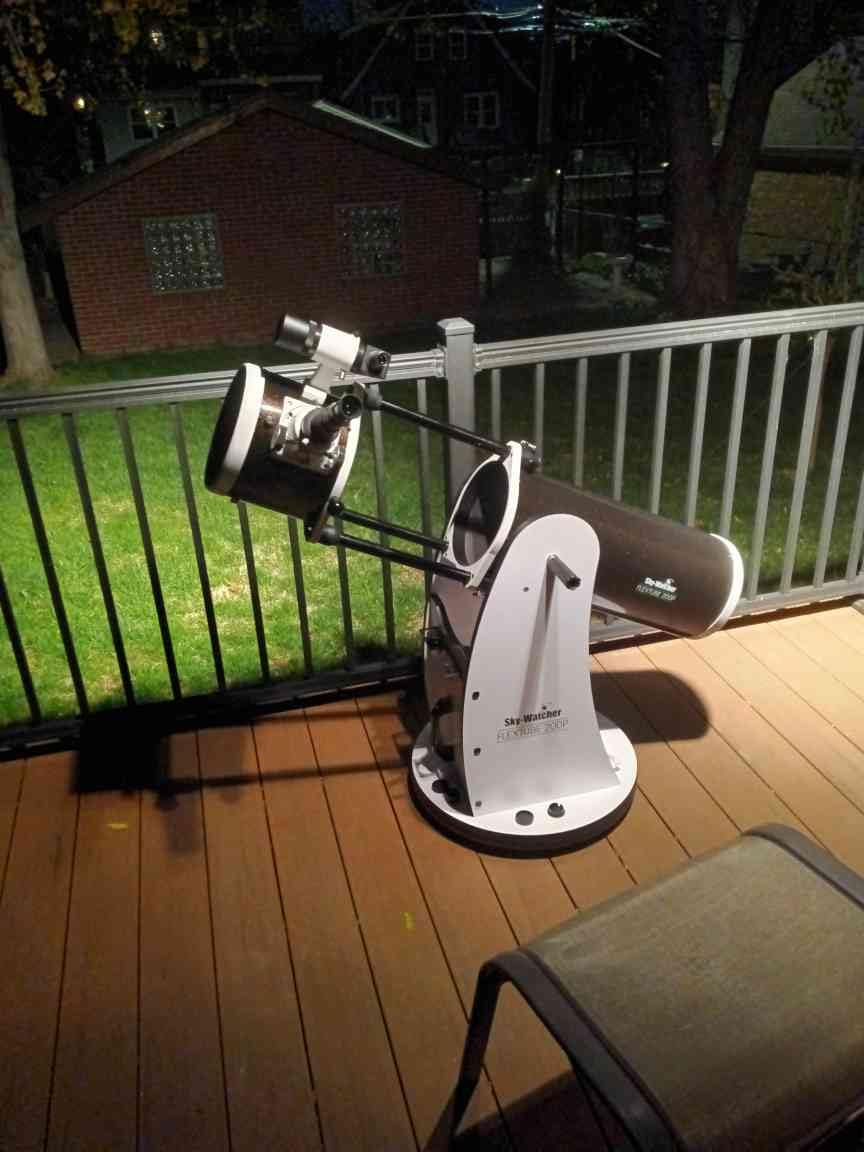
Because the tube collapses without losing collimation, this is the 10-inch you can realistically take to a dark site. A solid-tube 10-inch is a two-person carry and a permanent piece of furniture; this one folds down and fits in a car.
Collimation is the real cost of the design. An open truss means more to align, and owners who add a laser collimator report five minutes to restore alignment after moving it. Several also add a 12 inch lazy Susan bearing to fix sticky azimuth rotation.
What 10 inches adds that 8 inches cannot
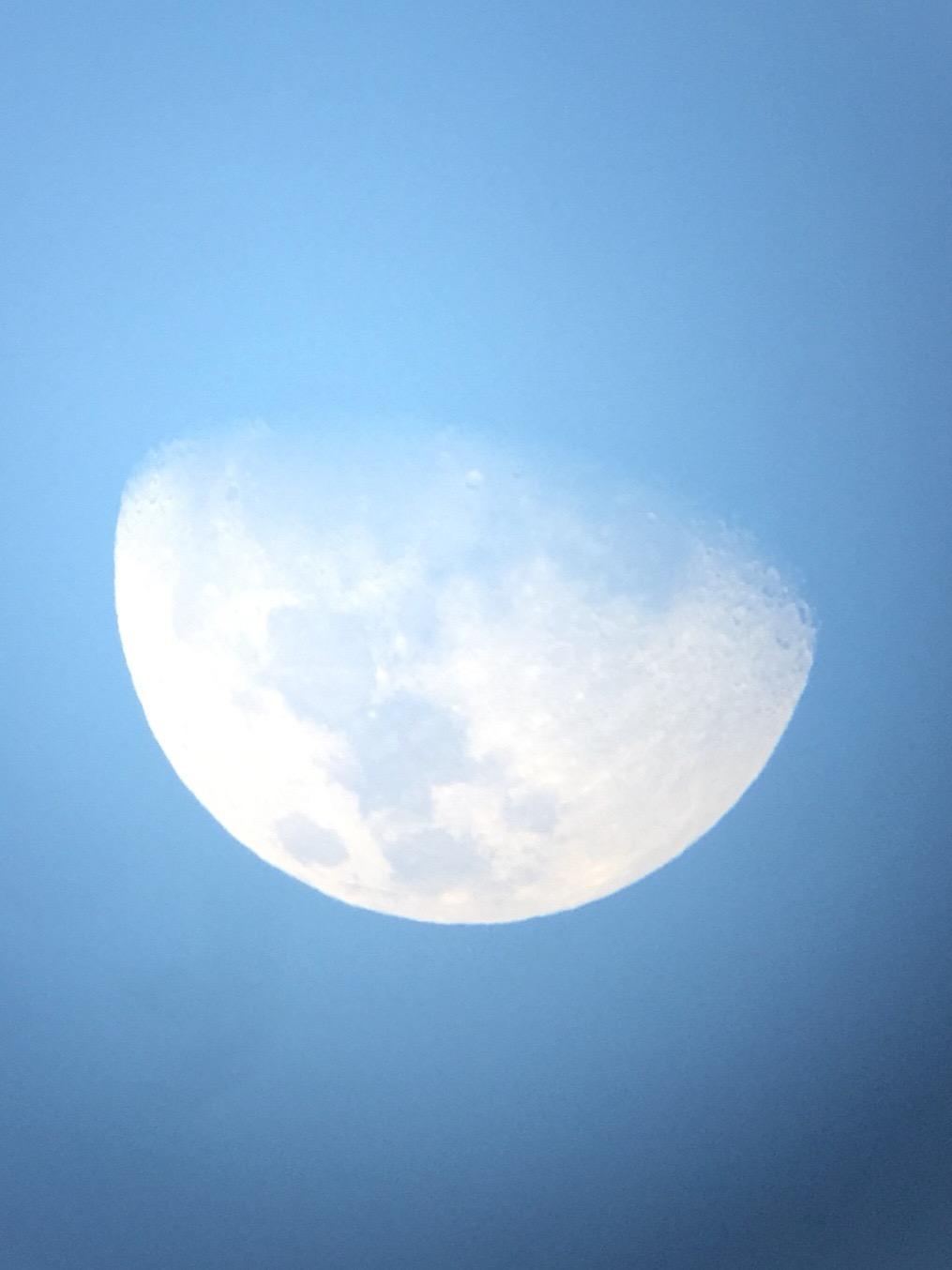
The jump from 203mm to 250mm is roughly 50 percent more light-gathering area, and that shows most clearly on large low-surface-brightness targets. M33, the Triangulum Galaxy, is a smudge at 8 inches and shows real shape at 10. M51 and its companion go from a fuzzy pair to two distinct spiral forms. Globular clusters such as M15 start to resolve at the edges rather than only in the core.
Where this is the wrong choice
Backyard observers lose contrast through the open truss, because nothing blocks stray light from reaching the primary, and no light shroud is included. Several reviewers specifically ask for one. Collimation also takes real practice, and one long-standing one-star review attributes a month of poor images to secondary spacing. If your observing is from a suburban yard rather than a dark site, an 8-inch with a solid tube often outperforms it.
4. Zhumell Z10 10-Inch Dobsonian – Most Complete Kit Out of the Box
Zhumell – 10-inch Dobsonian Reflector Telescope – Large Aperture for Crisp, Bright Images – Solid Base Construction with Handle for Easy Transport – Ideal Astronomical Telescope
250mm coated primary
1250mm focal length
Built-in mirror cooling fan
Laser collimator and Moon filter
47 lb
Pros
- Richest accessory bundle in the group
- Built-in fan cools the mirror faster
- Integrated carry handle on the base
- Solid base rated for regular star parties
- Fully multi-coated glass optics
Cons
- Costs the most while rating the same 4.0
- Thinnest review base among large-aperture picks
- 55 inch listed height makes car loading tight
The Z10 answers a complaint that runs through every review of a cheaper 10-inch: you spend the first month buying the things it should have included. This one ships with a laser collimator, a collimation cap, a Moon filter, a 2 inch 30mm eyepiece, a 1.25 inch 9mm eyepiece and a right-angle finder.
At 1250mm of focal length the 250mm primary works out around f/5, which is wide and bright on galaxies and clusters. The built-in cooling fan is the feature owners mention most: on humid summer nights it brings the mirror to ambient temperature faster, so you stop waiting for the image to sharpen.
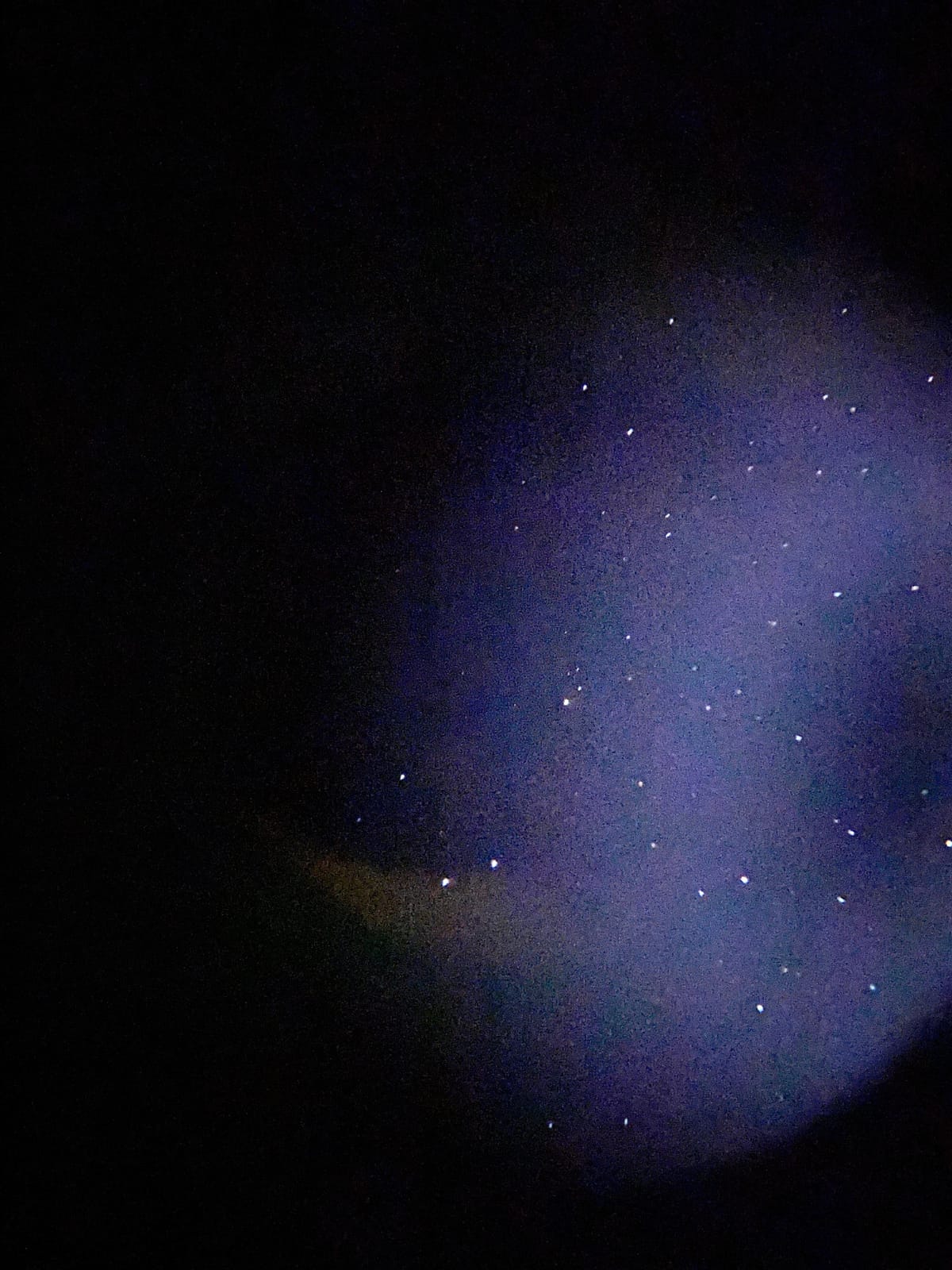
The base carries an integrated handle, which matters at 47 pounds, and reviewers describe it holding up from public star parties to camping trips. There is no clustering of complaints in the ratings either, with 62 percent of reviews at five stars.
Two 1.25 inch eyepieces plus a 2 inch focuser with adapter is a thinner optical kit than the Sky-Watcher Flextube, which pairs its 10mm and 25mm eyepieces with the same class of focuser. This one wins on the accessories around the telescope rather than the eyepieces in it.
Whether the extras are worth paying for
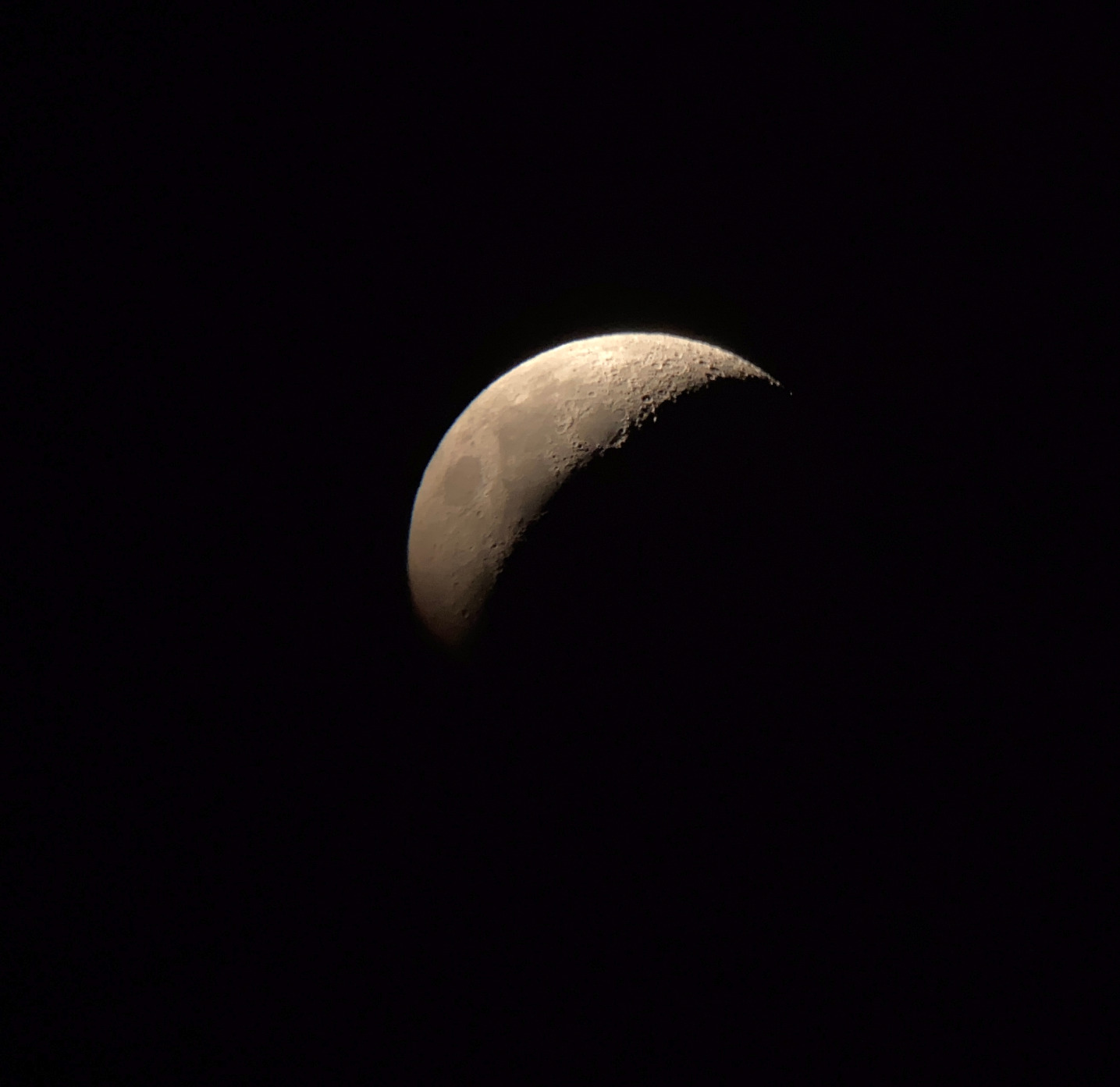
If you already own a laser collimator, a finder and a decent eyepiece, the bundle is worth less than its price difference implies. If you are starting from nothing, it removes several separate purchases and the confusion that comes with choosing them blind.
Where this is the wrong choice
It rates 4.0, the same as the cheaper 8- and 10-inch rivals, while carrying the thinnest review base of the large-aperture picks at 56. The 55 inch listed height and a solid tube also make it the least portable option in this group. We would only choose it over the Flextube if the included accessories were the deciding factor.
5. Sky-Watcher Virtuoso GTI 150P – Best Dobsonian With GoTo
Sky Watcher Sky-Watcher Virtuoso GTI 150P Collapsible Tabletop GoTo Dobsonian Telescope
150mm aperture at f/5
750mm focal length
Wi-Fi GoTo via SynScan Pro app
Freedom Find dual encoders
25.8 lb
Pros
- GoTo removes the star-hopping learning curve
- Freedom Find encoders keep alignment when pushed by hand
- Lowest one-star rate of any pick here
- Lightest full-featured option
- No battery needed
- works on DC power
Cons
- 150mm shows far less detail than 8 or 10 inch scopes
- Smartphone required for GoTo
- Short focal length caps magnification
- Still needs a stand at a comfortable height
The Virtuoso GTI is the answer for anyone who has decided they do not want to learn the sky. Built-in Wi-Fi drives full GoTo through the free SynScan Pro app on iOS and Android, and it also accepts a SynScan hand controller if you would rather not use a phone.
What makes it clever is the patented Freedom Find system. Dual encoders let you push the tube by hand to centre a target and still keep your GoTo alignment, so you never lose the setup while fiddling with focus. Reviewers single this out as the reason the scope performs above its aperture class.
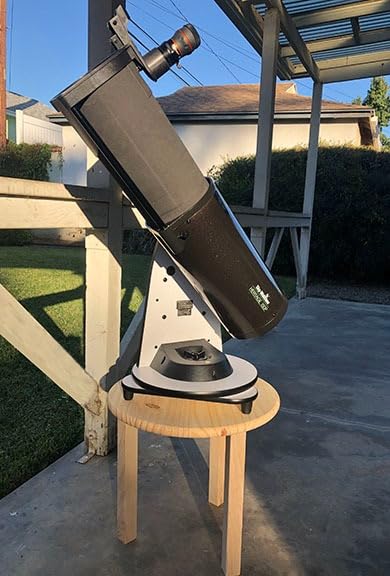
The trade-off is honest and worth stating plainly. At 150mm aperture and 750mm focal length, faint galaxies simply do not hold up the way they do at 8 or 10 inches. This scope shows you that M31 exists and roughly where it is. A bigger aperture shows you its dust lanes.
Its 5 percent one-star share is the lowest failure rate among the picks here, and at 25.8 pounds it is the easiest full-featured option to move between rooms or sites.
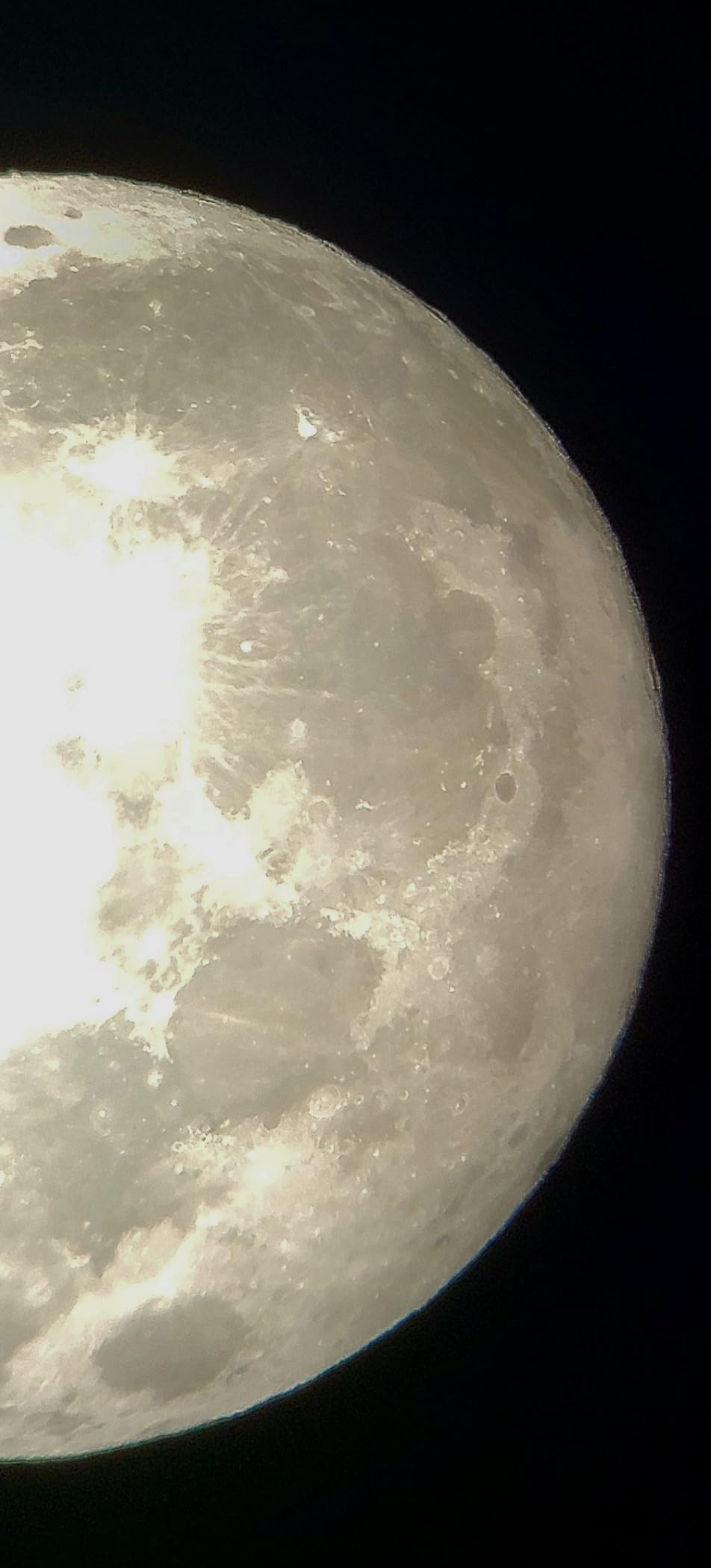
Is GoTo worth the money versus star hopping
Star hopping teaches you the sky and costs nothing. GoTo saves maybe an hour per session and removes the frustration that ends many beginner sessions early. A commenter in r/telescopes put the value question plainly: for a similar budget, an 8-inch manual Dobsonian will simply show more, and a motorized scope of a given size shows less.
Where this is the wrong choice
Despite the tabletop name it still needs a stand at a comfortable height, and 750mm of focal length limits how much planetary detail you can reach. If your goal is faint emission nebulae, or if you have a dark site within driving distance, put the same money toward aperture and learn the sky.
6. HandyDob 6-Inch Ultra Light Dobsonian – Best for Travel and Storage
HandyDob6 6-Inch Ultra Light Portable Dobsonian with Light Shroud and Smartphone Mount – Compact Travel Telescope
150mm parabolic primary at f/5
750mm focal length
3D-printed carbon fibre frame
PTFE bearings both axes
18.7 lb
Pros
- Tool-free disassembly and carry-on sized bag
- Light shroud included
- PTFE bearings give fluid motion in both axes
- Sharp bright views of the Moon and planets
- Modular design speeds up repeat setups
Cons
- No eyepieces or collimation tools included
- 6 inch is the smallest light grasp here
- Only 11 reviews behind its 5.0 rating
- 1.25 inch focuser limits eyepiece choice
- One year warranty
Most 6-inch Dobsonians are compromises. This one is built around the constraint. At 18.7 pounds it disassembles without tools, fits in a carry-on-sized bag and reassembles in minutes, which is the difference between a telescope you use weekly and one that lives in a cupboard.
The 3D-printed carbon fibre-reinforced frame is unusual and it works: PTFE bearings in both axes give smooth manual tracking, and precision balancing keeps the tube steady without constant rebalancing. The included light shroud is worth noting, since it is exactly what reviewers ask for on the open-truss 10-inch above.
Optically it is a 150mm parabolic primary at 750mm, so f/5 and bright on the Moon, planets and the brightest deep sky targets. The 1.25 inch CNC-machined toothless focuser takes 2 inch filters directly without adapters, and it integrates with a separately sold Push-To system for smartphone-assisted pointing. A steel tripod stability plate is included with the current configuration.
The main appeal is repeatable. Tool-free modular assembly means re-setting the scope between sessions takes minutes rather than an evening, and the light shroud keeps stray light off the primary in a way most 6-inch tubes do not bother with.
What a 6-inch really shows
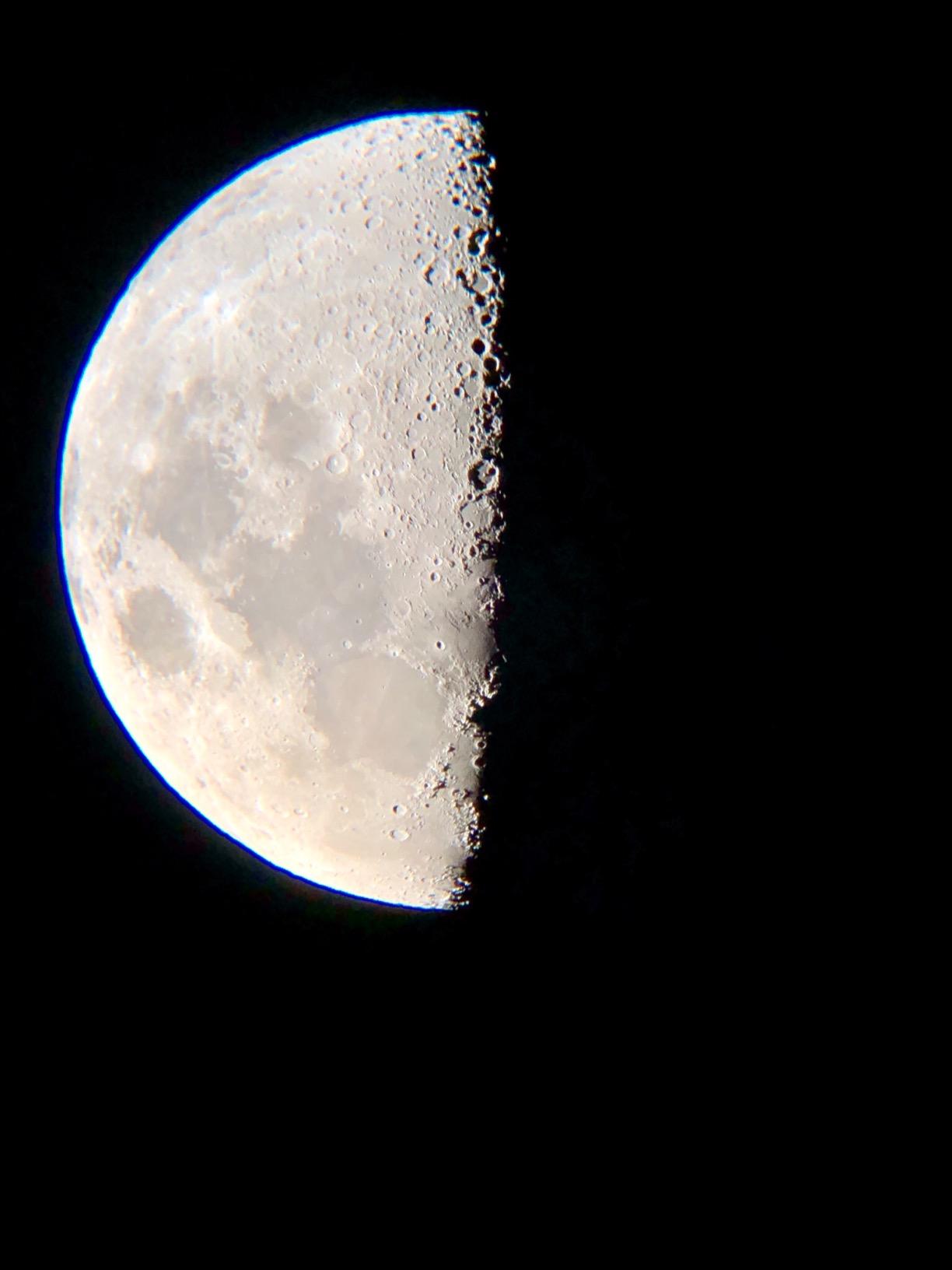
The Moon in detail, the planets with their moons, the Orion Nebula, the Double Cluster, M13 as a bright ball of stars and M31 as a soft oval with no structure. That is an honest and enjoyable list, and for children or beginners it is usually enough to keep someone observing for years.
Where this is the wrong choice
Eyepieces and collimation tools are not included, which is a real gap against the price. The 1.25 inch focuser narrows your future eyepiece options against the 2 inch focusers on every 8- and 10-inch pick here, and the warranty is one year. Treat the perfect 5.0 as provisional: eleven reviews is a very small sample, and faint galaxies will disappoint if that is what you bought it for.
Which Aperture Should You Buy? 6 vs 8 vs 10 vs 12 Inches
Aperture is the only spec that determines whether a deep sky object is visible at all. Everything else is refinement. A 6-inch gathers about 29 square inches of light, an 8-inch about 50, a 10-inch about 79 and a 12-inch about 113, so each step up roughly increases what you can see by a third to a half.
At 6 inches, M13 is a fuzzy ball, M31 is a grey smudge and M57 is barely there. At 8 inches, M13 starts to granulate, M31 shows a bright core with arms either side, and M57 becomes an identifiable ring. At 10 inches, galaxies you could only suspect begin to show shape, and larger globular clusters resolve across the whole field.
Choose 6 inches if storage or weight is your binding constraint, which is what a Cloudy Nights respondent recommended in one purchasing thread, citing a 6-inch f/8 for exactly that reason. Choose 8 inches if you want the best balance of capability and portability. Choose 10 inches if you drive to dark sites and will accept the collimation effort.
Past 10 inches, a 12-inch doubles the light of a 6-inch but arrives as a truss design, weighs far more, needs a ladder or a very tall eyepiece position, and no stocked 12-inch we examined earns a strong rating. For most buyers the jump is not worth it.
Focal Ratio, Tube Design and Collimation
Focal ratio decides how wide the field is and how forgiving the scope is. Around f/8, as on a 10-inch f/8, you get wide fields and excellent coma control but a low magnification ceiling. Around f/5, as on the 6-inch models here, you get wide, bright images with more off-axis coma at the field edge and a stricter collimation habit.
Solid tubes like the Classic 200 and the Zhumell Z10 are quieter and better shielded from stray light, and they never need re-alignment unless something hits them. Truss tubes like the Flextube 250 are more compact and much easier to move, at the cost of contrast in a bright backyard and a more demanding collimation routine.
Yes, you need to collimate. The honest answer is that a Dobsonian needs checking before an observing session if it has been transported, knocked or exposed to a temperature swing, and a laser collimator makes the process a five-minute job rather than an hour. An f/5 truss tube will drift further and faster than a solid f/6 tube, which is worth factoring into how often you expect to move the instrument.
Eyepieces, Filters and the Rest of the Budget
Most of these scopes include one or two eyepieces, and almost none include everything you need for deep sky. Budget for a 2-inch wide-field eyepiece in the 25 to 30mm range, a mid-range eyepiece around 13 to 17mm, and a 2-inch OIII or narrowband filter, which is the single accessory that transforms emission nebulae from a hint into a shape.
A Telrad-style finder or a pair of 9mm or 8×50 finders matters more than any electronics for learning the sky, and it is the piece most often missing from budget packages. A collimating cap or laser collimator, a 12 inch lazy Susan bearing for sticky azimuth on truss models, and a observing chair all earn their place.
Transport is the hidden cost of a large Dobsonian. Before committing to 10 inches, measure your stairs, your car boot and the place the base will live. More than one owner regrets the purchase for reasons that had nothing to do with optics.
When a Dobsonian Is the Wrong Tool
Dobsonians are visual instruments. Because the field rotates around the object as the mount tracks in altitude and azimuth, long-exposure astrophotography with a Dob requires a field rotator or a very short stacked set, and it is rarely the easy answer. If photography is your goal, an equatorial mount or a dedicated astro camera is a better path.
A Dobsonian is also the wrong tool if you cannot store something that weighs 30 to 50 pounds, if you want to observe from a balcony, or if you need a setup that a single person can set up in under two minutes. Several of these are the least satisfying constraints to discover after delivery.
Frequently Asked Questions
What is the best telescope for observing the deep sky?
For visual deep sky work, an 8-inch Dobsonian is the best value for most people. It gathers enough light to show the Andromeda Galaxy, the Hercules globular cluster and the Ring Nebula with real structure, and it still fits in most cars. Our top pick adds a smartphone pointing app so beginners are not stuck sweeping a dark sky for an object they cannot find.
Is an 8-inch Dobsonian enough to see galaxies?
Yes, and this is the aperture most deep sky observers start with. At 8 inches M31 shows a bright core with faint arms, M13 begins to break into individual stars, and M57 shows as a ring under an OIII filter. You will not see spiral structure in small galaxies like M33 until you reach 10 inches, but the showpiece targets are all there.
Can you see Saturn with an 8 inch Dobsonian?
Yes, and comfortably. An 8-inch Dobsonian at its native focal ratio will resolve the rings, the Cassini Division on steady nights, and Titan plus the inner moons. The steadier the mount, the more detail you hold, which is why scopes with smoother altitude bearings and pointing aids give you noticeably sharper planetary images at the same magnification.
What size telescope is needed to see Saturn’s rings?
A 3-inch refractor shows Saturn as a dot with rings in good conditions, and a 4 to 5-inch scope resolves the ring structure. In practice most people are limited by magnification and steadiness rather than aperture, so an 8-inch Dobsonian gives you both the light and the mass to hold a high power on the planet without the image breaking up.
Can you do astrophotography with a Dobsonian?
Yes, but with caveats that matter. A Dobsonian tracks by turning in altitude and azimuth, which rotates the field during a long exposure. Short exposures of bright targets such as the Moon and planets work well, and stacking many short frames of galaxies and nebulae is possible with a field rotator. For long deep sky exposures, an equatorial mount is the better tool.
Do I need to collimate a Dobsonian before every use?
Not before every session, but check it whenever the scope has been transported, bumped, or exposed to a big temperature change. If it lives in one spot and nothing touches it, a check every few weeks is enough. A solid tube drifts far less than a collapsible truss, and a laser collimator turns the whole job into about five minutes.
Final Verdict: Which Dobsonian Should You Buy in 2026
The Celestron StarSense Explorer 8-Inch earns our Editor’s Choice because it combines a 4.4 rating with the largest review base among the top performers, and because its pointing app removes the barrier that ends most beginner sessions. If you already know the sky, the Sky-Watcher Classic 200 is the better value per dollar and carries more eyepieces in the box.
Buy the Flextube 250 if you drive to dark sites and want 10 inches you can still carry. Buy the Zhumell Z10 if the included collimator, Moon filter and cooling fan save you three separate purchases. Buy the Virtuoso GTI if you refuse to learn the sky, and the HandyDob if weight and storage decide everything.
Whichever you choose, add a 2-inch wide-field eyepiece and an OIII filter before you do anything else. That pair delivers more visible deep sky detail per pound spent than any telescope upgrade.