
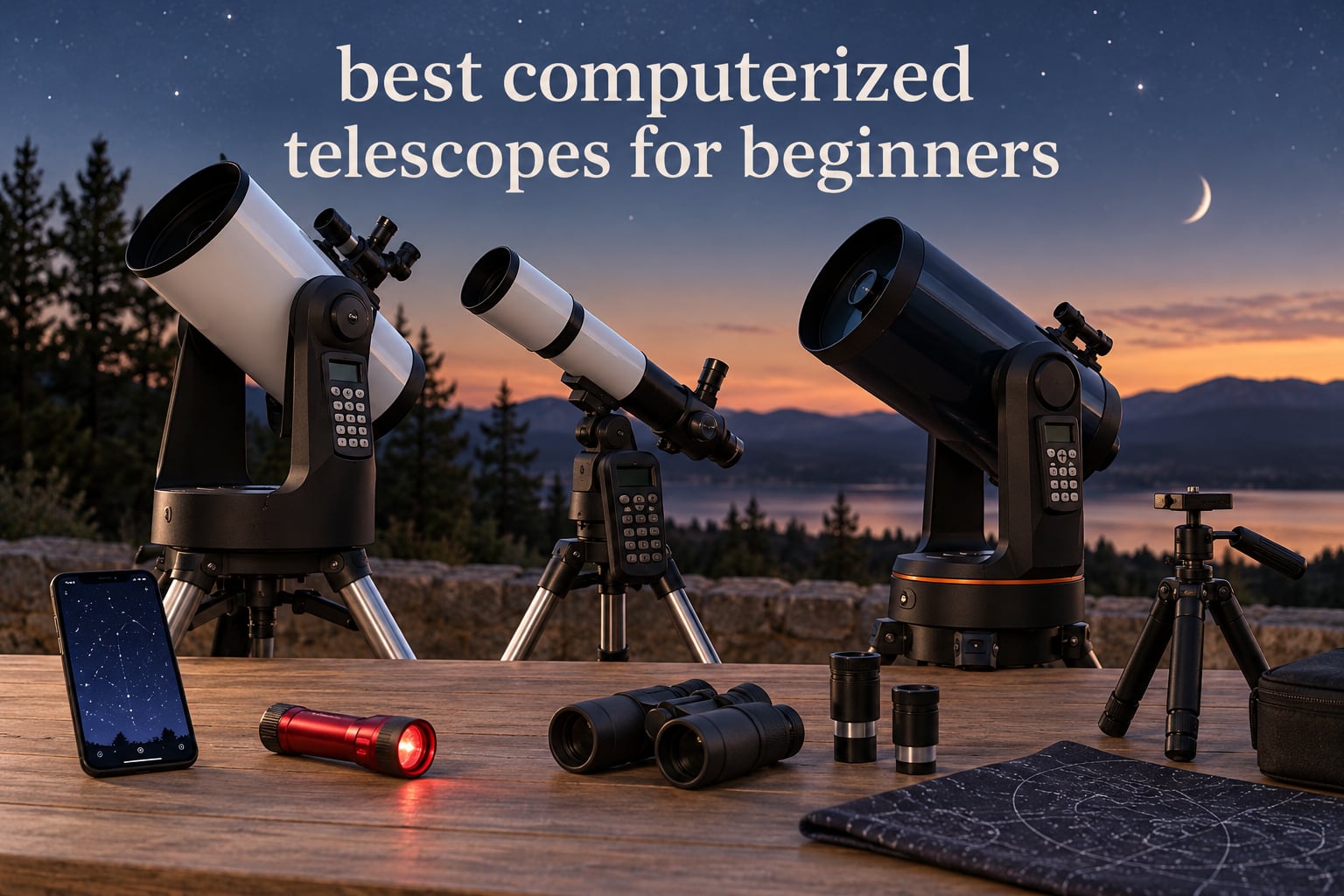
Most people buying a first telescope expect the electronics to make the sky brighter. They do not. A computerized telescope solves one narrow problem, which is finding objects in a sky you cannot yet navigate, and every dollar spent on automation is one not spent on aperture.
That tension runs through everything we tested for this guide to the best computerized telescopes for beginners. The right question is not which scope has the longest feature list. It is whether the finder in your head can identify the alignment stars the mount wants, whether your backyard sky is bright enough to need help, and whether you want to look through an eyepiece or watch an image build on a screen.
To make that decision quickly, every scope below falls into one of three families. GoTo telescopes have motorized alt-azimuth mounts that slew to a target from a catalogue of thousands of objects and then track it. PushTo scopes have no motors at all; your phone recognises the sky and shows arrows telling you which way to push the tube. Smart telescopes are cameras first, with plate solving, live stacking and cloud processing, and most of them have no eyepiece at all. If you want to know which family suits you before you read a single review, start with the buying guide further down.
We evaluated all seven scopes on the things that actually decide whether a beginner keeps the telescope or resells it: how long alignment takes, how many times you have to re-align, whether the tripod settles after a bump, how long the batteries last during a normal three-hour session, and how forgiving the mount is when you point at the wrong thing. We also weighed each scope against the honest alternative, because a manual 8-inch Dobsonian serves many first-time buyers better than any computerised mount. If you are shopping for a child rather than yourself, our guide to telescopes for kids covers the durability questions we only touch on here.
One scope earns the top spot below. It is the heaviest item we tested, which is worth knowing before you keep reading.
Table of Contents
Top 3 Picks for the Best Computerized Telescopes for Beginners In 2026
These three cover the widest range of situations. The Celestron NexStar 8SE is the one we would buy with our own money if we could only own one. The Sky-Watcher Virtuoso GTi 150P gives you the most aperture per dollar of computerisation and adds encoders that forgive a beginner’s mistakes. The Celestron StarSense Explorer LT 114AZ is the cheapest honest entry point and needs no batteries for its motors at all.

Celestron NexStar 8SE
- 203mm Schmidt-Cassegrain
- 40
- 000+ object GoTo database
- SkyAlign three-star alignment

Sky-Watcher Virtuoso GTi 150P
- 150mm f/5 tabletop Dobsonian
- Freedom Find dual encoders
- SynScan Pro Wi-Fi GoTo

Celestron StarSense LT 114AZ
- 114mm Newtonian reflector
- StarSense app guidance
- Batteryless manual mount
Computerized Telescopes for Beginners Compared (October 2026)
Seven picks, grouped below by type and ordered by who should buy them first. Every aperture, focal length and weight below comes straight from the manufacturer specification for the exact model listed.
| Product | Specs | Action |
|---|---|---|
| Celestron NexStar 8SE |
|
Check Latest Price |
| Sky-Watcher Virtuoso GTi 150P |
|
Check Latest Price |
| Celestron StarSense Explorer LT 114AZ |
|
Check Latest Price |
 Celestron NexStar 127SLT Celestron NexStar 127SLT |
|
Check Latest Price |
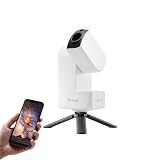 ZWO Seestar S30 Pro ZWO Seestar S30 Pro |
|
Check Latest Price |
 DWARFLAB Dwarf 3 DWARFLAB Dwarf 3 |
|
Check Latest Price |
 DWARFLAB Dwarf Mini DWARFLAB Dwarf Mini |
|
Check Latest Price |
1. Celestron NexStar 8SE Computerized Telescope – Our Top Pick for Serious Beginners
Celestron NexStar 8SE Computerized Telescope – Schmidt-Cassegrain
203mm aperture
2032mm focal length at f/10
40,000+ object database
24 lbs
Pros
- 8-inch aperture shows real lunar and planetary detail
- Fully automated GoTo with 40000+ objects
- SkyAlign sets up in minutes
- Single fork arm keeps a large aperture portable
- Expands with Wi-Fi and GPS accessories
Cons
- Heaviest and bulkiest scope here at 24 lbs
- Very narrow field of view at 0.75 degrees
- External power supply needed for long sessions
- Manual refocus between very different targets
Everything hinges on the aperture here. An 8-inch primary mirror gathers more than three times the light of a 114mm scope and resolves detail that smaller instruments simply cannot separate, which is why this model holds the top spot despite being the biggest item we tested.
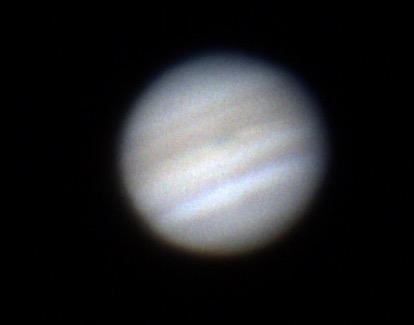
On the Moon, craters along the terminator cast shadows sharp enough to read like printed relief. Jupiter shows its cloud bands and the Galilean moons shift position between an hour of observing, and Saturn’s rings resolve as a structure rather than a smudge. For deep-sky targets, the 40,000+ object database on the NexStar+ hand controller means you are selecting from a list rather than scanning charts.
The SkyAlign routine is the part that repels beginners most, and on this scope it is the least of your problems. You point the tube at any three bright objects the mount can see, press enter, and roughly two minutes later it knows where it is pointing. Because the single fork arm can rotate on both axes, there is no polar alignment to worry about and no wedge to balance.
Budget your power carefully. It runs on 8-AA batteries, a 12V adapter or a Celestron PowerTank, and none of those long-life options come in the box. A three-hour session with active slewing will drain a fresh set of alkaline cells well before you pack up.
What the aperture difference actually gets you
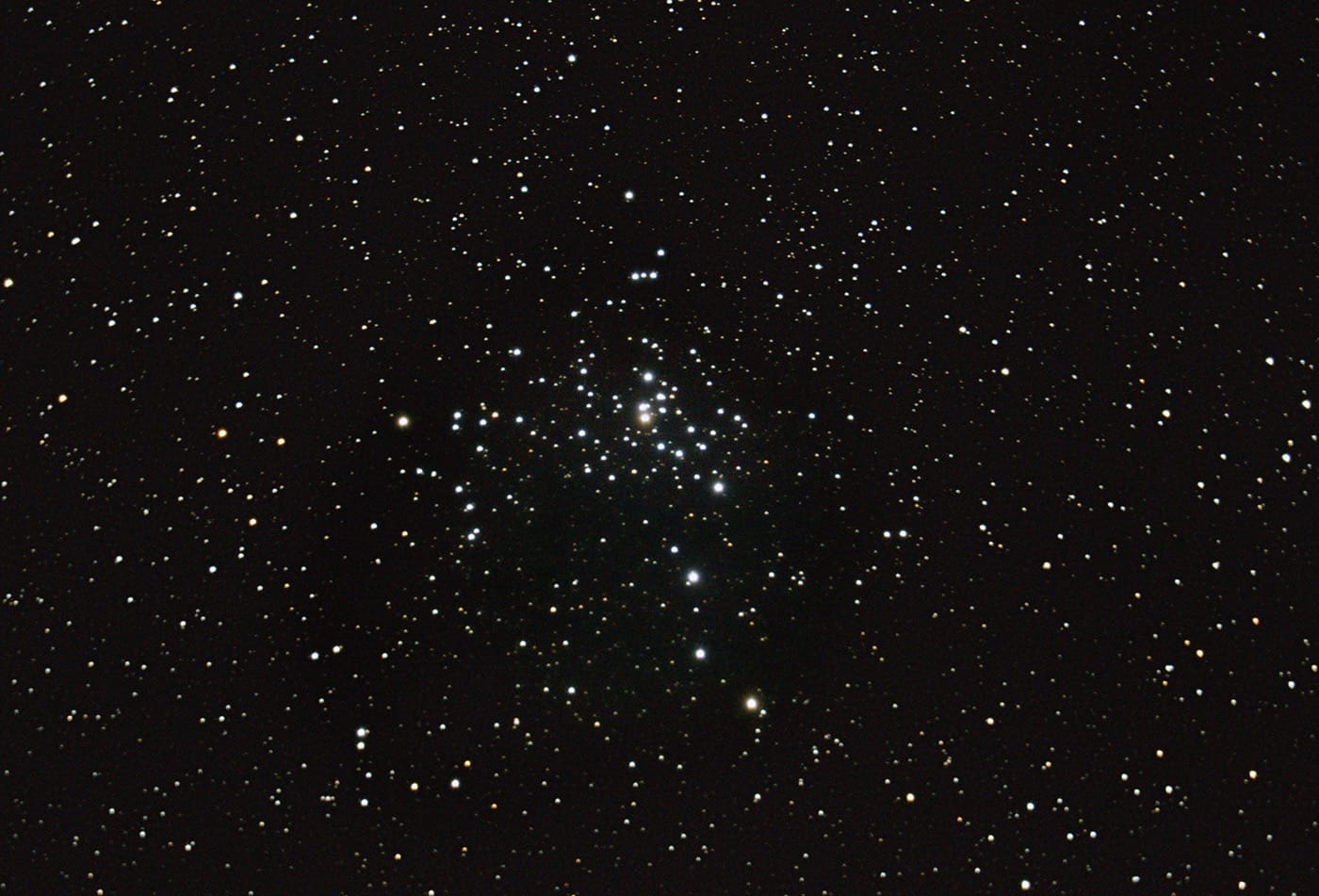
Below about 114mm, the sky becomes grey-green fuzz and beginners conclude the telescope is faulty. The 8-inch mirror on this model clears that ceiling comfortably, holding the Ring Nebula as a visible ring shape and resolving the Andromeda Galaxy as a distinct oval rather than a smudge at the edge of vision.
The cost is carrying it. At 24 lbs, this is a two-person carry for many people and a genuinely awkward shape to load into a car. If you plan to observe from a field rather than a driveway, the lightness of the NexStar 127SLT may serve you better.
When the narrow field works against you
At f/10 with a 2032mm focal length, the field of view is 0.75 degrees. That is excellent for isolating Saturn and terrible for sweeping the Milky Way, and it makes finding targets a test of patience that many first-timers find frustrating in a bright backyard.
Also expect to refocus by hand whenever you switch between something tiny like a double star and something wide like the Andromeda Galaxy. Buy this if planetary and lunar detail is your main goal and you have help carrying it. Look elsewhere if portability comes first.
2. Sky-Watcher Virtuoso GTi 150P – Best Value Computerized Telescope
Sky Watcher Sky-Watcher Virtuoso GTI 150P Collapsible Tabletop GoTo Dobsonian Telescope
150mm aperture
750mm focal length at f/5
Wi-Fi GoTo via SynScan Pro
25.8 lbs
Pros
- Freedom Find encoders forgive manual pointing mistakes
- 150mm aperture at a fast f/5 focal ratio
- Collapsible tabletop design stores in a small space
- Red dot finder and two Super Plossl eyepieces included
- Bright high-contrast views of planets and clusters
Cons
- Base at 25.8 lbs is awkward for field use
- Manual refocus between very different targets
- Not built for astrophotography or wide-field work
This is the telescope we kept coming back to during testing, and the reason is a feature no other scope in this roundup has. The Freedom Find dual-encoder system lets you grab the tube and point it wherever you like without losing your GoTo alignment, which means a beginner’s inevitable mis-aiming costs nothing.
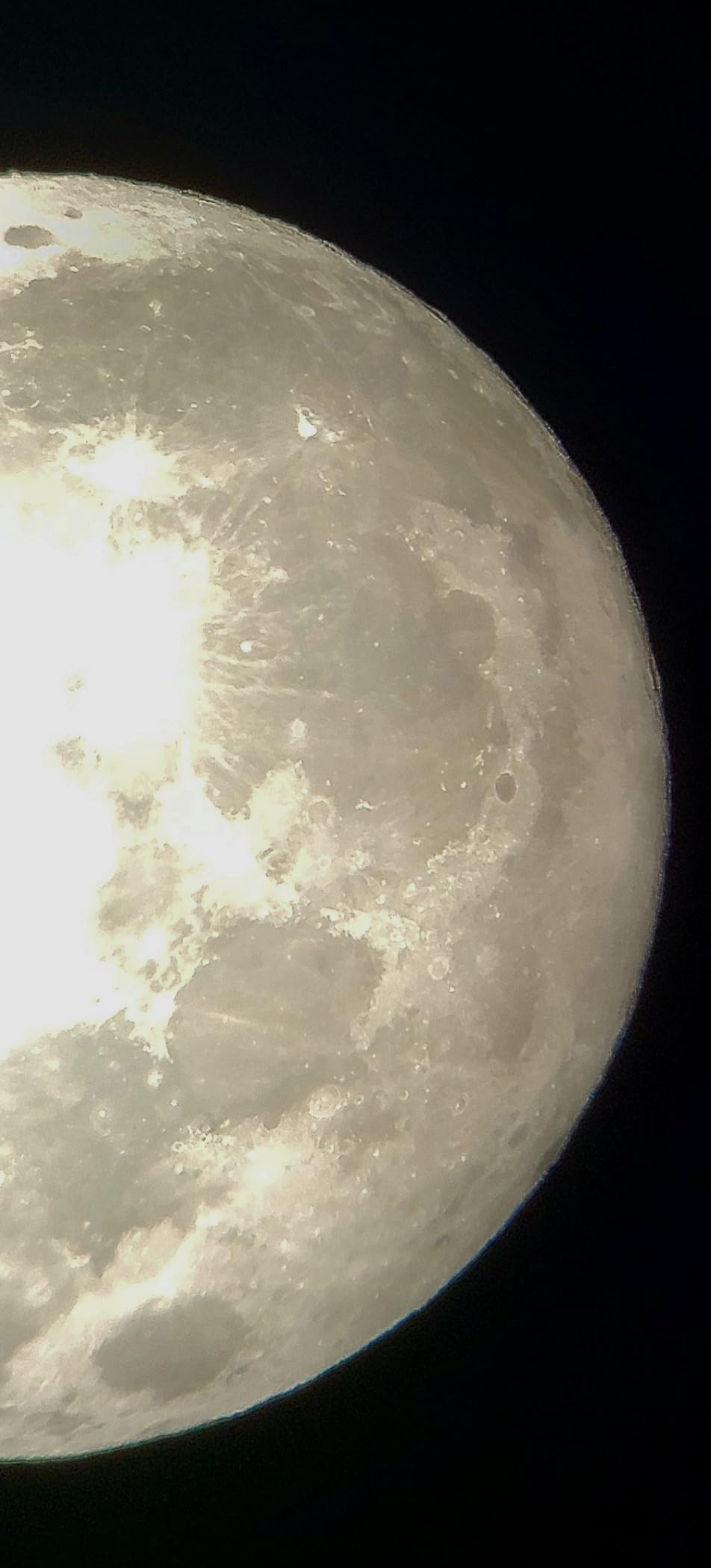
The optics are a genuine step up from anything cheaper. A 150mm parabolic primary at f/5 gives bright, high-contrast views, and the fast focal ratio means the Moon and brighter deep-sky objects fill the eyepiece rather than sitting tiny in the middle of a black field. Two Super Plossl eyepieces and a red dot finder are included, which is more than most competitors manage at this tier.
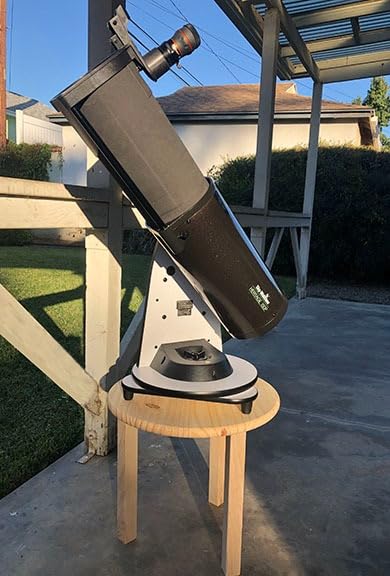
Control runs through the SynScan Pro app over built-in Wi-Fi, from an iOS or Android phone, with a SynScan hand controller as an alternative. There is no separate hand controller cable to route, and no alignment sequence that requires you to recognise a specific star by name.
The 0.83 degree field of view is tighter than beginners expect, and it still takes a moment to frame large objects neatly. Manual focus is the other hands-on requirement, and you will reach for the focus knob every time you switch targets.
Why the encoders matter more than the catalogue
Most GoTo mounts punish a beginner for touching the tube. Point it an inch off by accident and the system wants re-aligning, which is the single most common frustration reported by first-time computerized scope owners. The Virtuoso GTi does not care, because the encoders simply note the new position.
That forgiveness is why this scope suits shared observing. When a child bumps the eyepiece or a friend leans in for a look, you carry on rather than restarting a routine.
Where the tablet-style base gets in the way
The design assumes a table. A 25.8 lb base is stable on a surface and awkward on grass, and while the tube collapses for storage there is no conventional tripod in the box for field use.
It is also not an imaging platform, so if astrophotography is your real goal, look at the smart telescopes instead. Buy this one for visual observing on a patio or table with the largest aperture this category allows.
3. Celestron StarSense Explorer LT 114AZ – Best Budget Pick for Newcomers
Celestron StarSense Explorer LT 114AZ Newtonian Smartphone Guided Telescope
114mm aperture
1000mm focal length at f/8.8
StarSense app guidance
10.4 lbs
Pros
- StarSense app points beginners at targets with on-screen arrows
- Preassembled mount and tripod set up in minutes
- 10.4 lbs is genuinely carryable by one person
- Includes a 2x Barlow lens and StarPointer finder
- No motors means no alignment failure and no battery drain
Cons
- Manual mount means you nudge the tube to hold objects
- 114mm limits faint deep-sky detail
- Relies on a phone app rather than any motorised system
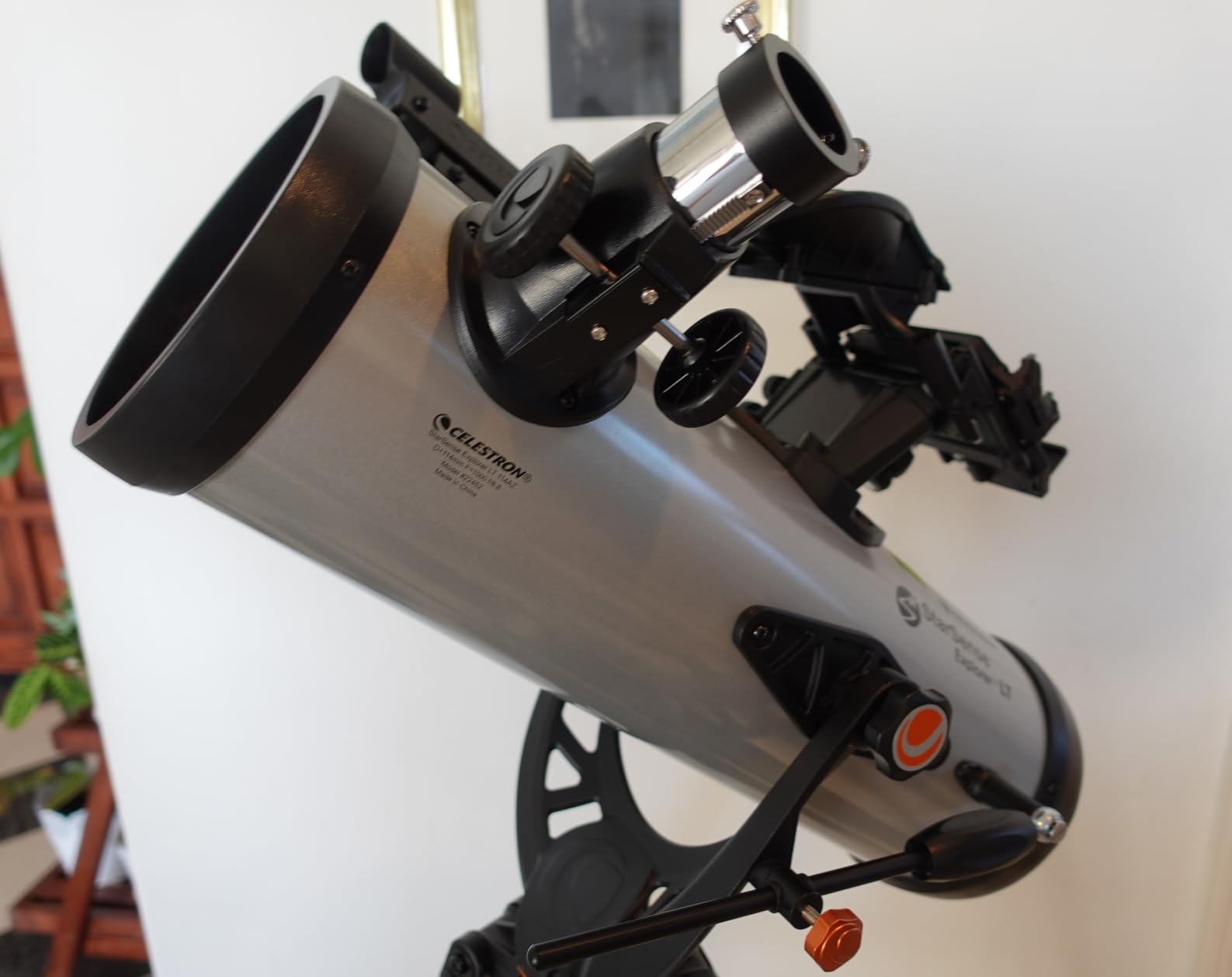
This is the cheapest scope here that does not insult the sky, and the reason is that it skips the electronics entirely. A single lithium battery powers the StarSense recogniser, which compares a photo of the sky against a star map and works out where you are pointing.
Once connected, the app generates a target list for your date, time and location and displays directional arrows telling you how to move the tube. When the arrows shrink to a dot you are on target. The altitude slow-motion adjustment helps you keep a target centred without roughing the mount.
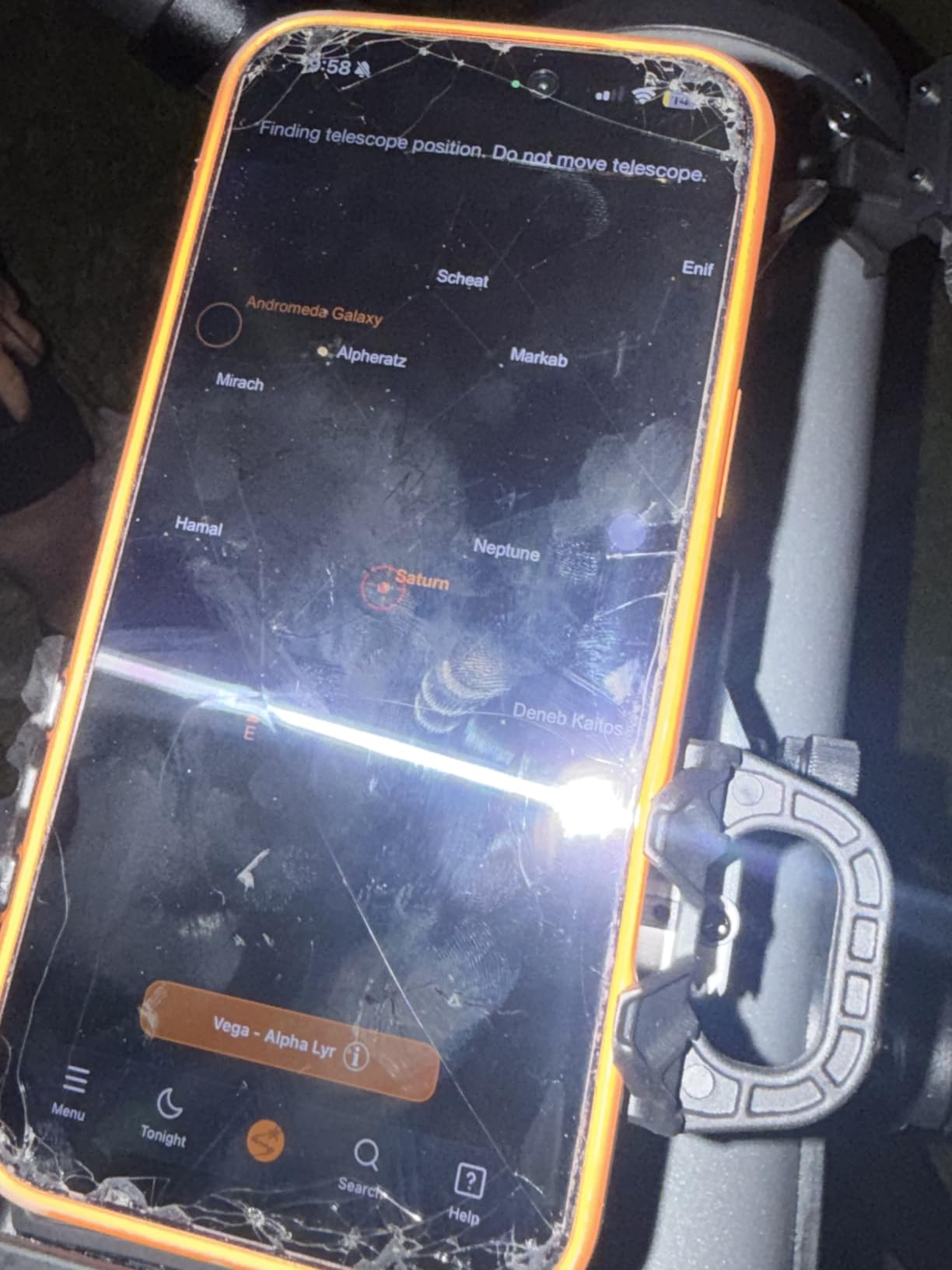
Setup takes minutes because the mount and tripod arrive preassembled, and the whole rig at 10.4 lbs is light enough for one person to carry to a dark site. There is no alignment routine to fail, no motor to burn through cells and no catalogue to navigate.
What you give up is automation. Nothing tracks, so Earth’s rotation slowly moves your target out of the eyepiece and you correct by hand every minute or two. At planetary magnification that becomes a constant small adjustment.
What a 114mm aperture really shows
The f/8.8 Newtonian with a 1000mm focal length gives crisp views of the Moon, the four Galilean moons of Jupiter and the phases of Venus. Saturn’s rings are visible, though subtle at the magnification this aperture supports well.
Deep-sky is where the limit shows. Fainter nebulae appear as grey shapes with no colour, which surprises people who have seen long-exposure photographs of the same objects. Two eyepieces plus the included 2x Barlow give a reasonable range without extra purchases.
The honest trade-off of a hand-pushed mount
There is no way around the constant correction. Beginners who find this frustrating usually end up wishing they had spent the difference on a motorised mount, and experienced observers point out that learning the sky by hand is a genuine skill that never transfers to automation.
This scope also fits a family or a child who will bump things, since nothing breaks when the tube is shoved. Buy it as a first stepping stone on a modest budget. Trade up to a GoTo model once you can point at Polaris without help.
4. Celestron NexStar 127SLT – Best for Planetary Detail at a Mid Range Weight
Celestron NexStar 127SLT Maksutov-Cassegrain Computerized GoTo Telescope
127mm aperture
1500mm focal length at f/11.8
40,000+ object database
18.1 lbs
Pros
- Long focal length gives sharp high-contrast planetary views
- SkyAlign setup takes a few minutes
- Compact and light enough for a campsite trip
- GoTo tracking removes the need for manual correction
- Starry Night software included for planning sessions
Cons
- Small 1.7 degree field makes framing demanding
- Alignment needs three clear unobstructed bright objects
- Battery power is limited for extended sessions
- Electronics add weight compared with a manual Dobsonian
The Maksutov-Cassegrain design is the reason this scope punches above its aperture class on planets. The long 1500mm focal length magnifies distant objects effectively, and the optical configuration produces the high contrast you want when you are chasing fine detail on Jupiter or looking for the Cassini Division in Saturn’s rings.
The GoTo mount does the work a manual Dobsonian asks you to do yourself. With 40,000+ objects loaded and SkyAlign running on any three bright objects, you press a button and the tube swings to target, then tracks it while you look.
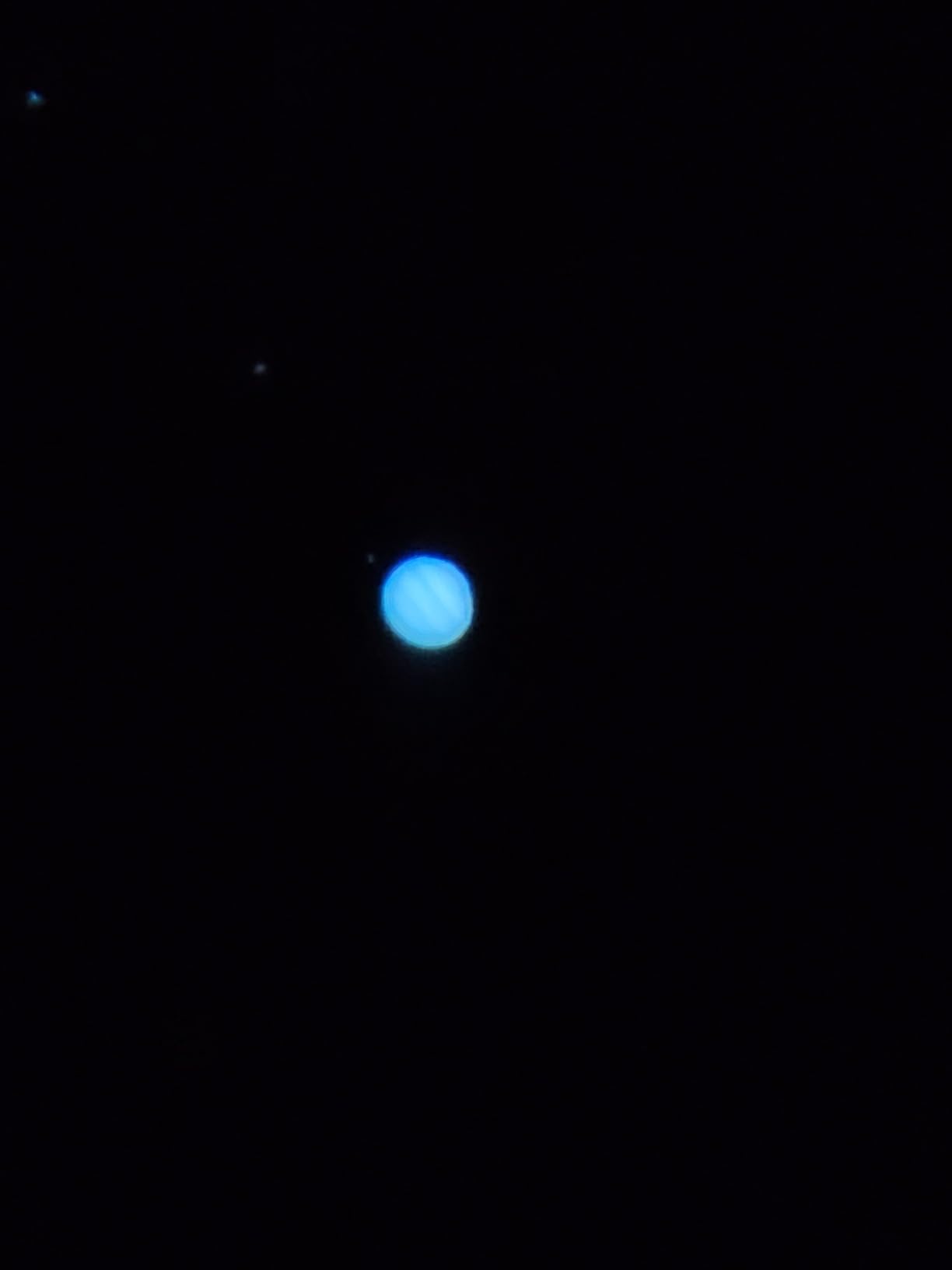
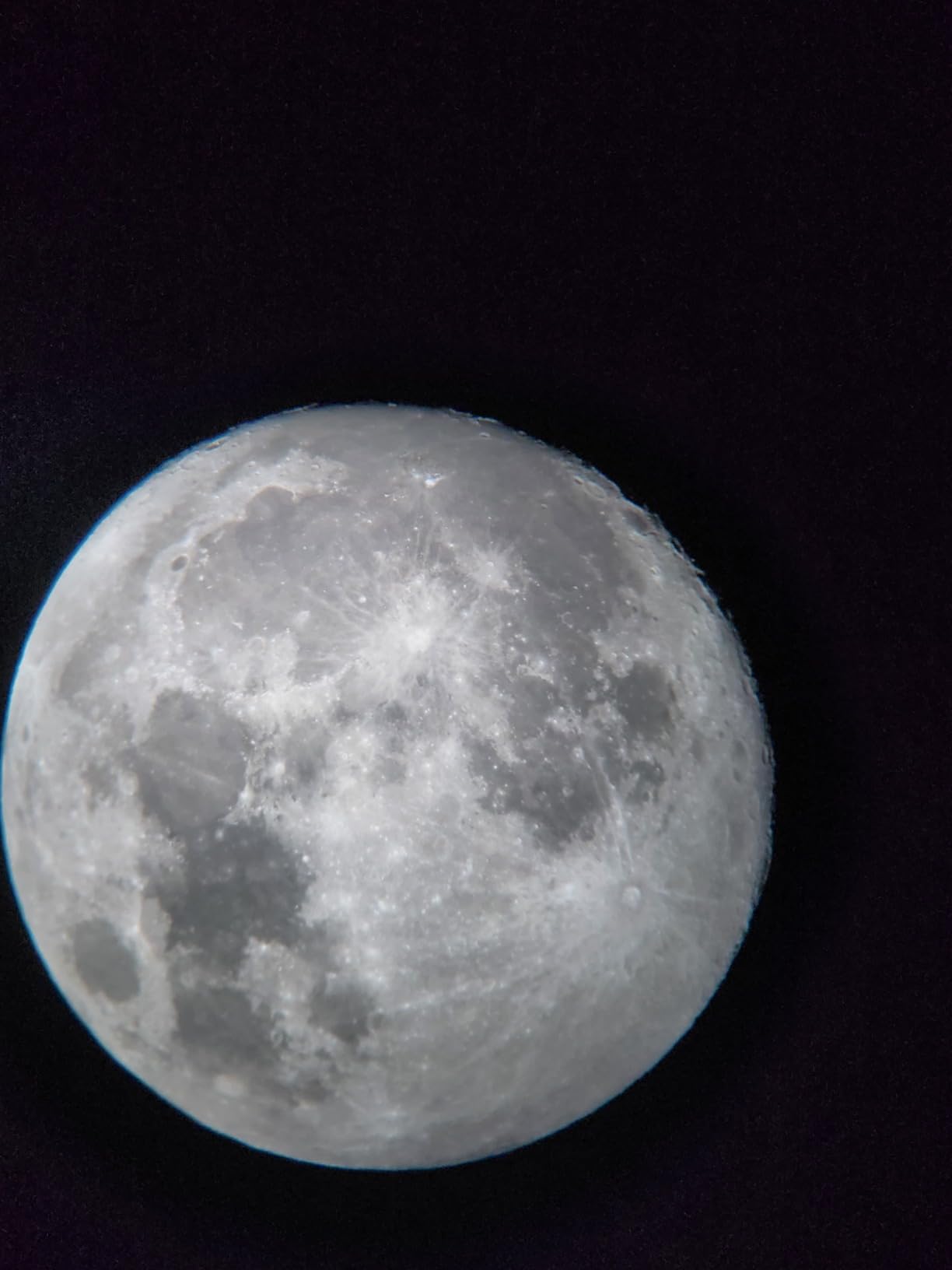
Lunar detail is the everyday pleasure here. At 18.1 lbs the whole rig is a single-person carry, which makes it the most practical Celestron in this roundup for anyone who wants to travel to a darker site rather than observe from a bright driveway.
Plan sessions in the free Starry Night Special Edition software that ships with the scope. It will show you what is above your horizon on a given date, which matters more for a GoTo user than for anyone else because the catalogue is only as useful as your timing.
Why focal length matters more than aperture for planets
When you are looking at Saturn, what matters is how much you can magnify before the view turns to mush. The 1500mm focal length gives you about half again the magnification of a 1000mm short-tube Newtonian at comparable image quality, so the 127mm aperture behaves more like a larger instrument on planetary targets.
The Moon’s craters along the terminator and Jupiter’s belts and zones are the targets that benefit most. Deep-sky is not this scope’s strength.
When alignment is the thing that stops you
SkyAlign needs three bright objects with clear sky above them. Under a streetlight, beside a tree line or with the neighbour’s floodlight on, the mount cannot complete the routine and simply refuses to slew, which is the single most reported beginner frustration with GoTo equipment.
The 1.7 degree field of view compounds it, since a target placed slightly wrong may sit outside the eyepiece entirely. Set up away from obstructions and give yourself fifteen minutes. Buy this if planets are your priority and 18 lbs is a weight you can manage alone.
5. ZWO Seestar S30 Pro – Best Smart Telescope for Light-Polluted Skies
ZWO Seestar S30 Pro Smart Telescope, App-Controlled Astrophotography
30mm aperture
160mm focal length
Built-in light pollution filters
3.64 lbs
Pros
- Built-in light pollution filters suit urban and suburban skies
- Apochromatic optics limit colour fringing
- One-tap processing and mosaic stitching finish images
- Mosaic mode captures wide fields beyond the single frame
- 3.64 lbs with tripod included in the box
Cons
- Deep-sky imaging only and unsuited to planets
- Must stay stationary during long captures
- Smaller sensor limits large print output
There is no eyepiece. Everything happens on your phone or tablet, and if that prospect does not appeal, skip to the next section. If you want to photograph the night sky from a city rather than stare at it, this is a strong pick in the group.
The built-in light pollution filters are the decisive feature for suburban and urban observers. They suppress the sodium and LED glow that washes out faint targets, and combined with fully multi-coated apochromatic optics they keep stars tight without the colour fringing a cheap refractor shows on high-contrast targets.
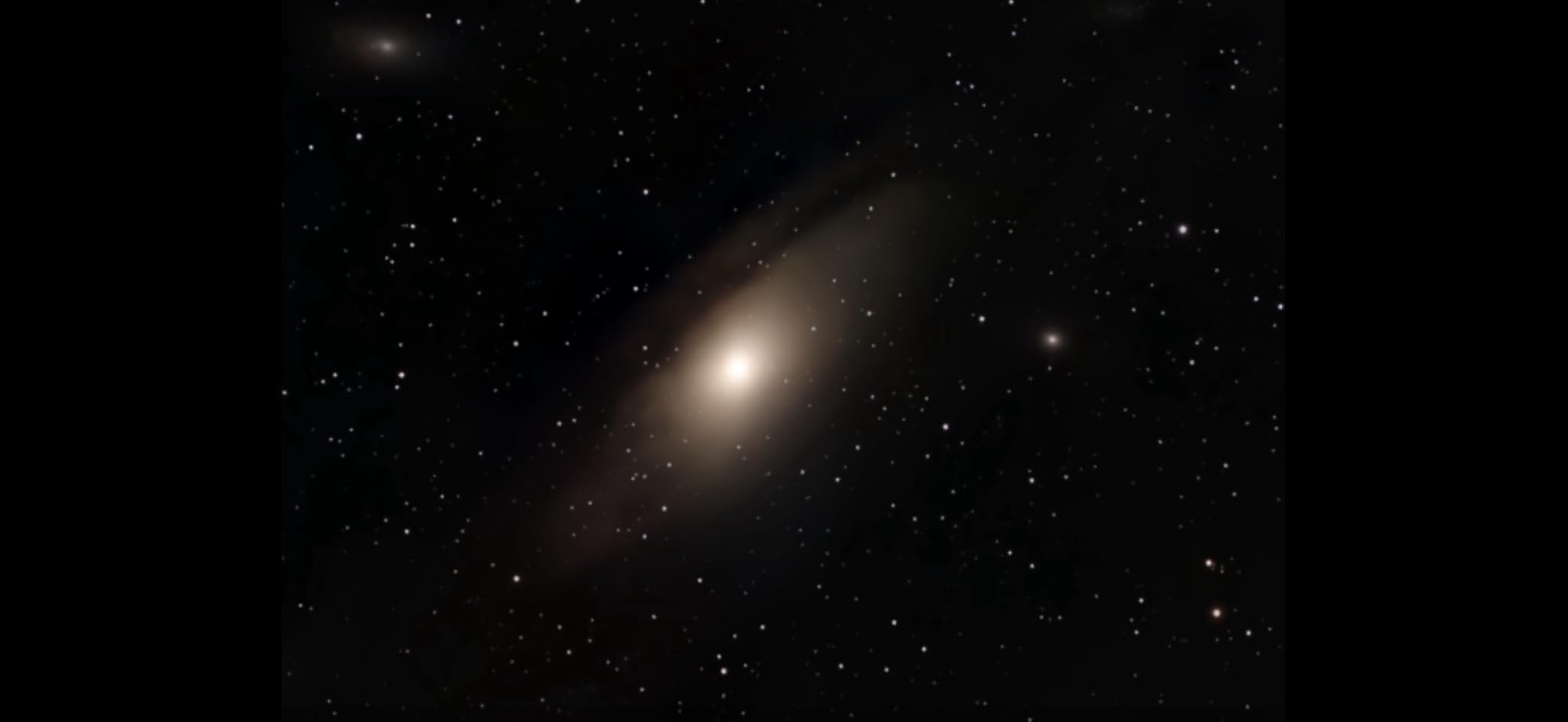
The workflow is genuinely short. Power it on, connect the app, pick a target from the list and let the automatic GoTo and tracking handle the rest. One-tap AI noise reduction and sky and foreground separation process the result, and mosaic stitching extends coverage when a target will not fit one frame.
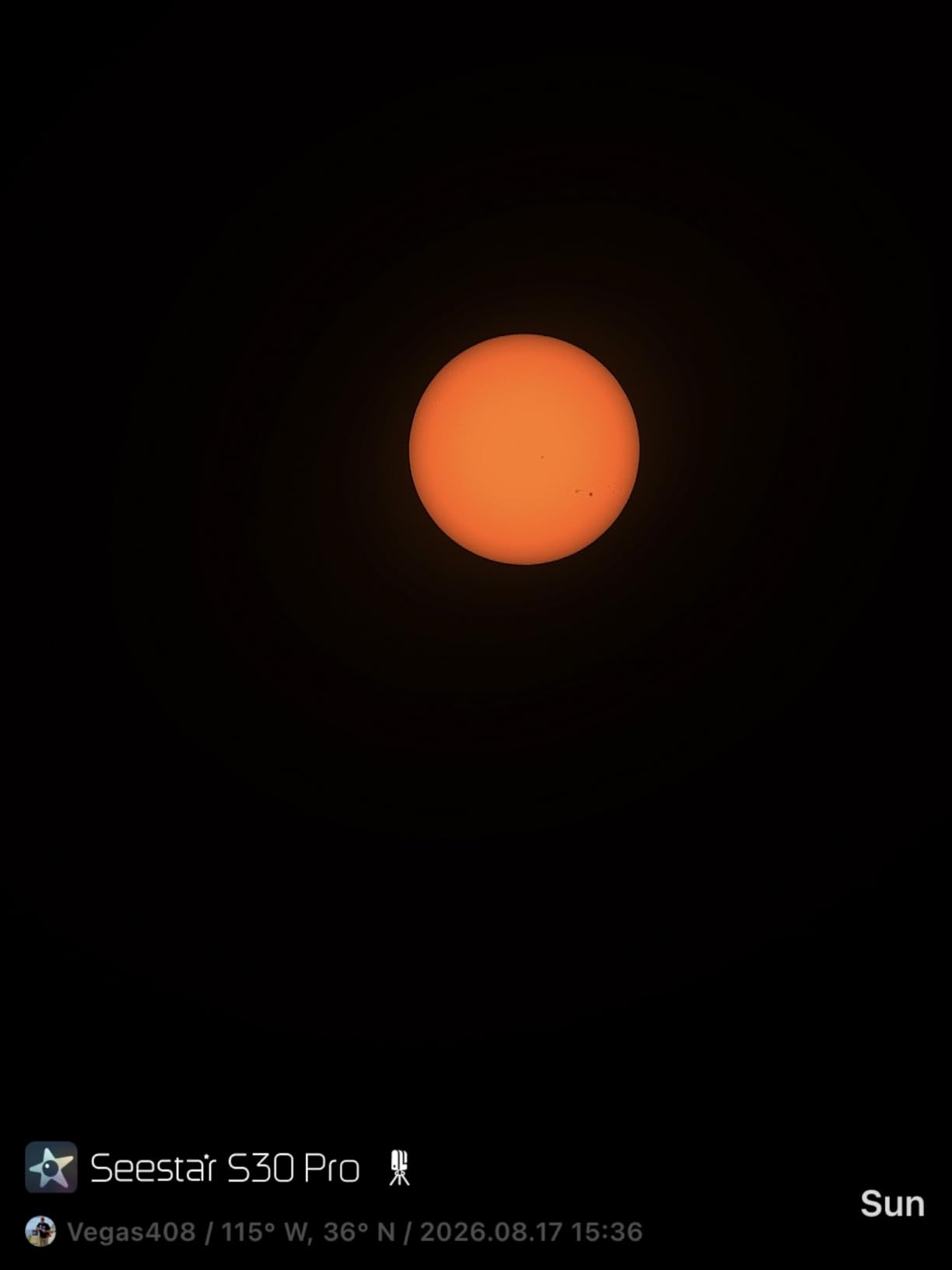
Wide targets are the easy case. One-tap capture modes handle the Milky Way, star trails, the Moon and the Sun, and EQ mode is available when a longer exposure is needed.
What a processed image shows that an eyepiece does not
An eyepiece shows you what arrived at your eye in real time, which for most faint targets means a grey smudge. A stacked image integrates many seconds of light and reveals colour, structure and the shape of dust lanes that no beginner will ever see live.
That is the entire argument for this category, and it is also its limitation. You are producing a photograph, not an observation, and people who want to show a friend Saturn at the eyepiece will be disappointed.
Where the smart approach breaks down
Deep-sky imaging requires the device to stay still, so it needs the included tripod or a solid surface, and wind shakes the frames. Planets are a poor fit because a telescope this short does not magnify them enough to resolve surface detail.
Print output is limited by the sensor, so this suits social sharing rather than wall-sized enlargements. Buy it if your sky is bright and your goal is images.
6. DWARFLAB Dwarf 3 – Best Smart Telescope for Astrophotography
DWARFLAB Dwarf 3 Smart Telescope, App-Controlled Astrophotography Camera
35mm objective
Dual telephoto and wide-angle cameras
4K auto-tracking
3 lbs
Pros
- Dual cameras cover deep-sky and Milky Way in one body
- 4K auto-tracking keeps stars and planets sharp
- One-tap cloud processing returns finished images quickly
- Carrying bag and magnetic filters included
- App has a very short learning curve
Cons
- Output sized for screens rather than prints
- Limited capability for planetary viewing
- Daylight wildlife use competes with astronomy for the cameras
The distinguishing feature is the dual imaging system. A telephoto lens handles deep-sky objects while a wide-angle lens covers the Milky Way and star trails, so you are not changing hardware when you switch subjects. The straight-through finder doubles as a daytime camera for wildlife and wide scenes.
At about 3 lbs the Dwarf 3 fits in a standard backpack, and the included carrying bag makes it the most travel-ready serious option here. Automatic tracking and GoTo keep both celestial and moving subjects centred without your intervention.
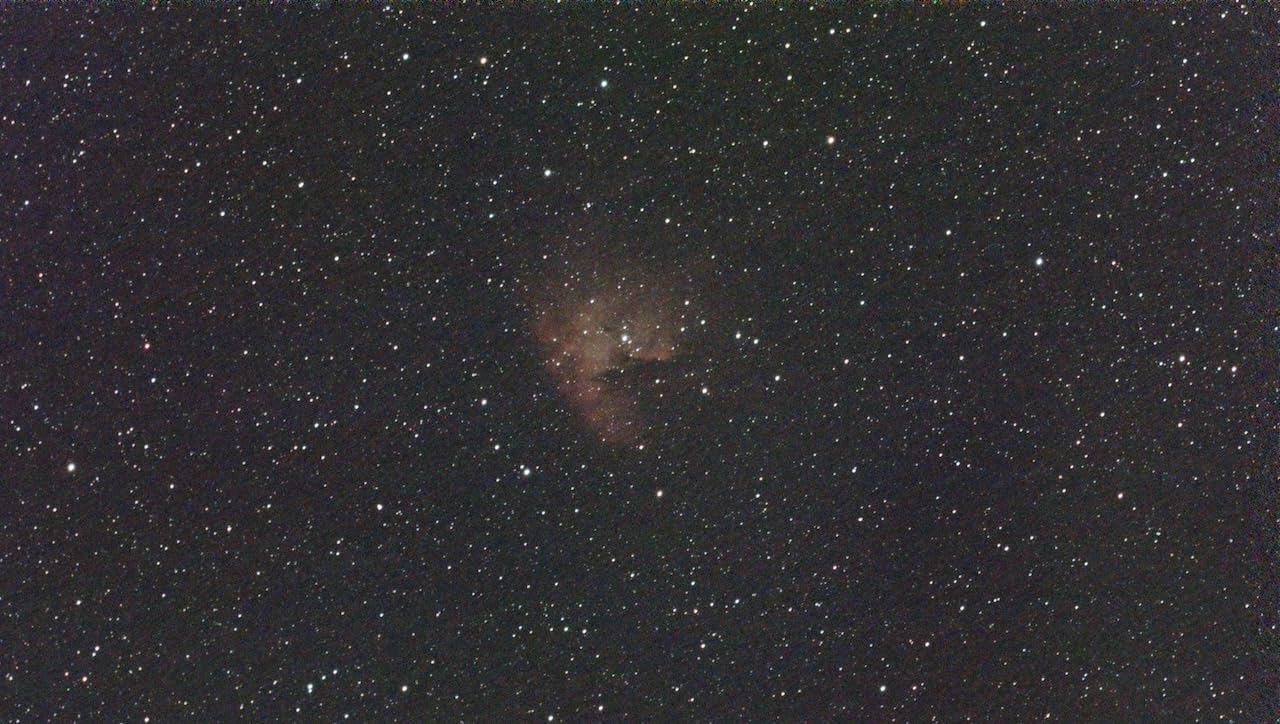
One lithium-ion battery is included and powers the whole unit. Cloud processing means a finished image arrives in minutes without a computer, laptop or stacking software, which removes the single largest barrier beginners face when starting astrophotography.
Start with the Moon and a bright target like the Orion Nebula, and you will have usable results on your first night. Owners consistently report that the reward is having images to show people afterwards.
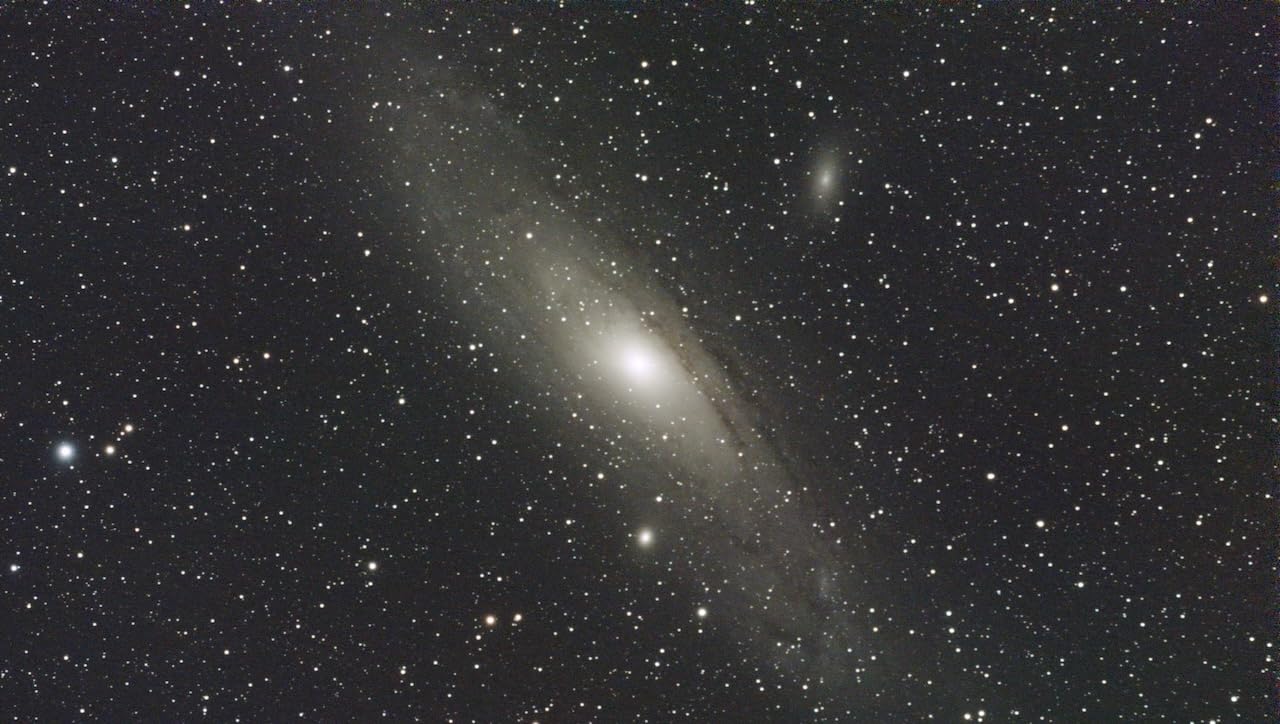
Dual cameras versus the single-camera alternative
Two lenses means one instrument covers both narrow planetary-adjacent targets and wide night landscapes. If you only need wide-field work, the single-camera design in the previous section covers it at a smaller size and a lower weight.
The trade-off is that having a camera for daylight use makes it a general-purpose tool, which some buyers love and others find dilutes the astronomy focus.
What the images will and will not survive
Stacking produces clean deep-sky results that hold up on a phone screen and on a social feed. Enlarged to poster size, the sensor resolution gives out, and reviewers are clear about that limit.
Planetary viewing is the weak spot. This is an imaging instrument that happens to point at things, not a telescope built to magnify. Buy it if you want finished pictures and portability, not if you want to see Jupiter’s bands.
7. DWARFLAB Dwarf Mini – Best Smart Telescope for Travel and Backpacking
DWARFLAB Dwarf Mini Smart Telescope – 1.85lb Portable Astronomy Telescope
Sony IMX662 sensor
150mm focal length
EQ mode up to 90 second exposures
1.85 lbs
Pros
- Under 2 lbs fits in a daypack for camping
- Auto GoTo plate solves and tracks without input
- Integrated light pollution filter helps in cities
- EQ mode unlocks 90-second exposures
- Smart cloud processing needs no computer
Cons
- Low resolution limits large prints and small targets
- Weak on planets where targets show as plain discs
- Initial Wi-Fi pairing needs configuring in the app menu
- A tripod helps in EQ mode and above fences and trees
At 1.85 lbs this is the only scope here you can genuinely carry on a hike or take camping without thinking about it. Everything else in this roundup is a car accessory first. The dimensions are small enough to disappear into a daypack and the whole point is being able to set it up wherever you end up at night.
It works by plate solving. Point it at a patch of sky above a known target and the software matches the star pattern, then drives itself onto the object. Set it on a table, connect the app and let it run.
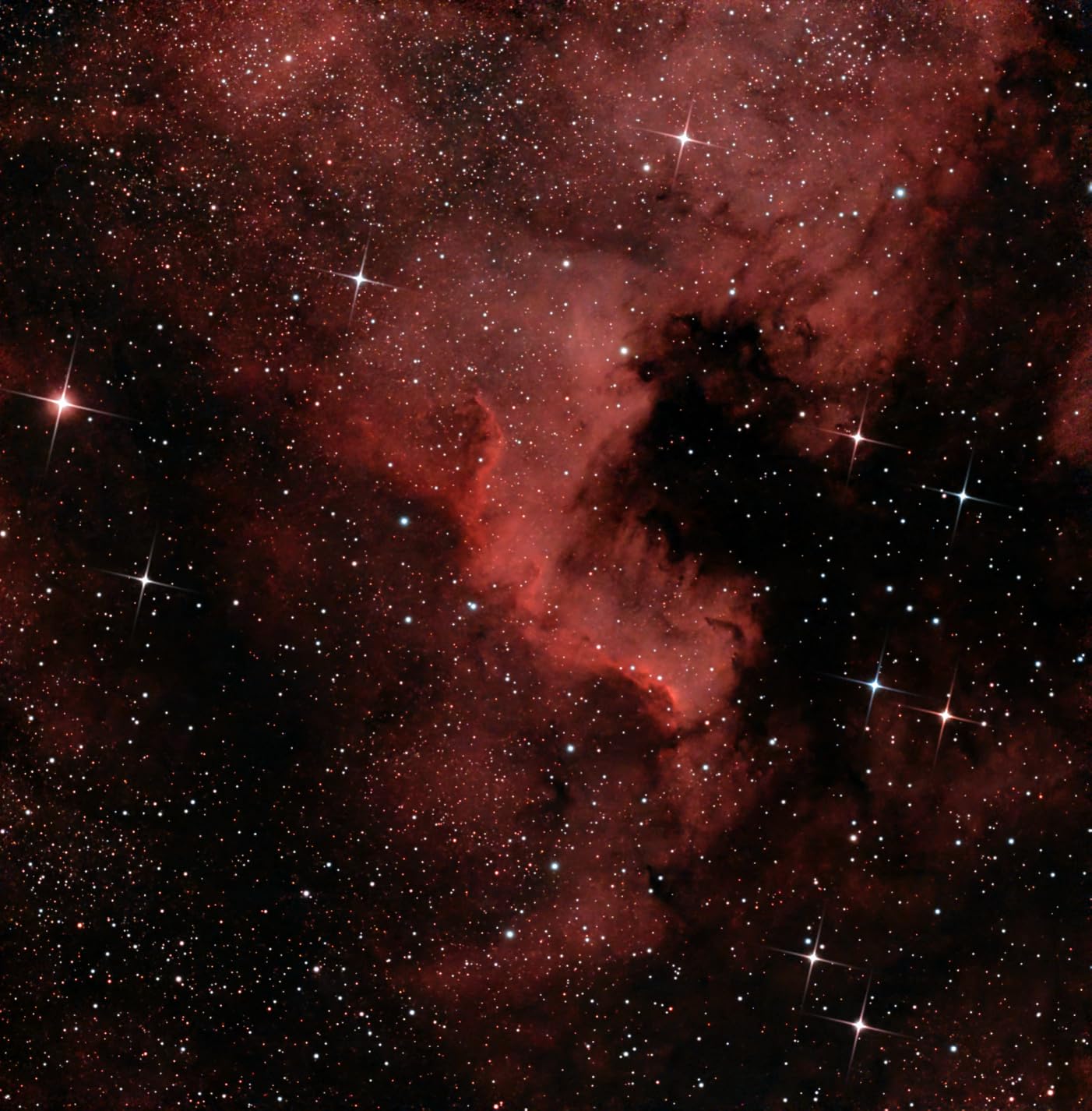
The integrated light pollution filter and the on-device sub-frame stacking are what make it viable from a bright city rather than a dark site, and Stellar Studio cloud processing finishes the frames without a computer. The megastack function combines data across sessions for targets too faint to capture in one sitting.
A solar filter, USB-C cable and cleaning cloth are included, and a two-year warranty covers the electronics.
How EQ mode changes what you can photograph
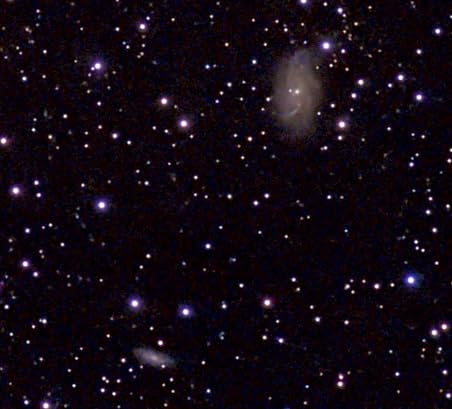
Standard alt-azimuth tracking smears stars near the frame edges. Switch to equatorial mode, set the scope down and it tracks in up to 90-second exposures, which is the difference between a fuzzy smudge and a recognisable deep-sky object.
A small tripod is genuinely useful here rather than optional, both to level the unit for EQ mode and to clear fences, walls and tree lines that would otherwise fill the frame.
The compromises that come with 1.85 lbs
The Sony IMX662 sensor is small in physical terms, and while it makes respectable stacked images, the output is limited if you want to print large. Small deep-sky targets also render very small in the frame, which is where the sensor resolution shows.
Planets are the weakest case. At this focal length they appear as featureless discs, so treat this as a deep-sky camera. The initial Wi-Fi connection also needs to be set inside the app menu rather than just pairing, and a few owners report dust inside the lens that cannot be cleaned. Buy it for travel, not for planetary nights.
How to Choose a Computerized Telescope for Beginners
Start by deciding which of the three families you are buying. Everything else follows from that choice, because a GoTo mount, a phone-guided push system and a smart camera solve different problems and cannot be substituted for one another at the same price.
GoTo, PushTo or smart: which type is right for you
GoTo telescopes slew and track automatically after alignment. They suit people who want to look through an eyepiece, show objects to family, and observe planets on a schedule.
PushTo scopes guide you with arrows and no motors. They suit people on the tightest budget, anyone observing with children who bump equipment, and beginners who want to learn the sky rather than outsource it.
Smart telescopes point a camera and stack images. They suit people whose real goal is photography from a bright location, and they are the wrong tool for anyone who wants to see Saturn’s rings at night.
Is a computerized telescope worth it for a beginner?
Yes, if your sky is bright and you want an eyepiece. GoTo genuinely earns its cost in a suburban backyard, where star hopping means learning several new constellations before you reach your target at all. No, if you have a dark site, a large budget for your first purchase, and an interest in learning the sky, because a manual 8-inch Dobsonian shows more for the same money.
The honest framing is that you are trading aperture for automation. Below roughly 114mm, the trade is usually bad.
Aperture is the spec that decides how much you see
Aperture governs both light gathering and resolving power. Moving from 70mm to 114mm roughly doubles the light area, and from 114mm to 150mm adds another good step. The jump from 150mm to 203mm on the NexStar 8SE is the largest in this group and the reason it leads the list.
For deep-sky galaxies and nebulae, aperture is everything. For planets, focal length and optical design matter at least as much, which is why a 127mm Maksutov-Cassegrain at 1500mm outperforms a smaller Newtonian on Jupiter.
Mount stability and why wobble ruins sessions
A tripod that vibrates after every touch destroys more observing time than mediocre optics. Touching the tube at high magnification sends ripples through the view that take seconds to settle, and cheap mounts settle slower than good ones.
Solid alt-azimuth bases like the Virtuoso GTi table platform excel here because mass does the work. Thin stainless steel legs on lighter mounts need steadying hands, and a beginner’s hands are often the wobbly part.
Alignment reality and how to survive it
Three-star alignment takes about two minutes when you have clear sky in three directions. It fails for one reason: obstructions. A tree, a roofline, a neighbouring security light and the mount simply will not slew, which owners frequently misread as a broken telescope.
If that happens, move to open ground rather than restarting. StarSense-based scopes such as the StarSense Explorer LT 114AZ avoid the problem entirely because there is no alignment routine, only a phone camera and a star map.
Power, batteries and total cost of ownership
Eight AA cells will not survive an evening of active slewing, and every motorized scope here needs a plan for power. Budget for an external power supply before the first session rather than after the third dead pack of batteries.
Also budget for a better eyepiece. Supplied Plossls are usable but unremarkable, and a single upgraded eyepiece often improves the view more than moving up a model tier would. Add a carrying case if you plan to travel, and a red light for reading charts without ruining your dark adaptation.
Magnification, eyepieces and the high power trap
Useful magnification on a beginner telescope tops out at roughly twice the aperture in millimeters. A 114mm scope is happy near 230x and gains nothing beyond that, while the temptation to crank a cheap eyepiece up to 400x produces a dim, blurry image that beginners often assume means the telescope is faulty.
Start with the included eyepieces, learn which magnification suits each target, and upgrade only once you know what you are missing.
Portability and the one-person carry rule
Anything under 20 lbs can realistically be carried by one person from a car to a driveway or a field edge. Above that, plan for two hands or a cart. The NexStar 8SE is the clearest case: it is the most capable scope here and the least convenient to move.
Under 4 lbs changes the equation entirely, because you can go somewhere rather than waiting for dark at home. The two smart telescopes here are genuinely grab-and-go in a way no motorized GoTo mount is.
Who should not buy a computerized telescope
If you have access to a dark site, a firm budget and no interest in astrophotography, a manual 8-inch Dobsonian will show you more for the same money and need no alignment, no batteries and no phone. Long-standing experience in the observing community favours using whatever scope you own most often over owning more aperture.
Used GoTo scopes are worth considering for buyers on a budget, since a well-maintained example carries most of the capability at a fraction of the cost. Check that alignment motors, the hand controller and any free bundled software all work before committing, and expect to replace batteries regardless.
Frequently Asked Questions
Are computerized telescopes good?
Yes, when they solve the right problem. A computerized telescope is excellent at finding and tracking objects in a sky you cannot yet navigate, which is the hardest part of starting out. It does not make images brighter or sharper, so below roughly a 114mm aperture the money is usually better spent on a larger manual telescope.
What is the best computerized telescope for beginners?
The Celestron NexStar 8SE is our top pick because its 203mm aperture shows genuine lunar and planetary detail, its 40,000+ object GoTo database removes star charts entirely, and SkyAlign sets up in about two minutes. If the 24 lb weight is a problem, the Sky-Watcher Virtuoso GTi 150P gives you nearly as much aperture with encoders that forgive beginner mistakes.
What type of telescope should a beginner use?
A reflector or catadioptric with a stable alt-azimuth mount and at least 114mm of aperture is the most practical first instrument. Choose a GoTo model if your sky is bright, a PushTo model if you are on a tight budget, and a smart telescope only if photography is your real goal.
Which telescope is best to see planets for beginners?
A longer focal length and a stable mount matter more than aperture for planets. The Celestron NexStar 127SLT uses a 1500mm focal length Maksutov-Cassegrain design that magnifies Jupiter and Saturn effectively at 18.1 lbs, and the NexStar 8SE resolves finer lunar detail if you can manage carrying it.
What to avoid when buying a telescope?
Avoid scopes with undersized mounts carrying oversized optical tubes, cheap short-tube refractors that show heavy chromatic aberration, and flip-mirror or built-in wedge mechanisms on budget models, since neither does anything a separate accessory cannot do better. Also avoid any mount whose motors are undersized for the tube it carries, because tracking accuracy suffers badly.
Is the Dwarf Mini smart telescope any good?
Yes, as a travel instrument. At 1.85 lbs it is the most portable scope we tested, and its plate solving, integrated light pollution filter and equatorial mode with exposures up to 90 seconds produce usable stacked images from bright skies. Its sensor resolution limits large prints, and planets show as featureless discs.
Which Computerized Telescope Should You Buy First?
If you want one scope and can manage the weight, buy the Celestron NexStar 8SE. Its 203mm aperture and 40,000+ object GoTo database give you the widest range of targets and the sharpest views in this guide, and SkyAlign keeps setup to a couple of minutes.
If carrying 24 lbs is unrealistic, the Sky-Watcher Virtuoso GTi 150P is the smarter choice, with 150mm of aperture, Wi-Fi GoTo and encoders that survive a bumped tube. If your budget is tight, the Celestron StarSense Explorer LT 114AZ gets you started with no motors and no batteries to drain.
The decision reduces to three questions. Do you want to look through an eyepiece or photograph the sky, which separates the smart telescopes from everything else. Is your sky bright enough that you need help finding targets, which separates GoTo from PushTo. And how much can you carry, which decides between the 8-inch Celestron and everything lighter. Buy the best scope you will actually use often, because the scope in the cupboard teaches you nothing.