
If you have a tween at home who treats every game night like a championship match, you already know the challenge. Most kids’ word games are either too easy for a 10 to 12 year old or so slow that competitive kids lose interest before the second round. That is exactly why we put together this guide to the best word games for tweens who love competition.
We tested, compared, and ranked seven word games that strike the right balance between vocabulary-building and head-to-head intensity. Every pick on this list earned its spot because it keeps competitive tweens engaged, rewards quick thinking, and works for family game nights, sibling battles, or friend hangouts.
Some of these are fast-paced race games where everyone plays at once. Others reward strategy and word knowledge. All of them deliver that “one more round” energy that competitive kids crave. Let us break down which one fits your tween’s play style.
Table of Contents
Top 3 Picks for Competitive Tween Word Games

Bananagrams Classic Word Game
- Fast anagram racing
- 1-8 players
- Ages 7+
- Portable banana pouch


Best Word Games for Tweens Who Love Competition in 2026
| Product | Specs | Action |
|---|---|---|
| Bananagrams Classic Word Game |
|
Check Latest Price |
| Hasbro Boggle Classic Game |
|
Check Latest Price |
| USAOPOLY Tapple Board Game |
|
Check Latest Price |
 Big Boggle 5×5 Grid Game Big Boggle 5×5 Grid Game |
|
Check Latest Price |
 Scrabble Slam Card Game Scrabble Slam Card Game |
|
Check Latest Price |
 Yahtzee Words Dice Game Yahtzee Words Dice Game |
|
Check Latest Price |
 Word on the Street Board Game Word on the Street Board Game |
|
Check Latest Price |
1. Bananagrams Classic Word Game – Fast-Paced Anagram Racing
Bananagrams Classic Word Game, 144 Tiles in Banana Pouch, Travel Game
Ages 7+
1-8 Players
15 min play time
144 letter tiles
Weighs 0.13 kg
Pros
- Race-to-build crossword grid keeps everyone engaged simultaneously
- Works for solo play up to 8 players
- Teaches spelling and vocabulary without feeling educational
- Compact banana pouch is perfect for travel
- No point system means simpler scoring for younger tweens
Cons
- Contains small parts so keep away from toddlers
- Some international users report missing special characters
When our team brought Bananagrams to a tween game night, it was the one everyone kept coming back to. The premise is simple: each player races to build their own intersecting word grid from a shared pool of letter tiles. There are no turns, which means every kid is playing at full speed the entire time.
That simultaneous play is what makes Bananagrams one of the best word games for tweens who love competition. Nobody sits around waiting. The moment someone yells “peel” and grabs a new tile, the pressure ramps up for everyone else. Our competitive testers loved the chaos and the come-from-behind wins.
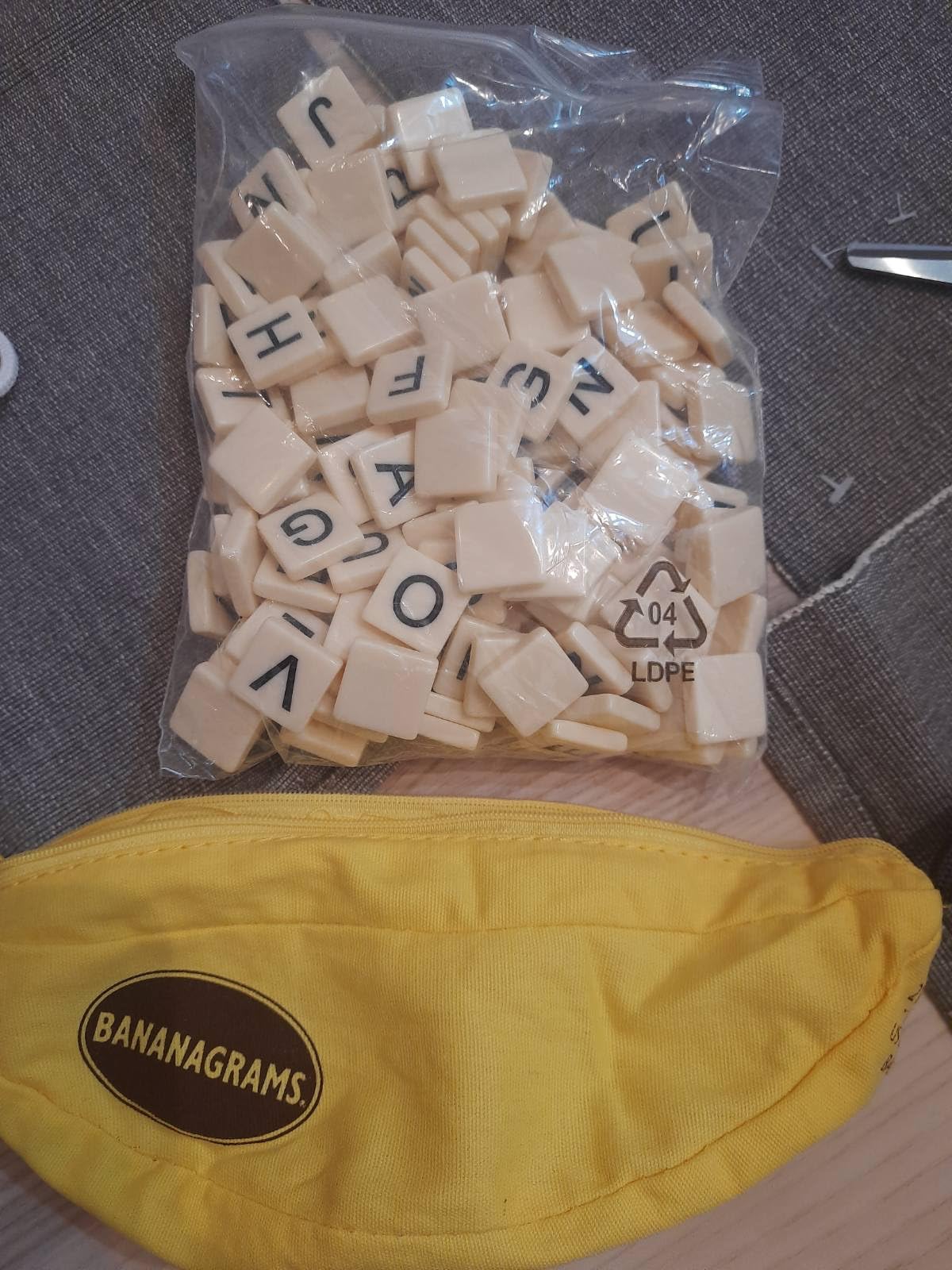
The 144 tiles come in a banana-shaped pouch that zips shut, making this one of the most portable games on our list. We tossed it in a backpack for a weekend trip and it took up less space than a paperback. At just 0.13 kilograms, it adds zero bulk to travel bags.
Bananagrams carries a massive 26,800-plus review base with a 4.9-star average. That is one of the highest ratings on this list, and it reflects how well this game works across age groups. Tweens especially enjoy it because the lack of a board means they can spread out on the floor, a table, or even the backseat of a car.

Best fit for your tween
Bananagrams shines brightest with tweens who like speed-based competition and think well under pressure. If your kid enjoys beating the clock or outpacing a sibling, the simultaneous race format will keep them hooked. It is also the top pick for families with mixed ages, since a 7 year old and a 12 year old can play the same round at their own skill level.
This is also the game we recommend most for travel. The banana pouch, lightweight tiles, and no-board design mean you can play it anywhere from a restaurant table to a hotel room floor.
What to watch out for
The main thing to know is that vocabulary gaps between players can create a skill imbalance. A well-read 12 year old will typically outpace a younger sibling. Some families handle this by giving the younger player a head start with extra tiles or allowing two-letter words only for them.
Also, the tiles are small and smooth, so they slide easily on hard surfaces. Playing on a tablecloth or placemat helps keep them in place during fast rounds.
2. Hasbro Boggle Classic Game – 90-Second Word Hunt
Hasbro Gaming Boggle Classic Game Brown/a, standart
Ages 8+
1+ Players
90 sec rounds
16 letter cubes
Compact 2x4.3x4.3 inch case
Pros
- 90-second rounds keep gameplay fast and intense
- Works for solo play or large groups
- Compact grid base stores all cubes inside
- Words can connect horizontally vertically or diagonally
- Affordable price for a classic game
Cons
- Only 16 letter cubes so grid is on the smaller side
- No warranty included
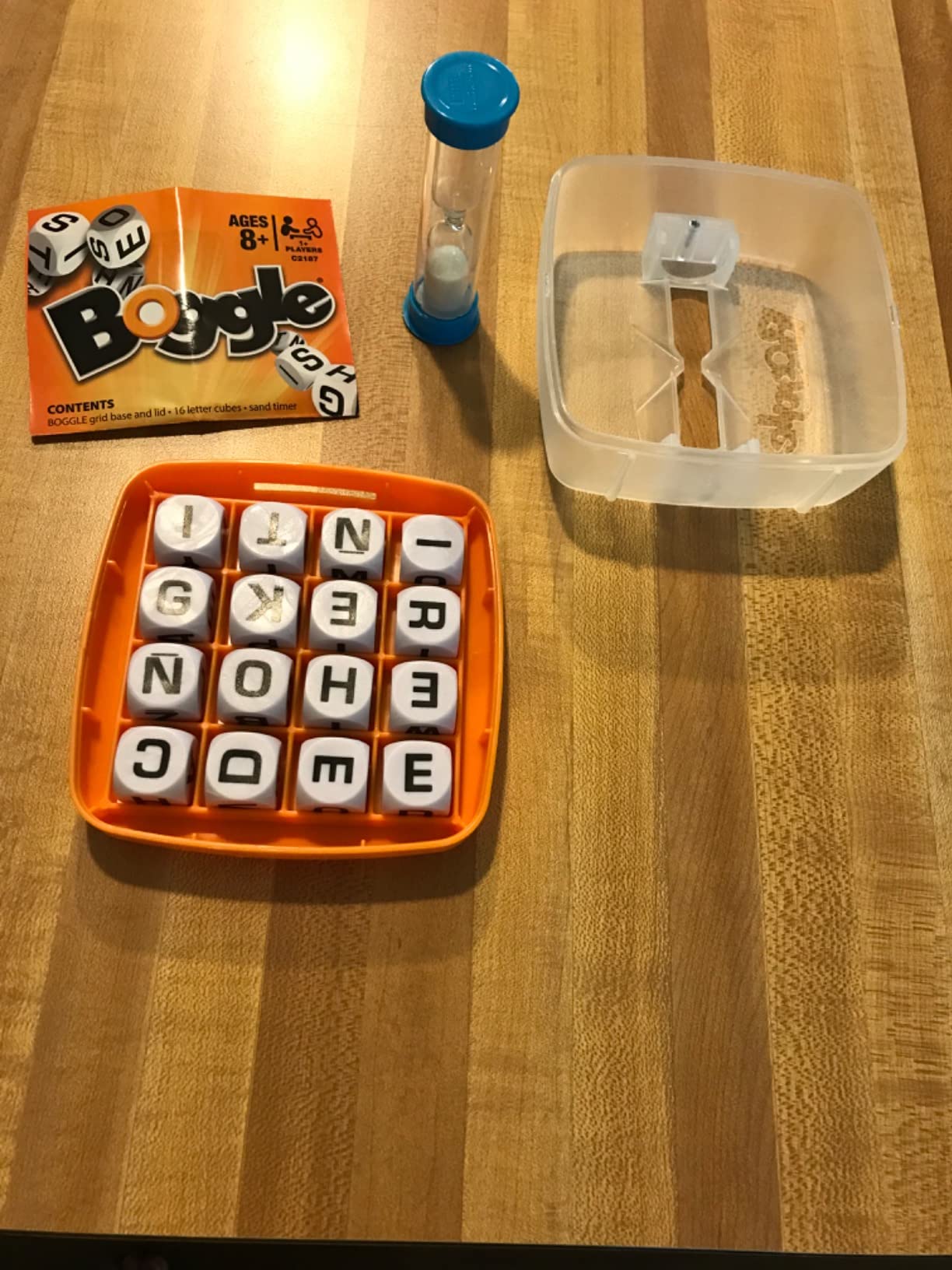
Boggle Classic is the game that taught our team what competitive word hunting feels like. You shake the 16 letter cubes, they settle into the grid, and then everyone has 90 seconds to write down as many connected words as they can find. The timer flips, pencils start moving, and the room goes quiet with concentration.
What makes Boggle a standout competitive word game for tweens is the scoring twist. If two players write the same word, nobody gets credit for it. That pushes competitive kids to hunt for unusual words rather than obvious ones, which rewards creative thinking and vocabulary depth.
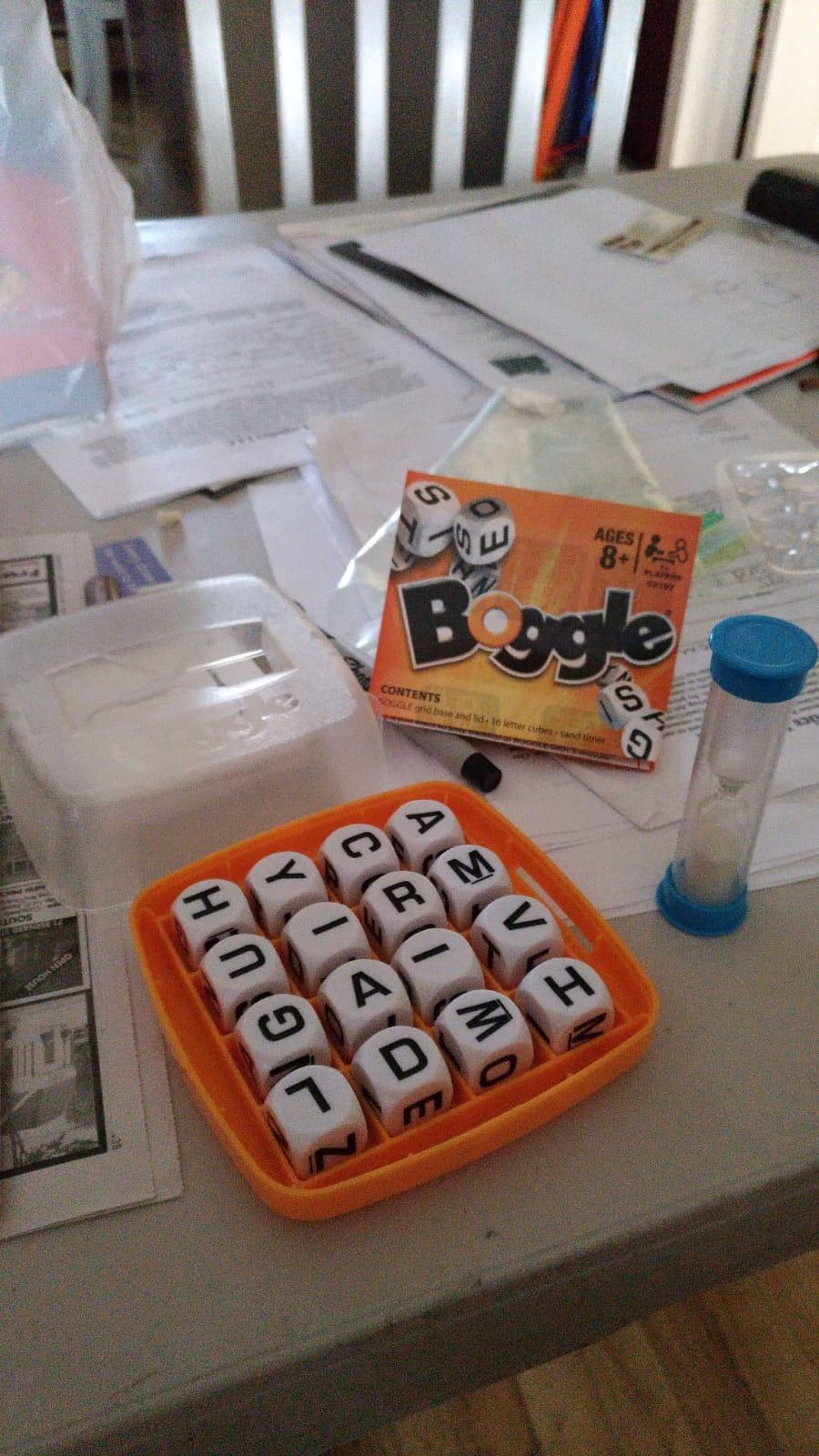
The grid base doubles as a storage container. All 16 cubes and the built-in sand timer fit inside the case, which measures just 2 by 4.29 by 4.29 inches. This makes Boggle one of the most packable games on our list. We found it ideal for restaurant waits, airport layovers, and Grandma’s house.
With 9,529 reviews and an 86 percent five-star rate, Boggle has earned its reputation as a family staple. The educational objective listed by Hasbro is spatial awareness, but in practice it builds vocabulary, spelling speed, and pattern recognition. Tweens who enjoy word search puzzles will feel right at home.
Best fit for your tween
Boggle is perfect for tweens who thrive on quick bursts of focused competition. The 90-second format means rounds are short enough to keep attention locked in, and kids can play multiple rounds to chase a higher score. It works equally well for solo practice as it does for head-to-head sibling battles.
This is also our top budget pick. At under 15 dollars, it delivers more replay value per dollar than nearly anything else on this list.
What to watch out for
The standard 16-cube grid is compact, which means the word possibilities are more limited than the larger Big Boggle variant later on this list. Highly competitive tweens may outgrow the base game after extended play. That is actually a natural upgrade path to Big Boggle, which we cover in position 4.
The sand timer built into the lid works but can feel imprecise. Some families prefer using a phone timer for more accurate rounds.
3. USAOPOLY Tapple Board Game – Category Word Racing
USAOPOLY The Original TAPPLE, The Fun & Fast-Paced Family Word Game
Ages 8+
2-8 Players
15 min play time
144 categories
Battery powered timer
Pros
- Press-timer category racing creates intense head-to-head play
- 144 categories keep every round feeling fresh
- Portable wheel stores all cards inside
- Works for 2-8 players so great for groups
- Award-winning fast-paced design
Cons
- Requires 2 AA batteries for the timer
- Some categories may challenge younger tweens
Tapple is the loudest, most chaotic game on this list, and our tween testers loved it for exactly that reason. You draw a category card like “things at a birthday party,” hit the timer, and then take turns shouting words that fit the category. Each word must start with the next letter on the wheel. Miss your turn or run out of time and you are out of the round.
The timer is a physical button you slap to start each turn, and it ticks down with a satisfying urgency. When we played with a group of five tweens, the room was filled with shouts of “piñata” and “presents” and “punch” all racing against the 10-second clock. This is the kind of fast-paced word game that competitive tweens obsess over.
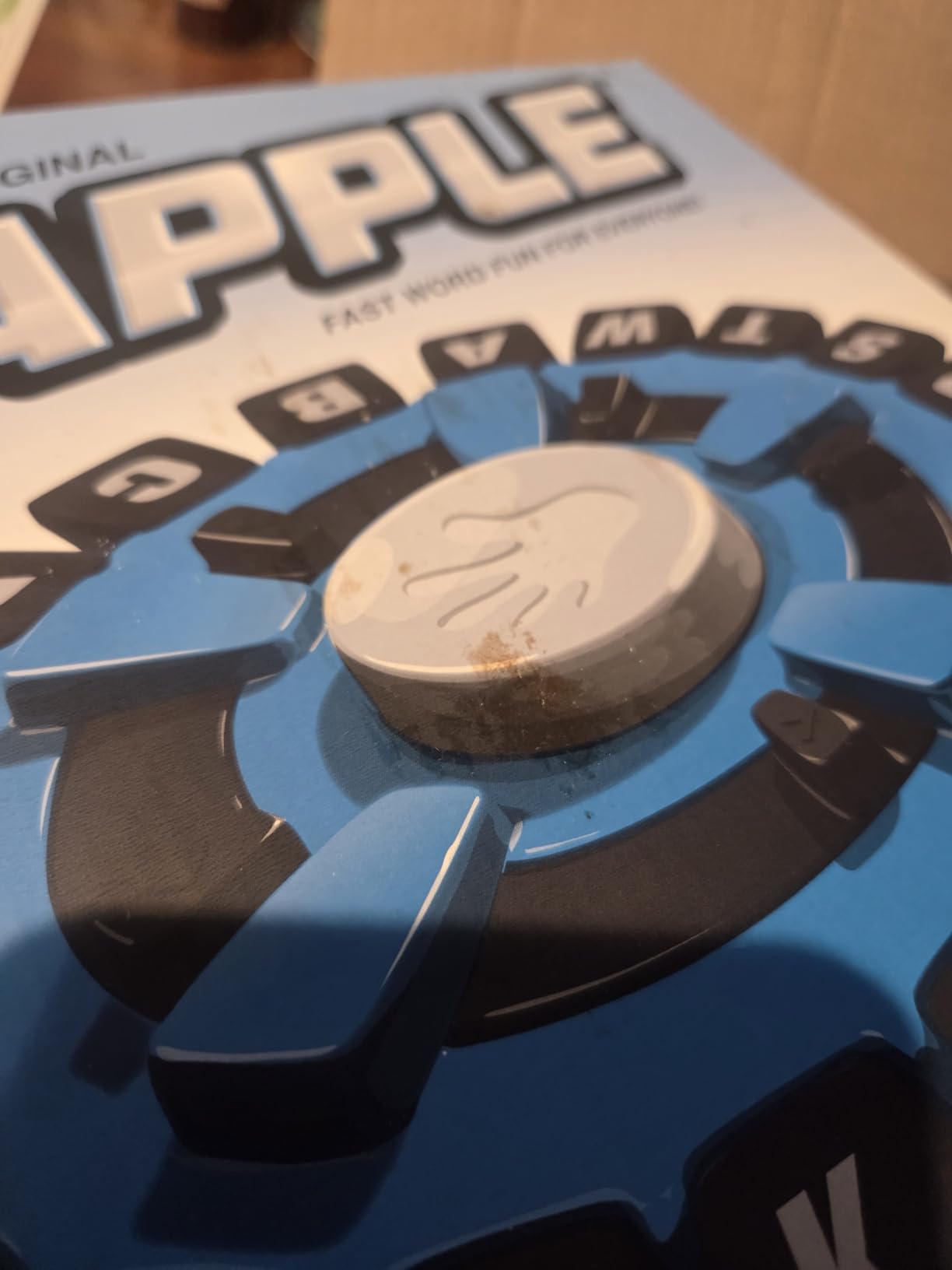
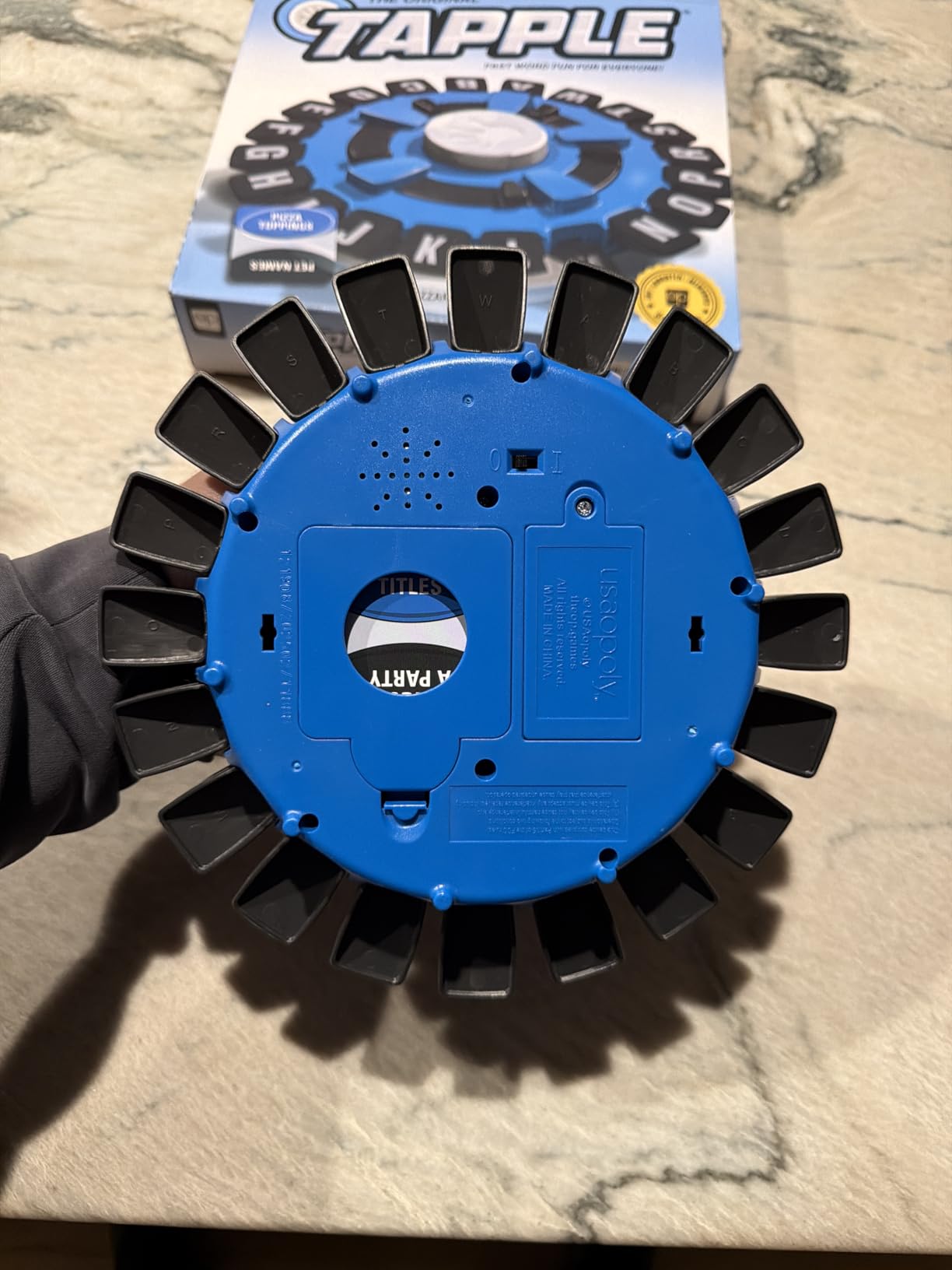
The Tapple wheel houses all 36 category cards inside the unit, and each card has four categories for a total of 144. That variety keeps the game from feeling repetitive even after a dozen rounds. The whole unit is self-contained and portable at 11 by 11 by 3 inches.
With 11,355 reviews and an 85 percent five-star rate, Tapple has clearly resonated with families. It carries awards for good reason: the elimination-style format creates real tension, and the physical button-timer mechanic makes the pressure feel tangible rather than abstract.
Best fit for your tween
Tapple is the ideal pick for tweens who love party games and social competition. If your kid lights up during rapid-fire challenges and thrives on being the last one standing, this game delivers that energy every single round. It scales beautifully from 2 players up to 8, making it the best choice on this list for larger friend gatherings.
It is also the game we recommend most for birthday parties and sleepovers. The elimination format means rounds end quickly, so knocked-out players are back in the action within minutes.
What to watch out for
The timer requires 2 AA batteries, which are not included. Keep spares on hand, because a dead battery mid-game will stop the action cold. The battery dependency is the most common complaint in reviews.
Some category cards include topics that younger tweens or less verbal kids may struggle with. We recommend pre-sorting the deck for the first few sessions to remove any categories that feel too advanced.
4. Big Boggle – 5×5 Grid Word Challenge
Big Boggle, with 5×5 Grid and 25 Letter Cubes, by Winning Moves Games USA
Ages 8+
2+ Players
3 min rounds
25 letter cubes
Includes double letter cube
Pros
- 5x5 grid with 25 cubes offers far more word possibilities than classic Boggle
- Double letter cube makes longer words easier to find
- 3-minute rounds allow deeper strategic thinking
- Improves spelling and vocabulary for older tweens
- Backed by manufacturer defect warranty
Cons
- Larger size makes it less portable than classic Boggle
- Some users report occasional cube quality issues
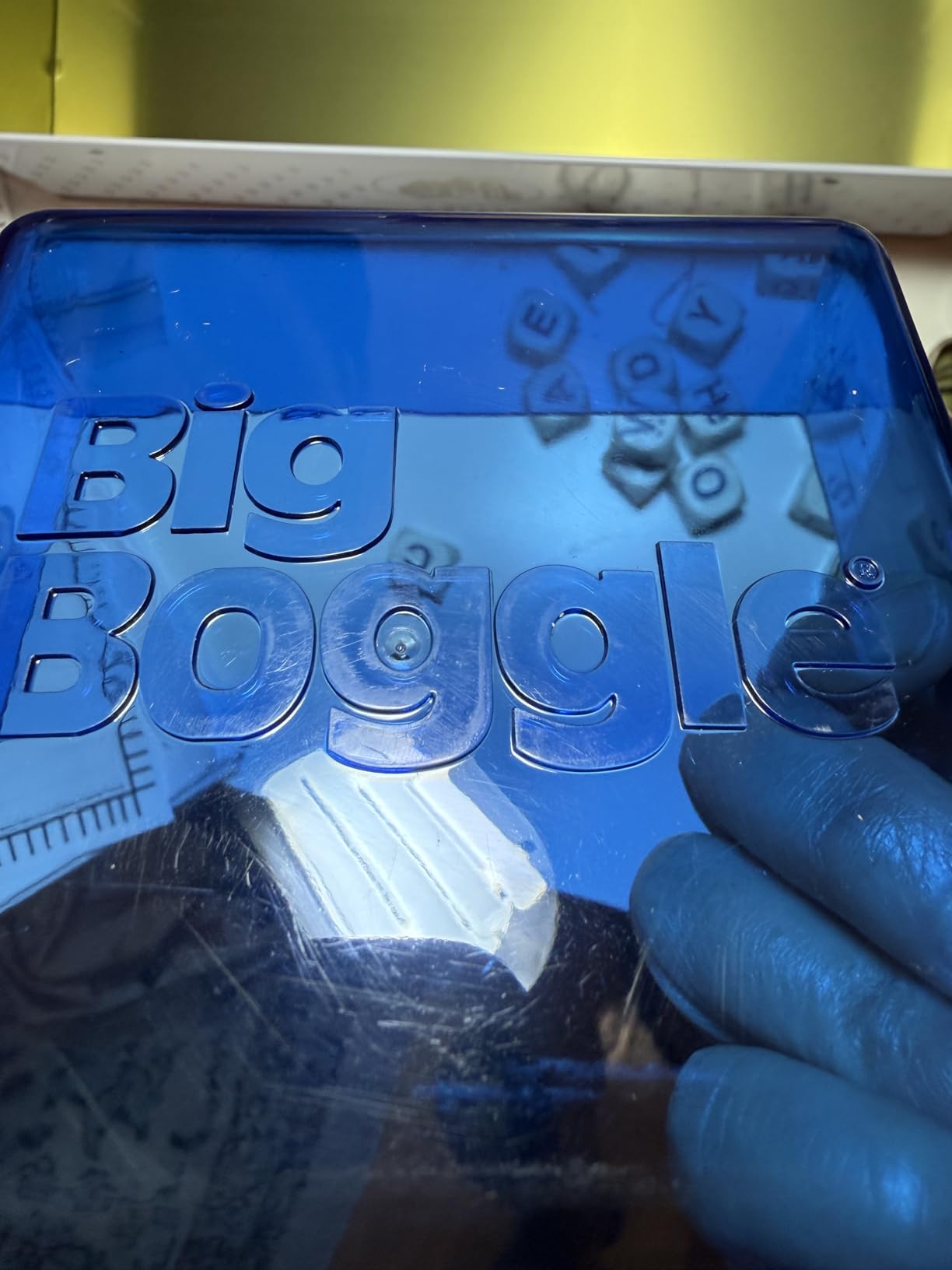
Big Boggle is what happens when you take classic Boggle and give competitive tweens a bigger playground. The 5×5 grid holds 25 letter cubes instead of 16, which dramatically increases the number of possible words in each round. Words must be four letters or longer, which pushes tween vocabularies into more advanced territory.
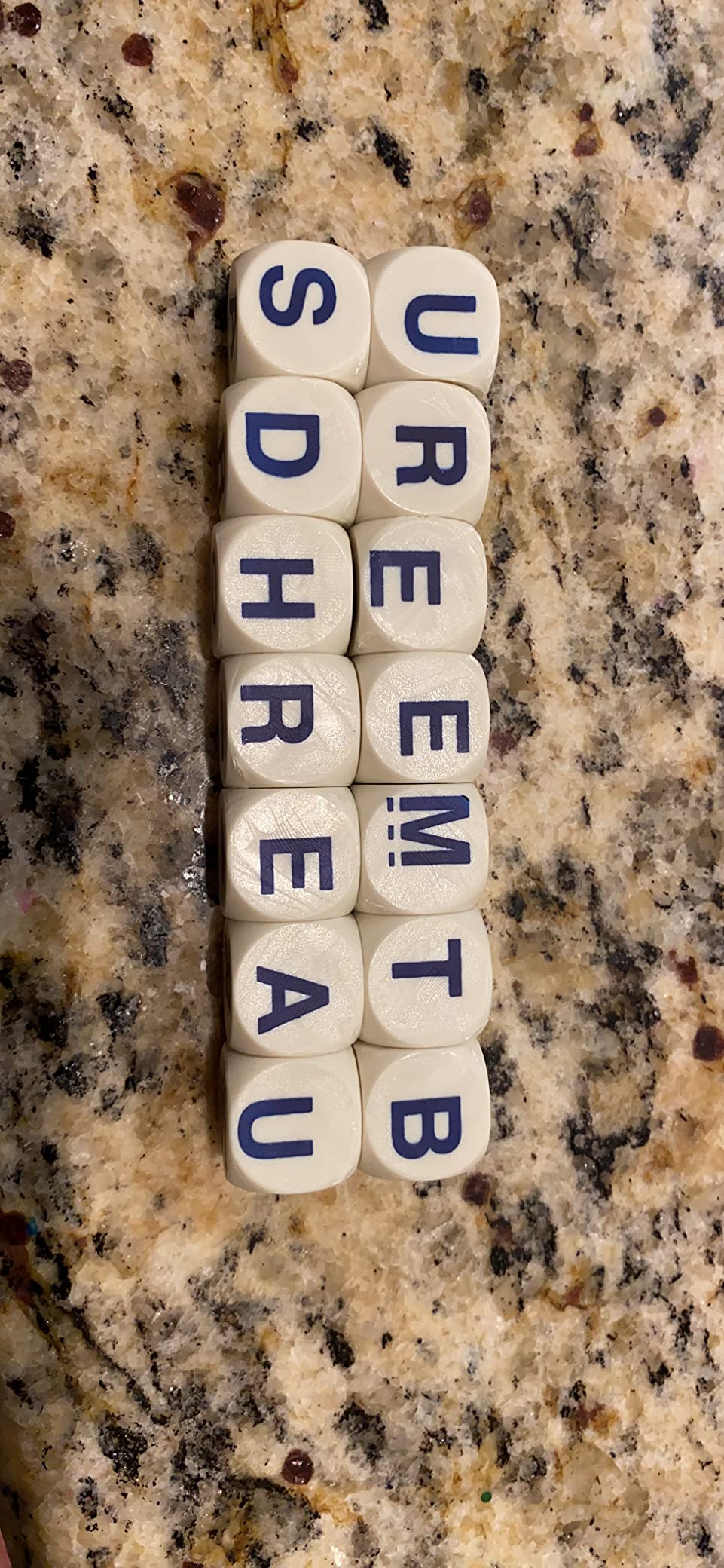
Our team found that older tweens, especially 11 and 12 year olds, preferred Big Boggle over the classic version. The larger grid rewards players who can spot longer, more complex words. A double letter cube is included as a bonus, making it easier to build the high-scoring 6 and 7 letter words that win rounds.
The scoring system creates direct head-to-head tension. If two players find the same word, neither gets points for it. This rule forces competitive kids to dig deeper and search for words their opponents might miss. We watched a 12 year old find “dragonfly” while everyone else had stopped at “dragon,” winning the round on that single find.
With 5,371 reviews and an 89 percent five-star rate, Big Boggle is one of the highest-rated games on our list. It debuted in 1979 as the Parker Brothers Bigger Hidden Word Game and has been brought back by popular demand through Winning Moves.
Best fit for your tween
Big Boggle is the right call for older tweens and advanced spellers who have outgrown the standard 16-cube version. If your 11 or 12 year old can already rattle off 5 and 6 letter words on demand, the 5×5 grid gives them the space to flex that vocabulary. It is also excellent for mixed-age play where parents want to be genuinely challenged alongside their kids.
The 3-minute rounds are longer than classic Boggle’s 90 seconds, which allows for more deliberate searching. This suits tweens who prefer thinking depth over raw speed.
What to watch out for
The larger grid makes this version less portable than classic Boggle. The unit measures 8 by 4 inches and does not fold down, so it is better suited for home game nights than backpack travel.
A few users have reported occasional letter cube quality issues, such as faded letters. Winning Moves offers a warranty against manufacturer defects, so reach out if you get a dud cube.
5. Scrabble Slam Card Game – Fast Travel Word Battle
Winning Moves Scrabble Slam, Fast Paced Card Game Version of Scrabble
Ages 8+
2-4 Players
10 min play time
Card-based format
5.75x3.63x0.75 inch pack
Pros
- Everyone plays simultaneously with no turns
- Travel-sized deck fits in a purse or carry-on
- Quick 10-minute games are perfect between activities
- Includes Double Scrabble Slam variation mode
- Great budget option under 10 dollars
Cons
- Limited to 2-4 players so not ideal for big groups
- Only uses 4-letter words which may feel restrictive
Scrabble Slam takes the spirit of Scrabble and compresses it into a fast, chaotic card game. You start with a 4-letter word laid out on the table. Then every player simultaneously slams down letter cards to change the word into a new one. “Game” becomes “fame” becomes “fate” becomes “late,” and the first player to empty their hand wins.
Our tween testers described it as the most frantic game on this list. There are no turns, which means four kids can be reaching for the same word at the same time. That chaos is exactly what competitive tweens crave. The entire game lasts about 10 minutes, making it a perfect filler between homework and dinner.
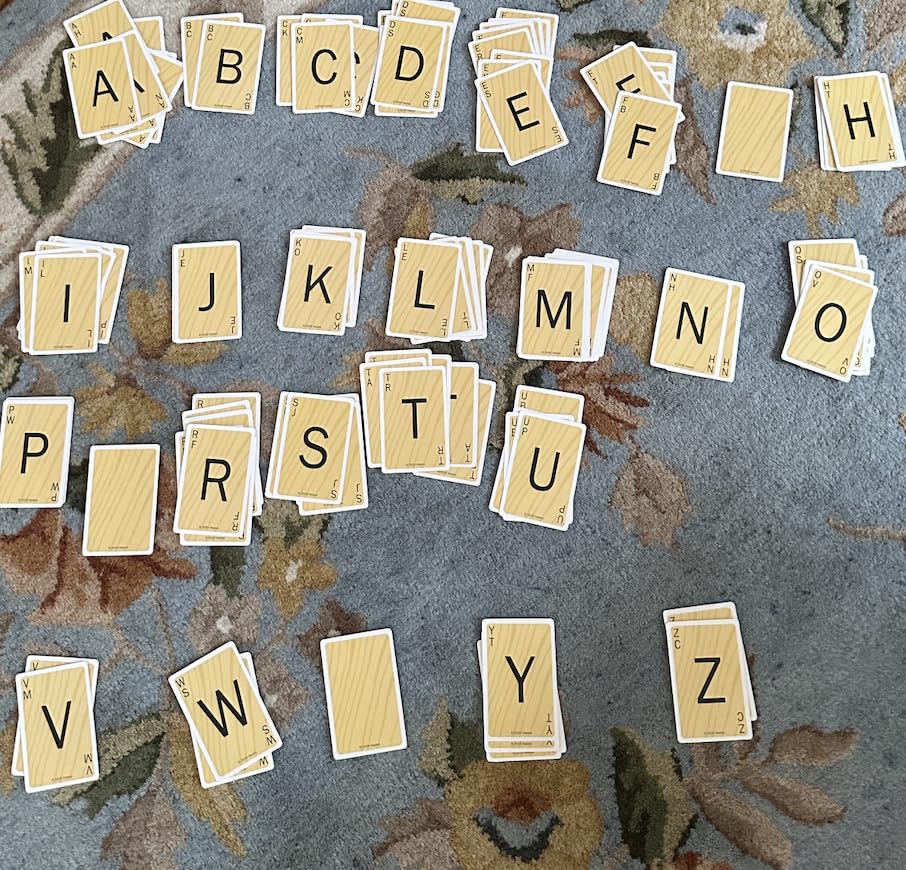
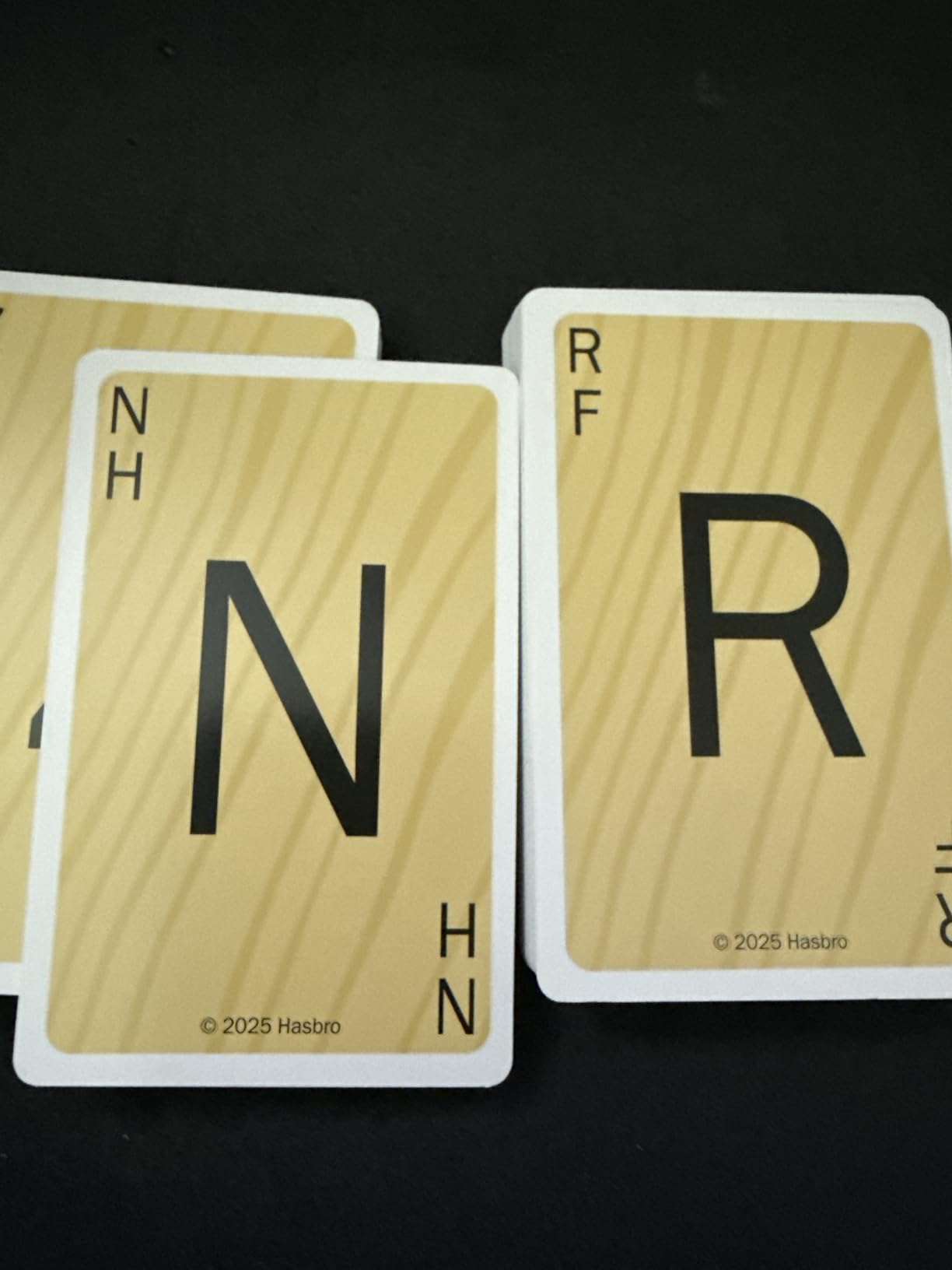
The deck measures just 5.75 by 3.63 by 0.75 inches, smaller than a standard novel. We slipped it into a carry-on for a family trip and it took up essentially zero space. For parents looking for screen-free travel entertainment, this is the most packable option on our entire list.
With 1,070 reviews and a 4.6-star average, Scrabble Slam has a smaller but enthusiastic following. Reviewers consistently praise it as a quick palette cleanser between longer board game sessions. The included Double Scrabble Slam mode adds a second variation for families who want to mix things up.
Best fit for your tween
Scrabble Slam is our top recommendation for travel and on-the-go competitive play. If your tween needs something to do in the car, at a restaurant, or during a sibling’s sports practice, this deck is the answer. It is also the most affordable game on this list, which makes it a low-risk gift option.
This game suits tweens who enjoy fast reflex-based competition. The simultaneous-play format means there is no downtime, and the short round length keeps energy high.
What to watch out for
The 4-letter word constraint is the main limitation. After extended play, competitive tweens may find the word pool feels repetitive. This game works best as a quick burst activity rather than a full game-night centerpiece.
The 2-4 player limit is tighter than most games on this list. If you have a larger family or are hosting a party, you will want to pair this with something like Tapple or Bananagrams that scales to more players.
6. Winning Moves Yahtzee Words – Luck Meets Vocabulary
Winning Moves Yahtzee Words, Family Word Game Version of Yahtzee
Ages 8+
2+ Players
30 min play time
7 letter dice
Includes scorepad and dice cup
Pros
- Combines dice luck with word formation skill for balanced play
- Familiar Yahtzee-style scoring is easy to learn
- 30-minute sessions suit longer game nights
- Compact components store easily
- Keeps minds active with vocabulary and strategy
Cons
- Box is oversized relative to contents
- Scoring bonus lines can confuse first-time players
- Missing some letters with duplicates included instead
- Score pad has only 18 double-sided sheets
Yahtzee Words is a clever mashup of classic Yahtzee mechanics and word formation. Instead of rolling numbers, you roll 7 letter dice and try to spell words or hit special combinations like all consonants, all vowels, or multiple words. The Yahtzee Words scoresheet is split into upper and lower sections just like the original game.
What makes this game work for competitive tweens is the luck-plus-skill balance. A weaker speller can still win on a lucky roll, while a strong speller can strategically choose which dice to re-roll. Our testers found this dynamic kept games closer and more exciting than pure-skill word games where the best reader always dominates.
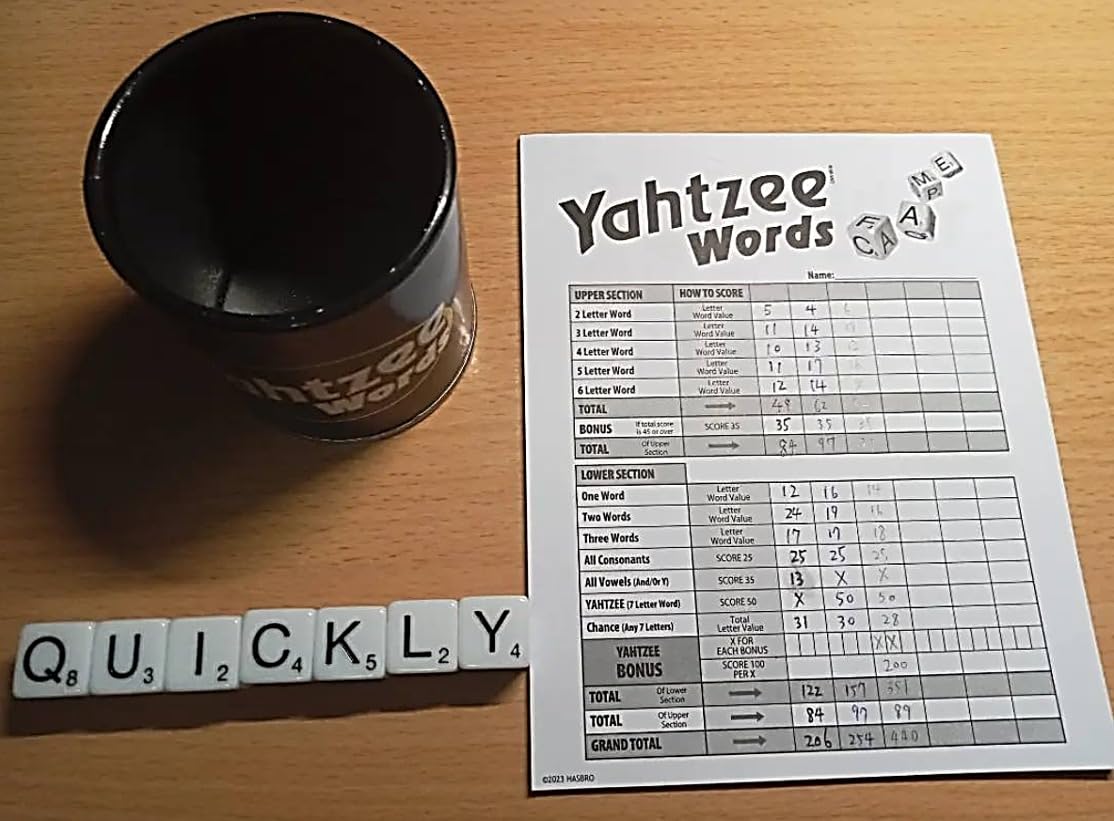
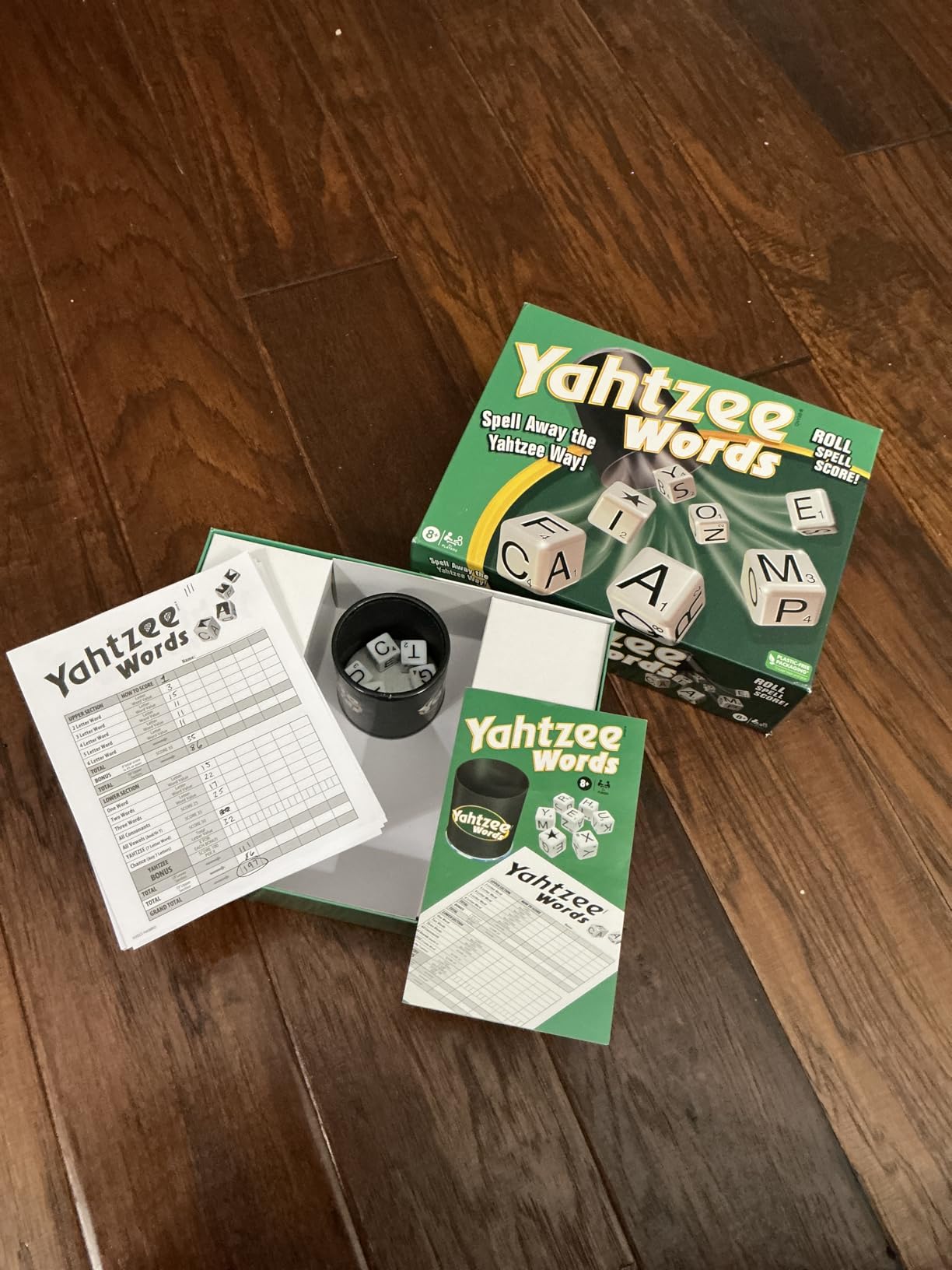
The components include 7 letter dice, a dice cup, a scorepad, and instructions. The game runs about 30 minutes, making it the longest-format game on this list. That suits tweens who want a sit-down game-night experience rather than a quick burst of activity.
With 935 reviews and a 4.6-star average, Yahtzee Words has a smaller review base but strong approval. Seventy-seven percent of reviewers give it 5 stars. Parents particularly appreciate that it keeps minds active and feels like a genuine vocabulary builder rather than a dressed-up kids’ game.
Best fit for your tween
Yahtzee Words is the best pick for families where skill levels vary widely between players. The dice luck element means a 10 year old can compete with a parent or older sibling and still have a real shot at winning. If your tween gets frustrated when they always lose to a stronger reader, this game levels the playing field.
It is also our recommendation for tweens who already love Yahtzee and want a vocabulary-focused twist. The familiar scoring structure makes the learning curve nearly flat.
What to watch out for
The box is significantly larger than the contents inside. Multiple reviews mention this, so do not judge storage needs by the packaging. The actual game components could fit in a container half the size.
Some letters are missing from the dice set, with duplicates of others instead. The score pad is also skimpy at 18 double-sided sheets. Plan to photocopy or buy a replacement pad if this becomes a family favorite.
7. Word on the Street – Team-Based Vocabulary Battle
Educational Insights Word on the Street – Family Board Games for Kids and Adults, Fast Word Games for Kids 10 and up, Vocabulary Building Spelling Game with Fast-Paced Play, Family Game Night
Ages 10+
2-8 Players or Teams
Fast-paced play
216 category cards
Includes 30-second sand timer
Pros
- Team-based tug-of-war format creates intense group competition
- 432 categories across 216 double-sided cards
- Develops vocabulary and creative thinking
- Durable high-quality board and tiles
- Works for ages 10 through adult
Cons
- Some category questions may challenge younger tweens
- Requires solid reading ability to participate fully
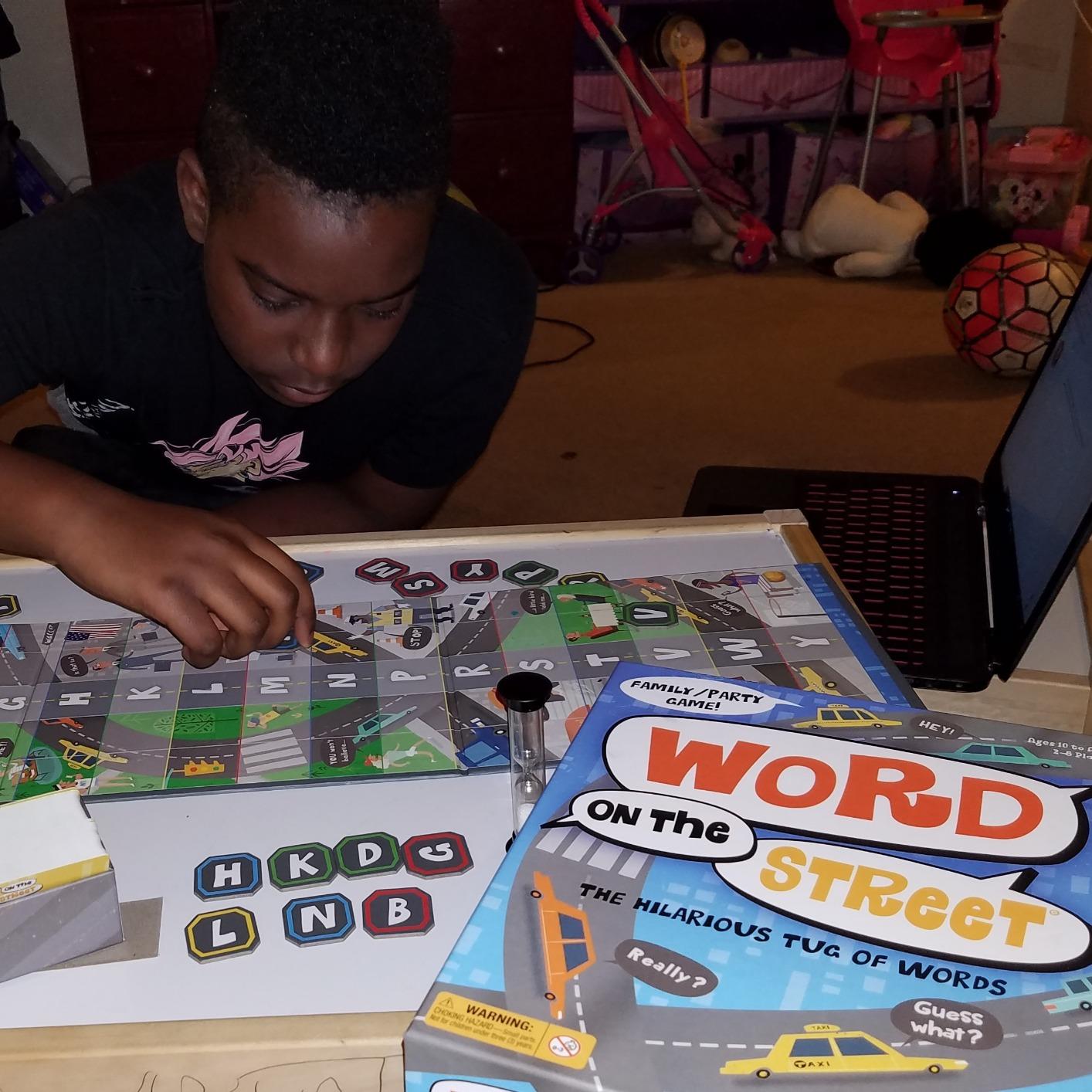
Word on the Street turns vocabulary into a literal tug-of-war. Teams draw a category card, come up with a word that fits, and then spell it out one letter tile at a time, pulling each letter one space closer to their side of the board. The first team to pull a letter off the street wins it. It is one of the most physically interactive word games we tested.
The team format is what sets Word on the Street apart from the other games on this list. Rather than every-player-for-themselves, tweens work in pairs or groups, which adds negotiation and collaboration to the competitive mix. Our testers loved the dynamic of whispering strategy to a teammate while the other team shouted their own answers.
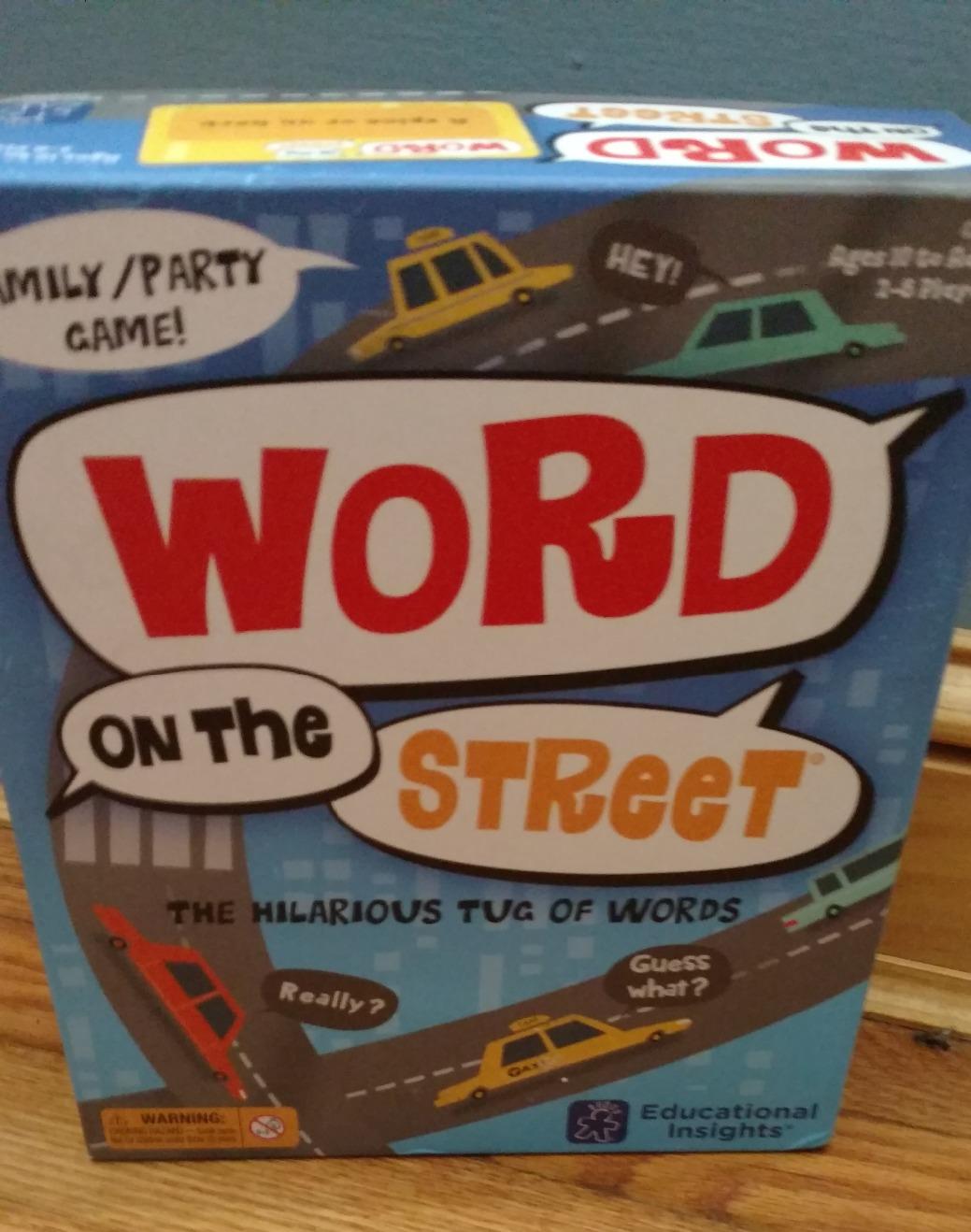
The game includes 216 double-sided category cards for a total of 432 categories. That is more variety than any other game on this list. The 30-second sand timer keeps rounds moving briskly, and the board and 17 letter tiles are durable and well-constructed.
With a 4.8-star average across 339 reviews and an 87 percent five-star rate, Word on the Street is a quality pick. It is designed for ages 10 and up, making it the most tween-specific game on our list. The age rating means the categories are calibrated for middle-grade vocabulary rather than simplified for younger kids.
Best fit for your tween
Word on the Street is ideal for tweens who enjoy team competition and social gameplay. If your kid does better in collaborative settings than in solo cutthroat matches, the team format provides competitive intensity without the meltdown risk. It is also the best choice for small family game nights with 4 players divided into 2 teams.
The 10-and-up age rating and category design make this the most developmentally targeted game on this list. Tween-focused categories mean the game feels age-appropriate rather than watered down.
What to watch out for
Some category questions may be too advanced for tweens on the younger end of the range. The game lists ages 10 and up specifically, and 10 year olds with smaller vocabularies may need a partner to stay competitive. We recommend playing in mixed-age teams for the first few rounds.
The game requires solid reading ability, so it is not ideal for tweens who are still building basic reading fluency. Once that foundation is in place, though, the category-based format is a strong vocabulary builder.
How to Choose Competitive Word Games for Tweens
Picking the right competitive word game for a tween comes down to three main factors: how your kid likes to compete, how many players you typically have, and how much time each session should last. Here is how we think about each of those decisions.
Match the competitive style to your tween
Some tweens thrive on speed. If your kid lights up during fast-paced races where everyone plays at once, Bananagrams, Boggle, and Scrabble Slam are the strongest picks. These games reward quick thinking and eliminate the boredom of waiting for turns.
Other tweens prefer strategy and depth. If your kid likes to plan moves and outsmart opponents over a longer session, Big Boggle and Yahtzee Words deliver that experience. The 3-minute rounds in Big Boggle and 30-minute sessions in Yahtzee Words allow for more deliberate play.
If your tween is a social competitor who loves group dynamics, Tapple and Word on the Street are the best fits. Tapple’s elimination format creates party-game energy, while Word on the Street’s team tug-of-war builds collaboration into the competition.
Consider player count
For small families of 2 to 3 players, Scrabble Slam and Boggle Classic work well. For medium groups of 4 to 6, Bananagrams, Tapple, and Big Boggle are ideal. For large gatherings of up to 8 players, Bananagrams and Tapple scale the best.
Word on the Street is unique because it is designed for teams. If you have exactly 4 players, two teams of two creates the most balanced experience. For uneven numbers, one team can have an extra player.
Factor in skill gaps between siblings
This is the challenge no competitor talks about, but every parent deals with. When a 12 year old plays against a 9 year old, the skill gap can kill the fun. Yahtzee Words is the best equalizer because dice luck can swing any round. Bananagrams also works well because you can give younger players a tile handicap.
For siblings with similar skill levels, the pure-competition games like Boggle and Tapple deliver the most satisfying head-to-head experience. Nobody needs an advantage, and every round is genuinely close.
Think about where you will play
If you need a travel game, Scrabble Slam and Bananagrams are the most packable options on this list. Both fit in a bag and need minimal surface area. Boggle Classic is also compact thanks to its self-contained grid case.
For home game nights, Big Boggle and Word on the Street offer the most substantial tabletop experience. They need a flat surface and some spread-out space, but they deliver the most visually engaging gameplay.
Frequently Asked Questions
What are some competitive word games for tweens?
The best competitive word games for tweens include Bananagrams, Boggle Classic, Tapple, Big Boggle, Scrabble Slam, Yahtzee Words, and Word on the Street. These games combine vocabulary-building with fast-paced or strategic head-to-head play suited for ages 10 to 12.
What are good word games for 10 to 12 year olds?
For ages 10 to 12, the top picks are Word on the Street (designed specifically for ages 10 and up), Bananagrams (ages 7 and up but challenging for tweens), Big Boggle (ages 8 and up with a deeper 5×5 grid), and Tapple (ages 8 and up with fast category racing). These games match tween vocabulary levels while keeping gameplay competitive.
What word games do 12 year olds like?
Twelve year olds tend to enjoy fast-paced word games where everyone plays at once, such as Bananagrams and Scrabble Slam. They also respond well to party-style games like Tapple and strategy-focused games like Big Boggle. Word on the Street is popular for its team-based tug-of-war format.
Are there word games like Wordle for kids?
Yes. Boggle and Big Boggle are the closest physical-game equivalents to Wordle because both involve finding words from a grid of letters. Bananagrams offers a similar word-formation challenge with letter tiles. These games give tweens the same satisfaction of spotting hidden words that Wordle provides.
How do I keep word games fun for competitive siblings?
Choose games with a luck element like Yahtzee Words to level the playing field, or use handicap systems in Bananagrams where the younger sibling gets extra tiles. Team-based games like Word on the Street also reduce head-to-head friction by pairing siblings together against parents or other teams.
Final Thoughts
For our money, Bananagrams is the overall best word game for tweens who love competition. Its simultaneous anagram racing works for any group size, travels anywhere, and keeps every player engaged from start to finish. Boggle Classic is our value pick for budget-conscious families, and Tapple delivers the most intense party-game energy for groups.
No matter which game you choose, every option on this list builds vocabulary, sharpens spelling, and gets tweens competing face-to-face instead of staring at a screen. Pick the one that matches your tween’s competitive style, and your next family game night will be the best one yet.