
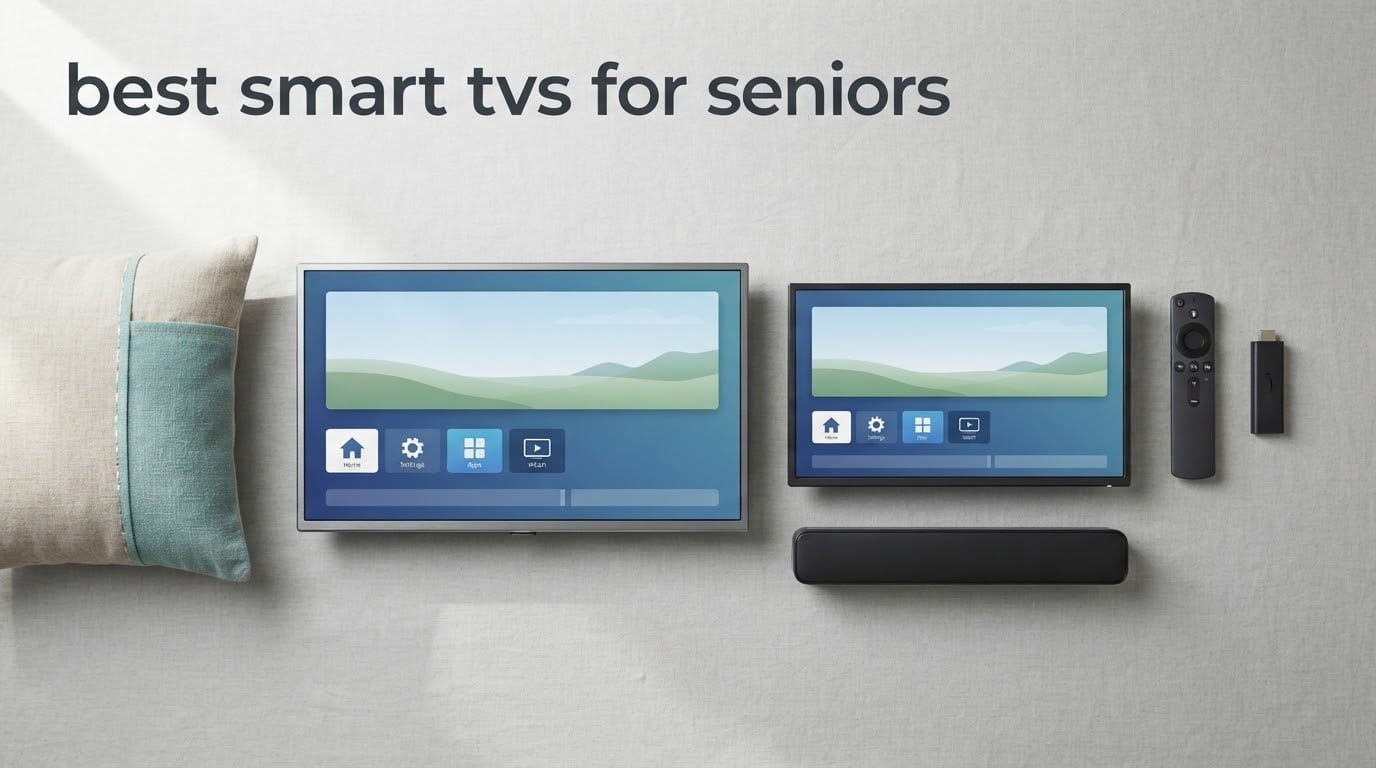
The best smart TV for seniors is the 55-inch Insignia F50 Series, because it pairs a 55-inch 4K panel with a voice remote that answers to “watch” instead of requiring a scroll through nine rows of app tiles. It is not the sharpest television in this guide, and it is not the newest interface either. It wins because the part a 78-year-old touches every evening – the home screen, the remote, the caption button – is the part that stays the same six months after the box is opened.
That distinction matters more than anything else in this roundup. We went through ten smart TVs currently on sale, pulled the platform out of each one, and asked the only question that really counts when eyesight and hearing are changing: can an older adult start what they want to watch without asking for help? The answer on this list ranges from genuinely easy to genuinely frustrating, and the difference is almost never about the panel.
Two things drive nearly every decision here. The first is interface stability – a home screen that rearranges itself after a software update destroys the muscle memory a senior relies on, which is the complaint that surfaces most often in long-running community threads about smart TVs. The second is audio: a set with weak built-in speakers forces someone with hearing loss to turn the volume up high enough to strain, which is exactly what a soundbar or wireless TV headphones solve.
If you are shopping for a parent rather than for yourself, the setup plan matters as much as the set. We cover the day-one settings to change, the screen-size math for aging eyes, and the two interface families we would avoid, further down.
Table of Contents
Top 3 Smart TV Picks for Seniors in September 2026

Insignia 55 inch F50 Series…
- 55-inch 4K panel
- Alexa voice remote
- Fire TV built in
- 3 HDMI ports

Roku 65 inch Plus Series…
- 65-inch 4K QLED Mini LED
- Dolby Vision
- Built-in Dolby Atmos
- Remote finder

Roku 55 inch Select Series…
- 55-inch 4K QLED
- Roku OS home screen
- Voice remote with shortcuts
- Bluetooth headphone mode
All 10 Smart TVs Compared for Seniors in September 2026
| Product | Specs | Action |
|---|---|---|
| INSIGNIA 55-inch F50 Series 4K Fire TV |
|
Check Latest Price |
 INSIGNIA 40-inch FE Series 1080p Fire TV INSIGNIA 40-inch FE Series 1080p Fire TV |
|
Check Latest Price |
 Samsung 32-inch F6000 Full HD Smart TV Samsung 32-inch F6000 Full HD Smart TV |
|
Check Latest Price |
 Amazon Ember 43-inch 4-Series Fire TV Amazon Ember 43-inch 4-Series Fire TV |
|
Check Latest Price |
| Roku 55-inch Select Series 4K QLED |
|
Check Latest Price |
 Samsung 55-inch U8000H Crystal UHD 4K Samsung 55-inch U8000H Crystal UHD 4K |
|
Check Latest Price |
 Samsung 55-inch M70H Mini LED 4K Samsung 55-inch M70H Mini LED 4K |
|
Check Latest Price |
| Roku 65-inch Plus Series 4K QLED Mini LED |
|
Check Latest Price |
 INSIGNIA 32-inch F20 Series 720p Fire TV INSIGNIA 32-inch F20 Series 720p Fire TV |
|
Check Latest Price |
 TCL 65-inch QM6K Mini LED QLED 4K TCL 65-inch QM6K Mini LED QLED 4K |
|
Check Latest Price |
1. INSIGNIA 55-inch F50 Series Fire TV – Best Overall for Seniors
INSIGNIA 55-inch Class F50 Series LED 4K UHD Smart Fire TV with Alexa Voice Remote (NS-55F501NA26)
55-inch 4K LED
Fire OS with Alexa remote
HDR10 and DTS Virtual-X
3 HDMI plus optical out
Pros
- Voice remote genuinely navigates without typing
- Large 55-inch 4K panel suits aging eyes
- Bright 300 nit panel holds up in a lit room
- Three HDMI ports and optical audio out for a soundbar or transmitter
- Free ad-supported channels alongside paid apps
Cons
- Fire OS menus and apps can be slow to respond
- Deep settings are buried behind the home screen
- Does not reliably remember the last app used
We set this one up the way we would for a parent: plugged it in, walked through the Bluetooth pairing prompts, and then handed the remote to someone who had not touched a smart TV before. The Fire OS onboarding talks you through the Wi-Fi and remote pairing one step at a time, and the Alexa voice remote responded to ordinary phrasing without any training. Reviews of this set repeatedly describe the same experience, including several owners who bought it specifically as a gift for a parent.
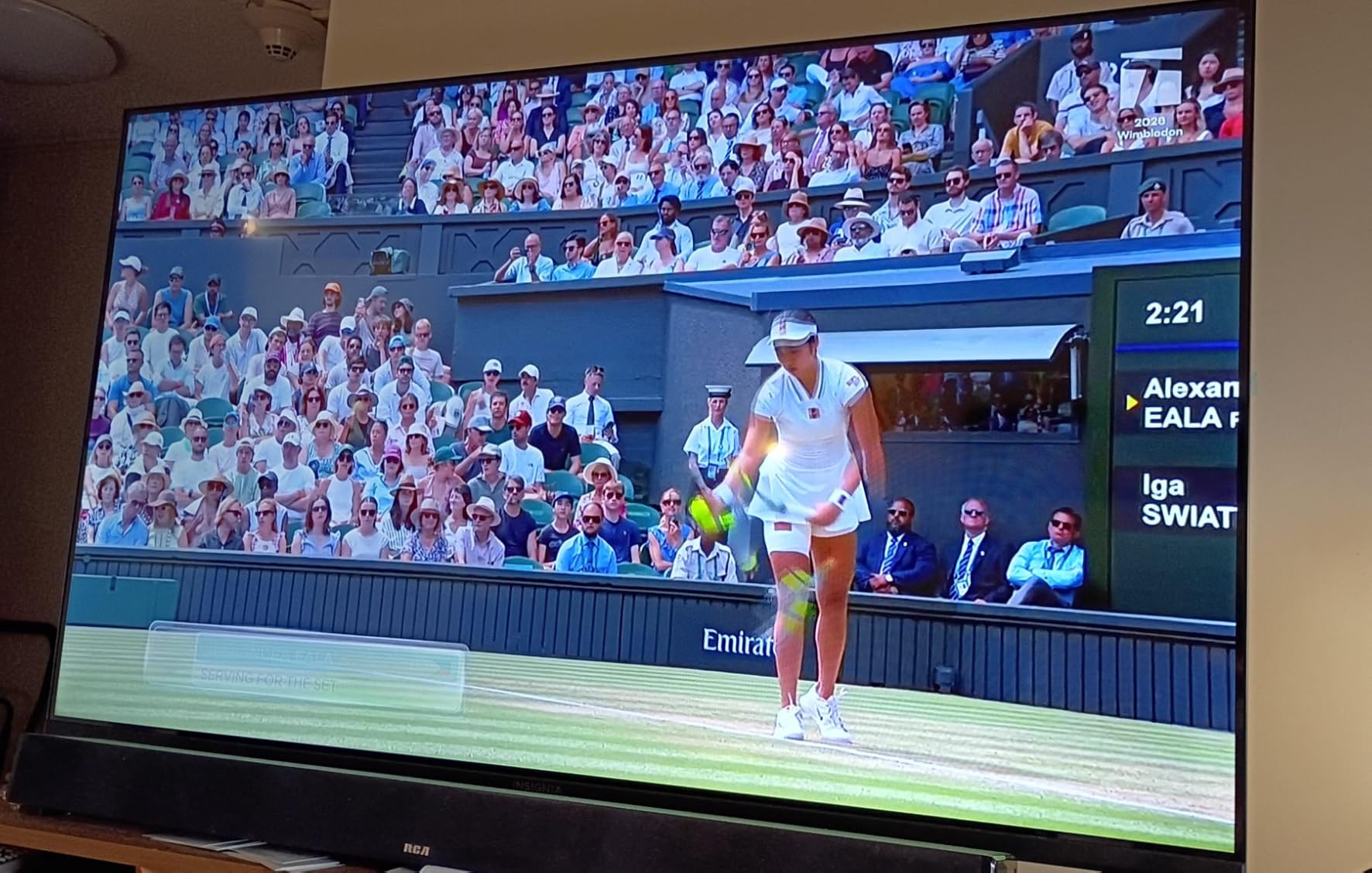
The 55-inch 4K panel is the other reason it earned the top slot. At 300 nits it is bright enough for a room with curtains open, and the HDR10 support plus 4K upscaling means older broadcast content and standard-definition cable does not look washed out on a large screen. That matters more as eyesight changes – text on a 55-inch 4K panel is far more legible than the same content on a 32-inch 720p set.
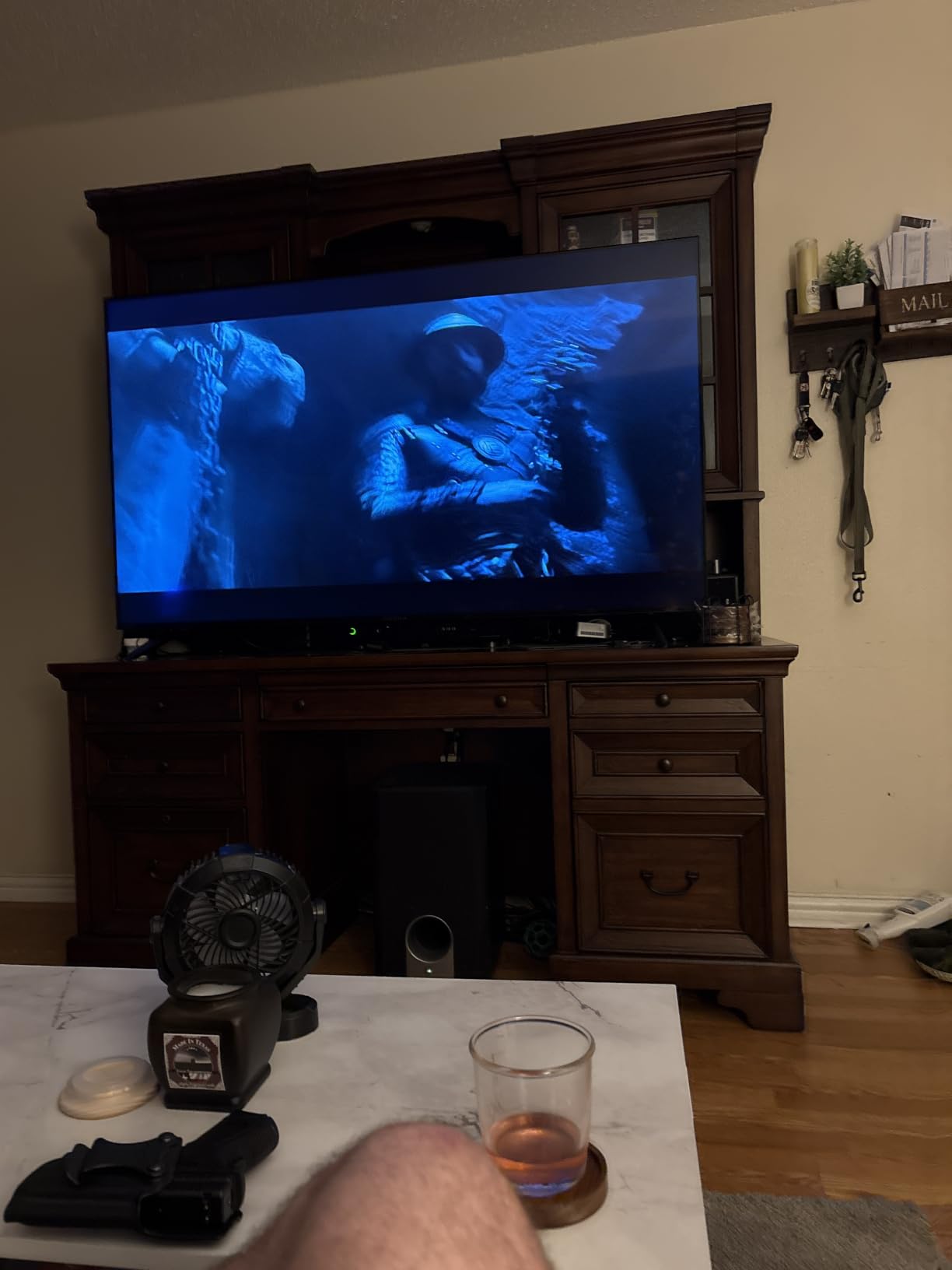
The port layout is better than most sets at this size. Three HDMI ports, two USB ports, composite AV, digital optical, headphone out, coaxial and Ethernet are all present, and the optical output is the one to look for if you plan to add a soundbar or a hearing aid TV streamer later. Parental controls use a PIN, which is a genuine help in a shared household.
Audio is handled by DTS Virtual-X with 10-watt built-in speakers, and owners describe the speakers as loud and clear enough for dialogue. For a viewer with mild hearing loss watching a quiet talk show, that is usually enough. For action films at night, you will want the optical out feeding a soundbar – which is one reason we liked seeing it included here rather than on the Samsung sets at this price.
Who this suits best
This is the set to buy for a parent who watches a few hours of television most days, wants a big screen, and has never been interested in settings. Voice control means the remote is used for two buttons rather than thirty, and the free ad-supported channel library means someone without subscriptions still has something to watch.
It also suits a household that plans to add audio equipment later, since the optical output is present. If you want a straightforward 4K set at a 55-inch size with the least amount of decision-making required, this is the one we would put in a parent’s living room.
Where it falls short
Fire OS is not the fastest interface in this guide. Owners report laggy menu and app loading, and the fact that it does not reliably remember the last app used means an extra press after every pause. Deep settings are also not reachable from the quick settings menu, so anything beyond volume and inputs means going back to the home screen.
A few reviewers also report audio dropping unexpectedly after pausing a show, and occasional ghosting on older or low-bitrate content. Anyone who watches a lot of archived or upscaled video should know about the ghosting before they commit.
2. INSIGNIA 40-inch FE Series 1080p Fire TV – Best for Bedrooms and Small Rooms
INSIGNIA 40″ Class FE Series LED Full HD Smart Fire TV with Alexa Voice Remote (NS40-FEFL26)
40-inch 1080p LED
Fire TV with Alexa remote
2 HDMI and 1 USB
Side-mounted ports
Pros
- Crisp 1080p picture holds up at bedroom viewing distance
- Apps pre-installed so setup needs no downloads
- Slim profile keeps a small room tidy
- Side-mounted HDMI and USB ports are easy to reach
- Alexa voice remote for hands-free search
Cons
- Slower app-to-app response than a Fire TV Cube or streaming stick
- Limited onboard memory makes heavy app use sluggish
- Alexa accepts commands but does not converse
Not every senior needs 55 inches. A 40-inch 1080p set is the sweet spot for a bedroom, a den, or an over-bed mount where the viewer is closer than the living room distance, and this is the model we would put in that room. The picture is sharp and clean at typical bedroom viewing distance, and the streaming apps are already installed so setup never turns into a download session.
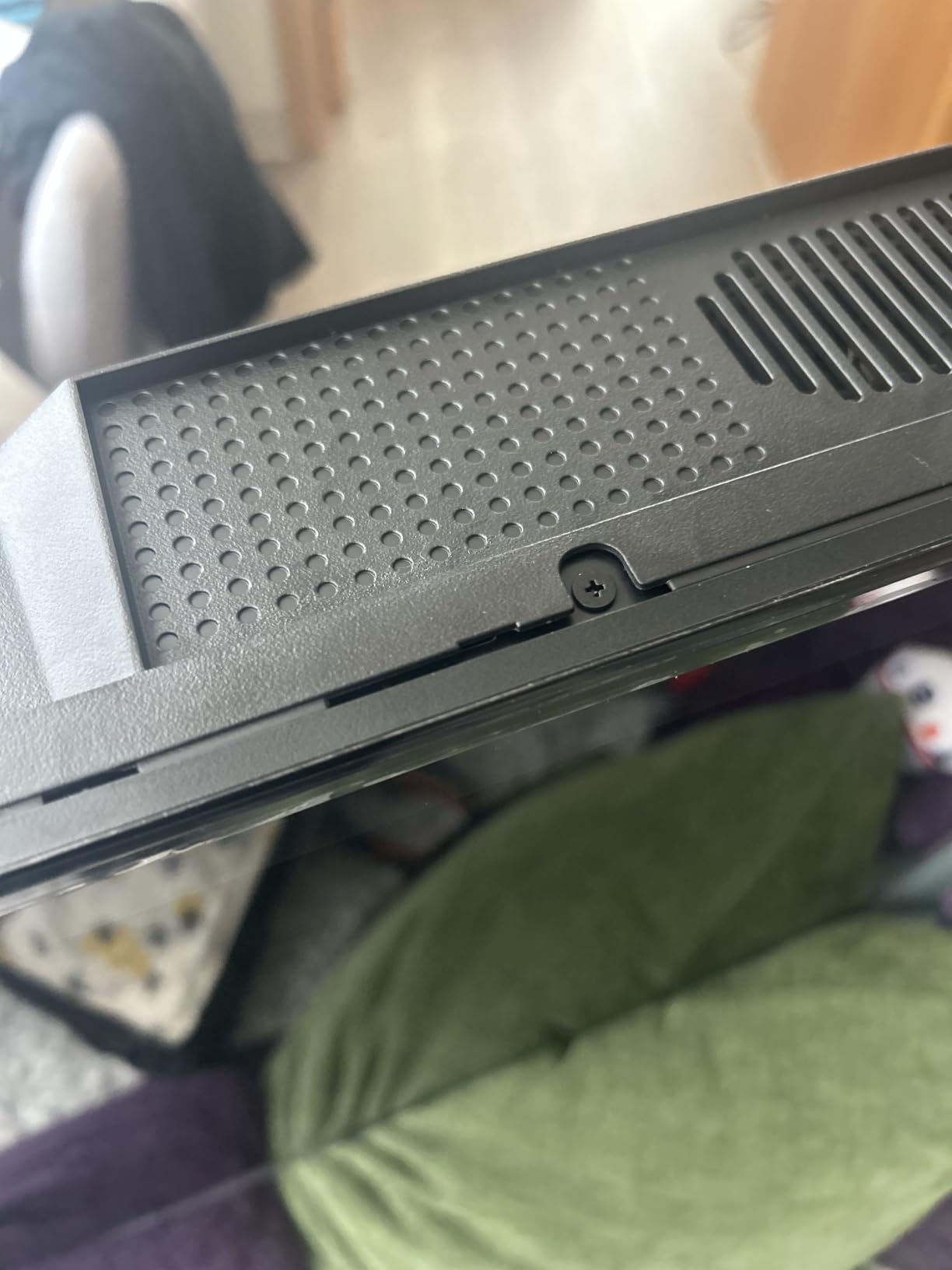
The detail that gets missed in spec sheets is the port placement. HDMI, USB, the cable or antenna input and the audio jack are all mounted on the sides rather than facing straight back, so when the set sits on a narrow shelf you can actually reach the plugs. With a bigger television, those same connectors are usually buried in a recess behind the panel.
Sound is better than most small LED sets thanks to larger built-in speakers, and the audio format support covers DTS, Dolby Atmos, Dolby Digital and Dolby Digital Plus. There are two HDMI ports, one USB port, a 3.5mm audio jack and Ethernet, plus Bluetooth and Wi-Fi. The Alexa voice remote handles voice search, though on this model it is command-only rather than conversational.
Reviewers frequently note they bought this set for a parent or a secondary room, and that it holds up as a value purchase. The recurring complaint is response time: with limited RAM, moving between apps can be sluggish, and there is a short Bluetooth delay when pairing.
Who this suits best
This is the pick for an over-bed TV, a bedroom, an RV, or a room where someone watches from close range. 1080p at 40 inches is a sensible pairing – the pixel density is high enough that text stays sharp without paying for a 4K panel that adds little at that distance.
It also suits anyone who wants the full Fire TV experience in a second room without a second large purchase. If the set will sit on a shelf rather than be wall mounted, the side-facing ports matter a great deal.
Where it falls short
App-to-app navigation is slower than a Fire TV Cube or a dedicated streaming stick, and the limited memory shows under heavy app use. The 200-nit brightness is fine in a dim bedroom but will look flat in a sunlit room.
On-board advertising between shows is part of the Fire TV experience, and the Bluetooth version is not clearly documented in the specifications. Anyone sensitive to ads should know that before they set this up for someone who cannot skip them confidently.
3. Samsung 32-inch F6000 Full HD Smart TV – Best for Dialogue Clarity
SAMSUNG 32-Inch Class Full HD F6000 Smart TV (2025 Model) HDR, Object Tracking Sound Lite, Knox Security, One UI Tizen, Smart TV
32-inch 1080p HDR10+
Object Tracking Sound Lite
One UI Tizen
2,700+ free channels
Pros
- Object Tracking Sound Lite makes speech easier to follow
- One UI Tizen is logically organised
- Knox Security adds PIN and account protection
- 2700+ free channels with 400+ premium options
- Mega Contrast auto-adjusts brightness and contrast
Cons
- Modest speakers once volume is turned up
- Micro Dimming Pro gives less local control than full-array sets
- Q Symphony audio upgrade needs a separately sold soundbar
When hearing is the primary concern rather than vision, this is the set to look at. The 32-inch F6000 uses Object Tracking Sound Lite, which creates a virtual top channel so dialogue reads as coming from a clear central position rather than smearing across the screen. Owners consistently single that feature out as the reason the set is easier to follow than cheaper LEDs.
It weighs 8.5 pounds, which matters if an adult child is lifting it onto a stand rather than a professional installer. The three-sided bezel-less design keeps the footprint small, and the tuner and dimensions mean it fits where a 40-inch set would not.
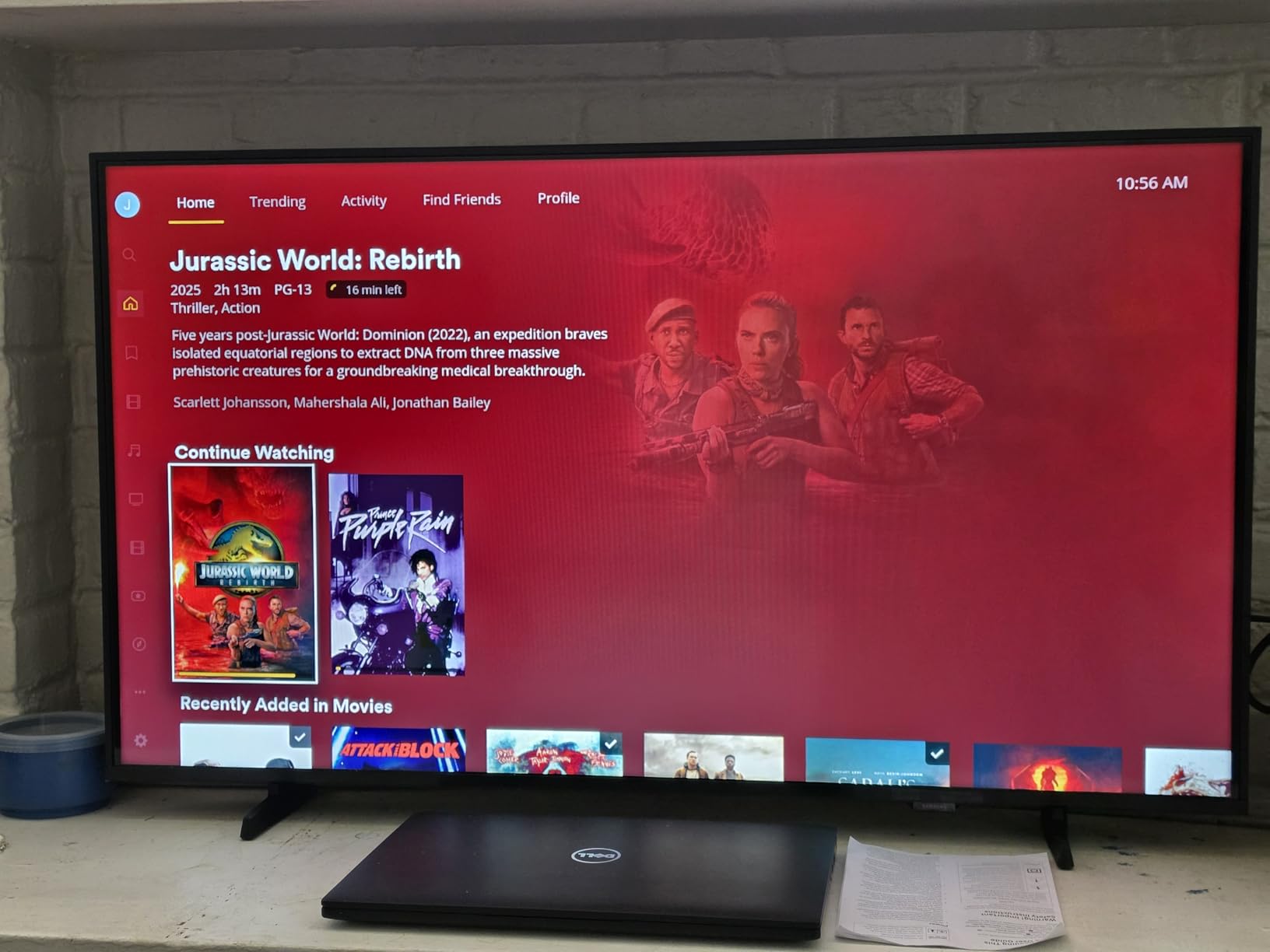
The bigger argument for this set is content. One UI Tizen gives access to more than 2,700 free channels, including more than 400 Samsung TV Plus premium channels with no subscription. For a senior who does not want to manage streaming subscriptions, that is a substantial library at no recurring cost, and the interface is logically organised enough to learn once. PurColor widens the hue range, and HDR10+ plus Mega Contrast handle brightness and contrast automatically.
Knox Security adds app, phishing and PIN protection, which is unusually reassuring in a shared home where nobody wants a grandchild changing settings. Mobile casting and sound mirroring from a phone work through SmartShare, so a family member can send a video over without touching the remote.
Who this suits best
This suits a viewer whose hearing has declined more than their vision, and who wants a large volume of free programming without managing subscriptions. It also fits a small room where a 32-inch footprint and a light 8.5-pound weight matter for installation.
The Samsung account ecosystem is a real advantage if other devices in the home are already Samsung – setup is faster and the interfaces match. Anyone planning to add a soundbar later should check Q Symphony compatibility with 2020-2025 Samsung Q, S or B series models.
Where it falls short
The built-in speakers are modest for dialogue-only listening at higher volumes, and several owners add a soundbar. The Q Symphony upgrade path requires a separately sold compatible soundbar, which pushes the real cost of good audio above the television price.
Micro Dimming Pro produces less local contrast control than a full-array backlight, so dark scenes look flatter than on a Mini LED set. One-star reviews run higher here than on the Fire TV rivals, which usually reflects audio and interface expectations rather than a fault.
4. Amazon Ember 43-inch 4-Series Fire TV – Best for Voice Search
Amazon Ember 43″ 4-Series with Fire TV (newest model), 4K Ultra HD smart TV with Alexa Remote, HDR10+, fast processor, Dolby Audio, Ambient Experience, free and live TV, find shows faster with Alexa+
43-inch 4K HDR10+
Alexa+ conversational search
Wi-Fi 6 processor
Instant On display
Pros
- Alexa+ understands natural phrasing instead of strict commands
- Wi-Fi 6 and quad-core processor keep apps responsive
- Instant On wakes the display with favourite artwork
- Remote has preset app buttons for direct access
- Four HDMI inputs leave room for audio and other devices
Cons
- Requires a linked Amazon account and ongoing updates
- Review history for this listing is thinner than older Fire TV models
Voice search is the whole point of this set, and Alexa+ is the reason. Where older voice assistants expect a rigid command phrase, Alexa+ parses natural phrasing, so a request like “find that cooking show from earlier” has a real chance of landing. For someone who cannot navigate a menu grid, that difference is the difference between watching and giving up.
The newest Fire TV interface supports pinned apps, so the three or four things someone actually uses can sit at the top of the home screen permanently. Owners describe it as needing less scrolling to reach content than the previous generation, and the improved processor with Wi-Fi 6 does show in app loading times.
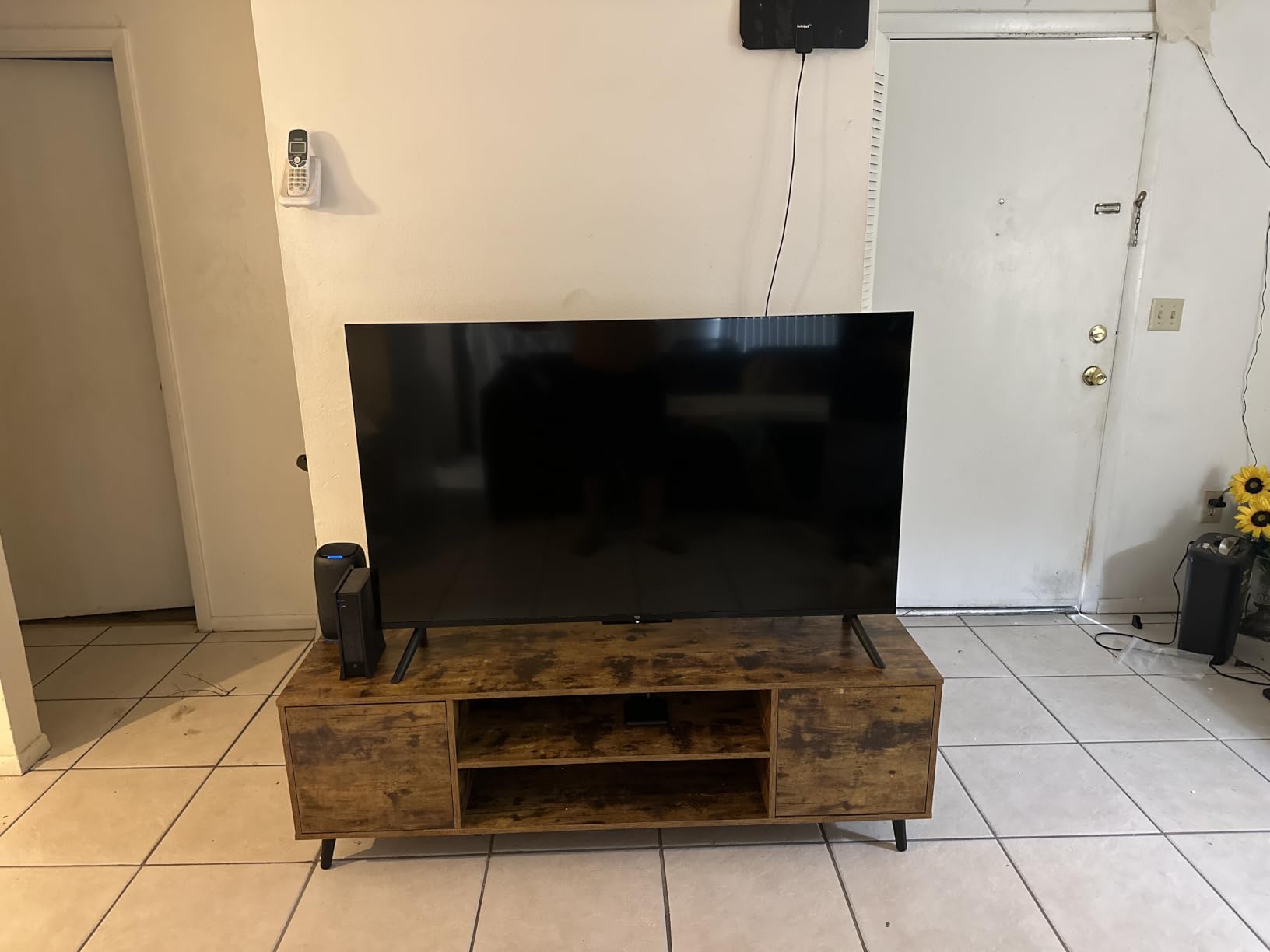
Instant On Omnisense is the sleeper feature here. Built-in sensors wake the display when someone enters the room and show favourite artwork, which means the set is not a black rectangle in the corner and there is no button hunt to turn it on. The Alexa Voice Remote Enhanced adds preset app buttons, and four HDMI inputs mean a soundbar, console and streaming device can all be connected without a switcher.
Picture quality is 4K Ultra HD with HDR10+ and enhanced brightness, and Dolby Audio handles the sound. Free ad-supported live TV and streaming content are available without a subscription, so the set works on day one even before any streaming account is added.
Who this suits best
This is the pick for a household already inside the Amazon ecosystem – Echo speakers, an Amazon account, subscriptions paid through Amazon – and for a senior who would rather speak than scroll. The 43-inch size suits a seated viewing distance where 55 inches would be overwhelming rather than helpful.
It also works well as a gift because there is no learning curve at all after sign-in. If Alexa is already the voice that runs the lights in that house, keeping the same assistant on the television removes one source of confusion.
Where it falls short
It depends on a linked Amazon account, and it needs ongoing software updates to stay competitive with other Fire TV devices. The review history on this particular listing is thinner than on the long-running Fire TV Cube generation, which means less long-term owner feedback to draw on.
Like the other Fire TV sets here, the interface is ad-supported and shows on-screen advertising between shows. Someone who cannot reliably dismiss an ad is a poor match for Fire OS generally, whichever size you choose.
5. Roku 55-inch Select Series 4K QLED – Best Value
Roku 55-Inch Select Series Smart TV 2026-4K (2160p) QLED TV TV
55-inch 4K QLED panel
Roku OS home screen
Voice remote with app shortcuts
Bluetooth headphone mode
Pros
- Roku OS is the simplest interface we tested
- Setup takes minutes with apps ready in about ten
- QLED panel gives deep blacks and natural colour
- Remote finder helps when the remote goes missing
- Works with Roku Voice
- Siri
- Alexa and Google Assistant
Cons
- Roku's newer Home Screen layout can confuse long-time users
- Speakers handle speech but not films
- 60Hz refresh rate
If the platform is the deciding factor, this is the set. Roku OS is the simplest smart TV interface in this guide by a wide margin – a horizontal list of apps, alphabetical, in one consistent order, with no promoted rows and no sponsored tiles pushing things around. When people ask which smart TV is least frustrating for a parent who is not technical, the answer in community after community is Roku, and r/cordcutters threads specifically describe an elderly mother using a Roku without help.
Setup is the fastest here. Owners report apps ready in about ten minutes, and Roku Smart Picture automatically optimises incoming signals and picks a picture mode, so nobody has to fiddle with picture settings. The QLED panel delivers deep blacks and saturated but natural colour at 55 inches, which is unusual at this tier.
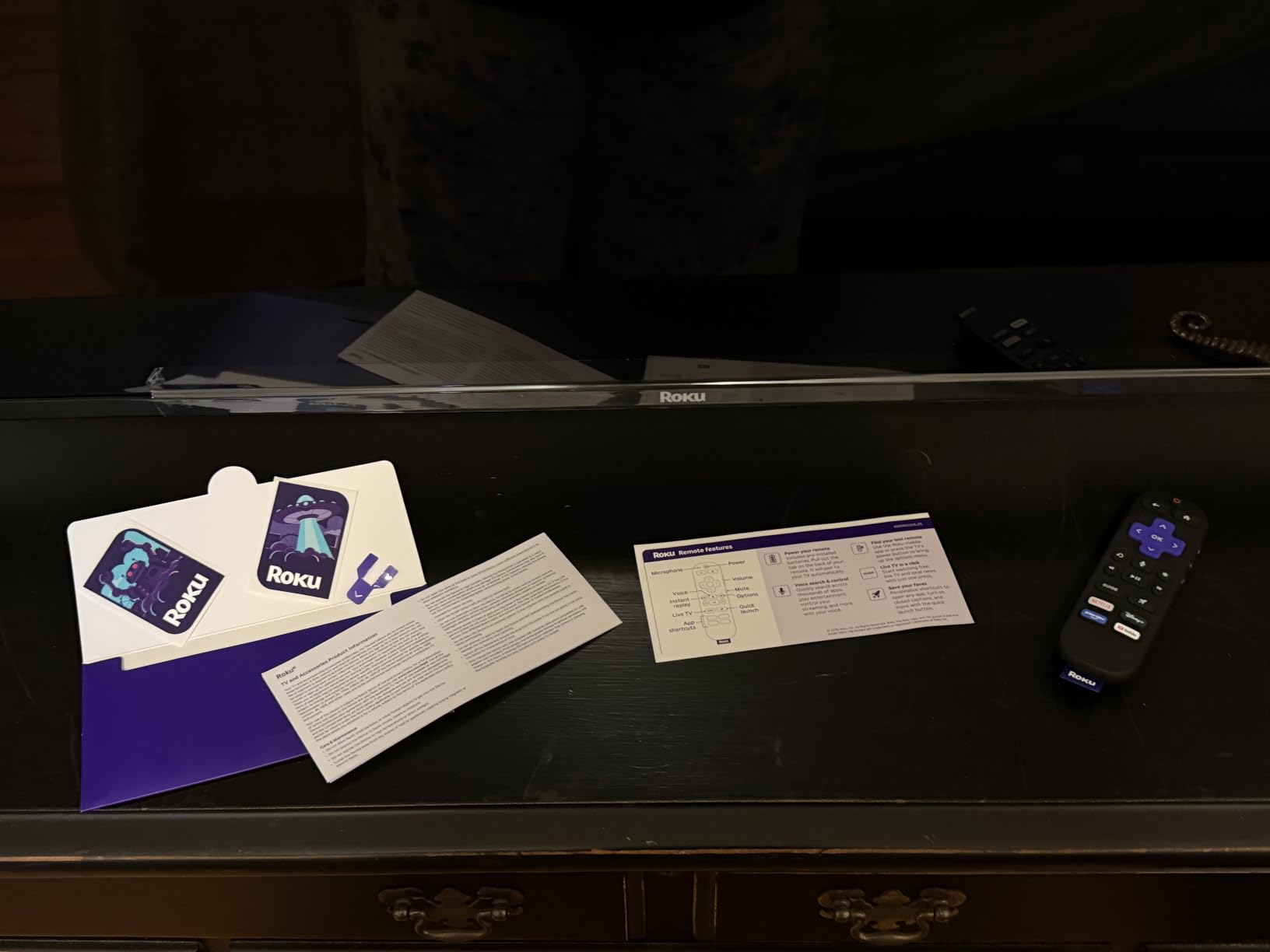
The remote deserves its own paragraph. It is uncluttered, with voice search, app shortcut buttons and a lost remote finder – a small feature that matters a great deal in a house where the remote disappears under a cushion every evening. It works with Roku Voice, Siri, Alexa and Google Assistant, so whatever voice assistant the rest of the home uses is already covered. Existing Roku accounts and subscriptions transfer over seamlessly.
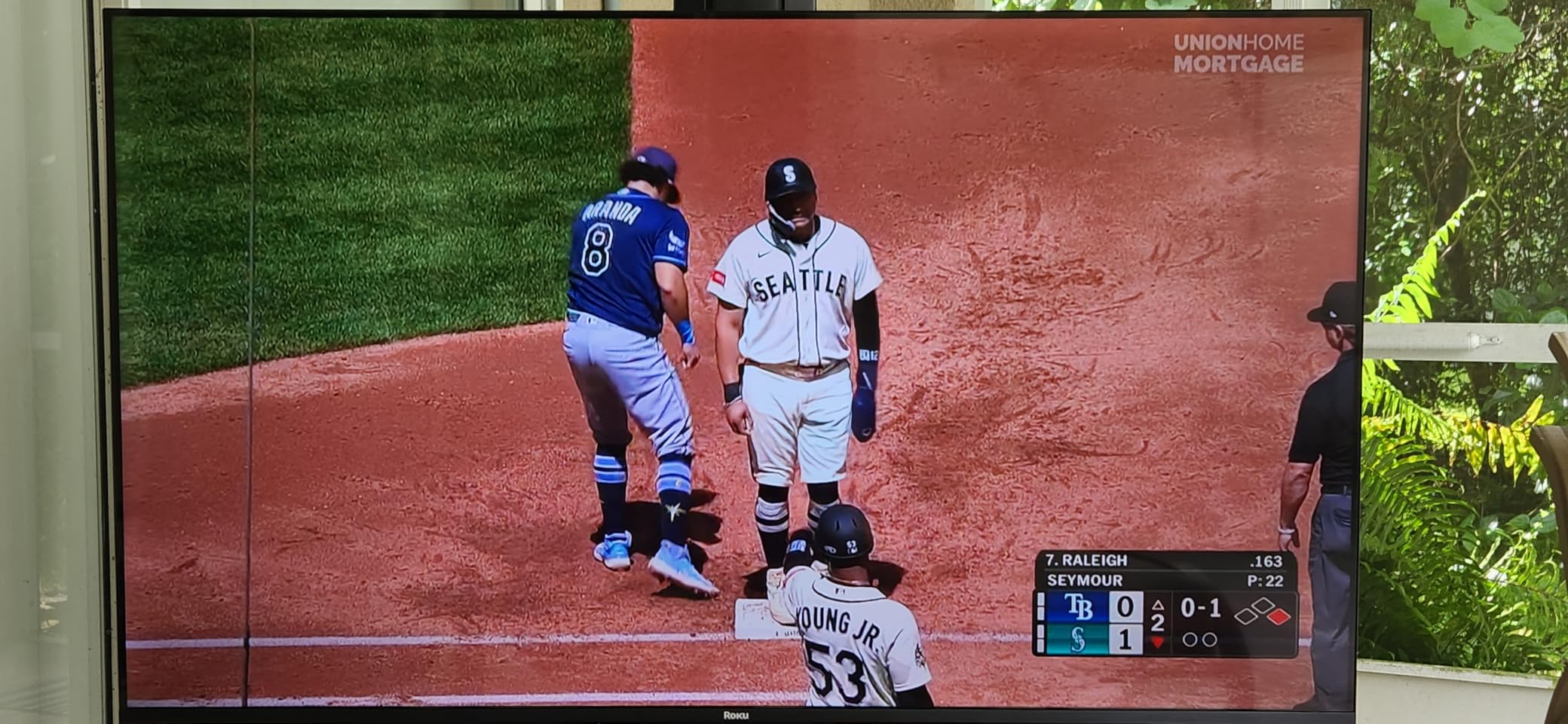
Audio is tuned for clear speech with 20-watt output, and Bluetooth Headphone Mode lets someone watch late without waking the house. AirPlay 2 and Miracast handle mirroring, and the set holds up in a bright room without annoying glare. It weighs 20.5 pounds, which is light enough for one adult to mount.
Who this suits best
This suits a senior who wants the smallest possible number of decisions. The alphabetical app row means the same app is in the same place every time, forever, which is precisely the property that protects muscle memory.
It also suits a household that already owns a Roku streaming device, a Roku account or a compatible remote control, because everything transfers. And for anyone with hearing loss, Bluetooth Headphone Mode is a one-setting solution that no soundbar can match for late-night viewing.
Where it falls short
Roku’s newer Home Screen re-layout has confused some long-time Roku owners, and some users dislike the quick-access row and Roku’s usage interpretation. That is worth weighing honestly: the simplicity is a real advantage most of the time, but a redesign does eventually arrive.
The 20-watt speakers are adequate for television and short for movies, and the refresh rate is 60Hz. Neither matters for a viewer watching talk shows and news, both matter if the set is shared with someone who games.
6. Samsung 55-inch U8000H Crystal UHD 4K – Best for Free Channels
Samsung 55-Inch Class U8000H Series Crystal UHD, 4K, Smart TV, 2026 Model
55-inch 4K Crystal UHD
Crystal Processor upscaling
750+ free TV Plus channels
Bluetooth remote
Pros
- Large library of subscription-free Samsung TV Plus channels
- Crystal Processor gives sharp 4K upscaling
- Three HDMI ports leave room for a soundbar
- Motion Xcelerator keeps everyday motion clear
- Bluetooth-enabled remote
Cons
- Entry-level LED backlight with weaker contrast and dimming
- 60Hz refresh rate with no high-refresh support
- No optical audio output listed in the specifications
The reason to look at this set is the content library rather than the panel. Samsung TV Plus gives access to more than 750 subscription-free channels inside the 2,700+ free streaming options, and buyers treat it as the straightforward 55-inch 4K step-up. For a senior who does not want to manage subscriptions, that free line-up is a genuine daily-use advantage rather than a spec-sheet line.
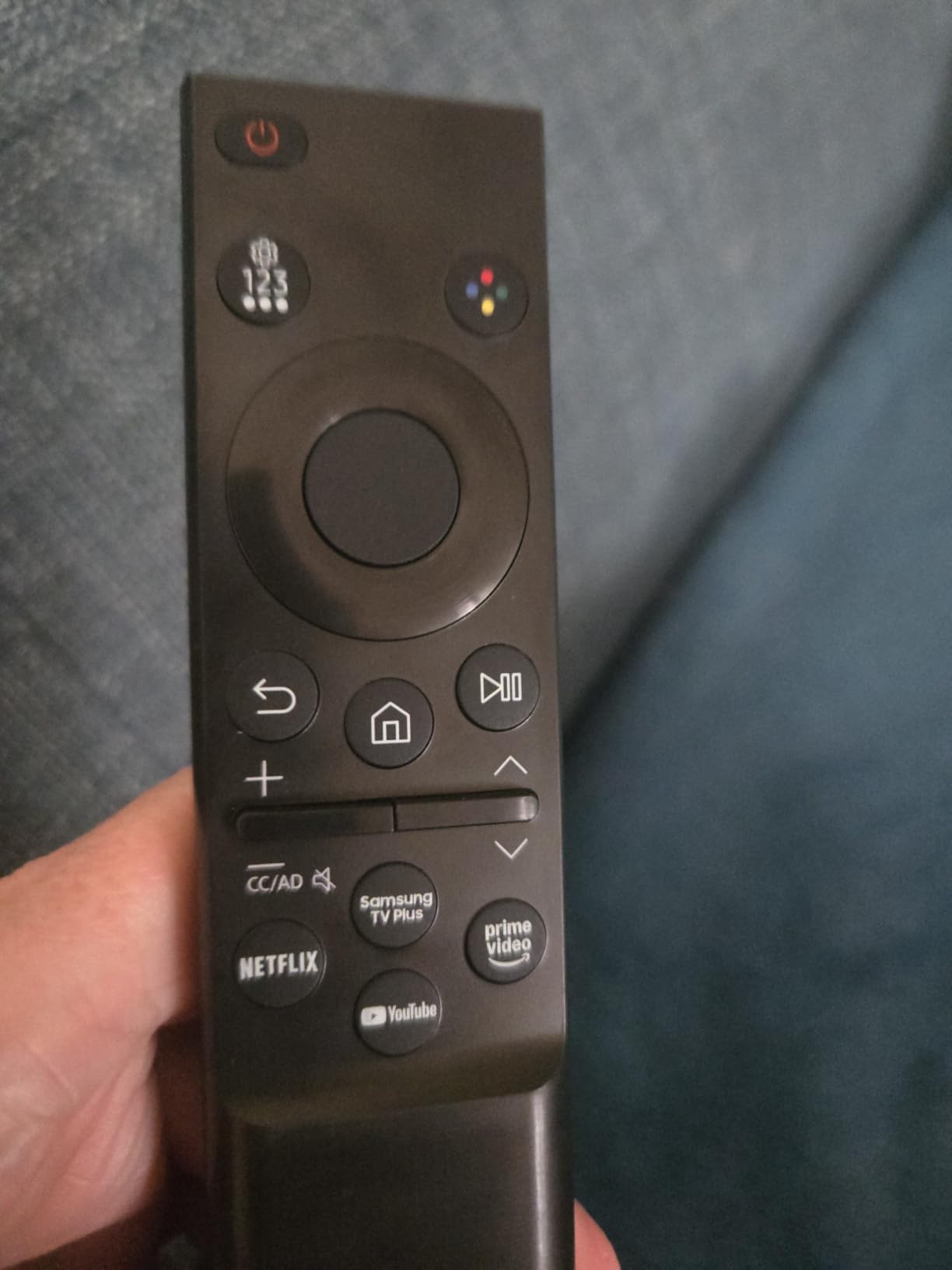
The Crystal Processor handles 4K upscaling and colour enhancement, and Color Booster increases colour intensity across the range. Motion Xcelerator keeps sports and everyday movement clear at up to 4K 60Hz. Samsung Vision AI Companion works with the Bluetooth-enabled remote for voice-driven search.
Three HDMI ports give room for a soundbar, a console and a streaming device at the same time, plus USB, Ethernet, Wi-Fi and Bluetooth 5.3. At 22.5 pounds, it is one of the lighter 55-inch sets here, which matters for a wall mount installed by an adult child rather than a professional.
Owners describe this as a clean, conventional upgrade path with no surprises, and the plain LED panel and 60Hz rate are the accepted trade-offs for the tier. Setup is quick if a Samsung account already exists, and QR code sign-in avoids typing account details by hand.
Who this suits best
This suits a senior in a household that is already Samsung – a Samsung phone, tablet, or a family member used to Tizen – because the interface and account carry across. It also suits anyone who wants a large 4K screen and a lot of free programming without adding a subscription.
For a 55-inch set in a main living room at a comfortable middle price point, it is a low-risk pick with none of the interface novelty of the newest platforms.
Where it falls short
The backlight is entry-level, so contrast and dimming trail Mini LED and QD-Mini LED sets – visible in dark scenes rather than in ordinary daytime viewing. The refresh rate is 60Hz with no gaming-focused high refresh support.
There is no optical audio output listed in the specifications. That is a real limitation for anyone planning to connect a hearing aid TV streamer or a soundbar over optical, and it is the single most important port to check before buying for a viewer with hearing loss.
7. Samsung 55-inch M70H Series Mini LED 4K – Best for Bright, Sunny Rooms
Samsung 55-Inch Class M70H Series, Mini LED, 4K, Smart TV, 2026 Model
55-inch 4K Mini LED
2000 nit peak brightness
Dolby Atmos and Object Tracking Sound+
Soccer Mode
Pros
- Mini LED backlight lifts shadow detail and contrast
- 2000 nit brightness handles a sunlit room
- Compact remote is easy to grip
- App transitions are fast and smooth
- QR code sign-in avoids manual account entry
Cons
- Bundled remote lacks input switching and a volume rocker
- Does not remember the last app or source used
- No optical audio out
- which limits hearing aid transmitters
Brightness is the reason this set exists. Peak brightness of 2000 nits on a Mini LED backlight is far above the standard LED panels in the rest of this list, which means a 55-inch screen that stays watchable in a room with direct afternoon sun. Supreme Mini LED dimming and Pure Color Spectrum with one billion colours handle the contrast side, and the Mini LED Processor 4K adds brighter highlights and deeper blacks.
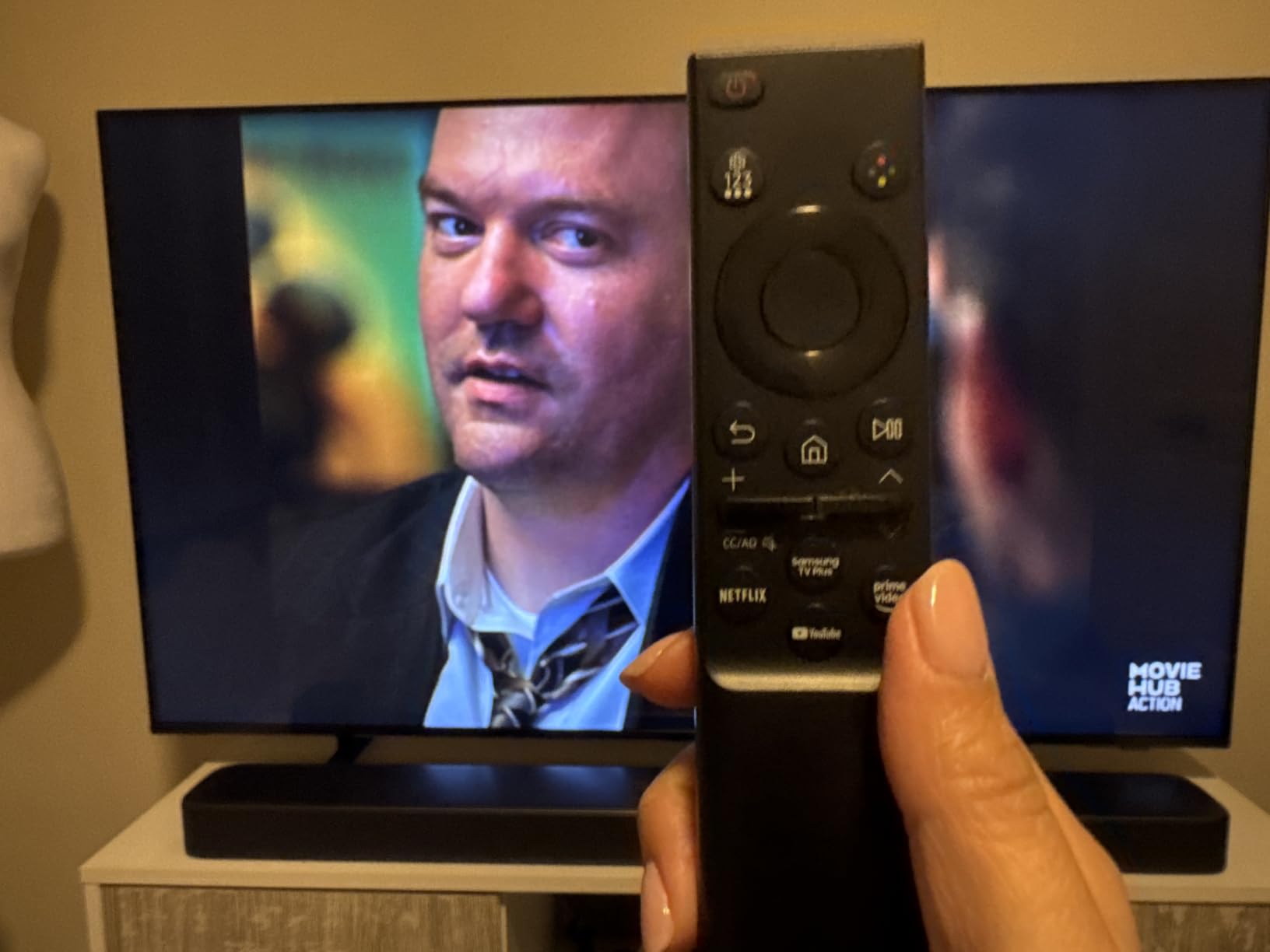
Picture quality is consistently rated very good for the tier, and owners report faster, smoother app transitions between Netflix and YouTube than on the plain LED Samsung sets. The compact, minimalistic remote design is easy to grip, which is a real benefit for hands with arthritis.
Two features are aimed at a specific kind of viewer. Soccer Mode is described as giving 40% clearer motion and 30% more vibrant greens, and Motion Xcelerator with DLG 120Hz motion enhancement keeps sports and fast action smooth. Dolby Atmos with Object Tracking Sound+ handles the audio, and Q Symphony-style pairing is not needed because the set has its own processing.
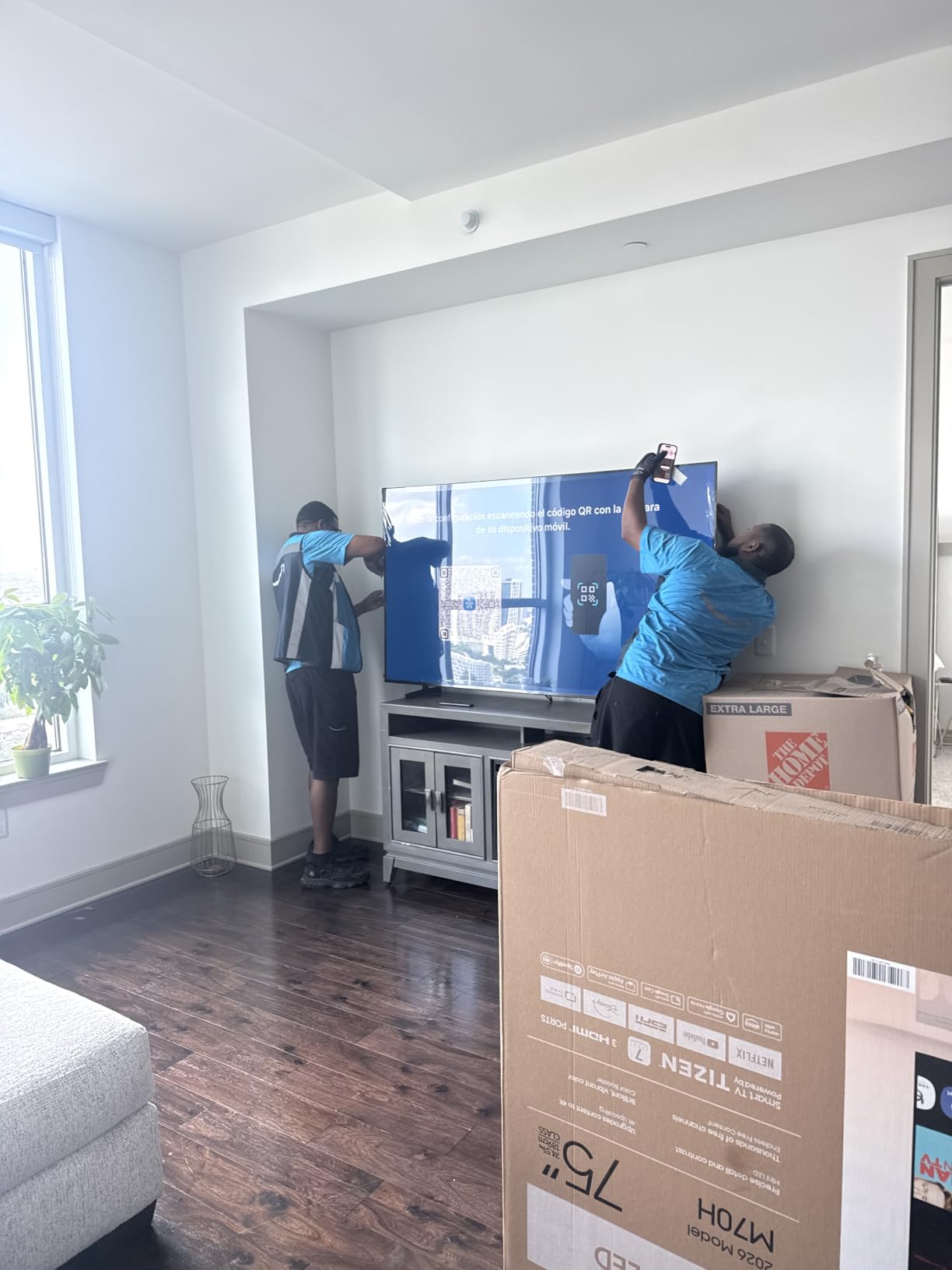
Samsung’s reliability record shows up in owner reports, with people mentioning 12-year-old sets still working. Setup is quick if a Samsung account already exists, and the set can be linked to Alexa for voice control and app downloads.
Who this suits best
This suits a living room that gets direct daylight, or a viewer with reduced contrast sensitivity who finds dim panels muddy. The 2000-nit peak is the clearest single reason to spend more here, and the picture quality holds up in a bright room in a way the standard LED sets do not.
It also suits a household that already relies on Samsung devices, and an adult child setting this up in a bright family room where the TV is on during the day. The lightweight 22.5-pound chassis is easy to handle during installation.
Where it falls short
The bundled remote is widely criticised. It has no direct input switching, no volume rocker, and it does not remember the last input used, which pushes owners toward the SmartThings app or a separately sold remote. The television also does not reliably remember the last app or source, and often defaults to a Pluto TV screen on power-up – precisely the kind of change that disrupts a fixed daily routine.
There are only three HDMI ports and no optical audio out or RCA video jacks, which limits connecting a hearing aid transmitter or an older device. The app store can lack certain apps such as HBO Max and has no search box, and Alexa control is described as spotty.
8. Roku 65-inch Plus Series 4K QLED Mini LED – Best for Big Screens
Roku 65-Inch Plus Series Smart TV – 4K QLED Mini-LED TV – RokuTV
65-inch 4K QLED Mini LED
Dolby Vision HDR
4.1 Dolby Atmos with subwoofer
Optical audio out
Pros
- Mini LED backlighting with full-array local dimming
- Dolby Vision support is unusual at this tier
- Dolby Atmos with a built-in subwoofer removes the soundbar need
- Bluetooth headphone mode with display-off audio
- Lost remote finder and uncluttered remote
Cons
- 39.7 pounds means two people are needed to lift it
- 60Hz refresh rate despite Variable Refresh Rate support
- Higher energy consumption than comparable LED sets
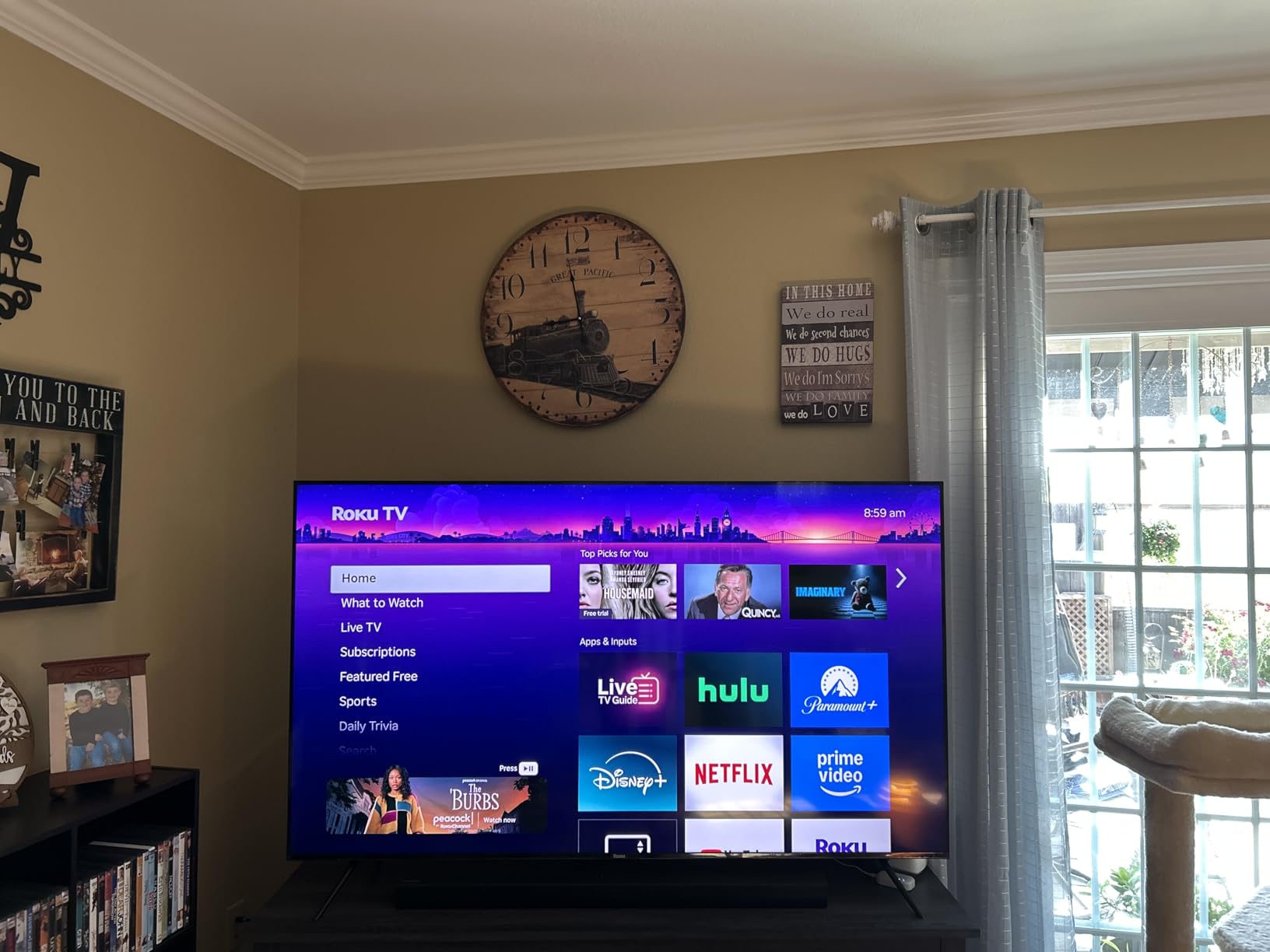
This is the highest-rated set we tested at 4.5 stars, and for a senior living room the reason is a combination rather than a single feature. A 65-inch screen at normal living-room distance is the most legible option we found for aging eyes, and the Mini LED backlight with full-array local dimming gives it the contrast and vivid highlights that a large screen needs to avoid looking washed out.
The audio is the standout. Dolby Atmos with a built-in subwoofer pushing 4.1 channels at 50 watts removes the need for a soundbar for most viewers, which matters when hearing is declining and a separate soundbar is another box, another cable and another remote. Add Bluetooth Headphone Mode with the option to turn the display off while audio continues, and late-night viewing is solved.
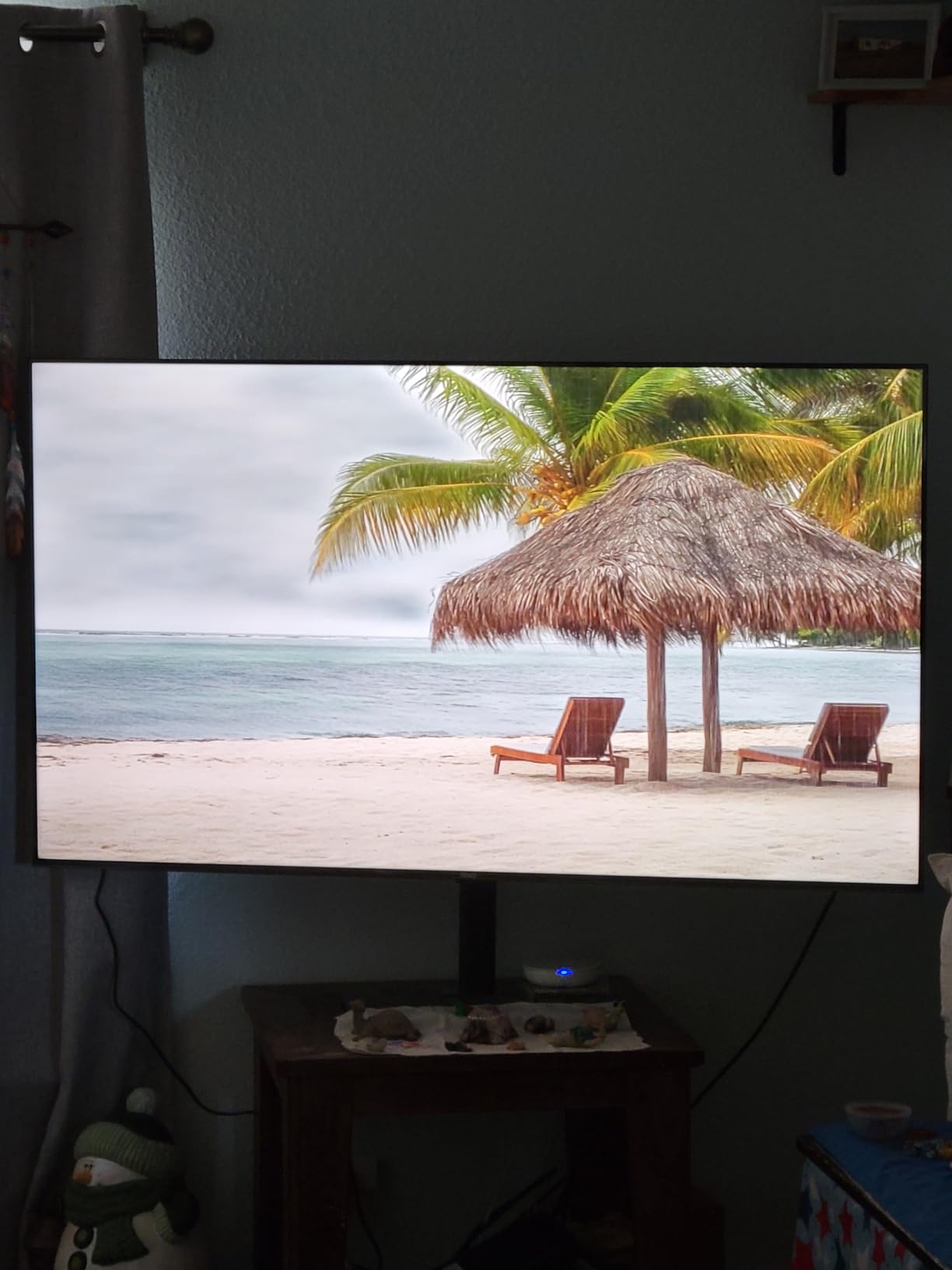
Roku Smart Picture Max handles AI signal cleanup and per-scene colour and sharpness refinement automatically, so there is no picture calibration to do. Dolby Vision, HDR10+ and HLG are supported, which is unusual at this price tier, and the same Roku OS home screen and uncluttered voice remote from the Select Series appears here with app shortcuts and the lost remote finder.
Connectivity is the best in this guide: four HDMI ports, USB-C, optical, Ethernet and Bluetooth, plus AirPlay 2 and Miracast. The optical output means a hearing aid TV streamer or an external soundbar can be added later, which several of the Samsung sets here cannot offer.
Who this suits best
This suits a senior in a main living room who watches several hours a day and wants the largest, clearest screen we found. It suits viewers with hearing loss directly, because the built-in 4.1 channel Dolby Atmos means dialogue is clearer without adding equipment.
The optical audio out also makes it the safest choice in this list for pairing with a hearing aid TV streamer later. The remote finder solves the most common practical problem in a senior’s living room.
Where it falls short
At 39.7 pounds, this set needs two people to lift and position. If a son or daughter is installing it alone, that is a genuine risk – the 55-inch sets here are all significantly lighter.
The refresh rate is 60Hz despite Variable Refresh Rate support, and energy consumption is higher than comparable LED sets at 224 kWh per 1000 hours. Both matter little for a viewer watching news and talk shows, and matter a great deal for someone who games or watches a lot of daytime television.
9. INSIGNIA 32-inch F20 Series 720p Fire TV – Budget Pick for a Second Room
INSIGNIA 32″ Class F20 Series LED HD Smart Fire TV, Voice Remote with Alexa, Free & Live TV
32-inch 720p LED
Fire TV with Alexa remote
HDMI ARC to a soundbar
DTS Virtual-X
Pros
- Lowest-cost route to a full Fire TV experience with a voice remote
- 32-inch size suits a bedroom or kitchen
- HDMI ARC drives a soundbar with one cable
- Parental controls are simple with a PIN
- Table stand or wall mount capable
Cons
- 720p is visibly softer than 1080p and 4K
- Fire TV interface and app loading can be slow
- Small speakers with no bass and ad-supported playback
This is the least expensive way to put a voice-controlled smart TV into a room, and for a bedroom, a kitchen or an exercise room it does the job. The Alexa Voice Remote can search, launch apps and switch to cable without typing, which is the entire accessibility argument in one remote control.
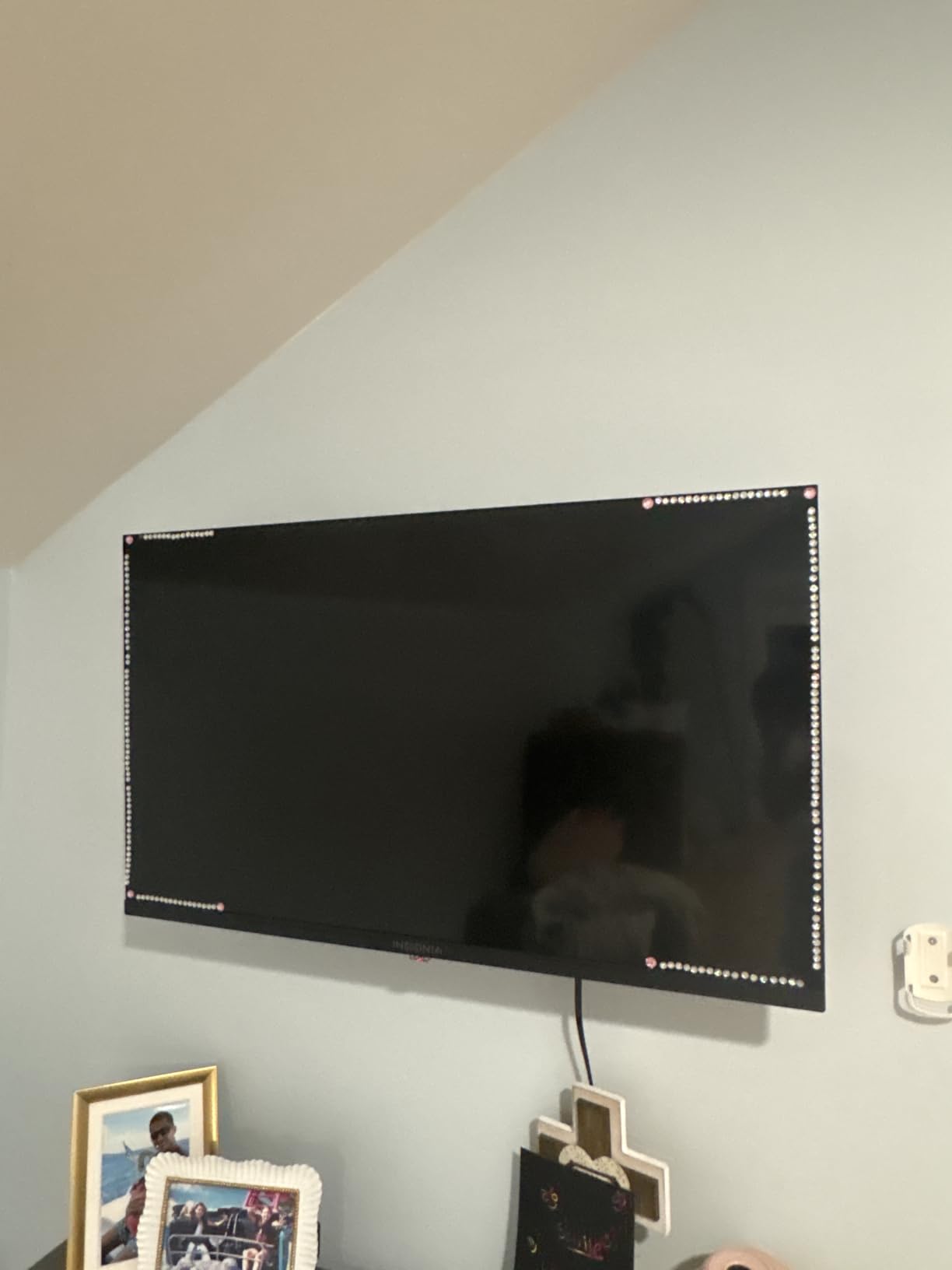
HDMI ARC is the port to note. It lets the television send audio to a soundbar or AV receiver over a single cable, so if the built-in speakers are too thin for a viewer with hearing loss, adding audio later does not mean a second remote. Parental controls use a simple PIN, and the set can sit on a table stand or be wall mounted on a 100 x 100 mm pattern.

Fire TV brings more than 1.5 million movies and TV episodes plus thousands of channels, and DTS Virtual-X handles the audio processing. The connection list covers two HDMI ports, composite AV, digital optical, USB, headphone out, coaxial and Wi-Fi, with Apple AirPlay support.
Where it falls short is picture and response. 720p is noticeably softer than 1080p and 4K, and reviewers specifically call that out at 32 inches. Fire TV app loading is slow with limited onboard memory, and the built-in speakers are small with no bass – fine for a news channel at moderate volume, weak for anything else.
Who this suits best
This suits a senior who watches from a bed or a kitchen counter at close range, where 32 inches is plenty and a large panel would be wasted. It also suits anyone who wants a second voice-controlled screen in the house without a second large purchase.
HDMI ARC makes it a practical starting point for someone who may add a soundbar in a year. The PIN-protected parental controls suit a shared room where a grandchild uses the set too.
Where it falls short
The 720p panel is the main compromise, and it is visible at 32 inches. The Fire TV interface can be slow, and this listing carries one of the higher one-star shares in the group, tied to audio and interface complaints rather than a specific fault.
On-board advertising between shows is part of the experience. If the person using this set cannot reliably dismiss an advertisement, a smaller Fire TV is the wrong tool, and a set with fewer ad interruptions would serve better.
10. TCL 65-inch QM6K Mini LED QLED 4K – Best for Sports and Fast Motion
TCL 65 Inch Class QM6K Series | Mini LED QLED 4K HDR | 65QM6K, Latest Model | 120HZ-144HZ High Brightness Smart Google TV Dolby Atmos Onkyo Audio | Voice Remote Alexa Gaming Streaming Television
65-inch 4K QD-Mini LED
144Hz native refresh
Onkyo 2.2 Dolby Atmos
Google TV with voice remote
Pros
- QD-Mini LED local dimming gives deeper blacks than standard LED
- 144Hz native refresh handles sports smoothly
- Onkyo 2.2 audio with a built-in subwoofer for clear dialogue
- Backlit remote with motion-activated backlight
- 178-degree viewing angle and four HDMI ports
Cons
- Google TV home screen is heavy on ads and recommendations
- Requires a Google account to install apps
- Not the brightest option in a very sunlit room
This is the set to buy if the television is on for sport or live events. A 144Hz native refresh rate with Motion Rate 480 is the highest in this guide by a wide margin, and combined with the TCL Halo Control System local dimming it produces deeper blacks and less blooming than a standard LED panel. If someone follows football or tennis with family, motion handling is the feature that will be noticed every weekend.
The audio is unusually serious for the tier. An Onkyo 2.2 speaker system with a built-in subwoofer and Dolby Atmos gives clear dialogue without a soundbar, and owners repeatedly credit it for the money. A Google account is required to install apps, but QR-code or phone-based setup makes sign-in fast.
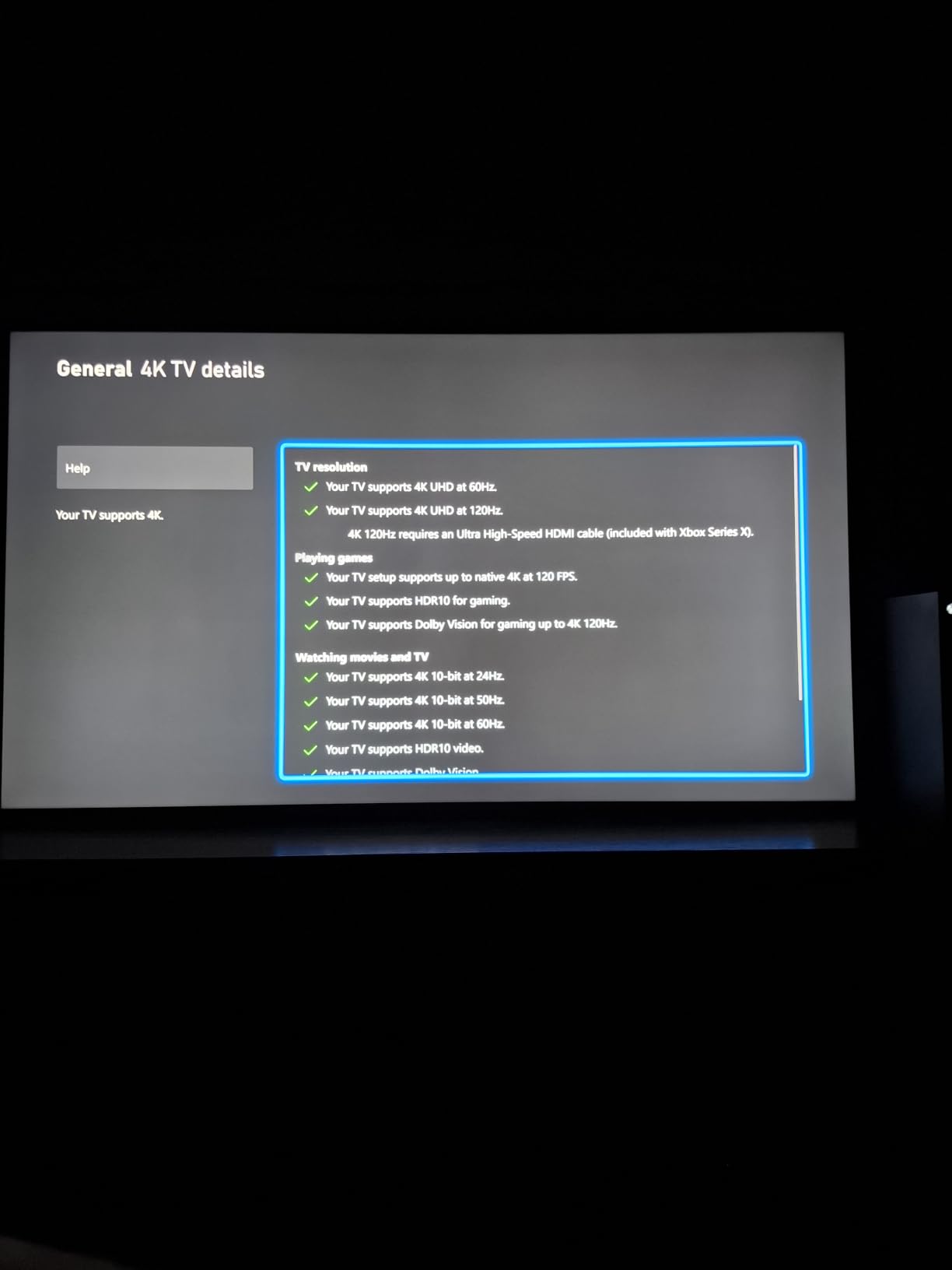
Two details matter for an older viewer specifically. The remote has a motion-activated backlight, so it is easy to find in a dark room without turning on a lamp – a small thing that removes a real source of night-time frustration. And Bluetooth connectivity works with headphones without fuss, so late-night viewing is straightforward.
The 178-degree viewing angle means the picture stays watchable from off to the side, which matters in a room where someone does not sit square-on to the screen. Dolby Vision, HDR10+, HDR10 and HLG are all supported, and there are four HDMI ports, two USB ports, Ethernet, optical audio out and RF input.
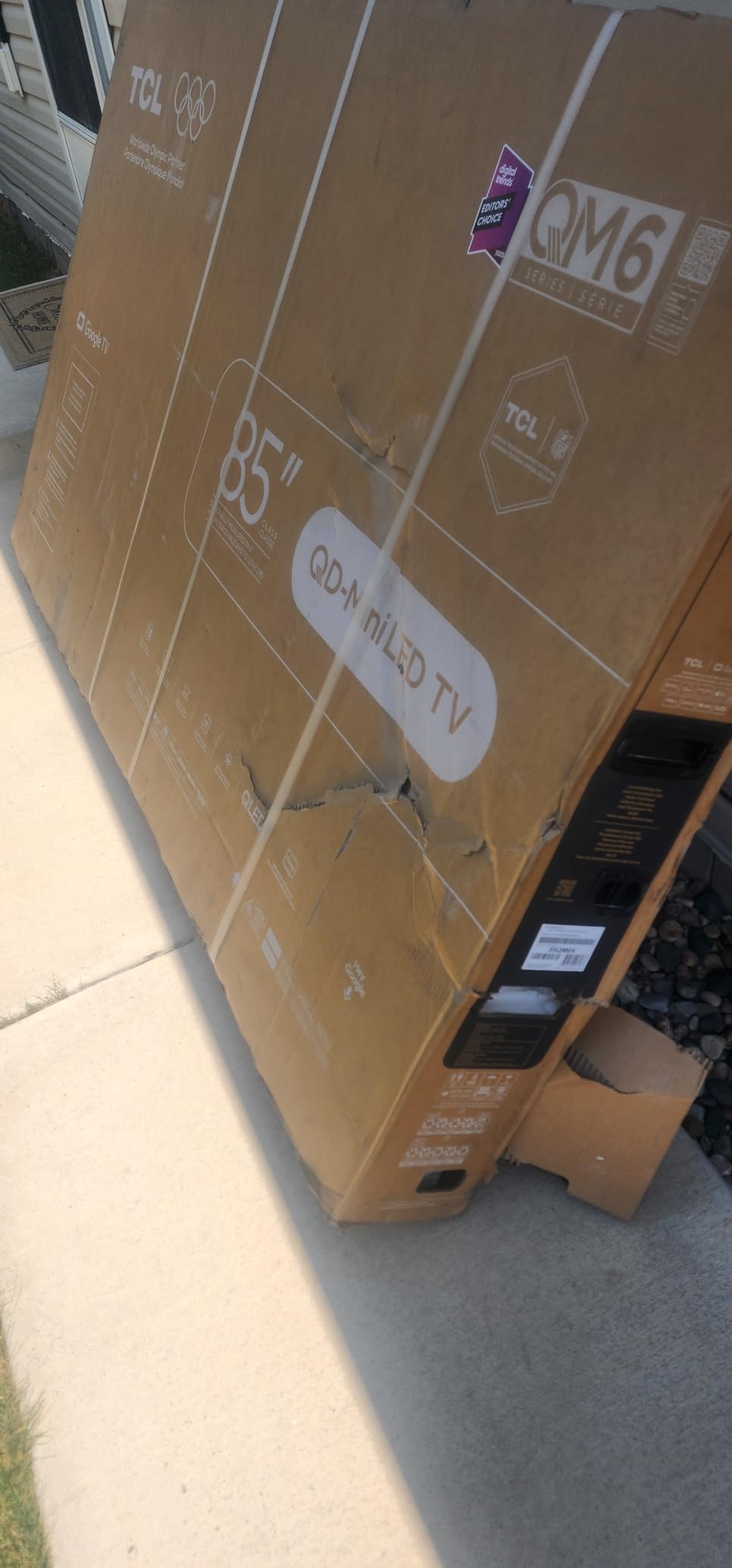
Who this suits best
This suits a household where the TV is watched for sport, live news and fast-moving content, and where someone sits at an angle to the screen. The 65-inch size and 4K panel suit a main living room with normal viewing distance.
It also suits anyone who wants strong built-in audio without adding a soundbar, and anyone who already lives in the Google ecosystem. The backlit remote alone is enough reason to shortlist it for a bedroom.
Where it falls short
The Google TV home screen is heavy on advertising and recommendations unless you install a third-party launcher, which adds setup complexity for exactly the person you are trying to help. A Google account is required, and the interface will change more often than Roku’s.
Brightness in a very sunlit room falls short of the 2000-nit Samsung Mini LED in this list. The onboard audio is decent rather than strong for films, and some buyers reported app choppiness before a software update that later resolved it.
What to Look For in a Smart TV for Seniors
A senior-friendly smart TV is one with a simple, uncluttered home screen, a voice-enabled remote, large legible on-screen text, and dialogue-clarity audio. The panel matters far less than those four things. A 1080p set with a stable, plain interface beats a premium 4K set with a cluttered one every single time for an older viewer.
Start with the interface, because it is the part your relative will touch every day. Look for a home screen where apps sit in a fixed alphabetical or fixed grid, where no sponsored row pushes things around, and where the manufacturer has a record of not redesigning the layout annually. Roku OS is the clearest example of the first two; the Samsung Tizen sets here get the third by default, since One UI has been visually consistent for years.
Second, insist on a voice remote with a microphone and shortcut buttons, and test it with the actual voice the person will use. Voice assistants are not flawless with older speakers or regional accents – one of the recurring complaints in community threads is that assistants mishear. Every set in this guide supports at least one assistant, and the Roku models here work with Roku Voice, Siri, Alexa and Google Assistant, which covers whichever assistant already runs the lights and thermostat in that house.
Third, check the audio path. This is the single most overlooked buying criterion for a senior. Confirm two things: whether the set has an optical audio out or headphone output for a hearing aid TV streamer or wireless TV headphones, and whether the built-in speakers are strong enough to avoid turning the volume up to a level that strains. The Roku 65-inch Plus Series and the TCL QM6K both have a built-in subwoofer, which is why they are the two sets here that do not force a soundbar purchase.
Fourth, look at the text, not the picture. Turn on closed captions and check that they are large and legible, and check whether the menu text can be enlarged. A 55-inch or 65-inch screen at normal living-room distance gives you roughly three times the text height of a 32-inch set in a bedroom, which is why screen size is a real accessibility feature rather than a lifestyle choice.
Fifth, plan the day-one setup. Whoever buys this should budget an hour. Connect to Wi-Fi, sign in to the account, set the default to the app or live input the person actually wants, pin it if the platform allows, enlarge the caption text, and set the sleep timer. Then lock the settings behind a PIN where one exists – the Insignia sets and the Samsung Knox Security build all support this. If you are also choosing other senior-friendly home items, our picks for nursery rocking chairs for seniors and car seat massagers for long drives follow the same principle: the best option is the one that keeps working without supervision.
Which Smart TV Interfaces Are Hardest for Seniors (and What to Avoid)
Cluttered, ad-heavy dashboards are the thing to avoid. That is the single most quotable piece of guidance in this area, and it comes straight from what older users describe. A home screen that rearranges itself after a software update is not a minor annoyance – it destroys the muscle memory a senior built over months, and rebuilding it is a genuinely frustrating afternoon.
The problems we would steer a parent away from, in order of severity:
1. Interfaces that move things after an update. Long-running community threads about smart TVs are full of this frustration, with owners describing the layout changing underneath them and no way to get the old arrangement back. The mitigation is to pick a platform with a reputation for stability and, once the layout is set the way you want it, avoid unnecessary system updates if the platform allows.
2. Sponsored rows and promoted content tiles. Ads in the home screen push streaming apps around and are the reason a working setup stops working. A fixed alphabetical app list, with no promotions, is the pattern to look for.
3. Remotes with dozens of near-identical buttons. The Samsung M70H bundled remote is a clear example: no direct input switching, no volume rocker, and no memory of the last input. For hands with arthritis or tremor, the number of buttons is a direct barrier.
4. Interfaces that do not remember what you were watching. If the set forgets the last app or defaults to a promotional channel on power-up, every viewing session starts with extra work. This is common enough that we call it out on individual products in this guide.
5. Google TV, without a launcher. Google TV is not unusable – the TCL QM6K in this guide runs it and is a genuinely good set – but out of the box it is the most advertisement-heavy home screen here. Owners of that model specifically recommend installing a third-party launcher such as Projectivy to strip it back, which adds setup steps.
What to do instead: stay with whatever platform the person already knows. Community members consistently advise sticking with whatever a senior already uses – Roku if they had a Roku box, Fire TV if they use Alexa – rather than switching brands for a better picture. A familiar interface on a good panel beats an unfamiliar one on a great panel. A well-designed senior-focused setup is worth more than any picture upgrade; the accessibility guidance in our smart humidifier guide follows the same rule of reducing the number of decisions in a daily routine.
How Big Should a Smart TV Be for Aging Eyes?
Bigger is better, within reason, and the reason is text height rather than immersion. A viewer with reduced visual acuity needs legible menu labels and readable captions. Text height scales with screen diagonal, so moving from a 32-inch set in a bedroom to a 55-inch set in the living room roughly doubles the size of the words on screen at a comparable viewing distance.
The working rule we use: measure the actual seated distance from the sofa to the wall, then aim for roughly 8 to 12 inches of screen diagonal per foot of viewing distance for a 4K panel. A 55-inch set works well from about 7 to 10 feet; a 65-inch set from about 9 to 13 feet. Beyond about 13 feet for a 65-inch panel, most living rooms are pushing it.
Resolution matters less than people expect. At 55 inches and beyond, 4K gives a noticeably sharper image and a much larger native text canvas, which is why every 4K set in this guide is a better accessibility choice than a 720p set of the same size. But 1080p at 40 inches is perfectly legible, and the 720p 32-inch set is only really comfortable at close range – in a bedroom, not a main room.
One more practical point: viewing angle. A 178-degree viewing angle, as on the TCL QM6K, keeps the picture watchable when someone sits off to the side. In a real senior living room that often means an armchair at an angle to the set, not a sofa square-on, and a narrow viewing angle is one of the more commonly regretted specs.
Smart TV vs Non-Smart TV – Do You Actually Need One?
You need a smart TV if the person will watch anything other than broadcast channels, and a non-smart TV only if they will not. That is the honest version of the answer. A large, high-contrast non-smart television with an external cable box can be simpler in the way a traditional television was simple, and for a viewer with dementia who cannot learn a new interface, a deliberately simple device is sometimes the right call.
Against that, a streaming stick paired with an existing television is a real middle option. It costs less than a new panel, and the interface lives on the stick rather than the television, which means the same simple Roku or Fire TV software can be upgraded independently. The trade-offs are that you need a decent screen already, the stick adds another remote, and the television’s own speakers may be the weak point.
What to avoid entirely is the assumption that a smart TV is simpler than a cable box. A modern smart TV with sponsored home screens is not simpler. If someone is going to watch the same five things and nothing else, the right move is to set the television up so that those five things are the first and only options, then lock the rest behind a PIN.
Frequently Asked Questions
What is the easiest TV for seniors to operate?
The easiest TVs to operate are the ones with a plain, fixed home screen and a voice remote. The Insignia 55-inch F50 Series and the Roku 55-inch Select Series both qualify: one has Fire OS with an Alexa remote that accepts natural phrasing, the other has Roku OS, which puts every app in the same alphabetical position forever. Test the voice remote with the actual voice of the person who will use it before you buy.
What smart TVs to stay away from?
Avoid interfaces that rearrange themselves after a software update, home screens heavy with sponsored rows and promoted tiles, and remotes with dozens of near-identical buttons. Also be cautious with any set that does not remember the last app or input, because every viewing session then starts with extra work. The Samsung M70H bundled remote is a good example of the button problem.
What is the most user-friendly smart TV for seniors?
For pure ease of use, the Roku 55-inch Select Series is the most user-friendly in this guide, because the Roku OS home screen is a single alphabetical row with no promoted content. For a larger screen and better built-in audio, the Roku 65-inch Plus Series adds a 4.1 channel Dolby Atmos system and an optical output for a hearing aid TV streamer.
Which TV is best for senior citizens?
It depends on the need rather than a single model. For low vision, the 55-inch Insignia F50 Series or the 65-inch Roku Plus Series. For hearing loss, the Samsung 32-inch F6000 with Object Tracking Sound Lite, or the Roku 65-inch Plus Series with a built-in subwoofer. For limited dexterity, any set with a voice remote, and the Roku models add a lost remote finder. For dementia, pick the platform the person already knows and lock the settings behind a PIN.
What is the best non-smart TV for elderly people?
A large non-smart television with an external cable box is simpler in the way traditional sets were, mainly because nothing changes after an update. It suits a viewer with dementia who cannot learn a new interface, or anyone who only watches broadcast channels. The trade-off is losing streaming apps, voice control, and any built-in free channel library.
Our Verdict on the Best Smart TVs for Seniors in 2026
The 55-inch Insignia F50 Series is our pick for the best smart TVs for seniors overall. A 55-inch 4K panel at 300 nits, a voice remote that works, three HDMI ports and an optical output for a future soundbar or hearing aid streamer, in a set most people will never need to configure. The Fire OS interface is not the fastest we tested, and it is ad-supported, but the daily path from remote to programme is the shortest.
Runners-up, briefly. The Roku 65-inch Plus Series is the one to buy if the room is large and the viewer has hearing loss – the 4.1 channel Dolby Atmos with a built-in subwoofer and the optical output are the most complete answer to declining hearing in this guide. The Roku 55-inch Select Series is the value pick, pairing the simplest interface we found with a QLED panel at 55 inches. The Samsung 32-inch F6000 is the one for dialogue clarity and a very large free channel library. The TCL 65-inch QM6K wins on motion and built-in Onkyo audio, and the Amazon Ember 43-inch is the strongest set for conversational voice search.
Whichever you choose, the first hour matters more than the model. Sign in, enlarge the captions, pin the two or three apps that actually get used, and lock the settings behind a PIN before you hand over the remote. That setup is what makes a television easy to live with for years, not the badge on the box.