
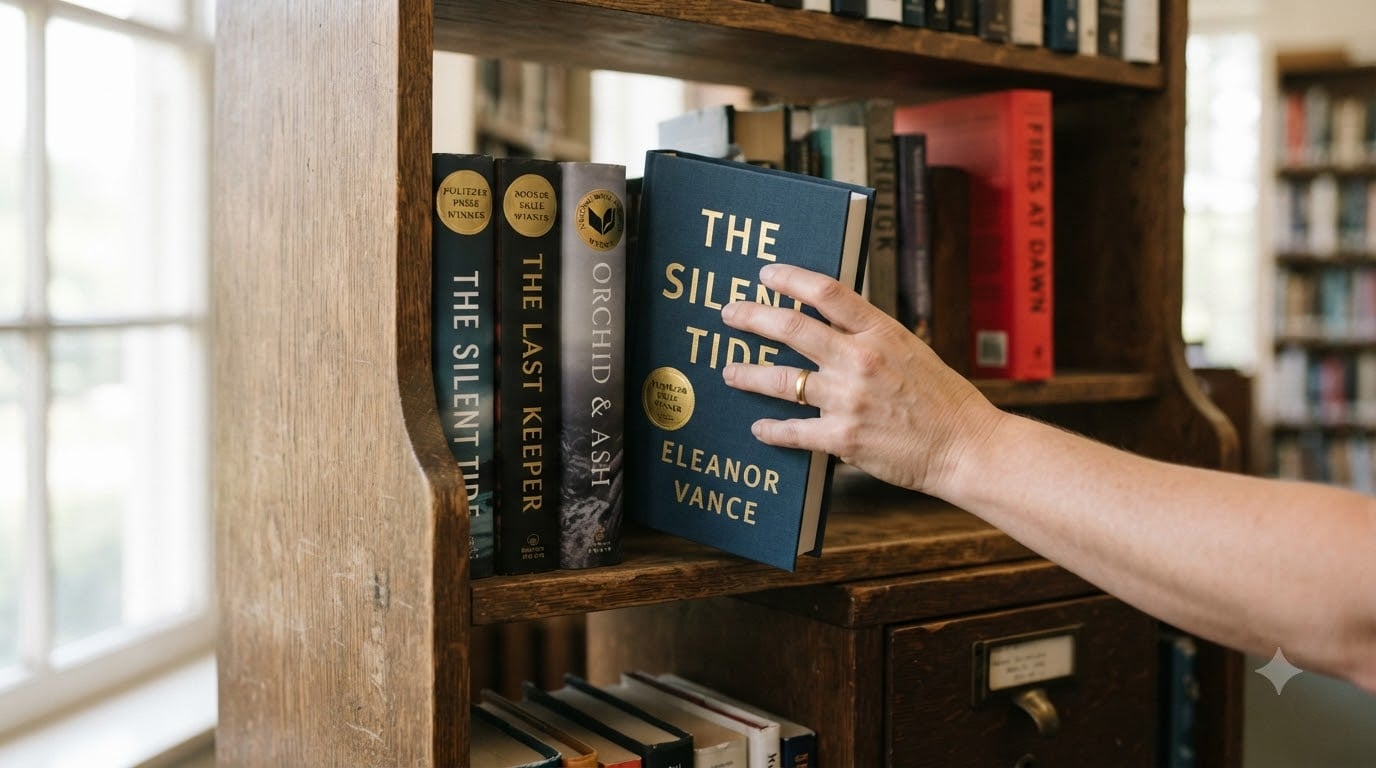
If you’ve ever picked up a book with a shiny sticker on the cover and wondered whether that small badge actually matters, you’re not alone. Book award seals are everywhere, from library shelves to bestseller displays, and they shape how readers, booksellers, and librarians decide which titles deserve their time and money.
I’ve spent the last several years reading award-winning books for our Reading Inaction community and comparing them against titles without seals. The pattern is consistent: well-placed book award seals quietly move the needle on sales and dramatically extend a book’s life on library shelves. In this guide, I’ll walk you through exactly how that happens, what the data says, and where authors go wrong when they slap a seal on a cover.
Table of Contents
What Are Book Award Seals and How Do They Work?
Book award seals are visual badges, usually printed or applied as stickers on the front cover of a book, signaling that the title has won recognition from a specific literary organization or competition. They function as a quick form of third-party validation, telling readers at a glance that an industry body has vetted the work.
Think of them as a literary seal of approval. Readers who don’t recognize the awarding organization still treat the badge as a marker of quality, much like a Michelin star in dining or an Energy Star label on appliances.
The Anatomy of a Book Award Seal
Most award stickers include a few key elements: the name of the award, the year of recognition, and often a category designation (such as “Winner,” “Finalist,” or “Honorable Mention”). The American Library Association, for example, prints distinct seals for the Newbery Medal, the Caldecott Medal, and the Printz Award.
The visual hierarchy matters. A gold foil medallion signals prestige. A smaller, monochromatic label suggests “finalist” or “recommended.” Authors sometimes confuse readers by using seals that look more important than the award they actually received, which is one of the fastest ways to lose trust.
Prestigious vs Indie Awards: What Sets Them Apart
Not all book awards carry the same weight. Prestigious awards like the Newbery, Caldecott, Pulitzer, National Book Award, and Booker Prize have industry recognition built over decades. A Newbery Medal seal, for instance, is familiar to almost every elementary school librarian in the United States.
Indie and self-publishing awards serve a different role. They give independent authors a credibility boost they couldn’t otherwise access. The Independent Publisher Book Awards (IPPY), the Kirkus Prize, and the Readers’ Favorite Awards have grown in recognition, but they still don’t carry the universal recognition of a Caldecott or Pulitzer seal.
How Book Award Seals Impact Book Sales?
Book award seals can directly increase sales by acting as social proof at the exact moment a reader is deciding whether to buy. The effect shows up most clearly in three places: initial purchase decisions, bookstore recommendations, and online conversion rates.
Award stickers on book covers work because readers facing a wall of unfamiliar titles default to mental shortcuts. A recognizable seal is one of the strongest shortcuts available, especially for parents buying children’s books and for readers shopping outside their favorite genres.
The Credibility Effect and Sales Conversion
When readers see an award seal, they assume the book has been screened for quality by people whose opinions they trust. That assumption translates into higher click-through rates on Amazon, lower return rates, and stronger word-of-mouth recommendations.
Industry data suggests that award recognition can boost a book’s sales by 30% to 50% in the months following the win, with the largest lifts coming from prestige awards and category wins in crowded markets. Even finalist status often produces a measurable, sustained bump.
For independent authors especially, the credibility seal can be the difference between a book that sells a few hundred copies and one that breaks into four-digit territory. That credibility compounds: more sales lead to more reviews, which leads to more visibility, which leads to more sales.
Visibility in Bookstores and Online Listings
Bookstore buyers and library selectors often sort their purchasing decisions by award status. A book with a Caldecott sticker is almost guaranteed educational market placement. A book with an IPPY seal is more likely to get prime table placement at independent stores running “local award winners” displays.
Online, award seals show up in thumbnail images. That visibility matters because shoppers scan dozens of covers per minute. A small gold seal increases the chance that a browser pauses long enough to read the description, which is the first step toward conversion.
Why Book Award Seals Matter for Library Shelf Life
Award seals do more for libraries than they do for retail buyers. Library collection development is governed by professional review sources, patron demand, and award recognition, and a recognized seal is often enough to put a title on a librarian’s “must consider” list.
A book that lands in a library catalog can circulate for years, sometimes decades. Award recognition dramatically increases the odds of acquisition and significantly extends a book’s active shelf life once it is acquired.
How Librarians Use Award Seals in Selection
Librarians rely on a mix of professional journals, patron requests, and award lists to decide which titles to add to their collections. Award seals function as a fast filter in that process. A Newbery winner doesn’t need extensive additional justification, it gets shelf space by default.
In my conversations with school and public librarians, award seals consistently rank among the top three signals that move a book from “maybe” to “buy.” The other two are starred professional reviews (Kirkus, School Library Journal) and strong patron hold requests at neighboring branches.
Smaller and indie awards still help in library selection, though the effect is more pronounced in specialty collections and regional libraries that want to highlight local or self-published talent.
Shelf Life: Why Awarded Books Stay in Circulation Longer
Once an awarded book is on a library shelf, it tends to stay there. Librians run periodic “weeding” reviews to remove titles that haven’t circulated in a set period. Award-winning books develop a reputation that protects them from aggressive weeding, especially in school libraries where curricula reinforce the prestige cycle.
For example, a children’s book that wins a state award can remain in active rotation for 15 to 20 years, often through multiple reading list cycles. A similar non-awarded book averages 5 to 8 years before weeding pressure builds.
This extended shelf life is one of the most overlooked financial benefits of winning a book award. The royalty income from a single well-placed library copy can outpace a short burst of retail sales, especially for backlist titles.
Best Practices for Using Book Award Seals
Placement and design matter more than most authors realize. A seal in the right spot boosts sales; a cluttered or oversized seal does the opposite. Here’s how to use them well.
The goal is to make the seal visible without overwhelming the cover artwork. Editorial restraint signals authenticity. Overcrowding signals desperation.
Where to Place Book Award Seals on a Cover
The most common placement is the top-left corner or the top-right corner of the front cover. These zones keep the seal visible in thumbnail previews and on stacked bookstore displays without competing with the title or author name.
If you have multiple awards, prioritize the most recognizable one and group secondary awards in a vertical strip or at the bottom of the cover. Avoid placing seals near the title where they can crowd the typography. Award stickers also work on the back cover near the barcode, though that placement has less marketing impact.
For digital editions, place the seal in the cover art itself rather than relying on platform metadata. A seal that disappears when the cover is resized loses all of its credibility value.
Common Mistakes Authors Make With Award Seals
The biggest mistake is using seals that misrepresent the recognition. Displaying “Winner” when the award was for “Finalist” or “Honorable Mention” erodes the trust the seal is supposed to build. Readers and reviewers notice this, and the credibility loss compounds over time.
Another common error is overusing seals. Crowding three or four minor awards onto a cover signals that the author doesn’t trust the book to stand on its own merits. A single strong seal beats a wall of small ones every time.
Finally, designers sometimes make seals too large or too bright, which pulls attention away from the title and can read as visually cluttered. A seal should be recognizable, but it shouldn’t be louder than the book.
Choosing the Right Award for Your Book
Not every award is worth chasing. Entry fees can range from $50 to several hundred dollars, and the time investment adds up quickly. A good first filter is whether the awarding organization is recognized in your genre and respected by libraries, booksellers, and reviewers.
Legitimate awards are usually run by established nonprofit organizations, professional associations, or recognized industry bodies. They don’t solicit and don’t offer discounted entries to entice submissions. Vanity awards, by contrast, often pitch every author who publishes, then send out “finalist” or “honorable mention” notices to nearly every entry.
For most authors, two to four well-targeted award submissions per book is a reasonable investment. Pick awards that match your genre, age category, and subject matter. A children’s picture book should prioritize Caldecott, state reading lists, and library association awards over general literary prizes.
FAQ: Book Award Seals and Their Impact
Do book award seals actually increase sales?
Yes. Studies and industry data suggest book award seals can lift sales by 30% to 50% in the months following a win. Prestigious awards produce the largest bumps, but even finalist status often leads to a measurable, sustained increase in retail and online conversion.
How do libraries decide which award-winning books to buy?
Librarians filter acquisition decisions through award lists, starred professional reviews, and patron demand. An award seal is often enough to put a title on a must-consider list and can be the deciding factor in crowded purchasing cycles.
What’s the difference between prestigious and indie book awards?
Prestigious awards like the Newbery, Caldecott, Pulitzer, National Book Award, and Booker Prize have decades of industry recognition. Indie and self-publishing awards like the IPPY or Kirkus Prize serve more as credibility boosts for independent authors than as universal quality signals.
Where should I place an award seal on my book cover?
Place the seal in the top-left or top-right corner of the front cover. This keeps the badge visible in thumbnail previews and on stacked displays. Group minor awards in a vertical strip and avoid crowding the title.
Are book award entries worth the cost for indie authors?
Two to four well-targeted submissions per book usually are. Pick awards that match your genre and audience, favor organizations with library and bookseller recognition, and avoid vanity awards that hand out recognition to nearly every entry.
Which book awards have the most credibility with readers?
The Newbery Medal, Caldecott Medal, Pulitzer Prize, National Book Award, and Booker Prize are the most universally recognized in their categories. At the regional level, state reading association awards also carry strong credibility with librarians.
Conclusion
Book award seals are not just decoration. They move books off shelves, into carts, and onto library shelves where they can circulate for years. The right seal, placed correctly, compounds the value of every other marketing effort you’ve put into the book.
If you’re an author weighing whether to pursue awards in 2026, the answer is almost always yes, as long as you chase the right ones and use the seals with restraint. For readers and library builders, recognizing how these seals function helps you spot genuine quality signals amid the noise of self-published awards. That’s the real shelf life: not just how long the book stays in print, but how long it stays in someone’s hands.