
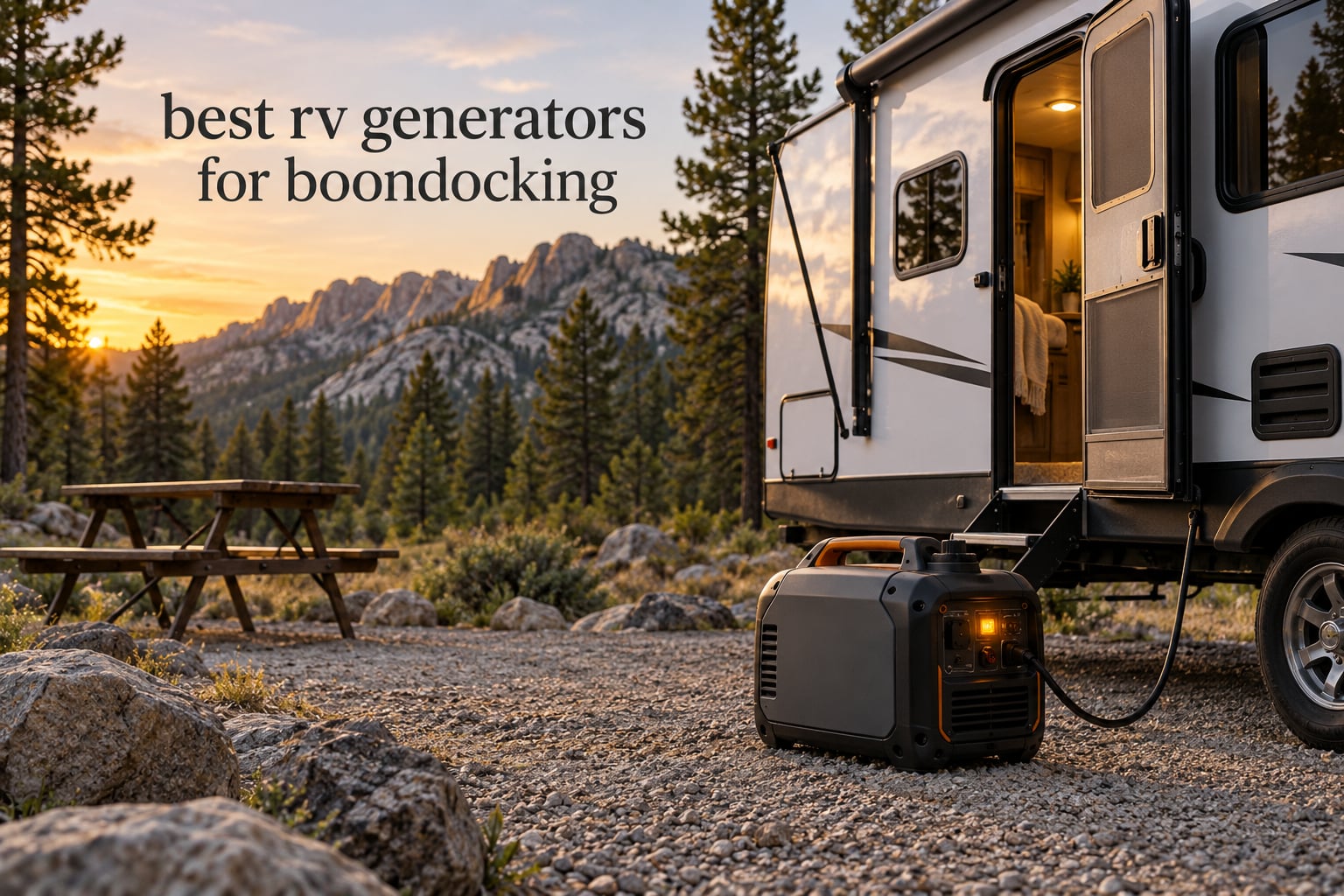
Yes, you can absolutely run a generator while boondocking. It is the normal way to power a rooftop air conditioner, microwave, and refrigerator when there is no pedestal at the site. The only rules are carbon monoxide distance, campsite quiet hours, and a wattage match between the unit and your rig.
We spent weeks comparing the best RV generators for boondocking across wattage tiers, fuel types, and noise ratings, then cross-checked the specs against what owners report in RV forums. Ten units made the cut, from a 2,200-watt Honda inverter that a single person can lift to a 13,000-watt DuroMax that stays home as a whole-house backup. Every pick below carries a real 30A RV outlet or better, a stated noise figure, and a published runtime.
One note before we start. Every unit here is a combustion engine, which means fuel, exhaust, and noise. If your goal is only keeping 12V systems alive between generator runs, a solar power station is a quieter companion rather than a replacement, and we explain where that fits in the buying guide below.
Space matters as much as power. If you are still working out how much gear your rig can carry, our best TVs for RV use guide covers the same weight-versus-function trade-off from a different corner of the RV.
Table of Contents
How We Picked the Best RV Generators for Boondocking
Five criteria decided every ranking here. Running watts against your actual load list came first, then noise at a realistic campsite distance, then dry weight against your payload budget, then runtime per tank of fuel, then warranty length and serviceability.
We pulled rated and surge wattage, tank capacity, runtime, decibels, and weight straight from the manufacturer specifications rather than from marketing headlines, because peak-watt numbers are the single most misleading figure in this category. Where owners report recurring problems, we weight that against the spec sheet. Disclosure: we did not bench-test fuel consumption or measure decibels with a sound meter, so every noise and runtime figure below is the manufacturer’s published number, and every reliability note comes from the product reviews and owner forum reports.
Top 3 Picks for Boondocking Right Now in 2026


The 10 Best RV Generators for Boondocking at a Glance in 2026
Scan this table before you read the reviews. Running watts is the number that decides whether your air conditioner starts; peak watts only covers the compressor kick. Noise is rated by different manufacturers at different distances, so treat the figures as directional rather than lab-comparable.
| Product | Specs | Action |
|---|---|---|
| Honda EU2200i 2200-Watt Inverter Generator |
|
Check Latest Price |
| Westinghouse iGen5000DF Dual Fuel Inverter |
|
Check Latest Price |
| Champion 4000-Watt Dual Fuel RV Ready Inverter |
|
Check Latest Price |
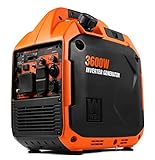 WEN 3600-Watt RV-Ready Inverter 56360i WEN 3600-Watt RV-Ready Inverter 56360i |
|
Check Latest Price |
 PowerSmart 3800 Watt Dual Fuel Inverter Generator PowerSmart 3800 Watt Dual Fuel Inverter Generator |
|
Check Latest Price |
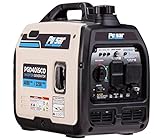 Pulsar PGD40ISCO 4000W Quiet Gas Inverter Pulsar PGD40ISCO 4000W Quiet Gas Inverter |
|
Check Latest Price |
 Champion 4500-Watt Electric Start Dual Fuel Inverter Champion 4500-Watt Electric Start Dual Fuel Inverter |
|
Check Latest Price |
 AIVOLT 8000W Dual Fuel 50 Amp RV Inverter AIVOLT 8000W Dual Fuel 50 Amp RV Inverter |
|
Check Latest Price |
 DuroMax XP13000HX Dual Fuel 13000W Generator DuroMax XP13000HX Dual Fuel 13000W Generator |
|
Check Latest Price |
 AIVOLT 4300W Dual Fuel Quiet RV Inverter AIVOLT 4300W Dual Fuel Quiet RV Inverter |
|
Check Latest Price |
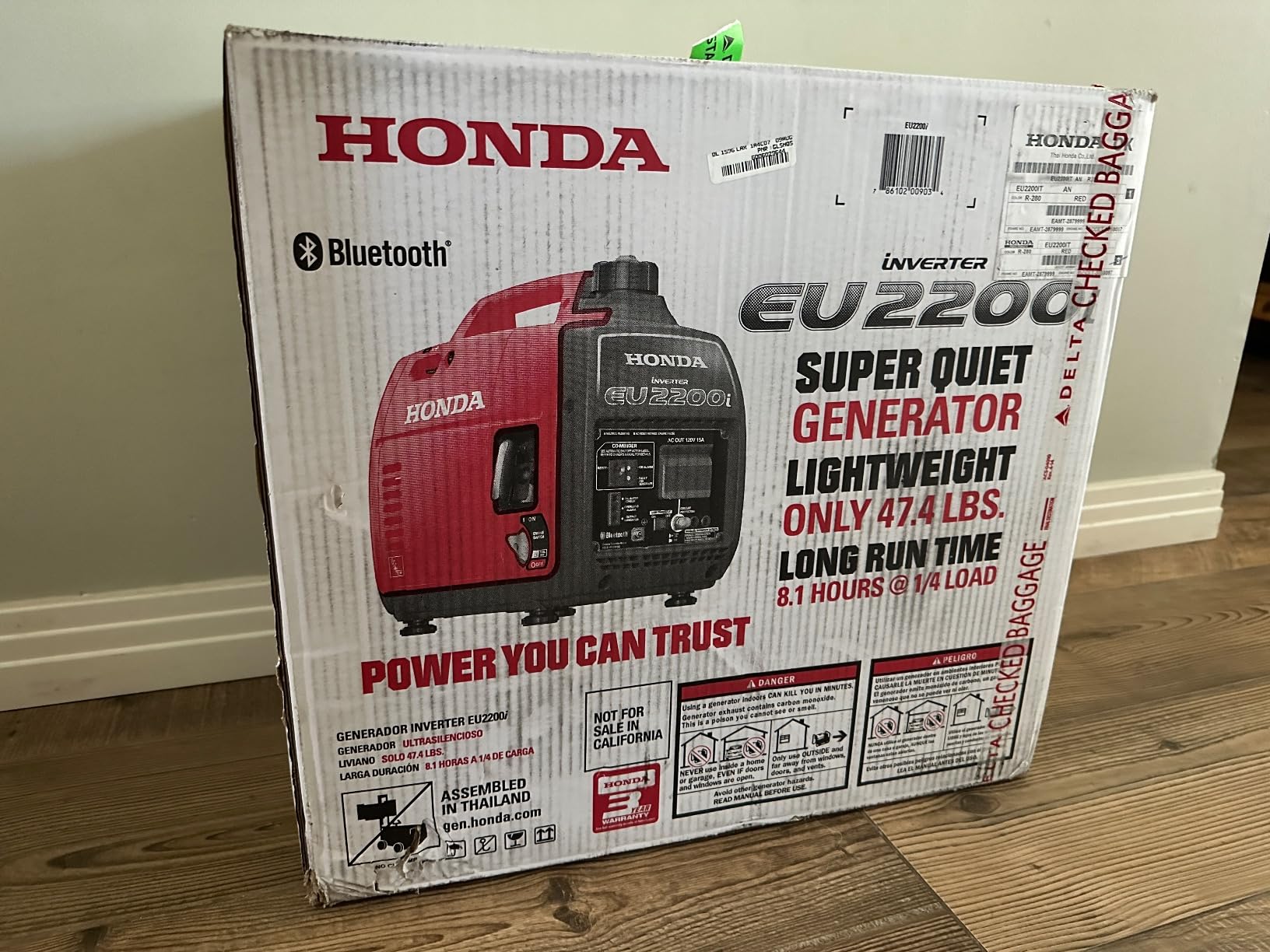
1. Honda EU2200i 2200-Watt Inverter Generator: The Quiet Standard
Honda EU2200i 2200 Watt Inverter Generator (EU2200ITAN)
1800W running
2200W starting
48-57 dB(A)
46.5 lbs
0.95 gal tank
9 hr runtime
Pros
- Quietest running unit in this list at 48 to 57 dB(A)
- Light enough at 46.5 lbs for one person to lift
- CO-MINDER carbon monoxide auto-shutdown
- Bluetooth app for monitoring and control
- 3 year residential warranty
Cons
- 1800 running watts will not start a 15000 BTU rooftop air conditioner
- Recoil start only with no electric option
- Honda does not sell this model in California
- 0.95 gallon tank means short stretches between refills
The EU2200i is the unit I keep coming back to for small rigs. At 46.5 pounds and 21 by 20 by 13 inches, it is one of the few inverters here that a single person can lift into a truck bed without a ramp, which matters more than it sounds when your generator bay is behind a slide-out.
Its 48 to 57 dB(A) figure is the reason it wins the quiet test in our group. That range is measured under load, so in eco mode the engine throttles down when your load is light, and the difference between this unit and a 64 dBA competitor is obvious across a dispersed site at dusk.
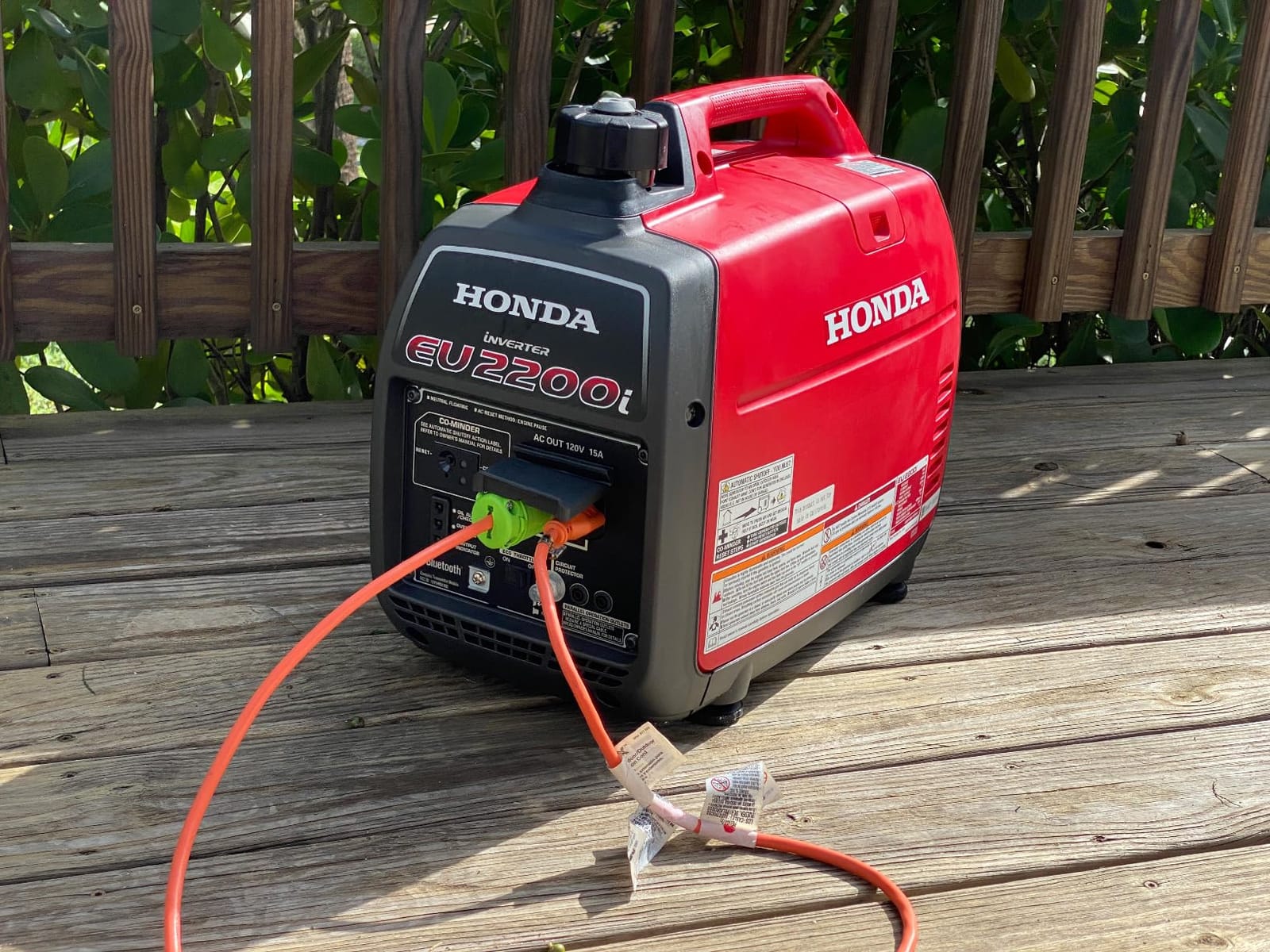
Power is the trade. 1,800 running watts covers a 12V refrigerator, lights, a CPAP machine, and battery charging with room to spare. It will not carry a 13,500 or 15,000 BTU rooftop air conditioner, because those compressors draw far more than this running capacity allows. The 0.95 gallon tank lists 9 hours of runtime, which works out to an evening of use and a morning refuel.
The CO-MINDER system shuts the engine down if carbon monoxide levels climb, and the Bluetooth app lets you check fuel level and run hours from inside the cab. Honda does not sell this model in California, which is worth knowing before you fall in love with it at a campground.
What this generator is genuinely good at
It is built for boondockers running a small trailer, a truck camper, or a teardrop who want the 12V basics plus occasional microwave time. Owners on Grand Design Owners Forums single out inverter units like this one for the way eco mode idles down and settles the noise complaint, and that is the single most common praise point across the reviews.
Where it falls short for boondocking
If your trailer has a rooftop air conditioner and you plan to run it in summer, this unit is the wrong tool and no amount of clever load management changes that. Recoil starting also means you are physically outside in the cold to power it on, which some owners like and others find miserable at 6 a.m.
2. Westinghouse iGen5000DF 5000 Peak Watt Dual Fuel Inverter: Best 30 Amp All-Rounder
Westinghouse 5000 Peak Watt Super Quiet Dual Fuel Portable Inverter Generator, Remote Electric Start, Gas & Propane Powered, RV Ready 30A Outlet, Parallel Capable, Blue/Black
3900W running
5000W peak
Gas and propane
52 dBA
104.7 lbs
18 hr runtime
Pros
- Dual fuel so you can carry gasoline or propane
- Remote electric start with key fob
- TT-30R 30 amp RV outlet included
- 52 dBA at 25 percent load
- LED data center shows fuel
- runtime
- voltage and lifetime hours
Cons
- Heavy at 104.7 lbs and a large 24.5 by 16.3 by 20 inch footprint
- Parallel operation needs a separate kit
The iGen5000DF is the most complete answer for a standard 30 amp rig in this list. 3,900 running watts on gasoline and 5,000 peak watts give a 15,000 BTU air conditioner room to start without instantly tripping, and the built-in TT-30R 30 amp outlet means the RV plugs straight in.
Dual fuel is the practical feature boondockers care about. Gasoline gives you longer runtime, up to 18 hours on the 3.4 gallon tank, while propane is cleaner, stores indefinitely, and does not foul a carburetor over a two-week trip. Having both removes the fuel-logistics anxiety that comes up constantly in owner threads.
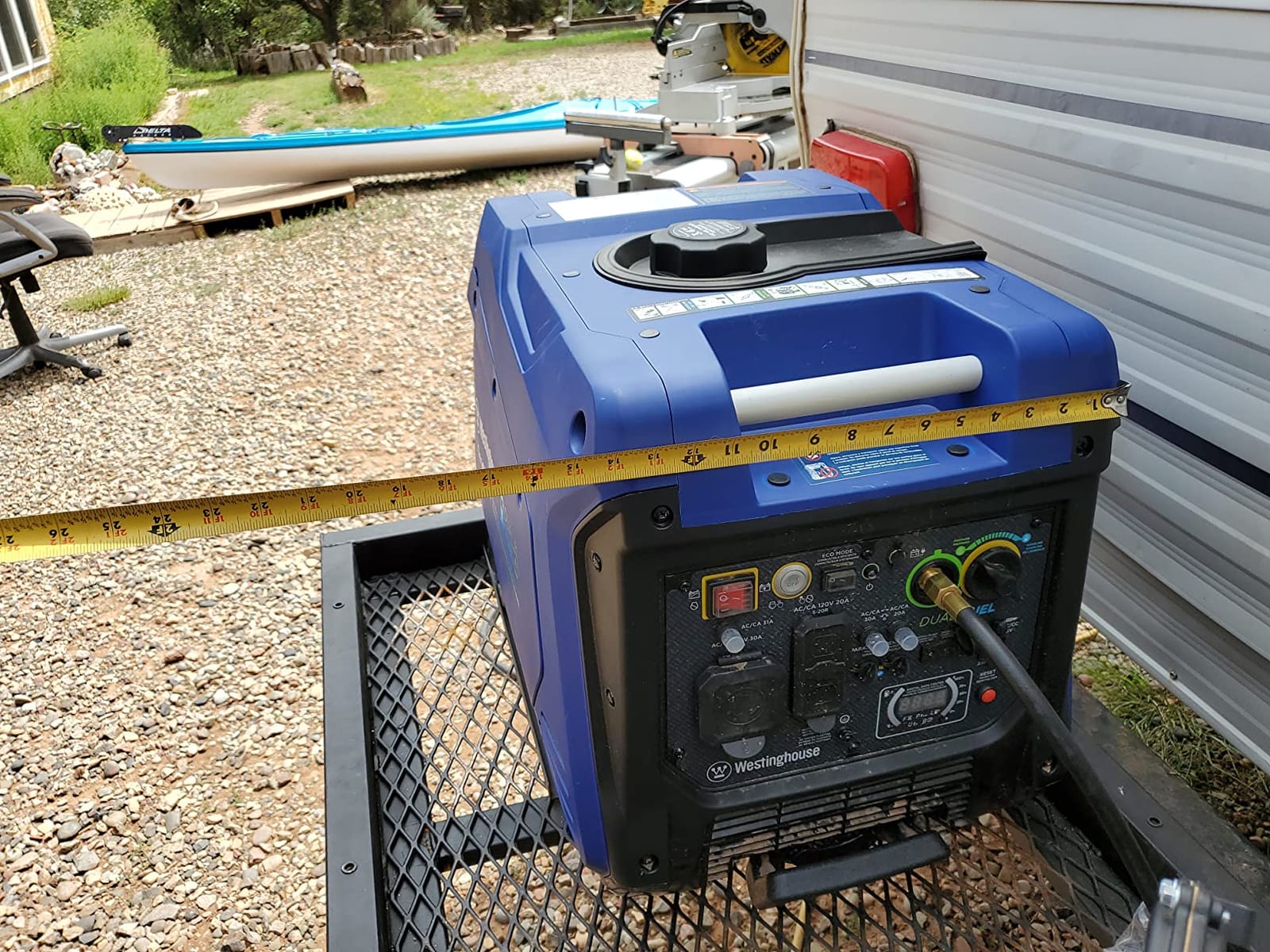
The remote electric start with key fob means you can start it from inside the trailer in the morning, which reviewers rate as a bigger quality-of-life gain than the spec sheet suggests. The LED data center reports fuel level, power output, runtime, voltage, and lifetime hours, and parallel capability lets you pair two of these for double output if you ever need it.
Total harmonic distortion under 3 percent keeps sensitive electronics happy, which matters if you run a CPAP, a router, or a laptop while the air conditioner cycles. The 3 year limited service, labor, and parts coverage is competitive for the class.
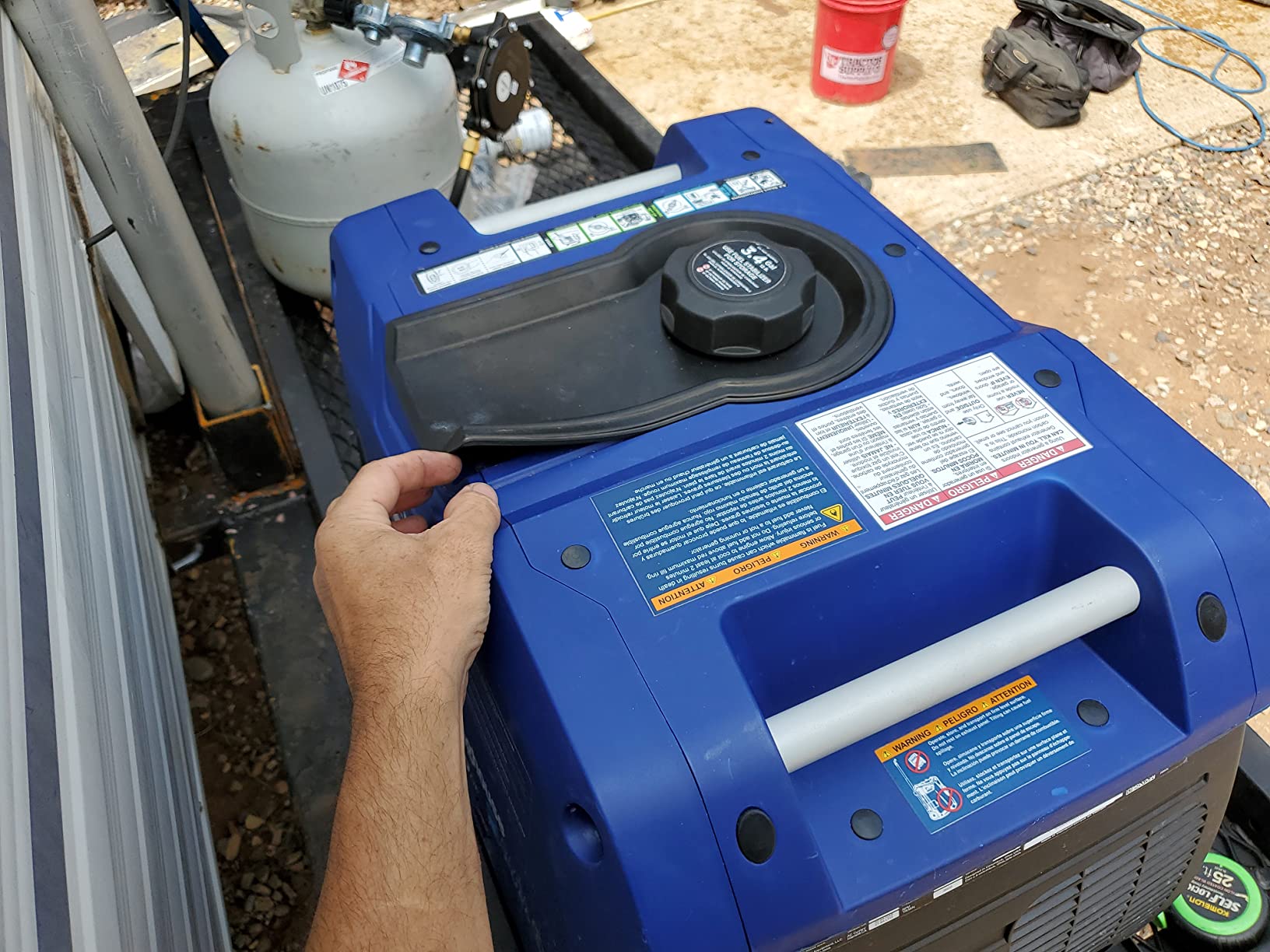
Why 30 amp owners like this unit
This is the model we would point at for a 20 to 30 foot travel trailer or a Class C that runs one rooftop air conditioner. Because it is gas and propane, owners who boondock far from a gas station report far less stress about fuel range, and the 18 hour gasoline runtime covers a full day of air conditioner use on a single tank.
What you give up for that capability
At 104.7 pounds this is a two-person lift, and the footprint is large enough that generator storage has to be planned rather than improvised. If your trailer has a tight payload budget, this much concentrated weight in one spot can eat a meaningful share of your capacity, and the owners who complain most about boondocking gear complain about exactly this.
3. Champion 4000-Watt Dual Fuel RV Ready Inverter: Air Conditioner on a Budget
Champion 4000-Watt Dual Fuel RV Ready Portable Inverter Generator
3000W running gas
4000W starting
64 dBA
51.8 lbs
1.54 gal tank
Pros
- Consistently reported to start and run 15000 BTU rooftop air conditioners
- Gasoline or propane with included hose
- 51.8 lbs is light for a 4000 watt class
- CO Shield carbon monoxide auto shutoff
- Free lifetime technical support
Cons
- 64 dBA is the loudest rated figure among the compact dual fuel inverters
- Recoil start only on this model
- Propane operation needs a gasoline break-in period first
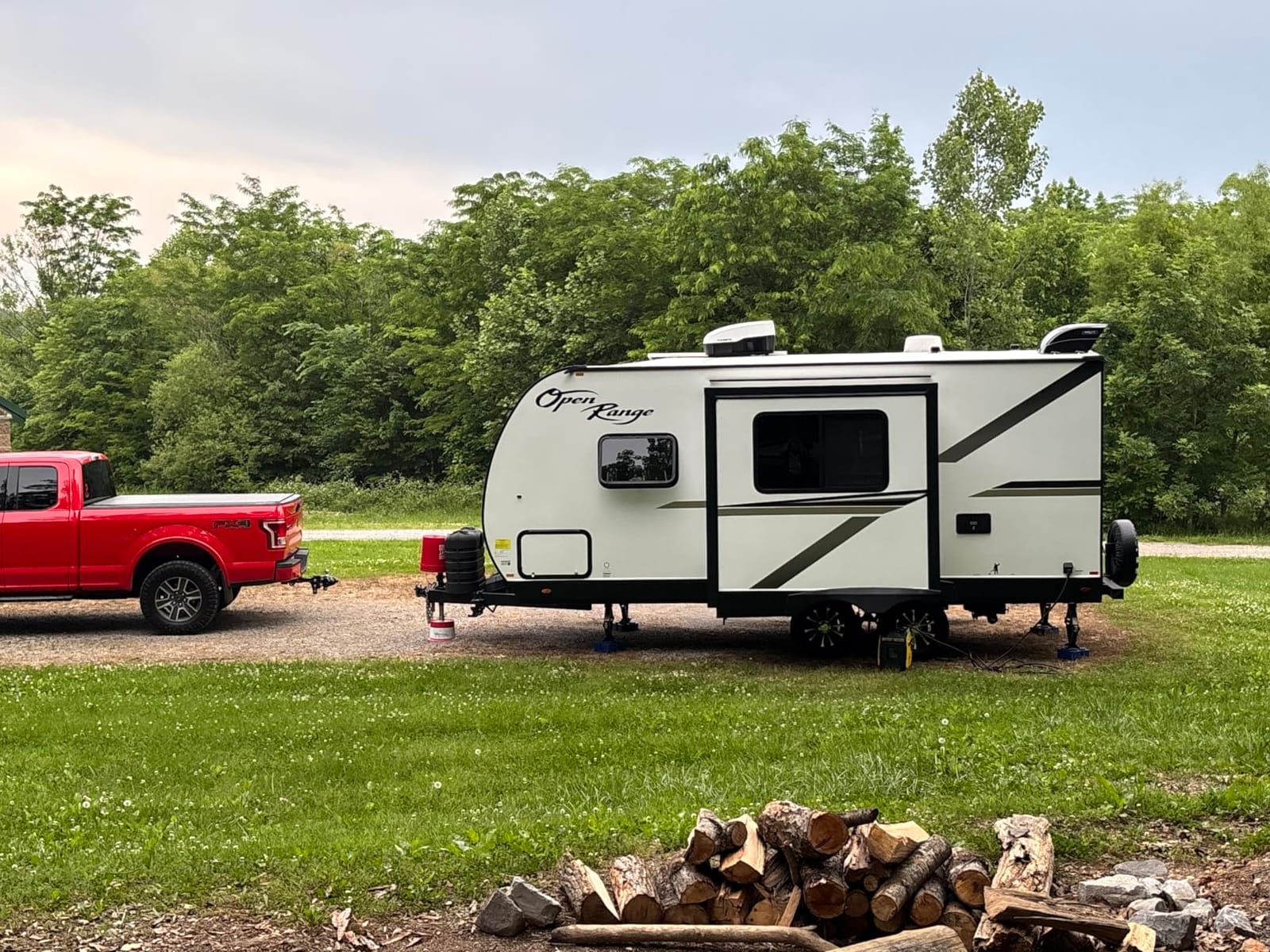
The most repeated sentence across the reviews for this Champion is that it runs rooftop air conditioners. Owners with 15,000 BTU units report stable compressor starts, which is exactly the load calculation most buyers get wrong the first time.
On gasoline you get 3,000 running watts and 4,000 starting watts from a 1.54 gallon tank that lists 10 hours of runtime. Switch to propane and the unit drops to 2,700 running watts with up to 25 hours, which is a meaningful drop if you plan to run the air conditioner on propane.
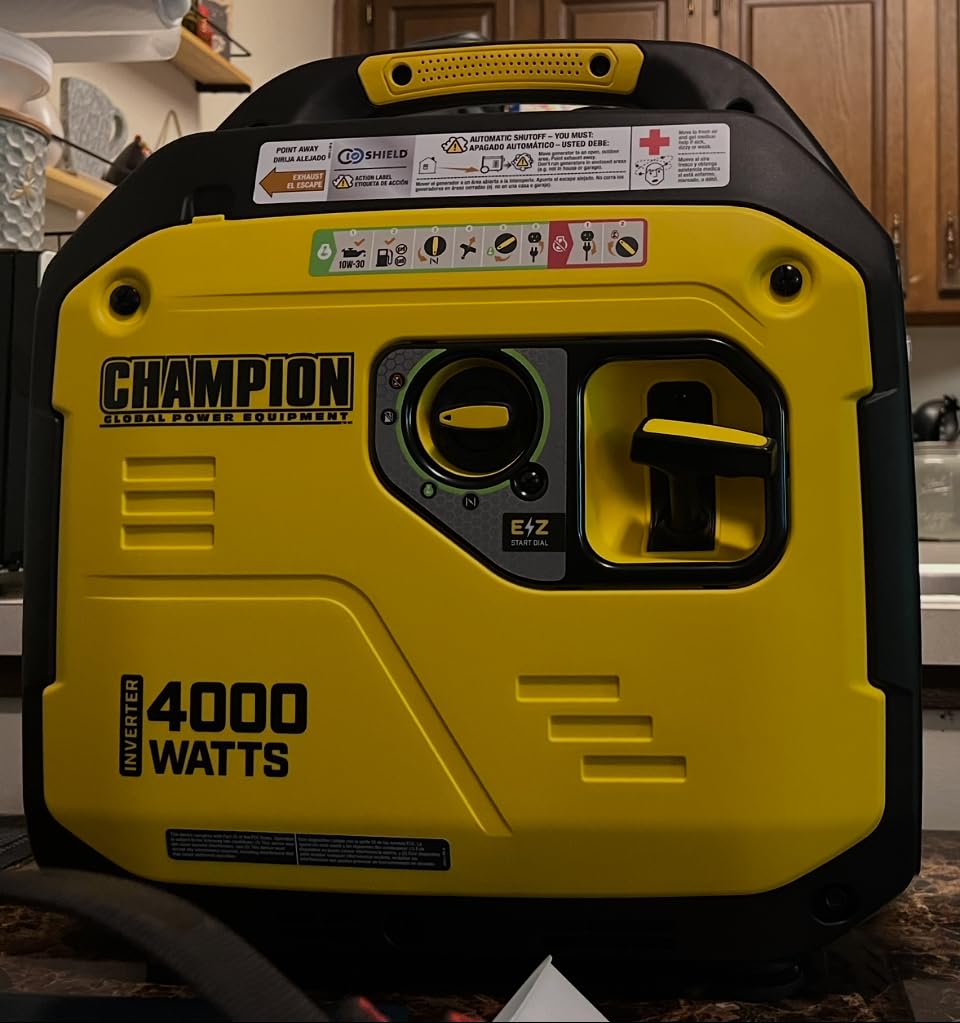
CO Shield shuts the engine down when carbon monoxide rises, and the parallel-ready design lets you add a second unit later with a separately sold kit. Included in the box are the propane hose, engine oil, and an oil funnel, which sounds trivial until you are setting up on gravel.
It weighs 51.8 pounds, which is light for a 4,000 watt dual fuel unit, and the dimensions of 17.9 by 11.7 by 19.7 inches fit a standard generator compartment. Reviewers also note reliable starting, often in one or two pulls.
Best fit for hot-weather boondocking
If your priority is one 15,000 BTU rooftop air conditioner plus a refrigerator and lights, this is the unit the reviews most consistently back. The 4,000 starting watts cover the compressor surge that trips cheaper 3,000 watt machines, and the dual fuel option gives you a fallback when gasoline stores go bad.
Where owners report friction
The 64 dBA rating at 23 feet is the highest in this group, and that is a real consideration at a tight dispersed site where a neighbor is 60 feet away. It is recoil start only, so nobody is turning this from the couch, and the propane mode wants a gasoline break-in run first, which surprises first-time dual fuel owners every time.
4. WEN 56360i 3600-Watt RV-Ready Inverter: The Lightest 30 Amp Option
WEN 3600-Watt Portable Inverter Generator, RV-Ready, Quiet and Lightweight with Fuel Shut Off (56360i)
2900W rated
3600W surge
46.3 lbs
1.6 gal tank
6 outlets
Pros
- Only 46.3 lbs so one person can load it
- Under 3 percent THD protects sensitive electronics
- Fuel shutoff feature that helps engine longevity
- Six outlets including the RV 30A socket and USB
- Three year limited warranty
Cons
- Gasoline only so no propane fallback
- 5 hour runtime at rated load from the 1.6 gallon tank
- Recoil start only
- Some owners report initial smoke and rough running before break-in
The WEN 56360i weighs 46.3 pounds, which makes it one of the two lightest 30 amp capable machines in this roundup. If your boondocking spot is reached by a rough forest road or your generator bay is at the back of a small trailer, that number decides things.
Power output is 2,900 rated watts with 3,600 surge, which covers a 13,500 BTU rooftop air conditioner in most owner reports along with a refrigerator and lights. It does not cover a 15,000 BTU unit with a microwave running at the same time, and the 5 hour runtime at rated load is the shortest in this group.
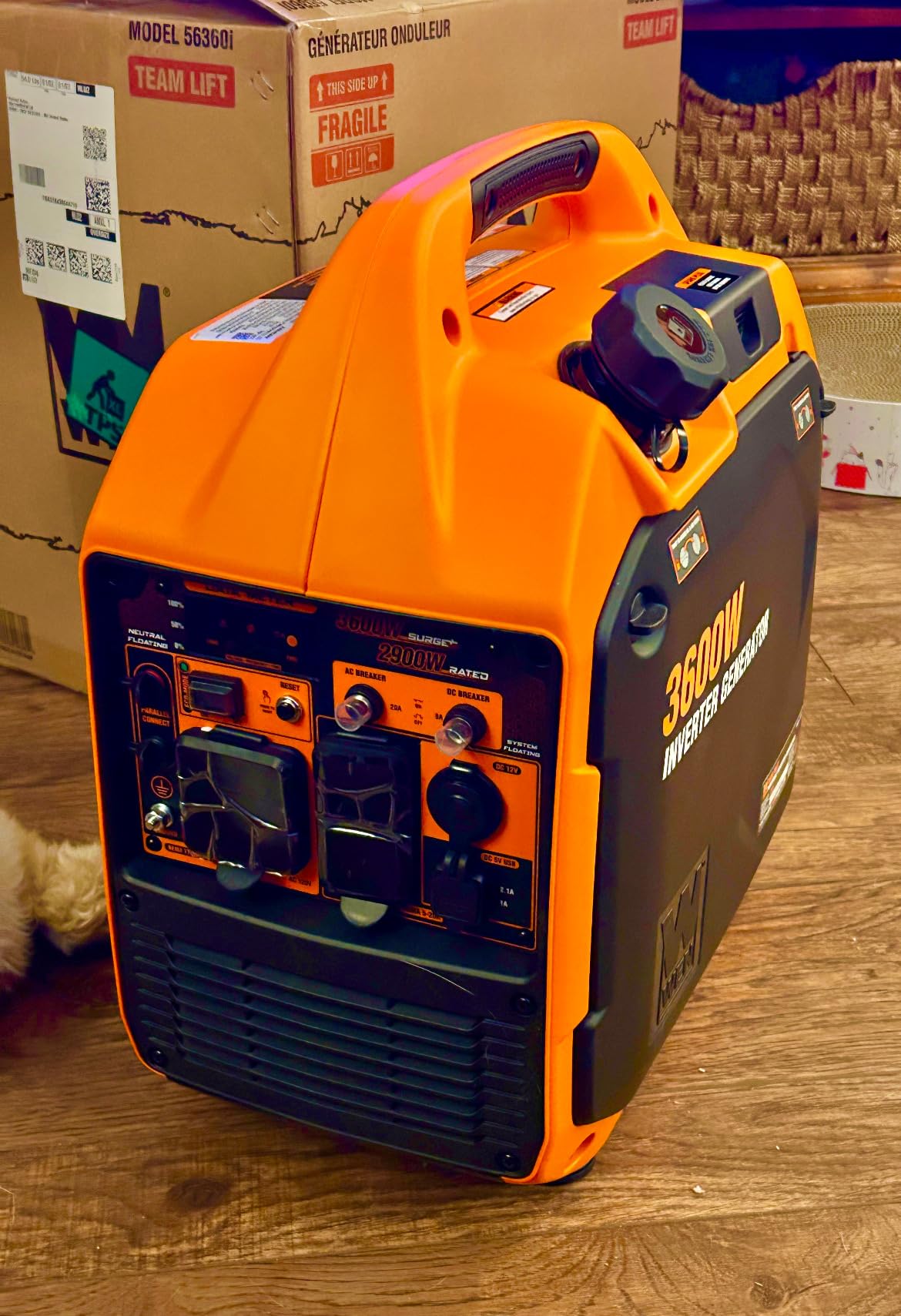
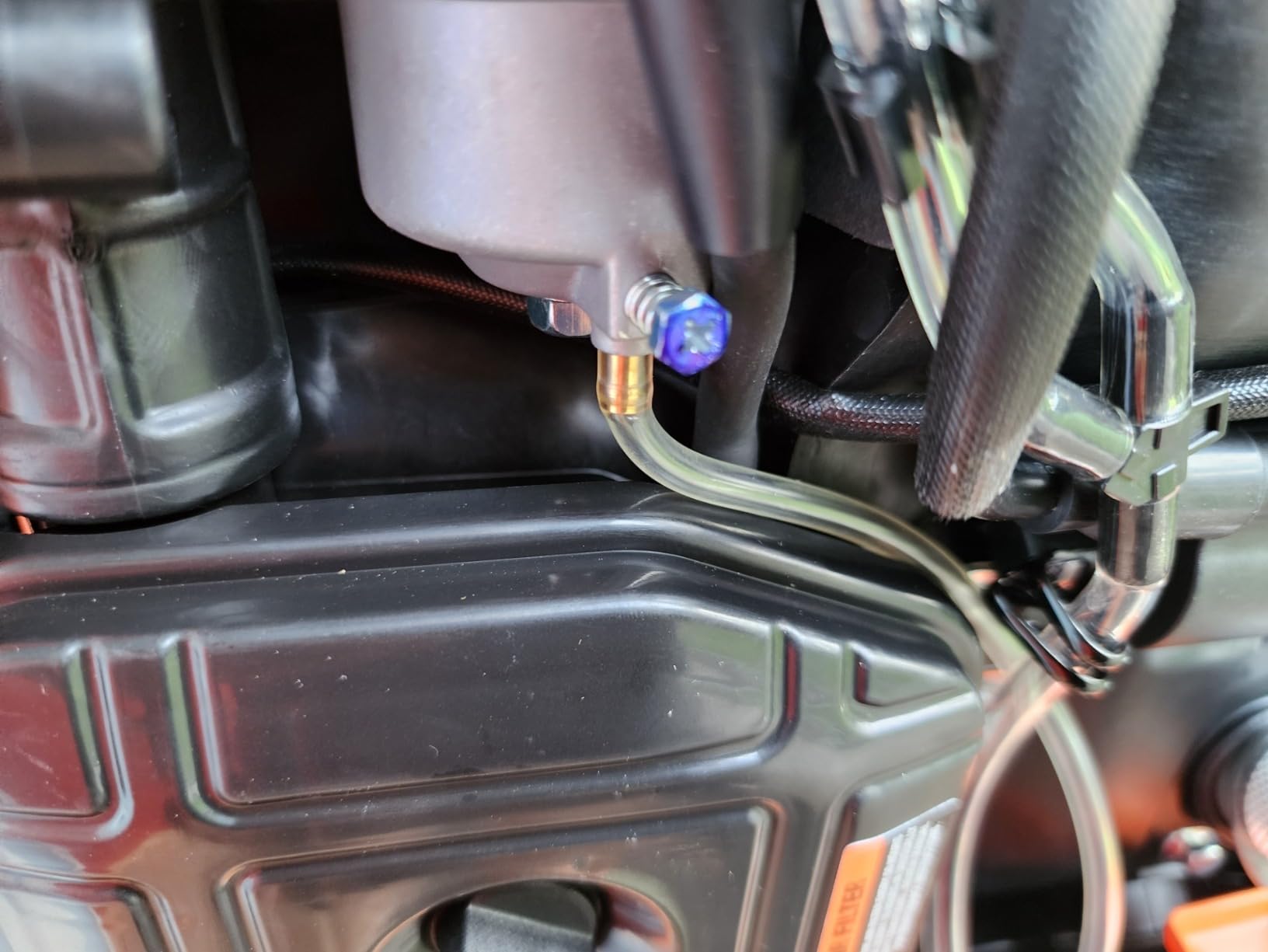
The fuel shutoff feature is the sleeper spec here. It stops fuel delivery when the engine shuts down, which limits varnish and gummy carburetor deposits that end up killing budget engines after a season of storage. Under 3 percent total harmonic distortion means laptops, routers, and CPAP machines run cleanly.
Six outlets cover the RV 30A socket, two household duplex receptacles, a 12V DC outlet, and two USB ports, so you can skip the power strip. A few owners report smoke and rough idling on the very first start before break-in, which resolves once the engine is run.
Who should buy this one
A small trailer, truck camper, or teardrop owner who runs a 13,500 BTU air conditioner and wants the lightest option with a real RV outlet. Reviewers consistently praise the weight-to-output ratio, and the fuel shutoff makes it a good first generator for someone learning maintenance.
Where it runs out of road
Gasoline only is the main limitation in the boondocking context. Storing fuel for two weeks in a hot truck bed is exactly the situation that degrades gasoline, and without a propane option you cannot pivot when the gas goes bad. The 5 hour runtime under load also means more refills than anything else here.
5. PowerSmart 3800 Watt Dual Fuel Inverter: Most Output for the Entry Budget
PowerSmart 3800 Watt Dual Fuel Inverter Generator for Camping or Home Use
3300W running gas
3100W propane
59 dBA eco
50.7 lbs
L5-30R 30A
Pros
- 3300 running watts on gas makes it one of the stronger compact dual fuel units
- 59 dBA in eco mode at 25 percent load
- Seamless switching between gasoline and propane
- CO sensor with low oil shutdown and overload protection
- Parallel ready with lifetime technical support
Cons
- Only 4 hour runtime on the 1.3 gallon gas tank
- 2 year warranty is the shortest among the picks
- Some owners report hard starting and defective units
- Access panels need a screwdriver and the display is hard to read on the ground
Running watts tell the real story on this one. It delivers 3,300 running watts on gasoline with 3,800 peak, and 3,100 running on propane, which puts it in the same performance tier as the Champion above while sitting lower in the pack overall.
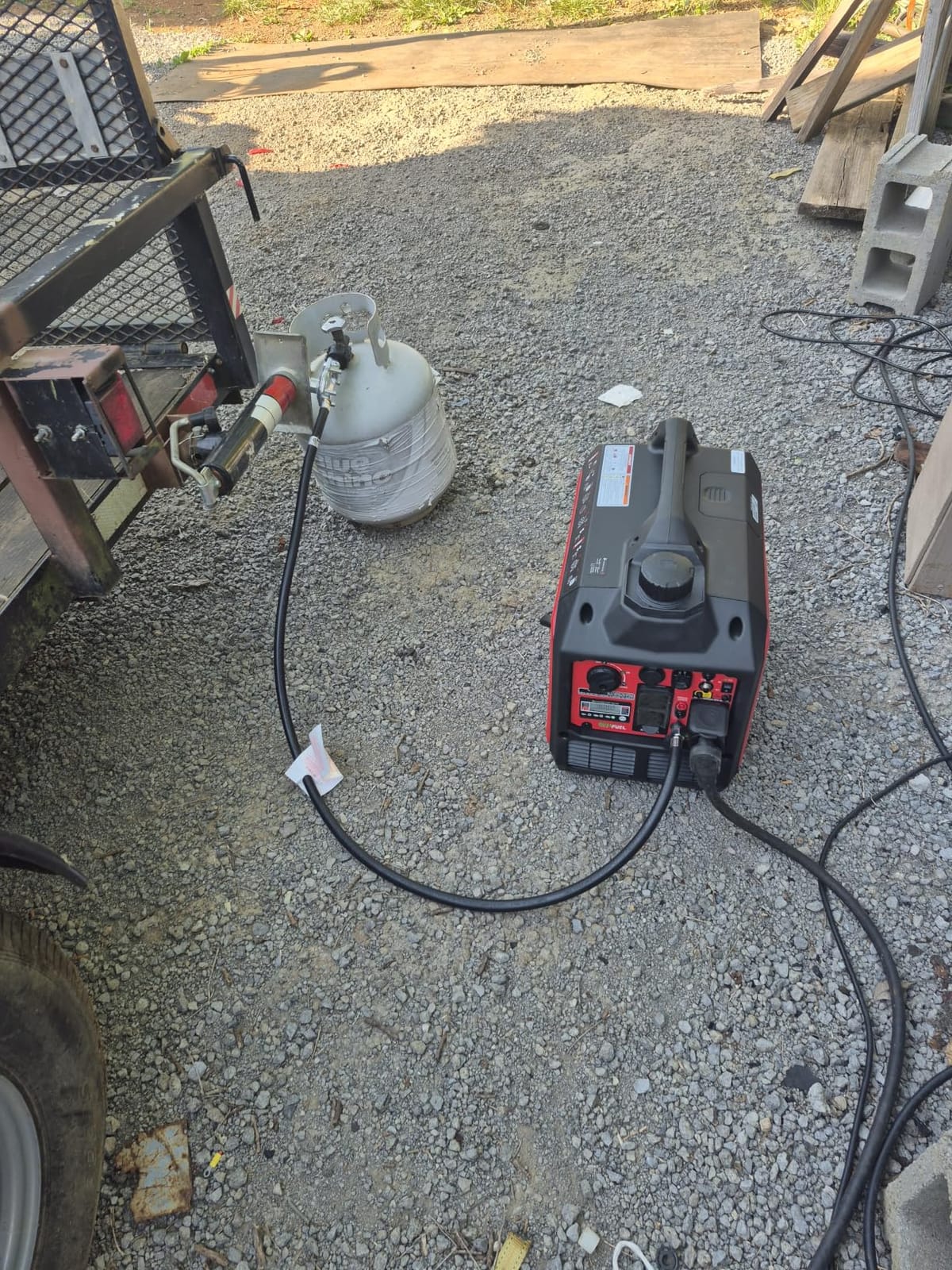
The outlet panel is unusually complete for a machine at this level: an L5-30R 30 amp twist-lock, a 5-20R duplex, a 12V DC outlet, and dual USB. That means your RV plugs in directly without an adapter, which removes the single most common boondocking mistake.
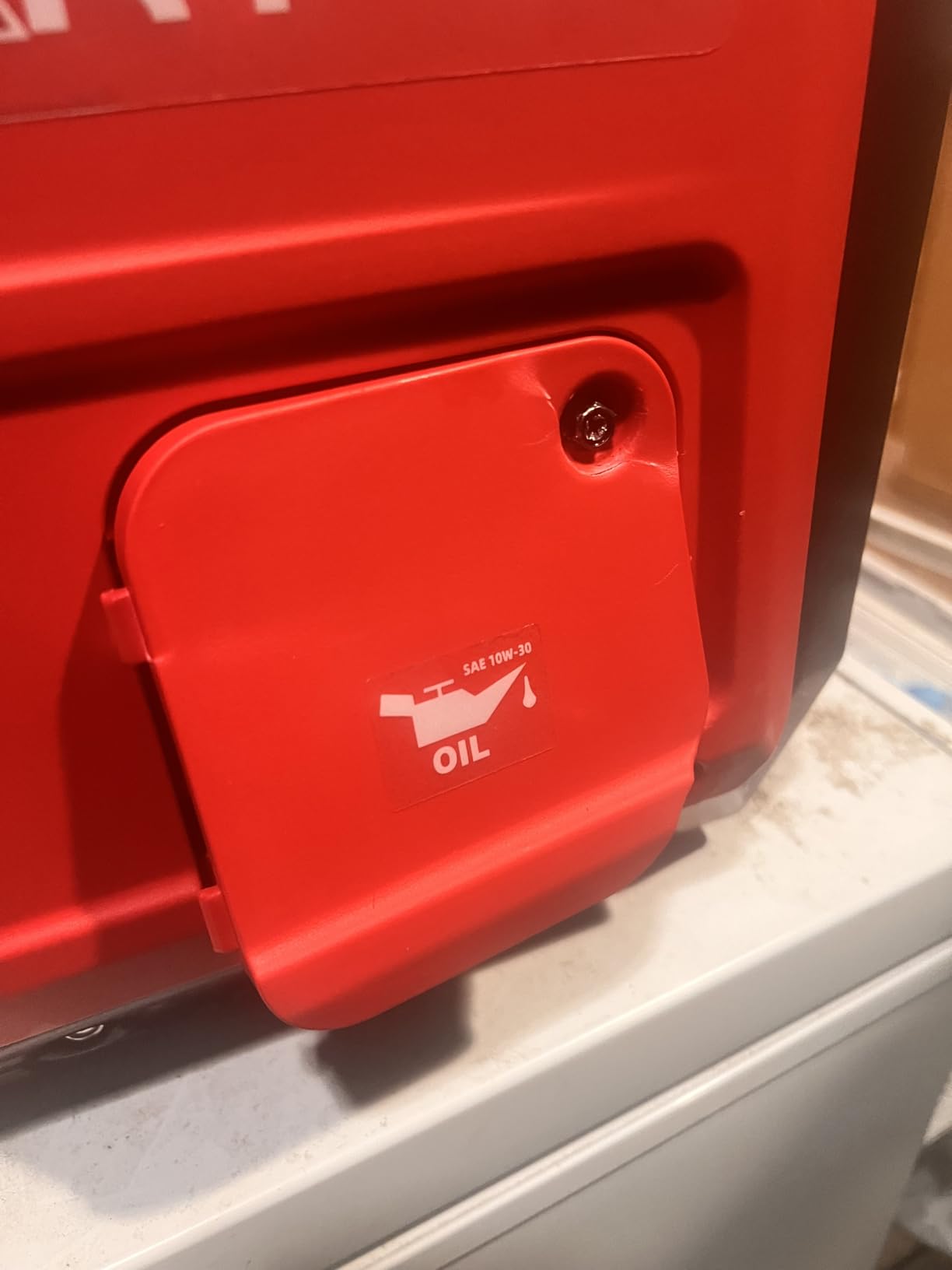
Safety hardware is solid. A CO sensor, low oil shutdown, and overload protection all come standard, and the unit is certified to ANSI and UL 2201 and EPA standards, which is reassuring when you are running it next to a trailer for hours.
The 59 dBA eco mode rating is measured at 25 percent load, so it will be louder with the air conditioner running. At 50.7 pounds and 21.9 by 13.4 by 19.5 inches it is still a manageable load for two people.
What makes this a strong first dual fuel unit
Reviewers point to the combination of 3,300 running watts, dual fuel, and a real 30 amp twist-lock as the reason this machine keeps getting recommended. It handles a 13,500 BTU rooftop air conditioner with a refrigerator and some lights, and the eco mode keeps it manageable on a quiet site.
Where buyers report disappointment
The 1.3 gallon gas tank gives roughly 4 hours of runtime, the shortest on gas among the picks, so you will refill more often than the spec-sheet runtime comparison alone suggests. Owners also report a scattering of hard starting and defective units, and the 2 year warranty is thinner than the 3 year coverage most competitors in this class carry.
6. Pulsar PGD40ISCO 4000W Quiet Gas Inverter: Best Lightweight Gas Option
Pulsar PGD40ISCO Ultra Light Quiet 4000W Portable Gas Inverter Generator, white
3200W rated
4000W peak
59 dB
47.3 lbs
1 gal tank
Pros
- 47.3 lbs with 3200 running watts is a strong power to weight ratio
- 59 dB operation is quiet for a gas only machine
- Manufacturer rates it for a 13500 BTU rooftop air conditioner
- Parallel ready for doubling output
- Three year limited warranty
Cons
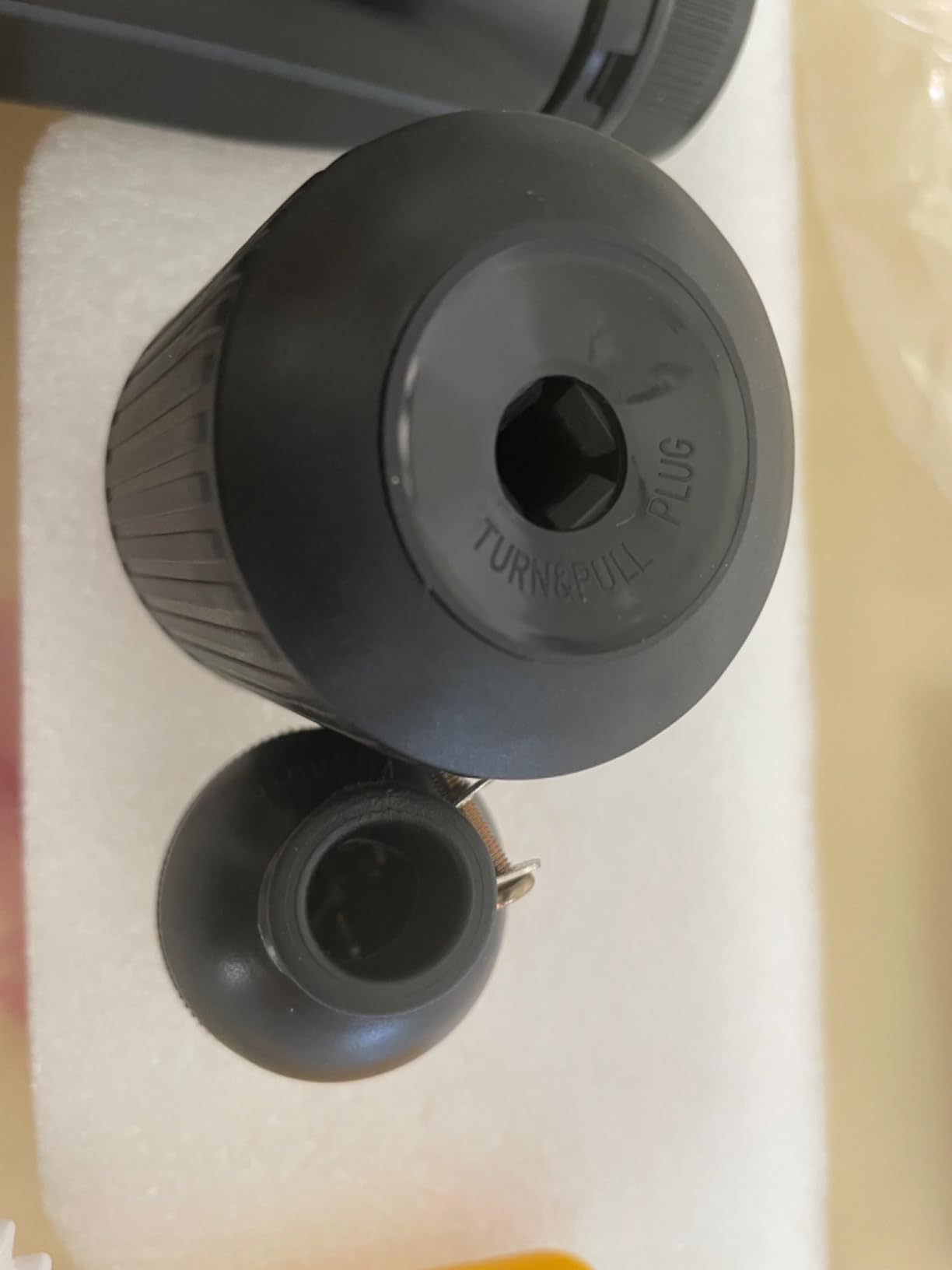
- Only 3 outlets so you may need an external power strip
- 1 gallon tank equals about 4 hours at half load
- Gasoline only with no propane option
- Recoil start only
- 9 percent of reviews are 1 star
- which points to uneven quality control
The Pulsar sits at 47.3 pounds and produces 3,200 rated watts with 4,000 peak, so it delivers roughly 900 more running watts than the WEN while weighing about a pound more. That is the best power-to-weight ratio in this group.
Noise is rated at 59 dB, which places it alongside the PowerSmart and comfortably below the Champion 4000. For a dispersed site where sound carries, that gap is the difference between conversation with your neighbor and a complaint.
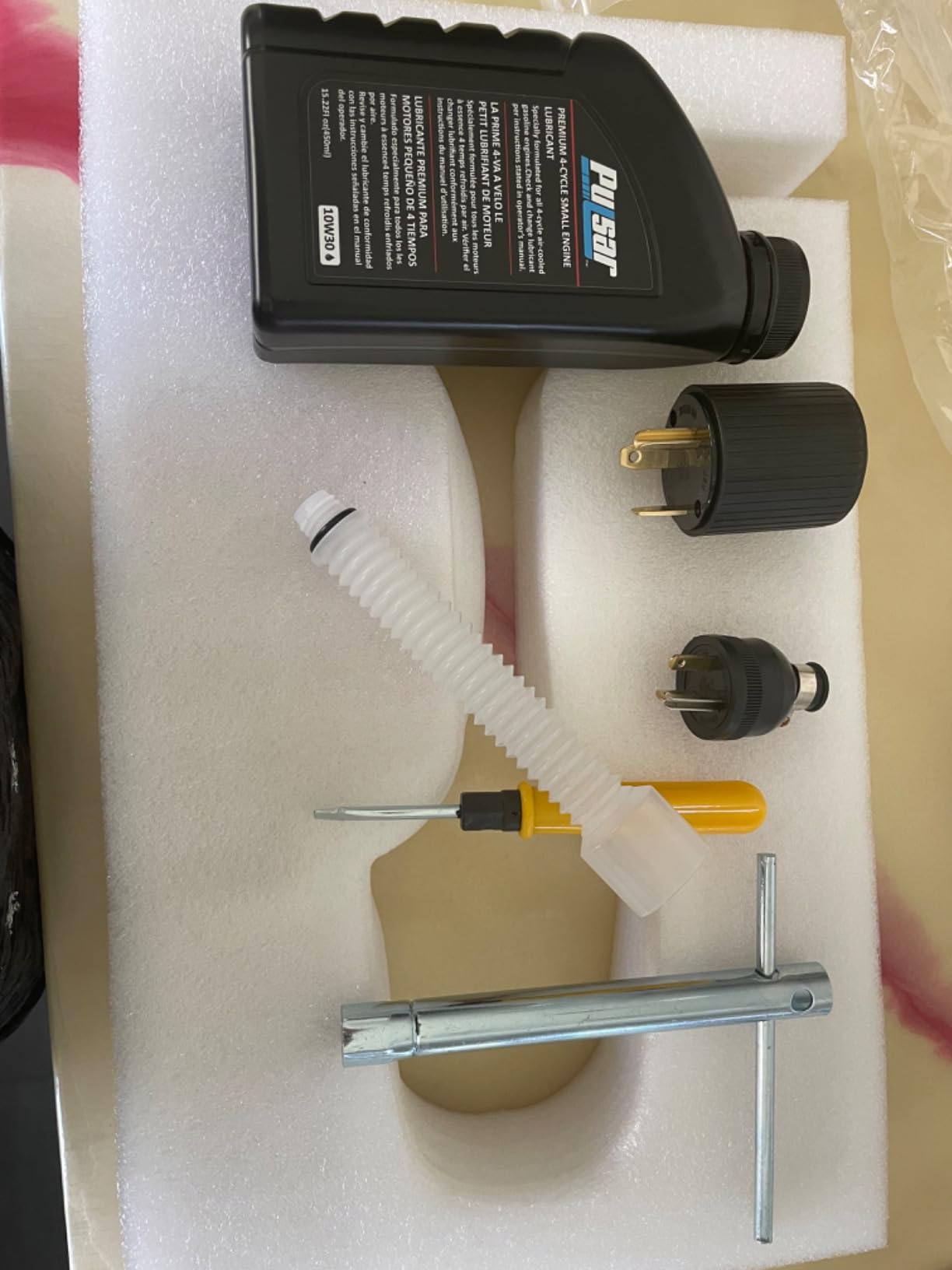
The manufacturer specifically rates this machine for rooftop air conditioners up to 13,500 BTU, which makes it a natural fit for a Class C or a mid-size travel trailer. Automatic voltage regulation keeps output steady as the engine loads and unloads.
At 18.9 by 11.4 by 17.3 inches it is one of the smallest footprints here, and parallel ready means you can double the output later with another matching unit instead of replacing what you own.
Where it earns its spot
Boondockers with a 13,500 BTU rooftop unit and a light electrical load will find this the best blend of power, weight, and quietness in a gasoline-only package. Reviewers like the clean power for sensitive electronics, and the white finish is a minor but real plus in a tight generator bay.
The honest drawbacks
Three outlets is the tightest panel here, so plan your connections rather than assuming you can run everything at once. The 1 gallon tank lists 4 hours at half load, and roughly 9 percent of reviews are 1 star, which points to uneven quality control rather than a single design flaw, so keep your proof of purchase.
7. Champion 4500-Watt Electric Start Dual Fuel: Longest Propane Runtime Here
Champion 4500-Watt Electric Start Dual Fuel Portable Inverter Generator
3500W running gas
3150W propane
61 dBA
99.2 lbs
14 hr gas 21 hr propane
Pros
- Electric start with an EZ Start dial removes the physical pull start
- 212cc engine delivers smoother power delivery
- 14 hours on gas and 21 hours on propane
- Intelligauge power meter tracks voltage frequency and hours
- CO Shield carbon monoxide auto shutoff
- Proven in commercial and food truck duty
Cons
- 99.2 lbs is heavy and needs two people to load
- Only 2 outlets listed which is limiting
- 50 Hz frequency in the spec sheet appears to be a listing error
- About 8 percent of reviews are 1 star
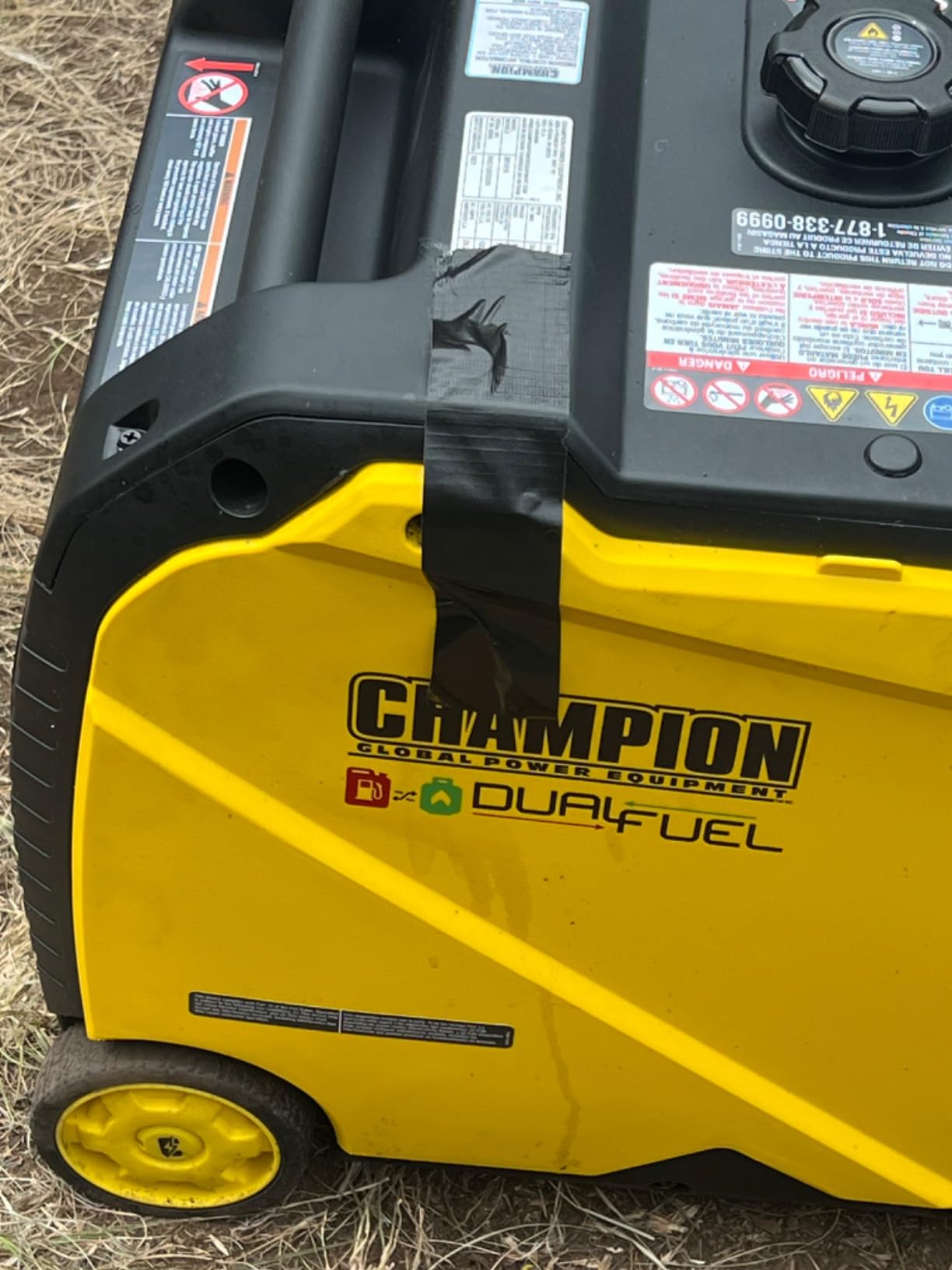
The reason to pick this Champion over the 4000 watt model is the electric start. Turning a key instead of pulling a recoil cord changes the morning experience entirely, and it is the feature commercial users mention first in the reviews.
Power output is 3,500 running watts on gasoline and 3,150 on propane, from a larger 212cc four-stroke engine that reviewers say delivers smoother power delivery than smaller displacement engines under sustained load. The 2.25 gallon tank lists 14 hours on gas and 21 hours on propane.
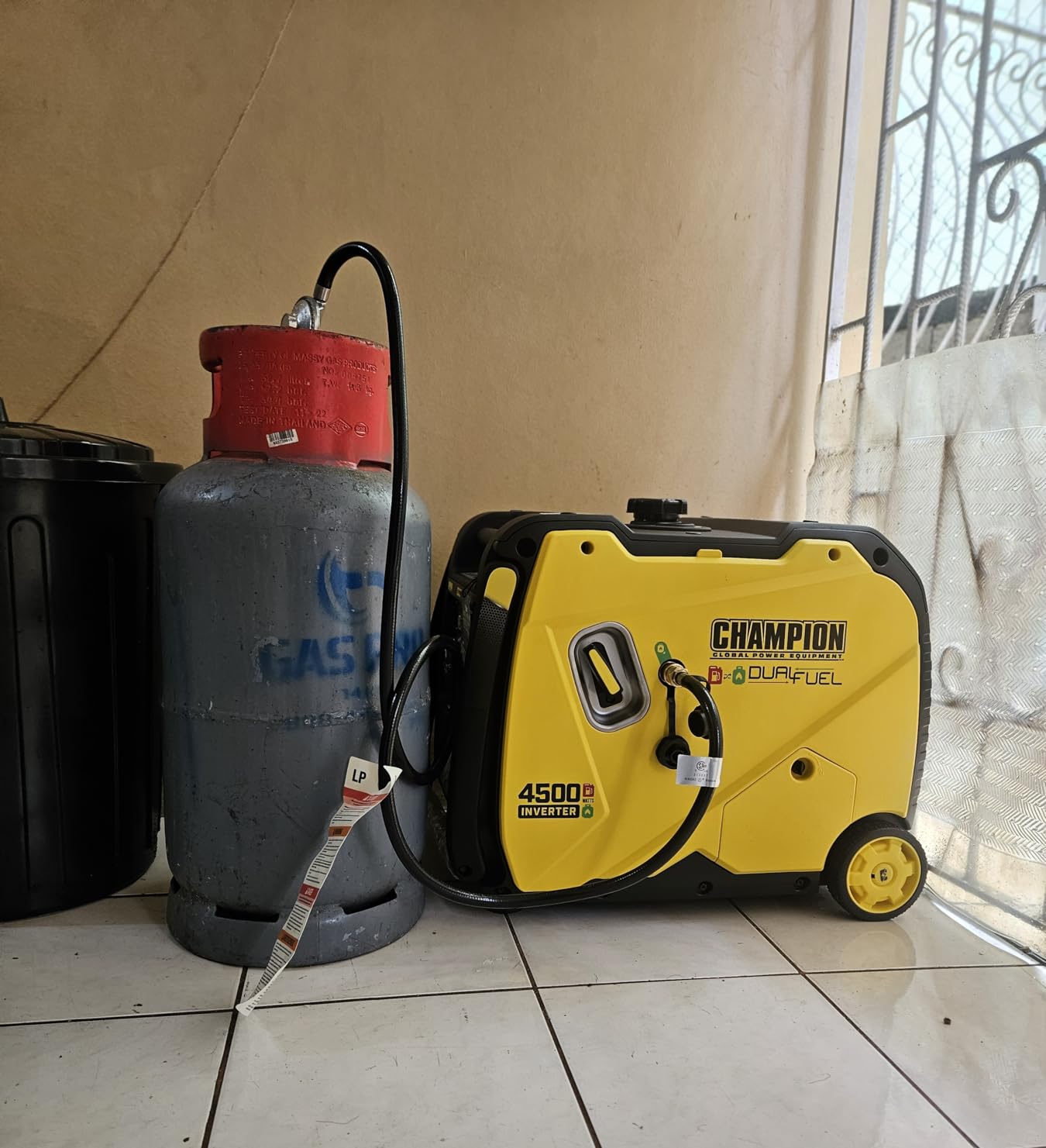
CO Shield handles carbon monoxide shutdown, and the Intelligauge with power meter displays voltage, frequency, and run hours, which turns a trip into a maintenance schedule instead of a guess. Parallel ready gives you a path to more output without replacing the unit.
At 99.2 pounds and 23.2 by 17.7 by 20.1 inches, this is a heavy machine. The spec sheet lists 50 Hz frequency, which is almost certainly a listing error for US models, but check the unit label when yours arrives.
Best for full-time and cold-morning use
Full-time RVers and anyone boondocking through a shoulder season will value the electric start and the runtime figures more than the weight. The propane runtime of up to 21 hours means fewer wake-ups to refuel, and commercial operators running food trucks report long-term satisfaction with the durability.
Where the extra capability costs you
Nearly 100 pounds is a serious load for a small trailer, and combined with a full battery bank and gear it can push you past the tongue weight limit. Two outlets is also thin, so budget for a power strip if you are running several small devices directly.
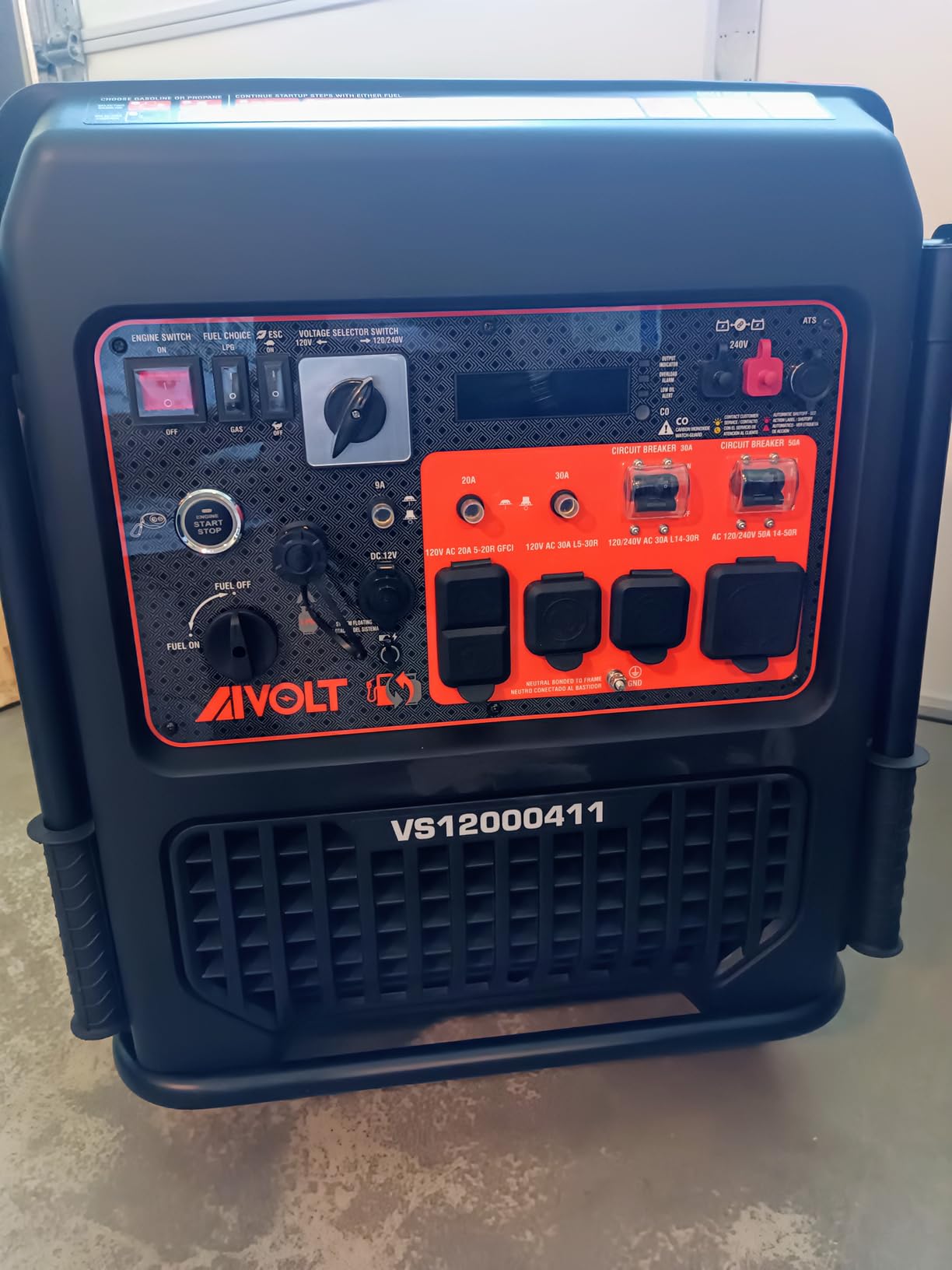
8. AIVOLT 8000W Dual Fuel Inverter: Only 50 Amp Outlet in the Group
AIVOLT 8000W Dual Fuel Inverter Generator 50A RV Generator
6100W running
8000W peak
Dual fuel
130.7 lbs
3.6 gal tank
62 dBA
Pros
- Only unit here with a 50 amp RV outlet and 120V to 240V output
- 6100 running watts covers two rooftop air conditioners
- Automatic fuel switching between gasoline and propane
- Electric start with a cold weather lithium battery rated to -4F
- CO Alert shutdown plus never-flat wheels and a telescopic handle
Cons
- 130.7 lbs is the second heaviest pick
- 14 percent of reviews are 1 star with reports of carburetor and fuel system defects
- Some owners report output below advertised specs under load
- 62 dBA is louder than the compact inverters
- Only a 2 year warranty
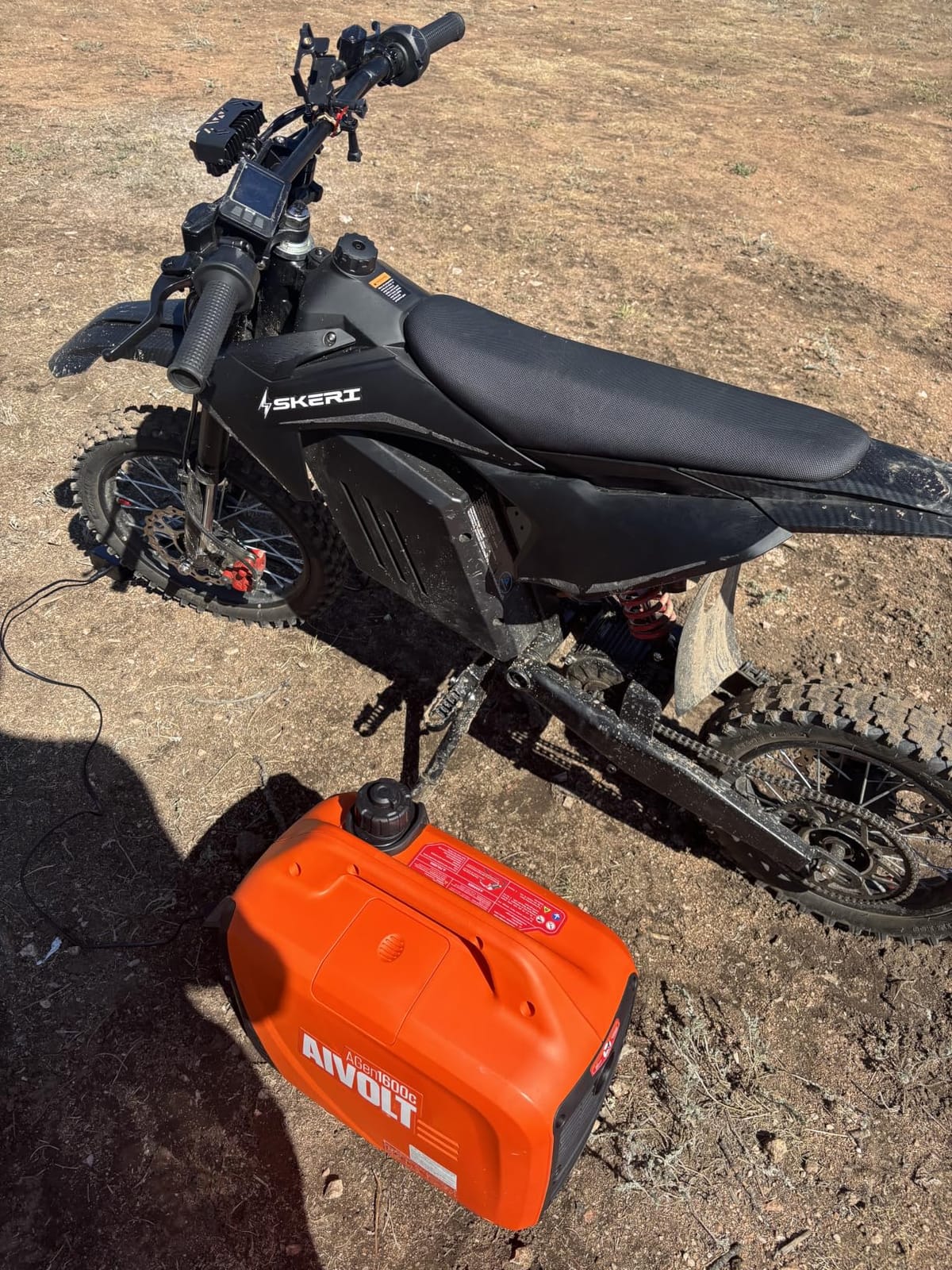
This is the only portable machine in our list with a genuine 50 amp RV outlet and 120V to 240V output. That single fact decides the audience: large Class C motorhomes, 40 foot fifth wheels, and Class A rigs with dual air conditioning.
With 6,100 running watts and 8,000 peak from a 322cc four-stroke engine, it has the headroom to run two rooftop air conditioners plus a full household of appliances. Automatic fuel switching means you can move between gasoline and propane without shutting anything down.
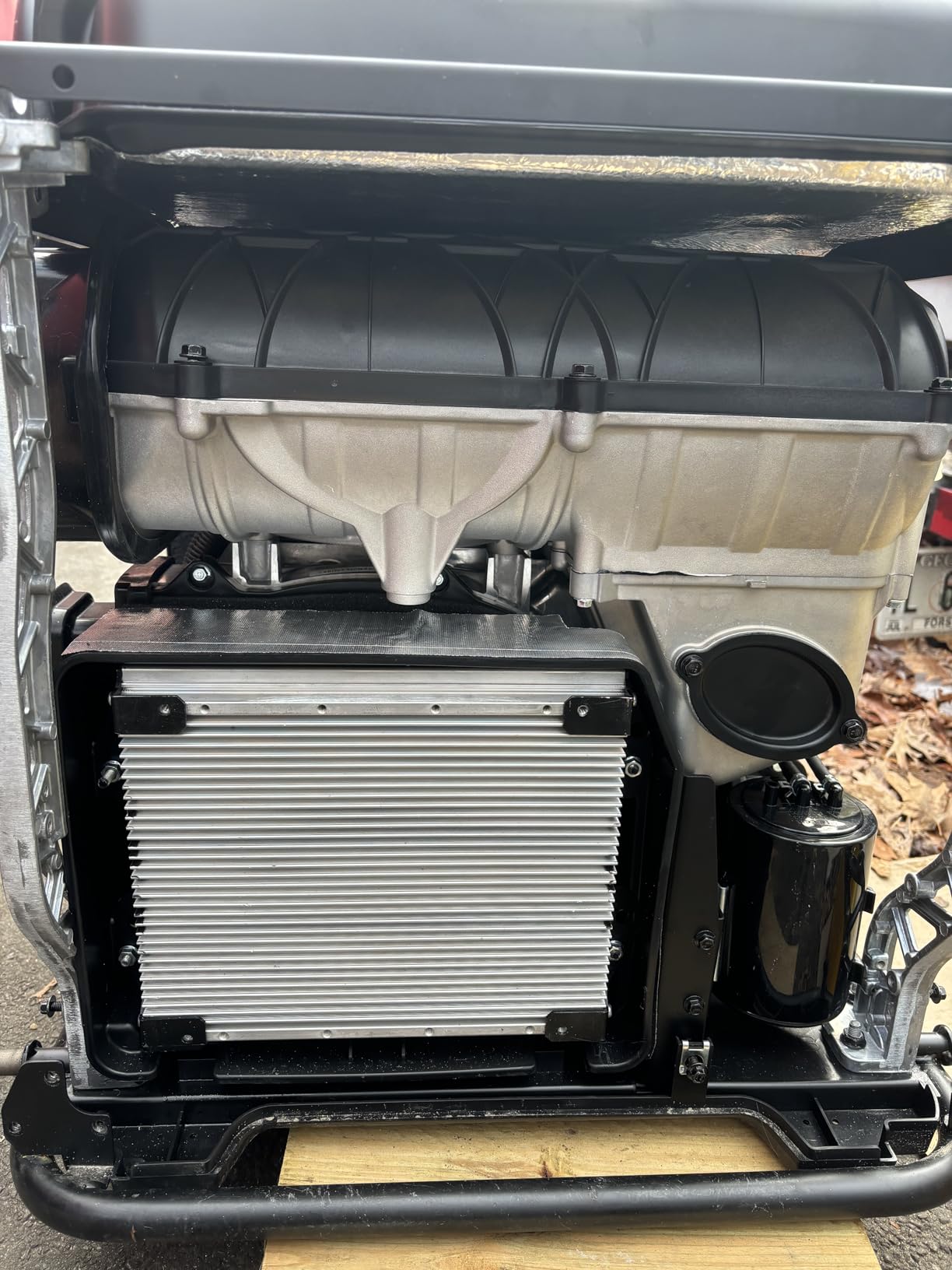
Electric start runs on a lithium battery rated from negative 4 degrees Fahrenheit to 140, which matters for fall and winter boondocking. The 5-in-1 LCD displays fuel, voltage, and runtime, and CO Alert shuts the engine down on dangerous carbon monoxide levels.
Reviews also note never-flat wheels and a telescopic handle, which is essential at 130.7 pounds. The 3.6 gallon tank lists 10 hours of runtime, and parallel capability lets you combine two for a much larger rig.
Who actually needs this much power
If you own a 50 amp rig, this solves the problem every other pick here creates. RVers on Forest River Forums put the amp math plainly: a 30 amp outlet caps you at 3,600 watts, a 50 amp outlet gives you 12,000 watts, nearly three times as much. This is the only machine in the roundup that can deliver on that number.
The reliability caution
About 14 percent of reviews are 1 star, and the recurring complaints are carburetor and fuel system defects, units that will not run on propane, and output that falls short of advertised figures under sustained load. Customer service is responsive for some buyers and frustrating for others, and the 2 year warranty is the thinnest here, so keep documentation and test the unit fully before your first long trip.
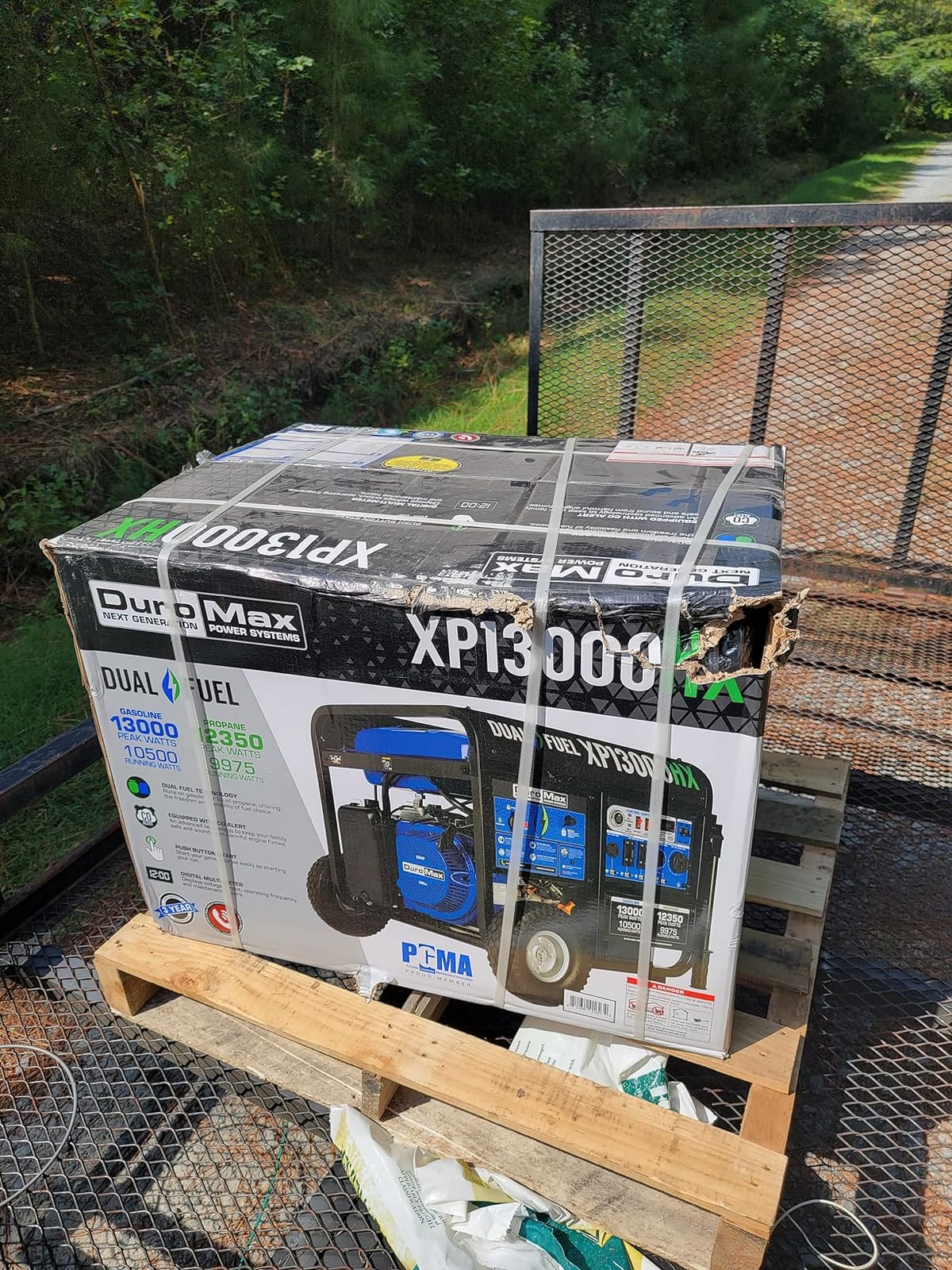
9. DuroMax XP13000HX 13,000-Watt Dual Fuel: Home Backup, Not a Trailer Mate
DuroMax XP13000HX 13,000-Watt Dual Fuel Portable Generator – Gas & Propane, Electric Start, Whole Home Power Backup, Transfer Switch Ready, RV & Emergency Ready
10500W running
13000W peak
500cc engine
245 lbs
5 yr warranty
Pros
- 10500 running watts covers an entire home or a very large RV
- Transfer switch ready 50A outlet for permanent installation
- 5 year manufacturer warranty is the longest in this group
- CO Alert protection and front facing fuel selector
- All copper windings and a wheel and handle kit
Cons
- 245 lbs makes it essentially stationary rather than portable
- 30 by 29 by 26 inch footprint is enormous
- Conventional design means noisier and less clean power than an inverter
- Higher fuel consumption
- Listed 0.5 gallon tank appears to be a listing error
Let us be direct about where this machine belongs. At 245 pounds and 30 by 29 by 26 inches, the XP13000HX is not going into a travel trailer. It is a home and large-rig backup unit, or a permanent installation in a motorcoach bay or barn.
What it delivers is real: 10,500 running watts and 13,000 peak from a 500cc overhead valve engine with all copper windings, and a transfer switch ready 50 amp outlet that lets a licensed electrician wire it to your panel correctly.
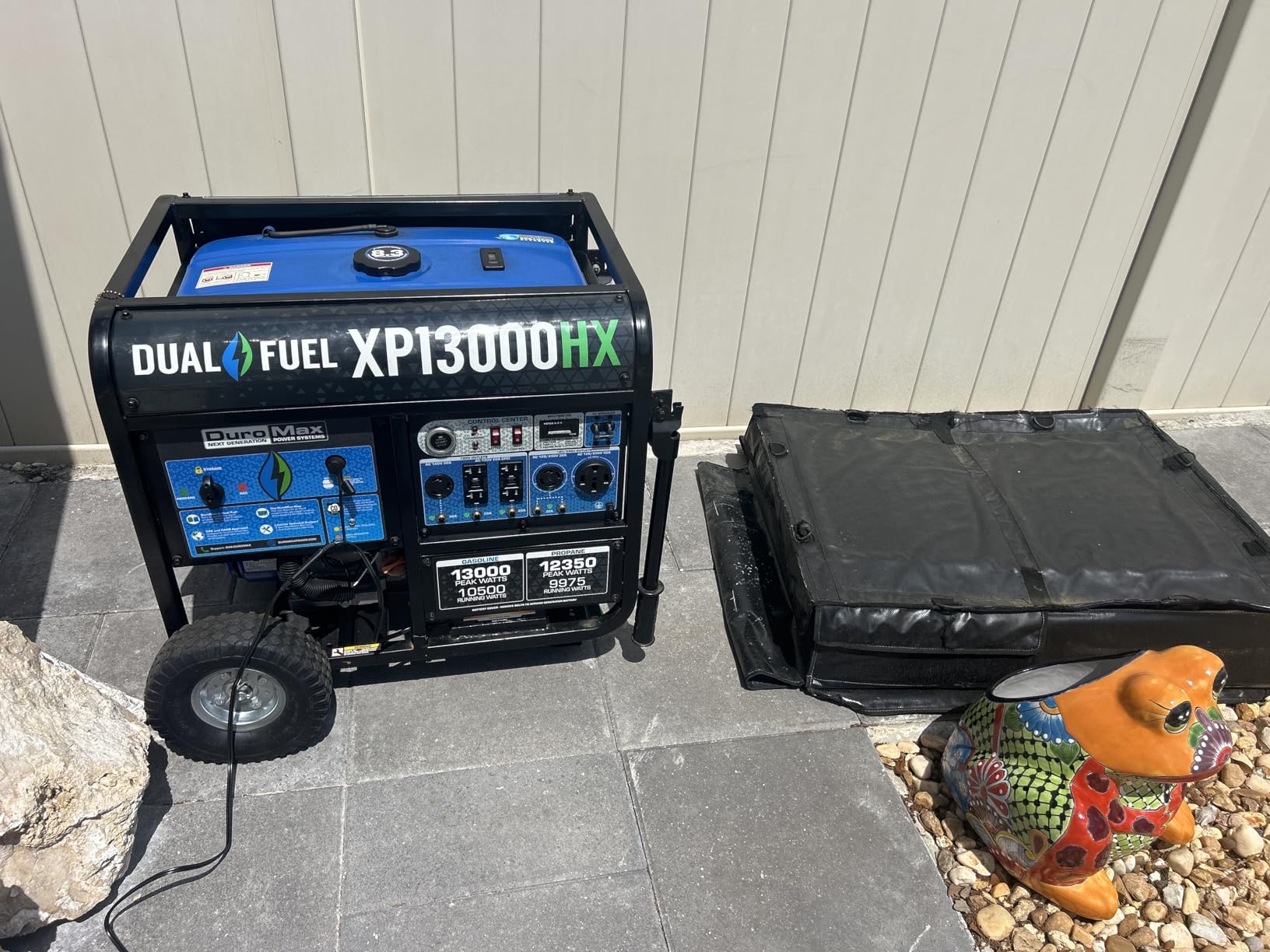
The outlet panel is the most complete here: four 120V GFCI receptacles, a 30 amp 120V, a 30 amp 120/240V twist-lock, and the 50 amp 120/240V connection. Push button electric start and a digital display round out a package aimed at whole-home backup.
The 5 year manufacturer warranty is the longest coverage among these picks, which matters for a machine expected to run for years. Runtime is listed at 17 hours.
Where it makes sense
A family that boondocks in a large Class A or uses the same unit for house outages gets enormous value here. If your power plan is home backup rather than camping, this class of machine answers needs that a 4,000 watt inverter simply cannot touch.
Why most boondockers should skip it
Conventional generators are louder and produce dirtier power than an inverter, and reviewers note higher fuel consumption. Hauling 245 pounds is also a payload problem rather than a strength, and the listed 0.5 gallon tank is almost certainly a data entry error worth confirming with the seller.
10. AIVOLT 4300W Dual Fuel Quiet Inverter: Longest Propane Run in the Roundup
AIVOLT 4300W Dual Fuel Inverter Generator 53dB Quiet for RV Camp Home
3300W running
4300W peak
53 dBA
64 lbs
34 hr propane runtime
Pros
- Quietest rated figure among the dual fuel picks at 53 dBA
- 34 hours of propane runtime at 25 percent load
- 11.5 hours on gasoline from the same tank
- Remote and electric start with a key fob
- CO auto shutoff with UL 2201 and EPA certification
- Dedicated 30 amp RV outlet and parallel ready
Cons
- About 12 percent of reviews are 1 star with carburetor and propane failure reports
- Output may fall short of advertised specs under load
- 64 lbs is heavier than the compact gas inverters
- 2 year warranty only
- Only 1 outlet is listed in the specifications which appears incomplete
The headline number here is runtime. With a large fuel tank and a rated 34 hours on propane at 25 percent load, this is the pick for long stays where you do not want to wake up at 3 a.m. to refuel.
Power is 3,300 running watts with 4,300 peak, which covers a 13,500 BTU rooftop air conditioner plus a refrigerator, lights, and a microwave in sequence rather than all at once. The 53 dBA rating is the quietest among the dual fuel machines here.
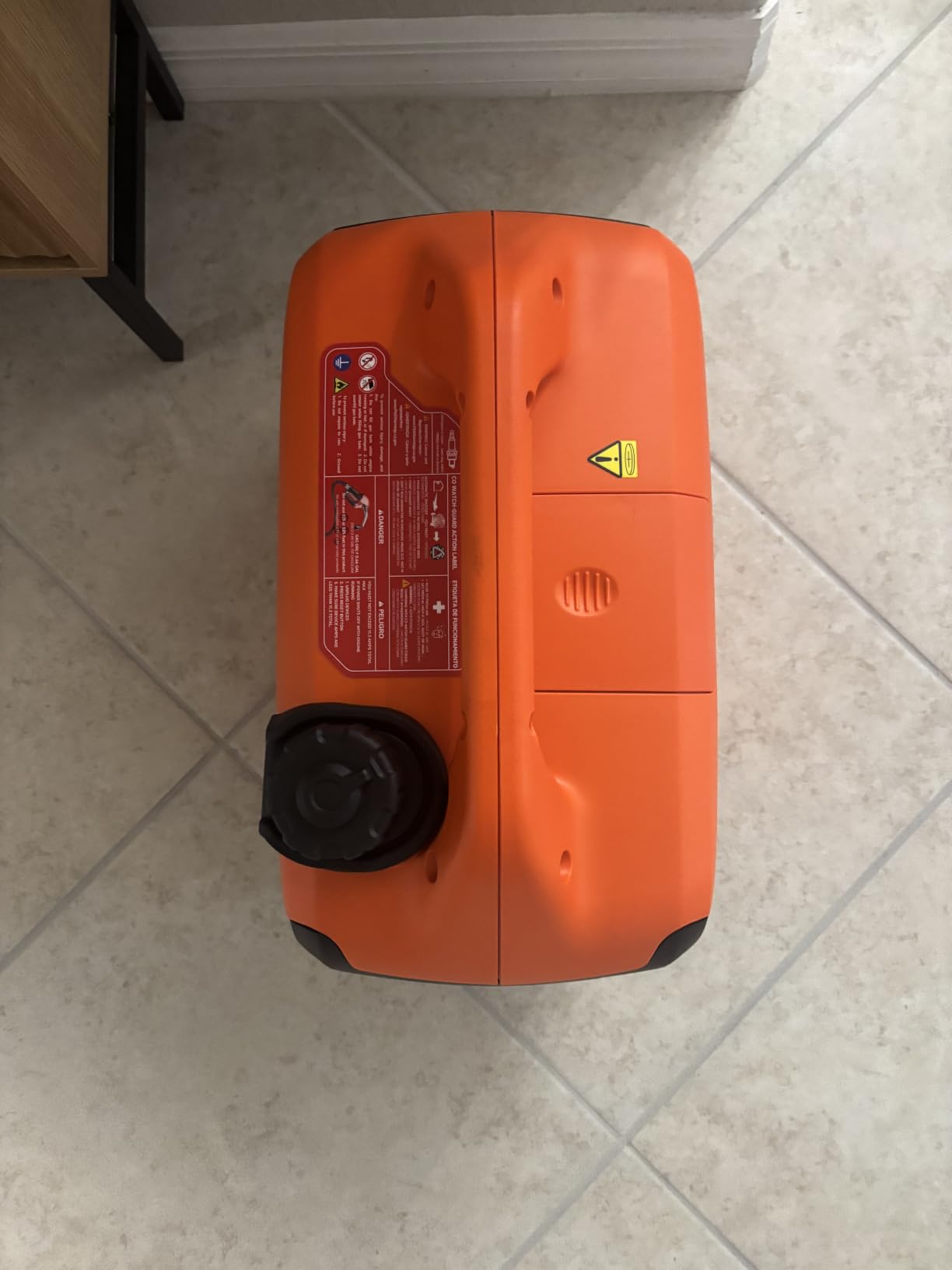
Remote and electric start with a key fob means you do not have to go outside to power on, and the dedicated 30 amp RV outlet plugs your rig straight in. CO auto shutoff, UL 2201 and EPA certification, and parallel readiness cover the safety basics.
At 64 pounds with wheels and a telescoping handle, it is heavier than the compact gasoline inverters but still a manageable single-unit load for two people.
Best for extended stays on propane
Month-long boondockers and winter campers who want minimal refills will find the 34 hour propane figure genuinely useful, and the 11.5 hour gasoline figure covers a normal weekend on one tank. Quiet operation also makes it easier to run early and late without annoying a campsite neighbor.
What the reviews warn about
About 12 percent of reviews are 1 star, and the pattern matches the larger AIVOLT in this roundup: carburetor and fuel system defects, and units that fail to run on propane. Several owners also report output that does not meet the advertised rating under heavy load, so if your air conditioner is marginal, test before the trip and keep the 2 year warranty paperwork.
How to Size a Generator for Boondocking
Size by running watts, not peak watts. Peak watts describe the brief surge a motor needs to start; running watts describe what the machine sustains. If you size on peak numbers, you will overspend and haul more weight than you need for the entire trip.
Start by listing the appliances you will run at the same time. A 12V compressor refrigerator averages 150 to 400 watts with a much higher start surge, a 13,500 BTU rooftop air conditioner pulls roughly 1,200 to 1,600 running watts, a 15,000 BTU unit runs closer to 1,800, and a microwave can spike past 1,000 watts while heating. Add them, then apply the rule.
The 80% continuous load rule, with a worked example
The 80% rule means you should not plan to run a generator at more than 80 percent of its rated running output continuously. Generators produce less at high altitude, and running them near their limit shortens engine life, raises heat, and leaves no headroom when an appliance kicks on unexpectedly.
Here is the arithmetic. Assume a 15,000 BTU rooftop air conditioner at 1,800 watts, a refrigerator at 300 watts, and a 1,000 watt microwave. That is 3,100 watts of simultaneous load. Divide by 0.80 and you need a machine rated at 3,875 running watts, so a 4,000 watt rated unit is the minimum and a 4,500 watt model gives you comfort margin. The same calculation with only the air conditioner and the refrigerator comes to 2,625 watts, which is why a 3,000 watt rated inverter handles smaller rigs.
Then subtract for altitude. Gasoline and propane engines lose roughly 3 percent of output per 1,000 feet above sea level. At 7,000 feet in places like Grand Tetons or Yellowstone, a 4,000 watt unit is effectively delivering about 3,100 watts, which is the single most common reason a well-sized generator bogs down in the mountains.
30 Amp vs 50 Amp RV Service Explained
The amp rating on your rig decides how big your generator must be, and this is where most first-time buyers go wrong. Owners on Forest River Forums put it plainly: a 30 amp outlet limits you to 3,600 watts, while a 50 amp outlet gives you 12,000 watts, nearly three times as much. A 50 amp camper does not automatically need a huge generator, but it does need one that can deliver its full service.
A 30 amp rig needs roughly 3,000 to 4,000 rated watts to run one rooftop air conditioner comfortably. A 50 amp rig with dual air conditioning and a full appliance load generally wants 5,000 running watts or more, which is why the only 50 amp unit in our roundup is also the only one rated at 6,100 running watts.
Can you plug a 50 amp RV into a 30 amp generator? Not directly, and not safely. A 50 to 30 amp adapter is a hard plastic shortcut that leaves the RV permanently drawing more current than the generator can deliver, which overheats the plug, the adapter, and the wiring. The correct solutions are a generator rated for 50 amps, two smaller generators in parallel, or an installed transfer switch feeding a properly sized breaker.
Never backfeed your RV through its shore power socket without a listed transfer switch. Generators output floating neutral and ground, and the wiring in many rigs is not arranged for that. If you want the convenience of powering interior outlets directly from a generator, budget for a professionally installed transfer switch with a mechanically interlocked disconnect.
Portable vs Built-in RV Generators
Every unit in this roundup is portable, and that is a deliberate choice for boondockers. A built-in RV generator, the Onan and Cummins Onan type units fitted to Class C and Class A rigs, is a different purchase with a different logic. They run on the vehicle’s existing fuel system, mount permanently, and cost several times more than anything on this list.
Built-ins make sense when you own the rig for a decade, run full-time, and want power available without unloading anything from a storage bay. They are quieter than conventional portable units because they are purpose-built, and they are wired correctly into the RV from the factory.
Portables win on flexibility, which is the defining word for boondocking. You can move the generator away from the trailer for extra distance, take it to a second site, service it yourself, or replace it without touching the RV. For someone who rents, travels in an older trailer, or changes rigs, a portable inverter is the far more practical answer.
Gas vs Propane vs Dual Fuel for Boondocking
Gasoline gives the longest runtime per tank and is the easiest fuel to find, but it degrades in storage and gums up carburetors after a season. Propane stores indefinitely, burns cleaner, and keeps a carburetor clean, yet its lower energy density means shorter runtime per pound and cylinders that can score threads on a neglected unit.
Runtime is where dual fuel earns its place. The Champion 4000 lists 10 hours on gasoline and up to 25 hours on propane, and the AIVOLT 4300 lists 11.5 hours on gas against 34 hours on propane. The Westinghouse iGen5000DF gives you up to 18 hours on a 3.4 gallon gasoline tank. For a two-week boondock, that is the difference between two fuel decisions and none.
Diesel deserves a mention for full-time users. It is more fuel efficient per hour, has longer service intervals, and holds up well in cold weather, but it costs more, is heavier, and is harder to find at a rural station. For a weekend boondocker, diesel adds friction without adding much.
One practical warning from owner reports: dual fuel units sometimes perform poorly or fail outright when propane is hard to source far off the grid. That argues for carrying a full gasoline tank as insurance, which most boondockers do anyway for the tow vehicle.
What Real Owners Report About Long-Term Reliability
Owner forums are where the useful long-term data lives, and the patterns are consistent. Owners repeatedly recommend Honda and Champion inverter units as the quiet, reliable default. On Grand Design Owners Forums, the praise for Honda inverter models centers on how the eco mode idles down, and on RV Forum threads owners report years of satisfaction with 3,000 watt Champion and Generac inverter units with remote start.
The Harbor Freight Predator is a frequently named value pick, and owners who like it tend to like the whole brand. Diesel gets endorsed on efficiency grounds in boondocking threads on iRV2, and a Champion dual fuel remote start unit is the most common all-round recommendation across those same discussions.
Against that, failure modes show up by brand. Champion units draw reports of fuel system and starting problems, Honda units draw comments about premium cost and parts availability rather than breakdowns, and the AIVOLT models in this roundup show the highest proportion of 1 star reviews with carburetor and propane-related complaints. The parallel operation question comes up repeatedly too, with owners on Keystone Forums noting that two smaller generators present a 50 amp outlet but mean two oil changes, two air filters, two spark plugs, and twice the theft surface.
Boondockers also note the practical reality that dispersed sites along maintained Forest Service roads work fine for standard generators, provided you can live with the noise. If quiet hours are a concern, that is the point where a solar power station for background charging plus a generator for the air conditioner becomes the smarter setup.
Boondocking Safety and Quiet Etiquette
Yes, you can run a generator while boondocking, but placement is the whole ballgame. Set the unit at least 5 to 10 feet from the RV, point the exhaust away from openings, windows, and anything combustible, and never run it inside an awning, a slide-out, a screen room, or a vehicle compartment. A pop-up canopy is not ventilation.
Carbon monoxide is odorless and lethal, which is why the CO sensor and CO-MINDER or CO Shield style shutoffs on these units matter. The second layer is a battery or plug-in CO alarm inside the trailer. Never run a generator while sleeping, and treat any generator that has been modified with a removal of a safety shutoff as unsafe.
Quietness is a courtesy issue, not just a comfort one. Check the campground, national park, and Forest Service dispersed campsite rules before departure, because many sites restrict generator hours or ban them outright. Aim to finish noisy runtime early in the evening, keep the unit downwind of neighboring camps, and use the smallest unit that does the job, since a bigger machine running at partial load is louder than a smaller one working.
Then think about theft and weather. A generator left in an open truck bed at a dispersed site is a target, so use a locking cable and never leave fuel in the tank. Run the unit on level ground, use a manufacturer-approved rain cover only when the engine is off, and make sure your first 20 to 30 hours are a break-in run at half load with no heavy appliances attached.
Finally, budget for maintenance rather than treating the generator as disposable. Change the oil after the first few hours and every 50 running hours or annually, clean the air filter more often in dusty desert sites, and check the spark plug once a season. Most of the common problems reported for budget units are neglected fuel systems, not bad engines.
Frequently Asked Questions
Can you run a generator while boondocking?
Yes. A portable generator is the normal way to power a rooftop air conditioner, microwave, and refrigerator at a site with no pedestal. Plug your 30 amp RV into the generator’s TT-30R outlet directly, or use a professionally installed transfer switch for interior power. Keep the unit at least 5 to 10 feet from the RV, exhaust pointing away, and check campsite quiet hours first.
What is the 80% rule for generators?
The 80% rule says a generator should not run continuously above 80 percent of its rated running output. Add your simultaneous loads, divide by 0.80, and size from there. A 15,000 BTU rooftop air conditioner at 1,800 watts plus a 300 watt refrigerator plus a 1,000 watt microwave is 3,100 watts, which means you need a unit rated at roughly 3,875 running watts.
How big of a generator do I need to run a 30 amp RV?
For a 30 amp RV, a 3,000 to 4,000 watt rated inverter handles one rooftop air conditioner, a refrigerator, lights, and battery charging. Apply the 80 percent rule and subtract about 3 percent output per 1,000 feet of altitude. A 50 amp rig generally wants 5,000 running watts or more to carry dual air conditioners.
Will a 4000 watt generator run a 30 amp RV?
Yes, if 4,000 watts is the rated running figure rather than the peak or surge number. At 80 percent continuous load that leaves about 3,200 usable watts, enough for a 13,500 or 15,000 BTU rooftop air conditioner plus a refrigerator and lights, but not a heavy electric heater or two air conditioners at once.
Which is better for RV camping, Honda or Champion?
Honda is generally regarded as the quieter and more refined inverter with cleaner output, a Bluetooth app, and CO-MINDER shutoff, but it costs more and the EU2200i does not sell in California. Champion covers a wider power range, most models run gasoline and propane, and CO Shield shutoff is standard. Owners on RV forums frequently recommend either, with Champion favored for dual fuel flexibility.
What are the most common problems with Champion and Honda generators?
Champion owners most often report starting and fuel system issues, plus the fact that some models are noticeably louder than Honda at the same wattage and need a gasoline break-in before propane use works. Honda units draw far fewer failure reports and more complaints about cost and parts availability. On both brands, neglected oil changes and stale fuel cause more failures than any design fault.
The Verdict on the Best RV Generators for Boondocking
The best RV generators for boondocking are not the biggest ones, they are the ones that match your load, your payload, and your campsite neighbors. Start with the Honda EU2200i if you run only 12V essentials and want the quietest, lightest option. Move up to the Westinghouse iGen5000DF or the Champion 4000 watt dual fuel if a rooftop air conditioner is part of the trip.
Go bigger only when the math demands it. The AIVOLT 8000W is the pick for 50 amp rigs with dual air conditioning, and the DuroMax XP13000HX is a home backup machine rather than a camping companion. Whatever you choose, run the 80 percent calculation with your actual appliance list, subtract for altitude, and check the quiet hours before you leave pavement.
Test the unit fully before the first trip, keep a battery CO alarm inside the trailer, and give it a break-in run at half load. As 2026 moves on, these inverter platforms keep improving while the sizing math stays exactly the same.