
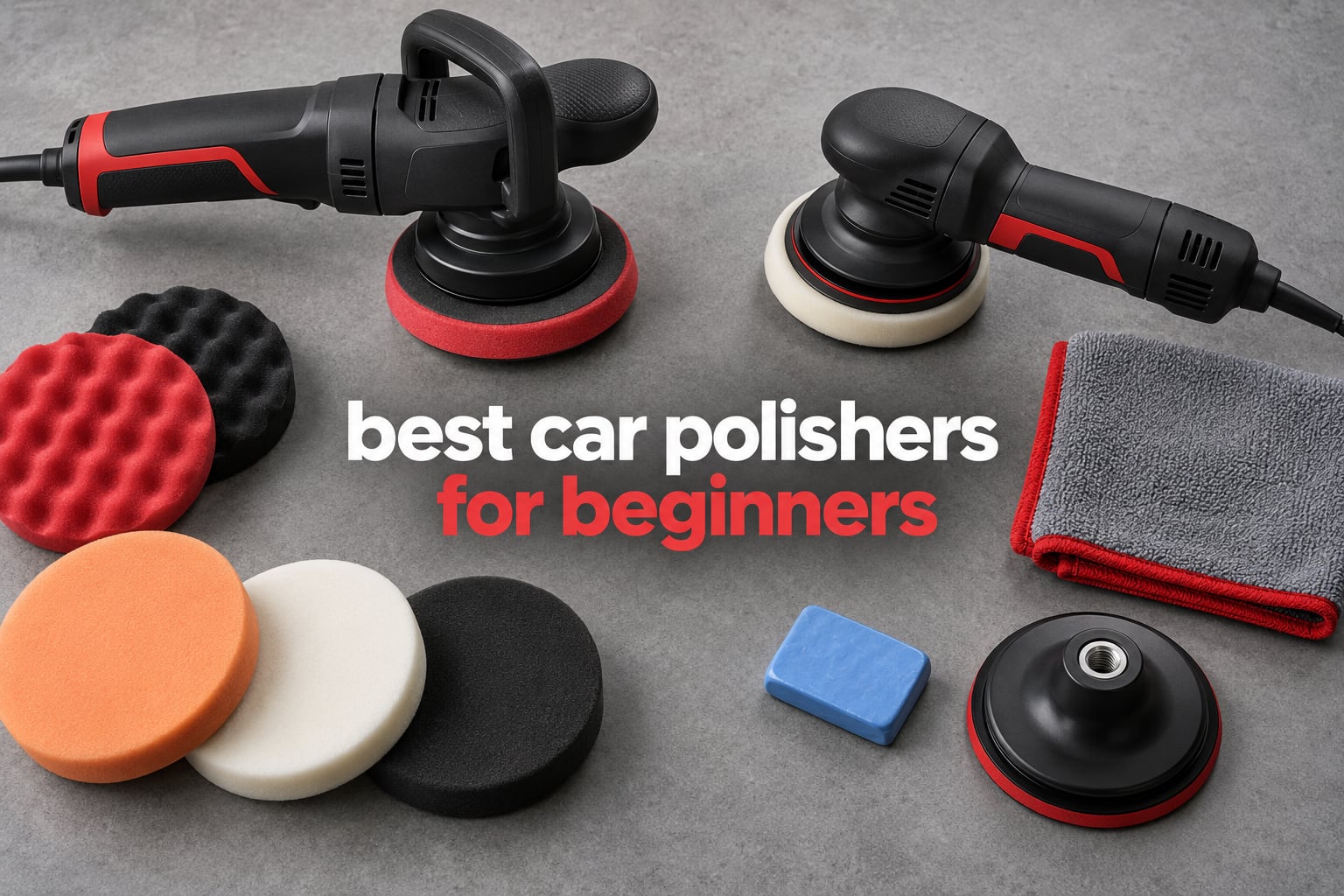
The number one thing stopping most people from machine polishing their own car is not the price. It is the fear of burning through the clear coat and putting a permanent swirl into their paint. That fear is real, but it is almost entirely a function of which machine you buy, and for a first correction the answer is narrower than most roundup pages suggest.
This guide covers the best car polishers for beginners, and every machine below is a random orbital dual-action design rather than a rotary. We spent weeks comparing throw size, speed range, weight, backing plate size and what actually arrives in the box, because the gap between a cheap waxer and a full correction machine is not subtle. We also worked through the beginner-specific questions that most roundups skip: what pads to buy, how much product to use, and what to do on your first panel.
Everything here is corded electric. That is not a shortcut. Corded polishers deliver uninterrupted power at the plug, and every machine on this list runs from a standard household outlet without a battery platform or charger to buy first. If you already own batteries on a tool platform, a cordless polisher can make sense, but for a first correction the constant power of a corded machine is easier to learn on.
One honest note before we start: if your paint is already reasonably clean and you just want more gloss, a hand application and a sealant will get you most of the way. A polisher earns its place when you want swirl marks gone across a whole panel evenly, or when you are prepping a car for ceramic coating. We cover that trade-off properly in the buying guide below.
Table of Contents
Why a Dual-Action (DA) Polisher Is the Right First Machine
A dual-action polisher spins the pad and simultaneously orbits it around an offset axis, so the pad’s path changes constantly instead of tracing one fixed circle. That randomness is exactly what makes it the correct first machine, for two reasons that matter more than any spec on the box.
Safe correction: Because the pad never traces the same line twice, heat and friction spread evenly across the panel instead of concentrating in one spot. That is why a DA will not cut through clear coat in the handful of passes a beginner manages on a panel, while a rotary at the same speed can leave a soft patch or a hologram you cannot polish out.
Stall control: If you press too hard, the free-spinning eccentric stalls and simply slows down rather than grinding into the paint. A stalled DA costs you a minute. A rotary in the same situation drills a gouge, and once clear coat is gone it does not come back.
That is the whole argument for a beginner. You are buying margin for error, not maximum cutting power. Maximum power is a good thing once you can already control it.
Top 3 Picks for Beginner Car Polishers in 2026

Chemical Guys TORQX Kit
- 700W motor
- 8mm random orbital throw
- 9-piece kit with pads and compounds

Best Car Polishers for Beginners (October 2026)
The full lineup, with what each machine brings to a first correction. Key features are pulled straight from the manufacturer data for each unit.
| Product | Specs | Action |
|---|---|---|
| Chemical Guys TORQX Kit |
|
Check Latest Price |
| PORTER-CABLE 7424XP |
|
Check Latest Price |
 Griot’s Garage G9 Griot’s Garage G9 |
|
Check Latest Price |
 BLACK+DECKER WP900 BLACK+DECKER WP900 |
|
Check Latest Price |
 SPTA DAPSET-US 24-Piece Kit SPTA DAPSET-US 24-Piece Kit |
|
Check Latest Price |
 AOBEN AT3501 AOBEN AT3501 |
|
Check Latest Price |
 AVID POWER AEP176 AVID POWER AEP176 |
|
Check Latest Price |
 WEN 6010 WEN 6010 |
|
Check Latest Price |
1. Chemical Guys TORQX 9-Piece Kit: the machine that comes with everything else you need
Chemical Guys, TORQX Random Orbital Polisher Kit, 800W Motor, 9-Piece
700W motor
8mm random orbital throw
9-piece kit with pads, polishes and compounds
Pros
- Only machine here that ships with pads polishes and compounds
- so a first correction needs no extra shopping
- 700W motor has headroom for light compounding as well as waxing
- 8mm random orbital throw gives smooth controlled passes
- Balanced weight and simple controls stay comfortable over long sessions
- Handles paint clear coat headlights and wheels
Cons
- Most expensive machine in this lineup
- Kit consumables run out and have to be replaced later
- Permanently attached cord has no quick release
The single biggest reason to start here is the box. A 9-piece kit means the machine, pads, polishes and compounds all arrive together, which is precisely the mistake first-timers make when they buy a machine and then stall at the accessories page wondering what compound goes with which pad.
The machine itself is an 8mm throw random orbital with a 700W motor. An 8mm throw sits in the light-correction end of the range, so expect it to soften swirl marks and haze and to pull an oxidised or slightly neglected panel back to gloss rather than to strip heavy defects off a neglected car in one pass.
Across more than 6,400 reviews at 4.6 stars, the praise concentrates on completeness and ease of handling rather than outright aggression. Reviewers also note that the kit is sold as a package, so once you burn through the pads and compound you are buying replacements separately rather than returning to the same kit.
The machine itself runs corded with the cable permanently attached. Reviewers on detailing forums single out permanently attached cords as a long-term durability concern, since a failed cable can effectively retire the tool. Griot’s G9, covered below, uses a quick-connect cord and is the safer long-term buy on that one point.
What tells you this kit is the right fit
If you have never polished before, the accessories are the real product. Every other machine here needs at least one foam pad, one compound and a few microfiber towels before it does anything, and a lot of first attempts go wrong because the pad/compound pairing is wrong rather than because the machine is wrong.
At 8mm throw, this machine also behaves predictably on curved body panels. Long-throw machines are marketed as faster, and they are on a flat hood, but they stall constantly on a bumper or a roof-to-door transition while a beginner is still learning how to move a machine.
Where the kit falls short
It is the most expensive option here, and the price gap matters more when you are new. If your total budget for getting started is tight, the same money spent on a cheaper machine plus a couple of good pads and a one-step polish will get you a better result, because the consumables are what actually touch the paint.
Eight millimetres of throw also caps how aggressive this machine can be. On paint with deep scratches, oxidation or heavy single-stage swirl that has never been touched, it will feel slow, and forcing pressure on it is exactly the beginner mistake to avoid.
2. PORTER-CABLE 7424XP: the widest speed range and the strongest review profile among bare machines
PORTER-CABLE Buffer Polisher, Car Polisher for Car Detailing, 6-Inch, Orbital, Variable Speed (7424XP)
4.5A 540W motor
2500-6800 OPM dial
Counterbalanced 6-inch pad system
Pros
- Wide 2500-6800 OPM dial gives genuine control at every stage of a correction
- Proprietary counterbalance lets a full 6-inch pad run smoothly
- Reviewers report the ball-and-roller bearing build runs reliably for years
- Three-year limited warranty plus a service contract
- Side handle and wrench included for setup
Cons
- Heaviest corded machine here at 5.8 pounds
- AC-only 4.5 amp motor with no battery option
- Ships with no pads or compounds
This is the machine that shows up in almost every experienced detailer’s answer to what a beginner should buy, and it earns that reputation with the speed control. The dial spans 2,500 to 6,800 OPM, which is a wider working range than anything else in this group apart from the AVID POWER.
Why does that matter for a beginner? Because finishing polish, glaze and wax all need low speed, while defect removal needs high speed. On a fixed-speed machine you get one of those correctly and the other two wrong. On this one you can dial down for a finishing pass after cutting, which is how you avoid the haze and hologram marks that make people think their polisher left swirls when the machine was fine.
The counterbalance system is what lets it run a 6-inch pad smoothly. Detailers consistently call out the ball-and-roller bearing construction as the reason these have lasted for years rather than seasons, which is the durability question every first-time buyer should be asking. A three-year limited warranty backs it up.
Why experienced detailers recommend this one
The reason this machine recurs in forum advice for beginners is that it fails gracefully. A 4.5 amp motor on a normal household circuit will simply slow when you press too hard, and the counterbalanced head keeps the pad flat against the panel. On an 8mm throw machine like the TORQX the pad is even more protected, but this one carries more speed range and more torque to spend.
It also works vertically. On a door or a fender you hold the machine flat against a vertical surface, and a well-balanced head is the difference between a smooth pass and the pad drifting, which is how machines scratch clear coat at edges.
What you need to add before the first panel
Pads and compounds. That is the honest catch here, and it is not small. A 6-inch backing plate needs 6-inch foam pads, and you want at least a cutting pad and a finishing pad plus a compound and a polish or one-step.
Weight is the other factor. At 5.8 pounds it is the heaviest corded machine here, and that is fine for a full detail session on a weekend but tiring over a long day. If you will only ever polish small areas, something lighter is easier to control.
3. Griot’s Garage G9: the most capable correction machine in this group
Griot’s Garage G9 Random Orbital Polisher, 1000 W, Variable Speed
1000W motor
9mm orbit throw
6-inch vented backing plate, speeds 2000-6400 OPM
Pros
- 1000-watt motor and 9mm throw make it the most capable correction machine here
- Fan-cooled counterbalance and premium bearings stay smooth under load
- Six speeds from 2000 to 6400 OPM on a dial reachable by either hand
- Converts to a 5-inch pad system for tight panels
- Ten-foot quick-connect cord
Cons
- 5-inch backing plate is an optional extra purchase
- Smallest review base in this lineup
- Premium price for a first machine
The G9 is the enthusiast consensus beginner machine, and it is also the most capable machine on this list. A 1000W motor driving a 9mm orbit throw is a step above the 8mm machines, and that extra throw is what lets it cut rather than only refine.
Between 2,000 and 6,400 OPM across six settings, plus a vented 6-inch backing plate, this is the most flexible machine here for real correction work. If your paint has genuine swirl marks, light oxidation and water spots rather than just haze, this is the one that will address all three in one session.
Reviewers who own this machine describe the load handling and quiet, balanced operation as the standout qualities, which makes sense: the fan-cooled counterbalance is designed to keep speed steady when the pad loads up against the paint. Constant speed under load is what stops a machine from bogging down and burning a patch into a panel.
It also converts to a 5-inch pad system, which matters more than it sounds. A 6-inch pad cannot safely run a rocker panel or the strip between a bumper and a door, so you end up buying the 5-inch plate anyway. Budget for it if you plan to do the whole car.
What makes it worth the extra money
Speed range and throw together. Most machines at this level give you one or the other. The G9 gives you six usable speed settings and the widest throw among the 6-inch machines here, which means you can cut with a compound on a soft pad, polish down, and finish with a glaze without changing machines.
The quick-connect cord is also a genuine long-term advantage. Detachable cables can be replaced; permanently attached ones cannot, and that is the single most common durability complaint reviewers raise about budget machines with fixed cords.
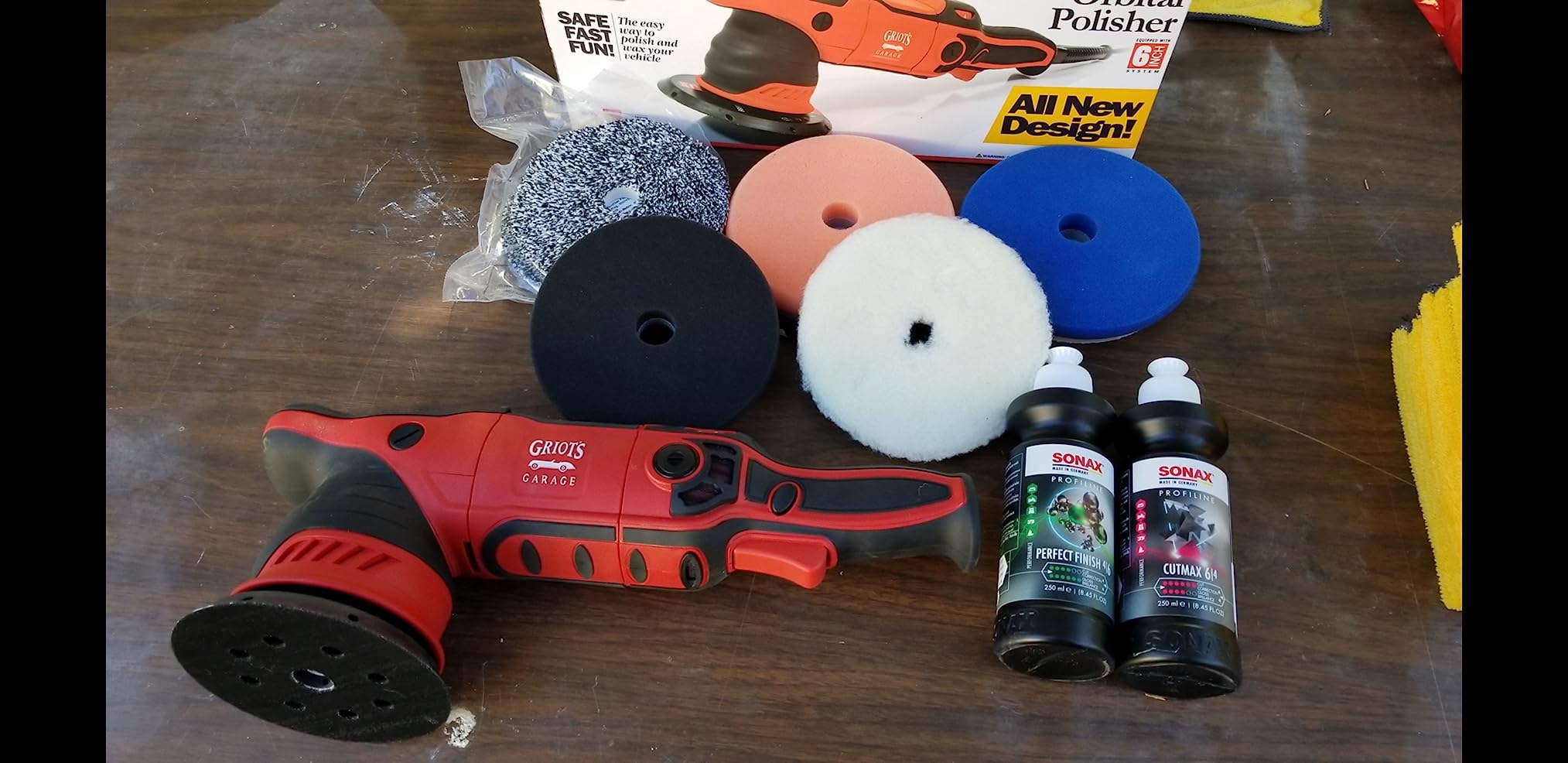
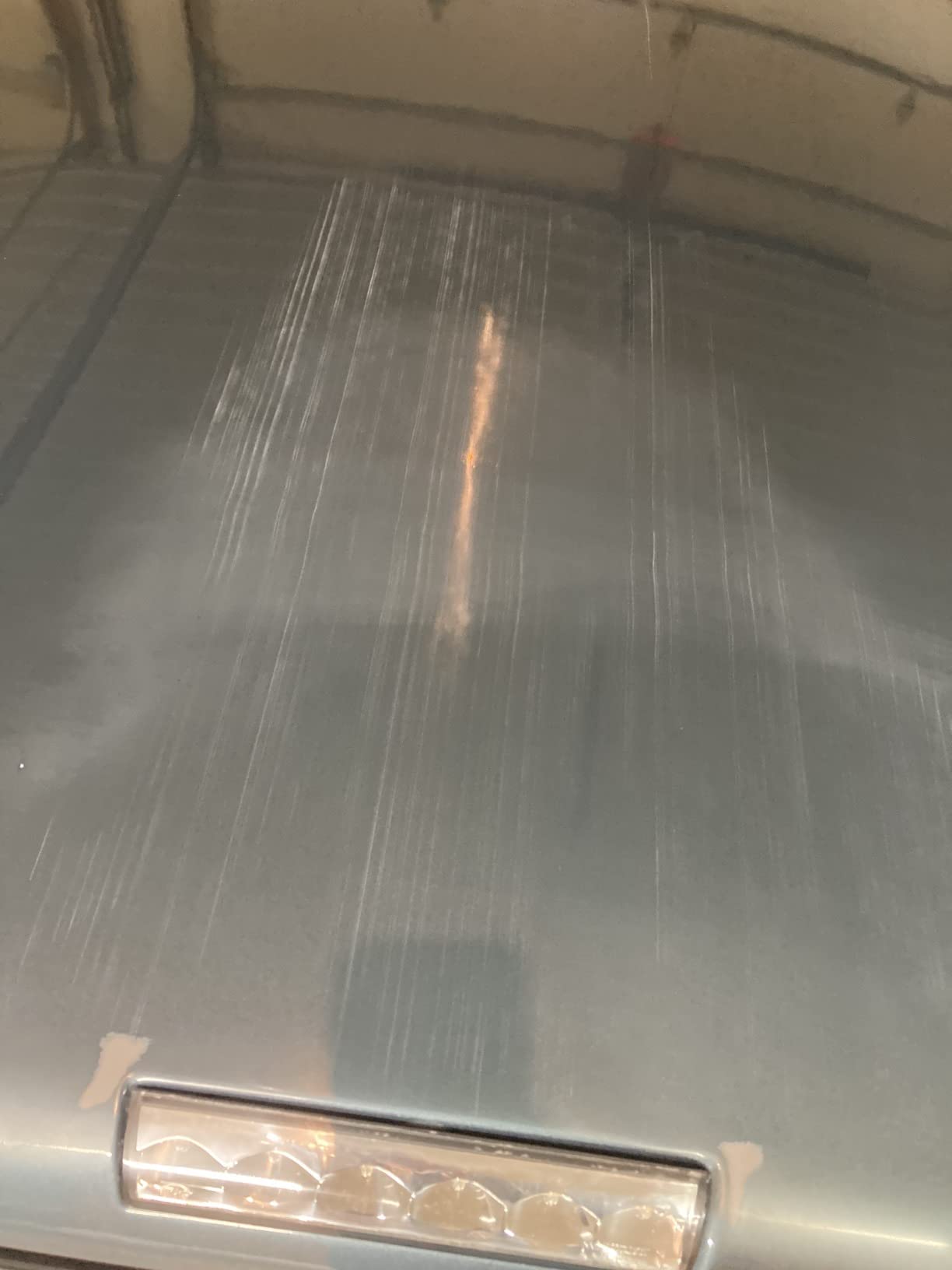
Owner photographs of the machine in use show what the reviews describe: a compact, well-balanced body that fits in one hand at the top and one at the side, which is how you steer a 6-inch pad across a hood without wrist strain.
The vented backing plate is worth a second look. Venting moves heat away from the panel rather than trapping it under the pad, which directly reduces the hazing that beginners report when they first move up from a waxer.
Where it is the wrong choice
If you want to spend as little as possible while you work out whether you enjoy this hobby. It is the premium option here, it comes with no pads or compounds, and it has the thinnest review base of anything on the list at just over 500 reviews, so you have less owner feedback to lean on.
It is also more machine than most beginners need. A short-throw DA is easier to control and far more forgiving, and for removing ordinary swirl marks off a daily driver the lighter machines on this list reach the same finish with less practice.
4. BLACK+DECKER WP900: the dependable budget buffer for wax and light haze
BLACK+DECKER 6″ Buffer Polisher, Orbital Car Polisher with Wool and Foam Bonnets (WP900)
4400 rpm random orbit action
10-foot cord
Two-handle waxer and polisher
Pros
- Random-orbit action gives a uniform swirl-free finish with less haze
- Low vibration keeps hands comfortable over long sessions
- Two-handle design allows control at different panel angles
- Ten-foot cord gives good mobility around a vehicle
- Two-year manufacturer warranty
Cons
- Single-speed operation
- so no control over cut rate
- Included foam applicator bonnet is fragile and tears when removed
- Included bonnets wear out quickly
With more than 10,000 reviews at 4.4 stars, this is the most proven buffer on the list. Detailers with more than a decade of experience describe it as a dependable budget buffer that survives heavy use for a few years, with good ergonomics and low vibration for what it costs.
It is a waxer and light polisher rather than a correction machine. At a fixed 4,400 rpm there is no dial to turn, so you cannot slow it down to finish a panel after cutting. That single limitation decides which jobs it suits and which it does not.
What it does well is wax, sealant application and removing light haze and very fine swirl marks from a panel that has not been badly neglected. The two-handle grip is the ergonomic standout, letting you change the angle of attack on curved panels without losing control of the machine.
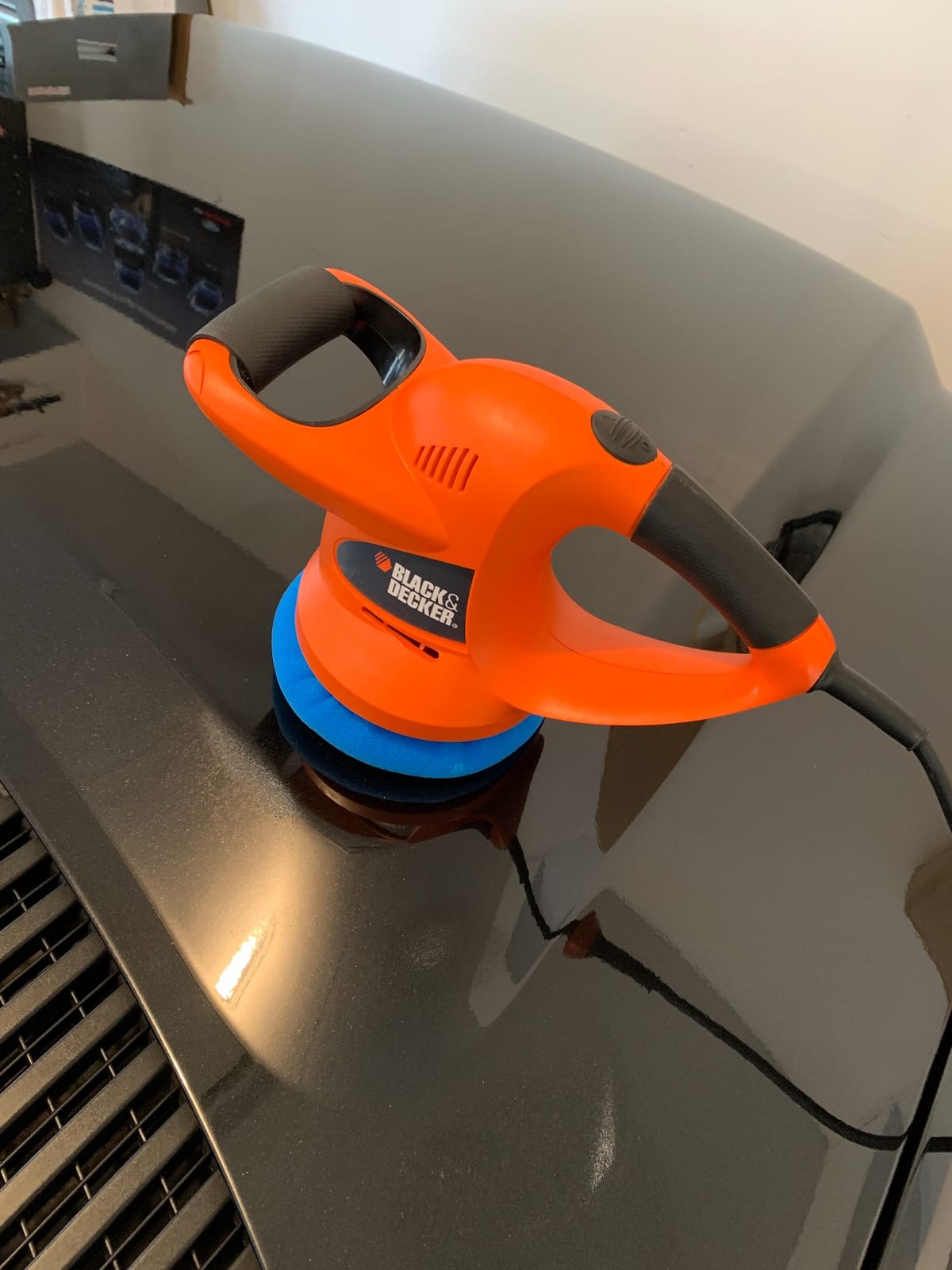
Low vibration matters more than it sounds. A vibrating machine means the pad is not sitting flat, and a pad that is not flat does not polish evenly. Reviewers consistently report less hand fatigue here than on heavier machines.
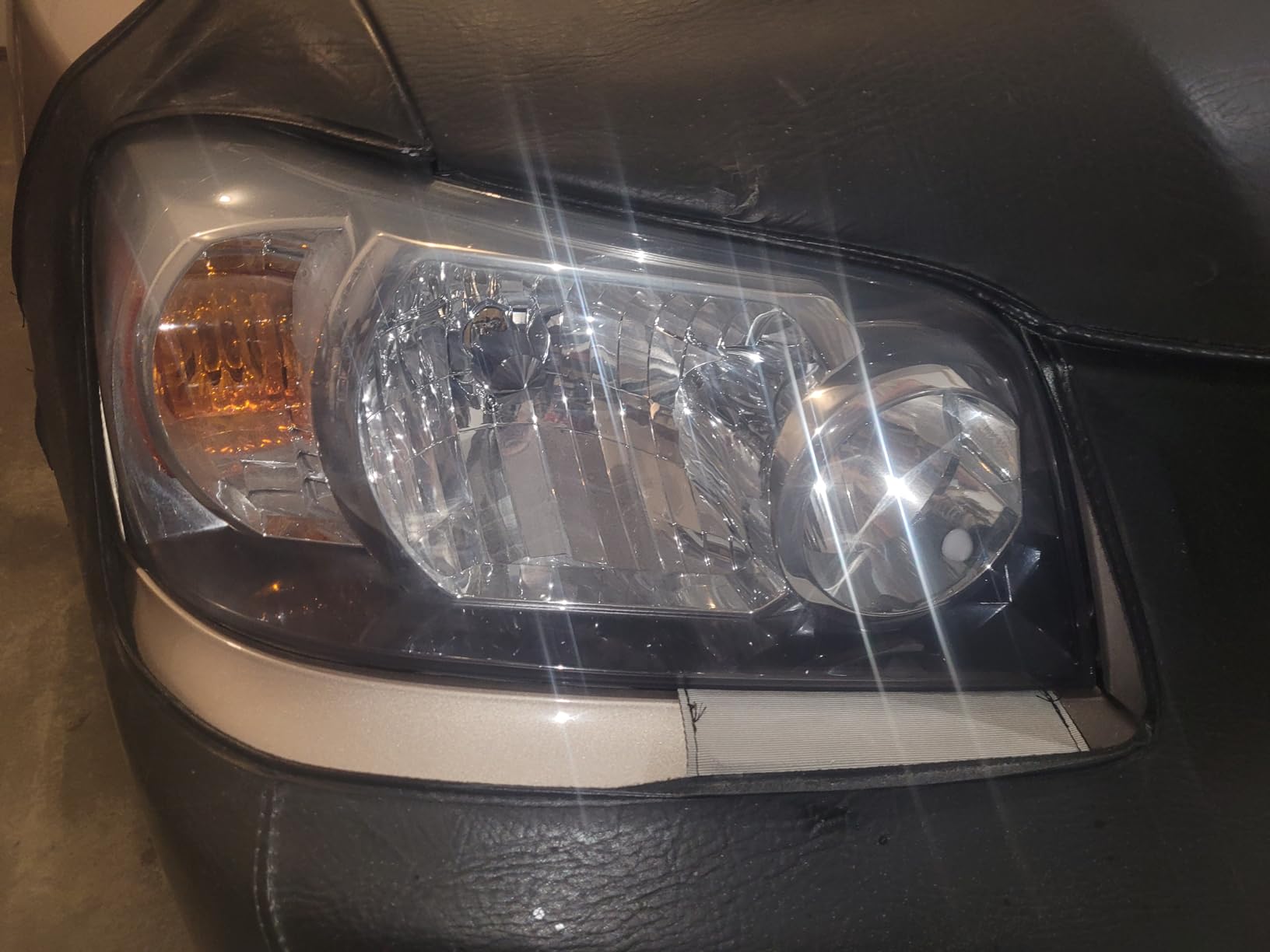
Low vibration also matters on the bonnet. Most waxing happens on the hood, and a machine that stays flat and cool across a full hood is one you will keep rather than abandon.
Why this is the safest first machine to buy
There is no speed dial to misjudge and no aggressive setting to accidentally dial into. A fixed-speed random orbital at this RPM cannot do much damage, so it is a good machine to learn pad handling and product spreading on before you move to something with more control.
The ten-foot cord also solves a practical problem people underestimate. A short cord means you are moving a heavy machine across the driveway with an extension cord snagging on a door sill, which is a fast way to drop a polisher onto paint.
What to know before you buy
The included bonnets are the weak point. Reviewers repeatedly single out the quality of the included foam applicator bonnet and polishing bonnets, with many owners recommending buying microfiber bonnets separately. If you plan to polish rather than just wax, budget for aftermarket microfiber pads.
Replacement 6-inch pads are also reported as harder to source locally than 5-inch ones, and a small number of owners report loud vibration or a backing plate separating after a few years of use. At this end of the price range that is an acceptable trade, but check the warranty terms on your unit.
5. SPTA DAPSET-US 24-Piece Kit: the most complete bundle and the highest rating
Buffer Polisher, SPTA 5-Inch 125mm Dual Action Random Orbital Car Polisher,Car Detailing Kit, 4Pcs 5inch & 4Pcs 6Inch Polishing Pad,Packing Bag for Car Polishing and Waxing–DAPSET-US
750W 6.5A motor
2000-5200 RPM six-speed dial
5 and 6 inch pads and accessories
Pros
- Highest average rating of any machine we tested at 4.7 stars
- Twenty-four piece bundle covers 5 and 6 inch pads plus compounds and towels
- Six-speed dial from 2000 to 5200 RPM covers waxing polishing and defect removal
- Constant power and smooth start reduce fatigue on long jobs
- Side handle and D-handle both included
Cons
- 110V specification limits use to North American circuits
- Lower brand recognition than established power tool makers
- Large accessory count can overwhelm a first-time user
At 4.7 stars from around 1,870 reviews, this is the highest-rated machine in the group, and the 24-piece bundle is the widest we found. It includes both 5-inch and 6-inch pads, coarse and fine compound, backing plates, a wash dish brush, apron, gloves, carbon brushes, wrenches and towels.
On paper that solves the whole consumables problem in one box, which is the reason it lands here for beginners. Both plate sizes matter: the 5-inch pad handles the tight areas a 6-inch pad cannot reach safely, so you are not buying a second plate.
The 750W eccentric motor has replaceable carbon brushes and a six-speed dial covering 2,000 to 5,200 RPM. Buyers praise constant power and smooth start across compounding, polishing and waxing stages, and the electronics are described as stable enough for long working sessions.
Two handles ship in the box, a side handle and a D-handle, so you can pick a grip style rather than living with whatever the manufacturer decided. That sounds minor and is not, because grip position is how you control a polisher on a vertical panel.
What makes the bundle genuinely useful
Two things that look like filler in most kits are actually the items beginners forget: the wash dish brush and the towels. Cleaning pads between panels is the difference between a consistent finish and a hazy one, and having a brush in the box means you will actually do it.
The extra backing plates also let you run the machine at two sizes from day one. Most beginners use one plate size forever and then wonder why they get haze around trim. Using the smaller plate in tight areas removes that problem entirely.
Where to be careful
The 110V specification limits the machine to North American circuits, which matters if you are outside the US and Canada. The accessory count is genuinely overwhelming if you have never opened a detailing kit before, so spend twenty minutes sorting it out before you start rather than during your first panel.
Brand recognition is lower than the established power tool names, which matters mainly for parts and warranty service over a long ownership. The stated rating and review volume are strong, but plan on buying replacement pads from a normal supplier rather than expecting brand-specific parts.
6. AOBEN AT3501: six speeds and a detachable handle at an entry price
AOBEN Car Buffer Polisher,6 inch Dual Action Polisher,Random Buffer Polisher kit with 6 Variable Speed 1000-4500rpm,Detachable Handle,4 Buffing Pads for Car detailing Polishing and Waxing
700W dual action motor
1000-4500 RPM six speeds
6-inch plate with side and top handles
Pros
- 700W dual-action motor with a six-speed dial from 1000 to 4500 RPM
- Side handle mounts on either side plus a top handle for grip choice
- 6.5-inch foam pads protect the backing plate edge from scratching paint
- Also works on boats furniture flooring and metal
- Four pads and a wrench included
Cons
- Can stall if heavy pressure is applied on speeds 1 through 3
- Weighs 6.8 pounds
- which adds fatigue on longer jobs
- Plastic shell and a one-year warranty trail the premium brands
This is the machine to look at if variable speed control matters to you and the price of the premium machines does not fit. A six-speed dial from 1,000 to 4,500 RPM on a 700W dual-action motor is more control than most people think they need and more than most budget waxers offer.
The three speed settings at the bottom of that range are where the complaints live. Reviewers report the machine can stall if excessive pressure is applied on speeds 1 through 3. For a beginner that is a real annoyance rather than a safety problem, because a stalled pad on a DA stops the friction rather than grinding.
Handle flexibility is the sleeper feature. The side handle mounts on either side plus a top handle, so you can set up for a hood, a vertical door panel or a rocker without repositioning your grip each time you move to a different surface.
The 6.5-inch foam pads are oversize relative to the 6-inch plate on purpose: they hang over the edge of the backing plate and stop it from touching the paint. Backing plate edges are a common source of the fine scratches beginners blame on the pad, and the oversize pad prevents it.
Where this machine earns its place
Six speeds, a detachable handle and four pads in the box is a lot of machine for the money. If your plan is one-step polishing and waxing on a daily driver rather than a multi-stage correction, you can run speed 4 to 5 all day and never touch the stalling range.
The multi-surface capability is also real rather than marketing filler. Reviewers use it on boats, furniture, flooring and metal as well as paint, which makes it a reasonable general-purpose buffer if you want one tool for the garage.
Where the trade-offs show up
Weight is the first thing you will feel. At 6.8 pounds it is the heaviest machine on this list, and holding that over a roof or a full hood for an afternoon gets tiring well before the job is done.
The plastic shell and one-year warranty are the cost of the price. Fine on a machine you are learning on, less appealing as a keepsake tool. Expect to replace pads sooner than you would with a machine backed by a longer warranty.
7. AVID POWER AEP176: both plate sizes in the box and an adjustable handle
AVID POWER 5″/6″ Dual Action DA Polisher Kit 6-Speed Random Orbital Buffer
6-speed dial 2700-6500 OPM
5 and 6 inch backing plates
Adjustable D-handle
Pros
- Six-level dial from 2700 to 6500 OPM with a lockable trigger
- Both 5-inch and 6-inch backing plates and pads included
- Adjustable D-handle with five positions plus rubberized body
- Long dual-action throw covers large panels quickly
- Lockable trigger holds speed without regripping
Cons
- Lowest speed settings can stall or fail to spin the pad up
- Generates noticeable heat at the higher speeds
- Runs loud and can develop a high-pitched whine when hot
The reason this machine is on the list is the box contents. Both a 5-inch and a 6-inch backing plate ship with it, along with foam pads for each size, so you can work tight trim and wide panels on day one with the same tool.
The 6-level dial runs from 2,700 to 6,500 OPM, which is a genuinely wide range and puts it alongside the PORTER-CABLE for control. The lockable trigger is the detail most people miss: it holds the current speed so you can reposition your hands on a long panel without the machine surging.
Reviewers regularly compare this favourably against name-brand machines costing several times more, and they single out the long dual-action throw and the adjustable D-handle as the reasons. The handle adjusts to five positions, so you can find a neutral wrist position for a hood and a different one for a door skin.
As a dual action machine it is inherently gentler on paint than a rotary, and the manufacturer positions it explicitly as the beginner-safe option in that category.
Owner images show the D-handle swung through its positions, which is how you find the wrist angle that suits the panel you are working. Most people settle on one setting for horizontal surfaces and move it for vertical ones.
The rubberized body matters on a long hood session. Bare plastic on a warm machine is uncomfortable to hold, and grip comfort is a bigger factor in finishing a job than most buyers expect.
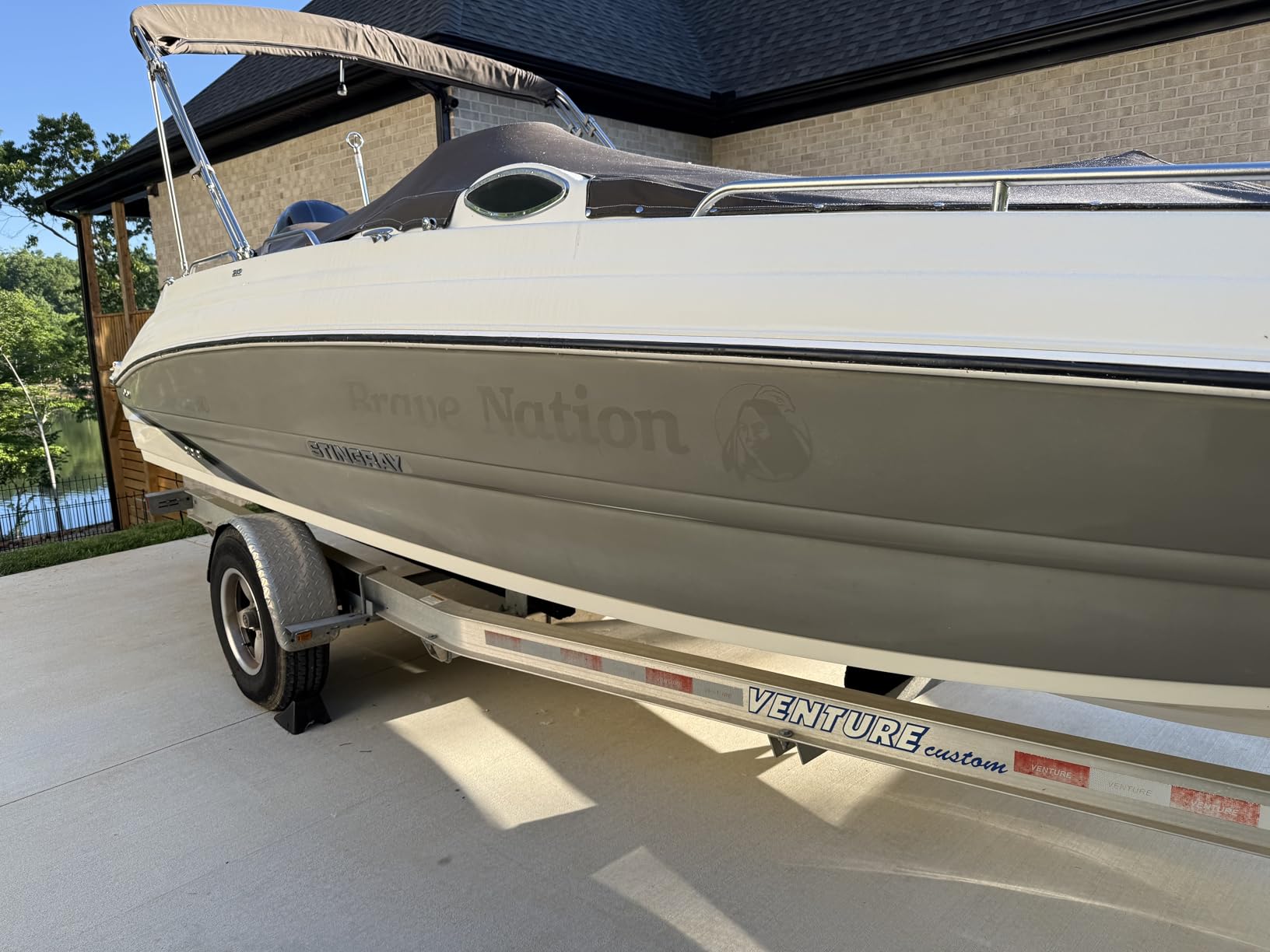
Why both plate sizes matter more than they sound
A 6-inch pad cannot safely work the gap between a bumper and a door, the rocker panel, or the strip around a badge. Polishing those areas with an oversize pad is one of the most common ways beginners scratch paint, because the backing plate edge catches the panel.
Having a 5-inch plate in the box removes that risk entirely and removes a second purchase. It is the same practical argument as the SPTA bundle, though here you get plates and pads rather than a full set of compounds and towels.
Where the complaints cluster
Heat at the top of the range. Reviewers report noticeable heat build-up at speeds 4 and above, which becomes uncomfortable to hold on a long panel and is exactly the condition under which haze and hologram marks appear.
The low end has the opposite problem: the lowest speed settings can stall or fail to spin the pad up cleanly. It also runs loud, and some units develop a high-pitched whine once hot. Budget for hearing protection if you are working in a garage with hard surfaces.
8. WEN 6010: the simplest waxer, and honest about what it cannot do
WEN 6010 6-Inch Waxer/Polisher
60W 0.5 amp motor
3500 rpm fixed speed
6-inch applicator and terry cloth bonnets
Pros
- Lowest entry point of any machine on this list
- Ergonomic palm and body grip works for one or two hand use
- Lockable ON/OFF switch is simple to operate
- Includes a 6-inch applicator bonnet and a 6-inch terry cloth bonnet
- Compact size is easy to control on small panels and tight areas
Cons
- Fixed speed with no variable-speed control
- 60W 0.5 amp motor is weak for paint correction
- Better suited to wax application than scratch removal
The WEN 6010 is the cheapest machine here, and more than 7,500 reviews at 4.4 stars make it the second most proven. Buyers consistently treat it as a low-cost waxer and general surface polisher rather than a correction tool, and that is exactly how we are treating it.
A 60W 0.5 amp permanent magnet motor spinning at 3,500 rpm does not have the torque to cut through swirl marks. It will spread and buff wax and sealant, it will take off surface haze on a well-kept panel, and it will not do a paint correction.
What it does have is an ergonomically contoured palm and body grip that works one-handed or two, a lockable ON/OFF switch, and both an applicator bonnet and a terry cloth bonnet in the box. That is a complete waxing setup out of the box.
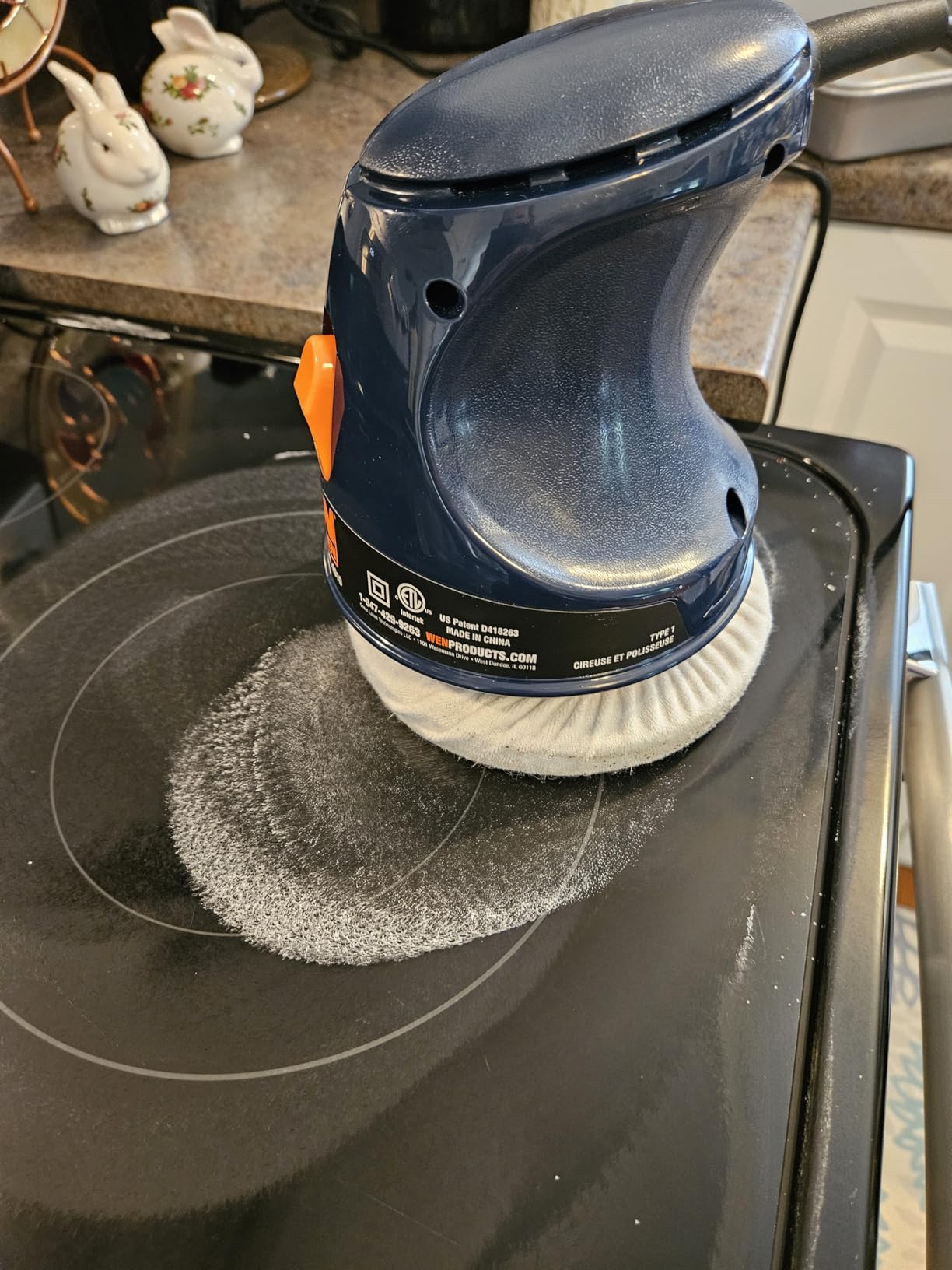
At 3.4 pounds it is also the second-lightest machine here, which makes it the least tiring choice for small panels, and the 6-inch footprint is easy to control in tight areas.
The lockable switch is a small detail that matters more than it looks. You can set the machine to run, reposition your hand on the bonnet, and keep working without cycling it on and off.
Who this machine actually suits
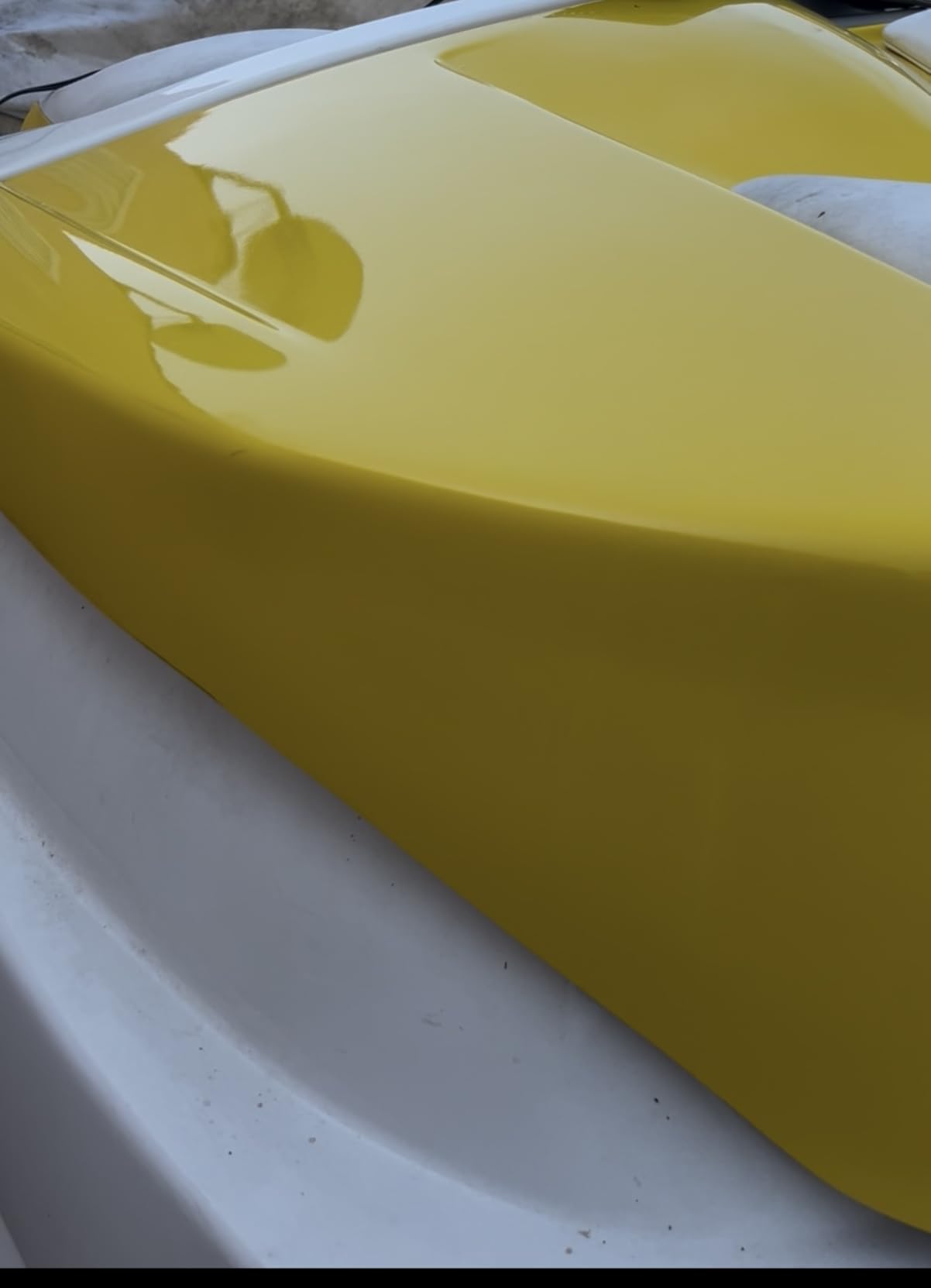
If your goal is spreading wax or sealant evenly across a panel and buffing it off, this does that job for less than the cost of a single pad on some of the other kits. It is also a sensible machine for a small garage where storage space is tight.
It is a good first machine for learning how a polisher feels in your hands and how product spreads, with almost no risk of damage. Plenty of first-time users buy up, learn pad handling here, then move to a variable-speed machine once they know they want the hobby.
Where it falls well short
Fixed speed and a 60W motor are the limits, and they are hard limits. There is no dial, so you cannot finish a panel after cutting, and there is not enough torque to remove anything deeper than haze.
The lightweight plastic build feels basic and does not inspire confidence on a correction, which is why we rank it last. If you are spending money at all, the AOBEN or AVID POWER give you variable speed for a modest step up, and that difference matters more than any other spec for a beginner.
DA vs Rotary Polisher: Which One Beginners Should Buy
A dual-action polisher rotates the pad and orbits it around an offset axis at the same time, so the pad traces a different path on every pass. A rotary polisher spins the pad in one fixed circle at high speed with no orbital movement at all. That single mechanical difference is the whole safety argument.
How the pad moves: A dual-action rotates and orbits on an offset axis, while a rotary rotates on one fixed line.
Forgiveness: A dual-action is highly forgiving and mistakes polish themselves out; a rotary is unforgiving and mistakes become damage.
Clear coat burn risk: Low on a normal panel with a dual-action in normal hands, and real on edges or thin and aged clear coat with a rotary.
Best for: Dual-action suits beginners, one-step polishes and vertical panels; a rotary suits experienced users stripping heavy defects.
Every machine on this list is a dual-action. That is deliberate. Detailers who recommend a rotary to beginners are describing a skill that takes months to build, and the failure mode is not reversible.
The exception worth naming: if you want to strip decades of oxidation and heavy single-stage swirl off a neglected car, a rotary with a cutting pad is dramatically faster. But that is a project for someone who already knows how to machine polish, not a first attempt.
How to Choose a Beginner Car Polisher
Start with throw size, not brand. Throw is the distance the pad moves sideways per rotation, measured in millimetres. A smaller throw means less coverage per pass but far more forgiveness and far less heat, which is what you want while you are learning. Anything in the 8mm to 9mm range is the right beginner zone. A 12mm throw handles light correction well. Anything at 15mm or 21mm is a step up, not a starting point.
Decide corded or cordless by asking one question. Do you already own batteries and a charger on that tool platform? If yes, a cordless polisher costs you the machine only and gives you no cord to snag on a door sill. If no, you are buying a battery and a charger before you can start, which usually costs more than the price gap between corded and cordless machines. Every pick on this list is corded, which is why none of them start you down that path.
Match the backing plate to the panels. A 6-inch plate covers a hood fast. A 5-inch plate handles the strip between a bumper and a door, the rocker panels and around badges. A 3-inch machine is a specialist tool for tight areas and vents, and it is a second purchase rather than a first one. Several machines here include both a 5-inch and 6-inch plate, which saves you the decision.
Look for speed control, not speed. A fixed-speed machine forces you to accept one cut rate for every product you use. A machine with a dial lets you finish a panel after cutting, which is how you avoid haze. If you are buying one machine for everything, buy the one with the dial.
Check the cord and the warranty. A removable or quick-connect cord can be replaced when it fails. A permanently attached cord can end the machine’s life. A three-year warranty with a service contract, as on the PORTER-CABLE, is a real durability signal, and Griot’s lifetime tool guarantee is the strongest in the category.
Throw Size Explained
Throw is the single most useful number to understand before you buy, and the simplest rule is that bigger is not better for a beginner.
6-9 mm throw: Finishing, light correction and glaze work. High forgiveness, low heat, easy on vertical panels. This is the beginner zone and where most of the machines on this list sit.
12 mm throw: Light to medium correction. Faster coverage per pass while still stalling safely rather than burning. A good first step up once you have a few hours of practice.
15 mm throw: Correction work on neglected paint. Fast, effective and demanding. Long-throw machines stall on curved panels, edges and narrow trim, which is why enthusiasts recommend a smaller free-spinning machine as the most handy tool to own.
The failure people describe with long throw is the same one every time: you buy the biggest number on the box, then find it will not sit flat on a bumper or a roof transition. Start short and move up if you need to.
What You Need Beyond the Machine
The machine is roughly a third of what a first correction costs. The rest is consumables, and getting these right matters more for the final result than which machine you chose.
Backing plates. Buy a second plate in a different diameter than the one included. Experienced detailers universally recommend having a 5-inch and a 6-inch on hand before starting a car.
Pads. At minimum three: a soft foam cutting pad, a softer foam polishing pad, and a microfiber finishing pad. More than a dozen pads is common practice among regular detailers, because a pad that is contaminated stops cutting and starts hazing the panel instead.
Compound and polish. A compound cuts, a polish refines, and a one-step product does both in a single pass. For a first correction on a daily driver, a one-step polish with a foam pad is genuinely enough and is the fastest way to see a result you will like.
Pad cleaning supplies. A wash dish brush and clean microfiber towels. This is the item most beginners never buy, and cleaning pads between panels is the single biggest difference between a consistent finish and a hazy one.
Decontamination. A clay bar or an iron remover before you polish. Polishing over bonded contamination grinds that contamination across the paint and creates the fine swirl you were trying to remove. Wash and decontaminate first, every time.
First-Time Polisher’s Walkthrough
Wash the car properly. A polisher on a dirty car moves grit across the clear coat. Two bucket washes, grit guard in the second bucket, and dry with clean microfiber.
Decontaminate. Clay bar or iron remover on the whole car. Skip this and every swirl you create is one you have to polish out again.
Mask the edges. Painter’s tape on trim, badges, grilles, licence plate surrounds and anywhere the pad edge could catch a panel. Cheap insurance, and it takes ten minutes.
Test a section first. A door or the lower quarter panel. Put a small amount of product on, spread it with the pad, then do three or four slow passes at low speed. Wipe with a clean towel and look at the result in direct light before touching the rest of the car.
Spread pass. On every panel, run the machine over the product with the pad flat and barely touching, without pressure, to spread it evenly. This is not polishing, it is loading the pad.
Working passes. Guide the machine with one hand at the top, side to side, slowly and overlapping. Keep it moving the entire time. Do not lean on it, do not drop it onto the panel to add pressure, and do not stop in one place.
Wipe down and check. After each panel, wipe with a clean microfiber towel and inspect in direct light. Haze here means too much product, too high a speed, or a dirty pad. Reset the pad before moving on.
Protect the result. Polishing bare clear coat leaves it more porous and more vulnerable than before. Apply a sealant or coating afterwards, or the swirls come back within weeks.
Beginner Mistakes to Avoid
Moving too fast. The pad needs time on the panel to cut. Fast passes produce haze, not correction. Slow and overlapping is the technique that works.
Using too little product. A dry pad drags and creates fine scratches. More product than you think you need, and you can always wipe off what is left behind.
Leaning on the machine. Detailers are blunt about this: the compounds do the work and even pressure does it too, so too much pressure just generates heat and burns the paint.
Not cleaning pads between panels. A loaded pad stops cutting and starts smearing. Clean it with a brush and a damp towel every time you change panels.
Dwelling in one spot. Even a DA builds heat where it sits still. Keep it moving, and keep it off panel edges where the pad can catch.
Polishing too often. Paint has a finite clear coat. Every correction removes a small amount of it. Fix the cause of the swirls with protection instead of repeatedly re-correcting the same panel.
Frequently Asked Questions
What type of polisher should a beginner use?
A dual-action random orbital polisher. It rotates the pad while orbiting it around an offset axis, so the pad path changes constantly. That randomness spreads heat evenly and makes the machine stall safely under too much pressure instead of burning through clear coat. Avoid a rotary polisher as a first machine unless someone experienced is teaching you.
What is the best dual action polisher for a beginner?
The Chemical Guys TORQX 9-Piece Kit is our top pick because it is the only machine in the lineup that arrives with pads, polishes and compounds included, so a first correction needs no additional shopping. For the bare machine itself, the PORTER-CABLE 7424XP offers the widest speed range at 2,500 to 6,800 OPM with a counterbalanced 6-inch pad.
What is the best budget dual action car polisher?
The AOBEN AT3501 and the AVID POWER AEP176 are the strongest low-cost dual-action options. Both give you a six-speed variable dial, which most cheap waxers do not, and the AVID POWER includes both 5-inch and 6-inch backing plates. The trade-off on both is heat build-up at the higher speeds and a shorter warranty than the premium machines.
Can a dual action polisher burn through clear coat?
Yes, but only on thin or previously compromised clear coat, or on panel edges where the pad can catch. On healthy clear coat with normal pressure, a DA polisher stalls before it burns. Thin clear, aged single-stage paint and edges are where problems happen, so mask trim, keep the pad flat and never lean on the machine.
Why is my polisher leaving swirl marks?
Almost always one of four things: moving the machine too fast, using too little product so the pad drags, a dirty or contaminated pad, or running the speed too high for the product you are using. Fix the cause before adding more product. If swirls appear only in straight lines behind the pad path, the pad is likely dragging dry.
Can swirl marks be polished out?
Yes, most of them. Swirl marks are microscopic scratches in the clear coat, and a DA polisher with a cutting pad and a compound removes them faster and more evenly than hand application. Deep scratches that you can catch a fingernail in are a different job, and repainting is the only permanent fix for clear coat that has been burned through.
Conclusion
For most people, the best car polishers for beginners come down to two choices. If you want everything in one box and the machine that is easiest to learn on, take the Chemical Guys TORQX kit as our Editor’s Choice. If you would rather spend your money on the machine and buy the consumables you need, the PORTER-CABLE 7424XP gives you the widest speed range and the best warranty at a mid-tier outlay. Buy the Griot’s Garage G9 when your paint is genuinely neglected and you want real cutting power on your first session.
Whichever you pick, stay inside the 6 to 9mm throw range for your first year, keep the machine moving, clean the pad between panels, and do a test section before you touch a whole car. Then polish once and protect the result with a sealant or coating, because bare clear coat after a correction is softer and more vulnerable than it was before. That is how you get the gloss without buying a new paint job.