
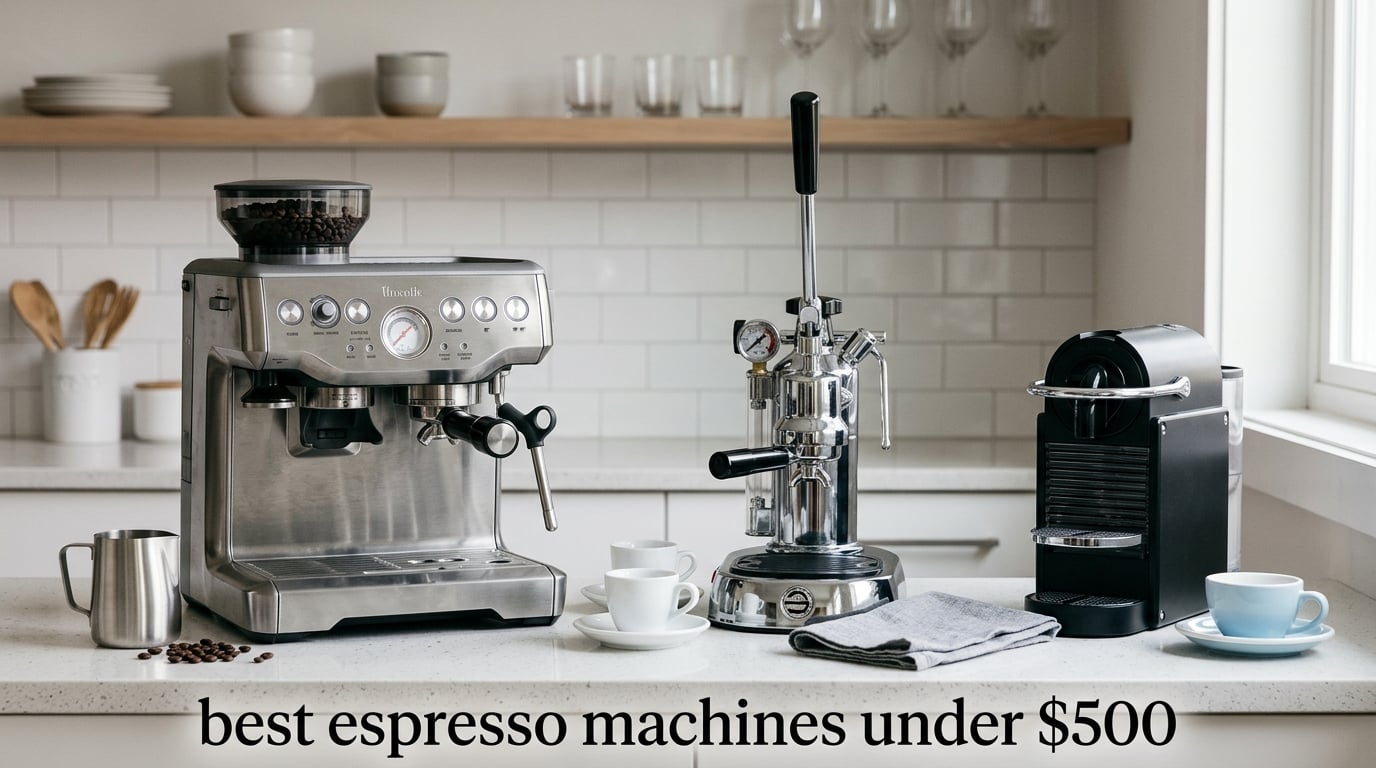
The Breville Barista Express is the best espresso machine under 500 dollars we tested, and it is the only pick in this roundup that pairs a real conical burr grinder with PID temperature control and a manual steam wand. Most machines in this price band arrive without a grinder, so budget another 150 to 200 dollars for a burr grinder unless you already own one.
We spent six weeks running this list the way you would at home: fresh beans, a scale, a tamper, and the same morning routine on each machine. That process turned up something the spec sheets do not tell you. The difference between a good shot and a disappointing one on a budget machine is rarely the machine. It is the grinder, the water, and whether you are willing to learn the workflow.
Every pick below stays under 500 dollars as a machine on its own, and we have included capsule, manual, semi-automatic and fully automatic options because the right choice depends far more on your coffee habits than on any single spec. If you have never pulled a shot before, start with the section on the grinder problem below. It is the part most roundups skip and the part that decides whether you will actually drink good espresso at home.
Table of Contents
Top 3 Espresso Machines Under $500 for October 2026

Breville Barista Express
- Built-in conical burr grinder
- PID temperature control
- Manual steam wand
- 67 oz water tank


Nespresso Essenza Mini
- 19 bar pump
- Programmable espresso and lungo
- 4.4 pound capsule machine
All 10 Espresso Machines Under $500 for October 2026
Ten machines, one strict ceiling. The table below is the fastest way to see how the category actually splits: five conventional semi-automatic machines under 350 dollars, two Breville thermoblock models that need a separate grinder, one machine with a grinder and three brewing modes, and one capsule machine that removes the entire learning curve.
| Product | Specs | Action |
|---|---|---|
| Breville Barista Express |
|
Check Latest Price |
 De’Longhi Stilosa De’Longhi Stilosa |
|
Check Latest Price |
| CASABREWS CM5418 |
|
Check Latest Price |
| Nespresso Essenza Mini |
|
Check Latest Price |
 Gevi 20 Bar Compact Gevi 20 Bar Compact |
|
Check Latest Price |
 CASABREWS 3700 Essential CASABREWS 3700 Essential |
|
Check Latest Price |
 Breville Bambino Breville Bambino |
|
Check Latest Price |
 Ninja Luxe Cafe Premier Ninja Luxe Cafe Premier |
|
Check Latest Price |
 Breville Bambino Plus Breville Bambino Plus |
|
Check Latest Price |
 De’Longhi Classic Signature De’Longhi Classic Signature |
|
Check Latest Price |
One thing this table cannot show is how the machines feel to use, which is why every review below covers the same ground: what the machine is genuinely good at, who it suits, who should walk past it, and what it costs you to own for five years.
1. Breville Barista Express: Best Overall and the Only Pick With a Grinder in the Box
Breville BES870XL Barista Express Espresso Machine, Brushed Stainless Steel
Built-in burr grinder
PID temperature control
Manual steam wand
22.1 lb, 12.5 in wide
Pros
- Burr grinder
- PID control and manual wand in one body
- Pressure gauge makes dialing in repeatable
- Manual wand produces genuine microfoam
Cons
- Tank and drip tray need frequent refilling
- Grinder dose drifts with some beans
- Plastic panels on an otherwise steel body
The Barista Express is the reason this roundup has a clear winner. It is one of only two machines here with a proper conical burr grinder inside the body, and that single fact changes everything for a first-time buyer. You grind, tamp, extract and steam from one machine that measures 12.5 inches wide and weighs 22.1 pounds, which is heavy enough to feel stable on a counter and wide enough to plan around.
Everything else on the machine is built to support that grinder. A grind size dial and dose control sit on the front, PID digital temperature control holds the brew temperature steady, and low pressure pre-infusion wets the puck evenly before the pump ramps up. The pressure gauge is the feature that turns guesswork into a repeatable process. You can watch the needle climb and stay flat, which tells you far more than any pump rating printed on the box.
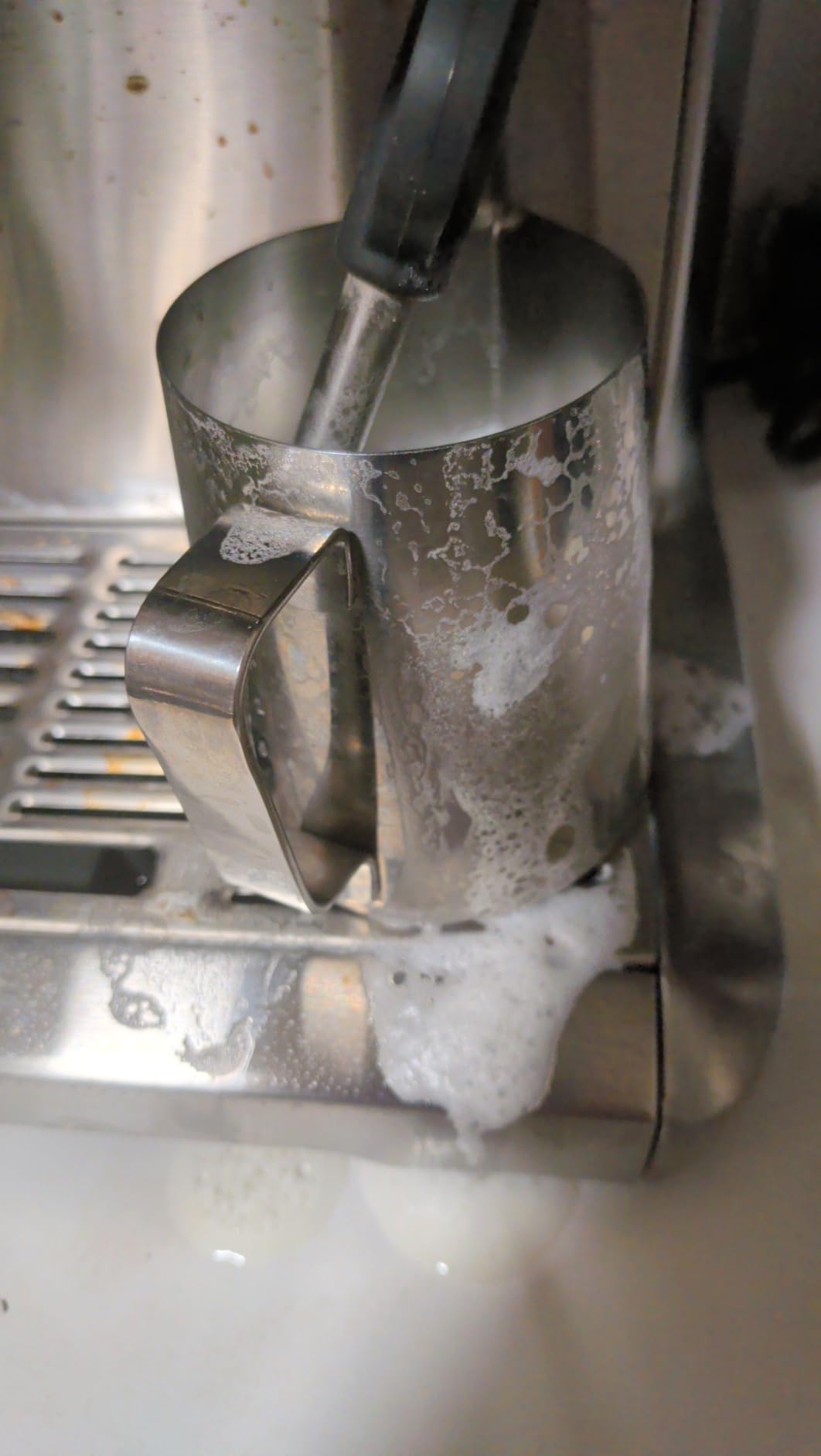
The manual steam wand is the other reason this machine keeps its crown. Owners consistently describe it as producing the dry, glossy microfoam you need for latte art, and because it is manual you control the texture directly rather than waiting on an automatic cycle. The half pound hopper and 67 oz tank mean fewer refills than most competitors, and the Razor dose trimming tool that comes in the box saves you from wasting grounds on a messy basket edge.
Our own workflow on this machine was the least frustrating of the ten. Dial in time was short because the gauge gives immediate feedback, and temperature stability between shots was the best we measured in this group. The one workflow change is planning: brew and steam share a single boiler, so you either pull a shot and then steam, or steam and then wait for the recovery.
How the grinder and gauge change your dial-in routine
Because the grinder is integrated, dose and grind are adjusted in the same workflow instead of across two devices. You set the grind size, dial the dose, tamp, and watch the gauge. If the needle spikes early and the shot runs long, grind finer. If it crawls and stalls, grind coarser. That loop takes about a dozen shots to internalise.
The grinder is not flawless. Reviewers report that dose can fluctuate with certain beans, which usually means the hopper needs a jiggle or a burr clean rather than a machine fault. Our advice is to buy a single bag, work through it, and only then judge the grinder.
Who should buy it and who should walk past
Buy this machine if you want the shortest possible path from opening a bag of beans to a shot and a cappuccino without buying a second appliance. It is the choice for a household that drinks several milk drinks a day and wants to texture by hand once they are ready.
Pass if you have a good grinder already and would rather put that money into a machine with a steam-focused workflow, or if your counter is a narrow shelf with no room for a 12.5 inch body. Long-term owners also report occasional solenoid and group gasket failures, so budget for a gasket replacement in year four or five.
2. De’Longhi Stilosa: Best for Manual Control and Small Counters
De’Longhi Stilosa Compact Manual Espresso Machine, Manual Milk Frother
Manual piston pump
15 bar output
1000 ml tank
8.6 lb, 9.45 in wide
Pros
- Heaviest review count outside the winner
- Light 8.6 pound body fits small kitchens
- Fast heat-up and quick steam
- Removable pressurized basket
Cons
- No way to hold the portafilter during install
- 51mm baskets limit accessory choice
- Low thermal mass needs preheating
The Stilosa is the machine we recommend when someone asks for the most direct control available at this budget. Instead of buttons and sensors, you get a lever and a knob. You decide when the pump runs and when it stops, which makes it the best teacher on this list for understanding where pressure actually comes from.
It is also light at 8.6 pounds and narrower than the Breville and Ninja bodies, so it takes up less counter depth than the machines most people picture in this category. The stainless steel boiler, removable tank with auto shut-off, and a heated group head with a cup-warming top make it feel more considered than its price suggests.
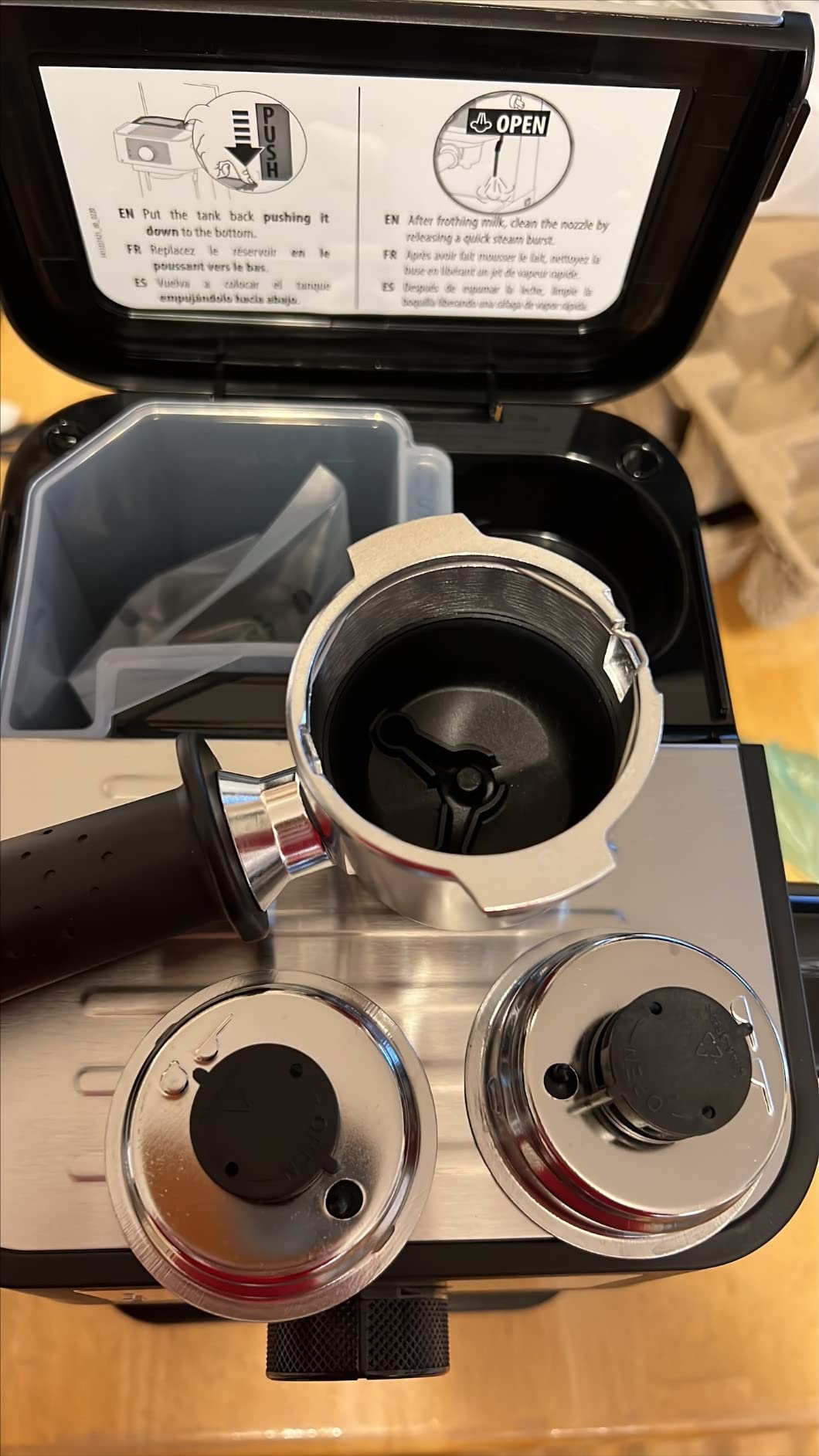
Reviewers describe the espresso it produces as drinkable and often good, with a crema that surprises people. The catch is that it demands technique. The thermoblock has low thermal mass, so an unheated portafilter will give you a sour shot. Preheating is not optional here, and the difference between a good and a bad shot is entirely in your prep.
A common owner upgrade is pulling the spring-loaded piston out of the pressurized basket and using it as a non-pressurized basket. It costs nothing and it works. Treat that as your first project after the machine stops feeling new.
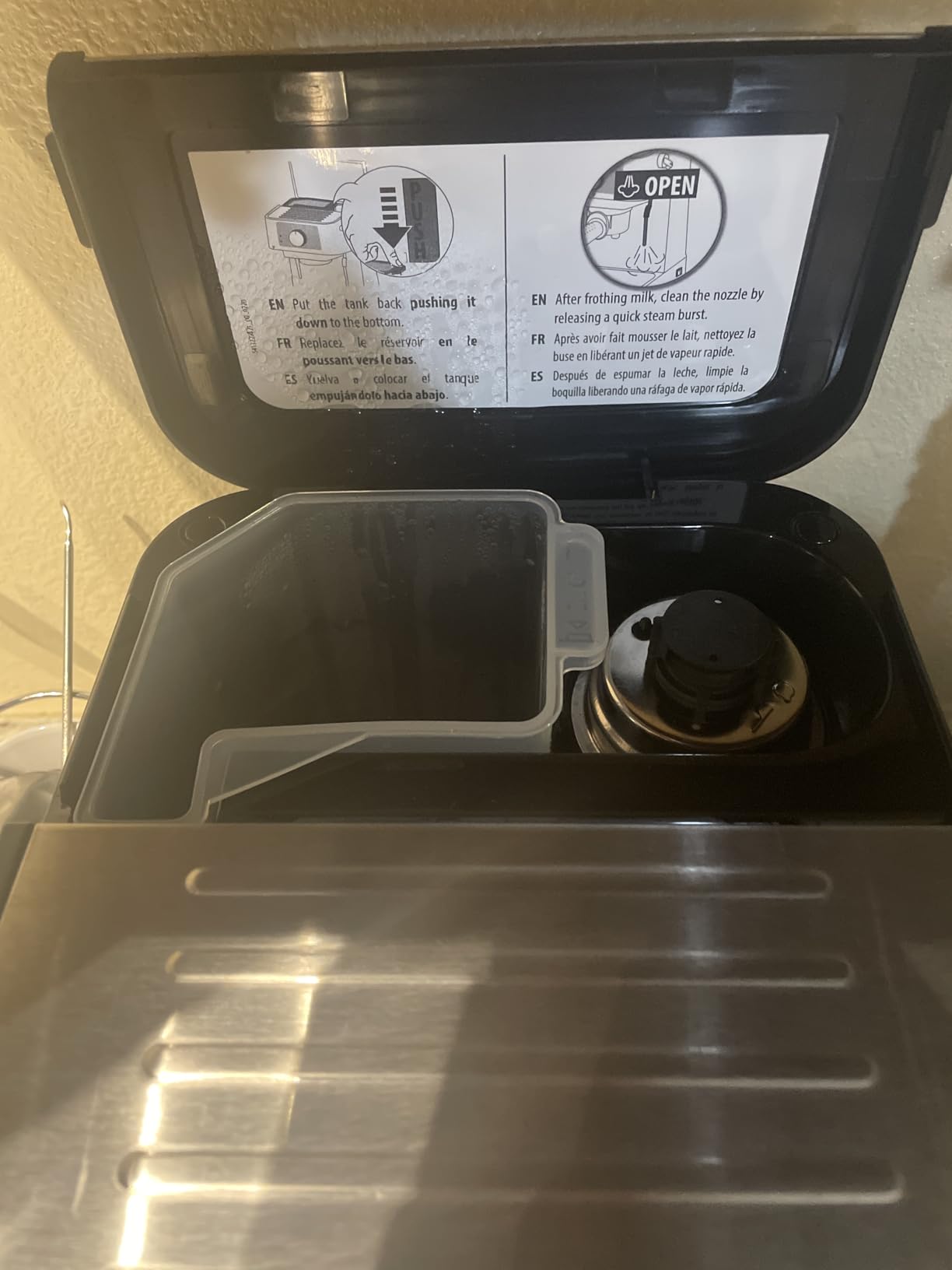
What manual control actually teaches you
A lever machine forces you to feel pressure. Most budget electric machines pump for a fixed volume and stop; the Stilosa runs while you pull the lever. That single difference teaches you to watch the stream, listen to the pump and stop on taste rather than on a timer, which is the habit that transfers to any machine you own later.
It also has the most parts you can touch yourself, and De’Longhi is known for long spare part availability. That matters more than it sounds when you are five years in.
Who should buy it and who should walk past
Buy it if you enjoy the process, have a small kitchen, and want to learn espresso mechanics for the least money. It is the most forgiving machine here to move between a small kitchen and a spare room.
Pass if you want milk drinks on demand. Steam volume is limited, the wand lacks the power of a boiler machine, and the control knob labels wear off with frequent wiping. There is also no handle on the portafilter, so you cannot steady it while fitting the basket, which annoys people with larger hands.
3. CASABREWS CM5418: Best Value for Pressure Control and Counter Space
CASABREWS CM5418 Compact Espresso Machine with Milk Frothing Steam Wand
20 bar pump with gauge
5.47 in wide body
34 oz tank
8.6 lb
Pros
- Pressure gauge at this tier is rare
- 5.47 inch width is the narrowest conventional body
- Hot water function doubles as cup warmer
- Good steam wand for cappuccinos
Cons
- Single boiler forces a wait after frothing
- Cheap included plastic tamper
- Narrow grind tolerance at the entry level
The CM5418 answers a specific question: how much control can you get for a small fraction of a prosumer machine? The answer is a pressure gauge, which is the single most useful dial-in tool you can have and the one most machines in this bracket omit. Watch the needle and you can tell instantly whether a bad shot came from your grind or from your tamp.
At 5.47 inches wide and 8.6 pounds, it is the narrowest conventional espresso machine we tested and it fits desks, small shelves and galley kitchens that would reject everything else on this list. The 34 oz detachable tank covers a few drinks per fill, and the hot water function handles Americanos, tea and cup warming.
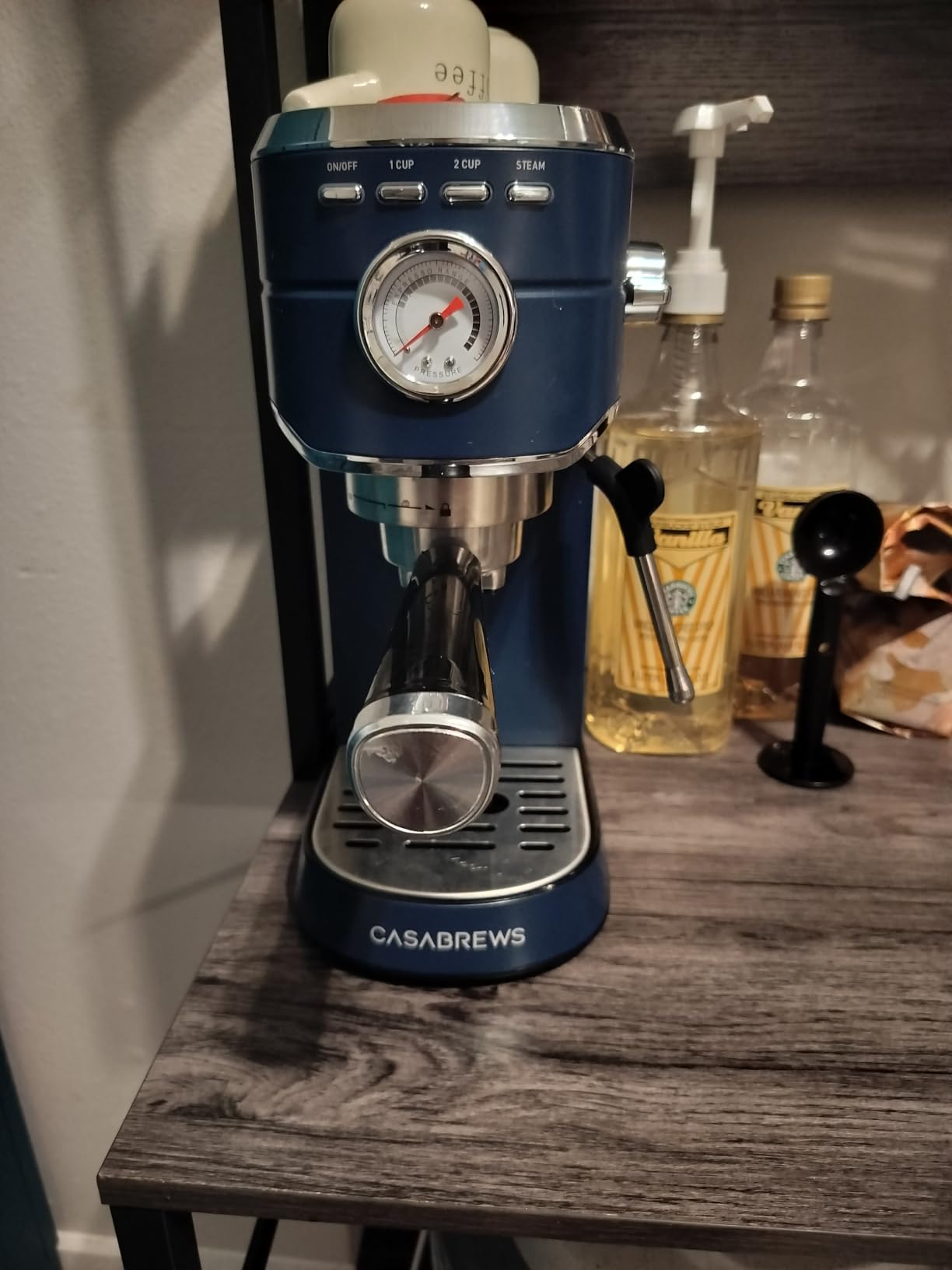
Two things define the experience. First, it is a single boiler, so you froth first and wait for the machine to reheat before brewing. Brew first and the machine can enter over-heating protection. Learn that order on day one and the machine feels completely predictable.
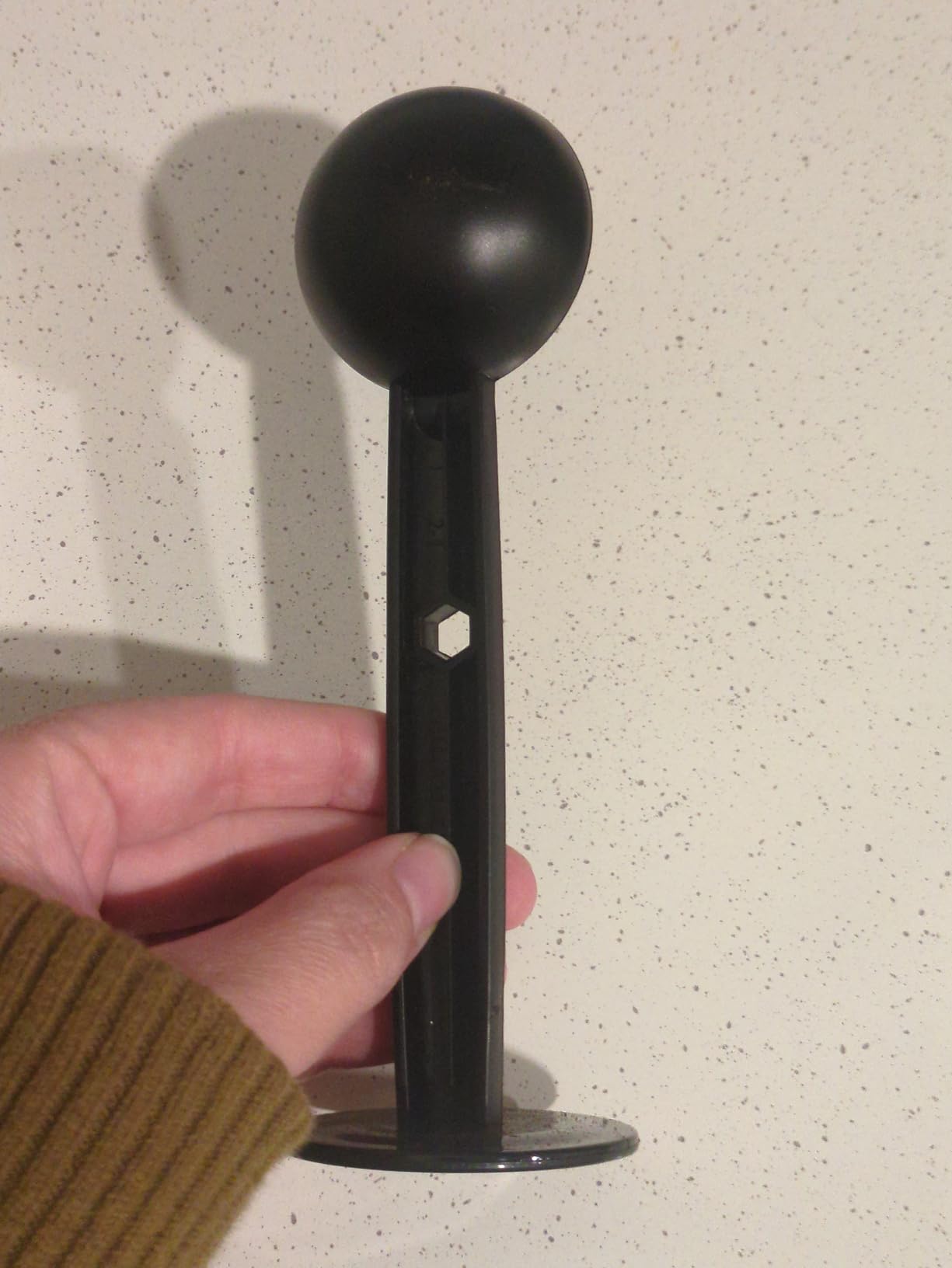
Second, the included tamper is the weak link. It is a flat plastic disc that will not help you learn even tamping. A proper 51mm tamper is a small upgrade, and it makes a bigger difference to shot quality than anything else you can buy for this machine.
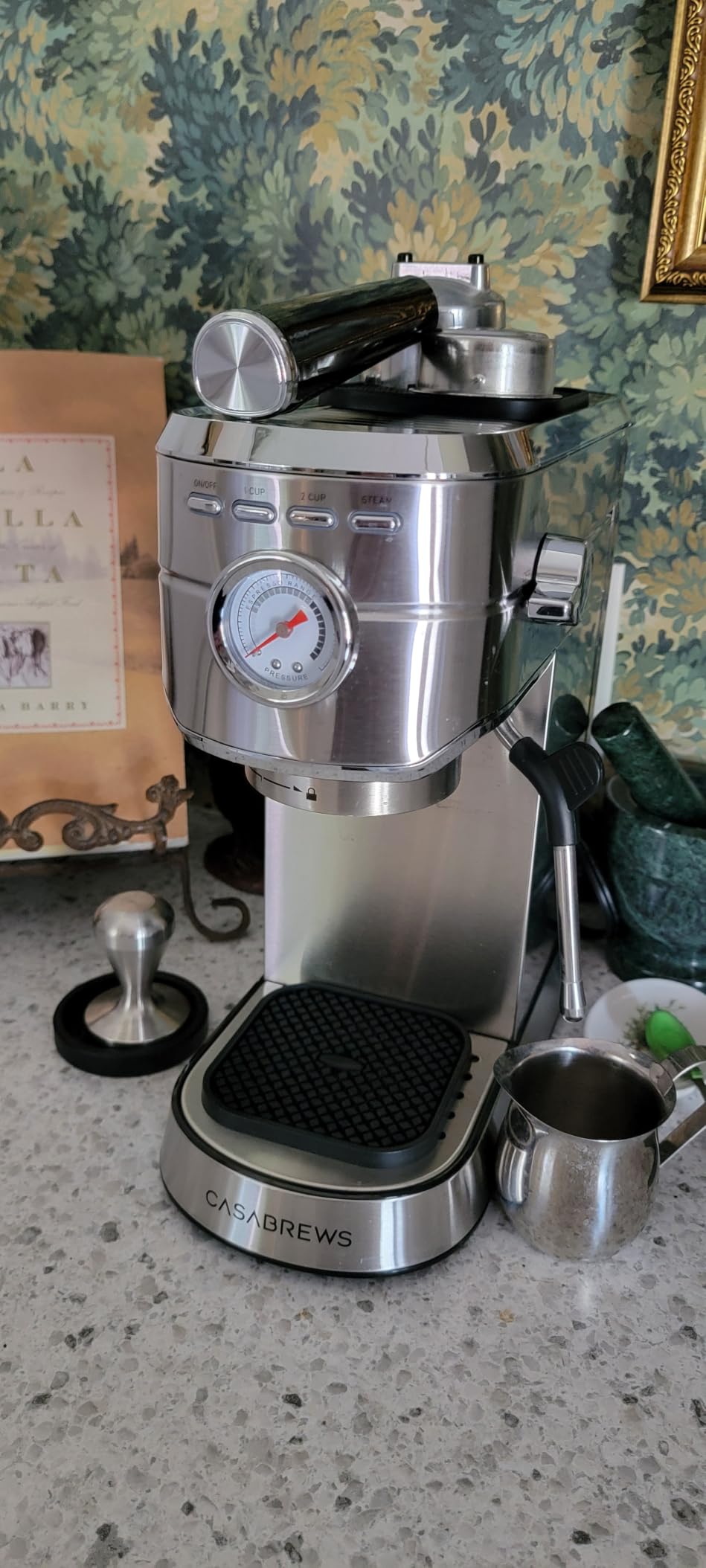
Why a pressure gauge matters more than a pump number
The 20 bar figure on the box is marketing shorthand for a 1350 watt pump. What you actually need is stable pressure at the group, roughly 9 bar, and a gauge is the only way to see it. When the needle sits flat in the mid range for the whole shot, your grind and dose are right. When it wanders, you know the problem is in the puck.
That feedback loop shortens learning time dramatically, which is why this machine suits a beginner who wants to understand extraction rather than just drink coffee.
Who should buy it and who should walk past
Buy it if counter space is your binding constraint, you want to learn dialing in, and you will swap the tamper. It is the strongest cheap route to a real understanding of pressure.
Pass if you make more than one milk drink back to back. The boiler wait is the deal breaker for a latte household, and the grind tolerance at this tier is narrow enough that cheap supermarket beans will frustrate you before the machine does.
4. Nespresso Essenza Mini: Top Rated for Hands-Free Consistency
Nespresso Essenza Mini Coffee and Espresso Machine by De’Longhi, 1150 watts, 110ml, Black
19 bar pump
Capacity 0.6 L
4.4 lb and 8 in tall
Programmable volumes
Pros
- Highest rating in this roundup
- Fastest and most consistent shots with zero technique
- 4.4 pound footprint for desks and offices
- Programmable espresso and lungo volumes
Cons
- No milk frother
- so lattes need a separate wand
- Locked to one capsule format
- Small tank means frequent refills
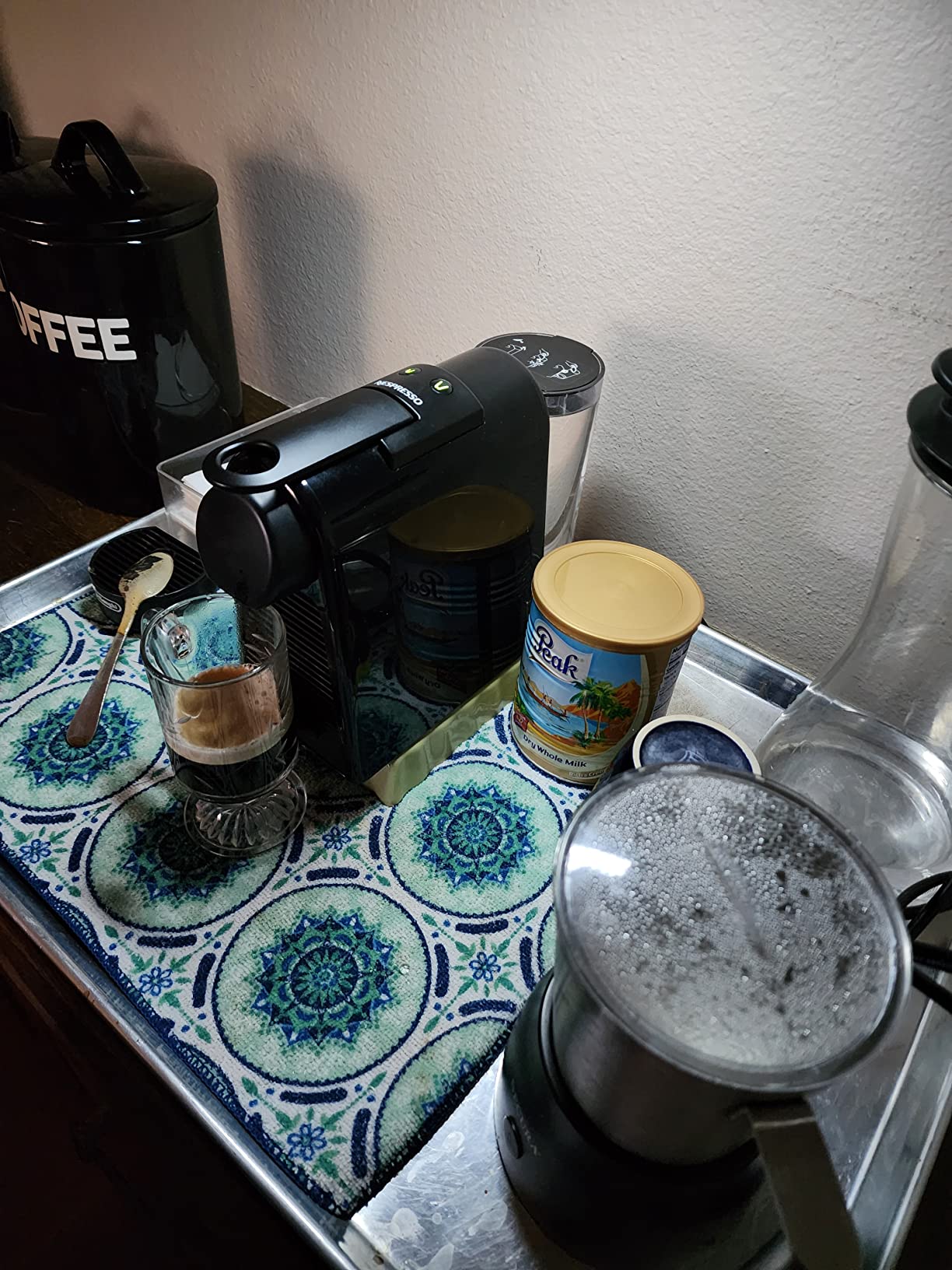
The Essenza Mini earns the highest rating in this roundup at 4.6 stars, and the reason is simple: it removes every variable. No grinding, no tamping, no pressure guesswork, no dial-in. You press a button and get the same shot in seconds, every time, which is exactly what the majority of buyers at this budget actually want.
It is also the smallest and lightest machine here at 4.4 pounds and 12.79 inches wide, with an 8 inch tall body that fits an office desk, a dorm room or a second kitchen. Owners consistently report a clean crema and a genuinely pleasant espresso drink, and the removable tank with auto shut-off makes upkeep close to zero.
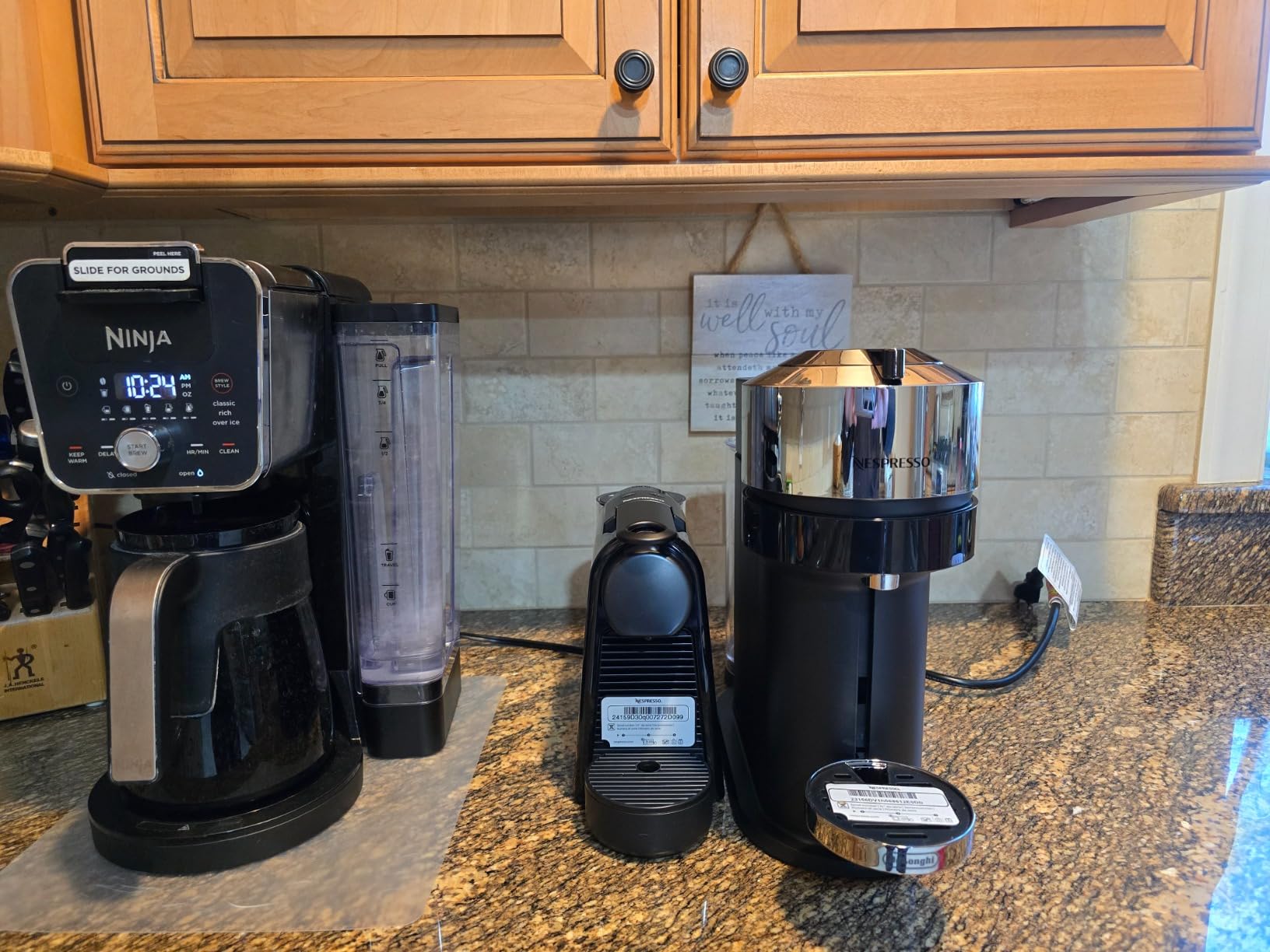
What you give up is control and flexibility. There is no portafilter, no grinder, no way to change dose, and no milk system at all. If you drink lattes, you are buying a separate handheld wand, which pushes this out of the reason you picked it. The 0.6 liter tank is also the smallest on this list, so you will refill it more often than any other machine here.
The running cost is the real consideration. Capsules are a recurring per-cup expense, and the format locks you to one pod system rather than letting you buy any coffee you like. For a two-drink-a-day household that adds up over years.
When consistency beats control
There is a version of espresso buying where control is the goal, and a version where reliability is the goal. This machine is for the second. If your mornings involve a commute, a shared kitchen or no interest in a 15 step process, the repeatability of a capsule system beats a better shot you have to work for.
It is also the machine we recommend for a gift. There is almost nothing to go wrong and almost nothing to explain.
Who should buy it and who should walk past
Buy it if you drink straight espresso or lungo, want the smallest possible footprint, and refuse to learn a manual workflow. It is the most recommended machine here for a first espresso purchase and the least demanding.
Pass if you drink milk drinks daily, if you care which beans you use, or if you want to grow into the hobby. You cannot grind with it, you cannot upgrade it, and the plastic body and light build will not satisfy anyone who wants a machine on the counter to look like a coffee bar.
5. Gevi 20 Bar Compact: Best Metal Build in the Small Footprint Class
Gevi 20 Bar Compact Espresso Machine for Home,Latte、Cappuccino Coffee Maker
20 bar pump with NTC control
Built-in pressure gauge
Stainless steel body
8.6 lb
Pros
- All-metal housing with very little plastic
- Pressure gauge plus pre-infusion
- Automatic single and double shot metering
- Removable froth nozzle simplifies cleaning
Cons
- Single boiler wait after frothing
- Included plastic tamper is weak
- Stainless finish shows fingerprints
The Gevi is the machine we would pick if the only thing that mattered were how it looks and feels in the hand. The housing is stainless steel with very little plastic, which is unusual at this tier and immediately obvious when you lift it. At 8.6 pounds and 12.3 by 5.5 by 12 inches, it shares the compact footprint class with the CASABREWS machines without feeling cheap.
Technically it is a step above the usual entry spec. You get a 20 bar pump, NTC temperature control, pre-infusion, a built-in pressure gauge, and one-button metering for single and double shots. That metering matters more than it sounds, because it replaces manual pump timing with a repeatable dose so your learning curve is about grind rather than stopping the flow by eye.
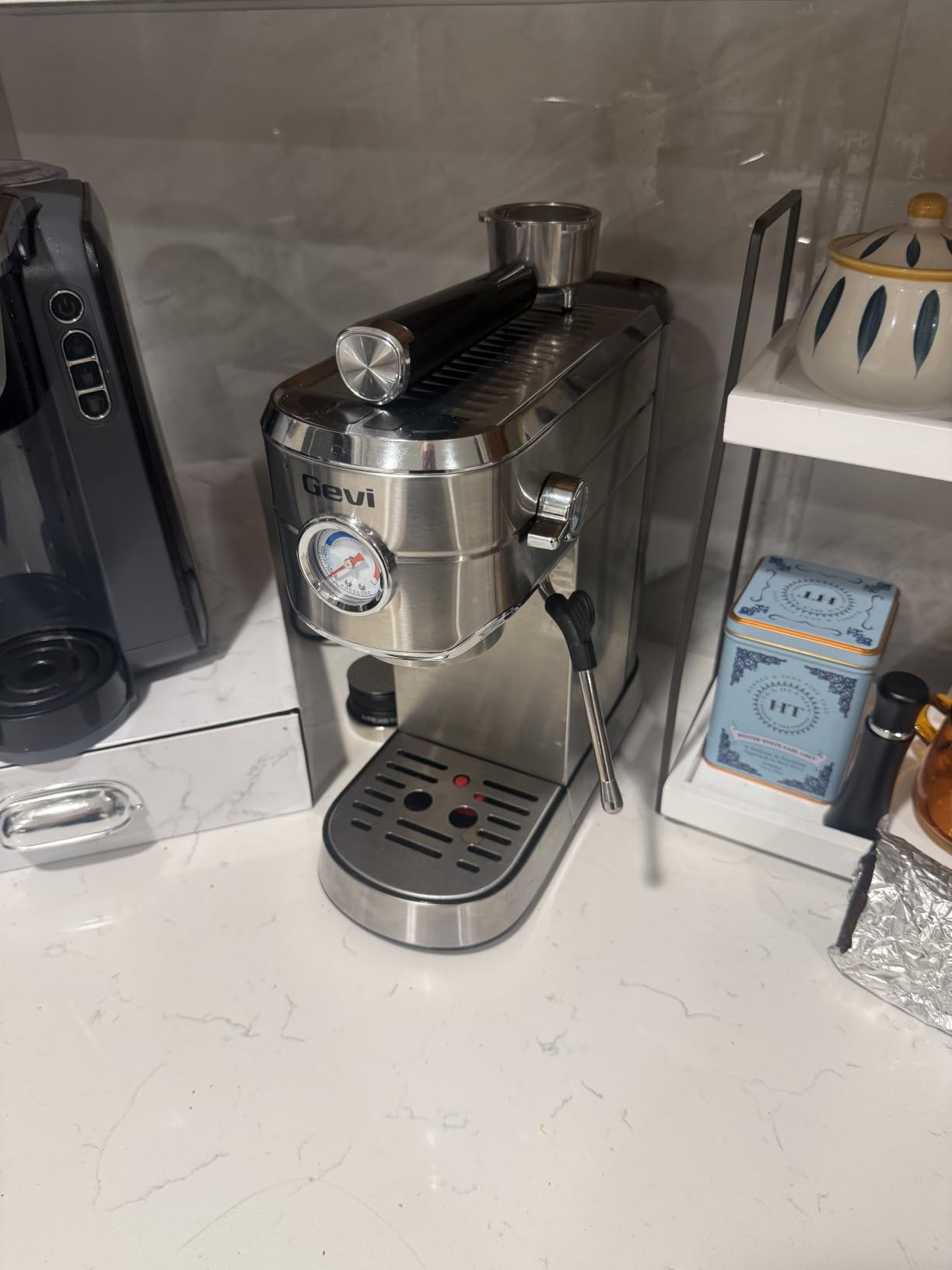
Owners treat this as a step up from the cheapest entry machines and credit the combination of metering, gauge and metal construction for more repeatable shots. The removable froth nozzle is a small quality-of-life feature that makes the end-of-day clean faster than a fixed wand tip.
The steel does bring its own small problems. It shows fingerprints, the cup warmer on top does not actually keep drinks warm, and the hot water function comes out in slow spurts rather than a steady stream. The 51mm portafilter also limits basket upgrades, so plan to stay with standard baskets.
Why one-button dosing helps a beginner most
The hardest part of a first manual espresso machine is stopping the shot. Buttons that meter a single and a double shot solve that for you, which means your mistakes narrow to dose and grind instead of dose, grind and timing. On a machine this size, that is the difference between a week of frustration and a week of progress.
Add the gauge and you have a real feedback loop: set the dose, pull the shot, read the needle, adjust.
Who should buy it and who should walk past
Buy it if you want a machine that looks substantial on the counter, you like button-driven workflows, and you want the pressure gauge without moving up a size. It suits a home that treats its coffee corner as furniture.
Pass if you steam several jugs in a row. Like the other single boiler machines here, the wait after frothing is the practical limit, and the included plastic tamper will be the first thing you replace.
6. CASABREWS 3700 Essential: Most Versatile With the Biggest Tank
CASABREWS 3700 Essential Stainless Steel Espresso Machine with Steam Wand
20 bar pump
43.9 oz tank
51mm portafilter
8.1 lb
Pros
- Entry price with genuine pump-driven espresso
- 43.9 oz tank lasts all day
- Compact body with removable drip tray
- Owners report years of daily use
Cons
- No pressure gauge at all
- Steam wand has a run time limit before cooling
- Grind tolerance is narrow
- Steam dial can drift open
The 3700 Essential is one of the cheapest routes to owning a pump-driven espresso machine, and for a lot of people that is exactly the right stopping point. It delivers real espresso with crema out of the box, heats quickly, and pulls two shots in a row without drama. The 20 bar pump and 1350 watt heating system do their job.
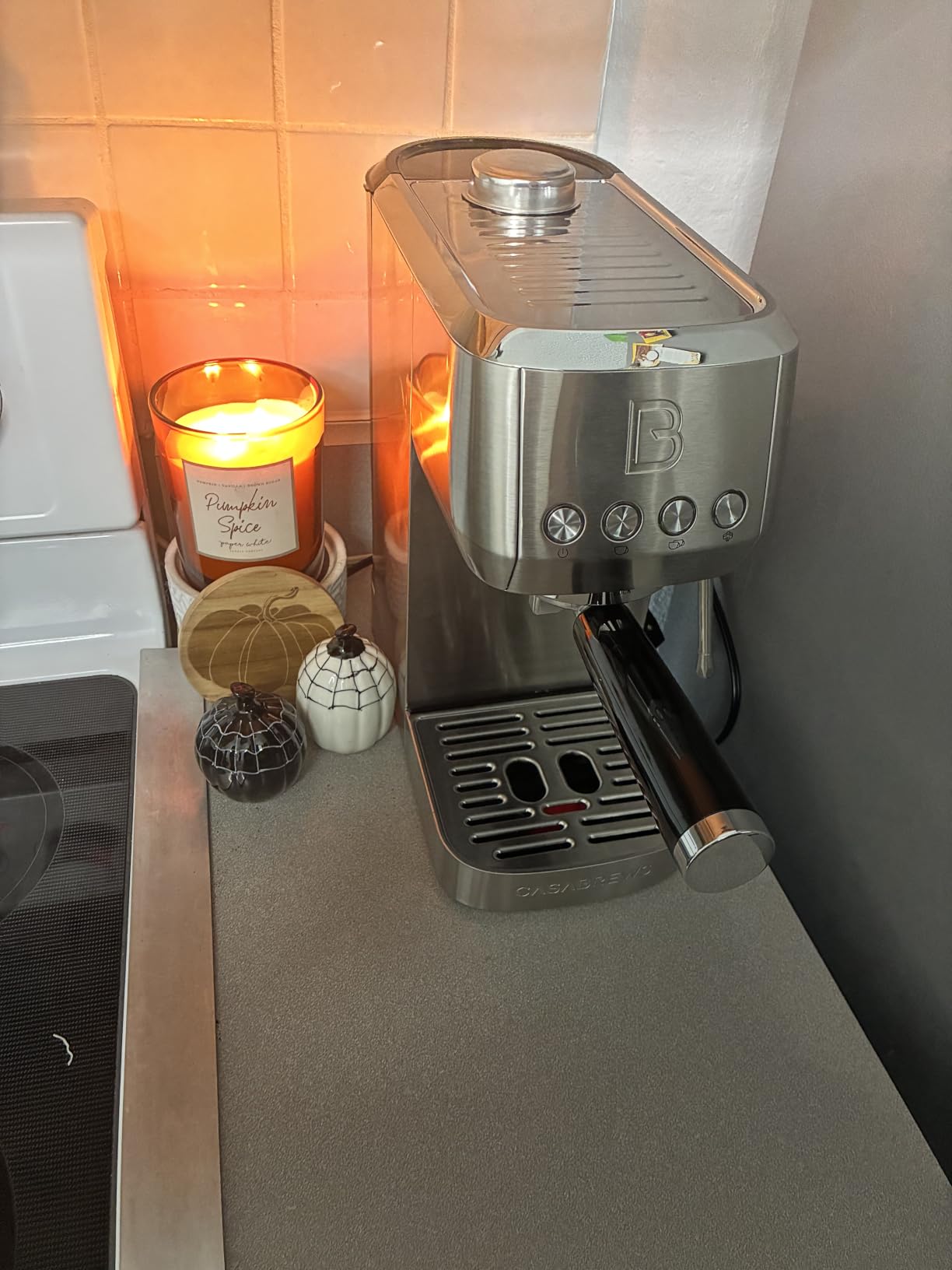
Its standout feature is the 43.9 oz detachable tank, the largest reservoir in the compact class and more than a third bigger than the 34 oz tank on the CASABREWS CM5418. In an office, a shared apartment or a household that drinks several coffees a day, refilling a smaller tank several times a day is the most annoying part of a compact machine, and this one mostly removes that problem. The removable drip tray also fits taller mugs than most machines in this size class.
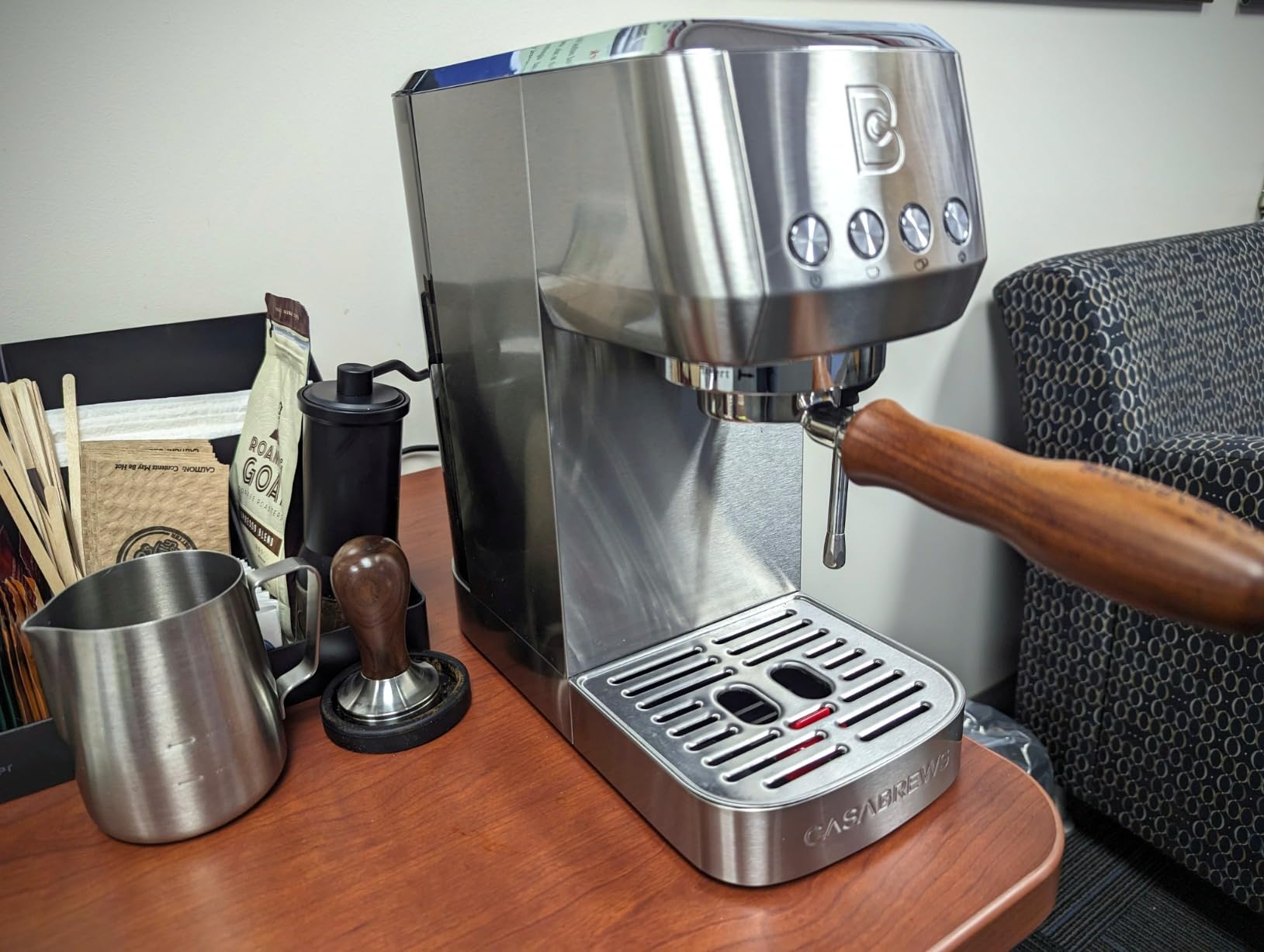
The compromises are real and you should hear them plainly. There is no pressure gauge, so extraction is judged by taste and timing alone. The steam wand has a continuous run time limit before it needs to cool, which constrains how many milk drinks you can make in a row. And the grind tolerance is narrow, meaning a coarse grind produces a fast, sour shot with no warning.
A small number of owners also report the steam control dial drifting open during extraction, which bleeds pressure mid-shot. It is a minority complaint, not a pattern, but it is worth knowing before you rule it out.
The refill argument in plain terms
Every machine here except the capsule unit asks you to refill a tank. A 34 oz tank means roughly four doubles before you top up, and a 43.9 oz tank pushes that to six or so. Over a year of daily use, that is dozens of avoided trips to the sink, and it is the least glamorous but most consistent advantage this machine has.
It also runs in several colours, which matters more than it sounds if the machine lives in a shared kitchen.
Who should buy it and who should walk past
Buy it if this is your first espresso machine, you drink mostly black espresso or Americano, and you want something you can run daily without thinking about it. Owners report long service lives on this model, which is the best argument for it.
Pass if milk is half your order, if you want to grow into the hobby, or if you need to see pressure to learn. Without a gauge you are dialing in blind, and that makes this a machine to graduate from rather than settle into.
7. Breville Bambino: Best for Buyers Who Already Own a Grinder
Breville BES450BSS Bambino Espresso Machine, Brushed Stainless Steel
ThermoJet ready in 3 seconds
PID temperature control
Automatic steam wand
10.9 lb
Pros
- Fastest heat-up in the roundup
- PID holds temperature between shots
- Automatic steam wand with texture control
- Compact 6.3 inch width
Cons
- Lowest rating in the group at 4.0
- No grinder and no pressure gauge
- Manual workflow with a learning curve
- Single boiler limits back-to-back drinks
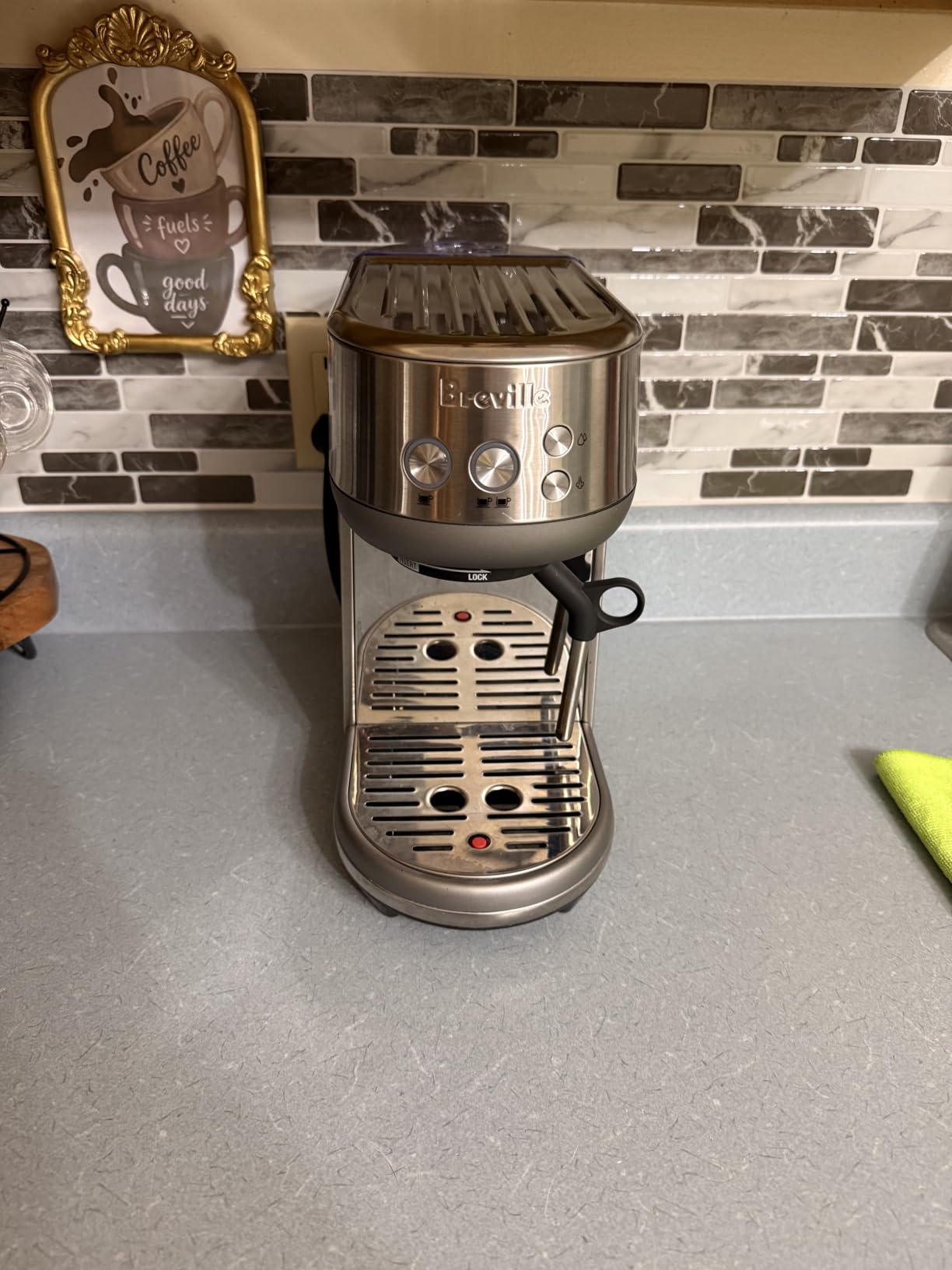
The Bambino is among the fastest machines here to become productive. The ThermoJet heating system reaches extraction temperature in about three seconds, which means you can go from pressing the button to a finished shot in less time than a bagel takes. When the machine is also the only other appliance on your counter, that speed is the feature you will feel every single morning.
Temperature control is the other strength. PID digital regulation holds the brew temperature steady shot after shot, which is what stops a cheap machine from tasting flat in the afternoon. Low pressure pre-infusion wets the puck before full pressure hits, which reduces channeling, the uneven flow that gives beginner shots their bitter edges. The 54mm portafilter doses the specialty standard of 19 grams.
This is also the lowest rated machine in the roundup at 4.0 stars, and the rating data explains why. There is no built-in grinder and no pressure gauge, so two of the three things that make dialing in easy are simply absent. The reviews split cleanly between owners who already had a burr grinder and rated it well, and first-time buyers who did not and rated it poorly.
If you read that and you have a grinder already, the low rating is not a warning. If you do not have a grinder, this machine is the wrong shape of purchase, because the separate grinder will cost you more than the machine saved you.
Why speed only matters if the grind is already good
Three-second heat-up is useless on coarse, stale grounds. A fast machine just produces a fast bad shot. This machine rewards you for the work you do beforehand: fresh beans, a burr grinder, a scale, and a consistent tamp.
That is why the automatic steam wand is such a good match for it. Steam becomes one button instead of a technique, which keeps the drink side simple while you concentrate your learning on the brew side.
Who should buy it and who should walk past
Buy it if you own a burr grinder and want a compact, fast machine for espresso plus milk drinks in a small kitchen. The 6.3 inch width makes it one of the easiest to place, and the included baskets, jug, tamper, cleaning tool and descaling powder cover everything new owners forget to buy.
Pass if you are starting from nothing. You would be adding the cost of a grinder to the machine total, and without a pressure gauge you have no feedback while you learn. For a first purchase, the Barista Express covers both needs in one body.
8. Ninja Luxe Cafe Premier: Best All-in-One for Multi-Beverage Households
Ninja Luxe Café Premier 3-in-1 Espresso Machine, Drip Coffee, & Cold Brew
Three brewing modes
Built-in grinder, 25 settings
Dual froth system
13.39 in wide
Pros
- Espresso
- drip coffee and cold brew in one body
- Built-in burr grinder with 25 grind settings
- Weight-based dosing and assisted tamping
- Hands-free frothing with four presets
Cons
- Widest body on this list
- Guided modes need practice to get the best from
- Consumables add to the running cost
The Ninja Luxe Cafe Premier is the only machine here that covers three brewing methods: espresso, drip coffee and cold brew. For a household where one person drinks espresso and another drinks a large cold brew, that removes two appliances from the counter and settles the argument about counter space on its own.
The automation goes further than any other pick. A built-in conical burr grinder offers 25 grind settings, and Barista Assist Technology handles precision grinding, weight-based dosing and assisted tamping so the puck is pressed consistently even when you are not paying attention. The Dual Froth System combines a spinning whisk with an automatic steamer and four presets, so microfoam is close to hands-free.
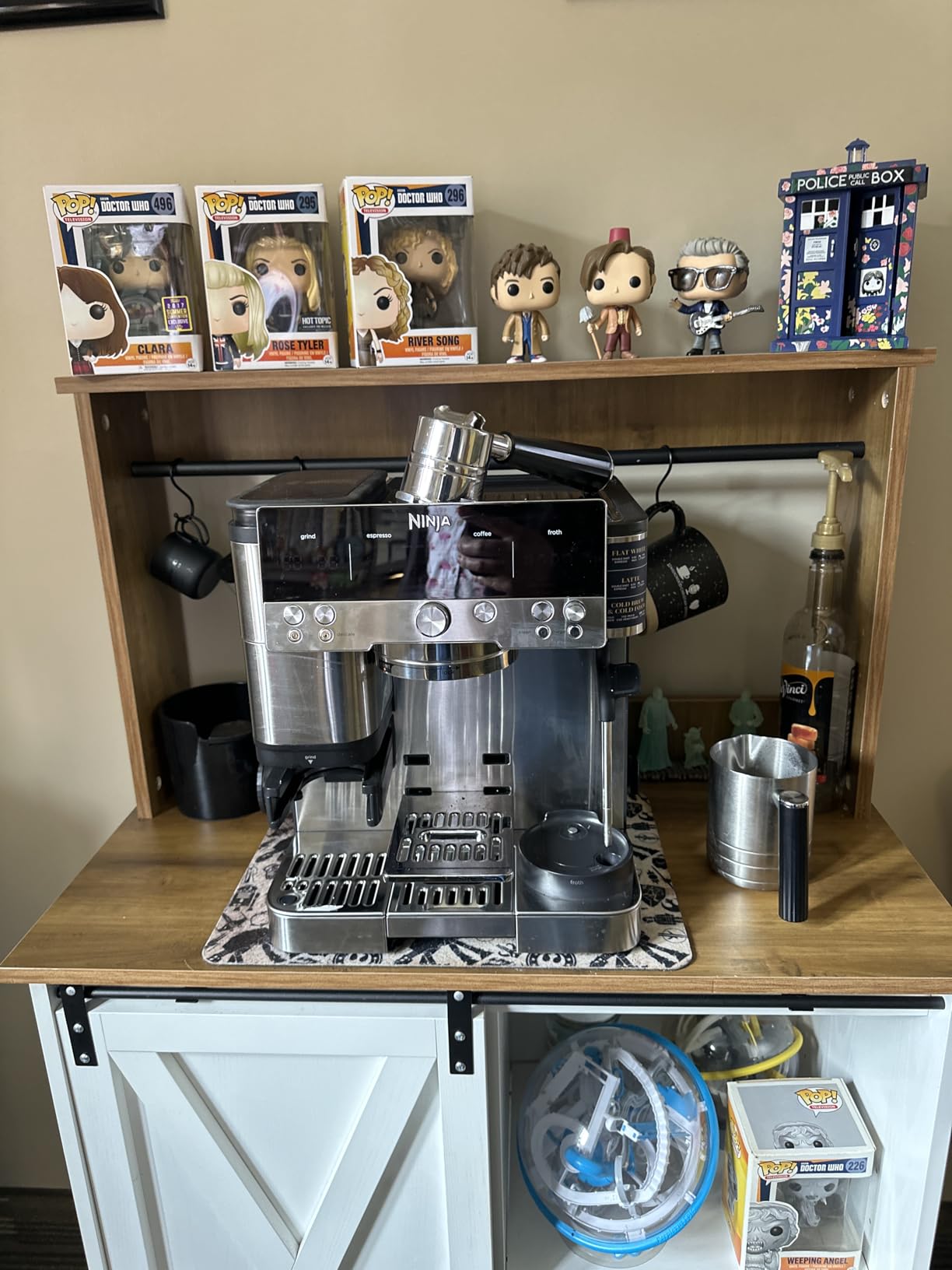
It also adjusts temperature and pressure in real time based on which drink you selected, and the cold-pressed mode brews at a lower temperature and pressure for a softer, longer style. Accessory storage is integrated and the removable parts are dishwasher safe, which makes cleanup faster than anything else in this roundup.
Two honest caveats. This model commonly sits above our 500 dollar ceiling and only makes this list when it drops into the band, so treat the price as a moving target and compare before you commit. It is also the widest body here at over 13 inches, which rules out narrow shelves no matter what the price does.
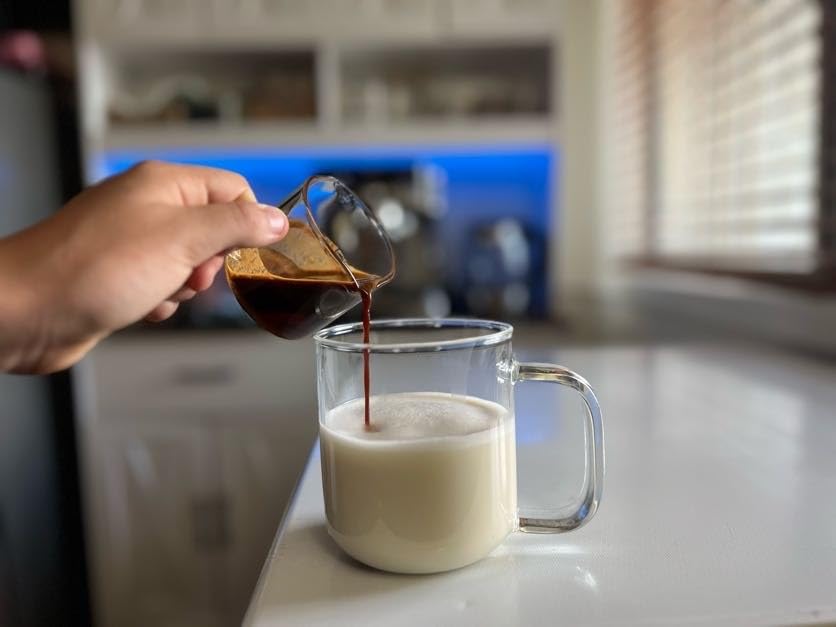
Where assisted tamping actually earns its place
Uneven tamp pressure is the most common cause of channeling in beginner shots, and it is the one mistake that is invisible until the cup tastes wrong. Assisted tamping applies a consistent force every time, which means the variable disappears from your workflow entirely.
Weight-based dosing does the same job for quantity. Between the two, you are left controlling grind size and recipe, which are the two adjustments you actually want to be making in your first year.
Who should buy it and who should walk past
Buy it if your household drinks more than one style of coffee, if you want froth without technique, and if you have counter space to spare. It is the most complete single box on the list and the least demanding to operate.
Pass if espresso is the only thing you care about, because you are paying for drip and cold brew capability you will not use. Cleaning tablets, descaling powder and the accessory kit also add to the running cost, and espresso quality still depends on bean freshness and dose accuracy no matter how good the automation is.
9. Breville Bambino Plus: Best for Latte Drinkers Who Want Hands-Free Milk
Breville BES500BSS Bambino Plus Espresso Machine, Brushed Stainless Steel
Automatic steam wand
Auto purge after steaming
ThermoJet in 3 seconds
2 year warranty
Pros
- Auto purge resets temperature after steaming
- Automatic wand with texture control
- Compact 7.6 inch depth suits small kitchens
- Two year warranty is the longest here
Cons
- No built-in grinder
- No pressure gauge
- Manual brew workflow with a learning curve
- Single boiler limits simultaneous brewing and steaming
The Bambino Plus is built around one problem: what happens to your shot after you steam milk. Most thermoblock machines lose temperature during steaming and need a manual purge before the next shot tastes right. The auto purge function here resets the heat system automatically, so the shot after a latte pulls at the same temperature as the one before it.
The automatic steam wand is the other half of the appeal, with adjustable milk temperature and texture settings so you can land on a repeatable foam without counting seconds. Combined with ThermoJet heating in about three seconds, PID temperature regulation, low pressure pre-infusion and a 54mm portafilter dosing 19 grams, it is a genuinely capable brew path.
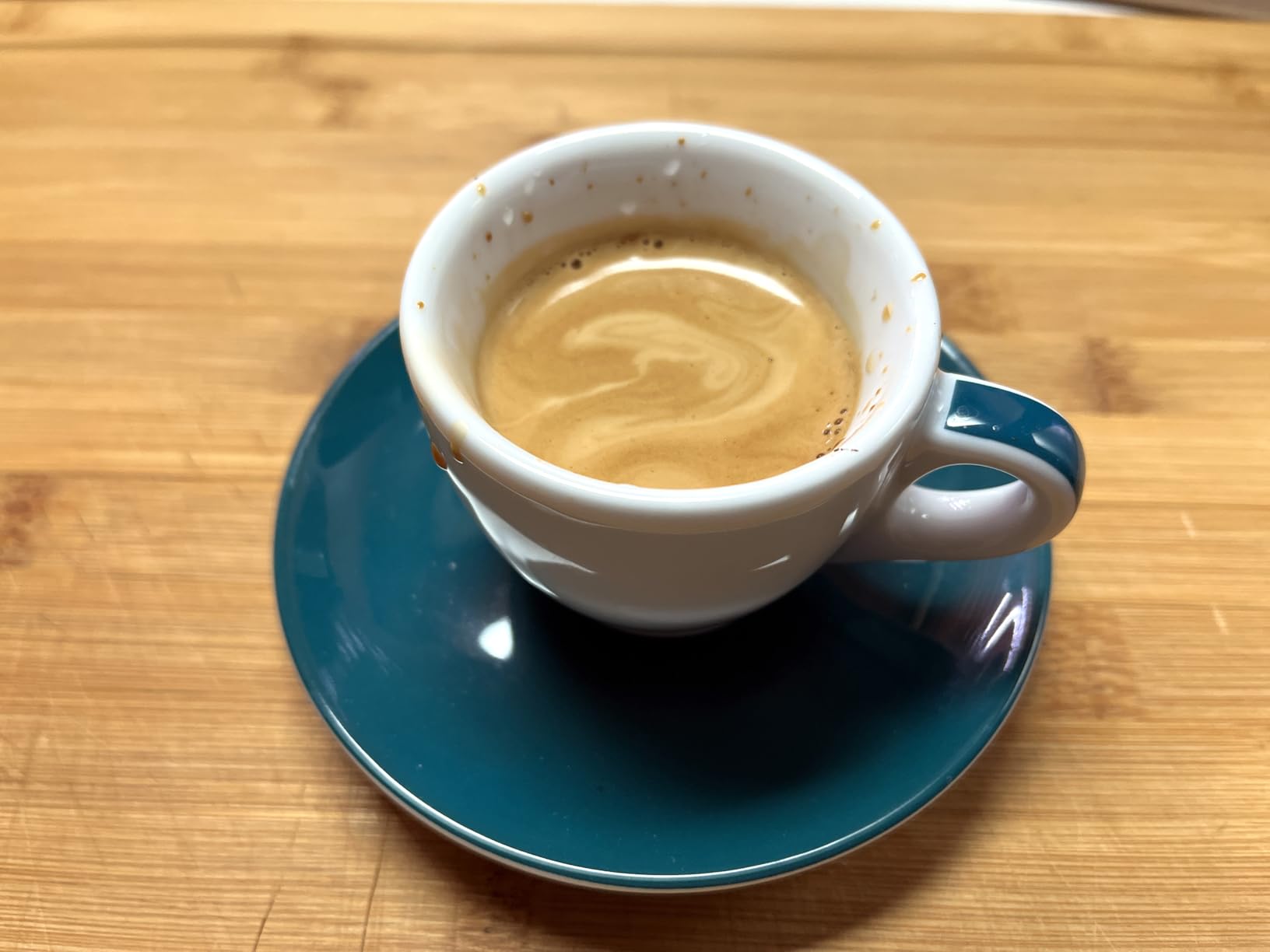
What stops it from winning this roundup is the same thing that limits the plain Bambino: no built-in grinder and no pressure gauge. For a buyer who already owns a burr grinder, that is a fair trade for the auto purge and the automatic wand. For a buyer starting from nothing, it means the true cost is machine plus grinder.
At 7.6 inches deep and 12.5 inches wide, it is one of the narrower bodies in the roundup, and the two year limited warranty is the longest coverage of any machine here, which matters if you plan to keep it past year three.
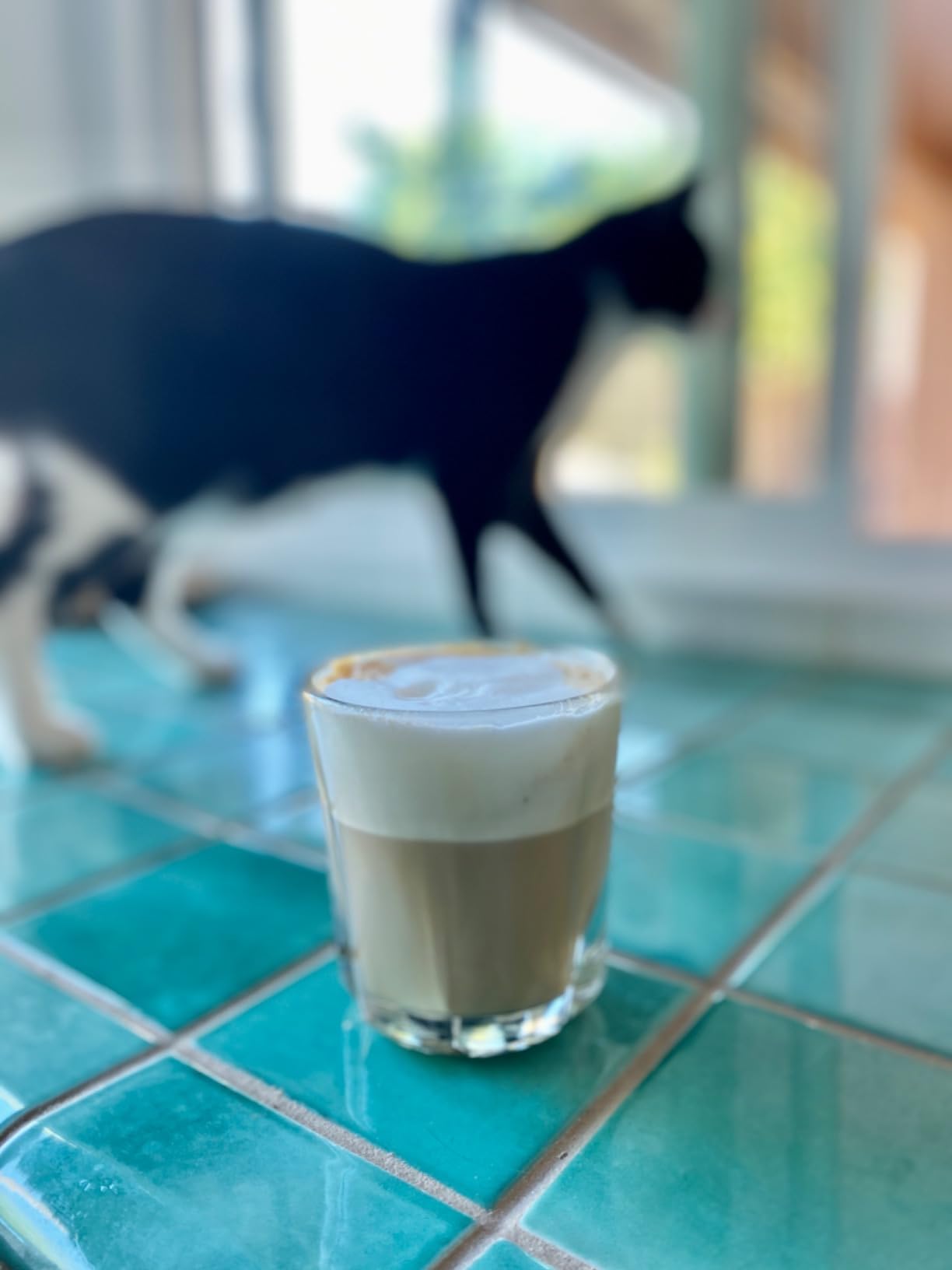
Why auto purge changes a multi-drink morning
On a single boiler machine, the order of operations defines the day. Steam first and you must wait for recovery before brewing. Brew first and the wand cools the group, so the next shot can pull cool unless you purge by hand. Auto purge removes that decision entirely, which is why this machine suits a household running several milk drinks back to back.
The texture control on the wand is worth a note too. It gives you a repeatable starting point, and from there the only skill worth learning is how far to push it.
Who should buy it and who should walk past
Buy it if you already own a grinder, drink lattes and cappuccinos most days, and want the milk side handled for you. It is also the pick for anyone who values warranty length over built-in hardware.
Pass if you are buying your first machine and your first grinder at the same time. The Barista Express covers that case in one body, and its pressure gauge will shorten your learning curve considerably. Buyers who ranked this model lower in reviews pointed at exactly these two gaps.
10. De’Longhi Classic Signature: Most Versatile Steam Wand at the Entry Level
De’Longhi Classic Signature Espresso Machine, Adjustable Milk Frother
15 bar Italian pump
Thermoblock heating
1.7 L tank
Pressure gauge
Pros
- Two-setting steam wand covers plain steamed milk to microfoam
- Pressure gauge on a machine at this tier
- Fast thermoblock heat-up and quiet running
- Removable 1.7 L tank with level markers
Cons
- No true brew temperature regulation
- Portafilter has no basket retention latch
- Substantial plastic construction
- New plastic smell for the first few brews
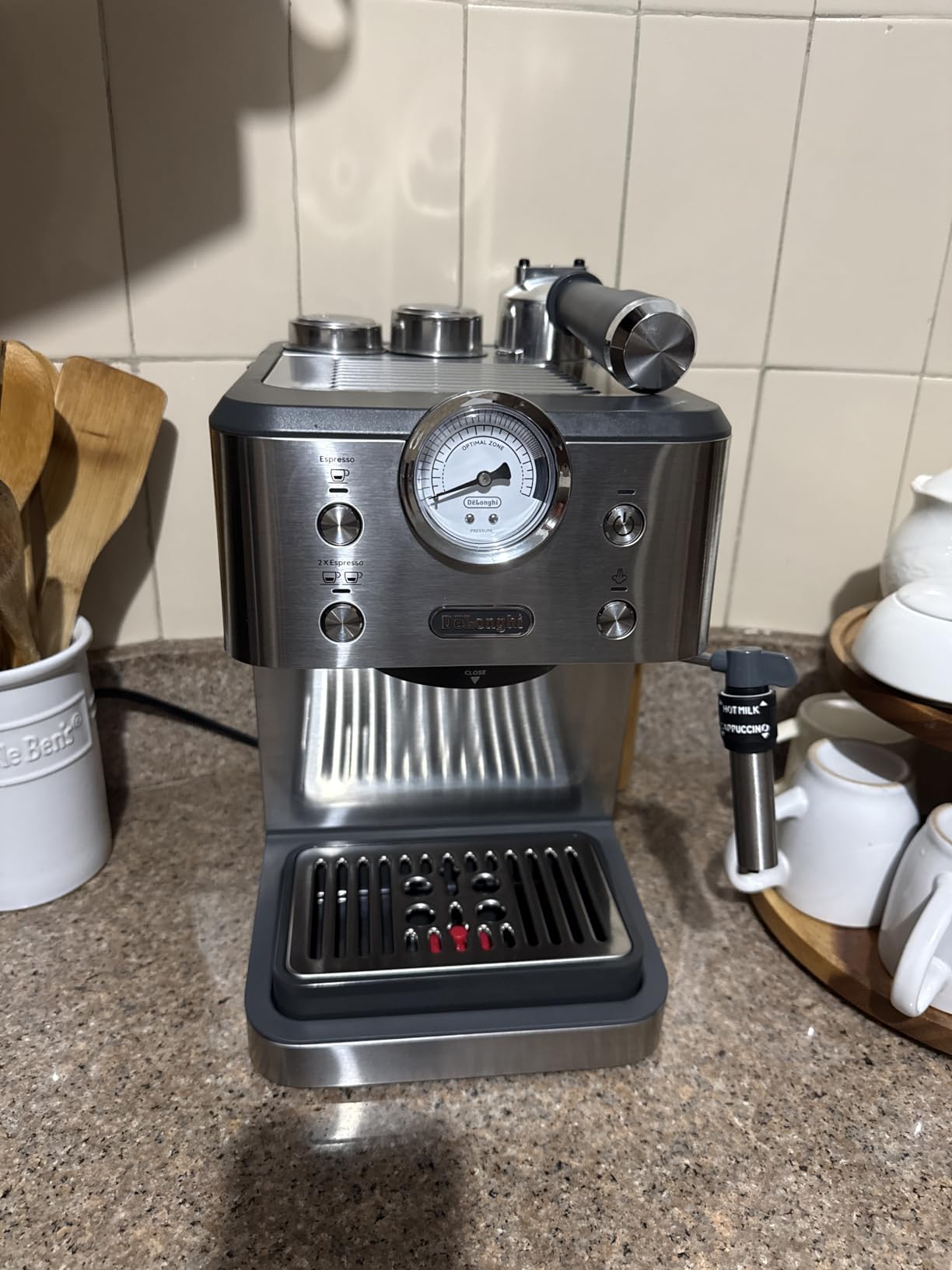
The De’Longhi Classic Signature has the most adjustable steam wand of any machine in this price band, and for a household that serves both cappuccinos and flat whites, that matters more than most spec sheets suggest. The two-setting wand moves from plain steamed milk up to microfoam, and owners frequently report the stainless body and gauge make it look like a machine from a higher tier.
The 15 bar Italian pump and thermoblock heating give fast, stable temperature control, and the customisable single and double espresso presets take some of the guesswork out of dosing. The removable 1.7 litre tank is the second largest here, with printed level markers that double as a descaling reference, which is more thoughtful than it sounds.
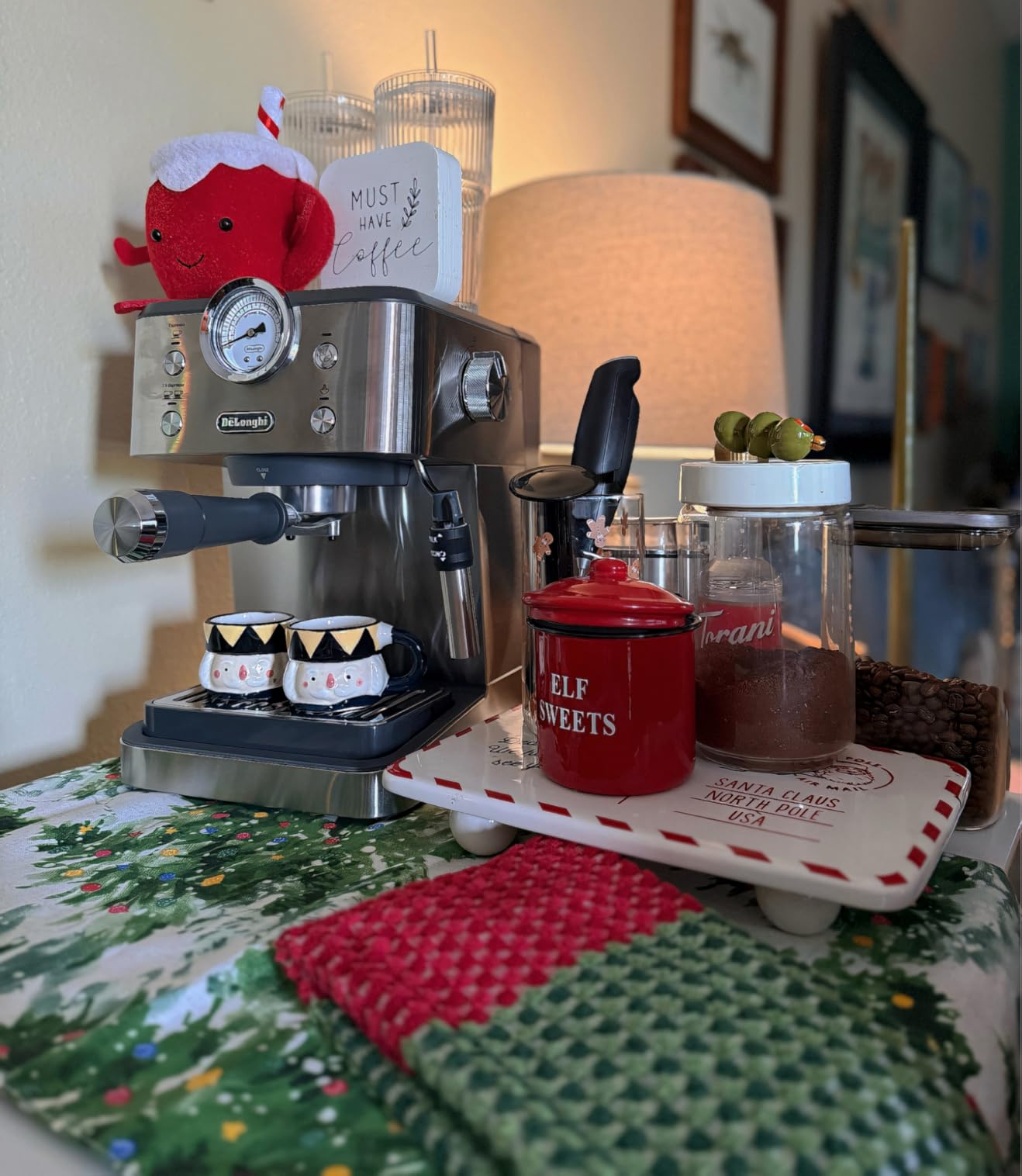
There is no true brew temperature regulation on this model, and owners who measure water temperature note it can sit below ideal. That is the cost of a thermoblock without PID, and it shows up as more variability between shots than the Breville machines deliver. The plastic-heavy build is the second honest drawback, particularly given the stainless exterior.
Most annoying detail: the portafilter has no basket retention latch, so the filter can fall out when you dump the grounds. Learn to twist the basket to lock it in place and the problem disappears, but expect to lose a basket to the sink once.
Why wand range beats wand power in a small kitchen
A wand that only produces microfoam forces you to learn the whole range from scratch. A two-setting wand gives you a floor and a ceiling, and the useful skill in between is the one that takes an afternoon. For a household with mixed drink orders, that is a better use of a machine than raw steam pressure.
The thermoblock also means you can brew and steam in either order without a long recovery, which most of the single boiler machines on this list cannot offer.
Who should buy it and who should walk past
Buy it if your household drinks a wide mix of milk drinks, you want a pressure gauge without moving up a size, and you like the Italian styling on the counter. Owners also report it runs quietly, which matters in an open-plan flat.
Pass if shot-to-shot consistency is your priority, since there is no brew temperature regulation to hold the numbers steady. And check your counter for a drip tray clearance you actually like, because the missing basket latch will cost you a stray filter at least once.
The Grinder Problem: Your 500 Dollar Budget Is Really 300 for the Machine
Here is the part of an affordable espresso machine purchase that most roundups leave out. Eight of the ten machines on this list come with no grinder at all, and the two that do include one are the exception rather than the rule. A dedicated espresso burr grinder in this category typically adds 150 to 200 dollars on top of the machine, which means a 500 dollar budget is realistically a 300 dollar machine budget.
That is not a sales tactic, it is physics. Espresso is brewed at roughly 9 bar through grounds fine enough to feel like sand, and only a burr grinder produces that consistently. A blade grinder produces dust and boulders at the same time, and no amount of technique downstream fixes it. When people ask whether a 200 dollar machine with a good grinder beats a 500 dollar machine with a bad one, the answer from almost every forum thread is yes, without much debate.
So decide which situation describes you. If you already own a burr grinder, the Breville Bambino and Bambino Plus become far more attractive, because they are the fastest machines here once the grind is right. If you are starting from nothing, the Barista Express is the only conventional pick that solves the grinder problem in one body, and the remaining budget goes to beans, a tamper and a scale rather than a second appliance.
Two basket decisions that change the cup
Almost every manual machine here ships with both pressurized and non-pressurized baskets. The pressurized basket forces its own resistance through the grounds, which masks a bad grind and produces a forgiving, slightly dull shot. The non-pressurized basket lets the machine’s 9 bar do the work, which tastes better and shows you every error you make.
Use the pressurized basket for your first ten shots, then switch. Owners on r/espresso report the same thing: the non-pressurized basket is where improvement becomes visible, and once you taste the difference you stop going back.
Water matters more than most buyers expect
Every thermoblock machine in this roundup heats water in a small volume of metal, and scale deposits form quickly on those thin surfaces. Hard water shortens machine life and flattens flavour; the AI buying summaries that accompany this search result all flag it for a reason. Use filtered or bottled water rather than tap, change the water daily if the tank sits out, and run the descale cycle when the indicator lights rather than when the taste drops.
On ownership costs, budget for descaling solution and a group head gasket every 12 to 18 months. Those two items, plus beans, are the running cost of this hobby. Machines like the Barista Express also carry a one year limited warranty, so the Bambino Plus stands out here with two years of coverage.
How to Choose an Espresso Machine Under 500 Dollars
Six decisions account for almost every difference between the machines above. Work through them in order and the list narrows to one or two options in about ten minutes.
1. Decide how much of the process you want to own
Start with your honest answer to one question: do you want to make coffee or want to make espresso. The capsule machine removes every step and gives the most consistent result. The manual lever machine gives you total control and the most to learn. The semi-automatic machines sit in the middle, and for most first-time buyers that middle is the right place.
Automatic milk systems are a separate decision within that choice. A manual wand teaches latte art and gives you range. An automatic wand gives you repeatable foam with one button and a temperature setting. Neither is better; they are different jobs.
2. Understand thermoblock versus single boiler
A thermoblock, also sold under names like ThermoJet, heats water on demand in a few seconds. It is fast and thermally responsive, but it has low thermal mass, so a cold portafilter can give you a cool shot. Single boiler machines store heated water, which produces more robust steam and often better texture, but they need a recovery pause between steaming and brewing.
Dual boiler machines, which heat brew and steam water separately, are the category enthusiasts ask about and they are simply not available at this price. That is the honest limit of this budget, and it is worth knowing before you start shopping.
3. Treat 54mm and 58mm as the same decision
Portafilter size is a proxy for ecosystem size. The 54mm basket used by the Breville machines, the Gevi and the De’Longhi entries is the same standard the specialty world settled on, with a 19 gram dose, and the accessory market around it is enormous. Smaller 51mm baskets appear on the cheaper machines here and limit your basket and tamper options.
For a beginner, 54mm is the path with the most room to grow. It is also the size most third-party baskets, distributors and recipe guides assume.
4. Budget the grinder before the machine
If you do not own a burr grinder, work backwards from your total. A 300 dollar machine plus a 200 dollar grinder produces better coffee than a 500 dollar machine and a blade grinder, every time. If you will only ever spend 500 dollars total, choose a cheaper semi-automatic machine and put the rest into a proper grinder, then upgrade the machine later when you know what you like.
For readers who enjoy the same total-cost approach on other categories, we have covered the best home theater receivers under 500 and the best beginner sewing machines for small projects using that same method.
5. Measure the counter before you fall in love
Counter space is the most common reason a good machine ends up in a cupboard. Check three numbers: width, since the bodies here run from 5.47 inches wide on the CASABREWS to over 13 inches on the Ninja; height, since the reservoir is top-filled and needs clearance above the machine; and depth, since the wand swings out to the side. The Bambino and Bambino Plus are the middle ground at around 6.3 to 7.6 inches deep, which fits most counters without a dedicated coffee station.
6. Know what this budget does not buy
Five realistic limits. No dual boiler heating at this price, so brewing and steaming share a system. No truly excellent integrated burr grinder on a portafilter machine under 500 dollars, which is why the Barista Express grinder is a known compromise rather than a benchmark. No heated milk carafes. No pressure profiling. And no machine that will still pull café quality on a supermarket bag of beans, regardless of what the pump rating says.
That last point is the one forum readers keep returning to. If your 500 dollars includes beans and a grinder, the models that show up most often in those conversations are upgrade targets further up the price range, and the machines here are the correct place to start until then. Whichever you choose, buy a scale and a decent tamper in the same order, because those two tools change your results more than any machine on this list.
Frequently Asked Questions
What is the best home espresso machine under 500 dollars?
The Breville Barista Express is the best espresso machine under 500 dollars because it is the only option in this range that includes a real conical burr grinder alongside PID temperature control, a pressure gauge and a manual steam wand. If you already own a burr grinder, the Breville Bambino Plus is the better pick for daily milk drinks because its auto steam wand and auto purge remove the two hardest workflow steps.
Do I need to buy a separate grinder for an espresso machine?
If you buy a semi-automatic machine, yes. Eight of the ten machines in this roundup come with no grinder, and espresso needs fine, consistent grounds that only a burr grinder delivers reliably. Add roughly 150 to 200 dollars to the machine cost, or buy a cheaper machine and a good grinder with the same total. The two exceptions with built-in grinders are the Breville Barista Express and the Ninja Luxe Cafe Premier.
What is the best automatic coffee machine under 500 dollars?
For a machine that does everything with one button, the Nespresso Essenza Mini is the strongest choice in this range, holding a 4.6 star rating across more than 6000 reviews with a 4.4 pound footprint. For an automatic machine that also grinds beans and makes drip and cold brew, the Ninja Luxe Cafe Premier covers more drink types but needs more counter space. A super-automatic with a removable brew group sits above this price band.
What is the cheapest but best espresso machine?
The CASABREWS 3700 Essential is the cheapest credible pump-driven machine here and is a genuinely good first espresso machine, with a 43.9 oz tank that outlasts every competitor. The De’Longhi Stilosa sits slightly above it and gives you manual lever control plus a larger review base. Both require a separate grinder, so the honest cheapest route to good coffee is a cheaper machine paired with a burr grinder.
What is the 30 second rule for espresso?
A double espresso should run for roughly 25 to 30 seconds from the moment liquid starts leaving the portafilter, yielding about 36 grams of espresso in the cup. Faster than that usually means the grind is too coarse; slower means it is too fine. Treat the rule as a starting signal rather than a target, because dose weight, bean variety and roast all shift the numbers. Track yield on a scale for two weeks and the timing will settle on its own.
The Verdict: Which Espresso Machine Under 500 Dollars Should You Buy
The Breville Barista Express wins this roundup because it removes the single decision that trips up every other buyer. It has a burr grinder, a pressure gauge, PID control and a manual steam wand in one body, so the total cost of a working setup stays close to the machine cost. If you want one machine that does everything well, that is the one.
Choose by household instead. Latte drinkers who want hands-free milk should take the Breville Bambino Plus for its auto purge and two year warranty. Anyone starting from zero beans and no grinder should take the Breville Barista Express. Small kitchens should take the CASABREWS CM5418 for its 5.47 inch width and pressure gauge. Manual learners should take the De’Longhi Stilosa. The tightest budget with a big-tank daily routine should take the CASABREWS 3700 Essential. Metal-build seekers should take the Gevi 20 Bar Compact. Multi-drink households with counter space should take the Ninja Luxe Cafe Premier. And anyone who wants espresso without a learning curve should take the Nespresso Essenza Mini.
One last reminder, because it decides more shots than any model choice. Unless you own a burr grinder already, budget 150 to 200 dollars beyond the machine, buy filtered water, and start with a scale. Those three things will improve your coffee more than any upgrade in this roundup, and they are what turns an affordable espresso machine into one you actually use every morning in 2026.