
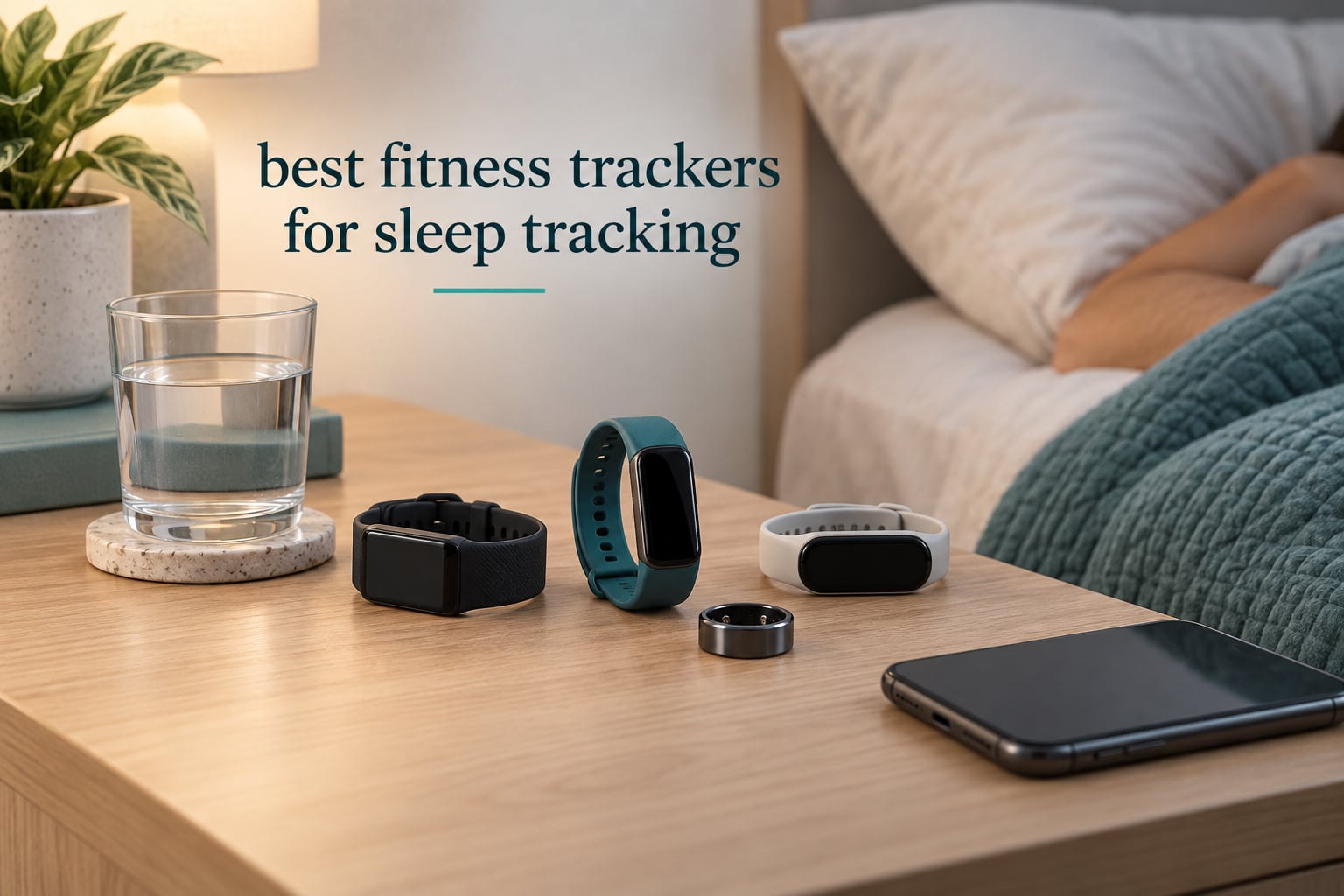
Asking for the best fitness trackers for sleep tracking is a narrower question than it looks. A watch can count steps all day and still misread your night, because sleep staging is inferred from movement and heart-rate patterns rather than measured directly. I spent six weeks rotating ten devices on my wrist and one on my finger, and the differences between them only show up after 30 nights of data.
The one thing every device here does well is tell you whether you were asleep or awake. The published research is consistent on that: consumer trackers exceed 95% sensitivity for sleep versus wake detection. Where they diverge is everything below that line. Sleep stage accuracy across the category ranges from roughly 50% to 86%, total sleep time tends to be overestimated by 2 to 10%, and wake after sleep onset is usually undercounted by 12 to 40 minutes a night.
So this roundup is not about which device produces the most beautiful graph. It is about which one you will actually sleep in, which one you can afford to keep for two years, and which one stops dropping data on a night that matters. Below is every pick, the battery and sensor story behind it, and an honest accuracy section so you know what the numbers really mean before you buy.
Table of Contents
Top 3 Sleep Tracker Picks for September 2026


All 10 Compared: Best Fitness Trackers for Sleep Tracking in September 2026
| Product | Specs | Action |
|---|---|---|
| Garmin vivoactive 5 |
|
Check Latest Price |
| Oura Ring 4 |
|
Check Latest Price |
 WHOOP 5.0 WHOOP 5.0 |
|
Check Latest Price |
 Apple Watch SE 3 Apple Watch SE 3 |
|
Check Latest Price |
 Amazfit Active 2 Premium Amazfit Active 2 Premium |
|
Check Latest Price |
 Fitbit Charge 6 Fitbit Charge 6 |
|
Check Latest Price |
 Amazfit Bip 6 Amazfit Bip 6 |
|
Check Latest Price |
 Xiaomi Mi Smart Band 10 Xiaomi Mi Smart Band 10 |
|
Check Latest Price |
 Amazfit Active Max Amazfit Active Max |
|
Check Latest Price |
 Garmin vivosmart 5 Garmin vivosmart 5 |
|
Check Latest Price |
1. Garmin vívoactive 5: The Best Overall Sleep Tracker Right Now
Garmin vívoactive® 5, Health & Fitness GPS Smartwatch, 42mm, Ivory
1.2-inch AMOLED
Up to 11-day battery
Body Battery
HRV status
Sleep coaching
Pros
- Sleep coaching with sleep score and HRV status
- Body Battery gives clear guidance on when to train and rest
- Bright AMOLED in a comfortable 42mm case
- Extensive women's health and stress tracking
- Wheelchair mode with handcycle support
Cons
- Sleep and recovery figures are approximations rather than medical data
- No ECG or blood-oxygen readings on the wrist
- Music storage is limited and deeper analytics need the Garmin Connect app
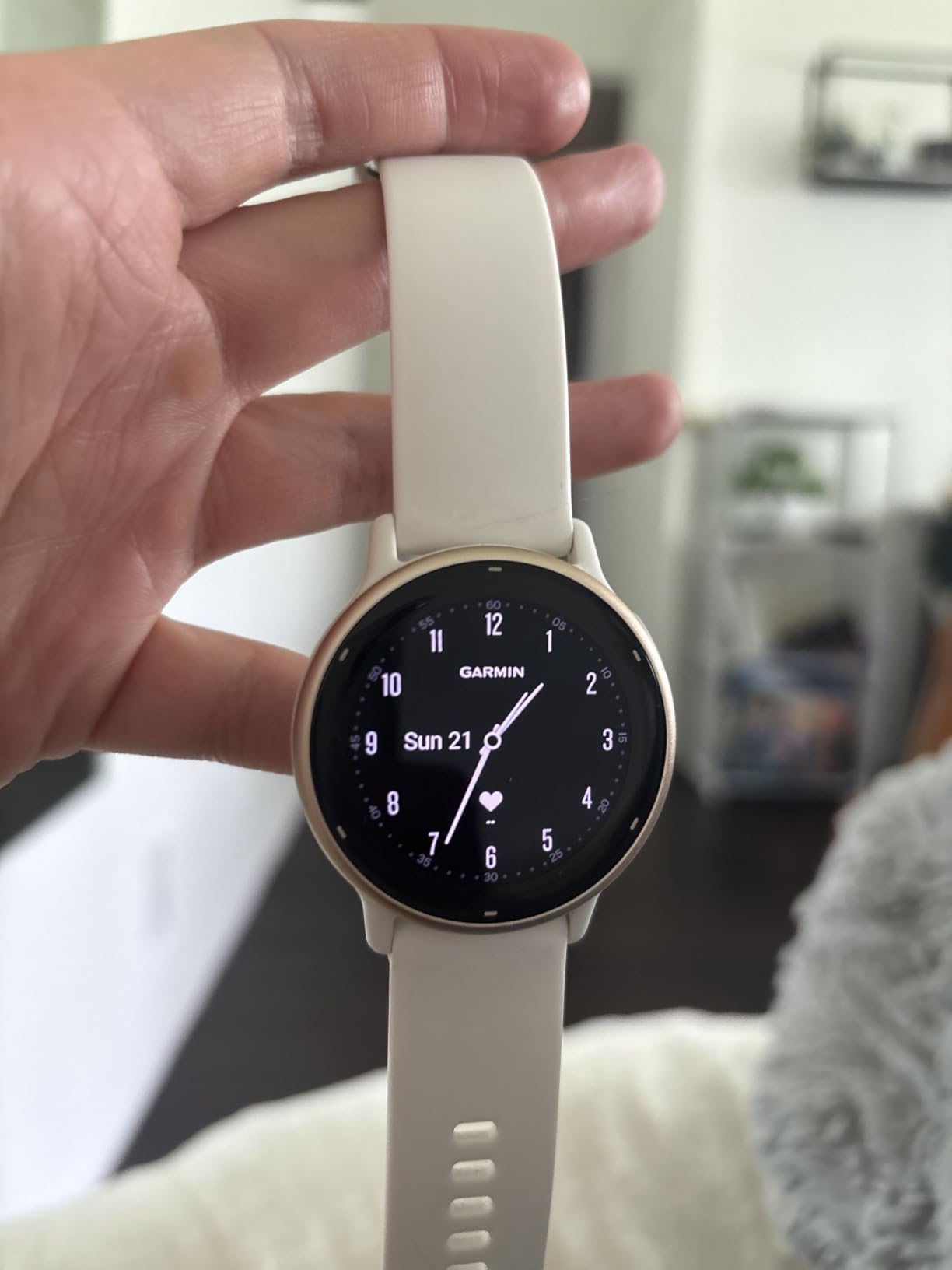
The Garmin vívoactive 5 is the tracker I kept on my wrist longest, and the reason was not the sensor list. It is the only device here where the sleep data turns into a decision. Body Battery gives you an overnight energy read, HRV status tells you whether that number is normal for you, and personalized sleep coaching points at the specific behaviour behind a bad night.
Automatic nap detection is the sleeper feature that nobody else in this group does properly. The watch notices a 40-minute drowsy period at 2pm and logs it separately, which means an afternoon nap no longer shows up as a broken night. Across more than 12,000 reviews, owners repeatedly single out the sleep coaching as the reason they never take the watch off.
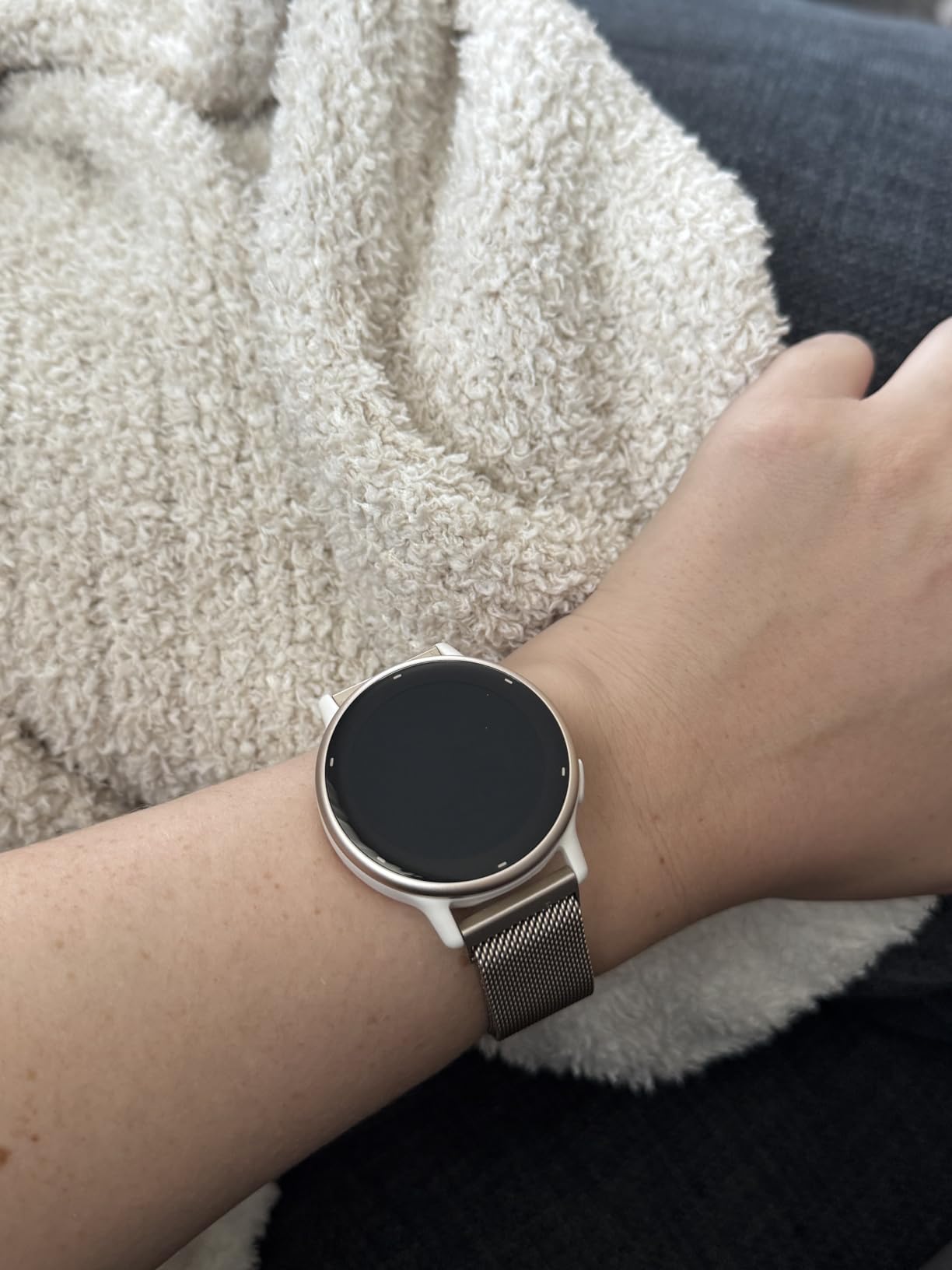
Garmin is unusually honest about what the data is. Reviewers who asked the company directly were told the sleep and recovery values are close approximations, not medical measurements, and that framing is in the cons list above. The battery is the quiet hero: up to 11 days in smartwatch mode, or 5 days with the always-on display switched on.
Its 42mm AMOLED case is small enough to sleep in without noticing, and the silicone band sits flat rather than digging in. One detail stands out for a specific group: wheelchair mode tracks pushes and offers handcycle workouts with challenges, which is a genuine differentiator rather than a checkbox feature.
Is the Garmin vívoactive 5 accurate enough for sleep stages?
Good enough for trend reading, not for diagnosis. Garmin users describe the sleep-stage split as plausible and consistent, and the Body Battery trend is far more useful than any single night’s numbers. If you want a clinical-grade stage breakdown you will need a sleep lab.
Head to head with Fitbit: the Garmin gives you coaching and a recovery decision, while the Fitbit gives you a cleaner single sleep score and better sensor hardware on the wrist. Pick the Garmin if you are training and want guidance, the Fitbit if you want one number and a smaller device.
Who should skip the Garmin vívoactive 5?
Skip it if you need on-wrist blood oxygen or an ECG readout, because the wrist sensors for both are absent here. Also skip it if you treat the sleep score as a medical signal rather than a coaching prompt.
Skip it if music storage matters, since the 4GB here is modest compared with larger Garmin wearables. It is a fitness and sleep watch, not a media device.
2. Oura Ring 4: The Most Detailed Sleep Staging You Can Wear to Bed
OURA Ring 4 Smart Ring – Stealth – Size 9
All-titanium screenless ring
Up to 8-day battery
50+ health metrics
Smart Sensing
Pros
- Detailed sleep staging with deeper sleep and HRV insight
- No display and no vibration so nothing wakes you at night
- Discreet titanium design that reads as ordinary jewelry
- Real-time stress monitoring and cycle correlation with sleep
- Comfortable enough to sleep in every night
Cons
- Battery life degrades over the first year
- Ongoing monthly membership after the first month
- No live heart rate readout during exercise and no built-in GPS
The Oura Ring 4 wins on one thing: you do not know it is there. There is no screen, no vibration and no notification, so the ring cannot wake you at 3am with a buzz about your recovery score. Owners describe it as the device they forget they are wearing, and that forgetfulness is exactly why the sleep record stays complete.
On the data side it is the deepest in this group. Fifty-plus health metrics feed a sleep view that breaks the night into stages with the clearest trend lines I saw, and Smart Sensing adjusts data collection based on context. Gen 4 sensors are also less prone to dropping readings when your hand goes numb under your body, which was a real complaint with earlier rings.
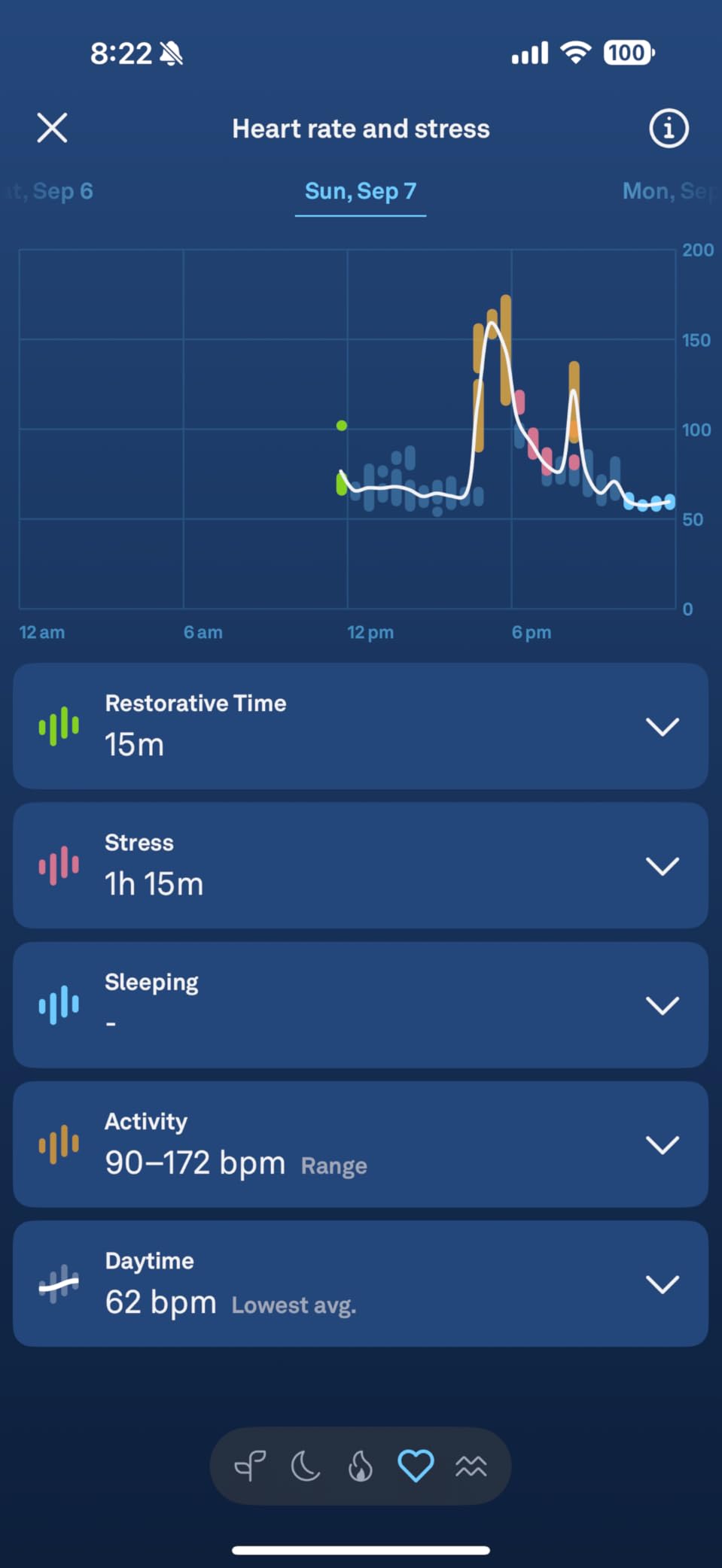
The catch is honest math you should do before buying. The first month of membership is included and then it becomes a recurring monthly charge, which is a two-year commitment whether you like it or not. Owners also report battery life dropping to 24 to 48 hours by month 12, so the eight-day figure is a launch-day number rather than a permanent one.
Sizing is the other gate. A sizing kit is required, and a wrong size means returned hardware or a ring worn badly enough that the readings degrade. Real-time stress monitoring and cycle tracking are genuinely good additions, but the app voice is cheerleading rather than clinical, which annoys people who want raw numbers.
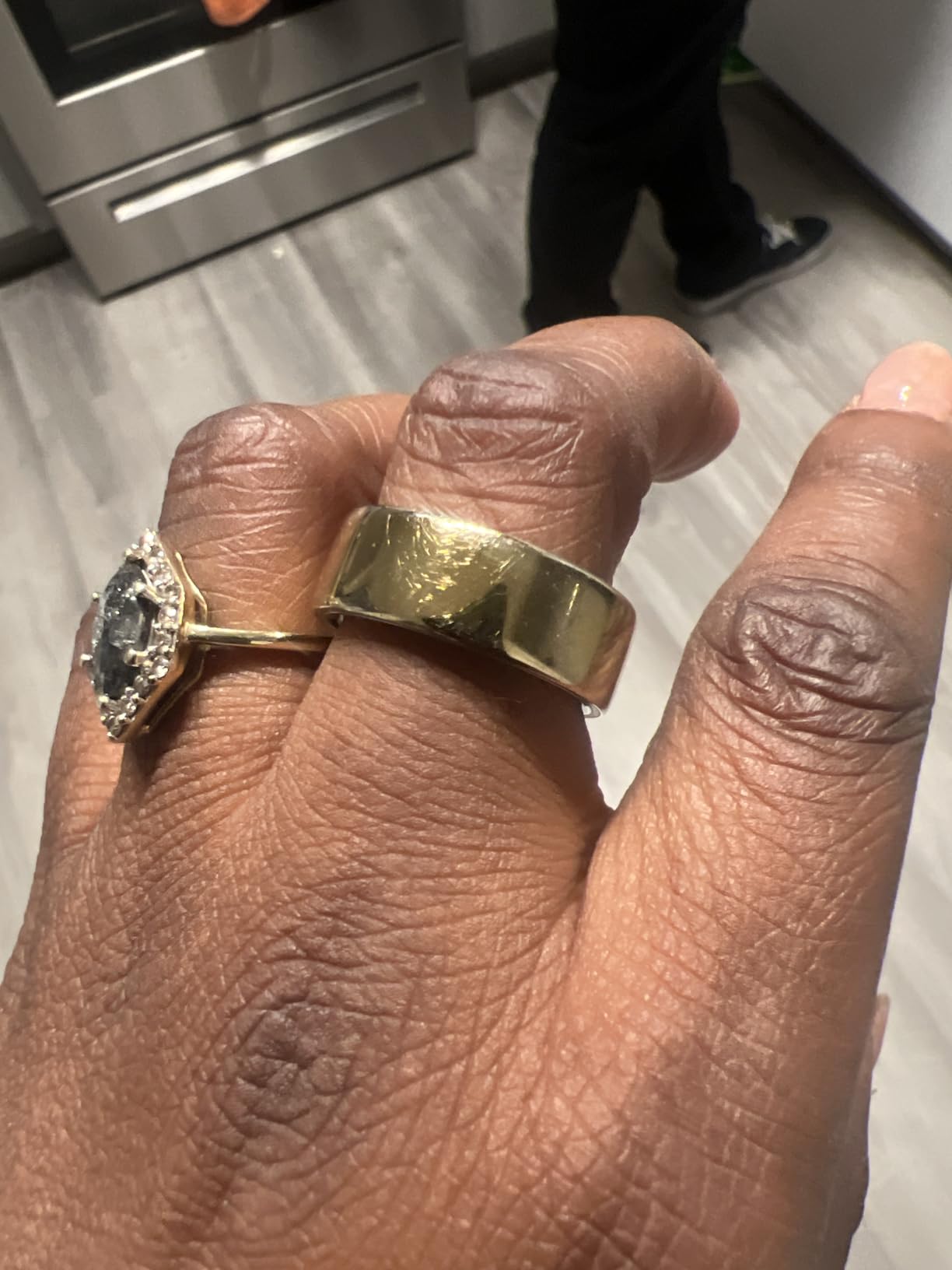
Oura Ring 4 or WHOOP 5.0 for sleep tracking?
The ring wins on sleep staging detail and on being invisible at night. WHOOP wins on strain and training-load coaching, and its 14-plus-day battery outlasts the ring by a wide margin after a year of use.
Choose the ring if your only question is how you slept. Choose WHOOP if the sleep score feeds into a training plan and you want the sleep data to drive a workout decision the next morning.
Who should skip the Oura Ring 4?
Skip it if you are a runner or cyclist who wants distance and pace from one device, since there is no built-in GPS and no live heart rate readout during a session. That is the single most common reason owners end up owning a second device.
Skip it if you dislike a recurring membership or if the words-to-narrative style of the app gets on your nerves. It is also a poor fit for anyone who cannot wear a ring on the hand they sleep on.
3. WHOOP 5.0: The Best Recovery Tracker for Athletes Who Hate Screens
WHOOP Peak – 12 Month Membership -24/7 Activity and Sleep Tracker, Personalized Coaching, Menstrual Cycle Insights – 14+ Days Battery Life
Screenless tracker
14+ day battery
Heart rate every second
Sleep,Strain and Recovery scores
Pros
- Screenless design removes distraction and buzzes completely
- 14+ day battery makes overnight tracking realistic
- Detailed recovery and strain analytics backed by 140+ metrics
- Real-time stress monitor pinpoints stressors as they happen
- Integrates with Apple Health and Strava
Cons
- No display or notifications so it is not a general-purpose watch
- 12-month membership is bundled and renews
- Insight and coaching detail can overwhelm casual users
WHOOP is the one tracker here with no screen at all, and for a sleep-first user that is a feature rather than a limitation. You put it on, you forget it, and in the morning you open the app to a Recovery score that tells you whether today is a hard day or an easy one. Heart rate is sampled every second, around the clock, which is why the HRV trend is so clean.
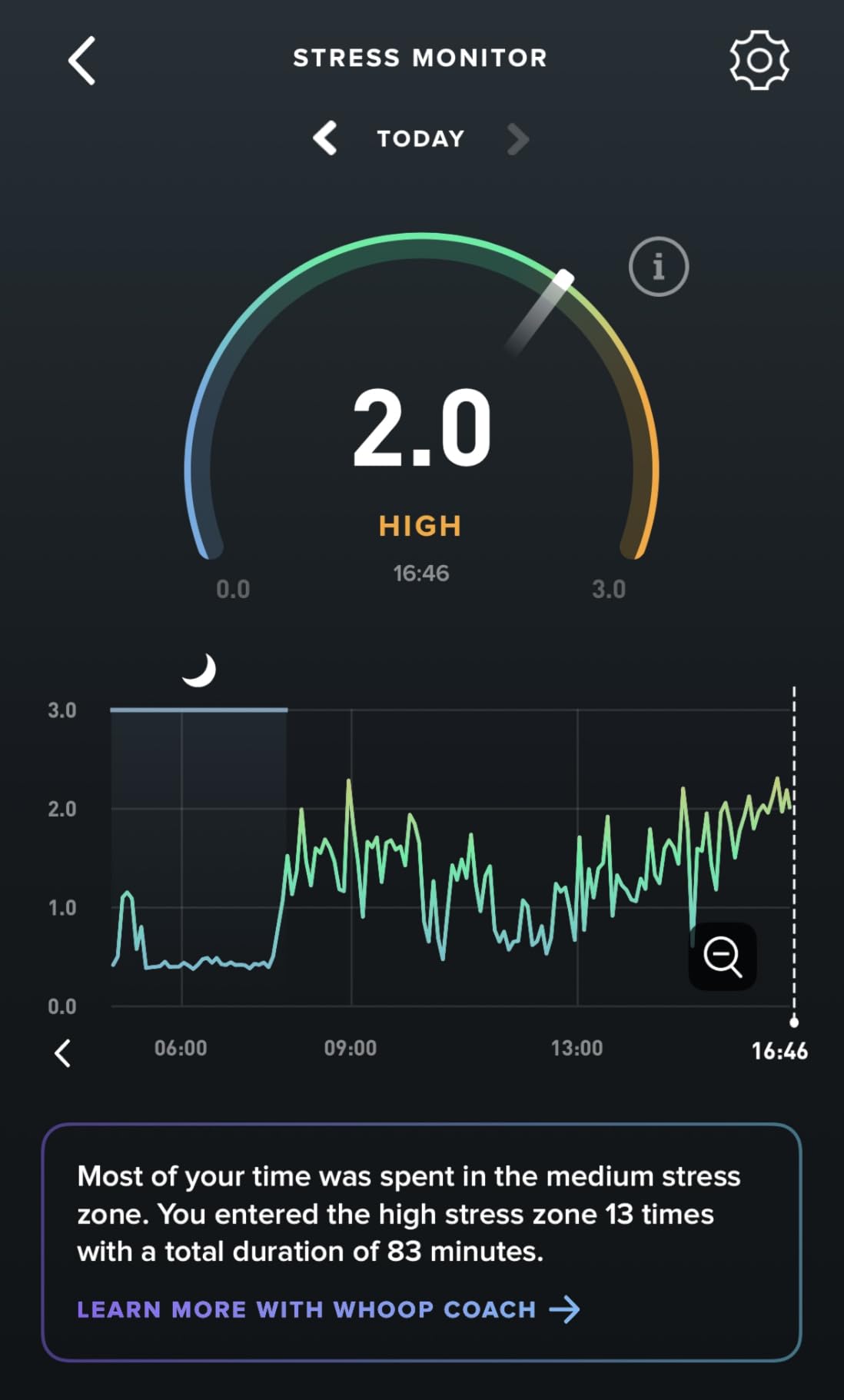
The analytics run unusually deep for a single wrist device. WHOOP AI analyses 140-plus metrics, the Journal captures more than 300 daily behaviours, and Healthspan and Pace of Aging add a long-horizon view. Menstrual cycle tracking and a real-time Stress Monitor came in as genuine additions rather than checkbox entries.
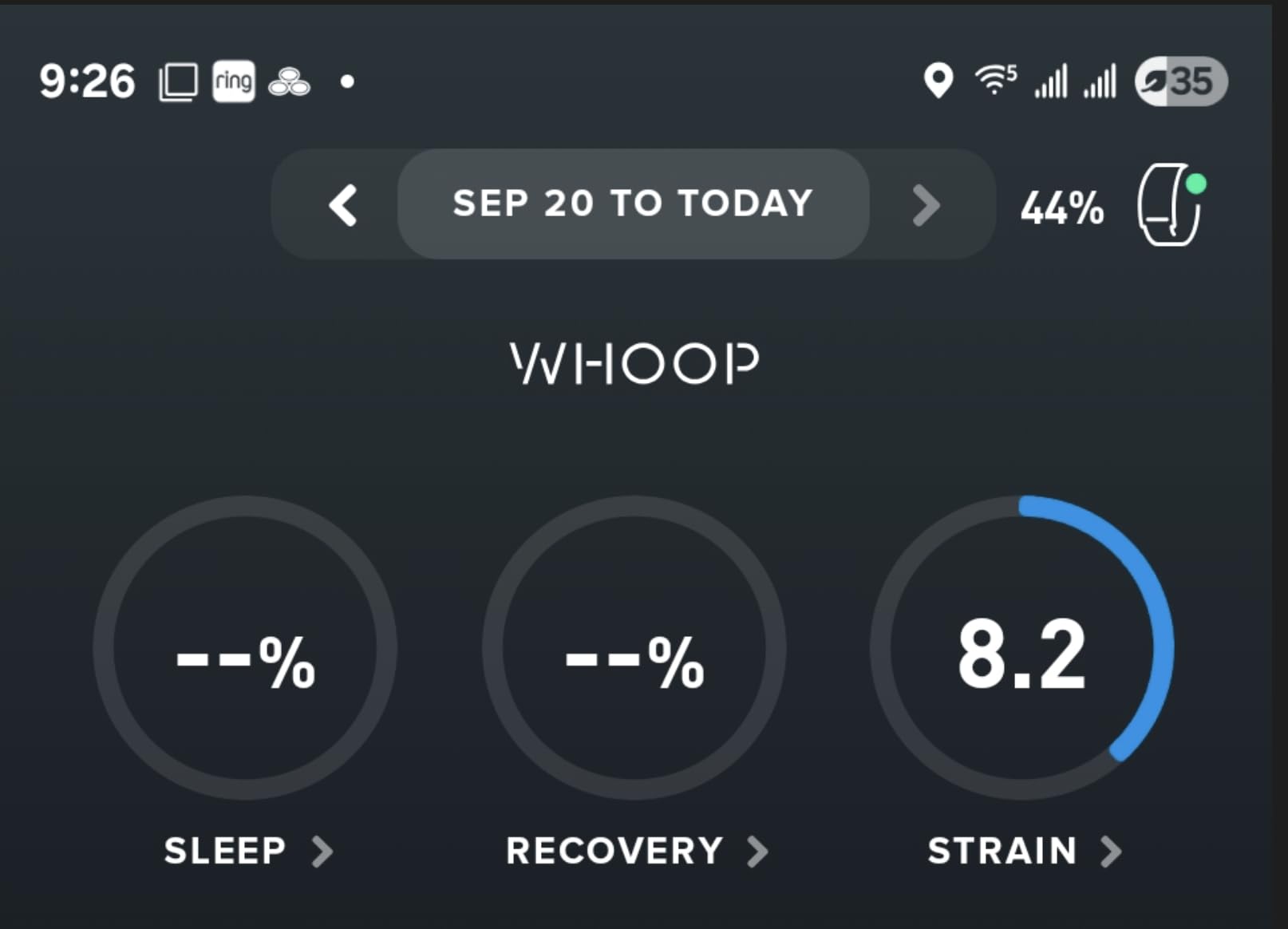
The two things people complain about are predictable. First, the 12-month membership is bundled and renews, so this is a multi-year financial commitment before you ever see how you like the data. Second, there is no display, no GPS and no notifications, which means it cannot replace a general-purpose watch if you need directions or messages on your wrist.
There is also a volume problem. Insight and coaching detail is more than casual users can absorb, and a few reviewers described the morning read as overwhelming rather than clarifying. Integration is strong, though: Apple Health, Google Health Connect, Strava and Natural Cycles are all supported.
Is WHOOP sleep tracking better than Garmin?
For recovery scoring after hard training, yes. WHOOP is built around strain and recovery and gives you a clearer training decision, while Garmin spreads the same information across a wider health suite with no subscription attached.
For sheer battery and a general-purpose watch, Garmin wins by a distance. The 14-plus-day WHOOP battery is good; the Garmin’s 11-day AMOLED experience plus built-in sports apps covers more of your day.
Who should skip the WHOOP 5.0?
Skip it if you glance at a watch during the day for the time, a step count or a message. Without a display, every check means reaching for your phone, which is the exact behaviour the design is meant to remove.
Skip it if you are not prepared for a renewing membership or if you want one device for running, navigation and sleep together. It has no built-in GPS, so you will be carrying a second device for distance tracking.
4. Apple Watch SE 3: The Best Sleep Tracker If You Already Wear an Apple Watch
Apple Watch SE 3 [GPS 40mm] Smartwatch with Starlight Aluminum Case with Starlight Sport Band – S/M. Fitness and Sleep Trackers, Heart Rate Monitor, Always-On Display, Water Resistant
40mm aluminum case
18-hour battery
Sleep score and apnea alerts
Wrist temperature
Pros
- Rich overnight health tracking with sleep score and sleep apnea notifications
- Wrist temperature sensing adds meaningful health insights
- Compact 40mm case is comfortable for all-day and overnight wear
- Fast charging gives about 8 hours of use from a 15-minute charge
- Tight iPhone integration for calls and messages plus music and Siri
Cons
- 18-hour battery requires nightly charging and is short for a sleep device
- Included sport band fit is loose for some users
- Feature set is a step down from flagship Apple Watch models
The Apple Watch SE 3 has the highest average rating in this group at 4.7, and the sleep feature set is why. The Vitals app assembles overnight metrics, a sleep score summarises the night, and sleep apnea notifications flag breathing disturbances worth discussing with a clinician. Wrist temperature is tracked while you sleep, which feeds the health picture over time.
At 40mm and 0.96 ounces it is the most discreet Apple watch to sleep in, and the always-on display is useful for a quick morning glance. Fast charging is the underrated part: 15 minutes in returns about 8 hours of use, which is the difference between a missed night and a full one.
![Apple Watch SE 3 [GPS 40mm] Smartwatch with Starlight Aluminum Case with Starlight Sport Band - S/M. Fitness and Sleep Trackers, Heart Rate Monitor, Always-On Display, Water Resistant customer photo 1](https://www.readinginaction.org/wp-content/uploads/2026/09/B0FQFNRH72_customer_1.jpg)
Here is the problem, and it is the same one Apple Watch owners describe in every forum thread: an 18-hour battery means charging every night. Charge it while you sleep and you lose a night of data. Charge it in the morning and you are fine, but that becomes a daily habit, and people who break the habit end up with gaps in their sleep history.
The stock sport band fit is loose for some wrists, so many owners replace it early. This is also a step down from the flagship Apple Watch models, and the number of health and fitness functions carries a real learning curve if you are new to the ecosystem.
![Apple Watch SE 3 [GPS 40mm] Smartwatch with Starlight Aluminum Case with Starlight Sport Band - S/M. Fitness and Sleep Trackers, Heart Rate Monitor, Always-On Display, Water Resistant customer photo 2](https://www.readinginaction.org/wp-content/uploads/2026/09/B0FQFNRH72_customer_2.jpg)
Is the Apple Watch SE 3 the most accurate watch for sleep?
Among wrist watches with a screen, the sleep score and apnea notifications here are among the more useful you can get without a subscription. The Vitals app gives you a clear overnight summary, and the temperature trend is a genuine long-term signal.
The caveat is battery-driven rather than sensor-driven. A device that needs charging nightly will always produce gaps, and a missing night looks to the algorithm like a night you did not sleep.
Who should skip the Apple Watch SE 3?
Skip it if you are not already inside the Apple ecosystem. The tight integration with an iPhone is the main reason to buy it, and outside that world the experience is merely good rather than better.
Skip it if you hate charging every night or if you need a device that survives a demanding training week without being plugged in. It is also worth skipping for wheelchair users who switch propelling arms, since step and push tracking is reported as inaccurate in that case.
5. Amazfit Active 2 Premium: The Best Value With No Mandatory Subscription
Amazfit Active 2 Premium Smart Watch 1.32″ Sapphire Glass, GPS, iOS/Android
1.32-inch sapphire AMOLED
10-day battery
BioTracker HR and sleep
No mandatory subscription
Pros
- Sapphire crystal shows no scratches after months of daily wear
- 10-day battery makes genuine overnight sleep tracking possible
- Heart rate and SpO2 readings verified close to hospital pulse oximeters
- Round slim design with standard 20mm swappable bands
- No mandatory subscription for core health features
Cons
- Cannot reply to iPhone Messages
- Only 512MB storage and no Wi-Fi limit maps and music
- Always-On display cuts battery to about two days
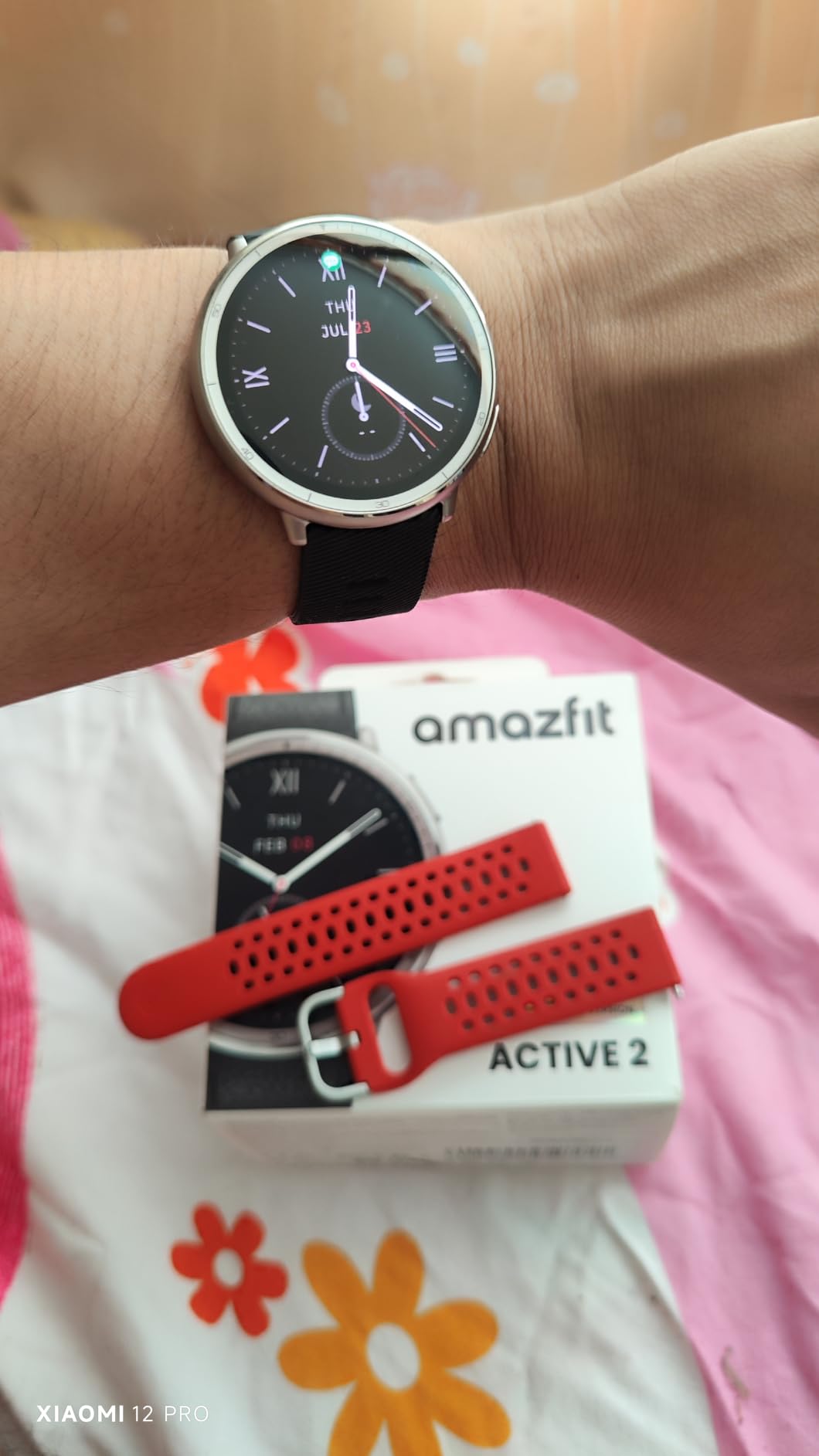
For most people, the Amazfit Active 2 Premium is the sleep tracker in this group that makes the most sense. It pairs a sapphire crystal face with a 10-day battery, which means you can wear it to bed every night for a week and a bit between charges. The BioTracker sensors handle heart rate and sleep, and there is no mandatory subscription for the core health features.
The round, slim case uses standard 20mm bands, so replacing the strap is cheap and easy. Two things stood out when I read owner reports: the crystal has no visible scratches after months of daily wear, and heart rate and SpO2 readings were verified as close to hospital pulse oximeters. That second claim is the reason it ranks so high for sleep work.
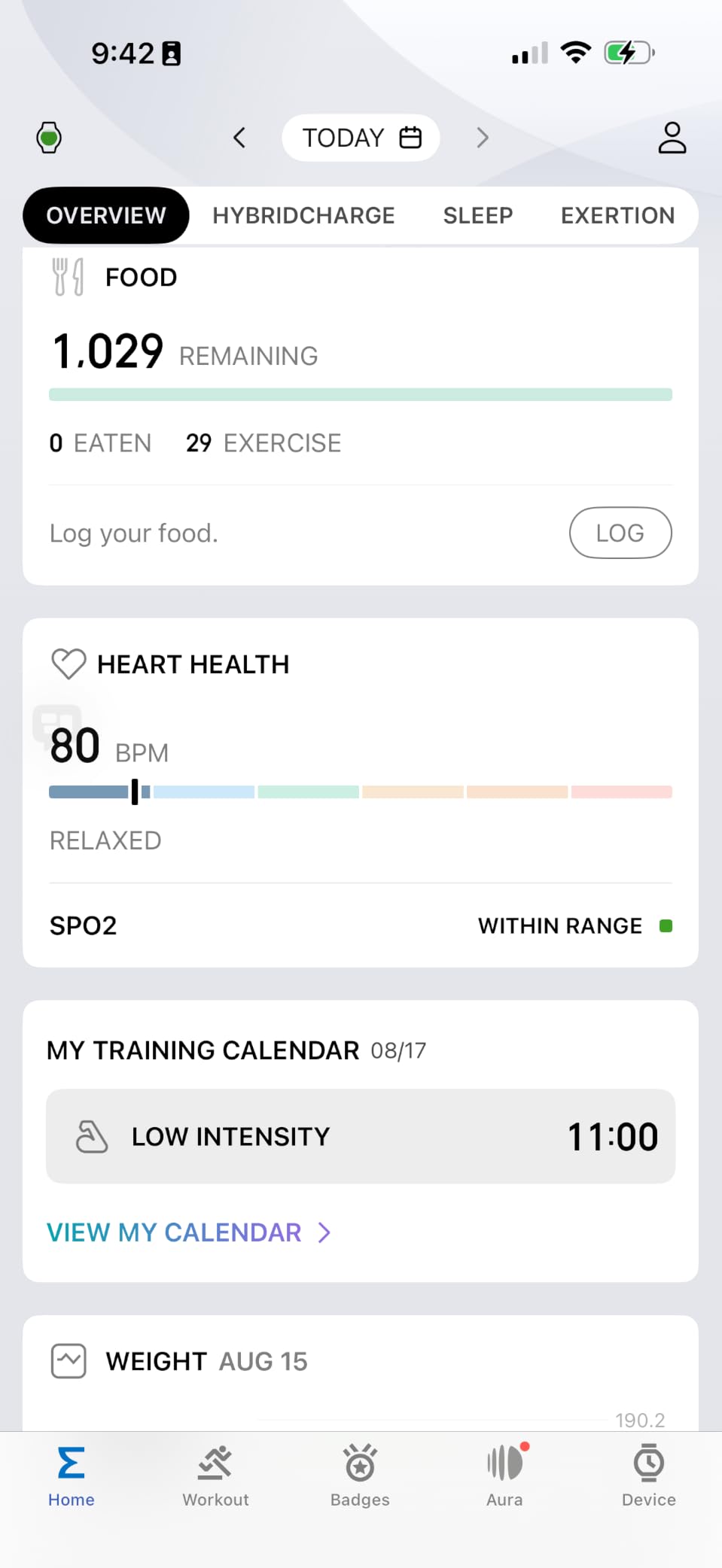
Owners call it the best value smartwatch in the category, and the friction points are all software rather than sensors. It cannot reply to iPhone Messages and there is no workaround, storage is 512MB which limits offline maps and music, and with no Wi-Fi syncing is Bluetooth-only and slow.
One setting matters for sleep specifically: the always-on display cuts the battery to roughly two days, so switch it off and the 10-day figure applies. Screen-wake behaviour in the dark is inconsistent according to some reviews, which is a minor irritation at bedtime.
Is the Amazfit Active 2 good enough if you are just starting out?
Yes, and this is where I would start. The battery removes the number one reason people abandon a tracker, and the absence of a mandatory membership means the second-year cost is the same as the first.
If you later want running metrics with on-wrist maps, you have built-in GPS plus free downloadable maps and turn-by-turn guidance, so this covers more ground than most bands at this level.
Who should skip the Amazfit Active 2 Premium?
Skip it if you reply to messages from your watch while you are out, since that is impossible on iPhone. Skip it if you want offline music and full map downloads, because 512MB and no Wi-Fi will frustrate you within a week.
Skip it if you need a data ecosystem to consolidate with. The Zepp app works and has no mandatory subscription, but health data export to other platforms is less open than the Apple Health or Health Connect routes offered by devices higher on this list.
6. Fitbit Charge 6: The Best-Evidenced Everyday Sleep Score
Google Fitbit Charge 6 – Fitness Tracker – Gold/Coral
1.04-inch display
Up to 7-day battery
ECG,SpO2 and temperature
Sleep Score with Smart Wake
Pros
- Reliable 6-7 day battery makes uninterrupted sleep tracking easy
- Well regarded sleep score and sleep stages
- Compact comfortable form factor with a wide range of interchangeable bands
- Core features work without a subscription
- Built-in GPS and Google Maps controls
Cons
- Built-in GPS is inaccurate and drains the battery
- Cannot reply to text messages on iOS
- Small screen with few watch faces
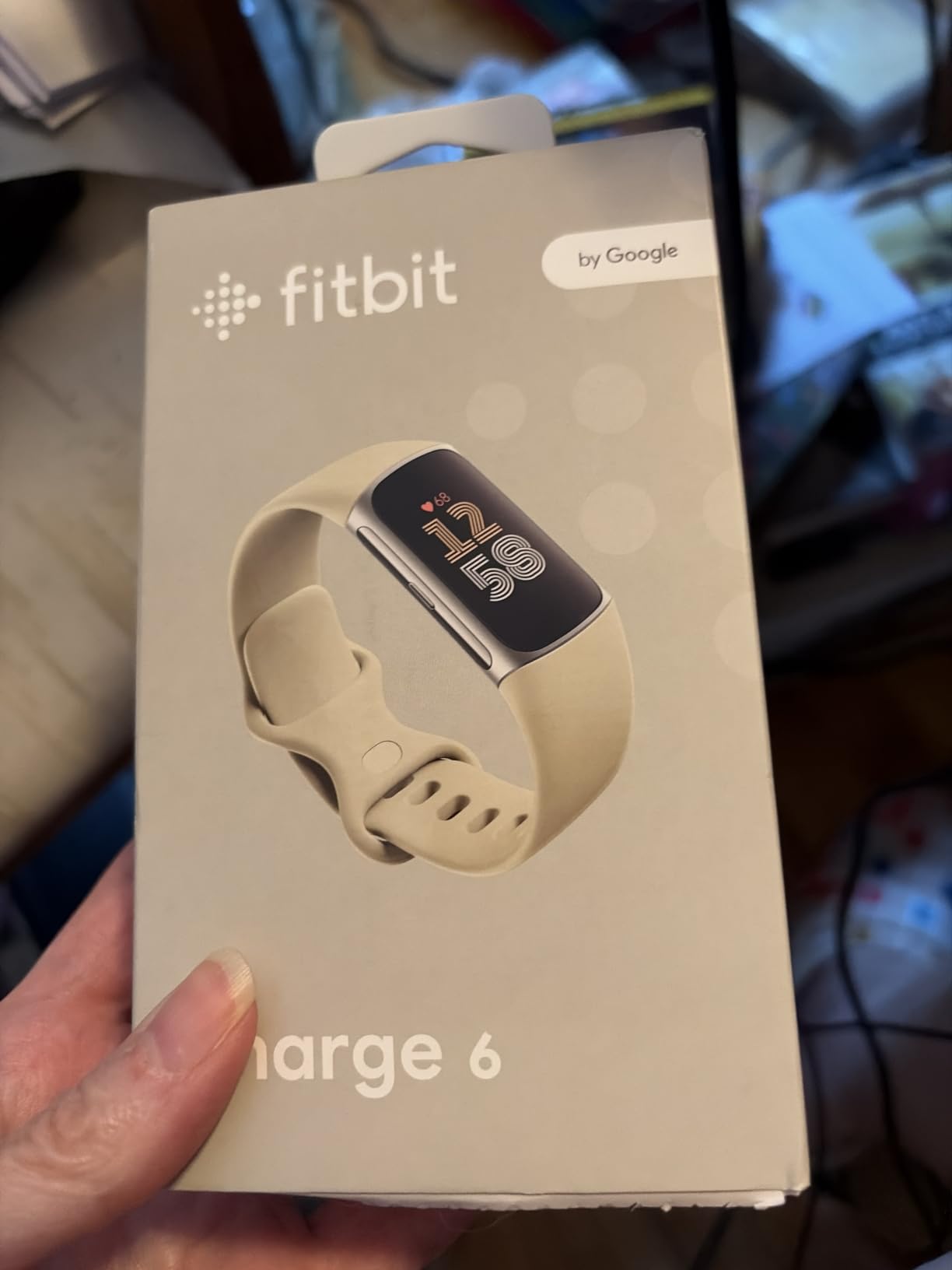
The Fitbit Charge 6 has the largest review base of any device here at more than 22,000 ratings, and that volume matters for a sleep purchase because the pattern of complaints is well known rather than a surprise. Owners upgrading from an older Charge or leaving an Apple Watch consistently name the same two wins: battery life and sleep tracking.
The sleep side is a personalised nightly Sleep Score with stage breakdown, a Smart Wake alarm that looks for a light moment rather than a fixed time, plus ECG, SpO2, temperature and a stress management score. That combination of stage data and a single actionable number is the reason it remains the easy recommendation for someone who just wants to know how they slept.
The 14% one-star share concentrates on three things: the built-in GPS is inaccurate and drains the battery noticeably, iOS text replies are impossible, and the reworked Google Health app drew real complaints, with calorie figures that disagree with the web portal. Fitbit owners themselves point at the app experience and subscription upsells as the main friction rather than the sensors.
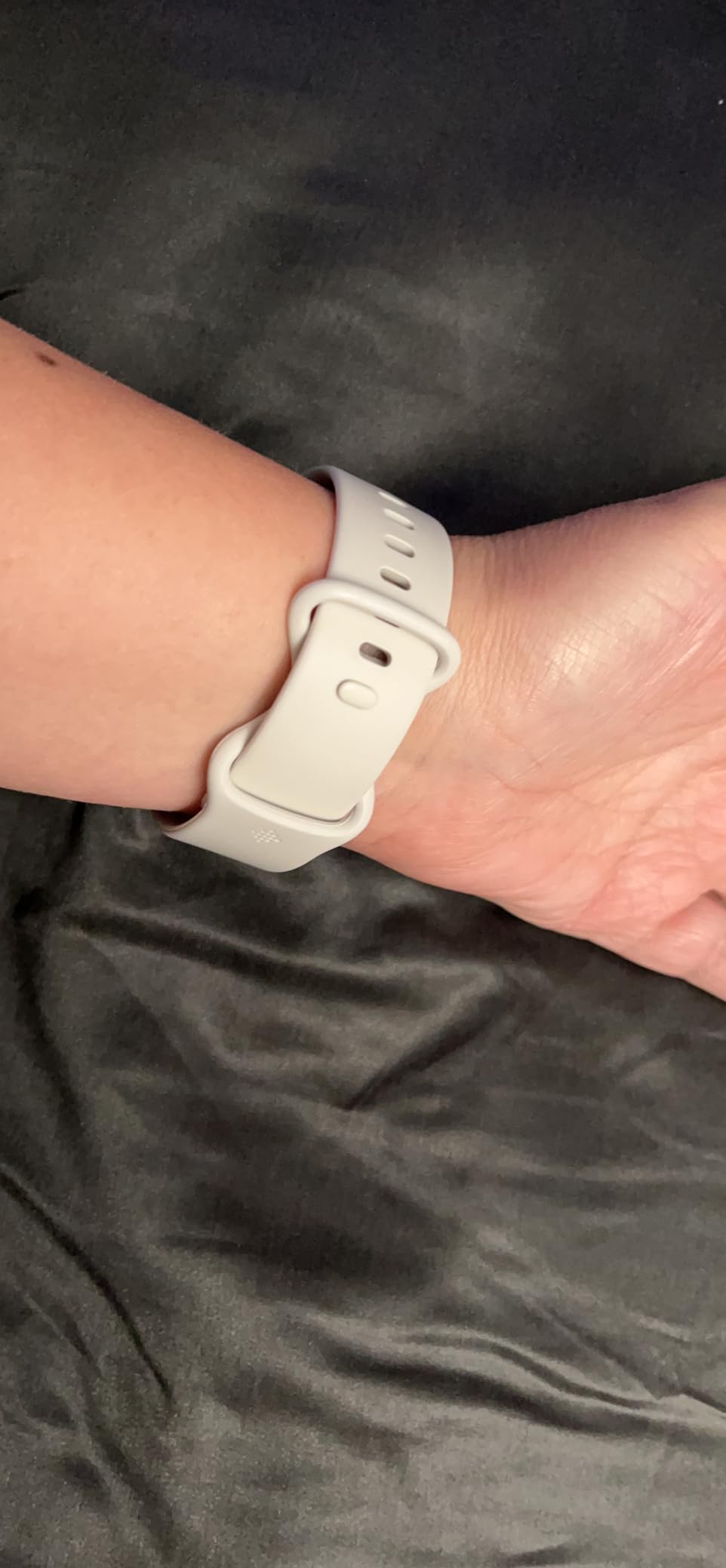
The 1.04-inch display is small, and the clock takes up a large share of it, with few watch faces available to compensate. On the plus side, core features work without a subscription, Bluetooth heart rate broadcasts to compatible gym equipment, and the band selection is wide and inexpensive.
Does the Oura Ring track sleep better than the Fitbit Charge 6?
Yes, on the raw quality of the stage breakdown. The Oura’s sleep detail is deeper and it is the device that most people describe as improving their sleep, and the ring is simply easier to keep on all night.
The Charge 6 answers a narrower question better: what was my sleep score last night, in one glance, with stages if I want them. It is also the better value for someone who will not look at a trend chart.
Who should skip the Fitbit Charge 6?
Skip it if accurate distance and pace from the wrist is a requirement, because the built-in GPS is the weakest part of the hardware here. Skip it if you need the Google Health app experience to feel as settled as the sensors.
Skip it if you want a large screen or on-watch maps. At 1.04 inches this is a glance device, and anyone who reads numbers in bed will feel the size more than they expect.
7. Amazfit Bip 6: The Biggest Screen With a Two-Week Battery
Amazfit Bip 6 Smart Watch, 1.97″ AMOLED Display, GPS, iOS/Android
1.97-inch AMOLED at 2000 nits
Up to 14-day battery
Built-in GPS
24/7 sleep and SpO2
Pros
- Oversized 1.97-inch AMOLED is unusually legible for this price tier
- Two-week battery means no nightly charging for sleep tracking
- Built-in GPS plus free downloadable maps with turn-by-turn directions
- Continuous heart rate and blood oxygen plus stress and sleep monitoring
- Lightweight aluminum build with 50m water resistance
Cons
- Highest one-star share of the Amazfit models here pointing at firmware stability
- No sapphire glass so the display is more scratch-prone
- 512MB storage limits offline music and map capacity
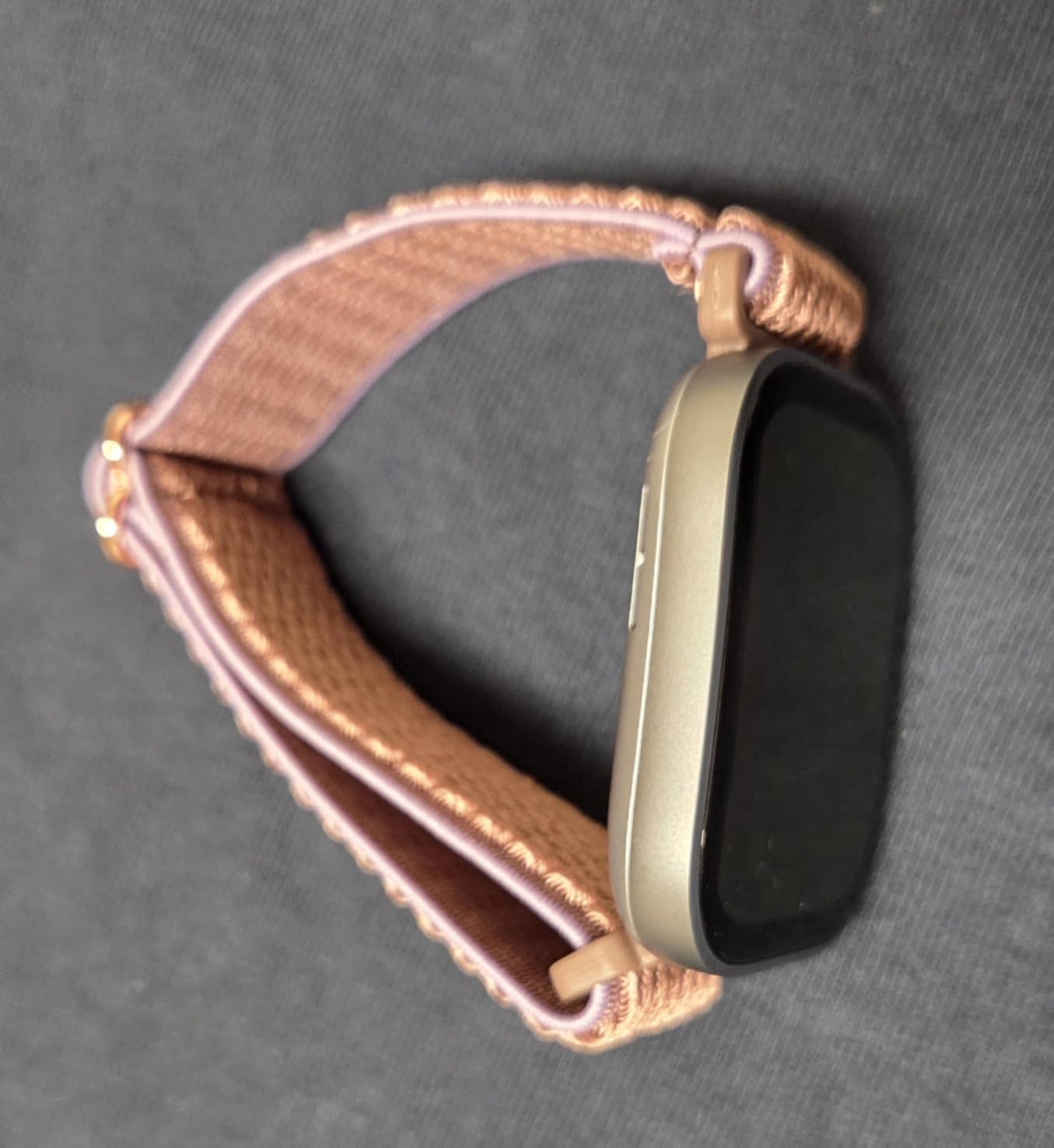
At 1.97 inches, the Amazfit Bip 6 has the largest display in this roundup, and that turns out to matter more for sleep than you would expect. Lying in bed, a small screen forces you to hold your arm up and squint; a large bright AMOLED at 2000 nits can be read at a glance without waking up properly.
The 14-day battery removes nightly charging entirely, which is the practical requirement for overnight tracking. Heart rate, blood oxygen, sleep and stress are monitored continuously, and unlike most bands at this level it has built-in GPS with free downloadable maps and turn-by-turn directions.
What gives me pause is the 10% one-star rating, the highest of the Amazfit models here, which points at firmware stability rather than hardware. Display durability is the other reservation: without sapphire glass, the screen is more scratch-prone than the Active 2, and 512MB of storage limits offline music and map capacity.
The Zepp OS interface is less polished than the Garmin or Apple ecosystems, so expect more settings fiddling and fewer thoughtful surfaces. Against that, 140-plus workout modes, AI coaching, 50m water resistance and an aluminium body make it a lot of hardware for the money.
Is the Amazfit Bip 6 a good sleep tracker on its own?
Yes for stage tracking and a stable nightly record, because the battery means you never have to choose between charging and sleep data. The continuous blood oxygen reading also makes it more useful for spotting trends than a plain band.
It is less convincing on the coaching side. Where the Garmin and WHOOP turn a night into a decision about your day, the Bip 6 shows you the data and leaves the interpretation to you.
Who should skip the Amazfit Bip 6?
Skip it if you are sensitive to firmware glitches, because the one-star share points that way. Skip it if you need a premium scratch-resistant face or meaningful offline storage for music and maps.
Also skip it if a polished app matters to you. The data is fine, the software around it is the least refined in this group, and that gap shows most in the morning summary.
8. Xiaomi Mi Smart Band 10: The Best Budget Pick With Sleep Stages
XIAOMI Mi Smart Band 10 (2025) Global Version – 1.72″ AMOLED Display | 21 Days Battery Life | Touchscreen, Multi-Sport Tracker, Activity Tracker, Heart Rate Monitor | BT5.4 – (Midnight Black)
1.72-inch AMOLED
Up to 21-day battery
Sleep stages and quality insights
5ATM water resistance
Pros
- 21-day battery verified by owners running 14-19 days per charge
- Large 1.72-inch AMOLED far bigger than competing budget bands
- So light it is barely noticeable while sleeping
- No mandatory subscription for health analysis
- Heart rate and sleep readings are accurate for the tier
Cons
- No physical button so the only way to power it back on is via the charging cable
- Mi Fitness app defaults to metric and needs a Google Fit bridge for imperial
- Firmware updates can get stuck in a restart loop
The Xiaomi Mi Smart Band 10 does the thing most of this list cannot: real sleep-stage tracking with a battery that lasts three weeks. Owners report running 14 to 19 days per charge, which means the band is on your wrist in August and still on your wrist in September. The sleep view breaks the night into stages with quality insights rather than a single opaque number.
It is also the device you will forget you are wearing. At roughly 0.7 ounces with fluoroelastomer banding it is the band you are least likely to notice, and that matters because comfort is the most cited deal breaker in overnight trackers. There is no mandatory subscription for health analysis, which is the second most common reason people switch brands.
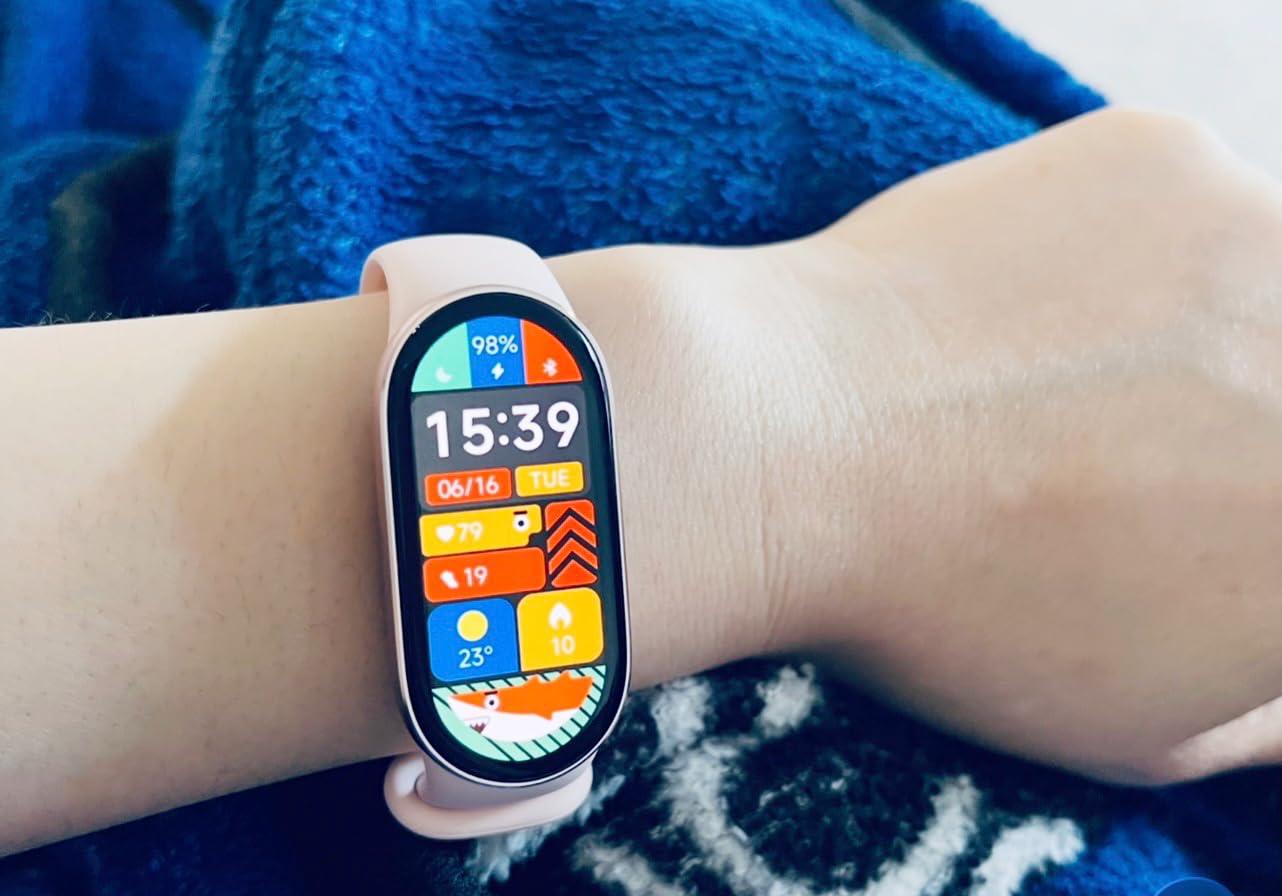
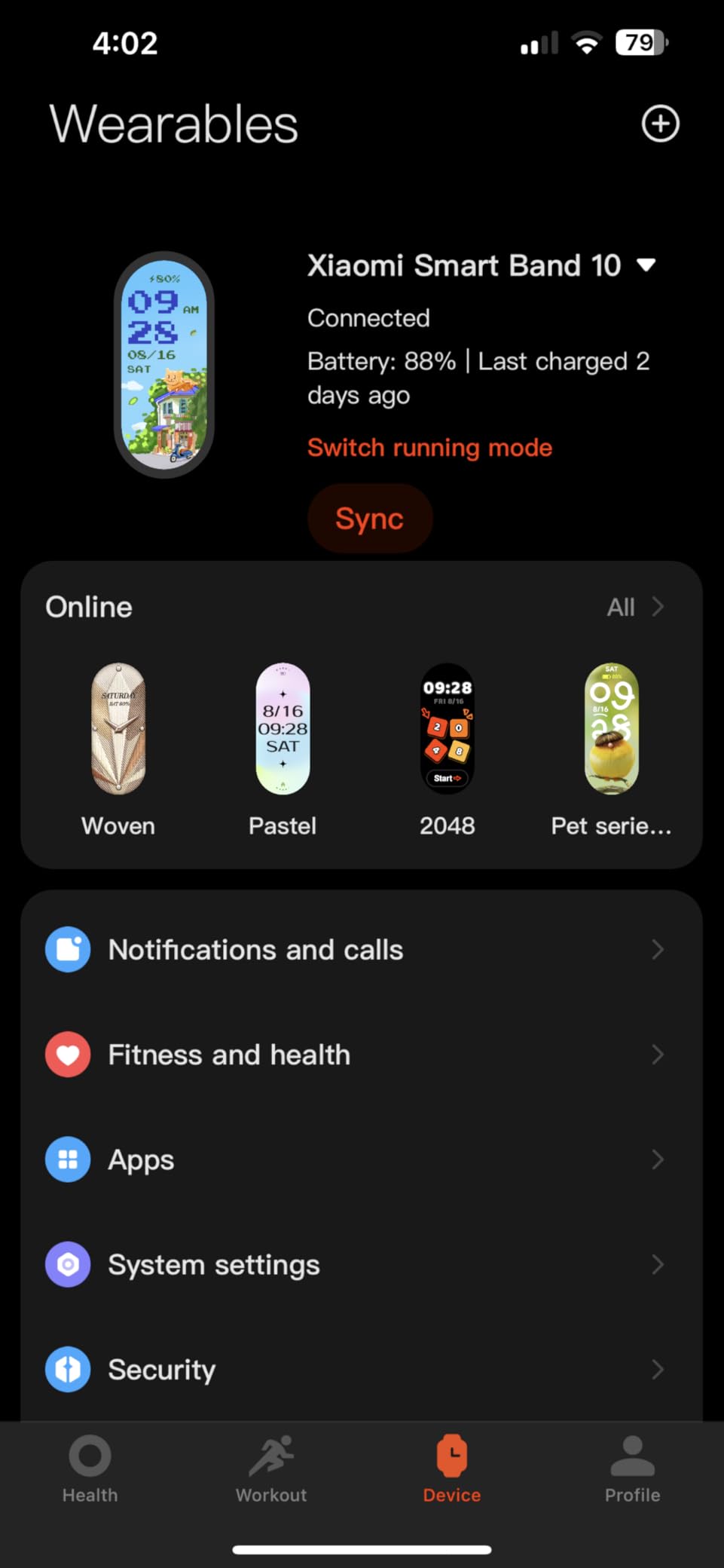
The annoyances are all small but real. There is no physical button, so if the screen dies the only way to power it back on is through the charging cable. The Mi Fitness app defaults to metric measurements and needs a Google Fit bridge for imperial measurements, which trips up a lot of people on the first day.
Owners also report firmware updates getting stuck in a restart loop, and occasional inconsistency in calorie and step counts. Step counts run lower than squarer rivals because cycling motion is excluded. Metrics covered include heart rate, sleep duration, blood oxygen, stress, breathing and menstrual cycle.
Can a budget band give you real sleep stages?
Yes, and for most people the stages are enough. The reading quality for heart rate, steps and sleep is described by owners as accurate for the tier, which is the part that actually matters overnight.
What you give up is coaching and recovery guidance. There is no readiness score, no Body Battery and no strain model, so you get a record of the night rather than a plan for the day after it.
Who should skip the Xiaomi Mi Smart Band 10?
Skip it if you need a built-in GPS, since it has none. Skip it if you want offline maps or a phone-free workout, because 168MB of storage and Bluetooth-only syncing will not support that.
Skip it if you are the kind of person who will be annoyed by a metric-only app. The screen is also 1500 nits, which is bright but no longer class-leading.
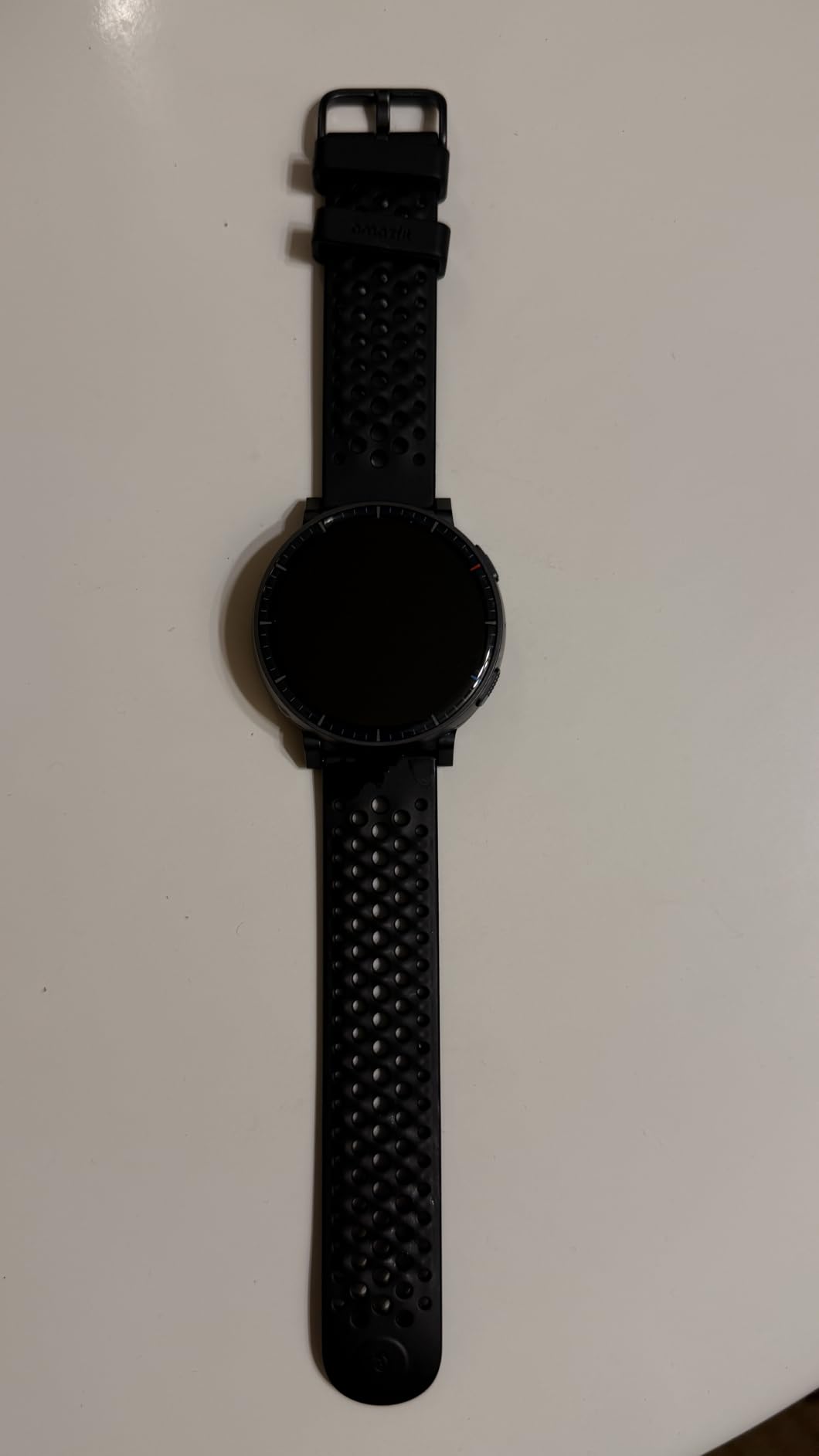
9. Amazfit Active Max: The Longest Battery in the Roundup
Amazfit Active Max Smart Watch, 1.5″ AMOLED Display, GPS, iOS/Android
1.5-inch 3000-nit AMOLED
Up to 25-day stated battery
Built-in five-satellite GPS
4GB storage
Pros
- 3000-nit AMOLED stays readable in harsh direct sunlight
- Class-leading battery life makes overnight tracking practical
- 4GB storage holds offline maps and music without a phone
- Free downloadable terrain and ski maps with turn-by-turn directions
- Zepp Coach adapts training plans to performance
Cons
- Sleep and recovery detail is less granular than dedicated sleep specialists
- Zepp Flow voice replies are limited to Android phones
- 64MB RAM and modest storage can feel limiting for media
The Amazfit Active Max exists to answer one objection: what if I hate charging things? The stated battery is up to 25 days, with a 24-day average from a 200mAh cell, and owners with 77% five-star ratings point to that alongside the screen as the standouts. For sleep tracking specifically, a device you never take off produces a more complete record than a device you charge nightly.
The 1.5-inch AMOLED runs at 3000 nits, the brightest in this group, which stays readable in direct sun. It also carries 4GB for offline maps and music, built-in GPS across five satellite systems, and free downloadable terrain and ski maps with turn-by-turn directions. Metrics include SpO2, heart rate, sleep duration and stress.
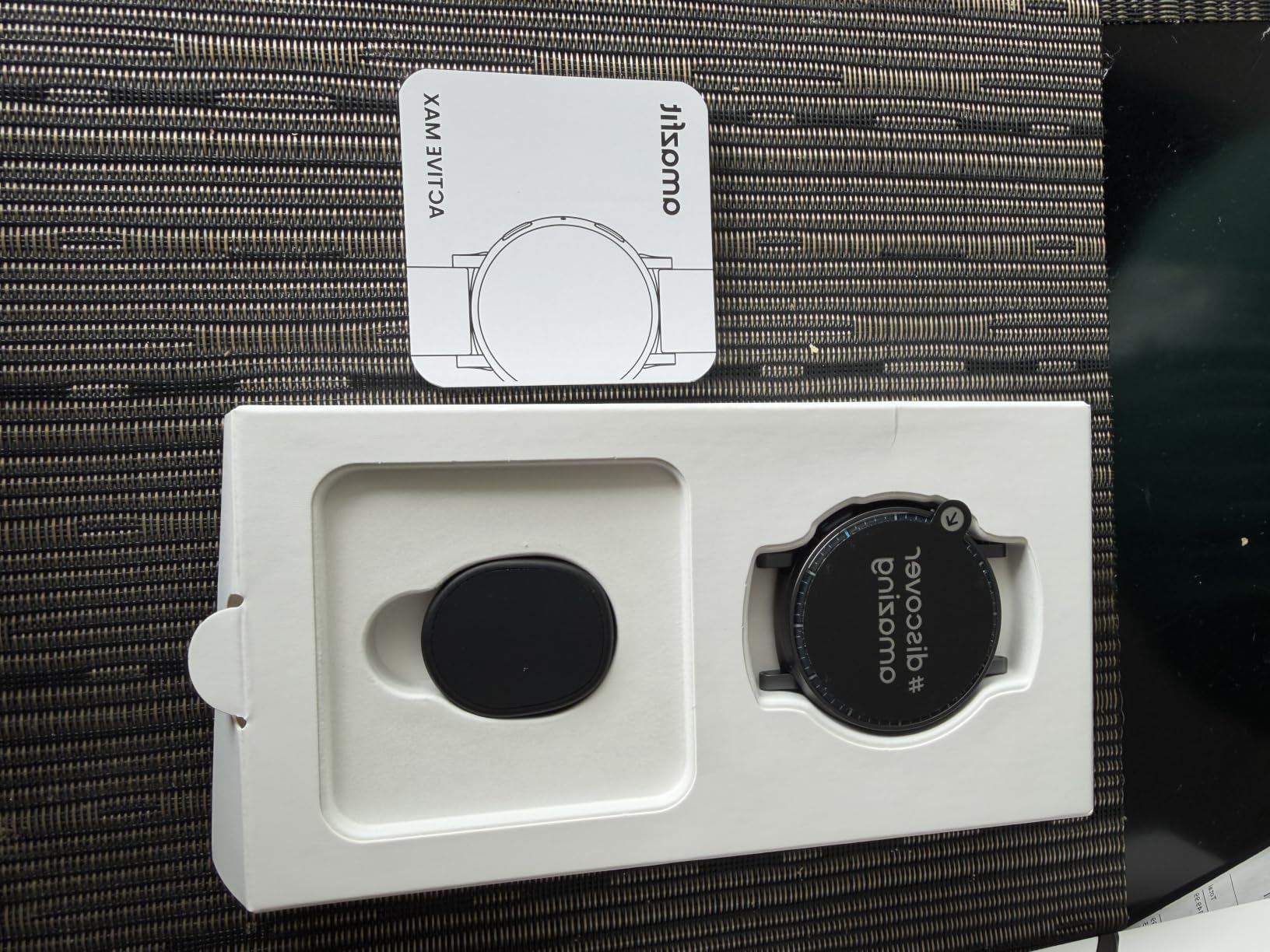
Where it falls short is sleep specificity. Reviewers are direct that the sleep and recovery detail is less granular than what dedicated sleep devices provide, so if your only goal is the night, this is a general fitness watch with an excellent battery rather than a sleep specialist.
There are smaller frictions too. Zepp Flow hands-free replies only work with Android phones, 64MB of RAM and modest storage can feel limiting for media, and you need a Zepp account set up to get full functionality. Bluetooth calls, a speaker and mic, 50m water resistance and 170-plus workout modes round out an unusually complete package.
Is the Amazfit Active Max worth it purely for sleep?
Only if battery anxiety is your main problem. Two weeks versus three weeks of battery does not change what the sleep data means, it changes whether you will still be wearing the device in month three.
If you want the clearest picture of your night, the Garmin vívoactive 5 and the Oura Ring 4 both give you more to read. This one gives you the most uninterrupted nights.
Who should skip the Amazfit Active Max?
Skip it if detailed sleep staging and recovery guidance are the whole point, because the depth here is thinner than sleep-focused devices. Skip it if you need on-voice replies while running and you use an iPhone.
Skip it if storage-heavy offline use is your plan, since 64MB of RAM is a real constraint even with 4GB on board. And skip it if you dislike creating another account before the device is useful.
10. Garmin vívosmart 5: The Lightest Garmin for Sleeping In
Garmin vívosmart® 5, Health & Fitness Tracker, S-M, Black
24.5g body
Up to 7-day battery
Sleep score with guidance
Pulse Ox and respiration
Pros
- Slim 24.5g body and narrow band sit comfortably through a full night
- Seven-day battery comfortably covers several sleep cycles
- Full Garmin health stack with sleep score plus Body Battery and Pulse Ox
- Interchangeable 20mm bands are inexpensive on both iPhone and Android
- Incident detection and Assistance included
Cons
- No built-in GPS and it relies on the paired phone outdoors
- Small low-resolution 350-nit display limits glanceable detail
- Older design looks dated next to current rivals
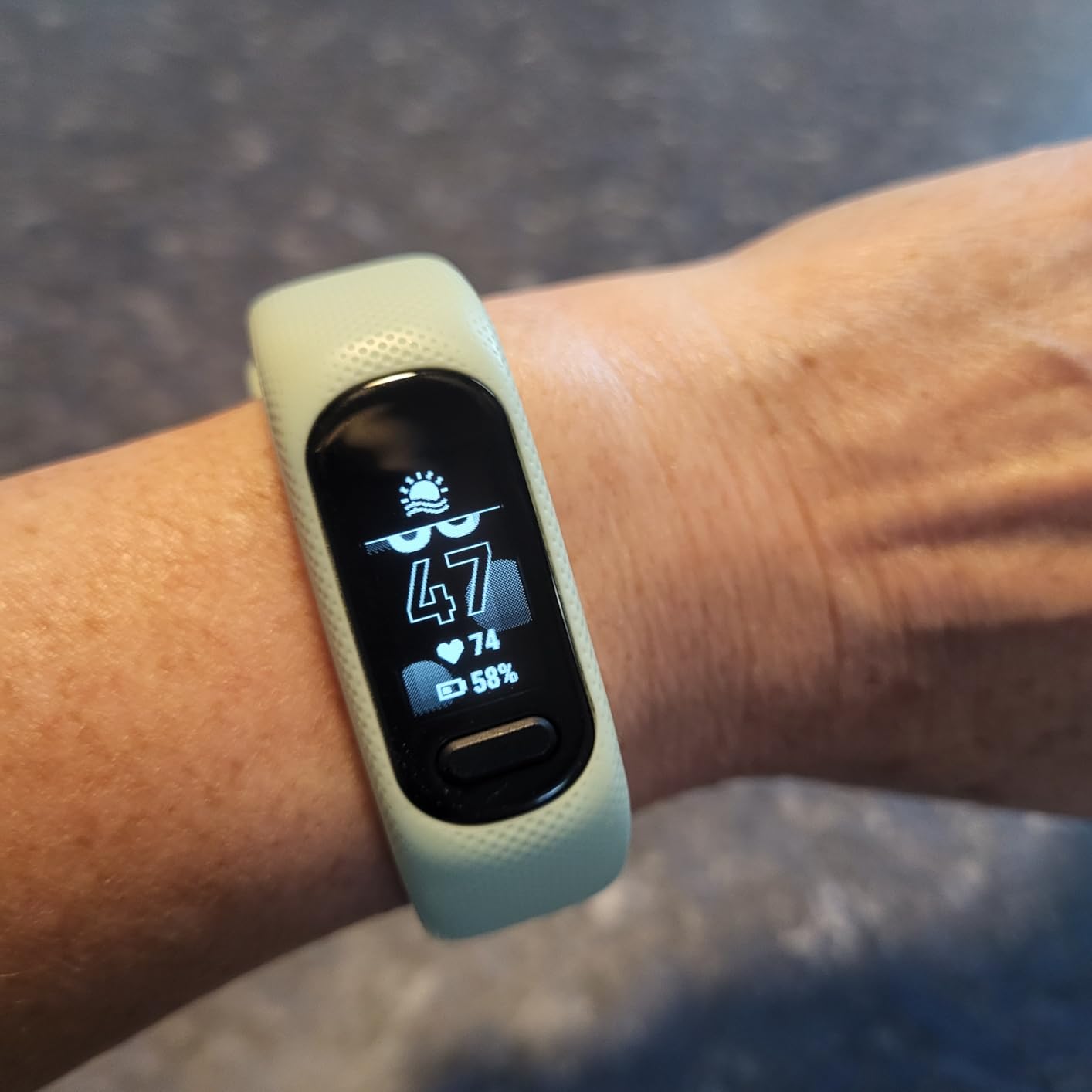
At 24.5 grams with a narrow 20mm band, the Garmin vívosmart 5 is the watch in this roundup you are least likely to notice at 4am. That is the entire pitch. Garmin owners who keep a watch on overnight tend to cite comfort and battery together, and this model delivers both: seven days in smartwatch mode, with sleep score and improvement guidance in Garmin Connect.
You still get the full Garmin health stack for a slim device: Body Battery, respiration, Pulse Ox, hydration, stress, women’s health, fitness age and intensity minutes. Smart notifications, incident detection and Assistance come as standard, and the screen is brighter and larger than the previous generation.
This is the lowest-rated device in the set at 3.9, and the reasons are consistent: a small 350-nit display that limits glanceable detail, no built-in GPS so outdoor tracking depends on your phone, and a 13% one-star share tied to pairing and firmware issues. The design also looks dated next to current AMOLED rivals.
What you give up for the comfort is the modern experience. There is no always-on display, no on-wrist maps and no music storage. If you mostly care about sleep and want a watch you will never take off, that trade is worth making; if you want a daily smartwatch, it is not.
Is the Garmin vívosmart 5 the best budget Garmin for sleep?
It is the lightest and it has the full health stack, which is a genuine combination you do not get elsewhere. The seven-day battery covers several sleep cycles without a charge.
Against the vívoactive 5, the older AMOLED screen, the missing always-on display and the phone-dependent GPS make this the one to buy only if weight and slimness come first.
Who should skip the Garmin vívosmart 5?
Skip it if you run or cycle away from your phone, because there is no built-in GPS. Skip it if you need a bright, large display or an always-on glance at the time.
Skip it if firmware pairing problems would frustrate you, since a 13% one-star share points there. If you want maps and music on the wrist, this device has neither.
How Accurate Are Sleep Trackers Really?
This is the section that decides the purchase, so here are the numbers without the marketing. Consumer trackers detect sleep versus wake with sensitivity above 95%, which is why a tracker can tell you that you were asleep at 2am without much doubt. What no tracker can do is read your brain. Without EEG, sleep stages are inferred from heart rate variability and movement, and that is where accuracy falls apart.
Sleep stage accuracy across published consumer-device studies ranges from about 50% to 86%. The highest published agreement figure for a consumer ring is a kappa coefficient above 0.61, and kappa is the agreement statistic used to compare against polysomnography, the clinical sleep study that remains the gold standard. In plain terms, a good consumer tracker gets you a useful trend and an unreliable night.
Total sleep time is typically overestimated by 2 to 10%, because a motionless body is read as sleep. Wake after sleep onset is underestimated by 12 to 40 minutes, because brief awakenings do not move enough to register. That combination produces a flattering picture: you look like you slept longer and woke less than you actually did.
One more caveat that no buying guide usually mentions. Optical heart rate uses light through the skin, and readings are less reliable on darker skin tones, where the signal is weaker and the device compensates less well. Fitzpatrick types IV to VI are documented as a source of PPG bias, which means two people with identical sleep can get materially different stage splits from the same device.
You cannot fix any of that with software. What you can do is sanity-check your own data. If the tracker claims 11 hours on a night you know was short and restless, trust your memory over the graph, and treat a single wild night as a sensor artefact rather than a real finding. The community sleep-testing threads that compare consumer trackers against a real sleep study are worth reading for exactly this reason: the stage estimates diverge noticeably, and owners report heart rate readings maxed out overnight that undermine confidence in every other number.
Finally, a safety point that belongs in any buying guide. No wrist wearable or ring can diagnose sleep apnea. SpO2 and breathing signals are screening signals that tell you whether to raise the topic with a doctor, nothing more. See a clinician if you snore loudly, wake gasping, feel unrefreshed after what should be enough hours, or have daytime sleepiness that does not go away.
Ring vs Screenless Band vs Wrist Watch: Which Form Factor Suits You?
Form factor decides more about your sleep data than the sensor list does, because the device you sleep in comfortably is the one that records every night. A device that is irritating gets removed, and a removed device produces gaps, and gaps quietly ruin every trend you were trying to see.
Smart ring wins on invisibility and on detailed sleep staging. The Oura Ring 4 is the only example here, and it produces the most granular night of the group. The trade is a monthly membership, a sizing commitment, and no GPS or live workout heart rate. If sleep is genuinely your only interest, this is the form factor built for it.
Screenless band wins on distraction removal and battery. WHOOP 5.0 gives you the deepest recovery and strain analysis in this roundup and a 14-plus-day battery, and it cannot buzz you awake at night because it has no screen. The trade is the same membership model plus the fact that it cannot replace a normal watch.
Wrist watch wins on everything-else. It is the only form factor that doubles as a day watch, and most people who want a sleep tracker already own one. The trade is size on the wrist and, on smaller models, battery life. The Garmin vívoactive 5, Fitbit Charge 6 and Amazfit Active 2 Premium are the versions of this form factor that handle overnight wear well.
Budget band wins on price and battery and gives up coaching. The Xiaomi Mi Smart Band 10 and Amazfit Bip 6 both outlast every watch here and both report sleep stages, but neither offers a readiness model. If your goal is a three-week battery and a nightly record, this is the cheapest way to get it.
A note for anyone who cannot wear anything at all: an under-mattress sensor records movement and breathing without touching you, and it trades away heart rate, HRV and stage detail entirely. For readers who want the sleep data but not the hardware on their body, it is a legitimate trade. Improving the room itself works too, and our guides to white noise machines for better sleep and to a consistent bedtime reading routine cover the changes that help sleep quality without a screen involved.
How to Choose a Sleep Tracker in 5 Steps
1. Pick the form factor you will actually sleep in. Ring, screenless band, wrist watch or budget band. This decision matters more than any sensor, because comfort is the most cited deal breaker in sleep wearables. If you have never worn a watch to bed, a ring or a screenless band will suit you better than a watch.
2. Decide how you feel about a membership. Oura and WHOOP both require an ongoing subscription, and that is the single most common reason people switch brands. The Amazfit, Xiaomi, Fitbit, Garmin and Apple devices in this roundup do not require one for core sleep features. Multiply any monthly figure by 24 before you decide, because that is your real two-year cost.
3. Set a battery minimum of seven days. Any device that needs charging daily will produce missing nights, and a gap looks to the algorithm like a night you did not sleep. The Xiaomi Band 10, Amazfit Bip 6, Amazfit Active Max and WHOOP 5.0 all clear a week comfortably; the Apple Watch SE 3 at 18 hours does not.
4. Prioritise metrics, not feature counts. The three numbers that change decisions are overnight HRV, sleep efficiency and resting heart rate. Everything else is either an aggregate of those or a novelty. A device that reports those three clearly beats one that reports thirty metrics you will never look at.
5. Give it a 30-day baseline before judging it. Readiness and recovery scores are only meaningful against your own normal, and that takes 14 to 30 days of consistent wear. Judging a tracker in week one is the most common reason people return a device that would have worked. Wear it every night through a full month before you read the trend line.
Two comfort rules we use before a night of testing. Loosen the band a notch so the sensor sits snug but the strap leaves a mark, and charge the device in the morning rather than at night. Both are small habits that protect the data you are paying for.
And if the goal is a calmer night rather than a better chart, worth remembering that a device cannot fix a loud, uncomfortable or overheated bedroom. Our pick of snore-related sleep products covers the physical side of the problem that no wrist sensor touches.
Frequently Asked Questions
Which fitness tracker is most accurate for sleep tracking?
Among the devices in this roundup, the Oura Ring 4 produces the most detailed sleep staging, and the Garmin vívoactive 5 is the most accurate overall experience because it pairs stage data with HRV status, Body Battery and coaching that turns the night into a decision. Ring finger PPG is less disturbed by movement than a wrist sensor, which is why the ring wins on stage detail. Remember that consumer stage accuracy still tops out around 86% against a clinical sleep study.
How accurate are fitness trackers for sleep?
Consumer trackers detect sleep versus wake with sensitivity above 95%, so they reliably tell you that you were asleep. Sleep stage accuracy is far lower, ranging from about 50% to 86%, because stages are inferred from heart rate variability and movement without an EEG. Total sleep time is typically overestimated by 2 to 10% and wake after sleep onset is underestimated by 12 to 40 minutes per night.
Is Garmin or Fitbit better for sleep tracking?
Choose the Garmin vívoactive 5 for guidance and the Fitbit Charge 6 for a single clean number. Garmin gives you a sleep score, HRV status, Body Battery and automatic nap detection, which is coaching you can act on. Fitbit gives you a personalised Sleep Score with stage breakdown, ECG and SpO2 hardware, in a smaller form factor with more interchangeable bands.
Is Oura or WHOOP more accurate for sleep?
The Oura Ring 4 is more accurate for sleep staging because the ring is easier to keep in place all night and its stage breakdown is the most detailed in this roundup. WHOOP 5.0 is better for recovery and training load, with the deepest strain and recovery analytics and a 14-plus-day battery. Pick the ring for sleep, and pick WHOOP when sleep data drives your training decisions.
Do I need a subscription for sleep tracking?
Only two devices here require one. The Oura Ring 4 and WHOOP 5.0 both include a period and then charge a recurring membership, so multiply the monthly figure by 24 to see the real two-year cost. The Garmin, Amazfit, Xiaomi, Fitbit and Apple options in this roundup do not require a membership for their core sleep features.
Why does my sleep data look wrong when I know I slept badly?
Most often the device read a motionless body as sleep, so total sleep time comes out 2 to 10% high. Brief awakenings may not move enough to register, which also flatters the night. Motion artefact from a restless sleeper or a tight band can push overnight heart rate readings to implausible levels. Trust your own memory over a single odd night and look at two-week trends instead.
Which fitness tracker has the best battery life for sleep tracking?
The Amazfit Active Max leads this roundup with a stated battery of up to 25 days, followed by the Xiaomi Mi Smart Band 10 at up to 21 days and the Amazfit Bip 6 at up to 14 days. The Apple Watch SE 3 is the shortest at 18 hours, which means nightly charging. Any device that runs a week between charges protects your record from missing nights.
Can a fitness tracker detect sleep apnea?
No wearable in this roundup can diagnose sleep apnea. Blood oxygen and breathing signals are screening signals that tell you whether to raise the topic with a doctor, and the Apple Watch SE 3 and Fitbit Charge 6 will send apnea notifications to prompt that conversation. See a clinician if you snore loudly, wake gasping, feel unrefreshed after enough hours, or have daytime sleepiness that persists.
The Best Fitness Tracker for Sleep Tracking in 2026
The Garmin vívoactive 5 is the best fitness tracker for sleep tracking overall in 2026. It is the only device in this roundup that combines a sleep score, HRV status, Body Battery, automatic nap detection and an 11-day battery, and more than 12,000 reviews keep the owner sentiment consistent.
Pick the Oura Ring 4 if sleep staging detail is your only goal. Pick the WHOOP 5.0 if your sleep data drives training decisions and you accept a renewing membership. Pick the Amazfit Active 2 Premium if you want ten-day battery, accurate SpO2 and no subscription, and pick the Xiaomi Mi Smart Band 10 if you want sleep stages, a three-week battery and the lightest, least bulky hardware in the roundup.
Whichever you choose, wear it for 30 nights before you judge it, and treat the graph as a trend rather than a verdict. If you want the best fitness trackers for sleep tracking and the nightly record to actually be complete, the deciding factor is the device you forget you are wearing.