
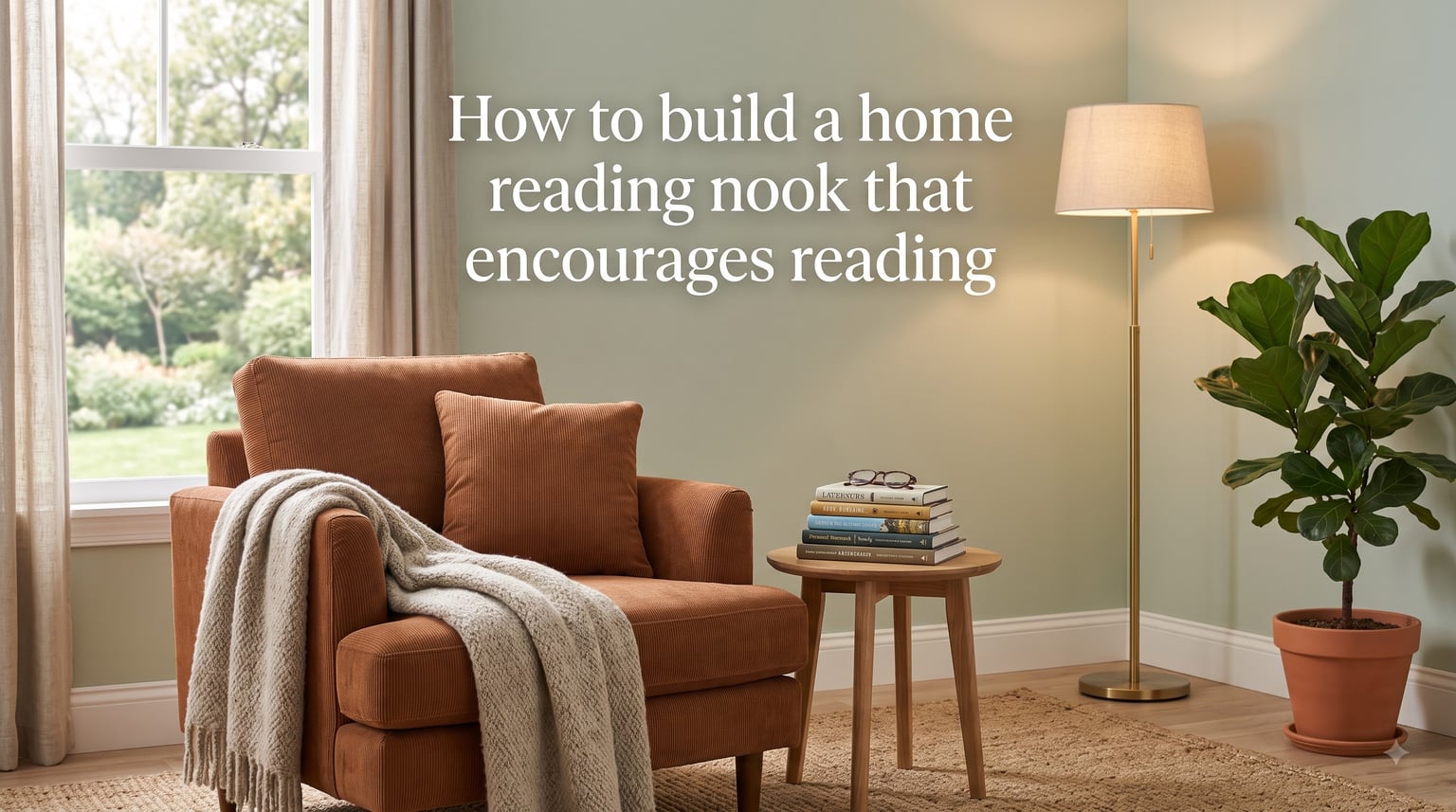
I have built reading nooks in three different homes over the past decade, and the difference between a nook that gets used daily and one that collects dust always comes down to a few specific design choices. Learning how to build a home reading nook that encourages reading means thinking beyond just tossing a chair in a corner. You need comfort, accessibility, lighting, and a few psychological triggers that make the space feel irresistible.
Our team has researched what actual readers, parents, and educators do to create reading spaces that people gravitate toward naturally. What follows is a step-by-step guide based on those findings, covering everything from choosing a location to building a reading routine that sticks.
Whether you have a spare closet, a bedroom corner, or just a few square feet next to a window, this guide will help you create a cozy reading nook that actually gets used.
Table of Contents
Why a Dedicated Reading Space Matters
A reading nook works because it creates a physical cue that tells your brain it is time to focus on a book. When you sit in the same spot repeatedly to read, that space becomes associated with calm, concentration, and enjoyment.
Reddit users in r/CozyPlaces and r/HomeLibraries consistently report that having a designated reading spot helped them read more often than any other habit change they tried. The space removes friction between wanting to read and actually doing it.
For children, this effect is even stronger. Early literacy research shows that kids who have a dedicated, inviting reading area at home develop stronger reading habits and spend more voluntary time with books.
Step 1: Choose the Perfect Location for Your Reading Nook
The right location is the single most important decision you will make. Here is how to evaluate your space:
Look for natural light. A spot near a window gives you daylight that reduces eye strain and makes the space feel inviting during the day.
Find a low-traffic area. Reading nooks in busy hallways or next to the TV get abandoned fast. Pick a corner away from household noise and foot traffic.
Consider unused spaces. Closets with the doors removed, the area under a staircase, a wide windowsill, or an empty bedroom corner all work surprisingly well.
Take measurements first. Before buying anything, measure the width, depth, and height of your chosen spot. This prevents furniture mistakes that forum users cite as their top regret.
If you live in a small apartment, do not skip this step. Even a 3-foot by 3-foot corner can become a functional reading nook when planned carefully.
Step 2: Select Comfortable Seating
Seating is where most reading nooks succeed or fail. You want something comfortable enough for 30 to 60 minutes of reading but not so soft that you fall asleep.
Armchairs offer back support and are the top choice for adult reading nooks. A compact accent chair works well in tight spaces.
Window seats are highly recommended by experienced nook builders on r/HomeLibraries. They combine seating, natural light, and often hidden storage underneath.
Bean bag chairs are popular for kids reading nooks and budget setups, though Reddit users warn they lose shape over time. Choose a high-quality foam-filled version if you go this route.
Floor cushions and poufs are flexible, inexpensive, and easy to move. They work especially well in small spaces and for younger children.
Built-in benches give a custom, polished look and can include storage for books and blankets. This is a bigger project but delivers the most cohesive result.
Test your seating choice with a 20-minute reading session before committing to the rest of the design. If your back aches or you feel restless, swap it out.
Step 3: Get the Lighting Right
Poor lighting is the fastest way to kill a reading habit. Your eyes need enough light to read comfortably without strain, and the quality of that light shapes the mood of the whole space.
Start with natural light whenever possible. Position your seating so daylight comes from the side rather than directly behind or in front of you to avoid glare on the page.
Add a task light for evening reading. A floor lamp, a swing-arm wall sconce, or a clip-on reading lamp all work. Choose warm-toned bulbs (around 2700K to 3000K) because they create a cozy atmosphere without the harshness of cool white light.
If your nook is under stairs or in a closet without windows, string lights or battery-operated LED strips add both illumination and a warm, inviting glow that makes the space feel special.
Step 4: Add Book Storage That Invites Browsing
Books should be visible and easy to grab. When people have to work to find a book, they skip reading. When books are displayed attractively, browsing becomes part of the pleasure.
Forward-facing shelves are ideal for kids because children judge books by their covers. Wall-mounted picture ledges or forward-facing bookcases make selection fun.
Floating shelves save floor space and turn book covers into wall art, perfect for bedroom reading corners and small apartments.
Baskets and bins keep paperbacks organized and work well for younger readers who like to dump and dig through their collection.
A rolling cart is one of the most loved solutions in forum discussions. It holds books, a reading lamp, and supplies, and you can move it between rooms.
Rotate books every few weeks. This simple habit keeps the selection feeling fresh, which is one of the most effective strategies for maintaining reading motivation in both kids and adults.
Step 5: Layer Soft Textiles and Decor
Soft textures are what transform a chair in a corner into a cozy reading nook. This is the step that makes the space feel intentional and inviting.
Throw pillows add back support and visual warmth. Mix sizes and textures like linen, velvet, and knit.
A blanket or two draped over the arm of the chair invites longer reading sessions, especially in cooler months.
A small rug defines the space visually and adds underfoot comfort, particularly on hard floors.
Indoor plants bring life to the nook and improve air quality. A low-maintenance pothos or snake plant thrives even in low light.
Personal touches like framed quotes, family photos, or a small side table for a cup of tea make the space feel uniquely yours.
Avoid cluttering the area. One or two decorative items are enough to add personality without making the space feel crowded or distracting.
How to Build a Home Reading Nook That Encourages Reading for Kids
A kids reading nook needs to do something different from an adult one. The goal is not just comfort but excitement and ownership, so children actively want to spend time there.
Get them involved in the design. Let children pick their cushions, choose a color theme, or select which books go on the shelf. Ownership drives usage.
Keep books at their height. If a child cannot reach the books independently, the nook will go unused. Low shelves and floor baskets solve this.
Make it feel like a hideaway. Canopies, tent structures, and enclosed closet nooks give kids the sense of having their own secret space, which is powerful for reluctant readers.
Add a comfort item. A stuffed animal or weighted lap pad helps active children settle into reading.
Keep the book selection fresh. Rotate library books and seasonal reads so there is always something new to discover.
For reluctant readers specifically, avoid pressure. The nook should be a place they choose to visit, not a place they are sent. Let them browse, look at pictures, and flip pages without expectations.
Reading Nook Ideas for Small Spaces
You do not need a spare room to create a reading corner. Some of the best reading nooks fit into spaces most people overlook.
Closet conversion: Remove closet doors, add a cushion to the floor or a low bench, install a small shelf, and hang string lights. This creates an enclosed, cozy nook in just a few square feet.
Window nook: If you have a wide windowsill or a window flanked by walls, add a cushioned seat and a side table. This is a classic bedroom reading corner.
Corner setup: A corner chair, a floor lamp, and a narrow bookshelf take up minimal space but create a complete reading zone.
Portable reading cart: A three-tier rolling cart stocked with books, a blanket, and a clip-on lamp lets you create a reading nook anywhere, then tuck it away.
Under-stair hideaway: The space beneath a staircase is often wasted. A cushion, a light, and a shelf turn it into a magical enclosed reading spot.
The key for small spaces is choosing multi-functional pieces. Storage ottomans that hold blankets, shelves that double as room dividers, and seating with hidden compartments all maximize limited square footage.
How to Establish a Reading Routine With Your New Nook
Building the nook is only half the work. The other half is training yourself and your family to use it consistently. Forum discussions reveal that people who build reading nooks but never use them usually skipped this step.
Anchor reading to an existing habit. Read for 15 minutes after dinner, before bed, or with your morning coffee. Tying reading to something you already do makes it automatic.
Keep a book open on the chair. A visible, open book is an invitation. When the nook always has a book waiting, you are more likely to sit down.
Start small. Commit to just 10 minutes a day at first. Consistency matters more than duration when you are building a habit.
Make it screen-free. Leave phones and tablets in another room. The nook becomes a place associated only with books and quiet.
For families, schedule reading time together. Even 20 minutes of shared family reading builds the habit for kids and models the behavior you want to see.
Within two to three weeks of daily use, sitting in the nook to read starts to feel natural rather than forced. That is when the space has done its job.
FAQs
How to build a home reading nook that encourages reading free?
You can build a reading nook for free using items you already own. Repurpose a chair from another room, gather pillows and blankets from your closet, and use existing bookshelves or a basket. Pick a quiet corner with natural light and keep a book visible on the seat. The space itself, not the furniture, is what encourages reading.
What are reading nook ideas for small spaces?
For small spaces, convert a closet by removing the doors and adding a floor cushion, use a corner with a compact chair and narrow shelf, build a window seat, or set up a rolling cart that holds books and supplies. Under-stair spaces and wide windowsills also make excellent compact reading nooks.
What are reading nook ideas for adults?
Adult reading nooks benefit from supportive seating like an armchair or chaise, a quality floor or wall lamp with warm lighting, a side table for drinks, and a small collection of current reads on a floating shelf. Add a throw blanket and a plant to create a calm, personal retreat.
How to create a cozy reading nook for kids?
Choose low seating like floor cushions or a small bean bag, install forward-facing shelves at child height, and add a canopy or tent for a hideaway feel. Let kids help pick decorations and rotate books regularly. Keep the space pressure-free so children choose to visit it on their own.
What are reading corner ideas for a bedroom?
In a bedroom, place a chair or floor cushion near a window, add a swing-arm wall sconce for task lighting, and install floating shelves to display books. A window seat with storage underneath is a popular bedroom option that combines seating and organization.
What makes a good reading nook?
A good reading nook has comfortable seating, adequate lighting, easy access to books, soft textiles, and a quiet location away from distractions. The best nooks feel inviting enough that you want to sit in them even when you are not actively planning to read.
Conclusion
Knowing how to build a home reading nook that encourages reading comes down to five elements: the right location, comfortable seating, proper lighting, accessible book storage, and soft textiles that make the space feel inviting. Add a consistent reading routine, and you have a space that will change your reading habits for years to come.
Pick one corner of your home this week and start with what you already own. The best reading nook is the one you actually use, and that starts with a single chair and a book.