
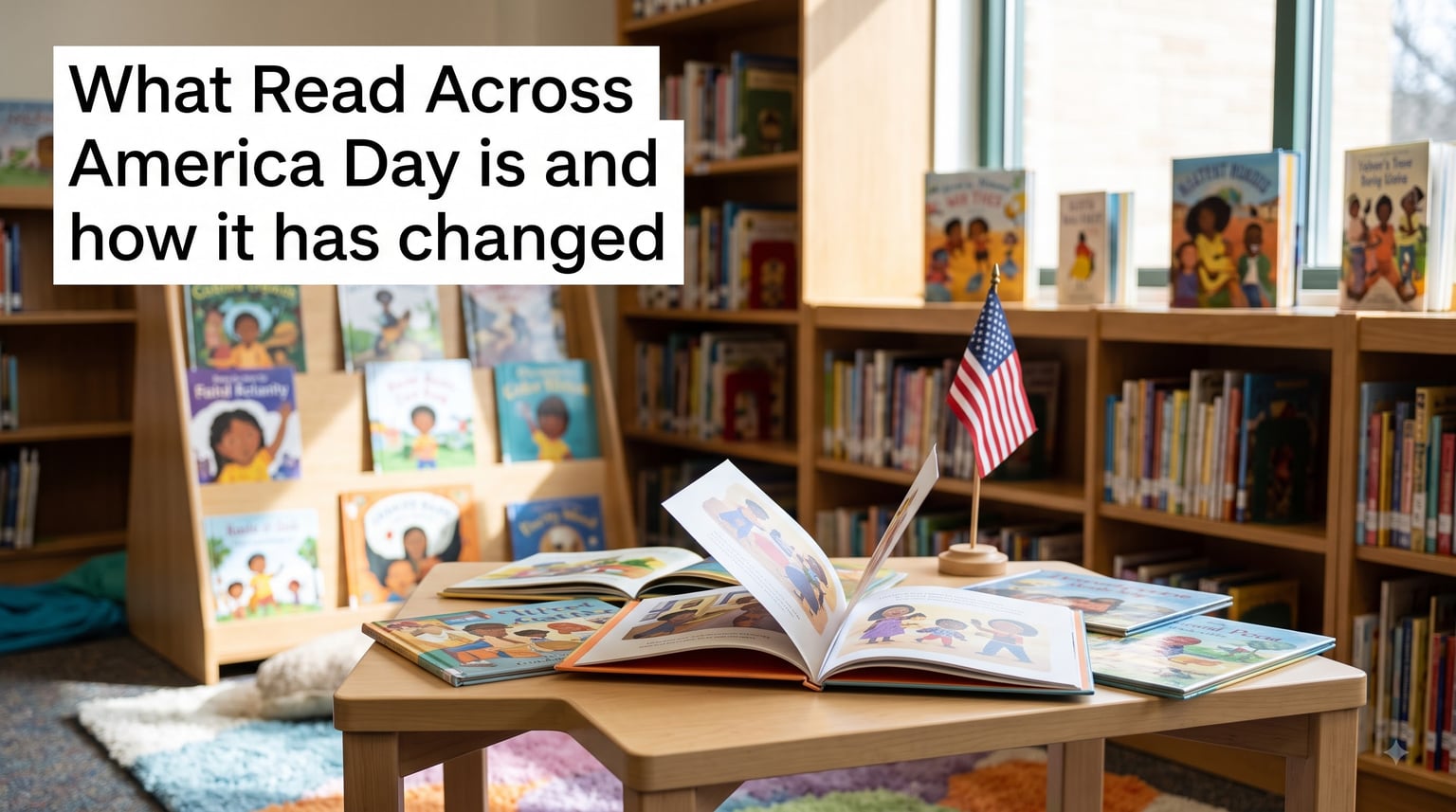
Read Across America Day is an annual nationwide reading celebration held on March 2, founded in 1998 by the National Education Association (NEA) to motivate children and teens to read. Over the past two decades, the program has transformed from a single-day event centered on Dr. Seuss’s birthday into a year-round initiative that celebrates diverse books, inclusive voices, and a love of reading in every community. If you have ever wondered what Read Across America Day is and how it has changed, this guide breaks down the full story, from its 1998 origins to its current form in 2026.
Millions of students, teachers, librarians, and families participate each year. The celebration has grown far beyond its original scope, and understanding that evolution helps you appreciate why this literacy initiative remains relevant today.
Table of Contents
What Is Read Across America Day?
Read Across America Day is the NEA’s flagship literacy initiative, designed to bring reading into the spotlight for children across the United States. It takes place every year on March 2, a date chosen to coincide with the birthday of Theodor Seuss Geisel, better known as Dr. Seuss. Schools, libraries, community centers, and families use the day to organize read-aloud sessions, book-themed activities, guest reader visits, and reading challenges.
The goal is simple but powerful. Get kids excited about books. When children associate reading with joy rather than obligation, they are more likely to become lifelong readers. That motivation sits at the heart of every Read Across America event.
Participation is widespread. The NEA estimates that over 45 million people participate annually, including students, educators, parents, politicians, athletes, and celebrities who visit classrooms to read aloud. From small rural schools to large urban library systems, the day creates a shared national moment around literacy.
The program has always served a dual purpose. It celebrates the act of reading itself, but it also pushes communities to think critically about what children read and whether those books reflect the diverse world kids actually live in.
The Origins: How It All Started in 1998
The National Education Association launched Read Across America in 1998 as a way to channel national attention toward childhood literacy. The NEA, the largest professional organization and labor union representing public school educators in the United States, wanted a celebration that could rival the visibility of events like National Library Week or Banned Books Week but with a sharper focus on motivating young readers.
March 2 was selected deliberately. Dr. Seuss, born Theodor Geisel on March 2, 1904, was already a beloved figure in American children’s literature. His books, from “The Cat in the Hat” to “Green Eggs and Ham,” had introduced generations of children to the pleasure of reading. Tying the event to his birthday gave the new observance an instant hook that schools and parents could rally around.
In its early years, Read Across America was heavily Seuss-centric. Schools organized Cat in the Hat dress-up days, served green eggs and ham in cafeterias, and decorated hallways with Seuss characters. The NEA partnered with Dr. Seuss Enterprises to produce classroom materials, reading certificates, and promotional kits featuring familiar illustrations.
The approach worked. Within a few years, Read Across America had become one of the most recognized literacy events in the country. Politicians read to children in classrooms. National media covered the celebrations. The event established itself as a reliable fixture on the academic calendar.
But even in those early years, the seeds of change were present. Educators within the NEA and beyond began asking whether a single author, however beloved, should define an entire national reading celebration.
How Read Across America Day Has Changed Over Time
The most significant shift in the program’s history has been its move away from a Dr. Seuss-centered model toward a broader celebration of diverse books and authors. This transition did not happen overnight. It unfolded gradually through the 2000s and 2010s as educators, researchers, and families called for reading lists that better reflected the experiences of all students.
By the mid-2010s, the NEA began incorporating more multicultural titles into its recommended reading materials. The organization started spotlighting books by and about people of color, LGBTQ+ families, immigrants, people with disabilities, and other underrepresented groups. The message was clear. Every child deserves to see themselves in the books they read.
In 2017, the NEA made the shift more visible by introducing themed monthly reading calendars that featured diverse authors and stories alongside traditional favorites. The move was not about rejecting Dr. Seuss but about expanding the tent so that the celebration served a wider range of readers.
The transition intensified in 2021 when Dr. Seuss Enterprises announced it would cease publication of six Seuss titles due to racist imagery. That decision reignited a national conversation about which books belong in classrooms and how literacy celebrations should handle outdated content. Read Across America found itself at the center of that conversation.
Some parents and educators felt the NEA was abandoning a beloved tradition. Others welcomed the change, arguing that the program had outgrown its single-author focus years ago. The NEA addressed the tension directly, emphasizing that Read Across America had never been exclusively about Dr. Seuss and that its mission was always broader: to celebrate reading in all its forms.
Another major change was the shift from a single-day event to a year-round program. The NEA now promotes reading every month with themed book recommendations, author interviews, and classroom resources. March 2 remains the flagship celebration, but the program’s identity has expanded well beyond one day on the calendar.
Here is a brief timeline of key milestones in how Read Across America has evolved:
1998: NEA launches Read Across America, tied to Dr. Seuss’s birthday on March 2.
Early 2000s: Event grows into one of the largest literacy celebrations in the U.S. with heavy Seuss theming.
2010s: NEA begins incorporating more diverse and multicultural titles into reading recommendations.
2017: Monthly themed reading calendars introduced, featuring diverse authors and stories year-round.
2021: Dr. Seuss Enterprises discontinues six titles; NEA reaffirms diverse books focus.
2026: Program operates as a year-round celebration with monthly themes, podcasts, and author spotlights.
No competitor currently lays out this timeline in detail, which makes it one of the most valuable parts of this guide. The evolution is not a single event but a series of deliberate choices by the NEA to make reading celebrations more inclusive.
The Current Theme and Year-Round Celebration
Read Across America in 2026 operates under the banner of “Celebrating a Nation of Diverse Readers.” This theme captures the program’s modern identity. Reading is not just about skill-building. It is about connection, empathy, and seeing the world through someone else’s eyes.
The year-round structure is built around monthly themes, each with recommended books at three reading levels: elementary, middle grade, and young adult. For example, a month might focus on Asian American, Native Hawaiian, and Pacific Islander stories, with curated titles for each age group. Another month might highlight poetry, biographies, or stories about community and joy.
The NEA also produces a podcast that features interviews with Read Across America authors. These conversations give educators and students direct access to the voices behind the books, deepening engagement beyond the page.
Classroom resources have expanded significantly. Teachers can download discussion guides, activity sheets, reading certificates, and themed calendars for free from the NEA website. The emphasis on “The Freedom to Read” has also grown, with resources that help educators navigate book challenges and advocate for diverse literature in their schools.
March 2 still anchors the calendar as the main celebration day. But the program now treats every month as an opportunity to read, discuss, and grow. This year-round model is something neither major competitor emphasizes strongly, and it represents a fundamental change in how the program thinks about literacy engagement.
Why Read Across America Day Matters?
Read Across America Day matters because it puts reading on the national agenda. In a world where screens compete for every minute of a child’s attention, a dedicated celebration of books reminds families and communities that reading remains essential.
The program addresses a real problem. According to the National Center for Education Statistics, roughly one in three fourth-graders in the United States reads below the basic level. Events like Read Across America help counter this by making reading feel exciting and communal rather than like a chore.
Diverse representation is the other pillar of why the program matters today. When children read books that reflect their own identities and experiences, their reading engagement and comprehension improve. When they read books about people unlike themselves, they develop empathy and broader perspectives. Read Across America promotes both.
Teachers on forums like r/ELATeachers frequently share how the celebration energizes their classrooms. Community readers who visit schools, buddy reading blocks between older and younger students, and themed book displays in libraries all create momentum that can carry through the school year.
How to Celebrate Read Across America Day?
Celebrating Read Across America Day works at every scale, from a single family reading together at home to a district-wide event involving hundreds of students. Here are practical ideas organized by setting.
In schools: Organize guest reader visits where community members, local athletes, or elected officials read to classrooms. Set up buddy reading blocks where older students read to younger ones, a strategy teachers on r/ELATeachers recommend highly. Hold a school-wide reading challenge with a shared book or themed reading list. Decorate hallways and classroom doors based on featured books.
In libraries: Create book displays featuring the NEA’s monthly recommended titles. Host read-aloud events with local authors or community leaders. Run a bookmark design contest tied to a favorite book. Offer reading logs that kids can complete for small prizes.
At home: Read together as a family for at least 20 minutes. Let children choose the book, since choice is one of the strongest motivators for independent reading. Talk about the story afterward. Visit a local bookstore or library and let each child pick out a new book to keep.
For teens and older students: This is an area where forum discussions reveal a real gap. Many resources target elementary students, leaving middle and high schoolers without age-appropriate activities. Try organizing student-led book talks, graphic novel clubs, or reading mentorship programs where teens read to younger children. The NEA’s young adult book recommendations are a strong starting point for selecting titles that resonate with older readers.
Frequently Asked Questions
What is the purpose of Read Across America Day?
The purpose of Read Across America Day is to motivate children and teens to read by making reading a joyful, shared experience. Founded by the NEA in 1998, the celebration encourages schools, libraries, and families to organize reading events that build lifelong reading habits and promote diverse, inclusive literature.
What is the theme for Read Across America Day in 2026?
The theme for Read Across America Day in 2026 is Celebrating a Nation of Diverse Readers. This theme reflects the program’s ongoing focus on books that represent a wide range of cultures, identities, and experiences, with monthly recommended titles for elementary, middle grade, and young adult readers.
What is a fun fact about Read Across America Day?
A fun fact about Read Across America Day is that it was originally tied to Dr. Seuss’s birthday on March 2 because his books helped millions of children learn to read. Over 45 million people participate annually, making it one of the largest reading celebrations in the United States.
What to do for Read Across America Day?
You can celebrate by organizing guest reader visits at schools, hosting read-aloud events at libraries, setting up buddy reading between older and younger students, creating themed book displays, or simply reading together as a family for 20 minutes. The NEA also provides free classroom resources, monthly book recommendations, and activity guides on its website.
Why is Read Across America Day important?
Read Across America Day is important because it raises national awareness about childhood literacy, encourages reading motivation, and promotes diverse representation in children’s literature. With roughly one in three fourth-graders reading below grade level, the celebration helps communities prioritize reading as a shared, joyful activity.
Conclusion
Read Across America Day has come a long way since its founding in 1998. What started as a Dr. Seuss birthday celebration has grown into a year-round literacy initiative that champions diverse books, inclusive voices, and the simple joy of reading. Understanding what Read Across America Day is and how it has changed helps us appreciate why this evolution matters. Every child deserves to find themselves in a book, and every community benefits when reading is celebrated together. Pick up a book on March 2, share it with someone you love, and keep the celebration going all year long.