
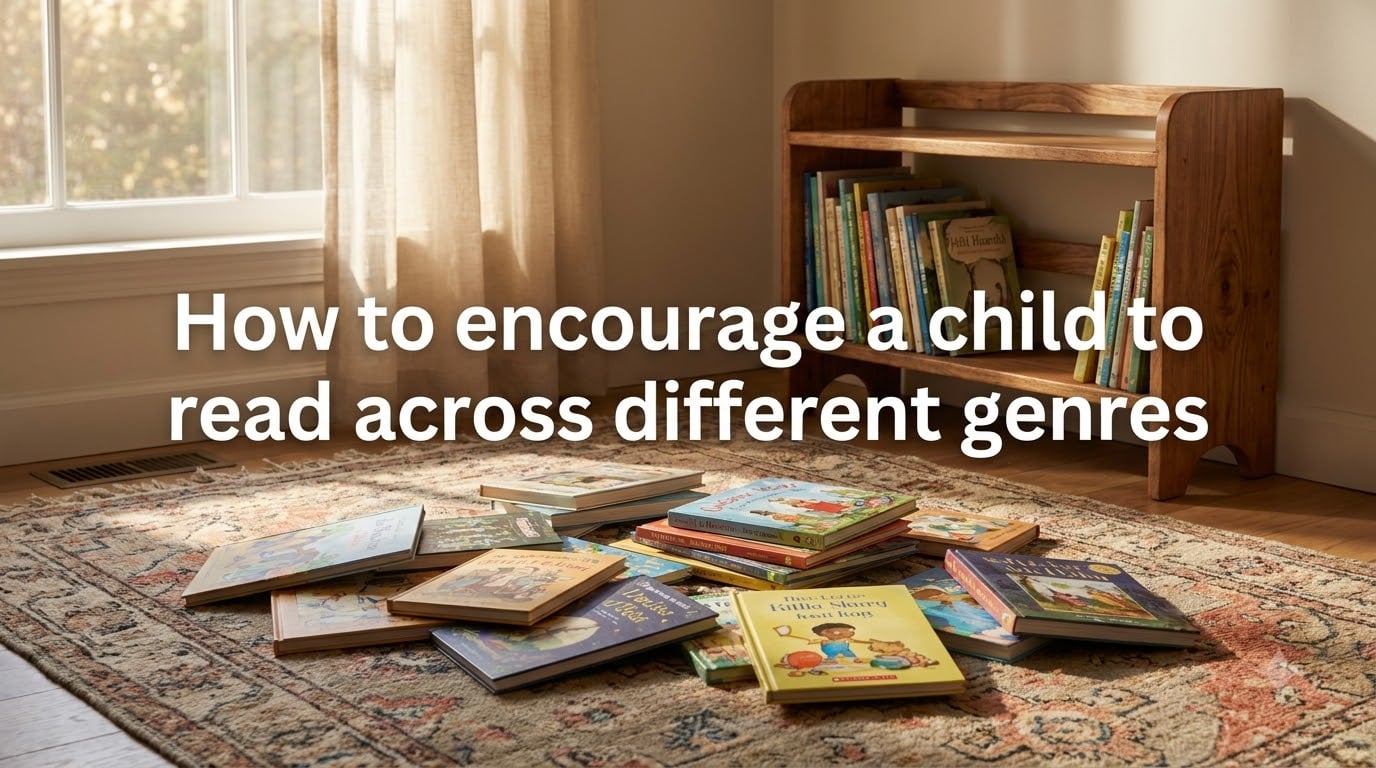
If your child has read the same series for the fifth time, you are not alone. Many parents watch their kids latch onto one type of book and refuse to budge. The good news is that learning how to encourage a child to read across different genres does not require force, bribes, or endless battles at the library.
Reading variety builds stronger comprehension, deeper vocabulary, and broader background knowledge. Children who explore multiple genres also develop critical thinking skills that transfer directly to schoolwork and life. I have spent years working with parents, teachers, and reluctant readers, and I can tell you that small shifts in approach make a massive difference.
This guide breaks down practical, age-specific strategies you can use tonight. We will cover what actually works, what to avoid, and how to handle the child who digs in their heels. Whether your kid is five or fifteen, you will find ideas here that fit your family.
Table of Contents
Why Reading Across Genres Matters?
Reading across genres matters because each genre teaches a child something different. Fiction builds empathy and imagination. Nonfiction expands factual knowledge and curiosity about the real world. Poetry trains the ear for rhythm and language. Mystery sharpens deductive reasoning. When a child reads broadly, they build a versatile toolkit of comprehension skills.
Research-backed benefits of reading multiple genres include measurable growth in vocabulary and background knowledge. A child who reads only fantasy novels encounters a narrow band of sentence structures and topics. Add historical fiction, biographies, and science books to the mix, and suddenly their world gets a lot bigger.
Genre diversity also keeps reading fresh. Children who cycle through the same type of story eventually plateau and lose interest. Variety prevents boredom and sustains long-term reading motivation.
Perhaps most importantly, exploring genres helps children discover who they are as readers. A kid who insists they hate reading might simply have not found the right genre yet. I have seen self-proclaimed book haters become devourers the moment they discover narrative nonfiction or graphic memoirs.
Start With Your Child’s Current Interests
The biggest mistake parents make is pushing new genres before understanding what their child already loves. If your daughter is obsessed with dinosaurs, use that. If your son lives for soccer, start there. Genre exploration works best when it grows from existing passions rather than replacing them.
Begin by paying attention to what your child naturally gravitates toward. Watch what they watch on screen, what topics they talk about, and which books they re-read. These patterns tell you exactly where to start. A child who loves adventure movies will likely enjoy adventure fiction before they warm up to historical biographies.
Ask open-ended questions instead of making suggestions. Try asking, “What do you like about that book?” rather than “You should try this instead.” Their answers reveal the hooks you can use to bridge into new genres. A kid who loves the action in their favorite fantasy series might enjoy real-life survival stories for the same adrenaline rush.
Keep a casual reading interest list on your phone. Jot down topics, themes, and elements your child responds to. This list becomes your roadmap for finding books in unfamiliar genres that still hit their sweet spot.
How to Encourage a Child to Read Across Different Genres?
Here is the core of what you came for. These seven strategies work for real families, and I have organized them from simplest to most involved. Pick one or two to start, then layer in more as your child warms up.
1. Host a Book Tasting Event
A book tasting turns genre exploration into an event. Set up your dining table like a cafe with books from different genres as the “menu.” Give your child a “menu card” where they rate each book after a three-minute browse. The goal is not to finish anything but to sample widely.
Include five or six genres at your tasting: realistic fiction, fantasy, mystery, biography, poetry, and informational nonfiction. Place two or three books per genre at the table. Your child reads the first page of each and notes which ones grabbed them. This low-pressure format removes the commitment of choosing a whole book.
Parents on parenting forums consistently report that book tastings change the dynamic at home. Instead of a parent saying “read this,” the child feels like they chose it themselves. Ownership matters enormously to young readers.
2. Use Book Blessings and Dramatic Read-Alouds
The concept of a “book blessing” comes from literacy experts, and it works beautifully at home. A book blessing simply means you spend two minutes talking up a book with genuine excitement before handing it over. Read a dramatic excerpt aloud. Stop at a cliffhanger. Let the suspense do the convincing for you.
This is not about tricking your child. It is about marketing. Children judge books the way adults judge movies: by the trailer. A flat summary kills interest. A dramatic reading of the most exciting page creates a hook that pulls them in.
Do book blessings casually. Try it over dinner or during car rides. Keep it brief and let your child opt out without pressure. The goal is exposure, not completion.
3. Try a Genre Challenge or Reading Bingo
Gamification works because children love checking boxes and earning wins. Create a simple reading bingo card with genre squares: “Read a mystery,” “Read a biography,” “Read a poetry book,” “Read historical fiction.” Make the squares achievable and celebrate each completion.
Keep the challenge light. No prizes need to be involved beyond recognition. The satisfaction of marking a square and seeing the card fill up is reward enough for most kids. You can download free genre bingo cards online or draw one on poster board together.
Avoid making the challenge feel like homework. If your child stalls on a square, offer to read the book together or find an audiobook version. The point is exploration, not obligation.
4. Connect Books to Real-Life Interests
The fastest way into a new genre is through a topic your child already cares about. Love space? Find narrative nonfiction about astronauts. Obsessed with animals? Track down a wildlife mystery series. The genre matters less than the hook that gets them to open the cover.
Think of genre as the vehicle and topic as the engine. A reluctant reader who refuses fiction might devour a graphic novel about their favorite video game. A child who turns up their nose at nonfiction might inhale a biography of their sports hero.
Start a running list of your child’s top three interests. When you visit the library, search for books in three different genres that touch those interests. Bring home options and let your child pick.
5. Make Audiobooks Your Secret Weapon
Audiobooks count as reading, and they are a powerful tool for genre exploration. A child who resists sitting with a physical book will often happily listen to an audiobook during car rides, quiet time, or while drawing. Audiobooks remove the decoding barrier and let the story carry them.
Use audiobooks to introduce genres your child has never tried. A gripping mystery audiobook can hook a child who would never pick up a mystery novel on paper. The narrator’s performance adds drama that pulls reluctant listeners in fast.
Many parents in online forums credit audiobooks with transforming their reluctant readers into genre adventurers. The key is choosing high-quality productions with engaging narrators.
6. Build a Genre-Rich Home Library
Children explore what is available to them. If your home library skews heavily toward one genre, that is what your child will read. Intentionally stock books across at least six genres and display them with covers facing out rather than spines stacked tight.
Library display matters more than you might think. Bookstores face covers outward because it works. Do the same at home. Rotate the display every few weeks to keep it fresh. Your child will pick up books simply because they caught their eye.
Visit the library together regularly. Let your child see you browsing different sections. The children’s librarian is a goldmine of recommendations across genres, so ask for help.
7. Lead by Example
Children model what they see. If they watch you read only one type of book, they internalize that as normal reading behavior. Let them see you pick up a biography, then a thriller, then a cookbook. Talk about what you are reading at the dinner table.
You do not need to perform. Just read visibly and share genuine reactions. When your child sees you excited about a new genre, they absorb the message that exploring books is a normal, enjoyable thing to do.
Modeling is the slowest strategy on this list but also the most durable. Over months and years, your reading habits shape theirs more than any single activity.
Age-Appropriate Genre Strategies
Strategies that work for a six-year-old fall flat with a twelve-year-old. Here is how to adjust your approach by age range.
Ages 4 to 8: Build Wide Exposure
Young children are the most open to genre variety because they have not formed strong preferences yet. Use picture books that span genres: folktales, concept books, simple biographies, and poetry collections. Read aloud daily and rotate genres so exposure stays broad.
The five-finger rule helps you pick books at the right level. Have your child read one page of a book. If they stumble on five words, the book is too hard for independent reading but might work as a read-aloud. This rule keeps frustration low while still stretching their range.
Most children learn to read between ages five and seven. Use this window to normalize genre variety early so it never becomes a battle later.
Ages 9 to 12: Use Choice and Challenge
This age group craves independence and responds well to choice-based strategies. Book tastings, genre challenges, and library browsing trips work beautifully here. Let your child pick books themselves while you curate the options available to pick from.
Series loyalty peaks in this age range. Many kids read one series obsessively. Honor that enthusiasm while gently introducing “bridge books” that connect to similar genres. A fantasy series fan might transition to adventure fiction or mythology-based stories.
Graphic novels dominate this age group, and that is fine. Graphic novels are real reading. Use them as a gateway rather than fighting them.
Teens: Respect Autonomy and Connect to Identity
Teenagers need the most sensitive approach because pushing books feels like another adult telling them what to do. Offer recommendations casually and respect their right to decline. Leave interesting books lying around and let them discover books on their own terms.
Teens respond to books that reflect their identity and concerns. Young adult fiction tackles real issues that resonate deeply. Nonfiction about topics they care about, from social justice to sports, can capture attention when fiction fails.
Audiobooks and podcasts about books work well for busy teens who have limited downtime. Meet them where they are.
Common Challenges and How to Overcome Them
Real families hit real roadblocks. Here are the most common struggles parents share in forums and how to handle them.
Challenge: My Child Only Reads One Series Over and Over
Re-reading is actually healthy. It builds fluency and confidence. The problem arises when variety disappears entirely. Do not ban the favorite series. Instead, add bridge books that share similar elements. If your child loves the humor in their favorite series, find funny books in a different genre. Bridge gently rather than cutting off what they love.
Challenge: My Child Only Wants Graphic Novels
Graphic novels are legitimate reading and they build visual literacy skills. Rather than pulling your child away from them, use graphic novels as a stepping stone. Many graphic novels exist in every genre now: graphic biographies, graphic poetry, graphic historical fiction. Let your child explore genres through the graphic format they already love.
Challenge: My Child Refuses to Read at All
When a child resists all reading, back off from genre goals entirely. Focus first on rebuilding a positive relationship with books. Try audiobooks, read aloud together, let them choose magazines or comic books. Pressure kills reading motivation faster than anything. Once reading feels safe and enjoyable again, genre exploration becomes possible.
Many parents in forums describe this exact journey. The path from refusing books to exploring genres runs straight through removing pressure first.
Challenge: My Child Picks Books but Never Finishes Them
Abandoning books is normal and healthy, even for adults. Set a “fifty-page rule” where your child gives a book a fair shot before deciding. After that, quitting is fine. The goal is exploration, not endurance. Celebrurate the fact that they tried something new rather than fixating on completion.
Popular Children’s Book Genres to Explore
If you need a quick reference for what each genre offers, here is a practical overview.
Realistic Fiction: Stories that could happen in real life, dealing with relatable situations like friendship, school, and family. Great for building empathy and social understanding.
Fantasy: Imaginative worlds with magic, mythical creatures, or impossible events. Sparks creativity and lets children explore big ideas through metaphor.
Mystery: Puzzle-driven stories where characters solve a crime or uncover secrets. Develops deductive reasoning and attention to detail.
Historical Fiction: Fictional stories set in real historical periods. Teaches history through engaging narratives rather than textbook facts.
Biography and Memoir: True stories of real people’s lives. Inspires children and shows them what humans can accomplish.
Informational Nonfiction: Fact-based books about topics like animals, space, science, and sports. Feeds curiosity and builds background knowledge.
Poetry: Verses that play with rhythm, imagery, and language. Develops an ear for wordplay and emotional expression.
Frequently Asked Questions
Why is it important for children to read a wide variety of genres?
Reading across genres builds stronger comprehension, expands vocabulary, develops critical thinking, and exposes children to different writing styles and perspectives. Each genre teaches distinct skills that transfer to academic work and life.
What is the 5 finger rule for reading?
The 5-finger rule helps you pick books at the right reading level. Have your child read one page of a book. If they stumble on five words, the book is too hard for independent reading but may work as a read-aloud.
How to expand reading genres?
Start by hosting a book tasting, using book blessings to talk up new genres, trying a genre bingo challenge, connecting books to your child’s existing interests, using audiobooks as a gateway, and stocking a genre-rich home library with covers facing outward.
What is the average age a child should be able to read?
Most children learn to read between ages five and seven. Some start earlier, others later. The key is using that window to normalize genre variety early so exploration never becomes a struggle.
How do I get my child to read when they refuse?
Remove all pressure first. Try audiobooks, read aloud together, let them choose magazines or comics. Once reading feels safe and enjoyable, gradually reintroduce variety through their existing interests.
Conclusion
Learning how to encourage a child to read across different genres is a marathon, not a sprint. Start with one strategy from this guide, observe how your child responds, and adjust. The most effective parents combine patience with consistency.
Remember that every child is different. What works for your neighbor’s kid might flop with yours, and that is fine. The goal is steady exposure, not instant transformation. Keep books visible, keep reading joyful, and keep offering new options without pressure.
Your child’s reading life will expand when they feel ownership over their choices. Give them the tools, the variety, and the freedom to discover what they love. The rest follows naturally.